











All News - Page 582 of 1725 - Good News Network
Home Blog Page 582

These Birds Have Been Found to Warn Rhinos of Poaching—And It Could Help Protect the Species

Photo by Derek Keats, CC

Symbiotic relationships in nature are fascinating—and even common. The flower produces nectar so that insects which drink it will be coated in its pollen and carry it to other flowers—both species perform a service for the other in exchange for something they value more.

However, one iconic symbiotic relationship—between the rhino and the oxpecker—may be providing rhinos with a lifesaving early warning system to alert them to the presence of nearby poachers.

Poaching is famously hard on rhinos, but the red-billed oxpecker, a bird which you may have seen riding on large mammals like buffalo and rhino while feeding on the parasites that cling to them, may actually be providing alarm calls to help rhinos escape such dangers.

Whether the oxpecker is alerting the rhino or other oxpeckers of the danger is unclear, but interpreting and relying on other animal signals is a behavior that’s well-documented in nature.

WATCH: ‘Fantastic Grandmas’ Have Been Spending Retirement Photographing Venomous Sea Snakes for Science

While the rhino has good senses of smell and hearing, they have poor eyesight, and if you stay downwind of the great beasts, you can actually get quite close without being detected—unless there is an oxpecker on its back.

The bird’s Swahili name Askari wa kifaru, which translates to the ‘rhino’s guard,’ gives us a clue to the timelessness of Plotz’s theory, which he proved correct in a research paper.

While writing his doctoral thesis on the black rhinoceros, Roan Plotz contemplated how the endangered species might avoid humans. According to a feature in National Geographic, Plotz noted that most rhinos he was observing didn’t have oxpeckers on their backs, which make hissing alarm calls whenever danger approaches.

Photo by Derek Keats, CC

Rhinos accompanied by oxpeckers successfully detected humans and demonstrated more physical signs of wariness at the approach of a human than those that were not accompanied by their feathered friends.

CHECK OUT: For the First Time in 240 Years, White-Tailed Eagles Spotted Flying Over England

A mathematical analysis of all the research conducted showed a 40-50% reduction in sightings of rhinos when they were accompanied by oxpeckers.

Plotz suggests that reintroducing more oxpeckers into places with high-levels of poaching could potentially help reduce the number of rhinos poached. Another idea is to curb the use of pesticides, which are sometimes used directly on the fur of livestock to prevent the buildup of parasites. These chemicals have in some places extirpated the red billed-oxpecker who depend on the parasites of these livestock for food.

Be Sure And Share This Intriguing Wildlife Tale With Your Friends On Social Media…

Video Gamers Join the Race to Produce COVID-19 Drugs With Innovative Citizen-Science Project

If your parents (or spouse) ever told you that playing video games would amount to nothing in your life, you can tell them to think again. In our desperate hour, the drugs needed to reduce the spread of COVID-19 could come from playing a puzzle game specially designed by scientists as a citizen-science project.

How could playing something like Tetris or Minecraft help scientists create new pharmaceuticals? The idea seems mad—until you look at the structure of COVID-19 and the cellular receptor it binds to in their molecular form.

The game, called “Foldit” challenges players to help scientists create new proteins by solving complex puzzles in 3D, or creating their own new shapes. The data are viewed by scientists to see if any of the players have created anything like a viable design for a protein.

LOOK: 3D-Printing Teen Makes Hundreds of Ingenious Devices to Alleviate Ear Pain for Healthcare Workers

But wait, aren’t scientists infinitely more qualified to design new proteins than video gamers? Not necessarily, because the simple act of more people providing more variations means there’s a higher chance one of the gamers will get it right – and it’s worked before.

Foldit has already been used to help scientists build another version of an enzyme, one that had than 18 times more activity as it interacted more and more with different compounds in the body.

Foldit players also unraveled the crystalline structure of “Mason-Pfizer monkey virus retroviral protease.” This substantial mouthful of a designation is a chemical compound that plays a large role in viral maturation, and belongs to a family of compounds that are absolutely critical for creating new and more effective retroviral drugs to treat viral diseases like HIV.

Amazingly, this retroviral protease puzzle was solved in only 10 days—light speed compared to other forms of experimentation.

RELATED: Dogs Join the Fight Against COVID By Learning to Sniff Out the Virus

Gum in the Keyhole

The COVID-19 virus has a long projection or spike that fits perfectly onto one of the receptors which surround our cells, allowing it to slide into our cells like a key into a keyhole before beginning its sinister work.

The men behind Foldit are putting the game to use once again to try and discover another protein that fits this same lock, which would effectively gum up the keyhole, preventing the virus from accessing the cell.

CHECK OUT: For First Time in History, AI Learns to Translate Silent Human Brain Activity into Text for Locked-In Syndrome Patients

“It just has to stick to the virus—it does not have to do much else,” Dr. Brian Koepnick, one of the scientists working on the project told the Sydney Morning Herald.

“The lab behind it, led by Professor David Baker, is possibly the best equipped in the world to design a protein,” Associate Professor Ashley Buckle, a protein engineer who also spoke to the Herald.

While this wouldn’t represent a vaccine or cure for this coronavirus, it might give patients, even those with co-morbidity factors like a history of smoking, a much greater fighting chance—and it would give gamers an effective retort whenever they’re told that playing video games wouldn’t amount to anything.

Be Sure And Share The Scientific Story With Your Fellow Video Games On Social Media…

“You’re only as good as the chances you take.” – Al Pacino (turns 80 years old today)

Quote of the Day: “You’re only as good as the chances you take.” – Al Pacino (turns 80 years old today)

Photo: by Steven Lelham, public domain

With a new inspirational quote every day, atop the perfect photo—collected and archived on our Quote of the Day page—why not bookmark GNN.org for a daily uplift?

Pilot Episode of Good News Network on TV Premieres With a Few Laughs! (WATCH)

Our first-ever TV pilot, the GNN-TV ‘Crazy Quarantine Edition’, was developed, written, and produced in just two weeks with Rosemary Watson and Matt Walton (while we all worked from home).

PLEASE click on the video to leave a comment on YouTube if you want to support more shows! And, do share if you like it.

The ‘Top 10 Good News’ has always been a favorite format of mine—but adding some humor is a new twist. Subscribe to GNN’s YouTube channel to be notified of new episodes.

This proof-of-concept pilot will be used to attract a producing partner to join us, so we can broadcast a more-polished show, and do it every every week.

SHARE the First Ever Good News Network GNN TV Show Far, and Wide…

Man Discovers New Calling After Building Incredible Video Arcade for His Son During Lockdown

SWNS
SWNS

This devoted dad has built a full-size retro arcade machine featuring classics like Sonic and Mario for his son to play during lockdown—and he did it all for less than £150 ($185).

32-year-old Steve Addison spent 3 weeks designing and crafting the incredible two-player game machine for his 3-year-old son Felix.

Despite having zero DIY experience, Addison used an old Atari computer as well as arcade buttons and wood purchased off of eBay for his painstaking project.

Felix can now enjoy Sega and Nintendo classics such as Pac-Man, Pong, Tetris, Space Invaders, Street Fighter, Mortal Kombat, Super Mario, Spyro, Crash Bandicoot, and Sonic the Hedgehog from the comfort of their home, as well as 500 other retro video games.

LOOK: Isolated Art Lovers Are Recreating Masterpieces Using Everyday Objects—and the Results Are Amazing

Addison, who is an assistant manager at McDonald’s, said he decided to embark on the ambitious project after being placed on furlough due to the closure of the fast food restaurant.

“I knew it was inevitable that we were going into lockdown so I made a start just before self-isolation rules fully kicked in,” said Addison.

“I’ve always kind of wanted an arcade machine, but when I suggested the idea to my wife, she kind of laughed me out the room. My DIY capabilities were little to none, so she thought something would wrong, cutting off my finger or something.

Addison’s son Felix — SWNS

“It got to the start of March and I just wanted a little project to keep my mind focused on something and keep me busy since I knew work would be shut.

“It was a slow process at the start because I was still at work, but when we went into a lockdown, that’s when I got it all finished off,” Addison continued. “It took about two weeks to plan and a week to build. Most of the games are ones I have fond memories of that I wanted to share with Felix.

CHECK OUT: You Can Now Tour 2,500 World-Famous Museums From the Comfort of Your Own Sofa

“The little man and I have been on it pretty much every day since.”

Addison is pleased with how the end product turned out, although his 29-year-old wife Kerry, an NHS mental health nurse, had her doubts about the idea. Felix, on the other hand, got fully behind the project and helped to pick out his favorite characters to include as part of the colorful paint job.

SWNS

“I painted all the characters individually myself. There’s a few of them which my little boy chose,” said Addison. “He recognized ones like Pikachu, Mario, Crash Bandicoot and I added ones like Ryu and Link from Legend of Zelda. He loves seeing all those characters come to life.

“Cutting out the pieces, sanding it all down and joining them together took me about two days,” the Lincoln dad continued. “It was the specs of it all that took the most time because I’m not a joiner—not in any way, shape or form. I work at McDonald’s, I’ve not got any skills in this area, so I took my time with it.

“I made sure I planned everything quite meticulously and stuck to them.”

MORE: Still Bored in Quarantine? This Website Makes It Really Easy to Learn Morse Code

The machine runs off a simplistic computer called a Raspberry Pi, which was developed to be used in schools to teach children about programming.

“They have released programs for the Raspberry Pi that let you allow you to run and emulate games,” said Addison. “We are on Bubble Bobble quite a bit; he likes the little dragon on that and it’s quite simple for him.

“Quite often I find him on it because he’s figured out how to switch it on, pick a game, and get cracking with it. He’s really switched on and clever,” mused Addison. “He’s got a cracking little button-bashing technique and somehow he manages to kick my arse every time.

SWNS

“I’ve got a couple of educational games like Sesame Street and there’s a Winnie the Pooh game. Funnily enough, he is not as interested in those because they are educational, but he still goes on and from time to time.

“Spyro, Crash Bandicoot and Sonic the Hedgehog he loves, which is one of my childhood heroes, so it’s nice to see that my son now enjoys it as well.”

LOOK: Mom Has Been Bringing Joy to Neighbors By Drawing Amusing Chalk Cartoons on Her Sidewalk

Addison says that since buying a similar arcade machine brand new would cost more than £1,000, he has already had offers from friends to build them their own versions, which he is happy to do after developing a newfound passion for woodwork and joinery.

“The wood comes to about £50, the arcade buttons came to £40 and were just from eBay. The Raspberry Pi computer is a refurb model I found from eBay for £25,” says Addison. “I walked past an old table in my garage, so I started to make a second tabletop version too, and that is nearly done.

SWNS

“When work reopens, I’m going to put it into my staff room for my colleagues to play on their breaks.

“I find it quite flattering that people think I have DIY skills, but I can guarantee them I don’t. I struggle with DIY. I like working with computers mostly. I put my mind to it, got it done and got a really good outcome from it.

“Because I’ve had that much passion towards it, my wife thought it might be good for me to do a joining and carpentry course in college, which is a great idea for me.

“I loved doing it and sharing it with everyone. It was nice to see people’s reactions when it was online and it just made me feel really proud.”

Be Sure And Share This Sweet Story Of Fatherly Love With Your Friends On Social Media…

Readers Have Reported So Many Good Deeds, We Can Barely Keep Up; Here’s 10 to Get You Through the Day

Since the hardships of COVD-19 began to simmer in people’s psyches and in communities for weeks, the creativity inevitably boiled over into new projects or ideas about how to ease the worry and how to soothe the loneliness.

GNN readers each have their own examples of coronakindness—and our inboxes have been inundated with stories of hope and compassion, too many to publish as individual posts.

So as a means of shining a spotlight on these examples of creative community and family support, here are ten sweet stories that our readers have sent in.

1) ‘Please Take What You Need’

Since 63-year-old Julia Frascona has been working from her home in Wisconsin during the pandemic, and decided it would be inspiring to do something to help others.

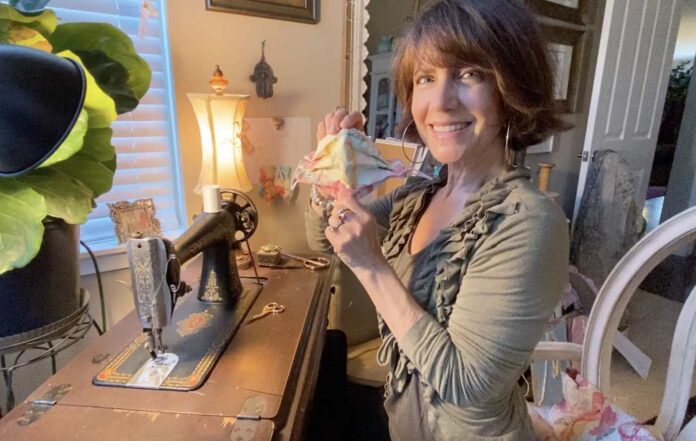
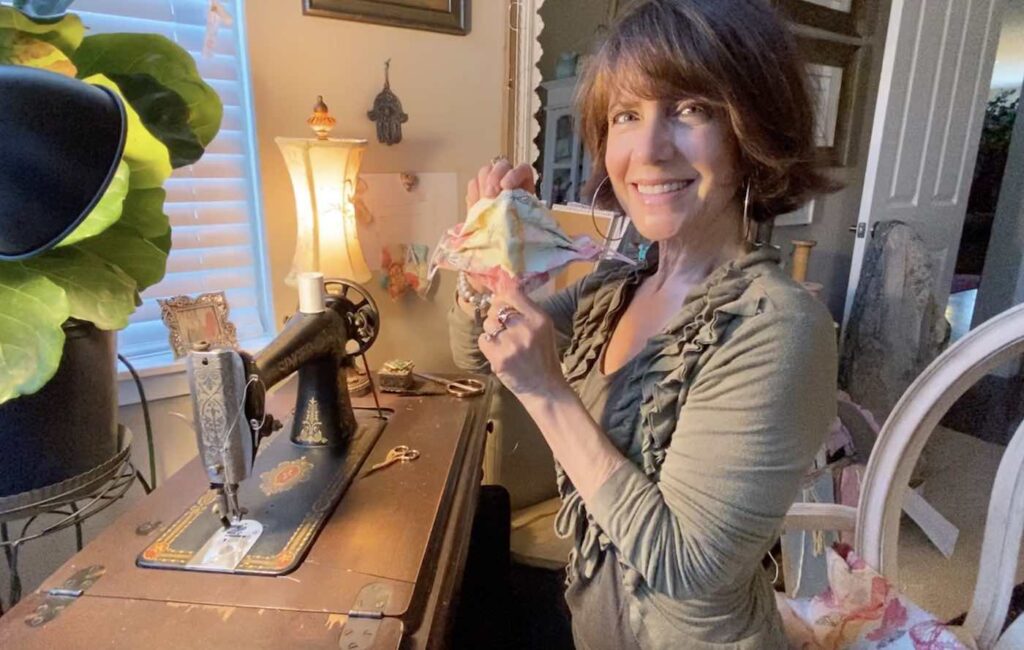
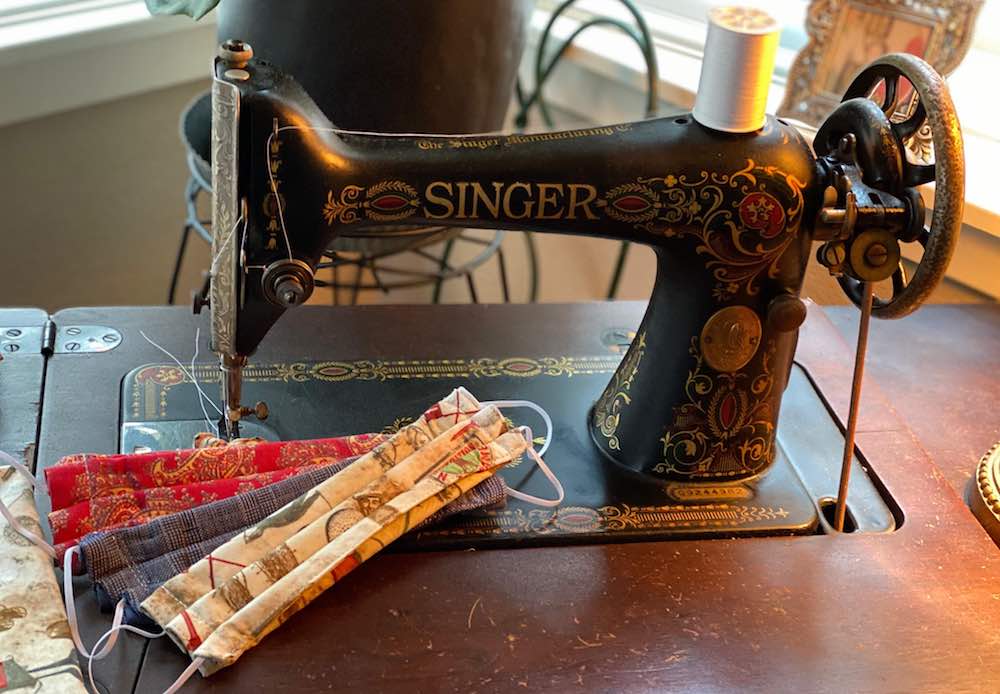
“Since I have to work from home now, I could structure my day anyway I want. There’s been such a demand for masks, I decided to get out my sewing machine and sew,” Frascona said.

She hang them on a rack positioned in her front yard, so she can give them away to people who are looking for something to protect themselves against the virus.

2) Surprise Paper Bag Mask Zoom Party

GNN reader Andrea sent us a screen capture worthy of the best Halloween party, saying: “My mom threw a surprise paper bag princess-themed Zoom birthday party for my sister.

Her sibling had no idea what was happening and thought she was just having a birthday call with her immediate family members—but family from around the country joined the call disguised in paper bags that they had designed.

“When she logged on, my mom explained that she would get to ask each guest 3 questions to try and figure out who they were!”

“So many laughs, so much fun!”

3) Teachers Sharing Their Love on Easter

Teachers from the Saint Louise Parish School in Bellevue, Washington brought their students’ families to tears on Easter with a video of themselves passing around “Heart-Filled Messages”.

In return for the sweet gesture, the school families then brought the teachers to tears after they planted dozens of handmade yard signs expressing their love and gratitude.


4) Hospital Clowns Get Back to Their Importan Work—From Home

Kaitlin Kaufman, John LeoNimm, Julie Pasqual, Maria Peyramaure, and Andy Sapora are all clowns for Healthy Humor’s Red Nose Doc program, which sends performers to hospitals for children across the country to bring joy, silliness, and laughter to the bedsides of children, their worried parents, and the hard-working hospital staff.

Since being on lockdown, they have been saddened not to be able to cheer up hospital residents in person—so they created this video to try and relieve viewers of some of their worries.

5) Pampering Our Nurses

Orange County Girl Scouts assembled 120 self-care kits to provide healthcare professionals with tokens of gratitude and appreciation for their heroic work on the frontline of the health crisis.

The troop collected a variety of fantastic donated items to include in their bags, such as essential oils, homemade sleep masks, stress balls, candles, face masks, bath bombs, energy drinks, protein bars, meditation coloring books, chocolate, lifesavers, and—of course—Girl Scout cookies. The troop met via ZOOM and each assembled the care kits in their individual homes.

To ensure compliance with social distancing guidelines from local and federal health officials, the troop is working with Lyft on a seamless, end-to-end contactless delivery system to get the kits to local hospitals.

Girl Scout Kate Nguyen – Submitted to GNN by Girl Scouts of Orange County

The girls reached out to various companies looking to execute contact-free deliveries, and Lyft responded offering to act as a delivery service in order to facilitate these acts of kindness at no cost to the troop.

6) Chili Cook-off Canceled, but Spicy Kindness Results

Will and Jennifer Thorpe sent GNN the following sweet story from Tennessee:

My dad has been competing in chili cook-offs through the ICS (International Chili Society) across the United States for many years now, and has even competed in the Chili world championship in Las Vegas.

Being as passionate as he is, he was devastated to learn the chili cook-offs would not be happening this year. This past weekend, however, more than 75 chili cooks from around the US, including my dad, took place in the ICS’s first virtual chili cook-off!

My dad put up his entire cooking setup in the back yard, and cooked a mess of chili. He even observed the national anthem (as seen in the image below). Much of the food that the cooks prepared is being donated to first responders, various essential workers, and churches who are feeding the hungry.

By Jennifer Thorp

7) Kids Just Want to Be Kind

A proud mom, Marisol Mendoza, sent us this:

On Easter Sunday morning, Sofia and Astor Mendoza decided to bring good news to our neighborhood. The day before, they wrote about 150 handwritten notes to be distributed to the neighbors—all because they wanted to bring some positivity to the world. “I just wanted people to smile and feel grateful,” Sofia said after they finished their route.

We are so blessed and grateful to see our kids being proactive and getting involved in serving and bringing joy to other people in the middle of this special time. I know that it is hard for an adult to be positive but for a kid time will pass and we will be just fine.

Sofia and Astor — Photo submitted to GNN by Marisol Mendoza

8) Letters Visit These Seniors When People Can’t

One month ago, Sahil Swali—who is a high school junior in Clifton Park, New York—launched an effort to get letters and art to senior living communities that are not able to accept visitors during the pandemic.

He has now partnered with more than 30 facilities in the upstate New York area, in Massachusetts, Connecticut, and has a key partnership with St. Peter’s Health Partners to get messages to their facilities.

These facilities and communities are now receiving hundreds of messages—and he’s looking to enroll more facilities, writers and drawers. If you want to learn how you can join Sahil’s labor of love, you check out his Write to Appreciate project website.

Photo by Write to Appreciate

9) Reminder Bracelets Left on Doorsteps

Cassandra Freeman—a self-professed “mompreneur” wanted to give people hope during this time of uncertainty, so she purchased a ton of wrist bands with the hashtag #CoronavirusCantWin to remind people that we will overcome this and that we will get through this.

Freeman has since started leaving the wrist bands in little bags on people’s porches.

Photo by Cassandra Freeman

10) Climbing Stairs to Support Health Care

People from all over the world are “virtually hiking” in solidarity with children in Haiti who climb the equivalent of 200 flights of stairs in order to get to school—and the effort is raising funds to support healthcare and education initiatives in 24 schools.

Since there have been confirmed COVID-19 cases in Haiti, funding from this campaign will also support critical public health programming.

The Hike for Haiti Challenge runs through May 17th and people are committing to “hiking” the equivalent distance that these children travel simply to access education.

EDITOR’S NOTE: This is just one of many positive stories and updates that are coming out of the COVID-19 news coverage this week. For more uplifting coverage on the outbreaks, click here.

Multiply The Good News By Sharing It With Your Friends On Social Media…

Researchers Restore Injured Man’s Sense of Touch Using Ingenious Brain-Computer Interface

While we might often take our sense of touch for granted, re-establishing the sense of touch means a great deal to the researchers who are developing technologies to restore limb function for paralyzed people.

However, a team of researchers at Battelle and the Ohio State University Wexner Medical Center recently reported that they have been able to restore sensation to the hand of a research participant with a severe spinal cord injury using a brain-computer interface (BCI) system.

According to a study published this week in the journal Cell, the researchers describe how their technology harnesses neural signals so minuscule, they can’t be perceived, and then enhances the signals via artificial sensory feedback sent back to the participant, resulting in greatly enriched motor function.

“We’re taking sub-perceptual touch events and boosting them into conscious perception,” says first author Patrick Ganzer, a principal research scientist at Battelle. “When we did this, we saw several functional improvements. It was a big eureka moment when we first restored the participant’s sense of touch.”

LOOK: American Woman Just Became First Paralyzed Veteran to Complete a Marathon Using a Robotic Exoskeleton

The participant in this study is Ian Burkhart, a 28-year-old man who suffered a spinal cord injury during a diving accident in 2010. Since 2014, Burkhart has been working with investigators on a project called NeuroLife that aims to restore function to his right arm.

The device they have developed works through a system of electrodes on his skin and a small computer chip implanted in his motor cortex. This setup, which uses wires to route movement signals from the brain to the muscles, bypassing his spinal cord injury, gives Burkhart enough control over his arm and hand to lift a coffee mug, swipe a credit card, and play Guitar Hero.

“Until now, at times Ian has felt like his hand was foreign due to lack of sensory feedback,” Ganzer says. “He also has trouble with controlling his hand unless he is watching his movements closely. This requires a lot of concentration and makes simple multitasking like drinking a soda while watching TV almost impossible.”

WATCH: Dad Builds Adapted Nintendo Controller for Disabled Daughter—And Her Reaction is Adorable

The investigators found that although Burkhart had almost no sensation in his hand, when they stimulated his skin, a neural signal—so small it was his brain was unable to perceive it—was still getting to his brain. Ganzer explains that even in people like Burkhart who have what is considered a “clinically complete” spinal cord injury, there are almost always a few wisps of nerve fiber that remain intact. The Cell paper explains how they were able to boost these signals to the level where the brain would respond.

The sub-perceptual touch signals were artificially sent back to Burkhart using haptic feedback. Common examples of haptic feedback are the vibration from a mobile phone or game controller that lets the user feel that something is working. The new system allows the sub-perceptual touch signals coming from Burkhart’s skin to travel back to his brain through artificial haptic feedback that he can perceive.

The advances in the BCI system led to three important improvements. They enable Burkhart to reliably detect something by touch alone: in the future, this may be used to find and pick up an object without being able to see it.

RELATED: Blind Man Develops Smart Cane That Uses Google Maps and Sensors to Identify One’s Surroundings

The system also is the first BCI that allows for restoration of movement and touch at once, and this ability to experience enhanced touch during movement gives him a greater sense of control and lets him to do things more quickly. Finally, these improvements allow the BCI system to sense how much pressure to use when handling an object or picking something up—for example, using a light touch when picking up a fragile object like a Styrofoam cup but a firmer grip when picking up something heavy.

The investigators’ long-term goal is to develop a BCI system that works as well in the home as it does in the laboratory. They are working on creating a next-generation sleeve containing the required electrodes and sensors that could be easily put on and taken off. They also aim to develop a system that can be controlled with a tablet rather than a computer, making it smaller and more portable.

“It has been amazing to see the possibilities of sensory information coming from a device that was originally created to only allow me to control my hand in a one-way direction,” Burkhart says.

Reprinted from Cell

(WATCH the demonstration video below)

Multiply The Good News By Sharing It With Your Friends On Social Media…

Publix Supermarkets Are Buying Food From Struggling Farmers So They Can Use it to Feed Families in Need

This week, US supermarket chain Publix announced a new initiative to purchase fresh produce and milk to assist farmers impacted by the coronavirus pandemic.

Publix will be donating these products directly to Feeding America member food banks in its operating area. The initiative, which is expected to result in more than 150,000 pounds of produce and 43,500 gallons of milk donated to Feeding America food banks during its first seven days, is expected to run for several weeks.

The program will support Florida produce farmers, southeastern dairy farmers and the growing number of families looking to Feeding America for fresh fruits, vegetables, and milk during the coronavirus pandemic.

“As a food retailer, we have the unique opportunity to bridge the gap between the needs of families and farmers impacted by the coronavirus pandemic,” said Publix CEO Todd Jones. “In this time of uncertainty, we are grateful to be able to help Florida’s produce farmers, southeastern dairies and families in our communities.”

RELATED: Sam’s Club is Offering ‘Hero Shopping Hours’ to Healthcare Workers Regardless of Memberships

With numerous reports of farmers discarding produce and milk that isn’t being sold—mostly as a result of school, restaurant and hotel closures—Publix hopes to address the needs of both the farming community and its local partner food banks through this initiative.

“We are thrilled about Publix’s initiative to buy additional milk from Southeast Milk for processing and donation to Feeding America member food banks,” said Southeast Milk Inc. President Joe Wright. “It’s a win-win for our farmers who are feeling the impact of decreased demand and the families who are in need of nutrient rich milk during this pandemic.”

“Like so many others right now, Florida farmers are in a time of need. We are humbled Publix is purchasing additional fresh vegetables from us and other local farms to donate to food banks throughout the Southeast,” said Pero Family Farms Food Co. CEO Peter F. Pero IV. “Thank you to Publix, the participating food banks and their volunteers for making this initiative possible for those less fortunate while supporting local farms.”

WATCH: 17-Year-Old ‘Angel’ Cashier Picks Up $173 Grocery Bill for Senior Shopper Who Found Himself Short on Cash

“In addition to providing much needed produce and milk to food banks, this initiative provides financial support to farmers during this challenging time,” Publix’s Jones said. “We’re honored to be able to work with these groups and do good together for our communities.”

Throughout the company’s history, Publix has supported organizations working toward alleviating hunger in our neighborhoods. Since 2009, Publix has donated more than $2 billion in food to people in need and has pledged an additional $2 billion in food donations over the next 10 years.

CHECK OUT: Tyler Perry Picks Up the Tab for All Groceries Purchased During Senior Shopping Hour at 73 Supermarkets

Publix Super Markets Charities recently also made donations totaling $2 million to support Feeding America member food banks during the pandemic.

This is just one of many positive stories and updates that are coming out of the COVID-19 news coverage this week. For more uplifting coverage on the outbreaks, click here.

Multiply The Good News By Sharing This With Your Friends On Social Media…

Glimpse of God? The Hubble Telescope’s 12 Best Photos on the 30th Anniversary of its Launch into Orbit

photo from hubble telescope
The sombrero

photo from hubble telescope

The twelve best photos taken in all the universe?

Whether or not you agree with mythologist Joseph Campbell, who said God is the greatest unknowable mystery, viewing these photographs may give you the sense that you are watching some great power in action.

No matter your belief in a divine intelligence, anyone can enjoy these amazing images and help celebrate the 30th anniversary of NASA’s launch of the Hubble space telescope into orbit.

Hubble’s low Earth orbit is outside the distortion of Earth’s atmosphere which allows it to capture extremely high-resolution images with substantially lower background light than ground-based telescopes. A vital research tool that opens a deep view into space, many of Hubble’s observations have led to breakthroughs in astrophysics, such as determining the rate of expansion of the universe.

The only space telescope designed to be maintained in space by astronauts, a new Wide Field and Planetary Camera was transported to the Hubble via space shuttle two decades ago. These are some of the remarkable images photographed since then, especially when utilizing the newer Advanced Camera for Surveys, which makes pictures using ultraviolet wavelengths.

Many of the most remarkable photographs focus on nebulae. A nebulae (Latin for “mist”; plural form, nebulae) is an interstellar cloud of dust, gas, and plasma, a place where stars form.

photo from hubble telescope
12) The Ant Nebula, is a cloud of dust and gas (scientific name, Mz3), that resembled an ant to observing scientists on Earth who were using land-based telescopes. The nebula is found within our own galaxy between 3,000 and 6,000 light years from Earth.

photo from hubble telescope

11) Glowing Eyes The cores of two merging galaxies from 114 million light years away in the distant Canis Major constellation form leering eyes. The two mingling galaxies began to merge 40 million years ago spurring new star formation.

photo from hubble telescope

10) The Hourglass Nebula surrounds a dying star 8,000 light years away. Its hourglass shape have been created from stellar winds that are weaker in the core or possibly from an unseen companion star and accompanying gravitational effects.

photo from hubble telescope

9) The Cat’s Eye Nebula is a planetary nebula in the constellation of Draco. Structurally, it is one of the most complex nebulae known, with photos revealing remarkable structures such as knots, jets and sinewy arc-like features. Did the Lord of the Rings film director base his imagery for The Eye of Sauron on this Cat’s Eye?

photo from hubble telescope
8) Starry Night is so named for the way it reminded astronomers of the Van Gogh painting with its spirals of dust swirling across trillions of kilometers of interstellar space. The illumination of dust comes from the red supergiant star at the middle of the image, which gave off a flashbulb-like pulse of light two years earlier. The star, V838 Mon, is located at the outer edge of our Milky Way galaxy, about 20,000 light-years from Earth.

photo from hubble telescope

7) The Cone Nebula is a craggy-looking mountaintop of cold gas and dust, a turbulent place where stars are ever in the process of being born. The part pictured here is 2.5 light years in length (the equivalent of 23 million trips to the Moon).

photo from hubble telescope


6) The Eskimo Nebula

is a Sun-like star nicknamed because it resembles a face surrounded by a fur parka. The hood is, in fact, a ring of comet-shaped objects with their tails streaming away from the central, dying star. Although the bright central “face” resembles a ball of twine, it is actually a bubble of material being blown outward by the central star’s intense “wind”.
photo from hubble telescope
In the second picture, Eskimo, which is 5,000 light years from Earth, is shown next to a hefty cluster of galaxies in the constellation Draco, 2 billion light years from Earth. The cluster is so massive that its enormous gravitational field deflects light rays causing a phenomenon that magnifies, brightens, and distorts images further away. The cluster’s magnifying powers provide a powerful “zoom lens” for viewing distant galaxies that could not otherwise be observed. Thus, the arc-shaped patterns found throughout the picture present distorted images of very distant galaxies, lying 5 to 10 times farther away.

photo from hubble telescope
5) The Eagle has risen: Stellar spire in the Eagle Nebula

Perhaps one of the most famous and easily recognized space objects, this spire is a birthing chamber for stars in the constellation Serpens.

“Appearing like a winged fairy-tale creature poised on a pedestal, this object is actually a billowing tower of cold gas and dust rising from a stellar nursery called the Eagle Nebula. The soaring tower is about 57 trillion miles high.” (The nearest star outside our Milky Way galaxy, Alpha Centauri, is 25 trillion miles away or 4.3 Light Years).

Stars are born in this chaotic place and their newly-found energy sculpts fantasy-like landscapes in the gas. Hot and massive young stars [off the top of the image] are eroding the pillar with torrents of ultraviolet light and illuminating the tower’s rough surface.

Ghostly streamers of gas can be seen boiling off this surface, creating the haze around the structure and highlighting its three-dimensional shape.

photo from hubble telescope
4) The Sombrero Galaxy is 28 million light years from Earth, this galaxy is as spectacular as its appearance. It has 800 billion suns and is 50,000 light years across. Its hallmark is a brilliant white, bulbous core encircled by thick dust lanes revealing the spiral structure of the galaxy.

photo from hubble telescope
3) The Trifid Nebula
is a stellar nursery, being torn apart by radiation from a nearby, massive star. The picture also provides a peek at embryonic stars forming within a cloud of dust and gas, which is destined to be eaten away by the glare from the massive neighbor. This stellar activity is an example of how stars like our Sun are intimately connected with powerful siblings.

photo from hubble telescope


2) A Perfect Storm of Turbulent Gases: Omega/Swan Nebula-
A small region in the Swan Nebula, 5,500 light years away, is described as ‘a bubbly ocean of hydrogen and small amounts of oxygen, sulphur and other elements.

Pillars_of_Creation
1) Pillars of Creation in a Star-Forming Region

Undersea corral? Enchanted album cover for the rock group, Yes? This is one of Hubble’s most famous images: Pillars of Creation, where stars are forming in the Eagle Nebula.

These massive structures—the tallest pillar is 4 light-years long from base to tip — are actually columns of cool hydrogen gas and dust, the incubators for new stars. Several newborn stars, hot and bright nearby, are causing a type of evaporation wearing away the edges of the gaseous pillars. These especially dense clouds of hydrogen act like stalagmites emerging from a huge and dark molecular cloud below the frame. We nominate this one as The Best Photo in all the Universe. (Download photos from Hubble, here, or view the entire collection at the Hubble Gallery)

Be Sure And Share These Awe-Inspiring Photos To Celebrate The 30th Year Of Scientific Excellence…

“Never limit yourself because of others’ limited imagination; never limit others because of your own limited imagination.” – Mae Jemison

Quote of the Day: “Never limit yourself because of others’ limited imagination; never limit others because of your own limited imagination.” – Mae Jemison, astronaut (today is Hubble’s 30th anniversary)

Photo: by Maarten van den Heuvel, public domain

With a new inspirational quote every day, atop the perfect photo—collected and archived on our Quote of the Day page—why not bookmark GNN.org for a daily uplift?

Americans Who Drink This Much Water a Day Were More Likely to Report Feeling ‘Very Happy’

Is drinking water the secret to feeling happy? Probably not, but this survey says that it may be indicative of a person’s happiness.

In the survey, 2,000 Americans were asked how much water they consumed on average. The results then found that adults were three times more likely to feel “very happy” if they reported drinking enough water.

Additionally, 67% of respondents who drank “more than enough” water evaluated themselves as “very happy,” whereas only 21% of those who said they “didn’t drink enough water” said they’re “very happy.”

The statistics emerged in a poll conducted by OnePoll on behalf of O. Vine. The results also revealed that the average American drinks almost five glasses of water per day, with the average respondent believing the “recommended amount” of water per day is only five eight-ounce glasses (most experts believe you should drink eight).

MORE: Managing Your Gut Bacteria Shown to Alleviate Anxiety, Says New Research

Once again, those who drank more glasses of water per day were more likely to evaluate themselves as “very happy.”

The “10+ glasses a day drinkers” were statistically the most likely to be “very happy,” with 80% saying so, and 18% opting for “somewhat happy.”

But interestingly, the results showed a steady increase in “very happy” respondents as the number of glasses of water consumed went up.

For example, of those who drank two glasses a day, only 34% were able to call themselves “very happy,” and of those who drank four glasses, 45% were “very happy.”

CHECK OUT: Tree-Filled City Parks Make People as Happy as Christmas Day, Says New Study of Twitter Posts

And the most likely group to rate themselves as “not very happy”? Those who drank zero glasses of water per day, with 24% responding this way.

Not only that, but those who drank 10+ glasses per day were also most likely to rate themselves as “very energetic” (82%), and also most likely to rate themselves as “very successful” (67%).

“With the demands of everyday life, living a healthy lifestyle can sometimes be a challenge, said CEO Anat Levi of O.Vine. “Staying hydrated is a big part of that.”

MORE: After 68% of Patients Were Cured of PTSD in Phase-2 Trials Clinics May Soon Offer MDMA Therapy

But staying properly hydrated can be a challenge for some, it turns out. According to the stats, three in four Americans say they are too busy to drink the proper amount of water.

But even though they may lack the time, they are not in denial about its benefits.

For example, 73% of those surveyed say they are noticeably happier when they feel they’ve drunk “enough” water, and over half (54%) feel less productive at work if not properly hydrated.

TOP 7 REASONS AMERICANS DON’T DRINK ENOUGH WATER
1. I don’t feel thirsty that often 44%
2. I prefer to drink other beverages 42%
3. No time to get water 34%
4. I forget 33%
5. I don’t like paying for bottled water 25%
6. I don’t trust water from the tap 22%
7. I don’t like the taste of water 19%

(Image credit: Total Shape)

Poke Your Friends to Drink More Water By Sharing The Survey On Social Media…

3D-Printing Teen Makes Hundreds of Ingenious Devices to Alleviate Ear Pain for Healthcare Workers


A 12-year-old Canadian boy has come up with a brilliant way to support healthcare workers on the frontlines of the novel coronavirus outbreaks—all without leaving the safety of his home.

Quinn Callander was first inspired to start his labor of love after a family friend working at a local hospital expressed their wish for an “ear guard”—a small, simple contraption that alleviates the physical aches of medical face masks by alleviating the pressure of the elastic bands on the wearer’s ears.

After finding a few ear guard templates online, Quinn used his 3D-printer to make several different versions of the device for his friend to test. Once they identified the most efficient  design, he made dozens of the devices for local hospital workers in Maple Ridge, British Columbia.

Upon realizing the game-changing impact of his donations, however, Quinn decided to keep making the ear guards.

RELATED: LEGO Factory is Now Producing Thousands of Protective Plastic Face Masks for Medical Workers

Since he responded to the Facebook post in early April, Quinn has distributed hundreds of plastic ear guards to hospitals across Canada, the US, the UK, and even Singapore.

Quinn’s proud mother, Heather Roney, told The Globe and Mail that they have been flooded with requests since she posted a picture of the youngster displaying his creations to social media.

“We’ve heard from thousands of people who say, ‘This is the difference between working your 12-hour shift comfortably and being in constant pain,’ because of pressure on their ears,” said Roney. “It’s so simple, but it’s incredibly effective.”


Not only have the photos been shared thousands of times, they have inspired other 3D-printing enthusiasts from around the world to print their own ear guards. Roney recently wrote on Twitter that the 3D-printing design Quinn used for the ear guard has been downloaded more than 48,000 times. Manufacturing companies have even picked up the design and challenged other businesses to do the same.

However, Quinn doesn’t have plans of stopping his mission any time soon.

WATCH: 89-Year-Old Sews 600 Masks While Listening to The Beatles

“I feel like we’ll keep doing this as long as we can,” Quinn told Narcity. “We’ll keep on doing this either until we run out of materials or until this whole thing blows over.”

This is just one of many positive stories and updates that are coming out of the COVID-19 news coverage this week. For more uplifting coverage on the outbreaks, click here.

(WATCH the interview below)

Protect Your Friends From Negativity By Sharing This Inspiring Story To Social Media…

Scientists Make History With Discovery That Will Help Save America’s Great Coral Reef

Florida scientists have just made history by becoming the first in the world to reproduce ridged cactus coral in human care.

Researchers from The Florida Aquarium are particularly excited about the discovery because it will one day be able to help conservationists restore “America’s Great Barrier Reef”—which is the third largest reef in the world.

Ridged cactus coral—also known as Mycetophyllia lamarckiana—are one of the most common species of coral currently populating the Florida Reef Tract. Since the underwater ecosystem has been in danger following major outbreaks of stony coral tissue loss disease in 2014, scientists have been caring for several coral samples that were collected prior to the outbreaks in hopes of one day being able to restore the reef to its former glory.

LOOK: Scientists ‘Blown Away’ By Discovery of Longest Animal Ever Recorded—And It’s Quite Beautiful

The historic breakthrough took place earlier this month at The Florida Aquarium’s Center for Conservation in Apollo Beach. The work is part of a collaboration effort to save the Florida Reef Tract from extinction with the Florida Fish and Wildlife Conservation Commission (FWC) and National Oceanic and Atmospheric Administration (NOAA) National Marine Fisheries Service.

“Our resolve to save Florida’s endangered coral reefs continues, and this historic breakthrough by our coral experts—our second in 8 months—provides additional hope for the future of all coral reefs in our backyard and around the globe,” said Roger Germann, President and CEO of The Florida Aquarium. “While our aquarium remains temporarily closed to the public as we support our community’s wellbeing efforts, not even a global pandemic can slow us down when it comes to protecting and restoring America’s ‘great’ barrier reef.”

CHECK OUT: Whales Feces Represent One of the Greatest Allies Against Climate Change—Even More Than Trees

Until this month, the larvae of the ridged cactus coral had never been photographed or measured and the larval release time had never been recorded.

“These advances give us hope that the round-the-clock work we are doing will make a difference to help conserve this species and save these animals from extinction,” said The Florida Aquarium Senior Coral Scientist Keri O’Neil. “To date, we have now been able to sexually reproduce eight different species of coral affected by stony coral tissue loss disease at The Florida Aquarium’s Center for Conservation campus.”

Last year on August 20th, The Florida Aquarium also announced a massive breakthrough when its scientists became the first in the world to be able to get Atlantic Ocean coral to spawn in a controlled laboratory environment.

RELATED: After Decades of Federal Protection, Hawaiian Coral Reefs Are Returning to Their Former Glory

“The Florida Aquarium is committed to caring for Threatened species of coral and leading critical initiatives that facilitate our ability to restore the Florida Reef Tract,” says the Aquarium’s Senior Vice President of Conservation, Dr. Debborah Luke. “Our Coral Conservation Program uses a science-based, impact-driven approach to increase the genetic diversity of coral offspring, maximize coral reproduction rates and advance coral health.”

Ridged cactus corals are often brightly colored with ridges that don’t connect in the center. They are a brooding coral, which means their sperm is released into the water, but their eggs are not, and fertilization and larval development occurs inside the parent coral. The corals release a fully developed larvae that swims immediately after release. Brooding corals release fewer and larger larvae, that already carry the symbiotic algae from their parents that is critical for survival. Florida Aquarium coral biologists noted that the larvae of the ridged cactus coral were the largest that they have ever seen and are working to document the entire process.

CHECK OUT: Man Postpones Retirement to Save Reefs After He Accidentally Discovers How to Make Coral Grow 40 Times Faster

“They are so unusual that I actually was not sure it was coral larvae,” noted Emily Williams, Coral Biologist.

No one knows how long the corals will continue to release the larvae or how many will be produced, as no one has documented this process before in this species; but since the birthing process began in early April, CNN reports that the coral has continued to spit out more than 350 larvae and counting.

Reprinted from The Florida Aquarium

(WATCH the video below)

Plant Some Positivity By Sharing The Good News With Your Friends On Social Media…

Air Pollution in Major World Cities Has Dropped By as Much as 60% During COVID Shutdowns, Says New Report

As the world continues to wait out the worst of the coronavirus outbreaks, this new report says that air pollution is falling to record new lows in some of the most polluted global cities.

This week, IQAir, a global leader in air quality data and solutions, published a COVID-19 Air Quality Report that shows that air pollution levels in 10 major global cities have dropped by as much as 60% during government-mandated lockdowns due to the global COVID-19 pandemic.

The report examined fine particle pollution (PM2.5) in 10 cities while lockdowns were in place compared to the same period in 2019, as well as during the same periods in the previous four years. Cities included in the report are Delhi, London, Los Angeles, New York City, Madrid, Mumbai, Rome, São Paulo, Seoul, and Wuhan. All cities included in the report, except for Rome, experienced a reduction in air pollution levels during lockdown periods compared to the same time periods in 2019.

RELATED: As Earth’s Ozone Layer Continues to Repair Itself, Scientists Happily Report Good News on Global Wind Trends

The most dramatic drops in air pollution occurred in cities with historically high levels of PM2.5:

  • Delhi experienced a 60% reduction in PM2.5 readings compared to the same time period in 2019.
  • The hours for which Delhi experienced “Unhealthy” rated air pollution fell from 68% in 2019 to 17% in 2020’s lockdown.
  • Seoul had a reduction in air pollution of 54% compared to 2019.
  • Wuhan saw a reduction in air pollution of 44% during its lockdown when compared to 2019.
  • Air pollution in Mumbai was down 34% during the lockdown period.
  • São Paulo was down 32% year over year.

Automobile-dependent Los Angeles saw its longest streak of clean air on record: during its lockdown period, fine particle pollution in LA was down 31% when compared to 2019, and down 51% when compared to the previous four-year average. New York City saw air pollution drop 25% as a result of its lockdown.

CHECK OUT: Bill Gates Has Just Invested in a Company That Grows Palm Oil in a Lab to Save the Rainforests

London and Madrid saw more modest reductions in air pollution at 9% and 11% respectively. Delhi, Mumbai and Los Angeles experienced their best March air quality on record in 2020.

“Across the globe, the coronavirus pandemic has had a monumental impact on the way we live,” said Frank Hammes, CEO of IQAir. “While the human and economic costs are devastating, we are also witnessing how much of air pollution comes from human activity. The drastic reduction in air pollution during COVID-19 lockdowns shows how our habits and behaviors directly impact the air we breathe. That’s an important insight [after] this unique Earth Day.”

LOOK: Himalayan Mountaintops Visible for the First Time in 30 Years as Air Pollution Continues to Plummet in India

While coronavirus-related lockdown orders varied by country, most included school closings, restricted movement by residents, the closing of non-essential businesses, and bans on social gatherings.

The report analyzed hourly PM2.5 readings recorded by seven governmental agencies as well as readings provided by supplemental, validated non-governmental monitoring stations. All locations and their data sources are visible on the IQAir AirVisual app and website.

This is just one of many positive stories and updates that are coming out of the COVID-19 news coverage this week. For more uplifting coverage on the outbreaks, click here.

Clean Up Negativity By Sharing The Good News With Your Friends On Social Media…

Woman Creates Neighborhood ‘Giving Tree’ With Her Free Homemade Face Masks

Photo by Deb Siggins

Rather than giving away free apples like a Shel Silverstein storybook, this giving tree in Iowa is offering free handmade face masks to the people of Lisbon.

55-year-old Deb Siggins first began making the cloth masks for healthcare workers after their local hospital began experiencing shortages amidst the novel coronavirus outbreaks. Initially, Siggins only wanted to donate 100 of her masks to medical workers; but then her family members and friends began requesting masks of their own.

Siggins has since made more than 400 masks, all of which she paid for out of pocket as a doctor’s office employee.

WATCH: 89-Year-Old Sews 600 Masks While Listening to The Beatles

Because Siggins realized that she could not hand the masks directly to her neighbors without violating social distancing guidelines, she decided to hang them on a local tree so passerby could take the masks at their leisure.

Since Siggins made a Facebook post about her giving tree, the masks have been a hit with the community.

“It was really cool to see people driving up, grabbing a mask and leaving … It’s been a hit,” Siggins told Good Morning America. “I’m a giver, not a taker, so I feel really good.”

CHECK OUT: Sam’s Club is Offering ‘Hero Shopping Hours’ to Healthcare Workers Regardless of Memberships

Although the tree can hold about 30 masks at a time—most of which are gone within a day of being hung—Siggins says she is constantly making new masks and using new patterns to restock the tree’s inventory. She has also been making special masks for firefighters, first responders, paramedics, and grocery store employees.

Siggins is reportedly determined to continue with her labor of love until the pandemic is finally over.

This is just one of many positive stories and updates that are coming out of the COVID-19 news coverage this week. For more uplifting coverage on the outbreaks, click here.

Photo by Deb Siggins

Be Sure And Share This Inspiring Story Of Kindness With Your Friends On Social Media…

“It is only when we silent the blaring sounds of our daily existence that we can finally hear the whispers of truth that life reveals to us.” – K.T. Jong

Quote of the Day: “It is only when we silent the blaring sounds of our daily existence that we can finally hear the whispers of truth that life reveals to us.” – K.T. Jong

Photo: by Anthony Tran, public domain, cropped

With a new inspirational quote every day, atop the perfect photo—collected and archived on our Quote of the Day page—why not bookmark GNN.org for a daily uplift?

Volcano Lightning Storm Won ‘Perfect Moment’ Photography Contest, But Every Finalist Captured the Beauty of Earth

SWNS
A “dirty storm” during the eruption of the Calbuco volcano in Chile. SWNS.

This stunning image captures the moment an incredible lightning storm was created during a violent volcanic eruption.

The striking photo of the Calbuco volcano—regarded as the one of the most dangerous in Chile—won the Grand Prize in the inaugural “The Perfect Moment” photography competition, presented by photography contest business Our World In Focus.

The rare “dirty storm” phenomenon occurs when the force of the elements thrown from the bottom of the volcano collide with the outside, causing positive and negative charges to produce lightning.

LOOK: These Photographers Captured Some of the Most Dazzling Pictures of Mother Earth’s Landscapes

The first prize image won photographer Francisco Negroni a $2,000 cash prize, as well as a new camera lens, and a $200 voucher to spend at a camera equipment store.

The contest’s judges, Max Rive of the Netherlands and John Weatherby of the USA, called the photo “truly spectacular”.

“This image shows a rare moment of the eruption of the Volcano Calbuco with truly spectacular forces of nature that make you stare at the image for some time,” said Rive. “It is the combination of the rarity of this natural phenomenon with the technical quality of the image that makes it so powerful and unique.

RELATED: Photographer Captures Picture of Stunning ‘Ice Ball’ Phenomenon on Finnish Beach

“This image left the biggest impression on me and couldn’t fit the subject ‘Perfect Moment’ any better.”

The photo contest also saw four other worthy winners alongside Francisco’s “dirty storm” shot, which saw more cash prizes and Lens Pro To Go vouchers rewarded.

Bence Mate, the second-place winner for the competition, won $500 in cash and $100 in vouchers for his photo entry, “Eye To Eye”.

2nd place winner — SWNS

The fascinating photo shows a green-crowned hummingbird hovering in mid-air, eye-to-eye with a small, green pit viper which is dangling by its tail from a branch.

The on-guard hummingbird, photographed with its wings beating rapidly, squared off against the viper in order to protect its nesting young by making squawking sounds and dancing around the snake in mid-air.

LOOK: After Years of Gaining Trust of Local Squirrels, Photographer Has Captured the Most Wholesome Pictures

“Images of wildlife often make for strong storytelling photography, especially when a potential confrontation is photographed, as in this image captured between a hummingbird and a viper,” remarked Rive.

“The perfect technical quality in terms of sharpness, focus, contrast and the chosen shutter speed, which makes the movement of the wings visible, also helps with bringing this image to life.”

5th place winner – SWNS

The contest’s fifth place winner of $100 cash, was Eliseo Nicolaevici’s sweet photo of a little lamb crossing a rickety wooden bridge, followed by a herd of more than nine sheep.

“This image shows how an ‘ordinary moment’ can be made very powerful and evocative by capturing it at the right time and place,” says Rive. “Elements that impressed me are the story, of how the lamb walks in front of the adult sheep.

“The photo also creates a form of tunnel vision and framing with the hang-bridge, and how all the faces of the sheep are lined up in a straight line.”

RUNNER UP – SWNS

Meanwhile, competition finalist Hasan Baglar submitted an amusing photograph of two praying mantises perched on a branch, their front legs stretched up in the air, and their colorful wings outspread.


Runner-up finalist — SWNS

Other runner-up finalists for the competition include photos depicting a lizard and a snail kissing in Indonesia and a friendly whale shark swimming underneath a fishing boat.


RUNNER UP — SWNS

The two judges for the competition paid homage to all the photo submissions, saying: “We want to thank all of the entrants to this year’s contest. It has been an honor to witness each of your own Perfect Moments.”


3rd place winner: Droplets of water form a triangle as a cormorant shake water off its wings at Kiskunság National Park, Hungary — SWNS

Be Sure And Share These Stunning Photos With Your Friends On Social Media…

What Was Once One of the Most Polluted Landscapes on Earth Now Has Some of the Cleanest Air in the Region

Forty years ago, the Canadian city of Sudbury was a blackened landscape that had been devastated by pollution from mining sites and industrialization.

Now, thanks to decades of restoration and conservation work, the air quality is ranked as some of the best in all of Ontario.

Not only that, the landscape has come alive with trees and greenery once more. Lakes that were once acidified and destitute have become thriving ecosystems.

LOOK: Determined to Save His Country’s Water Supply, 26-Year-old Has Revived 10 Lakes From a Polluted Mess

The transformation of Sudbury has become such a positive example of environmental restoration, Laurentian University launched an entire course based on its revolutionary recovery back in March 2019—and it is helping college students apply its lessons to other polluted landscapes around the world.

“The Sudbury story is a story of success,” said Dr. John Gunn from Laurentian University. “One of the most damaged landscapes on Earth—with industry, government, universities, and the public working together—has made a remarkable improvement in the landscape and the lives of people.”

RELATED: Scientists Use Recycled Sewage Water to Grow 500-Acre Forest in the Middle of Egyptian Desert

Paul Kennedy, who is the host of the CBC radio program IDEAS, spotlighted the Sudbury story back in May 2019 as one of his final presentations.

The news outlet published an emotional excerpt from his notebooks describing the segment, which concluded with Kennedy saying: “I tend to be a knee-jerk optimist on almost every issue, but the future of our planet can seem almost overwhelmingly difficult—too big, too complicated, too divisive.

“For me, Sudbury is an indication that we aren’t going to lose. Climate change is the biggest and most crucial challenge we face. There is hope.”

This story has been reprinted from GNN’s archives in honor of Earth Day’s 50th anniversary, but this week’s air particulate reports in Sudbury show that the air is still some of the cleanest in the province.

(WATCH the video below)

Plant Some Positivity Amongst Your Friends By Sharing The News To Social Media…

‘Fantastic Grandmas’ Have Been Spending Retirement Photographing Venomous Sea Snakes for Science

While some people might prefer to kick back and relax in their golden years, these 7 older women prefer to spend their retirement swimming after venomous snakes in the ocean.

The Fantastic Grandmas is a volunteer research group made up of pensioners who have found their passion through helping scientists learn more about the snakes around Lemon Bay, New Caledonia in the South Pacific.

The hardy women typically don their scuba gear for a research expedition at 7AM. Over the course of the day, they may swim as far as 2.5 kilometers (1.5 miles) in search of snakes.

LOOK: 91-Year-old Gym Member Who Works Out in Overalls Becomes Social Media Poster Boy for Good Health

The grandmas are the only volunteers to conduct research on behalf of the University of Caledonia. Prior to their first group expeditions in 2017, university sea snake researcher Claire Goiran believed there to be only a few different species of sea snakes. The Fantastic Grandmas have since documented about 262 species of snakes and their vital roles in the undersea ecosystem.

One of the Fantastic Grandmas, 70-year-old Monique Mazière, has been retired for 10 years. When Great Big Story asked why she and her senior gal pals were conducting research on such dangerous creatures, she simply laughed and said: “And why not grandmothers!?”

“We could think grandmothers are only good for making jam or knitting,” she added, “but not us. This is our sport.”

(WATCH the Great Big Story video below)

It’s Not Hard To Sssssea That You Should Share This Inspiring Story With Your Friends On Social Media…

This 1,000-Year-old Cherry Tree in Japan is a Role Model for Resilience During Trying Times

Photo by 京浜にけ, CC
The Miharu Takizakura. Photo by 京浜にけ, CC license.

Whether it’s climate change or the novel coronavirus pandemic—it can be hard to stay hopeful for the future during such turbulent times.

However, this ancient cherry tree in Japan serves as an awe-inspiring example of resilience in the face of adversity.

The 1,000-year-old Takizakura—also known as the “waterfall cherry tree”—in Miharu, Fukushima usually attracts thousands of tourists and travelers from all over the world; but since the COVID-19 outbreaks forced Japan into a state of emergency, only a few visitors stopped by to see its blossoms last week.

LOOK: ‘Priceless’ Stolen Bonsai Trees Mysteriously Returned Just 72 Hours After Museum Begged for Their Return

53-year-old Sidafumi Hirata, who is in charge of preserving the cultural heritage of the town and caring for the Takizakura, told NPR’s Kat Lonsdorf in a recent interview that he remembers rushing to check on the tree after Fukushima’s disastrous nuclear meltdown in 2011.

The worst earthquake in the history of Japan had triggered a tsunami which damaged the Daiichi nuclear plant 30 miles away, unleashing waves of radiation upon the nearby towns—but even after the tsunami, the earthquake, and the nuclear meltdown, the Takizakura was unharmed.

RELATED: Husband Plants Field of Flowers for Blind Wife to Smell, So Spectacular It Gets Visitors

“This tree has lived so long, and the longer you live, the more bad events you see,” Hirata told Lonsdorf in the interview below. “So she will see more bad things, but she’ll also see good—life is layers, layers of bad and good.”

Hirata says that despite this year’s lack of visitors, he will continue to look after the tree so it can continue blossoming for another thousand years to come—and the Takizakura’s adoring fans also hope that its enduring strength will inspire others to stand just as tall in the face of chaos.

(LISTEN to the enchanting NPR segment below)

Plant Some Positivity By Sharing This Inspiring Story With Your Friends On Social Media…