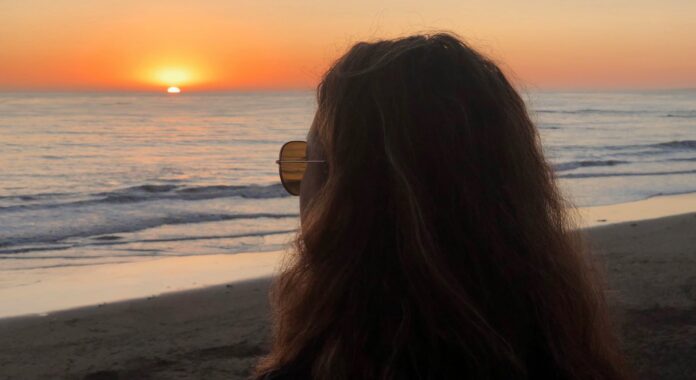
Quote of the Day: “Dare to love yourself as if you were a rainbow with gold at both ends.” – Aberjhani
Photo: by Jesse Gardner
With a new inspirational quote every day, atop the perfect photo—collected and archived on our Quote of the Day page—why not bookmark GNN.org for a daily uplift?
Brinda Family photo of Mathias, May 28; Lucinda Anderson the school fence, June 10
In Minneapolis after the murder of George Floyd, the teachers of Lake Country School grappled with how to make sense of the event with their students.
It was COVID time, so when normally they would be together, hug, and look into each others’ eyes, they had to think of a different way.
The school principal, Ben Moudry, took into consideration the natural inclination of children to want to help in a time of trouble and right wrongs.
He encouraged students to join their feelings with the thousands in the streets of the city by making signs and sharing pictures of their signs with the school community.
Mathias Brinda, a third grader, made a huge sign using a quote from Bishop Desmond Tutu: “If you are neutral in situations of injustice, you have chosen the side of the oppressor.”
The Brinda family hung it on the fence of the school, and they sent a photo around showing Mathias standing by his sign, smiling and with his poodle. This was May 28th.
Brinda Family photo of Mathias, May 28; Lucinda Anderson the school fence, June 10
At a school meeting later in the week, someone mentioned that the sign was no longer on the fence. They assumed it had been taken by vandals.
But, then the sign turned up when the New York Times ran this photo of the ongoing Minneapolis protest. In front of a huge spray-painted image of George Floyd’s face, a man in a black mask kneeled, head bowed, behind Mathias’s sign.
Then it showed up in The Atlantic. Three children, fists raised, were holding Mathias’s sign, with the youngest so small he could barely get his face over the edge—but even still, you can see his pride.
And then, miraculously, it came back. On June 10th, Lucinda Anderson, who works at the school, went to pay respects at the massive memorial site on 38th Street, where George Floyd died. Outpourings of emotion, flowers and paintings, covered the intersection. It started to rain, and people scrambled to collect the bouquets and works of art. As Anderson helped gather things, she found the sign in her hands.
She brought it back to the school and attached it to the fence. That’s where it is now, along with the signs of Mathias’s classmates. Even with the schoolyard still empty, this school community has shown up in its signs of good.
(Co-written by Janaki Ranpura, and Malinda Holte of Lake Country School)
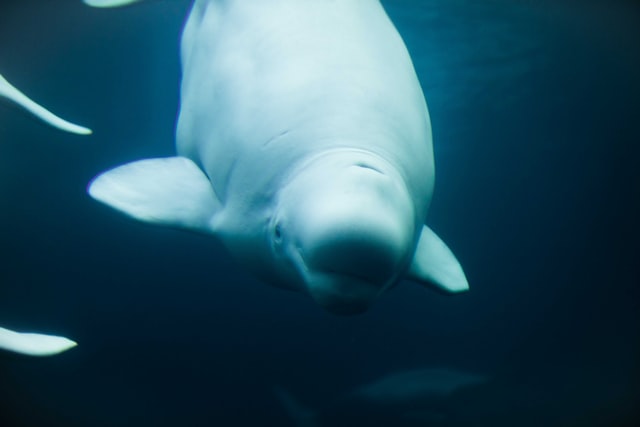
2 new residents of the beluga whale sanctuary – Sea Life Trust.
Two captive belugas were given the chance of a better life when they were relocated from China to a new sanctuary in Iceland.
The 11-year-olds, known as Little Grey and Little White, had spent seven years performing for audiences at Changfeng Ocean World in Shanghai.
But in 2019, thanks to the British charity Sea Life Trust, they were freed and transported 6,000 miles around the world—30 hours by air, land, and sea—to reach the world’s first retirement home for oceanic animal performers.
Over the past year, the female pair has been cared for inside specialized pools on Heimaey Island.
Now they’ve made another big transition: On August 8, Little Grey and Little White were moved to the open-water section of the beluga sanctuary in Klettsvik Bay.
It’s the first time in 11 years that the belugas have swum in the ocean.
2 new residents of the beluga whale sanctuary – Sea Life Trust.
Cathy Williamson, who runs the End Captivity program at Whale and Dolphin Conservation, told China Daily, “The world’s first whale sanctuary represents a pathway to the end of the keeping of whales and dolphins confined for entertainment. We are proud to be a partner of this important project that will improve welfare for these belugas, and show the world that there is an alternative to whale and dolphin captivity.”
The bay itself is large, secluded, and beautiful. At 30 feet (nine meters) deep and 344,445ft² wide, there’s lots of space for Little White and Little Grey to swim and explore, to play and make big dives in the water.
Now that they’re in their new home, these two belugas have been showing off their personalities.
According to the Sea Life Trust team, “Little Grey is a very playful whale. She is always curious and willing to learn new things. She also has a mischievous side to her personality and likes to spit water at the Animal Care Team.”
As for Little White? She’s a little shy, but she “still likes to play and forms close bonds with her handlers.”
“We’re absolutely delighted to be able to share the news that Little Grey and Little White are now in their bayside care pool and will need a short period of time to acclimatize to their new natural environment and all the outdoor elements before their final release into the wider sanctuary in Klettsvik Bay.”
“Following extensive planning and rehearsals, the first stage of their release back to the ocean was as smooth as we had hoped and planned for. We are carefully monitoring Little Grey and Little White with our expert care team and veterinarians.”
If they adapt to their new home, they could enjoy several more decades of life in a natural habitat—and the sanctuary hopes to welcome other retiring aquatic performers in the future.
WATCH the beautiful video showing their homecoming…
SHOW Your Love of Belugas By Sharing This Story With Your Friends On Social Media…
When a Colorado mom heard her 4-year-old daughter yell ‘Black Lives Matter’ to a woman in Home Depot this summer, she wasn’t expecting such a beautiful friendship to blossom for the pair.
Sherri Gonzales was out shopping in Commerce City when she heard a little girl say the words that have been chanted on thousands of streets around the world this summer.
“She said it with strength, like she was making a point,” Sherri told KCNC in Denver.
That little girl was Camryn Radcliff. Her mom, Cassi, wasn’t sure how a person would react to having ‘Black Lives Matter’ yelled at them.
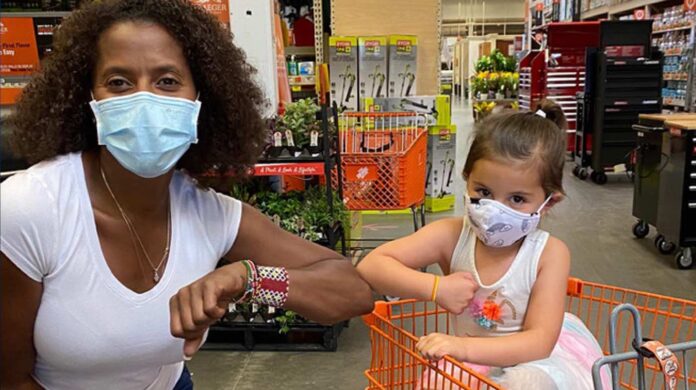
Sherri Gonzales looked at Cam and said, “Thank you so much for saying that and for recognizing that my life matters.”
The pair became fast friends, and took a photo together. Cam then sweetly invited Sherri over for a sleepover, so the group exchanged numbers.
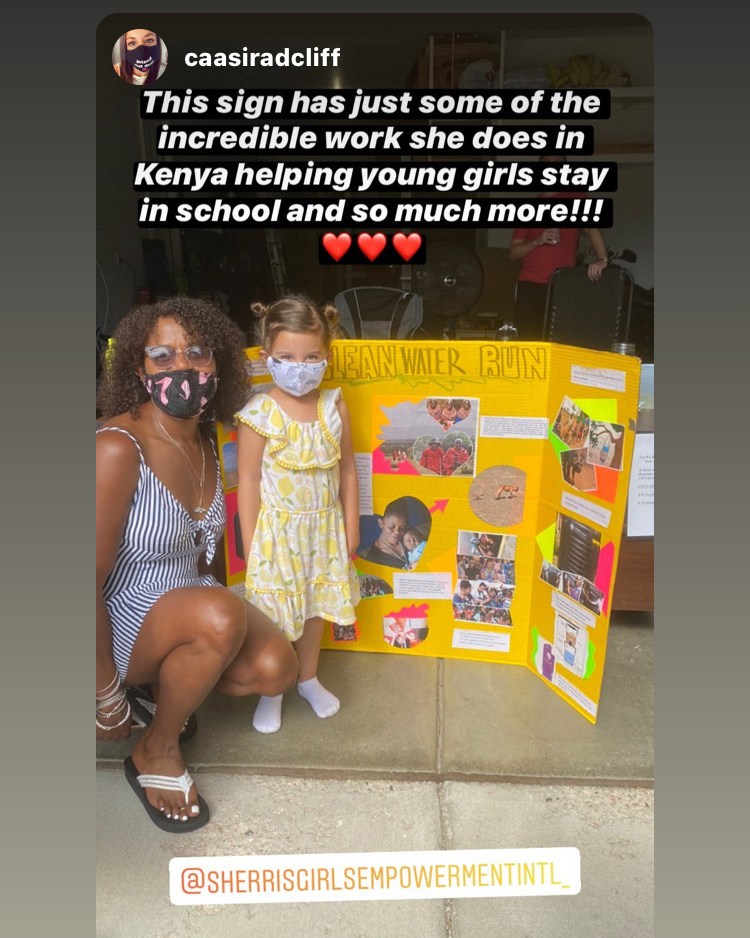
Since then, Cam and her mom have deepened their relationship with their new friend–recently holding a garage sale in which they donated all the proceeds to Gonzales’ organization Sherri’s Girls Empowerment International.
Over two days, the sale made $2,070—money that will now go towards sending girls to school in Kenya.
“All of this happens,” Sherri told KCNC, “because a sweet little 4-year-old recognized that my life matters.”
The pals have recently found another thing they share in common: a love for the Denver Broncos. Cam wants to be a cheerleader for them when she grows up. Sherri’s son, D.J. Williams, is a former linebacker for the NFL team.
The impressive duo’s new bond just goes to show: It’s never too early to start putting some good vibes out there into the world. And it’s never too late to make a new friend.
(WATCH the video below from KCNC-TV) — Photos: Sherri Gonzales
SHARE this Inspiring Story With Your Friends on Social Media…
Who hasn’t daydreamed about what they might do with the money if they came into billions of dollars?
A month after her divorce from the wealthiest man on the planet, MacKenzie Scott signed the Giving Pledge and promised to give away her billions “until the safe is empty.” A year on, she has revealed how she’s been acting on that declaration.
When Scott officially split from the Amazon founder and CEO Jeff Bezos in April 2019, ending a 25-year marriage, she received $38 billion as part of the settlement. Per Bloomberg’s latest estimate, her net worth now stands at$60.8 billion.
On July 28, she revealed in a blog post on Medium just what she’s been doing with some of her billions:
“Last fall, I asked a team of non-profit advisors with key representation from historically marginalized race, gender, and sexual identity groups to help me find and assess organizations having major impact on a variety of causes.”
Following up on the commitment I made last year to give away the majority of my wealth in my lifetime: https://t.co/Ocb8eU5UR1. (Note my Medium account is under my new last name — changed back to middle name I grew up with, after my grandfather Scott.)
Since then, 116 organizations around the world have received $1.7 billion in donations from Scott.
From Black Girls Code to the COVID-19 response effort, every one of the recipients, writes Scott, “is tackling complex challenges that will require sustained effort over many years, while simultaneously addressing consequences of the COVID-19 pandemic.”
The Point Foundation, which gives scholarships to LGBTQ+ students, is one of the organizations that has benefitted from this spate of philanthropy. Its CEO told the Chronicle of Philanthropy that the charity did not apply for a grant and had no connection to Scott. The “very generous gift” Jorge Valencia and the team received “was a gift that just fell from the sky.” He added, “To have somebody believe in you means a lot.”
Scott is not the only billionaire to promise to give away their wealth before they die. The Giving Pledge—an initiative sparked nearly a decade ago by Bill Gates and Warren Buffett—has been signed by 204 wealthy individuals, including Facebook’s Mark Zuckerberg and Airbnb cofounder Vrian Chesky. Notably, Jeff Bezos has not signed the pledge.
Several Historically Black Colleges have already received grants from Scott, including Morehouse and Howard Universities. If this first year of donations is anything to go by, nonprofits devoted to the climate crisis and the environment will also benefit from her billions, having already received $125,000,000, so far. Economic mobility is also on her list of causes to support, saying she’s given $399,500,000 to various groups to date.
Scott, an award-winning novelist who describes herself as a “mom, writer, advocate,” wrote on Giving Pledge, “My approach to philanthropy will continue to be thoughtful. It will take time and effort and care. But I won’t wait.”
A Twitter user, Sean Gardner, speaks for so many in writing of Scott, “Wow, you donated $1.7 billion to 116 organizations focused on issues like racial equity, LGBTQ+ equity, functional democracy, climate change, and more. Good stuff. This is awesome!”
Multiply The Good News By Sharing With Your Friends On Social Media…
Quote of the Day: “August of another summer, and once again I am drinking the sun and the lilies again are spread across the water.” – Mary Oliver
Photo: by Etienne Girardet
With a new inspirational quote every day, atop the perfect photo—collected and archived on our Quote of the Day page—why not bookmark GNN.org for a daily uplift?
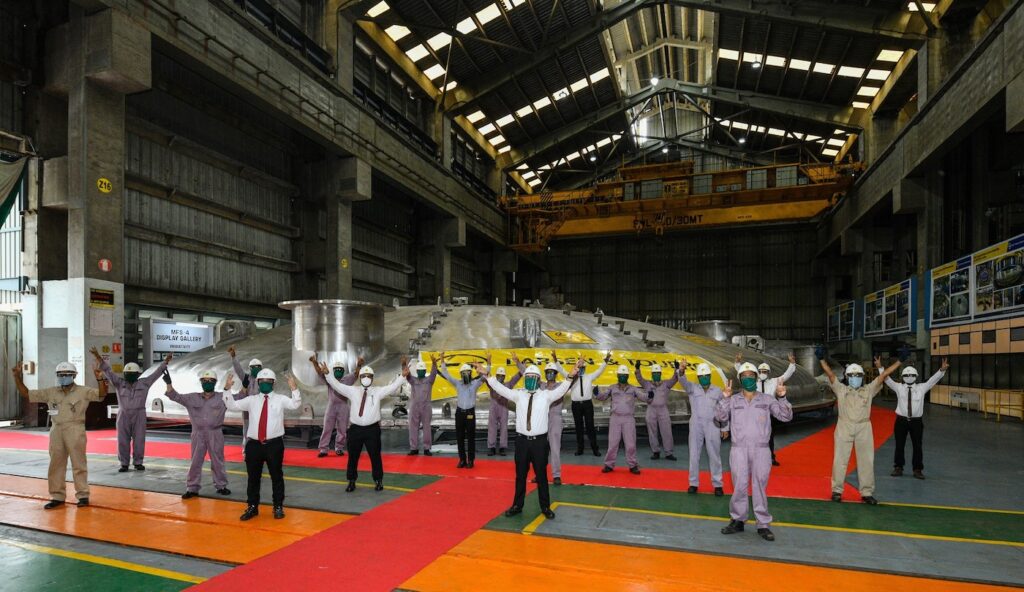
ITER workers unveil major component in 2020 – ITER.org
In France, President Emmanuel Macron held a ceremony July 27 to launch the assembly phase of one of humanity’s most-complex engineering projects ever attempted—a giant nuclear fusion reactor, a machine that could produce relatively unlimited amounts clean power.
ITER workers unveil major component in 2020 – ITER.org
Best of all, it is being built collaboratively by a consortium of 35 nations—China, India, Japan, Korea, Russia, and the United States, alongside the 28 states of the European Union plus Switzerland.
The 20 billion euro ITER Project is something straight out of Marvel’s Iron Man films. Conceived decades ago in 1985, ITER, which finally launched in 2006, has been delayed due to numerous setbacks, but they are determined to create what would essentially be a miniature sun on earth. (Watch a video below to see the progress…)
It is the core of the sun from which nuclear fusion technology is based, a technology that unlike nuclear fission, with conventional nuclear reactors, produces 4-times as much energy without the risk of meltdowns, and virtually no waste or exhaust of any kind.
“Enabling the exclusive use of clean energy will be a miracle for our planet,” said Bernard Bigot, ITER director-general. He said fusion, alongside renewable energy, would allow transport, buildings, and industry to run on electricity.
How complex is this?
The ITER (International Thermonuclear Experimental Reactor) requires millions of different components assembled over 5 years to create a reactor weighing over 23,000 tons. Required for atomic fusion to be achieved, 3,000 tons of super-heavy magnets, some weighing more than a passenger aircraft, will be linked together with 124 miles (200 kilometers) of superconducting cables.
Construction is underway in Saint Paul-lez-Durance, southern France, with major components arriving this year from China, Japan, and other member states.
When operational, the parts will be kept at -452F (-269C) by the world’s largest cryogenic freezer. This part is important since the fuel, heavy hydrogen atoms gathered from sea water, will need to be heated to between 150 and 300 million celsius—ten times hotter than the core of the sun inside a doughnut-shaped machine at the center of the reactor called a tokamak.
At this incredible heat and pressure the gaseous hydrogen fuel becomes a plasma—a hot, electrically charged gas, which will eventually cause the atoms to overcome their magnetic repulsion and fuse together, hence the term “nuclear fusion”.
When this happens, immense amounts of energy is released that will power the components and magnets as well as anything it’s connected to, with nothing but neutrons and helium leftover. Amazingly, this project is only a proof-of-concept, a sort-of blueprint for a long term permanent commercial reactor.
Other nuclear fusion projects exist, in India and in England for example, backed by governments and private investors in the hopes it will solve the carbon and energy crises for all time—but they are much smaller.
The Guardian details some of these projects, including Tokamak Energy, named after the chamber where the hot plasma is stored, and fusion is achieved. The company’s vice-chair told the English paper, “We are convinced that faster progress is possible, driven by the need for more carbon-free energy and enabled by private investment, modular designs, new materials and advanced technologies.”
President Macron believes that when so many countries contribute their best scientists and expertise for the common good, it is “the proof that what unites people and nations is stronger than what divides them.”
WATCH the news report…
‘First Plasma’ is schedule for December 2025, which will mark the official start of ITER’s operation, with first power to be generated ten years later.
BLAST This Good News Around The World By Sharing On Social Media…
Editor’s note: changes were made to clarify the process of nuclear fusion, as explained on ITER’s website.
Let the popcorn munching, soda slurping, and celebrity spotting begin. It’s time to return to the 1950s and enjoy a film in the open air, because drive-in movie screenings are coming free to Walmarts across the USA.
If you’ve always wanted to catch a classic film on the big screen, the Walmart Drive-in tour can make that happen in a socially-distancing way. Best of all? Actress Drew Barrymore will be there to virtually host each event—and at one surprise location, she’ll even be there in person.
Created in response to the coronavirus, 160 Walmart stores across the country are going to be hosting the drive-in movie nights until the end of October.
“We recognize the challenges our customers and their families have faced over the last few months,” said Janey Whiteside, Walmart’s chief customer officer, “and we wanted to create an experience where they could come together safely to create new memories. The Walmart Drive-in is one small way we’re supporting the communities we serve.”
The fun starts on August 14, and this is no small initiative. Over the next few months, there’ll be 320 movies playing from coast to coast, from Houston, Texas, to Sedalia, Montana.
Film choices have all been curated by Walmart’s drive-in partner, the Tribeca Film Festival–so rest assured these won’t be duds.
Walmart image
From the safety of your vehicle, here’s a selection of the kinds of movies you’ll be able to enjoy:
Inspiring sports stories like Friday Night Lights,The Karate Kid, and Space Jam
Blockbuster franchises including Black Panther, Pokémon Detective Pikachu, Spider-ManTM: Into The Spider-Verse, Spy Kids, Teen Titans GO! To the Movies, and Wonder Woman
Out-of-this-world stories like E.T. the Extra-Terrestrial, Ghostbusters, and Men in BlackTM: International
Nostalgic favorites including Back to the Future,Beetlejuice,TheGoonies, and The Wizard of Oz
Inspiring true stories from Dolphin Tale to Selena
Animated features enjoyable for the youngest to the oldest, like Cars, The Iron Giant, The Lego Movie, and Madagascar
There’ll be filmmakers and special guests alongside Barrymore to help celebrate the comeback of the big screen onto your empty social calendar. If you’ve ever hoped to see stars like LeBron James, Jennifer Garner, director Peter Berg, and This Is Us star Chrissy Metz… you might just get lucky. They’ll all be making surprise virtual or in-person appearances at specific locations.
Head to TheWalmartDriveIn.com to find store locations, dates, and the films being shown at each stop on the movie tour. You can also reserve your parking space and pick your desired location and date. Once confirmed, you’ll receive an email with a QR code. That will grant your vehicle entry on the day of the event.
So go on. Enjoy the movies. And save some popcorn for us?
SHARE This Exciting News With Someone You’d Like To Go To The Drive-In Movies With…
These seniors have been getting fancy with makeup and lights since long before COVID-19 spurred us all to creativity.
In genius photoshoots, residents at the Spiritwood Assisted Living in Washington State have been recreating iconic posters from classic movies for two years now. And the results are guaranteed to put a smile on your face.
The idea to transform seniors into Hollywood stars came to Jennifer Angell in 2018. She’s the community relations director at ‘Spiritwood at Pine Lake’. Her mission? To combine unique, enjoyable activities for the residents with something purposeful—like raising money for others.
Jennifer struck gold when she came up with an idea for a ‘film star’ calendar.
“For two years we have dressed up the seniors as Hollywood movie stars and Village Concepts, a family company that owns the senior home, produces the calendars for us,” she told GNN. “I photograph each senior after doing makeup, hair and costume. The best part is we sell each calendar and every penny earned goes to the Alzheimer’s Association.”
“For the first calendar in 2019, the whole process took about four months,” says Jennifer. “I would do just one photo at a time, and when it was ready, I’d present it to the community at lunchtime. People passed the photo around and the featured resident would dress up in costume and parade around the lunchroom. It was so much fun for everyone.”
Jack Guptil, 83, who starred in the “Blues Brothers” photoshoot told the Issaquah Reporter in 2018, “When asked by Jennifer to be a part of the calendar, I didn’t want to be bothered, but when I saw how much fun people were having being someone else, I said that’s me—Elwood from the Blues Brothers.”
Fedoras, check. Sunglasses, check. Two ‘somebodies to love’, check.
The first three boxes sold out in just four days. “Resident families just loved it and swooped them right up,” says Jennifer.
After the Alzheimer’s Association posted them for sale on their blog in 2018 they raised around $14,000.
Jennifer gave GNN the inside scoop about the theme for the 2021 calendar. It will be ‘Iconic Figures’ including pop culture icons like Sonny and Cher, Willie Nelson, and Andy Warhol, alongside historical notables like Winston Churchill and Eleanor Roosevelt.
“The annual resident calendars bring so much joy to not only the residents but their families,” says Spiritwood’s Executive Director Michelle Strazis. “They feel good about themselves participating in something that makes them feel so special and to be contributing by helping raise money for such a worthy cause.”
Which iconic Hollywood image is your favorite? Scroll down to see them and share the ones you love the most.
Do you think this senior had maple syrup spaghetti cravings after their Elf photoshoot?
All Photos by Spiritwood Assisted Living
Here’s one ‘way cool’ version of Wayne’s World.
Spock and the gang are back in this futuristic tribute to Stars Wars—‘ ‘The Older Generation’.
Helen Mirren (and the world’s most famous Elizabeth) would surely bestow a crown on this lady for her homage to The Queen.
Tom, is that you? Here’s one senior with a need for speed… and an apparent love of Top Gun.
Oh Marilyn! Junita Oney brings old school glamor with this stylish rendering of Ms. Monroe.
Click below to see more photos and learn how to order a calendar…
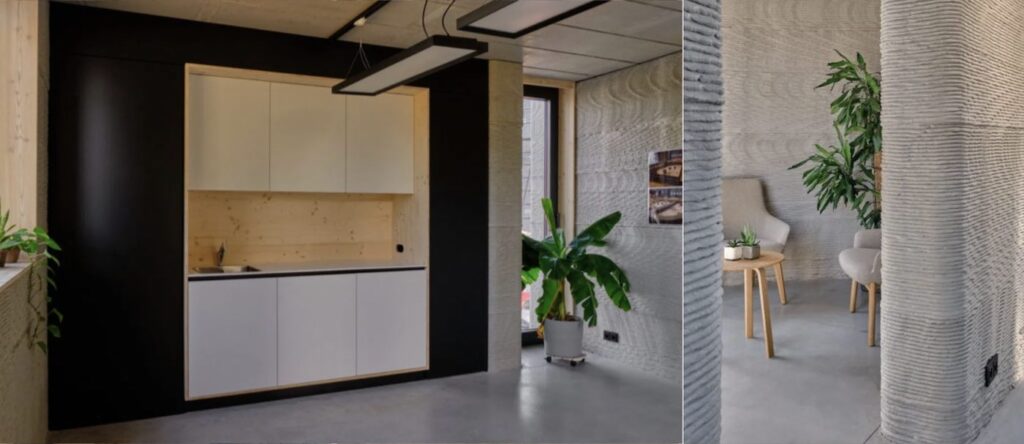
The largest 3D-printed home ever made in Europe—a two story affair with two living rooms, a kitchen, bathroom, and foyer—has recently been completed by the Belgian sustainable construction company Kamp C, hugely advancing the science of 3D-printed housing.
Kamp C & Jasmiens Smets
Kamp C used a 32 x 32 foot “gantry” printer, the largest of its kind in Europe, to create the shell of the two-story building. Using a special cement mixture ejected from the printer’s nozzle, the on-site work took only 3 weeks, with construction workers adding the roof, foundation, floor, windows, doors, plumbing, and electrical by hand. (See the time-lapse video below.)
The 980 square-foot building also featured some unique sustainable touches like underfloor heating and solar panels which were added later.
Of the benefits of 3D-printing, also known as “additive manufacturing,” the precise work of the machine cuts costs of materials—sometimes enormously.
Marijke Aerts, the project manager, told News Atlas: “The material’s compressive strength is three times greater than that of the conventional quick build brick. Besides the fibers in the concrete, the amount of wire-mesh reinforcement used is extremely limited. As a result of the printing technology used, the formwork was redundant, saving an estimated sixty percent on material, time, and budget.”
In Europe, where homes are normally built with brick, mortar, and concrete, saving construction costs is not only great for one’s wallet, but for the environment as well; as it’s estimated that manufacturing concrete creates 1 ton of CO2 per every ton of material, making it one of the most carbon-intensive construction methods available to home builders.
Designed and carried out as a proof of concept, the house in Belgium was never actually intended to be lived in.
“Printing this building is mainly a statement,” Emiel Ascione, another project manager told Digital Trends. “It shows the construction industry the accessibility and potential of this technique. The benefits of additive manufacturing are already paying off in a wide range of other industries, he said. It’s about time that housing caught up with them.”
Ascione explained further that many people would like to be able to have a more unique or personalized structure to their home, but that manufacturing costs of things like towers, circular angles, sunken living rooms, and other creative designs run too high for most people.
Another company, in the United Arab Emirate, built a 3D printed home in Dubai using locally sourced materials, and finished theirs after just two weeks of construction—a beautiful modern design measuring 6,900 square feet (640 square meters).
“A huge benefit of this technique is that [it is free of] complexity,” added Ascione. “You could print a series of houses and make each of them unique without a considerable impact on the cost.”
BUILD Some Excitement Over Architecture By Sharing This On Social Media…
Quote of the Day: “Some days are better, some days are worse. Look for the blessing instead of the curse.” – Doe Zantamata
Photo: by James Lee
With a new inspirational quote every day, atop the perfect photo—collected and archived on our Quote of the Day page—why not bookmark GNN.org for a daily uplift?
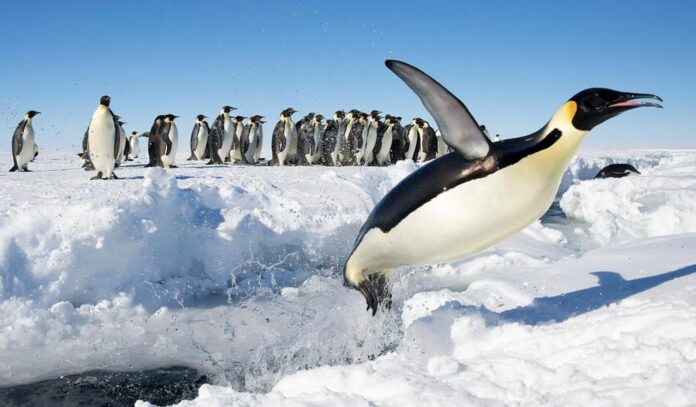
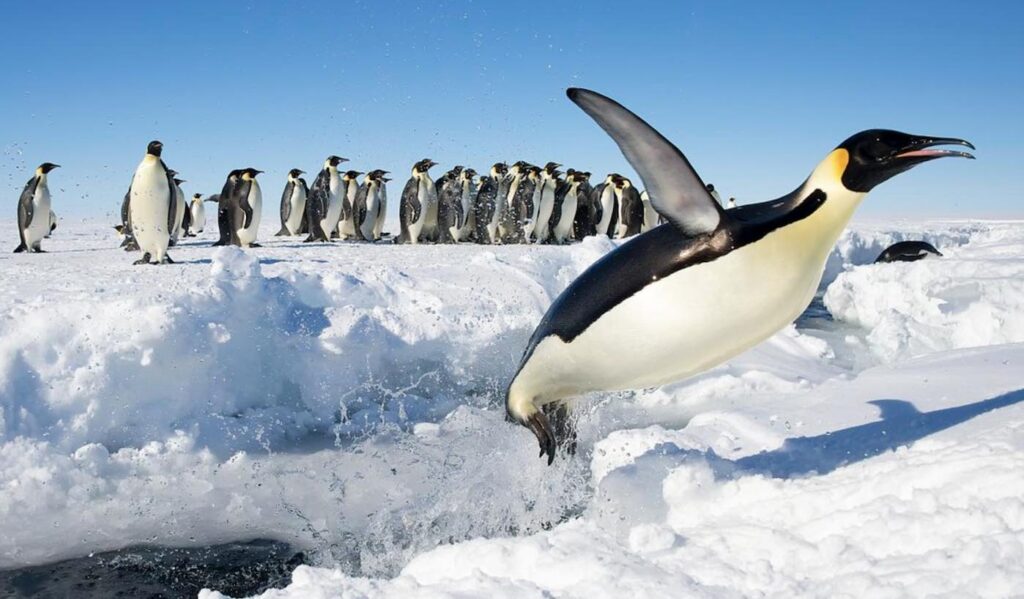
Emperor Penguins of Gould Bay by Christopher Michel, CC license
A new study using satellite mapping technology reveals there are nearly 20% more emperor penguin colonies in Antarctica than was previously thought.
Emperor Penguins of Gould Bay by Christopher Michel, CC license
Researchers reported this week how they used images from the European Commission’s Copernicus Sentinel-2 satellite mission to locate the birds.
They found 11 new breeding colonies, three of which were previously identified but never confirmed. That takes the global census to 61 colonies around the continent.
Emperor penguins need sea ice to breed and are located in areas that are very difficult to study because they are remote and often inaccessible with temperatures as low as -50°C (-58 degrees Fahrenheit).
For the last 10 years, British Antarctic Survey (BAS) scientists have been looking for new colonies by searching for their guano stains on the ice.
“This is an exciting discovery,” says lead author Dr Peter Fretwell, a geographer at BAS. “The new satellite images of Antarctica’s coastline have enabled us to find these new colonies.
The colonies are small but the numbers increase the overall population count by up to 10%—to just over half a million penguins or around 278,500 breeding pairs.
BAS survey image shows colonies in center that look like brown smudges.
Emperor penguins are known to be vulnerable to loss of sea ice, their favorite breeding habitat, so the data provides an important benchmark for monitoring the impact of climate change on the population of this iconic bird. With current projections of environmental changes, this habitat is likely to decline, and penguin populations could be lost “under a business‐as‐usual scenario, with unmitigated greenhouse gas emissions creating warmer temperatures.
The study also found a number of colonies located up to 180 km offshore, situated on sea ice that has formed around icebergs that had grounded in shallow water—which is a surprising new finding in the behavior of this beloved species.
During the coldest part of the year (July–August), breeding emperor penguins return to discrete locations and huddle for protection from the wind and cold, especially during incubation of their eggs, as depicted in the iconic documentary March of the Penguins, narrated by Morgan Freeman.
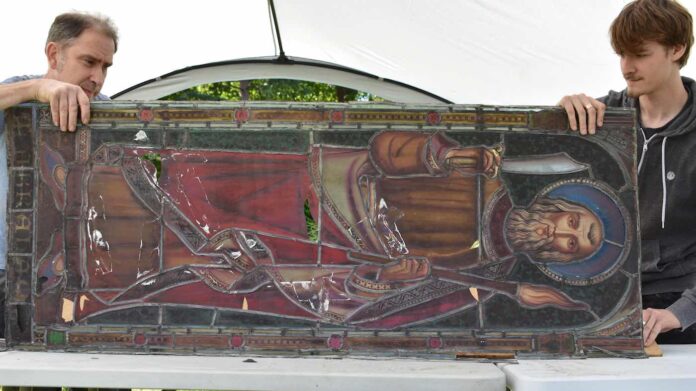
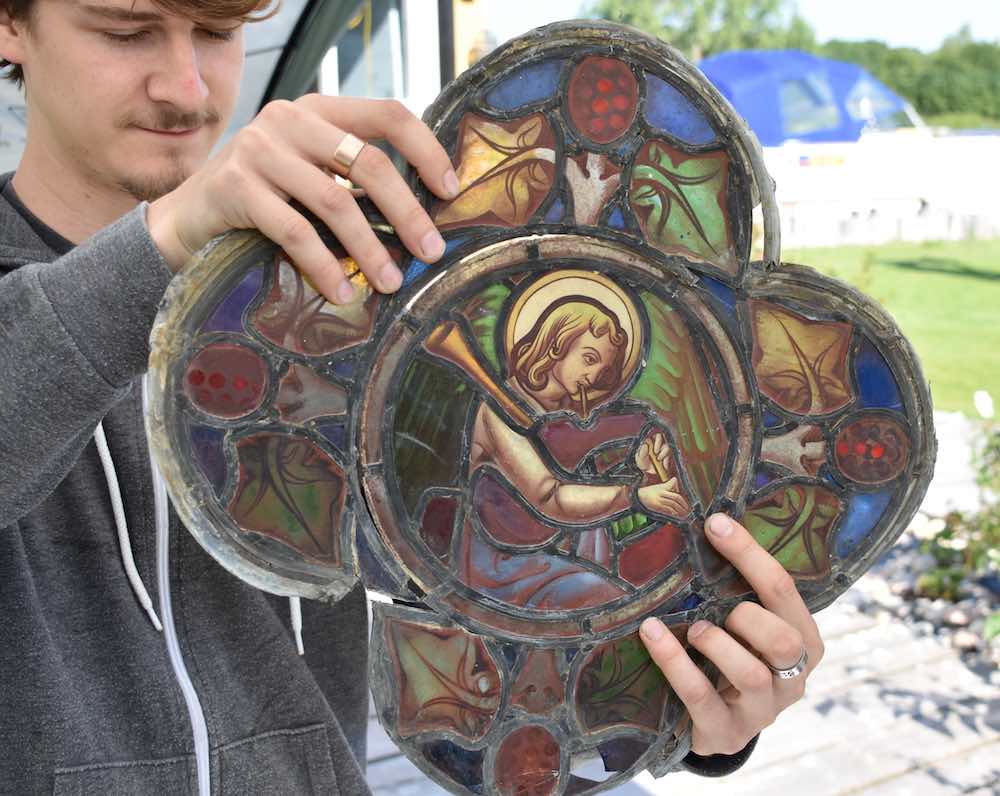
A wood carver who bought a box of stained glass at auction was shocked to discover he had unwittingly solved the 80-year mystery of their disappearance from a church during WWII.
Colin Mantripp, 63, purchased what he thought was a box of fragments of stained glass when it went up for auction, intending to use it to create original windows in his handcrafted doors.
But when he arrived in July last year at Roseberry’s Auctions in London to pick up what was sold as “a box of stained glass”, he was shocked to find an eight foot long and three foot wide box which weighed over 600 pounds.
It was covered in dirt and so massive they needed six people to carry it.
“I just couldn’t believe what I was seeing. I thought, this is an incredible amount of glass; I was delighted,” said Colin, from Bourne End, Buckinghamshire.
“For £300 I thought I bagged a bargain—and I didn’t even know about its history. They’re so beautifully done which is normal from that era when there was such an incredible attention to detail.
SWNS
After spending a few months restoring and cleaning the beautifully intricate and colorful windows he noticed the words “St Mary’s” inscribed in the glass, and became curious about the origins of the Victorian windows from the 1850s.
It only took a quick search online to discover that some windows had gone missing at a once-thriving parish 80 years ago.
SWNS
He was stunned to discover that the pieces he purchased were actually the windows from St Mary’s church in Sheffield, South Yorkshire, which had gone missing during the war.
In 1939, the majestic 20-by-12-foot neo-Gothic east window which shined down over the altar of St Mary’s was removed to protect it from Nazi bombers.
Along with other stained glass from the church, it had been hidden underground.
SWNS
The location of the glass had been lost over the years and only rumors remained. After the church building had been devastated during the Sheffield bombing Blitz, it took almost 20 years before any restoration work began.
After making the discovery, Colin contacted the church’s vicar and offered to return the windows to their original home, but his offer was refused as the church had already replaced the windows.
SWNS
Reverend Claire Dawson said, “The windows are an important part of the church’s history which dates back to 1830 but, as nice as it would be to see them, so much has changed for the church for the better and it wouldn’t be practical to have them back.
In 2009 the glass was replaced with a new £80,000 modern design.
“We are so much more than we were in 1939,” she added. “We have a beautiful new window which was installed above the altar and is a celebration of the journey from the church’s beginning to the present day.”
SWNS
“I’m not sure what I’ll do with the glass now that I’ve cleaned it up but it’s great to have found a piece of history.”
When COVID-19 hit, Virginia Sharp knew she had to keep paying her bills as the owner of a small boutique, so she decided to think outside the box.
Given mandated shelter-in-place orders, she transitioned her sales efforts from the brick-and-mortar location in Macon, Georgia, to social media which reaches the masses. Every Friday night she started streaming live fashion shows with a different theme each week—and it transformed her business.
From the first “White Party” three months ago, to a Girl’s Trip, a Yacht Party—and even a Coffee Chat that featured three colors, ‘black, cream, and sugar’—Sharp has found an online niche, and it has percolated sales coming from new customers as far away as Alaska.
A large part of her business is now packing up boxes to ship all over the country.
“Our community is loving the live theme shows on Facebook,” she told GNN.
Although she’s always loved fashion and wanted to be a model growing up, her parents didn’t approve, so she followed in her mother’s footsteps and worked a nurse for 30 years. But it didn’t diminish her dream to “one day own a cute shop.”
“Although I was in the medical field, I chose a position which still allowed me to be a fashionista because I was a nurse liaison who could dress and visit the hospitals and evaluate patients for acute and subacute rehab. That’s how I built my customer base because everyone knew me by the way I dressed.”
Quote of the Day: “You can’t calm the storm, so stop trying. What you can do is calm yourself. The storm will pass.” – Timber Hawkeye
Photo: by Nikolay Dimitrov
With a new inspirational quote every day, atop the perfect photo—collected and archived on our Quote of the Day page—why not bookmark GNN.org for a daily uplift?
Apple last month unveiled its plan to become carbon neutral across its entire business, manufacturing supply chain, and product life-cycle for all its devices by 2030.
The world’s most valuable company is already carbon neutral today for its global corporate operations, and this new commitment means that by 2030, every Apple device sold will have net zero climate impact.
“Businesses have a profound opportunity to help build a more sustainable future, one born of our common concern for the planet we share,” said Tim Cook, Apple’s CEO. “The innovations powering our environmental journey are not only good for the planet — they’ve helped us make our products more energy efficient and bring new sources of clean energy online around the world. Climate action can be the foundation for a new era of innovative potential, job creation, and durable economic growth. With our commitment to carbon neutrality, we hope to be a ripple in the pond that creates a much larger change.”
Apple’s 2020 Environmental Progress Report, released July 21, details its plans to reduce emissions by 75 percent by 2030 while developing innovative carbon removal solutions for the remaining 25 percent of its comprehensive footprint.
The company’s 10-year climate roadmap will lower emissions by continuing to increase the use of low-carbon and recycled materials in its products, innovate its product recycling, and design products to be as energy efficient as possible.
Reusing rare minerals
Apple’s latest recycling innovation — a robot the company is calling “Dave” — disassembles the Taptic Engine from iPhone to better recover key materials such as rare earth magnets and tungsten while also enabling recovery of steel. The company’s Material Recovery Lab in Austin, Texas, which is focused on innovative electronics recycling technology, is now partnering with Carnegie Mellon University to further develop engineering solutions.
All iPhone, iPad, Mac, and Apple Watch devices released in the past year are made with recycled content, including 100 percent recycled rare earth elements in the iPhone Taptic Engine — a first for Apple and for any smartphone.
Apple says it decreased its carbon footprint by 4.3 million metric tons in 2019 through design and recycling. Over the past 11 years, Apple has reduced the average energy needed for product use by 73 percent.
Apple’s new store in Bangkok – Apple Newsroom
The company is pledging to identify new ways to lower energy use at its corporate facilities and help its supply chain make the same transition through a new partnership with the US-China Green Fund, investing $100 million to accelerate energy efficiency for its suppliers. The number of facilities participating in Apple’s Supplier Energy Efficiency Program grew to 92 last year, with these facilities avoiding over 779,000 annualized metric tons of carbon emissions.
Renewable energy
Through a first-of-its-kind investment fund, Apple and 10 of its suppliers in China are investing nearly $300 million to develop projects to produce 1 gigawatt of renewable energy, and has generated commitments from over 70 suppliers to use 100 percent renewable energy — the equivalent of nearly 8 gigawatts. Once completed, these commitments will avoid over 14.3 million metric tons of CO2e annually — the equivalent of taking more than 3 million cars off the road each year.
New and completed renewable energy projects in Arizona, Oregon, and Illinois are Apple-owned and generate power that can run over 150,000 homes a year. It is also launching one of the largest new solar arrays in Scandinavia, as well as two new projects providing power to underserved communities in the Philippines and Thailand.
Apple is supporting the development of the first-ever direct carbon-free aluminum smelting process through a partnership with two of its aluminum suppliers, with the first batch due to be used in manufacturing the 16-inch MacBook Pro. A new aluminum production method will release oxygen, rather than greenhouse gases, during the smelting process.
Greening the planet
The company also announced in July a first-of-its-kind carbon fund to invest in the restoration and protection of forests and ecosystems in Kenya and Colombia, in partnership with Conservation International. The company has invested in management of over 1 million acres of forests and natural climate solutions in China and the US, as well.
Philadelphia wants to ensure that all its K-12 students have internet access, so they have what they need to learn remotely during the pandemic, especially as the city’s schools will remain closed to in-person classes this fall.
Since the coronavirus forced the school closures this spring, the city has been working with foundations and partners to mobilize funding that will provide broadband internet access for 35,000 kids—and this week they’ve unveiled a program that will make it happen.
PHLConnectED will connect eligible student households with two years of high-speed internet, without any out-of-pocket expenses or installation fees.
Using Comcast’s Internet Essentials program, or a high-speed mobile hotspot for families who are housing-insecure, the program will also ensure K-12 public school students have the devices they need (such as a laptop or tablet)—and also tech support to keep it all running smoothly.
The Philadelphia School District recently distributed over 128,000 devices to students who lack them at home. The School District and Charter Schools will continue to work with schools and families to make sure they have the resources they need to succeed.
PHLConnectED is the first stage of the city’s larger “digital equity” initiative to support digital literacy and access for all Philadelphia residents.
The bulk of the funding is being provided by private foundations, including $7 million from the Comcast NBCUniversal Foundation, $1 million each from the William Penn Foundation and Philadelphia School Partnership, and others. The city will also use $2 million in local CARES Act funding, without dipping into its general fund, according to the Philadelphia Inquirer.
Since March, more than 180 volunteer doctors, engineers, and tinkerers have been working together in their spare time to design a cheaper ventilator that can save lives while still costing much less.
And, last week their device received emergency approval from the US Food and Drug Administration (FDA) for use on patients.
One of the volunteers who helped design the ventilator’s user interface is an 18-year-old software engineer, Avi Gupta, who is the youngest member of the team—and also the reigning Jeopardy! Teen Tournament champion.
“The original prototype which was fully functional was made in our garages,” Gupta told KGW News. “So it’s truly something that can be deployed worldwide.”
Developers said the LifeMech Adapted Ventilator System (A-VS) will cost around $400 to manufacture, and the plans are Open Source, so anyone who has the need and ability to make one, can see the plans.
The nonprofit, which has filed with the IRS to be recognized as 501(c)(3) tax deductible entity, has already raised $25,000 to cover costs of parts and testing, but needs more money to move into manufacturing.
Their goal is to get the ventilators into the hands of doctors who need them in developing countries like Zambia, Nigeria and Bangladesh.
How far can the self-belief that you make your own happiness carry you, creating conditions for a self-fulfilling prophecy? A new study shows there is a happy correlation.
A new survey of 1,155 respondents found that 89% of people think that their happiness can be controlled—and these people are 32% happier than those who don’t think that happiness can be controlled.
The average happiness rating given by participants who think happiness is controllable is 7.39. In contrast, the average happiness rating of people who think happiness is out of their control is 5.61.
Even taking into account the so-called self-serving bias, which is the common habit of a person taking credit for positive events or outcomes, but blaming outside factors for negative events, the author believes the research is noteworthy.
“I didn’t expect such a big difference in happiness ratings between the people who think happiness can be controlled and those who don’t,” Hugo Huyer, the study’s author, told GNN. “In social science, a lot of correlations are far less clear, as results are often influenced by factors that cannot be excluded in a study.”
“However, the study is consistent with others in the field and hints at the fact that the happiest people have learned that some aspects of our lives are within our control. By focusing on these areas, you are more inclined to feel happy.”
Less happy people were less likely to feel in control of happiness
Respondents were asked, ‘Is happiness something that you can control?’ and
‘If you look back at the last year of your life, how would you rate your happiness on a scale from 1 to 10?’
They were grouped into three categories based on how high they rated their happiness. People with low happiness ratings (6 or lower) are 5 times more likely to feel like happiness is out of their control compared to people with high (9 or 10) happiness ratings (20.33% versus 4.29%).
Digging into the demographic questions, the study examined ranging from gender to employment status.
There was no difference between genders. Both male and female respondents showed the same results. 89% of people think that happiness is controllable.
A self-described “data junkie” and “happiness tracker” for over 6 years, Huyer and his team of researchers in the Netherland say their study showed that people with a higher educational background are more likely to feel like happiness can be controlled. Interestingly though, it’s the students that are least likely to feel like happiness can be controlled, when compared to other employment statuses of our respondents. The study shows that part-time and full-time employees are most likely to feel like happiness can be controlled.
Based on the analysis, when transitioning from being a college student to being employed, you can expect to feel more in control of happiness (on average, from 75% to 90%).
Control over happiness changes as you age
Age seems to have a significant influence on the average respondent. The amount of control we have over our happiness decreases in our mid-life and increases as we grow older again.
One interesting finding is that age plays a significant role. In well-researched studies on happiness vs age, researchers have found a “U-curve” in our happiness, showing that happiness decreases from age 18 and reaches peak unhappiness at approximately age 47. From there, the happiness levels gradually increase again. This has been confirmed around the world.
Similar to this “U-curve” in happiness, our feelings of control over happiness tend to reach a negative peak during our midlife, according to this study. Since actual happiness and control over happiness is correlated, it is logical that our mid-lives align with a feeling of lower control over happiness.
The good news is that feelings of control over happiness increase at an older age again, so in mid-life we can expect a trend toward happiness in the future.
Quote of the Day: “Normality is a paved road. It’s comfortable to walk, but no flowers grow on it.” – Vincent Van Gogh
Photo: by Mohammed lak
With a new inspirational quote every day, atop the perfect photo—collected and archived on our Quote of the Day page—why not bookmark GNN.org for a daily uplift?



























 These seniors have been getting fancy with makeup and lights since long before COVID-19 spurred us all to creativity.