












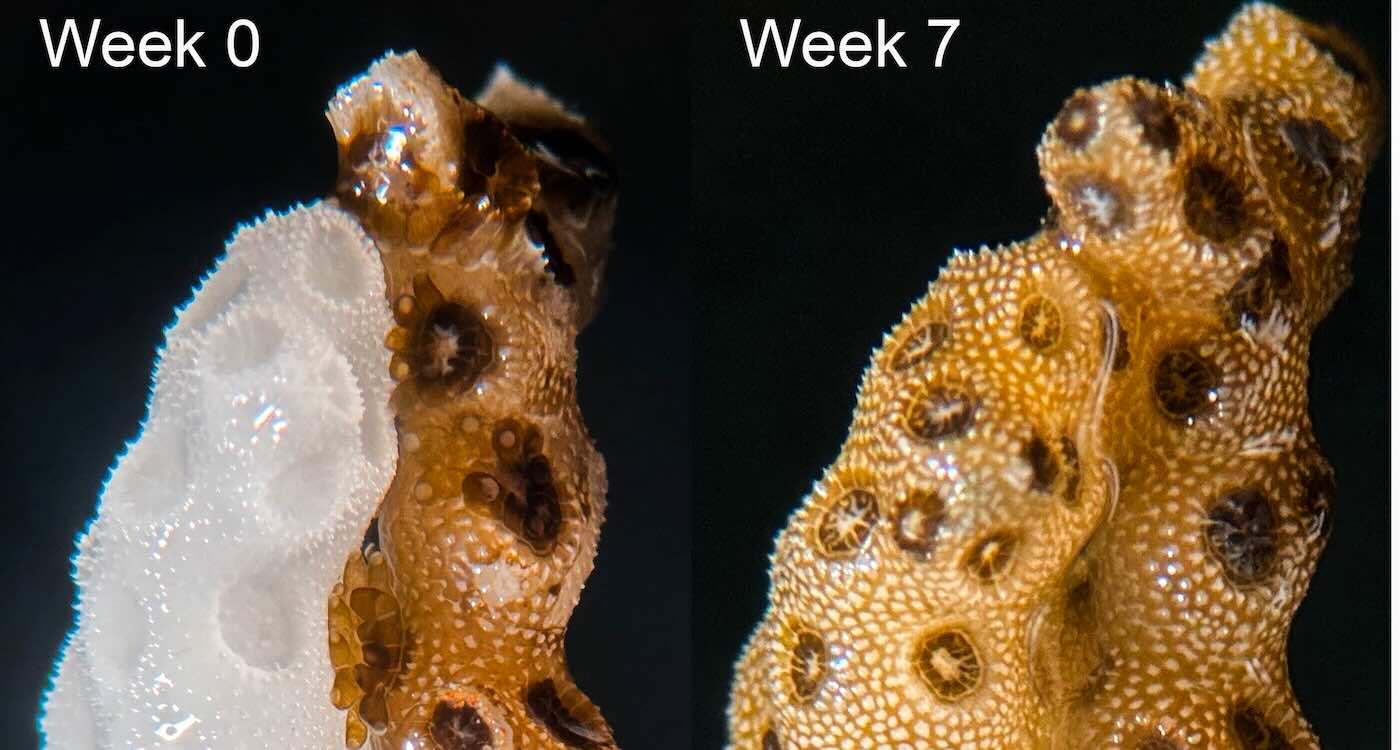
Coral bleaching has been reversed at record speed using a new method developed at Stanford University.
Corals that were ghostly white returned to full health in their lab in a mere seven weeks—the fastest documented recovery to date.
It is the first time scientists have observed bleached corals on the brink of death fully recover through brief contact with healthy clones.
They say the breakthrough, published in the journal Science Advances, opens new possibilities for restoring coral reefs damaged by the intense heat of climate change.
Coral reefs, which protect coastlines and communities from storms and flooding, expel beneficial algae living within their tissues when ocean waters warm.
The loss of their algae partners leaves corals pale, starving, and vulnerable to the invasion of harmful algae.
But, the lead study author Danny Collins says that while bleached corals may be dying, “they are not dead yet”.
In a lab setting, corals fully recovered from bleaching within weeks through brief contact with healthy corals. By fusing tissues, healthy corals sent enough life-giving algae and nutrients to their bleached counterparts to kickstart the recovery process in three days.
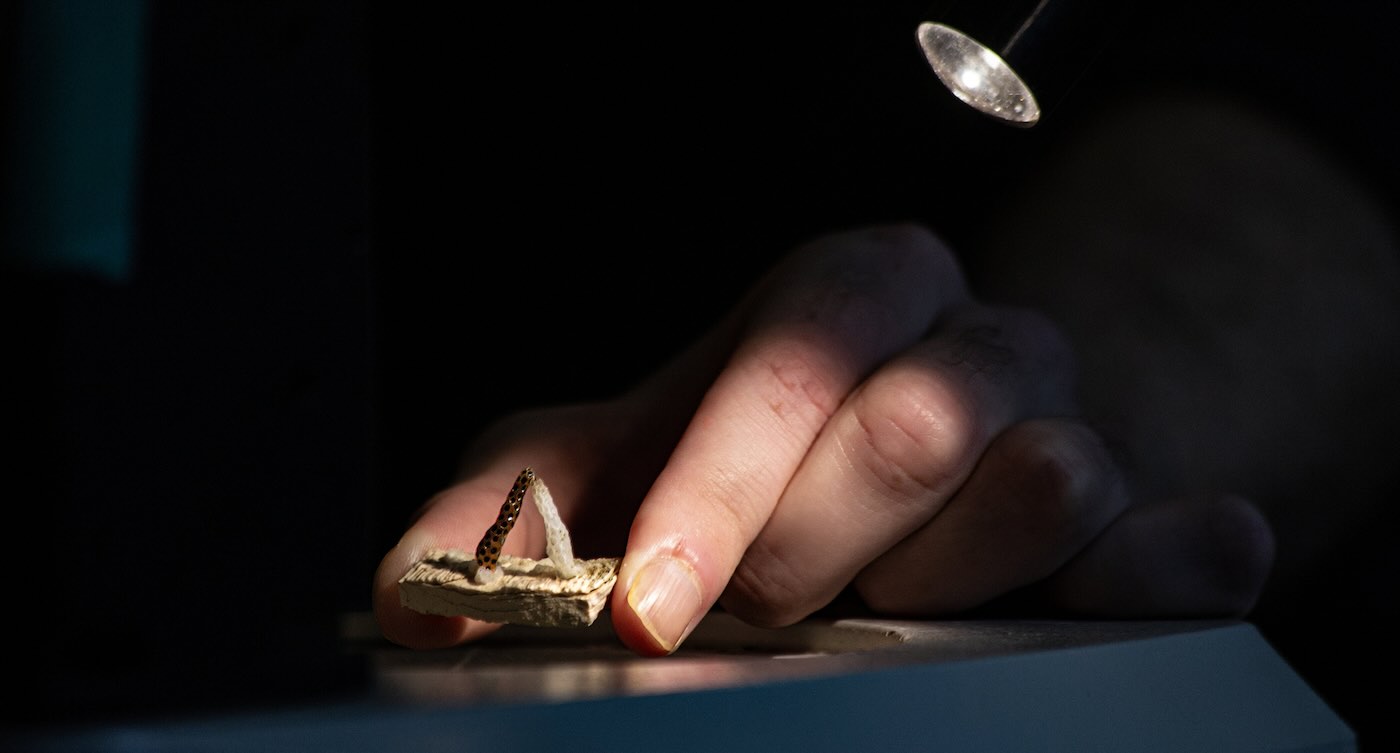
Collins, a PhD student at the University’s Doerr School of Sustainability, explained that all corals are animals that can multiply by producing clones that grow together to form vast, reef-building colonies of the same genetic make-up.
In 2025, study coauthor Professor Steve Palumbi observed something curious about coral biology in his research lab. Two coral fragments—one bleached, one healthy—sampled from the same colony had tipped over in a tank and were now touching.
Where they made contact, color returned to the bleached fragment, signaling the return of beneficial algae.
Around the time of the observation, Collins was considering the origins of coral disease—the possibility that bacteria lurking on plastic debris is settling onto the coral.
“Harmful bacteria enter corals through physical contact, (so) we were curious about what would happen if we used contact to reintroduce something good—the beneficial algae from healthy corals,” explained Collins.
Collins arranged five pairs, close enough to touch, and left gaps of just a few millimeters between the remaining pairs—and the bleached fragments in touching pairs fully recovered within seven weeks, while those without contact died.
“Genetically identical corals recognize one another when they come into contact, and their tissues fuse,” said Stanford Prof. Palumbi.
“We see something similar in humans. Organ transplants are often successful if the donor is your identical twin.”
Microscopic channels in coral tissues align shortly after contact, creating a pathway for transport between corals, allowing beneficial algae and the nutrients they produce to flow through those channels.
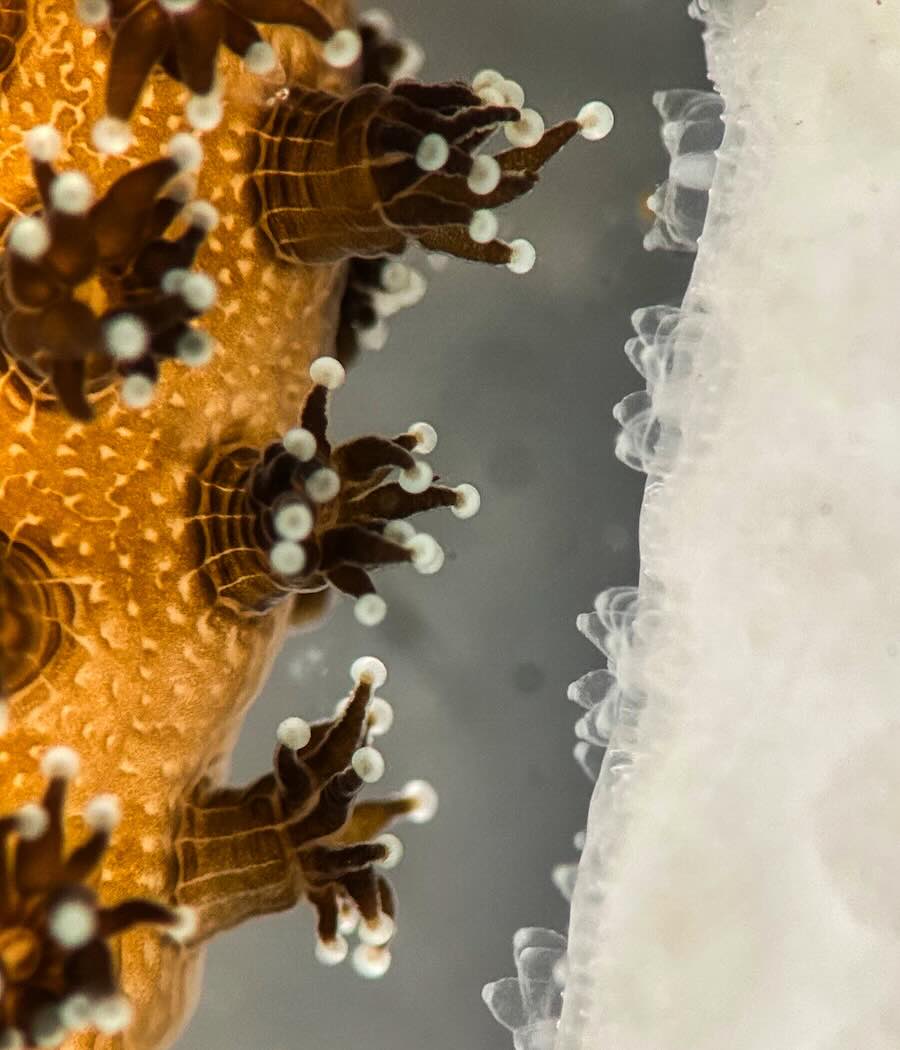
They also tested how different contact durations influenced recovery rates and found that after one week of contact, and in some cases after just five days, bleached fragments received enough beneficial algae to complete recovery on their own.
After separation, recovery took just seven weeks, matching the recovery time of coral pairs left in continuous contact.
That led the team to realize that algae replicating within the bleached fragment—rather than traveling from the healthy fragment—primarily drove continued recovery.
“Once beneficial algae enter bleached corals, they don’t just spread out,” said Prof Palumbi. “They flood in and start dividing at the fastest rates seen in corals.”
During the second week of contact with healthy corals, algae within bleached fragments doubled every four days, around ten times quicker than the rate observed in wild corals.
Researchers have been trying for years to develop tools and approaches that can protect corals from bleaching, disease outbreaks, and increasingly acidic waters, despite bleached corals often being considered ‘a lost cause’.
CORAL, CORAL, EVERYWHERE:
• Red Sea Coral Dying From Heat Stress is Being Revived With Probiotics
• Coral Reef Long Presumed Dead Is Rediscovered ‘Teeming with Life’ Off Coast of Africa
• Scientists Have Found Climate-Resistant Coral Reefs Around the World Totaling the Size of Wisconsin
Solutions being explored include selectively breeding heat-tolerant corals, cultivating coral nurseries to restore degraded reefs, and even transplanting coral microbiomes.
In the coming months, the researchers plan to explore alternative ways of delivering beneficial algae to bleached corals that don’t require continuous contact.
“These new insights into how corals can naturally recover give us hope for the future,” said Stanford Prof. Fiorenza Micheli. “They open the door to what’s possible and may lead to the breakthrough we need to accelerate reef restoration.”
SHARE THE BREAKTHROUGH With Scuba Divers on Social Media…