












From the sun-soaked plains of Parma comes the story of an Italian farmer who accidentally brought on a Biblical resurrection with very modern implications for our food system.
Claudio Grossi doubted whether the shriveled wheat seeds he found in his attic would grow into anything.
It didn’t take long for Grossi to forget that he threw the seeds into a pile of manure for curiosity’s sake. When the growing season got going, however, he witnessed these decades-old seeds grow into something entirely unexpected—something ancient.
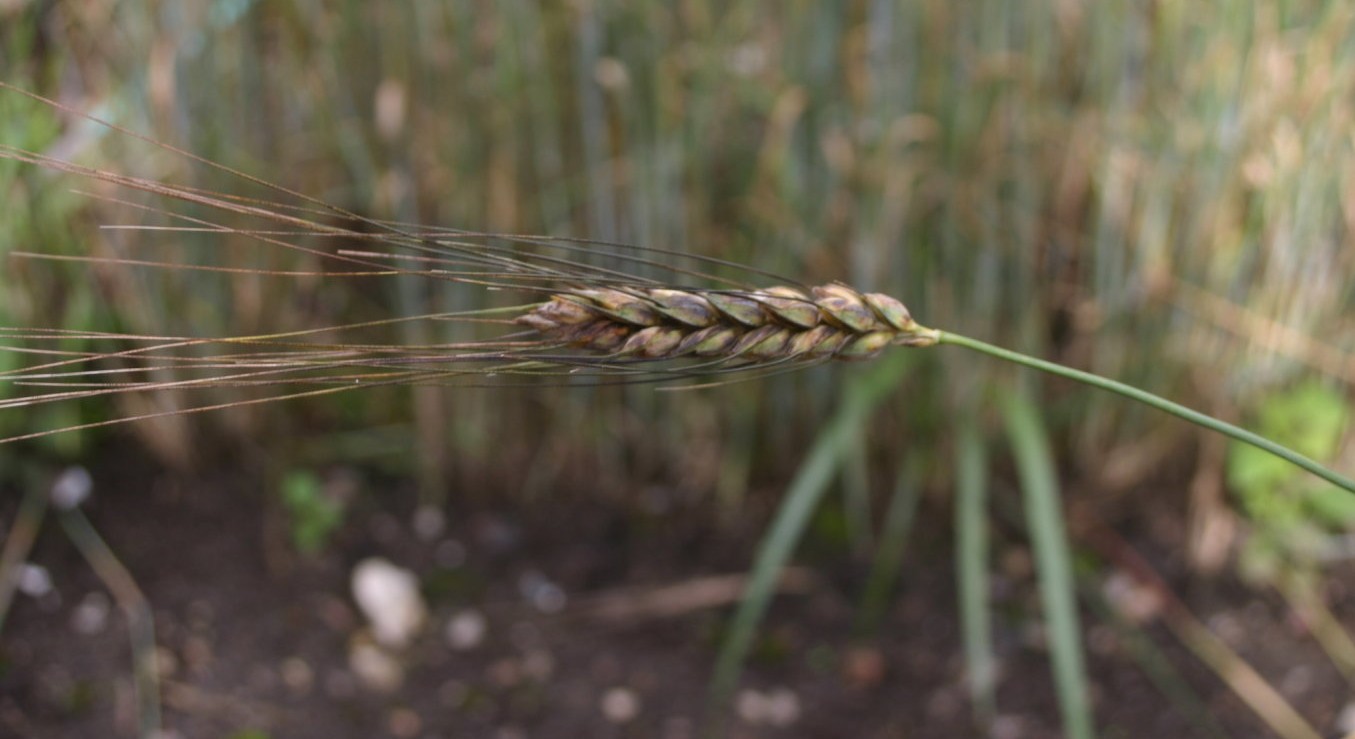
Smithsonian Magazine’s Lina Zeldovich wrote that Grossi looked on with surprise as what was obviously a kind of wheat began to tower over his commercially-raised yellow wheat, and that rather than a single ear, these seeds preserved by his great-grandfather sprouted 7.
The pattern of those 7 ears proved important. One tall ear was surrounded by 6 thin ears of different colors. Grossi had spent his whole life farming wheat and had never heard of anything like it. Though he could find nothing about it in any agricultural manuals, a clue as to the “freak” grain’s origin did indeed come from a Good Book.
“And behold, seven ears of grain came up upon one stalk, rank and good,” read a page in the Book of Genesis that Grossi happened upon one Sunday in church. 7 ears, one stalk, just like the “freak of nature” at his farm.
Indeed, what his great-grandfather grew after he bought the farm in Italy’s Emilia-Romagna region in 1915 was an ancient form of wheat called Triticum turgidum convar. compositum, as scientists at the University of Parma would later determine. It evolved in Türkiye, Egypt, and other countries along the Mediterranean, and was cultivated one upon a time in Italy.
As a commercial grain, its production declined around the time of the Mussolini dictatorship because its impressive height made it vulnerable to snapping under wind, heavy rains, and hailstorms before the grains would mature.
Additionally, dough made from T. turgidum flour doesn’t leaven well, and unusual preparations need to be made for baking with it.
Yet one by one, the positives which Grossi experienced made him wonder why Italian farmers ever stopped cultivating it. Tall, large, and hardy, it overshadows weeds, shows resistance to drought, and appears less reliant on fertilizer than other breeds. Grossi began calling it his “Miracle Wheat” or grano del miracolo.
MORE ANCIENT FOODS: Discovery of New Avocado Types Could Lead to More Superfood Choices and Resilience
Miracolo flour is sold today in both bread and pastry forms for just €2,10 per kilogram. Miracolo also contains more iron, phosphorus, arginine, tryptophan, and lysine: all vital nutrients, while the smell of it baking in the oven tells of a natural sweetness that Grossi said seems typical of the species.
Today, the man who brought this ancient grain back into modern life continues to experiment. He’s found that growing smaller grain varieties in between Miracolo stalks helps offer support for the larger species in the face of heavier weather.
ITALIAN STORIES: 3 Italian ‘Hobbits’ Searched for Irishman’s ‘Precious’ Wedding Ring for Days Before Bringing it to His Home
Francesco Sottile, an expert in biodiversity of agri-systems at the University of Palermo, in Sicily, told Smithsonian Magazine, which first revealed Grossi’s story of the miracle wheat to the US, that the world needs more grains like T. turgidum.
Carrying the genetic heritage of long-lived plants which had to build resilience to extreme weather and predation naturally, without the aid of agri-chemicals, ancient grains were carried on and diversified by generation after generation of farmers.
They help fortify our modern food supply from shocks related to these hazards which have plagued the farmer for millennia, Sottile said, and which will continue to shock us as the climate, particularly in southern Europe, continues to change.
SOW The Seeds Of Good News On The Fields Of Social Media With This Story…