













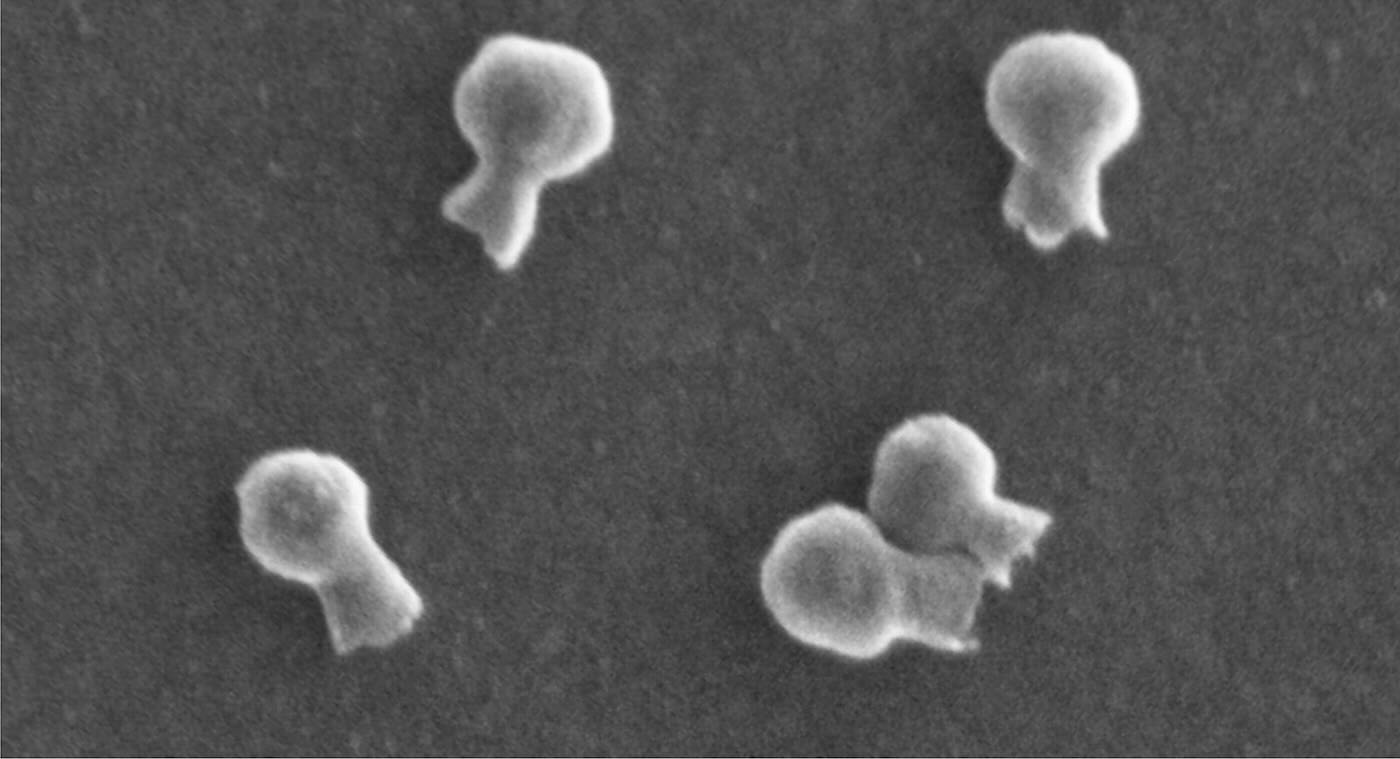
Tiny “robots” that can deliver lifesaving treatments to the brain have been developed.
The bots—which look like miniature asymmetric balloons—can treat neurological disorders as well as diseases like cancer, reports the Caltech scientists.
The human brain has several layers of protection to help keep it safe from dangerous invaders, but one of those safeguards (the blood–brain barrier or BBB) is so secure, it makes it hard to deliver medications.
To get through that barrier, researchers have developed a nano-robotic system called ‘BrainBots’ that can successfully cross the BBB to deliver lifesaving therapeutics—and it’s already been successfully tested in mice.
“We showed that our BrainBots can carry medication through the bloodstream and help deliver it across the blood–brain barrier, one of the biggest challenges in treating brain diseases,” said study leader Professor Wei Gao, from the California Institute of Technology.
In a study, published in the journal Science Robotics, BrainBots powered by light delivered around five times more medication to the brain than “nonactivated” sources like intravenous injections.
Prof. Gao and the team used established biocompatible and biodegradable materials to build nanoscale “robots” that can be activated by light to self-propel, pushing them toward the cells on the BBB, so they can then be ushered into the brain.
To make the BrainBots work, a chamber is loaded with ammonium bicarbonate, a gas-generating fuel, then encapsulated in a shell with a temperature-sensitive gate and attached to the medication payload.
The capsules, which are around 250 nanometers in size, or hundreds of times smaller than the width of a human hair, are injected into the bloodstream.
Near-infrared light is then directed through the skull to activate the BrainBots near the BBB.
The light generates localized heat that melts the gate and triggers the production of gas, propelling the BrainBots to make contact with BBB cells.
The BrainBots are equipped with specialized DNA molecules called aptamers, which help them recognize and bind to cells lining the BBB, meaning they can be taken up by these cells and transported across the barrier into the brain.
Once inside, the nanobot further degrades to release medication, and the entire structure eventually disintegrates.
Prof Gao’s team tested BrainBots in mouse models of glioblastoma, the most common type of brain cancer.
They showed that the bots’ ability to move closer to their BBB cell targets greatly enhanced their ability to deliver doxorubicin, a powerful chemotherapy drug, to the brain.
The treatment slowed tumor growth and prolonged survival in mice without detectable disruption of the BBB.
It also reduced systemic toxicity compared with conventional administration of the chemotherapy drug alone.
“Because the BrainBots are so small and the blood circulation is so fast, we initially were not sure how much a method based on nanoscale propulsion would increase the passage of drugs through the BBB,” explained Prof. Gao.
“We are thrilled to see it worked so well.”
In recent collaborations with Caltech chemical engineering Professor Mikhail Shapiro, Prof Gao and his lab developed nanobots for targeted drug delivery and tested a version that could autonomously carry anti-tumor therapeutics to bladder tumors.
MORE BRAIN NEWS:
• Would Your Helmet Actually Protect You? VA Tech’s ‘Helmet Lab’ Is Testing Every Sport
• Tiny Protein Confirmed to Dismantle the Toxic Clumps Linked to Alzheimer’s Disease
“We targeted cancer, but there are a lot of neurological diseases, such as Parkinson’s, for example, that we hope could benefit from this technology.”
Future research will likely focus on improving the delivery because only a fraction of the BrainBots made it into the brain
Gao said those that remained were expected to degrade while they are taken up by organs such as the liver and spleen, which is typical for most nanoparticle-based drug carriers.
Although more research is needed before the team can move into human studies, they said the technology represents a “major step” in the quest to reach the brain with lifesaving therapeutics.