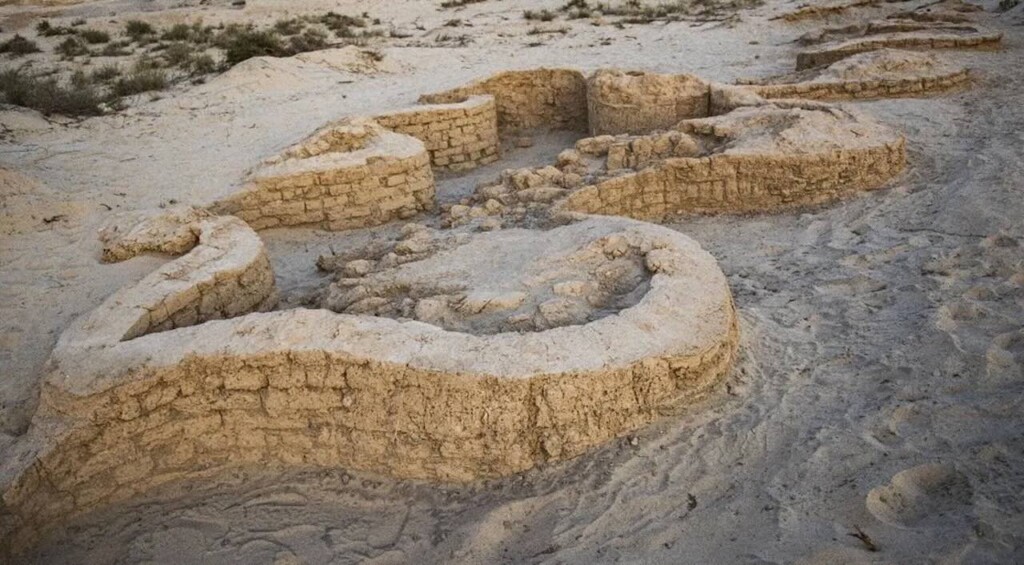
Ancient Fortress Unearthed in Egypt features curved walls – Credit: Egyptian Ministry of Tourism and Antiquities
Ancient Fortress Unearthed in Egypt features curved walls – Credit: Egyptian Ministry of Tourism and Antiquities
Rather than keeping out invaders, it’s believed the curves in these ancient fortress walls helped prevent them being eroded away by sand.
And look at what a good job they did: still intact after 3,500 years in the Sinai weather.
Discovered during recent excavations at the Tell el-Kharouba archaeological site in the northern Sinai Desert, it’s believed to have been commissioned during the reign of Thutmose I.
Thutmose, along with other New Kingdom pharaohs, ordered the construction of multiple frontier border posts like this one to prevent invaders coming from the Near East.
While pottery, the remains of a storeroom, living area, and a room used as a bakery were all located in the ruins, the real standout find were without a doubt the exceptionally preserved 8-feet-thick walls which run 350 feet and incorporate 11 defensive towers.
“Taking into account storerooms, courtyards and other facilities, we estimate that the garrison likely ranged between 400 and 700 soldiers, with a reasonable average of around 500 soldiers,” excavation leader Hesham Hussein, the undersecretary for Lower Egypt and Sinai archaeology tells Live Science.
The walls also divided these living areas with the rest of the fort, and it’s hypothesized that the entire complex was a sort of cookie-cutter design that was replicated as part of a defense strategy to control this important highway between the land of Canaan and Egypt, as well as a large section of eastern Mediterranean coast.
Petrified bread dough was discovered by the archeologists, as were a clay stamp bearing the name of the pharaoh, and volcanic rocks—unlikely to have originated in Egypt—and which are believed to come from Greek traders.
“[E]very fortress we discover adds a new brick to our understanding of the military and defensive organization of pharaoh Egypt, and confirms that Egyptian civilization was not limited to temples and tombs, but was a state of powerful institutions capable of protecting its land and borders,” stated Dr. Mohamed Ismail Khaled, Secretary-General of the Supreme Council for Archaeology.
For now, much of the fortress remains buried beneath sand dunes. The archaeologists are planning to continue excavations soon in the hopes that the full extent of the walls can be revealed.
SHARE This Imposing Ancient Structure And The Stories It May Come To Tell…
Graphene, a sort-of ‘miracle’ material derived from graphite, was adapted over a decade ago as a potentially revolutionary alternative to silicon and other minerals for the manufacturing of dozens of vital technologies.
Now, after years of R&D, some of the material’s original promised potential now seems tantalizingly close at hand.
To offer an idea of the graphene-dream, graphene microprocessors deliver more data at the same speeds than silicon, and at far lower costs. They can run smoothly across a wide degree of operating temperatures, and consume around 80% less energy while doing all this.
Sounds like miracle stuff, and Ben Jensen, the chief executive of 2D Photonics, a startup spun out from the University of Cambridge that’s currently working to commercialize these chips, explained to the Guardian what went wrong with the black stuff’s promise.
“The material when it came out of academia was hyped to death … but the challenge is going from ‘lab to fab,'” he said. “The value proposition must be extremely good, but there also must be a way to manufacture the material and manufacture it at scale for the application … then you have to meet price expectations.”
Those challenges were too much for some, for example Bayer. The German pharma giant shut down a manufacturing plant that would have produced various products made of rolled-up graphene sheets known in the industry as carbon nanotubes. These were used by Jensen himself to invent the “world’s blackest black,” called Vantablack. The novel coating has been used in art pieces, and also by BMW on its cars. It captures another of graphene’s properties: it’s ability to absorb light.
Vantablack absorbs 99.96% of all the photons shined upon it, making it appear from any angle as black as when your eyes are shut in a closet with the door closed in the middle of the night. Jensen founded Surrey NanoSystems to sell the material through the brand name Vantablack.
The essential structure of Graphene – credit, AlexanderAlUS – Own work, CC BY-SA 3.0
2D Photonics, at which Jensen also works, was formed out of Cambridge University in partnership with Italy’s CNIT research institute. It’s received huge backing, from private sector titans like Bosch and Sony, to government funding, and even R&D dollars from NATO, the military alliance of Europe and North America.
Their graphene chips measure 1 atom in depth (hence the same ‘2D’ Photonics), and the pilot production plant the firm is planning to build in Milan will produce them at the 200mm-scale for use in every hi-tech system you can imagine, from aircraft and radar systems for the military (presumably) to 6G computing platforms and data centers.
For more civilian uses, there’s Paragraf, another Cambridge cut-out that manufactures graphene-based sensors for biomedical and agriscience use, as well as for new automobiles. The United Arab Emirates sovereign wealth fund recently bought a 12.8% stake in Paragraf.
Nanotech Energy in the US is already manufacturing graphene-based lithium-ion batteries that fully recharge in seconds, are literally bulletproof, and which the company is now adapting to EVs, household uses, and grid-scale renewable energy storage.
This year its fabrication plant has been creating 21,700 battery cells per day, and the company is expanding its operations into creating graphene-reinforced concrete.
“When we add graphene or graphene oxide, it works like a super-fine sieve within the concrete, making the tiny spaces inside the cement even tinier,” said Dr. Maher El-Kady, Nanotech Energy’s chief technology officer. “That’s good news because it means water can’t sneak in as easily, and less water means less chance of corrosion.”
California’s center of innovation was famously dubbed “Silicon Valley.” It remains to be seen how the word graphene will come into the zeitgeist with the same vigor, but considering the material’s diffusion and wide-ranging application, it’s probably a safe bet it will be something like the “Graphenocene.”
SHARE The News About This Incredible Material’s Development Around The World…
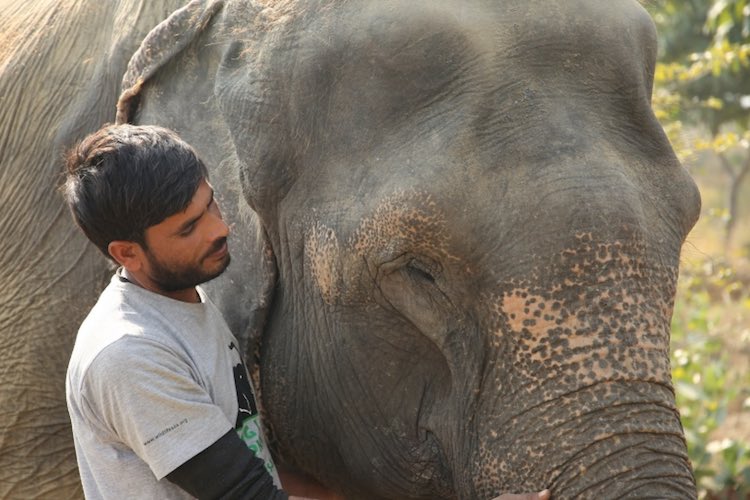
Veterinary immunologists have developed a vaccine for a virus that’s one of the the leading killers of elephants in captivity and in the wild.
With no cure, and with a penchant for claiming the lives of elephants calves, elephant endotheliotropic herpesvirus (EEHV) has been responsible in recent years for the deaths of five elephants at England’s Chester Zoo in, which participated in the development of the vaccine.
The EEHV vaccine’s successful early trials have been heralded as a “landmark moment,” for the protection of wild and captive animals in conservation herds.
Delivered in a two-dose set, with the first containing a harmless, dead version of the virus and a second delivering a booster to increase the immune response, it was found to trigger a robust immune response against EEHV with no harmful side effects.
“This is a landmark moment in our work to develop safe and efficacious vaccines,” said Professor Falko Steinbach, senior author of the study and a veterinary immunology professor at the University of Surrey. “For the first time, we have shown in elephants that a vaccine can trigger the type of immune response needed to protect them against EEHV.”
The team behind the development of the vaccine, which included scientists from the University of Surrey, Chester Zoo, and UK’s Animal and Plant Health Agency, published a study presenting the findings from the vaccine trial in Nature Communications.
It showed by comparing blood samples of vaccinated elephants vs non-vaccinated elephants that the drug should be able to prevent herd members from dying of EEHV, and support conservation breeding programs across the world.
“EEHV has taken the lives of so many elephants, both in human care and in the wild, but this vaccine offers hope,” said Dr. Katie Edwards, lead conservation scientist at the Chester Zoo. “We can’t yet say this will be the end of EEHV deaths, but we have taken a massive step towards that goal.”
SHARE This Great News In Veterinary Pharmacology On Social Media…
Quote of the Day: “Greatness is a road leading towards the unknown.” – Charles de Gaulle
Photo by: Lisa Ouellette (CC license)
With a new inspirational quote every day, atop the perfect photo—collected and archived on our Quote of the Day page—why not bookmark GNN.org for a daily uplift?
Deadpoll and Ryan Reynolds in 2019-Dick Thomas Johnson-cc
Happy 49th Birthday to Ryan Reynolds, the always-handsome and hilarious Canadian actor who first starred in the sitcom Two Guys and a Girl in 1998, then rose to fame in a range of films like The Proposal and Green Lantern. His biggest financial and critical success came when he played the smack-talking superhero Deadpool in two films. READ some more about the man… (1976)
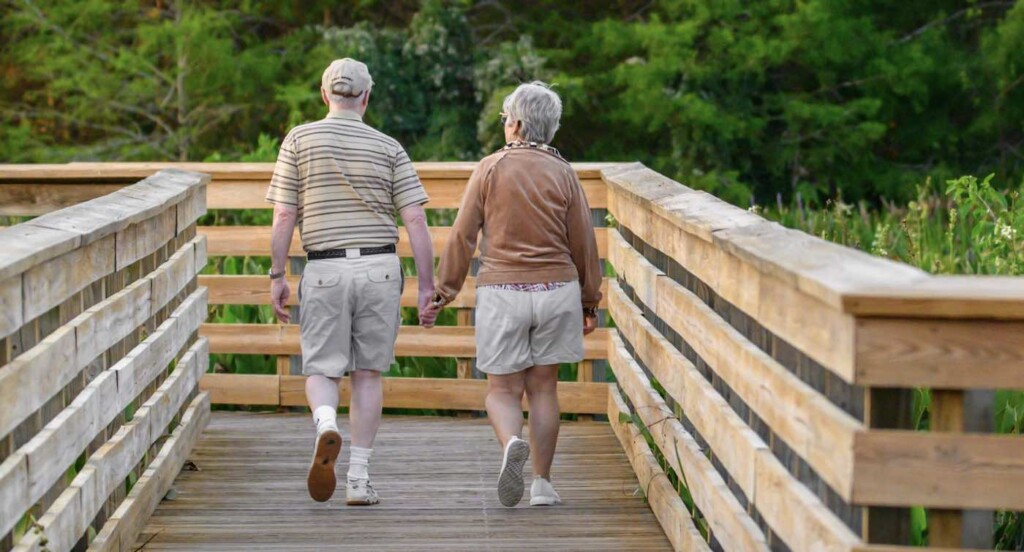
An important exercise minimum of 4,000 steps one or two days per week was just identified in a study as a benchmark to help seniors live longer.
The study patients were also are less likely to develop heart disease, say study’s authors.
The research, published online by the British Journal of Sports Medicine, examined not only how many steps older women take, but how often they reach their daily step targets across the week.
American researchers found that those who took 4,000 steps on 1 or 2 days a week had a 27% reduction in the risk of cardiovascular disease and 26% reduction in risk of death compared to those who completed less steps.
The study also found that it was the number of steps taken rather than any daily pattern of steps that was tied to the risk reductions, meaning even if they were distributed throughout the day and were not part of any single fitness program, the effect was the same.
Tracking daily steps has become a standard exercise measurement for many people as many smart devices keep count with ease. Physical activity stimulates bodily repair and maintenance, which is especially important as people get older.
Researchers at Mass General Brigham, an integrated health care system based in the Boston area of Massachusetts, examined 13,547 older women with an average age of 71.8-years-old.
The team compared their step counts over a one-week period against their mortality and cardiovascular disease rates over the next decade to identify the benefit.
“Advances in technology have made it such that we don’t really move very much, and older individuals are among those least active,” said study senior author Professor I-Min Lee.
“Because of today’s low step counts, it’s increasingly important to determine the minimum amount of physical activity required to improve health outcomes, so that we can offer realistic and feasible goals for the public.”
The participants wore ActiGraph GT3X+ accelerometers to track their steps over seven days between 2011 and 2015. For the next 10 years, the researchers monitored deaths and cases of cardiovascular disease among the group.
The participants were sorted by how many days per week they achieved step thresholds at or above 4,000, 5,000, 6,000, or 7,000.
Those that reached 4,000 steps one or two days per week had a 26% lower mortality risk and 27% lower cardiovascular disease risk compared to those that never hit 4,000 on any day. Reaching 4,000 steps three or more days in a week decreased mortality risk further to 40%.
Among women that reached the higher step thresholds, cardiovascular disease risk levelled out, while the researchers also noted that the health benefits seem to be associated with the total volume of steps taken, rather than how many days per week a particular threshold was achieved.
They say that suggests that there isn’t a “better” way to get steps—women with similar total volume of steps, either achieved by consistent steps throughout the week or sporadic steps in just a few days, had similar health benefits.
“I hope our findings encourage the addition of step count metrics to physical activity guidelines,” study lead author Dr. Rikuta Hamaya.
“If we can promote taking at least 4,000 steps once per week in older women, we could reduce mortality and cardiovascular disease risk across the country.”
LET Your Girlfriends Know About This Important Minimum For Disease Reduction…
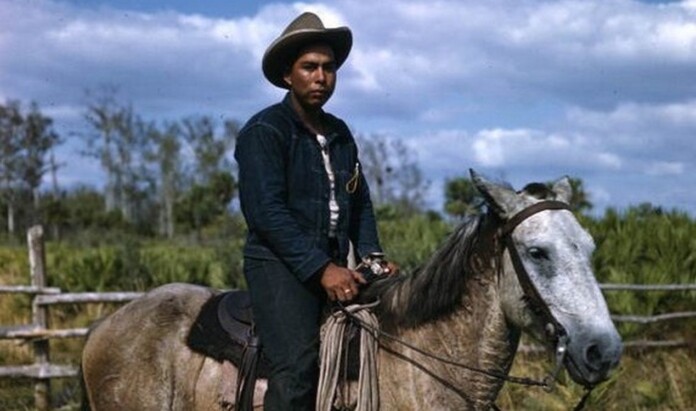
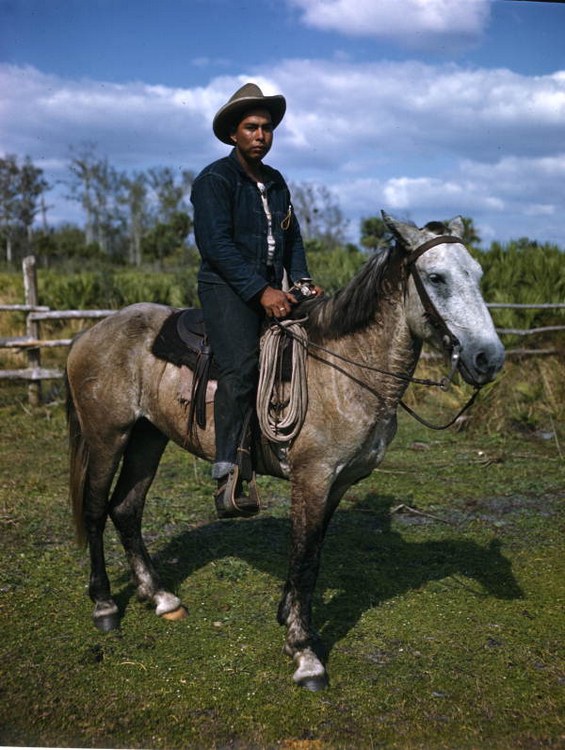
A Seminole cattleman on the Brighton Reservation - credit, state archives
A Seminole cattleman on the Brighton Reservation – credit, state archives
The oldest ranchers in America are actually the native Floridian Seminole tribe, who carry on that legacy today by receiving top dollar for their cattle.
This decade marks the 500th anniversary of the start of Native American ranching, which began back when a small group of their ancestors captured 20 head of cattle from the landing party of a famous Spaniard looking to settle Florida for the crown in Madrid.
There are hair-razing, tear-jerking, page-turning stories of the lives and times of Native American tribes across the country, but one nation that maybe doesn’t get the billing it deserves are the Seminoles.
These Everglades dwellers inherited a cultural tradition 5,000 years old, and wrote a rich history of both resisting colonialism and living off a different kind of land to the Indians on the plains.
The bands that would become the Seminoles would arrive in Florida in the early 18th century, several hundred years after Juan Ponce de Leon, a Spanish conquistador, landed in Florida with a mandate to set up a Spanish colony on the Peninsula in 1521.
The native Calusa people violently resisted the settlement attempt and drove the Spaniards off. Ponce de Leon died of his injuries, the colonization was abandoned, and the reward for the Calusa were 20 head of Old World Andalusian cattle, which, according to a story in Successful Farming, thrived in the Floridian climate.
“They immediately took to raising them and the cattle did really well,” said Alex Johns, a Seminole cattleman whose ancestry he says goes back to those early times. “It was just great cattle country, with lush grass and warm temperatures. Those Native Americans were my ancestors, and we’ve been raising cattle here ever since.”
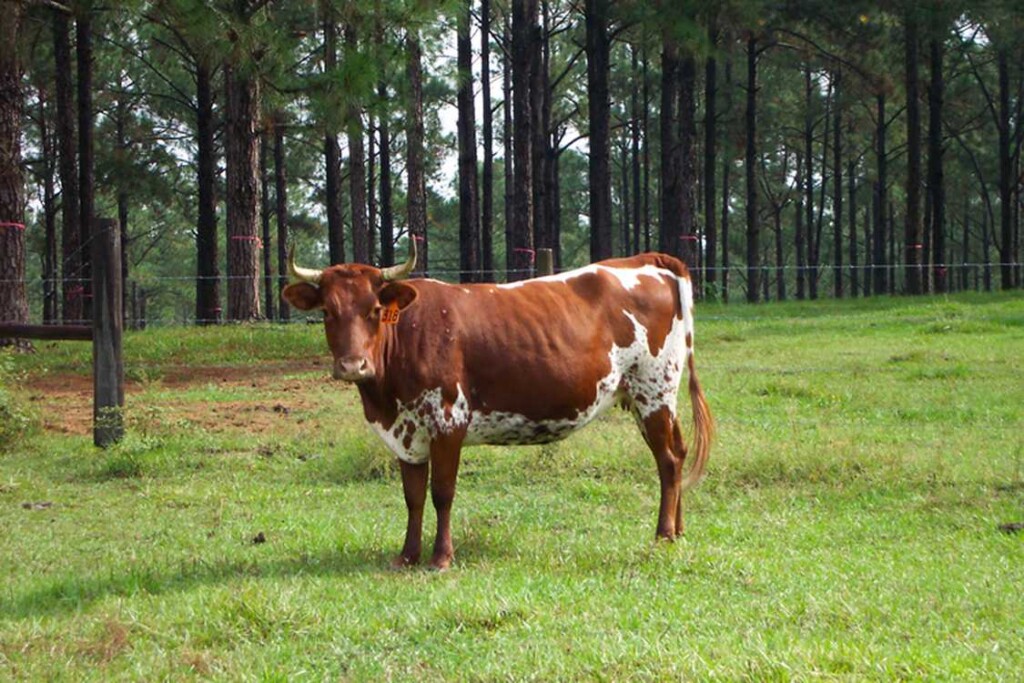
Bison lived in Florida before Ponce de Leon’s arrival, but the natives had apparently hunted them almost to extirpation. The Calusa celebrated the cattle as a return of the bovid to their lands. These would develop to become the famous Florida ‘Cracker’ cattle, a beautiful heritage breed that the Calusa would have reared, and which remain today the official state heritage cattle breed.
More than 100 years after they first got their hands on the Spanish herd, tribes migrating south entered an area depopulated by disease brought by the Spanish. A process of ethnogenesis saw these newcomers blend with the Calusa that remained, and this merging of culture saw the creation of the Florida Seminole culture which inherited the cattle ranching practice.
A legendary Seminole chief, who came to be known as “Cowkeeper,” amassed a herd of some 1,000 cattle in central Florida. One story goes that Cowkeeper’s herds fed both armies during the American Revolutionary War, and whatever the truth of that story is, many Seminole ranchers today refer to themselves collectively as “Cowkeepers.”
Wars between the tribe and the fledging central government in Washington, DC, eventually culminated in the the infamous Trail of Tears where thousands of natives from across the country were forced to emigrate to Oklahoma, the Seminoles was one tribe which managed to hold out.
Led by the medicine man known as Abiaka, or Sam Jones, around 500 refused to leave Florida and isolated themselves in the Everglades, hidden, along with their herds, in the depths of the swamps until shifting opinions and priorities led to an end of the persecution from that earlier era.
A Florida Cracker cattle – credit, FDA.gov
Starting in the 20th century, the descendants of those 500 hold outs began a counterattack of sorts, reclaiming through legal challenges around 80,000 acres of land in Florida, and obtaining recognition as a tribe in 1957.
All the while, the tribe maintained their tradition of cattle herding, which was already hundreds of years old by that time. In the 1920s, the Seminole Tribes of Florida co-op was founded for the collective benefit of the cattle ranchers in Florida.
Today, that co-op includes 68 families, who ranch 10,000 head of cattle—over half of whom are owned by women.
“We’re a matriarchal society; we go by our mother’s ancestry,” Johns told Successful Farming. “Part of that is because of all the wars we fought. The men didn’t live very long.”
Johns is the executive director of the entire agricultural side of the Seminole Tribe of Florida, has 150 cows in the co-op herd, and another 350 in a herd on land leased from the government.
While the original Andalusian cattle the tribe captured were bred for meat and milk production, today the Seminoles receive premium prices for the breeding of part Brahma part Angus cattle for genetics, both focused on growth and heat tolerance, the latter of the two emerging as a critical consideration for cattle ranchers in various parts of the world.
SHARE This Fascinating Bite Of American History With Your Friends…
Editor’s note: Previously, this story incorrectly reported the Seminoles and the Calusa as a single lineage. Various passages have been amended to better reflect a more complex origin story.
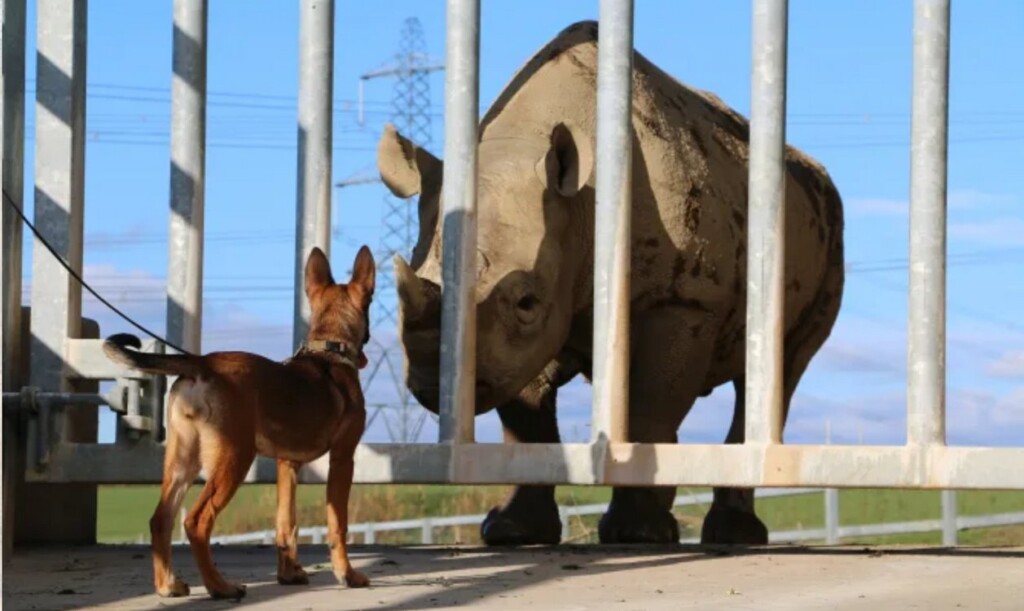
In the lush, emerald hills and valleys of Wales, dogs are trained to protect endangered wildlife a whole hemisphere away.
Their scent tracking allows them to turn hunters into the hunted, and catch poachers even in total darkness; even hours after they’ve left their kill sites. After a decade of work in Africa, these special dogs have helped rhinos recovery in areas where their numbers were plummeting.
As is so often the case with conservation, whether it’s John Muir or Jane Goodall, someone has to be in the right place at the right time with the right solution: and in this story it was professional dog trainers Darren Priddle and Jacqui Law.
After seeing photos of poached rhinos in Africa on the internet, the Welsh couple, who’d been training dogs for military work, drug detection, and policing for years, decided they had the drive, the knowledge, and the resources to make a difference.
“We can deploy dogs in the UK to track people … to look for drugs, firearms, and explosives, so why could we not look at developing the dogs that we were training for conservation efforts?” Mr. Priddle told CNN, which reported on the operations of their nonprofit Dogs4Wildlife.
For over a decade, Dogs4Wildlife (not to be confused with the similar outfit K9s4Africa) has been training Belgian Malinois, Dutch shepherds, spaniels, and retrievers for work in Africa’s game reserves. They breed between one and two litters per year, with training for the bush beginning as early as 3 days old when Priddle and Law will put different scent objects and textures into their puppy houses to “get the neurons firing.”
The curriculum then continues along a similar path for police tracking dogs, in this case the Malinois and shepherd dogs, and for sniffing dogs like the spaniels and retrievers. Organized working sessions at Welsh zoos ensure that the canines lose the olfactory novelty of elephants, giraffe, wildebeest, and antelope.
By 16-18 months, the dogs are typically ready for assignment, and have so far been deployed in Tanzania, Mozambique, and Zimbabwe. In some instances, they’ve helped lower poaching rates as soon as their first successful pursuit.
“When these reserves bring a specialist dog onto a wildlife reserve … the word spreads very quickly that the APUs now have the capability to actually catch these poachers on a more efficient and successful basis,” Priddle said.
“Some of the smaller wildlife reserves almost eradicate poaching in all types completely, just because of the deterrent value that dog brings to the party.”
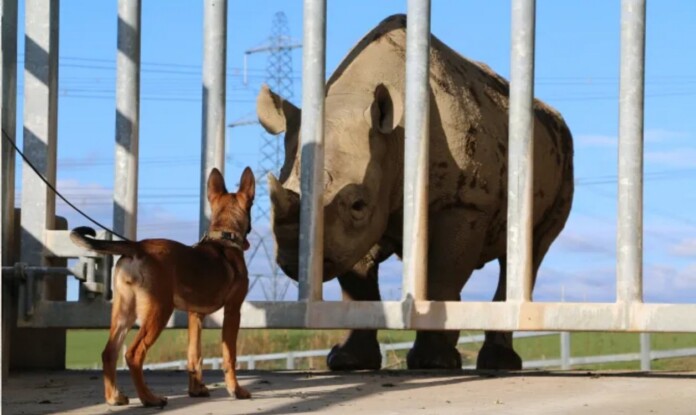
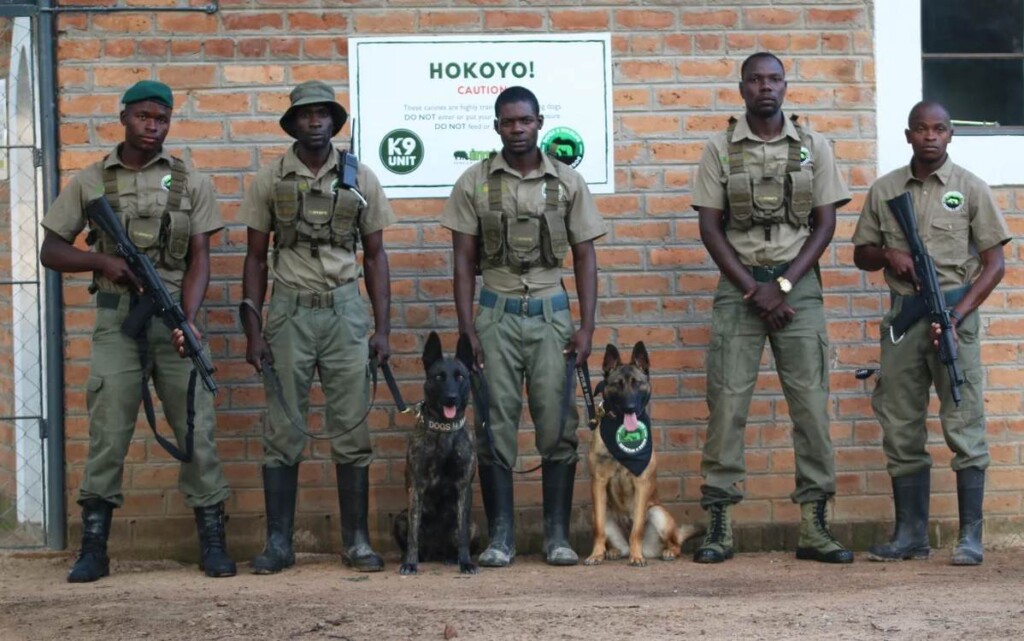
The APU at Imire Conservancy, Zimbabwe – credit, Dogs4Wildlife
CNN recounted the story of a Belgian Malinois trained at Dogs4Wildlife that followed the scent trail of a poached warthog three miles out of a reserve right to the doorstep of the poacher, and the anti-poaching unit, or APU, apprehended the perpetrator on the spot.
Another Malinois, in 2013, led APUs to a rhino calf totally off their patrol route that had been caught in a snare.
Their ability to detect danger from poachers in total darkness has “saved” many APUs from coming under fire from poachers in the vast, 10,000-acre Imire Conservancy in Zimbabwe, where APUs have employed the services of several generations of these Welsh-trained dogs.
Through WhatsApp groups, Priddle and Law can remain in contact to advise APUs on the training and care of the dogs they come to work with, though the groups are two-way help lines, as the sentimental trainers get to watch through glossy eyes the incredible impact the animals that they’ve known since birth are having on the Colorful Continent.
SHARE These Amazing Working Dogs And The Two Special Welshmen Who Train Them…
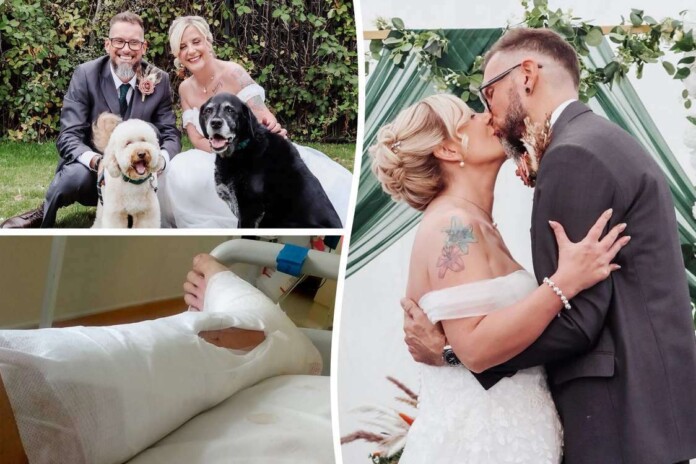
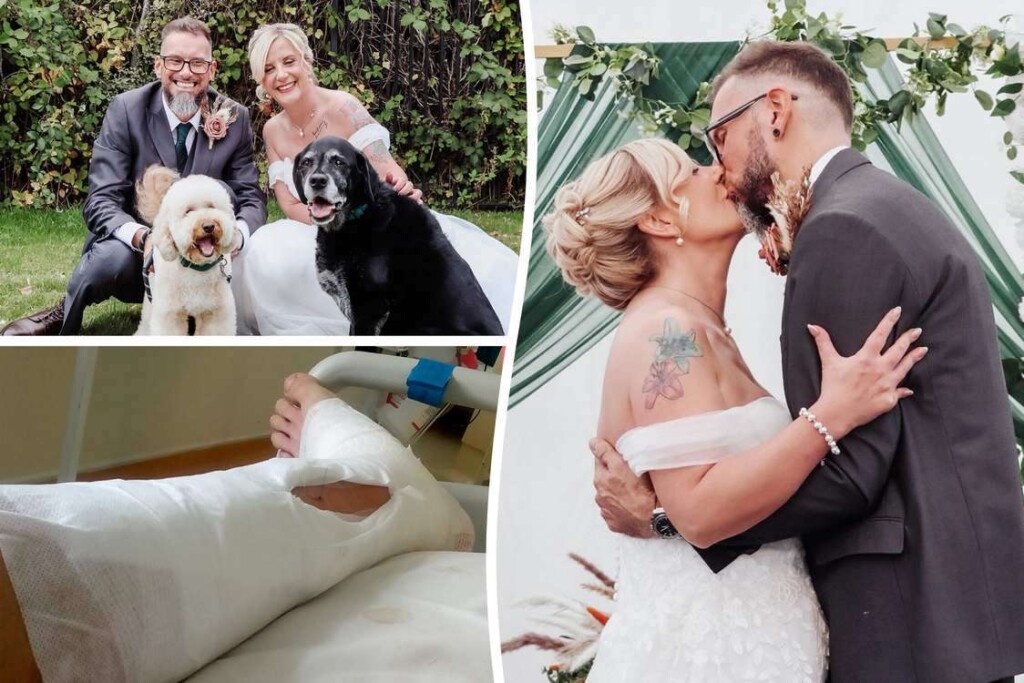
A couple who met after one of them was run over and crushed by a car have tied the knot and celebrated with wedding photos at the crash scene.
The story begins five years ago when Kirsty Southern rushed to help after spotting Ryan McLeod trapped underneath a vehicle.
She had just left a swimming class when she saw a car’s wheel flatten a man’s leg, and the helpless victim banging wildly on the driver-side door trying to get the motorist to move.
Rushing over without a clue what to do, she ended up comforting him for some 40 minutes while emergency services arrived through the gridlocked traffic.
Southern left early from her swimming event, and said that “from where the swimming pool was I glanced up and saw this man go under a car.”
“He was banging on the side of the car. Some lady was screaming she was a first aider and I went behind him to tell him to lean on me to make him comfortable,” she told Southwest News Service.
Southern said despite the circumstances she remembered thinking how attractive he was as she cradled his head in her lap and even checked if he was wearing a wedding ring. She could see his lower leg was badly injured, as the hapless driver reversed back over his it in a bid to free him. She reassured him everything would be okay until an ambulance arrived at the scene.
“I was run over twice, but I only remember being pinned down and banging,” Mcleod said. “I didn’t see Kirsty’s face as she was sat behind me propping me up.”
The accident ripped Mcleod’s ankle open and reduced the range of movement in his foot by around 5%. He was forced to undergo reconstructive surgery in Coventry and says he needs physiotherapy to lead a normal life.
“I still struggle, wear an ankle support, and have regular physio. But it’s how I met my wife so I’d say it was worth it.”
Southern and McLeod on the crosswalk where they met in strange circumstances – credit, Southwest News Service
It was during his hospital stay that McLeod appealed via Facebook for witnesses to get in contact with him. His own Good Samaritan saw the plea, didn’t hesitate to get in touch, and the pair reconnected several weeks later.
“I had a little Facebook look as I knew his name afterwards. I didn’t message him, just a look,” said Southern. They began chatting on social media and began dating soon after that, while COVID regulations would have had them socially distanced.
The pair moved into together and had a blissful 4 years before McLeod went down on bended knee over a special weekend getaway, but given his injury, his bride-to-be worried he’d hurt himself.
“It is a lovely story, and we still don’t quite believe it,” Southern admitted. “Married life is like living in a cosy love story. We’re in a beautiful bubble together, and it’s absolute bliss.”
When it came time for the photos, they both knew that one had to be atop the pedestrian crossing where she first laid eyes on him as he laid there in her arms.
Credit: Federica Giacomazzi for Unsplash+ (cropped)
Quote of the Day: “To err is human; to forgive, divine.” – Alexander Pope
Photo by: Federica Giacomazzi for Unsplash+
With a new inspirational quote every day, atop the perfect photo—collected and archived on our Quote of the Day page—why not bookmark GNN.org for a daily uplift?
Credit: Federica Giacomazzi for Unsplash+ (cropped)
replica of Venera 9 - credit Stolbovsky CC 4.0. SA.
50 years ago today, Venera 9, the Soviet Union orbiter-lander spacecraft, became the first mission to enter orbit around Venus, and to return images from the surface of another planet. The key design feature of the lander was that it had to remain operational under conditions of extreme heat. This meant that not just all the delicate instruments, but the parachute and other accessories all had to be built to withstand 900°F. READ about what it told us of our nearest neighbor… (1975)
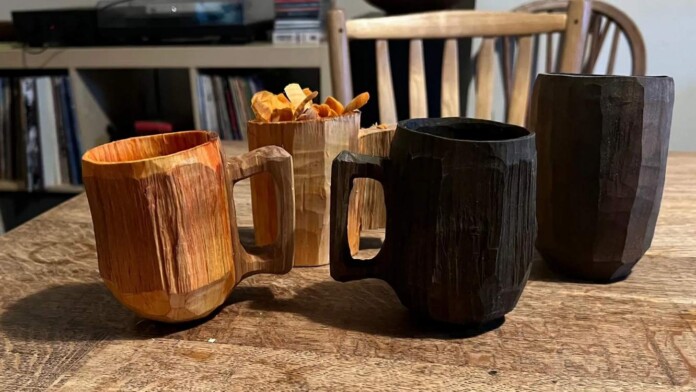
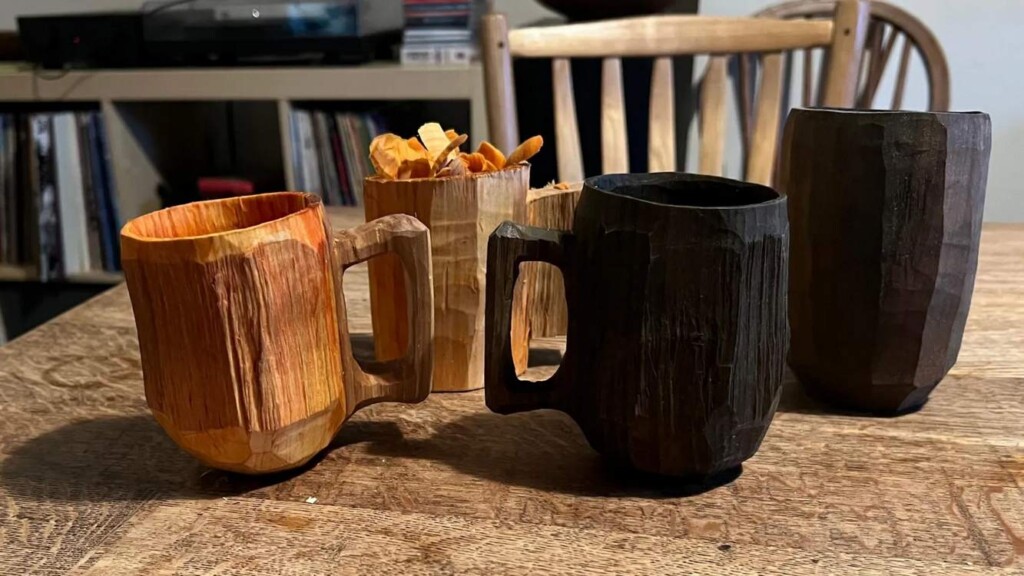
Wooden steins made from the Shipley alder - credit, Dave Watson
Wooden steins made from the Shipley alder – credit, Dave Watson
In Yorkshire, England, an ancient profession turned hobby is helping to keep tree trimmings out of the landfills, among other benefits.
The Yorkshire Spoon Club, as the name suggests, will jump at the opportunity to turn an upturned oak or alder tree into a spoon, but this collection of hobbyist and professional woodcarvers churns out far more than just eating utensils.
– credit, Liz Watson from the Yorkshire Spoon Club, retrieved from Facebook
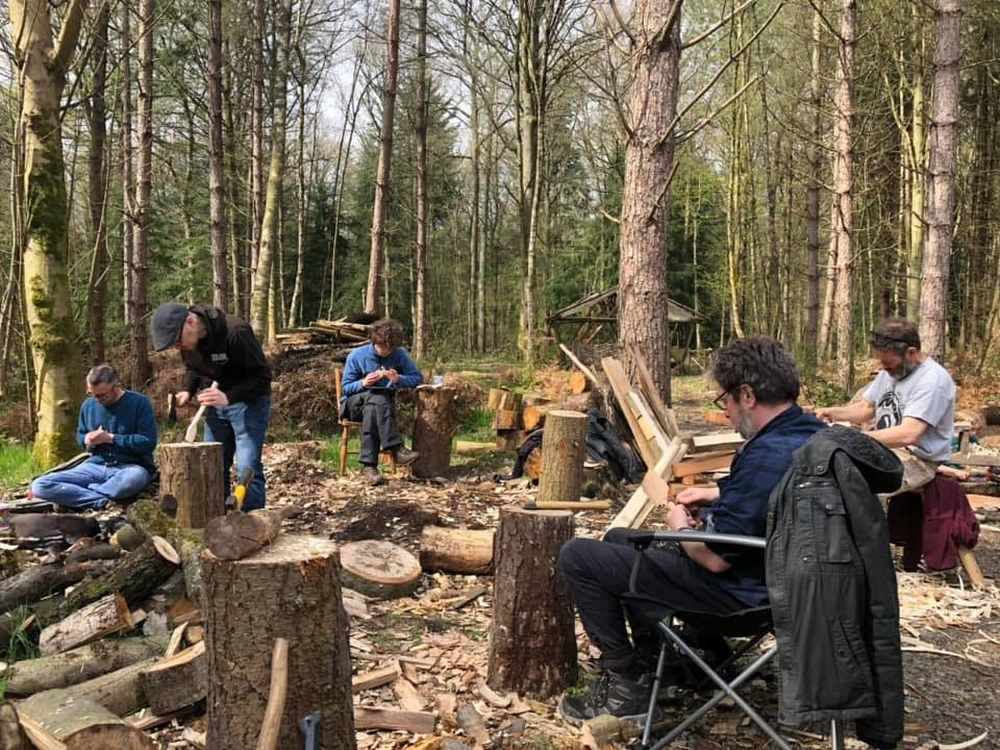
Meeting once a month in Ellekers Wood, near the small city of Bradford in North Yorkshire, the Yorkshire Spoon Club will quickly turn any municipal tree that’s reached the end of its life into a work project.
When Atlantic Storm Amy passed through the area last month and knocked out a mature alder tree in the town of Shipley, club member Clive Nutton took the whole of the tree away after the surgeons had reduced it to logs.
The club, BBC reports, then processed the town’s departed tree into all sorts of steins, bowls, and spoons.
“It was very happily received and it’s in the process now of being turned into all kinds of lovely things,” he said, adding that it’s so nice to have possessions that remind you of the forest. “They’re reflective of a good time spent in the woods with lovely people and reflective of time in nature.”
Dave Watson, the Spoon Club’s founder, says that these fallen city trees are a big help to the dozens of club members who don’t live near the woods or have equipment for harvesting timber.
Watson holds woodshop workshops in Elleker’s Wood where timber is plentiful, but for the rest of the month, some of these carvers will “literally be listening out as they go about their daily business for the sound of chainsaws.”
“Often tree surgeons are removing something that’s dangerous or unwanted for some reason and it just gets chipped up,” Watson told the BBC. “So, they’re usually only too happy to pass a bit of wood over.”
Watson touted the benefits of the activity for the mental health of its participants, a topic much on the mind of Britons these days as the nation looks to grapple with a significant burden of mental health disorders in society.
Sitting in a wood with friends carving a spoon out of green wood around a fire as the Sun lazily drifts across the sky and the leaves change color is a remedy fit for practically anyone, and it’s no surprise that the club has so many members.
SHARE A Quaint Story About These Talented Artisans And Their Rustic Profession…
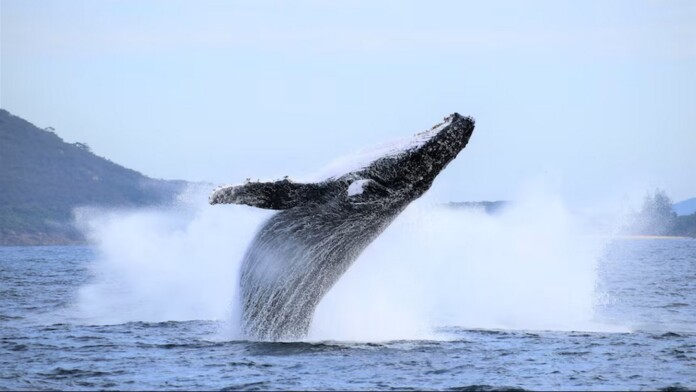
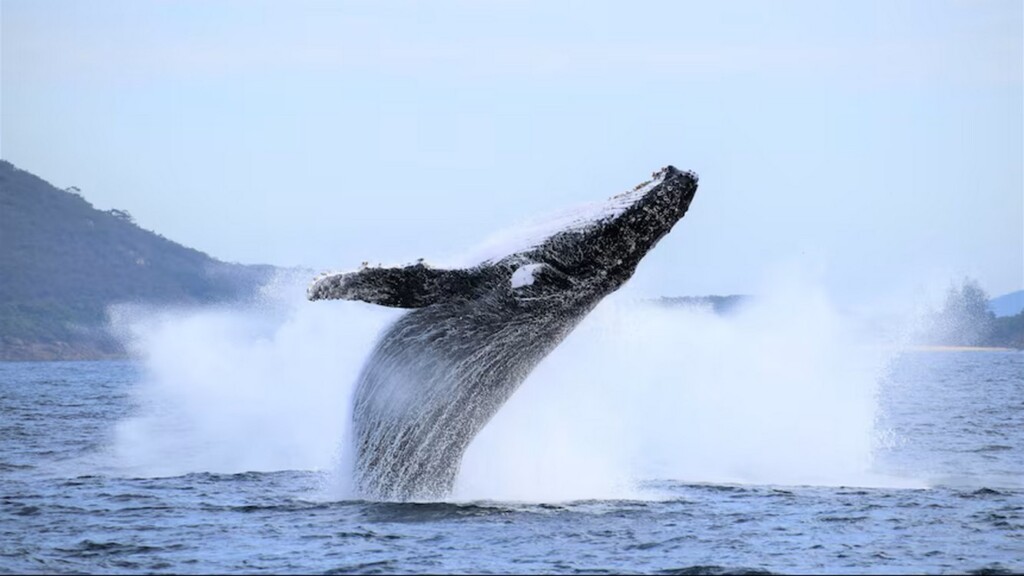
A humpback whale in Australian waters - credit, supplied by Jenn Leayr
A humpback whale in Australian waters – credit, supplied by Jenn Leayr
The recovery of the eastern Australian humpback whale population has been described as nothing short of a “miracle,” such that the majestic beasts number more now than they did before commercial whaling.
When homeowners today along the coasts of Australia file noise complaints, it’s likely to be from motor boats or late-night parties, but there was actually a time when it was over whale-song.
That’s how thick humpback whales swam off the coast of Hobart during the 18th century before commercial whaling had made its way to Australia.
Today, estimations suggest the population is 60% higher even than back then—when dinner table conversation was being interrupted by the songs of whales drifting in from the sea-facing windows; talk about first-world problems.
In all seriousness, the decline of the eastern Australian humpback was as precipitous as anywhere on Earth. Migrating northward along the coast to tropical breeding grounds, they began to be targeted by whalers for the oils in their blubber once the larger baleens like blue whales and right whales had become scarce.
Dr. Wally Franklin, co-founder of the Oceania Project and whale researcher with more than 3 decades of experience, is the author of a recent report that suggested the population has breached 50,000 individuals.
“We have a reasonable estimate that the eastern Australian humpback population was at least 30,000 whales prior to the last period of whaling,” Dr. Franklin told ABC News Australia.
“The best estimate we have is that by the early 1960s, only 150 individuals out of that 30,000 survived.”
In 1963 the International Whaling Commission banned the commercial hunting of species like humpbacks, and as populations began to recover, it was estimated that by 2020 the animal could number 50,000 as long as whaling was confined to history.
And so it was, and so they did.
The new report was compiled by some 700 members of the public, whale watching tour operators, and research scientists, and included photographs and other documentation uploaded to the HappyWhale monitoring database. It’s estimations put the number of whales at more than 50,000 and less than 60,000.
This is substantially more than other Australian whale populations, some of which seem to have even plateaued under pre-whaling levels. Scientists believe this is due to interspecies differences, gestation rates, and the impact of other human activities. For example, southern right whales stay much closer to the coast while migrating, putting them at greater risk of ship strikes compared with the humpbacks.
Scientists like Dr. Franklin don’t expect the numbers of humpbacks to continue climbing, as the ecosystem may have already reached what’s called “carrying capacity” which means there’s not enough further space or feeding opportunities to accomodate additional whales.
With so many whales around, experts say one should always pay attention to potential close encounters, especially if it’s a mother with her calf. If a pilot cares for a closer look, let the whales come to them, should they want to, as it will be far safer for both the boat and the baleen.
SHARE This Incredible Recovery With Your Friends Who Love Whales…
A boy pulling a canoe on the Niger River - credit, Mohamed Yves Diarra CC BY-SA 4.0.
A boy pulling a canoe on the Niger River – credit, Mohamed Yves Diarra CC BY-SA 4.0.
Everyone remembers during the COVID years the sudden demonization by major media outlets of Ivermectin. Now, one of the most-used medicines on Earth, just helped Niger to become the first country in Africa to eradicate a debilitating parasitical disease.
Onchocerciasis, or river blindness, is spread via the filarial parasite Onchocerca volvulus transmitted through black flies which breed near fast-flowing rivers. At its ugliest, it can cause severe skin disfigurations, permanent blindness, and epilepsy.
Present in 26 African countries as well as parts of Brazil, Venezuela, and Yemen, its transmission was severely reduced in the Americas following wide-scale distribution programs of Ivermectin starting in the 1980s called the Mectizan Donation Program (MDP), managed by the World Health Organization.
This wide-scale Ivermectin treatment has continued until present day, such that this year, on World Neglected Tropical Disease Day (Jan. 30th), Niger was confirmed and honored as the first African country to eradicate onchocerciasis, which they achieved through 4decades of Ivermectin administration, an activity that also eradicated the elephant man disease lymphatic filariasis.
Niger is one of the poorest countries in the world, but with simple strategies and an effective medicine, was able to replicate the success seen in much wealthier countries like Colombia and Mexico.
Though dry in many places, the Niger River is a major African river system that is a hotbed for tropical diseases. The report lauded the country’s strong national disease control leadership in the program and cross-border partnerships in helping to eliminate the two diseases.
Senegal has also ended the mass treatment phase and is moving into a period of monitoring and targeted response that Niger successfully navigated during its journey to eradication.
“This achievement highlights the power of strong public–private partnerships and the impact of coordinated efforts between communities, governments, and stakeholders,” reads a report on the program published in the Weekly Epidemiological Record.
“The MDP, the longest-running large-scale medicine donation program in history, has been central to this success, providing a model for other global health initiatives.”
SHARE This Country Ridding Itself Of A Terrible Disease With Your Friends…
Halley's Comet as seen from the Kuiper Airborne Observatory - NASA.
Halley’s Comet as seen from the Kuiper Airborne Observatory – NASA.
During the nights of October 20th and 21st, the Earth will experience the peak stream of the Orionid Meteor Shower, a particularly active shower where viewers can see between 10 and 20 shooting stars per hour.
Especially advantageous this year will be the Orionids’ appearance at the time of the New Moon, meaning no natural light pollution will ruin the cosmic show.
The event is called the Orionids merely because the shooting stars appear like they’re emanating from the constellation of Orion. In reality, the constellation has nothing to do with the shooting stars, which instead come from the debris trail of a comet.
Each meteor stream is like this: named for a constellation, but generated by these high-speed and rocky dust bunnies.
In the case of the Orionids it’s actually the famous Halley’s Comet. As the Earth passes through the stream of debris flung off Halley as it travels through the solar system, those pieces burn up in Earth’s atmosphere and create the shooting star phenomenon we see in the sky.
To find the Orionids tonight or for the next couple of nights when activity is highest, go to a dark open space in a rural area, and find the constellation Orion—which is easy because you can look for his belt. From there look 40 degrees up towards the southern zenith of the sky, bundle up, and enjoy the show.
SHARE This Great Opportunity For Stargazing With Your Friends…
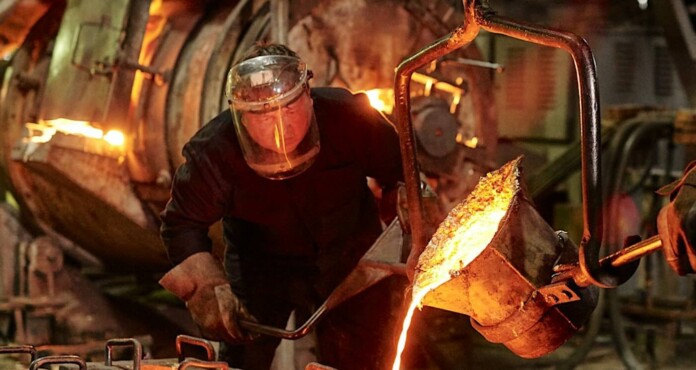
Quote of the Day: “The finest steel has to go through the hottest fire.” – Richard Nixon
Photo by: Papaioannou Kostas
With a new inspirational quote every day, atop the perfect photo—collected and archived on our Quote of the Day page—why not bookmark GNN.org for a daily uplift?
85 years ago today, Ernest Hemingway’s novel For Whom the Bell Tolls was first published. A story about a young American volunteer who joined the government of Spain as a guerrilla fighter during the Spanish Civil War, a conflict that was widely viewed as a dress rehearsal for the Second World War because the Italian Fascists and German Nazis were supporting an overthrow. READ more about this seminal work… (1940)
Vitamin K, an essential nutrient that prevents blood cots and aids in bone health could also be an effective long-term treatment for neurodegenerative diseases.
A Japanese study team took the molecule, created a novel, altered form and used it to improve the transcriptions of cells into neurons at a rate 300% higher than controls.
If replicated in humans, such an effect would slow or even reverse the progress of diseases like Alzheimer’s, Huntington’s, and Parkinson’s, and would be one of the first to be demonstrated to do so.
Though possessing of this neuroprotective effect, naturally-forming vitamin K compounds like menaquinone-4 are likely not substantial enough to prevent the onset and progression of these diseases.
In a groundbreaking study published in ACS Chemical Neuroscience, researchers from the Department of Bioscience and Engineering at Shibaura Institute of Technology in Japan synthesized 12 different vitamin K analogues that included a metabolite of vitamin A called retinoic acid, and a methyl ester side chain.
This analogue exhibited “a three-fold higher neuronal differentiation activity,” meaning it stimulated neuronal progenitor cells in mice to form new neurons.
This novel form of vitamin K interacted heavily with the cellular receptor for metabotropic glutamate (mGluRs) which is known to be very involved with neuron intercommunication, and which if inhabited in mice, creates behavior alternations similar to those seen in dementia patients.
“Our research offers a potentially groundbreaking approach to treating neurodegenerative diseases. A vitamin K-derived drug that slows the progression of Alzheimer’s disease or improves its symptoms could not only improve the quality of life for patients and their families but also significantly reduce the growing societal burden of healthcare expenditures and long-term caregiving,” the authors concluded their study by writing.
Vitamin K, being a safe and tolerable naturally-occurring essential nutrient, would have enormous advantages for drug manufacturers looking to capitalize on this research for a dementia treatment.
While any form of the molecule would have to be proven efficacious as a treatment, safety trials would be very straightforward as the compound already has established safety and supplemental doses.
SHARE This Perspective Treatment For Alzheimer’s With Your Friends…
The oldest surviving depiction of Saint Francis - credit, Free Art License
The oldest surviving depiction of Saint Francis – credit, Free Art License
The mortal remains of Saint Francis of Assisi are to be placed in public view as a tremendous invitation to prayer and gratitude 800 years after the man’s death.
Having been sealed in a reliquary beneath the Basilica bearing his name in Assisi, Umbria, for hundreds of years, they’ve never been on display for the millions of pilgrims that visit the city.
But with recent approval from the Holy Father Leo XIV, his remains will be transferred from the tomb below the Basilica to the foot of the Papal altar in the lower church from February 22nd, to March 22nd, 2026.
“This exposition, rooted in the Gospel theme of the seed that dies to bear fruit in love and fraternity, invites us to reflect on the life of the Saint, which continues to bear fruit 800 years later and still inspires humanity along the path of peace, fraternity, service to the poor, joy, and care for creation,” reads a statement from the Sacro Convento, reported by Vatican News.
The patron saint of Italy, of animals, and of the home of the Golden Gate Bridge, San Francesco is one of the most important figures of the Catholic Church, and “one of the foundational figures of Italian identity.”
Those were the words Prime Minister Giorgia Meloni, whose government recently saw a bill passed successfully through Parliament to designate the feast day of Saint Francis (October 4th) as a national civic holiday.
Born in 1181 or ’82, and passing away in 1226, Saint Francis founded the Order of Friar’s Minor, one of the longest monastic orders in Catholicism. His monastic life was characterized with a unerring love and duty of care for all of God’s creations, including animals, which of course isn’t necessarily ordained by the covenant with God.
Important theologians, including Augustine and St. Thomas Aquinas, reinforced the longest-standing position on animal welfare and ecology in Christianity that animals are part of God’s creation but are not equal to Man; and that in fact, Man is called to subdue the Earth, all that dwells upon it, and bring them under his dominion.
But starting with St. Francis, multiple saints, including his disciple Saint Anthony of Padua, Saint Brendan, Saint Brigit, and Saint Columba, preached to, protected, or taught on the care and protection of the natural world.
San Francesco’s love of nature extended beyond animals, and included “Sister Moon, Brother Sun,” the four cardinal elements, and even “Sister Death.” In short, the Francis doctrine called Man to look after Creation as a whole, and that for this reason, noted the recently-deceased Pope Francis who took his Papal name from the Saint, he is loved by millions of non-Christians who recognize that the dominion of Man over of the Earth is that of a good steward, not an exploitative tyrant.
Visitors are expected to flock to Assisi for the exposition, entitled “San Francesco Lives,” and while free of charge, visitors and pilgrims are asked to reserve their entrance time at the Basilica, which GNN can report first hand is not exceptionally large.
SHARE This Once In A Millennium Exhibition With Your Catholic Friends…
Ryan with his birthday cake and Carter for President t-shirt - credit, Courtesy of Lauren Ramos
Ryan with his birthday cake and Carter for President t-shirt – credit, Courtesy of Lauren Ramos
A boy in New Jersey who has established a strange fandom over the former president Jimmy Carter, has just enjoyed his 5th Birthday.
And while little Ryan is fond of ninjas, dinosaurs, and Spiderman, his mother Laura Ramos surprised him with a Jimmy Carter-themed bash complete with ‘Carter for President’ memorabilia, a life-size cardboard cutout, and birthday cake frosted with the president’s likeness.
But why, and how, is a young boy from New Jersey the biggest fan of a deceased former president from Georgia who held office more than 30 years before he was born?
Ryan’s mom Lauren Ramos explained to the Atlantic Journal Constitution that it began on a Presidents Day when the boy was 3. She showed him a grid chart of all the presidents to have ever lived, and Carter immediately struck his interest.
Ramos later bought him a book about Carter, and Ryan loved learning about the man’s humble background.
“He just loved how much he helped people. He loved that he built houses for Habitat for Humanity,” Ramos said. “He wants to build houses when he grows up.”
As Ryan’s 5th Birthday was approaching, Lauren began preparing and planning for the Jimmy Carter theme, documenting her creations and ideas on TikTok and garnering hundreds of thousands of views.
Those videos also attracted the attention of one Ms. Amy, Jimmy Carter’s daughter, who sent Ryan a swag bag from the former president’s 100th Birthday celebration, that included a tote, pins, and a hat.
Ryan on his big day – credit, Courtesy of Lauren Ramos
For the celebration, Ryan wore his Carter for President t-shirt, and blew out the candles on a cake with Carter’s likeness expertly crafted in frosting. Ryan and Carter share the birthday month of October, and the standing cardboard cutout of the president received well-wishes on his birthday.
Presidential legacies are sensitive issues often falling prey to bipartisan vitriol, but one supposes Carter couldn’t have hoped for anything better: that a young man 1,000 miles away who never lived a day during his administration could still be touched by it.
“That’s another question we’re getting, like, ‘Are you from Georgia?’ No, we live in New Jersey,” Ramos said, laughing.
SHARE This Cute If A Little Strange Birthday Story With Your Dem Friends…