With this “Big Bang” comes the creation of a new generation of scientists.
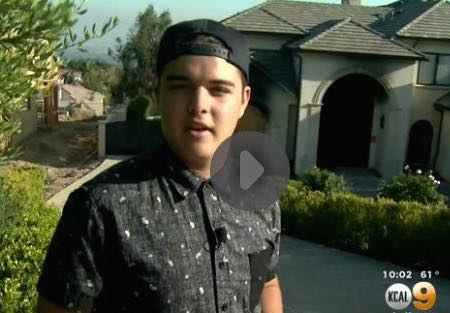
The cast and creative minds behind their hit TV show have announced “The Big Bang Theory Scholarship Endowment,” which has been funded with $4 million so far, to help students majoring in science and math at the University of California Los Angeles (UCLA).
“We have all been given a gift with ‘The Big Bang Theory,’” Chuck Lorre, the show’s co-creator and executive producer, said in a statement. “This is our opportunity to give back.”
Lorre, is funding most of the endowment along with gifts from about 50 other people — including several of the show’s stars. It’s the first time the cast and crew of a television series has endowed a scholarship at UCLA.
Even though the show is set at Caltech in Pasadena, California, the show has ties to UCLA. Actress Mayim Bailik earned her doctorate in neuroscience there and the show’s science consultant, David Saltzberg, is a UCLA physics and astronomy professor.
Remember the teen who unveiled an ambitious plan to clean up the plastic floating in the world’s oceans? Well, his invention is set to be deployed in 2016.
After completing a $2 million crowdfunding campaign last September, he is ready to launch the project off the coast of Tsushima Island, between the East China Sea and Sea of Japan.
The system of solar-powered floating booms and processing platforms were dreamed up by Boyan Slat when he was a 19-year-old first-year Aerospace Engineering student at TU Delft University in the Netherlands.
The 6,500 foot boom will be the longest floating structure ever put to sea and will spend at least two years collecting plastic trash floating in the Korea Strait.
People on the island are also looking into the possibility of using the plastic waste recovered by the system as an alternative fuel source.
A study published in the Proceedings of the National Academy of Sciences last year estimated there are 5.25 trillion pieces of plastic in the world’s oceans. Slat believes his system can collect almost half of this 77,000 tons of plastic within just 10 years.
His organization, The Ocean Cleanup, plans to deploy increasingly larger booms culminating in a 62 mile-long system that will tackle the Great Pacific Garbage Patch between Hawaii and California.
SHARE the Good Green News… (Photo from The Ocean Cleanup)
Fifty years after he charmed audiences with his goofy dance steps playing a chimney sweeper in “Mary Poppins,” Dick Van Dyke shows he still has the moves in a new music video.
The sprightly 89-year-old appears with his real-life wife, Arlene Silver, showing off his high-stepping moves in order to entice her to dance.
The music video is part of a new bluegrass album by Dustbowl Revival, which will be released July 21.
Thanks to the spontaneous actions of a US soldier, Lava Barwari was able to live her entire life, happily, in Atlanta, Georgia.
If it weren’t for Greg Peppin, her life would have been drastically different.
In 1996, the child’s mother, a Kurdish woman on Saddam Hussein “kill list”, had been offered asylum in the United States, but found her daughter missing from the list when she arrived at the border.
That’s when Lt. Colonel Peppin stepped in and claimed her as his own so she could get into the country.
Peppin’s plan worked.
Now 18, Lava Barwari was graduating from her high school and in honor of the occasion, she set out to track down the soldier who brought her here–and found him.
All three treasured the reunion. Awaz Barwari, mother of the girl said, “You saved the day for us.”
As California and other western areas of the United States grapple with an extreme drought, a revolution has taken place in Israel over the last six years.
A major national effort to desalinate Mediterranean seawater and to recycle wastewater has provided the country with enough water for all its needs, even during severe droughts. More than 50 percent of the water for Israeli households, agriculture and industry is now artificially produced.
The ability to regret something is a great skill to have for any animal, survival-wise. When you’re reliving and kicking yourself for something in the past–and feeling sad, guilty, ashamed, or other unpleasant emotion–your mind is trying to do you a favor. It’s trying to make something very clear: you shouldn’t let it happen again if you want things to be better in the future.
You probably realized this point pretty quickly, but that doesn’t necessarily mean your mind is done harping on about it. Much like an ill-advised social media posting, once it’s there, it’s there, and your mind might seem like it’ll never let you live it down. Unfortunately, as regret piles up, it can have a long-term effect on your confidence and self-esteem that, ironically, impairs your ability to act decisively in your best interests in the future. I have included three ways to steer yourself toward a regret-free life below.
The Mechanics of Regret
If you want to reduce the amount of regret your mind produces, it’s helpful, first, to be aware of a few underlying factors that are at work. One is that your mind abhors loose ends of any kind, and it will nag you to tie them up. This is apparent whenever you’re called away in the middle of something, and your mind returns over and over to your unfinished business.
Another is that short-term regrets tend to concern something you’ve done, while the ones that haunt you over the long term are more likely to concern things you haven’t done. Like the previous point, this phenomenon has been repeatedly demonstrated in experiments.
Image by Sal Falko (CC)
The third is that the single largest cause of inaction is fear. It’s not only a natural response to known threats. Your mind also tends to play it safe when you have incomplete information, filling in the blanks on its own, and often making assumptions that amplify risk and justify inaction.
This, in turn, can begin a snowball effect whereby you put your head in the sand, taking in less and less information and creating more and more blanks. It’s not unlike the child who, fearing the monster under her bed, pulls the blanket up over her eyes, letting her imagination run even wilder. You end up making increasingly uninformed decisions—the kinds of decisions you’re more likely to regret.
With these factors in mind, here are three ways you can get out of your own way and let your mind steer you naturally toward a more regret-free life, and even help the process along.
1. Stay in Fact-Finding Mode
If your mind is filling in blanks with too many fear-multiplying assumptions, then you need to minimize the number of blanks. Knowledge is fear’s worst enemy: just ask a parent who has banished their child’s under-bed monster simply by turning the lights on and taking a quick look.
Nurturing a sense of curiosity and openness to input keeps your information stores topped off and helps you establish a more productive response to uncertainty: relaxing into it and surveying the facts and the blanks just as they are. You’ll be less likely to retreat to your inner world of doubt and paralyzing assumptions, and better able to plan the smartest course of action.
2. Aim for the Abstract
Photo by Sun Star
Research shows that when you’re doing something for the purpose of acquiring rewards like money, belongings, and fame, you’re less likely to resume that activity once you pause. In turn, that makes failure—and regret—more likely. On the other hand, when you’re pursuing more abstract goals, like qualities, traits, or feelings you’d like to have, your urge to get back to work is stronger. (It so happens that people pursuing those kinds of goals also tend to be happier.)
Therefore, make your long-term goals more intangible (“I want to enjoy close connections with others”) than concrete (“I want to be married and have two children within five years”). Yes, it can be helpful to have concrete short-term milestones because these provide reference points for you to chart and enjoy your progress. But aiming for the abstract will keep you more persistent and happier in the long run.
3. Select an Action and Take It
Bear in mind that your best bet in general is: when in doubt, act. For one thing, if you always make the best decision possible at the time, using the best information you have available—and you’ll have good information if you stay in fact-finding mode—regret won’t get a foothold.
Plus, taking action is a win-win for you in the long run. If you’re successful, great. But even if you get it wrong, remember that things you do wrong won’t bother you as long as failing to take action will. In other words, it’s better to regret something you did for a little while than to regret something that you didn’t do forever.
Jim Hjort, LCSW, is founder of the Right Life Project, where he helps people overcome roadblocks to self-actualization as a licensed psychotherapist, Right Life Coach, and mindfulness meditation instructor. The Right Life Project helps you understand the ways you can work with the different dimensions of your life (psychological, social, physical, and vocational) to be happier and more fulfilled, and to reach your full potential. You can follow Jim on Facebook, Twitter, Pinterest, and Instagram.
Ellen and Bob Wallace have built a strong marriage over 41 yrs. Not only have they raised children together, they have worked side by side seven days a week to build a business. “She runs half the company; she is my best friend, she is my everything.”
Two weeks ago, they found out her uterine cancer has spread.
“It was just my worst day,” said Bob, who was hoping the chemotherapy and radiation begun in February would have helped.
On top of that, there was a telephone call from the fraud department of Capital One bank. Wallace had just paid the bills for Arizona Sun, the natural skin care products company he founded with Ellen 33 years ago.
Wallace contacted the Good News Network to share an extraordinary experience he had with the bank’s customer service representative, who identified herself as Chine Cmv797:
“When I returned to the office, I called the fraud department and talked to a wonderful lady. During the course of the conversation, she said I sounded sad, so I told her about my wife’s cancer, saying it had been a horrible day. Chine (Shi-nay) expressed her thoughts and prayers, and said that a close relative of hers had passed on from cancer as well. She was so moving and caring in my hour of need. She told me she would call the accounts and make sure they knew that everything was fine.”
The following Tuesday, Bob arrived home and there on the kitchen counter was a beautiful bouquet of white roses, babies breath, and green ferns in a glass vase with a note attached. He remarked to his wife, “The white roses are very pretty! Who are they from?”
Ellen said “They are not for me, they’re for you.”
He couldn’t imagine who would send him flowers. So, he walked back in the kitchen to look for a card.
Mr. Wallace, I have confidence that the positive energy and strength you and your wife hold will guide you through this difficult time.
– Chine Cmv797, Capital One
“That someone in corporate America on the other side of the country took the time in my hour of sadness to send flowers with such a compassionate note… We were both crying,” Bob told Good News Network. “As large as Capital One is, I don’t know if she got permission or if she took it out of her own pocket, which is why I took the time to write the founder and CEO, Richard Fairbank.
He told Capital One they should be very proud that they have such an outstanding and exemplary human being in their employment.
You can write an encouraging message for Ellen or Bob in a comment, below…
Storms inundated a no-kill shelter in Texas last week with 12 inches of water flooding the animal kennels. In need of immediate foster homes for 162 dogs and cats, Austin Pets Alive posted a plea for help on Facebook.
“Some of the kennels at Town Lake Animal Center are flooding! We NEED FOSTERS NOW! Stop by TLAC if you can safely get here and give a pup a dry place for the night.”
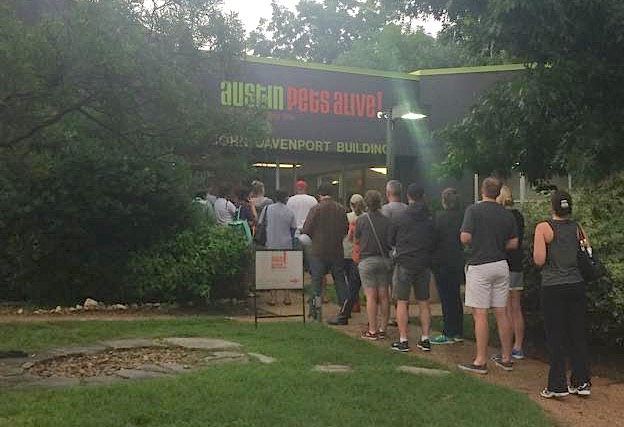
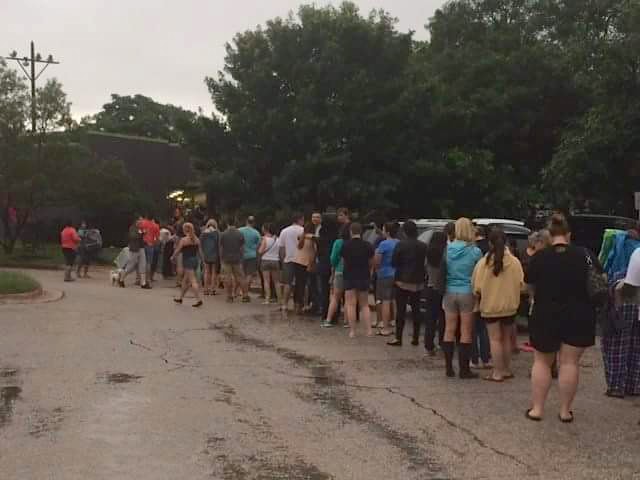
Before long, the plea was shared 13,000 times and Austin animal lovers responded, lining up to help. By the end of the day, the group was “overwhelmed by the support.”
Facebook Photo – Austin Pets Alive
“Before midnight we had 211 foster applications completed,” Faith Wright of APA told a local news station. “There was a line in our parking lot, waiting to get in and take a dog home.”
Facebook Photo – Austin Pets Alive
“Those who couldn’t take in an animal for a night or two found other ways to help,” reports People magazine. “Within two days, volunteers had washed all the laundry, cleaned clogged drains and mopped up water, which allowed the largest public-run, no-kill animal shelter in the country to reopen and take in 67 more dogs from another shelter.”
At least one dog found a new forever home after Kim Griffin took him home for the night and the Jack Russell terrier stole her heart. She is now adopting him for good.
Renewable energy companies have formed a coalition to re-power the country after its massive earthquake.
After the natural disaster on April 25, Gham Power, a solar company that’s been operating in Nepal for five years, sprung into action to deploy solar power systems that could power lights and mobile charging stations for relief workers and the displaced.
The government is doing something about those annoying automated robo calls that arrive day and night at your home or on your mobile phone.
The head of the Federal Communications Commission circulated a proposal Wednesday designed to close loopholes, reaffirm current anti-robocall rules, and encourage wireless and wireline carriers to do more to fight against unwanted telemarketing calls and spam text messages to consumers.
“We are giving the green light for robocall-blocking technology,” FCC Chairman Tom Wheeler wrote on the federal commission’s website. “Telephone companies can — and in fact should — offer consumers robocall-blocking tools.”
Incredible video footage has captured the moment up to 100 bystanders in London lifted a double-decker bus to save the life of a unicyclist trapped underneath its wheels.
Witnesses described people leaving their tables in restaurants and running out to help in the Walthamstow area of the city.
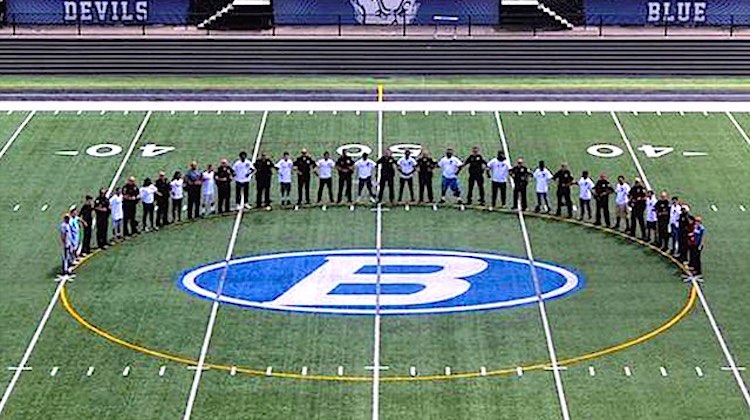
Students and police officers hope to “end the pain” by literally standing together for a campaign to show “good cops and good kids.”
After a student and the school’s officer came up with the idea, a line of mostly African American high school students and mostly white cops assembled to stand arm in arm across a Brunswick, Ohio football field– a visual statement meant to improve race and community relations across the country.
They’re posting the picture to social media using the hashtag – #endthepain.
(WATCH the WEWS-TV video above) Photos from WEWS video
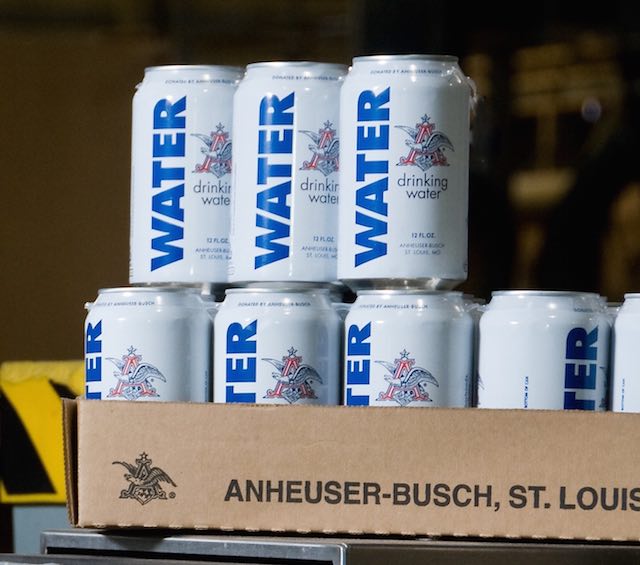
America’s biggest beer maker switched to something lighter this week — producing more than 50,000 cans of emergency drinking water for flood victims in Oklahoma and Texas.
Anheuser-Busch, maker of Budweiser, Bud Light and Busch beers, idled the production line at its Cartersville, Georgia brewery to produce the canned water and deliver it to the American Red Cross.
“Our local distributors help identify those communities most in need,” Peter Kraemer, the company’s Vice President of Supply, said in a statement.
The Georgia brewery’s manager, Rob Haas, says his plant is “uniquely positioned” to produce the emergency drinking water and does it several times every year.
Since 1988, Anheuser-Busch has donated more than 73 million cans of emergency drinking water to help victims of disasters.
(READ more at NBC News) – Photo from Anheuser-Busch
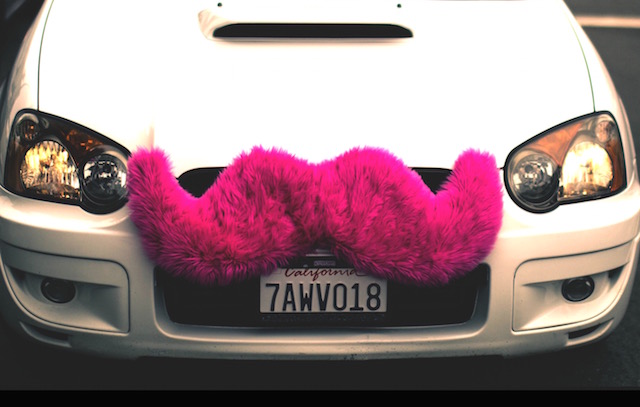
Passengers get a whole lot more than just a ride when Zia Ahmed, a rideshare driver, picks them up.
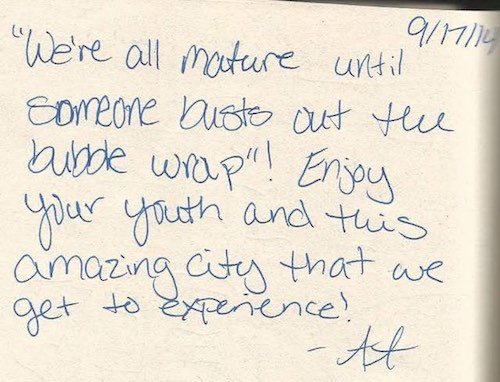
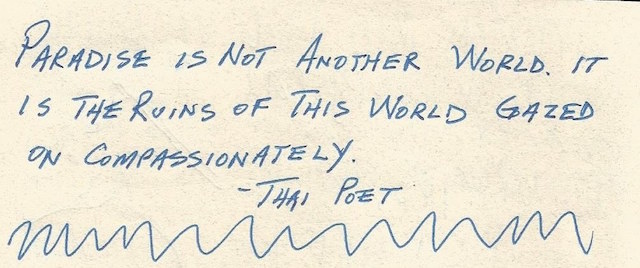
Ahmed, who drives for Lyft, asks each of his passengers to leave a brief, handwritten note for the next person that hops into the backseat.
Born from a desire to help passengers connect with one another, Ahmed later began posting the notes on social media to uplift everyone else, and called the effort, “Lyft Me Up San Francisco.”
The notes may burst the bubble you’re living in…
…or bring out the playful child in you.
Some notes encourage riders to find a new best friend…
Ahmed’s collected more than 2,000 handwritten notes since he started “Lyft Me Up San Francisco” last year.
They are simple messages shared among strangers — later shared with the world through Facebook and Twitter — that offer an inspiring reprieve from the mundane chore of getting from Point A to Point B.
These high schoolers have had amazing entrepreneurial success.
Andrew Rosenstein and Sophia Gross were diagnosed with dyslexia at a large public school. After switching to AIM Academy, which specializes in kids with learning disabilities, they excelled in their studies.
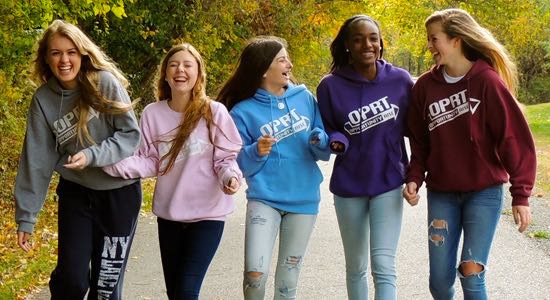
The two wanted to help other students with learning disabilities, so the teen entrepreneurs founded Opportunity Rise. Their business raises awareness for students with learning disabilities and provides scholarships, so more students can benefit from specialized learning.
Andrew and Sophia started by selling clothing at their school. When that succeeded they branched out to other schools. The students at other schools started Opportunity Rise chapters and also sold the clothing. The money raised funds the business and provides scholarships. For the future they have planned an online network for kids with learning disabilities.
(CBS News) For Boxed chief executive Chieh Huang, a nearly empty parking lot at his company’s Atlanta warehouse prompted some soul-searching.
“I noticed there weren’t a lot of cars in the warehouse parking lot,” Huang told CBS MoneyWatch. “I thought they were on lunch break, but I realized (they) just couldn’t afford cars.”
That prompted Huang, the son of Taiwanese immigrants, to think about how his e-commerce startup could help his employees’ families climb the socio-economic ladder, while also inspiring loyalty and commitment among workers.
(READ the full story from CBS News) Photo via Chieh Huang, LinkedIn
The specter of some of the biggest stars in Hollywood on screen together for a night of comedy raised more than $21 million in the first American “Red Nose Day” telethon for children living in poverty.
Building upon the UK’s wildly successful charity effort, a collection of comedy-musical skits created to go viral on social media and mobile phones (like this Game of Thrones musical number) culminated in a three hour NBC variety show on May 21 that drew 3.2 million viewers.
Photo by Just me…. (CC)
Across the Atlantic, the Red Nose Day campaign has been putting the “fun” in fundraising for 27 years and through its celebrity-fueled Comic Relief efforts more than $1.5 billion has been collected to help 50 million children in the UK and around the world.
Because the charity brand is new to the states, the producers made sure not to squander the opportunity to have loads of fun during its American introduction.
In the video above, for example, a “phone tree” between an ever-increasing cast of celebrities–like Chris Pratt, Emily Blunt and Reese Witherspoon– begins with talk of Red Nose Day and is somehow turned into a charity about red roses and garden hoses.
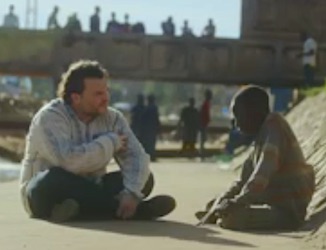
The telethon wasn’t all giggles, however. In a particularly poignant pre-taped segment, see it on YouTube, Jack Black spent the day with a homeless orphan named Felix in Uganda. The 12-year-old was typical of the millions of children living on the streets for which schools have been opened to offer a better future thanks to charities supported by Red Nose Day donations.
U.S. corporate partner Walgreens sold wearable red noses and helped to raise $8 million, while bringing brand awareness across the country. Read more about how organizers pulled off another British Invasion in “Why Red Nose Day Paid Off,” from The Guardian.
As scientists on both sides of the Atlantic look for ways to replace chemotherapy, one strategy is becoming paramount: using the body’s own immune system–and other viruses–to fight cancer and other diseases.
Researchers at the UK’s Institute of Cancer Research created a genetically-altered herpes cold sore virus that can first infect and kill cancer cells, then release a molecule that boosts the body’s own immune system to continue fighting tumors.
Scientists in the study report the treatment has actually cured skin cancer in some of the patients in their trials.
The UK approach is similar to the type of immunotherapy reported last month, in which doctors completely dissolved a cancer tumor in just three weeks.
“Because viral treatment can target cancer cells specifically, it tends to have fewer side-effects than traditional chemotherapy or some of the other new immunotherapies,” said Prof Kevin Harrington, Professor of Biological Cancer Therapies at the Institute.
At the University of Virginia, while researchers studied the secrets of a bizarre, indestructible virus that can survive in nearly boiling acid, they unlocked a blueprint for using gene therapy to fight a host of diseases.
The scientists believe that understanding the virus’ armor will let them create therapies that tear down an invading disease’s defenses — making it easy prey for the immune system.
The Virginia researchers published their findings in the journal Science and the UK results were published in the Journal of Clinical Oncology.
Alexandria Price, a 32-year-old international development professional, had enlisted the help of a dating coach to increase her chances of finding a soulmate. Even with a sleek headshot and a robust profile, she didn’t have much luck within the bounds of her town of Norwalk, Connecticut.
She found Match.com too overwhelming, the sexual expectations of Tinder too off-putting, and Christian Mingle too…well, you get the point.
Niche dating sites are on the rise more than ever, catering to farmers, vegans, and the mentally ill, to name a few. But a new dating site, iHeartVolunteers, is hoping to bring something new to the mix of photos, profiles, and awkward silences.
Created by Chris and Shelly Zenner, iHeartVolunteers has all the frills of other dating sites with an additional feature that can position volunteer opportunities as dates – a great way to skip the awkwardness of who pays for what.
Besides, seeing your date in action just might be the thing you need to give it a go.