251 years ago, Paul Revere, who was 40 years old at the time, a respected craftsman and father of 16 children, rode with William Dawes and Samuel Prescott, galloping through the countryside of colonial Massachusetts to Lexington and Concord warning of the sudden movements of the British army. Contrary to myth, Revere did not shout, “the British are coming” (he himself was British). Instead, he spread the word by shouting, “The regulars are out.” READ more about this famous story… (1775)
An Ae‘o (Hawaiian Stilt) at the He‘eia National Estuarine Research Reserve - credit, Melissa Price UH Manoa.
An Ae‘o (Hawaiian Stilt) at the He‘eia National Estuarine Research Reserve – credit, Melissa Price UH Manoa.
Challenging a 50-year-old narrative about Hawaii’s native birds, a new study from the University of Hawaii at Mānoa found no scientific evidence that indigenous people hunted waterbird species to extinction.
Published in the journal Ecosphere, the research debunks this long-held myth and offers a new, integrated theory to explain the disappearances.
It’s not the first time that modern science has put forward new explanations for dramatic island declines, ones often attributed to native peoples.
Indeed in 2024, GNN reported that scientists at the University of Copenhagen had brought to bear genetic testing to prove that the natives of Easter Island did not, in fact, chop down all the trees on their island to build their giant stone heads, leading to a population collapse.
In this new instance, the U of H authors suggest a new theory: the native Hawaiian birds died out because of a combination of climate change, invasive species, and changes in how the land was used—most of which happened either prior to Polynesian arrival, or after Europeans took over ownership of wild areas.
The study also noted that now-endangered waterbirds were probably most abundant just before Europeans arrived, when wetland management was a core aspect of Native Hawaiian society.
“So much of science is biased by the notion that humans are inevitable agents of ecocide, and we destroy nature wherever we go. This idea has shaped the dominant narrative in conservation, which automatically places the blame for extinctions on the first people—the indigenous people—of a place,” said Kawika Winter, associate professor at Hawaii Institute of Marine Biology (HIMB) and co-author of the paper.
Professor’s explanation mirrors what Víctor Moreno-Mayar, Assistant Professor of Geogenetics at Copenhagen and author of the Easter Island paper, concluded, which was that the “idea of ecological suicide is put together as part of a colonial narrative… this idea that these supposedly primitive people could not manage their culture or resources.”
Even where there is zero scientific evidence to support it, the myth of Hawaiians hunting birds to extinctions took root, and for decades has been taught as if it was a scientific fact, the authors explain.
Their study re-examined existing evidence without this bias that the discipline has increasingly been criticized for—the idea that people are separate from and inherently bad for nature.
They started by identifying the time period that extinct Hawaiian waterbird species were last observed within the fossil record. The first thing one notices is that of the 18 known species to have gone extinct, 10 did so before Hawaiians ever arrived.
The second thing is that, reviewing existing literature and hard evidence like fossils and pollen samples, there is a much greater chance that native Hawaiian seabirds went extinct from a combination of climactic shifts, such as from the Pleistocene to the Holocene, and species introduction, such as rats and flu viruses, than from the previously believed impacts of deforestation or overhunting.
The study’s conclusions are expected to help transform conservation actions in Hawaii, particularly for the recovery of endangered waterbird populations, such as ʻalae ʻula (Gallinula chloropus) and ʻaeʻo (Himantopus mexicanus knudseni).
“Our study not only dispels this myth, but also contributes to a growing body of evidence that indigenous stewardship represents the best ways for native birds to thrive in a world where humans are not going away,” suggested Winter.
Melissa Price, an associate professor who runs the Wildlife Ecology Lab at the university’s College of Tropical Agriculture and Human Resilience, said in a story on the research published at the UH press, that restoration of wetland agro-ecosystems is critically important to bring these waterbirds into abundance again.
“If we wish to transform our islands from the ‘Extinction Capital of the World’ into the ‘Recovery Capital of the World’ we need to restore relationships between nature and communities,” said Price.
SHARE This Great Debunking On Behalf Of The Noble Hawaiians…
For this hefty long-haired cat, no amount of attention seems to be enough for his new public relations role.
Named Isambard Kitten Brunel after the famous British industrialist, the cat is called Issy for short, and makes a bus commute to the Oxford University library at Lady Margaret Hall alongside his owner Jamie Fishwick-Ford.
Jamie is a librarian at the hall, one of the colleges at Oxford, and began bringing Issy to work 6 years ago.
The fluffy Siberian forest cat spends most of his time relaxing in Jamie’s office, only leaving when people want to pet him, or when he is taken outside for some exercise.
Issy, now aged 6, has quickly become a hit with students, gaining a loyal following and earning himself unofficial mascot status at the college.
“Lots of people bring friends and family to meet him, and he’s become a bit of an unofficial mascot. He even appears on some of our outreach team’s stickers,” said Jamie, who has worked as a librarian at the college for 10 years, adding that the cat isn’t allowed to roam freely, but officials allow his presence in the office and on the lawns.
Jamie got Issy in September 2019, and started bringing him to work straight away either on a leash or on the librarian’s shoulders. When she arrived at Lady Margaret Hall she said it was a “very dog-orientated college.”
“College had a policy allowing you to bring dogs to work, as long as they mostly stayed in your office and you got permission of anyone else whose office they visited,” said Jamie.
Isambard Kitten Brunel the Oxford library cat – credit, Jamie Fishwick-Ford SWNSIsambard Kitten Brunel the Oxford library cat – credit, Emma Trimble / SWNS
“There’s two dogs on our coat of arms—because we were founded by Bishop Talbot, and a Talbot is a type of medieval hunting dog—the Principal of the college Alan Rusbridger had two dogs, and several staff members had dogs they brought to college. But I prefer cats.”
The two arrive at Lady Margaret Hall by bus, onboard which the cat enjoys the attention he almost inevitably receives, and in fact will meow if he doesn’t receive any.
Issy is particularly favored by students who miss their pets and he is always very friendly and calm, Jamie added.
“It can be really tough being away from home for the first time and away from pets you’ve known all your life, and it’s a lot easier to phone up your parents if you miss them than to phone up your cats.”
“He’s always very friendly and calm, but he’s even more so when someone is upset or crying, he’s had several people come to him in tears after they’ve accidentally deleted their dissertations or so on.”
Issy the Oxford University library cat – SWNS
“Other colleges also sometimes ask for visits from the famous library cat, so we go to visit them and give their students a chance to meet him,” she said.
SHARE This Adorable Kitty And His Very Important Job On Socials…
Sanae Takaichi at her first press conference as Prime Minister - Credit: Japanese Cabinet Secretariat, CC 4.0. BY-SA
“I can’t believe Deep Purple are here,” swooned the hard-rock drummer Sanae Takaichi, whom readers may know from her other job—the Prime Minister of Japan.
Indeed, the aged rockers were in Japan recently on tour, returning to the country where they recorded their critically-acclaimed live album, Live in Japan.
The band attended a face-to-face meeting with the head of state who, last October, became the first female leader in the country’s history.
Japanese Prime Minister Sanae Takaichi took a short — and happy — break on Friday as she hosted legendary British rock band Deep Purple in Tokyo as a longtime admirer. https://t.co/cGIRnuOMOFpic.twitter.com/D7Je9tvYf8
A huge fan, she bought the band’s Machine Headalbum containing the seminal hard rock track Smoke on the Water while she was in grade school, all the way back in 1971.
“I can’t believe Deep Purple are here,” Takaichi said, smiling as she greeted the musicians.
“I have the deepest respect for the way you continue to make rock history while embracing new challenges and creating captivating music to this day,” she said through an interpreter.
To the band’s drummer, Ian Paice, she quipped, “you are my god,” during a special meeting where she presented him with a gift of signed Japanese-made drumsticks.
Takaichi told the band that when she argues with her husband, her first response is to go and play along to their 1974 album Burn. (See the band performing in the video below…)
According to the BBC, Takaichi played keyboards in a Deep Purple tribute band before picking up the drums while at university. She’s remained behind the kit ever since, playing in a heavy metal band—and she’s known for carrying multiple sets of drumsticks in case she broke them, which happened a lot.
Quote of the Day: “There is no greater agony than bearing an untold story inside you.” – Maya Angelou
Photo by: Shawn Rain
With a new inspirational quote every day, atop the perfect photo—collected and archived on our Quote of the Day page—why not bookmark GNN.org for a daily uplift?
Humpback whale rescue - Video credit: The Sea World Foundation via SWNS
Humpback whale rescue – Video credit: The Sea World Foundation via SWNS
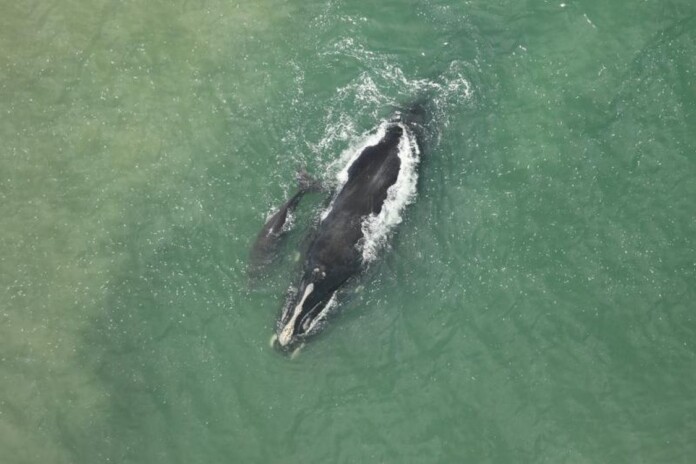
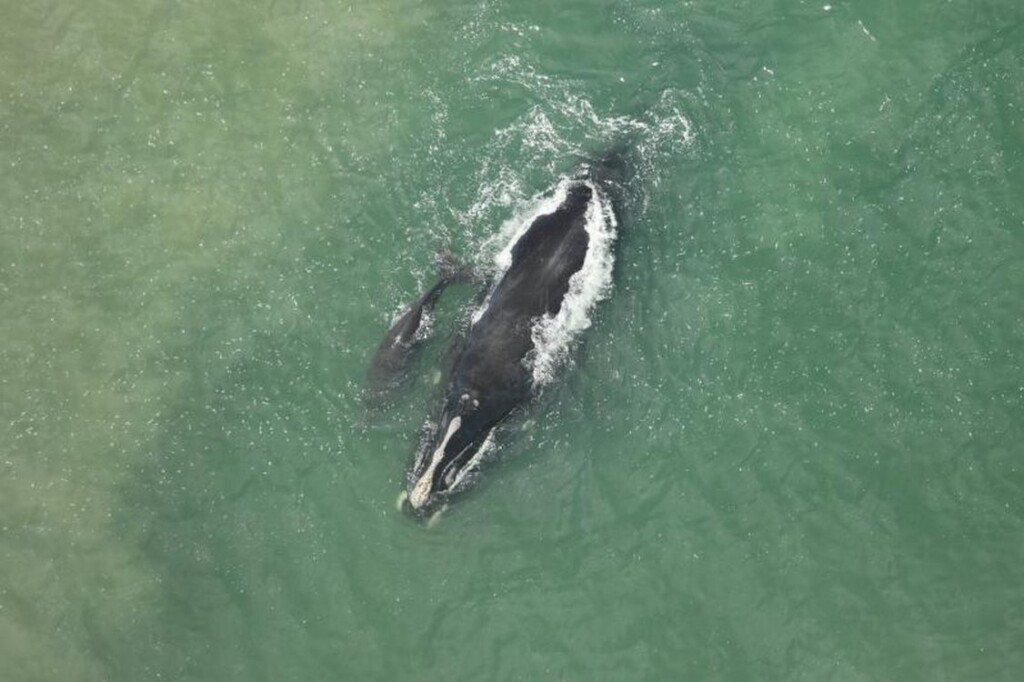
Rescuers in Australia were able to save a humpback whale after becoming stranded on a sandbar during its migration.
The 10-ton marine giant was freed and guided back into the ocean off Forster, New South Wales, after becoming trapped in shallow waters in a n urgent and complex rescue operation.
Humpback whales typically migrate along Australia’s east coast between June and November, traveling from Antarctica to the Great Barrier Reef, but one individual appeared to have set off far too early.
The juvenile humpback had entered the Coolongolook River on April 13th, before becoming stuck on a sandbar where it was unable to return to deeper water. It wasn’t until the following day that rescuers were able to free the animal.
A major rescue operation was launched involving the Sea World Foundation, the NSW National Parks and Wildlife Service, the Organization for the Rescue and Research of Cetaceans in Australia, (ORRCA) and the Forster Dive Centre.
Specialist teams worked together using heavy-duty slings placed beneath the whale’s pectoral fins to carefully tow the exhausted animal off the initial sandbank and into deeper water.
Credit: The Sea World Foundation via SWNS
Video shows the extraordinary moment the whale was lifted into the main channel, where it was finally able to swim free.
“We believe the whale travelled into the Foster area and due to misadventure become stranded on the sandbank which was in a shallow stretch of the river,” said Sea World Foundation Head of Marine Sciences Wayne Phillips.
“Despite the ordeal, the whale is in a good condition with some minor skin issues from being in the sun, and while it remains in the Wallis Lake area, we are hopeful it will now be able to navigate its way back out to the open ocean.”
SHARE This Massive Effort To Save One Of Our Estranged Aquatic Mammalian Kin…
The first generation Mustang - Kroelleboelle CC BY-SA 3.0.
62 years ago today, Americans got their first glimpse of Ford’s new sporty car. The Mustang first appeared in showrooms at the 1964 World Fair in New York City for a retail price of $2,368 (equivalent to $23,263 in 2023). Because it was introduced four months before the usual start of the 1965 production year, it is affectionately known as the “Ford 1964-1/2. READ a bit about the famous car’s earliest designs… (1964)
Saunas are all the rage these days for exercise recovery and longevity, because the increased ambient heat triggers a cascade of effects in the body that can lower blood pressure and reduce inflammation.
But, how many of us have access to a sauna?
That’s why researchers from the University of Oregon compared the effects of saunas to a simple soak in a hot bath—which is much more accessible to most people—and found good news for the sauna-less masses.
The research was published in the American Journal of Physiology and the authors say it was the first time that three different heat therapies were compared.
“We compared the most commonly utilized modalities of passive heating as they’re used in everyday life and studied in scientific research,” said lead author Jessica Atencio, a doctoral student in the lab of Professor Christopher Minson.
There’s much more research into sauna bathing than hot tub bathing—and most of it comes from Dr. Jari Laukkanen, a Finish cardiologist, clinician, and research scientist who has produced robust, multi-year studies on saunas—which are far more popular in Finland than elsewhere.
In the Oregon study, researchers monitored body temperature, blood pressure, heart rate, cardiac output (the amount of blood the heart pumps per minute), immune cell populations, and blood biomarkers of inflammation. Data was collected before, during and after subjects soaked in a hot tub, sat in dry heat, or tried far-infrared saunas.
The study looked at 10 men and 10 women who exercised regularly and ranged in age from 20 to 28 years old. The goal was to isolate the physiological responses to each heating method in a young, healthy population.
“We saw that hot water immersion was the most impactful in increasing core body temperature, which is the main stimulus for these subsequent responses,” Atencio told the University of Oregon press.
“Increasing body temperature causes an increase in blood flow, and just the force of blood moving across your vessels is beneficial for your vascular health.”
While the research team took blood samples from subjects after each kind of heat therapy, only hot-water immersion produced an inflammatory response as measured by the levels of inflammatory cytokines, a kind of immune signaling molecule, and immune cell populations.
Atencio and her team were not surprised by those results.
“Hot water immersion gives you the most robust changes in core temperature because you can’t effectively dissipate heat as you can if you have contact with the air and you’re sweating to cool the body,” she said. “When you’re submerged in water, the sweat mechanisms aren’t efficient.”
Minson has studied heat therapies for more than two decades. He has focused on how heat interacts with factors such as age, exercise, and illness in men and women.
“There’s no doubt in my mind that if people are willing to do some heat therapy, it’s going to align with improved health, as long as it’s done in moderation,” Minson said.
Dr. Laukkanen’s research with saunas shows that longer sessions, and more sessions per week was the best way to benefit.
Both saunas and hot tubs can replicate some of the benefits of exercise by increasing heart rate—but soaking in tubs, can create the effect more quickly and efficiently.
Minson believes that when moderate exercise isn’t a good option for people, heat therapy can be used as an effective substitute—to a certain extent—for aerobic exercise, even though regular exercise can provide even better results in some respects than those from heat therapy.
A Przewalski's horse with its foal in the care of the San Diego Zoo Wildlife Alliance
A Przewalski’s horse with its foal in the care of the San Diego Zoo Wildlife Alliance
3 years ago, the last non-domesticated species of horse was reintroduced into a Spanish woodland in the hopes they would act upon the land as wild equines had done for thousands of years.
The Iberian Highlands Rewilding Project (IHRP) is now happy to report that 10 foals have been born since then, as the Przewalski’s horse gradually became accustomed to the scrubby, dryer world in the forest’s beyond Madrid.
Despite originating in the wide open plains of northern China and Mongolia, the Przewalski’s horse was the conservationists’ only chance of seeing a wild equine in Spain.
It’s the only horse found anywhere on Earth that hasn’t interbred with domesticated horses over the last 6,000 years. Once seriously threatened with extinction, captive breeding programs have seen the animal return to pastures across Eurasia.
“The horses are engineers of the forest,” says Pablo Schapira, a team leader at IHRP. “What we want to do is to put back the pieces of the puzzle so that nature can lead the way to a new environment.”
Overly ambitious? Maybe, but then again, the area the IHRP is working in is more than 1.8 million acres, and sometimes called “Empty Spain,” or “La Espana Vacia,” as it’s seen widespread depopulation over the decades. Today, these vast tracks of wild forests and neglected rangeland are at substantial risk of wildfire ever since the natural grazers were displaced, hunted, or driven off.
The hope is that Przewalski’s horse, together with European bison, deer, and a specially-bred species of wild cattle supposed to take the place of the giant wild bovid that went extinct during the Middle Ages, will be able to control understory growth and reduce both the risk of fires starting and the intensity of fires that do start.
Local rewilding initiatives in Empty Spain and beyond have been given some $200,000 in loans from Rewilding Spain, the national chapter of Rewilding Europe, one of the largest conservation NGOs on the continent.
Some eco-entrepreneurs are using them to build safari lodges and acquire jeeps, potentially to turn this part of Spain into something that looks a lot more like an American national park than anything else that can be found in Europe.
Wolves, the Critically-Endangered Iberian lynx, and more vultures are planned for future releases into the Empty Spain in order to instill balance in the prey-predator relationship.
WATCH the story below from CGT News Europe…
SHARE This Brilliant Story That Encapsulates The Spirit Of Wild Europe…
The 81 Club Library Card for every Chicago Public School student via chipublib.org
In 2022 during a conceptual bid to improve library access, Chicago Public Schools thought they’d see whether teens would be more likely to use the library if their school ID doubled as a library card.
It turns out when you remove membership requirements, attendance and use at all 81 locations of the Chicago Public Library (CPL) goes up.
As a result, CPS has expanded the original initiative, called the 81 Club, indefinitely, until every school ID could be used as a library card, and thereby ensuring any school ID holder in the city can access more than 6 million books and pieces of research simply by providing that ID number.
CPL officials in turn said the program was aimed at improving access to educational resources for students that have the greatest barriers to educational attainment.
The 2022 pilot program saw library access increased by 63% among economically disadvantaged students.
“With this expansion, every student—no matter their ZIP code, school enrollment or their age, will have access to library cards and programs and resources that make their lives more enriched,” Mayor Brandon Johnson said at an event announcing the expansion Tuesday inside the Austin Branch of the Chicago Public Library, 5615 W. Race Ave.
The program expansion also comes with a new digital access system called Sora that will allow educators to retrieve research data, eBooks, audiobooks, and classroom learning materials.
SHARE This Great, Almost No-Brainer Idea With Your Friends…
A Chinese conglomerate that controls 37% of global market for EV batteries has recently said it will “spare no effort” to electrify parts of the marine shipping industry.
The costs of lithium ions have fallen 90% over the past two decades, epitomizing the overall reductions in the costs of batteries that have facilitated the resulting boom in EVs.
In all that, however, little has been done to investigate battery-powered maritime usage. It’s for a good reason in that batteries produce lower-density energy than heavy fuels used to power container ships or tugboats. Displacing water requires a lot more umph than displacing air.
Now CATL, which also controls some 22% of the world’s energy storage system, is planning to double its maritime applications division in order to pioneer early battery systems for near-shore vessels.
“We will spare no effort in investing in R&D, human resources and materials to build the supply chain for this industry,” said Su Yi, who leads the group’s Maritime Business Unit.
The International Maritime Organization aims to halve the industry’s share of global emissions from shipping to 1.5% from 3% by 2050, a goal which up until now has been approached with greener fuels such as green methanol and hydrogen.
In 2024, GNN reported that consortium of Japanese firms successfully conducted a demonstration of the first ever zero-emissions ship above 20 gross tons when the pilot sailed it 30 kilometers, (18 miles) out to an offshore windfarm and back.
A year earlier, GNN reported that global shipping leader Maersk ordered a green methanol powered ship two years ago and had already placed an order for 25 more methanol-powered vessels in addition to retrofitting existing ships with methanol engines and turbines.
Su told the Financial Times that the current focus is to produce the batteries with the extreme requirements of powering large vessels near shore. In addition to requiring maximum discharge rate, the batteries would need to last long and remain safe in ocean conditions.
CATL reported impressive 2025 earnings, with 42% year-over-year growth in revenues that topped $10 billion off the back of demand for data centers and energy storage. Su didn’t provide timelines or sales targets, but merely mentioned that she and her team were confidant there’d be market demand.
Its existing strategy since 2017 has been a battery-swap model whereby near-shore vessels like tugs can swap their batteries at a station for a fully-charged one to enable ’round-the-clock operations.
The group had seen previous success with such a model in their long-haul trucking division. Previously, the company developed hybrid battery-fossil fuel solutions for still water and near-shore vessels, as well as cruise ships.
SHARE The News That Such A Successful Firm Wants To Decarbonize Shipping…
Quote of the Day: “You gotta try your luck at least once a day, because you could be going around lucky all day and not even know it.” – Jimmy Dean (musician, entertainment host, radio producer, and co-founder of Jimmy Dean Sausage Company)
Photo by: Eddie Kopp fiveohfilms
With a new inspirational quote every day, atop the perfect photo—collected and archived on our Quote of the Day page—why not bookmark GNN.org for a daily uplift?
108 years ago today, Xuan Hua, also known by the dharma name An Tzu, was born. Xuan Hua founded The Dharma Realm Buddhist Association, and the City of Ten Thousand Buddhas in Ukiah, California, bringing Chan Buddhism and the fully ordained monastic order to the West. He also founded the Dharma Realm Buddhist University at CTTB, and the Buddhist Text Translation Society which works to translate Buddhist scriptures from Chinese into English, Vietnamese, Spanish, and many other languages. READ about his long efforts in the West… (1918)
Though overall levels remain high, the number of pedestrians killed by motorists in the US fell nearly 11% over the first 6 months of 2025 compared to the same period in 2024.
Data from the Governors Highway Safety Association (GHSA) reveals how this was the single largest decline in pedestrian deaths since records began in 2015.
The 10.9% drop in pedestrian deaths from 2024 to 2025 (January-June) translates into 371 fewer fatalities, which as GHSA reminds us is more than just a number, but 371 friends, family, and loved ones that can still be hugged and cherished.
When measured by deaths per 100,000, the rate is the lowest it’s been this decade. If measured by deaths per vehicle miles traveled, its the lowest since 2019.
With some exceptions, there’s quite plainly a north-south divide, with states like Minnesota, Idaho, Indiana, New York, Pennsylvania, and Massachusetts recording deaths per 100,000 residents at lower than 0.6, while Florida, Arizona, New Mexico, Texas, South Carolina, Mississippi, Louisiana, and Georgia crest 1.0.
Previous GHSA data has shown that one of the biggest determinants to pedestrian traffic deaths is darkness, which is likely why the southern states, with their larger and poorly-lit rural areas, record more deaths than the northern states.
“Each pedestrian death is so much more than just a number. Each one is a family member, friend or neighbor that no one will be able to hug, see or share time with ever again. While we are pleased with the progress shown in the data, the only acceptable number of traffic deaths is zero,” said Jonathan Adkins, CEO of the GHSA.
Remind Your Friends The World’s Getting Better Every Day By SHARING This Story…
A blue and yellow macaw in Jurong National Park, credit - Luc Viatour, CC 2.0.
A blue and yellow macaw in Jurong National Park, credit – Luc Viatour, CC 2.0.
In Rio de Janeiro’s largest urban park, the tumult of the city can subside to the faintest murmur among the thick Atlantic Forest ecosystem remnant.
It’s here that ecologists have reintroduced the blue-and-yellow macaw through a captive breeding program. It’s a delight—a “dream come true” for residents of a city where the colorful macaw is used everywhere in logos, clothing, and souvenirs, but which hasn’t dwelt in the forested mountains by the famous city in 200 years.
Several conservation organizations have been prioritizing the return of animals poached from Tijuca, the 10,000-acre park mentioned earlier, or driven off by deforestation in the 19th century. These include howler monkeys, the red-rumped agouti, and the yellow-footed tortoise.
All these animals have brought excited visitors to the park’s trails, but none have enraptured the cariocos, (people from Rio) more than the macaw, four of which have been set free into the trees.
“They are so magnificent. It’s no surprise that all the visitors are constantly asking how they can see them,” Viviane Lasmar, director of Tijuca national park, told the Guardian. “For me, as the head of the park, it’s special. But even more so as a carioca. It’s a dream come true.”
The organization handling the release is called Refauna, and having released the birds for a period of 15 days earlier this year, they’ve rounded them back into the aviary with plans for a possible permanent departure in September when food is plentiful.
This is done for two reasons. The first is that these macaws were rescued from captivity, and so lack the powerful flight muscles they need to travel some 6 miles a day searching for food. The second is due to the need to acclimatize the birds to the sights, sounds, smells, and tastes of their new home.
A point of national and local pride, the macaws’ presence may also help regenerate the Atlantic Forest biome in Tijuca and beyond, as this specific kind of forest has been reduced by 90% since the colonial period, and at its most productive harbors biodiversity that can rival the mighty Amazon next door.
The macaw’s sharp beak should allow it to break open nuts and fruits to help trees better disperse their seed, something virtually all trees in the park rely on to reproduce.
“The macaw really is a symbol of our efforts to bring life back to Tijuca,” Marcelo Rheingantz, the executive director of Refauna also told the Guardian. “My dream is that one day they will fly far away from here and we will be able to see them from all over the city.”
SHARE The Joy Of These Rio Residents At Having Their Iconic Bird Back…
Jaguar in Sierra del Merendón mountain –(cropped) Credit: Panthera-Honduras
Jaguar in Sierra del Merendón mountains – Credit: Panthera-Honduras
Just weeks ago, a jaguar was captured on camera in Honduras’ Sierra del Merendón mountain range for the first time in a decade as part of high-tech monitoring and conservation efforts from Panthera, the global wild cat conservation organization.
Taken among cloud forest at over 6,000 feet in elevation on the range’s highest peak, the images capture an impressively healthy male jaguar just two meters from the exact location of the park’s first-ever jaguar sighting—recorded 10 years and 2 days earlier.
They “cloud” moniker this cat has picked up in the media isn’t a reflection of speciation, such as the leopard and the clouded leopard, but merely because of its habitation atop the highest of heights in Honduras.
The discovery also marks the highest elevation at which a “cloud jaguar” has been documented in Honduras, with the species most commonly found below 3,000 meters, and provides rare evidence that jaguars are still moving through this high-elevation corridor between Honduras and Guatemala.
More than anything, the 2026 images suggest that a decade’s dedication of anti-poaching ranger patrols, conservation technology investment, and prey reintroduction, including peccaries and iguanas by Panthera and partners—as well as Honduras’ vow to eliminate deforestation by 2029—are showing wonderful signs of success.
The sighting is particularly significant given Honduras has one of the highest deforestation rates in all of Latin America. Today, the Merendón range is a critical passageway within the Jaguar Corridor, which connects habitats from Mexico to Argentina and enables species to roam, find mates and maintain genetic diversity. Jaguars have already been lost from nearly half of their historic range and are Near-Threatened on the IUCN Red List.
Despite that, they may be the most successfully conserved member of the Panthera genus, thanks in no small part to the organization of the same name.
The original 2016 jaguar sighting was one impetus for Panthera’s launch of a binational conservation initiative between Honduras and Guatemala. Panthera hopes to further improve the jaguar’s odds of survival in working to establish new protected areas in Honduras in partnership with the Rainforest Trust and partners.
This news comes on the heels of the United Nations’ COP15 for the Convention on the Protection of Migratory Species in the Brazilian Pantanal where Panthera supported adoption of a unified international framework for jaguar conservation and habitat connectivity.
ROAR About This Majestic Beast With Your Friends On Social Media…

Researchers have developed a solar-powered reactor to break down hard-to-recycle forms of plastic waste – such as drinks bottles, nylon textiles and polyurethane foams – using acid recovered from old car batteries.
The process then converts the waste into clean hydrogen fuel and valuable industrial chemicals.
The reactor was developed by researchers from the University of Cambridge and powered powered by the energy from the Sun, making it a potentially cheaper, more sustainable alternative to current chemical-based recycling methods.
The team say their method could create a circular system where one waste stream solves another. Their results are reported in the journal Joule.
Global plastic production exceeds 400 million tonnes per year, yet only 18% is recycled, Cambridge state in a press release on the discovery. The rest is burned, landfilled, or escapes into ecosystems. The researchers say that their method, known as acid photoreforming, could help address the global mountain of plastic waste.
In an “almost accidental” discovery, the photocatalyst they invented turned out to be robust enough to withstand the highly corrosive effects of acid, opening a world of possibilities in the process including the chance to make productive use of the acid inside spent car batteries, which is normally neutralized and discarded.
“The discovery was almost accidental,” said Professor Erwin Reisner from Cambridge’s Yusuf Hamied Department of Chemistry, who led the research. “We used to think acid was completely off limits in these solar-powered systems, because it would simply dissolve everything. But our catalyst developed didn’t—and suddenly a whole new world of reactions opened up.”
“Acids have long been used to break plastics apart, but we never had a cheap and scalable photocatalyst that could withstand them,” said lead author Kay Kwarteng, a PhD candidate in Reisner’s research group, who developed the photocatalyst. “Once we solved that problem, the advantages of this type of system became obvious.”
The method developed by Kwarteng, Reisner and their colleagues, first treats waste plastics with the car battery waste acid, breaking the long polymer chains into chemical building blocks such as ethylene glycol, which the photocatalyst then converts into hydrogen and acetic acid (the main ingredient in vinegar) when exposed to sunlight.
In laboratory tests, the reactor generated high hydrogen yields and produced acetic acid with high selectivity. It also ran for more than 260 hours without any loss in performance.
The approach works for multiple types of plastic waste, even those that are currently tough to recycle, such as nylon and polyurethane. This offers a real advancement to current upcycling technologies that do not cover plastics beyond PET.
The approach works not just with new, laboratory-grade acid, but with the acid recovered from car batteries. These batteries contain between 20-40% acid by volume, and are replaced worldwide in huge numbers every year. The lead in these batteries is typically extracted for resale, but the acid creates extra waste once it is safely neutralized.
“It’s an untapped resource,” said Kwarteng. “If we can collect the acid before it’s neutralized, we can use it again and again to break down plastics: it’s a real win-win, avoiding the environmental cost of neutralizing the acid, while putting it to work generating clean hydrogen.”
The researchers say their method offers a potential order‑of‑magnitude cost reduction compared with other photoreforming approaches, largely because the acid enables increased hydrogen production rates and can be reused rather than consumed or wasted.
Kwarteng says that although challenges remain—such as ensuring reactors can withstand corrosive conditions—the fundamental chemistry is sound.
“These acids are already handled safely in industry,” he said. “The question now is engineering: how do we build reactors that can run continuously and handle real‑world waste?”
“We’re not promising to fix the global plastics problem,” said Reisner. “But this shows how waste can become a resource. The fact we can create value from plastic waste using sunlight and discarded battery acid makes this a really promising process.”
The team plans to commercialize this process with the support of Cambridge Enterprise, the University’s innovation arm, while the research itself was supported by a broad collective of trusts, institutes, and other funding sources which can be found in the press release.
SHARE This Simple, Elegant Way Of Eliminating Multiple Waste Streams In One Go…

Quote of the Day: “Almost all our suffering is the product of our thoughts.” – Sam Harris
Photo by: Sara Oliveira for Unsplash+
With a new inspirational quote every day, atop the perfect photo—collected and archived on our Quote of the Day page—why not bookmark GNN.org for a daily uplift?
79 years ago today, years before the Civil Rights Movement gained prominence in the news, Jackie Robinson broke baseball’s color barrier becoming the first black player on any Major League Baseball team, debuting at first base for the Brooklyn Dodgers. “It represented both the dream and the fear of equal opportunity, and it would change forever the complexion of the game and the attitudes of Americans,” wrote Pete Levine. His talent earned him the Most Valuable Player award in the league two years later. In that fateful game, Robinson went hitless but did score the winning run. READ the conversation that preceded Robinson’s debut… (1947)
From New York comes the story of a restaurant owner who shelved his Easter plans to fulfill a dying man’s last wish.
Jokingly described as looking like “a big, bad biker guy” by his brother, 67-year-old father of 3 Frank Ozimek had a last wish as he approached his final hours: to repay some of the kindness he had received.
For 6 weeks, Ozimek had been undergoing cancer treatment at Niagara Hospice. With no success, and little time life, Frank asked his younger brother Ken for one final favor: he wanted to treat the nursing staff to a meal.
Ken Ozimek looked around on the internet but realized everywhere was closed for Easter. Eventually, Ken got through to someone: Tommy Milani, owner of Sub Delicious pizza and subs in Lockport.
“I said, ‘Absolutely, whatever you need, Ken,'” Milani told local news WKBW, adding of the hospice nurses, “They do an amazing job there. They’re all saints.”
Milani put his Easter plans on hold while he whipped up, flipped up, and delivered pizzas for the entire nursing staff.
Ken said that he was beyond grateful for Milani for helping his family at their time of loss.
“To me, it means the world to see that kindness, that greatness spread,” he told WKBW. “And I hope when people see this story, they take it and say, ‘Why can’t we do this and spread joy and kindness to each other?'”
Enriched by a close relationship with the Great Outdoors his whole life, Frank Ozimek was also a music lover who liked to attend the annual Niagara Falls Blues Festival. He is survived by his 3 children and 5 grandchildren.
WATCH the story below…
SPREAD The Joy And Kindness To Others, As Ken Said, By SHARING This Story…