Quote of the Day: “When one teaches, two learn.” – Robert Half
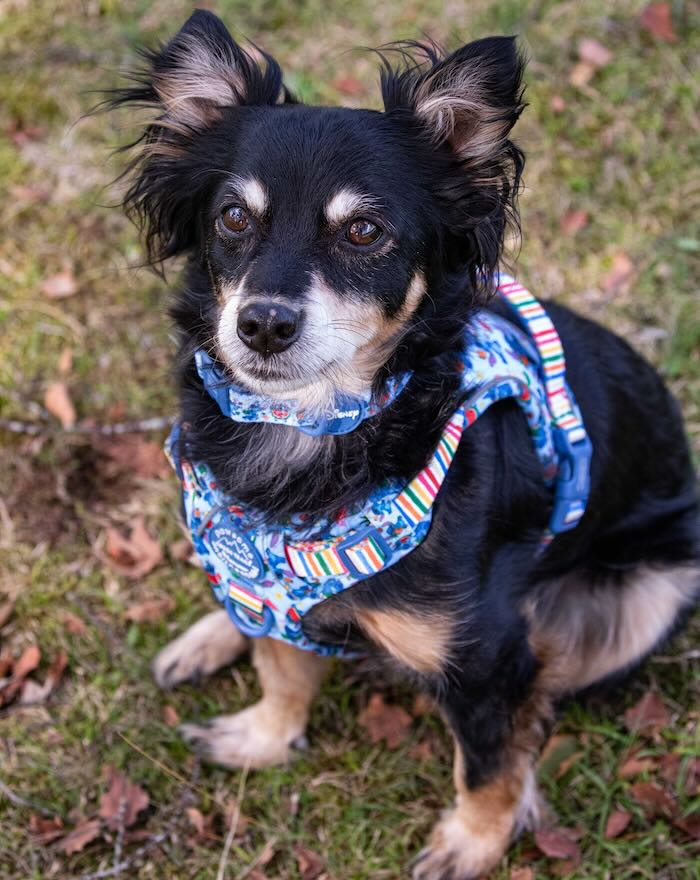
Photo by: fran innocenti
With a new inspirational quote every day, atop the perfect photo—collected and archived on our Quote of the Day page—why not bookmark GNN.org for a daily uplift?

Quote of the Day: “When one teaches, two learn.” – Robert Half
Photo by: fran innocenti
With a new inspirational quote every day, atop the perfect photo—collected and archived on our Quote of the Day page—why not bookmark GNN.org for a daily uplift?


In rural Indiana, a couple are selling around 1,000 stately fir and pine trees for Christmas to help fund the education of their 8 grandchildren.
Shawn and Bruce Carpenter planted around 5,000 tiny trees a decade ago, reasoning that by the time they reach between 6 and 10 feet tall, their grandchildren will begin shipping off to colleges and universities across the country and will need a helping hand.
Time passed, and the Carpenters let nature take its course on the plantation; keeping a lookout for bagworms and mowing the grass between the trees, but doing little else besides.
Many died, but around a thousand, beautiful trees remain ready for the holiday season, meaning that Bittersweet Farms is finally ready for business.
“It was an investment to help our grandkids for college,” Shawn Carpenter told the Herald Times. “One that’s taken awhile.”
“Bittersweet Farms Cut & Carry Christmas Trees for Sale,” reads a sign the Carpenters put out by their rural mailbox on Bittersweet Road in Bean Blossom, Indiana, located in the state’s south-central Brown County.
Pick Your Own Christmas Tree estimates that this year, after inflation, trees will likely cost around $13 per foot, with rural prices trending down towards about $75 for an average tree, but going for as much as $100 in the cities. Bittersweet Farms charges $10 per foot.
If the Carpenters were to ship 60% of their total stock at a median price of $83, they’d pocket just shy of $50,000. Presuming expenses and taxes of 20% of the take-home, they’d close the season at around $39,000.
ALSO READ: The Lengths Parents Will Go to Make Holidays Memorable For Their Kids: Poll
If all 8 of the grandchildren attended university, they would receive $4,875 from their grandparents; a pretty helpful way to start the next chapter of their lives.
On November 30th—their first day of business—they sold 6 trees, including two of their largest to a Columbus Regional Hospital executive who bought the hospital building a tree for 2024 and 2025.
MORE CHRISTMAS STORIES: Tiny Christmas Tree Planted by Couple in 1979 is Now 52-ft Tall and a 5-Star Tourist Stop–LOOK
Up until now, the family has been harvesting trees from the land for years, but this is the first time the public has been able to buy from there. Buyers can saw one down themselves, or they can get help from Bruce and Shawn.
Bittersweet Farms is open Monday through Saturday 10 a.m. until 5:30 p.m. and is closed on Sundays.
TELL Your Friends To Get Down To Bean Blossom And Buy Themselves A Tree…

LEGO is celebrating 5 years of success for its flagship sustainability initiative Replay which allows consumers to ship used and unwanted LEGO bricks back to the company for redistribution to others.
In a pair of lovely celebrations in Boston and Richmond, giant LEGO birthday cakes bearing the number ‘5’ were decorated by children who then got to take sets made of donated LEGO bricks home with them.
GNN first reported on Replay’s launch in 2019, and five years on there have been 1,229,072 lbs. of LEGO bricks donated to the program which has distributed them to almost 400,000 children over the last five years.

That’s over 300 million individual bricks filling 190,000 distributed Replay sets, all being reused and re-loved rather than thrown in a landfill.
Most people don’t want to give away, or certainly throw out, their LEGO collection, according to Tim Brooks, the Environmental Responsibility Vice President at the LEGO Group.
“The vast majority hand them down to their children or grandchildren. But others have asked us for a safe way to dispose of or to donate their bricks. With Replay, they have an easy option that’s both sustainable and socially impactful,” he said in 2019 when Replay first launched.
That option has been routinely availed of, and coupled with existing initiatives to use recycled plastic to manufacture bricks—with the increase in cost coming out of company profits, LEGO is becoming one of the most sustainable toy companies on Earth.
“The LEGO® Replay program highlights the lasting power and durability of the LEGO brick and ensures it stays ‘in play’ through donations across the country,” said Skip Kodak, Americas Regional President at the LEGO Group.
MORE LEGO STORIES: LEGO Invests to Make Half the Plastic in Its Bricks from Renewable Materials by 2026
MORE LEGO STORIES: Teen Creates LEGO Charity to Collect and Wash Old Bricks to Give Away New Sets–For 3,000 Kids So Far
“This free and easy-to-use program gives LEGO bricks renewed life, and we’re proud that over the past five years, Replay has reached nearly 400,000 kids, increasing their access to learning through play. It’s been a delight to engage more kids and educators with Replay through this anniversary celebration.”
The donation process is simple: collect any loose LEGO bricks, sets, or elements, place them in a cardboard box, and visit lego.com/replay to print out a free UPS shipping label. The package will be sent to the LEGO Replay facility, where each brick will be sorted, inspected by hand, and given a rigorous cleaning. Donated bricks will then be distributed to kids throughout the U.S. by nonprofit partners.
SHARE This Great Alternative To Throwing Away This Classic Toy…


American scientists have proposed a new method for recruiting trillions of microscopic sea creatures and their insatiable appetites for the fight against climate change.
The technique harnesses the animals’ daily habits to essentially accelerate the ocean’s natural cycle for removing carbon from the atmosphere, which is known as the biological pump, according to the paper in Nature Scientific Reports.
The study, published by researchers at Dartmouth College, reported that spraying clay dust on the surface of the ocean converts carbon into food the animals would eat, digest, and send deep into the ocean as carbon-filled feces.
They explain that the process would begin with spraying the clay dust at the end of algae blooms. These blooms can grow to cover hundreds of square miles and remove about 150 billion tons of carbon dioxide from the atmosphere each year, converting it into organic carbon particulates. But once the bloom dies, marine bacteria devour the particulates, releasing most of the captured carbon back into the atmosphere.
The researchers found that the clay dust attaches to carbon particulates before they re-enter the atmosphere, redirecting them into the marine food chain as tiny sticky pellets the ravenous zooplankton consume and later excrete at lower depths.
“Normally, only a small fraction of the carbon captured at the surface makes it into the deep ocean for long-term storage,” says Mukul Sharma, the study’s corresponding author and a professor of earth sciences. Sharma presented the findings on December 10th at the American Geophysical Union annual conference in Washington D.C.
“The novelty of our method is using clay to make the biological pump more efficient—the zooplankton generate clay-laden poops that sink faster,” says Sharma, who received a Guggenheim Award in 2020 to pursue the project.

“This particulate material is what these little guys are designed to eat. Our experiments showed they cannot tell if it’s clay and phytoplankton or only phytoplankton—they just eat it,” he says. “And when they poop it out, they are hundreds of meters below the surface and all that carbon is, too.”
The team conducted laboratory experiments on water collected from the Gulf of Maine during a 2023 algae bloom. They found that when clay attaches to the organic carbon released when a bloom dies, it prompts marine bacteria to produce a kind of glue that causes the clay and organic carbon to form little balls called flocs.
The flocs become part of the daily smorgasbord of particulates that zooplankton gorge on, the researchers report. Once digested, the flocs embedded in the animals’ feces sink, potentially burying the carbon at depths where it can be stored for millennia. The uneaten clay-carbon balls also sink, increasing in size as more organic carbon, as well as dead and dying phytoplankton, stick to them on the way down, the study found.
In the team’s experiments, clay dust captured as much as 50% of the carbon released by dead phytoplankton before it could become airborne. They also found that adding clay increased the concentration of sticky organic particles—which would collect more carbon as they sink—by 10 times. At the same time, the populations of bacteria that instigate the release of carbon back into the atmosphere fell sharply in seawater treated with clay, the researchers report.
YOU MAY ALSO LIKE: First-Ever Coral Crossbreeding Hopes to Mimic the Resilience of an ‘Invincible’ Reef in Honduras
In the ocean, the flocs become an essential part of the biological pump called marine snow, Sharma says. Marine snow is the constant shower of corpses, minerals, and other organic matter that falls from the surface, bringing food and nutrients to the deeper ocean.
“We’re creating marine snow that can bury carbon at a much greater speed by specifically attaching to a mixture of clay minerals,” Sharma says.
Zooplankton accelerate that process with their voracious appetites and incredible daily sojourn known as the diel vertical migration. Under cover of darkness, the animals—each measuring about three-hundredths of an inch—rise hundreds, and even thousands, of feet from the deep in one immense motion to feed in the nutrient-rich water near the surface.
OTHER OCEAN INSIGHTS: This Isn’t Pasta–It’s Star-Shaped Sand Found in Japan With A Huge Secret Hidden Inside
When day breaks, the animals return to deeper water, where they deposit the flocs as feces. This expedited process, known as active transport, is another key aspect of the ocean’s biological pump that shaves days off the time it takes carbon to reach lower depths by sinking.
Sharma plans to field-test the method by spraying clay on phytoplankton blooms off the coast of Southern California using a crop-dusting airplane. He hopes that sensors placed at various depths offshore will capture how different species of zooplankton consume the clay-carbon flocs so that the research team can better gauge the optimal timing and locations to deploy this method—and exactly how much carbon it’s confining to the deep.
SEA LIFE MAKING WAVES: Cone Snail Poison is Deadly But May Now Lead to Better Diabetes and Hormone Drugs
“It is very important to find the right oceanographic setting to do this work. You cannot go around willy-nilly dumping clay everywhere,” Sharma told Dartmouth press. “We need to understand the efficiency first at different depths so we can understand the best places to initiate this process before we put it to work. We are not there yet—we are at the beginning.”
SHARE How These Scientists Working Towards A Better Tomorrow…

Not far off the Kenyan coast, maritime archaeologists believe they have found the wreckage of a galleon belonging to Vasco da Gama, the Portuguese navigator who found the route to India around Africa.
While the true provenance of the vessel is unclear, the discovery would be of monumental importance to the study of maritime archaeology, and the history of European exploration.
It was originally identified near the city of Malindi in 2013 by Caesar Bita, an underwater archaeologist at the National Museums of Kenya who received a tip from a local fisherman.
Commissioned in 1497 to find a route to “the Indies,” da Gama was the first European to round the Cape of Good Hope, before proceeding to sail north along the coast of Zanzibar to reach India. It was the first route to India by sea, and it changed European and world civilization forever.
On his third, multi-ship voyage in 1524, one of the Portuguese galleons, the São Jorge, sank somewhere off East Africa, but da Gama died of an illness en route, and a precise location for the ship was never provided.
After years of documentation, Bita invited the Portuguese nautical archaeologist Filipe Castro from the Center for Functional Ecology at the University of Coimbra to investigate the wreck. Together, they believe the ship is the São Jorge, which would make it the oldest European wreck in the whole of the Indian Ocean.
“I think this is a unique shipwreck,” Castro tells Live Science’ “It is a treasure.”

Lying at shallow depths of just 20 feet, this ship is protected by the local population, who are part of a community archaeology project and who the team intends to train so that they can monitor the finds and participate in their recording and analysis.
Elephant ivory and copper ingots have been excavated from the wreck, where few timbers from the ship remain. The divers have uncovered pieces of the hull after digging some trenches on the seafloor, but other features remain covered in coral.
OTHER FINDS SUCH AS THIS: Archaeologists Uncover 900 Ming Dynasty Artifacts From Shipwrecks in South China Sea
“It is larger than what we imagined for an early 16th-century ship,” Castro tells Artnet. “It is enormous. The first feeling you get when you look at it is that it is going to take time to dig it. Carefully, minding the details.”
Although there is a list of eight Portuguese shipwrecks in Malindi waters, the provisional dates of the artifacts point to the first quarter of the 16th century, and a ship that was on the outward journey to India rather than the return journey.
A GOLDEN GALLEON: Priceless Lost Jewels From Legendary Maravillas Shipwreck Are Found in Bahamas
This means it could also be the Nossa Senhora da Graça, another Portuguese vessel that sank in 1544, but that wasn’t a part of the famous navigator’s fleet.
MORE HISTORICALLY IMPORTANT SHIPWRECKS: Experts Begin Hunt for Most Valuable British Shipwreck in History, and the Gold Worth 4 Billion
Maritime archaeologist Sean Kingsley, who wasn’t involved in the excavations, called the discovery “archaeological stardust.”
“This is one wreck that screams out for protection, respect, and care,” he told Live Science.
SHARE This Story With Your Friends Who Love Archaeology…
Quote of the Day: “We shall never know all the good that a simple smile can do.” – Mother Teresa
Photo by: public domain
With a new inspirational quote every day, atop the perfect photo—collected and archived on our Quote of the Day page—why not bookmark GNN.org for a daily uplift?


Thanks to the kindness of a generous donor, children 12 and under will now be able to visit the Milwaukee Art Museum (MAM) for free.
The gift of $3.5 million was given anonymously but with instructions to establish an endowment supporting child attendance at the museum.
The donor “shared fond memories of visiting the museum with their family throughout their life” and “expressed their wish for the endowment to foster similar experiences for future generations of families,” according to the museum’s Tuesday announcement.
“This wonderful gift is a celebration of the way that philanthropy can have a significant and lasting impact for generations,” MAM chief development officer André Allaire said in the news release.
“Every day, our youngest museum visitors will be able to access, engage with, and learn from world-class exhibitions and programs free of charge thanks to the generosity of an individual who believes in the power of art to strengthen our community.”
MORE ANONYMOUS GIFTS: Anonymous Donor Pays Off Student Debt for Entire 2022 College Class in Texas
Children ages 12 and under will have free access not only to the museum’s collections, but also its exhibitions and youth and family programs.
At the moment, MAM’s exhibitions include a collection of photography, images, and videos from American image artist Robert Longo, entitled Acceleration of History, and a collection of woodblock prints from the Baltimore-based artist, wife, mother, and educator LaToya M. Hobbs.
MORE AMERICAN PHILANTHROPY: San Francisco Opera Offers Prime Tickets For $10 to Get New Folks Interested in Magnum Opuses Like Carmen
“Since our earliest days as an institution, the Milwaukee Art Museum has provided free educational experiences for children,” said Marcelle Polednik, the MAM director. “The endowment established from this inspirational donation will keep that tradition alive for future generations of the communities we serve.”
KNOW Anyone In Milwaukee? SHARE This Great News For Those With Kids…

Last year GNN reported on two Louisiana high schoolers who used trigonometry to properly demonstrate Pythagoras’ Theorum, a mathematical concept that remained unsolved for more than 2,000 years.
Ne’Kiya Jackson and Calcea Johnson made national headlines, won their school a large grant, and were invited to publish papers on their discovery after making it.
On October 28th, in a paper published by the teens in the journal American Mathematical Monthly, they’ve used their skills in trigonometry to demonstrate 9 other ways to prove the theory.
To understand the scope of their accomplishment, it’s necessary first to understand the theory.
Pythagoras’ Theorem deals with triangles that are not perfectly symmetrical, and it goes like this.
The area of the square whose side is the hypotenuse (the side opposite the right angle) is equal to the sum of the areas of the squares on the other two sides. It is written as a2+b2=c2.

One of the interesting things about this equation is that for 2,000 years, no mathematician has been able to demonstrate the truth of it without simply using the equation itself as proof; what is called circular logic, and not accepted as true evidence of proof.
It was this sticky problem that the teens solved, and in doing so won their academy a large grant from NBA legend and all-around great guy, Charles Barkley.
“To have a paper published at such a young age — it’s really mind-blowing,” Johnson, who is now studying environmental engineering at Louisiana State University, said in a statement emailed to Live Science. “I am very proud that we are both able to be such a positive influence in showing that young women and women of color can do these things.”
ALSO CHECK OUT: Father-Daughter Duo Won the Race to Decode an Extraterrestrial Message–Sent from Mars to Test Humanity
According to Johnson and Jackson, they proved the theory correct without using it as proof like this. Trigonometry is the study of triangles, and presenting equations through it can be done through the principles of sine and cosine. Sine and cosine are ratios that are defined in the context of a triangle’s right angle.
However, according to the young women, over time these two principles have merged in an unhelpful way.
MORE BRILLIANT YOUTH:17-Year-old Wins $150,000 in Science Talent Search for Remarkable Way to Diagnose Pediatric Heart Disease
“Students may not realize that two competing versions of trigonometry have been stamped onto the same terminology,” the pair write in their introduction. “In that case, trying to make sense of trigonometry can be like trying to make sense of a picture where two different images have been printed on top of each other.”
Beyond this explanation, readers can take a look at the presentation in the study and see for themselves whether they can make sense of the concepts. In any case, by teasing sine and cosine apart, one can find “a large collection of new proofs of the Pythagorean theorem.”
SHARE These Amazing Teen Minds And Their Continued Success…


5 Hawaiian crows have just been released onto the island of Maui in an attempt to return this species to the islands.
Extirpated from its native Big Island in 2002, all remaining members of the species have been bred in captivity since then. However, the animals were raised to retain their wilder instincts in the hope that they could one day be released safely into the wild.
Known as ʻalalā in the Hawaiian language, the 2 males and 3 females hopped out of their cages on the leeward slopes of Haleakalā, in the Kīpahulu Forest Reserve on Maui. This cooperative effort is the first release of Hawaiʻi’s endemic crow on Maui and the first reintroduction attempt outside of the Big Island.
“The translocation of ʻalalā to Maui is a monumental step forward in conserving the species and a testament to the importance of partnership in reversing biodiversity loss,” said Megan Owen, vice president of conservation science at the San Diego Zoo Wildlife Alliance, which assisted with the reintroduction.
“It means a lot to me to care for the ʻalalā,” Keanini Aarona, avian recovery specialist at Maui Bird Conservation Center (MFBRP), said in the statement. “To me, and in my culture, the ʻalalāare are like our ancestors—our kūpuna. The forest wouldn’t be there without these birds.”
ʻAlalā are considered ʻaumākua (spirit guardians) in Hawaiian culture said Martin Frye, research field supervisor for MFBRP.
“The birds represent so many individuals who have gone before us and our care for this release group is linked with our desire to preserve their memories and knowledge for the future,” Frye said.
It’s not the first attempt at reintroduction of this species. Several groups of crows have been released on the Big Island in the 21st century. These were quickly returned to captivity as intoxicants, predation from Hawaiian hawks, and accidents with aspects of human civilizations have repeatedly contributed to unsustainable mortality rates.
BIRDS RETURNING TO THEIR HOMES: LA Zoo Breaks Record for Condors Hatched in a Season with 17 Ugly-Cute Chicks Poised to Bolster Species
Three male and two female juveniles were selected for this initial release in Maui, as young birds are less territorial than adults and may therefore show more group cohesion, teamwork, and learning from one another as a result.
These particular individuals were selected for their highly developed social and behavioral skills that may allow them a greater likelihood to succeed in the wild at foraging, predator avoidance, and pair bonding.
MORE HAWAIIAN BIRDS: Hawaii’s State Bird Soars Back From Brink of Extinction After Only 30 Birds Left on Islands
Success for the project relies on how the birds manage to adapt to their new home and can only be measured over time. Maui doesn’t have any Hawaiian hawks, eliminating one major pressure on these juveniles.
The field team will continue to monitor the birds into the foreseeable future, supplementing their food and keeping an eye on their health and wellbeing. For now, the birds are free to roam and explore their surroundings, learning and feeling what it means to be wild.
SHARE This Story With Your Friends From Hawaiʻi…

If you have 2 minutes to be charmed, watch the video of this Dr. Livingston in the making, who can name all 195 flags of the world at just 4 years old.
Arthur Weekley has been interested in flags since he was 3 after his dad Bobby bought him a puzzle with different flags on it.
After memorizing the flags his parents started testing Arthur on his knowledge, and he can now remember every single one.
“If there was a competition in the house, he would win it out of the three of us 100%,” Bobby joked. “My flag knowledge has improved a lot than it was before. He teaches me most of the time when it comes to flags.”
Arthur’s favorite flags include Brazil, The Marshall Islands, and Papua New Guinea.
“It’s all self-taught. We don’t go through and teach him everything, he does it by himself. He did a game with the American states and has started learning them,” Bobby told the British news media outlet SWNS.
ANOTHER BRAINIAC: 8-year-old Boy Becomes Youngest Player to Beat a Chess Grandmaster: ‘I felt amazing’
New parents may be interested to hear that Bobby bought Arthur the puzzle when he was just 2. It’s a testament to just how early you can start with academic material provided it’s engaging enough.
“Now he’s four and as well as knowing all the flags, he has now memorized all the shapes of countries and where they are in the world,” he added. “It’s seriously impressive and still shocks us now.”
HOW KIDS LEARN: Children Do Much Better in Math When Music is Added to the Lesson: New Study
Bobby says that people think that he cheats and helps Arthur out but when Bobby is guessing the flags at a family event he “amazes” people.
“It amazes me every time he does it.”
WATCH Arthur do his thing below…
SHARE This Charming Child And His Love Of Geography With Your Friends…
Quote of the Day: “All children are artists. The problem is how to remain an artist once he grows up.” – Pablo Picasso
Photo by: Hrant Khachatryan for Unsplash+ (cropped)
With a new inspirational quote every day, atop the perfect photo—collected and archived on our Quote of the Day page—why not bookmark GNN.org for a daily uplift?


In parts of Zambia’s Kafue National Park, a conservation organization specializing in wildcats has reported that the number of leopards there has nearly tripled.
With an increase of 2.9, there are now 4.4 leopards per 100 square kilometers of terrain, which is much more than it sounds when you consider just how big Kafue is.
At 22,700 square miles, it’s two-and-a-half-times larger than Yellowstone, but exists within the Greater Kafue Ecosystem—a mosaic of landscapes enjoying various levels of protection that’s three times larger than that, and is around the size of Massachusetts.
“It’s very large, and has tremendous potential for recovery, but it’s been so beaten up for so many decades,” said Jon Ayers, Board Chairman of Panthera, the world’s only conservation group dedicated exclusively to wildcats.
“As exciting as the project has been, there’s still tremendous opportunity to see it grow back to its original vibrancy,” he told GNN.
Living in the shadows, literally and figuratively, of their beige, maned cousins of the savannah, the leopard receives a fraction of the conservation dollars that lions enjoy. However, because leopards sit at the top of the food chain just below lions, spending money to protect one will invariably help the other. They eat the same animals, and share the same vast landscapes.
“There are probably six different species of cats in that ecosystem. Because they’re on the top of the food chain, they indicate the health of the whole ecosystem,” said Ayers, who was described to GNN as a business mind that knew more about wildcat conservation than most conservationists.

Ayers took a position on the board in 2021. At the time, he was recovering from a cycling accident that left him partially paralyzed from the torso down, and felt he needed a plan—something else to focus his attention on.
“It’s not easy going through something like this and most people don’t do very well,” Ayers told GNN in 2021. “Not that I’m perfect, but being able to work on something like this is the greatest gift to me… because it helps me through a transition in my life, and because it gives me purpose.”
The work going on in Kafue, which has included camera trap surveys, smarter anti-poaching patrols, and GPS-tagging white-backed vultures to act as an early-warning system for poisoning activity, has seen the decline in the area’s lion numbers cease, and reverse, as well as the near-tripling of the leopard population mentioned earlier.
“Panthera just led the largest survey of lions and leopards ever accomplished in Kafue,” said Ayers.
Leopards, the chairman adds, are more ubiquitous and have more fixed territories than lions or cheetah, which means camera trapping these cats is more effective than usual at estimating their numbers. The camera trap surveys are the best tool for understanding whether or not Panthera’s work in the ecosystem is succeeding.
MORE BIG CAT CONSERVATION: Ecologists Preparing to Return Tigers to Kazakhstan in World-First Tiger Reintroduction Effort
“It’s kind of like, how do you know if you’re winning the game if you don’t have a scoreboard? So the surveys act as a scoreboard,” he adds.
Panthera has worked with leopards for years, notably through their Furs for Life program that convinced indigenous African cultures who use leopard furs as part of their ceremonies to switch to synthetic furs.
“These indigenous groups, one of the biggest ones is called the African Congregational Church, they use these leopard furs as part of their rituals. And they needed to go out and kill leopards to get the leopard skins so that young and upcoming members could have leopard skins as part of their celebrations,” Ayers explained.
“And so what we’ve done is by working with these leaders, we’ve said ‘hey that’s not so good for the ecosystem on which you rely, why don’t we substitute very authentic synthetic furs?’”
MORE BIG AFRICAN GOALS: South Sudan’s Epic Effort to Protect the World’s Little-Known Largest Mammal Migration
During the period in which the leopard numbers nearly tripled, there were no recorded poaching instances for leopard furs from locals affiliated with the church or any other known ceremonial group, according to Panthera’s report.
Leopards, (Panthera pardus) are considered by the IUCN Red List to be ‘Vulnerable’ and decreasing across their whole range on average.
There are few hideaways for the leopard worth mentioning if they can’t make it inside Kafue, and it bears explaining exactly what Kafue is and what it represents.

In the same way that Kafue National Park is nested inside the Greater Kafue Ecosystem, the Greater Kafue Ecosystem is one part of the Kavango Zambezi Transfrontier Conservation Area, the largest terrestrial conservation landscape in the world.
AYER’S ORIGINAL STORY: Millionaire Turned Quadriplegic Jon Ayers is Giving it All to Save Wild Cats, After Finding a New Purpose
It spans five countries (Angola, Botswana, Namibia, Zambia, and Zimbabwe) and encompasses 36 protected areas across some 520,000 square kilometers. This is a region the size of France, and one so large and so important to the continent, it has its own visa that allows visitors to transit national borders as easily as an elephant can.
As long as Panthera is involved, one can rest assured there will be leopards to be found here, and if there are leopards there, the reader can rest assured their grandchildren will be able to see a leopard in the wild.
SHARE This Incredible Success Across An Incredible Landscape…
Editor’s Note: This story has been corrected to reflect the fact that leopard populations were nearly tripled in parts of Kafue.

In a rather unexpected collaboration for a single off the new Coldplay album, Chris Martin teamed up with Dick Van Dyke for a music video just before one of the danciest stars in Hollywood turns 99 years old.
‘All My Love’ is a single from the LP Moon Music released in October, and in a 7-minute director’s cut, the Mary Poppins and Chitty Chitty Bang Bang star talks about love, life, being silly, and growing old, all before his birthday on December 13th.
The music video was filmed at Van Dyke’s Malibu home, and features a shoeless Martin playing piano and singing while Dick does what Dick does—dancing.
On December 5th, Van Dyke and Martin appeared on Jimmy Kimmel Live to preview a clip of the video and discuss their collaboration.
Martin said Mary Poppins was his “number 1” film, and despite living just 8 miles from Van Dyke, had never met him before. Martin and the director of the music video Spike Jonze, were brainstorming ideas about a theme for the song, and the idea of Van Dyke came up.
CHRIS MARTIN BEING A KIND SOUL: He Crowdsurfed in a Wheelchair to the Stage and Coldplay Pulled Him Up to Play Harmonica (Watch)
“I said, ‘We’re looking for an old guy. Who’s the oldest guy?’” quipped Martin.
Van Dyke admitted that when someone told him Chris Martin was on the phone, he asked “Who’s that?”
COLDPLAY’S NEW ALBUM ALSO: Coldplay’s New Album Is Made of Plastic Collected from Rivers by The Ocean Cleanup
In June, Van Dyke became the oldest Daytime Emmy winner ever when he was awarded for his guest role on the endless soap opera Days of Our Lives.
“I feel like a spy from nighttime television,” the actor said in his acceptance speech. “I’m the oldest nominee in history. I can’t believe it. I was playing old men all my life. If I had known I was going to live this long, I would have taken better care of myself!”
WATCH, LISTEN, and maybe just cry…
SHARE This Sweet Collaboration Between Two Beloved Performers…

Notre Dame Cathedral of Paris has reopened, and all the West rejoices with her.
However, during the extensive restoration, a team of archaeologists was allowed to dig under the foundations as far as the anchor points of the scaffolding, under a French law that allows archaeological digs to occur for preservation of what may lie underfoot.
Scientists can dig “to detect and undertake the scientific study of archaeological remains (on land and underwater) that might otherwise be destroyed by land development work,” according to the law, and the remains, in this case, proved to be 100 graves, and 1,000 statue fragments along with valuable insights into the foundational layers of the famous building.
Teams from the Institut National de Recherches Archéologiques Préventives (INRAP) uncovered hundreds of fragments, many from limestone sculptures of men and saints, including the Savior.
A 13th-century jubé or rood screen that previously separated the choir and sanctuary from public view was among the more significant architectural finds, Art News reports.
Belonging to the Saxon language, “rood” means cross, and it stood at the center of the transept and blocked the view of the peasants in the nave from seeing the sanctuary. It was considered a marvel of pre-modern European sculpture, and hundreds of pieces of it and its ornamentation were recovered.
These include floral patterns and other gothic features, as well as reliefs from the Passion of Christ, including famous scenes like the Last Supper, the Crucifixion, and the Resurrection. A majority of the recovered fragments have traces of the pigments that once colored the whole screen.

Christophe Besnier and his team from INRAP believe more of the screen’s remains lie buried under the choir itself, which was outside the scope of his dig site. The whole excavation was on a time crunch as President Emanuel Macron was urgently trying to have the monument reopened for the Olympics.
Weeks turned to months, and the excavations continued as frantically as digging under one the most sensitive and ancient structures in the country could possibly be allowed to be.
MORE WORK FROM INRAP: Hotel Excavation Reveals Medieval Castle with Moat and Stones That Look Like They Were Laid Yesterday
Charred remains of the earliest wooden beams show how the original constructions employed 49-feet-long, 100-year-old oak trees hand-cut and notched with special holds for ropes which would have bound them together as they floated down the Seine to the small island where the cathedral is located.
Also found were heavy iron clamps, 10 to 20 inches long used to bind certain stones together which date to the earliest construction periods of Notre Dame at around 1160 CE. This makes it the first Gothic cathedral in Europe to use iron as a building material.
THE REST OF THE STORY: Rebuilding Notre Dame Cathedral Takes Leap Forward as the Majestic Spire Is Pieced Together
For now, the rest of the rood screen will remain under the newly-reopened building, and no mission to recover them is in the works as the nation would like the public to enjoy its beloved and iconic cathedral without disruption.
SHARE This Coda To The Rebuilding Of The World’s Most-Visited Church…

It has taken 46 years and reportedly suffered many setbacks, but on Thursday, the People’s Daily wrote that Chinese workers have succeeded in ringing the entire Taklamakan Desert in trees.
Last week, the final 100 trees were planted around the southern edge of the world’s most hostile desert, completing an epic endeavor sometimes called the ‘Green’ Great Wall of China.
Northern and western Chinese provinces suffer from dust and sand storms blowing off the Taklamakan—a word that in native etymology means “Go in and don’t come out”—souring the air and placing arable land at risk of desertification.
It’s the world’s second-largest shifting sand desert, as well as the farthest point from an ocean it’s possible to find on Earth. The areas around the Taklamakan are some of the poorest in the entire country.
The Green Great Wall began under Deng Xiaoping in 1978 with the “Three-North Shelterbelt” project. More than 30 million hectares (116,000 square miles) of trees have been planted.
Poor planning, follow-up, and species selection have occasionally resulted in major tree die-offs, sometimes from lack of irrigation and sometimes from beetle infestations.

Ecologists have also criticized the project for risking delicate groundwater sources, but its footprint shrunk the overall size of the Gobi Desert by 2,000 square kilometers in 2022, and offset significant amounts of China’s carbon footprint.
ALSO CHECK OUT: Norway’s Forests Have More Than Tripled in a Hundred Years
Despite these risks and reversals, the Three-North Shelterbelt has continued and is now reported to have been completed, raising the total forest coverage of the Chinese nation to 25%. The project has increased forest cover in Xinjiang, the arid, far-west province of China, from 1% in 1949, to 5% today.
Zhu Lidong, a Xinjiang forestry official, told a press briefing in Beijing on Monday that planting will continue as the government seeks to reinforce the ‘wall’ and keep desertification in check. Zhu added that after 4 decades of planting, officials are getting better at pairing species together to survive in the harsh climate.
MORE GOOD GREEN ENGINEERING: Couple Plants 2 Million Trees in 20 Years to Turn Destroyed Forest Back Into a Wildlife Haven
Zhu said he hopes the next stage will involve blocks of orchards to increase economic conditions for the people who live around the fearsome desert.
SHARE This 46-Year Project Finally Finished With Your Friends…
Quote of the Day: “Change is the end result of all true learning.” – Leo Buscaglia
Photo by: Yogendra Singh
With a new inspirational quote every day, atop the perfect photo—collected and archived on our Quote of the Day page—why not bookmark GNN.org for a daily uplift?


Dogs first became “man’s best friend” at least 12,000 years ago, suggests new research.
Indigenous people in the Americas began forming close relationships with the ancestors of today’s dogs around 2,000 years earlier than previously recorded on the continent, based on remains found in Alaska.
Researchers unearthed a tibia, or lower-leg bone, of an adult canine in 2018 at a longstanding archaeological site called Swan Point, about 70 miles south east of Fairbanks.
Radiocarbon dating showed that the canine was alive about 12,000 years ago, near the end of the Ice Age.
“We now have evidence that canids and people had close relationships earlier than we knew they did in the Americas,” said study lead author Dr. François Lanoë with the University of Arizona School of Anthropology.
“People like me who are interested in the peopling of the Americas are very interested in knowing if those first Americans came with dogs.
“Until you find those animals in archaeological sites, we can speculate about it, but it’s hard to prove one way or another. So, this is a significant contribution.”
Another excavation by the research team in 2023 found an 8,100-year-old canine jawbone at a nearby site called Hollembaek Hill—and that one also showed signs of possible domestication.
Chemical analyses of both bones found “substantial” contributions from salmon proteins, meaning the canine had regularly eaten fish. The researchers said that wasn’t typical of canines in the area at that time, as they hunted land animals almost exclusively.
They say the most likely explanation for salmon showing up in the animal’s diet is from humans serving it up.
An archaeologist with the University of Alaska–Fairbanks, Dr. Ben Potter, called it “the smoking gun” because they’re not really going after salmon in the wild.”
The researchers are confident that the Swan Point canine helps establish the earliest known close relationships between humans and canines in the Americas.
But they say it’s too early to say whether the discovery, published in the journal Science Advances, is the earliest domesticated dog in the Americas.
Dr. Potter, the study co-author, said that is why the study is valuable: “It asks the existential question, what is a dog?”
Prof. Lanoë says the Swan Point and Hollembaek Hill specimens may be too old to be genetically related to other known, more recent dog populations.
“Behaviorally, they seem to be like dogs, as they ate salmon provided by people. But, genetically, they’re not related to anything we know.”
He noted that they could have been tamed wolves rather than fully domesticated dogs.
The indigenous people of the region have long considered their dogs to be ‘mystic’ companions.
“I really like the idea that, in the record, however long ago, it is a repeatable cultural experience that I have this relationship and this level of love with my dog,” said Evelynn Combs, a tribal member involved in the archaeology department.
“I know that throughout history, these relationships have always been present.
“I really love that we can look at the record and see that thousands of years ago, we still had our companions.”
SHARE THE PAW-SOME RESEARCH With Dog-Lovers On Social Media…

Skin is the largest organ of the human body, measuring on average two square meters. It provides a protective barrier, regulates our body temperature and can regenerate itself.
But I bet you didn’t know that skin develops in the sterile environment of the womb, with all hair follicles formed before birth. (There is follicle cycling after birth, but no new follicles are made.)
Most importantly for the scientists behind a new report, before birth is when the skin has the unique ability to heal without scarring.
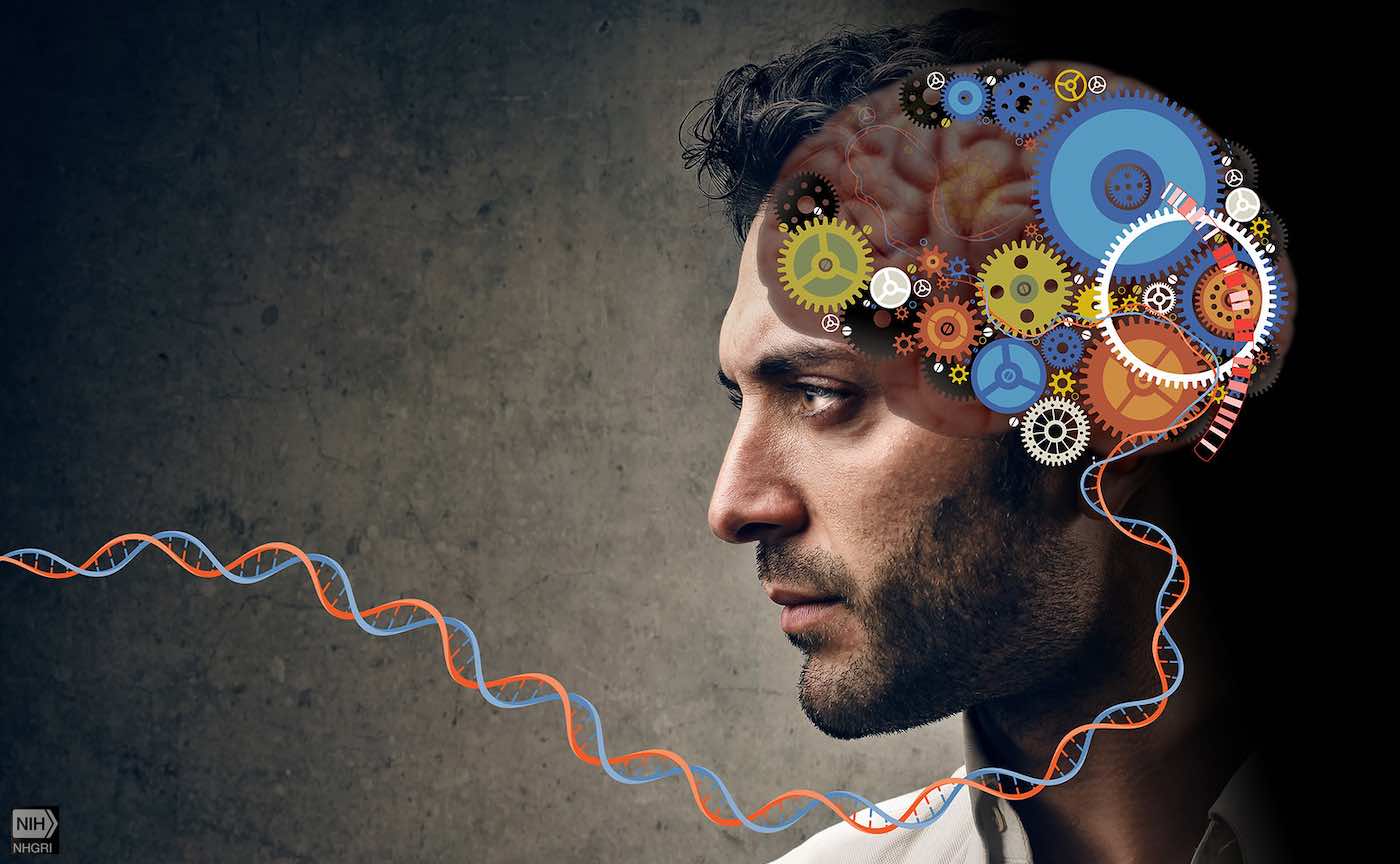
Now, for the first time, researchers have created a single cell atlas of prenatal human skin to understand how skin forms, and what goes wrong in disease—insights that could be used to create new hair follicles in regenerative medicine and transplants for burn victims.
Researchers from the Wellcome Sanger Institute at Newcastle University and their collaborators used single cell sequencing and other genomics techniques to create the atlas and uncover how human skin, including hair follicles, is formed.
For the study, published in Nature, the team also created a ‘mini organ’ of skin in a dish with the actual ability to grow hair.
Using the ‘organoid’, they showed how immune cells play an important role in scarless skin repair, which could lead to clinical applications to prevent scarring after surgery, or scarless healing after wounding.
“With our prenatal human skin atlas, we’ve provided the first molecular ‘recipe’ for making human skin and uncovered how human hair follicles are formed before birth,” said Dr. Elena Winheim, co-first author from the Wellcome Sanger Institute.
MORE CELLULAR BREAKTHROUGHS: Lab-Grown Blood Stem Cells Could Replace Bone Marrow Donations for Transplants
As part of the Human Cell Atlas, which is mapping all cell types in the human body to transform understanding of health and disease, the research futhers our understanding how skin develops, where cells are in space and time, and the role of genetics in revealing how specific mutations cause congenital skin disorders, such as blistering disorders and scaly skin.
The team used samples of prenatal skin tissue, which they broke down to look at individual cells in suspension, as well as cells in place within the tissue. Scientists used cutting-edge single-cell sequencing and spatial transcriptomics to analyze individual cells in space and time, and the cellular changes that regulate skin and hair follicle development.
They described the steps that outline how human hair follicles are formed and identified differences from mouse hair follicles. (One reason it’s so difficult to study how human skin develops, is that animal models are starkly different.)
They compared the molecular characteristics of skin organoids with prenatal skin and found the skin organoid model more closely resembled prenatal skin than adult skin.
AMAZING WORK: New Stem Cell Injection Treatment Shows Promise for Halting Multiple Sclerosis
The team found that blood vessels did not form in the skin organoid as well as in prenatal skin. But, by adding immune cells known as macrophages to the organoid, they discovered, with the use of 3D imaging, that the macrophages promoted the formation of blood vessels.
It’s known that these immune cells protect the skin from infection. However, this is the first time that macrophages have been shown to play a key role in the formation of human skin during early development by supporting the growth of blood vessels. This offers an option to improve vascularization of other tissues, which could lead to clinical applications to avoid scarring after surgery or wounding.
“These insights have amazing clinical potential and could be used in regenerative medicine, including offering skin and hair transplants—such as for burn victims or those with scarring alopecia,” said Dr. Winheim.
RELATED GOOD NEWS: FDA Approves First Alopecia Drug That Restores Hair Growth in Many Patients
“We’re excited to have made a skin organoid model that grows hair. In this process, we uncovered a new, important role of immune cells in promoting the growth of blood vessels,” said Dr. Hudaa Gopee, co-first author from Newcastle University. “Our findings could inform clinical advances to avoid scarring after surgery.”
Find out more on how the team grows skin organoids in the lab, in this Sanger Institute blog article.

In the dark of winter, in a place where there are no street lights, a Christmas tree has grown so tall that people can see its sparkling lights from miles around.
In fact, the entire town of Inkberrow in Worcestershire, England, gathers on Pepper Street every year for the annual “Switching on” ceremony.
Avril and Christopher Rowlands bought the tiny fir tree for $6 in 1978 and after Christmas planted it in their yard to mark their first holiday together in the new home.
With 45 years of nurturing, it has grown 52-ft high and the couple now in their 80’s are still draping it with lights in December—providing a majestic light to a countryside with little illumination on any horizon.
For the last two decades the couple has needed the help of a cherry picker to decorate the tree with thousands of lights, now that it towers over their 4-bedroom home.
Beyond the benefits of uniting the town and bringing in tourists from far and wide, the Rowlands have raised more than £25,000 for charities, including the British Heart Foundation and Alzheimer’s Research UK.

In 2022, they raised £3,000 for Worcester Food Bank and this year they hope to raise thousands in donations for the Midlands Air Ambulance service.
Despite the energy costs to light the tree, the couple continues the annual tradition which brought in around 2,000 people to see it lit up on the night of December 6.

“It’s remarkable to think we bought the tree as a sapling,” said Avril, a retired TV writer.
“We had no idea it would grow so tall but we’re delighted it has. Every year people say the tree switch-on marks the start of Christmas.”

The Inkberrow tree has even been named as a local landmark on Google Maps and has attracted only 5-star reviews.
To help pay for the electricity bill, the couple contacted their energy supplier who agreed to contribute £100 to their bill for Christmas.

The couple will switch the lights on every night from 4.30pm to 9.30pm until January 6.
Avril admitted that maintaining the tree was increasingly challenging due to its sheer size.
“The tree did have a disease a year ago but we had the lower branches pruned, and wooden posts installed to support it, and it’s never looked better.”
“Obviously, Chris and I are getting on, I’m 80 next year, but we’ve got no plans to stop
the Christmas switch on.”
“We wouldn’t know what to do if we couldn’t do this every year. It’s become a tradition in the village—and beyond—which is wonderful.”
CHRISTMAS KINDNESS: Non-Verbal Boy Bakes Dozens of Christmas Pies to Replace Michelin-Star Chef’s Stolen Holiday Batch
Avril swooned, “We even get holiday cards addressed to the tree, which is quite sweet.”
SHARE The Tree-Mendous Story of Love With Christmas-Loving Friends on Social Media…
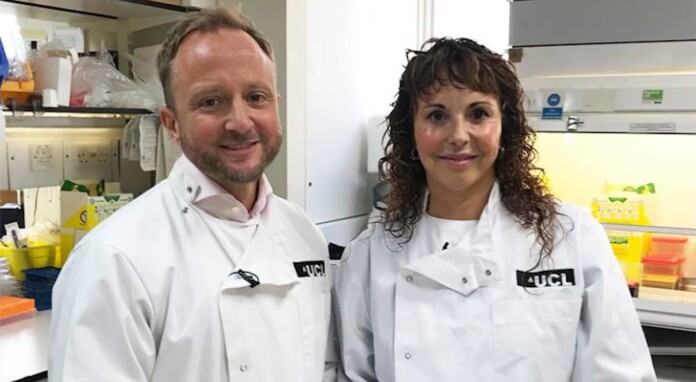
From Chicago comes the story of a sweet reunion between a mother and son, who despite having met many times, never knew of their relationship.
At Give Me Some Sugah bakery, recently-hired employee Hunter Varmarr is particularly proud of his pound cake. He had always loved stopping in for a sweet treat or breakfast at the cafe, particularly because of the service from the baker behind the counter.
Her name was Lenore Lindsey, and though she didn’t know Varmarr’s name, she knew him as a valuable customer.
But their relationship went far deeper than that. Though neither knew it, they were mother and son.
Lindsey gave up her newborn son for adoption when she gave birth to Varmarr at just 17 years old. Varmarr for his part didn’t know he was adopted until 34. After finding out, he gradually became interested in finding out who his birth mother was, and so submitted DNA for a test.
One day, he received a strange call.
“I was on the phone talking to my friend when a call came through from the bakery,” said Varmarr to the Washington Post. “I was like, ‘Why is Give Me Some Sugah calling me?’”
THE FATHER SHE NEVER KNEW: Woman Looking for Birth Parents Learns That Dad Was a ‘Friend’ on Facebook
Even though he was told to expect a call from his biological mother, he didn’t suspect even for a moment any connection between it and the bakery.
The Post heard from Lindsey, who said if she had seen Varmarr’s photo, the shock would have been immediate. Instead, with only a name, the call began with a slow awkwardness that eventually shattered with loud enthusiasm when the lost family members connected the dots.
“When I knew who he was, we just started screaming on the phone,” Lindsey said. “We were beside ourselves,” with Hunter adding “It was just so unbelievable.”
LONG-LOST SISTERS: Sisters Who Found Each Other Through DNA Discover They Had Mysteriously Named Their Kids After Each Other
“When I called him, that connection was so immediate. I can’t even explain it. It was just like everything in my heart just broke open,” she said, this time to ABC 7 Chicago.
After a bout of health issues, Varmarr even started working there while Lindsey recovered, having no prior baking experience.
“It’s been a great experience. It further strengthens my faith. You can’t make up for time and days gone by. What you can do is properly utilize the time that you have,” he said.
Along with Lindsey, Varmarr got to meet a long-lost sister, and an extended family to boot, incorporating his own four children into a new network of sweet, sweet, affection.
WATCH the story below from ABC 7…

SHARE This Sweet Story Of Sweets And Sweethearts With Your Friends…