















65 years ago today, the World Wildlife Fund was formed to save diverse species across the planet. With 35 million supporters and offices in nearly 100 countries, WWF has helped establish protected areas like the Galapagos National Park and worked to conserve iconic species including pandas, tigers, rhinos, and elephants—giving these animals and many more a brighter future. SEE the dozens of WWF headlines on GNN… (1961)
Humanity’s 3rd Visit to Mercury Kicks Off with the Successful Arrival of BepiColombo Mission


Reprinted with permission from World at Large.
On September 3rd, the European Space Agency marked the successful arrival of its BepiColombo mission to Mercury, just the third spacecraft to ever visit our solar system’s innermost planet.
Despite being so close to Earth, it takes roughly as much time to arrive in orbit around Mercury as it would to arrive at Pluto: more than 8 years. Given the intense gravitational pull of the Sun, any attempt at keeping a flat, straightforward course is impossible without substantial propulsion equipment unsuitable for a science probe like BepiColombo.
Instead, the craft had to rely on constant flybys of other planets, whose gravity could help to apply the brakes. 9 were completed in total on route to Mercury, which had to be approached in a Goldilocks velocity; too fast and the probe would fly right past it; too slow and it would drift permanently off course from the gravitational interferences.
Against the odds, ESA successfully navigated 6 billion miles this way, and, at noon local time from mission control in Darmstadt, Germany, the first arrival phase was completed to the cheers of everyone in the room.
“BepiColombo’s Mercury Transfer Module (MTM) successfully separated from the spacecraft stack,” ESA wrote in a statement. “This landmark achievement for the ESA and Japan Aerospace Exploration Agency (JAXA) mission marks the first step of BepiColombo’s long-awaited arrival at Mercury”.
The MTM contained a combination solar and gas propellant propulsion system that helped power it through the constant gravitational interference. Having come within 1.8 million miles of Mercury, its job was done and the module was left to float away in a process which the agency described as “one of the most complex planetary arrival sequences ever attempted by ESA”.
“We heard it loud and clear in the voice loop from Flight Dynamics Manager, Frank Budnik, that they could clearly see from the Doppler data that MTM had separated. After all this waiting and preparation, we all looked at each other and hugged. It was a very powerful moment,” says Emmanuela Bordoni, ESA BepiColombo B-shift Spacecraft Operations Manager.
The results will, however, offer unprecedented opportunities and quality to study Mercury’s surface, interior, magnetic field, and surrounding environment when the two remaining science modules begin primary mission phases in April of 2027.
“Although we already have great science from the cruise phase and nine planet flybys, it’s fantastic that we’ve taken this first important step towards finally being able to use all the powerful instruments on both MPO and Mio to study Mercury,” says ESA BepiColombo Lead Project Scientist, Geraint Jones.

No one knows their neighbor anymore
Despite Venus’ reputation as our nearest neighbor, Mercury’s more rapid orbit actually means it spends more of an Earth year closer to us than Venus does. NASA’s Mariner 10 mission flew by Mercury 3 times in the mid-1970s, and NASA’s Messenger mission orbited it from 2011 to 2015.
Mariner 10 performed the first ever gravity assist, using Venus to flyby Mercury, which it visited on 3 occasions taking 2,700 images of the planet. The spacecraft’s magnetometers revealed a weak magnetic field, while radiometer readings suggested nighttime temperatures of minus 297 degrees Fahrenheit (minus 183 degrees Celsius) and maximum daytime temperatures of 369 degrees Fahrenheit (187 degrees Celsius).
NASA’s MESSENGER spacecraft orbited Mercury for more than 4 years. Among its accomplishments, the mission determined Mercury’s surface composition, revealed some of its geological history, discovered details about its internal magnetic field, and verified its polar deposits are dominantly water-ice.
Among its initial discoveries were finding high concentrations of magnesium and calcium on Mercury’s night side, identifying a significant northward offset of Mercury’s magnetic field from the planet’s center, finding large amounts of water in Mercury’s exosphere, and revealing evidence of past volcanic activity on the surface. It would go on to take 200,000 photos of the planet—visually mapping the whole world.
EXPLORE OUR WORLDS: 4 Exciting Space Missions Launch This Year Including NASA’s Return to Moon, Japan’s Jump to Mars
BepiColombo, a name which honors Italian mathematician and engineer Giuseppe “Bepi” Colombo, will hope to discover more about the least understood planet in the inner solar system. Small and lifeless, the mission hopes to learn how a planet can form so close to its host star, about its planetary interior—are there plate tectonics or volcanism—and details about the exterior and interior magnetic fields.
There are outstanding mysteries that data from BepiColombo could reveal, including the origin of “lobate scarps” or ridges, that can extend several hundred, surprisingly-uniform miles and reach as tall as the 1,500 meters at their highest points. Two theories as to their formation have been proposed, including one which states they formed when the mantle and interior cooled after a point when the crust layer had already solidified.

Another unexplained characteristic of Mercury is why its core has a higher content of iron than any planet in the solar system. Multiple theories have been put forward.
Measurements from both Mariner 10 and MESSENGER have indicated that the strength and shape of Mercury’s global and intact magnetic field are stable, and that around the equator its strength is similar to that of Earth—strong enough to deflect the spaceborne radiation we call the Solar wind, even given its closer proximity to the Sun. MESSENGER did reveal, however, that the field is “leaky” and concluded this by the observation of “magnetic tornadoes”.
MORE FUTURE SCIENCE MISSIONS: Nancy Grace Roman Space Telescope Survives Attempted Budget Cuts to Launch 9 Months Early
These twisted bundles of magnetic fields connecting the planetary magnetic field to interplanetary space were up to 480 miles wide, or a third of the radius of the planet, and presented gaps for the Solar wind to bombard the planet’s surface.
BepiColombo consists of two modules that will study Mercury and hopefully resolve some of these mysteries. Currently still joined together, Mio and MPO will enter polar orbit around the planet on November 26th, before Mio is ejected 2 weeks before Christmas. Designed by JAXA, Mio will study the magnetosphere while the Mercury Planetary Orbiter, carrying an impressive 11 science instruments of every description, will enter final orbit in March. WaL
SHARE This Exciting New Mission To Start Studying Mercury Next Year…
A Hungry Cleaning Lady Bit into an Apple and Solved the Case of Legendary Diamond Heist


It’s a beautiful stone no, the Grand Condé diamond?
Its presence in the public eye was almost lost 100 years ago, but thanks—of all people—to a hungry cleaning lady, it can still be part of new exhibitions like the one upcoming at the Château de Chantilly near Paris.
But first, some outrageous history.
Suzanne Schiltz was a chambermaid in Paris back in 1926. Cleaning fine hotel rooms was exhausting business in the most-visited city of the age, and perhaps taking her livelihood in her own hands, she gave in to the urge to swipe an apple from the suitcase of one of the gentlemen whose rooms she was cleaning.
Taking a bite, she was shocked when her teeth hit something solid—which nearly shattered them. She stared down in disbelief. Lodged inside the apple was a pink gemstone the size of a lima bean.
Schiltz had inadvertently solved the case of a most high profile heist at the Château de Chantilly, around 30 miles north of Paris. Two months earlier, a couple of amateur thieves purloined the diamond and 74 other pieces of jewelry with nothing more than a ladder. Their unlikely success could not, however, be replicated in their attempts to fence the loot.
Valued at $3 million in 1920s dollars (in other words, the grandest of fortunes) they had only managed to make a tiny fraction of that selling off various pieces. The problem was that no jewelry or pawnbroker would touch many of the items because of their obvious provenance, especially something as famous as the Grand Condé.
According to a newspaper article from the time, after the chambermaid had reported the discovery, one of the thieves was asked by police: “Do you like apples?” The burglar, dumfounded, answered: “Why?” to which the officer responded, “You have one with queer seeds in your case.”
Marking 100 years since this episode, the Musée Condé and the Château de Chantilly have decided to put the jewel on display for the public for the first time in as many years. The diamond first appeared in France around the time of the American Revolution, and transferred from private hands to the king, before being given to the Duke of Condé as a reward for service in the 30 Years’ Sar. It’s believed to be of Indian origin.
The burden of security is heavy—especially in the light of the spate of high-profile museum heists in France lately—but part of the exhibit examines why the thieves couldn’t sell the diamond 100 years ago, while also presenting a new strategy for achieving a similar layer of security today.
ENORMOUS DIAMONDS: Rare Diamond Within a Diamond Is Unearthed in India and Dubbed ‘The Beating Heart’
Then, the stone was just too famous for anyone to risk buying. Today, many more large pink diamonds—the rarest of their kind—exist. So Mathieu Deldicque, chief heritage curator and director of the Musée Condé invited gemologists from the School of Jewelry Arts of Paris to “conduct extensive studies and scientific analysis on the stone’s chemical composition, rarity, clarity and density,” CNN reports.
In this way a sort of identity card is created, so that even if the stone were stolen, cut in half, or reshaped, its identify card would ensure that any jeweler or black-market auctioneer in the world would know what it was.
ALSO CHECK OUT: Locals Digging a Well Accidentally Discover a $140 Million Star Sapphire Weighing Half a Ton
Beyond the Condé diamond’s historical significance, Deldicque said that gemstones in general “are works of art, and works of nature.”
“Diamonds are quite particular. You can’t enjoy them through pictures, videos, photographs and so on. Their color, their light, their presence are actually so strong that you have to see them in real life.”
The exhibit, run by the museum and the school, will run from October 17th to January 3rd.
SHARE This Wild History Story And The Opportunity To See This Grand Stone Up Close…
91-yo ‘Greybeard’ Becomes Oldest Person to Hike Appalachian Trail After 359 Days and 71 Falls
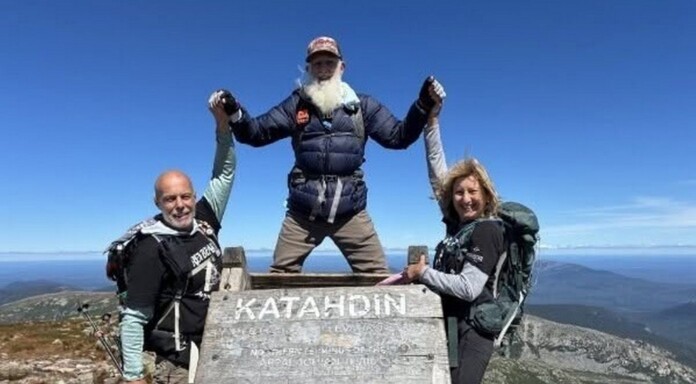
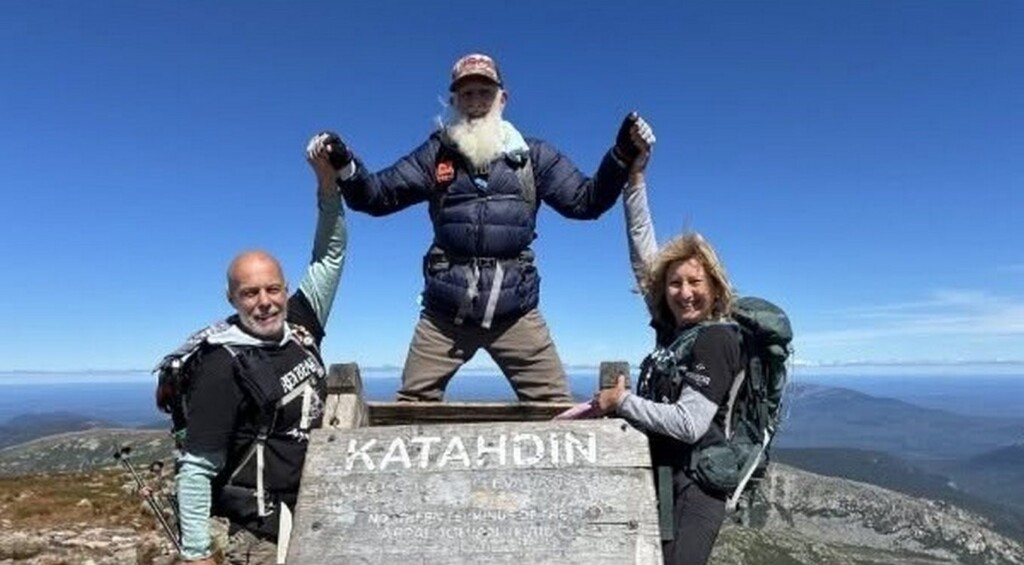
Not long ago on a lonely peak in Maine, a 91-year-old grey-bearded man stood taking in the sights, as he observed the sensation of success that came with being the oldest person to complete a hike along the famous Appalachian Trail.
Born to the Kentucky backwoods in 1935, before the AT route had even been completed, Dale Sanders has lived a life full of adventures and would belong in the American hiking hall of fame, should there exist such a thing.
Having first completed the AT in 2017 at 82 years of age, he resolved when it was all over to do it again. And he has, 359 days, 71 falls, and 1 brief hospitalization later.
Nicknamed “Grey Beard” by his supporters, with his broad sunhat of choice and his trekking poles there is indeed something very “Gandalf” about him. The activity—hiking such long distances—and the order he did it in—completely disjointed—double up this Lord of the Rings reminiscence.
Starting from Harper’s Ferry, Virginia on September 9th last year, his first leg was in one sense backwards, going all the way down to Georgia to reach the trail’s southern terminus to follow “the warmer weather.” Pausing for winter, he then went back to Harper’s Ferry and started towards Katahdin, the mountain in Maine that marks the northern end.
This continuum was interrupted by the cumulative impact of several bad falls which together landed him in a hospital in June with a pinched nerve. He had to return home to Tennessee after his mother in law died at that same time.
However, his wife convinced him to go and finish the task, which he did by yet again backtracking to complete an unhiked stretch in the Great Smokey Mountains, before jumping back to his pause point in the north and continuing on to Maine.
He reached the top on August 31st at 11:40 p.m.
Along the way, he says he met plenty of “trail angels” who offered supplies and sweet treats when it was possible. “When people are taking care of you and bringing you caramel frappes on the trail, the rocks don’t matter,” he tells the AP.
The sweet tooth is characteristic of a man whose advice to whippersnappers, as communicated to the Stein Institute for Research on Aging, is that “it’s OK to eat doughnuts if you also exercise.”
THE FOREVER YOUNG: Chinese Man Takes Paralyzed Wife on Epic Road Trip: ‘Die On the Road, Not in Hospital’
Sanders has hiked all over the country, and recently became the oldest person to complete a rim-to-rim hike in the Grand Canyon. “I love the outdoors. When I’m in the woods and the Sun is shining, I’m in my best mood.”
“I’m not knocking the gym, but you have to get outside,” Sanders told the New York Times, who accompanied him on his route up Mount Lafayette in New Hampshire. Listening to him string his words and thoughts together, you wouldn’t guess he was a day over 65.
TRAIL MAGIC: 80-yo Retired Teacher Bests Disease and Injury to Become Oldest Female Hiker to Finish Appalachian Trail
The Appalachian Trail Conservancy states that a true “thru-hike” can be done in parts and with any start or stop point, over a single year. Despite his roundabout route, Sanders finished up his thru-run where most do, on that grey mountaintop in Maine, where he raised his hands to the sky to thank the glorious Creator for the strength to finish.
WATCH the Times video below…
SHARE This Inspirational, Grey-Bearded Figure With Your Friends…
Indie Comic Creator Sells Out Thanks to Viral Visit from Reviewer Who Stopped When Others Didn’t


It’s so tempting to dismiss social media as all doom scrolling through AI-generated slop and political arguments, but it also just turbo boosted this young comic book author’s career.
@slow_comics has accumulated 40K followers on his TikTok account through his own series of comics, and by his passion of visiting comic book conventions and stopping at booths that no one else is visiting.
It was in this way that he encountered Dare, an American of Nigerian heritage publishing and illustrating an indie comic book based on that heritage, featuring a world where people can talk to their ancestors and ask for advice.
@slow_comics @Oridipe at📍 Anime NYC! He made a Yoruba Nigerian Fantasy Comic! I bought so many books this weekend but I can’t lie, this is the one I am most excited about. The art style, colors, use of African cloth patterns in the backgrounds and textures (even in the trees barks!), the concept of the story with our protagonist going family to family and trying to figure out what is going on with the ancestors! And then Etch being such a dope concept of a comic that can be read in both directions, with an argument that changes your perspective of who is right based on where you team from. How cool is that!? And it features the “trickster” character of the story which is generally my favorite archetype. Orídipé just has such a dope art style and is clearly so creative with his concepts. I am ecstatic about this pickup and cannot wait to dive into this.#CapCut ♬ original sound - Slow Comics
Something goes terribly wrong however, and soon the ancestors begin attacking people, with the main characters driven to try and find out why. Called Ori: Holder of the Heads, the sumptuously-illustrated comics burst with influences from Dare’s Yoruba African culture.
Dare also published a side story called Etch, which can be read from left-to-right, or right-to-left, with each way offering a different perspective in an argument between two strange creatures.
The slow_comics host was “ecstatic” and bought both, but the video itself, which was liked by a million people, channeled an additional 25,000 followers to Dare’s creator account who came and sopped up all the outstanding copies of Ori, and also bought out a limited presale. Dare even had to ask his brother Joshua to drive from Pennsylvania to New York with the rest of his physical copies, which were also all bought out.
Dare, @Oridipe, recorded a video thanking the community for the groundswell of support and explained how interested collectors could get in on the next wave of editions.
@oridipe Orí and Etch preorders reopening Wednesday August 26 at 12PM EST. Link in Bio. Big thanks to @Slow Comics [email protected] #indiecomics #oriholderoftheheads #africancomics #phillyartists ♬ original sound - Oridipe
“I can confirm that Etch and Ori are just as good as you think they’re going to be,” @slow_comics said in a follow-up video. “Due to the virality of the video, he sold out basically overnight.”
Dare, Ori, and Etch, will next be live in Bethesda, Maryland, on September 12-13 at the Small Press Expo, and the Uhuru Book Fair in Clark Park, Philadelphia, over the following weekend.
SHARE This Awesome Use Of Social Media And Even More Awesome Comic Book…
“Do not speak of evil, for it creates curiosity in the hearts of the young.” – Lakota (Sioux) proverb

Quote of the Day: “Do not speak of evil, for it creates curiosity in the hearts of the young.” – Lakota (Sioux) proverb
Photo by: Annie Spratt
With a new inspirational quote every day, atop the perfect photo—collected and archived on our Quotes page—why not bookmark GNN.org for a daily uplift?

Good News in History, September 10

35 years ago today, Nirvana’s single “Smells Like Teen Spirit” was released in the US. The unexpected success of the Seattle band’s song propelled their second LP Nevermind to the top of the charts—an event often marked as the point where alternative rock entered the mainstream. WATCH the band taunt the audience by opening the song with a similar hit from the band Boston. (1991)
A ‘Living Roof’ is Growing Atop Ford’s Largest Factory–Saving Energy and Boosting Birds


The year was 1915, and before Henry Ford decided to turn a 2,000 acre stretch of land along the River Rouge into one of America’s largest manufacturing centers, he thought of turning it into a bird sanctuary.
In a strange, roundabout way, that vision was recently achieved at the gargantuan Rogue Factory in Dearborn, Michigan, when the company decided to install a 454,000-square-foot “living roof” on the factory’s final assembly building.
The mixture of drought-resistant sedum and freely-growing wild plants provides amazing benefits to biodiversity and energy bills, with local kildeer waiting just 5 days before building their nests atop the roof where Ford Raptors and F-150s roll off the assembly line beneath.
Installed in 2002, the living roof consists of a layer of porous concrete, earth, and sedum. In addition to keeping the building 10° warmer in winter and 10° cooler in summer, it is designed to act as a sponge that absorbs rainwater into underground chambers, while slowing runoff into the surrounding stormwater system which has suffered from flooding in the past.
It was the largest turf roof in the world at the time of its completion, and completely solved the flooding problem.
AUTO FIRMS DOING THEIR PART: Hyundai Partners with Healthy Seas to Turn Scourge ‘GhostNets’ into Floor Mats for Cars
Today, the Ford Rouge Center, which has been producing for American consumers for over 100 years, is still the largest plant in the Ford inventory. The 600 heavily-industrialized acres were cleaned up at the end of the century to the tune of $2 billion—a necessity to remove almost a century’s worth of industrial contaminants from the surrounding environment.
Along with the turf roof, the whole site is a biodiversity hotspot for birds, insects, and butterflies, with some 20,000 honeybees having moved in among the thousands of flowers, shrubs, and trees.
SHARE This Awfully Green Legacy To One Of America’s Biggest Auto Plants…
Arthritis Drug Demonstrates Substantial Hair Regrowth in 1,400 Alopecia Patients


An arthritis drug of all things was recently found in a study to restore up to 100% of hair in patients with severe alopecia.
Around 2% of the world population live with alopecia areata, an autoimmune disorder where the human immune system mistakes hair follicles for harmful invaders. The condition can be reversed but it’s difficult to prevent this autoimmune response.
In an industry-funded study, scientists tested low-dosage and high-dosage of the anti-inflammatory and arthritis drug upadacitinib against placebo in a randomized clinical trial to see if it could be a potential treatment for alopecia.
1,399 participants took part in total, aged between 12 and 64 and including 118 adolescents, who were missing at least 50% of their scalp hair at the time of the study’s initiation. The parallel phase 3 trials ran for 24 weeks.
Results occurred early in the study, with those on the low and high doses showing notable reductions in hair loss compared with placebo by week 8.
At trial’s end, 44% of participants taking 15 milligrams of upadacitinib had improved their scalp and eyebrow hair coverage to 80%. 55% of those taking 30 milligrams achieved the same, suggesting the higher dose was more efficacious.
A small number of patients suffered serious side effects, including breast cancer in one patient who had concerning mammogram results before the beginning of the trial. 2 other serious side effects that reasonably could be believed to have been caused or aggravated by the drug were reported, though both were in individuals that could be fairly easily described as at very high risk for health complications.
No deaths were reported and none of side effects emerged as novel. In contrast, many scored higher on quality of life measurements by study’s end, including for things like depression. Between 13% and 22.5% of participants on upadacitinib got all their scalp hair back, depending on the dosage.
REUSING EXISTING MEDICATIONS: Previously Failed Cancer Drug Repurposed to Act as ‘Flag’ for Cancer-Seeking Missile
“In a disease often associated with sizable psychosocial and emotional burden, translation of clinical responses (hair regrowth) into meaningful patient-reported improvements becomes imperative to deem a treatment to be efficacious,” the authors wrote.
Upadacitinib was chosen for the trial because of some similarities with existing alopecia medications, however it must also be stipulated that the trial was funded by a company that produces upadacitinib, and even included that company’s employees.
HAIR LOSS REVERSAL: FDA Approves First Alopecia Drug That Restores Hair Growth in Many Patients
The study passed independent peer-review, but more research without this shadow of conflicts of interest should certainly be conducted before upadacitinib can became a bonafide alopecia treatment.
With that in mind, however, there are dozens of people who, having previously felt the stigma or loss of confidence from unmitigated hair loss, suddenly have their hair back, and that’s a very nice thing to consider.
SHARE This Encouraging Study Result With Your Friends, Maybe Those Who Suffer From Alopecia…
Scientists Recreated Chirps of Jurassic Insects, Simulating a 165 Million-yo Soundscape (Listen)

It wasn’t just the roars of the dinosaurs that made up the soundscape of the animal world during the Jurassic period.
Crickets and grasshoppers communicated through a variety of songs and high-pitched sounds, some of which you can now listen to thanks to Thorin Jonsson from the Institute of Biology at the University of Graz.
Together with his colleagues from the universities of Lincoln, Bristol (UK), Beijing (China), and Tempe (USA) their findings on what are so far the oldest traces of sound on Earth have just been published in the journal PNAS.
Insects from the order Orthoptera, such as crickets and grasshoppers, rub wing structures against one another or against their legs to produce sounds called “stridulations.” Pitch and rhythm depend on the number and spacing of the teeth on the wing’s ridge, as well as the shape and movement of the wings.
Though vocal cords and other biological acoustic organs can’t be fossilized along with the sounds they made, the imprints left by these wings confer very precise information on the animal’s stridulations.
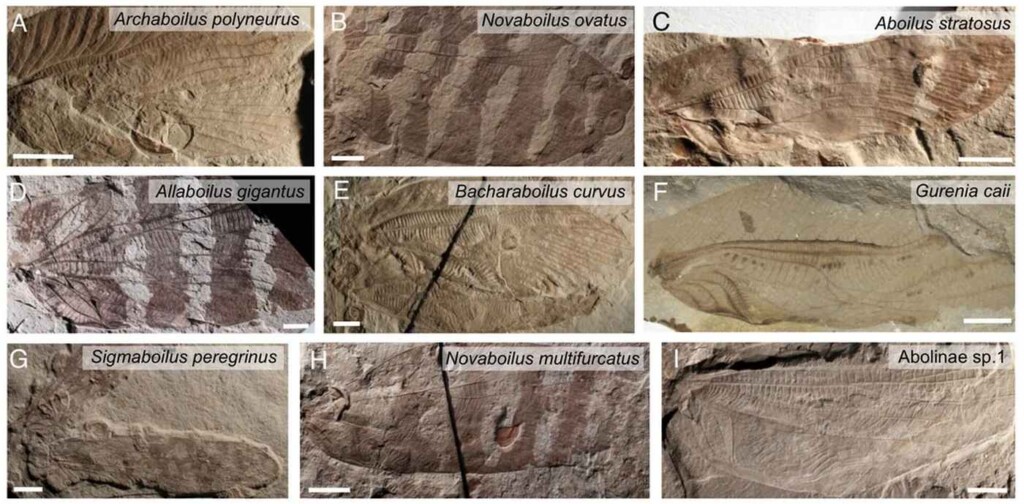
Jonsson’s Chinese research partners have discovered extremely well-preserved fossils of 9 different grasshopper species that lived at the same time in the same region, namely during the Middle Jurassic period in what is now Inner Mongolia.
The sound-producing structures are so clearly visible on these fossils that the biologists were able to reconstruct the pitches and musical units of the mating calls through various analyses, simulations, and AI-assisted evaluations that even produced the specific number of hertz each insect would sound off at.
“Our findings reveal a wide variety of call frequencies. Several species produced pure, low-pitched sounds like modern crickets, whilst others produced higher frequencies, similar to our native leafhoppers,” reports Jonsson.
The study isn’t just the first to do this with insects. It’s the oldest evidence of sound ever reproduced by anyone. Think of it like the famous Epitaph of Seikilos. This Greek funerary song was inscribed on a gravestone, and is able to be read by musicians several thousand years after it was last played.
Similarly, the physical features on the grasshoppers’ wings act like musical notation, and though scientists can’t reproduce them on a lyre like the Epitaph of Seikilos, AI can simulate them on a computer sound board.
ALSO CHECK OUT: This Extraordinary Desert Mouse Defies Aging–and it Could Change Human Longevity
One species among the 9 surprised the researchers. A relative of the katydid called Sigmaboilus peregrinus communicated in the ultrasonic range between 20 and 22 kilohertz—a frequency that’s just above the human range of hearing.
For all the delicious proof of concept novelty the study provided, this discovery carries implications for the evolutionary biology of Orthoptera.
It was previously theorized that stridulatory insects whose stridulations reach into ultrasonic frequencies were pressured to do so by the incredibly precise hearing of bats. However, S. peregrinus lived millions of years before the first known bat existed.
EVOLUTIONARY BIOLOGY: Animals React to Secret Sounds from Plants That We Couldn’t Hear – Until Now
The team took the liberty afforded by their discovery to hypothesize other reasons why an animal would have to vocalize at such high frequencies. While not a bat, it could have been an example of the insect attempting to avoid detection by other predators. Alternatively, it could be a mating strategy by males to allow their calls to rise above the din of the Jurassic jungle night.
“This allowed us to demonstrate that the world during the Jurassic Period was acoustically far richer and more diverse than previously thought,” the biologist summarizes.
SHARE This Brilliant Scientific Exercise With Your Friends…
Yard Work Reveals Largest Trove of Viking Silver Ever Discovered in Denmark
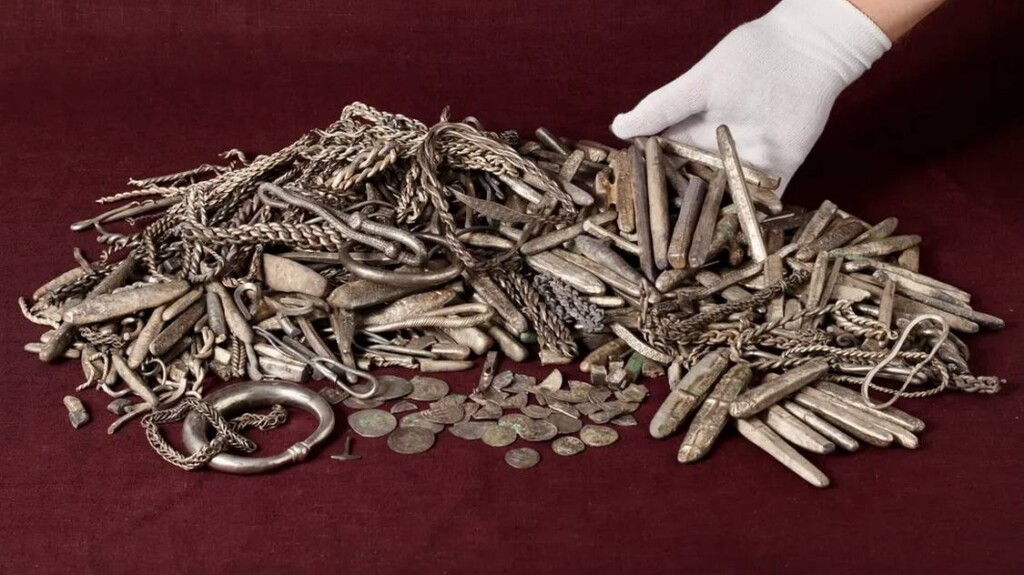
When a man in Denmark broke ground in his backyard on home improvement work, it was a new terrace that he was looking forward to seeing at the end of the sweaty job.
Yet merely half an hour had passed when he realized there was something else to look forward to—the reward for an enormous quantity of antique silver he had just dug up.
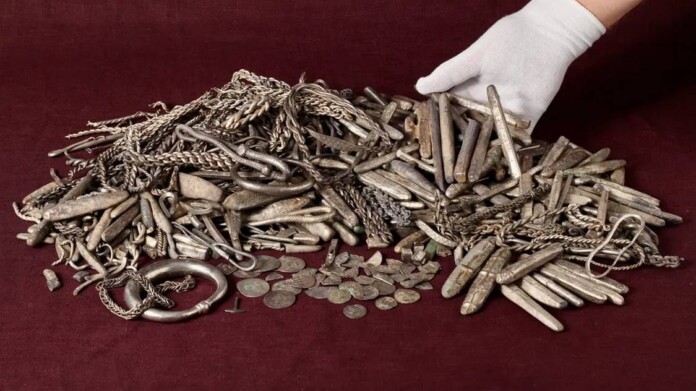
His spade had uncovered nothing less than the largest Viking Age silver hoard ever discovered in Denmark, consisting of bracelets, 47 coins, bars, other jewelry, and an amulet shaped like Thor’s hammer.
At more than 40 pounds, it’s nearly 3-times larger than the now-second largest hoard found in Denmark, and demonstrates the use and value of silver to the Viking Age economy.
”It should have just been a few hours of hard work removing stubborn grass, stone and gravel […] but it became the biggest surprise of my life,” the landowner said in a statement translated from Danish.
”After half an hour of digging, my grip hit something that made a strange sound. First, I thought it was old iron or fence wire as well as some pot cuts, but when I started digging with my hands, I could suddenly fish one metal object after another out of the ground. After a short time of cautious work, it dawned on me that it was jewelry, coins, and silver bars.”
In total, 700 objects were recovered from the man’s property in the Rebild municipality. They point out much of what is already known about the Viking Age economy—that it was powered by silver, as evidenced by the size and scope of the objects, as well as the large quantity of what appeared to be silver weights.
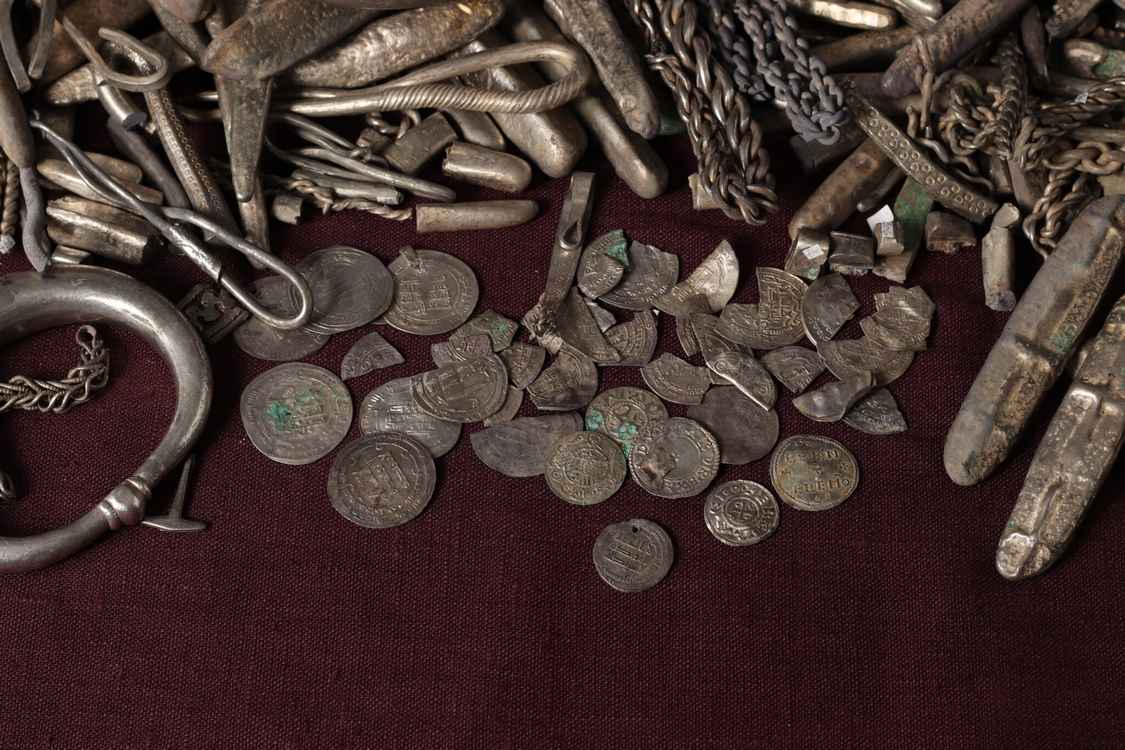
It also tells us of the scale of the trade in silver, with some of the coins carrying Arabic lettering in relief. Lastly, the hoard sits squarely within the accepted Viking Age timeline, with some English coins dating to between 899 and 924, and also within the Christianization of Denmark, a time of political and religious turmoil where burying valuables was common practice.
One curiosity was a silver bar engraved with runes that appear to be a name: “Hutu.” Was it the name of the owner? Perhaps it was a brand of some sort—like Cartier.
A HOARD OF HOARDS:
- Britain’s Largest Iron Age Hoard on Display for the First Time Includes Evidence of First 4-Horse Carriage
- Hoard of 1,000-yo Coins Unearthed in Farmer’s Field Nets Millions for Metal Detecting Friends–and Treasure for UK
- Hoard of Bronze Jewelry Found in Polish Lake Reveals Ancient Celtic Water Burial Ritual
Another was the comparatively large quantity of silver weights, that, per a statement from the North Jutland Museums which took possession of the hoard for cataloguing and study, correspond very closely with the weight of some of the jewelry items. It perhaps suggests that the weights represented standardized measures which metalworkers would use to cast and form jewelry.
The Museums would like to exhibit the hoard permanently in the Viking Museum Fyrkat.
SHARE This Incredible Discovery From The Viking Age With Your Friends…
“The creation of a thousand forests is in one acorn.” – Ralph Waldo Emerson
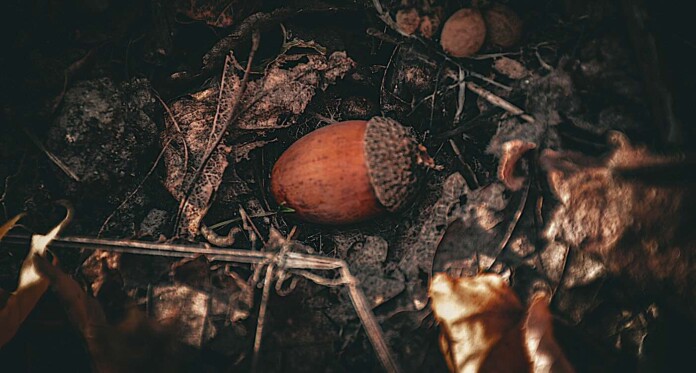
Quote of the Day: “The creation of a thousand forests is in one acorn.” – Ralph Waldo Emerson
Photo by: Doriana Popa
With a new inspirational quote every day, atop the perfect photo—collected and archived on our Quotes page—why not bookmark GNN.org for a daily uplift?
Good News in History, September 9

On this day in history, two masters of early ocean exploration returned to their prospective homes—Vasco da Gama 527 years ago to Lisbon, and Thomas Cavendish 438 years ago to Plymouth. The former had chartered the first European course to India via the Cape of Good Hope, while the latter completed the world’s first intentional circumnavigation. As it happened, Cavendish’s trip also saw the capture of the Santa Anna, the largest Spanish treasure ship ever to fall prey to English privateers. READ more about these accomplishments in seafaring… (1499, 1588)
FDA Immediately Approves Drug That’s Doubling Lifespan for Late Pancreatic Cancer Patients

Pancreatic cancer has long been a death sentence, and a rapid one at that, but a new two-a-day pill has seen patients live twice as long even after chemotherapy fails.
“Surviving” cancer refers to living more than 5 years post-diagnosis. Under that criteria, just 3% of patients survive pancreatic cancer, which usually requires particularly grueling chemotherapy.
For those whose cancer remains, there is now a simple option to extend lifespan that’s largely covered by insurance called daraxonrasib, manufactured by Revolution Medicine which received FDA approval for use in humans who have already tried chemotherapy after a review of just 35 days.
The phase 3 clinical trial which informed the FDA’s decision saw a doubling of lifespan in patients who’d tried chemo but whose cancer survived, from 7 months to more than 13.
Presented recently at the annual meeting of the American Society of Clinical Oncology in Chicago, in May, the attending physicians and scientists rose and applauded, some with tears in their eyes at the news, the New York Times reports.
“I have not seen anything like that before in trials we have run in pancreatic cancer,” Dr. Brian Wolpin of the Dana-Farber Cancer Institute in Boston, and leader of the study, told the Times. “I just kept repeating, ‘Wow.’”
HOPE FOR SURVIVAL: Given Just 8 Months to Live, Teen Graduates Cancer-Free 4 Years Later Thanks to Doctor’s Promise (Watch)
The drug works by targeting a protein called KRAS which pancreatic cancer, as well as others, needs to live. For decades, it was thought KRAS was untargetable pharmaceutically because of its smooth surface, but daraxonrasib has been able to by gluing other molecules together in such a way as to allow the agglomeration to grab and stop KRAS from reaching the tumor.
It’s not just daraxonrasib, Revolution Medicine, and pancreatic cancer patients that will benefit from the drug’s success and approval, but a whole field of research into KRAS-inhibiting drugs. Colon and lung cancer, for example, also rely on KRAS for survival, and the Times claimed that “dozens” of KRAS-inhibiting medications are being tested—alone, with chemotherapy, and with immunotherapy—for their potential use.
MORE KRAS RESEARCH: Experimental Drug Generates Immune Response Against Pancreatic Cancer in People at High Risk
In some rare cases, daraxonrasib has curative effects in pancreatic cancer. One man in his 70s who was enrolled in the daraxonrasib clinical trial in 2022 had seen the cancer spread to his lymph nodes and assumed he was doomed. The pill shrunk the tumors such that he is not only still alive today, but that they can’t even be seen in scans.
Study and approval of the drug was made according to its use after chemotherapy had already failed, but the author of the Times story Gina Kolata said in reply to a commenter that the drug is now being evaluated for its potential efficacy at earlier stages.
SHARE This Landmark Trial And Approval For Pancreatic Cancer Treatment…
Armless Racing Driver Hits 110 mph Steering with His Feet–Aims to Make History at Le Mans


Meet the world’s only armless racing driver who uses his feet to steer.
23-year-old Callum Smith was born without arms but has already handled speeds of more than 110 mph on track.
Smith just signed his first driver contract with Team BRIT, the world’s only competitive racing team made up entirely of disabled drivers, and is now chasing a place on one of motorsport’s biggest stages: the 24 Hours of Le Mans.
“My feet are like my hands—I write with my right foot, I play Xbox with my feet like FIFA and Call of Duty,” said Smith. “I play guitar with my feet, and I eat by myself use a normal knife and fork.”
Born without arms, Smith fell in love with racing at just 2 years old after watching bike racing with his grandad, Michael, but his racing dream began when he decided to send a bold email to Team BRIT.
“The racing started off with an email to Team BRIT expressing my interest in racing and I said if they were interested in making my dreams come true, I’d be forever grateful,” Smith remembered. “They got back to me and I passed some tests with instructors and did a skid test—it went from there.”
He completed his first track day in July, 2025 and maxed out at 90 mph around Donington Park, one of the host tracks on the Superbike World Championship. Then 4 months ago he clocked an impressive 100 mph top speed on the Silverstone Formula One circuit in his own Audi A3.
Currently working towards gaining his racing license, he is putting Team BRIT’s modified BMW 1 Series through its paces at Donington Park while getting the hang of the unique set of controls, including a flat plate that allows him to use his feet to steer.
EYE-FOOT COORDINATION: An Archer With No Arms Aims to Win Gold at Summer Paralympic Games Joining Team USA – VIDEO
His left foot turns the steering plate while his right foot operates the accelerator and brake.
“On top of the accelerator I have an indicator switch which gives me buttons for the horn, [headlights], window wipers etc,” he said.
Despite the accommodations, Smith said it’s a challenge.
MORE INSPIRATIONAL FIGURES: Veteran Becomes First Double-Amputee to Climb Highest Peak on Every Continent: Conquering the 7 Summits
“It’s hard, there’s a lot of eye to foot coordination. The biggest surprise to me is how heavy the steering feels in a race car, everything is stiffer,” he said. “But I love it and I’m quite keen to get it sorted, I’m motivated to get it done.”
“I’m going to be the first person to be racing without any arms, the first one ever.”
SPREAD The Word About Callum’s Inspirational Attempt At Armless Motorsport…
EMT Ran 1.5 Miles up 1,000 Feet of Elevation in 31 Minutes to Get Blood Transfusion for Injured Climber
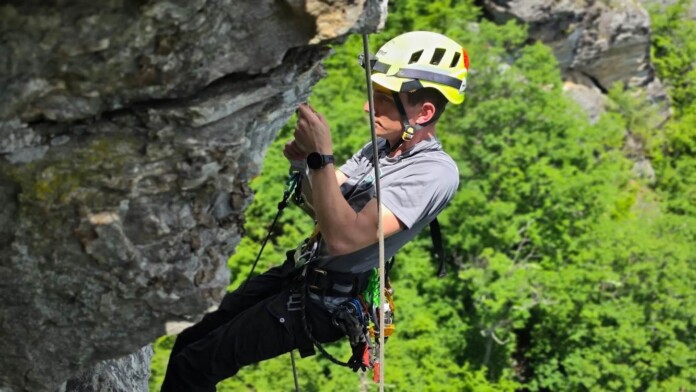
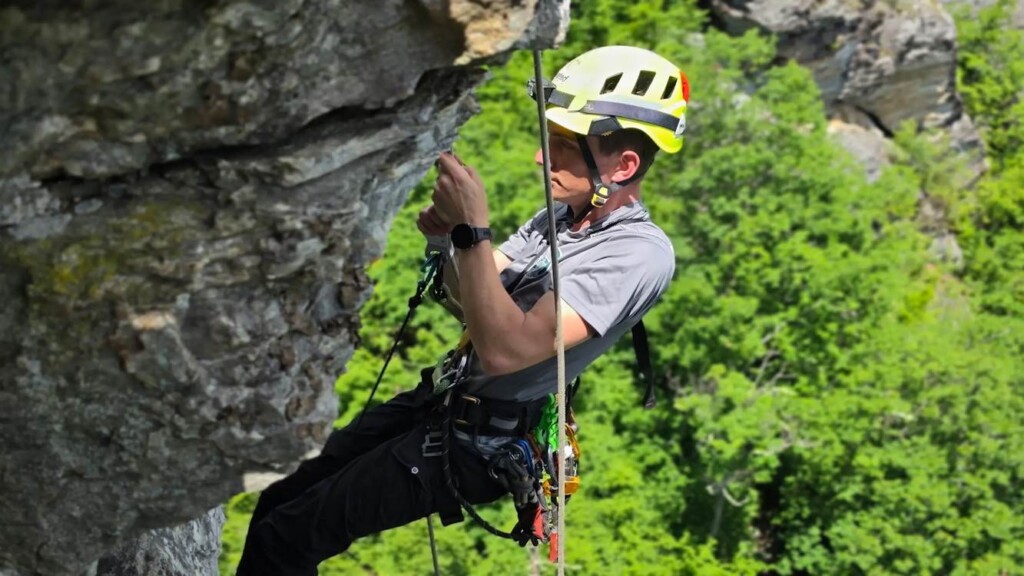
Experienced rock climber and father Jacob Gregory was dying. Experienced rock climber and EMT Will Soper wasn’t going to let that happen.
Gregory had fallen 20 feet down a rock face on North Carolina’s Shortoff Mountain, suffered a critical injury and needed immediate medical attention. Soper was part of the teams called in to rescue him.
At the time the accident happened, Gregory was leading an ascent with his son who called emergency services after he had fallen, while Soper was actually teaching a training course around 2 hours away.
Hearing the details of the situation, Soper headed to the mountain, knowing that with circumstances as they were, rescue personnel needed all hands on deck.
“The rescue occurred in a notoriously remote and challenging place to access,” Soper, who volunteers for Burke Rescue Inc. and SAR, a volunteer lifesaving unit serving central North Carolina, told Outside. “As soon as I heard the dispatch, I knew it would be a challenging rescue.”
First responders had already reached Gregory when Soper arrived in his car at the trailhead. They found him in critical condition with internal bleeding. Soper had already gone halfway up the mountain when he received word over his radio that the patient needed blood to replace what he was rapidly losing.
The EMT headed back down, packed blood bags into a cooler with extra ice and all the accoutrements needed for a transfusion before turning back towards the slopes, carrying them all the way in a backpack.
At 28 years of age with ample climbing experience on both ice and rock, Soper reached the point where rescuers had already set up a rappel down to where Gregory was located in just 30 minutes—gaining some 1,000 feet of elevation over a short 1.5 miles—a lung-busting feat of mountain athleticism.
“In all honesty, ‘run’ is a little bit hyperbolic,” Soper said honestly. “I maintained a fast hiking or jogging pace and made sure I didn’t stop for any breaks.”
When the Gregory was somewhat stabilized, he was transported to Atrium Carolinas Medical Center in Charlotte, where his recovery status is uncertain. What is most definitely certain is that without Soper’s incredible physical conditioning and the truly impressive response time of the more than 20 agencies involved in the rescue, there wouldn’t be a ‘recovery’ status at all.
FROM THE FACES: Sherpa Convinces Climber to Let Him Make Rare ‘Death Zone’ Rescue on Mt. Everest
Soper told Outside that the area where Gregory fell is one of the most common for rescues. Near the top of the mountain, climbers go around 200 feet up a rock scramble before reaching a rappel point where they will lower themselves down into Linville Gorge. There, they find the bottoms to most of the climbing routes.
“To every responder who answered that call: thank you,” Gregory’s family wrote on a GoFundMe page to help support them during his recovery. “You saved a life and brought a husband, father, brother, son, friend, and loved one to safety.”
MORE RESCUE STORIES: Students Use Makeshift Stretcher to Rescue Injured Hiker, a Skill They Had Been Practicing
Soper didn’t waste any time in encouraging those who believe they are able to volunteer and become trained mountain rescue.
“If you read this and thought, I want to help, please contact your local rescue squad or search and rescue team.”
LET Social Media Know About Soper’s Incredible Lifesaving Feat Of Stamina…
S. Carolina Aquarium Celebrates ‘Baby Boom’ of Critically-Endangered Penguin Chicks

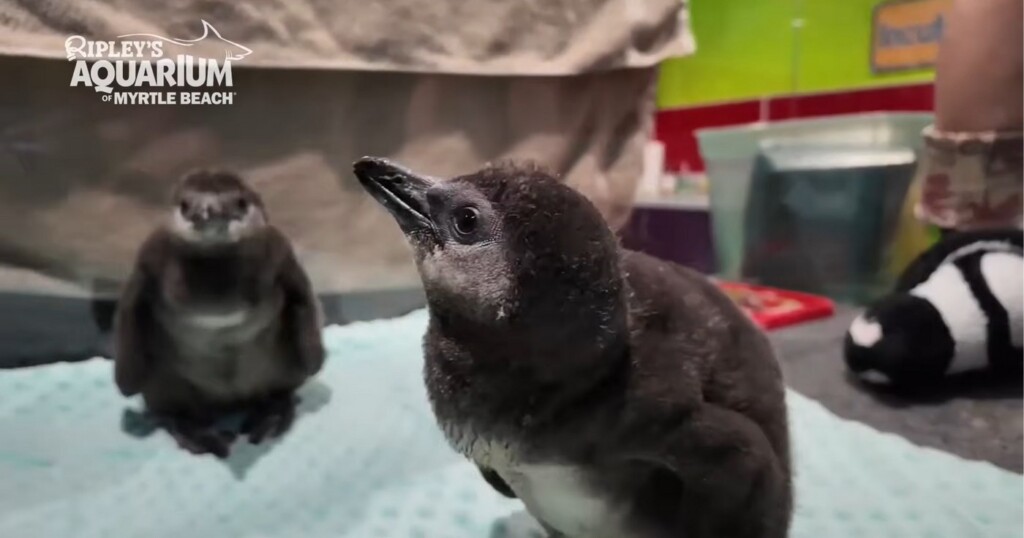
5 baby penguins from a species considered Critically-Endangered have hatched at an aquarium down in South Carolina.
The 5 join 2 that hatched in May, and together make up a record nesting season for the organization’s resident African penguins.
Hatching at Ripley’s Aquarium of Myrtle Beach, staff are calling it a “baby boom” and a major positive for the species at risk of disappearing from the Earth.
“We thought we were lucky with our first two chicks, but welcoming five more has made this an unforgettable year,” Courtnie Barnett, the aquarium’s general manager, said in a news release.
“This incredible milestone would not be possible without our amazing animal care team. Their dedication, expertise, and passion for these animals is truly what makes moments like this possible, and we are so proud to celebrate the Lucky Seven with our guests.”
The 5 new animals have not been named. The two hatched in May are called Chel and Vic.
PENGUIN CONSERVATION: South Africa Bans Commercial Fishing at Penguin Breeding Spots Where Food Supply Shortage Could Drive Extinction
African penguins are the only species of their kind found in the whole of the Old World, and live along the coast of South Africa and Namibia. Populations have been declining throughout the whole of the 21st century, but previous estimations suggested they would have been extinct by now.
In March of 2025, during the interim stages of a lawsuit launched by environmental groups against a combination of environment and fishing authorities in South African, a settlement was reached that would see substantially increased no-fishing zones established around 6 key penguin breeding colonies. It was the first legal action of its kind in the country, the BBC reported.
WATCH the hatchlings explore their new home below…
SHARE This Penguin Baby Boom Down In Myrtle Beach With Your Friends…
“Great thoughts speak to the thoughtful mind, but great actions speak to all mankind.” – Theodore Roosevelt

Quote of the Day: “Great thoughts speak to the thoughtful mind, but great actions speak to all mankind.” – Theodore Roosevelt
Photo by: Ryan Stone (cropped)
With a new inspirational quote every day, atop the perfect photo—collected and archived on our Quotes page—why not bookmark GNN.org for a daily uplift?

Good News in History, September 8

60 years ago, the first episode of Star Trek, featuring “Space: the final frontier” and the USS Enterprise, began its three-year mission of exploration on TV screens across America. The science-fiction television show created by Gene Roddenberry was set in the 23rd century and starred William Shatner and Leonard Nimoy. The NBC show has since spawned multiple TV series, as well as comics, toys, and a movie empire. READ more about the show’s impact… (1966)
22-yo with Down Syndrome Becomes Certified Fitness Instructor, Leads Class of 60 at Local Gym


A 22-year-old Utahan with Down Syndrome has just become a certified fitness instructor for the popular fitness program UpBeat Barre.
UpBeat Barre instructor and co-owner of VASA Fitness in Kaysville, Jane Johnson, said she had kept her eye on Aubry Allbridge for some years, noticing how the young woman was exceptionally gifted in remembering the various routines and choreography of the classes.
“She has an incredible brain. Aubry can learn choreography so fast, and she retains it. She also knows all the lyrics to the songs, so she can sing along with the best of them,” she told KSL.
Allbridge had been attending several classes, including UpBeat Pilates, Zumba, SilverSneakers, and HIGH Fitness, but her favorite was UpBeat Barre, which according to its website “combines strength training, Pilates, cardio, and yoga into a high-energy fusion of fun.”
Having been recently certified as an instructor, the classes combine Allbridge’s favorite things: friends and fitness.
“I had such a fun time,” said the new instructor after leading her debut class of 60 people. “I love to be on stage. I love exercise. I loved to wear my mic and say every cue, and I love to meet with people and collecting friends. I want to help everyone feel included.”
In a recent post on her Instagram, announcing her arrival as a certified instructor, she said her favorite part of the course was motivational cuing and giving options, “to make everyone feel included.”
Johnson said she’s now helping Allbridge to take that certification and turn it into a full-time job at the gym where she works. Gainful, autonomous employment can do wonders for the mentally-challenged, while fitness activities also has transformative powers for those with Down Syndrome.
36-year-old Dan MacGauley, has Down Syndrome, autism, and is deaf in his left ear. He underwent 2 rounds of open-heart surgery when he was a toddler, and was wheelchair bound as a teen when he started lifting weights as part of an urgent need to lose weight.
In 2023, GNN reported that MacGauley took first place in the European Bench Press Championship, posting 154 lbs. (70 kg) classic, and 198 lbs. (90 kg) equipped—meaning with a weight belt and gloves—which was a new personal best.
“Loads of people have said to us that they go to work and come home after a long day and it’s an effort to go to the gym,” said his mother Judith, who’s also a powerlifter. “But that they see Dan there, smiling and laughing despite all his problems, and it gives them the motivation they need.”
SHARE This Inspirational Story Behind Aubry’s Transformation From Student To Teacher…