All News - Page 151 of 1691 - Good News Network
Home Blog Page 151

One in Three Americans Believe They Have a Way to Strike it Rich: New Poll

By Giorgio Trovato (cropped)

One in three Americans believe they have an idea they think could one day make them wealthy, according to new poll.

From writing the next big novel to a hot stock tip or turning an invention into product, the survey found 33% saying they feel they have a tantalizing idea they think could make waves in the market.

And if that doesn’t come to fruition, there’s always pure hope for 19% of the respondents, who have a strong feeling that they’ll one day win big in the lottery.

The survey, conducted by Talker Research in partnership with Wealth of Geeks, found 17% of those with a wealth-generating idea hoping to use an inheritance or some family money.

Men were significantly more likely to feel confident that their idea was going to make them wealthy—39% vs. 26% of women.

Four in ten of those currently holding onto a wealth-driving idea want to start a business or service—and one quarter (26%) believe it is a game-changing product that’s never been done before.

From energy-creating mushrooms to a new type of burger or fresh ideas using AI to blow away the competition, many Americans are quietly working away on their big hope for later-day success.

DID YOU KNOW: 10 Major Metrics Show The American Recovery is Best in the World – And Still Improving

A new type of ceiling fan, ideas for a new social media platform or plans to launch an irresistible food truck were among the broad concepts for which these Americans were hatching plans.

Many are also putting hope in their creative endeavors by working on the next great American novel or developing the music they one day hope to share with the world.

But while many harbor an optimism that their finances could take a turn for the better, not all of us have faith that fortune will come our way.

Just 10% of those polled describe themselves as ‘very lucky’ when it comes to money, with 21% ‘somewhat lucky.’

KINDNESS PAYS: Uber Driver Returns $8,000 to Teen Who Left the Christmas Cash in His Car: ‘Do Something Good’

That might be why 39% say they’ll need some sort of luck or financial windfall in order to be comfortable later in life and 10% are relying on inheritance to feel the same way.

Luckily, a whopping 27% say they also have a stock tip they believe has the potential to make them a millionaire.

MORE OPTIMISM: Three-Quarters of Small Business Owners Believe They’re Equipped to Handle Any Economic Instability

Bat-like Drone Can Hurl Itself at Trees and Perch There–Inspired By a Flying Squirrel

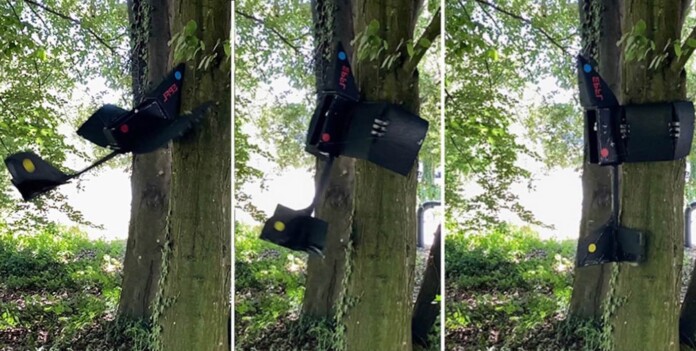
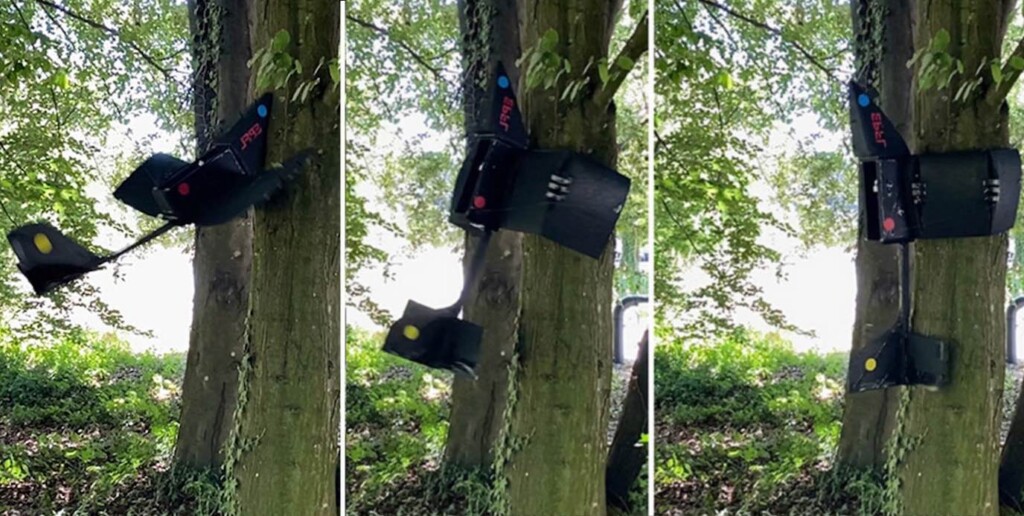
Still shots from PercHug video – SWNS

An innovative bat-like drone can fly straight into a tree and perch there, folding its wings around the trunk to hug it and keep it in place.

The glider robot, called PercHug, can also latch onto poles and could be used for inspection, maintenance, and biodiversity conservation.

A team from the Laboratory of Intelligent Systems at the Swiss Federal Institute of Technology (EPFL) say they have taken influence from flying squirrels and geckos, the latter of which exhibits head-first “crash-landing”.

“While flying animals substantially reduce their kinetic energy at landing by wing flapping, specialized gliders, like flying squirrels and geckos, land on trees at high speeds and endure elevated forces utilizing their limbs or head,” explained the researchers.

“We took inspiration from flying geckos, which exhibit head-first crash-landing at speeds.”

The problem of perching using a winged Unmanned Aerial Vehicle has often been solved by means of complex control or intricate appendages.

The team investigated a method that relies on passive wing morphing for crash-landing on trees and other types of vertical poles.

An upturned nose design means the robot can passively reorient from horizontal flight to vertical upon a head-on crash with a pole—followed by hugging with its wings to perch. (See the video at the bottom…)

PercHug drone hugs a tree – SWNS

“Inspired by the adaptability of animals’ and bats’ limbs in gripping and holding onto trees, we design dual-purpose wings that enable both aerial gliding and perching on poles.”

They were able to demonstrate “crash-perching” on tree trunks with an overall success rate of 73%, according to their scientific paper published in the journal Communications Engineering.

DRONES HELP OUT IN WARTIME: Drones Find Dozens of Landmines Littering Ukraine So They Can Be Defused

The team believes their method opens up new possibilities for the use of aerial robots in applications such as inspection and maintenance of poles, and in conservation programs collecting data in the field.

Watch the PercHug video below…

“There are glimpses of heaven in every act, or thought, or word, that raises us above ourselves.” – Robert Quillen

Quote of the Day: “There are glimpses of heaven in every act, or thought, or word, that raises us above ourselves.” – Robert Quillen

Photo by: pixle (CC license)

With a new inspirational quote every day, atop the perfect photo—collected and archived on our Quote of the Day page—why not bookmark GNN.org for a daily uplift?

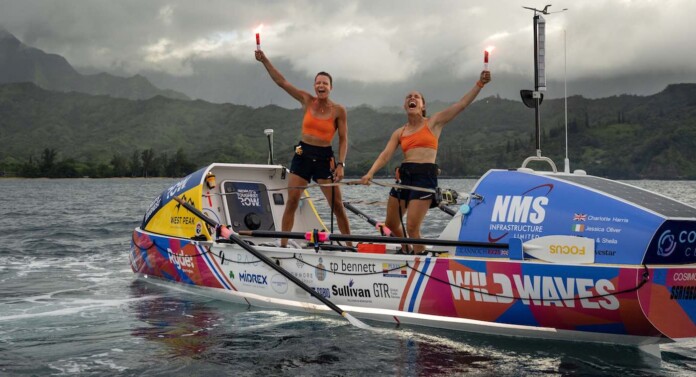
Girlfriends Battle 40ft Waves in Fastest Row Across the Pacific by a Duo–Beating Men’s Record by 2 Days

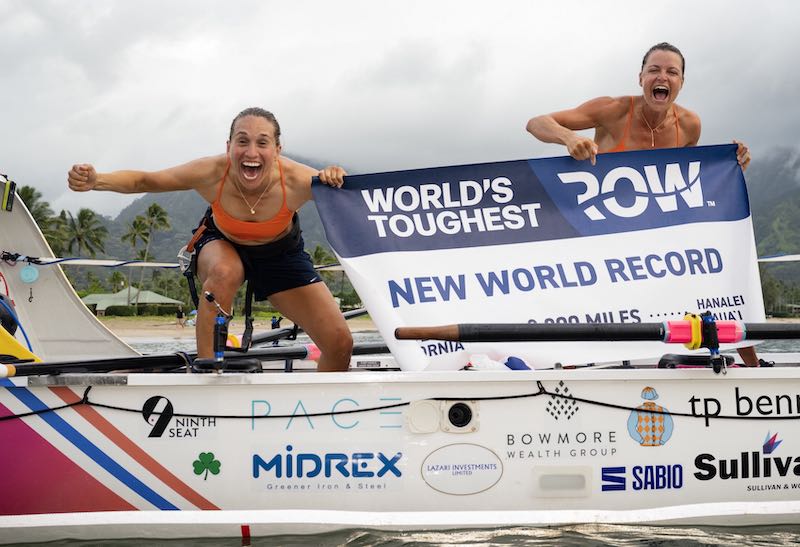
Best friends Jessica Oliver and Charlotte Harris break record in 2024 World’s Toughest Row Pacific Challenge – SWNS

Two best friends have become the fastest duo ever to row across the Pacific Ocean, battling 40-foot waves to break the previous record set by two men.

Jessica Oliver and Charlotte Harris completed the epic row in 37 days, 11 hours, and 43 minutes, breaking the record in the 2024 World’s Toughest Row Pacific Challenge.

The 33-year-olds set out from Monterey Bay, California for the 2,800 mile journey on June 8th, and when they arrived in Hawaii on July 16th they had beaten the existing women’s record by an astonishing 9 days.

The achievement comes after the pair, known as Wild Waves, set a world record in 2021 as the fastest female pair to row the Atlantic Ocean.

“It was absolutely grueling both from a mental and physical perspective – the hardest thing we have ever done,” said Jess, while standing at the winner’s podium with a Hawaiian garland draped around her neck.

There were ecstatic hugs and tears waiting for the dynamic duo on Hanalei Bay beach as they fell into the arms of family and friends.

“We gave it everything and are completely broken, but it was worth it,” said Charlotte.

Apart from sheer grit and determination, it was teamwork and solid friendship that got them through.

“We can read each other so well,” said Charlotte.

The pair took a southerly route and were pursued by bitterly cold northerly winds from Canada producing giant waves, and their boat Cosimo almost capsized.

Best friends Jessica Oliver and Charlotte Harris break ocean record in 2024 World’s Toughest Row Pacific Challenge – SWNS

Within a week, their automatic steering system broke, forcing them to steer manually which meant precious little sleep and lots of blisters to show for it.

“The first 10 days were really challenging and stressful,” said Jess. “We thought: ‘who on earth signed us up for this?’.

“Sometimes the winds were so difficult we were screaming: ‘how am I supposed to get out of this?’”

Team Wild Waves were neck and neck in the women’s pairs for most of the race with their nearest rivals: Liz Wardley, a three-times round-the-world sailor who holds the Atlantic race record as a solo rower, and Lena Kurbiel, her 17-year-old partner.

After four weeks, on Friday July 12, the UK duo edged past them to take the lead.

“We were constantly monitoring the competition. We’d make 15 miles of gains and then they’d be taken from us in one day. It was relentless.”

SUPER SENIOR: 65-Year-old Paddles Into Record Books With Epic 6800-mi Solo Kayak Quest–From Tip of Canada to Florida and Back

The most frightening episode was a near-collision with a tanker whose AIS tracking system was not turned on.

“We were 30 seconds from a head-on collision which would have seen our boat smashed to pieces,” said Charlotte. “We just about managed to get out of their course and were thrown up and down in the wake of their boat, as it passed with just 10 meters to spare.”

The idea to conquer the Pacific was a no-brainer for Team Wild Waves, after their record-setting row in 2021 across the Atlantic: they had barely set foot on dry land when they decided that the Pacific had to be next.

Two years of tough training followed for the English university pals from Gloucestershire and Hampshire—mostly in the gym and on the North Sea, along with fundraising and securing corporate sponsorship.

BREAKS RECORD WITH AMAZING ABS: 59-year-old Breaks Women’s World Record for the Longest Time in an Abdominal Plank Position

They raised more than $120,000 for Shelter and Women’s Aid during their Atlantic crossing—and continued that fundraising this year, raising $40,000, so far.

“She’s an amazing girl,” said Jessica’s mother. “When she sets her mind to do something, nothing stops her from achieving that goal.”

“She certainly knows how to test her mother to the limit – it’s been a nerve-racking few weeks.”

CHALLENGE YOUR OWN BEST FRIEND By Sharing the Motivation on Social Media…

Cosmic Penguin and Egg Honors Space Telescope’s 2nd Anniversary, Helping NASA Solve Longstanding Mysteries

James Webb Space Telescope – NASA

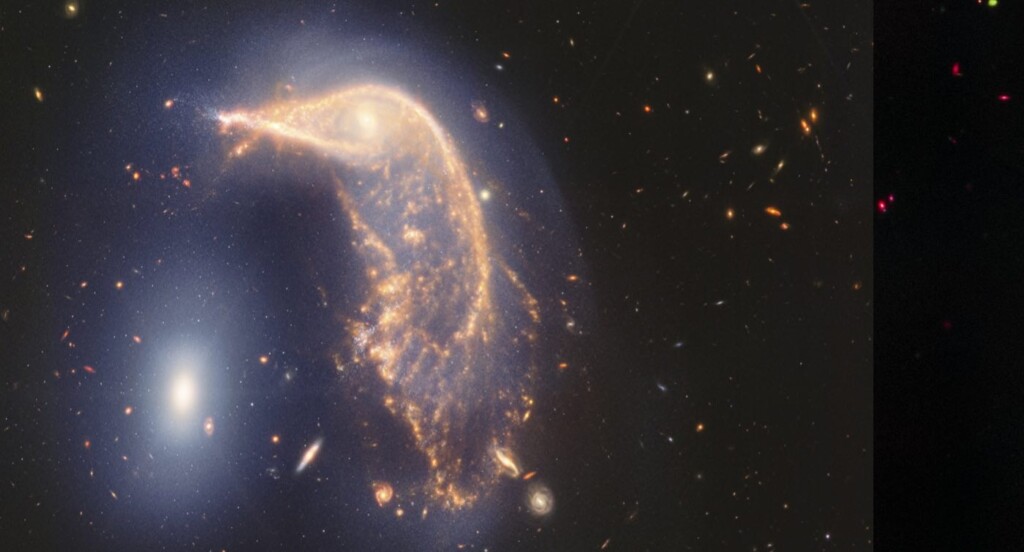
A cosmic penguin sparkling in space alongside an egg is marking the second anniversary of the James Webb Space Telescope.

The duo of interacting galaxies commemorates the NASA spacecraft that specializes in capturing infrared light—which is beyond what our own eyes can detect.

The image from Webb shows these galaxies, collectively known as Arp 142, locked in a “slow cosmic dance”.

The European Space Agency describes it this way: “Before their first approach, the Penguin held the shape of a spiral. Today, its galactic centre gleams like an eye, its unwound arms now shaping its beak, head, backbone, and fanned-out tail.”

Like all spiral galaxies, the Penguin is rich in gas and dust. The two galaxies’ interactions pull gravitationally on the Penguin’s thinner areas of gas and dust, causing them to crash in waves and form stars. Look for those areas in two places: what looks like a fish in its beak and the feathers in its tail.

“In contrast, the Egg’s compact shape remains largely unchanged. As an elliptical galaxy, it is filled with aging stars, and has a lot less gas and dust that can be pulled away to form new stars.”

MARK YOUR CALENDAR: Two Meteor Showers Peak in the Same Region of the Sky on the Same Night Later This Month

The two-year-old space telescope continually observes the universe, capturing images and highly detailed data known as spectra, which can result in eye-catching images such as these.

Webb’s observations, which combine near- and mid-infrared light from Webb’s two infrared cameras, clearly show that they are joined by a haze represented in blue that is a mix of stars and gas, a result of their mingling.

NASA explained that their ongoing interaction was set in motion between 25 and 75 million years ago, when the Penguin (individually known as NGC 2936) and the Egg (NGC 2937) completed their first encounter, in their long waddle toward an eventual union.

“They will go on to shimmy and sway, completing several additional loops before merging into a single galaxy hundreds of millions of years from now.”

WEBB WONDERS: Earliest, Most Distant Galaxy Discovered with Webb Telescope Dates to 300Mil Years After Big Bang

NASA Administrator Bill Nelson is singing the telescope’s praises.

“Since President Biden and Vice President Harris unveiled the first image from the James Webb Space Telescope two years ago, Webb has continued to unlock the mysteries of the universe.

“With remarkable images from the corners of the cosmos, going back nearly to the beginning of time, Webb’s capabilities are shedding new light on our celestial surroundings and inspiring future generations of scientists, astronomers, and explorers.”

Mark Clampin, director of the Astrophysics Division at NASA, says: “In just two years, Webb has transformed our view of the universe, enabling the kind of world-class science that drove NASA to make this mission a reality.

CHECK OUT WHAT HE FOUND: Man Finds Meteorite After Seeing Green Light in the Sky: It was Warm and Burnt and ‘May Be From Halley’s Comet’

“Webb is providing insights into longstanding mysteries about the early universe and ushering in a new era of studying distant worlds, while returning images that inspire people around the world and posing exciting new questions to answer.

“It has never been more possible to explore every facet of the universe.”

SHARE THE CELESTIAL PENGUIN With Stargazing Lovers on Social Media…

Woman Who Fell 60-feet Down a Mountain Was Saved by What3words Location App

Sarah Robert in the Alps – SWNS

A hiker says he was able to help save his aunt’s life because he had the what3words app on his phone.

Ed Farnworth was hiking in Switzerland and his 59-year-old Aunt Sarah when she fell 60-feet down a mountain and suffered serious injuries.

The two were in the woods, far away from flat ground, and there were no landmarks for Ed to tell the emergency services where they were.

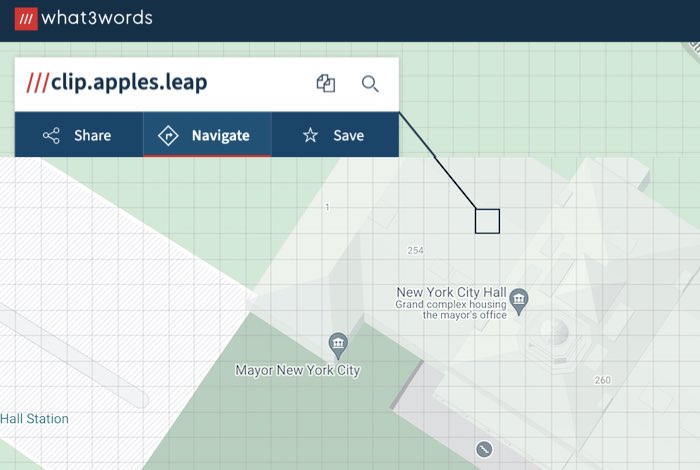
Luckily, he remembered he had the what3words app on his phone which provides users with a unique three-word code that reveals their precise location.

The emergency personnel knew all about what3words—and the address ///crabmeat.hers.froze showed them the exact spot where Sarah landed.

The 31-year-old hiker from Manchester, England, regularly visits his auntie who now lives in Switzerland and hikes often. They had both researched the trail beforehand.

“The weather was great and we were having an amazing day,” recalled Ed. “I was leading the way in front of her on our decent down the mountain when I turned around and saw she had started to lose her balance.

“She was very close to the edge and started to fall, she had a backpack on, so her balance was all out of sync.

“She tumbled over the edge and from then on, she didn’t stop tumbling down. She was hysterical, shouting my name and shouting help.

Ed saw Sarah hitting her head on a tree extremely hard. “It was a dense whack and then she stopped making any noise.

“I lost sight of her as I tried to make my way down to her, I’d never dealt with anything like this before. I found her on her front unconscious, I thought that she was dead at this point.

“She had a huge cut in her forehead, an open wound and her face was purple already. Her arm was badly broken, and she was covered in blood.”

ANOTHER GREAT HIKING APP: Popular Hiking App Releases 27,000 Trail Maps to Download for Free, Increasing Hiker Safety

Ed knew he had to remain calm and call for help, but panicked that he had no idea where they were—until he remembered the what3words app.

What3words app screenshot

“I had downloaded what3words a few years ago, I remember downloading it because I go on all these hiking trips, I had genuinely forgotten about it.

Looking back, Ed says the free app saved Sarah’s life as It only took 25 minutes for the helicopter to find the pair.

While waiting, Sarah was revived and started saying she was cold.

“She was visibly concussed, she didn’t know who I was to start with, and she was asking me the same question over and over.

“She was crying out for her husband and daughter, and she still can’t remember a thing from what happened.”

Without the app, Ed would have had to potentially leave to find help or shout for help, both of which could have made my Sarah even more distressed.

BRILLIANT: Stranded in Snow With No Reception He Tied His iPhone to a Drone to Get Above Trees to Send SOS Text

“It sped the whole process up and stopped any further injuries occurring, I am super super grateful that I had that app.”

Sarah suffered a broken arm, gashed forehead, and was severely concussed in the fall. Her face was completely misshapen and she remained in hospital for over a week, finally going home in a neck brace, with a metal plate in her arm.

Sarah still remains passionate about hiking, and Ed wants to make sure every hiker is aware of how important it is to download What3words, which divides the world into 10ft squares—each one named by a unique combination of three words.

what3words

“People having the app is reassuring to me,” said Ed. “I’m taking a group of people from work hiking tomorrow and I’ll make sure they all have what3words.”

The app addresses are accepted by over 4,800 dispatchers who answer 911 calls in the US. Emergency services in the UK are recommending the free app, because “it saves lives.”

What3words is also integrated into the navigation systems of many Mercedes-Benz, Jaguar, Land Rover, Subaru and Mitsubishi vehicles in the US, making it easy for drivers to enter the 3-word addresses straight into their car’s navigation system.

LOOK: Man Hikes With a Support Owl — Inspiring Others With PTSD Along His Way

Sarah Robert still has no recollection of the fall itself, but is thankful for the outcome.

“What3words helped speed up the whole process for which I am extremely grateful. Without it, I don’t see how I would have got the help I needed and things may have ended much worse.

“I had never heard of or used the app before my nephew explained it to me, but I’m so thankful he did.”

DON’T FORGET TO SHARE THE LIFESAVING TIP With Hikers on Social Media…

Your Weekly Horoscope – ‘Free Will Astrology’ From Rob Brezsny

Our partner Rob Brezsny, who has a new book out, Astrology Is Real: Revelations from My Life as an Oracle, provides his weekly wisdom to enlighten our thinking and motivate our mood. Rob’s Free Will Astrology, is a syndicated weekly column appearing in over a hundred publications. He is also the author of Pronoia Is the Antidote for Paranoia: How All of Creation Is Conspiring To Shower You with Blessings. (A free preview of the book is available here.)

Here is your weekly horoscope…

FREE WILL ASTROLOGY – Week of July 20, 2024
Copyright by Rob Brezsny, FreeWillAstrology.com

 

CANCER (June 21-July 22):
In 1986, Cancerian singer-songwriter George Michael released his song A Different Corner. It was a big hit. Never before in British pop music had an artist done what Michael accomplished: wrote, sang, arranged, and produced the tune, and played all the instruments. I foresee the possibility of a similar proficiency in your near future, Cancerian—if you want it. Maybe you would prefer to collaborate with others in your big projects, but if you choose, you could perform minor miracles all by yourself.

LEO (July 23-Aug. 22):
In the Biblical allegory of Noah and the Ark, God warns Noah about an impending flood and commands him to build a giant lifeboat to save living things from extinction. Noah obeys. When the heavy rains come, he, his family, and many creatures board the boat to weather the storm. After 40 days and nights of inundation, they are all safe but stranded in a newly created sea. Hoping for a sign of where they might seek sanctuary, Noah sends out a dove to reconnoiter for dry land. But it returns with no clues. A week later, Noah dispatches a second dove. It returns with an olive leaf, showing that the earth is drying out and land is nearby. Dear Leo, your adventure isn’t as dire and dramatic as Noah’s, but I’m happy to tell you it’s time for you to do the equivalent of sending two doves out to explore.

VIRGO (Aug. 23-Sept. 22):
According to an ancient Chinese proverb, “An ant on the move does more than a dozing ox.” I will add a corollary: An ant may be able to accomplish feats an ox can’t. For instance, I have observed an ant carrying a potato chip back to its nest, and I doubt that an ox could tote a potato chip without mangling it. Anyway, Virgo, this is my way of telling you that if you must choose between your ispiration being an ant or an ox in the coming days, choose the ant. Be meticulous, persistent, and industrious rather than big, strong, and rugged.

LIBRA (Sept. 23-Oct. 22):
“If it sounds too good to be true, it always is,” said stage magician Ricky Jay. I only partially agree with him. While I think it’s usually wise to use his formula as a fundamental principle, I suspect it won’t entirely apply to you in the coming weeks. At least one thing and possibly as many as three may sound too good to be true—but will in fact be true. So if you’re tempted to be hyper-skeptical, tamp down that attitude a bit. Open yourself to the possibilities of amazing grace and minor miracles.

SCORPIO (Oct. 23-Nov. 21):
Of all the signs in the zodiac, you Scorpios are most likely to regard that old pop tune by the Animals as your theme song. “I’m just a soul whose intentions are good,” croons lead singer Eric Burdon, “Oh, Lord, please don’t let me be misunderstood.” Maybe because you work so hard to compensate for this ache—you may also experience record-breaking levels of being seen and appreciated for who you are. For best results, do this: Inform your deep psyche that you have no attachment to being misunderstood. And tell your deep psyche that you would very much like to be well understood.

SAGITTARIUS (Nov. 22-Dec. 21):
An antiques dealer named Laura Young bought a marble bust of a distinguished man at a thrift store in Austin, Texas. Later she discovered that it was over 2,000 years old and worth far more than the $35 she had paid for it. It depicted a Roman military leader named Drusus the Elder. I foresee similar themes unfolding in your life, Sagittarius. Possible variations: 1. You come into possession of something that’s more valuable than it initially appears. 2. You connect with an influence that’s weightier than it initially appears. 3. A lucky accident unfolds, bringing unexpected goodies. 4. A seemingly ordinary thing turns out to be an interesting thing in disguise.

CAPRICORN (Dec. 22-Jan. 19):
My childhood friend Jeanine used to say, “The best proof of friendship is when someone gives you half their candy bar. The best proof of fantastic friendship is when they give you even more than half.” And then she would hand me more than half of her Snickers bar, Milky Way, or Butterfinger. In accordance with astrological omens, I invite you to give away at least half your candy to those you care for in the coming days. It’s a phase of your astrological cycle when you will benefit from offering extra special affection and rewards to the allies who provide you with so much love and support.

AQUARIUS (Jan. 20-Feb. 18):
If you’re a teacher, it’s a favorable time to enjoy a stint as a student—and vice versa. If you’re a healthcare worker trained in Western medicine, it’s an excellent phase to explore alternative healing practices. If you’re a scientist, I suggest you read some holy and outrageous poetry, and if you’re a sensitive, introverted mystic, get better informed about messy political issues. In other words, dear Aquarius, open a channel to parts of reality you normally ignore or neglect. Fill in the gaps in your education. Seek out surprise and awakening.

PISCES (Feb. 19-March 20):
Jane Brunette, a writer I admire, uses the made-up work “plurk” to refer to her favorite activity: a blend of play and work. I have always aspired to make that my core approach, too. I play at my work and work at my play. As much as possible, I have fun while I’m doing the labor-intensive tasks that earn me a living and fulfill my creative urges. And I invoke a disciplined, diligent attitude as I pursue the tasks and projects that bring me pleasure and amusement. I highly recommend you expand and refine your own ability as a plurker in the coming weeks, Pisces.

ARIES (March 21-April 19):
Have you ever been given a Starbucks gift card but then neglected to use it? Many people fail to cash in such freebies. Believe it or not, there are also folks who buy lottery tickets that turn out to have the winning number—but they never actually claim their rewards. Don’t be like them in the coming weeks, Aries. Be aggressive about cashing in on the offers you receive, even subtle and shy offers. Don’t let invitations and opportunities go to waste. Be alert for good luck, and seize it.

TAURUS (April 20-May 20):
The coming weeks will be a favorable time to enhance your relationship with food. In every way you can imagine, be smart and discerning as you plan and eat your meals. Here are ideas to ponder: 1. Do you know exactly which foods are best for your unique body? 2. Are you sufficiently relaxed and emotionally present when you eat? 3. Could you upgrade your willpower to ensure you joyfully gravitate toward what’s healthiest? 4. Do you have any bad habits you could outgrow? 5. Is your approach to eating affected by problematic emotions that you could heal? 6. Are you willing to try improving things incrementally without insisting on being perfect?

GEMINI (May 21-June 20):
Hybridization could be a fun theme for you in the coming weeks. You’re likely to align yourself with cosmic rhythms if you explore the joys and challenges of creating amalgamations, medleys, and mash-ups. Your spirit creatures will be the liger, which is a cross between a lion and a tiger, and a mule, a cross between a horse and a donkey. But please note that your spirit creatures will *not* be impossible hybrids like a giroose (a cross between a giraffe and a moose) or a coyadger (a cross between a coyote and a badger). It’s good to be experimental and audacious in your mixing and matching, but not lunatic delusional.

WANT MORE? Listen to Rob’s EXPANDED AUDIO HOROSCOPES, 4-5 minute meditations on the current state of your destiny — or subscribe to his unique daily text message service at: RealAstrology.com

(Zodiac images by Numerologysign.com, CC license)

SHARE The Wisdom With Friends Who Are Stars in Your Life on Social Media…

“If you wait to get all the information you think you need before you act, you’ll never act because there’s an infinite amount of information out there.” – Jeff Bridges 

Quote of the Day: “If you wait to get all the information you think you need before you act, you’ll never act because there’s an infinite amount of information out there.” – Jeff Bridges 

Photo by: Andras Vas (cropped)

With a new inspirational quote every day, atop the perfect photo—collected and archived on our Quote of the Day page—why not bookmark GNN.org for a daily uplift?

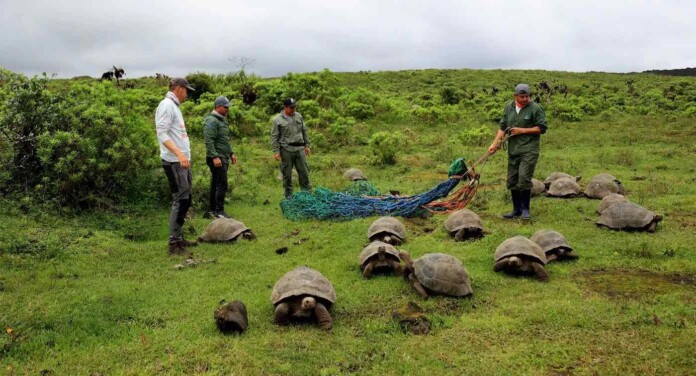
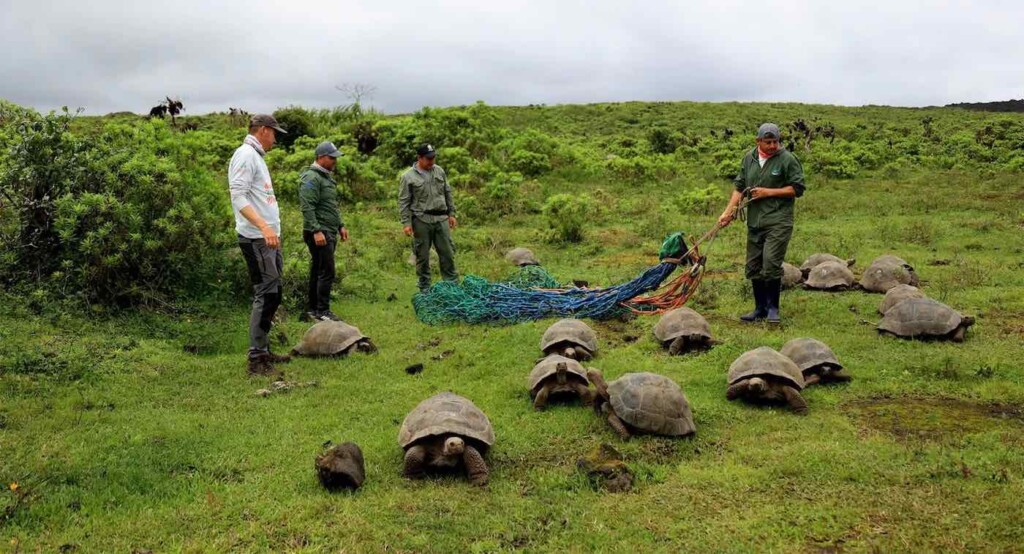
500 Giant Tortoises Reintroduced to Four Galapagos Islands in 2023

Juvenile tortoises released into their natural habitat on Isabela Island ©Galápagos Conservancy

2023 was a banner year for the Galapagos Islands: that wondrous archipelago so famous for its giant tortoises and other endemic species.

The long-serving conservation organization the Galapagos Conservancy, also endemic to the islands, recently published its annual report featuring standout figures like over 500 giant tortoises of 5 different species reintroduced to their natural habitat.

Additionally, a critically endangered species of albatross was identified to use giant tortoise feeding sites as take-off and landing areas. This key insight into co-dependency has given the Conservancy confidence that they can restore the populations of both animals to stable, flourishing numbers.

It underscores how far a donation to these endemic wildlife organizations really does go, and these two highlights of a successful year were only possible by the over $6 million in charitable contributions from supporters.

30 Chelonoidis chatamensis tortoises endemic to the smaller island of San Cristobal were repatriated to their natural habitat from the stock of a captive breeding program, while 97 native tortoises were returned to the second-largest island of Santa Cruz.

On the largest island of Isabella, 350 tortoises (214 C. guntheri and 136 C. vicina) were successfully reintroduced to their natural habitat after a survey found their numbers were not rising substantially on their own.

In March, the repatriation of 86 juvenile Chelonoidis hoodensis tortoises significantly contributed to enhancing the species’ distribution across their native habitat. They currently number 3,000 today on Española or Hood Island, a miraculous recovery from the 14 found there in the 1960s.

Also on Española, the endemic waved albatross was found to be taking off and landing on 50 additional parts of the island. These large birds, boasting an 8-foot wingspan, need ample space to get a running start before taking off, and this same principle applies when applying the brakes coming down from the sky.

GALAPAGOS HEADLINES: Historic Effort Returns 136 Juvenile Galápagos Tortoises Conservationists Release into the Wild

In the survey, the biologists observed that concentrations of giant tortoises were linked with the usage of areas as runways for the albatross. Because the tortoises are the largest herbivores in the ecosystem, they perform the same acts as bison do in North America and Europe, and elephants in Africa—clear space.

With their herbivorous diet and large bulk, the tortoise’s feeding habits produce cleared areas ideal for albatross use.

“This discovery underscores the interconnectedness of the Galápagos ecosystem,” the authors of the report write. “This newly acquired knowledge allows us to strengthen the synergies between our conservation strategies.”

ALSO READ: The Greatest Conservation Story Ever Told Isn’t Really Being Told

Of the $6.1 million received from donations and through other activities, the Conservancy was able to spend 77% of that on conservation programs, and that included some ambitious plans for this year—now already half done—which included drafting plans for restoration of the Pinta tortoise to the island of the same name, preparing tortoises for imminent reintroduction to the smaller Floreana island, and completely restoring the habitat for the Galapagos petrels on Santa Cruz.

MEANWHILE IN SPAIN: Iberian Lynx Slinks Back From Brink of Extinction Within Just Two Decades of Conservation

Operating since 1985, the Galapagos Conservancy has a long track record of restoring these islands to their pre-Colombian glory. Let’s hope 2024 is as successful.

SHARE This Great News For These Curious Islands… 

Eco-Friendly Sponges Made of Dairy Byproduct Can Extract Gold from Old Computer Parts

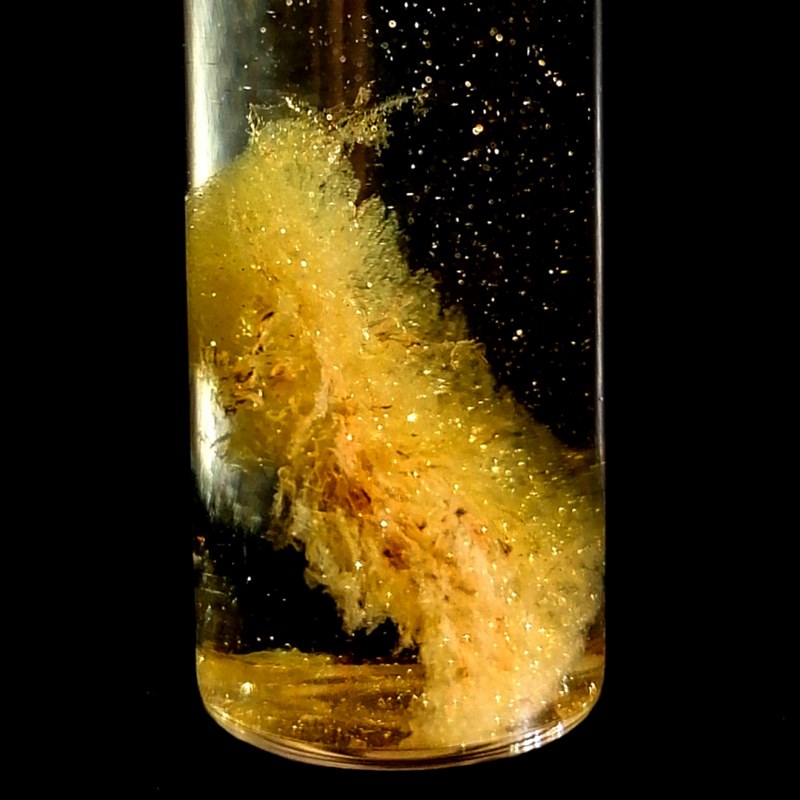
The gold nugget obtained from computer motherboards in three parts. The largest of these parts is around five millimetres wide. (Photograph ETH Zurich Alan Kovacevic)

Scientists have developed a way to dramatically reduce the cost of recycling certain electronic waste by using whey protein.

Their method allows for the easy recovery of gold from circuit boards at a cost of energy and materials amounting to 50 times less than the price of the gold they recover—these are the numbers that big business likes to see.

Indeed, the potential for scalability depends on this sort of cost savings, something traditional e-waste recycling methods just can’t achieve.

Professor Raffaele Mezzenga from ETH Zurich has found that whey protein, a byproduct of dairy manufacturing, can be used to make sponges that attract trace amounts of ionized gold.

Electronic waste contains a variety of valuable metals, including copper, cobalt, and gold. Despite gold’s public persona as being either money or jewelry, thousands of ounces of gold are used in electronics every year for its exceptional conductive properties.

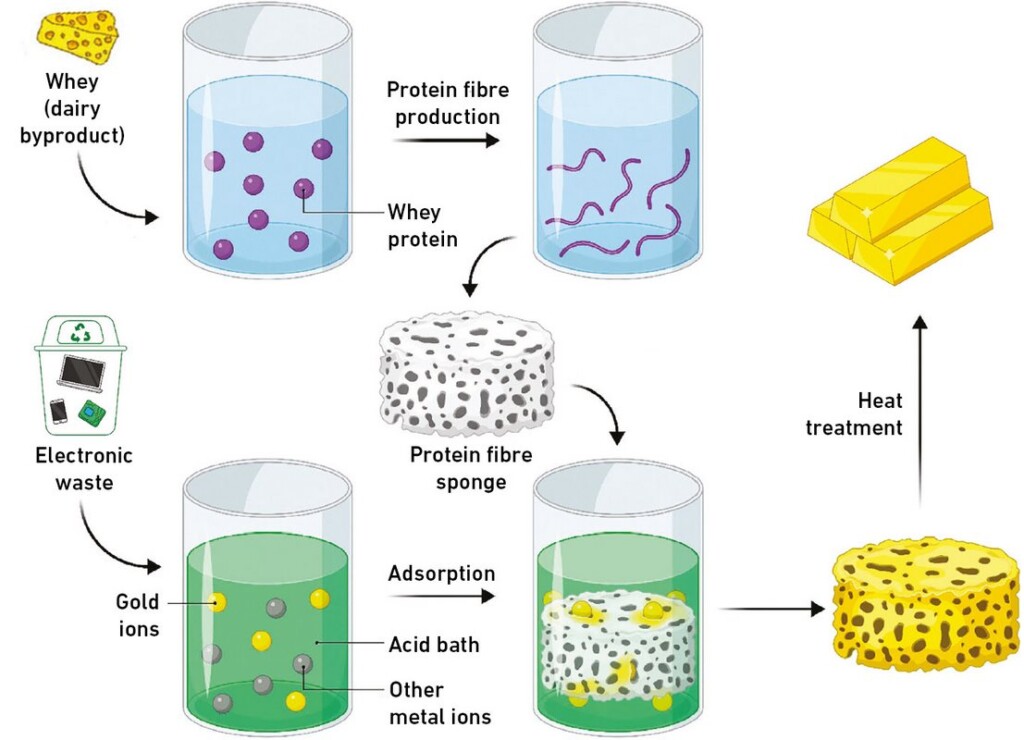
Mezzenga’s colleague Mohammad Peydayesh first “denatured whey proteins under acidic conditions and high temperatures, so that they aggregated into protein nanofibrils in a gel,” writes the ETH Zurich press. “The scientists then dried the gel, creating a sponge out of these protein fibrils.”

The next step was extracting the gold: done by tossing 20 salvaged motherboards into an acid bath until the metals had dissolved into ionized compounds that the sponge began attracting.

Removing the sponge, a heat treatment caused the gold ions to aggregate into 22-carat gold flakes which could be easily removed.

How the gold is recovered Gold ions adhere to a sponge of protein fibrils. (Source Peydayesh M et al. Advanced Materials, 2024, adapted)

“The fact I love the most is that we’re using a food industry byproduct to obtain gold from electronic waste,” Mezzenga says. In a very real sense, he observes, the method transforms two waste products into gold. “You can’t get much more sustainable than that!”

They were able to extract 450 milligrams or around $38.70 worth of fine gold at current market value. The real value would be slightly lower because their nuggets were about 9% copper. Further smelting could remove the copper, but it would be a bit less than 450 mg.

However the real dollar value comes from the bottom line—which was 50 times more than the cost of energy and source materials. Because of this, the scientists have every intention of bringing the technology to the market as quickly as possible while also desiring to see if the protein fibril sponge can be made of other food waste byproducts.

E-waste is a quickly growing burden in global landfills, and recycling it requires extremely energy-intensive machinery that many recycling facilities do not possess.

YOU’VE GOTTA CHECK OUT: 580 Repair Shops Form a Flourishing Subculture Fixing Toasters, Electronics, Coffee Makers and Lamps

The environmental value of the minerals contained within most e-waste comes not only from preventing the hundreds of years it takes for them to break down in the soil, but also from the reduction in demand from new mining operations which can, though not always, significantly degrade the environments they are located in.

Other countries are trying to incentivize the recycling of e-waste, and are using gold to do so. In 2022, GNN reported that the British Royal Mint launched an electronically traded fund (ETF) with each share representing the value of gold recovered from e-waste as a way for investors to diversify into gold in a way that doesn’t support environmentally damaging mining.

MORE E-WASTE RECYCLING: America’s Largest Solar Panel-Maker Leads the World in Panel Recycling–Recovering 95% of Materials

The breakthrough is reminiscent of that old fairy tale of Rumpelstiltskin who can spin straw into gold. All that these modern-day, real-life alchemists are doing differently is using dairy and circuit boards rather than straw.

SHARE This Real-Life Alchemy With Your Friends Who Hate Throwing Electronics Away… 

700 Cats Rescued After TikTok User Finds a Texas Tabby–and Rescues a Sanctuary in Trouble

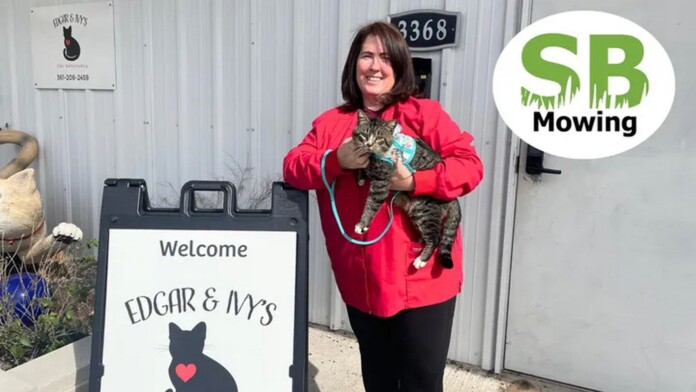
credit - SB Mowing, GoFundMe
credit – SB Mowing, GoFundMe

From south Texas comes the incredible story of how a TikTok content creator channeled his channel for good—rescuing a cat and a cat shelter by inspiring thousands in donations.

Broken by Victoria Lopez at My San Antonio, the story is a reminder of social media’s stunning potential to do good if it can just manage to capture enough people’s fleeting attention.

Spencer is the brains and motor behind the SB Mowing TikTok and YouTube channels, which document his hobby of finding people who can’t mow their lawns and doing it for them. With a combined following of 15 million people, it’s a great showing that kindness pays.

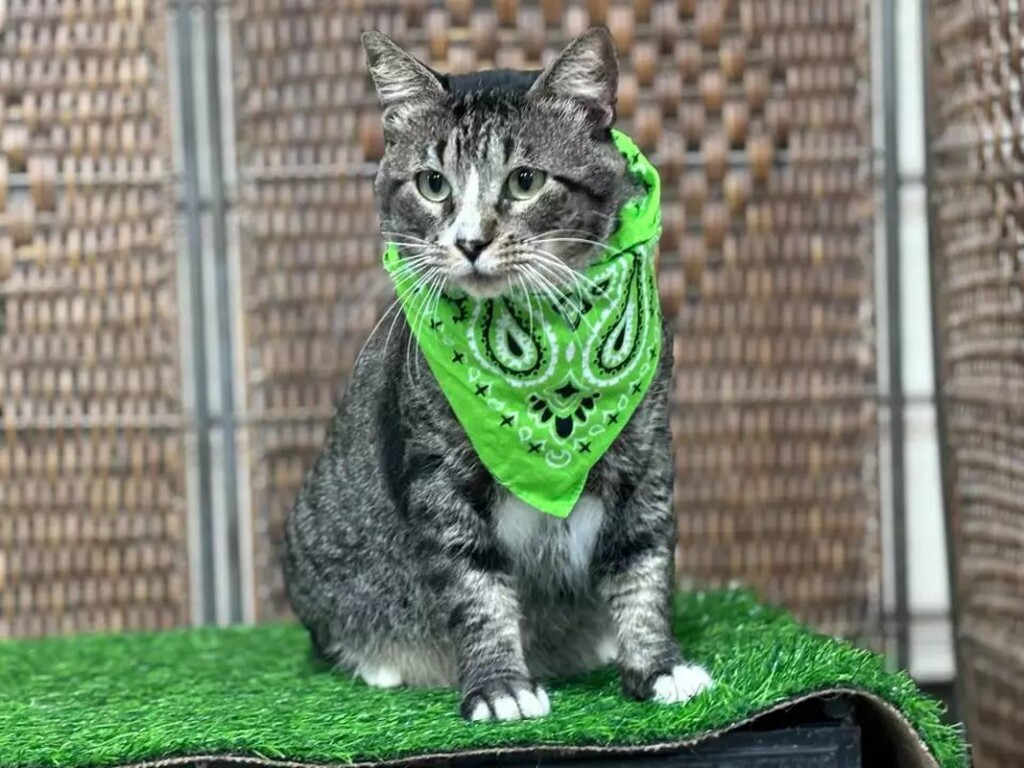
In Corpus Christi, Spencer was fighting back a terribly overgrown yard when he found a little tabby cat with puncture marks from a fight with a dog or another cat, which to Spencer’s mind seemed infected.

Spencer called rescue centers in the area to see if anyone would help the cat, who would later be named Esbee, and only one reached out: Edgar and Ivy’s Cat Sanctuary and Rescue.

Edgar and Ivy is run by Director Anissa Beal, who was falling into a growing financial pit attempting to fund the cat rescue center. She had vowed to call it quits at year’s end if she couldn’t manage to turn things around.

credit – Anissa Beal

“I’ve never seen so much passion put into helping people and helping animals,” Spencer wrote, who gave them all the cash he had on hand as a thank-you for saving the animal when no one else would.

He explained to Beal he had a large social media following and that he would set up a GoFundMe to try to help them better fund operations; Beal thought little of the gesture.

But in a matter of days, the fundraiser shot up to $190,000 in private donations, catapulting Edgar and Ivy’s Cat Rescue Mission out of debt.

Then, in the days that followed, some of the other followers of SB Mowing who had decided to pay for supplies had their contributions recognized: when four truckloads of orders showed up at Edgar and Ivy’s front door.

“He saved us,” Beal told My San Antonio, referring to Spencer. “I kept praying that I’d get some sort of a sign if I should continue because I told myself if I couldn’t make it this year, I was going to end it. I was not going to continue this rescue.”

MORE STORIES LIKE THIS: Restaurant Feeds Community With Free Fridge–Then Gets Paid Back When Business Faces Closure in Austin, Texas

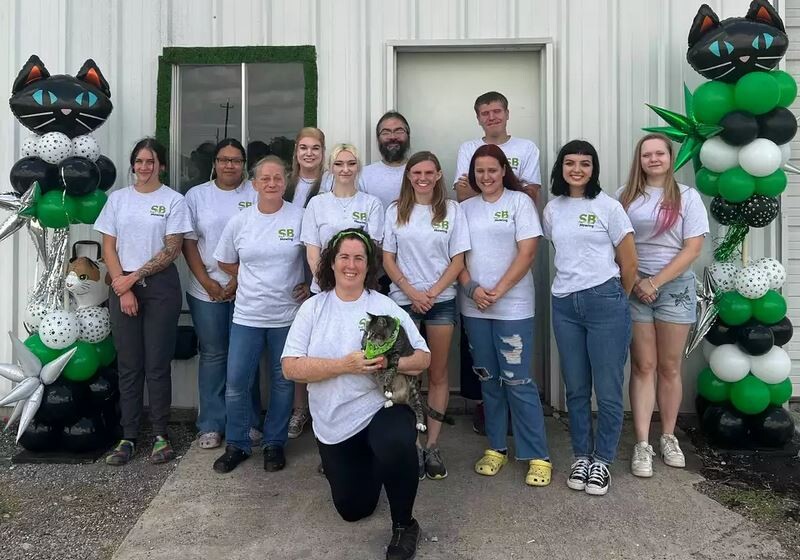
Beal decided to dedicate the mission’s new building to Spencer, who was given the opportunity to name it: The SB Mowing Wellness and Recovery Center (for cats). Esbee, who has received dozens of offers for adoption, is right at home.

Anissa Beal, Esbee, and her staff at the opening of their new building – credit Anissa Beal

“Esbee, no doubt would have—with the wounds he had—would have died within the next 48 hours from sepsis,” Beal said, adding that she would only accept in-person adoption offers from genuinely interested parties and “not just while he was in his 15 minutes of fame.”

ONE CAT CAN CHANGE EVERYTHING: How a Tiny Injured Kitten Kickstarted an Entire Sustainability Initiative to Eliminate Plastic

Since this incredible act of charitable giving and compassion, Edgar and Ivy’s Mission has rescued 700 cats.

SHARE This Incredible, Inspiring Display Of Giving On Social Media…
A Record Hatch for Near-Extinct Siamese Crocodiles Signals a Croc Comeback

Hor Leng / Fauna & Flora

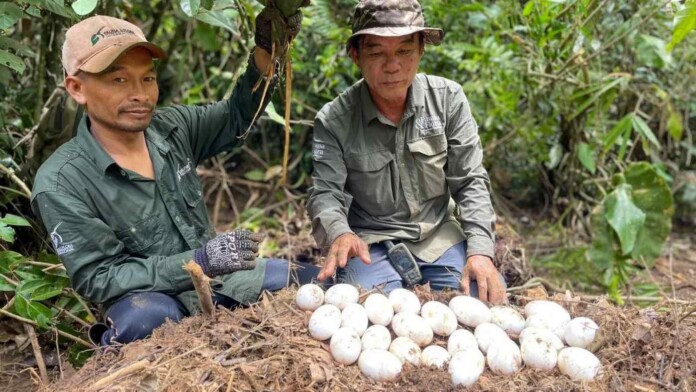
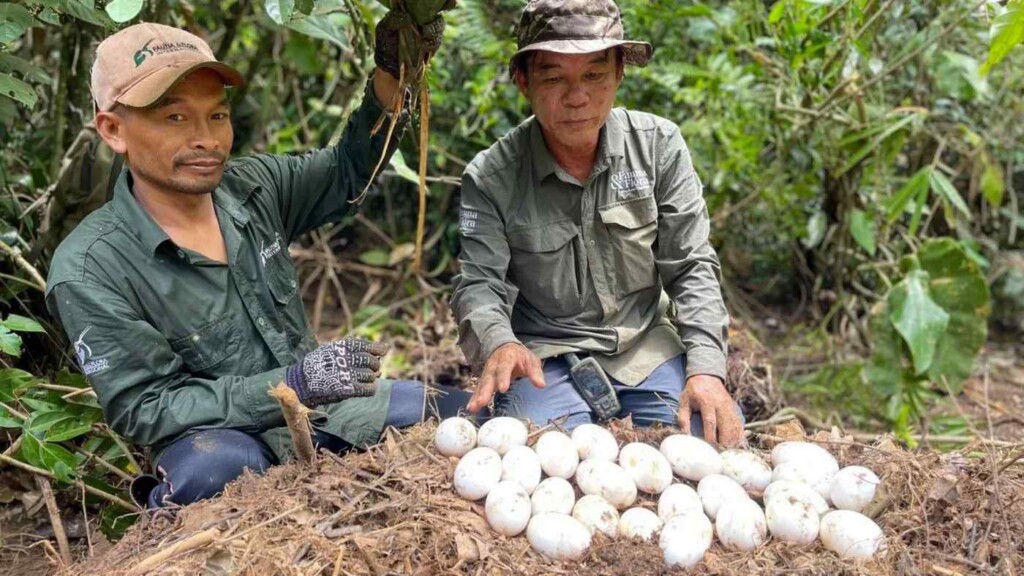
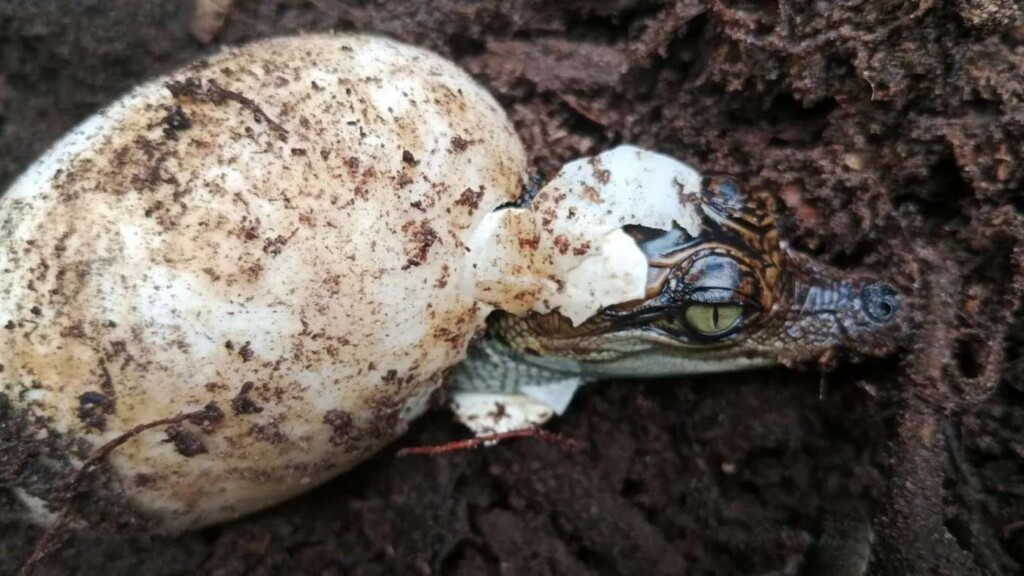
In Cambodia, 60 eggs were found in the nest of one of the world’s most endangered large reptiles which after hatching set a new record for an international conservation effort to save them.

It was believed the Siamese crocodile, with the distinctive bony crest running down its skull, was extinct in the wild until it was rediscovered in 2000. Almost all of the 400 animals remaining live in Cambodia.

A network of private-public partnerships have been organizing conservation measures to protect the species, including captive breeding and reintroduction programs, and village patrols to ensure their nests and habitat are not tampered with.

In May, locals in the Cardamom Mountains found a nesting site in an area that crocodiles hadn’t been released, suggesting they are expanding and breeding under their own powers: a tremendous sign for the species’ recovery.

“The hatching of 60 new crocodiles is a tremendous boost,” said Pablo Sinovas, who leads the Cambodia programme of conservation group Fauna & Flora International, which has been running a captive breeding program since 2012.

They’ve successfully reintroduced 196 crocs back into the wild, and it was they who deployed a team of conservationists to the nest site found in May for round-the-clock care and observation until every last one of the 60 eggs hatched, bringing their precious cargo into the world.

Bros Pov / Fauna & Flora

Generally speaking for crocodile species, the mothers are very attentive beasts, and even the fathers will help raise young if the mother isn’t around. When hatching, the little crocs emerge from the creche of eggs chirping, calling the mother in who then excavates the nest and takes any unhatched eggs in her mouth, rolling them around to speed up the hatching process.

REPTILES RETURNING: Town Saves the Threatened Bum-Breathing Punk Turtle–a 9lb Wonder Found Only in the Mary River

The young are carried to the water in the mother’s mouth, where she will watch over, feed, and care for them until the next mating season. Despite this motherly love, baby crocs have a very high mortality rate from predation.

SHARE This Great News From The Reptile World With Your Friends…

“What we choose to emphasize in our human history will determine our lives.” – Howard Zinn 

Quote of the Day: “What we choose to emphasize in our human history will determine our lives.” – Howard Zinn 

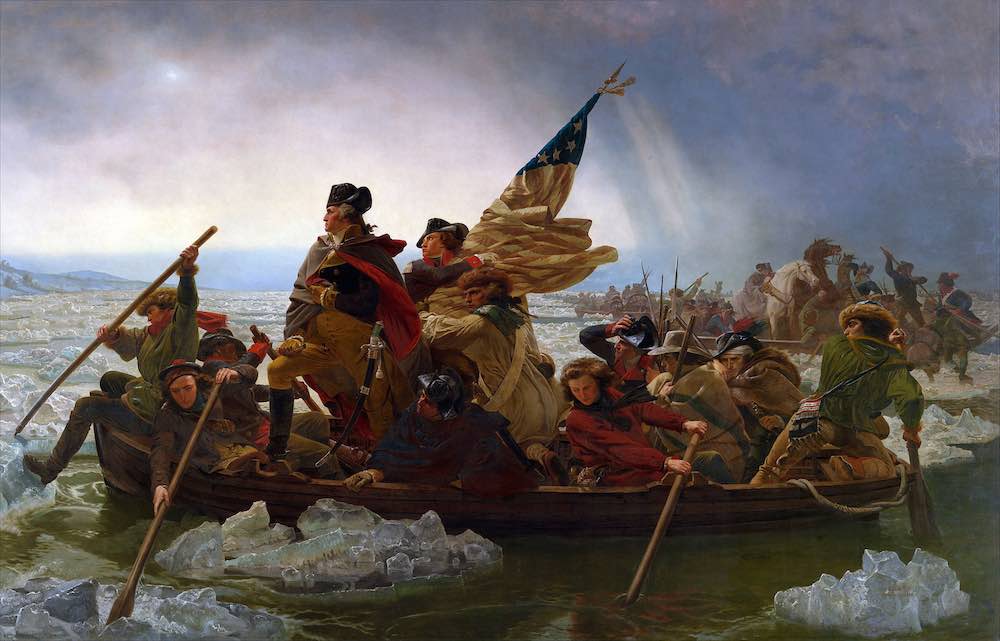
Photo by: Washington Crossing the Delaware by Emanuel Leutze (1851)

With a new inspirational quote every day, atop the perfect photo—collected and archived on our Quote of the Day page—why not bookmark GNN.org for a daily uplift?

‘She saved our lives’: Woman Credits Rescue Dog for Alerting Her to Dangerous Carbon Monoxide Levels

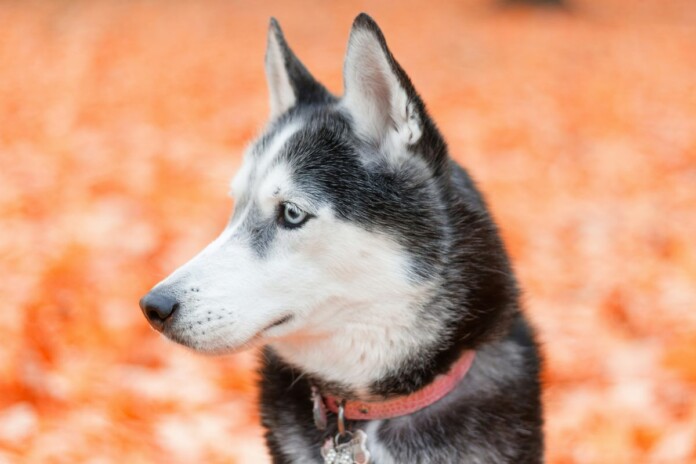
A husky that looks like Samantha Griffen's Luna - DRZ, Unsplash
A husky that looks like Samantha Griffen’s Luna – DRZ, Unsplash

A woman who rescued a dog from a shelter was amazed and overwhelmed to learn that the Siberian husky returned the favor.

Samantha Griffen might have died before the carbon monoxide detector even went off, but the husky, Luna, had other ideas.

Moving into a new house on 54th and Prestwick Sq, Marion, Indiana last June, her water heater started leaking, spilling the dangerous gas into the home.

Griffen had only adopted Luna, a now two-year-old husky, 6 months ago.

“I had a migraine, so I went into my room and was resting like I normally do and she was not going to let me sleep,” Griffin told WRTV.

“If she hadn’t gotten me outside, I would fallen asleep in here like completely fallen asleep and probably wouldn’t have woke up.”

Griffen said that Luna jumped on the bed and kept her from falling asleep until she took the dog outside, where, eventually, the CO1 detector did go off. She then got all the children out of the house as fast as possible and called her utilities company.

DOGS ARE HEROES: Dog That Won’t Stop Digging Saves Entire Neighborhood After They Find Dangerous Gas Leak Underground

They in turn alerted the fire department, which arrived to find very high levels of CO1 in the house. They said the gas can sometimes evade the alarm depending on where in the house it’s placed, adding that it’s important to have them near natural gas appliances like stoves and water heaters.

HERO DOG REWARDED: Dog Saves Foster Parents from Fire–Finds Forever Home 1 Day Later

Griffen got Luna as an emotional support animal to help her with her PTSD, but she never imagined the support would go as far as this.

SHARE This Heroic Husky With Your Friends Who Love The Breed… 

YouTuber ‘MrBeast’ Just Removed 17,000 Tons of Ocean Trash by Harnessing Social Media Influencers and Fans

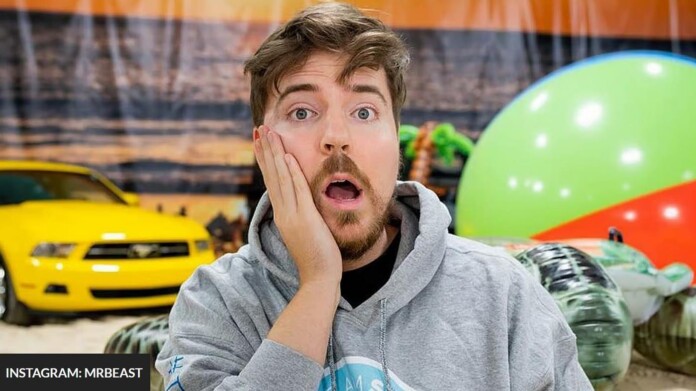
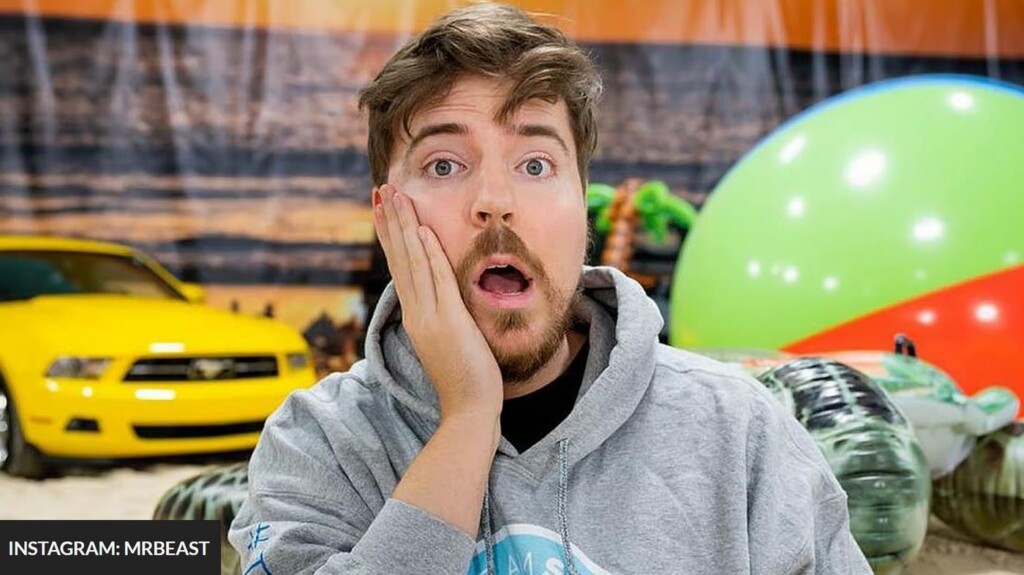
MrBeast announcing his TeamSeas milestone

The world’s most influential YouTuber has accomplished an incredible feat of crowdfunding after leading dozens of the world’s top influencers to drive donations and volunteering toward the goal of cleaning up the oceans.

34 million pounds of trash and plastic were removed from oceans and rivers all across the globe, with each dollar donated verified by an independent third party as going directly to removing one pound of trash.

Partnering with the Ocean Conservancy and the Ocean Cleanup, the famous YouTuber MrBeast, aka James Donaldson, launched the TeamSeas initiative, which brought together hundreds of voices with large followers on social media to channel their channels for the good of the ocean.

In January 2022, it was announced by MrBeast and his partner on the project, YouTuber Mark Rober, that they had actually raised $30 million, and that the mammoth cleanup project would begin.

Much of the money was needed for hiring organizers to train volunteers, equip them with supplies, and hire specialists, boats, and even robots.

On July 16th, MrBeast uploaded a video announcing the trash removal was a success, and some of the participation figures were staggering.

Fundraising, volunteering, awareness raising, and various forms of digital content like videos and video games from over 200 countries and territories all worked to turn the internet’s gaze to the TeamSeas website where people could donate and select how many pounds of trash they wanted removed from the oceans.

OCEAN CLEANUP GOALS MET: Nonprofit Diverts an Ocean Plastic Tide, Removing 2 Million Pounds of Trash From Waterways

Their content generated 1.3 billion views cumulatively across 40,000 social channels. When the months of clean-up began 170,000 people from dozens of countries volunteered.

MrBeast routinely engages in philanthropy, and GNN reported on July 4th he had succeeded in building 100 homes and giving them away for free to disaster-stricken families all across Central and South America.

THE INTERNET FOR GOOD: The Internet Raises $6 Million in One Day to Rescue Afghans Targeted By Taliban

The rather positive message is that the internet, like all human endeavors, can be channeled towards good causes; it’s just a question of getting the word out.

WATCH the video below… 

SHARE This Incredible Socially Engineered Clean-Up With Your Friends…

Massive Helium Reservoir in Minnesota Is ‘Mind-Boggling’ – Valuable for Rocketry and Medicine

credit - Pulsar Helium
credit – Pulsar Helium

An American company is in possession of a “world-class,” and “mind-boggling” deposit of subterranean helium gas, which has them excited for way more than just the potential to sell it to party supply stores.

Despite being the second most abundant gaseous element in the universe, helium is rare on Earth, and in Babbit, Minnesota, a reservoir has been identified that is being described as one of the most lucrative ever found.

Helium is an excellent coolant, and in engineering and technology, the gas is used to cool rockets, nuclear power reactors, and medical imaging technology like MRI machines. Apart from occasional deposits found underground, the only way to produce it, according to Shiran Genzi, writing for Bored Bat, is through nuclear fusion or skimming it off decaying radioactive material like uranium and thorium.

Pulsar Helium, the exploration company that is currently working at the Babbit reservoir, recently obtained results of a survey showing that it’s currently larger than earlier estimates gathered in March.

It shows that maximum concentrations are 14.5% of the total underground area, which when considering how helium reservoir can be declared economically significant with as little as 0.3% concentration, one understands why it was described in March as “mind-boggling;” even when it was believed to be less dense.

Furthermore, helium gas is coming up to the surface at a rate of 821,000 cubic feet 23,250 cubic meters per day, meaning there’s no need for fracking.

“These results are considered world-class,” Pulsar Helium representatives wrote in a statement shared with Live Science in early July.

MORE MATERIAL INDEPENDENCE: Lithium Discovery in Crater in Nevada Could Be Biggest Deposit Ever Found

“The results confirm that a previously discovered pocket of helium between 1,750 and 2,200 feet (530 to 670 meters) below the surface, reports Pulsar Helium president and CEO Thomas Abraham-James said in a statement.

MORE ALTERNATIVE DRILLING PROJECTS: French Company Discovers Massive Reserve of Clean Hydrogen Gas that Could Start Renewable Revolution

Already across the world, developed countries are experiencing shortages of helium, and the Babbit reservoir could go a long way to addressing the United States’.

SHARE This Boon For The Minnesota Economy With Your Friends… 

Virginia Students Given $15,000 to Use AI to Prevent Deer From Running into Cars

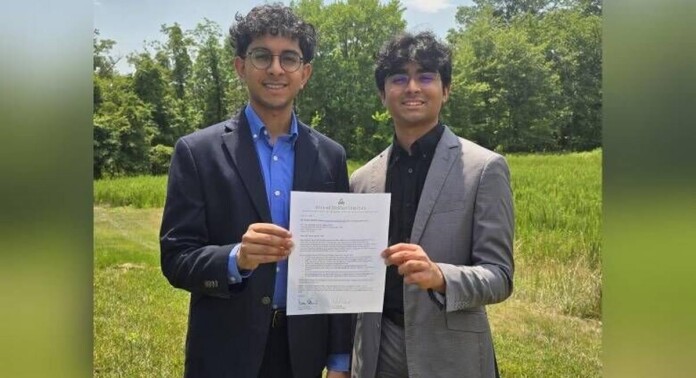
photo released by Shaurya Jain (right)

Every Virginian over 30 you could hope to meet will know someone who has collided with a deer in their car: the state is in the top ten nationwide for deer-related crashes.

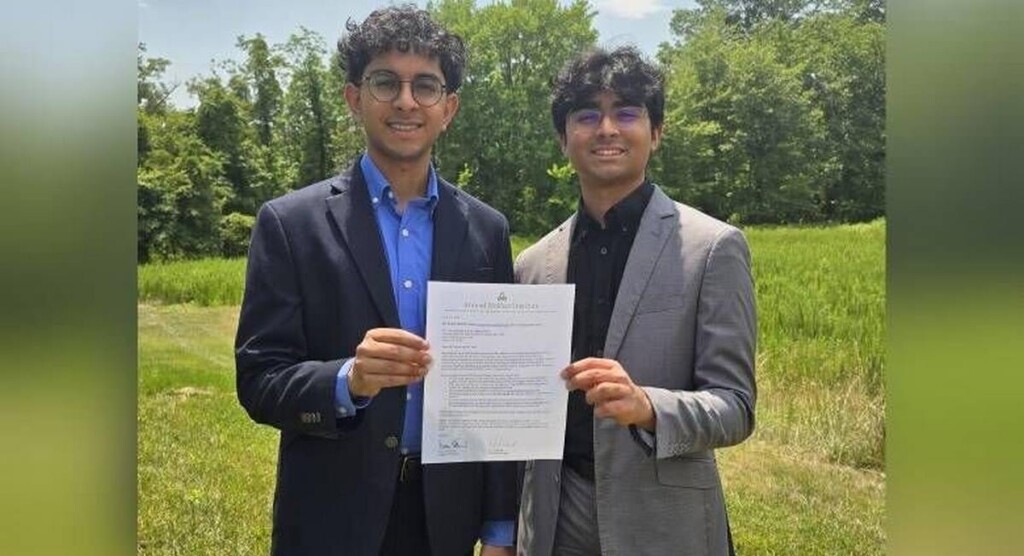
These two high school seniors have just received a large grant to pursue their research into a device that detects cars and deer via artificially intelligent cameras, and helps both avoid collisions.

Shaurya Jain and Anmol Karan from Thomas Jefferson High School in Fairfax County received $15,000 after presenting their prototype.

The money came from the Animal Welfare Institute as a part of the Christine Stevens Wildlife Award, and it left the two young men feeling “honored.”

“Not everyone would trust a bunch of high schoolers with this kind of money,” Jain told WTOP. 

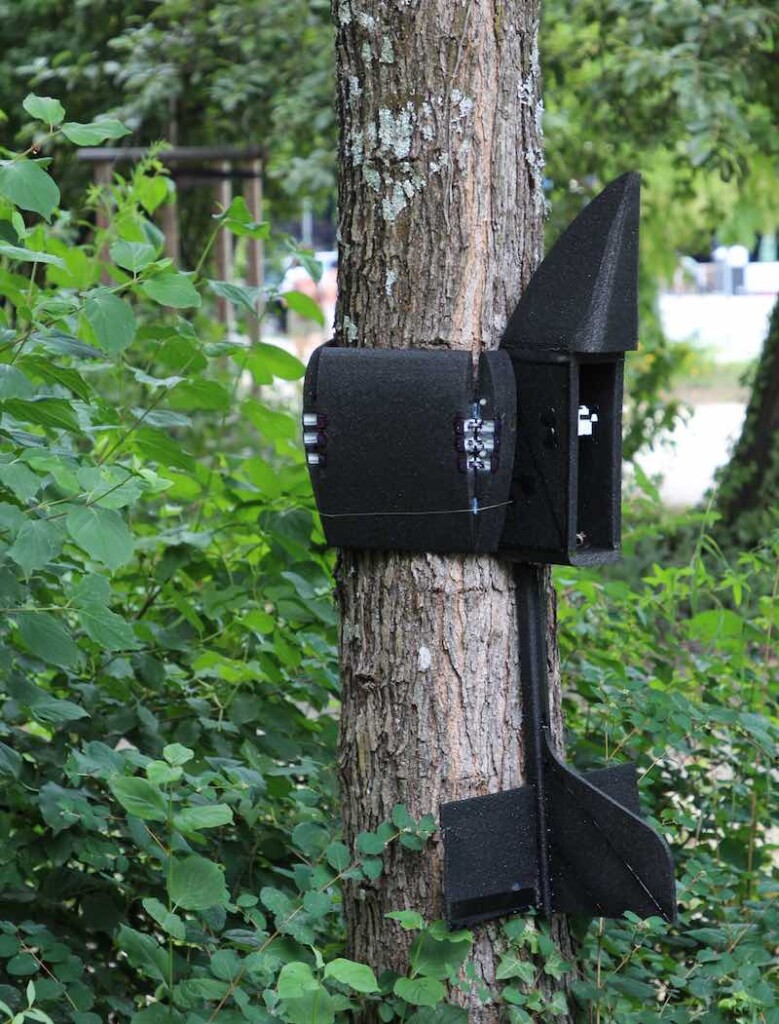
Positioned on the side of the road, if the device detects both cars and deer in the vicinity, it emits high-frequency pulses and animal sounds to deter the deer from attempting to cross at that moment. If positioned in places with high deer traffic, the boys hope it will stop them from impacting traffic, especially at night when visibility is low and deer are most active.

In 2022, 6,100 traffic collisions, or 15% of the total number in the state, involved deer, an incident ratio that left 500 people injured.

Mr. Jain says he was inspired by his religion: Jainism—which holds all animals to be sacred and carriers of souls, while Karan was moved to action by the news that his uncle had collided with a deer in his car at night in Loudon County and was badly injured.

YOU MAY ALSO LIKE: California Teen Passes the Bar Exam at 17– Now He’s a Practicing Attorney

“Seeing him caused me to just feel that there probably is some type of method that we can keep on these roads in order to prevent such accidents from happening,” said Karan.

MORE TEEN INVENTORS: 16-year-old Wins $75,000 for Her Award-Winning Discovery That Could Help Revolutionize Biomedical Implants

The Virginia Transportation Research Council applauded the students’ idea and wrote letters of encouragement to them. They are still collecting data on deer injuries and hope to start roadside testing soon.

SHARE These Determined Young Drivers Working To Keep The Roads Safe…

“Love without conversation is impossible.” – Mortimer Adler

Quote of the Day: “Love without conversation is impossible.” – Mortimer Adler

Photo by: Etienne Boulanger

With a new inspirational quote every day, atop the perfect photo—collected and archived on our Quote of the Day page—why not bookmark GNN.org for a daily uplift?

Diabetes-Reversing Drug Boosts Insulin-Producing Cells by 700%

By Bradley Johnson, CC license

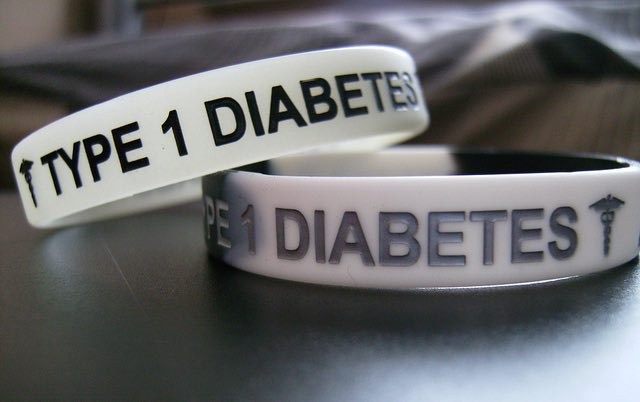
A new drug tested in mouse models of type 1 and 2 diabetes septupled the number of beta cells in the pancreas, reversing the symptoms of diabetes until the disease was gone.

This has never been achieved before in drug development, and the scientists behind the breakthrough are calling it a “functional diabetes cure.”

It took just three months for the mice cells to start excreting insulin again, which was achieved via a combination of two drugs: the first called harmine which is naturally found in plants which works to inhibit the enzyme DYRK1A, and the second which acts as a GLP1 receptor agonist, also found in the diabetes drug Ozempic.

To test their drug, the team from Mount Sinai and City of Hope first injected human beta cells into mice, and then applied their treatment. The beta cells increased in number 7-fold in just three months time, with symptoms of diabetes slowly reversing until they were undetectable even 1 month after treatment was stopped.

The concept behind this treatment has been tried before, but it involved coaxing stem cells into human pancreas beta cells in vitro and then transplanting them into a diabetes patient via a small device: a costly, time-consuming procedure.

“This is the first time scientists have developed a drug treatment that is proven to increase adult human beta cell numbers in vivo,” said Dr. Adolfo Garcia-Ocaña, corresponding author of the study. “This research brings hope for the use of future regenerative therapies to potentially treat the hundreds of millions of people with diabetes.”

UNTIL THIS DRUG IS ON THE SHELVES:  Crazy Insulin Prices Now a Thing of the Past in U.S. After Government Initiates Monthly Cost of $35

So far, harmine alone has recently undergone a phase 1 clinical trial in humans to test its safety and tolerability, while DYRK1A inhibitors have not.

The study was published in the journal Science Translational Medicine.

SHARE These Incredible Results, Never Before Achieved Before… 

First Ever Cheese Museum Opens in Paris: ‘It’s Gouda Brie a Delicious Visit’

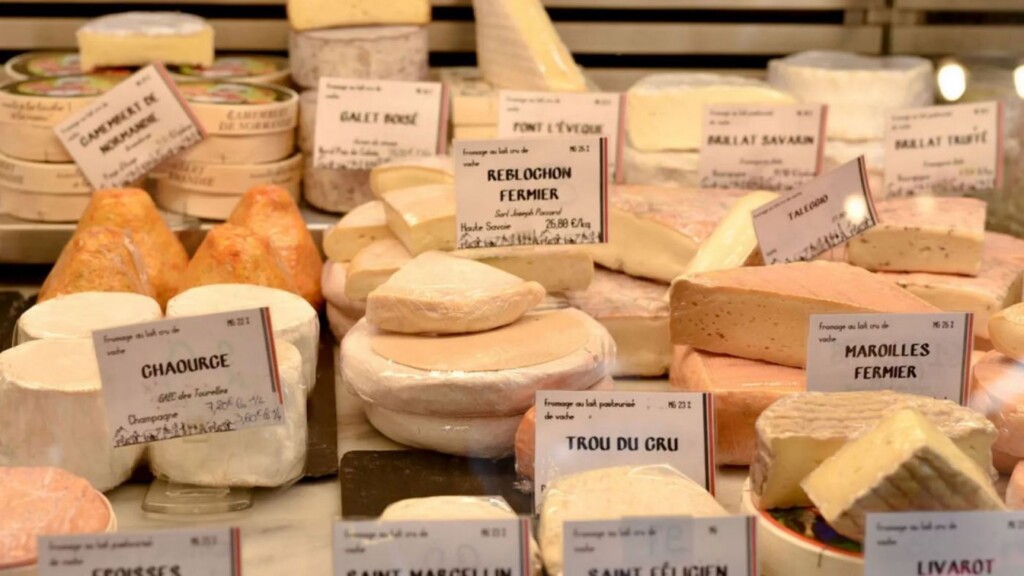
A display case at the Museum of Cheese in Paris - credit, Musee du Fromage, released to the media
A display case at the Museum of Cheese in Paris – credit, Musee du Fromage, released to the media

Fromage, Formaggio, Käse, Queso: cheese—one of the Old World’s great romance stories.

In the heart of Paris, a new museum has opened dedicated to the ages-old craft of cheesemaking in France, the second most prolific producer on the continent (behind Italy).

At the newly-opened Musee du Fromage, visitors can learn about the history of cheese making, something which may have been going on for 5,000 years. They can learn about the story of various famous French cheeses, see cheese made, talk to real cheesemakers, and yes, taste them.

The mastermind behind the museum is Pierre Brisson—who remembers Sunday afternoons at the market standing on his tippy-toes to look into the display cases of the cheesemakers and marveling at the variety.

Coming to Paris 15 years ago, he saw how developed the Parisian pride and museum scene was for the showcasing of wine, but cheese, perhaps an even more iconic French symbol, was notably absent.

“People can see cheesemaking live and also talk to the cheesemaker,” Brisson told Euronews. “We are working with many traditional farmers, so we want people [to feel like they’re] kind of traveling when they taste the cheese. We are opening a little window in the heart of Paris to the rural side of France.”

The French have invented some of the world’s most beloved cheeses and just to name the headliners, there’s Camembert, Brie, Epoisses du Bourgogne, Roquefort, Ossau Irati, Comte, La Tur, and so many others that French readers are no doubt hollering to be included here.

MORE ON TYPICAL FOOD: 30 Wineries Sign Up to Refillable Wine Bottle Service in Oregon

“[The process] depends on so many things, even the humor of the animals whose milk is being used,” Agathe de Saint-Exupéry, one of the experts at the museum, tells the Guardian. “You can make the same good cheese every day, and every day it will taste different. It just cannot be done industrially.”

Cheesemaking is a good profession in France that makes a better living than other rural activities. Even so, Brisson knows firsthand it’s a productive, sometimes grueling job that is currently experiencing a labor shortage.

Like many nations, there is a continuous movement in France from the countryside to the cities, and Brisson hopes the museum will help people connect with their countryside heritage—and understand its value and what it contributes to French life even in the cities.

CHEESE NEWS: 26 Years of Research Shows Cardiovascular Health in Dairy Lovers is Not Aversely Affected by Choosing Cheese

“Now, we are able to know, thanks to science, a lot of things about cheese. But our ancestors, they didn’t know all these details, but they still could make amazing cheese and develop very amazing skills of cheesemaking. So there is a know-how that’s developed for centuries that we kind of inherited today. We have a responsibility to keep this alive and to continue to pass to new generations the passion.”

SHARE This Must-Visit Museum In Paris With Your Friends Who Love French Food…