












All News - Page 152 of 1691 - Good News Network
Home Blog Page 152

World’s Leading HIV Drug Reduces Carbon Emissions By 26 Million Tons in Comparison to Predecessor

Dolutegravir, an HIV treatment - Fair Use
Dolutegravir, an HIV treatment – Fair Use

A first-of-its-kind report has discovered that altering the ingredients list or manufacturing methods of widely used medication can really cut back on carbon emissions.

They found a reduction of 26 million tons, enough to cancel out the whole carbon footprint of the city of Geneva for a decade. Best of all, it’s already happening, and in fact, is almost done—those emissions were already saved.

The lifesaving HIV treatment dolutegravir (DTG) is used by 24 million people worldwide.

Today, over 110 low and middle-income countries have adopted DTG as the preferred treatment option. Rapid voluntary licensing of the medicine, including its pediatric version, to over a dozen generic manufacturers, significantly drove down prices, and it’s estimated that 1.1 million lives will be saved from HIV/AIDS-related deaths by 2027.

Its predecessor, efavirenz, contained 1200 milligrams of active ingredient across the three active compounds present, while DTG contains 650 milligrams of just one compound. This small difference—literally measurable in single digits of paper clips by weight—was enough to change the carbon emissions footprint of the medication by a factor of 2.6.

The incredible discovery was made in a recent report by Unitaid, a global public-private partnership that invests in new health products and solutions for low and middle-income countries, called Milligrams to Megatons, and is the first published research to compare carbon footprints between commonly used medications.

YOU MAY ALSO LIKE: Overlooked Drug Proven to Be Superior Treatment for Crohn’s Disease–Helping Patients Avoid Surgery

“This magnitude of carbon footprint reduction surpasses many hard-won achievements
of climate mitigation in health and other sectors,” the authors of the report write.

At the rate at which DTG is produced, since it entered into production and treatment regime in 2017, 2.6 million fewer tons of CO2 have entered the atmosphere every year than if efavirenz was still the standard treatment option.

Health Policy Watch reports that the global medical sector’s carbon emissions stand at roughly 5% of the global carbon emissions and are larger than the emissions of many big countries, and 2.5 times as much as aviation.

ALSO CHECK OUT: Inauguration of World’s Largest 2nd Gen. Ethanol Plant Will Cut Emissions by 30% with Sugar Cane

“This report demonstrates that we can achieve significant health improvements while also making strides in reducing carbon emissions. By adopting innovative practices and prioritizing sustainability, we can ensure that medicines like DTG are not only effective but also environmentally responsible,” Vincent Bretin, Director of Unitaid’s Results and Climate Team told Health Policy Watch.

SHARE This Unexpected Win For The Climate And HIV With Your Friends… 

Spanish School Keeps Village Traditions Alive With Bell-Tolling Classes – WATCH

The 12th century Church of Sant Roma where the Vall en Bas School of Bell-Ringing studies (Copy)

There are over 2,000 bell towers across Catalonia alone, and they all need tolling each half-hour; but it’s actually so much more than that.

To better interweave communities and keep long-practiced traditions alive, Spain is witnessing a class graduate from its first bell-ringing school.

This strange idea is all about reviving a dying art that was recently inscribed on UNESCO’s list of Intangible World Heritage, featuring human activities like baking, dancing, and poetry, that tell the story of our species’ cultural diversity across time and across countries.

Over the last 120 years, manual bell-ringing has gradually been replaced by automatic systems in Catholic and Protestant churches, which has flattened their potential and muted their messaging powers.

“We have the utopian goal of a toller in each bell tower. I know it’s a utopian goal because there are over 2,000 bell towers across Catalonia,” admits Xavier Pallas, a bell-ringing instructor at Vall d’en Bas School of Bell Ringers, who just graduated his school’s first class.

He says that despite there being more effective means of communicating than bell-ringing, its function serves as an important method of local communication that binds and unifies communities in times of grief and joy.

KEEPING TRADITIONS ALIVE: To Cut Neighbors’ Fuel Costs ‘Baker Ed’ Revived Tradition of a Village Oven – Baking for Others for Free

What will come perhaps as a surprise is that, depending on the order, tone, and number of chimes, churchbells in Spain announced everything from fire alarms and bad weather warnings, to when the fishermen were arriving with the day’s catch, and even how much it was going to cost.

“We need to keep these rituals in both cases,” says Pallas.

MORE UNESCO HERITAGE NEWS: France Celebrates Baguette on Scratch-and-Sniff Stamp, Honoring the World Heritage-Declared Food

18 pupils have graduated, and another 60 are on the waiting list, all of whom, like Pallas, agree that bells and bell-tolling have the potential to strengthen communities in this dizzying age of technological, economic, and political change.

WATCH the story below from Euronews… 

SHARE This One-of-a-kind School And Their Important Mission… 

“Fortune knocks once, while misfortune has much more patience.” – Laurence J. Peter

Quote of the Day: “Fortune knocks once, while misfortune has much more patience.” – Laurence J. Peter

Photo by: ZHANG FENGSHENG

With a new inspirational quote every day, atop the perfect photo—collected and archived on our Quote of the Day page—why not bookmark GNN.org for a daily uplift?

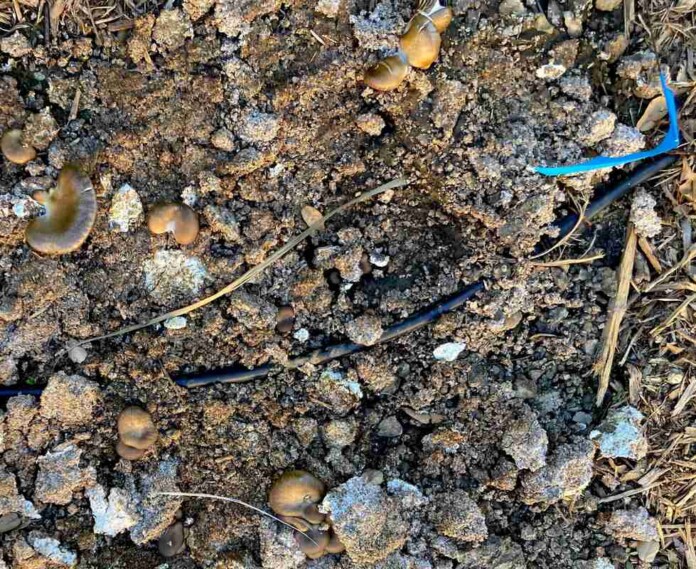
Mushrooms Help Turn Toxic Brownfields into Blooming Meadows

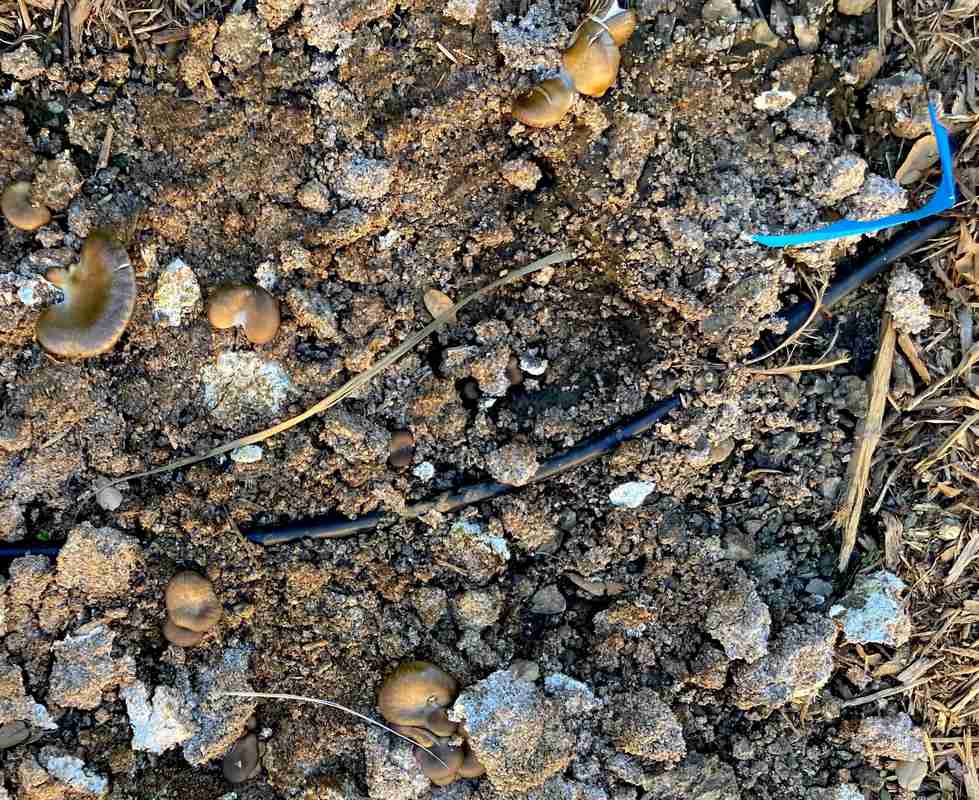
Mushrooms growing at a brownfield site in Los Angeles - credit Danielle Stevenson
Mushrooms growing at a brownfield site in Los Angeles – credit Danielle Stevenson

An environmental toxicologist in California is cleaning up areas contaminated with heavy metals or other pollutants using fungi and native plants in a win-win for nature.

Where once toxic soils in industrial lots sat bare or weed-ridden, there are now flowering meadows of plants and mushrooms, frequented by birds and pollinators: and it’s thanks to Danielle Stevenson.

Founder of DIY Fungi, the 37-year-old ecologist from UC Riverside recently spoke with Yale Press about her ongoing work restoring ‘brownfields,’ a term that describes a contaminated environment, abandoned by industrial, extraction, or transportation operations.

A brownfield could be an old railway yard or the grounds of an abandoned oil refinery, but the uniting factor is the presence of a toxic containment, whether that’s a petrochemical, heavy metal, or something else.

Noting that she had read studies about mushrooms growing around the Chernobyl nuclear plant, she came to understand further, through her work, that fungi are an extraordinarily resilient species of life that consume carbon, and even though petroleum products are toxic to plants, to mushrooms they are essentially a kind of carbon.

In fact, mushrooms break down several categories of toxic waste with the same enzymes they use to consume a dead tree. They can also eat plastic and other things made out of oil, like agrochemicals.

At the Los Angeles railyard, as part of a pilot project, Stevenson and colleagues planted a variety of native grass and flower species alongside dead wood that would incubate specific fungi species called arbuscular mycorrhizal fungi, which assists plants in extracting heavy metals like lead and arsenic from the soil.

Alongside traditional decomposer fungi, the mixture of life forms demonstrated tremendous results in this brownfield.

“In three months we saw a more than 50 percent reduction in all pollutants. By 12 months, they were pretty much not detectable,” Stevenson told Yale 360.

MORE GREAT MUSHROOM USES: Scientists Have Used Mushrooms to Make Biodegradable Computer Chip Parts

Decontaminating soil like this typically involves bringing in a bulldozer and digging it all up for transportation to a landfill. This method is not only hugely expensive, but also dangerous, as contaminated material can scatter on the winds and fall out of the backs of trucks carting it away.

By contrast, the plants that draw out the toxic metals can be harvested and incinerated down to a small pile of ash before cheap transportation to a hazardous waste facility.

The technique, which Stevenson says has some scaling issues and issues with approval from regulators, is known officially as bioremediation, and she’s even used it to safely break down bags of lubricant-soaked rags from bicycle repair shops.

ALSO CHECK OUT: Hundreds of Solar Farms Built Atop Closed Landfills Are Turning Brownfields into Green Fields

“People who live in a place impacted by pollution need to have a say in how their neighborhood is being cleaned up. We need to empower them with the tools to do this,” she said.

SHARE This Woman’s Enterprising Idea For Mean Green Clean-Ups…

First Beaver in 400 Years Born in English Countryside as Reintroduced Pair Gives Birth–and Spurs Return of Nature

Photo by Mike's Birds on Flickr, CC By SA 2.0 license
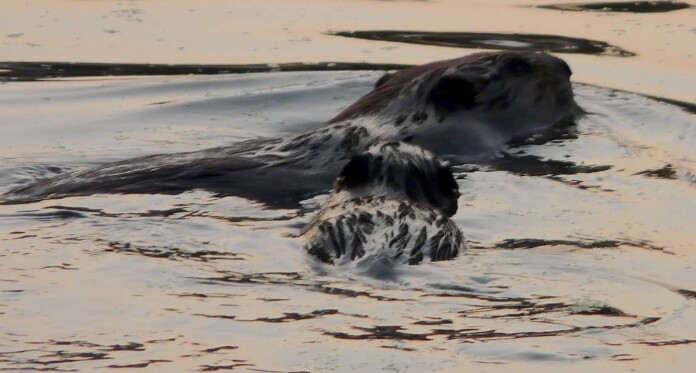
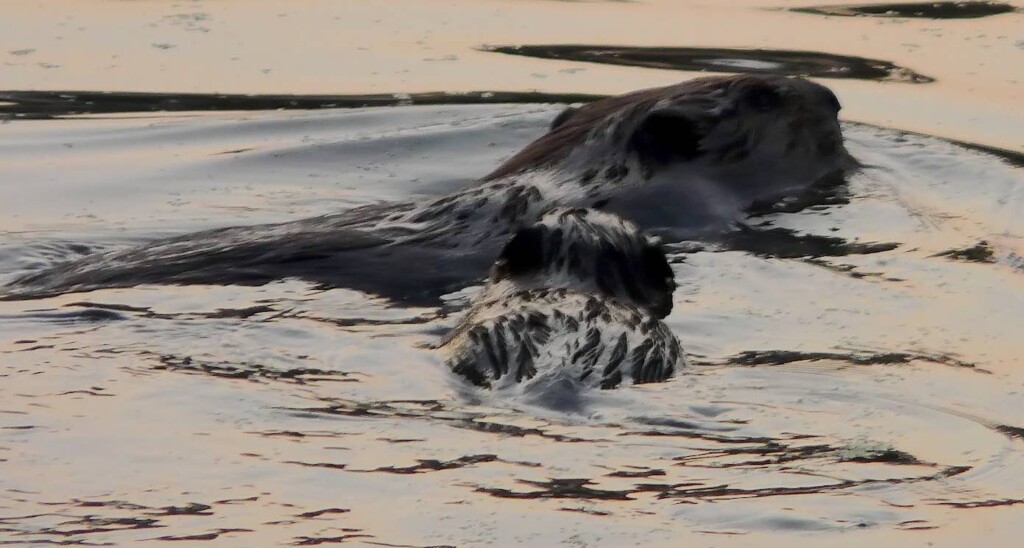
The beaver kit eating grass – National Trust UK

England is celebrating the first pair of beaver kits born in the country since they were reintroduced back into the country’s north last year.

Landscape managers in England are beside themselves with surprise over the changes brought about by a single year of beaver residency at the Wallington Estate in Northumberland—with dams, mudflats, and ponds just appearing out of nowhere across the landscape.

Released into a 25-acre habitat on the estate last year, the four beavers at Wallington are part of a series of beaver returns that took place across the UK starting in 2021 in Dorset. Last year, GNN reported that Hasel and Chompy were released into the 925-acre Ewhurst Estate in Hampshire in January 2023, and the beavers that have now reproduced established their home in Wallington in July.

“Beavers are changing the landscape all the time, you don’t really know what is coming next and that probably freaks some people out,” said Paul Hewitt, the countryside manager for the trust at Wallington. “They are basically river anarchists.”

“This time last year I don’t think I fully knew what beavers did. Now I understand a lot more and it is a massive lightbulb moment. It is such a magical animal in terms of what it does.”

It’s believed that the only animal which alters the natural environment to the same extent as humans is the beaver. Their constant felling of trees to construct dams causes creeks to build up into pools that spill out during rainfall across the land, cutting numerous other small channels into the soil that distribute water in multiple directions.

Hewitt says that in Wallington this has translated to a frantic return of glorious wildlife like kingfishers, herons, and bats.

Photo by Mike’s Birds on Flickr, CC By SA 2.0 license

MORE BEAVER REINTRODUCTIONS: First Baby Beaver in 160 Years Seen in S.F. Bay Area Exciting Scientists with Possibility of Recovery

Recently the mature pair of beavers mated and produced a kit, though its sex is not yet known because beavers don’t have external genitalia.

These beaver reintroductions have led to a raft of beaver sightings around the country. Those at the National Trust working to rewild the beaver back into Great Britain hope the recovery of the landscape will convince authorities to permit further reintroductions to bigger areas.

WILD BEASTS DOING GOOD:  After Mojave Fires, Camels Help Restore Iconic Joshua Tree Groves in the Cherished California Desert

SHARE This Great News For England’s Rivers With Your Friends…

Families in Tiny Texas Town Have Adopted 77 Hard-to-Adopt Kids Inspired By Their Baptist Church Leaders

supplied by W.C. Martin

On the 4th of July, over 2,000 theaters across America ran the film adaptation of the incredible true story from a small town in Texas that adopted 77 of the most at-risk children from the regional foster system.

Sound of Hope: The Story of Possum Trot, recounts how the voice of God led a pastor and his wife to adopt two children, and then to convince the congregation in the town church to follow their lead.

It wasn’t a large community, but nevertheless, the 77 children found families within the 23 households of Possum Trot, Texas.

Oprah, the Today Show, and Good Morning America all jumped on the story, but it was years later when Hollywood director Josh Weigel and his producer wife Rebekah approached Bishop W.C. Martin and his wife Donna Martin, whose faith and determination led to the most mistreated children finding loving homes, did the story make it to the silver screen.

“When the church actually does what we’re called to do, it’s beautiful,” Mrs. Weigel said in a behind-the-scenes promotional video released by Angel Studios. Mrs. Weigel brought the whole production team down to Possum Trot to meet and interview the families and children at the center of the drama before initiating a screenplay rewrite to better share the community’s story.

The foster system in America is, as Mr. Weigel explains, ground zero for most of the childhood trauma in America. It is ground zero for child trafficking and a primary driver of both the prison population and homelessness.

“And think about how many children [are] in the system, I believe if every church were focused on two or three children, they would fix the system just like that,” said Bishop Martin.

FOSTER HOME HEROES: 88-year-old ‘Proud’ Foster Mom Retires After Raising Over 40 Children

Opening on July 4th, the film scored various positive reviews including a 7/10 rating on Rotton Tomatoes, an A+ grade from CinemaScore, and 94% from PostTrack. It grossed $9.5 million on a budget of $8.1 million over the first two weeks of its release.

GOD’S WORD: Drive-Thru Food Pantry Serves Thousands in a California Food Desert with Nutritious Groceries

As far as W. C. and Donna are concerned, the film was incredible, with the latter telling the Christian Science Monitor that it seemed like “deja vu,” and “so well presented as our life.”

YOU MAY ALSO LIKE:  Couple Who Won 100,000 in Lottery Plans to Spend Money on Fostering Children

“To be honest with you, I’m glad I did,” the Bishop says when asked what it took for him to decide, even with little money and two children already, to adopt two more. “God knows what we don’t know. And sometimes we just have to be obedient.

WATCH the video and trailer below… 

SHARE This Inspiring Story On Social Media AND GO WATCH IT BEFORE IT LEAVES CINEMA…

‘PET Pirates’ Remove Seven Tons of Trash from Hungarian Lake in Plastic Picking Competition

courtesy of Plastic Cup Society

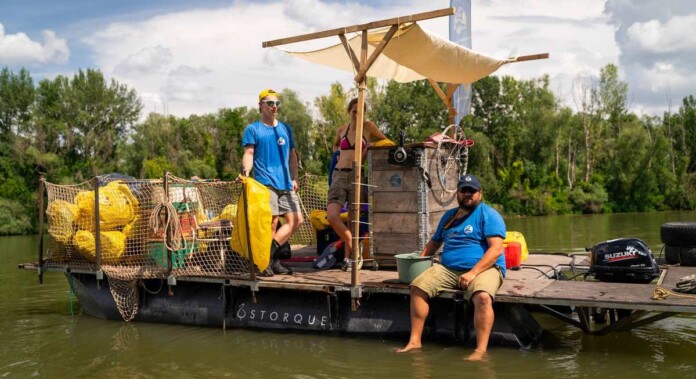
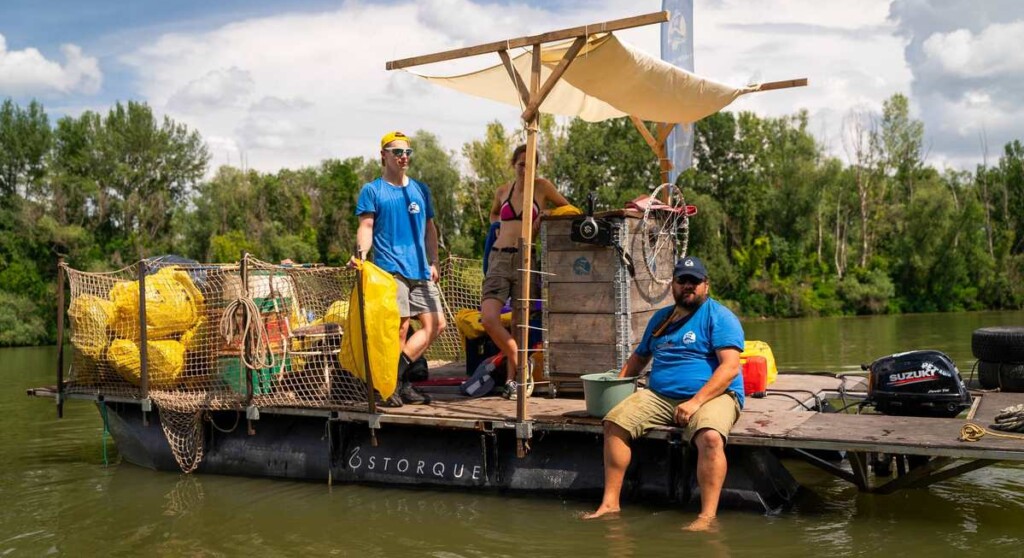
It looked to be a grand day out on Lake Tisza in southern Hungary, where another edition of the PET Cup was held to great success.

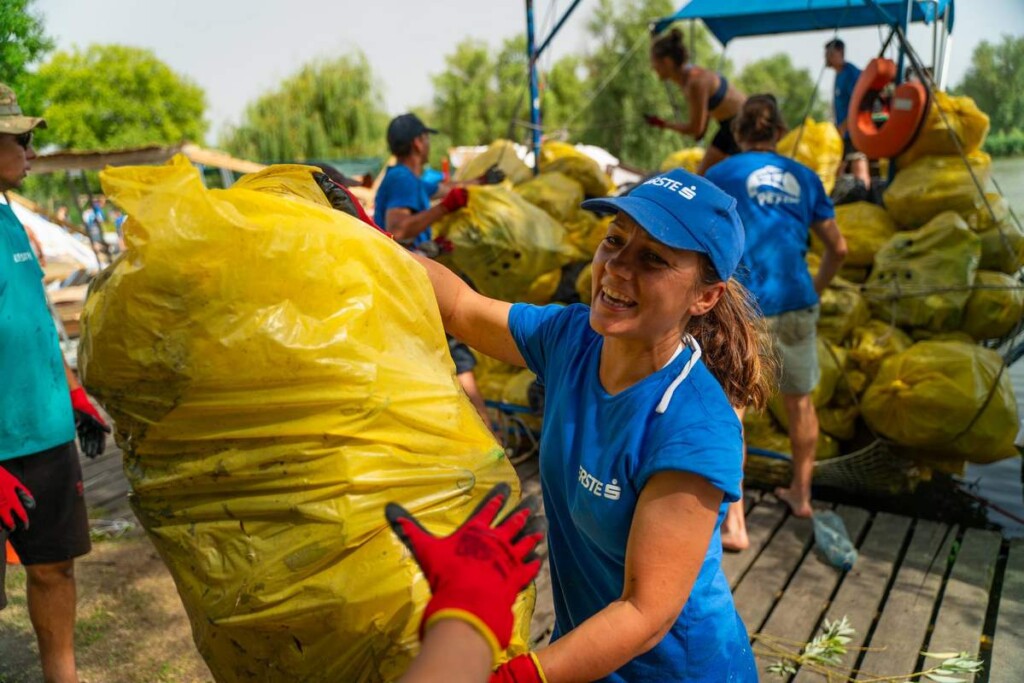
The competition, sponsored by local and large businesses alike, saw hearty ‘PET Pirates’ plundering the high seas of the country’s artificial lake in search of treasure: plastic waste.

Short for polyethylene terephthalate, or the most commonly used plastic for bottles and containers, the PET Cup started in 2013 as a way to inspire residents to keep the lake clean, and has since been held at other waterways as well.

A brief respite on the coffee barge – courtesy of Plastic Cup Society
courtesy of Plastic Cup Society

The pirate captains crewed makeshift barges in search of trash, which when seen in a flotilla seems reminiscent of the Mad Max and Road Warrior films, only on water rather than a highway.

This year’s edition saw over 20,000 pounds of trash pulled from the lake by the various teams, with the winner coming from the MBH Bank team.

WATCH the story below from Euronews… 

SHARE This Awesome Recreational Clean-up With Your Friends… 

“If it were not for hopes, the heart would break.” – Thomas Fuller

Quote of the Day: “If it were not for hopes, the heart would break.” – Thomas Fuller

Photo by: Pascal van de Vendel

With a new inspirational quote every day, atop the perfect photo—collected and archived on our Quote of the Day page—why not bookmark GNN.org for a daily uplift?

Adrift for Days in an Inflatable Tube, Woman Rescued Off Coast of Japan by Passing Sailors

Released by Yokosuka Coast Guard

An amazing survival story comes from the southeast coastal waters of Japan where a Chinese woman survived days adrift at sea clinging to an inflatable intertube.

Reported missing last Monday by her friends, the unnamed Chinese national was swimming with friends on a beach in the city of Shimoda, Shizuoka Prefecture.

The coast guard was alerted that she was in her 20s and holding onto an inflatable recreational intertube.

The woman wasn’t located in Shizuoka, and it wasn’t until 8:00 am on Wednesday, 36 hours after going missing, that a passing cargo ship encountered her in the waters of the Boso Peninsula in Chiba Prefecture.

She had floated over 50 miles (80 kilometers) during that time, but mercifully the waters hovered around 24.1 degrees Celsius, or about 75 degrees Fahrenheit.

Being extremely large, the cargo ship hailed a passing tanker to help. Two of its crew members, believing the drifting speck of humanity in the vast empty ocean was a member of the cargo ship’s crew, jumped in to rescue her, while those remaining onboard called out for her not to give up.

A map of Japan with the distance the woman had floated highlighted in red from left to right – a distance of 80 kilometers. credit Lincun CC BY 3.0.

Once in the water, the crew secured a rope around her waist as she was too exhausted to climb the ladder. After 36 hours and several tense minutes, the young woman and her sodden, wobbly knees were on deck.

SALTWATER SAVIORS: Stranded Women and Dogs Rescued After 5 Months Drifting on Pacific Ocean

Video released by the Japanese coast guard who eventually air-lifted the woman to a hospital, shows her standing on the tanker’s main deck wrapped in a blanket. Apart from exhaustion, the woman was unharmed and walked out of the hospital of her own initiative.

SIMILAR CLOSE CALLS: Teen Swimmers Drifting in the Ocean Prayed for Help – And Suddenly are Rescued by Boat Named ‘Amen’

Hidetoshi Saito, a senior member of the Society of Water Rescue and Survival Research, said in a televised interview that the woman’s survival was like “a miracle.”

SHARE This Woman’s Terrifying Ordeal And Fortunate Rescue With Your Friends…

Nurse Credited for Saving Man’s Life with CPR and Defibrillator After Heart Attack in Charlotte Airport

Charlotte Douglas International Airport - credit Nicola, CC 2.0.
Charlotte Douglas International Airport – credit Nicola, CC 2.0.

Like so many victims, the first sign that Ken Jeffries was vulnerable to heart disease was a heart attack—suffered when the 57-year-old was at the airport waiting for a flight.

Collapsing to the floor of the Charlotte Douglas Int. Airport, he has his lucky stars to thank for his flight being bound for Knoxville—the same place that Claire Cerbie, a registered nurse from a heart and vascular hospital center in Charlotte, North Carolina, was going.

Cerbie told news media that it was the way he was breathing and snoring that alerted her to the heart attack.

With a makeshift orderly staff of airport bystanders, Cerbie administered CPR while someone went to get a defibrillator.

“We put the pads on him,” Cerbie told WBTV News. “It indicated a shockable rhythm, and it shocked him in between while we were doing compressions.”

After he recovered his own pulse, Jefferies was rushed to the Atrium Health Carolinas Medical Center where Dr. William Downey, a cardiologist at the Sanger Heart & Vascular Institute, where Cerbie actually works, performed life-saving surgery.

Neither nurse nor doctor believed Jeffries would have survived if not for the CPR and shocks administered by Cerbie and the good Samaritans who helped.

“It’s a miracle that I was at that place at that time when it happened and the people around me are there,” Jeffries said on TV when interviewed alongside Cerbie. “A ‘thank you’ is not enough, Claire. Thank you for what you did I am so appreciative and indebted to you.”

NURSES SAVING PEOPLE: A Nurse and Her Boyfriend Saved a Man’s Life on Flight Home from Bahamas Vacation

“I’m very glad that I was there that day to help you out. I’d obviously do it again in a heartbeat,” Cerbie responded. “I’m so happy to see that you’re doing so well.”

Cerbie was upgraded to first class on her American Airlines flight as a reward for her heroism.

MORE LIFESAVERS: ‘Hero’ Dogs From Rescue Operation in Turkey Get First Class Seats on Airliners Flying Them Home

Jefferies said he hadn’t observed any symptoms before his heart attack—which is actually common. Symptoms are few and often general—like shortness of breath or soreness in the neck and jaw—the kind of thing one is far more likely to chalk up to a poor night of sleep.

WATCH the story below from WBTV…

SHARE This Super Nurse Saving Lives In Her Off Hours—GO NURSES… 

Canada Post Worker Saves the Day After Child Forgets Stamp on Postcard to Grandma

The new Canada Post mailbins - credit in pastel CC BY 2.0.
The new Canada Post mailbins – credit in pastel CC BY 2.0.

A set of grandparents in rural Nova Scotia are likely looking for where to frame a handwritten letter from their granddaughter, who wrote them a postcard from summer camp.

But the only reason they got the opportunity in the first place was because of the “decency” of a Canada Post worker, who went above and beyond her job requirements to ensure the letter got where it needed to go.

Daya Modayur, a 12-year-old from Nova Scotia attending summer camp at MacPhee Centre for Creative Learning in Dartmouth, thought she would return the favor and reply to some letters she received from her grandparents while they were on a road trip.

But the rural address was “so complicated” and in her focus to get it right, the all-important postage stamp slipped her mind before she slipped it into the mailbin.

Realizing her mistake, Modayur asked her camp counselor what to do, and the woman replied she would make a note and tape it onto the mailbin asking the mail carrier for help.

“Dear postal worker, at our summer camp we made postcards and one person sent one to their grandma without a stamp,” read the letter taped above the mailbox’s lever. “If you find it, can you please return it to the MacPhee Centre or use the stamp on the back of this page? We would really appreciate it.”

A day later, a reply appeared at the bottom of the note.

ALSO CHECK OUT: Social Media Goes Crazy for Customer Who Went Above and Beyond to Mail $20 Tip

“Found it and stamped it! Have a great day.”

Christine Fong, the carrier for Canada Post who found the letter, told Global News that her act of kindness and consideration was just “human decency.”

MORE MAILMEN SAVING THE DAY: Massachusetts Mailman Scoops Toddler Away from Traffic After Day Care Escape: ‘Right place at the right time’

“When I read that a child had sent a postcard from a day camp to their grandmother with no postage, obviously, the first thing I thought when I opened it was to find this missing piece of letter mail,” she explained.

“Just to see that there was a simple request, it’s human decency just to follow through and do what you got to do.”

WATCH the story below from Global News… 

SHARE This Wholesome Canada Post Appreciation Post With Your Canadian Friends…

Ancient Temple and Theater 3,500 years Older Than Machu Picchu Discovered in Peru

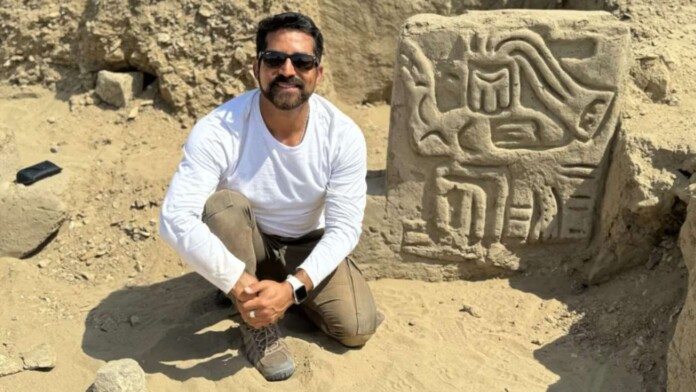
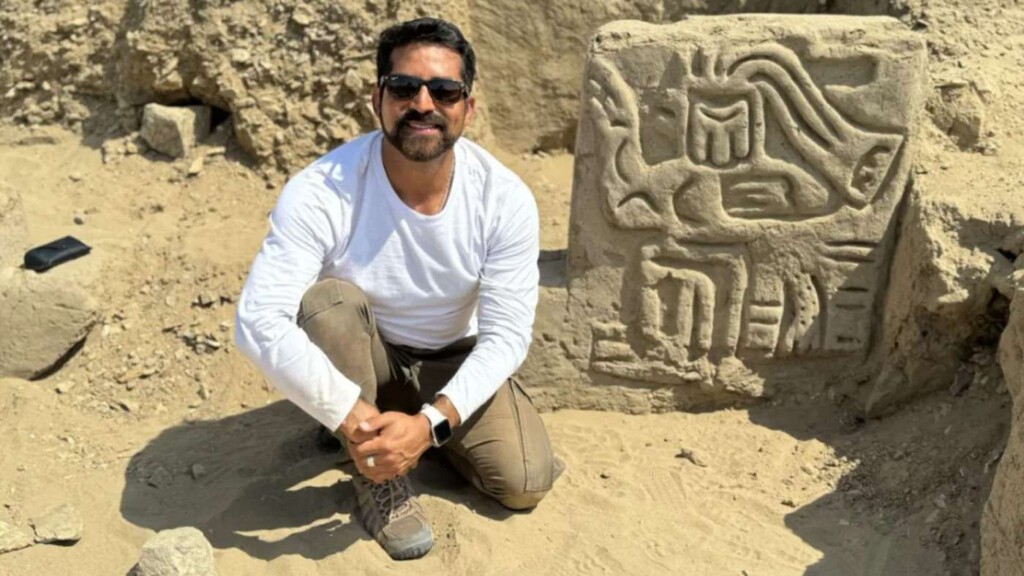
Field Museum scientist Luis Muro Ynoñán with the carving of a mythological bird creature in La Otra Banda, Cerro Las Animas. Ucupe Cultural Landscape Archaeological Project

An ancient temple and theater has been identified in Peru as dating back 4,000 years, placing it among the oldest man-made structures in Peru.

Located in the northern Peruvian town of Zaña, archaeologists had been alerted by authorities of looting taking place at a site called La Otra Banda / Cerro Las Animas, and a team from the Field University of Chicago accompanied by institutions in Peru got to work last June.

A mere 6 feet below the surface, the excavators found walls of mud and clay. Extending the survey plot to 33 feet in length, they uncovered what seemed to be a theater—with a backstage area and staircases that led up to a raised platform.

“It was so surprising that these very ancient structures were so close to the modern surface,” Luis Muro Ynoñán, a research scientist at the Field Museum who led the team, said in a release from the college. “This could have been used to perform ritual performances in front of a selected audience.”

Alongside one of the theater’s staircases were carved stone slabs decorated with intricate bird designs that are typical of carvings from a time dating back as far as 2,000 BCE known as the ‘Initial Period’ and that continued until 900 BCE.

If the temple were built during this period, it would long predate the Inca, but even the makers of the mysterious geoglyphs known as the Nazca Lines, as well as another civilization called Moche.

ALSO FROM THIS PART OF THE WORLD: Circular Stone Plaza Moves Up Start of Stone Age Construction in the Andes on Par with Stonehenge

Archaeologists also found several large murals painted on the walls. Muro Ynoñán collected samples from paint pigments, which should provide a very accurate date for the finishing touches on the temple via radiocarbon dating.

Among the major takeaways from the discovery is that this theater perhaps represents the starting pistol of organized religion on a societal scale.

MORE SUCH DISCOVERIES: Extremely Elaborate 2,200-Year-old Tomb Discovered That May Have Belonged to a King–‘Most Complex Structure of its Kind’

It dovetails with the more recent belief of the origin of civilization around the world following the discovery of Gobeklitepe in Turkey—that instead of agriculture being the organizing factor that brought humans out of the hunter-gatherer stage of society, it was religion and ceremony.

SHARE This Crucial Discovery In Northern Peru With Your Friends… 

“Time is more than money. Time is life.” – Thich Nhat Hanh

Quote of the Day: “Time is more than money. Time is life.” – Thich Nhat Hanh

Photo by: Kevin Ku (cropped)

With a new inspirational quote every day, atop the perfect photo—collected and archived on our Quote of the Day page—why not bookmark GNN.org for a daily uplift?

Grandma Dances All Night at Granddaughter’s Wedding After Being Told She Wouldn’t Live to See it (Watch)

Doreen Cooke enjoying her granddaughter's wedding in Marbella, Spain - SWNS
Doreen Cooke enjoying her granddaughter’s wedding in Marbella, Spain – SWNS

A proud grandmother danced into the night at her granddaughter’s wedding, despite doctors predicting she would never live to see the day.

Doreen Cooke has been dealing with a heart condition called aortic stenosis for several years, which blocks blood flow in the aortic valve.

She was told late last year that no treatment or operation would help, and her family were advised to prepare for the worst.

But the 93-year-old defied the odds and happily joined the week-long festivities surrounding the wedding in Marbella, Spain.

“I’ve always loved Marbella.I really enjoyed myself.”

“It was so nice to see everyone together.”

The bride, her granddaughter Rhea Cross, described her as “the life and soul of the party.”

The 27-year-old from East Yorkshire said, “It was so wonderful having her there for the entire trip.”

“Especially knowing the doctors didn’t think she’d make it. It feels so special for her to have seen it. She was living her best life all night.”

SURPRISE, DAUGHTER! My Dad Sent Me A Card on My Wedding Day–20 Years After His Death

Rhea said the wedding guests stayed in Spain from June 25 to July 3.

“We took every day as an opportunity to have fun.”

Doreen Cooke enjoying Spain – SWNS

Despite Doreen’s inability to walk long distances, she was dancing the night away. The video below shows her dancing through a crowd of family and friends and singing in karaoke with a microphone.

One memorable photo even shows Doreen the next day snoozing by the beach after one too many drinks.

WEDDING CRASHER CANINE: Stray Dog Crashes Couple’s Wedding – and Becomes Part of Their New Family

Upon her return to the UK, Doreen has been mostly resting at home in Hull.

“It was fantastic. I loved it,” she said.

“My favorite part was watching my granddaughter get married, after being worried I wasn’t going to make it.”

CHEER FOR THE SENIOR BY Sharing This on Social Media…

Bullied Man With Facial Disease Quits Job to Speak to Schools And Help Kids With Differences

Amit Ghose – SWNS
Amit Ghose – SWNS

A man living with a facial disease has quit his job to focus on helping children who are bullied for being different.

Amit Ghose was born with neurofibromatosis type 1, a condition that causes tumors to grow along nerves.

But the 34-year-old took a “leap of faith” recently when he quit his role as a regional manager at a law firm, in favor of pursuing a career as a motivational speaker.

At the age of 11, Amit had his left eye surgically removed in a grueling 18-hour procedure which left him wearing an eye patch for six months, while his prosthetic was developed—all of which invited cruel abuse and shunning from his classmates.

“With Halloween coming up, a kid said to me: ‘You don’t need a Halloween mask, you’ve got one for life,’” he recalls. “That comment absolutely broke me, I still think about it every Halloween.”

Amit, who is from Birmingham, England, said he now channels this experience when he is talking at schools.

“I tell school children to be mindful of what they say to others, as what might be banter for them was a lifelong scar to me.”

While Amit acknowledges that many schools cannot afford to pay his half-day fee of $300 for talks (£250), he has set up a GoFundMe page which has, so far, raised more than $3,900 (£3,000) to provide them for free.

Amit Ghose giving a talk at a school – SWNS

Fortunately, Amit was encouraged to play sports in his youth, and took up cricket. He made it onto his school’s team at Selly Oak Academy—and now advises students to do the same.

“Nobody wanted to talk to me or sit next to me (until) I went from the boy with a funny face to the boy who plays cricket.”

LITTLE ROLE MODEL: 7-Year-old Boy Who Was Bullied Opens a Huge Food Pantry, Making His Life All About Positive Energy

Amit was encouraged to give his first speech when his manager at work asked if he would speak at his daughter’s school.

After his first talk, Amit saw an article written by the mother of one of the boys who heard his talk. He had undergone multiple open heart surgeries and a heart transplant.

After hearing Amit’s talk, the boy, Vinnie, came home from school feeling inspired, with plans to take up football and become a motivational speaker some day.

Amit says, “It moved me to the point I quit my job and decided to do this full time.”

TEEN BULLY-BUSTERSAfter Bullied Boy Has Terrible First Day of School, Upperclassmen Take Him Under Their Wing

His father had always encouraged Amit to live a normal life, and he stood up for his son when others voiced concern about the safety of playing cricket.

“He would say: ‘If he wants to play, he’ll play.”

Other areas of Amit’s life would also become a success. In 2021, he met a woman originally from India, and the pair fell in love and got married.

He is also a global advisor to Billion Strong and an ambassador for Face Equality International.

ADORABLE: 70 Million People Cheer on Young Texan Boy Who Rang A Doorbell to Ask for Help Finding Friends

Who knows how many other students’ lives will be changed forever, inspired by his resume of overcoming adversity and reaching for success.

INSPIRE STRANGERS By Sharing The Idea on Social Media…

Dogs Trained to Sniff Out Post-Traumatic Stress – by Smelling Patients’ Breath – With 90% Accuracy

Laura Kiiroja with support dog for PTSD released by Dalhousie University - SWNS
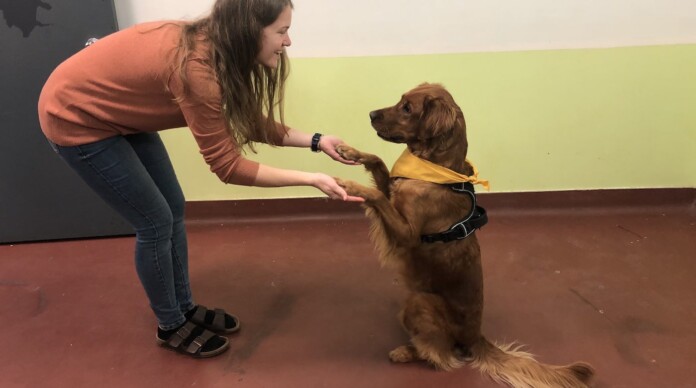
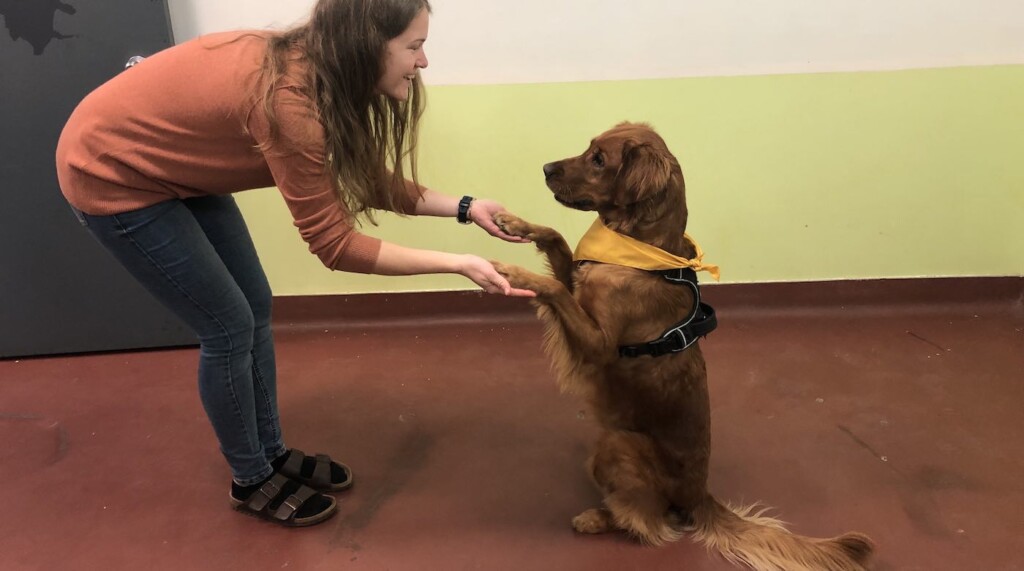
Laura Kiiroja with Ivy, a support dog-in-training for PTSD – Dalhousie University / SWNS

Two dogs have been trained to sniff out post-traumatic stress by smelling survivors’ breath—with an accuracy success rate following initial training of 90 percent.

Scientists say the breakthrough will make post-traumatic stress disorder support dogs more effective.

PTSD is a mental health condition that’s triggered by a terrifying event such as a car crash or terror attack, with symptoms that include flashbacks, nightmares, and severe anxiety, as well as uncontrollable thoughts about the event.

Dogs’ sensitive noses already can detect the early warning signs of medical situations, such as an impending seizure. Now, researchers have evidence that assistance dogs might be able to sniff out an oncoming PTSD flashback, before it happens.

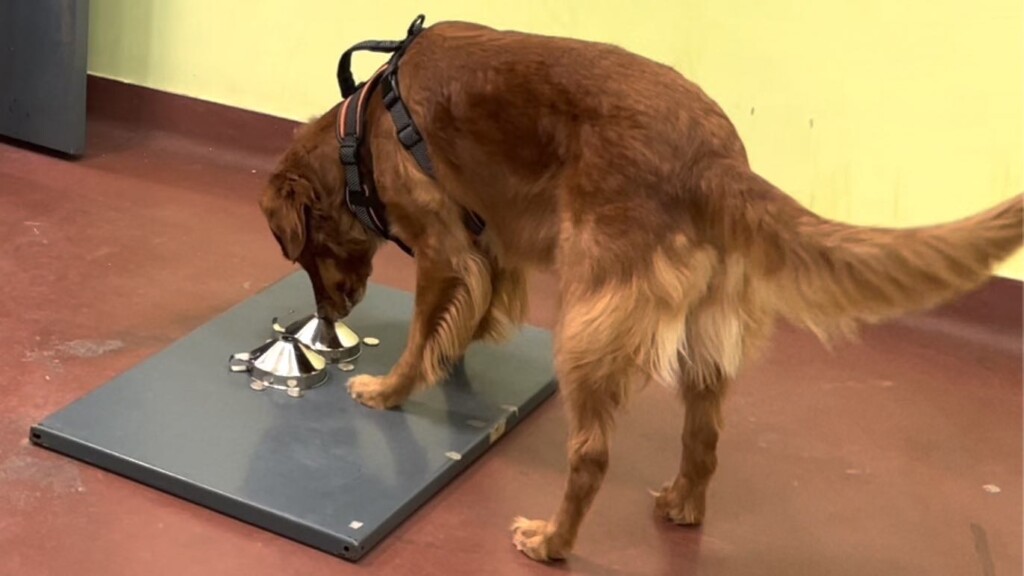
In the pilot study, the team taught two dogs to decipher the breath of people who have been reminded of traumas, by recognizing the scent of trauma reactions on human breath.

A Golden Retriever named Ivy and a German Shepherd-Belgian Malinois mix named Callie, were the only two of 25 dogs “skilled and motivated enough” to complete the rigorous training process.

Study first author Laura Kiiroja, of Dalhousie University, Canada, said: “Dogs are currently trained to respond to behavioral and physical cues. Our study showed that some dogs can also detect these episodes via breath.”

She said assistance dogs currently help patients by alerting to and interrupting episodes when their companions are struggling with their symptoms. Responding to stress markers on their breath, these four-legged medics can potentially interrupt episodes at an earlier stage, making their interventions more effective.

All humans have a ‘scent profile’ of volatile organic compounds (VOCs)—molecules emitted by the body in secretions such as sweat—influenced by our genetics, age, activities, and other variables.

There was some evidence that dogs may be capable of detecting VOCs linked to human stress, but until now, no studies have investigated whether dogs could learn to detect VOCs associated with PTSD symptoms.

By Laura Kiiroja / Dalhousie University via SWNS

ADORABLEAfter Fatal Disease Arrives, Zoo Calls in the Only Team of Turtle-sniffing Dogs in the World to Help Out

Dr. Sherry Stewart’s clinical psychology lab at Dalhousie University collaborated with Dr Simon Gadbois’ canine olfaction lab, bringing together two distinct sets of expertise.

The scientists recruited 26 people as scent donors who were also taking part in a study about the reactions of people with trauma when reminded of that trauma; over half of the patients met the diagnostic requirements for PTSD.

To donate scents, the participants attended sessions where they were reminded of their trauma experiences while wearing different face masks. One face mask provided a calm breath sample that acted as the control, while another, which was worn as the participants recalled their traumatic experience, provided a target breath sample.

The participants also completed a questionnaire about their stress levels and their emotions.

Ms. Kiiroja, currently working on her PhD in biomedical scent-detection dogs, said: “Both Ivy and Callie found this work inherently motivating.

“Their limitless appetite for delicious treats was also an asset. In fact, it was much harder to convince them to take a break than to commence work.

“Callie in particular made sure there was no dilly-dallying.”

THE DOG HELPED MY HOMEWORK: Dogs Placed in Elementary Schools Making a Big Difference in Academics and Mental Health for Michigan Students

Ivy and Callie – by Laura Kiiroja / Dalhousie University

They achieved 90 percent accuracy in discriminating between a stressed and a non-stressed sample from pieces of the face masks, according to the study published by the journal Frontiers in Allergy.

The dogs were then presented with a series of samples, one at a time, to see if they could still accurately detect the stress VOCs. In the second experiment, Ivy achieved 74 percent accuracy while Callie achieved 81 percent.

Comparing Callie and Ivy’s successful identifications with the human participants’ self-reported emotions revealed that Ivy’s performance correlated with anxiety, whereas Callie’s correlated with shame.

HERO JACK RUSSELL: Tiny Bomb-Sniffing Jack Russell is a National Hero, Sporting a Presidential Medal

“Although both dogs performed at very high accuracy, they seemed to have a slightly different idea of what they considered a ‘stressed’ breath sample,” said Kiiroja.

“We speculated that Ivy was attuned to sympathetic-adreno-medullar axis hormones—like adrenaline—and Callie was oriented to the hypothalamo-pituitary-adrenal axis hormones, like cortisol.

“This is important knowledge for training service dogs, as alerting to early-onset PTSD symptoms requires sensitivity to sympathetic-adreno-medullar axis hormones.”

CHECK OUT: Nation’s Largest No-Kill Rescue Shelter Opens in Alabama to Save 5,000 Dogs a Year

Following the proof-of-concept study that included 40 sample sets, the team will attempt to validate the results with larger sample sizes.

“In addition to enrolling more participants, validation studies should collect samples from a higher number of stressful events to confirm dogs’ ability to reliably detect stress VOCs in the breath of one human across different contexts.”

SEND THE SWEET STRESS RELIEF To Friends By Sharing on Social Media…

People-Person Pet Mouse was Lost at Renaissance Fair But Showed Up for the After-Party

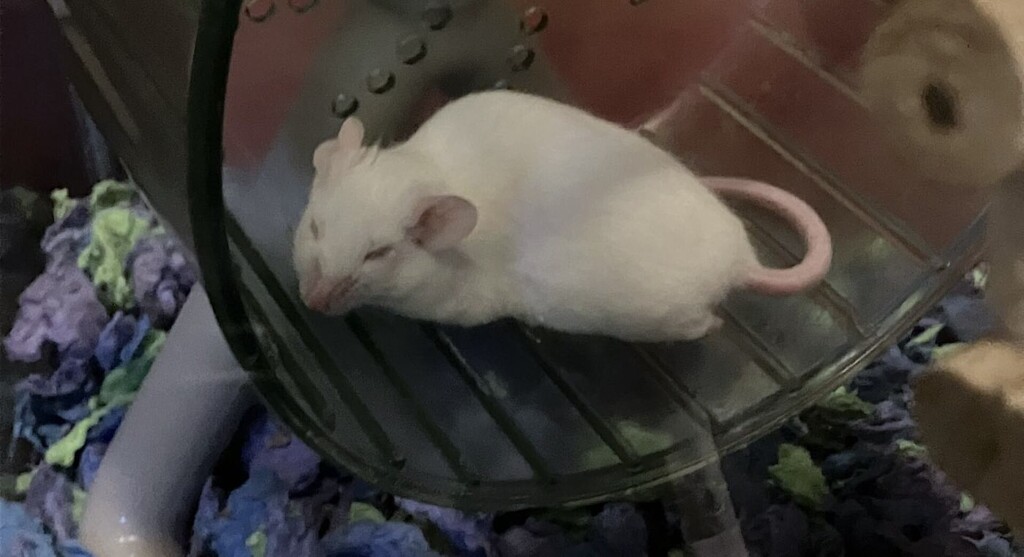
Cotton Ball after she was found outdoors after a 10 hour adventure and late night party – Sam Stewart

I have a pet mouse that I hand raised since she was 10 days old. She was originally supposed to be snake food, but the snake wouldn’t eat her so I decided to raise her instead.

I never believed she would actually pull through— she was so small. But she did survive, and became the best mouse ever.

She is about 7-months-old now and completely imprinted on me. Her name is Cotton Ball and she loves people, being held, and going on adventures.

I take her out to play on my bed every night, and she never leaves. Sometimes she gets lost in my laundry, but she always comes back, no matter what.

This past Sunday I took her with me to a Renaissance fair, and while I was walking she completely disappeared. She has never jumped off or tried to leave me before, and I was absolutely heartbroken. I frantically searched for her to no avail.

She was outdoors, in a busy multi-acre fairground surrounded by grassland – not to mention hawks and snakes everywhere. It was 100 degrees outside, and I was sure she was going to die. She’s albino, so she would stick out like a sore thumb to predators and has no idea how to survive in the wild.

I told a few workers that I had lost her and gave them my information on the 0.001% chance that someone might find her. They posted about her on their Facebook group, but the chances were close to zero that she could actually be found. I went home completely distraught, knowing I had just killed this mouse by bringing her to the fair.

I know it’s just a mouse, but this one was special. I’ve never met a mouse who isn’t afraid of anything and absolutely loves people – she was really the most special mouse in the world.

The next day I got a text from a friend who worked at the fair—they actually found my mouse.

I was told that she was found at 1:00 am at a castle party that the workers were having to celebrate the last day of the fair. Apparently she was getting a lot of love from the workers who found her and she had a great time at the party!

LOOK AT THIS CUTENESSYou Won’t Believe Your Eyes Watching This Mouse Tidy up a Man’s Garden Shed Workbench

I drove an hour and a half to get her from the woman who took her home. I was sure I was never going to see this mouse again, and yet here she was. A little dirty, but otherwise completely unharmed – not even a scratch.

The woman who I picked her up from told me she had spotted Cotton Ball about an hour before she was found at the castle, and she saw her being chased under one of the sheds by a king snake. She felt bad, assuming Cotton Ball had become a snack. But, the lucky mouse emerged unscathed—ready for a party.

I can’t imagine any mouse choosing to go to an indoor party with tons of people—instead of hiding in the grasslands, but this mouse has always been different. She’s a people-person, so it wasn’t a surprise that she’d found some strangers to befriend.

NO MOUSETRAPS HERE: Man Builds Adorable Tiny Log Cabins in His Backyard to Keep Mouse Families Safe From Cats

I still can’t believe I have her back. So many people came together to help me find my beloved friend, from the woman that took her home to the people who found her at the party to my friend who worked there putting me in contact with them. It makes me believe that good people truly exist, and miracles can happen.

Cotton Ball is safe and sound, running on her wheel like nothing ever happened. And I’m still trying to wrap my head around just how incredible she is—and how she proves there is always reason to have hope.

(Written and submitted by Sam Stewart)

“Great thoughts come from the heart.” – Luc de Clapiers

Quote of the Day: “Great thoughts come from the heart.” – Luc de Clapiers

Photo by: Aleksandr Popov

With a new inspirational quote every day, atop the perfect photo—collected and archived on our Quote of the Day page—why not bookmark GNN.org for a daily uplift?

Scientists Have Spotted a ‘Bejeweled Ring’ in Space – Revealing a Sparkling Quasar

James Webb Space Telescope image shows gravitational lensing of quasar - ESA NASA SWNS
James Webb Space Telescope image shows gravitational lensing of a quasar – ESA NASA SWNS

An intriguing new image captured by the James Webb Space Telescope shows a quasar sparkling in the cosmos.

Quasars are the blazing centers of active galaxies, and are powered by supermassive black holes feeding on titanic quantities of gas.

Astronomers were able to observe the quasar, known as RX J1131-1231, thanks to gravitational lensing.

One of the consequences of gravitational lensing is that it can magnify distant astronomical objects, letting astronomers study objects that would otherwise be too faint or far away.

RX J1131-1231, located roughly six billion light-years from Earth in the constellation Crater, is considered one of the best lensed quasars discovered to date, showing the foreground galaxy smearing the image of the background quasar into a bright arc, created by four images of the object.

The composite was named the Webb Telescope’s ‘Picture of the Month’, and was described by the European Space Agency (ESA) as a “bejeweled ring”.

NASA shared the image with the heading, “Diamonds of the season,” explaining that these glittering “gems” are actually four images of the same thing — an extremely bright quasar.


According to a statement from ESA, gravitational lensing, first predicted by Einstein, offers a rare opportunity to study regions close to the black hole in distant quasars, by acting as a natural telescope and magnifying the light from these sources.

“All matter in the Universe warps the space around itself, with larger masses producing a stronger effect. Around very massive objects, such as galaxies, light that passes close by follows this warped space, appearing to bend away from its original path by a clearly visible amount.”

This image was captured with Webb’s MIRI (Mid-Infrared Instrument) as part of an observation program to study dark matter, an invisible form of matter that accounts for most of the Universe’s mass.

LOOK SKYWARD IN LATE JULY! Two Meteor Showers Peak in the Same Region of the Sky on the Same Night This Month

Webb’s observations of quasars are allowing astronomers to probe the nature of dark matter at smaller scales than ever before.

SHARE THIS GEM With Astronomy Fans on Social Media…

Woman Who Nearly Died After Bacteria Ate Her Nose Says Baking Soda Saved Her Life

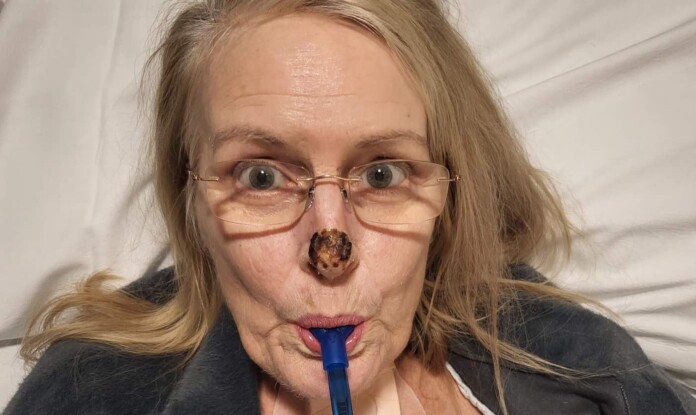
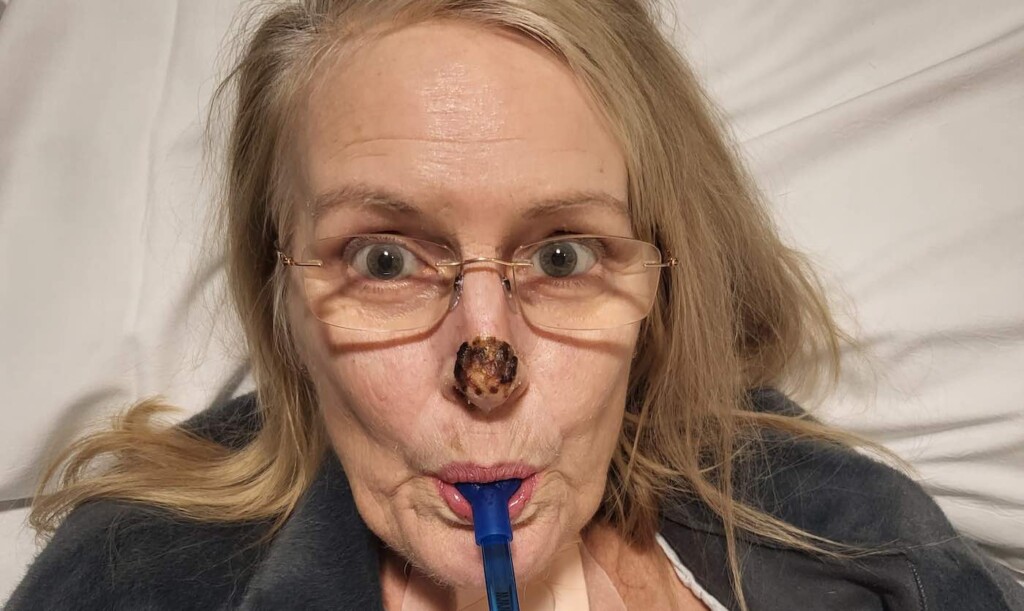
Beatrice Johnson in UK hospital – SWNS

A woman who nearly died after a deadly bacteria ate away the tip of her nose credits baking soda with saving her life.

Beatrice Johnson came close to death after falling ill with sickness and an upset stomach six months ago.

Doctors at Tunbridge Wells Hospital in Kent, England, discovered the 60-year-old was in septic shock—and advised her loved ones to say their goodbyes.

But during a final ditch attempt to save her life, medics added sodium bicarbonate into her IV drip, as an alternative to dialysis.

The unusual treatment was a success and within days, Beatrice was “feeling miles better”.

After 36 days, she was released from the hospital and is recovering well with her sister.

“I never thought something so simple would save my life,” said Beatrice. ”I really thought I was going to die.

“I’m thankful they never gave up on my life.

“The baking soda made me rise like a cake! No one thought I’d be here today.”

WORLD-FIRST CURE: 13-year-old Successfully Undergoes World-First Treatment to Cure Rarer-Than-Rare Wild Syndrome

Beatrice’s ordeal began at home when she started to feel weak. Throughout the course of the day her condition deteriorated and she even struggled to walk up the stairs.

Realizing something was wrong, she called an ambulance and within 10 minutes was being rushed to hospital.

“When paramedics came, they couldn’t find my blood pressure. They were surprised I was still conscious.”

The scans revealed her kidneys had started to fail and that she would need to be put onto dialysis. Beatrice lost consciousness and was put on life support, and the doctors called her three children to say their final goodbyes.

SOAP TREATING CANCER: Teen Invents Soap for Treating Skin Cancer and Wins Top Honor as America’s Top Young Scientist

Despite medics’ best efforts, she continued to decline—until they introduced sodium bicarbonate, commonly known as baking soda, which is an accepted alternative to dialysis in serious cases.

Within a few days, Beatrice made a miraculous recovery and came out of the coma within a week.

She “quickly felt like a new woman” and was taken off life support.

“Within one day I was like another person.”

After coming round, doctors broke the news that the tip of her nose had been eaten by a flesh-eating bug called necrotising fasciitis, a rare bacterial infection that spreads quickly and can cause death.

CURED BY HIS WIFE: When Antibiotics Failed, She Found a Natural Enemy of Superbug Bacteria to Save Husband’s Life

Antibiotics stopped the spread and her nose is now on the mend, after being discharged from the hospital 43 days after being told she was going to die.

“I’m shocked that I’m still here.

“The recovery time was incredible and I have the doctors to thank for that.

“I never thought baking soda would save my life.”

SHARE THE POWER OF BAKING SODA With Friends and Family on Social Media…