








All News - Page 16 of 1701 - Good News Network
Home Blog Page 16

Endangered Iguanas Make a Romantic Getaway Out of Protected Caribbean Island–Populations Explode

Lesser Antillean Iguana - credit, © Andrew Snyder / Re:wild
Lesser Antillean Iguana – credit, © Andrew Snyder / Re:wild

The small and uninhabited islet of Prickly Pear East is not what you might describe as a romantic holiday destination, but for the Lesser Antillean iguana, it has proved to be just that.

Thanks to an ambitious program of cross-Caribbean matchmaking, a new population has been successfully established on the island, with numbers now rapidly increasing.

The Lesser Antillean iguana is a Critically-Endangered species which has disappeared from much of its range across the Eastern Caribbean. The regional population of these lizards is less than 20,000 adults and falling.

Amongst the greatest threats are invasive alien species, particularly the common green or striped-tailed iguana, an imposing lizard that grows up to two meters long, that breeds fast, and that outcompetes the Lesser Antillean iguana.

Researchers have also linked the alien iguanas to the spread of diseases that debilitate and kill the native reptiles. In 2016, with the invasive iguanas multiplying rapidly across the main island of Anguilla, conservationists from the Anguilla National Trust began translocating the last Lesser Antillean iguanas from the mainland—23 in total—to an alien-free islet, Prickly Pear East.

Realizing that such a small population could suffer from inbreeding, the conservation team reached out to the Forestry, Wildlife & Parks Division in Dominica to request some young Lesser Antillean iguanas from Dominica to boost the genetic diversity of the iguanas on Prickly Pear East. The Government of Dominica agreed, and permits were secured.

10 young iguanas from Dominica, chaperoned by their supporting crew of conservationists, boarded a small plane in early 2021 and jetted off to Anguilla to find a mate. The love-hopeful iguanas were released on Prickly Pear East to start their new life and help save their species.

Less than 5 years on, new survey data has revealed that the efforts are paying off, with more than 300 adults and adolescents counted on Prickly Pear East. The island now represents one of only five sites in the world where Lesser Antillean Iguanas are thriving, safe from invasive alien iguanas.

YOU MAY ALSO LIKE: Peg–Legged Lizards Lead a Pirate’s Life On Caribbean Islands

“Thanks to the kind assistance from our friends in Dominica, as well as funding from the UK Government through Darwin Plus, the Lesser Antillean iguana is making a comeback in Anguilla,” said Jenny Daltry, Caribbean Alliance Director, Fauna & Flora and Re:wild. “Prickly Pear East has become a beacon of hope for these gorgeous lizards, and proves that when we give native wildlife the chance, they know what to do!”

With hopes of building on this success, a second reintroduction site for Lesser Antillean iguanas has been established by the Anguilla National Trust on mainland Anguilla with support from Fauna & Flora and Re:wild. Fountain National Park has been encircled by a pest-resistant fence to exclude harmful invasive species, including cats, dogs and common green iguanas. It is hoped that Lesser Antillean iguanas will be reintroduced to this sanctuary in 2026, with some of the founders to be translocated from Prickly Pear East.

MORE SCALEY LOVE STORIES: Endangered ‘Blue Dragon’ of the Caymans Roars Back from the Brink as Population Climbs Above 1,000

The engagement of local communities has been essential to the success of this project from the outset. When the Anguilla National Trust first started its iguana conservation work, Anguillan residents assisted by reporting iguana sightings, allowing the field team to target their search efforts. Local volunteers also helped to care for the iguanas while they were being held in captivity for genetic testing pre-release, and they supported with the translocations in 2016 and 2021, alongside additional volunteers from Dominica.

“This is a love story not just of iguanas trying to re-establish their population, but of Anguilla’s people working to restore a part of our natural heritage,” said Farah Mukhida, Executive Director at the Anguilla National Trust.

SHARE This Iguana’s Romantic Getaway With Your Friends… 
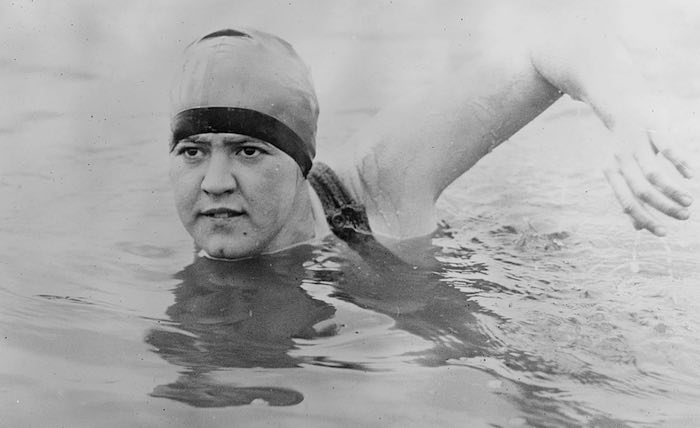
“Man becomes man only by his intelligence, but he is man only by his heart.” – Henri Frederic Amiel

Quote of the Day: “Man becomes man only by his intelligence, but he is man only by his heart.” – Henri Frederic Amiel

Image by: Mayur-gala

With a new inspirational quote every day, atop the perfect photo—collected and archived on our Quote of the Day page—why not bookmark GNN.org for a daily uplift?

By Mayur-gala


Good News in History, December 23

39 years ago today, The Voyager landed after 9 days, becoming the first airplane to fly non-stop around the world without refueling—setting a world record that remains unchallenged today. It was envisioned and sketched on the back of a napkin by brothers Dick and Burt Rutan, of the Rutan Aircraft Factory, and Dick’s girlfriend Jeana Yeager at lunch in 1981. READ more… (1986)

Cave of Wonders: Where Prehistoric Bees Made Nests in the Bones of Animals Eaten by Colossal Owls

- credit, Lazaro Viñola López via SWNS
– credit, Lazaro Viñola López via SWNS

Burrowing bees generally prefer to make their nests in the open, but some 20,000 years ago their ancestors lived in a cave where they used the bones of prey animals rather than soft soil.

The groundbreaking discovery was made in a Caribbean cave that narrowly escaped being turned into someone’s toilet.

The island of Hispaniola, divided between Haiti and the Dominican Republic, is dotted with limestone caves. Evidence, including owl bones and eggshells, suggest that giant ancestors of the modern barn owl lived in the cave through many successive generations.

The researchers say that the owls would sometimes cough up pellets containing the bones of their prey, which landed on the cave floor. The bees would then use the bones’ empty tooth sockets as nests, according to study published in the journal Royal Society Open Science.

The American research team that published the study believe a lack of topsoil outside the cave and an abundance of accumulated silt within led to the anomaly.

Cueva de Mono in the southern Dominican Republic is a deposit of many fossils, and the study’s lead author Dr. Lazaro Viñola-López, of the Field Museum in Chicago, repeatedly explored the cave looking for them.

“If you go in at night, you see the eyes of the tarantulas that live inside,” he told the museum’s press. “But once you walk down a 10 meter-long tunnel underground, you start finding the fossils.”

There were multiple layers of fossils, separated by carbonate layers resulting from rainy periods in the distant past. Many of the fossils belonged to rodents, but there were also bones from sloths, birds, and reptiles, amounting to more than 50 different species.

Despite the scientific sensitivity and value, the team one day discovered, having studied the cave for several years, that a local had built a house near the opening and was preparing to use the cave as his septic tank.

The resident’s plans were thwarted, but the scientists decided they weren’t going to wait around for any other wiseguys to damage the layers of paleontological history.

“We had to go on a rescue mission and get as many fossils out as possible, and we got a lot of them,” said Dr. Viñola-López. “We think that this was a cave where owls lived for many generations, maybe for hundreds or thousands of years.”

“We find fossils of the animals that they ate, fossils from the owls themselves, and even some turtles and crocodiles who might have fallen into the cave.”

The discovery of the bees occurred when Viñola-López, who was primarily interested in the bones from the mammals that the owls ate, noticed that in the empty tooth sockets of the mammal jaws, the sediment didn’t look like it had just randomly accrued.

“I was like, ‘Okay, there’s something weird here.’ It reminded me of the wasp nest.”

Several years earlier, a paleontologist had shown him the ancient remains of wasp cocoons which looked a lot like smooth dirt lining the tooth sockets from the cave fossils.

– credit, Lazaro Viñola López via SWNS

To better examine the potential insect nests present in the cave fossils, Dr. Viñola-López and his colleagues CT scanned the bones, X-raying the specimens from enough angles that they could produce 3D pictures of the compacted dirt inside the tooth sockets without destroying the fossils or disturbing the sediment.

The shapes and structures of the sediment looked just like the mud nests created by some bee species today. The researchers believe that the bees mixed their saliva with dirt to make tiny individual nests for their eggs.

“It’s possible that they belonged to a species that’s still alive today—there’s very little known about the ecology of many of the bees on these islands,” he said. “But we know that a lot of the animals whose bones are preserved in the cave are now extinct, so the bees that created these nests might be from a species that has died out.”

Viñola-López said it’s a perfect example of how bees can surprise you.

“Even if you’re looking primarily for fossils of larger, vertebrate animals, you should keep an eye out for trace fossils that can tell you about invertebrates like insects. Knowing about insects can tell you a lot about a whole ecosystem, so you have to pay attention to that part of the story.”

SHARE This Hidden Wonder Of Extinct Ecology, Rescued, And Revealed… 

Samsung’s 600-Mile-Range Batteries That Charge in 9 Minutes Ready for Production/Sale Next Year

A mock-up design of Samsung SDI's solid-state battery - credit, Samsung, released
A mock-up design of Samsung SDI’s solid-state battery – credit, Samsung, released

In late October, Samsung announced that it was preparing to take its long-anticipated solid-state batteries to market with a trilateral agreement between itself, BMW, and American battery expert Solid Power.

It was January of last year that industry outlets began to get some of the promises that all-solid-state batteries (ASSBs) developed by Samsung SDI would bring. With an energy density of 500 watt-hours per kilogram, they’re twice as dense as conventional lithium-ion batteries.

Samsung claimed they were smaller, lighter, and safer, capable of driving 600 miles, and charging within 9 minutes. Typically, a lithium-ion battery pack in a modern EV charges from 10% to 80% in around 45 minutes, and has a limit of around 300 miles of range.

“Samsung SDI’s preparations for mass-producing next-generation products of various form factors such as an all-solid-state battery are well underway as we are set to lead the global battery market with our unrivaled ‘super-gap’ technology,” said Samsung SDI CEO Yoon-ho Choi.

ASSB cells use solid electrolyte instead of liquid electrolyte found in a lithium-ion battery. They offer superior safety, as they aren’t flammable, and last for 20 years, or 2,000 charge-discharges, equating to 1.2 million miles.

Under the trilateral agreement, Samsung will supply ASSB cells featuring the solid electrolyte developed by Solid Power to the German automotive group BMW, which will then develop modules and packs for ASSB cells to fit into their next-generation evaluation vehicles, expected in late 2026.

BETTER BATTERIES:

Metal Tech News reported in January that ASSBs will also debut in some smaller Samsung devices during 2026, including the Galaxy Ring fitness tracker, as a way of testing the new power supplies in the real world before incorporating them into smartphones, laptops, and other devices.

Samsung’s ASSBs use a silver-carbon layer as the anode and a nickel-manganese-cobalt material for the cathode. Silver is not only the most electrically conductive metal available, it’s also substantially more plentiful in the Earth’s crust than lithium.

SHARE This Revolutionary Technology That’s Right Around The Corner…

Over 600 Lakes, Ponds, Reservoirs Restored Across the Whole of India by Divinely-Inspired Nonprofit

Vandalur Lake in Chennai before EFI restored it (top) and after (bottom) - credit, EFI, taken as screengrabs.
Vandalur Lake in Chennai before EFI restored it (top) and after (bottom) – credit, EFI, taken as screengrabs.

Recently, an Indian environmentalist and editor was invited to share his incredible work restoring hundreds of natural and man-made water sources all across India with a unique style of landscape engineering.

His nonprofit has cleaned and reshaped more than 600 bodies of water either to a state of nature or to a clean and functioning source for human use.

Often incorporating letters and designs made of soil in the middle of reservoirs, ponds, and spillways, their unnatural shapes fulfil very natural processes like cycling water to prevent stagnation and offering birds firm ground to nest on.

The Environmentalist Foundation of India (EFI) works hard to help water sources big or small, natural or manmade, not only because they often bear the brunt of India’s pollution problem, but because for millennia, water has been a sacred embodiment of spiritual and physical energy for the subcontinent and her people.

It’s easy to convince a nation which worships a river that all water is sacred—necessary to sustain the country’s huge population, rich agriculture, and priceless wildlands.

“Water and nature worship has been an integral part of our cultural evolution,” EFI’s founder, Arun Krishnamurthy, tells CNN.

“We understood that without water, there’s no life. For us, water is God, and water means energy, and thanking water is what most and all celebrations are about.”

EFI has successfully cleaned and restored nearly 75 water bodies just in and around Chennai, the capital of Tamil Nadu—1 of 19 Indian states EFI has worked in.

Their work incorporates a number of landscape engineering methods, like shallow-shored embankments to allow animals to easily descend to the river to drink without causing erosion. Recharge boxes are short innocuous pits dug into the landscape surrounding the water body to catch and funnel rainwater into the underground water table.

Islands are a common feature in the restored water bodies, many of which are shaped like the letter G, or like the constellation Pisces, or as a island surrounded by a moat upon an island in a lake. These attract nesting birds and help channel water from different sectors of the lake, which not only helps to oxygenate the water but prevent it from becoming too stagnant.

INDIAN WATER CONSERVATION: Man Revives Iconic Indian Lake by Converting Lake Weed Infestation into Organic Fertilizer Business

“How was the embankment laid? Where was the palm tree planted? How was the canal cut?” Krishnamurthy said, explaining how many of the strategies were taken from their ancestors’ designs. “So taking lessons from the past, adapting it to the present-day challenges is what we are implementing.”

Many of the restoration projects involve the clearing of both waterborne and bankside weeds, which often clump up in horrendous tangles that require hydraulic excavators. Desilting—the removal of the layers of topsoil and dust runoff from nearby roads and agricultural fields comes next, before a double embankment is dug and native vegetation planted around the water body.

LOVING WATER: Abandoned Wells Turned into Whimsical Sculptures to Irrigate Villages with a Smile in India

This was how the 76-acre Vandalur Lake along the southern beltway road of the Chennai metropolis was restored to a natural paradise of green and blue. The layers of silt at the bottom led to a much lower water infiltration rate into the ground. This lack of water control saw flooding in the nearby towns, and because of the pollution in the lake, the floods brought many waterborne diseases.

That’s just one of 600 mini tragedies of the commons that EFI has helped relieve.

SHARE This Amazing Nonprofit Making A Huge Difference In The Lives Of Indians…

Massive ‘Shovel-Ready’ Critical Minerals Deposit Found in Utah–Largest Potentially in North America

Bingham Canyon Mine in Utah, one of the world's largest mines, and supplier of half of US copper - Eric Prado Own work, CC BY-SA 4.0,
Bingham Canyon Mine in Utah, one of the world’s largest mines, and supplier of half of US copper – Eric Prado Own work, CC BY-SA 4.0,

Below the soil of a mining concession in Utah, a recent drill survey has discovered what might be North America’s largest-known deposit of so-called “critical minerals.”

Turning up evidence of elements like gallium, lithium, tungsten, and vanadium, the land is already permitted for mining, and extraction work would benefit from existing nearby infrastructure, an exploratory company executive said.

Also referred to as “rare-earth” minerals/elements or “battery metals,” these are periodic table bedfellows that power the highest forms of tech in society, from the computer chips capable of running large AI systems, to the magnets inside nuclear fusion reactors. They’re also critical for batteries in EVs and renewable energy systems like storage and solar panel.

Recently becoming all the rage in discussions about supply-chain independence, critical minerals are found all over the world, but only certain markets have spent the last 20-30 years investing in the infrastructure needed to extract and refine them at high levels.

Ionic Mineral Technologies—also known as Ionic MT—published the results of a drilling survey undertaken in their 4,000-acre Silicon Ridge project in Utah, finding substantial mineralization of a full spectrum of rare-earth elements.

That spectrum appears to be embedded in a geologic feature similar to the one which China has leveraged to become the world’s largest producer of several critical minerals—namely, a softer clay system from which the minerals are easier to extract than hard rock.

Andre Zeitoun, founder and CEO of Ionic MT, calls the discovery a “watershed moment” for America’s resource independence.

“For the first time, we have a domestic, shovel-ready source for a full spectrum of critical minerals, all extractable with a faster, cleaner process than traditional hard rock mining and extraction,” he said in a press release dated to December 12th.

CRITICAL MINERALS: Lithium Discovery in Crater in Nevada Could Be Biggest Deposit Ever Found

Zeitoun expects a “rapid timeline to commercia production,” as the drill sites on Silicon Ridge sit just a few miles from the 74,000-square-foot processing facility in Provo, where the company is located and where the ores would be processed for sale.

Further, being that the land is already permitted for mining, the treasured wider Utah landscape would be under little additional threat, and existing infrastructure like roads, power lines, and water bodies are all present from previous operations.

MORE STORIES LIKE THIS: Chemical Process Produces Critical Battery Metals from This Unloved Mineral with No Waste

The US has been expanding federal involvement in critical minerals under the current Administration, with trade agreements for cobalt and other elements signed with the Democratic Republic of the Congo in conjunction with an attempted peace negotiation between the country’s long-time warring factions.

Refinery capacity—concentrated enormously in China—is being subsidized, and even shares of certain mining operations have been directly purchased by various departments such as Commerce and Energy.

SHARE This Huge Step Towards Supply-Chain Independence In The USA… 

“Civilization began the first time an angry person cast a word instead of a rock.” – Sigmund Freud

Quote of the Day: “Civilization began the first time an angry person cast a word instead of a rock.” – Sigmund Freud

Image by: Timothy Eberly

With a new inspirational quote every day, atop the perfect photo—collected and archived on our Quote of the Day page—why not bookmark GNN.org for a daily uplift?

Good News in History, December 22

165 years ago today, Giacomo Puccini was born. Considered as the greatest composer of Italian opera in history alongside or perhaps just behind Verdi, his work includes many of the most-performed spectacles in Italian opera, including La Boheme, Tosca, Turandot, and Madame Butterfly. Often regarded as a romanticist who honored 18th-century Italian tradition, Puccini would go on to incorporate different themes and mechanisms into his music, not least of which was the Chinese motifs in Turandot. READ more… (1858)

Fussy Girl Overcomes Vegetable Phobia and Now Loves Brussels Sprouts Thanks to Eating Disorder Specialist

Emie Williams at home -SWNS

A fussy five-year-old girl has overcome her phobia of vegetables and now loves Brussels sprouts–just in time for her mother’s Christmas dinner.

Emie Williams would scream and cry if her mom, Hayley, tried to give her anything except crackers, french fries, or other beige-colored foods.

It meant family meals were fraught with conflict—Emie wanting different food and refusing to even taste hot dinners.

“She’d just refuse to eat any vegetable or any meat. We took her for check ups and health visits for advice but they just said give her what she wants because it’s probably a phase.”

But Hayley suspected that she may have ARFID (Avoidant/Restrictive Food Intake Disorder), believing she had “all the signs”.

Emie’s energy levels dipped, and she would get really tired at the end of the day.

“I explained (to doctors) that if I don’t give her what she wanted then she wouldn’t eat.”

Last month, Emie had a routine health check-up and a blood test revealed she had erratic sugar levels, so Hayley and her husband took their daughter to the hospital where doctors warned them Emie was in danger of developing diabetes unless she changed her diet.

In desperation, Hayley decided to take drastic action and contacted David Kilmurry, who specializes in obsessive eating conditions.

“We were pretty desperate when we contacted David but the results have been amazing,” the mother-of-3 from Coventry, England, told the SWNS news agency.

After a series of two-hour sessions, Emie now counts 30 foods that she willingly eats. Her favorite is Brussel sprouts, which she even enjoys raw.

NOTE TO SELFKeep Out All the Christmas Spices – They’re Powerful Antioxidants Known as ‘Nutraceuticals’

Emie Williams eating her new favorite food, Brussel sprouts – SWNS

Due to her age, Emie was not hypnotized, but David, a cognitive behavioral hypnotherapist, sat with the youngster and gradually encouraged her to try different foods.

Hayley attended all the sessions and just watched Kilmurry at work.

“He’d do magic tricks and talk to Emie to gain her trust, and then brought out different foods.

“Slowly, she tried more and more until she was really enjoying apples and oranges.

“She’s really taken with Brussel sprouts, especially eating them raw. I can’t wait to see her enjoying her first ever Christmas dinner with all the trimmings.”

David, who runs practices in Coventry and London, said: “ARFID isn’t taken seriously enough.

“It doesn’t just go away.”

MEDICINAL FOODS:
Eating Dark Chocolate Is Associated with Lower Risk of Diabetes Type 2 in Large Study
Carrots May Be Key to Unlocking Microbiome’s Diabetes Defense System
Type 2 Diabetes Patients Who Stick to Low-Carb Diet May Be Able to Stop Taking Meds

“Food is medicine—and Emie is already making amazing progress.”

HELP FAMILIES KNOW WHAT’S POSSIBLE By Sharing This on Social Media…

Swearing Can Actually Be Good For You, According to New Research

Credit: Blake Cheek for Unsplash+

Dropping an F-bomb can boost your performance by helping you feel stronger, more focused, and disinhibited, say scientists.

Most who curse like a sailor know that letting out a swear word in a moment of frustration can feel good.

Now, new research by psychologists suggests that it really can be good for your well-being.

The study, published in the journal American Psychologist, shows that swearing can boost people’s physical performance by helping them overcome their inhibitions and pushing themselves harder in strength and endurance tests.

“In many situations, people hold themselves back—consciously or unconsciously—from using their full strength,” said study author Dr. Richard Stephens, of Keele University in Staffordshire, England.

“Swearing is an easily available way to help yourself feel focused, confident and less distracted, and ‘go for it’ a little more.”

Previous research by Dr. Stephens and his colleagues found that when people swear, they perform better on many physical challenges—including how long they can keep their hand in ice water and how long they can support their bodyweight during a chair push-up exercise.

“That is now a well-replicated, reliable finding,” said Stephens. “But the question is, how is swearing helping us? What’s the psychological mechanism?”

Dr. Stephens and his colleagues believed that it might be that swearing puts people in a ‘disinhibited’ state of mind.

“By swearing, we throw off social constraint and allow ourselves to push harder in different situations.”

To test the theory, the research team conducted two experiments with 192 total participants.

WATCH THIS GRANDMA CURSING: Spunky Grandma Uses Virtual Goggles to Ride Roller Coaster For First Time (With Hilarious Irish Profanity)

In each, they asked participants to repeat either a swear word of their choice, or a neutral word, every two seconds while doing a chair push-up.

After completing the chair pushup challenge, participants answered questions about their mental state during the task.

The questions included measures of different mental states linked to disinhibition, including how much positive emotion participants felt, how funny they found the situation, how distracted they felt, and how self-confident they felt.

The questions also included a measure of psychological “flow”, a state in which people become immersed in an activity in a pleasant, focused way.

Overall, and confirming earlier research, the team found that participants who swore during the chair push-up task were able to support their bodyweight “significantly” longer than those who repeated a neutral word.

Combining the results of the two experiments as well as a previous experiment in an earlier study, they also found that the difference could be explained by increases in participants’ reports of psychological flow, distraction and self-confidence—all important aspects of disinhibition.

“These findings help explain why swearing is so commonplace.

“Swearing is literally a calorie neutral, drug free, low cost, readily available tool at our disposal for when we need a boost in performance.”

MORE SELF-HELP:
The Science of How Your Brain Forms Habits (and How to Take Control)
10 Tips for Overcoming Self-Doubt – Including Adopting a Power Pose
Instead of To-Do Lists, Your Wellbeing May Be Crying Out for a ‘To-Don’t’ List

Stephens and his colleagues plan to explore whether the boost from swearing works in any context where success depends on overcoming hesitancy.

Study co-author, Professor Nicholas Washmuth of the University of Alabama, added: “Our labs are now studying how swearing influences public speaking and romantic approach behaviors, two situations where people tend to hesitate or second-guess themselves.”

EXPLAIN YOUR BEHAVIOR By Sharing This on Social Media With Other Potty-Mouthed Friends…
Cloning the Original Spruce Safeguards Century-old Legacy of ‘Christmas Tree Lane’

First cedar tree on Christmas Tree Lane – Courtesy of Belmont Nursery in Fresno, CA

Modern science has mixed with Christmas magic to safeguard the legacy of a 100-year-old holiday tradition in Fresno, California.

The story of Christmas Tree Lane began in 1920 as a way to transform a family tragedy into something much brighter.

According to a historical marker, in June of 1919, 14-year-old William “Billy” Winning died on his family’s half-acre homestead in a tragic machinery accident. In memory of him, Billy’s mother, Mae, decorated a deodar cedar tree in front of the family’s two-story home to honor the boy who always loved Christmas.

The tribute quickly gained considerable attention in an era when few families could afford to decorate with electric lights. As the years passed, other neighbors near the home on Van Ness Boulevard also decorated trees outside their homes in a sign of solidarity and support.

And the movement kept growing. By the 1920s, the number of decorated homes had reached 17 and in the 1930s —with the Great Depression still raging—the abundance of displays had earned the two-mile stretch a nickname: “Christmas Tree Lane.”

Christmas Tree Lane historical marker – Photographed by Lester J. Letson

Today, it attracts 100,000 visitors each year and continues to receive consistent support from community donations. (See the video below that shows the lights display…)

However, in recent years, concern started growing on Christmas Tree Lane. The original tree, decorated in honor of Billy Winning, looked sickly.

The new homeowners kept nurturing the tree as best they could, but something more drastic had to be done. It wasn’t going to make it on its own.

“Three or four years ago we recognized that one of the original trees on Christmas Tree Lane was dying,” Jon Reelhorn, owner of Belmont Nursery told KMPH-TV News in an interview.

The folks at the nursery were asked, ‘can we clone the tree’.

That’s when modern science and the Christmas spirit came together. Cuttings from the original tree were sent to a drafter in Oregon who offered to make a clone of the memorial cedar for free.

Eighty small genetic clones were created from the original tree’s profile. Those saplings were then carefully grown in pots, cared for over the next 3-4 years by the Belmont Nursery in Fresno.

Cloned cedar trees – Courtesy of Belmont Nursery in Fresno FB page

“We are honored to be part of preserving this beautiful piece of our community’s history,” Belmont Nursery said in a Facebook post this year.

The nursery then delivered the cloned cedar saplings to their new home on Christmas Tree Lane, which is managed by the Fig Garden Homeowners Association.

The roots will all be different but, otherwise, the trees will be genetically identical to the one that started it all, a perfect tribute to the tradition that has brought Christmas cheer to so many for over a century.

MORE HOLIDAY CHEER:
• Stunning Crocheted Christmas Tree Knits Together Community of Extraordinary Women
Boy Sent to Christmas Nativity Shows up as Elvis Instead of Elf After Family Mix-up
Man Finds Christmas Gift in Wall with His Name on it 46 Years Later

The Fig Garden Association coordinates the massive light displays and decorations that have made the neighborhood nationally-renowned as one of the first and most impressive such displays in the US. Their video below shows how the Lane comes alive during Christmas every year.

The memorial magic is now in its 103rd year—and will keep growing far into the future.

SHARE THE CHRISTMAS TREE JOY With Every Scrooge on Social Media…

Idaho Secret Santa is Giving a Million Dollars to Local Residents Dealing with Chaos

By LuAnn Hunt
By LuAnn Hunt

Santa has arrived early in Idaho—in the form of a mystery donor who is giving away a million dollars to families in crisis.

The Secret Santa of The Gem State started making Christmas magic a couple of months ago and will continue spreading joy through the end of the year.

One of the earliest gifts was a 2025 Honda minivan and $1,000 for a family that has conjoined twins, which occurs about once in every 50,000 births.

Twin sisters Callie and Carter Torres were not expected to survive more than 24 hours. Instead, they have grown to be 8 years old, defying the odds on a daily basis.

Their medical condition requires a non-collapsible wheelchair and frequent three-hour trips from their home in Blackfoot, Idaho to Salt Lake City.

“Oh my gosh, I can’t even cry right now, I’m in such shock,” the mother, Chelsea Torres, told the East Idaho News.

Another gift was delivered to a new mom who lost her house in a freak accident.

A month after her baby was born in July, a truck ran a stop sign and crashed into Emma’s house. Her living room was destroyed. A wall collapsed, windows shattered, and water lines were ruptured, flooding the entire first floor and basement.

Thankfully, Emma and her new baby were safe, but the family has been displaced ever since. The Secret Santa gave the family a $1,000 gift card for gas and a $5,000 gift card to a housewares store.

“That means a lot,” Emma said in between a deluge of tears. “It’s been really hard…Hopefully, (we’ll be home) before Christmas.”

Yet another memorable gift was awarded to Megan Mabey, a beloved teacher at Hobbs Middle School in Shelley, Idaho. An attic fire ignited in Mabey’s house earlier this month and her home was rendered uninhabitable. Her family has been rotating through hotel rooms and rentals ever since and will be displaced for about six to eight months.

“It’s been hard,” said Mabey, who is known for her kindness, humor, and dedication to making learning fun. The $5,000 check from Santa should make things easier this holiday.

Christmas spirit has surged throughout Idaho with the Secret Santa also delivering cash and presents to a family that adopted four kids after having five of their own, a man who was paralyzed following a spinal stroke, a woman who was dealing with a brain injury following a car accident, and many, many others.

SANTA DELIVERED TO SOUTH POLE: Antarctic Research Station Receives its Mail in a Shiny New Box–a Christmas Gift from King Charles

KEEP SPREADING THE CHRISTMAS SPIRIT By Sharing This On Social Media…

“One can’t paint New York as it is, but rather as it is felt.” – Georgia O’Keeffe

Nighthawks by Edward Hopper, 1942 (cropped)

Quote of the Day: “One can’t paint New York as it is, but rather as it is felt.” – Georgia O’Keeffe

Image by: Nighthawks by Edward Hopper, 1942 (cropped)

With a new inspirational quote every day, atop the perfect photo—collected and archived on our Quote of the Day page—why not bookmark GNN.org for a daily uplift?

Nighthawks by Edward Hopper, 1942 (cropped)

Good News in History, December 21

NPS / Jacob W. Frank

Today is the magical Winter Solstice, bringing the longest night of the year to the Northern Hemisphere, and marking the start of more daylight every day for the rest of the season, until June 20. The ancient cultures knew the Sun’s path across the sky, length of daylight, and location of the sunrise and sunset, which shifted in a regular way throughout the year, so people built monuments, like Stonehenge in England and the Torreon in Machu Picchu, Peru, to follow the Sun’s annual progress and predict its movements. READ more from on this day… 

NPS / Jacob W. Frank

Simply Shining Light on Skin Can Replace Finger Pricks for People With Diabetes

Blood-glucose monitor uses light to spare diabetes patients from finger pricks – Credit: Christine Daniloff / MIT

A new method for measuring blood glucose levels, developed at MIT, could save diabetes patients from having to prick their fingers several times a day.

The MIT team used a technique that reveals the chemical composition of tissue by shining near-infrared light on them—and developed a shoebox-sized device that can measure blood glucose levels without any needles.

The researchers found that the measurements from their device were similar to those obtained by commercial continuous glucose monitoring sensors that require a wire to be implanted under the skin. While the device presented in this study is too large to be used as a wearable sensor, the researchers have since developed a wearable version that they are now testing in a small clinical study.

“For a long time, the finger stick has been the standard method for measuring blood sugar, but nobody wants to prick their finger every day, multiple times a day,” says Jeon Woong Kang, an MIT research scientist and the senior author of the study.

“Naturally, many diabetic patients are under-testing their blood glucose levels, which can cause serious complications. If we can make a noninvasive glucose monitor with high accuracy, then almost everyone with diabetes will benefit from this new technology.”

MIT postdoc Arianna Bresci is the lead author of the new study published this month in the journal Analytical Chemistry.

Some patients use wearable monitors, which have a sensor inserted just under the skin to provide glucose measurements from the interstitial fluid—but they can cause skin irritation and they need to be replaced every 10 to 15 days.

BIG DIABETES NEWS: In World First, Stem Cells Reverse Woman’s Type-1 Diabetes

The MIT team bases their noninvasive sensors based on Raman spectroscopy, a type that reveals the chemical composition of tissue or cells by analyzing how near-infrared light is scattered, or deflected, as it encounters different kinds of molecules.

A recent breakthrough allowed them to directly measure glucose Raman signals from the skin. Normally, this glucose signal is too small to pick out from all of the other signals generated by molecules in tissue. The MIT team found a way to filter out much of the unwanted signal by shining near-infrared light onto the skin at a different angle from which they collected the resulting Raman signal.

Typically, a Raman spectrum may contain about 1,000 bands. However, the MIT team found that they could determine blood glucose levels by measuring just three bands—one from the glucose plus two background measurements. This approach allowed the researchers to reduce the amount and cost of equipment needed, allowing them to perform the measurement with a cost-effective device about the size of a shoebox.

“With this new approach, we can change the components commonly used in Raman-based devices, and save space, time, and cost,” Bresci told MIT News.

Toward a watch-sized sensor

In a clinical study performed at the MIT Center for Clinical Translation Research (CCTR), the researchers used the new device to take readings from a healthy volunteer over a four-hour period, as the subject rested their arm on top of the device.

MORE GOOD NEWS FOR DIABETICS:
Carrots May Be Key to Unlocking Microbiome’s Diabetes Defense System
Diabetes-Reversing Drug Boosts Insulin-Producing Cells by 700%
Type 2 Diabetes Patients Who Stick to Low-Carb Diet May Be Able to Stop Taking Medication: Study

Each measurement takes a little more than 30 seconds, and the researchers took a new reading every five minutes.

During the study, the subject consumed two 75-gram glucose drinks, allowing the researchers to monitor significant changes in blood glucose concentration. They found that the Raman-based device showed accuracy levels similar to those of two commercially available, invasive glucose monitors worn by the subject.

Since finishing that study, the researchers have developed a smaller prototype, about the size of a cellphone, that they’re currently testing at the MIT CCTR as a wearable monitor in healthy and pre-diabetic volunteers.

The researchers are also working on making the device even smaller, about the size of a watch, and next year they plan to run a larger study working with a local hospital, which will include people with diabetes.

Edited from article by Anne Trafton | MIT News

SHARE WITH DIABETIC FRIENDS On Social Media…

Microscopic ‘Christmas Tree’ is Remarkable Highlight of Science Project Comparing the Vast and Small

Cluster of young stars known as the Christmas Tree Cluster and Collagen fibers and fat cells appearing under a laser microscope Credit: Chandra X-ray Observatory and Nikon Small World contest -SWNS

A microscopic ‘Christmas tree’ is a seasonal highlight of a remarkable science project that found eerie comparisons between the vast and the tiny.

Curated by NASA’s Chandra X-ray Observatory, the series of pairings reveal stunning connections between the vast universe and the microscopic world that we cannot see with the naked eye.

Dubbed “New Perspectives”, the project takes space-based images and creates side-by-side comparisons with winning images from the Nikon Small World contest, an annual microscopy competition.

Highlights include a cluster of young stars, nicknamed the Christmas Tree Cluster, paired with collagen fibers and fat cells captured under a laser microscope.

Another eye-catching duo (pictured below) compares a section of heart tissue exposed to radiation, with tiny dots and tracks showing the effect of high-energy particles on cells with a bright young star seen in infrared light wrapped in the gas and dust of a stellar nursery.

Heart tissue exposed to radiation with tiny dots and tracks showing effect of high-energy particles on cells, alongside a bright young star seen in infrared light wrapped in the gas and dust Credit: Chandra X-ray Observatory / Nikon Small World contest -SWNS

“Whether we’re studying a galaxy cluster millions of light-years away or a crystal formation at the micro-meter scale, these images remind us of the shared beauty and complexity that define the natural world,” said Dr. Kimberly Arcand, Chandra’s emerging technology scientist who led the project.

Operated by the Smithsonian Astrophysical Observatory, Chandra is one of NASA’s “Great Observatories”, which includes the Hubble and James Webb Space Telescopes that have offered unparalleled X-ray images of the cosmos for over a quarter century.

The “New Perspectives” project takes these space-based images and creates side-by-side comparisons with winning images from the Nikon Small World contest, an annual free microscopy competition that announced its latest winners in October.

Developing mouse embryo seen through a high-resolution microscope and Whirlpool Galaxy (M51), a giant spiral galaxy locked in cosmic dance with a smaller companion Credit: Chandra X-ray Observatory / Nikon Small World contest – SWNS

Providing a new way to look at images from science, the goal of New Perspectives is to realize the benefits from looking at our world from different points of view.

Astronomy and microscopy are both fields that are built on the challenge of making the invisible visible. Each discipline relies on light and data to reveal hidden structures, whether across the vastness of space or within the intricacies of living cells.

While their goals differ in scale, the equipment of telescopes and microscopes reflects a shared purpose: to greatly extend human vision. Telescopes (“light buckets”) collect faint light across vast distances with mirrors and detectors, often orbiting in space to avoid Earth’s atmosphere.

Microscopes, by contrast, are more of light funnels, focusing on the tiny, using lenses, lasers, or electron beams to magnify the minute worlds around us.

LOOK: Tiny Van Gogh Gallery Created Inside a Watch By an Artist With a Microscope

The endoplasmic reticulum network inside animal cells and Jupiter’s south pole with five giant cyclones encircling a central storm – Credit: Chandra X-ray Observatory / Nikon Small World contest – SWNS

Despite these differences, the two fields can converge through a common visual language.

MORE OF NATURE’S MAGIC:
A Star-Shaped Sand Found in Japan With A Huge Secret Hidden Inside
Otherworldly Scenes Show Plants Breathing in Close-Up Detail: A Long Sought Discovery
Astro-Photographer Finds a Cosmic Grinch in a Holiday-Themed Star Cluster 

Astronomy and microscopy remind us that vision is both a tool and a construction. By transforming the invisible into the visible, these disciplines not only advance science but also reshape how we perceive our place in the cosmos and the complexity of life itself.

ARTISTS AND SCIENTISTS WILL LOVE THIS–So Share it on Social Media…

Aging Mother-and-Son Jaguars Arrive at Special ‘Retirement’ Home for Big Cats to Live Out Their Years

Chester Zoo / SWNS
Chester Zoo / SWNS

A very old jaguar and her senior son are being welcomed to a specially-made retirement home in a UK zoo.

Wild jaguars typically live for around 12 years, but Bonita is already 16 and her son Remi is 11, having already survived cancer.

The two have lived side-by-side in a safari park since Remi’s birth and will remain together after being transported to their new enclosure at Chester Zoo in England.

The move follows months of planning with experts from Europe’s jaguar conservation program.

“Bonita and Remi are truly special animals, and we’re delighted to be able to provide them with a new retirement home here,” said Dave Hall, Chester Zoo’s Team Manager of Carnivores.

“Bonita has been a devoted mother to Remi throughout his life, so ensuring they stayed together was a real priority for everyone involved.

“Remi’s journey has also been a remarkable one. In 2019, a lump was removed from his head following a diagnosis of hemangiosarcoma, a very aggressive malignant cancer, which makes his continued good health today all the more extraordinary.

“Our teams have worked closely with colleagues from across the UK and Europe to make sure every detail of their move and ongoing care has been fully considered —from transport to the set-up of their new habitat.

“It’s fantastic to see them already settling in and exploring their new surroundings side-by-side,” said Hall in a statement from Chester Zoo, which released a video of the cats prowling around their new home.

MORE GOOD NEWS FOR JAGS:
Jaguars in Mexico are Growing in Number, a Promising Sign That Conservation Strategies are Working
230,000 Acres of Tropical Rainforest Protected as Hotspot For Jaguars in Belize

Jaguars are the largest cat in Latin America and the species is listed as “Near Threatened” by the International Union for Conservation of Nature due to habitat loss through farming and illegal hunting.

Watch Bonita and Remi in their new home…

SHARE THE HAPPY ENDING With Animal Lovers on Social Media…

Your Weekly Horoscope – ‘Free Will Astrology’ by Rob Brezsny

Our partner Rob Brezsny, who has a new book out, Astrology Is Real: Revelations from My Life as an Oracle, provides his weekly wisdom to enlighten our thinking and motivate our mood. Rob’s Free Will Astrology, is a syndicated weekly column appearing in over a hundred publications. He is also the author of Pronoia Is the Antidote for Paranoia: How All of Creation Is Conspiring To Shower You with Blessings. (A free preview of the book is available here.)

Here is your weekly horoscope…

FREE WILL ASTROLOGY – Week of December 20, 2025
Copyright by Rob Brezsny, FreeWillAstrology.com

SAGITTARIUS (Nov. 22-Dec. 21):
According to legend, the genius composer Mozart heard entire symphonies in his imagination before he wrote down any notes. That’s a slight exaggeration. The full truth is that he often worked hard and made revisions. His inspiration was enhanced by effort and craft. However, it’s also true that Mozart wrote at least five masterful works in rapid succession, sometimes with remarkably few corrections on the manuscript. They included his last three symphonies (Nos. 39, 40, and 41). I predict you will have a Mozart-like aptitude in the coming months: the ability to perceive whole patterns before the pieces align. Trust your big visions!

CAPRICORN (Dec. 22-Jan. 19):
In Greek mythology, Proteus was a sea god famed for his ability to change his shape endlessly to evade capture. But now and then, a persistent hero was able to hold on to Proteus through all his transformations, whether he became a lion, serpent, tree, or flame. Then the god would bestow the gift of prophecy on the successful daredevil. I suspect that in the coming months, you will have an exceptional power to snag and grasp Proteus-like things, Capricorn. As a result, you could claim help and revelations that seem almost magical.

AQUARIUS (Jan. 20-Feb. 18):
In Florence, Italy, the Accademia Gallery houses several of Michelangelo’s sculptures that depict human figures partially emerging from rough blocks of marble. They seem to be caught in the process of birth or liberation. These works showcase the technique Michelangelo called *non-finito* (unfinished), in which the forms appear to struggle to escape from the stone. In the coming months, Aquarius, I foresee you undergoing a passage that initially resembles these figures. The good news is that unlike Michelangelo’s eternally trapped characters, you will eventually break free.

PISCES (Feb. 19-March 20):
To prepare you for 2026, I’ve gathered three quotes that address your most pressing need and urgent mandate. I recommend you tape this horoscope to your bathroom mirror. 1. “We cannot live in a world interpreted for us by others. An interpreted world is not a hope. Part of the terror is to take back our listening, to use our own voice, to see our own light.” —author Elaine Bellezza. 2. “To be yourself in a world that is constantly trying to make you something else is the greatest accomplishment.” — Ralph Waldo Emerson. 3. “The ability to tell your own story, in words or images, is already a victory, already a revolt.” —Rebecca Solnit.

ARIES (March 21-April 19):
Nine hundred years ago, Sufi philosopher Al-Ghazali provided rigorous advice that’s not very popular these days. “To understand the stars,” he said, “one must polish the mirror of the soul.” Here’s my interpretation: To fathom the truth about reality, you must be a strong character who treasures clarity and integrity. It’s highly unlikely you can gather a profound grasp of how life works if your inner depths are a mess. Conversely, your capacity to comprehend the Great Mystery increases as you work on purifying and strengthening your character. Everything I just said is good advice for all of us all the time, but it will be especially potent and poignant for you in the coming months.

TAURUS (April 20-May 20):
The sound of a whip cracking is a small sonic boom. The tip breaks the sound barrier, creating that distinctive snap. In my astrological reckoning, Taurus, life has provided you with the equivalent of a whip. During the coming months, you will have access to a simple asset that can create breakthrough force when wielded with precision and good timing. I’m not referring to aggression or violence. Your secret superpower will be understanding how to use small treasures that can generate disproportionate impacts. What’s your whip?

GEMINI (May 21-June 20):
Some Japanese potters practice yohen tenmoku. It’s a technique used to create a rare type of tea bowl with shifting, star-like iridescence on deep, dark glaze. The sublime effect results from a process that’s unusually demanding, highly unpredictable, and hard to control. Legend says that only one in a thousand bowls achieves the intended iridescence. The rest, according to the masters, are “lessons in humility.” I believe you can flourish by adopting this experimental mindset in the coming months. Treat your creative experiments as offerings to the unknown, as sources of wonder whether or not your efforts yield stellar results. Be bold in trying new techniques and gentle in self-judgment. Delight in your apprenticeship to mystery. Some apparent “failures” may bring useful novelty.

CANCER (June 21-July 22):
A fair-weather cumulus cloud typically weighs over a million pounds and yet floats effortlessly. Let’s make that one of your prime power symbols for 2026, Cancerian. It signifies that you will harbor an immense emotional cargo that’s suspended with grace. You will carry complex truths, layered desires, and lyrical ambitions, but you will manage it all with aplomb and even delight. For best results, don’t overdramatize the heaviness; appreciate and marvel at the buoyancy.

LEO (July 23-Aug. 22):
Every 11 years, the Sun reverses its magnetic polarity. North becomes south, and south becomes north. The last switch was completed earlier this year. Let’s use this natural phenomenon as your metaphorical omen for the coming months, Leo. Imagine that a kind of magnetic reversal will transpire in your psyche. Your inner poles will flip position. As the intriguing process unfolds, you may be surprised at how many new ideas and feelings come rumbling into your imagination. Rather than resist the cosmic acrobatics, I advise you to welcome and collaborate with them.

VIRGO (Aug. 23-Sept. 22):
The sculptor Louise Bourgeois was asked why she worked so often with the image of the spider. She said it was a tribute to her mother, who was deliberate, clever, patient, soothing, helpful, and useful—just like a spider. In the coming months, I invite you to embody her vision of the spider. You will have the wherewithal to weave hardy networks that could support you for years to come. Be creative and thoughtful as you craft your network of care. Your precision will be a form of devotion. Every strand, even fragile ones, will enhance your long-term resilience.

LIBRA (Sept. 23-Oct. 22):
Researchers studying music theory know that dissonance—sounds that feel “wrong” or create tension—is in part culturally determined. Indonesia’s gamelan music and Arabic maqam scales are beautiful to audiences that have learned to appreciate them. But they might seem off-kilter to Westerners accustomed to music filled with major thirds and triads. Let’s use this as our starting point as we contemplate your future in 2026, Libra. Life may disrupt your assumptions about what constitutes balance and harmony. You will be invited to consider the possibility that what seems like discord from one perspective is attractive and valuable from another. My advice: Open your mind to other ways of evaluating what’s meaningful and attractive.

SCORPIO (Oct. 23-Nov. 21):
In the Sonoran Desert of the southwestern United States, Arizona bark scorpions are hard to see at night. Scientists who want to study them can find them only by searching with flashlights that emit ultraviolet light. This causes the scorpions’ exoskeletons to fluoresce and glow a distinct blue-green or turquoise color, making them highly visible. Let’s use this scenario as a metaphor for you. In the coming months, you may reveal your best brilliance under uncommon conditions. Circumstances that seem unusual or challenging will highlight your true beauty and power. What feels extreme may be a good teacher and helper. I urge you to trust that the right people will recognize your unique beauty.

WANT MORE? Listen to Rob’s EXPANDED AUDIO HOROSCOPES, 4-5 minute meditations on the current state of your destiny — or subscribe to his unique daily text message service at: RealAstrology.com

(Zodiac images by Numerologysign.com, CC license)

SHARE The Wisdom With Friends Who Are Stars in Your Life on Social Media…

“There is a rejoicing that, even in the darkest time, the sun is not vanquished. As of tomorrow, the days begin to get longer as the light of day grows.” – Dacha Avelin

By Raimond Klavins

Quote of the Day: “There is a rejoicing that, even in the darkest time, the sun is not vanquished. As of tomorrow, the days begin to get longer as the light of day grows.” – Dacha Avelin (Happy Winter Solstice day!)

Image by: Raimond Klavins (cropped)

With a new inspirational quote every day, atop the perfect photo—collected and archived on our Quote of the Day page—why not bookmark GNN.org for a daily uplift?

By Raimond Klavins