











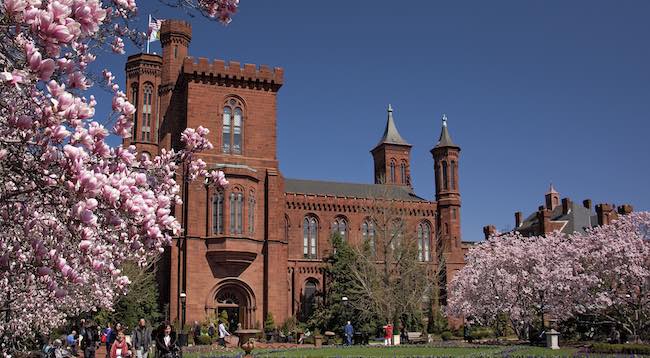
180 years ago today, the Smithsonian Institution was first chartered, and named after the British scientist, James Smithson, who bequeathed $500,000 to create a great museum in Washington, DC—even though he had never visited the United States. With the aim of advancing science and mankind’s knowledge, the federal government administers and partially funds the 19 museums (and the National Zoo) in the nation’s capital. WATCH a couple videos about the great Institution… (1846)
Cheese Lovers Unite: The Benefits of Full-Fat Dairy Documented in Study Without Cholesterol Rise or Weight Gain

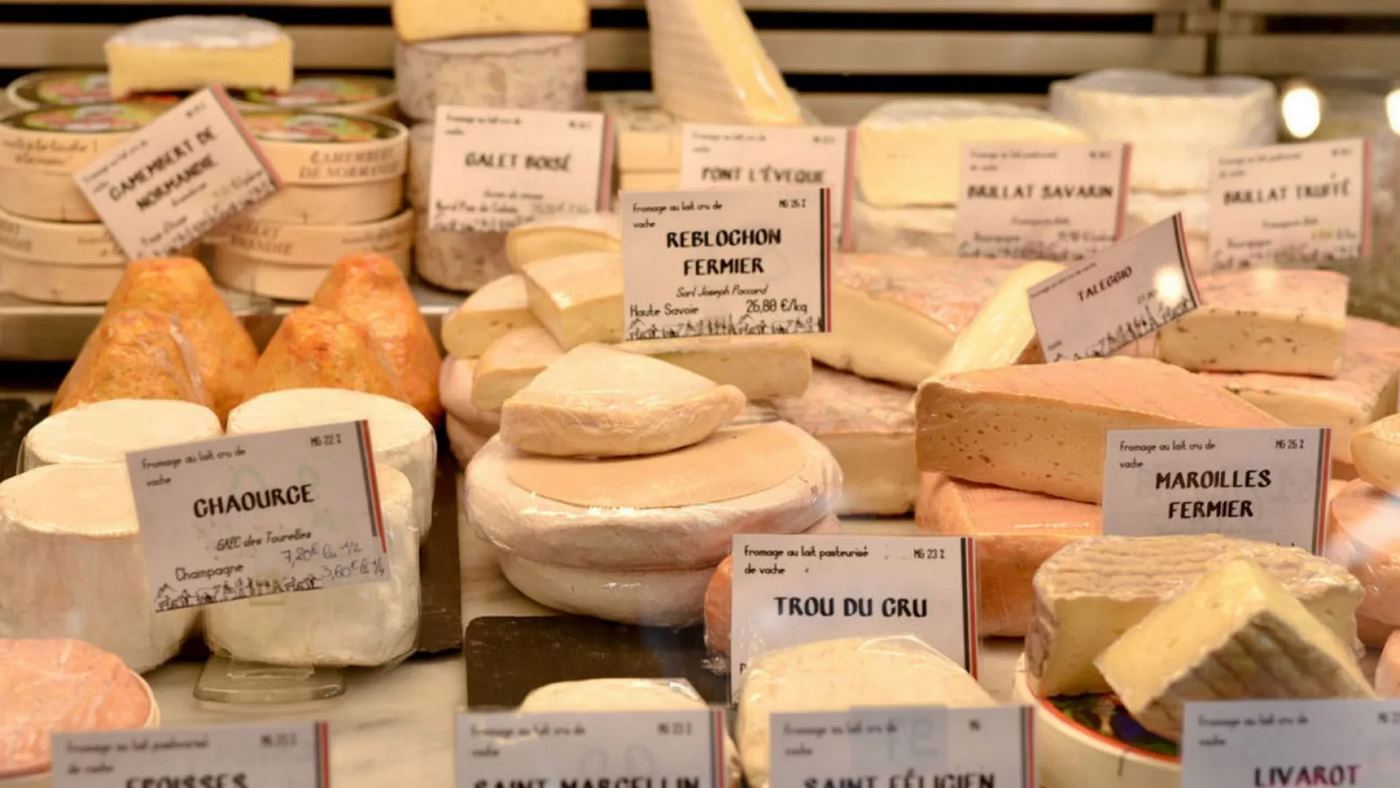
A University of Toronto study is offering new evidence in support of full-fat dairy consumption.
The findings from a 12-week study demonstrate that three daily servings of full-fat dairy can be incorporated into a person’s diet without negatively affecting their body weight (or composition), energy metabolism, or blood lipid levels.
In fact, the results, published recently in The Journal of Nutrition, show that participants who ate more dairy saw improvements in blood pressure and had higher intake of calcium, protein and vitamin D.
You may ask, why the literature keeps changing around the ‘dangers’ of dairy. It turns out, when the scientists reveal more, we all learn more.
Dairy products contain saturated fats, which contribute to an increased risk of cardiovascular disease, which is why dietary guidelines around the world have traditionally recommended fat-free or low-fat dairy foods.
However, Professor Harvey Anderson, in the nutritional sciences field at the Toronto University’s Faculty of Medicine, says despite these concerns, numerous human studies have found no association between full-fat dairy consumption and negative health outcomes.
Some studies—including recent research led by the University’s Professor Kozeta Milliku—have indeed reported positive, or protective, effects related to dairy intake.
SUPER CHEESE: Cheese May Help Stave Off Dementia Suggests Study of 27k People Followed Over 25 Years
In the recent small study, 74 overweight or obese adults were randomly assigned to one of three diets: low-dairy /calorie-restriction; or energy-neutral with three daily servings of dairy; or unrestricted with three daily servings of dairy. The participants were also counseled to follow Canada’s food guide and provided with full-fat dairy products for the study.
After 12 weeks, the researchers did not observe meaningful differences in weight gain, body composition or cholesterol levels between the participants who followed a low-dairy diet and those who consumed three daily servings of whole-fat dairy.
“Those that had three servings of dairy didn’t have adverse levels of blood cholesterol or lipids or evidence of insulin resistance,” reported Anderson. (And, they had lower blood pressure.)
He and other researchers believe the disagreement between the harms expected from saturated fats in dairy and the reported neutral or positive effects from human studies could be explained by the dairy matrix hypothesis:
The physical structure of dairy foods affects how the nutrients within are digested and how they impact the body.
“With dairy products, it’s got two proteins—casein and whey—that are bound together with fat and with nutrients mixed in,” says Anderson.
GOOD TIP: Trendy Type of Norwegian Cheese May Stave Off Bone Thinning, Shows New Study
It’s this unique and complex physical structure that, he says, is responsible for the slow and steady delivery of nutrients from dairy products and that expands their health impacts to more than just the sum of the isolated nutrients.
Anderson notes that the study findings are especially relevant for older people who have lower energy needs overall and may therefore have difficulties getting sufficient protein and nutrients. He says that for many older adults, dairy products are a familiar and energy- and nutrient-dense option to help meet their nutritional needs, without increasing their risk of diabetes and other chronic diseases.
More broadly, the study—which was partly supported by the Canadian government’s Agricultural Partnership AgriScience Program—highlights the importance of approaching nutritional sciences research and dietary guidelines through a whole food lens, instead of focusing on single nutrients.
YOU KNOW YOU WANT TO: SHARE This With Friends on Social Media…
Intricate Carvings in Ostrich Eggshells are 60,000 Years Old – and Reveal ‘Remarkable’ Human Thinking
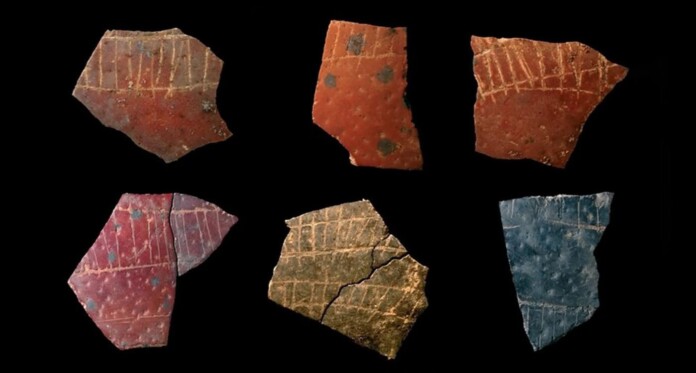
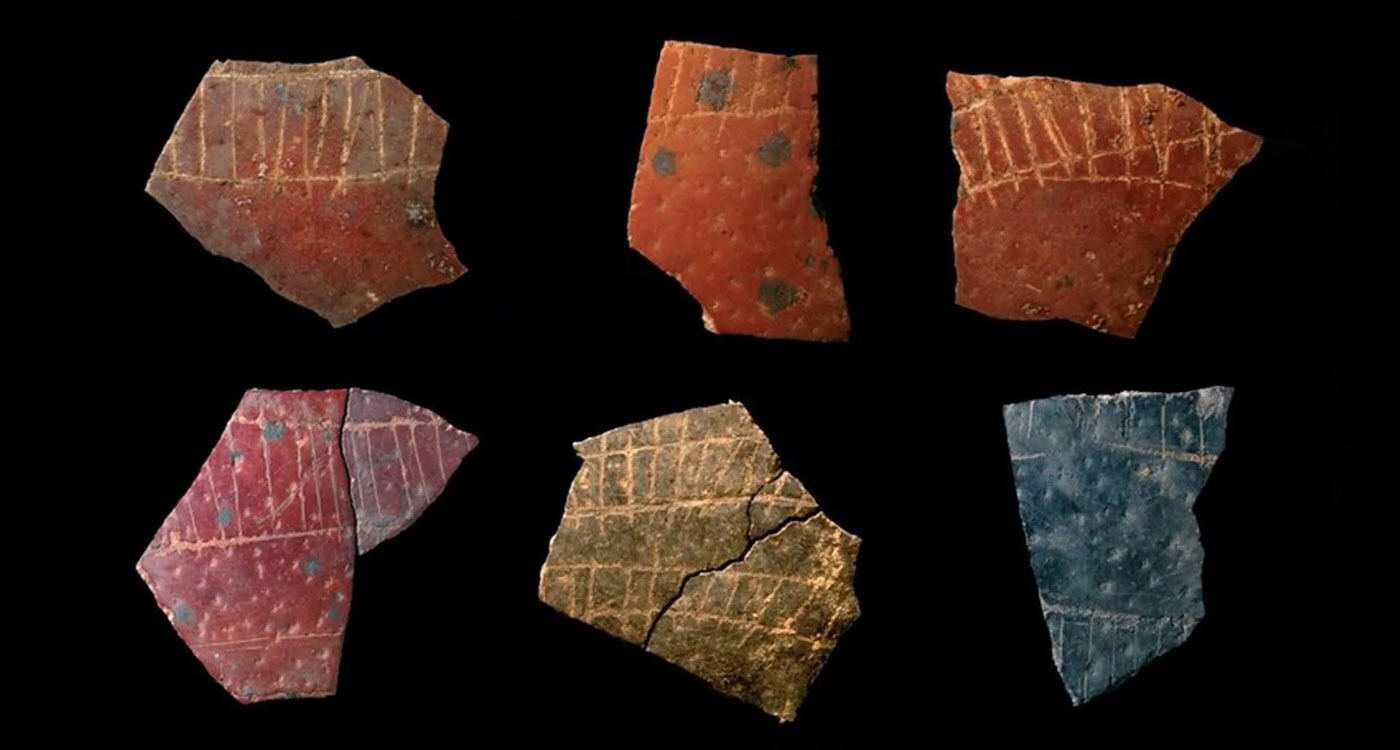
Dating back more than 60,000 years ago, humans in southern Africa were engraving ostrich eggshells with intricate geometric patterns that—the longer we study them—look more organized than we previously realized.
A new analysis of the markings found on hundreds of eggshell fragments has revealed our ancestors’ remarkable ability to organize visual space according to abstract principles.
Hundreds of the highly unusual egg fragments were found at several archaeological sites where, researchers believe, they were engraved by groups of Homo sapiens who lived in that region.
The investigation team from the University of Bologna concluded for the first time that these engravings on ostrich eggshells were not random or improvised, but followed recurring and surprisingly organized geometric rules, according to the study published in the journal PLOS One.
“We are talking about people who did not simply draw lines, but organized them according to recurring principles — parallelisms, grids, rotations and systematic repetitions: a visual grammar in embryo,” says Professor Silvia Ferrara, from the University of Bologna’s Department of Classical Philology and Italian Studies, who coordinated the study.
“It shows the presence of a genuine cognitive organization of forms, based on parallelism, orthogonality, and the repetition of lines and regular patterns,” says a University press release.
“These signs reveal a surprisingly structured, geometric way of thinking,” continued Ferrara, who says the eggshells were most likely used as water containers.
“The (designs) are organized and consistent, and show mastery of geometric relationships. There is not only a process of repeating signs: there is real visuo-spatial planning, as if the authors already had an overall image of the figure in mind before engraving it.”
The researchers carried out a quantitative and systematic investigation of 112 fragments from two South African archaeological sites—Diepkloof and Klipdrift—and one site in Namibia known as Apollo 11.
By applying methods of geometric and statistical analysis never previously used on these artifacts, the study made it possible to reconstruct in detail the lines, angles and trajectories of the markings.
“Our analysis shows that Homo sapiens 60,000 years ago already possessed a remarkable ability to organize visual space according to abstract principles,” concludes Valentina Decembrini, PhD student at the University’s Department of Classical Philology and Italian Studies and first author of the study.
“Transforming simple forms into complex systems by following defined rules is a deeply human trait that has characterized our history over millennia, from the creation of decorations to the development of symbolic systems and, ultimately, writing.”
MORE COOL PRE-HISTORY:
• Striped Rock Dismissed as Natural in 1928 Reclassified as UK’s Oldest Cave Painting
• Huge Camel Carvings Dating Back 12,000 Years Marked Wet Season Oasis Like Cultural Road Sign
The results show that more than 80% of the configurations display coherent spatial regularities, with repeated use of angles close to 90° and groups of parallel lines. The most complex compositions — such as hatched bands, grids and diamond-shaped motifs — reveal cognitive operations of rotation, translation, repetition and “embedding”, i.e. the ability to build hierarchical levels of signs within the same surface.
Beyond the possible meanings of the markings, the authors stress that the implications of the study concern above all the cognitive foundations that made it possible to create these decorations. The ability to construct visual configurations structured according to specific rules can be seen as a key indicator of the emergence of abstract thought — a crucial step in the evolution of human thinking.
AND, GORGEOUS: Carved 40,000 Years Ago and Found in a Cave, These Are the Oldest-Known Animal Sculptures
SERVE UP THESE EGGS For History Lovers on Social Media–BY SHARING…
Leo DiCaprio Launches $200M Project to Bring 100 Most Threatened Species Back From the Brink
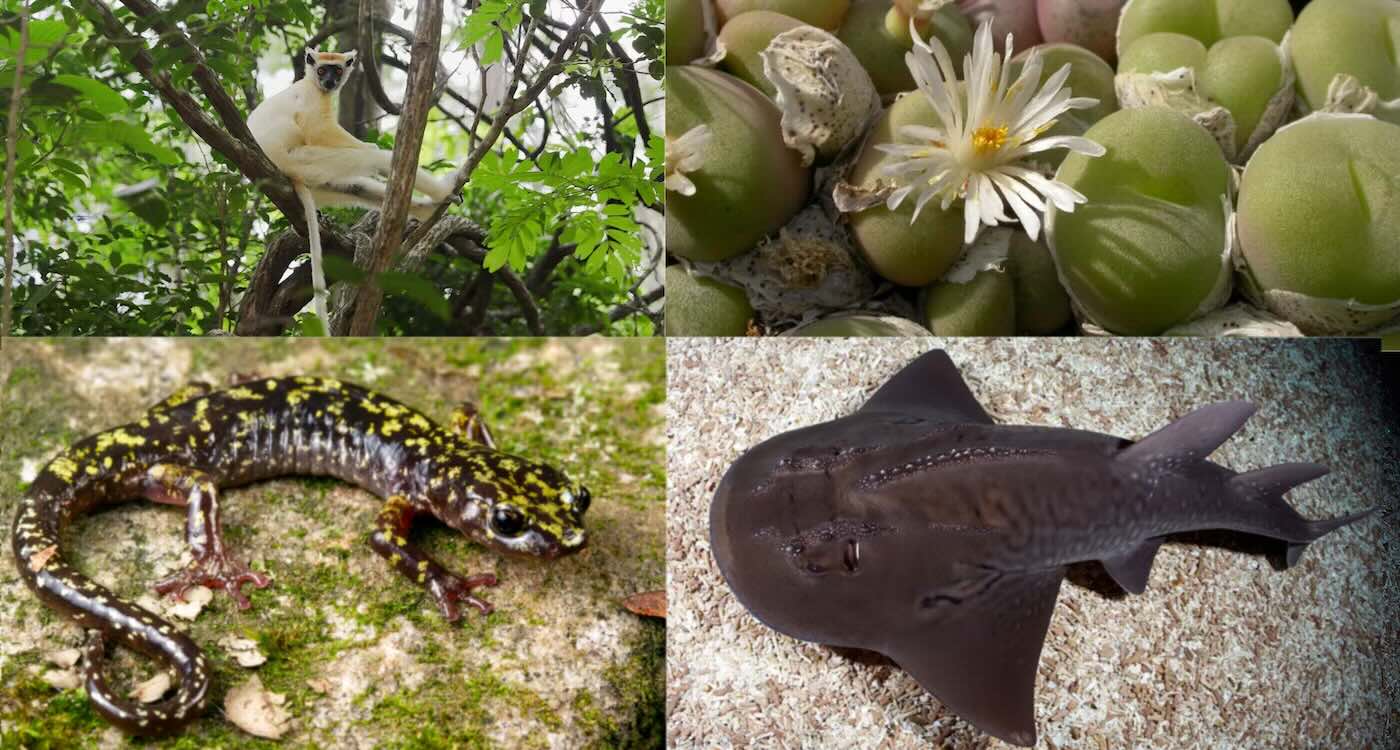
In 2021, Leonardo DiCaprio, the Bezos Earth Fund, and nine other conservation philanthropies launched the Protecting Our Planet Challenge, focused on protecting at least 30% of the most important land, freshwater, and marine area on the planet.
In the years since, the Hollywood actor/director continued discussions about an even more ambitious challenge to protect the most at-risk species—and he and his conservation group, Re:wild (which helps protect hundreds of threatened species in 360 locations worldwide), unveiled that big idea this week.
The Phoenix Species Project.
From rhinos and tigers, to a golden-crowned lemur, nature is full of comeback stories. Species numbered by just a handful of individuals have rebounded, when given the proper resources—and, in the process entire ecosystems have recovered.
The Phoenix Species Project builds on those good news stories.
The effort begins with a $200 million commitment to provide unprecedented support to the recovery of 100 species facing imminent extinction—including mammals, amphibians, reptiles, birds, fish, plants, and invertebrates from 30 countries.

The commitment of new money beyond small, short-term grants—$100M from the Bezos Earth Fund and $100M from Re:wild—will offer the sustained investment endangered species need to rebound.
“When we protect species, we also protect the forests, wetlands, grasslands, and oceans they depend on,” said Leonardo DiCaprio, founder of Re:wild.
“The Phoenix Species Project has the potential to make a lasting impact where it’s needed most.”
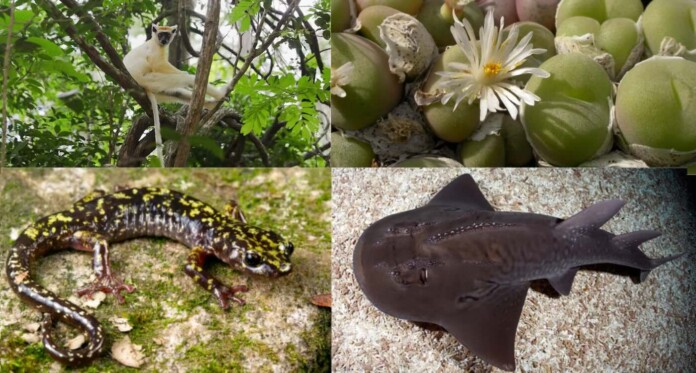
The full Phoenix 100 list can be found on the project’s new website, but in addition to the golden-crowned sifaka lemur, a few highlights include these species:
- Ancient shark-like bowmouth guitarfish, a ray found in shallow ocean waters from South Africa to Japan and Australia, whose fins are among the most prized in the fin trade. [Implementing partner: ReShark]
- Honey-scented, daisy-like fuzzy belly button, a tiny desert succulent that is illegally harvested for the ornamental plant trade in western South Africa. [Implementing partner: South African National Biodiversity Institute]
- Tree-dwelling Hickory Nut Gorge green salamander, lives only in a small canyon in North Carolina in the United States, and is within the world’s most diverse salamander hotspot, the Appalachian Mountains. [Implementing partner: Amphibian & Reptile Conservancy]
- Small, extinct-in-the-wild freshwater Charco Azul pupfish, whose common appearance belies its dramatic history when the freshwater spring it lived in dried up in Mexico after a drought, and years of water extraction for agriculture. [Implementing partner: Universidad Autónoma del Estado de Morelos]
- Lost-and-found night parrot from Australia’s remote deserts and dry grasslands, which remains elusive because of its nocturnal, ground-dwelling habits. [Implementing partner: Bush Heritage Australia]
A 2021 peer-reviewed essay in Conservation Biology argued that even species reduced to tiny populations can recover with sufficient conservation funding, and committed local partners.
“This fund is focused squarely on species recovery—not merely stopping decline,” explained Barney Long, a senior director at Re:wild.
“Recovering species takes time, so the fund is designed to provide sustained, five-years of support for each species, freeing conservationists from disruptive short-term funding cycles and equipping them to do what’s actually required to bring species (fully) back.”
“We have the tools we need to prevent these species from going extinct,” says the Phoenix Species Project senior manager in a media release. “We just need to mobilize the resources.”
SEND THIS TITANIC NEWS To Nature-Loving Friends on Social Media…
Blind Dressage Horse Wins Competitions By Using ‘Equine Braille’

Despite going blind, a remarkable horse is still on his way to becoming a dressage champion after adopting an extraordinary form of equine “braille”.
The 15-year-old Appaloosa named Milo, has awed spectators since returning to the show ring last year despite losing sight in both eyes due to a devastating eye condition.
The 16-hand gelding relies on a unique combination of rider cues, hearing, and touch, to navigate his surroundings in the ring or barn.
“Milo is just an amazing horse and hasn’t let blindness stop him being a potentially world-class dressage competitor.”
28-year-old Megan Share has owned Milo since the horse was just three and Megan was still growing up. They had spent years competing together from their home base in England when the tragedy struck.
Today they have their ‘sights’ set on returning to the elite dressage ring—competing against the best sighted horses.
Megan, who runs Debdale Riding School in rural Worcestershire, explained how the communication works between this dynamic duo, and how the horse’s senses have become more acute.
“He interprets my pressure on him, but he also uses his own pressure (hooves on the ground surface) for his spatial awareness. He’s using touch… like a braille technique.”
“He’s also a lot more alert, and he reacts quicker, as his sense of hearing is elevated as a result of him losing his sight.”
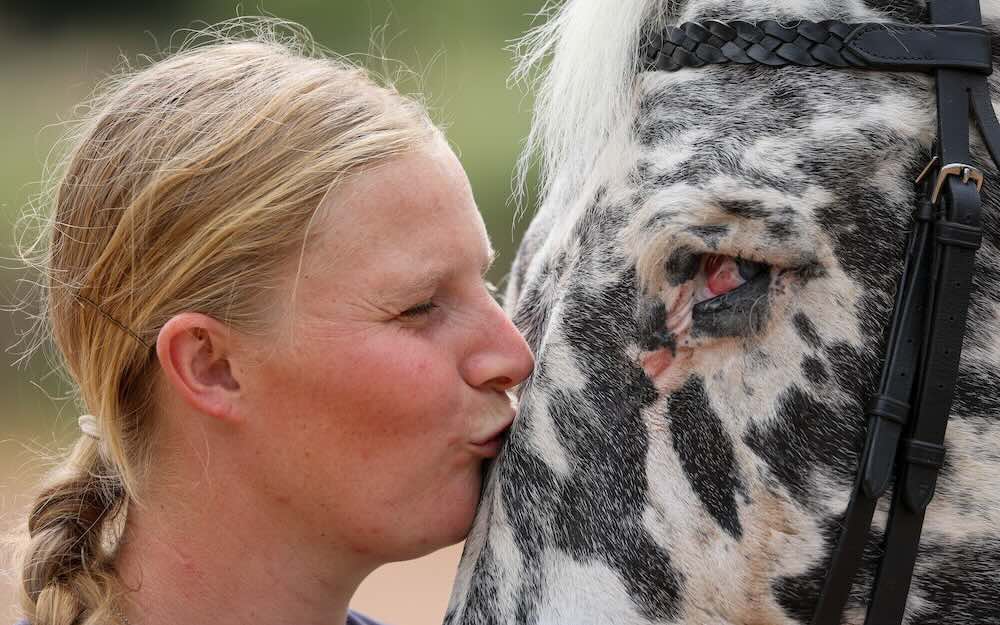
“I became his eyes. We have a really good brother-sister relationship, and we developed a way to make it work.”
“We talk to him like he’s a human. There’s a lot of core movements coming from me. I do use a lot of leg and hand aids to keep him in line, and he trusts me.
GREAT HORSE NEWS: World’s Last Wild Horse Thriving After 3 Years in Spain’s Epic Gallop Towards Rewilding
“I have to be more alert than I am on a sighted horse because he needs constant instructions, like pulling on the reins a bit firmer to let him know where to go. It’s more mentally challenging.
“I’ve got to be on the ball with my surroundings—with instincts on alert—so it’s quite draining.”
The horse went blind at age 13, despite multiple operations on his eyes. Megan recalls her days as a schoolgirl when they first got Milo. “We almost grew up together.”

When it comes to learning dressage, the polka-dotted horse was “a natural.”
“We’ve been competing with him since he was four and he’s always been in the ribbons. He won the Royal Windsor Horse Show for the eighth year in a row—including last year while blind,” she told SWNS news agency. “We’ve got quite a lot of sashes for first place.”
“We were probably doing up to 12 shows a year before he went completely blind. I didn’t ride him for over a year until we decided he was ready.”
Now Megan believes he is ready to take the next step in dressage, often described as “ballet on horseback” because of its precise and controlled movements.
Are there any other blind horses competing at this level in the world? Hard to be certain, but Megan said everyone is always astounded.
“People are shocked that this could even happen. I’m extremely proud of him.”
EQUINE INSPIRATION: Therapy Donkeys Prove Such a Balm of Calm to Hospital That Organizers Look to Expand
Milo is due to compete at an Appaloosa show and the Denbigh and Flint Show in August before high stepping it to the qualifiers for the Horse of the Year Show and the London International.
YOU KNOW YOU WANT TO: Share This With Horse Loving Pals on Social Media…
“Three things cannot be long hidden: the sun, the moon, and the truth.” – Buddhist text
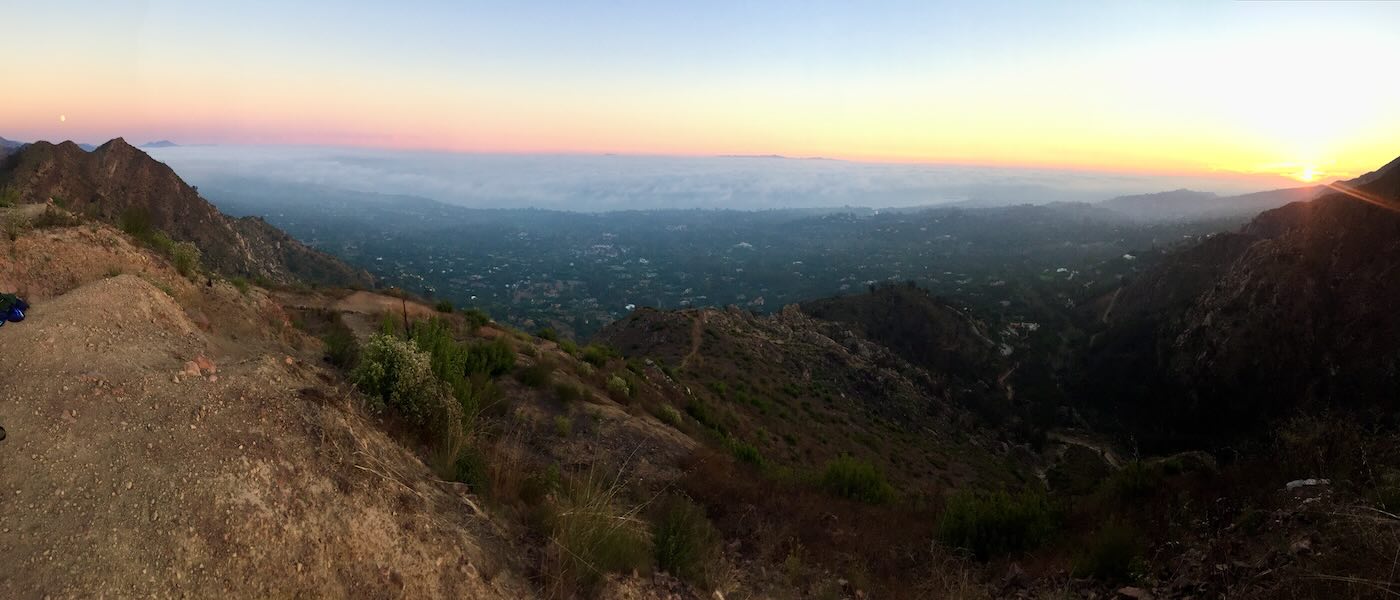
Quote of the Day: “Three things cannot be long hidden: the sun, the moon, and the truth.” – Adaptation of ancient Buddhist text (Anguttara Nikaya)
Photo by: © GWC (Santa Barbara, California, coastal moonrise and sunset)
With a new inspirational quote every day, atop the perfect photo—collected and archived on our Quotes page—why not bookmark GNN.org for a daily uplift?
Good News in History, August 9

90 years ago today, track and field star Jesse Owens won his fourth gold medal at the Berlin Olympics—a first for any American athlete. Owens was cheered enthusiastically by 110,000 people in Berlin’s Olympic Stadium—and later, ordinary Germans sought his autograph when they saw the world-record holder in the streets. READ what Jesse said about Hitler at the games… (1936)
Once Gone From Ireland, Majestic Sea Eagles Continue Their Comeback with Rare New Chick
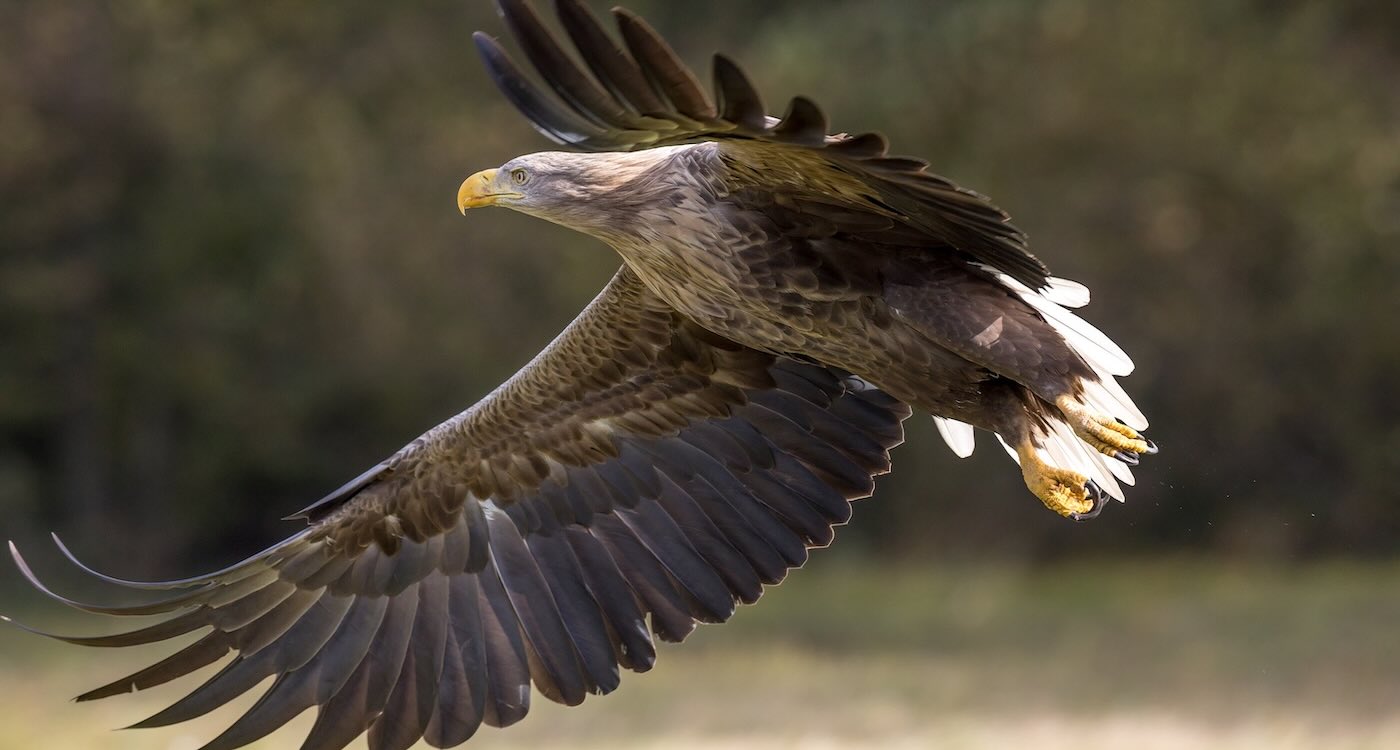
More than a century after the country’s largest bird of prey disappeared entirely from Ireland, a white-tailed sea eagle has been delivered—and the young fledgling became another success for conservationists to celebrate.
Fota Wildlife Park in County Cork has announced the successful birth and fledging of a white-tailed sea eagle chick—the first chick of the species born at the park in more than a decade.
The eaglet hatched on April 13 to resident parents Áine and Tony, who, according to their caretakers, have taken naturally to the demanding job of raising Europe’s largest eagle.
“The mother and father have done a great job,” said Jess Hodnett, Fota Wildlife Park’s Native Species Conservation Officer.
And there’s quite a lot of chick to raise.
Adult white-tailed sea eagles can have wingspans stretching more than 8 feet—an extraordinary 2.5 meters. During breeding season this puts great demand on the parents requiring them to eat 18-21 ounces of food every day (500-600 grams) to support their young.
The successful fledging carries particular significance in Ireland.
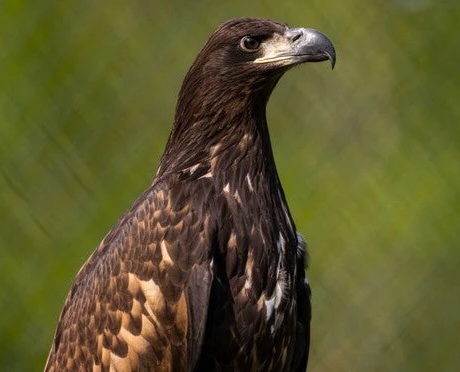
White-tailed sea eagles were once common along the country’s coastline, but human persecution eventually wiped them out. Ireland lost its entire population, and the species remained absent for more than a century.
Then people decided to bring back the only sea eagle native to Europe.
Beginning in 2007, Ireland’s National Parks and Wildlife Service, working with the Norwegian Institute for Nature Research as well as farmers and local communities, began releasing white-tailed sea eagles at sites around the country.
More than 200 have now been released—and the recovery effort has reached an extraordinary milestone: Ireland’s population is now considered self-sustaining.
Fota wildlife park, has participated in white-tailed sea eagle conservation since 1991 and has now successfully bred six chicks.
Hodnett said the staff hoped the youngster will eventually participate in a European endangered-species breeding program, meaning this one Cork-born eagle could contribute to conservation efforts far beyond the park where it hatched.
For Fota’s conservation team, however, the eagle is only one piece of a much larger success story—the park is helping some of Ireland’s most vulnerable native animals, from curlews to the endangered white-clawed crayfish.
EAGLE LOVE: Eagle Decides He Wants the Hawk For a Sibling, Rather than a Meal (WATCH)
Fota’s work with the endangered natterjack toad has produced great success, as the park takes toad spawn from ponds in County Kerry and raises the youngsters during their most fragile stages before returning them to the wild.
Since 2016, more than 13,600 natterjack toadlets have been released back into their native habitat—with another 750 expected to join them this August.
BEAUTIFUL RESCUE: Injured Bald Eagle Plucked From River in Daring Rescue By College Staffers in Maryland (WATCH)
For Fota, the eagle chick demonstrates the positive outcomes that come through cooperation. A species humans once eliminated from Ireland is being nurtured by another generation of birds there—with people now working together to make sure it thrives.
SHARE THE GOOD NEWS With Bird-Lovers on Social Media…
Loggerhead Sea Turtles Break Nest Record in Georgia – The Most in 37 Years
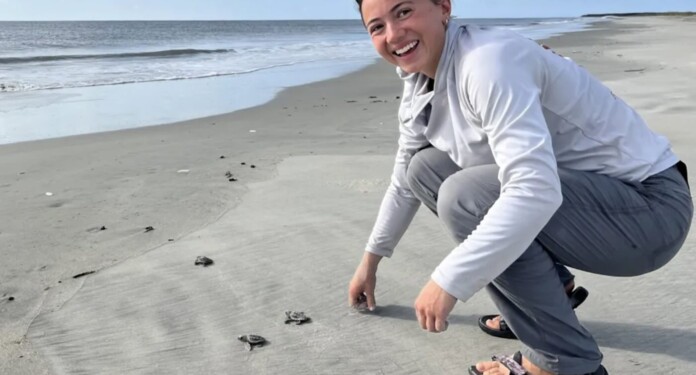
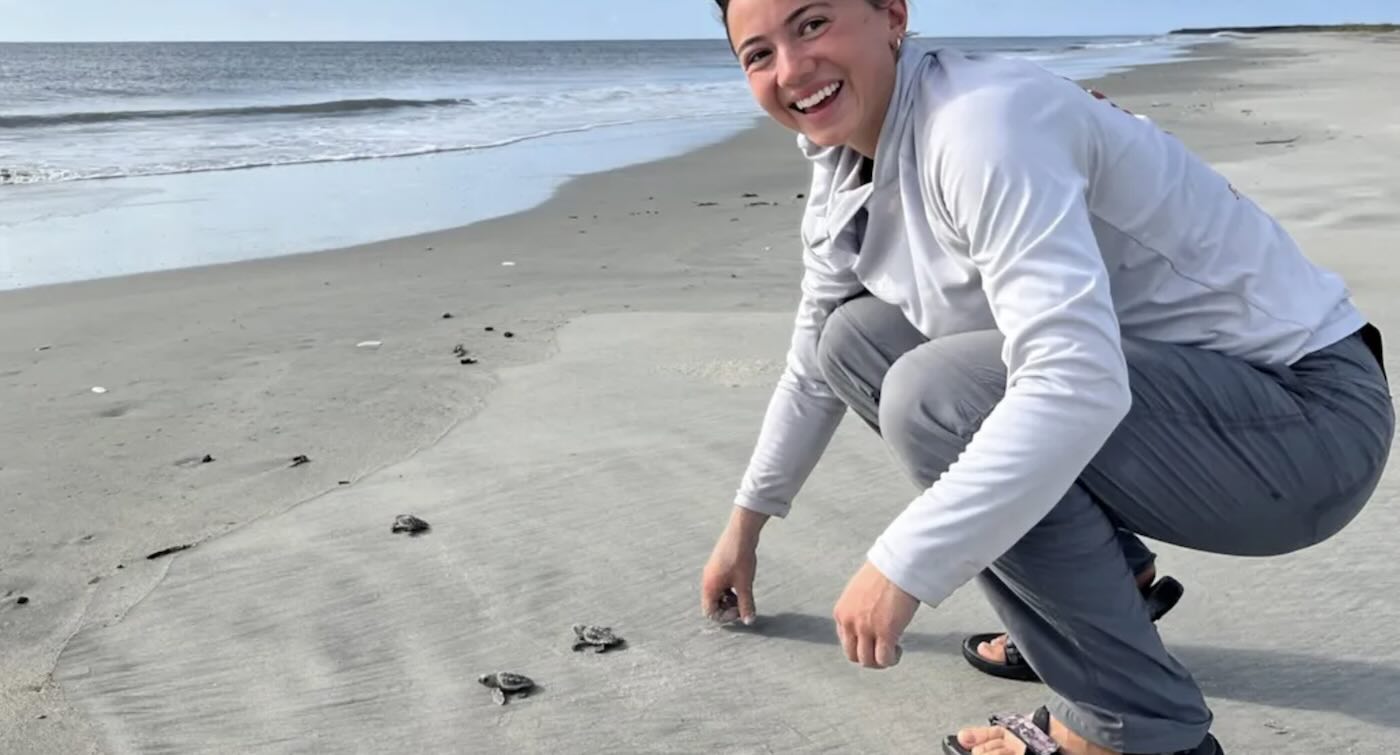
Loggerhead sea turtle nests along the Atlantic coast in the US have set a new 37-year record, topping every annual count for beaches in the state of Georgia, going back to 1989.
The state’s Department of Natural Resources calls it “a slow but steady rebound” for the animal listed as threatened under the Endangered Species Act in 1978.
According to the Georgia Sea Turtle Cooperative, the nest count passed 4,110 last week—the most since 1989, when that group of volunteers, researchers, and staffers, coordinated by the DNR, began counting nests all along the state’s barrier island beaches.
In the last five summers, the record has been broken twice. The previous high was 4,071 nests in 2022—which is almost double the goal originally set in a recovery plan hatched by humans for these beloved, big-headed reptiles.
Wildlife officials are ‘encouraged’ by the progress of the species’ restoration for a couple reasons. As big as they are—300 pounds—they develop very slowly.
“Loggerheads are a long-lived species and don’t reproduce until they’re 30-35 years old,” explained Mark Dodd, a senior wildlife biologist with DNR’s Wildlife Conservation Section and Georgia Sea Turtle Program Coordinator.

Furthermore, the region’s population fluctuates. 22 years ago, for instance, Georgia count totals were estimated at a record low of 358 nests in 2004.
But, overall, the Atlantic nest count in Georgia has increased at about 4% annually since the early 1990s—with Sea Turtle Cooperative members patrolling beaches each day at dawn, marking and protecting new nests.
Their work and the use of “turtle excluder” devices since 1990—to minimize the chances of turtles being scooped up by shrimp trawler nets—have been key to the resurgence of loggerhead populations.
EVEN BETTER: Sea Turtles Rebounding Worldwide as Nests and Habitat are More Protected, Says 2025 NOAA Study
Loggerheads spend almost their entire life at sea. But from May through mid-August, adult females—which can be more than 3 feet long—drag themselves onto Atlantic beaches at night to dig holes in sand dunes and lay clutches of about 100 ping-pong ball-sized eggs.
If current projections hold true, loggerhead numbers will now plateau. But, if protections remain in place, their numbers will begin to grow again.
Dodd said nesting could then reach levels not seen in the state since the 1950s.
MORE TURTLE LOVE: Sea Turtle Boom Astonished Volunteers in Florida With Best Nesting Season on Record
SHARE THE GOOD NEWS With Turtle-Lovers on Social Media…
Bride Calls for Metal Detector Mid-Wedding After Losing Ring Swatting a Bee on the Beach

A bride and groom were forced to find someone with a metal detector during their own wedding—after the engagement ring flew off her finger mid-ceremony.
Abi and Tony Clark were tying the knot on the beach at St. Brelade’s Bay in the Channel Islands near the coast of France, when she tried to swat away a bee.
Her engagement ring went flying and landed in the sand. The 15 guests immediately jumped from their seats and began searching, to no avail.
“During the ceremony, bees kept getting in the way, getting in her face. They must’ve liked her perfume!” said Tony.
“I didn’t know what to do,” recalled Abi. “I hoped it was in the garden, but I knew from the force I used to swat the bee away (that) the ring would have travelled far.”
Abi told SWNS news agency she was “absolutely gutted” that the ring could not be found, but Tony suggested the pair “carry on” and get married without the ring, which they did.

“Throughout the day I would talk about the missing ring but tried to block it out as I didn’t want it to ruin our wedding day, which we had worked so hard to save for.”
One friend, however, mentioned a local man named Steve Andrews who runs Jersey Lost Ring Metal Detecting.
Steve, a firefighter who recovers rings for people on a volunteer basis, came straight to the beach—and he found the rock within ten minutes.
“Abi was overjoyed,” said Tony.
“When we were about to cut our wedding cake, the toastmaster said that our guests Callum and Jess had an announcement.”

“In that moment I knew they had found the ring.
“I am so grateful to our close friends and to the metal detector for doing this for us.”
AMAZING WEDDING MOMENT: Surprise Audio Played at Wedding Shocks Everyone When Bride Accurately Predicts Husband’s Name as a 4-Year-old
“The way they revealed it had been found made it extra special as everyone was cheering and clapping and it became just an extra celebration on top of what was already a really special day.”
TIP THE BRIDES ABOUT BEES By Sharing The Caution on Social Media…
Your Weekly Horoscope – ‘Free Will Astrology’ by Rob Brezsny

Our partner Rob Brezsny, whose latest book is Astrology Is Real: Revelations from My Life as an Oracle, provides his weekly wisdom to enlighten our thinking and motivate our mood. Rob’s Free Will Astrology, is a syndicated weekly column appearing in over a hundred publications. He is also the author of Pronoia Is the Antidote for Paranoia: How All of Creation Is Conspiring To Shower You with Blessings. (A free preview of the book is available here.)
Here is your weekly horoscope…

FREE WILL ASTROLOGY – Week of August 8, 2026
Copyright by Rob Brezsny, FreeWillAstrology.com

LEO (July 23-Aug. 22):
Within most galaxies are dense clouds of gas and dust that astronomers call “star factories.” Here and there, the magic of gravity gradually gathers together diffuse material into concentrated clusters until nuclear fusion ignites, creating brilliant new suns. I suspect you will be operating a metaphorical star factory in the coming weeks and months, Leo. Small ideas, fragments of plans, or tentative experiments could coalesce in productive ways. Through your patient attention and care, luminous concentrations of useful beauty will emerge.

VIRGO (Aug. 23-Sept. 22):
Virgo biologist Stephen Jay Gould argued that evolution isn’t a ladder of progress but a branching bush of experimentation. Most species that ever existed are extinct, but they weren’t failures. For a very long time, they were successful experiments in being alive, well adapted to their environment. When conditions changed, they ended. That’s how evolution works. Let’s apply this lesson to your life, Virgo. If a part of your world is concluding, celebrate and thank it, then bid it a fond farewell. Feel grateful that it succeeded completely at what it was meant to do and gave you all it had to give.

LIBRA (Sept. 23-Oct. 22):
Your sense of purpose is intensifying. Your people need you more than ever, and your gifts are ripening just as they are most valuable to your community. But I must add that the road ahead will not be frictionless. You will have to outmaneuver diversionary tactics and dispel pockets of confusion. To serve as a shimmering catalyst of beauty and truth for your allies—and a shrewd strategist in the presence of deflections—lean into the paradoxical counsel attributed to Jesus: Be gentle and pure like a dove, yet keenly perceptive and discerning like a serpent.

SCORPIO (Oct. 23-Nov. 21):
Concrete continues to cure beyond the time when it’s first poured. After seven days, it has 70 percent of its ultimate strength, and after 14 days, 90 percent. It usually keeps getting sturdier for a few months, even years. I propose that we use this as a metaphor for what you’re working on, Scorpio. The foundations you established a while back are still solidifying. Projects that are working pretty well are still developing potency. This is a good thing! Everything is slowly improving through processes you’re not actively managing.

SAGITTARIUS (Nov. 22-Dec. 21):
Here’s your assignment: Find yourself a pair of enchanted pants that will bring you good luck and stir up fun. How will you know that they’re authentically charmed? Because when you put them on, you will instinctively wander toward adventures that expand your understandings about life. They may also lead you to explore places and situations that aren’t truly forbidden or taboo, but which you have oddly avoided as if they were forbidden or taboo. Finally, your enchanted pants are likely to inspire you to dream up a few crazy good ideas that will turn out not to be mostly good and not at all crazy.

CAPRICORN (Dec. 22-Jan. 19):
In classical music, a “fermata” is a symbol on the sheet music that instructs the instrumentalist to hold a note longer than its written duration. How long? It’s unpredictable. The musician decides. I think your life would benefit from a metaphorical fermata or two, Capricorn—maybe even more. You won’t come to a protracted pause, but you will engage in strategic prolonging, extending certain notes beyond their expected duration. Examples? Lingering longer in a conversation from which you’re inclined to exit early; staying with an ambiguous emotion rather than rushing to resolution; allowing a project to develop more leisurely than you might if you were simply pushing for sheer efficiency. Opt for what’s soulful instead of what’s crisp and neat.

AQUARIUS (Jan. 20-Feb. 18):
Fate is subtly but insistently pressuring you to stop squandering energy on half-hearted, hand-me-down desires. Why? So your real, holy obsessions can move to the center of your attention. The tepid wishes and lukewarm yearnings are being exposed for what they are: distractions that nibble away at your time and passion without fully feeding your soul. As these mediocre drives fade in importance, you’ll be exultant to see how much more fire, clarity, and juice you have available for the few burning, churning yearnings that truly belong to you.

PISCES (Feb. 19-March 20):
The Mariana Trench in the Pacific Ocean is so deep that if Mount Everest were located at the bottom, its peak would be over a mile underwater. The deepest point in the ocean could swallow the highest point on land with room to spare. The world holds more below than above. Please meditate on this fun fact, Pisces. I hope it inspires you to understand that your most interesting power often lies in the depths, not the peaks. While others are summiting, you’re descending into the mysterious, fathomless interiors. Your explorations may not photograph well because they happen in darkness. But they are the source of your strength.

ARIES (March 21-April 19):
In the early days of aviation, navigation instruments were rudimentary, and the skies were often a blur of clouds, darkness, or featureless horizons. Pilots sometimes relied on a technique called “dead reckoning”: good instinct bolstered by simple instruments like compasses and stopwatches. I suspect you will benefit from practicing a metaphorical version of dead reckoning in the coming weeks. You may not have all the data you would like, and the path ahead might be less than clear. But you already possess enough hints and inklings to make thoughtful approximations. If you’re alert and flexible, listening to subtle signals within you and around you, your evolving estimates will guide you uncannily close to the right destination.

TAURUS (April 20-May 20):
19th C. poet Emily Dickinson rarely left her comfortable home in Amherst, Massachusetts. Her favorite activity was to sit in her bedroom and compose her odd, unique, brilliant poems. Eventually, she wrote 1,800 of them, though few were published during her lifetime. Today she is renowned as one of America’s great literary geniuses. Her story reminds us that magnificent growth may emerge from simple and humble circumstances. I suspect you will thrive if you borrow her strategy during the coming weeks. You don’t need a hubbub of flashy events to evoke your beauty. A period of creative stillness could amplify your imagination and inspire your dazzle.

GEMINI (May 21-June 20):
In Renaissance workshops, apprentice painters learned their craft by assisting masters with small tasks. They mixed pigments, prepared canvases, and cleaned up. There was a valuable trade-off for this humble work. Being in proximity to mature brilliance often spurred the fledgling artists to harness their own creative powers. I suspect this dynamic is relevant for you, Gemini. Now is a favorable time to be alert for unexpected teachers and lessons. Be ready to apprentice yourself to captivating experiences where you might learn what you didn’t even realize you needed to know. Your willingness to be a curious, gracious student is your superpower.

CANCER (June 21-July 22):
If you knew you were going to live to 95 in reasonably good health, what additional careers or adventures might you pursue? Visualize your lifespan stretching out before you like a wide winding road, where you will have plenty of time not just to survive, but to experiment, wander, and reinvent yourself. Would you train for a new craft or profession? Would you move to another country for a while and apprentice yourself to a language, landscape, or tradition that has always piqued your curiosity? I invite you to take a concrete step that moves you in the direction of interesting future fun.
WANT MORE? Listen to Rob’s EXPANDED AUDIO HOROSCOPES, 4-5 minute meditations on the current state of your destiny — or subscribe to his unique daily text message service at: RealAstrology.com
(Zodiac images by Numerologysign.com, CC license)
SHARE The Wisdom With Friends Who Are Stars in Your Life on Social Media…
“Living well is the best revenge.” – George Herbert

Quote of the Day: “Living well is the best revenge.” – George Herbert
Photo by: Daiga Ellaby For Unsplash+
With a new inspirational quote every day, atop the perfect photo—collected and archived on our Quotes page—why not bookmark GNN.org for a daily uplift?

Good News in History, August 8

450 years ago today, the keystone of Europe’s first modern astronomical observatory—the Uraniborg designed by Tycho Brahe, was laid. It was also the last to be built without a telescope as its primary instrument. It was the first scientific complex to be funded entirely by a state for the purpose of research, and was so expensive it cost roughly 1% of the Danish national income. Brahe made many astronomical breakthroughs and calculations from within the walls of Uraniborg, and hosted a who’s-who of European astronomical alumni. READ more… (1576)
The Tiger Returns to Kazakhstan in First-in-the-World Rewilding Project a Decade in the Making
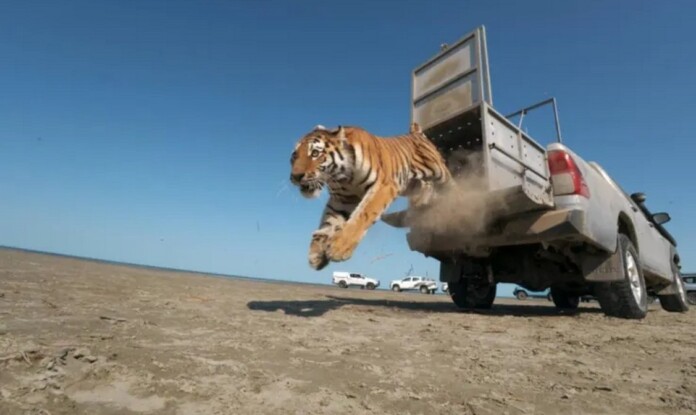
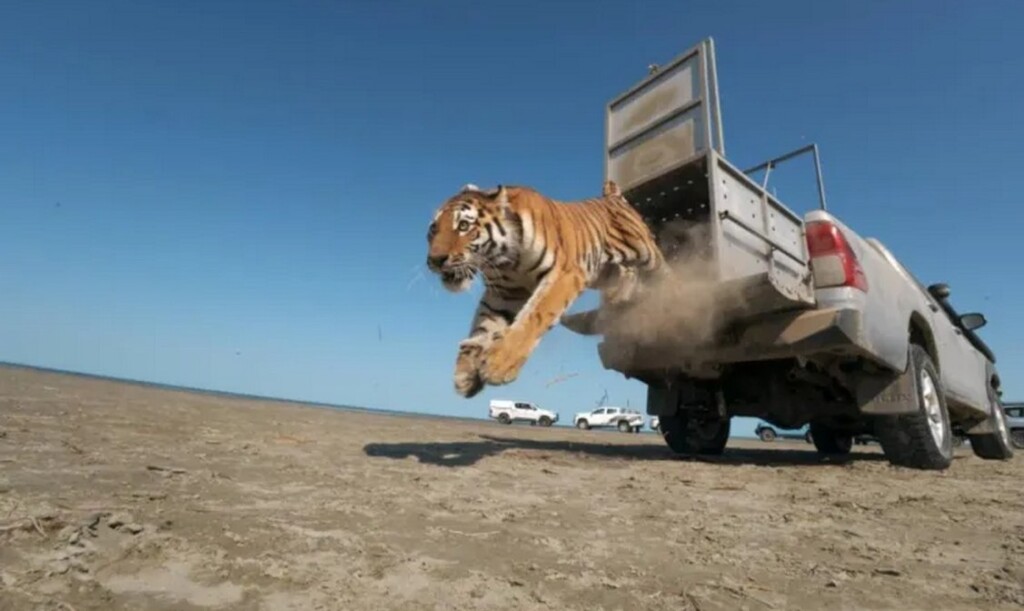
Kazakhstan has taken a massive step towards its long-held goal of re-establishing the tiger in the country by releasing a female Amur tiger into the Ile-Balkhash Nature Reserve.
Established in 2018 for this exact purpose, what followed was a truly generational effort of reforestation and replenishing prey species of deer and antelope that the Caspian tiger, now extinct, once relied on.
“Today, we witnessed a truly historic event,” Minister of Ecology and Natural Resources Yerlan Nyssanbayev said at the ceremony which saw the female tiger named “hope” in the Kazakh language, leap from the container on the back of a truck into the reserve.
“For the first time since the tiger disappeared from Kazakhstan more than 70 years ago, the first tiger has been released into its historical range. This is the result of many years of work by the state, our Russian colleagues, scientists, and international partners,” he said.
The extinct Caspian tiger, also called the Turanian tiger, was most closely related to the Siberian, or Amur, tiger, and so Russian collaboration was essential to the project.
In 2020, Bukhara deer were re-established in the reserve, before the saiga antelope, and the Asiatic wild ass, or kulan, followed.
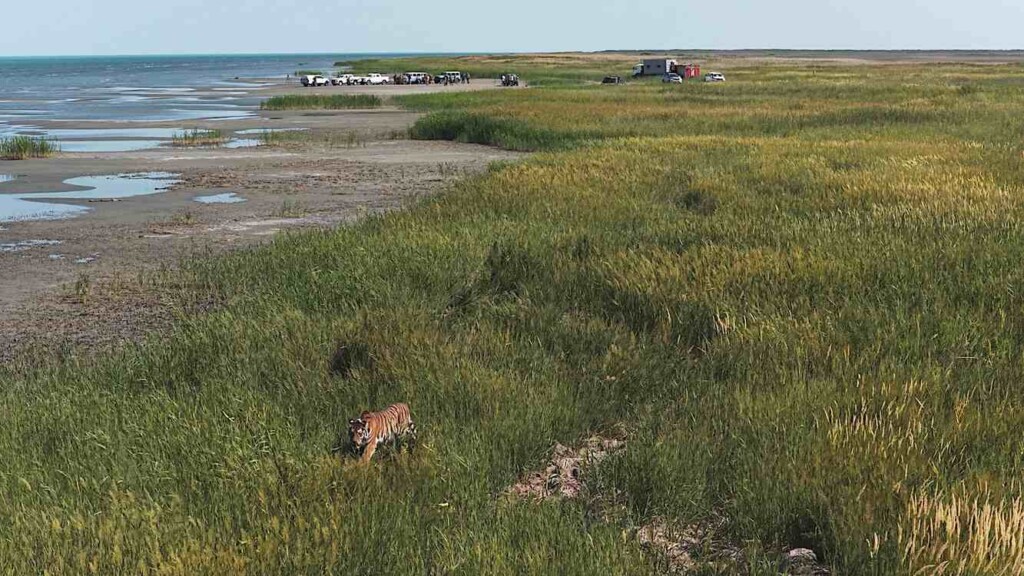
Before they could roam as their extinct cousins did, hope and 3 other tigers: a male named Amur and two cubs brought from Russia’s Khabarovsk Reserve were released into large enclosures to adapt to the sights, smells, sounds, and weather.
Hope was examined by veterinarians and determined to be in sterling condition, She was fitted with a GPS tracking collar and, driven out into the reserve, allowed to go her own way.
The male, Amur, remains in captivity as experts monitor his behavior to determine whether he will be capable of hunting in this new environment.
The cubs will grow up semi-wild in the reserve, with the intent to release them when they’re fully mature, or around 18 months of age, provided they pass behavioral assessments for hunting and survival instincts. This slow, gradual approach, Astana Times wrote, reflects the complexity of introducing large predators to new landscapes.
Part of that complexity involves the safety and security of the communities surrounding Ile-Balkhash. Though large, the reserve is not fenced, allowing tigers to spill out back into their ancestral environment as their populations grow.
KAZAKH COLUMN INCHES: Kazakhstan Efforts to Restore Last Wild Equine Species Receive Huge Boost of 150 Horses
“The safety of people living near the reserve is our top priority,” officials from Kazakhstan’s Ministry of Ecology said. “We’ve put measures in place to prevent conflicts between people and tigers, including a dedicated team that will respond if an animal approaches a populated area.”
If the program succeeds, Kazakhstan will become the world’s first country to re-establish the tiger into an ecosystem it had disappeared from.
WATCH the dramatic moment below…
CELEBRATE Kazakhstan’s Incredible Accomplishment With Your Friends…
‘Like a Moody Punk Rocker,’ the Red Handfish is National Geographic’s 18,000th Species Photographed
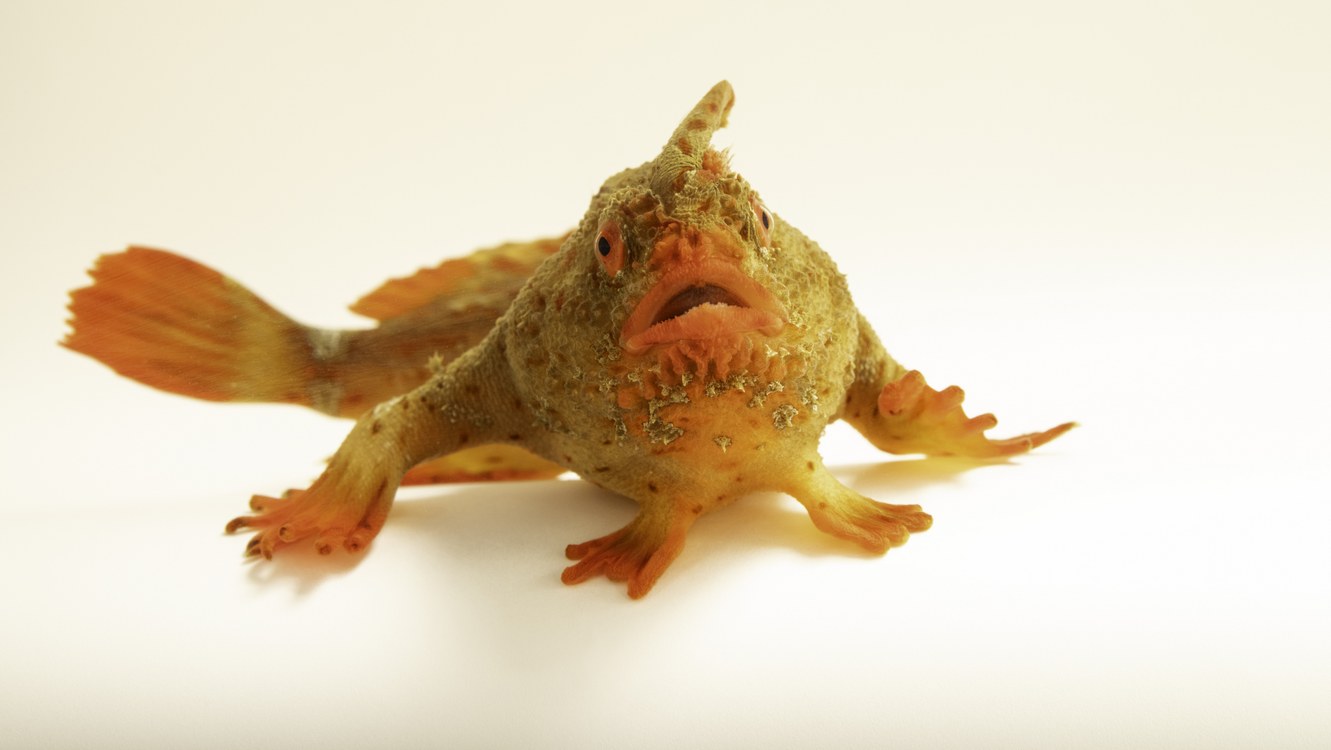
National Geographic calls it the ocean dweller who struts about more like a rock &roll frontman than a fish.
No bigger than a human thumb and sporting a red-lipped frown like a moody punk rocker, the Critically-Endangered red handfish is also the extraordinary 18,000th species in the National Geographic “Photo Ark,” just in time to celebrate its 20th anniversary.
National Geographic Explorer, photographer and Photo Ark founder Joel Sartore photographed this handfish while visiting the Institute for Marine and Antarctic Studies at the University of Tasmania.
It’s all part of Sartore’s now 20-year effort to document all species living in human care to show a world worth saving.
“I started the Photo Ark in 2006 with the idea that if we can illuminate species of all sizes — especially the little ones that don’t get a lot of love — then we might be able to ignite connection and compassion for all of the living things we share this planet with,” Sartore said in a statement.
“There’s no better example of what the Photo Ark is all about than our 18,000th milestone species,” Sartore says. “The rare and remarkable red handfish is brilliantly unique and critically important to marine biodiversity. We should care about their future as much as we care about our own.”
Red handfish live in a small patch of rocky reef on the southeast coast of Tasmania, and there are believed to be fewer than 250 individuals left in the wild. They’re benthic ocean dwellers, meaning they live on the ocean floor, and they use their fins as “hands” to walk along the seafloor instead of swimming through the water.
Because of their unique locomotion, red handfish are estimated to travel only the length of a standard basketball court in a single year, making them especially vulnerable to habitat loss and destruction from invasive species, human disturbance, pollution, and warming waters. They are one of 14 species of handfish, not all of which are endangered, but they are among the most threatened marine fish groups in the world.
Driven by a passion for nature and conservation, Sartore designed the Photo Ark to create human connections with animals and inspire people to take action for our planet’s incredible and often imperiled wildlife before it’s too late.
INCREDIBLE FISH YOU’VE NEVER HEARD OF: Endangered Pupfish Found Only in a Death Valley Cave Springs Back to Life in Numbers at 25-Year High
What started as one portrait of a naked mole-rat at the Lincoln Children’s Zoo in Lincoln, Nebraska, has evolved into a global endeavor of documenting the beauty and vulnerability of Earth’s biodiversity.
Filled with thousands of animal portraits on black-and-white backgrounds, the Photo Ark eliminates distractions and size comparisons, compelling viewers to look each animal in the eye.
WILDLIFE WONDERS: Family That Owned This ‘Wildlife Wonder of the World’ for 300 Years Sells Bass Rock to Protect 100,000 Seabirds
“The Photo Ark does so much more than raise awareness. It spurs real, on-the-ground conservation. Joel’s portraits drive a shift in attitudes, proving that when people truly connect with the beauty of these animals, they’re moved to protect them,” says Ian Miller, chief science and innovation officer at the National Geographic Society.
“The legacy of the Photo Ark isn’t just what Joel’s accomplished over these past two decades, but the tremendous possibilities for saving species as we look ahead to the next 20 years.”
SHARE This Wild And Wonderful Fish Celebrating A Very Special Anniversary…
Highest Resolution View of the Sun Reveals Breaking Waves and Magnetic Mysteries


Scientists using Earth’s most powerful solar telescope have snapped a picture of the Sun’s surface that helped explain—for the first time—foundational physics about our dear star.
Situated atop the summit of Haleakalā, a volcano on the island of Maui, the Daniel Inouye Solar Telescope peered down onto the surface of the Sun. Captured in the data is proof that the plasma thereupon is subjected to the same physical force that causes waves to break and whirlpools to form down on Earth’s seas, or among Jupiter’s clouds.
Published in the journal Nature, the authors of a paper on the discovery said it carries “far-reaching implications for our understanding of the creation and dissipation of magnetic fields,” on the Sun’s photosphere.
“The vortex formation on the Sun has long been a central question in solar physics. For the first time, we have identified both their origin and their driving mechanism,” lead study author Dr. David Kuridze, assistant astronomer at the National Solar Observatory in Boulder, Colorado, wrote to CNN in an email.
The phenomenon is known as Kelvin-Helmholtz Instability.
“Although theoretical models had suggested that the right conditions for Kelvin-Helmholtz Instability could exist in the photosphere, seeing these structures widespread across the surface was still a huge surprise.”
The discovery promises a wealth of further information on the mechanics of solar flares and coronal mass ejections, phenomena which, when occurring in the direction of Earth, can interfere with satellite communications and power grids, cause the Northern and Southern lights, and even destroy electrical equipment.
It also could help scientists understand why the Sun’s outer atmosphere is hotter than its surface.
Kelvin-Helmholtz Instability occurs when two fluids moving at different speeds pass each other in different directions. The perturbations caused by the interaction form vortices. The images from the Inouye telescope mark the first time the phenomenon has been seen on the Sun.
NEW TELESCOPES: Greatest Spectroscope Ever Built Can Tell What 2,400 Cosmic Objects Are Made of Every 20 Mins.
Kuridze later told CNN to think of the vortices as small engines that drive magnetism, energy, and heat up from the surface to the Sun’s outer atmosphere. This occurs, in part, through flux braiding, another potential signature of the vortices.
The vortices have the power to intertwine lines of a magnetic field, which generate heat when they snap and reform. For their research, the scientists pointed the Inouye Telescope at a magnetically-active area next to a large Sunspot.
MORE SOLAR PHYSICS: This Stunning Perspective of the Sun and Moon Comes from New NASA Mission Set to Study Solar Wind
CNN reported that the general consensus in solar physics is that these small solar whirlpools are far more relevant to the formation and expression of massive and rare solar events than other signs in the lead up to those events.
The ultimate reward of this work would be the ability to interpret the formation and movements of the vortices as signs of future, larger events that could potentially affect Earth.
WATCH the whole video below…
SHARE This Incredible Science With Your Friends…
SeaWorld Completes Largest Captive Whale Transportation Operation in Nation’s History
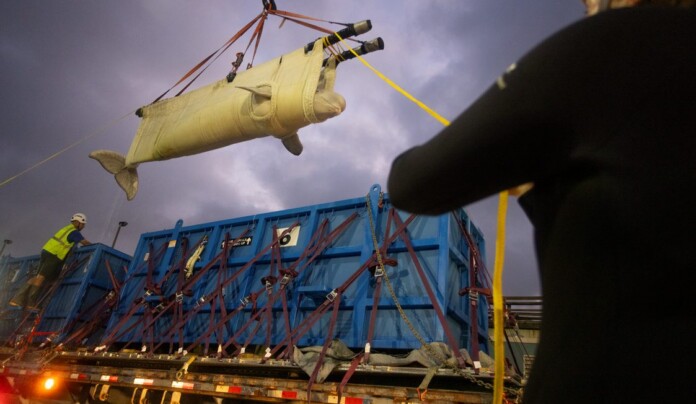
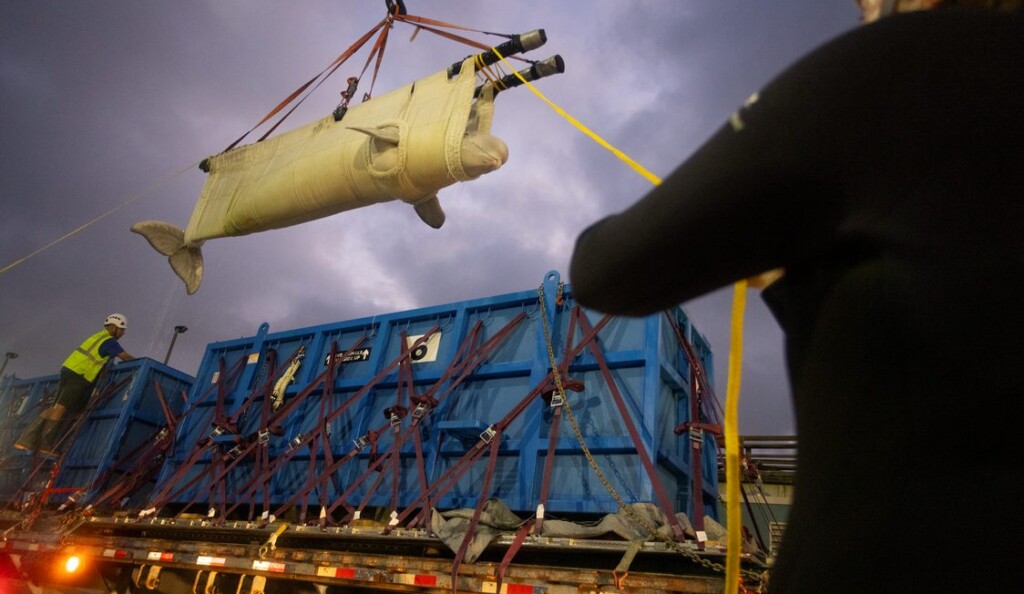
SeaWorld San Antonio recently welcomed 7 rescued beluga whales, following a nearly 2,000 mile journey, as part of an urgent, unprecedented international effort to relocate 30 belugas from a closed marine park in Canada that can no longer support their care.
They join 2 rescued male belugas who arrived on July 21st as part of the first transport, and set a national record for the largest movement of captive cetaceans ever undertaken by a zoo or aquarium.
“Given this is the largest number of belugas being moved at one time, we are so happy that all went well and the second transport of this huge rescue effort is complete,” said Steve Aibel, Vice President, Animals and Conservation for SeaWorld San Antonio, who accompanied both transports.
“All seven female belugas are now at SeaWorld San Antonio. They are receiving veterinary care, nutrition and attention as they acclimate to their new environment.”
GNN reported on the previous group of belugas to depart captivity in Ontario towards ‘bluer’ pastures stateside, when 4 female belugas flew to Chicago via a Qatar Airways Boeing 777 container aircraft.
Kept harnessed onboard in specialized water containers with 24-hour veterinarian supervision, they arrived at the Abbott Oceanarium complex at Shedd Aquarium on July 22nd.
“Moving animals like beluga whales, even under the best of circumstances, is challenging,” Dan Ashe, president and CEO of the Association of Zoos and Aquariums which organized the move, and which also partnered with SeaWorld, told CBS News Chicago at the time.
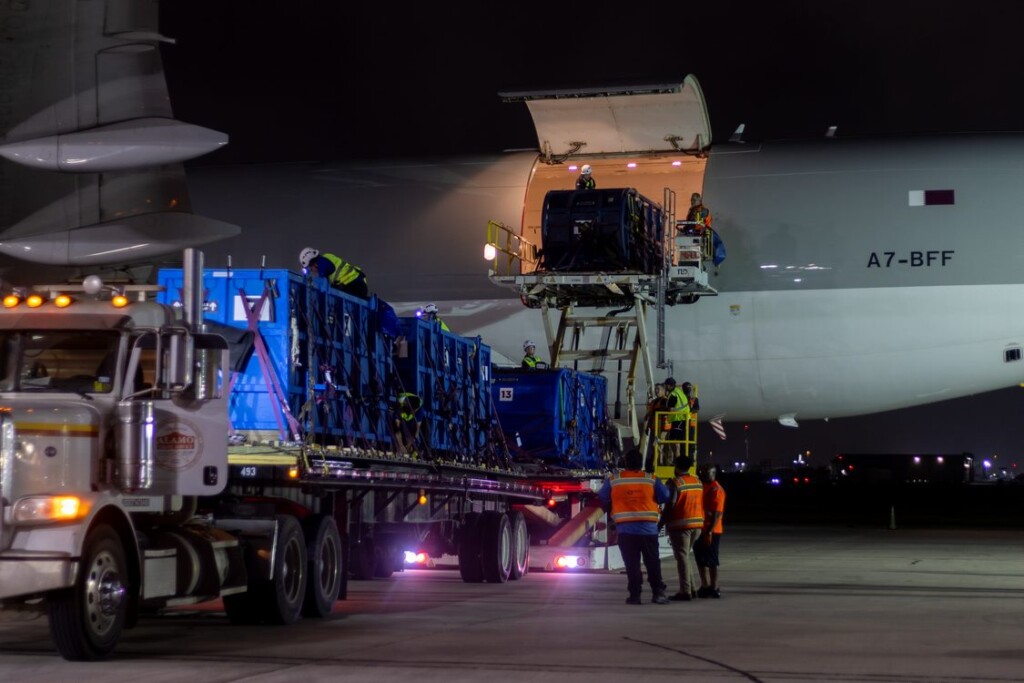
For the 7 beluga whales that headed off towards San Antonio, the process was exactly the same, only more intense.
The 7 female whales who were chosen to move together in a sub-pod are named Xena, Gemini, Skyla, Meeka, Eve, Neva, and Calypso.
The whales are currently housed in a private habitat away from public view while animal care staff focus on their transition. Caretakers are letting each whale adjust at her own pace, watching closely for signs that they are eating well, resting comfortably, and beginning to interact with one another and their new surroundings.
MORE STORIES LIKE THIS: 30 Beluga Whales are Finally Being Rescued After 2 Years Waiting in Shuttered Theme Park
Frankie and Bertie Botts, the two male belugas who arrived 3 weeks ago from Canada, are doing well. They are getting to know their trainers and, at their own pace, are being socialized with the existing belugas at SeaWorld San Antonio.
For more than 40 years, SeaWorld has cared for beluga whales, building extensive expertise in animal care, veterinary medicine, behavioral research, and rescue response, leading to the establishment of one of the largest marine animal rescue organizations in the United States, having assisted more than 43,000 animals over its history.
SHARE This Big News And Even Bigger Operation With Your Friends…
“Memories of our lives, of our works and our deeds will continue in others.” – Rosa Parks

Quote of the Day: “Memories of our lives, of our works and our deeds will continue in others.” – Rosa Parks
Photo by: Raychel Sanner (cropped)
With a new inspirational quote every day, atop the perfect photo—collected and archived on our Quotes page—why not bookmark GNN.org for a daily uplift?

Good News in History, August 7

10 years ago today, Ichiro Suzuki joined the “3,000 Club” of collecting 3,000 hits across an MLB career in style, hitting a triple off the right-field wall of Coors Field against the Colorado Rockies. In doing so he also became the 7th player in MLB history to hit 3,000 and steal 500 bases in a career—such was his excellence. READ more… (2016)
Japanese Team Develops ‘Eco-Fireworks’ with Water-Soluble Shells to Cut Back on Debris


When a man who loves things that go ‘boom’ met a men who loves things that go ‘bloom,’ they realized there was much to gain from an alliance.
Hence, Ryukoku University professor Takahiko Nakaoki and president of Kakinoki Fireworks Industry Co. have created and brought to market what may be the world’s first water-soluble fireworks shells and canisters.
“Of the 20,000 fireworks (we plan to produce this year), I want 10,000 to be eco-friendly ones,” said President Hiroyuki Kakinoki, according to the Mainichi Shimbun.
Mr. Kakinoki met professor Nakaoki in 2018, when the former had been trying to R&D more environmentally friendly fireworks shells, but had then lately abandoned the effort due to repeated failures working with resins.
Rather than develop an entirely new material, the new shells use a water-soluble resin commonly applied to agricultural seeds and soil improvers. Becoming sloughy like hot caramel when wet, the shell can vanish into the ecosystem through this already-approved harmless medium, and no street-sweeper need be troubled in the days after a holiday.
A lot of Japanese fireworks shows occur near water bodies, like large rivers, lakes, or the ocean, meaning most casings will vanish within hours.
Kraft paper is used to keep moisture away from the shell in packaging and storage, but compared to previous use, the water-soluble fireworks will use about half as much paper.
SHARE This Great Development In Fireworks Technology With Your Friends…