All News - Page 1612 of 1689 - Good News Network
Home Blog Page 1612

Boomers Answer Call to Service, in Legislatures and Classrooms

Frank Shimkus

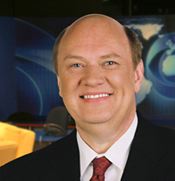
Frank ShimkusIn the last four years, a growing number of boomers — those born between 1946 and 1964 — are showing up in the freshman class of state legislatures. Aspirations for the statehouse reflect a broader trend: Boomers, nearly 3 million of whom will celebrate their 60th birthday this year, are eschewing retirement in favor of meaningful second careers. Nearly 60 percent of Americans aged 50 to 70 said they want to put social purpose ahead of other goals, according to a recent survey commissioned by Civic Ventures, a group promoting older workers. (right: Pennsylvania Rep.-elect Frank Andrews Shimkus (D), former news anchor of WYOU-TV)

As evidence, some 20 percent of new teachers in alternative certification programs are over 50, the number of boomers in divinity schools has nearly doubled, and community colleges report a noticeable increase in older entrants in nursing and other health-related fields, said David Bank, senior vice president of Civic Ventures, and co-author of a forthcoming book on boomer retirement entitled “Encore.”

As a group, baby boomers have been more civically engaged than previous generations, and because they are expected to live longer and healthier lives than their parents, late-life political careers are a natural fit, said Jim Emerman, executive vice president of Civic Ventures (link to PDF of survey).
“They want to use the talents and experience they have to solve big problems in their community and in the country,” he said.
Frank Andrews Shimkus has been in the public eye for three decades. But for the freshman Democratic representative from the 113th District in Scranton, Pa., politics is a second career. Shimkus, 54, is better known as local TV anchor Frank Andrews.
He is one of more than 1,200 new faces in statehouses across the country.

Boomer Legislators

November’s elections ushered in a crop of lawmakers with non-traditional backgrounds: Many are not lawyers and have never before held public office. More women, Hispanics, blacks and Native Americans than in previous years were also part of the mix along with a new political breed — baby boomers who want to make a difference.

For his part, Shimkus said his goal is to make the Pennsylvania Legislature more accountable — a tall order in a state where lawmakers were recently chastised for secretively giving themselves a last-minute pay raise. Not one to shun a challenge, he vows to reduce the size and cost of the Legislature, even if it means eliminating his own job.
To increase his visibility, Shimkus chose a ground-floor office with a plate-glass window on Main Street in Scranton, and he even plans to put his reporting skills to work by holding town-hall-style meetings and speaking directly with as many constituents as possible.
“My staff and I want to personally call at least 30 people every day. Most people have no concept of what a state representative does or should do. I want to bring Harrisburg to the people,” he said.
The decision to run for the Legislature was tough, Shimkus explained, because it meant giving up his career as a journalist. Pennsylvania legislative positions are considered full time, and professional ethics bar journalists from politics.
Nebraska Sen.-elect Annette Dubas and her son
on the farm in Fullerton, Neb.

Some new boomer legislators, however, plan to keep pursuing their first careers while holding office. A case in point is Annette Dubas, 50, a lifelong farmer and mother of four, who was elected to the Nebraska Statehouse.

Because of term limits, 22 of the 49 seats in Nebraska’s nonpartisan, unicameral Legislature opened up, and Dubas saw the opportunity to follow her political ambition while maintaining her family’s farm.
The decision to run for public office was difficult, she said, because it meant leaving more of the farm work to her family: “We are a family operation. My son and his wife took care of the harvest this fall while my husband and I were out campaigning.”
Even though she has yet to take office, Dubas splits her time between the Nebraska Statehouse, road trips to meet constituents and chores on the farm. “I haven’t even been sworn in yet and I’m going somewhere every day, doing a lot of reading and educating myself,” she said.
Like Shimkus, Dubas wants to be accessible. She plans to set up field offices and drive around her four-county district to meet citizens so they won’t have to travel to the capital.
“There seems to be an intimidation factor. I want people to just call me up and let me know their concerns,” she said.
In Nebraska, taxes and education are always big issues, Dubas said, but for now she plans to concentrate on the state’s severe water shortage. She’ll also work to keep small schools open and maintain the vitality of towns.
Nebraska Sen.-elect Greg Adams with volunteer
students from local high schools

Another Nebraska boomer, 54-year-old Greg Adams, said he joined the Legislature after 31 years in teaching because he “wasn’t ready to sit down and quit yet.” Adams was somewhat familiar with what he would face in the Statehouse — he has more than two decades of political experience, including a stint as mayor of York, Neb., his hometown.

Adams figures he can combine his classroom experience and political savvy to solve some of the state’s most pressing problems.
“Education has always been important to me. I want to get kids to stay or even come back to the small towns,” he said. He hopes to accomplish this by boosting economic opportunities in the state’s rural communities, he explained.
Arkansas Rep.-elect Kathy Webb (D) on left, at her restaurant

Education is also a top priority for Kathy Webb, 57, a freshman Democratic representative in the Arkansas House. Webb — owner of the Little Rock restaurant, Dim Sum Then Some — said she understands what education means for workers: “I have daily interaction with people who can’t read and can’t do percentages. I see the need for something to offer people who are not going to college — more vocational training.”

Voicing a common theme among new state lawmakers, Webb said she will focus on staying in touch with her constituency — something she’s already accustomed to through her interaction with employees and customers at the restaurant.
As boomers nationwide learn the ropes of lawmaking during legislative orientation classes this month, they’ll get a taste of the challenge ahead. The work of a legislator is not rocket science, but it isn’t easy; it takes patience and an ability to digest reams of information, said Bruce Feustel, senior fellow at NCSL. Experience counts for a lot, but like any new legislator, boomers will have to pace themselves to avoid burnout and information overload, he explained.
Are statehouses likely to fulfill baby boomers’ quest for meaningful second careers? “Most legislators choose to run for re-election — that is evidence the job is rewarding,” said Karl Kurtz, a director at NCSL.

Story originally published by Stateline.org. Contact Christine Vestal at [email protected]

 

Bringing Back Thank-You With $20,000 Kindness Prize

thank you day logo

thank you day logoThe first annual National Thank You Day launches this month with a contest to search for one small deed that deserves one big thank you. Sponsored by merci® European Chocolates, in collaboration with the celebrity etiquette expert, Peggy Post, the Thank You Day contest hopes to encourage people to remember and recognize everyday acts of kindness by nominating someone whose good deed deserves a grand prize valued up to $20,000.

“The simple words, thank you, have the power to make our world a more civil place,” says Post, spokesperson for National Thank You Day. “When you express appreciation, you can’t help but notice its positive impact. These words, when sincerely expressed in any form, can bring happiness, change attitudes and influence people.”

Post will present a deluxe thank you in person with a prize valued at up to $20,000 to the winner on Monday, September 24, 2007, the debut of National Thank You Day.

To enter someone in the contest, nominators are asked to write an essay of up to 150 words about who they would like to nominate and why, and submit it by August 24. The grand prize winner will be selected by Peggy Post, among other judges.

National Thank You Day, to be held annually on the last Monday of September, was inspired by the findings of a recent survey* conducted by merci and The Emily Post Institute that found that while 87.3 percent of Americans said they are bothered when people don’t say thank you, 90.2 percent feel that they don’t say thank you enough. The 1,088 people surveyed believed saying please, thank you and you’re welcome are the most important good manners to observe, followed by practicing patience while waiting in lines.

One hundred first prize winners will receive an autographed copy of Post’s latest book, Excuse Me, But I Was Next: How to Handle the Top 100 Manners Dilemmas, and a box of merci Finest Assortment of European Chocolates. All nominators who submit an eligible entry will receive two boxes of merci — one to enjoy and one to pass on to the person they would like to thank.



Details and entry forms are available at www.nationalthankyouday.com

*Impulse Research Corporation conducted the Thank You Survey in June 2007 for merci Finest Assortment of European Chocolates in collaboration with the Emily Post Institute through an online survey of a random sample of 1,088 men and women, ages 35 to 54, with an overall sampling error rate of +/- 3 percent.

De-Stressing Stress

great-falls.jpg

Recently, a coaching client of mine had an epiphany in the midst of a two-hour walk in nature. There, in the rare quiet of her busy life, she discovered she actually could hear herself thinking. What is more, to her surprise and amazement, the chatter she heard running like a soundtrack in her mind was cacophonous and negative. Not the ominous negativity of someone who is suicidal or homicidal. Rather, “little negatives,” as Normal Vincent Peale called them. She heard herself making insidious statements like, “I don’t think I’ll be able to do this,” and “I don’t seem to be able to get what I want.” Little did she know just how this realization would become a cornerstone to greater success, happiness, and productivity.

“Attitudes are more important than facts.” – Karl Menninger, M.D.


In our coaching session, she wondered aloud how changing her thoughts might help. She seemed to sense that this one, seemingly small, change could yield abundant results. She mused on the following questions. What if she learned to catch herself in the act of thinking negatively? Could she replace these corrosive, negative thoughts with positive ones? What would happen if she did?

She indeed had found an essential key to her future success and productivity. This story demonstrates how we create our own stress as well as our own energy, success, and happiness.

Stress Is a Verb

People commonly think of stress as a noun, as in “I have so much stress in my life.” However, in actuality, it is a verb, as in “I am stressing about this project or outcome.” An anxiety-provoking task, such as standing in front of the Board of Directors to present a report, may not be of our choosing. But we can choose to maximize or minimize our stressing by how we think about it.

Why People Create Their Own Stress

Who would seek to be stressed? Very few of us would, at least on a conscious level. However, below the surface, it may be a different story. We may find value in creating our own stress:

We may think of stress as a motivator. Without it, we fear we might lose our competitive edge or become slackers.

We may have learned it as children from adults in our lives who constantly fretted and worried — many of whom even “disasterized” that ruin surely was nipping at their heels. Before we were able to consciously choose, we developed that authority figure’s stressing habit.

We may have learned that ‘being perfect’ is the price of admission
to the hearts of important people. Because perfection is unattainable, we continually worry that we will be found out. This often leads to a compulsion for dotting every i and crossing every t. In the end, nothing is completed — or if it is, we insist it is unworthy.

We may have learned to expect the unexpected, often citing ‘Murphy’s Law,’ which has led straight to a self-fulfilling prophesy of inconsistency and even chaos. It, consequently, became the norm.

We may have became addicted to the adrenalin rush we get from always being stressed — sucking down coffee to fuel even faster speeds. We rationalize this keeps us on our toes. Maybe so. But how long can this pace be maintained?

What is the common denominator in all of these? Stress has become normal. And therefore, comfortable. We have difficulty recognizing it actually poses a problem. Harder still is contemplating giving it up. The most difficult of all is actually giving it up.

If you are preoccupied with thoughts that make you anxious, try these anti-stress methodologies, which can help you gradually learn to replace your worry habit with positive thinking.

Tips For Stress Busting

  1. When you hear yourself “disasterizing,” stop and do a reality check. Is it true that nothing ever works out for you, or that you never do anything right? Probably not
  2. Let go of the negative thought by actually watching it float away like a balloon
  3. Replace it with a positive, affirming thought, such as, I can figure this out, or I can ask for help if I need it
  4. Be patient with yourself while you are learning to practice this new perspective. Soon, it will become second nature
  5. If you continue to have trouble with this approach, ask for help of a trusted friend, coach, or therapist

As you learn this new orientation to stress, watch in amazement as your stress decreases and as your mood becomes more upbeat. And don’t forget to enjoy the steps along the way to a more relaxed and competent you.

Dr. Beth Erickson is Founder and CEO of Erickson Consulting International. She is an executive coach, business consultant, and professional speaker based in the Minneapolis, MN area. She has been a family and marital therapist for over three decades and is the author of three books. Her most recent published book is Longing For Dad: Father Loss and Its Impact. www.DrBethErickson.com

GNN-i Needs New Logo – Wanna Help?

EDITOR’S BLOG — As you can see by the SAW Blood Drive marketing image below, good graphics have a unique ability to convey a message or brand a company. When I redesigned the site in 2006, I didn’t have a graphic artist working with me and the Web designer. We came up with the seven-circle image to represent our seven categories, which I liked, but the company name and background was thrown together. Currently I am redesigning the site to honor our 10th anniversary. Is there anyone out there who would like to take a stab at creating a new logo for the Good News Network? I’m premiering my first podcast next week, and eventually want a logo for that, which would tie into the company’s logo…

Red Cross Collects Blood with Premiere of SAW IV

The Fourth Annual SAW “Give Til It Hurts” blood drive benefiting the Red Cross will coincide with the Halloween premiere of the latest title in Lionsgate and Twisted Pictures’ SAW franchise, SAW IV, which opens nationwide on October 26, 2007. The blood drive has become as much a part of the SAW franchise, as the horror hit’s annual Halloween premiere date. And blood collection totals have doubled every year…

U.S. Court Blocks Navy Sonar Use to Protect Whales

A federal court issued an injunction on Monday, once again blocking the U.S. Navy from using a type of sonar that wildlife supporters say harms, even kills, whales.

Minneapolis Shows Why it’s Rated No. 1 in Volunteerism

Leading the nation in volunteerism, Minneapolis has a large pool of experienced volunteers who helped aid recovery after the bridge collapse last week, from grief counseling to food preparation, crowd control, and even diving. (CS Monitor)

Bridge Collapse Hero is Offered Free Tuition

“One of the heroes of the Minnesota bridge collapse has been offered a substantial reward — full tuition at a technical college, which he had been attending but had to leave because of the cost.” Jeremy Hernandez, 20, was aboard a school bus teetering on the edge of the bridge when he forced open the back door of the bus and helped each child to safety. (KARE-TV 11, text or video)

20 Years of Peace Celebrated

Presidents of five Central American nations met to celebrate the 20th anniversary of a peace agreement that ended decades of civil wars in the region, the Esquipulas II peace plan, which led to a Nobel prize for President Arias of Costa Rica.

Poop-Powered Fuel Cell Could Power the World

redbarn.jpg

Benson Lee has developed a kilowatt-size fuel cell that can run on gases emitted from decomposing animal droppings, human waste and food waste. The ramifications are fantastic… Lee figures, ”Two-thirds of the people on this planet have no electricity. That’s 4 billion people. They all have human waste. We assume they can dig a hole."

Chase Opens its First “Green” Bank Branch in U.S.

chase-bank

chase bank signEnvironmental issues dictate building materials at the first "green" branch for Chase banks. From ceiling tiles made from recycled material down to bamboo floor, the bank uses Energy Star equipment and lighting, employs a comprehensive recycling program and even features a branch manager who bikes to work. The branch in Denver’s LoDo District is Chase’s first constructed under Leadership in Energy and Environmental Design (LEED) guidelines, but will be followed soon by four more — another in Colorado and three in Texas.

North Koreans Grateful for Energy Aid Exchanged for Nuclear Shutdown

“North Korea offered its gratitude for oil given as a reward for shutting down its sole nuclear reactor, as it joined talks Tuesday with the U.S. and other countries to hash out further details of the agreed energy aid for progress on disarmament.” (CS Monitor)

Honey Bees Hunt for Land Mines in Croatia

Swarms of honey bees buzz over Croatian meadows in an experimental hunt for explosives, making them new recruits in authorities’ efforts to clear away thousands of potentially deadly land mines.

U.S. Returns Stolen Cambodian Art

The U.S. government returns part of an Angkor-era sculpture to Cambodia, one of many artifacts smuggled out of the country. The artifact was stolen and smuggled abroad in violation of a 2003 bilateral agreement to protect Cambodia’s cultural heritage but was seized by U.S. law enforcement officials… (Video)

New York Mayor Reports for Jury Duty

Michael Bloomberg is proud to do his duty — even his jury duty — although he is mayor of New York City and even after having served already five times since 1981.

The Art of Success: Have You Learned it?

smmoney.JPG

moneyIn June, I attended a four-day workshop with success coach David Neagle in Las Vegas. It was powerful! I wanted to rid myself of all those limiting beliefs that were holding me back from the success I’ve always wanted. I first heard him speak on a free, live tele-seminar called The Art of Success. Now he is offering free downloads of The Art of Success. Are you ready to rise up to the next level in your life? Here’s what you will learn…

UN Inspectors Welcomed into Iran Nuclear Site

A group of UN atomic inspectors last week inspected a heavy water reactor in Iran that is one of the key western concerns over the Islamic republic’s nuclear program. The inspection was the first since April when access was shut down, considered a conciliatory move in the face of mounting tension over Iranian nuclear ambitions. (AFP)

Lions Making a Comeback on Kenya Ranches

lion-face

lion"Conservation efforts in southern Kenya have led to an "extremely encouraging" rebound in the lion population there." Masai warriors used to prove their manhood by killing lions, but things have changed thanks to a compensation program for livestock lost and new jobs dedicated to preserving the lions. (Nat’l Geographic)

Field of Dreams for Children with Disabilities (Video)

For children with special needs the opportunities to play baseball are slim, but that’s about to change thanks to the Miracle League of Minnesota. (Video- 3:48)

Clean Power is Less Than 6 Miles From Anywhere

geothermal-Nesjavellir-Plant.jpg

geothermal plant in Iceland

Not many people feel comfortable having power plants, oil refineries, or hydro-electric dams in their backyard. But, how about having a well in your neighborhood? A report released at the Massachusetts Institute of Technology calls for the drilling of more wells as a solution to the world’s energy crunch. Not the drilling for oil or water, but rather for rock, hot rocks, that is. Geothermal energy is one of the most environmentally friendly means of producing much needed electrical energy and it can be accessed by almost every country.

If enough deep wells were drilled in the U.S., the MIT report claims that 27 trillion kilowatt-hours of energy (the total consumed by the U.S. in 2005) could be accessed. Even better, it was estimated that the U.S. could be provided with enough energy to support its current rate of use for the next 2,000 years, thus ensuring energy security for the nation.

The report comes at a time when the existing nuclear reactors and coal-fired plants are exceeding emission guidelines. One of the authors feels that geothermal energy is perhaps undervalued by those searching for new energy options. The report proposes a combined public and private investment of $800 million to $1 billion in the first 15 years. This is equivalent to the money required to build one clean-coal power plant. Additionally, unlike current plants that require a fuel source or new clean energy sources such as wind and solar-based systems, geothermal energy would be continuous and self sufficient. No longer would most countries be tied to the reliance on petroleum exports of other nations for their energy needs.

The energy supply works by simply pouring hot water onto earth-warmed rocks and using the generated steam to turn turbines. The turbines then generate the electricity. The panel believes that “by any calculation, this is an extremely large resource that is technically accessible to us right now”, according to the lead author, Jefferson Tester. Our existing technology is capable of producing the geothermal plants and “there’s never going to be a limitation on our ability to expand this technology because of the limits of the resource.”

Since the shape of our world is spherical, every country on the planet should be able to access this energy resource. A significant benefit is the reduction in levels of greenhouse gases or dangerous waste produced by traditional energy generating techniques. The adoption of electric cars and other electric motors over petroleum based devices points to more reasons to boost geothermal production and at the same time reduce greenhouse gas emissions.

One obbvious caveat is the danger of earthquakes and the damage they could do to the drilled wells. Nevertheless, the risk is well worth facing since earthquakes can just as easily wreak havoc on our current power plants and, particularly in the case of nuclear plants, cause significant damage beyond that of the plant itself.

The need for oil would not vanish entirely since it is used in the making of numerous products from asphalt roads and tires to plastics and preservatives, but the benefits of geothermal remain as clear as the water in a backyard well.

– Additional Resources: The Future of Geothermal Energy by MIT (PDF)

Michael Little works in analytical chemistry and has almost 20 years experience in the research based pharmaceutical industry. Michael resides in Laval, Quebec, with his wife and three children. Michael has written occasional science articles for GNN since 2007.