Quote of the Day: “Ethics and equity and the principles of justice do not change with the calendar.” – D. H. Lawrence
Photo: by Colin Lloyd (cropped)
With a new inspirational quote every day, atop the perfect photo—collected and archived on our Quote of the Day page—why not bookmark GNN.org for a daily uplift?
It had all the hallmarks of an unremarkable night in East Boston for a couple of police officers before they got a call about a wellness check after a concerned citizen dialed 911.
However, once they got all the details they realized that the caller wasn’t so much concerned about his health, but about a special occasion that was soon to pass him by—he was turning 25 years old, but no one was there to celebrate.
Officer Israel Bracho and his partner Frank originally thought the call was a joke. Once they verified it as legitimate, they perked up, and went to a bakery to furnish themselves with everything they needed for the task—muffins and candles.
“My mother raised me right; she would have killed me if I didn’t,” Officer Bracho told WPRI.
The man with special needs which went unrevealed by news reports, meekly answered the door while the officers cheerily asked him his name and how old he was going to be.
His name was Chris, and he was going to turn 25. As Bracho was lighting the candles, Chris asked his partner Frank how old they were.
“Aw man, we’re old—we’re about 40,” he replied. Candles lit, the pair belt out the birthday song. Chris, who by then had been fidgety and nervous-looking, loses it with joy and gratitude when they finished, hugging the officers who had made his night.
“This is more than I could ask for,” Chris said, gesturing to the muffin when asked if he needed anything else.
WATCH the video below from WRPI…
SHARE This Cheery And Heartwarming Wellness Check With Your Friends…
Dr. Baiyu Helen Zhang Professor and Canada Research Chair Memorial University, Newfoundland - credit, CLS, CC 2.0. BY NA
Dr. Baiyu Helen Zhang Professor and Canada Research Chair Memorial University, Newfoundland – credit, CLS, CC 2.0. BY NA
Using nothing other than light, Canadian scientists have developed an organic smart material that can either soak spilled oil out of water, or repel it.
The material can be used in this way like a sponge to quickly clean up marine oil spills before the oil reaches the shoreline and mixes with or poisons sand, vegetation, and animal life.
The special material—called CNF-SP aerogel—combines a biodegradable cellulose-based material with a substance called spiropyran.
A light-sensitive material, spiropyran has a unique ‘switchable’ property that allows the aerogel to go from being oil-sorbent and oil-repellent, just like a kitchen sponge that can be used to soak up and squeeze out water.
“Once spiropyran has been added to the aerogel, after each usage we just switch the light condition,” explains Dr. Baiyu Helen Zhang, professor and Canada Research Chair at Memorial University, Newfoundland.
“We used the aerogel as an oil sorbent under visible light. After oil adsorption, we switched the light condition to UV light. This switch helped the sponge to release the oil.”
And the material continues soaking up and releasing oil, even when the water temperature drops, according to Dr. Xiujuan Chen, an assistant professor at the University of Texas, Arlington.
“We found that when we tested the oil sorbent’s performance under different kinds of environmental conditions, it had a very good performance in a cold environment. This is quite useful for cold winter seasons, particularly for Canada,” she said.
Part of the research was done at Canadian Light Source, a national research facility that possesses one of the world’s most sophisticated synchrotron microscopes. Using it, they were able to ensure the CNF-SP aerogel was highly effective in cold temperatures, which would be absolutely necessary under the circumstances of an oil spill in Canadian territorial waters.
GNN has reported on various scientific endevors to solve world problems that made a stop in the CLS, including an Australian-Canadian team that discovered a way of turning mine waste into arable soil—and that’s already being used to grow maize and sorghum, and a US team that took pollutant phosphorus from wastewater and infused it into a soil superfood called biochar.
SHARE This Innovative Way to Clean Up Oil With Your Friends…
Partial lot of Italian art confiscated and – Credit: Emanuele Antonio Minerva / Italy's Ministero della Cultura
Partial lot of confiscated Italian art – Credit: Emanuele Antonio Minerva / Italy’s Ministero della Cultura
US law enforcement and consular officials recently unveiled a massive trove of stolen art and antiquities worth around €80 million set to be repatriated to Italy “where it belongs.”
The pieces range from the 9th century BCE to the 4th century CE, and include Roman coins, a mosaic floor, Umbrian bronzes, military equipment, oil paintings, sculptures, and a variety of pottery.
The pieces were either dug up during illicit excavations or stolen in high-profile art crimes in the regions of Calabria, Campagna, Puglia, Sicily, and Lazio. Some were seized from private collections, and others were handed over by museums convinced by the authorities’ evidence of their plundered origin.
The haul was collected and processed by the Art Trafficking Unit (ATU) at the Manhattan District Attorney’s Office, a veritable force of nature in the pursuit of trafficked art and antiquities.
Prosecutor Matthew Bogdanos received help from Italy’s Carabinieri for the Protection of Cultural Heritage, the art crimes unit of the country’s armed policing force. The Carabinieri operate the Stolen Works Of Art Detection System or SWOADS, an artificial intelligence program that since 2023 has led to the confiscation of 105,474 pieces of art worth more than €264 million worldwide, according to the unit’s commander, Francesco Gargaro.
“When artifacts are taken from clandestine graves, they have never been cataloged,” General Gargaro told CNN. “That means that, in addition to the items themselves, their historical context was stolen, robbing archaeologists of valuable information.”
Some of the haul’s most valuable relics include a bronze statue crafted by the Umbrian tribe in remarkably good condition, several bronze heads crafted 2,400 years ago, and a mosaic floor depicting the myth of Orpheus dating to the 3rd or 4th century CE.
“Looting is local,” Bogdanos said. Locals, he adds, “know when the security guards come on, they know when they come off. They know when the security guards are guarding particular sites and not others. They know when there are scientific, proper, approved archaeological excavations, and then they know when those archaeological excavations close for example, for the winter or for lack of funding.”
credit – Emanuele Antonio Minerva Ministero della Cultura
For this reason, Bogdanos explains there will always be looting, but the buying and selling of these pilfered items by sinister or unscrupulous collectors in the West is what can be controlled and eliminated.
With District Attorney Alvin Bragg’s leadership and Bogdanos’ tireless work tracking down stolen items, Manhattan has become an art-bust capital of the world, with the ATU recovering and returning more than 1,000 antiquities stolen from 27 countries, valued at over $215 million in just a few years.
278 of these have been Italian in origin. They also include 307 that were returned to India, 133 returned to Pakistan, 16 returned to Egypt—including the incredible Fayum Mummy Portrait, 55 returned to Greece, and 1 truly priceless artifact to the nation of Bulgaria—a bronze helmet that likely belonged to Philip of Macedon, Alexander the Great’s father.
SHARE This Incredible Success Of Law Enforcement With Your Friends…
When a severe water shortage hit the Indian city of Kozhikode in the state of Kerala, a group of engineers turned to science fiction to keep the taps running.
Like everyone else in the city, engineering student Swapnil Shrivastav received a ration of two buckets of water a day collected from India’s arsenal of small water towers.
It was a ‘watershed’ moment for Shrivastav, who according to the BBC had won a student competition four years earlier on the subject of tackling water scarcity, and armed with a hypothetical template from the original Star Wars films, Shrivastav and two partners set to work harvesting water from the humid air.
“One element of inspiration was from Star Wars where there’s an air-to-water device. I thought why don’t we give it a try? It was more of a curiosity project,” he told the BBC.
According to ‘Wookiepedia’ a ‘moisture vaporator’ is a device used on moisture farms to capture water from a dry planet’s atmosphere, like Tatooine, where protagonist Luke Skywalker grew up.
This fictional device functions according to Star Wars lore by coaxing moisture from the air by means of refrigerated condensers, which generate low-energy ionization fields. Captured water is then pumped or gravity-directed into a storage cistern that adjusts its pH levels. Vaporators are capable of collecting 1.5 liters of water per day.
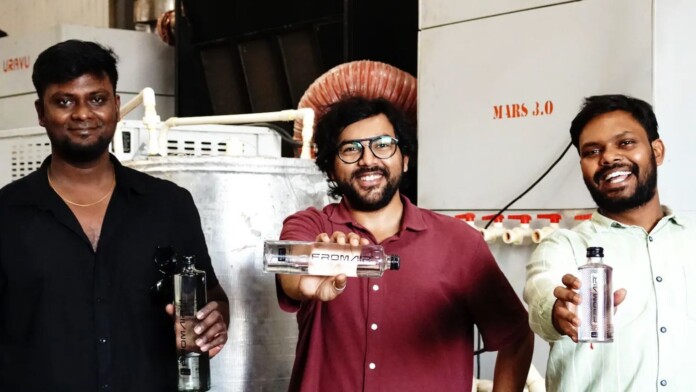
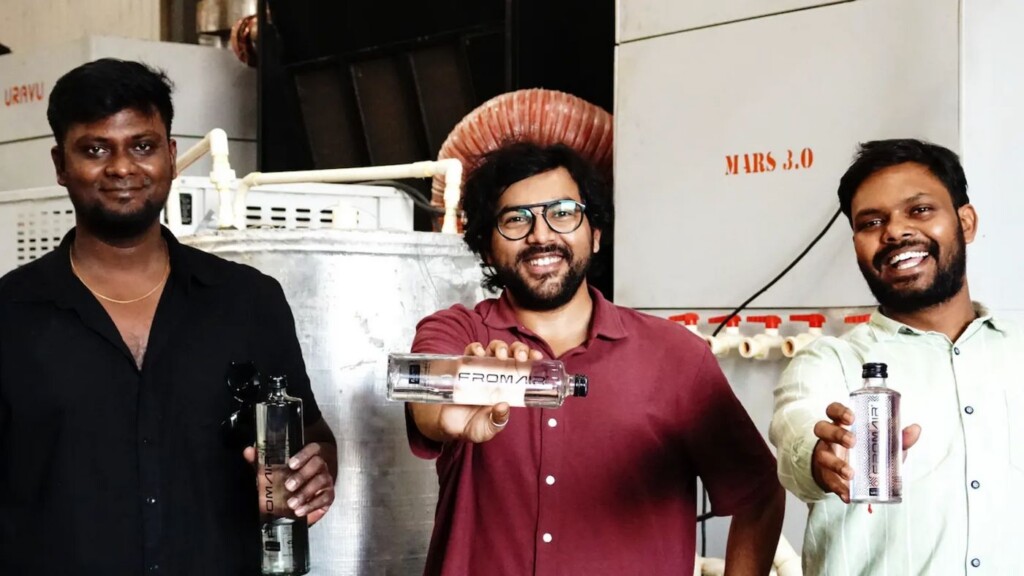
If science fiction authors could come up with the particulars of such a device, Shrivastav must have felt his had a good chance of succeeding. He and colleagues Govinda Balaji and Venkatesh Raja founded Uravu Labs, a Bangalore-based startup in 2019.
Their initial offering is a machine that converts air to water using a liquid desiccant. Absorbing moisture from the air, sunlight or renewable energy heats the desiccant to around 100°F which releases the captured moisture into a chamber where it’s condensed into drinking water.
The whole process takes 12 hours but can produce a staggering 2,000 liters, or about 500 gallons of drinking-quality water per day. Uravu has since had to adjust course due to the cost of manufacturing and running the machines—it’s just too high for civic use with current materials technology.
“We had to shift to commercial consumption applications as they were ready to pay us and it’s a sustainability driver for them,” Shrivastav explained. This pivot has so far been enough to keep the start-up afloat, and they produce water for 40 different hospitality clients.
Looking ahead, Shrivastav, Raja, and Balaji are planning to investigate whether the desiccant can be made more efficient; can it work at a lower temperature to reduce running costs, or is there another material altogether that might prove more cost-effective?
They’re also looking at running their device attached to data centers in a pilot project that would see them utilize the waste heat coming off the centers to heat the desiccant.
SHARE These Inspired Star Wars Fans And Their New Invention…
Quote of the Day: “Have patience. All things are difficult before they become easy.” – Saadi
Photo: by Leonardo Iheme
With a new inspirational quote every day, atop the perfect photo—collected and archived on our Quote of the Day page—why not bookmark GNN.org for a daily uplift?
TransPennine Express train – Credit: Chris Davis Photography / Hitachi Rail
TransPennine Express train – Credit: Chris Davis Photography / Hitachi Rail
The first test trial in Britain’s history of a diesel-powered train retrofitted with a battery took place last Friday.
The train’s battery unit, which generates a peak power of more than 700kw, was successfully retrofitted onto a TransPennine Express ‘Nova 1’ train that ran between Sunderland and Newcastle in England’s far northeast.
The test is a collaboration between TransPennine Express, (which runs the trains) Angel Trains, (which makes the carriages) Turntide Technologies, (which manufactures the batteries) and Hitachi Rail, a Japanese railway firm that runs trains in Britain, is involved as an R&D partner, and which also helped with the battery technology.
The single battery unit stores enough electricity to power more than 75 houses for a day. This impressive energy and power density will deliver the same levels of high-speed acceleration and performance while being no heavier than the diesel engine it replaces.
The installation of a battery will reduce emissions and improve energy efficiency. It’s also predicted to reduce emissions and fuel costs by as much as 30% on a Hitachi intercity train.
“We’re really pleased to be a part of this innovative and critically important trial of battery technology,” said Paul Staples, Engineering, Safety and Sustainability Director at TransPennine Express. “We take our environmental responsibilities seriously and are constantly looking at ways of making rail travel even more sustainable and efficient.”
Most importantly for passengers, the trial will test how intercity trains can enter, alight, and leave non-electrified stations in zero-emission battery mode to improve air quality and reduce noise pollution.
The trial will provide real-world evidence to inform the business case for a 100% battery-electric intercity train, capable of traveling up to 60 miles in battery mode. This range means the battery technology could be deployed to cover the final non-electrified sections of intercity routes in the coming years.
It will hopefully demonstrate how battery technology can reduce infrastructure costs by reducing the need for overhead wires in tunnel sections and over complex junctions.
“We are incredibly proud to be part of this ground-breaking project, co-developing one of the world’s most powerful passenger train batteries with our esteemed partners at Hitachi Rail,” said Mark Cox, General Manager of Turntide Technologies transport business unit.
“The successful development and production of this high-performance battery at our Sunderland facility further highlights the key role we play in the UK’s industrial landscape. We believe this clean technology will revolutionize the rail industry, not only in the UK but around the globe.”
The retrofit comes in advance of the tests for the whole train slated for this summer.
SHARE This Great Advance In Heavy Rail Travel In Britain…
A class of high schoolers managed to solve the 35-year-old cold case of the Redhead Murders in Tennessee and surrounding states.
It started at Elizabethton High School in Tennessee, where teacher Alex Campbell was looking to engage and inspire the students through an unorthodox sociology assignment.
What started as an experiment on profiling—how can you build a picture about someone based only on known actions taken by them but with no other details—quickly turned into a true crime investigation, based partly on Campbell’s wife’s fascination with the subject which had rubbed off on the teacher.
Pulling out the old case files and looking at 6 of the 11 victims murdered between 1983 and 1985, the students started to use details of the case like the character of the victims, the places they were found, their age, and occupations to try and work out what would the murderer’s demographic details be like.
They determined he was likely a white, male, heterosexual with long hair, upwards of 30 or even in his 40s, and perhaps a truck driver.
The culmination of the students’ work was a press conference, attended by 60 people from law enforcement, local media, and community members, where they presented their findings.
Suddenly, police departments in the state began receiving a flood of tips from people who believed they might know the killer’s identity. Further investigations scored a real breakthrough, and soon DNA evidence found on a woman from a separate case was revisited, and it actually confirmed the killer’s identity. The students had done it.
Jerry Leon Johns, who died in prison in 2015 at the age of 67, was imprisoned for the attempted murder of Linda Schacke. Another six potential victims, of similar profile to the five confirmed ones, are associated with Johns’ murder spree which stretched from 1978 and 1992.
Schacke survived when the corner of her jacket got in between her neck and the piece of cloth from her t-shirt Johns was using to try and strangle her, which provided just enough space for blood flow to continue to her brain. Left on the roadside, she was found by a truck driver.
The would-be victim told the police that her car had been stolen by the would-be murderer and that whoever was driving it was the one who nearly took her life. The police found and arrested Johns, but didn’t make the connection that he was involved in the other murders.
The team of students and their teacher presented their evidence before a grand jury in Tennessee to see if it would be enough to press charges against Jerry Johns, were he still alive. The jury ruled that, in such a scenario, the full power of the criminal justice system would have been brought down on Johns.
“The whole goal was to get as many people to see the case as possible,” Campbell told IndyStar during a phone interview back in 2019. “Investigators, they do need the help of the public to solve this.”
One of the students told the Times Radio years later that at their press conference, the police were somewhat “salty” with them—a tad jealous that they were being shown up by a bunch of teenagers.
Relatives of the murdered women, who were mostly prostitutes, exotic dancers, or runaways, are reported to be extremely grateful to the class and their teacher for bringing a bit of closure to the tragedies they endured.
The next project will see the students tackling wrongful convictions in the hope that the same super-sleuthing they demonstrated in the Jerry Johns case could be leveraged to set innocent prisoners free.
SHARE This Incredible True Story Of How Teenagers Succeeded Where Investigators Couldn’t…
Coldplay's Chris Martin and fan Shauna Glen ride together in Martin's Mercedes - credit, Shauna Glen, released
Coldplay’s Chris Martin and fan Saundra Glenn ride together in Martin’s Mercedes – credit, Saundra Glenn, released
Famous celebrity good guy Chris Martin recently gave a woman with a “dodgy hip” a lift to his show, adding to a string of kind and considerate acts the famous frontman has performed for his fans over the years.
Performing at Radio 1’s Big Weekend music festival, Martin was on his way to the artist’s area in a black Mercedes when he saw a woman leaning against a fence.
The woman, 64-year-old Saundra Glenn, suffers from osteoarthritis and a “dodgy right hip.” She was walking to the box office for an accessibility ticket when she decided to rest for a moment.
In her own words she “doesn’t do festivals” and had considered going home to watch the show on television.
Then, a woman in the Mercedes that just pulled up suggested Glenn accept her offer for a lift.
“The door opens and I said, ‘oh that’s Chris Martin, I can’t get in with him’ and they said ‘yes you can,'” she recalled to the BBC.
Inside, Glenn recalls the atmosphere as chatty, as if she and the celebrity were “two old women.”
Glenn further joked that the car ride was worth the price of admission, saying “I’m 64 Chris, I don’t do festivals, I’ve come just to see you and now I’ve seen you and I can go home.”
After they arrived in the artists’ area, Martin ensured that a golf cart was found to take Glenn to the box office, a moving gesture that deeply impacted her.
At the festival, Martin debuted his new song Orange, a tribute of sorts to his hometown soccer team Luton Town, which having just spent a dream season at the highest levels of English football, was relegated earlier this month to spend next season in a lower division.
Telling her story to BBC Radio, she said Martin was “such a nice man.”
In December, GNN reported on another fan who was treated to a show of Chris Martin kindness, when a wheelchair-bound Irishman managed to crowd surf in his chair all the way to the front row where Martin instructed him to be carried on stage.
There, he handed the man a harmonica, and they performed a little duet together.
SHARE This Cute Story Of A Heartwarming Act Of Celebrity Kindness…
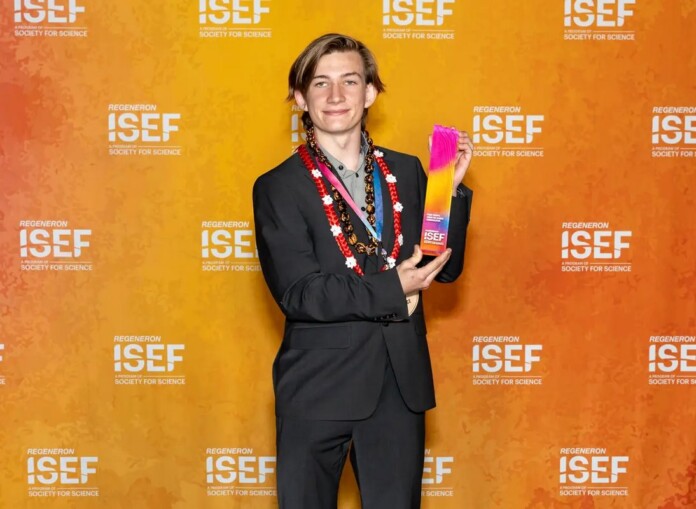
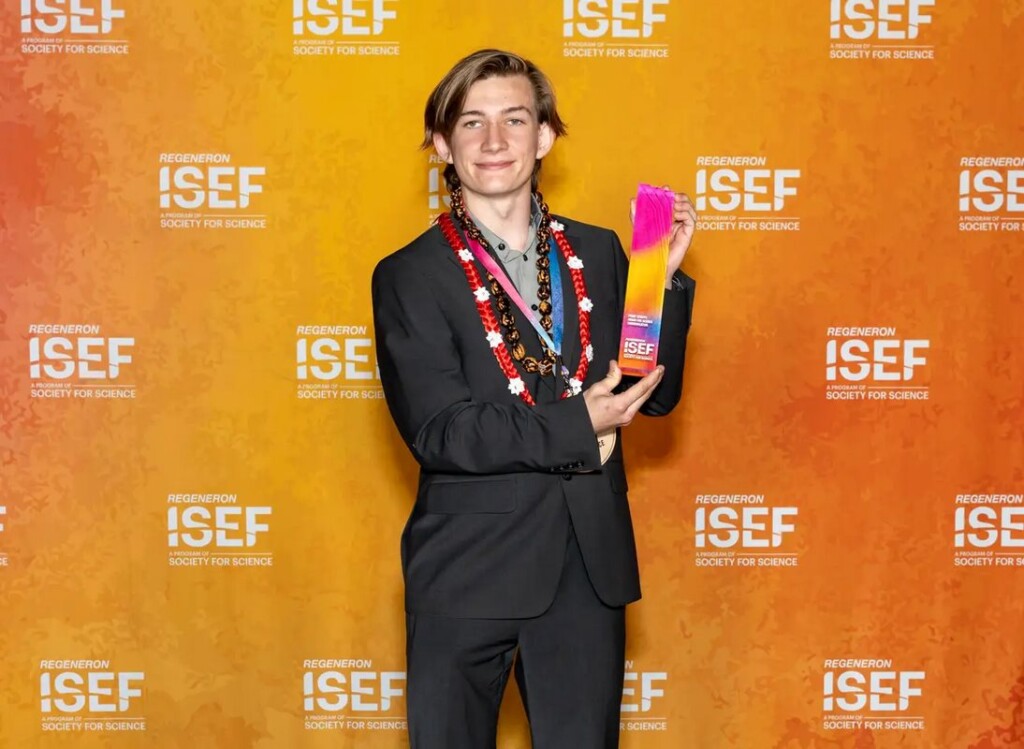
Maddux Springer holds his award - Society for Science
Maddux Springer holds his award – Society for Science
A young man has won a five-figure financial prize at the nation’s top science fair for his research into a mysterious outbreak of tumors he witnessed among the sea turtles under the waves of his home in Hawaii.
Maddux Springer lives on Oahu and spent most of his free time during the pandemic free diving among the reefs in Kāneʻohe Bay. Down among the quiet and peaceful corals, he couldn’t stop noticing that practically every green sea turtle he saw was covered in cauliflower-like tumors.
Whether young or old, the whole population seemed to be infected and slowly dying, prompting Springer to start what would become a 2.5-year research program. It might have gone faster if wildlife authorities had agreed to allow him to perform a biopsy on one of the tumors, and without this direct evidence, he had to find other ways to collect data.
His starting point took just a few minutes, as a Google search turned up that tumors on green sea turtles are likely a symptom of fibropapilomatosis, or FB for short, caused by a herpes-type virus that affects 97% of all sea turtles.
Springer felt the outlook was bleak, and began researching what was the cause and what, if anything, could be the cure. Last week, two-and-a-half years after he began his work, he was awarded the $10,000 Peggy Scripps Award for Science Communication, which he presented at the Regeneron International Science and Engineering Fair, the most prestigious in the country.
“It was an incredible feeling, just having my research validated,” Springer told Business Insider. “It’s been a very long time since I have felt like some change can be made from my research.”
Because he couldn’t perform a biopsy, he was forced to collect data via photographs—which mostly told him what he already knew: nearly every green sea turtle in Kāneʻohe Bay had FB. However, the photos also clued him in on a possible cause. Sea turtles are key to maintaining the health of coral reefs worldwide as they eat algae that could otherwise suffocate the corals.
They’re not picky eaters, and will eat any species of algae they come across. FB requires an external trigger for the tumors to form, and previous research has shown that tumors have contained high amounts of the amino acid arginine. But how and why would the turtles be ingesting so much arginine?
The photographs taken by the underwater equivalent of trail cameras set by Springer in the bay showed that the turtles spent most of their days eating one algae species—an invasive one.
Establishing probable cause, Springer’s breakthrough came when he found that the species they were eating absorbs 11 times more arginine than native species. He connected this to the fact that coastal pollution from cesspools, or uncontained septic pits dug underneath Hawaiian homes, are a large problem for sea life on the archipelago.
But correlation doesn’t equal causation, and so over 400 hours of free diving, Springer gathered hundreds of samples of the algae from across a wide area of the bay, dried it out, crushed it into powder, and sent it to a lab for analysis under a mass-spectrometer, a device which identifies the elemental composition of objects by looking at the light spectrum reflected off them.
Sure enough, the algae was rich in nitrogen, a key marker of raw sewage.
After 400 hours of diving and over 2 years of research, Springer believes that cesspools leaching wastewater through the porous Hawaiian soil into the bay are the cause of the tumors. The wastewater comes with significant amounts of arginine which is taken up by the algae that’s then eaten by the turtles.
“If we continue to go at this rate, and if we continue to just release raw wastewater into the bay, the environmental devastation is going to be unparalleled,” he said.
The grand prize winner of the Regeneron fair was Grace Sun, who took home $75,000 for a huge breakthrough in biomedical implant technology, GNN reported.
SHARE This Young Man’s Impressive Research Project And Just Rewards…
Quote of the Day: “When in doubt, tell the truth.” – Mark Twain
Photo: by Tzenik (cropped)
With a new inspirational quote every day, atop the perfect photo—collected and archived on our Quote of the Day page—why not bookmark GNN.org for a daily uplift?
Using cutting-edge high-resolution microscopy, researchers were able to track the developmental stages of butterfly scales, tracing their formation from caterpillar to butterfly and revealing how they become so vivacious.
Their work reveals that actin, a protein in butterfly’s scales, orchestrates the intricate arrangement of the colorful structures.
Conducted at the University of Sheffield and the Central Laser Facility, scientists noticed that the colorful scales had much denser actin bundles, creating more reflective ridges than dull-colored scales.
Using powerful microscopes, the researchers watched as actin shifted during scale growth and color formation, demonstrating how actin is crucial for creating a butterfly’s colors, and is likely a universal process among all butterflies. They also observed that if the actin structures were dismantled or too drastically altered, the colors faded before the eye.
“Actin is like a dressmaker, laying out and pinning the arrangement of these structures to shape the vibrant colors,” said Dr. Andrew Parnell, lead author of the study. “Once the actin has finished its work it departs the cell like the removal of pins in dressmaking.”
“Butterfly scale nanostructures are a powerful way in which to make long-lasting bright colors that don’t fade or become bleached by the ultraviolet rays of the sun. The museums of the world contain direct evidence of this,” he added.
Actin causes butterfly wing colors via scales in H. sara – University of Sheffield
By investigating the mechanisms behind butterfly wing coloration, researchers hope to gain insights into broader areas of cell structure formation, including potential applications in sensing and diagnostics that could be important for a whole host of technologies including medicine.
Structural color-based technologies, mimicking the reflective properties of butterfly scales, hold promise in fields such as sensors and medical diagnostics, offering rapid and responsive solutions outside traditional laboratory-based approaches.
The study was published in Nature Communications.
SHARE This Definitive Discovery In The Insect World With Your Friends…
Baseball star Bryce Harper helps student ask girl to prom – Instagram
Baseball star Bryce Harper helps student ask girl to prom – Instagram
The Phillies’ superstar slugger Bryce Harper just turned into the ultimate wingman for a teen looking to ask a girl out to prom.
Knowing his high school sweetheart to be a massive Phillies fan, Jake Portella reasoned that if he could get Harper to help him deliver the question, she would be certain to say yes.
In a viral video shared by Major League Baseball, Portella and Harper are outside Giullia Leonetti’s front door. When the young woman answers it, Harper asks her if she would like to go to prom with Portella. Hugs, disbelief, but most importantly a ‘yes’ follow.
But how did a teenager at Haddonfield Memorial High School in New Jersey manage to get arguably MLB’s biggest star to help out?
“I’ve been brainstorming ideas for prom for a couple weeks and I knew I wanted to do something Phillies-themed because she loves the Phillies so much,” Portella told MLB.com. “I was talking to one of my friends and I was like, ‘There’s some Phillies players who live in town, it’d be cool if I could get one of them to help me with it.’”
One of those players happened to be Bryce Harper, and Portella, deserving of recognition for some serious courage, came by one day and simply knocked on the slugger’s door to ask if he could “help in any capacity.”
It’s always cool and refreshing when celebrities behave exactly like normal people, and after answering the door, Harper asked for Portella’s contact information so that maybe he could help out. Then he had a change of heart.
As for Leonetti, she was left in tears and total shock that “the chosen one” had arrived at her door. Unfortunately for Portella, she wasn’t referring to him, but she said yes all the same.
Scheduled for June 14th, any further surprise prom appearences of “the chosen one” seem unlikely, as he will be several hundred miles to the south for a 3-game series against the Baltimore Orioles.
credit - Matt Barnard/OSU Center for Health Sciences
credit – Matt Barnard/OSU Center for Health Sciences
In 2020, GNN reported that the inaugural class of the nation’s first medical college on a Native American reservation had begun their studies. Well now, they’ve just graduated.
The 46 graduating students from Oklahoma State University’s College of Osteopathic Medicine at the Cherokee Nation include fifteen members of tribes all around the country, including Cherokee, Choctaw, Muscogee, Seminole, Chickasaw, Alaska Native, Caddo, and Osage.
Dr. Natasha Bray, the school’s dean, said that the college was formed to address a shortage of tribal physicians in the US, as just 0.3% of all licensed medical practitioners are Native American.
Part of what makes the college observing its first graduates so exciting is that the $40 million it cost to build and staff the facilities was paid for entirely by the Cherokee nation, who designed it to be a culturally relevant building, with the Hippocratic oath written on the walls in both Cherokee and English.
Cherokee artwork decorates the walls, and a medicinal plant garden is located on the site.
“I couldn’t even have dreamed this up,” said 26-year-old Choctaw member and now OSU graduate, Mackenzee Thompson. “To be able to serve my people and learn more about my culture is so exciting. I have learned so much already.”
According to PBS News, osteopathic doctors, or DOs, have the same qualifications and training as allopathic doctors, or MDs, but the two types of doctors attend different schools.
While MDs learn from traditional programs, the focus of DOs will be more on holistic medicine, and they are typically found in primary care facilities in rural areas. Native elders participate in the medical curriculum to teach about traditional healing practices.
“It’s our mission to be as culturally competent as we can,” Thompson told NPR. “Learning this is making me not only a better doctor but helping patients trust me more,” she said, adding that now she’s more likely to ask about a patient’s diet or if they are open to trying holistic remedies.
In the days leading up to the European, cap and gown style graduation, the graduates were honored with a ceremony conducted by the chiefs of 5 different native tribes, in which the graduates were given gifts, including a beaded stethoscope.
SHARE This Story Of A New Generation Of Native Healers Striking Out Into The World…
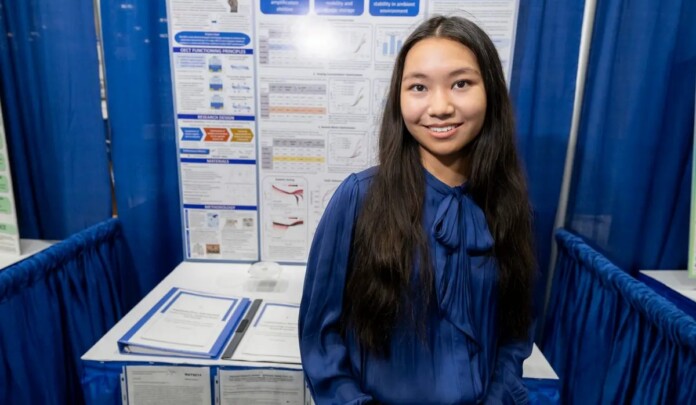
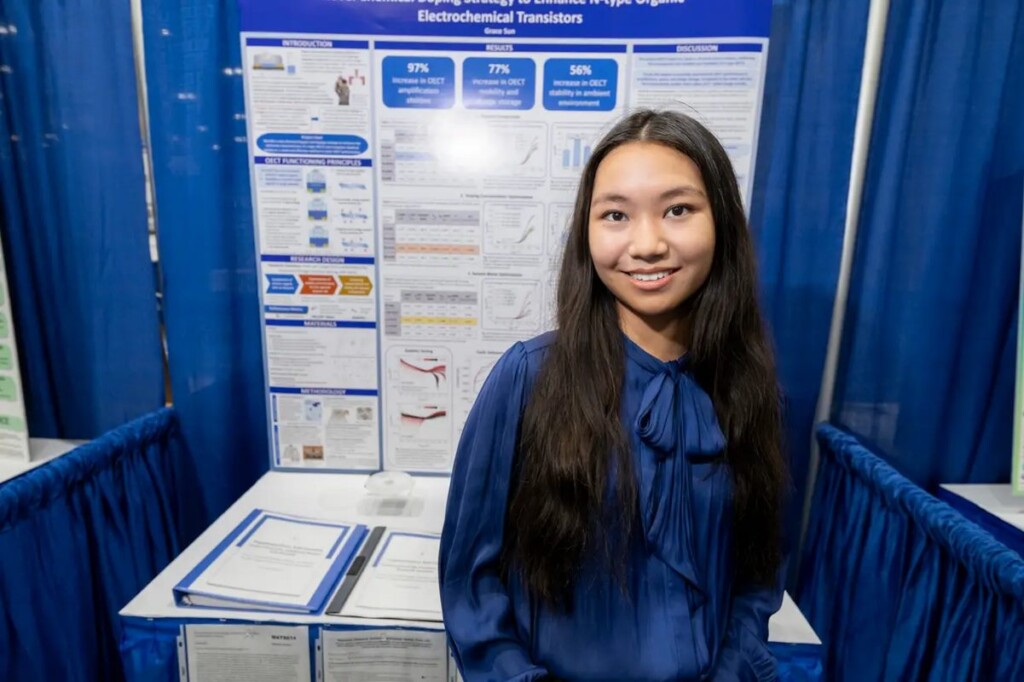
First prize in the USA’s largest and most prestigious science fair has gone to a 16-year-old girl who found new ways to optimize the components of biomedical implants, promising a future of safer, faster, and longer-lasting versions of these critical devices.
It’s not the work of science fiction; bioelectronic implants like the pacemaker have been around for decades, but also suffer from compatibility issues interfacing with the human body.
On Friday, Grace Sun from Lexington, Kentukcy, pocketed $75,000 and was recognized among 2,000 of the nation and the world’s top STEM students as having produced the “number one project.”
Sun’s work focused on improving the capabilities of organic electrochemical transistors or OECTs, which like other devices made of silicon, are soft, flexible, and present the possibility of more complex implants for use in the brain or the heart.
“They have performance issues right now,” Sun told Business Insider of the devices. “They have instability in the body. You don’t want some sort of implanted bioelectronic to degrade in your body.”
Sensitive OECTs could detect proteins or nucleic acids in sweat, blood, or other transporters that correspond to diseases in their earliest stages. They could replace more invasive implants like the aforementioned pacemaker, and offer unprecedented ways to track biomarkers such as blood glucose, circulating white blood cell count, or blood-alcohol content, which could be useful for people with autoimmunity, epilepsy, or diabetes.
“This was our number one project, without a shadow of a doubt,” Ian Jandrell, a judging co-chair for the materials science category at ISEF, told Business Insider about Sun’s research.
“It was crystal clear that that room was convinced that this was a significant project and worthy of consideration for a very top award because of the contribution that was made.”
Sun says she is looking to develop the OECTs further, hoping to start a business in the not-too-distant future as a means of getting them out into the world and impacting real people as fast as possible.
SHARE This Inspiring Yong Woman’s Accomplishment With Your Friends…
Quote of the Day: “Silence is the sleep that nourishes wisdom.” – Francis Bacon
Photo: by Inspa Makers, public domain
With a new inspirational quote every day, atop the perfect photo—collected and archived on our Quote of the Day page—why not bookmark GNN.org for a daily uplift?
A view over Guam's coastal towns - Dorothy CC 2.0.
A view over Guam’s coastal towns – Dorothy CC 2.0.
For over decade, big pharma has been pouring billions into drug trials for Alzheimer’s disease treatments without progress.
But what if there were a neuroprotective compound with better early-stage results than any developed pharmaceutical sitting right on our dinner plates?
That’s what Dr. Paul Cox may have discovered after solving the mystery of neurodegenerative disease on Guam, where in the 1990s, the rates of ALS and Alzheimer’s-like symptoms were 120% higher than in the rest of the world.
Dr. Cox would eventually discover that cyanobacteria, the same lifeforms that make green algae, produce a natural toxin called BMAA that was seeping into trees on the island. The trees would then grow seeds rich in the toxin—seeds that were eaten by flying fox bats, which in turn were hunted by locals for protein.
The BMAA was then poisoning the locals and causing, as Dr. Cox put it, deaths from neurodegenerative diseases in “every family” that he spoke to. In 2003, Cox told the world about it.
“When we realized that cyanobacteria might be the culprit, it was like staring into the abyss because we realized you could be exposed anywhere,” Dr. Cox told CNN in a mini-doc, who didn’t in any sense say that cyanobacteria was the cause of Alzheimer’s, but that it was a “risk factor.”
Seeking to understand and quantify the toxicology of BMAA, Dr. Cox ran a trial through his non-profit, the Brain Chemistry Labs at the Institute for Ethnomedicine, Jackson. What he discovered was that when monkeys were given the toxic BMAA plus an amino acid called L-serine, the neurotoxic effect was reduced by 85%.
L-serine is nothing magical—it’s one of many non-essential amino acids we consume in our diets. Amino acids collectively represent what is labeled on food products as ‘protein.’
L-serine is found in eggs and meat, as well as edamame, tofu, seaweed, and sweet potatoes in lower amounts.
Seeing the dramatic protective effects that L-serine conferred upon the monkeys, Dr. Cox took the data to the FDA and set up clinical trials to investigate this simple amino acid as a possible treatment for Alzheimer’s.
The last part of this interesting story is that Dr. Cox wasn’t trained as a neurologist, but rather an ‘ethnobotantist’—he studies how human cultures use plants for medicine. On the island of Okinawa, a ‘Blue Zone’ famous for its longevity, Dr. Cox discovered that the residents of Ogimi Village consumed on average about 400% more L-serine than the average American.
This observational evidence combined with his lab data has given Dr. Cox tremendous confidence that his placebo-controlled trial looking at Alzheimer’s patients supplementing with L-serine will produce the goods, and that this simple dietary component could be the first off-the-shelf treatment for Alzheimer’s.
WATCH a mini-doc on the subject from CNN…
SHARE This Positive Medical News With Your Friends…
credit - Bridging North America, released to the press
credit – Bridging North America, released to the press
The new US-Canada border crossing won’t be ready until 2025, but seeing that only a hockey rink-sized gap remains between the US and Canadian sections, it’s an appropriate place to celebrate the imminent completion of the Gordie Howe Memorial Bridge.
With one skate in Detroit and another in Windsor, Ontario, the bridge deck is set to be finished in June according to the joint-venture contractor, Bridging North America.
It’s far from just your average bridge, and Engineering News Record reports that with the central segment spanning 0.53 miles between the two bridge towers, it will have the longest main span of any cable-stayed bridge in North America.
It also will be the longest steel and concrete composite deck for any cable-stayed bridge in the world.
Nicknamed “Mr. Hockey”, Gordie Howe after whom the bridge is named, is considered the most complete player to ever play the game. At his retirement, his 801 goals, 1,049 assists, and 1,850 total points won mostly through his 25 seasons with the Detroit Red Wings, were all NHL records that stood until they were broken by Wayne Gretzky.
The bridge won’t only connect Detroit and Windsor, Interstate 75 and its Canadian equivalent, and the United States and Canada, but also two hockey-loving nations who shared in this great man’s sporting capacities: one by the nation of his birth, and the other by the city in which he dominated for so long.
“Bridging North America is proud of the dedicated engineers and skilled tradespeople whose unwavering commitment to safety and excellence has propelled us closer to completing the bridge deck of the Gordie Howe International Bridge. Their resilience and skill are the driving force behind the realization of this historic infrastructure project,” said David Henderson, CEO of BNA, in a statement.
The bridge will include customs facilities on both sides, and probably be open to traffic by October of 2025, 29 months short of Howe’s hundredth birthday.
SHARE This Awesome New Infrastructural Monument with Your Friends…
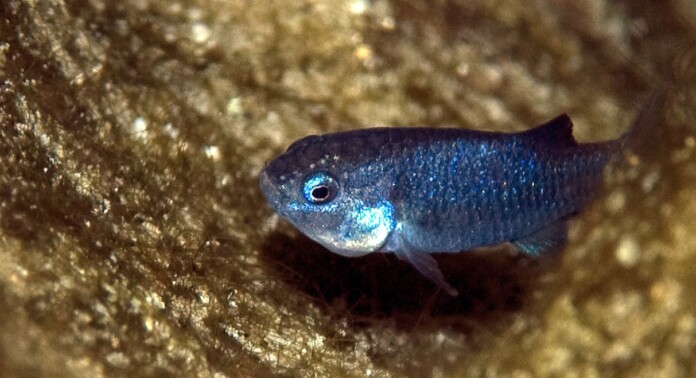
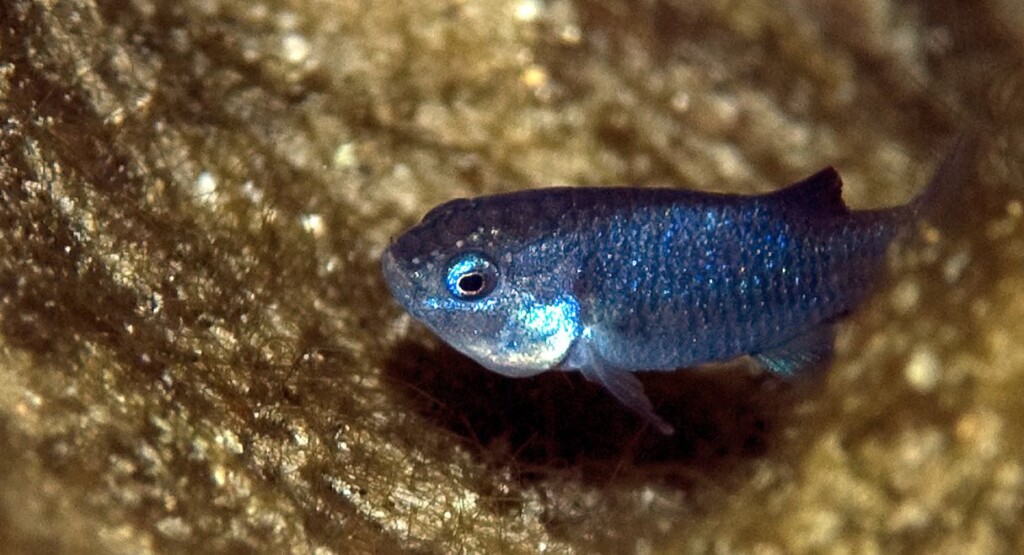
The endangered Devils Hole pupfish in Death Valley – USFWS / O. Feuebacher
The endangered Devils Hole pupfish in Death Valley – USFWS / O. Feuebacher
Quick: Where is the most unlikely place to find a fish in the USA? Unless your answer was Death Valley, you were probably wrong.
The Devils Hole pupfish holds the official record for the smallest habitat of any vertebrate species. That’s because it lives in a single limestone cave in a Nevada wildlife refuge in Death Valley and nowhere else.
Now, the latest population survey shows that the number of fish has reached a 25-year high, with over 200 individuals counted after spring breeding, officials in Nevada report.
It’s a long way from the low of 35 fish seen in the 2013 survey.
“It’s exciting to see an increasing trend, especially in this highly variable population. Increasing numbers allow the managing agencies to consider research that may not have been possible in the past, when even slight perturbations of habitat or fish had to be completely avoided,” Senior Fish Biologist for the US Fish and Wildlife Service, Michael Schwemm, said the press release. “We’re excited about the future directions with respect managing this species.”
According to the FWS, the 0.9-inch fish lives only in the habitat of Devils Hole—composed of two distinct areas: a limestone rock shelf that is 11 feet-6 inches by 16 feet-5 inches and 11.8 inches deep, and a second area 11 feet by 55 feet-10 inches in area and an unknown depth.
The Devils Hole pupfish resides in the upper 80 feet (24.38 meters) of the body of water, where the temperature remains a constant 91.4 to 93.3 degrees Fahrenheit.
It eats primarily algae and diatoms, and that’s the extent of this fish’s life. One wonders what the equivalent of a natural goldfish bowl is like to live in for this fish, and for how many generations their little silver and blue bodies have graced its turquoise waters.
Do they dream of what lies beyond their sheltered cove, or what manner of beast it is that stands upright above the water with pen and paper ogling them? We may never know, but there is a cold comfort given to the nature lover who knows, even if they never witness it, that a small and inconceivably vulnerable fish lives on still in peace and tranquility in the desert.
WATCH a quick news bulletin below…
SHARE This Tiny Fish’s Big Comeback With Your Friends Who Love Nature…
Does your two-year-old need a winter coat for a skiing holiday that they will outgrow before the following winter? What if there’s a cosmic phenomenon that’s taking place you want to see but you have no interest in owning a telescope? Have you ever thought about taking up photography but felt a $1,000 camera investment was risky?
A new retail phenomenon is addressing concerned consumers who are looking to escape spending for waste creation by developing a concept called a “library of things” (LoT) where people can come and rent just about anything, from baby clothes to air fryers.
There are over 2,000 LoTs located in the English-speaking world and Central Europe, and some have been in operation since 1976. Half of them though only sprang up in the last five years.
E-waste, or the tossing of electronic items without repairing them, has become a real challenge for landfills and recycling companies around the world, as has ‘fast fashion’—the world of low-cost, kitchy, or single-use garments and textiles which have piled up in landfills.
If you find yourself frustrated with this kind of throwaway culture, perhaps it’s time to check if there’s a LoT near you.
Every LoT will have different regulations and systems, but essentially the concept works by setting up an account and paying a rental fee for each day or month in which you check out one of their items. The cost may vary based on season (gardening equipment might be more costly to rent in summer) or availability.
“In summer we see a lot more garden items being used: strimmers, hedge trimmers, lawn mowers, tents for adventuring, ice cream makers, and gazebos for barbecues,” Rebecca Trevalyan, co-founder of an LoT in London, told the Guardian.
“We really want to make rental go mainstream, make it more affordable, convenient and socially rewarding than buying something from Amazon.”
The list of product classes that seem to lend themselves to this sort of a rental model is significantly extensive, and in every case, one can imagine buying an item only to use it two or three times before deciding whether going through the trouble of selling it second hand or binning it.
“We have items that have been used more than 300 times by more than 200 different people,” Gene Homicki, co-founder of LoT organizer myTurn, said in a recent podcast interview. “Some examples of “radical reuse” from Libraries of Things on our platform include a DeWalt table saw that has been loaned out 321 times to 211 different people… and tents and camping sleeping pads that spent over 250 days in use in the last year”.
Camping equipment, sporting goods, fast fashion and acessories, baby clothes, baby supplies, gardening equipment, beach supplies, tools, machinery, all manner of toys, home electronics, specialty cooking pieces, extra furniture to accomodate visitors, pet supplies, classroom supplies, hobby supplies, musicial instruments, fitness equipment, optics, and probably others, can all be kept out of the landfill by first admitting that we’re not sure if we will use the product more than a few times, and then going to an LoT to rent it.
Most LoTs will also permit renters to buy outright the products they have checked out, making the service ideal for an adult looking to try out a new hobby, or a child who wants to get into a sport (we all know how fickle children can be).
SHARE This Great Consciouss Consumer-Driven Solution To Waste…