

















60 years ago, The Who released their iconic single My Generation. The hit was ranked #11 on Rolling Stone magazine’s list of the 500 Greatest Songs of All Time. Pete Townshend reportedly wrote the song on a train but credits American jazz and bluesman Mose Allison’s Young Man Blues as its inspiration, saying “Without Mose I wouldn’t have written My Generation”. Singer Roger Daltrey’s delivery—an angry and frustrated stutter (‘Why don’t you all fff … fade away’)—was inspired by, among other things, John Lee Hooker’s Stuttering Blues. WATCH the Smothers Brothers introduce the young mods to the world, before they play the song… (1965)
Nonprofit Removes 300,000 Landmines in Sri Lanka, Allows 280K People to Return to Their Homes


In northern Sri Lanka, an area largely avoided by the 2 million tourists who visit the island every year, an organization has safely removed its 300,000th landmine leftover from the island’s civil war.
Those mines and unexploded bombs were cleared across an area 33% larger than the island of Manhattan, and their removal allowed for the repopulation of a quarter-million people to their lands and homes.
War is the health of the state and the scourge of everyone else. Nothing epitomizes war’s destructive legacy more than landmines and unexploded bombs, which have terrorized the populations of dozens of countries for decades.
Sri Lanka’s civil war lasted for more than 30 years, as the Liberation Tigers of Tamil fought the forces of the central government across the northern and eastern provinces. When the war ended in 2009, The HALO Trust, a British nonprofit that works to clear landmines from conflict areas, was already on the ground helping to remove the unexploded ordnance from the country.
Over the years, in the districts of Jaffna, Kilinochchi, Mullaitivu, Mannar, and Vavuniya, work continued slowly to safely detonate or disarm mines and ordnance where people used to live and farm.
16 years later, on June 18th, the trust announced it had reached a milestone of 300,000 mines removed, and 120 square kilometers of land rendered safe and useable again.
“Thanks to HALO, over 280,000 former internally displaced persons have now returned safely to their homes and most of the land is clear,” said the trust in a press release.
ALSO CHECK OUT: Drones Find Dozens of Landmines Littering Ukraine So They Can Be Defused
“HALO and other demining operators continue to work at pace to clear the remaining contaminated areas to fully open up the pristine north of the island to tourists who flock to Sri Lanka every year, netting the country more than $3bn in 2024.”
“These minefields were laid when I was still in primary school. I remember hearing about them in the newspapers,” Vithoozen Antony, Operations Manager, HALO Sri Lanka. “Today, I’m proud to be part of the team leading their clearance. Reaching the milestone of 300,000 landmines removed is not just a number; it represents lives saved and land returned to communities.”
MORE STORIES LIKE THIS: US Donation Kicks Off Landmine Clearing in One of the Largest Conservation Areas in the World
HALO is the world’s largest landmine clearance organization, and its work is ongoing across the world. This month, it marked 550,000 mines and unexploded bombs cleared in Cambodia since 1991.
SHARE This Wonderful Work Repairing Communities In War-Torn Sir Lanka…
‘Incredibly Encouraging’ Drug Trial Shrinks Tumors in Head and Neck Cancer Patients Within Six Weeks


For patients with returning head and neck cancers, there are few if any potential options other than further chemotherapy sessions.
But now, doctors and oncologists are hopeful that that is a reality soon to enter the past tense after initial success seen in a large clinical trial studying a drug to target this form of cancer called amivantamab.
The triple-action injection-based therapy targets metastatic head and neck squamous cell carcinoma (HNSCC), a hard-to-treat form of head and neck cancer, considered the 6th-most common form of the disease.
For those who are diagnosed with HNSCC, the first line of treatment is the more forgiving immunotherapy, which can sometimes see success. But if the cancer returns, as it often does, oncologists will generally resort to chemotherapy and hope.
But with amivantamab, they have an “incredibly encouraging” new option that was shown in a trial conducted across 11 different countries to shrink tumors as soon as 6 weeks from the start of treatment, while slowing and sometimes halting altogether the disease’s progression.
The findings were presented recently at the European Society for Medical Oncology conference in Berlin.
CANCER TREATMENTS AT LARGE: CAR-T Cell Therapy Achieves Near-Complete Tumor Regression in Brain Cancer After Five Days
“To see this level of benefit for patients who have endured numerous treatments is incredibly encouraging,” Kevin Harrington, a professor of biological cancer therapies at the Institute of Cancer Research in London, told the Guardian. “This could represent a real shift in how we treat head and neck cancer—not just in terms of effectiveness, but also in how we deliver care.”
“This is the first time we’ve tested this kind of triple-action therapy for head and neck cancer patients whose disease has returned after treatment. Amivantamab is a smart drug that not only blocks two key cancer pathways but also helps the immune system do its job,” he added.
MORE HEAD AND NECK TREATMENTS: Immunotherapy Drugs So Effective that Tumors Disappear in Weeks for Head and Neck Cancer Patients in Landmark Trial
One group in particular that consisted of 86 patients who had previously received immunotherapy or chemotherapy received amivantamab and recorded a halting or reversing of tumor growth in three-fourths of the patients within just 6 weeks.
A key strength in the drug is that it attacks cancer cells in three major ways. It inhabits the production of a protein called epidermal growth factor receptor, which helps tumors grow, and MET, a pathway that helps cancer cells evade detection. In addition to these, it helps coordinate the immune system’s response to the tumors.
SHARE This Encouraging Drug Development With Your Friends On Social Media…
10-Year-old Girl Invited to Join Mensa After Dyslexia Test Revealed She Has Top 1% IQ


Mr. and Mrs. O’Malley-Flack might have been anxious while they waited for their daughter to complete her dyslexia test.
The 10-year-old had had trouble spelling, and it was recommended she take an examination, but as it turned out, she had something else entirely—a prodigious IQ.
Poppy O’Malley-Flack, from the English county of Kent has an IQ of 136, putting her in the top one-percentile of all Britons. The three-hour test concluded that she has exceptional reasoning and problem-solving skills, leaving her mother Lucy in shock.
“We never expected to come out of a dyslexic test and the lady say her reasoning skills and intelligence were exceptionally high,” she told England’s Southwest News Service.
The surprise wasn’t because Poppy wasn’t a clever girl, but rather because she seemed to self-select for and gravitate to, the arts.
“We were as shocked I think as Poppy was. She had never been the type of child you thought was gifted or very academic… However, she is very logical and has good reasoning skills and is very good at problem solving. We have always known that. We always knew she was quite grown up for her age.”
After receiving the results, Mrs. O’Malley-Flack approached the grand old IQ society Mensa in hopes of getting Poppy into the program with other gifted children. Shortly after sending off the IQ test results, they received an email accepting her into the prestigious club.
“We were absolutely chuffed and really proud of her and I think she was really proud of herself,” Lucy said. “She is the most humble child you will ever meet, but she is really enjoying this prestige.”
The Mensa High-IQ Society has been around for over 100 years, and focuses on welcoming those extremely gifted minds among us into a space of collaboration and camaraderie. The American chapter of Mensa boasts 50,000 members of the over 150,000, located in 90+ countries worldwide.
Isaac Asimov, Commander Chris Hadfield, Steve Martin, and John McAfee were all members of Mensa, along with the inventor of the mobile phone and author of The Clan of the Cave Bear novels.
FUTURE CHANGEMAKERS: Girl Joins Mensa at 13 After Scoring Higher Than Albert Einstein–Even with No Exam Prep
Poppy is hoping to get into grammar school but has no career aspirations beyond that yet, though her mother suspects that she will end up doing something in the realm of science.
“I don’t think Poppy is going to go into your normal 9-5 job. She will be going into something scientific or arty. Something that requires detail. It is a perfect example of how a learning difference and giftedness can co-exist. While she might have struggles with spelling she has extraordinary reasoning skills.”
MORE STORIES LIKE THIS: What Did Albert Einstein, Da Vinci, and Steve Jobs Have in Common: Dyslexia – Why They’re Top Achievers
According to BBC Test The Nation data, the average IQ in Britain is around 100—and any number above 135 puts you in the top percentile.
Both Albert Einstein and Stephen Hawking never took official tests, but are estimated to have had IQs around 160.
SHARE The Story Of This Young Girl’s Surprise Smarts With Your Friends…
A Combination Implant and Augmented Reality Glasses Restores Reading Vision to Blind Eyes


A “new era” has begun in the development of artificial vision after a combination electronic eye implant—with augmented reality glasses restored vision to blind eyes in patients with untreatable macular degeneration.
Those treated with the device could read, on average, five lines of a vision chart, even though some could not even see the chart before their surgery.
The results of the European clinical trial which involved 38 patients in 17 hospitals across 5 countries were published in The New England Journal of Medicine. They showed 84% of participants were able to read letters, numbers, and words using prosthetic vision through an eye that had previously lost its sight due to the untreatable progressive eye condition, “geographic atrophy with dry age-related macular degeneration (GA in dry AMD).”
The now-proven device is called PRIMA, and consists of an ultra-thin microchip implanted in the eye that receives infrared projections of the waking world by a video camera installed in a pair of augmented reality classes.
A pocket computer fixed to a small control panel worn on the waistband then runs artificial intelligence algorithms to process the information contained in the infrared projection, which is converted into an electrical signal. This signal passes through the retinal and optical nerve cells into the brain, where it’s interpreted as vision.
The patient uses their glasses to focus and scan across the main object in the projected image from the video camera, using the zoom feature to enlarge the text. Each patient goes through an intensive rehabilitation program over several months to learn to interpret these signals and start reading again.
“In the history of artificial vision, this represents a new era,” said Mr. Mahi Muqit, associate professor at the UK’s University College London’s Institute of Ophthalmology and consultant at Moorfields Eye Hospital where the UK arm of the trial was conducted.
“Blind patients are actually able to have meaningful central vision restoration, which has never been done before.”
“Getting back the ability to read is a major improvement in their quality of life, lifts their mood and helps to restore their confidence and independence. The PRIMA chip operation can safely be performed by any trained vitreoretinal surgeon in under two hours—that is key for allowing all blind patients to have access to this new medical therapy for GA in dry AMD.”
Dry AMD is a slow deterioration of the cells of the macula over many years, as the light-sensitive retinal cells die off. For most people with dry AMD, they can experience a slight loss of central vision.
Through a process known as geographic atrophy (GA), it can progress to full vision loss in the eye, as the cells die and the central macula melts away. There is currently no treatment for GA, which affects 5 million people globally. All participants in this trial had lost the central sight of the eye being tested, leaving only limited peripheral vision.

The procedure in install the implant involves a vitrectomy, where the eye’s vitreous jelly is removed from between the lens and the retina, and the surgeon inserts the ultra-thin microchip, which is shaped like a SIM card and just 2mm x 2mm.
The PRIMA System device used in this operation is being developed by Science Corporation, which develops brain-computer interfaces and neural engineering. No significant decline in existing peripheral vison was observed in trial participants, and these findings pave the way for seeking approval to market this new device.
UCL spoke with one of the patients who received the implant for the college’s news outlet.
“I wanted to take part in research to help future generations, and my optician suggested I get in touch with Moorfields,” began Sheila Irvine, one of Moorfields’ patients on the trial. “Before receiving the implant, it was like having two black discs in my eyes, with the outside distorted.
“I was an avid bookworm, and I wanted that back. I was nervous, excited, all those things. There was no pain during the operation, but you’re still aware of what’s happening. It’s a new way of looking through your eyes, and it was dead exciting when I began seeing a letter. It’s not simple, learning to read again, but the more hours I put in, the more I pick up.”
TREATMENTS TO GET EXCITED ABOUT: Sight Restored to People Blinded in Eye Accidents Using New Stem Cell Treatment
“The team at Moorfields has given me challenges, like ‘Look at your prescription,’ which is always tiny. I like stretching myself, trying to look at the little writing on tins, doing crosswords.”
The global trial was led by Dr. Frank Holz of the University of Bonn, with participants from the UK, France, Italy, and the Netherlands.
MORE VISION RECOVERIES: World’s First Whole-Eye Transplant Gives Arkansas Man New Hope After Terrible Accident
Mr. Muqit that it left him feeling that a door was opened for medical devices in this area, because there is no treatment currently licensed for dry AMD.
“I think it’s something that, in future, could be used to treat multiple eye conditions.”
SHARE This True Cyborg Eye Procedure’s Success For Sheila And Others…
“Judge a rookie by what they do at their best, not at their worst.” – Steve ‘The Homer’ True

Quote of the Day: “Judge a rookie by what they do at their best, not at their worst.” – Steve ‘The Homer’ True (ESPN Milwaukee)
Photo by: Dylan Ferreira (cropped)
With a new inspirational quote every day, atop the perfect photo—collected and archived on our Quote of the Day page—why not bookmark GNN.org for a daily uplift?

Good News in History, October 28

60 years ago today, the Gateway Arch in St. Louis, Missouri was completed. Clad in stainless steel and standing 630 feet high, it is the tallest monument in the Western Hemisphere. The arch sits on the west bank of the Mississippi River as a tribute to the great westward explorers, Lewis and Clark, and other pioneers who began treks in St. Louis. READ more about the arch… (1965)
Innovative Wildfire Defense Sprinkler System for Homes Can Detect Flames and Lower Insurance


A pair of Colorado innovators have designed an autonomous sprinkler system to hose down a home if it detects an approaching wildfire.
With both men having experienced the threat of wildfires first hand, each said they were driven to try and do something about it.
Owners of a firm called Defense Delivered, their system uses thermal imaging cameras to detect when flames or sparks might be entering the immediate zone of the house. If the camera sensor is triggered, the sprinklers automatically hose down the house to ideally keep it from burning, and will eventually deploy firefighting foam as a last resort if the threat persists.
Founder and CEO Duston Dolamore told CBS News Colorado that the idea was spawned in the wake of the Ptarmigan Fire in 2021, which burned more than 100 acres near Silverthorne in Summit County, where Dolamore lived.
“When we experienced that fire, the feeling of helplessness, that really nothing could be done, it drove us to make a working solution,” Dolamore said.
The system will spray 35 gallons a minute to coat the house, an amount that was specifically calculated to prevent an overdraw on water resources in drier parts of Colorado.
In fact, it’s built for Colorado in all respects, and has a preprogramed drain and flush function in preparation for winter; owners don’t have to remember or worry about freezing pipes.
According to Defense Delivered’s data, more and more homes are being built every year across America in what’s known as the wildland-urban interface—the place where residential zones brush up against National Forest land. This is not only putting more homes at risk of fire, but raising the cost of home insurance for whole communities as a result.
SIMILAR INSPIRATION: Teen Invents Clever Fire Extinguisher to Save Your Home When You’re Away – and He’s Donating All the Profits
Dolamore said a secondary aim of their automated sprinkler defense system was to hopefully give residents a chance at obtaining a lower insurance rate.
Red, White and Blue Fire Protection District Division Chief Mathew Benedict told CBS News that having seen the system in action, he considers it a “win” for homeowners who opt to install one.
MORE STORIES LIKE THIS: First Antidote for Carbon Monoxide Poisoning ‘Cleans’ Blood in Minutes
“There are companies trying different ideas out there. This company has gone at it following the good science, the wildfire science, the wildfire physics… they’re looking at homes and looking at their vulnerability and putting water where the home is most vulnerable. In my opinion, that’s a win.”
SHARE This Great Invention To Keep Coloradoans And Their Homes Safe…
Parkinson’s Patient Plays Clarinet During Brain Surgery–Is ‘Delighted’ with How it Went (WATCH)
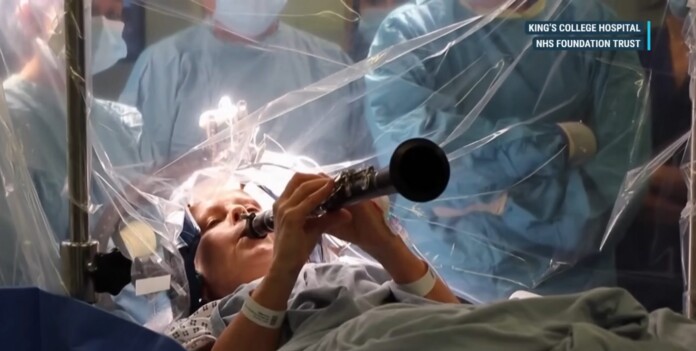
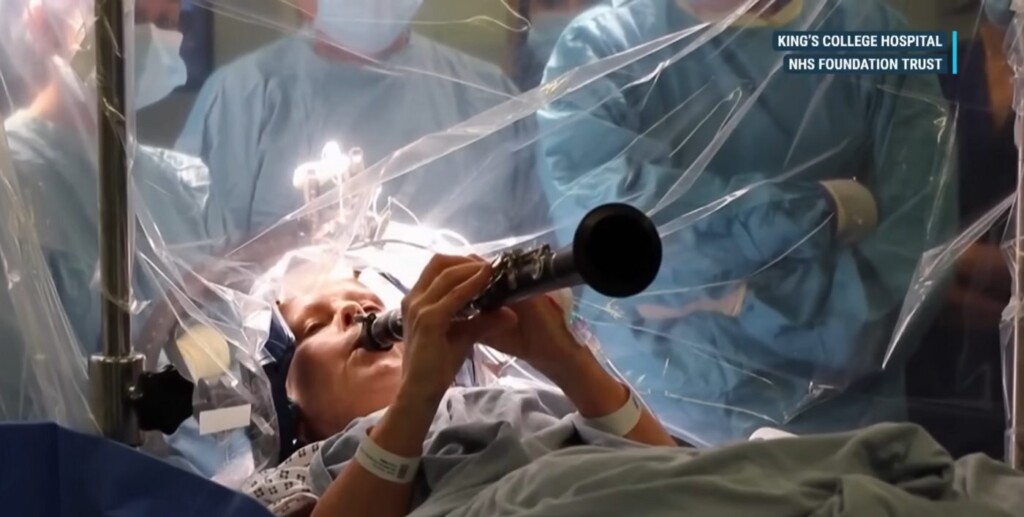
Under local anesthesia, a woman in England was able to play her clarinet for the first time in 5 years whilst receiving treatment for Parkinson’s disease.
The deep-brain stimulation (DBS) procedure promised, if successful, to restore motor control in the patient’s hands such that she would be able to play her beloved instrument again, and the surgeon asked her to bring it with her to test the theory.
The resulting video makes for quite the sight, as the surgery team behind the plastic sanitary screen sat listening in wonder.
65-year-old Denise Bacon from Crowborough, in the English county of East Sussex, was diagnosed with Parkinson’s in 2014, and she gradually lost the ability to do her favorite things such as swim, dance, and play the clarinet.
DBS is a surgical procedure that delivers an electrical current to electrodes implanted in the brain, and is suitable for some patients with disorders such as Parkinson’s. Her skull and scalp were numbed with anesthesia, but she stayed during the four hour intervention, which is when she was asked to play the clarinet to see if her motor control had improved.
A SIMILAR STORY:
- Conductor with Parkinson’s Gets Brain Stimulation Device to Stop Shakes so He Can Lead Orchestra Once Again
- Revolutionary Music Therapy Helps Paralyzed Man Walk and Talk Again – It ‘Unlocked the Brain’
“I remember my right hand being able to move with much more ease once the stimulation was applied, and this in turn improved my ability to play the clarinet, which I was delighted with,” she told the BBC.
“I’m already experiencing improvements in my ability to walk, and I’m keen to get back in the swimming pool, and on the dance floor to see if my abilities have improved there.”
WATCH the performance below…
SHARE This Incredible Story With Your Friends On Social Media…
Endangered North Atlantic Right Whale Population Is Slowly Increasing, Scientists Say


Scientists studying the North Atlantic right whale have celebrated a year without mortalities in which four new whale mothers entered the breeding population.
11 calves were born this year, the North Atlantic Right Whale Consortium reported in a document released Tuesday.
Covered by AP, the animals have now increased to 384 individuals thanks to increased measures to protect these gentle giants from collisions with ships and entanglement with fishing gear: two of their main threats.
Living as their name suggests in the North Atlantic Ocean, the animals were heavily targeted by whalers in the 18th century, but have been federally protected for decades following the commercial whaling ban in 1982.
“The slight increase in the population estimate, coupled with no detected mortalities and fewer detected injuries than in the last several years, leaves us cautiously optimistic about the future of North Atlantic right whales,” Heather Pettis, the consortium’s chairwoman, said. ”What we’ve seen before is this population can turn on a dime.”
Unlike other baleens like the fin whale, humpback, and blue whale, the North Atlantic right whale has been slow to recover, and scientists remain convinced that stronger conservation measures are needed to ensure they can continue to grow long term. The animals are less likely to breed if wounded in ship strikes or by derelict fishing equipment.
But despite the 11 newborns being less than the consortium hoped for, they were reared by both new mothers and by previous mothers who seem to be waiting less time between calves: both encouraging statistics.
WHALES COMING BACK
- Humpback Whale Population Now Well Above Pre-Whaling Levels in Australia
- Majestic Sei Whales Reappear in Argentine Waters After Nearly a Century
- Gray Whale, Extinct for Centuries in Atlantic, Is Spotted in Cape Cod
- Blue Whales Return to California at Levels Not Seen Since Before the Whaling Industry
The animals migrate from their breeding grounds near Florida up to feed in the colder waters off Canada and the northeastern United States.
Philip Hamilton, a senior scientist with the New England Aquarium’s Anderson Cabot Center for Ocean Life, said ongoing, slow recovery is a testament to the effectiveness of conservation measures already implemented, particularly around the Saint Lawrence Gulf in Canada where the whales will sometimes travel.
“We know that a modest increase every year, if we can sustain it, will lead to population growth,” Hamilton said. “It’s just whether or not we can sustain it.”
SHARE This Encouraging News About Whales With Your Friends…
Town Devastated by Steel Mill Closure Reborn Thanks to B-Ball Ref and the Hopes for New Grocery Store


Once the steel and manufacturing jobs dried up, the town of Venice began to sink.
This Illinois community lost two-thirds of its population, before seeing its last remaining grocery store close, and even its only school.
But things are looking up again thanks to an unlikely ally, who presented himself as a financial and managerial conduit through which state money could help turn the lights back on in the town.
In his pomp, Ed Hightower was an award-winning college basketball referee and school superintendent for Edwardsville School District. Refereeing 12 NCAA Division I Final Fours, the 1990 World Championship of Basketball in South America, the European Basketball Championship in 1993, and the Goodwill Games in 1994 and 1998, Hightower built a storied career for himself that allowed his later years to be spent in stressless comfort.
But now he’s taken $3.5 million from that nest egg and put it up as an investment for a new grocery store in Venice, just 20 miles from Edwardsville where he grew up.
The “Venice Market” will receive funding help from the state, which will lease it from Hightower who will manage the business.
“It will put fresh fruits, vegetables, meats and healthy options within walking distance for families—who have gone without them before too long,” town Alderman Tyrone Echols said at a press conference. “But this project is about more than access to groceries.”
ALSO CHECK OUT: Canada’s First Grocery Store Where Food is FREE Opens in Saskatchewan
“I will have skin in the game to make sure it’s successful,” Hightower told CBS News, who added that it’s part of his motivation—part of the belief system his mother instilled in him, that giving back is important. “[M]y mom always taught us that you don’t get there by yourself.”
The grocery store is just one of several new projects on Venice’s shores. A new school opened in 2021, breathing new life into the community, while a medical clinic and affordable housing are also on their way. State money, along with numerous nonprofit and for-profit partners, are footing the bill for Venice’s transformation.
MORE SMALL TOWN TRANSFORMATIONS: Italian ‘Ghost Town’ Rescued by Instagramable Street Art Which Attracts Thousands
“It doesn’t matter what color you are, what belief you have, you want to reside in a safe environment where you can go to school, you can get your groceries,” Hightower said.
Local residents speaking with CBS News said they hope these transformative investments mean that the town starts to grow, rather than shrink, and that their children don’t grow up feeling like they have to move away for an opportunity.
WATCH the story below…
SHARE This Small Town’s Transformation With Your Friends On Social Media…
“The absence of alternatives clears the mind marvelously.” – Henry Kissinger

Quote of the Day: “The absence of alternatives clears the mind marvelously.” – Henry Kissinger
Photo by: Dylan Ferreira (cropped)
With a new inspirational quote every day, atop the perfect photo—collected and archived on our Quote of the Day page—why not bookmark GNN.org for a daily uplift?

Good News in History, October 27

63 years ago today, one man in the right place, at the right time, did the right thing, saving the world from probably nuclear war. Vasily Arkhipov is known as the “man who saved the world,” during the 1962 Cuban Missile Crisis when he stood down the other two officers aboard the Soviet submarine B-59 over the decision to launch a nuclear torpedo salvo against the U.S. Navy. READ how it happened… (1962)
Comedy Wildlife Contest Unveils Wonderful Photo Finalists to Make Everyone Smile


The Nikon Comedy Wildlife Awards just released their annual finalists.
“We are absolutely delighted to reveal the hotly anticipated finalists of the 2025 competition. They are a cracking collection of jaw dropping and laugh out loud photos of some of the most incredible wildlife that we share this planet with,” said contest officials in a news release.
The call for photos was answered worldwide with photographers sending in a record number of brilliant and hilarious entries—just under 10,000 in total from 108 countries.
They are all competing to win the top prize of an incredible one-week safari with Alex Walker’s Serian in the Masai Mara—other prizes include Nikon cameras and photography rucksacks.
Among the contenders this year are animals caught in headlocks, doing high-fives and getting hugs. You’ll even see a dancing gorilla.
The Awards were co-founded in 2015 by professional photographers Paul Joynson-Hicks MBE and Tom Sullam to create a competition that fused exceptional wildlife photography and the positive power of humor in a bid to help promote the conservation of wildlife and habitats that our precious planet relies on.
Below are GNN’s favorites, but for more chuckles see the full collection of finalists at www.comedywildlifephoto.com. The images are all authentic, and absolutely no AI or digital manipulation is permitted to create the photographs.

“This photograph was taken during a trip to Rwanda earlier this year, where we spent four unforgettable days trekking through the misty Virunga Mountains in search of the gorilla families that call them home. We came across a large family group gathered in a forest clearing, the adults were calmly foraging while the youngsters were enthusiastically playing. One young male was especially keen to show off his acrobatic flair; pirouetting, tumbling, and high kicking. Watching his performance was pure joy, and I’m thrilled to have captured his playful spirit in this image.”

“This was taken in Japan. I was visiting Rausa on the Shirenhoka Peninsula and Nemuro Straits, where I was observing a White-Tailed Sea Eagle putting their fish in a hole and protecting it. This one had a fish and saw another Eagle coming in to try and steal it.”

‘Peek-a-boo’ features a Sri Lankan Elephant playing peek-a-boo with his ears.

“It was then that the crowned sifaka lemur appeared, staring at me with wide, curious eyes, as if questioning my presence. Then, with the grace of a stage actor and the timing of a comedian, he raised his hand, licked it thoughtfully, and then paused mid-gesture, as if he knew exactly what he was doing.”

“Guillemots were nesting on a small rocky cliff ledge where space was at a premium. The nests all crammed in close together which isn’t a good recipe for being good neighbors, as guillemots are fiercely territorial. Aggression and battles are frequent over nesting space and I captured this image of this bemused looking bridled guillemot, its head firmly clamped in his/her neighbor’s beak.”

‘Battle Hug’ features two Asian water monitors locked in battle right by a main path in Bishan-Ang Mo Kio park in Singapore. “A battle of strength and wills never looked so affectionate!”

‘Hornbill In A Hurry’ – A Hornbill in South Africa was spooked by an incoming tawny eagle
and decided a quick exit was probably wise. “Its ungainly departure was captured in a sequence of shots but this one for me perfectly captured the panic of the hornbill at that moment. The hornbill safely escaped although I doubt the tawny eagle was seriously interested in tackling that hornbill beak anyway.”

“This Yellow-cheeked Gibbon was just hanging out in the trees. It looks like he’s waiting for a beer to be served.”
MORE LAUGHS? CHECK OUT: Comedy Wildlife Winners for 2024 Are Positively Adorable
The team of expert judges will be busy over the next few weeks picking their favorites. The winners will be announced on December 9th at an Awards Night in London, which will be followed by an exhibition for one week from December 10 -14 showcasing all the 2025 Award Finalists at the Gallery@Oxo.
The free competition is open to photography novices, amateurs, and professionals—all ‘to celebrate the hilarity of our natural world and bring a smile to everyone’s face.
GOOSE UP YOUR FRIENDS By Sharing the Smiles on Social Media…
80-Year-Old Grandma Who Learned to Swim at 59 Just Became Oldest Ever Female Ironman Finisher


With every step toward the finish line, Natalie Grabow was proving it’s never too late to get started.
Earlier this month, the 80-year-old grandmother from Mountain Lakes, New Jersey, became the oldest woman to ever finish the punishing Ironman World Championship triathlon in Kailua-Kona, Hawaii.
She swam 2.4 miles—even though she never learned to swim until she was almost 60—then she pedaled 112 miles on a bicycle and immediately ran a full 26.2-mile marathon to make history. (Watch the video below…)
About 60 other competitors quit before they finished, all of them younger. Grabow did not.
“She’s truly gritty,” Grabow’s coach, Michelle Lake, told NPR. “Natalie is the definition of grit and gratitude: Grateful to make it to the start line, grateful to get to do something she loves everyday, and grateful to inspire so many others.”
Natalie’s story is even more impressive considering when she started.
She grew up in New Jersey long before Title IX vastly expanded the competitive opportunities for female athletes. A part of her that always existed lay dormant, just waiting for a chance.
“When you grow up and you don’t have those options, you know, you just watch the boys doing stuff and you’re just the cheerleader,” she told The Athletic. “It was just thrilling once I could do my first 5K and race and ride a bike with other people.”
As an adult, she worked as a software developer, played some doubles tennis, and eventually found running. The last hobby would prove to be a long-lasting love.
Running helped her form friendships and filled up her free time several days a week. Her friends eventually tried triathlons, but even in her 50s, Natalie didn’t know how to swim. Fortunately, she never once believed it was too late to start.
So, she became a mainstay at her local YMCA pool, using friends and books and videos, along with pure determination to learn some swimming strokes.
She improved enough to try a sprint triathlon and soon had her eyes on longer distances. Grabow worked on stretching and strength training. She cycled on an indoor exercise bike, ran at a nearby high school track, and kept swimming at the same place where she learned the skill late in life.
Twenty years ago, she finished her first half Ironman. A few years later, she graduated to the full-length version. And this past month, Grabow was tackling the famous Ironman triathlon course in Hawaii.
ANOTHER SENIOR LIVING HIS DREAM: 66-Year-Old Man Fulfills Lifelong Dream and Becomes Oldest Member of LSU Marching Band (Watch)
She swam 2.4 miles in Kailua Bay, using the freestyle strokes that escaped her for so long. She biked 112 miles in temperatures that peaked above 80 degrees. Then, came the marathon, 26.2 miles on a road course that gradually climbed more than 1,000 feet.
Just as she had many other times before, she kept moving forward, drawing closer and closer to her latest goal. It was just the latest obstacle in a life that has been searching them out, intent on surpassing them all.
Natalie crossed the finish line in 16 hours, 45 minutes and 26 seconds, becoming the oldest female to ever finish the Ironman World Championship in Hawaii. (See the moment below…)
“Absolutely incredible,” the PA announcer said to the spectators in attendance.
The senior is already searching for her next challenge. She signed up for a pair of Ironman races in 2026—and she may even take aim at the record set by Hiromu Inada, who at 85, became the oldest person to finish the Ironman World Championship in 2018.
RUNNERS OVERCOMING:
• Runner Completes 268-mi Race a Year After Being Unable to Walk Due to Brain Condition
• 40 year-old Mom of 3 Becomes First Female Olympian to Finish a Triathlon in 8 Hours
• A Marathon Blocked Delivery Route for Organ Donation So a Surgeon Ran Through the Race to Get it
“The important thing is that people see from my story that they can maybe push themselves a little bit, they can do a little more than they thought they could do,” she told The Athletic. “They can keep going longer than they thought they could go.”
It’s all proof that it doesn’t matter where you start. Or when. It’s about enjoying the journey — and finding your way to the finish line.
INSPIRE A SENIOR By Sharing This on Social Media…
Antibody Breakthrough Offers Hope for Treatment-Resistant Breast Cancer Patients


A newly developed antibody which restricts the growth of treatment-resistant breast cancers offers new hope for patients.
It may be able to treat some of the most aggressive forms of the deadly disease, say researchers at King’s College London who designed the new antibody that not only attacks the tumor cells directly, but also harnesses the body’s own immune defenses.
The breakthrough gives new options for patients whose cancers no longer respond to existing therapies as well as those with triple-negative breast cancer, for which current treatments are limited.
They explained that the first of its kind “triple-engineered antibody” latches onto cancer cells on one end and draws in immune cells on the other.
The Breast Cancer Now Research Unit at King’s College London has been in the vanguard of work to modify antibodies to boost their ability to activate immune cells for more than a decade.
In the new study, published this week in the journal Cancer Research, lab experiments and animal models revealed the modified antibody bound immune cells more strongly compared to current treatments.
That action activated the immune cells already present in the tumor to attack it, limiting the growth of tumors in triple-negative and treatment-resistant breast cancers.
The research team also found that the modified antibody activated immune cells circulating in the bloodstream, which could boost the body’s overall ability to detect and fight cancer.
“By making a few key changes in the structure of the antibody, we found that it could activate the immune system much more powerfully than any unmodified antibody currently used in breast cancer treatment,” said study first author Dr. Alicia Chenoweth in a media release.
“Many of the immune cells in breast tumors are in a ‘suppressed’ state, difficult to activate with unmodified antibodies. We found our triple-engineered antibodies were not only able to activate these immune cells to kill the cancer cells, but shifted these immune cells to a more ‘activated’ state overall.”
Study leader Professor Sophia Karagiannis said: “By examining key immune cell receptors in breast tumors, including those tumors resistant to chemotherapy and immunotherapy, we have designed our antibody to make them interact better and harness the immune system in a way that has never been done or tested in cancer before.
The King’s College team is now working towards developing immune-active antibodies so that they can be tested in patients in clinical trials.
“If it proves successful, it could stimulate the immune system directly and address the significant unmet need we see in treatment resistant cancers including triple-negative breast cancer.”
EARLIER THIS YEAR: Retooled Cancer Drugs Eliminated Aggressive Tumors in ‘Remarkable’ New Trial
Triple-negative breast cancer accounts for around 15% of all breast cancers.
Prof. Karagiannis explained that it lacks receptors for the hormones estrogen and progesterone and the HER2 protein, which are often treatment targets in other subtypes of breast cancer.
Because it lacks those targets, standard hormone therapies and drugs that target HER2 are ineffective, leaving patients with fewer treatment options and a higher risk of recurrence.
“We know how urgently these women need new treatment options, as this form of the disease can be more challenging to treat, may be more likely to return or spread in the first few years following treatment, and it affects younger women and black women more than other groups,” said Dr. Simon Vincent, chief scientific officer at Breast Cancer Now.
MORE BREAST CANCER GOOD NEWS:
• Breakthrough Single-Dose Drug Wipes Out Breast Tumors in Mice Without Side Effects
• Hope for Patients with Aggressive Breast Cancer: Vaccine Trial Results in 88% Survival Rate After 3 Years
The team says the new therapy has the potential to treat other cancers as one of the antibody targets is also present in ovarian and endometrial cancers.
Further lab work is being conducted to optimize the therapy, including extending how long the antibody lasts in the body and ensuring it can activate a broader range of immune cells.
SPREAD THE HOPE By Sharing With Breast Cancer Patients on Social Media…
Iron-Air Batteries Powered by Rust Could Revolutionize Energy Storage By Using Only Iron, Water, and Air


Edited with permission of EarthTalk® and E – The Environmental Magazine
Dear EarthTalk: What’s new regarding more efficient batteries that can help usher in a new age of renewable energy?
Batteries are everywhere—in your phone, your car—even the artificial organs many depend on for life. Fortunately, new innovations have increased the efficiency and sustainability of our ubiquitous batteries.
One of the most novel innovations unveiled recently is the iron-air battery system which usees rust to produce energy in a sustainable way.
The iron-air system from Form Energy is built from safe, low-cost, abundant materials—iron, water, and air—and uses no heavy or rare-earth metals. The company touts that approximately 80% of its components are sourced domestically from within the United States.
As air passes through the cathode (the negatively-charged portion of the battery) and reacts with the liquid, a water-based electrolyte, ions subsequently latch onto the positively-charged iron anode, producing rust. The movement of ions through this rust produces electricity, a process that can be repeated by continually un-rusting the battery after each reaction.
Form energy co-founder and Chief Scientist Yet-Ming Chiang notes the economic viability of iron-air batteries for large-scale usage: “Air is still free and iron is one of the most widely produced, lowest cost materials in the world.”
In Minnesota, a 1.5 megawatt pilot project was shown to be able to power 400 homes for 100 hours. It also successfully completed UL9540A safety testing, demonstrating the highest safety standards with no fire or thermal threats across all scenarios.
ONE MORE LIFE-CHANGING BATTERY MATERIAL: Graphene Dream Becomes a Reality as Miracle Material Enters Production for Better Chips, Batteries
Besides iron-air batteries, solid-state batteries are what George Crabtree, director of the Joint Center for Energy Storage Research, believes to be “very likely… the next big thing at the commercial level.”
Solid-state batteries use electrolytes like argyrodite, garnet and perovskite that are more efficient than liquid-electrolytes in nearly all aspects: they’re lighter, take up less space and can hold more energy per unit of mass. These qualities make them effective for electrical vehicles and grid-scale energy storage.
However, researchers like University of Houston professor Yan Yao, who recently developed a glass-like electrolyte, are still looking for materials that fulfill all four factors for viability in the market: low-cost, easy-to-build, having a high degree of mechanical stability, and chemical stability.
With lithium-based batteries being so ubiquitous, some scientists are looking to improve on the existing model rather than supplanting it entirely. Batteries made out of lithium-sulfur, for example, exhibit four times greater energy density than traditional lithium batteries due to their usage of light, active materials.
BATTERIES MADE FROM WASTE: Scientists Turn Industrial Waste into Batteries for Storing Renewable Energy
Ultimately, innovations in batteries are a cornerstone to shaping a more sustainable future, making renewable energy more reliable and energy grids more stable.
EarthTalk® is produced by Roddy Scheer & Doug Moss for the 501(c)3 nonprofit EarthTalk. See more at emagazine.com. To donate, visit Earthtalk.org. Send questions to: [email protected].
“I don’t want life to imitate art. I want life to be art.” – Ernst Fischer

Quote of the Day: “I don’t want life to imitate art. I want life to be art.” – Ernst Fischer
Photo by: Unsplash+ Community (cropped)
With a new inspirational quote every day, atop the perfect photo—collected and archived on our Quote of the Day page—why not bookmark GNN.org for a daily uplift?

Good News in History, October 26

200 years ago today, the Erie Canal opened a passageway from New York to the Great Lakes. The canal was built to create a navigable water route from the Atlantic Ocean to the Midwestern US and took 8 years to construct the 36 locks which overcame a total elevation differential of about 565 feet (172 m). At a time when there were only pack animals and no steamships or railways, water became a cost-effective shipping method that changed the Great Lakes Region. READ more… (1825)
Just Half an Hour Less of Sitting Each Day Can Boost Energy and Metabolism


Cutting your couch time by 30 minutes every day would give you an energy boost by improving metabolism, according to new research.
It shows that reducing the time you’re seated can improve your body’s ability to utilize fats and carbohydrates for energy production.
Study author Dr. Taru Garthwaite explained that it’s particularly beneficial for people who are physically inactive and have an increased risk of heart diseases and diabetes.
Previous research has shown that mixing an unhealthy diet with a “couch potato” lifestyle is particularly hazardous, as energy intake can exceed the body’s energy expenditure, increasing the risk of diabetes and heart issues.
Such lifestyle habits affect the body’s ability to switch between fats and carbohydrates as a source of energy, known as metabolic flexibility.
“A healthy body burns more fat at rest, but after meals and during high-intensity exercise, the main source of energy shifts to carbohydrates,” said Garthwaite of the University of Turku, Finland.
“If metabolic flexibility is impaired, blood sugar and lipid levels can rise and, instead of being used for energy production, excess fat and sugars may be directed to storage.”
The study, published in the Scandinavian Journal of Medicine and Science in Sports, involved 64 sedentary adults with multiple risk factors for heart disease and diabetes.
The intervention group was instructed to reduce sitting by an hour each day by increasing standing and physical activity in daily life, without starting intentional exercise training.
The control group was instructed to continue their usual sedentary lifestyle.
Sitting and physical activity were monitored using accelerometers for six months.
“Our results suggest encouragingly that reducing sedentary behavior and increasing even light daily physical activity – for example, standing up for a phone call or taking short walks – can support metabolic health and potentially help prevent lifestyle diseases in risk groups,” said Garthwaite.
She says physically inactive people can benefit from even a small increase in physical activity.
The intervention group aiming to reduce sedentary behavior managed to reduce sitting by an average of 40 minutes per day.
As there were significant differences between the participants within the groups in terms of reducing seated time, the researchers also looked at the results based on the actual, achieved changes.
Those participants who successfully reduced sedentary time by at least half an hour showed improvements in metabolic flexibility and fat burning during light-intensity exercise compared to those who remained highly sedentary.
And the more the participant increased their standing time, the more their metabolic flexibility improved.
“The positive metabolic effects of reducing sedentary behavior are likely to apply mainly to those who are physically inactive and already have excess weight and an elevated risk of disease.”
“Even greater benefits can be achieved by following the physical activity recommendation of 2.5 hours of moderate-intensity activity each week—but even a small increase in physical activity is beneficial, especially for those who are not physically active.”
SEND YOUR FRIENDS The HEALTH TIP By Sharing on Social Media…