












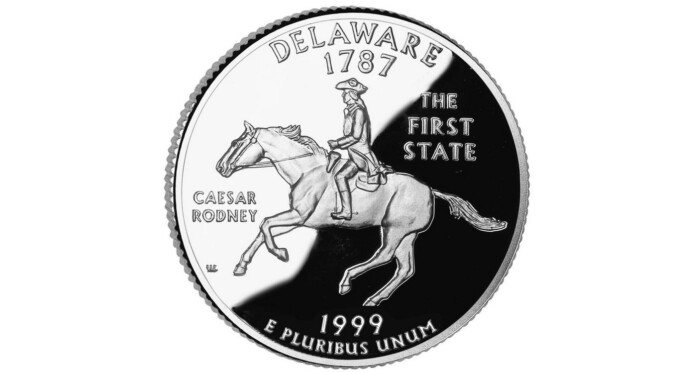
On this day, 250 years ago, a dying patriot rode all night through a storm so America could be born. Caesar Rodney, a delegate to the Continental Congress from Delaware, was tending to protests by British loyalists on the night of July 1st when a storm brewed to the north. Suffering from asthma and a facial cancer tumor that would lead to his death 8 years later, a letter arrived stating that Delaware’s vote was tied, 1 vote in favor of independence, 1 against it. Determined not to let this chance slip, Rodney immortalized himself by mounting a horse and riding to Philadelphia as lightning swirled around him. READ more inspiring details about this Founding Father… (1776)
Good News in History, July 2
Scientists Have Found Climate-Resistant Coral Reefs Around the World Totaling the Size of Wisconsin
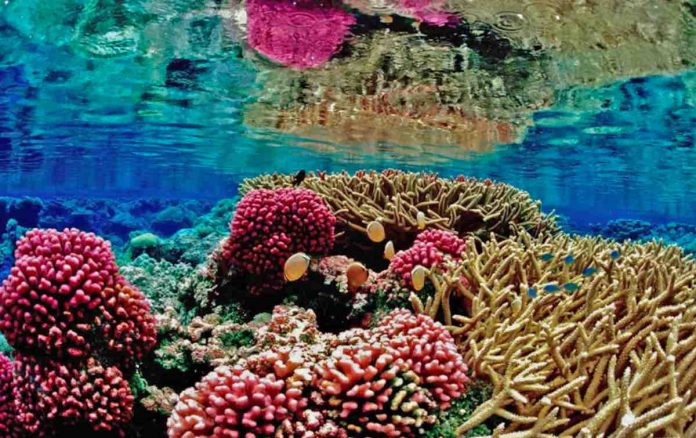
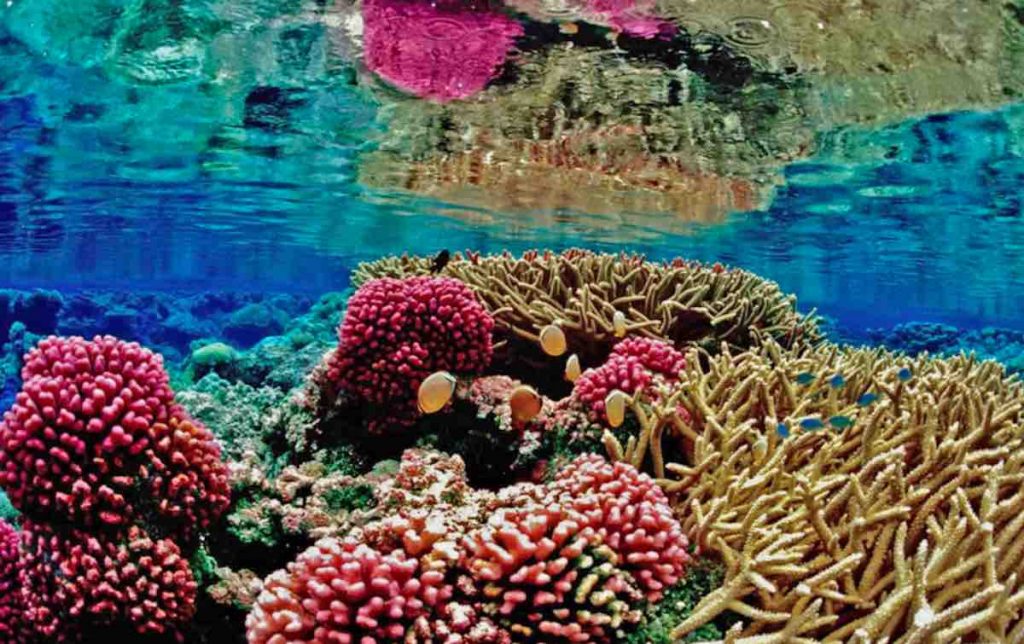
A sophisticated AI-powered examination of coral reef resistance extrapolated into the future found that there’re about 64,000 square miles of coral reefs on Earth that could still be resisting climate change by 2050.
The common theory states that CO2 emissions create a greenhouse effect which warms the seas which causes coral reefs to bleach or even die, yet there are environments—as GNN has frequently reported—where corals seem to be more resilient.
The authors of this new study found that when they used 45,000 observations of coral reefs going back as far as 1960 as the data set for an AI model to examine, it predicted according to 46 different criteria that 25 years from now there’d still be swaths of coal reefs totaling the size of Wisconsin located primarily in 8 countries, and that these would be capable of surviving and thriving in the warming seas.
The findings were presented at Our Ocean Conference in Mombasa, Kenya, and are available on the preprint server EcoEvoRxiv.
Most of the coral distribution was plotted out in the Philippines, Indonesia, Cuba, the Bahamas, and Australia. Belize, Nicaragua, and the Turks and Caicos Islands also showed coral resilience in 2050 according to the estimates.
The criteria for where in the world the AI would map as good coral habitat comes from a concept of ‘coral refuges’ which are observations that coral species can either endure warming seas, recover from damage faster, or avoid damage altogether in certain places.
Where these are in the world comes from the 45,000 observations mentioned earlier.
Why coral seem to enjoy these conditions in these particular places isn’t exactly clear—particularly as regards Nicaragua’s neighbor Honduras, where the country’s largest coral reef is also the victim of substantial ecosystem disturbance by human activity, yet seems to be flourish year round.
Sara Hashemi, a daily correspondent at Smithsonian Magazine, wrote that the authors of the new study want their work “to offer a road map for where countries should invest conservation funding, especially for small nations with limited resources.”
Hashemi started her report by noting that “it’s hard to feel optimistic for coral reefs” these days. It’s hard—if one doesn’t read GNN.
There’s great news on coral all around the world. In terms of protections, 77,000 square miles of tropical seas will be off limits to fishing thanks to bold conservation action by Papua New Guinea this year.
Located in the legendary Coral Triangle, where the Pacific and Indian Oceans meet, the newly-designated Western Manus Marine Protected Area will form part of the newly established Melanesian Ocean Corridor of Reserves, a network of national and jointly managed protected areas spanning Fiji, Vanuatu, and Papua New Guinea.
The science of coral breeding and restoration is advancing in leaps and bounds. This January, GNN reported that scientists on the island nation of Mauritius are naturally breeding heat-resistant corals that faced a bleaching event last summer with 98% survival rates.
Marine biologists weren’t even able to breed coral in a lab 20 years ago, but recently, scientists on the Maldives bred 10,000 corals in just weeks using a portable station shipped in a container to the archipelago.
In 2022, the breeding of coral took a cosmic leap with the first ever out-of-season spawning event for lab-bred corals along Australia’s northeastern coast.
Even just learning about these incredible organisms and what they’re capable of is an ongoing and encouraging process. GNN reported in 2024 that a Nat Geo expedition found the world’s largest coral ever, a leviathan shadow on the seabed that stretched out longer than a blue whale—longer than 4 tennis courts.
SHARE This Great News Roundup For Coral With Your Friends…
From One Surviving Male Bison, Azerbaijan Now Has 25 Calves Born Wild in 7-Year Success Story
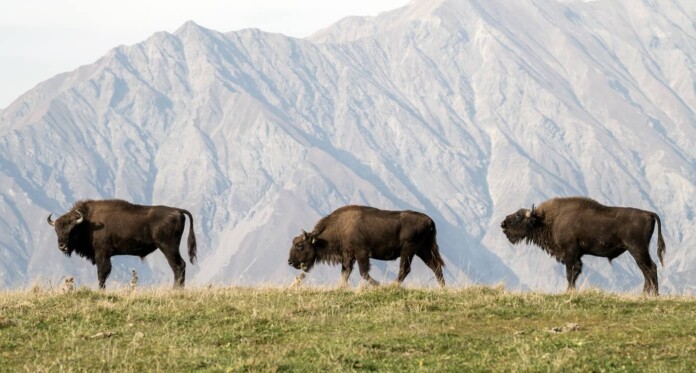
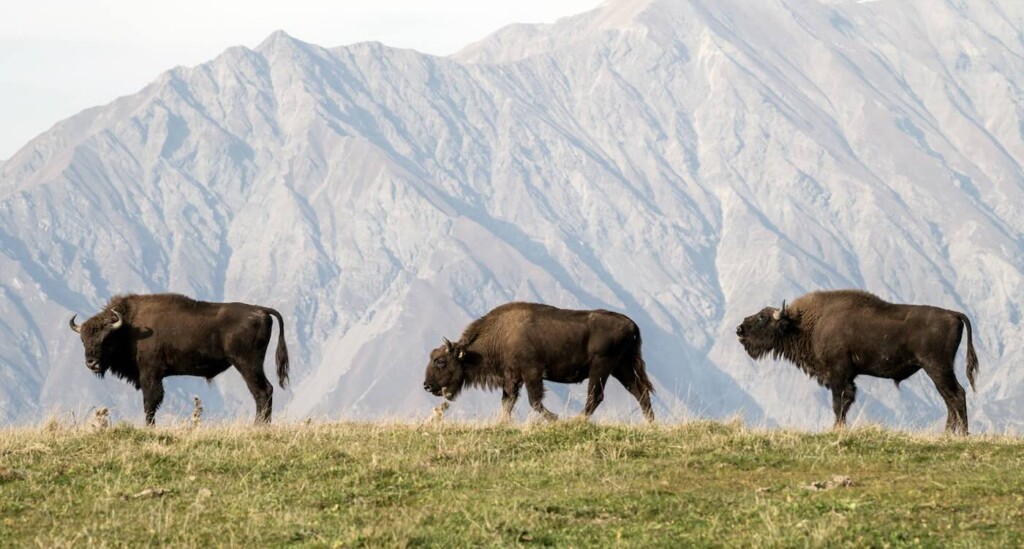
It was 7 years ago that the heavy wooden doors of transport crates slid open, and 12 European bison who had grown up in zoos suddenly were looking around, blinking at an unfamiliar wild landscape.
They were standing on the slopes of Shahdagh, or the King’s Mountain, northern Azerbaijan—their new home.
Together with the UN Environment Program Fund and the Azerbaijani Ministry of Ecology and Natural Resources, World Wildlife Fund spearheaded the effort to return the bison to the slopes of the south Caucasus, an effort ongoing across several European countries, including Portugal, the UK, and Romania.
Once native to most of Eurasia, these big-bodied ecosystem engineers lumbered freely around the whole of the continent before being fragmented, isolated, and hunted out of existence.
As has been the case with other animals, a West Europe zoo held the last remaining male member of the Caucasian bison population. He was bred with several European bison as part of an effort to restore the animal to Azerbaijan, which began in 2012 and culminated with the release of the first animals in 2019.
In Shahdagh, WWF Azerbaijan has slowly watched over the herd as it grew through the additions of 25 calves born wild so far.
“We now have a historic opportunity to restore our species,” said Elshad Askerov, head of WWF Azerbaijan, adding that the environment of Shahdagh was severely degraded during the Soviet period. “Soils and forests were severely overused, and many animals lost their habitats.”
NEWS FROM THE REGION:
- Nobel-Worthy Prime Minister Attempts to End Century of Ethnic Hatred for Armenians
- What Makes the Perfect Forest for the Perfect Autumn?
“The rewilding projects are very successful in Azerbaijan—they are a model for other Caucasian countries,” says Askerov. “We hope that eventually, these different herds will meet each other and become one big Caucasian population.”
Askerov suggested that there was a neighboring country—perhaps Georgia or Armenia—that was interested in replicating the project.
BISON ON THE BOUNCE: Bison Return to Illinois Prairie to the Sounds of Drumming After 200 Years of Absence
Bison do more than just provide an opportunity for tourists to stop their cars and get photos (and occasionally gored) they shape the forest in a way few animals can. Their shaggy coats act as excellent seed dispersers. Their foraging controls understory vegetation and reduces fire risk.
Their dung provides food for plant and insect species, and their substantial mixture of weight and width breaks up and tramples their environment in such a way as to create a vibrant “mosaic” of grassland/woodland habitat where many different species can thrive.
GRUNT About This Great Rewilding News With Your Friends On Social Media…
New Law Will Protect Kids’ Lemonade Stands After State Employees Were Caught Demanding Fees


In Michigan, a prospective law would eliminate virtually all regulations on that ole’ chestnut: the childhood lemonade stand.
If it can be believed, state house Representative Cam Cavitt (R-Cheboygan), had the issue brought to his attention after the local health department in his district demanded that some children pay repeated fees to run their lemonade stands.
The parents reached out to Cavitt, who introduced common sense protections for the classic child-run, non-alcoholic beverage stand, and it passed overwhelmingly in the state house.
“This is a practical change that will make it easier for our kids to gain real business experience and develop civic responsibility. I was glad to see the votes pour in,” Cavitt told CBS News.
The law permits minors to operate a temporary food business serving non-temperature controlled beverages on private property without paying anyone for that privilege.
Provided the beverages aren’t alcoholic and the business makes less than $5,000 a year, the minor is free to operate freely according to their God-given right.
In response to a truly head-scratching number of legal assaults on the running of lemonade stands by children around the country, several states, including Texas and Georgia, have made them exempt from most if not all business law requirements.
MORE STORIES LIKE THIS: Loyal Dog Who Lived by Owner’s Grave Inspires New Law Allowing Pets a Place in Family Plots
Cavitt’s House Bill 6007 will now go to the Senate for a vote.
Nearby in Colorado, such protections were also extended to home-cooked meals sold informally provided they take a food safety course and not transport the food more than 2 hours from the place it was cooked.
Colorado House Majority Leader Monica Dura said that the ‘Tamale Act gives’ people a chance to turn family recipes and cooking skills into a business opportunity.
SHARE The New Of The Young Small Business Owner Receiving The Protections He Deserves…
Largest and Most Detailed Picture Taken of Milky Way’s Center–With Millions of Stars and Thousands of Worlds


It took a new and special space telescope to parse out each one of these individual stars gleaming in a dizzying mass at the center of our own dear Milky Way galaxy.
The European Space Agency’s Euclid Telescope, orbiting 1 million miles from Earth at the 2nd Lagrange Point—an orbit it shares with NASA’s James Webb Space Telescope—the probe took 9 of these photographs in visible light while pointed at the galactic center for 26 hours straight.
It shows the incredible density of stars located at the center—60 million in just a snapshot of the sky the size of your average full moon, but it wasn’t aiming for the stars per se, rather the planets almost certainly to be orbiting them.
“It was never built with this science in mind,” Dr. Eamonn Kerins, an astrophysicist at the University of Manchester, reminded the Guardian, “but it has proved to be a superb facility for the work.”
“This data fires the starting pistol in a new age of exoplanet discovery, where we go from knowing about 6,000 exoplanets to finding more than 100,000 across the galaxy.”
Put aside any notions you have about humans finding a new place to live or looking for aliens and exoplanet astronomy is still the most exciting aspect of the field for the average person.
GNN’s reports on exoplanet study include such worlds as one almost as big as its star, another that orbits two stars like Tatooine from Star Wars, some which don’t rotate and have permanent dark and daytime sides, one with the density of a marshmallow, a gaseous giant with clouds that turn to stone, and one that’s shaped like a lemon where it rains diamonds.

Even still, as Dr. Kerins said, the Euclid telescope was built to study dark matter and dark energy.
The universe is believed to be made up of 5% regular matter, 25% dark matter, which tends to clump around galaxies and may even be responsible for coalescing them, and 70% dark energy which is believed to be fueling the expansion of the universe.
SPACE TELESCOPES: Citizen Scientist Spots Earth-like Planet: Now Astrophysicists Will Focus Most Powerful Telescopes on it
Though infrared light is more appropriate for studying these invisible forces spread across so many cosmic acres, Euclid’s visible light camera is designed to image large chunks of the night sky over many hours to track star movements. This will give information on the forces moving them—even the ones that can’t be seen.
However, it also provides an exceptional method of seeking out exoplanets: using the microlensing method of detection.
MORE EXOPLANET RESEARCH: Two ‘Super-Puff’ Planets Lighter Than Cotton Candy Discovered by Researchers
The way this works is through an observational phenomenon called lensing. When viewing a star located behind another star, the gravity of the nearer star bends the light coming from the farther star, making it appear brighter. If that lensing suddenly increases in intensity, it’s often because an orbiting exoplanet passed the star at its closest point, so close that its gravity intensified the light’s distortion.
For this reason, Euclid is believed to be well-positioned to coordinate the locations of tens of thousands of exoplanets, each one ready for closer examination with a telescope like James Webb or Hubble.
Euclid was launched in 2024.
SHARE This Brilliant New Space Telescope’s Exciting Debut With Your Friends…
“Joy in looking, and comprehending, is nature’s most beautiful gift.” – Albert Einstein
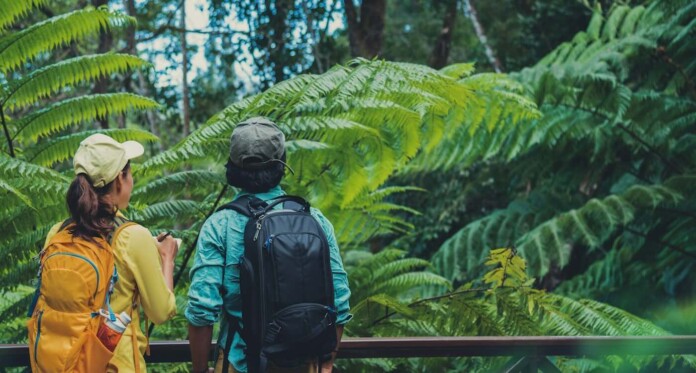
Quote of the Day: “Joy in looking and comprehending is nature’s most beautiful gift.” – Albert Einstein
Photo by: Getty Images for Unsplash+
With a new inspirational quote every day, atop the perfect photo—collected and archived on our Quotes page—why not bookmark GNN.org for a daily uplift?
Good News in History, July 1
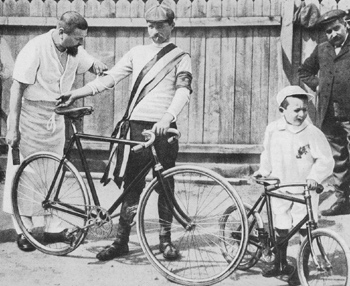
123 years ago today, the starting pistol rang out for the first Tour de France, the most prestigious cycling competition today. Set up and sponsored by the newspaper L’Auto, ancestor of the current daily, L’Équipe, it ran from the 1st to 19th of July in six stages over 2,428 km (1,509 miles) and was won by Maurice Garin. Of the three Grand Tours of European cycling, with the other being the Giro d’Italia, and the Vuelta a España, the Tour de France had by far the longest stages. READ how the first event went… (1903)
Herculean Effort to Restore Mozambique’s Rhino Population Succeeds with 61 Animals Moved There
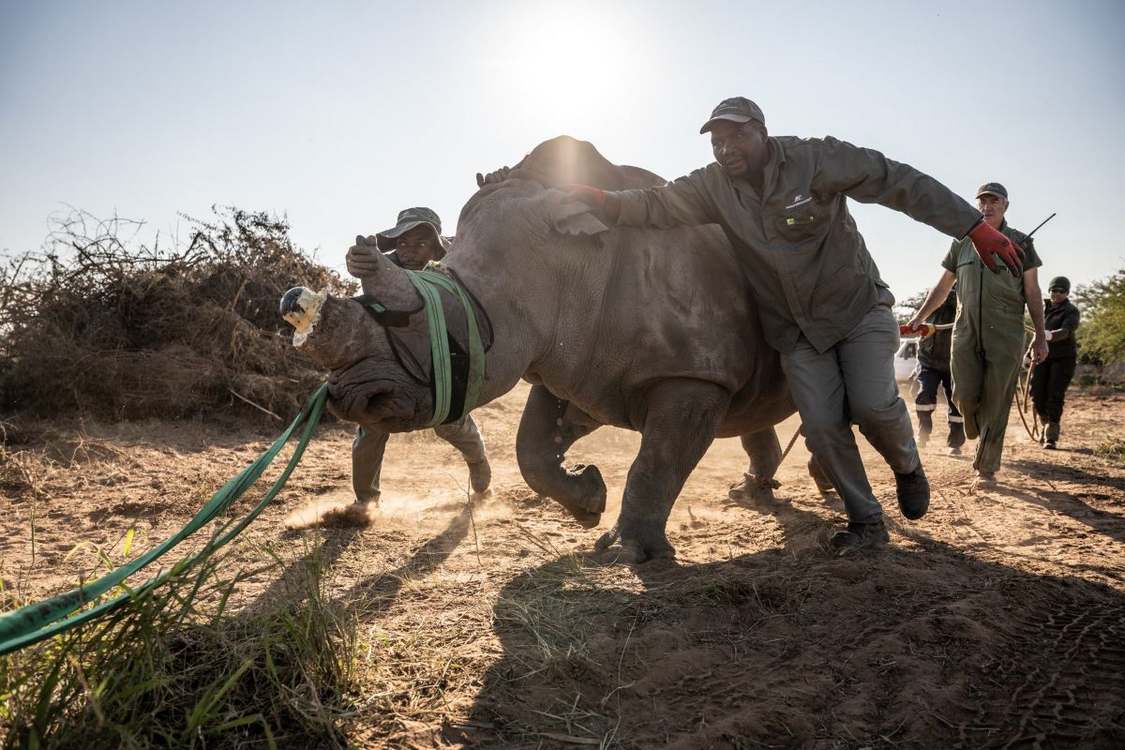
9 female white rhino have been reintroduced to one of Mozambique’s southern national parks as part of a mammoth undertaking to bring back species the country has lost.
Mozambique was the victim of one of Africa’s worst post-colonial power struggles, during which time they lost virtually all of several large animals during a civil war that lasted from 1977 to 1992.
During that time, rampant poaching and loss of centralized control of the rural areas saw localized extinctions of rhinos and other wildlife.
For the last 10 years, reintroduction efforts have seen Zinave National Park regain its rhino population. 39 white rhino and 22 black rhino have established themselves in the park, imported from South Africa.
Breeding has already occurred, including the birth of a black rhino calf, bolstering its Critically-Endangered species status.
The rhinos are protected within a specially developed high-security sanctuary, supported by significant investment in ranger capacity, surveillance systems, monitoring technology and specialized protection infrastructure.
“This translocation marks a chapter of pride and hope in Mozambique’s conservation journey,” said Pejul Calenga, Director-General of Mozambique’s National Administration for Conservation Areas.
“By returning white rhinos to Zinave, we are not only securing the future of a keystone species but also restoring ecosystem balance, creating investment opportunities in the wildlife economy, supporting local community development, and demonstrating what is possible when partners work together for nature.”
MORE RHINO READS: Radioactive Isotopes Being Embedded in Rhino Horns Seen as ‘Magical’ Anti-Poaching Solution
Zinave, located long the Limpopo River and thusly sharing a border with Zimbabwe, is managed by the continental nonprofit Peace Parks Foundation, which oversees protection and sustainable development in 10 cross-border park areas in the sub-Saharan region.
Starting in 2016, Peace Parks began a herculean repopulation effort into “the silent park” a disturbing moniker for Zinave that reflects its wartime losses.
AFRICAN PARKS: Virunga National Park Sees Hundreds of Elephants Return and Rare Gorilla Twins Born During Hopeful Year
Since then, a staggering 2,540 animals from 16 different species were moved from the neighboring countries into Zinave, including 7 Endangered African bush elephants, and the rhinos mentioned earlier.
Giraffe, zebra, sable, impala, hyenas, leopards, reedbuck, waterbuck, and buffalo have also been moved in.
CELEBRATE This Massive Conservation Success In Africa With Your Friends…
Dad Gave Up His Old Mustang to Raise 6 Kids. Decades Later, His Son Got it Back


It was a 1969 Mustang Mach 1, Daniel Allen would tell his boys; the best car he’d ever owned. And he traded it away to make room for his growing family.
Every time Mr. Allen told the story, one of his six sons was listening intently. Shane Allen recently traded his own restored Mustang for one just like that which his father had sacrificed, and surprised the old motorhead on Father’s Day.
After returning from several tours of war in Vietnam, Daniel Allen bought a white Mustang Mach 1 with a black hood and red stripes. It was a four-speed manual transmission, and it colored his youth with joy. He took his future wife Diana out on their first date in the pony, and even drove it right onboard the ferry where he proposed to her.
Yet as their first child soon made way for a second, third, and so on, Daniel traded the Mach 1 away for something more practical. Shane Allen, the youngest of Daniel’s sons, happened to grow up with a fondness for classic cars as well, and the two bonded over their shared interest.
It became routine for the pair to attend Father’s Day car shows together, where they’d look at Mustangs and reminisce about the one that got away.
“I knew the car he had dreamed about was that 1969 Mach 1,” Shane told PEOPLE. “My dad and I have talked about this car since I was a kid.”
As it would happen, earlier this year Shane spotted a white Mach 1 from 1969 just like how his father had always described it. He jumped at the opportunity to fulfill his dad’s dream of climbing back behind that same wheel, now that his sons were all grown up.
Trading his own restored Mustang GT away, there was a lot to do if Shane—as he envisioned it—wanted to surprise his dad with this mother-of-all Father’s Day presents. The upholstery needed changing and the paint needed a re-finish.
A PICKUP INSTEAD OF A MUSTANG: Grandson Surprises Grandpa by Restoring 1954 Pickup Sitting Broken for 40 Years: ‘I never thought I’d live to see that’
It wasn’t too much though, and soon, on their customary father-son visit to a Father’s Day car show, Daniel saw a white Mach 1 sitting in the lot. It had a name tag dangling from the review mirror marked “Daniel” which the man thought was just a coincidence.
Joking, he said “where are my keys?” A moment later, recorded in a priceless family video, Shane handed him the keys and told him to fire it up.
YOU’LL DEFINITELY LIKE: Son Surprises Dad with Dream Car He Gave up for Diaper Money 41 Years Ago
“I shut the camera off but wish I had continued filming,” Shane says. “When he got out of the car, he asked me how [I had made it happen]. I told him I traded my custom GT for this Mach 1 and he broke down and hugged me.”
He told PEOPLE that as a man he recognizes the incredible sacrifices Daniel made to serve his family, and was only too happy to have the opportunity to make some sort of repayment of that debt.
WATCH the video below…
@ohdeeznutz ♬ original sound - Shane Allen
SHARE This Beautiful Father’s Day Moment With Your Friends, Or Maybe Your Dad…
Great Smokey Mountains Will Soon Get Even Greater – Thanks to Nonprofit’s Land Purchase
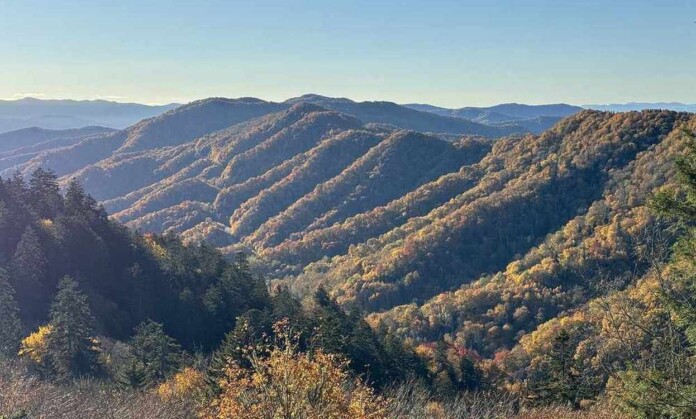
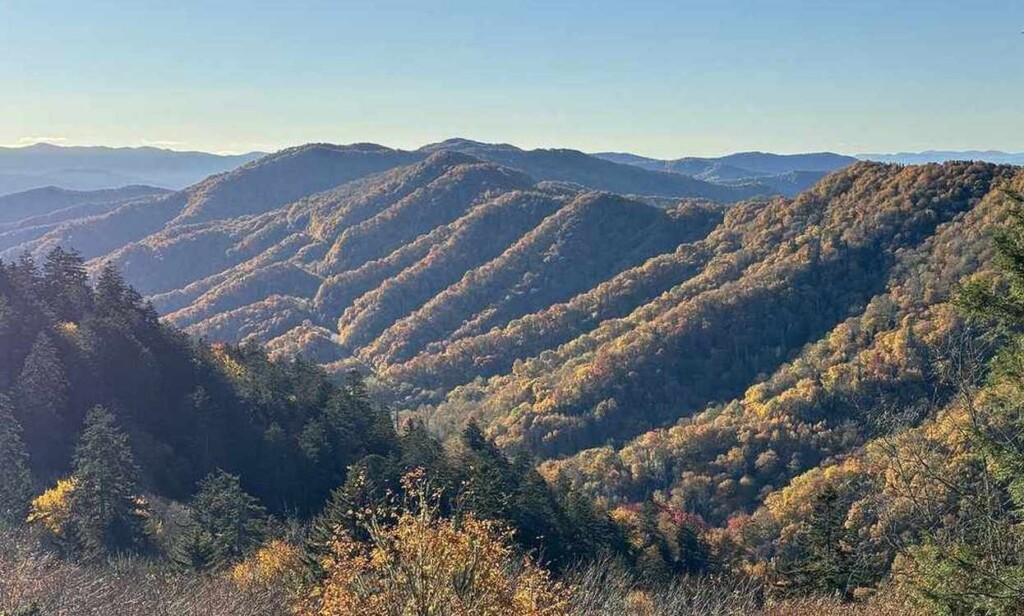
The Great Smokey Mountains is set to get just a little bit greater thanks to a 600-acre donation from a south-focused nature nonprofit.
Foothills Land Conservancy (FLC) recently completed the acquisition of the Oliver Tract, a 600-acre property bordering the national park.
The purchase permanently protects “one of the most significant remaining privately held properties” adjacent to the nation’s most-visited national park, the conservancy said in a statement.
The lands are located along the park boundary near Townsend, Tennessee, and Cades Cove, and contain intact forest, wildlife habitat, watershed resources, and critical landscape connectivity that supports the long-term health of the Smokies ecosystem.
The property is named for John Oliver, one of the earliest permanent settlers of Cades Cove, giving the tract significance not only for its ecological value but also for its connection to the cultural history of the Smokies.
“Projects like this define what land conservation is all about,” said Mark Stevans, executive director of Foothills Land Conservancy. “The opportunity to protect more than 600 acres bordering Great Smoky Mountains National Park is extraordinarily rare. Thanks to the support of our partners, donors and community, this land will remain protected for future generations rather than being lost to development.”
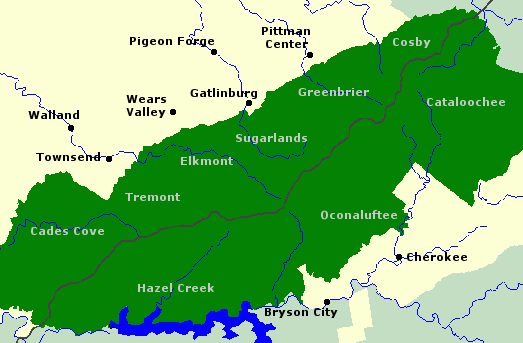
The acquisition marks one of the largest conservation transactions connected to the national park in decades. FLC intends to transfer the property to the National Park Service following completion of the federal review and acceptance process.
MORE PRIVATE CONSERVATION: Sighting of Elusive ‘Miner’s Cat’ a Fitting Reward for Philanthropists Rewilding Their Private Land
“We appreciate Foothills Land Conservancy’s work to protect this landscape for future generations, preserving its rich cultural history as well as the extraordinary biological diversity that makes this area so unique,” said Charles Sellars, Superintendent of Great Smoky Mountains National Park.
SHARE This Great Private-Led Conservation With Your Friends From Tennessee…
Motorcyclist Reunites with Strangers Who Lifted a 3,300-Lb. Car Off His Body


In Queensland, a father of 2 is alive to see his daughters again thanks to a horde of Good Samaritans who rushed to his side after he was pinned under a car during a collision.
Lifting with “all their might,” the bystanders managed to hoist the wheel and get the man out from underneath its crushing weight with only seconds to spare, as the victim was blacking out from the pressure on his chest.
Tyler Wiebe was driving to work in Brisbane when a driver suddenly came into the opposing lane and smashed into the car in front of Wiebe’s motorcycle. As it surged backward, he felt it drag him under before eventually stopping right on top of his sternum.
He couldn’t breath, and the compression was so intense that his heart wasn’t able to beat.
Hearing the tell-tale bang of a car crash, Rob and Brian, two employees at a nearby business, ran out to see what had happened, and saw a pair of legs sticking out from under a car.
The two got their colleagues together and ran out to try and lift the 3,300-pound vehicle.
“We tried to lift it off. We couldn’t, and then second attempt, we had a couple of other good Samaritans come and help us,” Brian told an Australian current affairs show. That second attempt only succeeded in breaking more of Wiebe’s rib bones, but the rescuers didn’t give up.
“We just knew we had to get the car off,” Rob said. “We just sort of grabbed the spot and just lifted with all our might.”
Miraculously, the strangers got the car up enough to move Wiebe clear of the wheels, at which point survival was up to him.
Speaking to the same current affairs show, Wiebe described how even though was free, he was pretty sure he was going to die. He couldn’t breath; he knew his lung had been punctured. The paramedics that came to rescue him in their ambulance would call out “stay with me, stay with me,” but Wiebe found it so difficult.
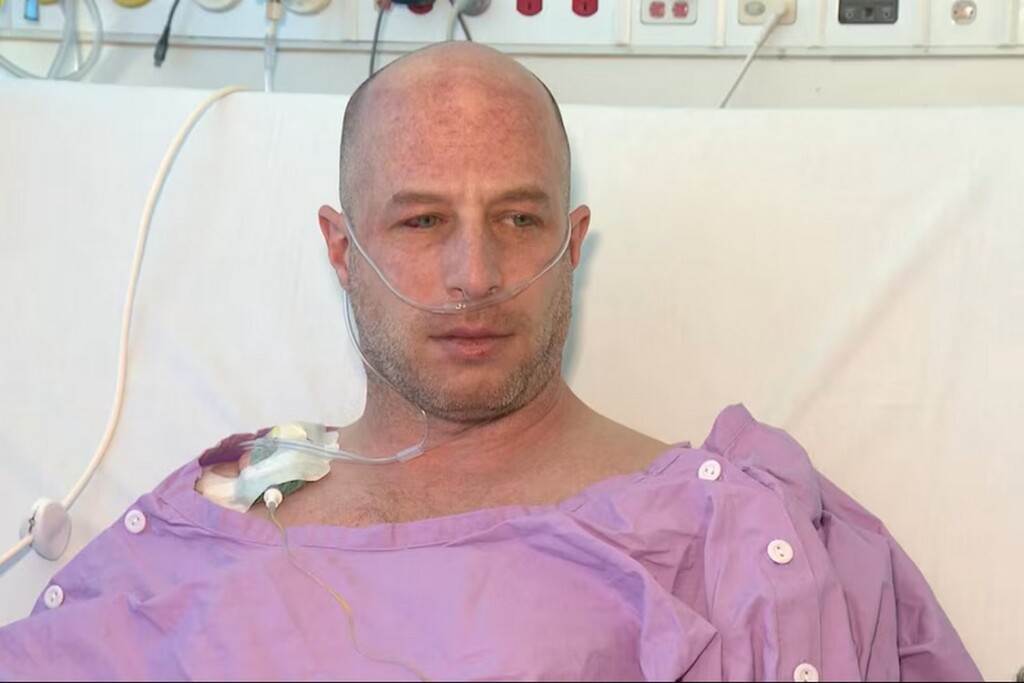
Yet the man was made of sterner stuff, and at the hospital he received surgery to stabilize his lungs, before making a slow yet steady recovery. When he was on the mend, he spoke with ABC News AU about the ordeal, and thanked the Good Samaritans for saving him.
ROAD RESCUES: Dog Runs Four Miles to Get Help for Owner Who Crashed Car into Oregon Ravine
“I get more time with my daughters, I get more time with my family and a second lease on life,” he said. “I can’t say thank you enough.”
ABC News also heard from a local, Cameron Vellacott, who witnessed the rescue.
THE POWER OF WILL: Police, Good Samaritans Team Up to Lift Two-Ton Car Off Crushed Teen Driver and Save His Life
“It was heartwarming to see so many people just jump to the aid of someone so quickly, who they clearly didn’t know and had no context for the situation.”
During an appearance on the television show A Current Affair, Wiebe was able to meet and shake hands with the men who saved him, calling them “certified legends,” amid tears and laughter.
WATCH the reunion below…
SHARE This Harrowing Survival Story Thanks To The Kindness Of Strangers…
“You can give without loving, but you can never love without giving.” – Robert Louis Stevenson
Quote of the Day: “You can give without loving, but you can never love without giving.” – Robert Louis Stevenson
Photo by: Kateryna Hliznitsova for Unsplash+
With a new inspirational quote every day, atop the perfect photo—collected and archived on our Quotes page—why not bookmark GNN.org for a daily uplift?
Good News in History, June 30

On this day 71 years ago, The Johnny Carson Show debuted on CBS television. The prime-time variety show was a traditional potpourri of monologue, comedy, music, dance, and skits. The series was short-lived, but planted the seeds for sketches he would later perform on The Tonight Show, such as “The Mighty Carson Art Players.” WATCH a highlight reel from the Tonight Show… (1955)
Biggest Change to English Farming Policy Since WWII Aims to Make Agriculture Profitable and Resilient
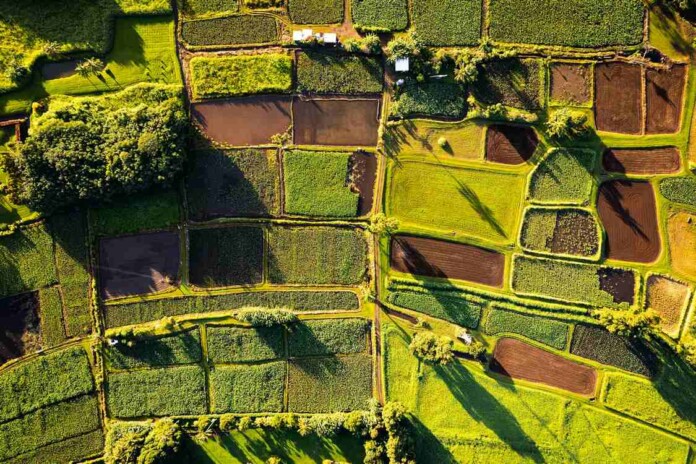
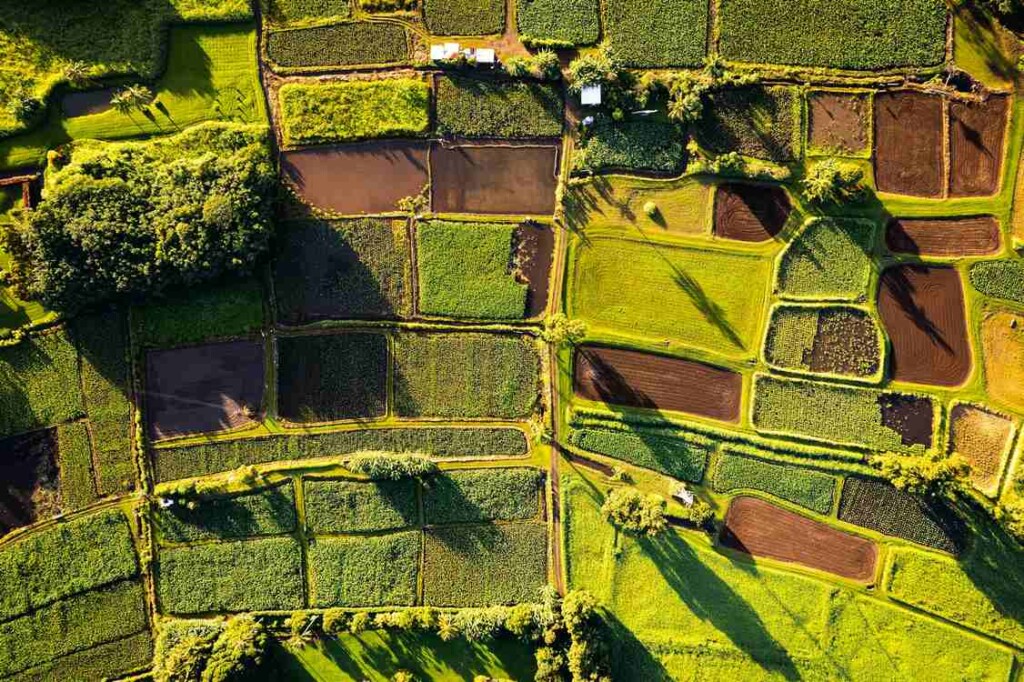
From the halls of Westminster comes the news that English farmers may finally be covered under a national agriculture policy that extends beyond the next harvest.
In what it described as “the most significant moment for English agriculture since the Second World War,” the currently-leaderless Labor government has prepared a 25-year farming plan to make the industry more profitable, productive, sustainable, and resilient.
Called Farming Roadmap 2050: Growing England’s Future, the plan has centered around rejoining farmers’ interests and suggestions in a way that balances existing environmental commitments around land management and conservation, as well as dramatically expanding the definition of agriculture by adding to the sector all work that comes as a direct result of agricultural production, for example English dairy and brewing made possible by English hops and milk.
This new measurement increases the recognized contribution in economic terms of the agriculture sector to 6.1% of the national economy, a 10-fold increase from the previous metric of 0.6%. Additionally, the new metric puts 1 in every 10 workers into the agriculture or “agri-food” sector, making it one of the largest employers in the country.
The Roadmap comes off the back of a review on profitability in English faming conducted by Baroness Minette Batters, a working farmer, president of the National Farmers’ Union of England and Wales from 2018 to 2024, and a current member of the British Parliament in the House of Lords.
The ‘Batters Review’ featured 57 recommendations, not one of which came from a politician, “including making farm reservoirs easier to build, improving access to finance and tackling the shortages of workers to harvest salads and berries,” The Times reported.
There is a doubling of government investment into agriculture innovation like soil health monitoring, nutrient cycling, climate resilience, and robotics. In total, the Roadmap adopted 53 of the 57 recommendations.
Emma Reynolds, the current Environmental Minister, spoke with the Times about the Roadmap and the value it will return to English farming.
“That [0.6 per cent figure] massively underplays and underestimates the value of farming. I think it’s completely inaccurate and has led some people to underestimating the value of the sector.”
CONTINUE READING: Prince William is Selling 20% of His Duchy Landholdings to Build Affordable Housing and Restore Nature
“Of course farming doesn’t stop at the farm gate. We should look at agri-food in the whole. And the agri-food sector is massive. It’s got the economic value that’s equivalent to the automotive sector or the construction sector.”
Other benefits included in the farming overhaul will be promises to work to cut trade friction with the EU, combining multiple government service and regulatory accounts into a single platform for ease of use, launching a $39 million fund for supporting small producer expansions, and extending the current visa program for seasonal harvest workers until 2030.
MORE STORIES LIKE THIS: UK Aims for ‘Moonshot’ Goal of Restoring Nature Across Area the Size of Greater London
“I have spent every day in this role rebuilding our relationship with farmers brick by brick because they’re such an important part of our economy, our society, and our environment,” Minister Reynolds said in a statement. “We are looking at how farming is valued economically and socially to ensure it receives the recognition it deserves.”
SHARE This Hopefully Transformative Legislation For Britain’s Great Farming Force…
Record Low Child Mortality Rates Recorded in Both India and China


Across Asia, children are living past their 1st birthday at record rates that underscore just how successful the region has been at raising the standards of living.
In India, China, and Indonesia—the world’s 3 most populous nations, infant mortality rates have fallen to record lows.
The most populous of the 3, India, recorded a drop in its infant mortality rate of 30 per 1,000 live births in 2019 to 24 in 2024. Tragically this is still more than 4-times higher than the US, but India is a vast nation with a dramatic variance in income and poverty levels.
Several states including lower-income Bihar and higher income Tamil Nadu have recorded nearly 50% drops in the mortality rate. Part of the success has been the dramatic rise in the percentage of live births where mothers received medical attention—from 83% to 95% over the same period.
In 2025, China’s infant mortality rate dropped to 3.8 per 1,000 live births, and the under-5 mortality rate fell to 5.4 per 1,000 live births, according to Fu Wei, director of the country’s Department of Maternal and Child Health.
This was fewer infant mortality events than countries like the US, France, and Portugal, and a major accomplishment for an upper-middle income country. China’s public medical insurance, though covering 95% of the country, is lean in terms of what it will insure against, and how much it will cover in terms of cost.
Among its free offerings is medical care for children aged 0-6, aiming to build a foundation of health and reduce future impacts on the health system for the rest of the child’s life.
Lastly, in Indonesia, considered along with China to be an upper-middle income country, the country recorded its lowest ever infant mortality rate of 14 per 1,000 live births in 2024. This marks a 50% fall from 2010 according to data from the World Bank Group.
CELEBRATE All These Babies Living To See Their 1st Birthday With Your Friends…
Critically Endangered White-Rumped Vulture Returns to Cambodia Refuge After Years of Effort
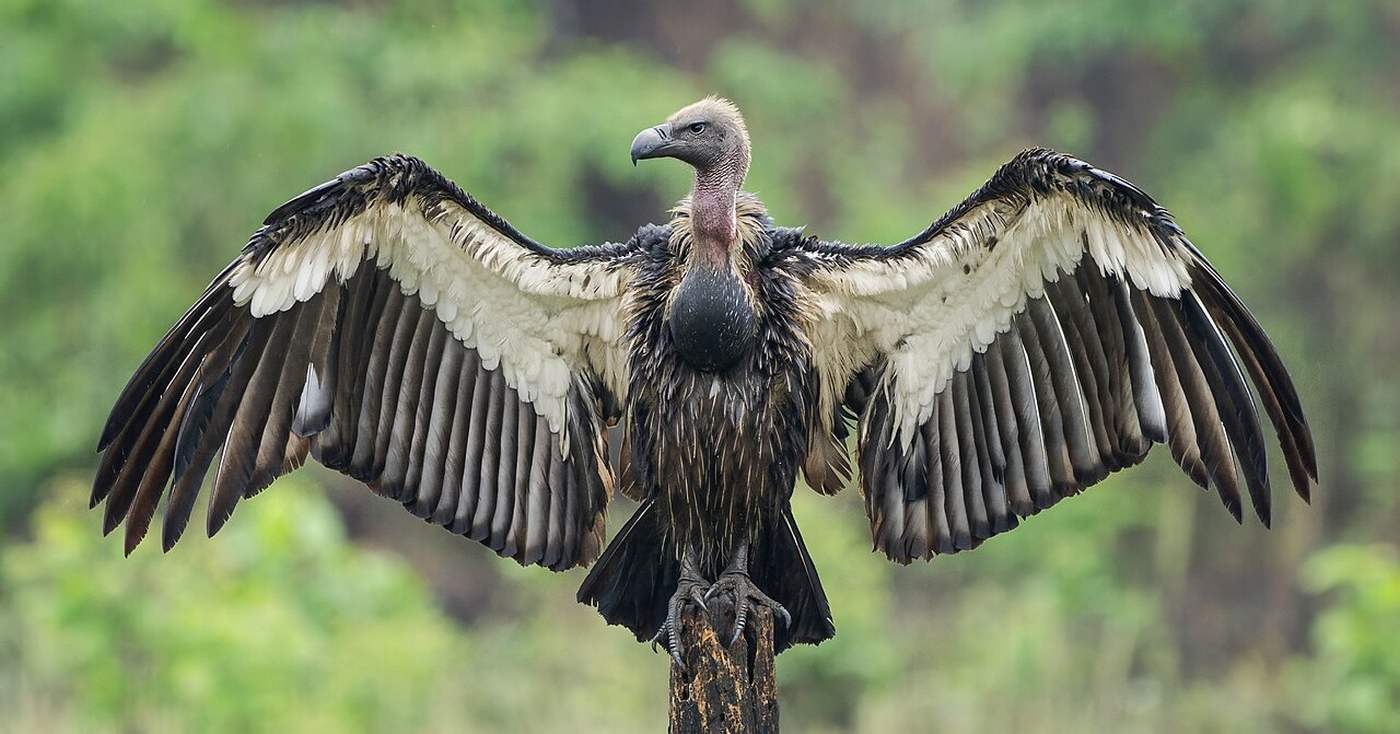
A Critically-Endangered and critically important vulture species has been sighted in a Cambodian wildlife sanctuary for the first time in 10 years.
After a poisoning incident decimated the local population of white-rumped vultures, there were substantial efforts made to increase the supply of habitat and food, and to reduce the chance of future poisonings.
Lomphat Wildlife Sanctuary surveyors spotted a white-rumped vulture this month at a “vulture restaurant” inside the sanctuary, encouraging those at NatureLife Cambodia who operate the restaurant, and conservationists working in the sanctuary.
Bou Vorsak, chief executive of NatureLife Cambodia, described the rediscovery as an important milestone for the organization’s long-term conservation work, Cambodianess reported.
“As a partner of the Ministry of Environment, we have worked for years to protect wildlife, particularly in Lomphat Wildlife Sanctuary,” Vorsak said. “The return of the White-rumped Vulture shows that our conservation efforts are making a difference by improving habitat conditions and ensuring a reliable food source.”
The survey which identified the white-rumped returner also spotted 5 red-headed vultures, another species considered Critically-Endangered by the IUCN that Vorsak and his colleagues are working to protect within Lomphat Sanctuary.
Vultures play a vital yet underappreciated role in all ecosystems by quickly devouring carcasses of larger animals. This not only helps prevent disease outbreaks, but recycles nutrients into the soil far faster than bacteria and insects can.
A BIT OF LOVE FOR VULTURES: 70 Vultures Released Into Bulgaria to Start Wild Population After Dying Out 60 Years Ago
Feeding thusly on carrion exclusively, however, vultures are at extreme risk of poisoning if they feed on a poisoned animal: either one killed by lead bullets or shot, or poisoned by industrial agri-chemicals like DDT.
“Poisoning remains a threat despite our awareness campaigns,” Vorsak said. “The number of incidents has dropped significantly, from more than 30 cases a year in the past to around 1 to 3 cases annually.”
DIRTY JOBS, SPECIAL ANIMALS: Cambodia Honors Minesweeping Hero Rat with Memorial Statue After He Cleared 100 Landmines
To help not only protect the vultures from poisoning but also ensure a steady food supply during leaner times, NatureLifes operate a vulture feeding station that distributes a large carcass for the resident vultures once a month.
Less than 200 vultures were counted in the organization’s latest survey, showing just how precarious these birds’ existence is.
SHARE This Encouraging Sign To Keep Working Hard Preserving Cambodian Wildlife…
Billion-Dollar Program Connects 50 Million People to the Power Grid Across Africa
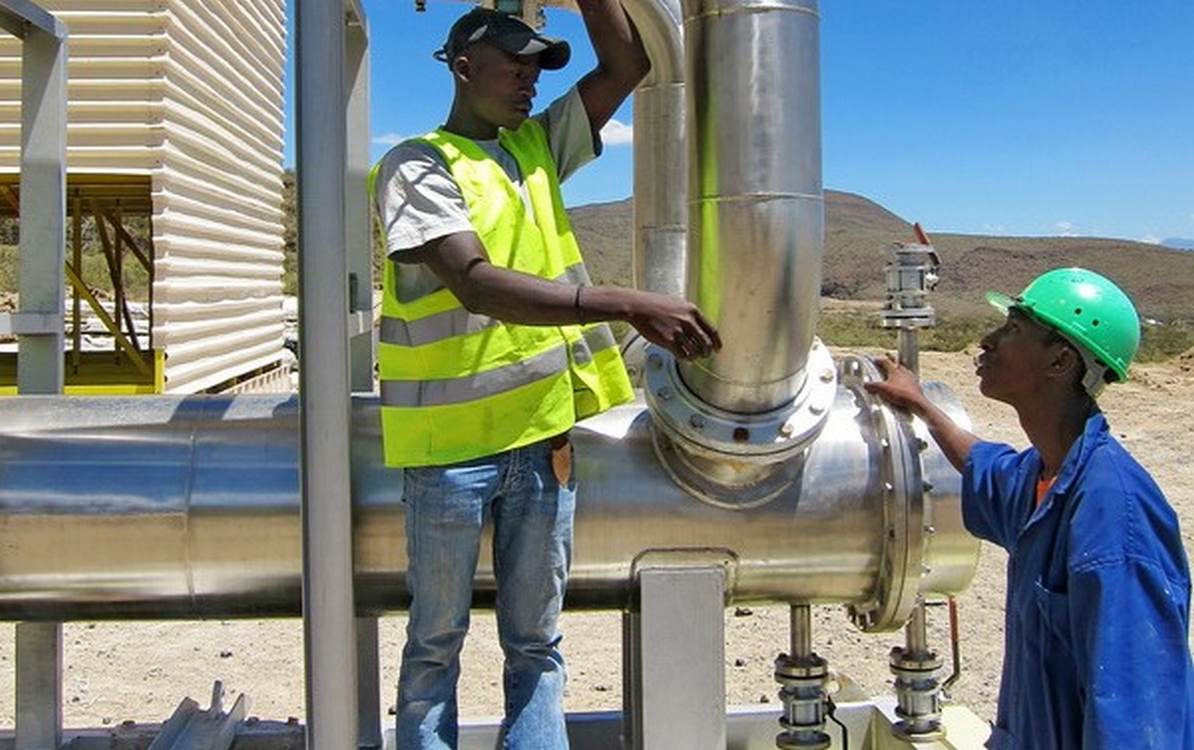
50 million Africans living in 40 countries now have access to electricity for the first time thanks to a $15 billion development initiative by the World Bank and African Development Bank Group (ADB).
Called Mission 300, it aims to halve the number of people living without reliable electricity by 2030 by pioneering and working to finance and implement National Energy Compacts—fixed agendas for public ministries, commercial operators, and investors to coalesce around.
African development has been a mixed story since the end of colonialism, with shining examples of Botswana and post-war Rwanda clashing with others like Zimbabwe or Sierra Leone.
It’s a testament to these earlier failures that 600 million people could still be living without electricity on the continent. There’s nothing mysterious about why economies grow and why they don’t, in the same way that there’s nothing mysterious about how to finish an ultra-marathon: that doesn’t make it any easier.
Mission 300’s National Energy Compacts may finally be the ticket, at least regarding electrification. Indeed, households are receiving their first stable power supplies twice as frequently now as when Mission 300 began in 2024, and more than 30 countries have now created or are already working under a National Energy Compact.
In Tanzania, for example, 7.5 million people have gained access to power under Mission 300—a five-fold increase in the average annual pace of electrification prior to the initiative.
In Ethiopia, 4.6 million people have been connected, supported by reforms that made grid connections more affordable.
MORE AFRICAN DEVELOPMENT: African Continent Gains 10 Years of Life Expectancy Since 2000 Despite Wars, Famine, and Instability
“50 million people connected is a milestone—but the bigger story is the pace and the partnership behind it,” said Ajay Banga, President of the World Bank Group.
“Mission 300 is helping countries move faster, connect more people, and build a platform that will last well beyond this effort — one others can use, build on, and scale for years to come. At the end of the day, electricity is not just about power. It is about what it enables: jobs, business, health care, education, and opportunity.”
ALSO CHECK OUT: Tunisian Solar-Powered Cars Leverage African Sunshine to Charge 30 Miles for Free Everyday
To date, the African Development Bank Group and the World Bank Group have committed nearly $15 billion in financing and attracted about $4.5 billion in co-financing for Mission 300-related projects, while additional development partners have pledged more than $7 billion in support of Africa’s energy sector.
SHARE This Great New For Africa With Your Friends…
“I am always doing that which I cannot do in order that I may learn how to do it.” – Pablo Picasso

Quote of the Day: “I am always doing that which I cannot do in order that I may learn how to do it.” – Pablo Picasso
Photo by: Samuel Castro
With a new inspirational quote every day, atop the perfect photo—collected and archived on our Quotes page—why not bookmark GNN.org for a daily uplift?

Good News in History, June 29

70 years ago today, the Interstate Highway System was established in the US to create a national road grid that today totals 48,440 miles across all 50 states (78,000 km). It ushered in the first national road numbering system for cross-country travel and they all have unified sign design. READ more… (1956)
High Tech Jacket Prototype Pulls Drinking Water From Thin Air – Up to 1.5 Pints Per Day
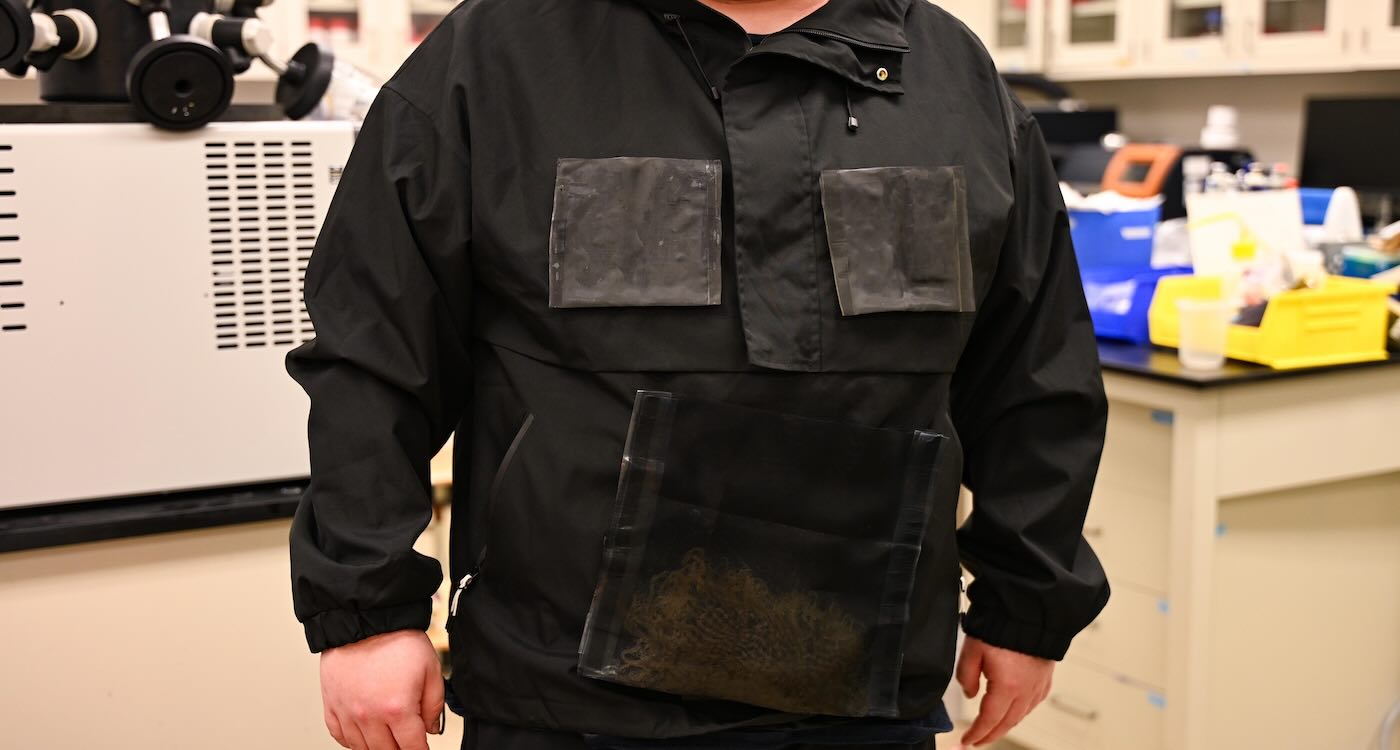
A new high tech jacket developed by engineers at the University of Texas can pull drinking water from thin air.
With the advance in fabric technology, the jacket can collect up to one-and-a-half pints of drinkable water a day, say scientists.
They suggest the ground-breaking technology could benefit anyone who spends a lot of time in areas without easy access to drinking water, like hikers, campers, runners, agricultural workers, and soldiers.
“Water harvesting from air is usually imagined as a stationary device such as a box, a panel. We wanted to rethink the form,” said research co-leader Professor Guihua Yu. By focusing on the fibers rather than building another bulky device, the researchers overcame a common problem in the field.
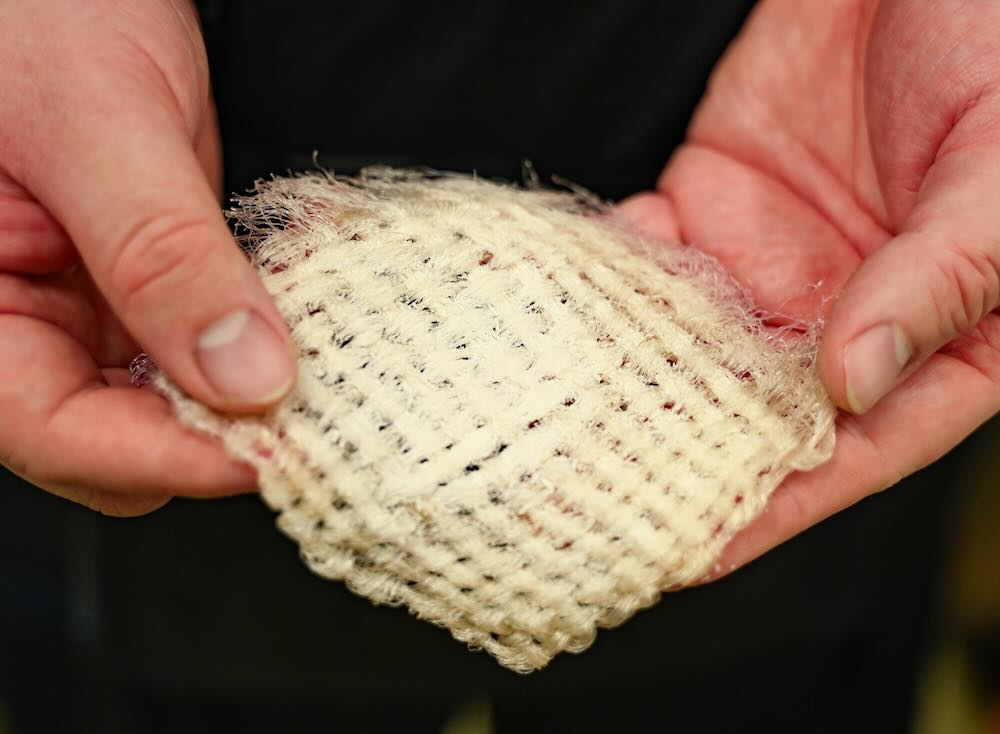
He explained that the textile incorporated into the jacket collects moisture and funnels it to detachable harvesting units, which are then “placed in a foldable collector and heated to produce the water”.
The jacket produced between 400 and 900 milliliters (0.7 to 1.5 pints) of drinkable water per day, depending on humidity levels, according to a study published in the journal Science Advances.
Compared with conventional water-harvesting materials, the textile showed a three- to 10-fold improvement at scale.
“The important advance here is that the team did not simply make another material that absorbs water,” said study co-author Professor Keith Johnston.
“They designed a pathway for water to move quickly, from vapor in the air to liquid on the fiber surface, and then into the interior of the textile.
The researchers are now eyeing applications beyond clothing – including backpacks, tents, emergency shelters and other outdoor gear, allowing items people carry every day to help collect water. They also plan to look at applying the technology to remote field operations, disaster response, and water access in arid or infrastructure-limited regions.
A separate device developed by the same research team pulled a record amount of drinking water from the air using solar power—in both the arid climate of the Chihuahuan Desert and the humidity of Austin, Texas.
In tests, the researchers captured 1.3 liters (2.3 pints) of clean water per day in both locations. That equates to 4.3 liters (7.5 pints) of water per kilo of moisture-capturing materials per day—more than any other research group has achieved, according to a paper published in the journal Nature Water.
“This is a big stride toward practical atmospheric water harvesting,” said study co-lead author Weixin Guan.
OTHER ADVANCEMENTS:
• Ultrasonic Device Dramatically Speeds Harvesting of Water from the Air – Drinkable in Minutes Instead of Hours
• ‘Milking’ the Air for Water: Zero-Energy Technique Doubles Survival Rate for Young Trees to Reforest After Fires
• Device Pulls Dozens of Liters of Water from the Air–Already Being Installed in Jordanian Desert Homes
At the center of the team’s work is AirGel, a specially-engineered hydrogel fabric made from biomass-derived materials. The fabric absorbs moisture from the air, then releases it when warmed.
“This goal has been incubated over years of work, from molecular design to real-world operation, and it is especially meaningful to see those pieces finally come together in a field-ready system,” said Guan.
The University’s research commercialization unit, has filed a patent application for the technology.
SHARE THE POSSIBILITIES With Hikers on Social Media…