Two weeks after launching, the European Space Agency’s Copernicus Sentinel 3C satellite has returned its first images of our world in sumptuous color.
This first set of images includes stunning views of Italy, the Canadian Arctic, and the Caribbean from the satellite’s ocean and land color instrument, as well as measurements of the height of the Greenland ice sheet and sea surface from its synthetic aperture radar altimeter.
Sentinel-3C is the third satellite in the Sentinel-3 series and will continue the mission’s long-term task of delivering environmental data that are essential for a wide range of applications.
The Sentinel-3 satellites carry the same suite of instruments to systematically measure Earth’s oceans, land, cryosphere, and atmosphere.
Over oceans, Sentinel-3 measures the temperature, color and height of the sea surface as well as the thickness of sea ice to support, for example, the monitoring of marine pollution and marine heatwaves.
Over land, this innovative mission monitors drought and wildfires, maps the way land is used, checks vegetation health, and measures the height of rivers, lakes, and polar ice sheets.
ESA is still in the process of commissioning Sentinel-3C for service, an important and intricate task that will take another 5 months, but after only two weeks in orbit, the satellite’s initial images already showcase that it is on the road to excellence.
The first image, captured by the ocean and land color instrument is a striking natural-color view that reveals Italy in beautiful detail, stretching from southern Germany in the north to Sicily and the southern Mediterranean.
The second image, also captured by the ocean and land color instrument on September 30th, features part of the Canadian Arctic Archipelago to the west of Greenland. Snow and ice-covered islands dominate the scene, with rugged coastlines, deep fjords and exposed rock creating intricate patterns.
At this time of the year sea ice is at a minimum but some fractured floes are visible on the dark open water.
SHARE These Incredible Photographs With Your Friends On Social Media…
A sister turned her personal tragedy into a brilliant emergency safety product.
Simple yet vital, the Roth ID Tag is an adhesive designed to stick forever on the fabric of a child’s car seat.
If that child needs to be rushed to the hospital, the tear-off tab sees the sticker become a hospital bracelet, with vital medical and contact information.
The Roth ID Tag was created by the sister of the deceased Julie Roth, who was killed in a 47-car pile up on the Ohio Turnpike on December 23rd, 2022. In the midst of the worst winter storm that year, Julie didn’t survive, but Ayla and Rory, her two children strapped into their car seats, did.
As first responders combed through the wreckage, pulling the injured from their cars, they came across Julie’s little ones. But with their mother unresponsive, and triage decisions being made at scale, it was never determined who the two surviving children were.
Instead they were rushed with other survivors to the hospital where the problem compounded. Who were those two traumatized children, what were their names, what were their blood types, did they have a latex allergy?
Hours would pass before they were finally examined and their identity could be ascertained, before their father was finally called with the news and the two young ones could see a familiar face amid the confusion and grief.
Julie’s sister created the Roth ID Tag to help parents and guardians ensure such a situation would never happen again.
The reverse side – credit, Roth ID Tag
The Roth ID TAG includes an area on the back for parents to write emergency information before affixing it to the child’s car seat. In the event of an emergency, the Roth ID Tag quickly removes from the seat and is immediately used as an emergency ID wristband by first responders additional adhesive tabs.
This reduces the risk of misinformation or loss of information in chaotic emergency situations, as happened to Rory and Ayla, while a QR code will allow anyone to gather more information if the child is registered through the Roth ID Tag website.
“I can recall countless situations where the Roth ID Tag would have made the scenario more manageable,” Captain Wilhelm of the Bellevue Fire Department, Ohio, said in praise of the invention.
The design is approved by registered Child Passenger Safety Technicians under Safe Kids Worldwide, and has picked up awards for its design and the brilliance with which it has filled a niche in the market for safety products.
Sheriff, fire, and police departments, as well as highway safety boards and DoTs from a swath of states officially endorse the product, which can be found through a variety of large retailers like Target, Walmart, and Amazon.
SHARE This Woman’s Tragedy Transformed Into A Brilliant Safety Innovation…
Quote of the Day: “A single gentle rain makes the grass many shades greener. So our prospects brighten on the influx of better thoughts.” – Henry David Thoreau
With a new inspirational quote every day, atop the perfect photo—collected and archived on our Quotes page—why not bookmark GNN.org for a daily uplift?
29 years ago today, NASA and ESA’s Cassini Mission, meant to gather data on Saturn and its moons, was launched from Cape Canaveral. The Flagship-class robotic spacecraft comprised both NASA’s Cassini space probe and ESA’s Huygens lander, which landed on Saturn’s largest moon, Titan. Cassini was active in space for nearly 20 years, with 13 years spent orbiting Saturn and studying the planet and its system after entering orbit on July 1st, 2004. READ about what it found… (1997)
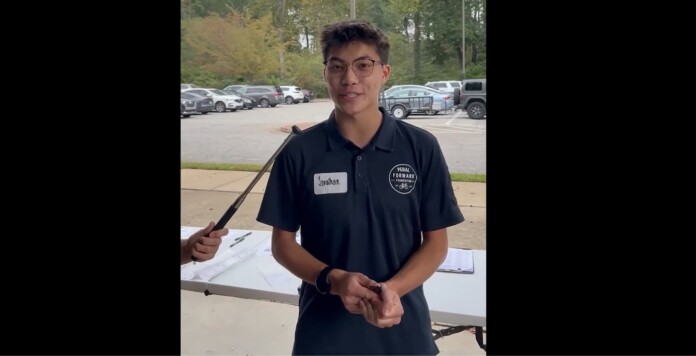
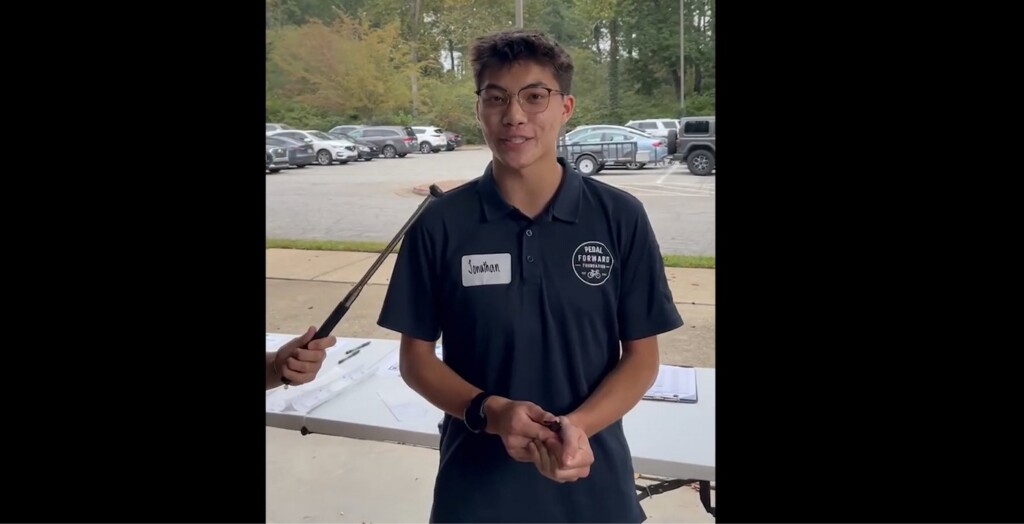
Jonathan Thai - credit, screengrab via Pedal Forward
Jonathan Thai – credit, screengrab via Pedal Forward
Continuing GNN’s coverage of youth nonprofit leaders, the Pedal Forward Foundation in Georgia has distributed hundreds of bicycles to low income families, and taught hundreds of children how to ride them.
It’s founder, Jonathan Thai, was inspired to step up and serve his community after the local REI closed down a community bike-riding workshop.
At just 17 years old, the Alpharetta resident has already raised $30,000, securing 400 donated bicycles, and distributed 500 helmets, while hosting over a dozen free community bike clinics for children of all ages.
Thai says that in part, inspiration for the Pedal Forward Foundation came from his parents’ upbringing in rural, post-war Vietnam.
“Something like biking might just look recreational at first glance,” Thai told Points of Light, an international nonprofit which honored him with an award. “But it can have such a big impact for a family that doesn’t have access to transportation – getting to school, getting groceries, getting to a job.”
Thai is a high school triathlete, a body of experience he leaned on, together with his family heritage, to organize and drive the initiative forward to what it is today.
Along the way, the Pedal Forward Foundation received assistance from the National Charity League, the Young Men’s Service League, the YMCA, Boys and Girls Clubs of America, the Georgia DoT, the City of Roswell, Thai’s triathlon team, and various Georgia cycling charities.
The free bike clinics teach between 30 and 45 children, starting with balance biking and training wheels, before moving on to more advanced courses on braking, maneuvering, and dealing with traffic.
What Thai started in Georgia has now spread to chapters in New York and Tennessee, while next year, the Foundation will go international—to where it all started—on a humanitarian charity and cycling trip to Vietnam.
Youth nonprofit leaders are more common than you might imagine. In Arizona, a 12-year-old named Sloan recently wrapped up her 5th annual Diaper Drive, which channeled donations in excess of 30,000 diapers to a Phoenix food bank.
From the Upper West Side of Manhattan, GNN spoke with Max Owobu, who founded the Yenko Foundation at just 15 years of age. It sponsors children through private school in Ghana’s chaotic capital city of Accra. Owobu has already secured funding to send 10 children through the current school year, paying for their tuition, meals, transportation, uniforms, and supplies.
On Monday, GNN featured the work of 14-year-old Payton Obert and her lemonade stand, that has to date channeled $5 million worth of gifts and necessities to children facing economic hardship, or prolonged stays in the hospital battling illness.
The quartet of compassionate youth leaders is proof positive that one is never too young to make a difference.
WATCH the story below…
SHARE This Young Man Making A Huge Impact In His Community…
Residents of Pittsburgh with outstanding debt on their water utilities can see it forgiven over a 24-month period.
Instituted by Pittsburgh’s water authority, certain customers have already been enrolled as of September, and need only keep up with monthly payments to see pre-September outstanding debt gradually forgiven.
Called the Arrearage Forgiveness Program, Pittsburgh Water recently updated and improved the program, while some 4,300 city households living below 200% of the Federal Poverty Line were automatically enrolled.
If such a household had, by September 1st, outstanding debt—$1,000, for example—they can see that total entirely erased if they begin meeting payment obligations. For every month the obligation is met, one twenty-fourth ($41.60, using the example) of their outstanding debt will be forgiven.
In two years’ time, the balance in arrears will thus be zeroed out.
Pittsburgh Water director of customer service Julie Mechling told the CBS News affiliate in the city that over the 24-month period, customers can miss up to 2 monthly payments and still stay on track for debt forgiveness. More than 2, however, and they are removed from the program.
“There’s help out there for people who are struggling. There are multiple opportunities for you to come to us and see what protections are available to you,” Mechling said.
Pittsburgh Water said the program is possible because a reasonably low number of total customers have outstanding debt or miss payments. Greater than 95% in fact have neither, and Pittsburgh Water sees it as a kind of mutual aid opportunity for the fewer than 5% who are struggling.
SHARE This Helping Hand From An Unlikely Corporate Source…
- credit, Lars Görze MA / Hesse State Office for Monument Preservation
– credit, Lars Görze MA / Hesse State Office for Monument Preservation
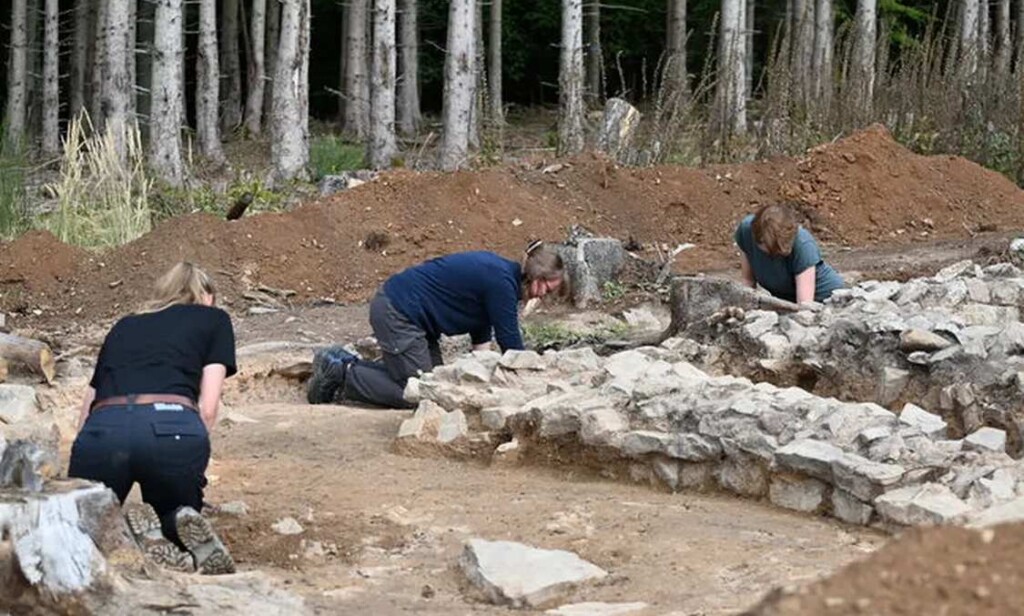
Along a series of Roman fortifications cutting across Germany just north of Frankfurt, archeological excavations have revealed extensive floorplans belonging to a temple, a military camp, and craft center.
The discovery, lying in wait just a few inches beneath the soil of the forest, provides extensive insight into what life was like along this frontier, as well as the area’s use following their abandonment.
Since 2024, Hessian state archeologists and colleagues from the University of Frankfurt have been excavating Kapersburg—a Roman fort located in the foothills of the eastern Taunus Mountains.
Kapersburg is located along the Upper Germanic-Rhaetian Limes, a 342-mile fortified border stretching from the Rhine to the Danube that marked the end of Rome’s military and cultural influence. Designated a UNESCO World Heritage Site in 2005, the limes have produced dozens of important archeological discoveries.
“We have conservation layers here that are otherwise unparalleled in Hesse, because no agriculture has passed over them,” Dr. Kai Mückenberger, a state archeologist with the title “Limes Coordinator” said in a translated statement.
“The forest has preserved everything over the last few centuries and largely preserved it for us in such a way that we find layers that are otherwise always gone.”
Most recently, the Hessian archeologists turned up the military camp, called a vicus, where a troop that held Kapersburg would have lived. Inside the vicus, archeologists found the floorplans of living areas, craft centers, and a temple that’s now believed to have been dedicated to Mars, the god of war.
– credit, Lars Görze MA / Hesse State Office for Monument Preservation
The rectangular temple was about 16 feet long, and contained a smaller, three-walled room at its center where worship would have taken place. Inside, inscriptions make reference to Mars, while fragments of a statue of Victoria, the Roman goddess of victory with her wings and laurel wreath, were found on the site.
Victoria and Mars were often worshiped together, both by Romans in general, and particularly among the military for obvious reasons.
The temple captures how long-lived Kapersburg was. Built during the reign of either emperor Trajan or Hadrian, it held the frontier for 150 years, much of the time via the strength of a military unit called “Numerus Nidensium.”
The “Nide” in “Nidensium” referred to a nearby Roman settlement called Nida, which would become a quarter of Frankfurt now called Heddernheim. Numerus Nidensium is believed to have numbered around 160 soldiers, with the vicus hosting perhaps as many as 700 support staff and hangers-on.
Further exciting new insights were made into the history of the vicus before its abandonment in the 3rd century. Extensive remains of craft activities were discovered, including the area of a blacksmith’s shop. Evidence was also found that the Romans leveled part of the camp village and later replaced it with residential development.
SHARE This Great Discovery And The Insights It Will Provide…
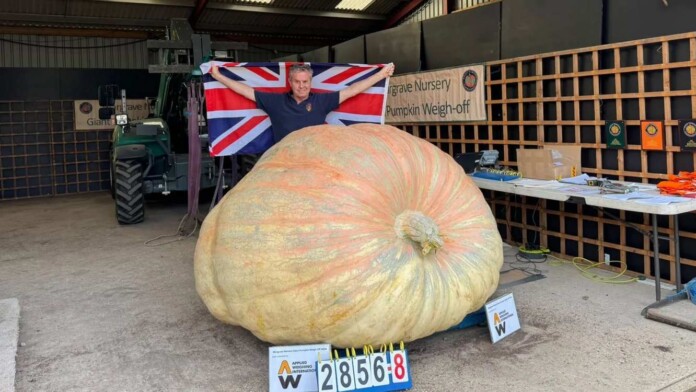
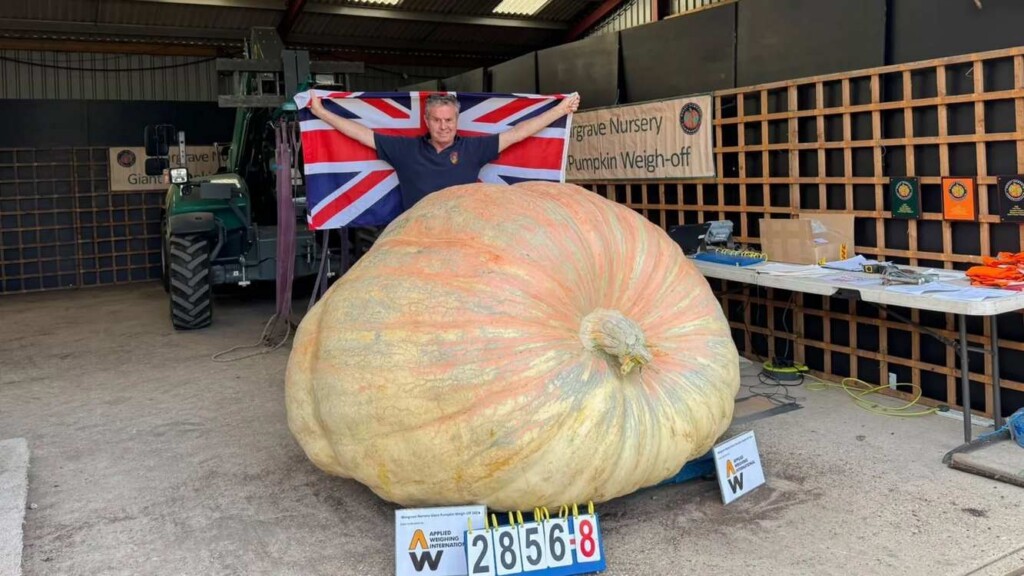
This seismic squash was just certified as the largest ever grown by a man at a recent British competition.
When volunteers at the Wargrave Nursery Giant Pumpkin Weigh-Off finally hoisted the specimen onto the scale, the reading was simply incredible—2,856.8lbs (1,295.8kg)
It’s heavier than a white rhino, heavier than a Volkswagen Beetle, and when compared to other record-breaking pumpkins of history, stands alone as the undisputed pumpkin-g of the mountain.
Ian Paton, from Lymington in the English county of Hampshire, says he spent 6 hours a day during the growing season tending the gargantuan gourd. 65-year-old Paton is a master, having grown giant produce for 50 years alongside his brother Stuart.
Together, the two men broke the world record for a giant pumpkin just last year.
This year’s competition at Wargrave, however, was Ian’s first attempt at growing solo, and it turned out to be “bloody hard work.” As it became clear the pumpkin was going to become a king, it required 130 gallons of water per day.
Paton named it Bagheera, after the black panther from Rudyard Kipling’s The Jungle Book.
“In the 100 million years that fruiting plants have existed on planet Earth, this is the heaviest and by a long way simply the most massive specimen ever to have existed in all that time. If that’s not the very definition of awesome, I don’t know what is!” Gerald Short, Giant Pumpkin Commonwealth-Certified Judge, said at the Wargrave Weigh-Off, according to Guinness World Records, which was also there to observe.
Bagheera was 45 pounds heavier than last year’s contestant, but was rather more lean. Its official circumference of 20 feet actually failed to set a world record for fattest pumpkin—an honor held by Ian and Stuart’s 2025 pumpkin.
When one considers that the UK was scorched by something of an unprecedented heatwave this summer, Paton’s achievement, as well as Bagheera’s resilience, seems all the more marvelous.
Upon its passing, Bagheera will be used as cow feed.
SPREAD The News About This Super-Sized Squash With Your Friends…
Quote of the Day: “The best way to predict your future is to create it.” – Abraham Lincoln
Photo by: Getty Images for Unsplash+
With a new inspirational quote every day, atop the perfect photo—collected and archived on our Quotes page—why not bookmark GNN.org for a daily uplift?
And, 136 years ago today, Dwight D. Eisenhower, the 34th US President and Commander of the European Allied Forces in WWII, was born in Texas. Nicknamed “Ike”, he was voted Gallup’s most admired man twelve times, achieving widespread popular esteem both in and out of office as one of the greatest US presidents. WATCH a short bio… (1890)
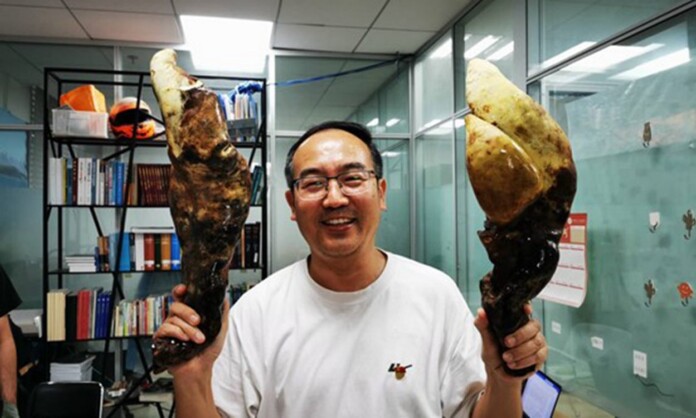
Courtesy of the Kunming Institute of Botany under the Chinese Academy of Sciences
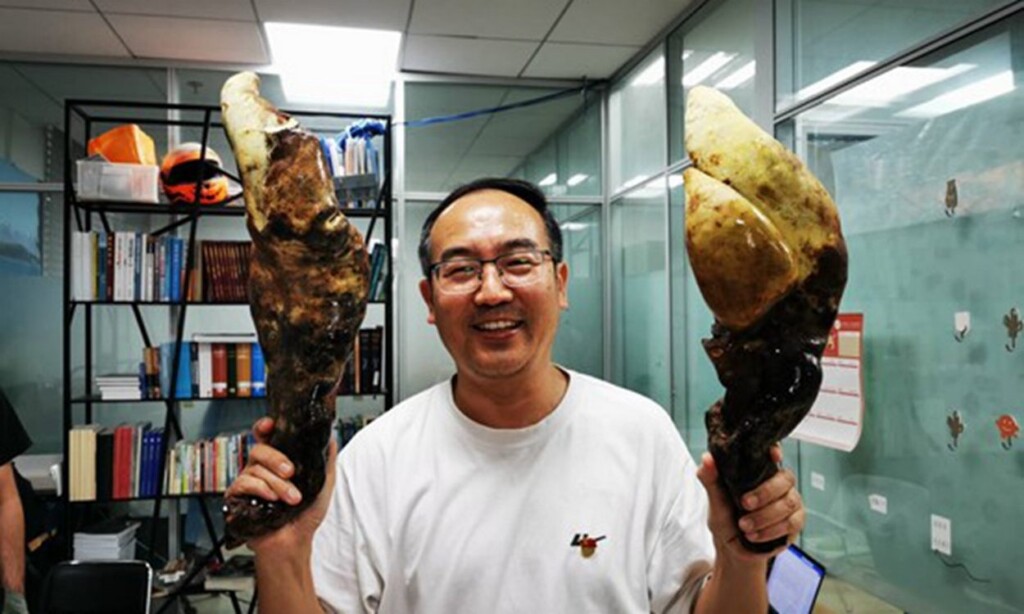
Courtesy of the Kunming Institute of Botany under the Chinese Academy of Sciences
Deep in the forests of southwest China, scientists have discovered a ‘fungal giant’ that challenges our understanding of how large fungi can become.
The newly described species, Dianjunus rex, or “King of Dian,” named for an ancient Chinese kingdom, produces vertical fruiting bodies up to 20 inches high and weighing up to 5 pounds.
Scientists in China, Thailand, and Mexico made the discovery, which constituted not only its own new genus, but whole new family of fungi within the Phylum of Ascomycota.
Analysis of its genome suggests that the new family arose approximately 65 million years ago, strikingly soon after the Cretaceous-Paleogene mass extinction which killed off the dinosaurs, when new niches for wood-decomposing fungi, a niche which “D. rex” inhabits still to this day, may have opened up.
“This remarkable species represents a new fungal family, Dianjunaceae, and provides a rare window into the evolution of extreme fungal body forms,” said Dr. Indunil C. Senanayake, an associate professor at the Germplasm Bank of Wild Species of the Kunming Institute of Botany in China and corresponding author of the new study, published in Frontiers in Fungal Biology.
“The discovery illustrates how much fungus biodiversity remains to be discovered in East Asian forests.”
During fieldwork in a mix of temperate coniferous forests and tropical rainforest in the province of Yunnan, scientists from the Kunming Institute found large, whitish, fruiting bodies (called stromata) clearly belonging to an unknown ascomycete fungus growing on the woody roots of Chinese cork oak.
With more than 64,000 species, Ascomycota is the largest group of fungi. They don’t grow true mushrooms but instead release spores from tiny, sack-like structures inside or on the surface of such fruiting bodies.
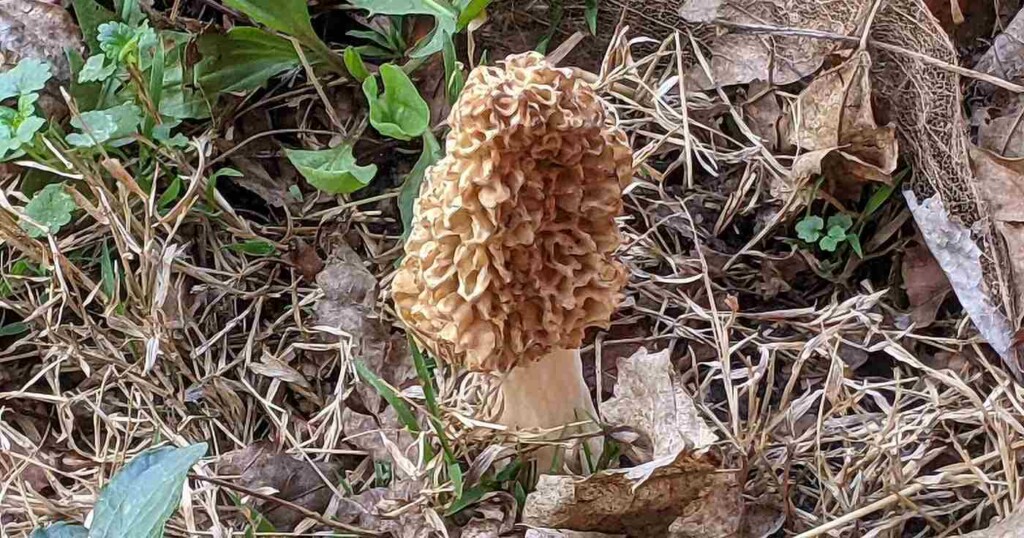
A morel fungus, a distant relative of D. rex -credit, Gearhead221 CC BY-SA 4.0
Though a reader might not know any Ascomycetes by name, they’re one of the most influential group of organisms on the Earth next to humans. Among those 64,000 species one finds various molds and yeasts that create bread, beer, wine, penicillin, Stilton, Roquefort, Brie, Zola, and Camembert cheese, soy sauce, sake wine, and the organ-rejection inhibitor ciclosporin. They also include the prized morels, truffles, cordyceps, and dead-man’s fingers.
If one were to make a “cons” list of similar gravity, it could include species that cause Dutch elm disease, chestnut blight, apple blight, powdery mildew, histoplasmosis, ergot, the most common lung infection in humans (Aspergillus fumigatus), vaginal yeast infections, and valley fever.
And out all these and so much more, D. rex is the biggest of them all, a true king among fungi.
Collecting the fruiting bodies they found, the team of scientists grew spores on media to study the morphology of the fungus, and also sequenced its genome.
Genetic results confirmed by a detailed study of its morphology revealed that Dianjunaceae could be set within the order Xylariales. The closest known relative to D. rex is Graphostroma platystoma, which grows on dead hardwood across the Northern Hemisphere and by itself forms the family Graphostromataceae.
From a ‘molecular clock’ analysis of the new species’ DNA, while comparing it to the genome of hundreds of fungi with known evolutionary age, the authors were able to estimate that the Dianjunaceae arose around 65 million years ago. Strikingly, this is only one million years after the Cretaceous-Paleogene mass extinction event—famous for wiping out the dinosaurs besides countless other animals and plants.
“This timing raises an intriguing possibility. After the mass extinction, forests experienced dramatic changes, including the sudden availability of large amounts of dead plant material,” said Senanayake. “For wood-associated decomposing fungi, such environmental disruption may have created new ecological opportunities.”
Yet those days are long gone, and D. rex still grows so uncommonly big; why? Until now, the record-holders among ascomycete fruiting bodies measured 20 to 30 centimeters tall, around half the size of D. rex.
“A fruiting body which towers above surrounding vegetation and debris could have better dispersal of spores by wind in dense forests. However, such a large structure requires substantial energy investment, suggesting that this strategy likely evolved only where the ecological benefits outweighed the costs,” hypothesized Senanayake.
Though sharks, sea turtles, and crocodilians are famous for having remained relatively unchanged from an evolutionary standpoint for hundreds of millions of years, there are some plants—static though they may be—which have shaded both dinosaurs and humans; most notably the ginkgo biloba, but also the so-called “dinosaur evergreen” of Australia.
The researchers predicted that more discoveries of fungi from subtropical China lie in store.
“This region combines exceptional habitat heterogeneity, climatic stability, and complex biotic interactions that promote fungal diversification,” said said Senanayake.
“Historically, however, fungal diversity in these ecosystems has been underestimated due to logistical difficulties in field sampling, the seasonal and cryptic nature of fungal fruiting, and a historical emphasis on economically important fungi.”
SHARE This Fantastic Surprise And Discovery With Your Friends Who Love Science…
The Grottole biomethane plant operated by Axpo - credit, Axpo, released
The Grottole biomethane plant operated by Axpo – credit, Axpo, released
A European energy developer has switched on a major biomethane plant in southern Italy that will save some 9,000 tons of CO2 annually by producing a natural gas substitute with agricultural waste.
Located in Grottole, in the ‘instep’ of the Italian Peninsula, the plant will ultimately produce 45 gigawatt-hours of renewable energy a year for decades.
More than almost any other major European economy, Italy runs on natural gas. It accounts for 46% of the country’s electricity generation—3-times more than the second-largest contributor hydropower—and the country’s utilities maintain substantial natgas infrastructure located all over the country.
Despite enjoying more diversified imports than any other European country, Italy doesn’t produce natural gas in any significant quantity. The national energy market is trying to vault two hurdles in one bound by leveraging existing gas infrastructure to develop a large biogas industry.
Italy’s capacity grew from 0.25 billion cubic meters of produced biomethane gas in 2022, to roughly 1.6 billion cubic meters in 2026. As a result, Italy’s largest domestic energy products are biofuels, representing 35% of the market; 1% more than all other renewable sources combined.
In 2024 in the region of Basilicata, the Euro energy group Axpo acquired the Grottole biomethane plant as a ready-to-build project, switched it on in July, and is now halfway through the 6-month ramp-up phase.
The Grottole biomethane plant uses agricultural byproducts from regional farms to produce low-carbon gas and fertilizer, directly supporting Europe’s decarbonization goals while strengthening energy security and the circular economy.
“Biomethane is central to Europe’s energy transition, and Grottole is central to our growth strategy,” said Axpo Head of Generation & Distribution / Deputy CEO Andy Heiz.
“This moment represents years of strategic planning, careful execution, and close dialogue with local authorities. A significant demonstration of our continued commitment to renewable energy solutions, this is energy infrastructure that works, feeds the grid, and powers communities.”
Th 45GWh volume is equivalent to the average gas consumption of approximately 3,200 Italian households, helping to avoid around 9,000 tons of direct CO2 emissions annually compared to the usage of natural gas.
The need and utility for biomethane as a natural gas substitute is all the more pressing as Europe heads into the colder months with stockpiles at historic lows due to the closure of the Strait of Hormuz and the destruction of Qatari natural gas refining facilities following the attack on Iran in February.
Axpo maintains biofuel plants in Spain, Italy, Switzerland, and Poland.
SHARE This Great News For The Energy Mix In Italy With Temps Falling…
The release came in tandem with news that Williams officially joined Team Barbie, a group of powerful female athletes and role models who inspire and uplift as women, as leaders, and as the iconic dolls.
Introduced to tennis by her father at a young age, Williams the younger went on to transform the sport, winning 23 major tournament singles titles and four gold medals.
As an entrepreneur, Serena is also the first woman of color to own a major US venture capital fund, which was awarded a new franchise at the highest level of women’s soccer. The franchise would become Angel City FC.
“Growing up, I didn’t see many girls who looked like me being told there was no limit to who they could become,” Williams said in a statement released alongside the signature edition Barbie.
“I want every girl who plays with this doll to see possibility—not just in me, but in herself. She can dream big, work hard, change direction, break barriers, and become anything she chooses. That’s what makes having my own Barbie so meaningful to me.”
Inspired by Serena Williams’ iconic championship victory in the 2005 Australian Open, the Barbie Signature Serena Williams Doll pays homage to the look from her 7th Singles title win.
Her doll wears a green and white cutout top with mesh detailing, paired with a crisp white skirt and matching sweatband, socks and shoes. Her outfit is complete with a tennis ball and racket in hand.
“Barbie has always inspired girls to believe they can be anything… Serena Williams embodies that message through her extraordinary achievements as an athlete, entrepreneur, and advocate for equality,” said Nathan Baynard, VP and Head of Barbie, Mattel.
“By honoring her with a Barbie Signature doll, we’re celebrating a barrier-breaking icon whose legacy empowers fans everywhere to dream big and embrace their own potential.”
The Williams Barbie release saw an in-house philanthropy project by Barbie called the Dream Gap Project make a donation to a cause “close to Serena’s Heart.”
The donation will allow Mrs. Rina’s House of Blessings to fund programming focused on educating, training, and inspiring children of struggling families to become compassionate leaders.
SHARE This Great Gift Idea For Daughters And Tennis Players Alike…
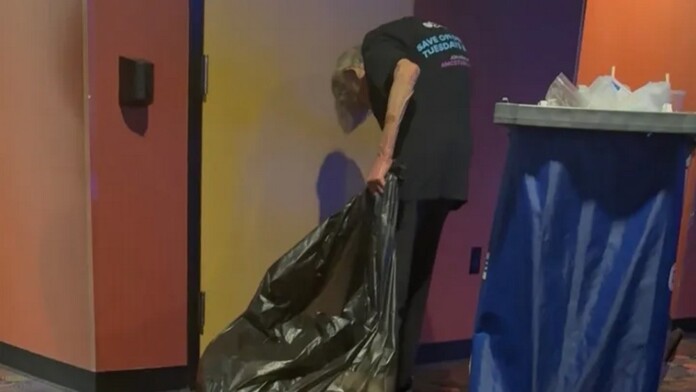
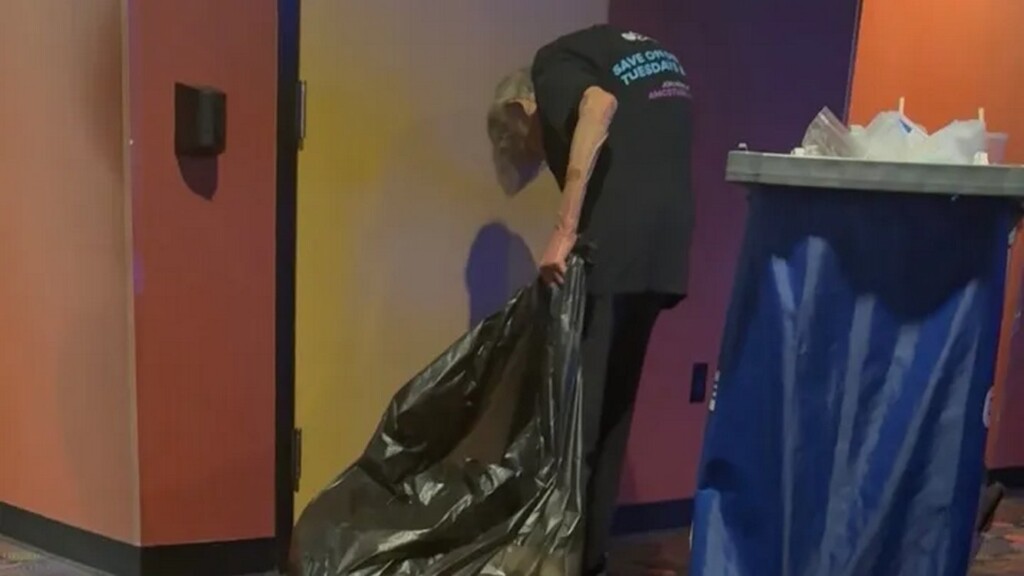
It’s becoming something of a trend: young people encountering elders working long past retirement age and raising thousands for them to finally take a rest.
GNN has covered such stories on multiple occasions, and now another instance comes from Maryville, Tennessee, where an elderly theater worker was surprised with $146,000.
Raised through GoFundMe, it all started when 21-year-old Brooklyn Green settled rather spontaneously on plans to see a movie at the local AMC. There, she saw an elderly woman with a bent back collecting trash for the business.
“I just saw her work ethic. She was just working really hard,” Green told local news.
Recording her pushing and pulling the trash cart around for a TikTok clip, she thought she’d start a GoFundMe and maybe raise a month’s rent or so from family and friends.
The clip, and TikTok however, had their own ideas. It went viral and channeled over $100,000 in just the first day for the woman. The next day, Green returned to the theater to surprise the her, and even in that interval the fundraiser jumped up another 46 big ones.
The woman, named Mary, wasn’t there that day, but the shift manager told Green she’s worked in theaters for more than 45 years.
“She loves it” he explained, and also relayed the woman’s concerns that stopping work at her age “might make things ‘go downhill’ for her,” WVLT 8 in Knoxville reported.
Green did eventually surprise Mary in a meet-and-greet recorded for the GoFundMe donators.
“Thank you so very much to all the wonderful people who have donated money,” Mary said.
WATCH the story below from WVLT…
SHARE This Inspiring Response From The Nation Toward One Of Its Own In Need…
Quote of the Day: “Don’t ask what the world needs. Ask what makes you come alive, and go and do it. (Because what the world needs is people who have come alive.)” – Howard Thurman
Photo by: JP Morgan-Chase
With a new inspirational quote every day, atop the perfect photo—collected and archived on our Quotes page—why not bookmark GNN.org for a daily uplift?
Christ the Redeemer above Rio de Janeiro - credit Artyominc, CC 3.0.
95 years ago today, Cristo Redentor, or Christ the Redeemer, opened to the public in the hills above Rio de Janeiro. Standing 98 feet high, and with arms stretching 92 feet wide, the statue was built on top of Mount Corcovado by engineer Heitor da Silva Costa. Christ the Redeemer differs considerably from its original design, as the initial plan was a large Christ with a globe in one hand and a cross in the other. Although the project organizers originally accepted the design, it later changed to the statue of today, with the arms spread out wide. READ more about the famous statue… (1931)
Kyann Dean (left) and Samantha Rensvold (right) - credit, Rensvold family photo
Kyann Dean (left) and Samantha Rensvold (right) – credit, Rensvold family photo
A softball diamond in Montana was the scene of a larger-than-life family reunion.
Like something out of Field of Dreams, a teen softball player had lined up against an out-of-state team for an August match—and her long-lost biological sister was on the opposite roster.
Samantha Rensvold was adopted as an infant. It’s something she’s long known of, and that she has a biological sister, somewhere in the US. These things were far in the back of her mind though, on August 1st, 2025, during a softball tournament in Montana.
Rensvold had not seen the opposing player—18-year-old Kyann Dean—whom a teammate came over to explain looked exactly like her.
It’s one thing to hear you have a doppelganger under normal family circumstances, but for someone who knows they have a long-lost biological sister, it’s something else. Sneaking a peek, Rensvold’s head began to spin.
“I was like, ‘There’s no way that this would happen to me right now,’” Rensvold told PEOPLE Magazine, which broke the story.
She decided not to speak with Dean after the match, but, upon telling her adopted mother about the situation, she suggested the pair look at the roster. Her mother had some interesting news when she saw the name “Kyann.”
“My mom knew that that’s what my birth mom named her,” Rensvold said. “So my mom was like, ‘That has to be your sister. That’s not a coincidence.’”
In a later match, Rensvold was playing right field while Dean was watching from the stands with her family just behind her. Mercifully, the batters didn’t send any drives into the outfield as the young athlete listened to her mother approach the Deans and explain the situation.
During that conversation, the two moms confirmed the name of the girls’ birth mother and the hospital they were born at, with both facts coming up identical.
The two were excited to meet each other, feeling they’d waited their whole lives for the moment, although it’s something Rensvold had already been through. As it turned out, her biological parents—at the earliest sort of ages—had 3 children, including a son.
He managed to track down Rensvold some years ago, who despite having known of Dean, was never told about a biological brother.
Already, the two teen athletes have found some striking synchronicities between their parallel lives. They both played volleyball in high school, in the same position, wearing the same number.
Despite their familial revelation, the pair are attending college diligently in two separate states, and plan to spend time together in the future. Rensvold spoke about the closure she feels having met her sister to PEOPLE.
“When I would talk to people about my situation with my biological family, I’d always have to explain ‘I have a sister.’ But now it’s so nice to be able to put a face to her and to meet her, hang out with her. It doesn’t leave any doubt or wonder in my mind.”
SHARE This Delightful And Shocking Surprise From Montana With Your Friends…
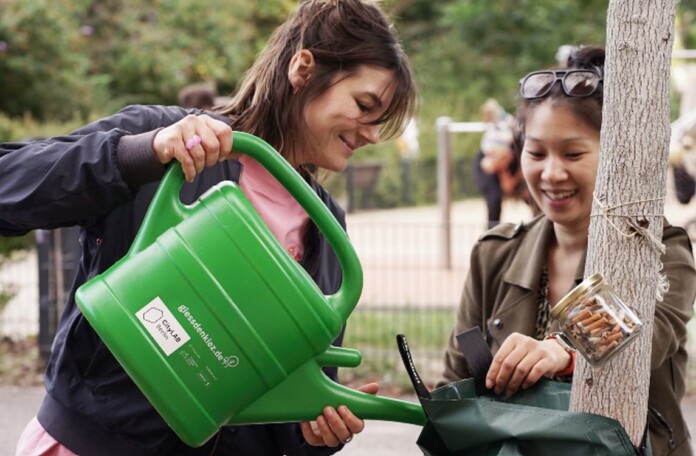
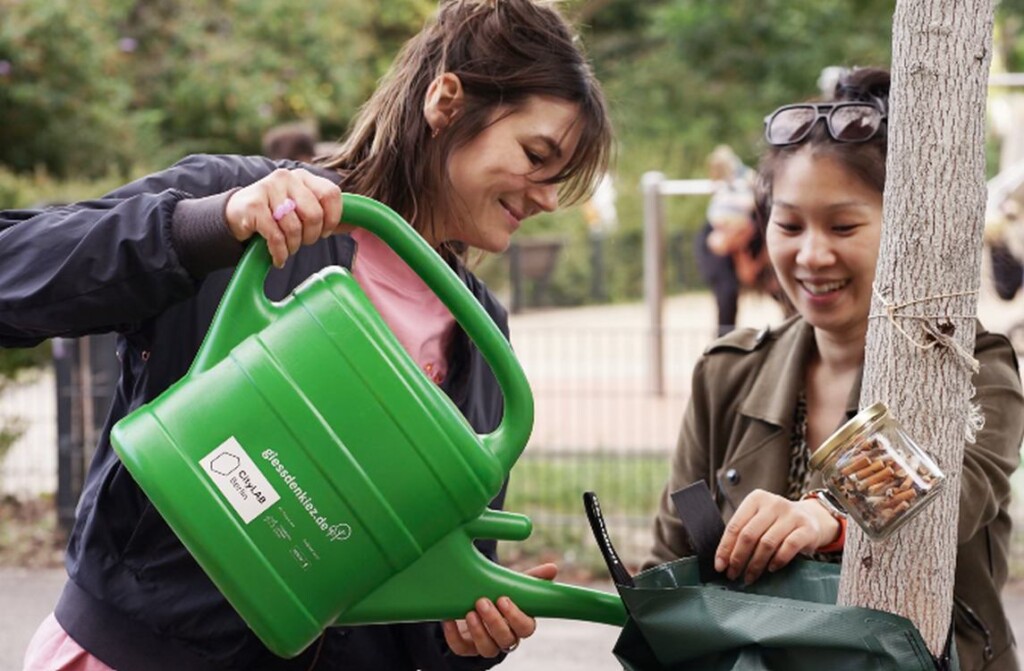
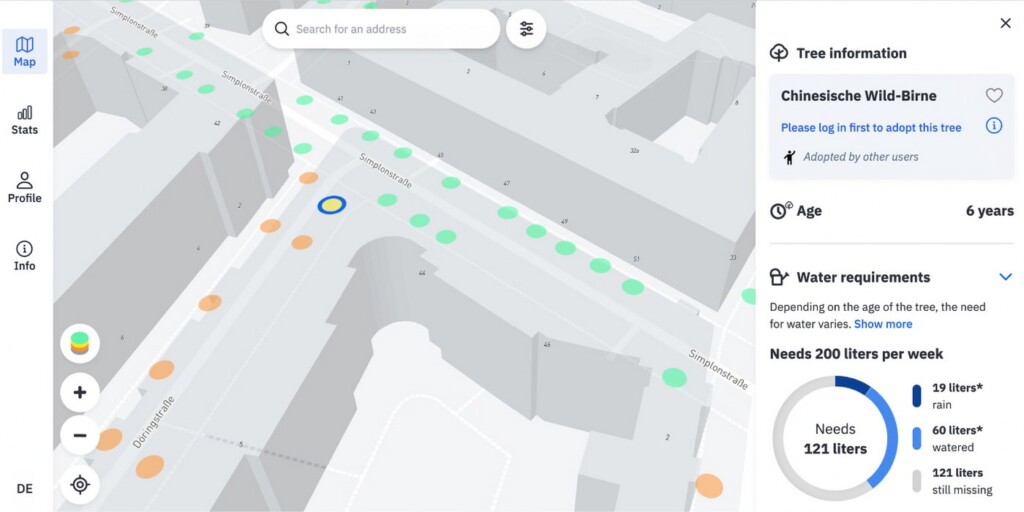
An open-source app has thousands of Berliners adopting and watering city trees as if they were their pets, helping keep the city green amid repeated summer heatwaves.
Gieß den Kiez translates to “water your neighborhood,” and offers users a map of the city with each one of the roughly 900,000 street trees of Berlin accessible as GPS pins. Users can sign up to adopt one, and in doing so receive real-time watering instructions based on the species, age, weather data, and location.
Trees in need of watering appear as orange or red dots, and the app also has icons for all citizen-accessible streetside water taps or pumps.
In green-minded Europe, trees are increasingly being seen as vital urban infrastructure rather than simple tools for beautification. Berlin saw temperatures of over 103°F (39°C) this summer, and the cooling effect provided by a tree canopy is more than just a pleasant relief, but a potential lifesaver.
Developed by CityLAB Berlin, Water your Neighborhood has been running since 2020, and benefited from the cabin fever suffered by the population during the city’s COVID-19 lockdowns. The opportunity to get out of the house and connect with nature—however limited—was welcome, and often stuck.
“It feels very fun, almost like a video game,” Amanda Gläser-Bligh, a suburban Berliner who uses the app, told the Guardian. “I think many people may want to water the trees, but they might feel weird about doing it or they’re not sure if it’s their responsibility. But, if you have this app encouraging you, you know it’s the right thing to do.”
A screengrab from the app, with trees needing water urgently marked as orange dots – credit, CityLAB Berlin
The app’s developers describe it as helping people to think of trees like their pets, and allows them to care for them as such.
Yet it’s proved to be far more than just a novel pastime. Already, Potsdam, Leipzig, Magdeburg, and the 17th arrondissement of Paris have used the open-source code to launch their own versions of the application.
Trees seem at present to be one of the best ways of offering relief to denizens of cities experiencing summers hotter than historical norms. Trees provide shade, improve air quality, and reduce city temperatures on hot days. One American study showed that US counties with improved tree cover spend less on healthcare costs, while an Australian study found that communities with a healthy amount of tree cover—not just grass and green space—were psychologically healthier than those that didn’t.
Other benefits are more subtle. Green, leafy trees can provide sensory relief in urban areas dominated by hard surfaces, right angles, glass and concrete, and intrusive, attention-seeking advertising.
Gläser-Bligh adopted a Linden she has since named “Linda,” a species which lends its name to a famous street in the German capital, and their pollen and nectar to the city’s bees.
SHOWER Some Good Green News On Social Media Soil By SHARING This Story…
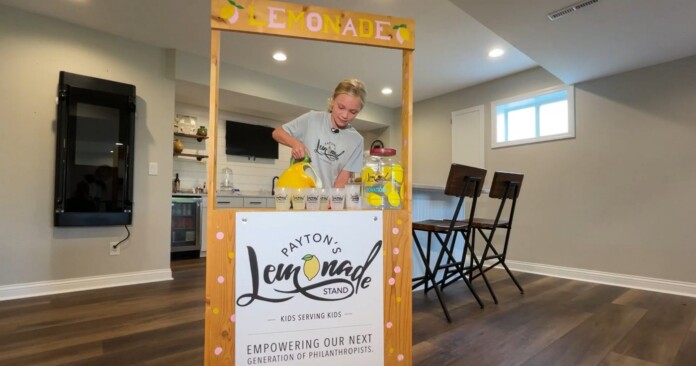
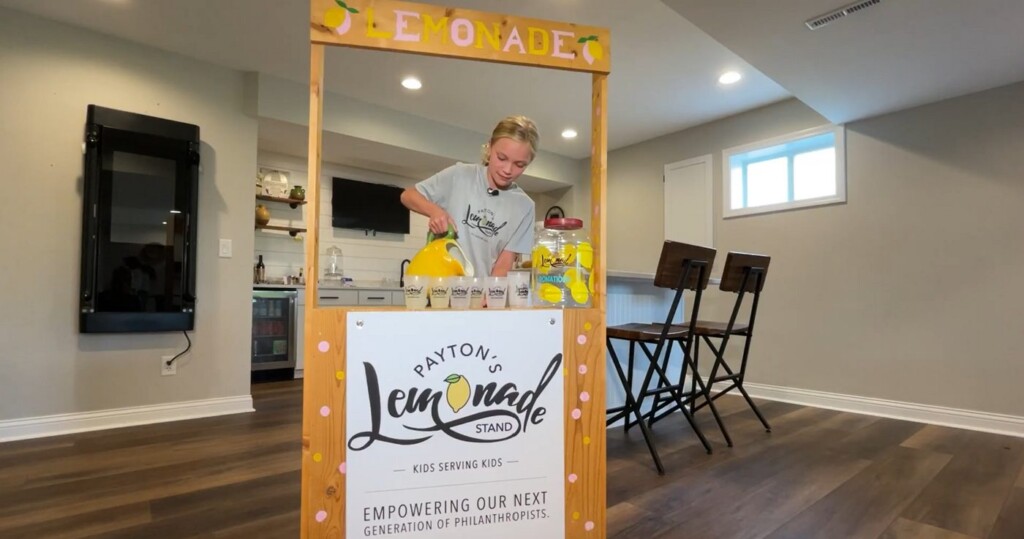
When summer’s heat becomes too much to bear, a glass of iced lemonade is a welcome relief, but what tens of thousands across Ohio have learned is that lemonade can provide a different sort of relief as well.
For 8 years, children’s lemonade stands pop up all over the city in July as part of an annual fundraiser that has to date channeled $5 million worth of gifts and necessities to children facing economic hardship, or prolonged stays in the hospital battling illness.
It all began with Payton Obert’s hope that she could raise money through a lemonade stand to get toys into the hands of children in hospital, a simple act of support that she herself benefitted from immensely when she received a teddy bear from a charity that works with children’s hospitals.
The teddy helped her through a difficult time at just 18 months old, and she kept it close ever after. When she turned 8, she began to feel like she too could support children facing hardship, and so started Payton’s Lemonade Stand. She raised $768 in 2018, all of which went towards purchasing toys for other kids.
As summer of 2019 came around, Obert decided to again put up the stand. This time, however, the proceeds multiplied tenfold compared to the year before, courtesy of community interest in her endeavor around her home city of Cincinnati.
In 2020, as COVID-19 and the resulting lockdowns and mandated business closures imposed hardship on millions, the now 10-year-old Obert expanded her lemonade stand through the launch of Payton’s Pals, a charity-powered network that saw 8 lemonade stands go up around Cincinnati and Kentucky that together raised $35,000 in cash and toy donations.
A year later Payton’s Lemonade Stand became the nation’s newest registered 501(c)3, which organized 100 young people to set up 30 lemonade stands for the purpose of channeling community support and resources to children in need in the state and beyond.
The nonprofit cashed $60,000 on the big day, $80,000 the year after, $100,000 in 2023, and $125,000 in 2024, all while accumulating more and more community support from fire departments, schools, Girl Scouts of America troops, local businesses, sports teams, and others.
Long gone are the days where help only arrives in the form of a teddy bear to a child in a hospital bed. Payton’s Lemonade Stand provides assistance to children and their families, struggling in Cincinnati and across the nation, for any reason. They still distribute toys, but also food, clothing, books, and school supplies.
In 2025, 100 lemonade stands were erected across Indiana, Ohio, and Kentucky, which together raised $150,000 in just 3 hours with Payton’s Lemonade Stands turning into Payton’s Lemonade Fairs in many instances. The 2026 edition raised $170,000, with stands opening up in West Virginia, Baltimore, and New Mexico.
WATCH Payton tell the story in her own words…
SHARE This Incredible Journey Powered By Compassion And Lemonade…
Corporal Doss receiving the Medal of Honor from President Harry S. Truman on October 12, 1945
81 years ago today, Desmond Doss became the only conscientious objector to win the Medal of Honor after saving an estimated 75 men during the Battle of Hacksaw Ridge in the invasion of Okinawa. Doss refused to carry a weapon into combat because of his personal beliefs as a Seventh-day Adventist against killing. He consequently became a medic assigned to the 307th infantry in the 77th infantry division. READ about his heroism… (1945)