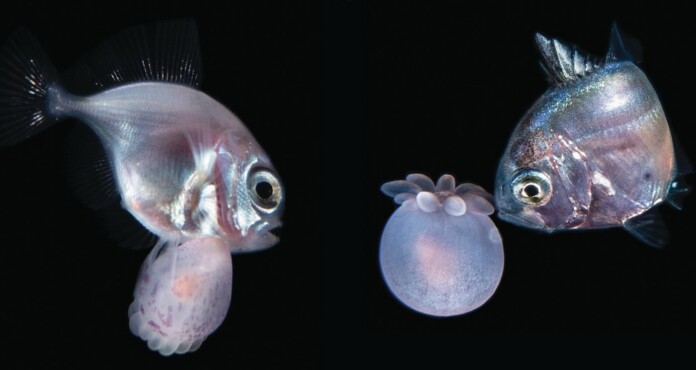
Fish with anemone –Credit: Rich Collins and Linda Ianniello Photos
Fish with anemone –Credit: Rich Collins and Linda Ianniello Photos
A new discovery has revealed that relationships between fish and sea anemones are more diverse than those portrayed in Finding Nemo.
It suggests that there the former may use the latter as a tool of self defense, while the latter uses the former as transportation.
Captured through breathtaking blackwater photography, the images featured in a study published in the Journal of Fish Sciences show rarely seen encounters between these creatures that may provide mutual benefits.
Gabriel Afonso, lead author and Ph.D. student at William & Mary, said that the emerging field of blackwater photography, or images captured by night-time divers, made this study possible.
Rich Collins is one of the divers who contributed to the article and a consultant at the Florida Museum of Natural History. He has witnessed lots of surprising interactions between tiny organisms since he started doing blackwater photography, such as filefish carrying box jellyfish in their mouths despite their dangerous sting.
“Some species of vulnerable larval or juvenile fish use invertebrate species apparently for defensive purposes,” Collins said. “They’ll find something that’s noxious or stingy, and they just carry it around.”
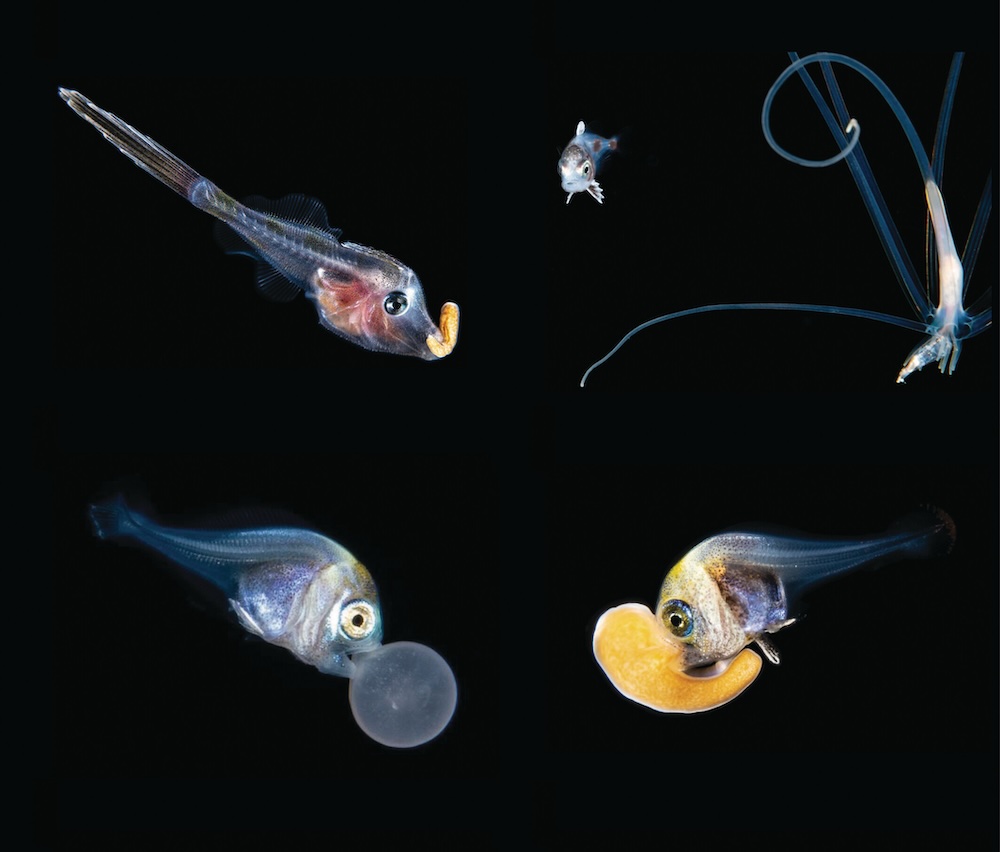
Various fish with anemone – Credit: Rich Collins and Linda Ianniello Photos
While the sting from a larval anemone might not be enough to kill a predator, Afonso believes it would be “unpalatable”.
But the pictures featured in the article show how this behavior extends to other juvenile fish and larval anemone interactions. Filefish, driftfish, pomfrets, and a young jack can be seen carrying larval tube anemone or button polyps in their mouths, possibly for protection.
While adult fish are known to cling to corals for rest and other purposes, the way these juveniles seem to be using anemones for self-defense is still not fully understood.
“As far as I know, this is the first relationship of an open water fish interacting physically with an anemone that looks to be carrying the invertebrate,” Afonso said.
This could be a new form of mutualism between fish and anemone, because the anemone could also benefit from being carried by the fish as a form of dispersion.
Afonso hopes that this article sheds more light on the previously unseen world revealed by blackwater photography and sparks people’s curiosity about the many different interactions happening between fish and invertebrates of all shapes and colors.
SHARE This Fascinating Story Of Fish And Friendship With Your Own Anemones…
Video cameras captured the moment when pine martens returned to Britain’s Exmoor National Park for the first time in 100 years.
The pioneering nature project has reintroduced 19 of the rare creatures back into habitat they once flourished in, and joins a series of reintroduction and rewilding events that must be marking a turnaround for wild England.
– Devon Wildlife Trust / SWNS
During September, 2025, 9 female and 10 male animals were released in secret locations owned by the National Trust and Exmoor National Park Authority.
The pine martens were sourced from healthy wild populations in the Highlands of Scotland, where they underwent health checks. They were then driven more than 500 miles through the night in a specially adapted, temperature-controlled vehicle.
On arrival in Exmoor, three days passed while the animals acclimatized to their new surroundings, at the end of which the door to each pen was opened and the pine martens were able to slip into the forest.
Devon Wildlife Trust’s Tracey Hamston, who leads the Two Moors Pine Marten Project, that it was “wonderful to see pine martens living wild in Exmoor again.”
“These animals were once a key part of our thriving woodland wildlife, so it’s good that they are back where they belong. It’s a positive sign that nature can be restored. Our woodlands and their wildlife will benefit from their presence.”
The releases mark the return of an animal which was once common locally, but which was lost due to hunting and the decline of its favored woodland habitat.
Their release is the work of the Two Moors Pine Marten Project, with the other “Moor” being Dartmoor National Park in Devon, southwest England. Here, the martens have not only already been released by are also already breeding.
– Devon Wildlife Trust / SWNS
“We’re proud and delighted to see pine martens returning to Somerset and to have played a part in the national recovery strategy as this animal re-establishes its former range,” said Lucie Bennett, Pine Martens Engagement Officer at Somerset Wildlife at Somerset Wildlife Trust.
“At a time when wildlife needs us more than ever and action is much needed, it’s fantastic to see recovery milestones met, like the return of this important mammal in functioning British woodlands.
“We look forward to monitoring the progression of the Exmoor animals, supporting woodland wildlife and local communities as the pine martens move and expand their range.”
SHARE The Long-Awaited Return Of This Charismatic Little Creature…
With a new inspirational quote every day, atop the perfect photo—collected and archived on our Quote of the Day page—why not bookmark GNN.org for a daily uplift?
Cobb slides into third base for a triple against the Washington Senators at Griffith Stadium, August 16, 1924
On this day, in Game 2 of the 1909 World Series, Ty Cobb stole home base. The details around this famous of all capers are what make it so. Losing Game 1 to the Pittsburgh Pirates, Detroit Tiger’s star and all-time great Ty Cobb was sitting on third base at the top of the second in Game 2, his team already behind by two runs. A reliever had come in named Victor Willis, a giant of a man, who Cobb noticed was paying far too much attention to the batter, giving Cobb the space he needed to steal home before Willis came to his senses. READ more about the circumstances… (1909)
Co-authors of the study from the Biological Barriers Research Group of the Institute of Biophysics
Co-authors of the study from the Biological Barriers Research Group of the Institute of Biophysics
N,N-dimethyltryptamine (DMT) is a potent psychoactive molecule present in the brain and much of the world’s plant life, but it also may be able to save humans from damage in the event of a stroke.
Scientists in Hungary used it to reduce the harmful effects of stroke in animal models and cell culture experiments.
Known to produce life-changing experiences reported to include the perception of dimensional travel, ego-death, encounters with intelligent beings, and the feeling of achieving a universal love with all living things, DMT can be found everywhere in nature, and is in fact produced endogenously in the human pineal gland.
The Hungarian team, led by Professor Mária Deli, Professor Zoltán Nagy, and Dr. Sándor Nardai, found that DMT treatment restored the structure and function of the damaged blood-brain barrier in mice that had suffered a stroke.
It also improved the function of astrocytes, inhibited the production of inflammatory cytokines in brain endothelial cells and peripheral immune cells, and significantly reduced infarct volume and edema formation. The team published these results in the journal Science Advances.
“The therapeutic options currently available for stroke are very limited. The dual action of DMT, protecting the blood-brain barrier while reducing brain inflammation, offers a novel, complex approach that could complement existing treatments,” says Judit Vigh, co-first author of the work.
Since current stroke therapies do not always result in full recovery, a DMT-based treatment may represent a promising new alternative, mainly in combination with existing methods. The recent findings from researchers in Szeged and Budapest support the development of a therapy that goes beyond the limitations of conventional stroke treatment.
Clinical trials have already begun abroad, and investigation on the long-term effects of DMT are currently ongoing, but there is still a long way to go before it reaches everyday medicine.
While most European countries including Hungary consider DMT a hallucinogen and therefore controlled via strict criminal laws, both the Netherlands and Portugal have taken a more open position on DMT and arguably the more well-known ayahuasca, in which DMT is an active ingredient.
Around 800,000 strokes occur annually in the US. 1 in 6 deaths (17.5%) from cardiovascular disease in the most recent data-collected year, were due to stroke. Costs from strokes rose to $56 billion during that year.
SHARE This Fascinating Research Into The Therapeutic Potential of DMT…
NOAA Great Lakes Environmental Research Laboratory's photo, licensed as CC BY-SA 2.0
NOAA Great Lakes Environmental Research Laboratory’s photo, licensed as CC BY-SA 2.0
In late September, Lake Muskegon in Michigan was officially removed from the list of polluted water bodies in the Great Lakes Region.
Once home to foundries, paper mills, petroleum storage and sewage treatment plants, the lake and several of its tributaries became an aquatic hellhole of pollution and debris, until a massive cleanup and restoration project saw it return to a state of beauty once again.
The US Environmental Protection Agency’s Area of Concern (AOC) list is jointly managed with Canada, and recently lost the honor of hosting Lake Muskegon, which had been on the list for over 40 years.
Decades of work and $84 million of operations saw 190,000 cubic yards of contaminated sediment—around 58 Olympic-sized swimming pools—and 110,000 tons of sawmill debris removed from the lakebed.
On October 1st, local community and cleanup leaders joined with government officials on the shore for a celebration.
“This location — which is now home to parks, festivals, cruise ship docks, fishing and recreational enjoyment — was once an industrial scrap yard as recently as the 1980s,” said Muskegon Mayor Ken Johnson. “After decades of collaborative efforts and nearly $100 million invested, we’ve arrived at this momentous occasion.”
When the mayor puts it like that, one can easily see the value in the investment. Time and time again, returning nature to a thriving state proves to be a reward well beyond itself.
Michigan Live, reporting on the story, shared some brilliant figures from a 2020 study that showed how these rewards are manifesting. Already some $27 million has arrived through increased tourism to the lake, which has reached around 400,000 yearly visitors compared to 10 years ago.
Property values along the lake have gained approximately $7.4 million, not only from the lake’s restoration itself, but the new businesses and activities that the restoration has created.
Muskegon’s suffering began in the 1800s logging boom when boards, dust, and woodchips were routinely dumped into the lake which smothered fish habitat and absorbed large amounts of water-bound oxygen, creating dead zones. Chemical pollution from heavy industry followed, and sewage from the treatment plants caused algal blooms which further degraded the habitat for plant and aquatic life of any sort.
In 1980, Muskegon was put on the AOC, and local nonprofits began seeking funding for a massive project to reverse the seemingly terminal decline.
$67 million of the funding came from the Great Lakes Restoration Initiative, a bipartisan federal program, while another $14 million came from a mixture of state, local, and private sources.
Clean Up Your Friend’s Social Media News Feed With This Great Story…
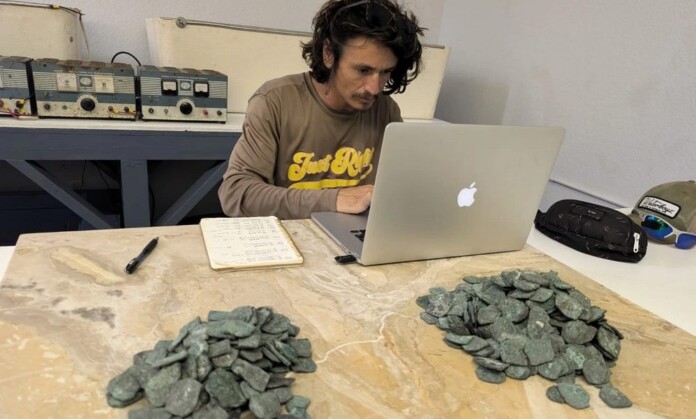
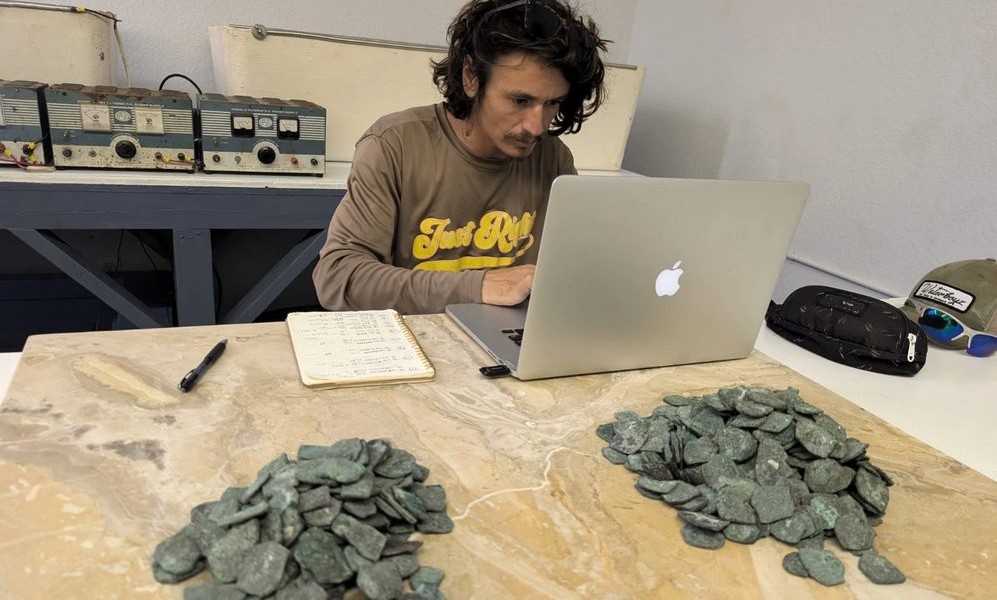
Capt. Shaver logging the discoveries - credit Queens Jewels LLC, released
Capt. Shaver logging the discoveries – credit Queens Jewels LLC, released
A historic shipwreck salvage business has pulled up over 1,000 silver and gold coins from a Spanish treasure fleet that sank off the coast of Florida in 1715.
The haul could fetch $1 million at market value, with five of the coins found being gold escudos, which along with having a high value as a historic artifact, happen to see the light of day with the price of gold making new all-time record highs.
A hurricane it was that sent the 11 ships bound for Spain to the crushing oblivion of Davy Jones’ Locker. Known as the Plate Fleet, they were bringing an estimated $400 million in gold, silver, and jewels from the New World back to Spain, but lost every penny along with all hands when the gale sent them to the bottom.
The fleet’s complete whereabouts are unknown, but the US District Court for Florida, which owns the wrecks per US law, have been contracting Queen’s Jewels LLC as the exclusive salvage operator in locating and recovering what can be found.
Over the summer, salvage divers visited a site where at least one wreck was known to rest, and pulled up coin after coin after coin, until Capt. Levin Shavers and the crew of the M/V Just Right were looking at a bonafide pirate treasure.
The silver coins, known as Reales, or pieces of eight, were minted in the Imperial colonies of Peru, Bolivia, and Mexico, and the LLC’s Director of Operations Saul Guttuso says each one, whether by the visible minting date, design, or mill marks, has a story to tell.
“This discovery is not only about the treasure itself, but the stories it tells,” said Guttuso. “Each coin is a piece of history, a tangible link to the people who lived, worked, and sailed during the Golden Age of the Spanish Empire. Finding 1,000 of them in a single recovery is both rare and extraordinary.”
The discovery site lies within a stretch of ocean often referred to as Florida’s “Treasure Coast,” where modern salvage operations—working under strict state oversight and archaeological guidelines—continue to uncover relics from the ill-fated fleet.
In addition to the 5 gold escudos, other gold artifacts were recovered, as well as evidence that the coins were held in a burlap sack, which at the time period might mean that up to 2,000 more coins are waiting on the seafloor where the divers have already looked—still waiting to be found.
“I’ll never finish in my lifetime. We have barely scratched the surface,” Mike Perna, one of the salvagers and the operator of the Mighty Mo, told McClatchy News, last year. “The storm took 10 minutes to deposit what is taking us years to find.”
SHARE This Awesome Treasure Story With Your Friends On Social Media…
In the timepiece capital of the world, time may be running out for carbon-heavy imported steel thanks to a new solar-powered furnace.
Swiss firm Panatere has patented, and has now inaugurated, the world’s first two solar foundries for melting down steel for reuse.
Consisting of 500 concave mirrors mounted on a heliostat that allows them to track the Sun, each is focused into furnace’s chamber until it reaches 2,000 degrees Celsius. Heat like this can melt steel in 1.5 hours, all without any fossil fuels being burned.
They are marvelous micro and macro engineers, but the Swiss import most of the steel they use, including 15,800 metric tons for the watchmaking industry alone.
“There is a real interest in recycling our valuable resources. We want to keep the metal waste from the factories and recycle it locally,” Panatere CEO Raphaël Broye told the Keystone-SDA news agency.
By 2028, the recycling center should be producing 1,000 tons of solar steel per year, added Broye.
Located in the French-speaking canton of Neuchatel, Panatere’s first solar steel bar will be exhibited at the International Watch Museum in La Chaux-de-Fonds, where the foundries operate.
Quote of the Day: “I would define, in brief, the poetry of words as the rhythmical creation of beauty.” – Edgar Allan Poe
Photo by: Jovan Vasiljević
With a new inspirational quote every day, atop the perfect photo—collected and archived on our Quote of the Day page—why not bookmark GNN.org for a daily uplift?
80 years ago toady, the microwave oven was patented by Percy Spencer. The self-taught engineer from Howland, Maine, employed by Raytheon at the time, noticed that microwaves from an active radar set he was working on started to melt a Mr. Goodbar candy bar he had in his pocket. The first food deliberately cooked with Spencer’s microwave oven was popcorn, and the second was an egg, which exploded in the face of one of the experimenters. READ more… (1945)
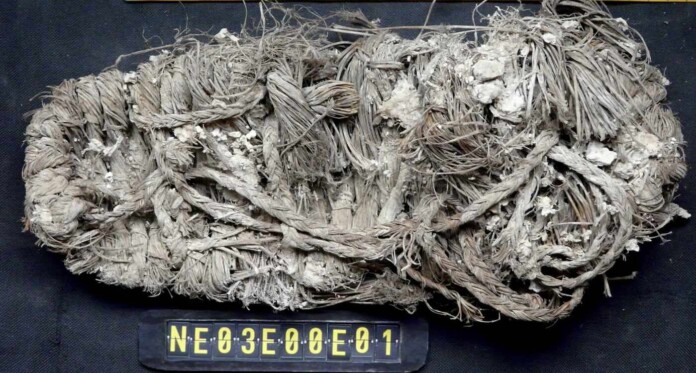
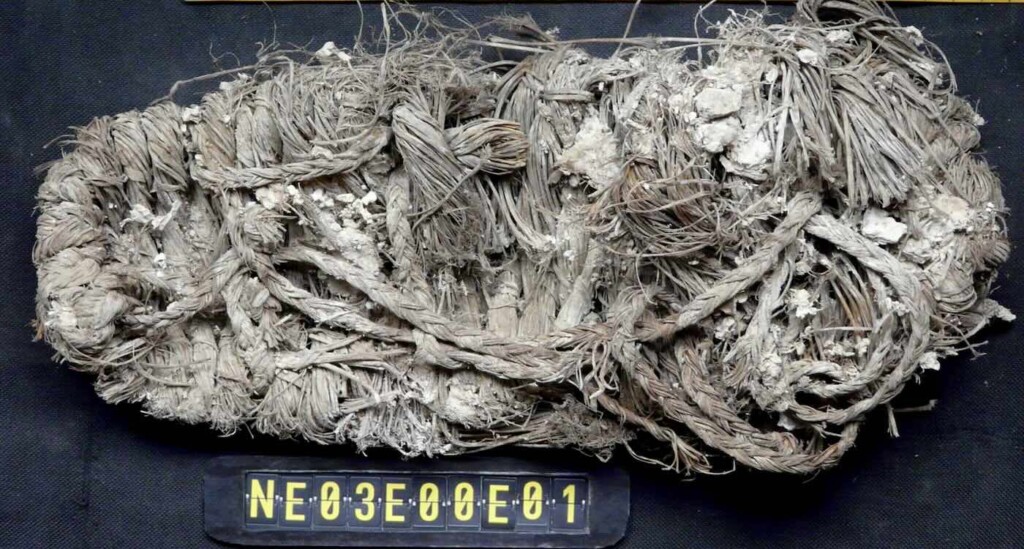
Found in ancient Bearded Vulture nest- an Agobía sandal made of grass and twigs c. 674 – Credit: Lucía Agudo Pérez, CC By 4.0
Found in ancient Bearded Vulture nest- an Agobía sandal made of grass and twigs c. 674 – Credit: Lucía Agudo Pérez, CC By 4.0
Researchers in Spain were left feeling a mixture of confusion and intrigue when they found several straw sandals embedded in a bearded vulture nest.
They didn’t know it at the time, but it was over 6 centuries ago that a bearded vulture flew from its hunting grounds into a sheltered cave nesting site and dropped off a sandal called an Agobía.
There it lay, fulfilling who-can-say what purpose, until ecologist Antoni Margalida pulled it and many other human artifacts, some as old, others younger, from the abandoned nest.
Vultures, like raptors of all kinds, tend to reuse nests generation after generation. A study was published on the discovery and was picked up by National Geographic, which went on to explain that one golden eagle nest was documented to be 20 feet in depth from parents adding material to it, while in Greenland, analysis of bird droppings below a gyrfalcon nest proved it to be 2,000 years old.
With that context, suddenly the Agobía doesn’t seem so far-fetched, but many other objects such as tools, sandals, a piece of a basket, a dyed scrap of sheep’s leather, and the carved horn of a mountain goat.
Included in the mix was a crossbow bolt, which may have been taken in lieu of a branch, or because it was embedded in an animal the vulture brought back to its nest.
“This material is very well-preserved during centuries,” Margalida, from the Pyrenean Institute of Ecology in Spain, told Nat Geo.
The cave ecosystem prevented them from erosion by the elements, and the nests, which Margalida and his team reached by rappelling down into the cave, took on the character of a natural history museum. Studying bearded vulture nests can help ecologists glean insights into why the birds had disappeared from the area.
To that end various eggshells and feathers found in the nests could contain traces of toxic compounds like lead known to be harmful to vultures and scavenging birds, but they had to separate them out from nearly 2,100 pieces of bone, including 86 hooves.
“We have several ideas to analyze in the future,” Margalida says. “I think that this material will offer a lot of possibilities.”
SHARE The Story Of This Wild Discovery Up In Spain With Your Friends…
Scientists from MIT have created a conductive “nanonetwork” inside a unique concrete mixture that could enable everyday structures like walls, sidewalks, and bridges to store and release electrical energy.
It’s perhaps the most ubiquitous man-made material on Earth by weight, but every square foot of it could, with the addition of some extra materials, power the world that it has grown to cover.
Known as e c-cubed (ec3) the electron-conductive carbon concrete is made by adding an ultra-fine paracrystalline form of carbon known as carbon black, with electrolytes and carbon nanoscales.
Not a new technology, MIT reported in 2023 that 45 cubic meters of ec3, roughly the amount of concrete used in a typical basement, could power the whole home, but advancements in materials sciences and manufacturing processes has improved the efficiency by orders of magnitude.
“A key to the sustainability of concrete is the development of ‘multifunctional concrete,’ which integrates functionalities like this energy storage, self-healing, and carbon sequestration,” said Admir Masic, lead author of the new study and associate professor of civil and environmental engineering at MIT.
“Concrete is already the world’s most-used construction material, so why not take advantage of that scale to create other benefits?”
The improved energy density was made possible by a deeper understanding of how the nanocarbon black network inside ec3 functions and interacts with electrolytes. Using focused ion beams for the sequential removal of thin layers of the ec3 material, followed by high-resolution imaging of each slice with a scanning electron microscope.
The team across the EC³ Hub and MIT Concrete Sustainability Hub was able to reconstruct the conductive nanonetwork at the highest resolution yet. This approach allowed the team to discover that the network is essentially a fractal-like “web” that surrounds ec3 pores, which is what allows the electrolyte to infiltrate and for current to flow through the system.
“Understanding how these materials ‘assemble’ themselves at the nanoscale is key to achieving these new functionalities,” adds Masic.
Equipped with their new understanding of the nanonetwork, the team experimented with different electrolytes and their concentrations to see how they impacted energy storage density. As Damian Stefaniuk, first author and EC³ Hub research scientist, highlights, “we found that there is a wide range of electrolytes that could be viable candidates for ec3. This even includes seawater, which could make this a good material for use in coastal and marine applications, perhaps as support structures for offshore wind farms.”
At the same time, the team streamlined the way they added electrolytes to the mix. Rather than curing ec3 electrodes and then soaking them in electrolyte, they added the electrolyte directly into the mixing water. Since electrolyte penetration was no longer a limitation, the team could cast thicker electrodes that stored more energy.
The team achieved the greatest performance when they switched to organic electrolytes, especially those that combined quaternary ammonium salts — found in everyday products like disinfectants — with acetonitrile, a clear, conductive liquid often used in industry. A cubic meter of this version of ec3—about the size of a refrigerator—can store over 2 kilowatt-hours of energy. That’s about enough to power an actual refrigerator for a day.
While batteries maintain a higher energy density, ec3 can in principle be incorporated directly into a wide range of architectural elements—from slabs and walls to domes and vaults—and last as long as the structure itself.
“The Ancient Romans made great advances in concrete construction. Massive structures like the Pantheon stand to this day without reinforcement. If we keep up their spirit of combining material science with architectural vision, we could be at the brink of a new architectural revolution with multifunctional concretes like ec3,” proposes Masic.
Taking inspiration from Roman architecture, the team built a miniature ec3 arch to show how structural form and energy storage can work together. Operating at 9 volts, the arch supported its own weight and additional load while powering an LED light.
The latest developments in ec³ technology bring it a step closer to real-world scalability. It’s already been used to heat sidewalk slabs in Sapporo, Japan, due to its thermally conductive properties, representing a potential alternative to salting.
“What excites us most is that we’ve taken a material as ancient as concrete and shown that it can do something entirely new,” says James Weaver, a co-author on the paper who is an associate professor of design technology and materials science and engineering at Cornell University, as well as a former EC³ Hub researcher. “By combining modern nanoscience with an ancient building block of civilization, we’re opening a door to infrastructure that doesn’t just support our lives, it powers them.”
SHARE This Electrifying News Of Future Urban Technology With Your Friends…
The Anguilla Airport parking, which is being expanded via the money made from selling the .ai domains - credit, Timo Breidenstein via Wikimedia
The Anguilla Airport parking, which is being expanded via the money made from selling the .ai domains – credit, Timo Breidenstein via Wikimedia
Back when the internet was just starting, nations were all given a URL in order to publish websites official to the nation. The US got .us and the UK got .uk.
Well Anguilla, the small British Overseas Territory in the Caribbean, was given .ai, and with investments and startups surging in the field of artificial intelligence, the country has suddenly found itself with something like a new natural resource—as if it found an oil deposit.
Forever the country has depended on tourism and fishing, but now it sells off the domain rights for .ai for literally millions—$35 million last year to be precise.
Selling .ai now accounts for over 20% of the national revenue, according to World at Large. Charging $140 for a two-year registration makes for steady income, as 90% of the domains have been renewed.
To keep track and control of the domain address purchases, Anguilla has signed a five-year deal with US tech firm, Identity Digital, that controls internet domain registrars. Having around 600,000 registered domains, it’s estimated that its revenues by 2027 will exceed $54 million.
That money has financed an expansion in the island’s central airport with a new terminal and runway for $175 million, which gets totally overwhelmed by planes during the new year when planes from neighboring St. Maarten come to Anguilla to land due to a lack of space on the runways there.
It’s not the first example of a country suddenly benefitting from their domain tag. Montenegro’s .me has become very successful among personal startups, while Tuvalu’s .tv tag has made big money through the streaming industry.
Neither Anguilla, nor Tuvalu, nor Montenegro probably even had internet access when those domains were given to them. Oh the irony.
SHARE This Get Rich Quick Story With Your Friends On Social Media…
Aerial view of the stadium in the garden of The Royal Dyche pub in Burnley - credit William Lailey SWNS
Aerial view of the stadium in the garden of The Royal Dyche pub in Burnley – credit William Lailey SWNS
Pub owner Justine Lorriman loves soccer, and has spent the last year transforming the garden area of her establishment into a mini stadium, with its very own terraced seating, mini football pitch, and outside bar area with seats given to her by the local team.
Her pub is called The Royal Dyche, after the most successful manager of Burnley FC in recent times. Burnley are at the center of the community.
Justine has called the garden ‘Little Longside’ in reference to one of the stands at the club’s stadium—Turf Moor, and spent $38,000 on the project.
“The idea came after I bought the badge, which used to hang in front of the home dugout,” said Lorriman. “The Director of Fan Experience Russell Ball asked if I wanted it after they managed to get hold of it when they were resurfacing the pitch.”
“They sold it to raise money for a young season ticket holder called Lucy who was diagnosed with neuroblastoma cancer—it was to help pay for her treatment.”
The lifelong Burnley fan started building the area, which is a five-minute walk from the club’s home ground, in the summer of 2024. She paused the work in the winter before restarting this summer and adding the final touches for the start of the new season.
The seats are originals from Turf Moor’s Cricket Field Stand, which were removed last year to make way for the new safe standing area. It also has an outdoor bar which serves a selection of draught beer and a football net for those wanting to kick the ball around a bit.
– credit William Lailey SWNS
The wooden fencing found on either side of the garden has graffiti artwork which reads ‘We Are The Longside’ and ‘No, Nay, Never’—both lines from songs sung during matches by the fans, was carried out by a local artist Jamie Buckley.
“The football club is at the heart of Burnley it unites people, sparks friendships, and builds communities,” said 39-year-old pubgoer Simon Townley.
“The Royal Dyche carries that spirit beyond matchdays, giving us a place to come together not just for a drink, but to keep the football family alive throughout the week.”
WATCH a short tour…
SHARE This Mad Fan And Her Madder Local Pub On Social Media…
Quote of the Day: “God sleeps in the minerals, awakens in plants, walks in animals, and thinks in man.” – Arthur Young
Photo by: NEOM
With a new inspirational quote every day, atop the perfect photo—collected and archived on our Quote of the Day page—why not bookmark GNN.org for a daily uplift?
Happy 70th Birthday to the brilliant cellist Yo-Yo Ma, who was born in France. The Chinese-American musician was a child prodigy, performing from the age of five, when his mother, a singer, and father, a violinist, moved to New York City. READ more about this prodigious but also innovative musician… (1955)
A daughter who became the first in her family to graduate from college has handed over the master bedroom of her new apartment to her mom—who in 64 years never had a room of her own.
The duo grew up in poverty and uncertainty, homelessness and insecurity, but through it all, Anette Duarte never stopped being the rock for her daughter Ana.
Experiencing homelessness and shelter stays multiple times growing up, Ana recalled to People Magazine that while the chaos of her surroundings filled her with anxiety, Anette would always find some way to prevent the worst from happening.
This carried on until Ana received a scholarship to Florida Atlantic University, and graduated with a degree in social work before joining one of the largest Christian charities in the country.
Helping the poor—work she saw so often growing up—is now what she does for a living, a living that has afforded her the opportunity to pay rent in an apartment, buy groceries, and even decorate a bedroom for her 64-year-old mother.
“Most of the time we stayed in cramped rooms in rundown places because that was all we could afford,” Ana told People. “It never felt like home, just a place to survive until the next move.”
“My mom has never had her own room in her entire life — not even as a child. I wanted to give her something that symbolized peace, dignity, and a fresh beginning.”
Ana recorded the decoration and the reveal of her mother’s new bedroom on her TikTok account.
WATCH the reveal below…
@anaelizabethduarte Vulnerable caption: my mom and I have never had a place to call our own. Ever since I was born, we have been in and out of homelessness, and I truly never thought one day we could have a place of our own. But nothing is impossible with God. Moving in, I decided to decorate my mom’s room and give her the master because it dawned on me that she has never had a room of her own I think ever in her life. Life wasn’t easy, but here’s to new beginnings. Starting with a fresh room. Friendly reminder that this is our parents’ first time living too and that there’s no mountain in your life that God can’t conquer🥹❤️ @TJ Maxx @HomeGoods @target #hopecore#faith#girlhood#roomdecor#newapartment♬ original sound - Golf Rabble
SHARE This Inspiring Intergenerational Struggle And Relief With Your Friends…
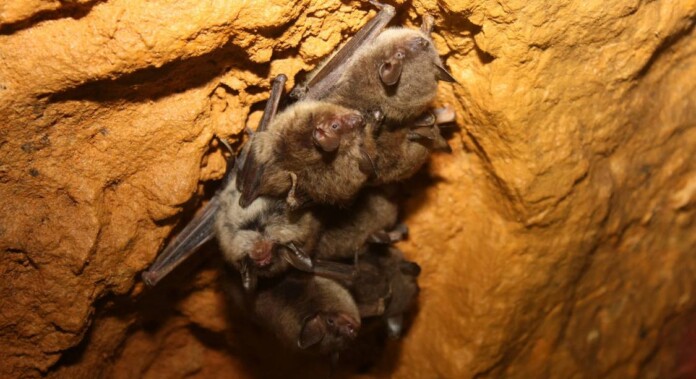
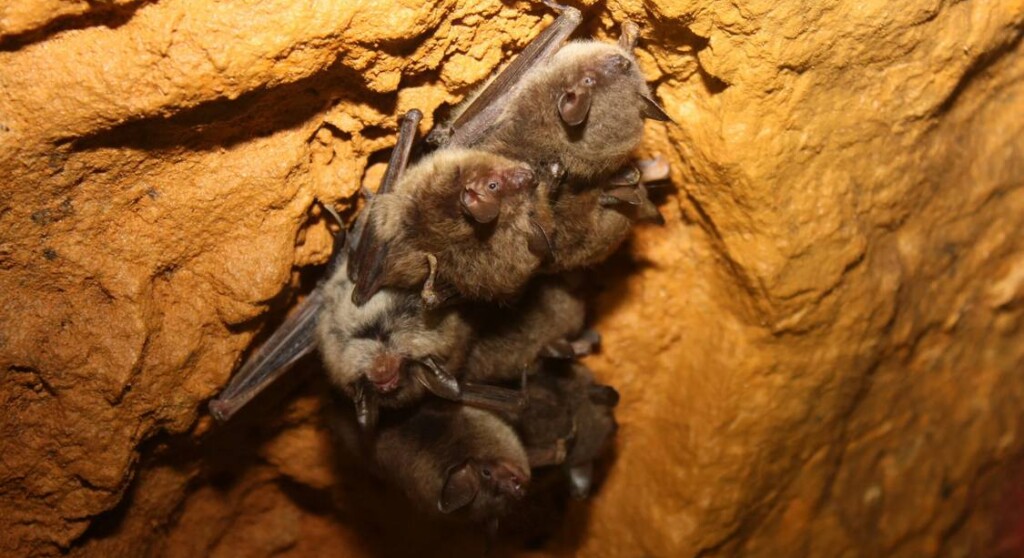
Little brown bats hibernating - courtesy of the Wisconsin Department of Natural Resources
Little brown bats hibernating – courtesy of the Wisconsin Department of Natural Resources
In a positive development for a maligned animal, cave-roosting bat populations in Wisconsin are recovering from a fungal epidemic.
Wildlife authorities are reporting that for the third year in a row, the state’s bat populations seem to be rising.
Numbers of little brown bats, big brown bats, tricolored bats, and northern long-eared bats are estimated via citizen scientist-led surveys, and each year the base estimates collected through sightings are going up.
Introduced to these shores by what were likely cave explorers from Europe, the humidity-loving fungus Psuedogymnoascus destuctans was having deadly effects on cave bats east of the Rockies.
Bats are important pollinators for many native species, and their hunting of flying insects can only be a good thing as tropical mosquito-born diseases are becoming something of a normalcy in the US.
The four species mentioned above roost and hibernate in caves during the winter. Building up vital reserves of fat, they then enter into a torpor wing fold to wing fold with one another to keep warm in the roughly 50°F of a cave. It’s this proximity that biologists believe is the reason why tree-roosting bats do not seem to suffer from WNS.
Biologists told the Badger Herald that the fungus takes its toll by waking the bats from hibernation. The sudden jolt of metabolic energy needed to leave the state of hibernation not only depletes fat reserves during the winter, but sends them into a state of confusion during which they take wing and leave the cave only to freeze to death.
A story from Wisconsin Today in 2024 reports, however, that in the state’s two largest roosting sites, the number of bats had gone up in 2023 and in 2024.
Jennifer Redell, a conservation biologist studying Wisconsin’s bats, said in the report that “bats in Wisconsin that are surviving with White Nose Syndrome are doing things to reduce the amount of fungus on their body.”
Two months ago, the Wisconsin Department of Natural Resources conducted the annual bat survey, and sightings topped 25,000 individuals, a growth of more than a thousand since the previous year’s count.
Despite often being pictured in swarms, bats are actually slow to reproduce, and colonies of these social, winged mammals can take decades to replenish after depopulation events like WNS.
They’re also often maligned as vectors of rabies and other diseases, but as the great American bat conservationist Merlin Tuttle said on the Joe Rogan Experience podcast, “the average number of human fatalities from bats is near 1 per year in the US, and far more people get rabies from dogs in this country—where our spouses kill us off by the thousands.”
These creatures are vital to not just the health of their natural ecosystems, but our artificial ones as well.
An unnerving study published in Science and found by the Badger Herald demonstrated that counties that had bat die-offs had an increase in insecticide use by farmers. This increased insecticide use was then linked to an 8% increase in infant mortality.
Think of that the next time you become concerned about bats in your attic.
SHARE This Bright News For Bats In The Midwest With Your Friends…
Jackson Drum (bottom center) with his teammates after his rehab - credit, family photo
Jackson Drum (bottom center) with his teammates after his rehab – credit, family photo
From the ice hockey rinks of Minnesota comes the story of a young man determined not to let an injury change his life the way his doctors assured him it would.
Whether the desire to get back on the ice or faith in his creator, Jackson Drum defied the odds of a C1-2 spinal cord injury suffered whilst playing, and is regaining capacities typically lost forever under these circumstances.
“He wasn’t supposed to have any movement or be able to breathe or drink or anything,” said his mother, Erica, who added that the chances of him doing what he went on to do were “one-in-a-trillion.”
“When we told him he was paralyzed in Canada, he was like, ‘I am not going to be paralyzed,'” Erica told CBS News.
GNN isn’t saying that all miraculous recoveries are possible through that statement of belief, but all miraculous recoveries tend to start with a statement of belief of some kind.
So it was after Drum got injured during a prep school hockey game north of the border. The Minnesota Wild fan then embarked on a 9-month rehabilitation program that saw him ditch the ventilator he was on.
“He wasn’t supposed to get off the ventilator, then he got off the ventilator. Then he wasn’t supposed to be off a feeding tube and then he got off a feeding tube,” Erica said. “It’s so unexpected that it’s just like a miracle.”
He got some movement back into his legs, and his rehab has even included striking hockey pucks.
After 9 months he returned to watch his team play, met up with his coach, and shared the locker room with his teammates, all of whom had by then heard what had happened and were delighted to see him.
On Sunday, the Minnesota Wild gave Jackson a great experience, inviting him to the game and giving him a suite to share with friends and family. During the break between the 1st and 2nd periods, they announced his return home on the Jumbotron.
Jackson hopes to one day play hockey again, but at the moment his goals also include showing people that spinal cord injuries are not the end of the period.
WATCH Jackson conquer his rehab in a report from CBS below…
SHARE This Young Man’s Inspired Recovery From An Unthinkable Injury…
Quote of the Day: “Turning to face my fear, I meet the warrior who lives within.” – Jennifer Welwood
Photo by: Tim Mossholder
With a new inspirational quote every day, atop the perfect photo—collected and archived on our Quote of the Day page—why not bookmark GNN.org for a daily uplift?