All News - Page 248 of 1715 - Good News Network
Home Blog Page 248

Holly Tree Presumed Extinct for 200 Years Discovered After Placement on Most Wanted List: ‘Nature surprises us’

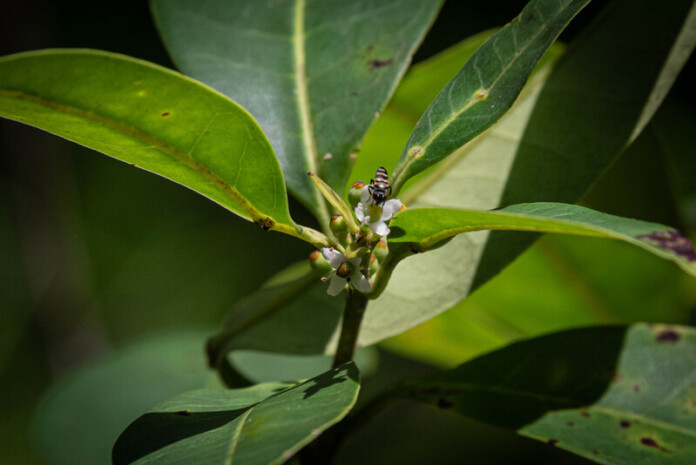
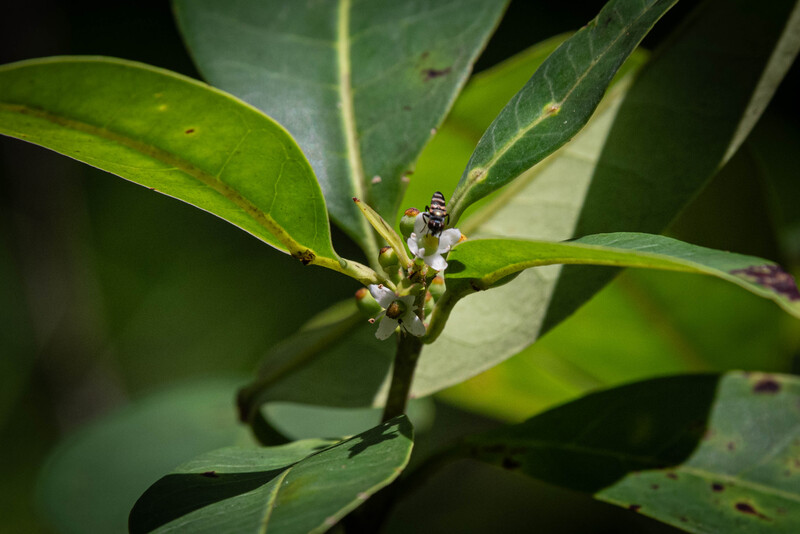
The Pernambuco holly tree, which botanists found by these tiny flowers - credit Rewild, released.
The Pernambuco holly tree, which botanists found by these tiny flowers – credit Re:wild, released.

A small holly tree species native to Brazil has been rediscovered after nearly two centuries of being presumed extinct.

This incredible return to light is part of a worldwide conservation project to identify species that haven’t been seen in tens or hundreds of years. So far, the hunt is going very well, with 9 of the 25 Most Wanted Lost Species actually being found alive.

Ilex sapiiformis also known as the Pernambuco holly, was found in the city of Igarassu, in the Brazilian state that the tree takes its name from. 4 individuals were identified.

The tree, which can reach between 26 and 40 feet in height (8-to-12 meters) was identified by its tiny green flowers after botanists that made up the search team spent hours pouring over museum specimens.

Eventually, having had no luck, they turned their attention to herbaria collections in museums and arboretums that hadn’t been digitized—sketched images and pressings.

“Nature surprises us. Finding a species that hasn’t been heard of in nearly two centuries doesn’t happen every day,” said project team member Juliana Alencar in a statement. “It was an incredible moment.”

“We were all anxious to find the plant,” said another team member—Prof. Milton Groppo. “And it was exciting when we found the first individual of Ilex sapiiformis, thanks to the keen eyes of Mr. Lenilson, who was able to find some white flowers in a tree alongside the dirt road. It’s like finding a long-lost and long-awaited relative that you only know by old portraits.”

The expedition team, was led by Gustavo Martinelli, an ecologist with Navia Biodiversity Ltd. and sponsored by the organization Re:wild. They have so far financed the rediscovery of 8 other species around the world that had been presumed extinct—adding scientific data detailing each species’ conservation situation and what could be done to keep them discovered.

Among these was the Fernandina giant tortoise from the Galapagos, which Re:wild had originally planned on looking for but a search and subsequent lab test by the Galapagos Conservancy beat them to it.

Beyond that, the 25 Most Wanted Lost Species list has successfully added checkmarks next to Jackson’s climbing salamander, the silver-backed chevrotain, the Somali sengi, the velvet pitcher plant, Wallace’s giant bee, Voeltzkow’s chameleon, and the Siera Leone crab.

MORE STORIES LIKE THIS: 100-Year-Old Galápagos Giant Tortoise Found on Fernandina Island is Indeed Member of ‘Extinct’ Species

So many have now been found that Re:wild—which in 2017 when the 25 Most Wanted list was first compiled was called Global Wildlife Conservation—has had to update the quest with new species.

New entries include the Togo blind mouse, the fat catfish, and the big puma fungus. The Holly was also new, but has already been found. Existing entries from the 2017 list include the Ilin Island cloudrunner, which Re:wild already funded an unsuccessful expedition for, and the Wondiwoi tree kangaroo which Re:wild believes had been photographed in 2018, but the quality was too low to confirm or rule out its identity.

As with the original list, the new entries all had watercolor paintings made of them by successful artists in the hope that the paintings will communicate to the world that losing a species is like losing a priceless artwork.

MORE SPECIES REDISCOVERED: Earless Dragon Feared Extinct is Rediscovered After 50 Years in Australia

In Brazil, a team from Jardim Botânico de Recife is monitoring the four Pernambuco holly trees the expedition team found, returning to the site weekly to see if the trees are fruiting. The team hopes to collect seeds from the tree and germinate them.

SHARE This Small Step For Nature With Your Friends… 

“If you are lucky enough to find a way of life you love, you need to find the courage to live it.” – John Irving

Joshua Earle

Quote of the Day: “If you are lucky enough to find a way of life you love, you need to find the courage to live it.” – John Irving

Photo by: Joshua Earle

With a new inspirational quote every day, atop the perfect photo—collected and archived on our Quotes page—why not bookmark GNN.org for a daily uplift?

Robots That Look Like Manta Rays Will Sink Seaweed to Ocean Floor–Will Help Absorb Carbon

Seaweed Generation
Seaweed Generation

A robotics company is making manta ray-shaped robots that drown seaweed and lock away the carbon it absorbed throughout its life for hundreds of years in Davy Jones’ Locker.

Seaweed absorbs way more CO2 than rainforests, and billions of tonnes of the stuff are now routinely washing up on the beaches of Mexico every year as a result of changes in the Gulf.

Rather than letting this happen Seaweed Generation has designed the AlgaRay, described as a “Roomba meets Pac-man” which collects the sargassum seaweed and deposits it at depths where the sun can’t reach, and where pressures crush its buoyancy. Unable to photosynthesize energy, it dies and leaves the carbon trapped on the seafloor.

With scientists on the team that have over 100 published studies on the global carbon cycle and climatology, Seaweed Generation believes it’s correct to say that removing carbon from the ocean has the same effect as removing it from the atmosphere since the two are constantly passing gigatonnes of the simple molecule between each other.

“I’m not necessarily passionate about sinking seaweed. I’m passionate about using seaweed for the best possible use case,” Founder Patricia Estridge told The Hustle. “Sargassum is an opportunity to remove billions of tons of carbon dioxide every year.”

MORE FROM THIS SECTOR: Compostable Plastic Wrap Made from Seaweed Can Withstand Heat–and Biodegrade in Weeks

The final robot will be about 32 feet long, function autonomously, and solar powered. But the short-term plan is to deploy around 10 of these to the Gulf of Mexico to get to work ASAP, while the long-term plan is to manage a fleet of 1,000 full-size AlgaRays for corporate partners or governments, which they believe could take care of all the sargassum in the seas.

MEANWHILE ON LAND: Visionary Gardener Turns Piles of Beached Seaweed Into Bricks for Sustainable Construction

The company is also pioneering seaweed cultivation robots to remove the cost and risk of cultivating at sea with diesel-engine boats.

Like others, Estridge believes that utilizing seaweed in as many supply chains as possible should be a top priority for the global economy because along with having so many myriad uses, it’s a valuable tool in the fight against climate change.

SHARE This Roomba Ray With Your Friends Who Like Climate-Positive News…


Starbucks Workers Raise Over $40K for Beloved Barista After Her Car Was Burglarized

Courtesy of Jaiden Horn

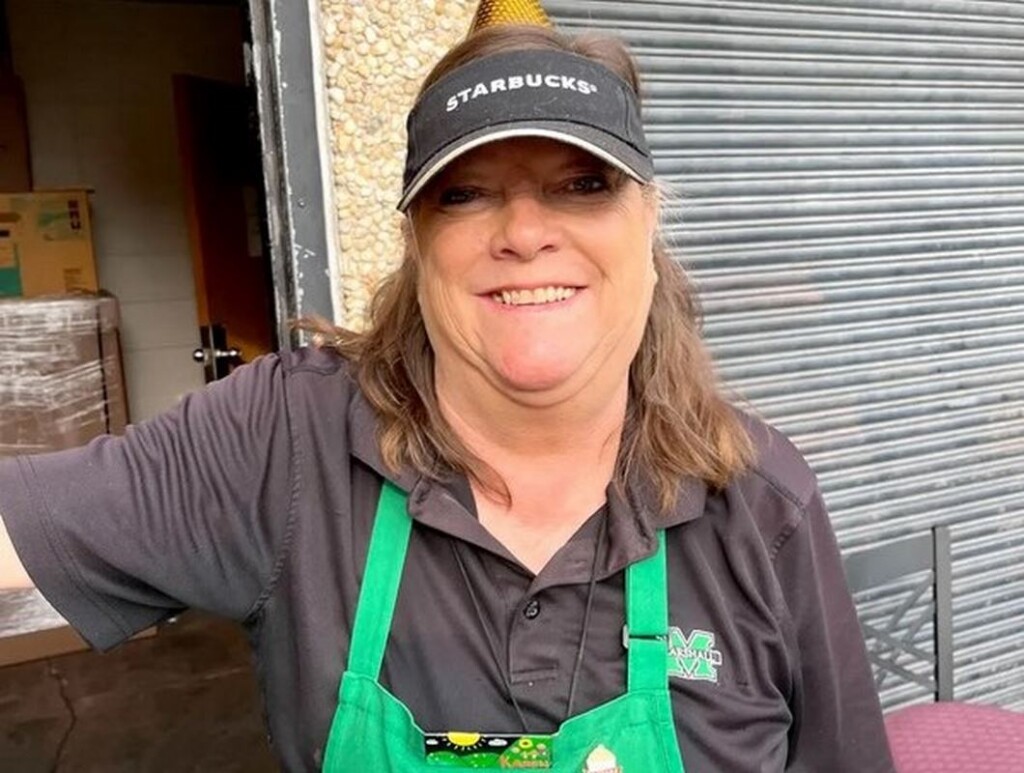
Recently, hordes of West Virginia college kids who “couldn’t afford a cup of coffee” shelled out five dollars to help a motherly Starbucks barista buy a new car.

The Starbucks on the Marshall University Campus in Huntington, West Virginia, was always like a small family with Karen Collinsworth, 65, at the head of the table.

The decades-long supervisor at the famous coffee shop location loved what she did, as well as the teams of aspiring young students who made up her staff.

“I love coming into work knowing that she’s gonna be there. I talk to her about literally everything,” Cassie Gray, a sophomore at Marshall who works at Starbucks with Collinsworth, told TODAY. “She’s like my mom when I’m away from home and can’t talk to my mom.”

TODAY covered the story of an unfortunate double whammy of bad luck that befell Collinsworth when her car—a 2004 Kia that always had some kind of problem—was burglarized; the first thief taking the catalytic converter, and the second going in and stealing interior components.

At this point, Gray and her teammates, who always knew Collinsworth had trouble with her car, decided that there had to be something they could do to help.

MORE CO-WORKERS SUPPORTING EACH OTHER: Co-Workers Donate Their Kidneys to Save Each Other’s Husbands

Discussing what they might be able to accomplish, the team decided that they might be able to fundraise some money for repairs since so many people around campus knew the 65-year-old barista and valued her.

“We all just kind of talked about it and we floated around the idea of starting a fundraiser for her,” Gray said. “After work when I got back to my dorm, I decided to just make it because I figured even if we couldn’t raise that much money, any amount would help her. It was just kind of like a spur of the moment (thing).”

After the co-workers all shared it on Instagram, Facebook, and another social media platform called YikYak, their most dreamed-of outcome came true.

Karen Collinsworth – courtesy Jaiden Horn

MORE GIVING BACK STORIES: Family Farm in Maine Couldn’t Make it After Restaurants Close – Until the Neighbors Showed Up

As of September 15th, the fundraiser had amassed $40,000, headlined by a $5,000 donation from the president of Marshall University. Eventually, the total got so high that Collinsworth’s neighbor spilled the beans before the baristas could surprise her.

TODAY writes that she is looking at new Subarus, all the while feeling the love and goodwill that decades of serving coffee with a smile has accumulated.

SHARE This Sweet Starbucks Story With Your Friends… 

Rats Finally Eradicated from Caribbean Island as Huge Nature Reserve Rises in Their Place

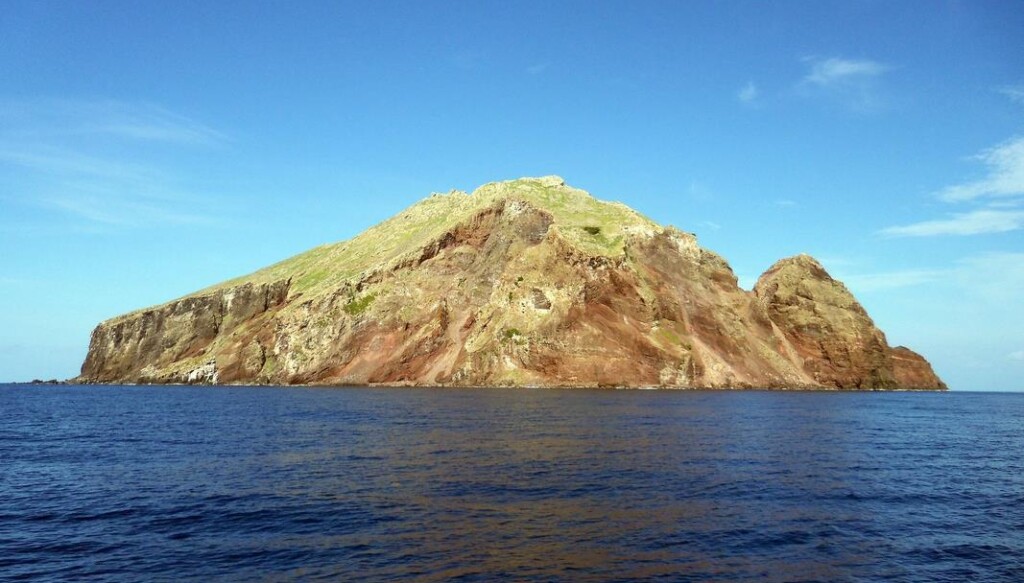
Redonda without any native vegetation CC 2.0. spantil

Redonda, a Caribbean island of small repute, has undergone a dramatic transformation from a barren wasteland of goats and rats, to a pristine, re-wilded nesting spot for many seabirds and endangered plants.

It’s one of many remote islands around the world’s seas that, with a helping hand, have rid themselves of invasive animals and plants and returned to supporting the land, water, and air around them.

In 2020, World at Large reported that whereas many of the Aichi global targets for protecting biodiversity had failed by their deadline, one—the eradication of invasive species on small islands—was a resounding success.

At the time, the project in Redonda had already succeeded, and local NGOs were advocating for its designation as a nature reserve.

Remaining isolated for hundreds of years after being revealed by Columbus, Redonda became a hotspot for the collection of guano, or bird droppings, for use in fertilizing fields and producing gunpowder.

But along with man came domesticated animals—goats and rats in Redonda’s case. The rats ate nesting booby and frigatebird eggs while the goats cleared the small island of vegetation. Without the foliage, nothing held the soil and rock together, and soon the edges of Redonda began to crumble into the sea, choking the life from the bottom of the marine food web.

With the cliff nests destroyed, and the uplands haunted by rats, the birds left. The vegetation couldn’t grow back, and the goats began to starve to death. Redonda was a whistling wasteland.

In 2016, Antigua and Barbuda, the archipelago nation that owns Redonda, launched an eradication campaign that cleared the island of rats. After that, they simply waited.

“That’s all we did. We just removed the species that were not supposed to be there and within months we saw the vegetation growing back – the island rebounding,” said Johnella Bradshaw, Redonda program coordinator for the Environmental Awareness Group (EAG), an Antiguan NGO leading the project.

“Up to this date, we haven’t planted anything, we haven’t reintroduced any species. We just removed the rats and the goats, and the island transformed right in front of our eyes,” she told CNN.

MORE ISLAND CONSERVATION SUCCESSES: Island is Wonderland for Penguins Once Again After Dog Helps Eradicate 300,000 Invasive Rabbits

Happily, the 60 goats that were left on the mile-long island were spared, and instead rounded up by hand (since they were very easy to spot on an island without a single bush or tree) and relocated to the mainland.

After that, a team camped out on the island for two straight months trapping and poisoning rats; 6,000 of which were found on the island, so many that the workers could hear them scurrying around their tents at night.

MORE ISLAND CONSERVATION SUCCESSES: Island Paradise Declared Rat-Free After Massive Volunteer Eradication Campaign

There have been no recorded rats on the island since 2018, allowing 15 species of sea birds to return and for the Redonda green dragon—a beautiful native lizard, to grow in population by 1,300%. Native vegetation too has experienced a 20-fold recovery, including tree species like Ficus.

All this charged the Antiguan government to create the Redonda Ecosystem Reserve which will cover 30,000 hectares of land and sea, including the tiny isle, its surrounding seagrass meadows, and a 180 square-kilometer (69 square-mile) coral reef.

SHARE This Inspiring Island Conservation With Your Friends… 

Get Ready for the Solar Eclipse When Moon and Sun Form Perfect Line With Earth in a ‘Ring of Fire’

The lighted whisps in this image of a solar eclipse are just a tiny portion of the Sun's corona - credit: Drew Rae
Drew Rae

The 2023 solar eclipse is passing over the United States this year, giving millions of Americans in the northwest a chance to glimpse a “ring of fire.”

That’s the phrase for a kind of eclipse known as an annular eclipse, where the moon passes in front of the sun but leaves space for a small ring of light to be seen.

The annular solar eclipse will occur on October 14th, 2023 from 15:03 UTC to 20:55 UTC. The maximum of the eclipse will occur at 17:59 UTC. The so-called “path of totality” where Earthlings will be able to see the eclipse straight on, will pass through South and Central America, before moving westward up through Texas, Nevada, California, and Oregon, though the eclipse can still be seen in the thousands of miles east and west of that line.

In fact, all of the continental United States will have at least some visibility of the eclipse. Unfortunately for Europeans, this eclipse will be beyond them all.

While the sky might dim, and the temperature drop, the only way to actually see the difference in the light of the sun during an eclipse is by wearing 3D glasses from a movie theater, but many companies also sell cheap plastic eclipse glasses that are necessary to protect your eyes from the UV radiation which can still damage them when looking straight into an eclipsed sun.

In other stargazing news, October’s full moon is going to be a Hunter’s Moon this year. If it occurs before the Autumn equinox on the 24th, it’s known as a Harvest Moon—giving light to ancient peoples in order to harvest their crops. If it occurs after the equinox, it’s known as a Hunter’s Moon—giving light to the hunter during his pursuit, since the crops are all harvested.

As Valerie from Space Tourism Guide explains, the October calendar is also crammed with opportunities to spot shooting stars.

This is because several meteor showers will reach their peak during the month, starting with the Cameleopardalids on October 5th featuring roughly 5 meteors per hour, and proceeding to the Draconids on October 9th, a shower which can produce anywhere from 2 to 600 per hour, the Southern Taurids on October 10th, the ε-Geminids on October 18th with about 3 per hour, the Orionids on October 21st with about 21 per hour, and ending with the Leonus Minorids on October 24th.

Check out Valerie’s guide to learn all the deets about when and where to look for these celestial phenomena.

SHARE October’s Night Sky With Your Friends Who Like To Gaze Up… 

“Some people are always grumbling because roses have thorns. I’m thankful that thorns have roses.” – Alphonse Karr

Quote of the Day: “Some people are always grumbling because roses have thorns. I’m thankful that thorns have roses.” – Alphonse Karr

Photo by: Grant Sams

With a new inspirational quote every day, atop the perfect photo—collected and archived on our Quotes page—why not bookmark GNN.org for a daily uplift?

Increasing Steps by 3,000 Per Day Can Lower Blood Pressure in Older Adults

Richard Sagredo
Richard Sagredo

Researchers were excited to find that a simple lifestyle intervention can be just as effective as structured exercise and some medications.

An estimated 80% of older Americans have high blood pressure. The good news is that maintaining healthy blood pressure can protect against serious conditions like heart failure, heart attacks, and strokes—and a new study shows how.

Adding a relatively minimal amount of movement, about 3,000 steps per day, can significantly reduce high blood pressure in older adults.

Linda Pescatello, distinguished University of Connecticut professor of kinesiology worked with Elizabeth Lefferts, the lead author of the paper, and Duck-chun Lee in Lee’s lab at Iowa State University.

“We’ll all get high blood pressure if we live long enough, at least in this country,” Pescatello says. “That’s how prevalent it is.”

MORE BENEFITS: Experts Find Out Why Exercise Prevents Alzheimer’s Disease–Which Could Lead to Cure

Pescatello is an expert on exercise and hypertension, the clinical term for high blood pressure. Her previous research demonstrated that exercise can have a significant immediate and long-lasting impact on lowering blood pressure.

The study published in a recent issue of the Journal of Cardiovascular Development and Disease sought to determine if older adults with hypertension could receive these benefits by moderately increasing their daily walking, which is one of the easiest and most popular forms of physical activity for this population.

“It’s easy to do, they don’t need any equipment, they can do it anywhere at almost any time,” Lee said.

AMAZING: 8 Weeks of Lifestyle Changes Reduced Biological Age by 3 Years In Groundbreaking Proof-of-Concept Study

The study focused on a group of sedentary older adults between ages 68 and 78 who walked an average of about 4,000 steps per day before the study.

After consulting existing studies, Lee determined that 3,000 steps would be a reasonable goal. This would also put most participants at 7,000 daily steps, in line with the American College of Sports Medicine’s recommendation.

The team conducted the study during the height of the COVID-19 pandemic, which meant they had to do everything remotely. Participants were sent a kit with pedometers, blood pressure monitors, and step diaries for participants to log how much they were walking each day.

On average, participants’ systolic and diastolic blood pressure decreased by an average of seven and four points, respectively, after the intervention.

Other studies suggest decreases of these magnitudes correspond to a relative risk reduction of all-cause mortality by 11%, and 16% for cardiovascular mortality, an 18% reduction in the risk of heart disease, and a 36% risk reduction of stroke.

“It’s exciting that a simple lifestyle intervention can be just as effective as structured exercise and some medications,” Lefferts said.

MORE PROOF: People Over 70 Who Walk Just an Extra 500 Steps a Day Lower Risk of Heart Failure or Stroke by 14 Percent

The findings suggest that the 7,000-step regimen the participants in the study achieved is on-par with reductions seen with anti-hypertensive medications. Eight of the 21 participants were already on anti-hypertensive medications. Those participants still saw improvements in systolic blood pressure from increasing their daily activity.

“In a previous study, we found that when exercise is combined with medication, exercise bolsters the effects of blood pressure medication alone,” Pescatello says. “It just speaks to the value of exercise as anti-hypertensive therapy. It’s not to negate the effects of medication at all, but it’s part of the treatment arsenal.”

The researchers, who hope to use the data to launch a larger clinical trial, found that walking speed and walking in continuous bouts did not matter as much as simply increasing total steps.

LOOK: 101-year-old Woman Reveals Her Secret to Longevity is Dancing Every Day

“We saw that the volume of physical activity is what’s really important here, not the intensity,” Pescatello says. “Using the volume as a target, whatever fits in and whatever works conveys health benefits.”

WALK THIS ADVICE to Your Senior Friends and Family on Social Media…

Passionate Horror Fan Now Earns Thousands Teaching Creepy Make-Up Looks on Social Media

Make-up artist, Natasha Jane Wood - SWNS
Make-up artist, Natasha Jane Wood – SWNS

Meet the horror-movie obsessive who now earns thousands every month sharing her creepy make-up techniques from her home in the UK.

Natasha Jane Wood used to “sneak downstairs” and watch her favorite gory blockbusters when she was a young girl.

“It probably sounds crazy but I used to fall asleep watching ’28 Days Later,’ which is a zombie movie,” said the the 28-year-old. “I just found it so soothing.”

Inspired by Hollywood icons Tim Burton and Stephen King, Natasha had studied special effects makeup at Bolton University in 2019—but the pandemic provided the perfect chance to try new techniques, when she was furloughed from her job at a jewelry store.

Honing her skills from her childhood bedroom in Darwen, Lancashire, Natasha found online fame after  uploading her sinister looks to TikTok. She has since amassed over six million followers on social media and made her passion a full-time career.

“It all just kicked off in 2020 when I did my ‘Disney Princesses Gone Wrong’ series on TikTok. A video I did transforming myself into Jim Carrey’s ‘The Mask’ has over 100 million views on YouTube.

“My little brother and sister thought it was a bit cringe at first, but now I have the same amount of YouTube subscribers as some of their favorite content creators.”

The Disney Princess series included Snow White, Cinderella, Sleeping Beauty, and Belle.

Natasha Jane Wood – SWNS

“They were inspired by the Grimm Brothers, who did the original versions of the stories,” she told Southwest News Service. “With Beauty and the Beast for example, I did one where she actually got scratched by the beast, so it turned quite gory.

“With Disney, it’s all happily ever after, but you don’t really see what would happen if it went wrong.

LOOK: One-Legged Man Turns His Amputation Into the Best Halloween Costumes Ever

When TikTok began cracking down on gore (even fake gore) she turned herself into an unfinished Mona Lisa painting.

Natasha Jane Wood – SWNS

In 2022, Natasha launched her YouTube channel and collected three million subscribers—and realized she could earn a good living.

CHECK OUT: The Best Inspiration for Your Jack-O-Lanterns Might Come From This Retired Man’s 8-Hour Masterpieces

“A manager reached out to me in April 2021 and from there I even had advertisements coming in from makeup companies like Tatti Lashes and Natasha Denona.

“But it’s nice to have a community of people, and especially since I talk about mental health and portray it with my looks.

“I did a series called ‘Makeup Inspired By Emotions’ and did one themed on anxiety. Since those videos I’ve had people reach out and say, ‘this is exactly how I feel’, and can relate to it.

“It does show we’re all going through the same things. Because my own mental health is up and down it makes me feel like I have a purpose.”

Natasha Jane Wood – SWNS

“I feel very privileged with the money I have to give back to charities too.

“I’ve even been able to buy my grandparents a holiday to Cornwall in June 2023.

NEED DOG COSTUME IDEAS? Best Canine Costumes of the Year in Halloween Dog Parade

Her advice to others is simple: “We’ve got one life, so go for it. It’s better to try and not live with what-ifs.”

IT’S NEARLY HALLOWEEN–A Great Time to Share the Looks on Social Media…

Scientists Discover a Small Strand of RNA to Be Key to Fighting Cancer With Our Immune System

Sangharsh Lohakare
Sangharsh Lohakare

A team of researchers at the University of Massachusetts Amherst has shown how a single, small strand of microRNA, known as let-7, governs the ability of T-cells to recognize and remember tumor cells.

This cellular memory is the basis for how vaccines work. Boosting cellular memory to recognize tumors could help improve cancer therapies.

The research, supported by the National Institutes of Health and published recently in Nature Communications, suggests a new strategy for the next generation of cancer-fighting immunotherapies.

“Imagine that the human body is a fortress,” says Leonid Pobezinsky, associate professor of veterinary and animal sciences at UMass Amherst and the paper’s senior author, along with a research assistant professor Elena Pobezinskaya.

Our bodies have T-cells, which are white blood cells that specialize in fighting both pathogens, think of the common cold, and altered cells of the organism itself, like tumor cells. Most of the time, the T-cells are “naïve”—mustered out of duty and resting. But when they recognize foreign antigens after bumping into them, they suddenly wake up, turn into killer T-cells and attack whatever the pathogen may be, from the sniffles to COVID, or even cancer.

After the killer T-cells have won their battle, most of them die.

“But,” said Pobezinsky, “somehow a few survive, transform into memory cells and form an elite task force called the ‘memory pool’—they remember what that particular antigen looked like, so that they can be on the lookout for the next time it invades the body.”

This is one of the mechanisms behind how vaccines work: infect the body with a weakened dose of a pathogen—say, the chicken pox virus—and the memory cells will remember what that virus looks like, turn into killer T-cells, annihilate the virally infected cells and then transform back into memory cells, waiting for the next time the chicken pox virus shows up.

MORE CANCER GOOD NEWS: Bats Hold Vital Clues for Cancer Prevention as Scientists Study Their ‘Extraordinary’ Immunity

But it’s never been clearly understood just how T-cells form their memories.

Cancerous tumor cells work by tricking the killer T-cells, turning them off before they can attack and create a memory pool, leaving the cancer to metastasize unchecked.

“What we’ve discovered,” says Pobezinsky, “is that a tiny piece of miRNA, let-7, which has been handed down the evolutionary tree since the dawn of animal life, is highly expressed in memory cells, and that the more let-7 a cell has, the less chance that it will be tricked by cancerous tumor cells, and the greater chance it has of turning into a memory cell.”

If the memory cell isn’t tricked by the cancer, then it can fight and, crucially, remember what that cancerous cell looks like.

CHECK OUT: Molecule that Kills Most Solid Cancer Tumor Cells Leaving Others Unaffected Shows Promise After 20 Years’ Hard Work

“Memory cells can live for a very long time,” adds Pobezinskaya. “They possess stem-cell-like features and can live for 70 years.”

“We are very excited, not only about the fundamental insights this research has provided, but also the translational impact it could have on next generation immunotherapies,” says lead author Alexandria Wells, a postdoctoral fellow at the Cancer Research Institute who completed the work at UMass Amherst.

“In particular, understanding how let-7 is regulated during treatment to enhance the memories and capabilities of our own immune systems is a promising avenue for further research.”

SHARE the Cancer Research to Bring Hope to Social Media…

Zoos Welcome ‘Paddington Bears’ for Breeding Programs to Help Save Species From Extinction

10-year-old male Andean bear named Oberon – Chester Zoo / SWNS

Two zoos in the US and UK have welcomed their very own ‘Paddington Bear’ as part of a special breeding program to help save the rare Andean species from extinction.

The Chester Zoo in England released a new video of a ten-year-old Andean bear named Oberon that arrived as a ‘perfect match’ for the zoo’s female.

It is hoped the handsome Oberon will soon ‘hit it off’ with three-year-old Pacha so they can have cubs together and boost the population of the threatened South American species.

Andean Bears are also known as ‘spectacled’ bears due to the circular golden markings that can occur around their eyes—and were made famous by the classic children’s character Paddington Bear that was from ‘deepest, darkest Peru’ and appeared in more than 20 books written by British author Michael Bond.

Excited by the new arrival, Mike Jordan, a director at the zoo, said Oberon has “settled in nicely” since arriving in Chester, spending his time “exploring, climbing trees and checking out the sights and scents of his new home.”

“Oberon hasn’t yet fathered any cubs, so his genetics could play an important role in the future of his species—adding a key new bloodline to the breeding program.”

The Nashville Zoo in Tennessee also announced this week the arrival of a new 10-year-old male named Pinocchio, from the Salisbury Zoo in Maryland, as part of the Association of Zoos and Aquariums’ Andean Bear Species Survival Plan (SSP).

Pinocchio has a unique origin story and was originally rescued as an abandoned cub from the rural countryside of Ecuador and was ultimately deemed unfit to be released back into the wild.

CUTENESS OVERLOAD: Oklahoma Zoo Forecasts ‘Cloudy with a chance of cute’ After Rare Clouded Leopard Kitten Born

He arrived at Salisbury Zoo in 2017 and successfully fathered three cubs during his time there. He will eventually be introduced to the Nashville Zoo’s female, Luka, hoping they can also help ensure genetically diverse populations.

Oberon at Chester Zoo – SWNS

Listed by the International Union for the Conservation of Nature (IUCN) as vulnerable to extinction, the species is estimated to contain fewer than 10,000 as a result of deforestation and conflict with humans throughout their range in Peru, Venezuela, Colombia, Ecuador and Bolivia.

GROUND-BREAKINGTasmanian Tiger RNA Recovered from Preserved Specimen in World First

They are uniquely adapted to challenging mountainous habitats and possess a thick, shaggy coat and powerful jaws used for eating hardened vegetive matter in the harsh climates of the Andes Mountains.

Paul Bamford, a field manager for the Americas at Chester Zoo, detailed other ways they are aiding the species, working on the ground in Bolivia since 2016 to understand Andean bears in their changing landscape.

“Our extensive camera traps in the region have revealed that 30 female bears, 17 males and 13 youngsters – the southernmost population in the world – share their home with some of Bolivia’s poorest and most vulnerable rural communities.

Absolutely Epic: Watch the Release of a Wild Bison Herd onto Blackfeet Tribal Land

“When bears wander into agricultural land and damage crops or kill livestock, it can often result in conflict or retaliation from the communities, which is one of the species’ main threats.

“To help combat this, we have supported the economic wellbeing of local communities, helping them to generate income through a range of sustainable initiatives and addressing poverty as a driver for conflict with bears.

“Harvesting and selling honey, restoring forest habitat and training community members to monitor the bear population are just some of the initiatives that have resulted in a much more peaceful co-existence where both people and bears can thrive together.”

WATCH the video from Chester Zoo (NOTE: You might want to mute the music…)

SHARE the Good News for This Mountain Bear on Social Media…

“Only the strongest people have the pluck to change their minds, and say so, if they see they’ve been wrong.” – Enid Blyton

Quote of the Day: “Only the strongest people have the pluck to change their minds, and say so, if they see they’ve been wrong.” – Enid Blyton

Photo by: Jan Huber

With a new inspirational quote every day, atop the perfect photo—collected and archived on our Quotes page—why not bookmark GNN.org for a daily uplift?

Balcony Tickets to the Night of Abraham Lincoln’s Assassination Smashes Auction–Only One Other Known to Survive

Front-row balcony tickets for Ford's Theatre on April 14, 1865, the night President Abraham Lincoln was assassinated – RR Auction / SWNS
Front-row balcony tickets for Ford’s Theatre on April 14, 1865, the night President Abraham Lincoln was assassinated – RR Auction / SWNS

A rare piece of American history was auctioned last week, and it’s quite surprising they still exist 158 years after the paper was printed—a pair of tickets for Ford’s Theatre the night President Abraham Lincoln was assassinated.

Even more amazing, they were front-row balcony seats, which would have provided the theater-goers with a clear view of the box where Lincoln was shot on April 14, 1865.

The new owners paid more than a quarter-million dollars for the artifacts ($262,500), although Boston-based RR Auction believed the tickets would fetch less than $100,000.

The only other similarly date-stamped ticket stub is in the collection of Harvard University’s Houghton Library.

On the fateful night, Lincoln, the 16th president of the United States reportedly ignored his wife’s misgivings about the theater outing to see the play, Our American Cousin, and so met his end at the hand of stage actor John Wilkes Booth while attending.

LOOK: Garden Ornament Bought for $20 at Flea Market is Actually a Medieval Hand Cannon and Sells for Thousands

‘Honest Abe’ was the first U.S. president to be assassinated. While Booth escaped the building after vaulting down onto the stage, he was killed twelve days later after being tracked to a farm.

It was near the end of the American Civil War, and Lincoln’s assassination was part of a larger conspiracy intended by Booth to revive the Confederate cause by eliminating the most important officials of the federal government.

Bobby Livingston, of RR Auction, said the historic tickets belonged to The Forbes Collection of American Historical Documents.

UNCOVEREDSealed Vial Reveals the Smell of Ancient Rome With Patchouli Scents From Time of Jesus

“We know of only one other used April 14, 1865 ticket bearing a seat assignment that exists, making these two extremely valuable.”

Yes, they may invoke America’s most tragic performance, but what a fascinating piece of Americana.

RR Auction

SHARE the Fascinating Artifacts With History Fans on Social Media…

After 6 Months Searching for New Doctor, Small Town’s Viral Video was ‘Just What the Doctor Ordered’

Town of Lostwithiel, Cornwall, recruits doctor with viral video – SWNS

For six months, the retiring small town doctor searched for his replacement, with no luck. But a new General Practitioner is now on the job thanks to a viral video featuring hundreds of people in the village.

Desperate locals in Cornwall, England created a pop video, writing their own song to the tune of Nina Simone’s hit ‘Aint Got No, I Got Life’.

Over 500 residents of Lostwithiel played a role to help recruit a replacement for their retiring medic.

The video went viral and was viewed more than two million times and now the Lostwithiel Medical Practice has hired someone.

Dr. Bethan Woodfield—originally from Lostwithiel—saw the video and applied.

“It’s a lovely place to work I really enjoy being here,” she told the BBC. “The sense of community is amazing, everyone I feel goes above and beyond for patient care.”

In the video (see below) they sing:

We’ve folks with asthma and young new mothers,
we’ve limping fathers and snot filled others.
We’ve tons of children all so infectious who need a doctor.
We’ve got the love if you’ve got the time.

ALSO WATCH: Tipsy Traveler Calls Out Crossword Clues on Stalled Train Turning a Gloomy Car into Smiling Community

Doctor recruitment video filmed by the residents of Lostwithiel – SWNS

The song goes on to highlight everything that Lostwithiel, with a population of 5,000, has to offer any potential GP.

Lostwithiel is just twenty miles from Port Isaac, where filming tales place for Doc Martin, the British series about a London medic who takes up the role of a GP in a sleepy village, reminiscent of the popular TV show Northern Exposure in the U.S.

The Lostwithiel Needs a Doctor crusade was initiated by Dr. Justin Hendriksz, the current remaining practice partner at the clinic, who says there are dozens of towns looking for a doctor, so they needed to stand out, if there was any chance of success.

WHAT WOULD YOU DO: Best Friends Win Million Dollar Lottery and Spread the Wealth in Hometown to Help Others

The video includes people from all walks of life in the Cornish village, from the church pastor to the butchers, all singing and dancing.

Watch the BBC report from earlier this year, upon launching the video…

SHARE the Idea With Other Towns By Sharing on Social Media…

Northern Lights Activity Is Sky-High and Space Conditions Could Lead to Greatest Displays in 20 Years

SWNS
SWNS

An international team monitoring the activity of the sun has predicted that the next two years will offer some of the most intense and frequent Northern Lights displays in a generation.

Already this year the Earth’s aurora has been seen in states like Wisconsin and Minnesota—far south of its normal showgrounds.

The key clue is the number of sunspots, disturbances on the surface of the sun that have been recorded for hundreds of years, and the more sunspots there are in a year, the greater the frequency that the poles will see the Aurora Borealis.

The Solar Cycle 25 Prediction Panel had predicted in the early 2000s that there would be 178 sunspots per month—the highest this rate had become this century—but throughout 2024 and 2025, that’s likely to be much higher—between 220 and 227 per month.

Sunspots are dark blotches on the sun that mark areas of lower temperatures and strong magnetic distortions. These sunspots are often the future location of a coronal mass ejection, whereby the sun flings some of its material out into space. This creates what is commonly called “space weather.”

MORE NEWS LIKE THIS: Space Station Captures Footage of Blue Lightning Bursting Toward Space

Clashing with the Earth’s magnetosphere, most of this weather is deflected away, but some of it creeps in where the magnetic field is weakest—the polar regions—hence the “Northern Lights;” although it also happens over the southern pole as well.

The upcoming autumnal equinox is an additional distortion of the magnetic field, and could lead to even more vivid colors for enthusiastic skywatchers and stargazers in the northern and southern reaches, although NBC reports that even Arizona has been seeing glimpses of the aurora

SHARE This Great Time To Plan A Winter Holiday With Your Friends… 

Your New Horoscope From Rob Brezsny: A ‘Free Will Astrology’

Our partner Rob Brezsny provides his weekly wisdom to enlighten our thinking and motivate our mood. Rob’s Free Will Astrology, is a syndicated weekly column appearing in over a hundred publications. He is also the author of Pronoia Is the Antidote for Paranoia: How All of Creation Is Conspiring To Shower You with Blessings. (A free preview of the book is available here.)

Here is your weekly horoscope…

FREE WILL ASTROLOGY – Week of September 30, 2023
Copyright by Rob Brezsny, FreeWillAstrology.com

LIBRA (Sept. 23-Oct. 22):
If you have ever contemplated launching a career as a spy, the coming months will be a favorable time to do so. Likewise if you have considered getting trained as a detective, investigative journalist, scientific researcher, or private eye. Your affinity for getting to the bottom of the truth will be at a peak, and so will your discerning curiosity. You will be able to dig up secrets no one else has discovered. You will have an extraordinary knack for homing in on the heart of every matter. Start now to make maximum use of your superpowers!

SCORPIO (Oct. 23-Nov. 21):
Have you been sensing a phantom itch that’s impossible to scratch? Are you feeling less like your real self lately and more like an AI version of yourself? Has your heart been experiencing a prickly tickle? If so, I advise you not to worry. These phenomena have a different meaning from the implications you may fear. I suspect they are signs you will soon undertake the equivalent of what snakes do: molting their skins to make way for a fresh layer. This is a good thing! Afterward, you will feel fresh and new.

SAGITTARIUS (Nov. 22-Dec. 21):
According to legend, fifth-century Pope Leo I convinced the conquering army of Attila the Hun to refrain from launching a full-scale invasion of Italy. There may have been other reasons in addition to Leo’s persuasiveness. For example, some evidence suggests Attila’s troops were superstitious because a previous marauder died soon after attacking Rome. But historians agree that Pope Leo was a potent leader whose words carried great authority. You, Sagittarius, won’t need to be quite as fervently compelling as the ancient Pope in the coming weeks. But you will have an enhanced ability to influence and entice people. I hope you use your powers for good!

CAPRICORN (Dec. 22-Jan. 19):
Singer-songwriter Joan Baez has the longevity and endurance typical of many Capricorns. Her last album in 2018 was released 59 years after her career began. An article in The New Yorker describes her style as “elegant and fierce, defiant and maternal.” It also noted that though she is mostly retired from music, she is “making poignant and unpredictable art,” creating weird, hilarious line drawings with her non-dominant hand. I propose we make Baez your inspirational role model. May she inspire you to be elegant and fierce, bold and compassionate, as you deepen and refine your excellence in the work you’ve been tenaciously plying for a long time. For extra credit, add some unexpected new flair to your game.

AQUARIUS (Jan. 20-Feb. 18):
Aquarian author and activist Mary Frances Berry has won numerous awards for her service on behalf of racial justice. One accomplishment: She was instrumental in raising global awareness of South Africa’s apartheid system, helping to end its gross injustice. “The time when you need to do something,” she writes, “is when no one else is willing to do it, when people are saying it can’t be done.” You are now in a phase when that motto will serve you well, Aquarius.

PISCES (Feb. 19-March 20):
I invite you to spend quality time gazing into the darkness. I mean that literally and figuratively. Get started by turning off the lights at night and staring, with your eyes open, into the space in front of you. After a while, you may see flashes of light. While these might be your optical nerves trying to fill in the blanks, they could also be bright spirit messages arriving from out of the void. Something similar could happen on a metaphorical level, too. As you explore parts of your psyche and your life that are opaque and unknown, you will be visited by luminous revelations.

ARIES (March 21-April 19):
Author Diane Ackerman says it’s inevitable that each of us sometimes “looks clumsy or gets dirty or asks stupid questions or reveals our ignorance or says the wrong thing.” Knowing how often I do those things, I’m *extremely* tolerant of everyone I meet. I’m compassionate, not judgmental, when I see people who “try too hard, are awkward, care for one another too deeply, or are too open to experience.” I myself commit such acts, so I’d be foolish to criticize them in others. During the coming weeks, Aries, you will generate good fortune for yourself if you suspend all disparagement. Yes, be accepting, tolerant, and forgiving—but go even further. Be downright welcoming and amiable. Love the human comedy exactly as it is.

TAURUS (April 20-May 20):
Taurus comedian Kevin James confesses, “I discovered I scream the same way whether I’m about to be devoured by a great white shark or if a piece of seaweed touches my foot.” Many of us could make a similar admission. The good news, Taurus, is that your anxieties in the coming weeks will be the “piece of seaweed” variety, not the great white shark. Go ahead and scream if you need to—hey, we all need to unleash a boisterous yelp or howl now and then—but then relax.

GEMINI (May 21-June 20):
Here are famous people with whom I have had personal connections: actor Marisa Tomei, rockstar Courtney Love, filmmaker Miranda July, playwright David Mamet, actor William Macy, philosopher Robert Anton Wilson, rockstar Paul Kantor, rock impresario Bill Graham, and author Clare Cavanagh. What? You never heard of Clare Cavanagh? She is the brilliant and renowned translator of Nobel Prize Laureate poet Wisława Szymborska and the authorized biographer of Nobel Prize Laureate author Czesław Miłosz. As much as I appreciate the other celebrities I named, I am most enamored of Cavanagh’s work. As a Gemini, she expresses your sign’s highest potential: the ability to wield beautiful language to communicate soulful truths. I suggest you make her your inspirational role model for now. It’s time to dazzle and persuade and entertain and beguile with your words.

CANCER (June 21-July 22):
I cheer you on when you identify what you want. I exult when you devise smart plans to seek what you want, and I celebrate when you go off in high spirits to obtain and enjoy what you want. I am gleeful when you aggressively create the life you envision for yourself, and I do everything in my power to help you manifest it. But now and then, like now, I share Cancerian author Franz Kafka‘s perspective. He said this: “You do not need to leave your room. Remain sitting at your table and listen. Do not even listen, simply wait. Do not even wait, be quite still and solitary. The world will freely offer itself to you to be unmasked. It has no choice. It will roll in ecstasy at your feet.”

LEO (July 23-Aug. 22):
Let’s talk about changing your mind. In some quarters, that’s seen as weak, even embarrassing. But I regard it as a noble necessity, and I recommend you consider it in the near future. Here are four guiding thoughts. 1. “Progress is impossible without change, and those who cannot change their minds cannot change anything.” —George Bernard Shaw. 2. “Only the strongest people have the pluck to change their minds, and say so, if they see they have been wrong in their ideas.” —Enid Blyton. 3. “Sometimes, being true to yourself means changing your mind. Self changes, and you follow.” —Vera Nazarian. 4. “The willingness to change one’s mind in the light of new evidence is a sign of rationality, not weakness.” ―Stuart Sutherland.

VIRGO (Aug. 23-Sept. 22):
“The soul moves in circles,” psychologist James Hillman told us. “Hence our lives are not moving straight ahead; instead, hovering, wavering, returning, renewing, repeating.” In recent months, Virgo, your soul’s destiny has been intensely characterized by swerves and swoops. And I believe the rollicking motion will continue for many months. Is that bad or good? Mostly good—especially if you welcome its poetry and beauty. The more you learn to love the spiral dance, the more delightful the dance will be.

WANT MORE? Listen to Rob’s EXPANDED AUDIO HOROSCOPES, 4-5 minute meditations on the current state of your destiny — or subscribe to his unique daily text message service at: RealAstrology.com

(Zodiac images by Numerologysign.com, CC license)

SHARE The Wisdom With Friends Who Are Stars in Your Life on Social Media…

“Life is an adventure in forgiveness.” – Norman Cousins

Quote of the Day: “Life is an adventure in forgiveness.” – Norman Cousins

Photo by: Wyatt Fisher (christiancrush.com)

With a new inspirational quote every day, atop the perfect photo—collected and archived on our Quotes page—why not bookmark GNN.org for a daily uplift?

UPDATE—World’s First Drug to Regrow Teeth Enters Clinical Trials

In June, GNN reported on the first evidence of a drug that was able to regrow adult teeth in mice, after it was discovered by a dental scientist named Takahashi in Japan years ago.

Now, a pharmaceutical firm called Toregem Biopharma, funded by Kyoto University where Takahashi is based, is moving forward with clinical trials in healthy human adults.

Slated to begin in July of next year, the trials will investigate whether or not Takahashi’s antibody-based drug that targets a protein which suppresses the growth of new teeth from our “teeth buds,” is successful in adults.

If so, the next trial will include children with anodontia, a condition where they are born without some of their teeth.

In 2018, Takahashi showed that ferrets, who like humans have tooth buds, baby teeth, and permanent teeth, were able to regrow their teeth when given the drug.

“The idea of growing new teeth is every dentist’s dream. I’ve been working on this since I was a graduate student. I was confident I’d be able to make it happen,” Mr. Takahashi said.

Anodontia is a congenital condition present in about 1% of the population that impedes the development of teeth. About 10% of those patients have oligodontia, in which they lack 6 or more natural teeth.

RELATED: These Micro-robots Can Clean Teeth By Shapeshifting into Toothbrush or Floss Forms

Around 2005, and upon Takahashi’s return to Japan, literature began being published that pinpointed certain genes in mice that when deleted caused them to grow fewer or more teeth.

Investigating the latter, Takahashi found that this gene synthesized its own protein called USAG-1, and that when he targeted it with a neutralizing antibody, the mouse’s teeth proceeded to grow like normal.

SHARE This Huge Dental Breakthrough With Anyone Missing Teeth…

For First Time, Seawater Made Drinkable by Sunlight to Be Even Cheaper Than Tap Water

MIT solar desalination still - credit Jintong Gao and Zhenyuan Xu
MIT solar desalination still – credit Jintong Gao and Zhenyuan Xu

In a headline that’s rare to see these days, a US-China collaboration has created the cheapest and fastest way to purify seawater yet discovered by science.

The prototype of the passive solar-powered desalination tool can produce 4-6 liters of clean water per hour, and the designers believe a scaled-up version could sustain a coastal household in sunny climes year-round.

For as much as natural resource managers, city planners, and climate activists warn about droughts becoming more severe in the future, the solution has always been staring us in the face.

Only 3% of the Earth’s water is fresh, an amount that, along with technology, has already enabled the human race to reach nearly 8 billion members. By contrast, 68% of the Earth’s surface, and 97% of its water, is undrinkable.

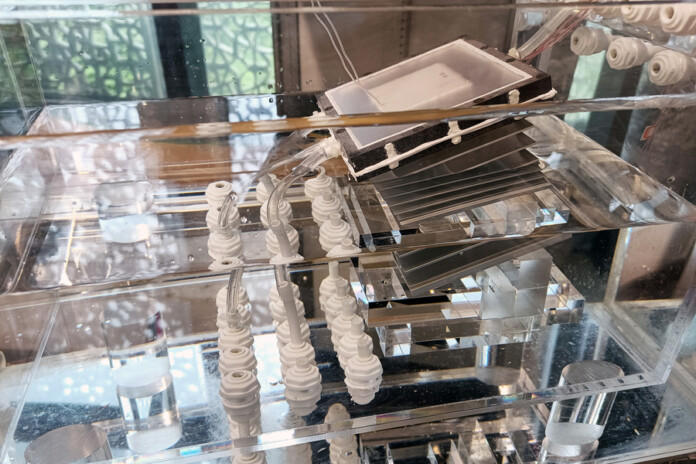
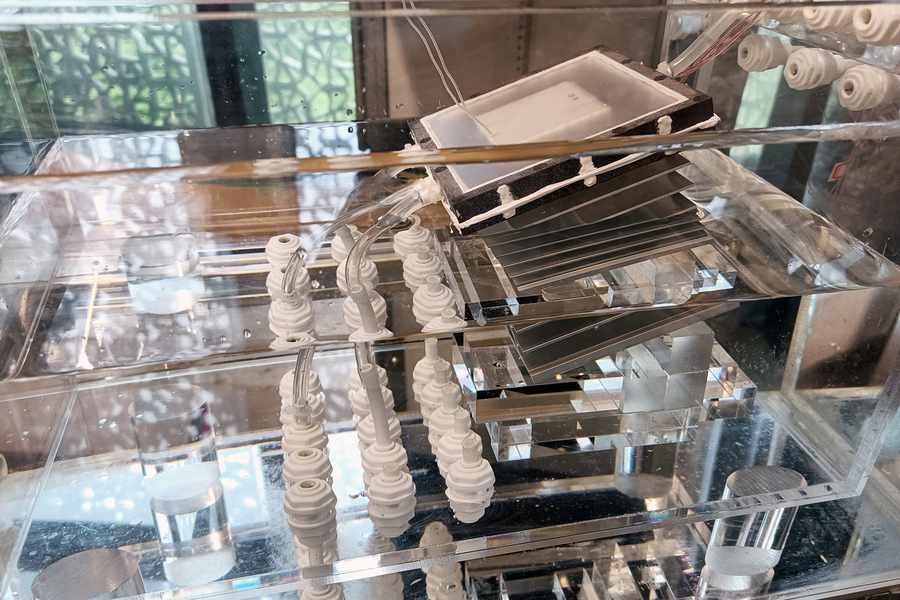
Seeking to exploit that unending reservoir of potential, a team from MIT and Shanghai Jiao Tong University developed a desalination still about the size of a briefcase that utilizes “thermohaline” circulation similar to the ocean itself.

Thermohaline circulation is described by NASA as the “Great Ocean Conveyor Belt” and occurs when water in the polar regions becomes more saline due to evaporation and sea ice melt.

After this, the denser water forces its way to the depths of the polar oceans, pushing the less-saline, colder water of the deeps out toward the tropical oceans. In essence, it’s a giant current, but one that moves much slower than the wind-driven currents.

OTHER SOLUTIONS LIKE THIS: New Zealand Designer Makes Ingenious Solar-Powered Skylight That Desalinates Water For Drinking

In the case of the still, the seawater circulates in swirling eddies that when coupled with sunlight, enables water to evaporate. The salt is left circulating inside while the water vapor is collecting at potable rates of purity

“For the first time, it is possible for water, produced by sunlight, to be even cheaper than tap water,” said Lenan Zhang, a research scientist in MIT’s Device Research Laboratory. “This opens up the possibility for solar desalination to address real-world problems.”

MORE GREAT INVENTIONS: One Cat’s Obsession With Hunting Birds Leads to Invention That Has Saved Hundreds of Thousands

For coastal communities around the world with a bit of government money and water scarcity issues, the product has the real potential to address them. All components of the still are designed for a 10-year lifespan.

SHARE The News About Cheap Desalination With Your Friends…

California Scientists Unveil Fire-Safe Liquid Fuel That Does Not React to Flame

Dominik Sostmann
Dominik Sostmann

Chemical engineers in California have designed a fuel that ignites only with the application of electric current.

The “safe” liquid fuel doesn’t react to flames and would not start accidental fires during either storage or transport.

“The fuel we’re normally using is not very safe. It evaporates and can ignite—and it’s difficult to stop that,” said Yujie Wang, a chemical engineering doctoral student at the University of California Riverside who co-authored a paper on the new fuel.

“It is much easier to control the flammability of our fuel and stop it from burning when we remove voltage.”

When fuel combusts, it is not the liquid itself that burns. Instead, it is the volatile fuel molecules hovering above the liquid that ignite on contact with oxygen and flame. Removing an oxygen source will extinguish the flame, but this is difficult to do outside of an engine.

“If you throw a match into a pool of gasoline on the ground, it’s the vapor of the gas that’s burning. You can smell that vapor and you instantly know it’s volatile,” said Prithwish Biswas, UCR chemical engineering doctoral student who is first author of the paper published in the Journal of the American Chemical Society.

“If you can control the vapor, you can control whether the fuel burns.”

ANOTHER GREAT BURN: Clean Fuel Made by Pulling CO2 From Air and Plastic Waste–Powered Only by the Sun and Photosynthesis

The base of the new fuel is an ionic liquid, which is a form of liquified salt. “It is similar to the salt we use to flavor food, which is sodium chloride,” Wang said. “The one we used for this project has a lower melting point than table salt, low vapor pressure, and is organic.”

Once in the lab, the team modified the ionic liquid’s formula, replacing the chlorine with perchlorate. Then, they used a cigarette lighter to see if the resulting liquid would burn. “The temperature from a normal lighter is high enough, and if it was going to burn, it would have,” Wang said.

Next the team tried an application of voltage followed by a lighter flame, which did ignite. “Once we shut off the current, the flame was gone, and we were able to repeat that process over and over again — applying voltage, seeing smoke, lighting the smoke so it burned, then turning it off,” Wang said. “We were excited to find a system we could start and stop very quickly.”

FUEL FROM AIR: Tech Startup Can Now Brew Up Carbon-Negative Rocket Fuel by Capturing CO2 Emissions From the Air

Adding more voltage to the liquid resulted in larger flames with more energy output. As such, the approach could also act like a metering or throttling system in an engine.

“You can measure the combustion in this way, and cutting the voltage works like a dead man switch — a safety feature that automatically shuts down a machine if the operator becomes incapacitated,” said Michael Zachariah, a distinguished professor of chemical engineering and corresponding paper author.

Theoretically, the ionic liquid fuel could be used in any type of vehicle—and the team has filed for a U.S. patent. However, there are still questions that need to be answered before it could be commercialized. The fuel would need to be tested in various types of engines, and its efficiency would need to be determined.

An interesting property of the ionic liquid is that it can be mixed with conventional fuel and still behave the way it does on its own. “But there needs to be additional research to understand what percentage can be mixed and still have it be not flammable,” Zachariah said.

Though there are a number of areas for additional research on the liquid, the team is excited to have made a fuel that is safe from accidental, unintended fires.

AND CHECK OUT: Chemists Discover New Way to Harness Clean Energy From Ammonia

“This would definitely be more expensive than the way they currently manufacture fuels. These compounds are not normally produced in bulk, but if they were, the cost would go down,” Zachariah said.

“How competitive would it be? I don’t know. But if safety is important, that’s a major aspect of this. You make something safe, then there is a benefit that goes beyond the bottom line,” Zachariah said.

LIGHT A FIRE of Curiosity About the Safe Fuel By Sharing on Social Media…