All News - Page 33 of 1688 - Good News Network
Home Blog Page 33

Clearest Images Ever Taken of Solar Flare by World’s Largest Solar Telescope Reveal Unprecedented Detail 

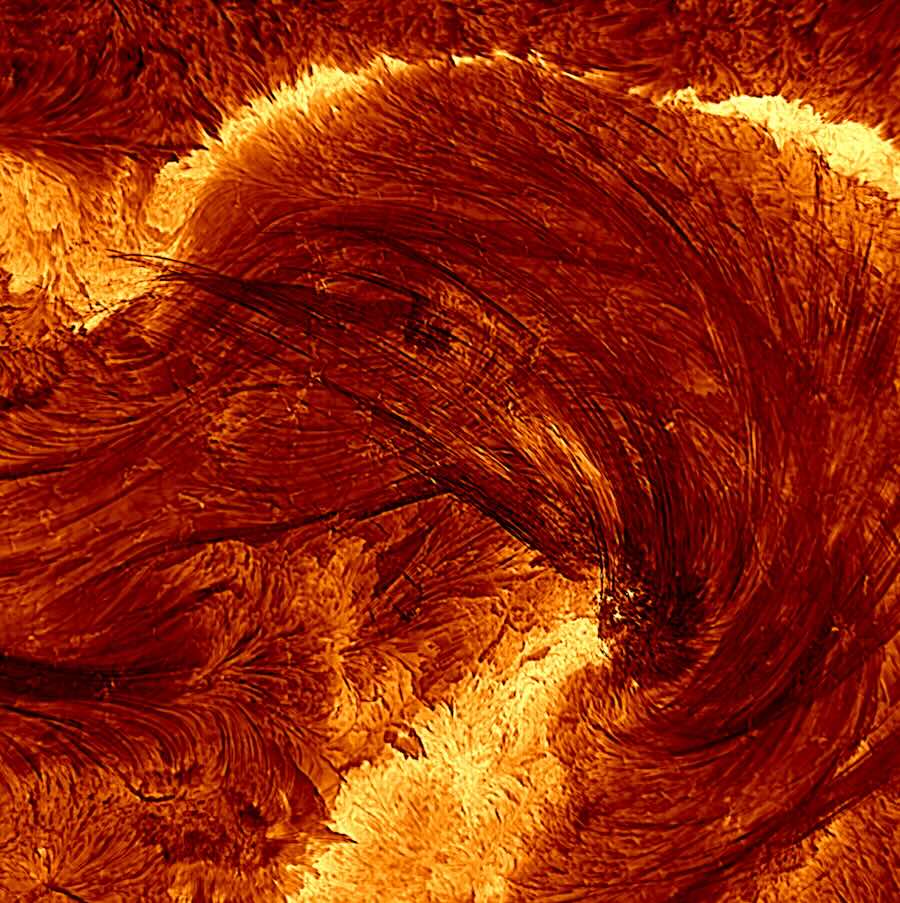
Solar flare image taken by Daniel Inouye Solar Telescope in Hawaii-SWNS
A high-resolution image of the flare taken by Daniel Inouye Solar Telescope in Hawaii – NSF/NSO/AURA via SWNS

The clearest pictures ever taken of a solar flare have been captured by the world’s largest solar telescope in Hawaii.

The record-breaking images from the Daniel K. Inouye Solar Telescope are the highest-resolution ever attained, and they revealed astonishing details within a flare that was four times the diameter of Earth.

The coronal loops seen within the flare are very fine strands averaging about 48.2 kilometers (approximately 30 miles) wide, with some loops as narrow as 21 kilometers (about 13 miles), the smallest coronal loops ever imaged.

The observations could reshape how we understand the Sun’s magnetic architecture and improve space weather forecasting.

“This is the first time the Inouye Solar Telescope has ever observed an X-class flare,” says Cole Tamburri, the study’s lead author who is supported by the Inouye Solar Telescope Ambassador Program while studying at the University of Colorado Boulder.

“These flares are among the most energetic events our star produces, and we were fortunate to catch this one under perfect observing conditions.”

BRILLIANT: James Webb Telescope Debuts New Trick: Blocking Out Stars and Photographing Their Planets

Astronomers captured the dark coronal loop strands with unprecedented clarity during the decay phase of an X1.3-class flare.

Coronal loops are arches of plasma that follow the Sun’s magnetic field lines, often preceding solar flares that trigger sudden releases of energy associated with some of these magnetic field lines twisting and snapping. This burst of energy fuels solar storms that can impact Earth’s critical infrastructure.

“This marks a potential breakthrough in resolving the fundamental scale of solar coronal loops and pushing the limits of flare modeling into an entirely new realm,” according to the U.S. National Science Foundation, which operates the telescope.

The new findings could suggest that these loops might be elementary structures—the fundamental building blocks of flare architecture.

“If that’s the case, we’re not just resolving bundles of loops; we’re resolving individual loops for the first time,” Tamburri adds.

CHECK OUT THESE SPACE PICS:
• Telescopes Capture Black Hole in Unprecedented Color Photo Using Triple-Frequency
X-rays and Webb Telescope Provide Dazzling Views of Space Invisible to the Unaided Eye
Webb Telescope Reveals New Mysteries Hidden in Jupiter’s Own ‘Northern Lights’

“It’s like going from seeing a forest to suddenly seeing every single tree.”

SHINE A LIGHT On This Science Breakthrough By Sharing it on Social Media…

29-yo Becomes First Woman to Cross U.S. on a Skateboard–Honoring Stepfather Whose Ashes Were Carried in a Necklace

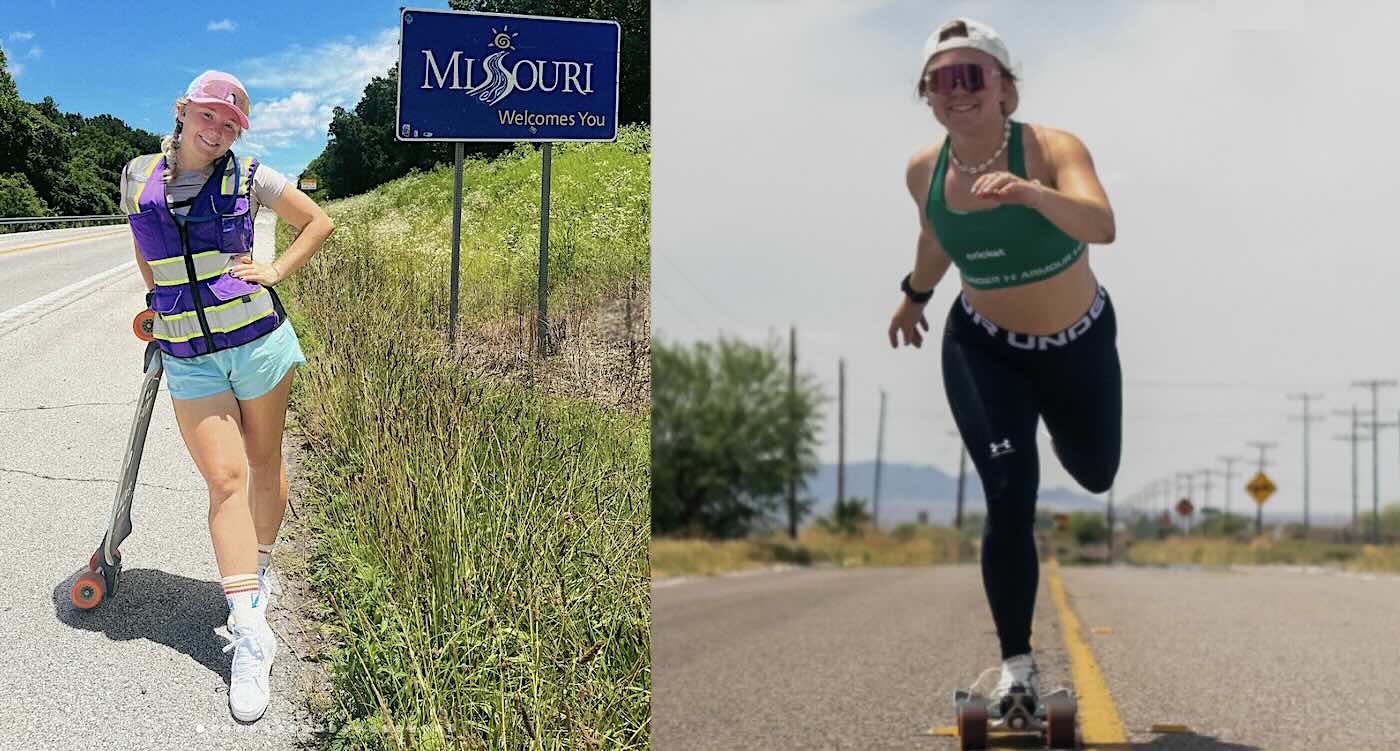
Skateboarder Brooke Johnson on Instagram @brookedoeseverything

The stepfather who always believed in her was with her at the end, as his ashes rested inside her necklace while she crossed the finish line.

Brooke Johnson had just become the first woman to cross the United States on a skateboard—a record-setting 3,226-mile journey that began in Santa Monica, California and ended when she walked into the Atlantic Ocean at Virginia Beach after 119 days on the road.

The 29-year-old lifted her skateboard over her head and couldn’t help but think about Roger, the man who made it all happen—even though he was only there in spirit.

Late in his life, Brooke’s stepfather broke his C5 vertebrae and became a quadriplegic. His health continued to decline until he passed away last year.

As time was running out, stepfather and daughter often talked about Brooke’s dream of cross-country skateboarding, and she planned to push him across the finish line in a wheelchair.

Roger never once doubted that she’d make it.

“I was like, ‘Roger, it’s a really big country.’ And he was like, ‘Well, you can do it,’” Brooke told Kelly McCarthy of GMA.

When Roger passed away, Brooke had more motivation than she would ever need. She set out from Santa Monica about four months ago, with the goal of raising money for Wings for Life, a nonprofit dedicated to spinal cord research.

MORE GIRL POWER: Girlfriends Battle 40ft Waves in Fastest Row Across the Pacific by a Duo–Beating Men’s Record by 2 Days

She persisted through rough weather and mountainous terrain—even rolling through a tornado warning in Oklahoma.

Her team, which included an RV and video crew, ultimately raised $50,000 for Wings for Life—with Roger’s name written on her white shoes so she could see it on every single mile of the 3,226 she completed.

After stepping into the Atlantic Ocean, Brooke celebrated her triumph by sharing a video on social media highlighting her feat. The Instagram post included a voicemail from Roger that she randomly found on one of the toughest days of her journey.

“…Everything’s gonna be fine…We’ll get through it,” Roger said in the voicemail.

His voice and his advice became a beacon that guided Brooke across the country until she completed the goal her late step-father always knew she’d reach.

“It was one of those messages that felt like he left it for the present moment. That was a crazy feeling,” Brooke wrote on Instagram.

MORE SKATER NEWS: Archaeologists to Excavate Glasgow’s First Skatepark with the Help of Former Skateboarders

“If there’s one thing you take away from this trip, it’s that you can truly do anything you put your mind to.”

INSPIRE YOUR FRIENDS By Sharing This on Social Media…

Your Weekly Horoscope – ‘Free Will Astrology’ by Rob Brezsny

Our partner Rob Brezsny, who has a new book out, Astrology Is Real: Revelations from My Life as an Oracle, provides his weekly wisdom to enlighten our thinking and motivate our mood. Rob’s Free Will Astrology, is a syndicated weekly column appearing in over a hundred publications. He is also the author of Pronoia Is the Antidote for Paranoia: How All of Creation Is Conspiring To Shower You with Blessings. (A free preview of the book is available here.)

Here is your weekly horoscope…
FREE WILL ASTROLOGY – Week of September 6, 2025
Copyright by Rob Brezsny, FreeWillAstrology.com
VIRGO (Aug. 23-Sept. 22):
The Gross Domestic Product (GDP) is a standard of economic success by which countries gauge their wealth. But the Buddhist nation of Bhutan has a different accounting system: Gross National Happiness (GNH), which includes preservation of the country’s environment. Its scenic beauty could generate more tourism, but limits have been placed on the number of visitors, ensuring the land won’t be trampled. I would love to see you take a similar GNH inventory, Virgo. Tally how well you have loved and been loved. Acknowledge your victories and awakenings. Celebrate the beauty of your life.
LIBRA (Sept. 23-Oct. 22):
In Japanese haiku, poets may reference the lingering scent of flowers as a metaphor for a trace of something vivid that continues to be evocative after the event has passed. I suspect you understand this quite well right now. You are living in such an after-scent. A situation, encounter, or vision seems to have ended, but its echo is inviting you to remain attentive. Here’s my advice: Keep basking in the reverberations. Let your understandings and feelings continue to evolve. Your assignment is to allow the original experience to complete its transmission. The full blossoming needs more time to unfold.
SCORPIO (Oct. 23-Nov. 21):
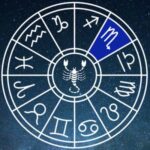
In the Australian desert, there’s a phenomenon called desert varnish. It’s a thin, dark coating of clay, iron, and manganese oxides. It forms over rocks due to microbial activity and prolonged exposure to wind and sun. Over time, these surfaces become canvases for Indigenous artists to create images. I like to think of their work as storytelling etched into endurance. In the coming weeks, Scorpio, consider using this marvel as a metaphor. Be alert for the markings of your own epic myth as they appear on the surfaces of your life. Summon an intention to express the motifs of your heroic story in creative ways. Show the world the wisdom you have gathered during your long, strange wanderings.
SAGITTARIUS (Nov. 22-Dec. 21):
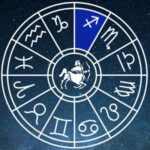
In Indigenous Australian lore, the Dreamtime is a parallel dimension overlapping the material world, always present and accessible through ritual and listening. Virtually all Indigenous cultures throughout history have conceived of and interacted with comparable realms. If you are open to the possibility, you now have an enhanced capacity to draw sustenance from this otherworld. I encourage you to go in quest of help and healing that may only be available there. Pay close attention to your dreams. Ask your meditations to give you long glimpses of the hidden magic.
CAPRICORN (Dec. 22-Jan. 19):
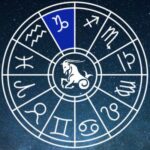
Saturn is your ruling planet and archetype. In the old myth of the god Saturn, he rules time, which is not an enemy but a harvester. He gathers what has ripened. I believe the coming weeks will feature his metaphorical presence, Capricorn. You are primed to benefit from ripening. You are due to collect the fruits of your labors. This process may not happen in loud or dramatic ways. A relationship may deepen. A skill may get fully integrated. A long-running effort may coalesce. I say it’s time to celebrate! Congratulate yourself for having built with patience and worked through the shadows. Fully register the fact that your labor is love in slow motion.
AQUARIUS (Jan. 20-Feb. 18):
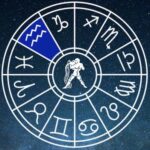
In Greek mythology, the constellation Aquarius was linked to a heroic character named Ganymede. The great god Zeus made this beautiful man the cupbearer to the gods. And what drink did Ganymede serve? Ambrosia, the divine drink of immortality. In accordance with astrological omens, I’m inviting you to enjoy a Ganymede-like phase in the coming weeks. Please feel emboldened to dole out your gorgeous uniqueness and weirdness to all who would benefit from it. Let your singular authenticity pour out freely. Be an overflowing source of joie de vivre and the lust for life.
PISCES (Feb. 19-March 20):
In 1932, trailblazing aviator Amelia Earhart made a nonstop solo flight across the Atlantic, steering through icy winds and mechanical trouble. When she landed, she said she had been “too busy” to be scared. This is an excellent motto for you now, Pisces: “too busy to be scared.” Not because you should ignore your feelings, but because immersion in your good work, mission, and devotion will carry you through any momentary turbulence. You now have the power to throw yourself so completely into your purpose that fear becomes a background hum.
ARIES (March 21-April 19):
Austin Curtis was a Black scientist whose work had spectacularly practical applications. Among his successes: He developed many new uses for peanut byproducts, including rubbing oils for pain relief. His work exploited the untapped potential of materials that others neglected or discarded. I urge you to adopt a similar strategy in the coming weeks, Aries: Be imaginative as you repurpose scraps and leftovers. Convert afterthoughts into useful assets. Breakthroughs could come from compost heaps, forgotten files, or half-forgotten ideas. You have the power to find value where others see junk.
TAURUS (April 20-May 20):
In Polynesian navigation, sailors read the subtle rise and fall of ocean swells to find islands and chart their course. They also observe birds, winds, stars, and cloud formations. The technique is called wayfinding. I invite you to adopt your own version of that strategy, Taurus. Trust waves and weather rather than maps. Authorize your body to sense the future in ways that your brain can’t. Rely more fully on what you see and sense rather than what you think. Are you willing to dwell in the not-knowingness? Maybe go even further: Be excited about dwelling in the not-knowingness. Don’t get fixated on plotting the whole journey. Instead, assume that each day’s signs will bring you the information you need.
GEMINI (May 21-June 20):
The umbrella thorn acacia is an African tree whose roots grow up to 115 feet deep to tap hidden water beneath the desert floor. Above ground, it may look like a scraggly cluster of green, but underground it is a masterpiece of reach and survival. I see you as having resemblances to this tree these days, Gemini. Others may only see your surface gestures and your visible productivity. But you know how deep your roots run and how far you are reaching to nourish yourself. Don’t underestimate the power of your attunement to your core. Draw all you need from that primal reservoir.
CANCER (June 21-July 22):
To make a tabla drum sing, the artisan adds a black patch of iron filings and starch at the center of the drumhead. Called a syahi, it creates complex overtones and allows the musician to summon both pitch and rhythm from the same surface. Let’s imagine, Cancerian, that you will be like that drum in the coming weeks. A spot that superficially looks out of place may actually be what gives your life its music. Your unique resonance will come not in spite of your idiosyncratic pressure points, but because of them. So don’t aim for sterile perfection. Embrace the irregularity that sings.
LEO (July 23-Aug. 22):
There’s a Zen motto: “Before enlightenment, chop wood, carry water. After enlightenment, chop wood, carry water.” I hope you apply that wisdom in the coming weeks, Leo. Your breakthrough moments of insight have come or will come soon. But your next move should not consist of being self-satisfied or inert. Instead, I hope you seek integration. Translate your innovations into your daily rhythm. Turn the happy accidents into enduring improvements. The progress that comes next won’t be as flashy or visible, but it’ll be just as crucial.

WANT MORE? Listen to Rob’s EXPANDED AUDIO HOROSCOPES, 4-5 minute meditations on the current state of your destiny — or subscribe to his unique daily text message service at: RealAstrology.com

(Zodiac images by Numerologysign.com, CC license)

SHARE The Wisdom With Friends Who Are Stars in Your Life on Social Media…

“Trees love to toss and sway; they make such happy noises.” – Emily Carr

By Rob Mulally (cropped)

Quote of the Day: “Trees love to toss and sway; they make such happy noises.” – Emily Carr

Photo by: Rob Mulally (cropped)

With a new inspirational quote every day, atop the perfect photo—collected and archived on our Quote of the Day page—why not bookmark GNN.org for a daily uplift?

By Rob Mulally (cropped)

Good News in History, September 6

In 1993, by Rdikeman, CC license

30 years ago today, Cal Ripken Jr. broke Lou Gehrig’s baseball record when he played in his 2,131st consecutive game. Once considered a near-impossible feat, “the streak,” which continued for 2,632 games, earned Cal the nickname, Iron Man. The televised game, between the Orioles and the California Angels, still ranks as one of the most watched baseball events, with Cal’s kids throwing out the first pitch. In the fifth inning, as it was tallied a full game, the crowds in the stands, the opposing players, and the four umpires gave Ripken a standing ovation lasting more than 22 minutes, one of the longest ovations for any athlete. WATCH a series of interviews throughout this long streak… (1995)

Deep Breathing Can Create Psychedelic Bliss in Your Brain, Study Shows

- credit, Andrej Lisakov via Unsplash
– credit, Andrej Lisakov via Unsplash

A study recently found that deep-breathing exercises induce similar patterns of blood flow to the brain seen in patients using psychedelic substances like psilocybin.

This altered state of consciousness matched one first described by Freud, and was characterized by blissful feelings, positively experienced depersonalization, and the sensation of unity.

Breathing exercises like high-ventilation breathing or holotropic breathing have been growing in popularity as forms of neuromodulation that can combat overactive feelings of fear, stress, anxiety, and helplessness.

Exactly why these exercises, known collectively as breathwork, have such a profound, almost psychedelic effect in the brain however, is not known.

To that end, Amy Amla Kartar from Brighton and Sussex Medical School in the UK, designed a trial to study blood flows in and out of the brain during 20 to 30 minute breathwork sessions accompanied by music.

“Conducting this research was a fantastic experience,” Kartar told PLOS, where the paper on her experiment was published.

“It was thrilling to explore such a novel area—while many people anecdotally recognize the health benefits of breathwork, this style of fast-paced breathing has received very little scientific attention. We are very grateful to our participants for making this work possible.”

Kartar and her team, which included Dr. Alessandro Colossanti, the director of the Colossanti Laboratory for Clinical Neuroscience, where the experiment took place, analyzed self-reported data from 15 individuals who participated online, 8 individuals who participated in the lab, and 19 individuals who underwent magnetic resonance imaging.

Relaxing music was played at baseline, while progressively evocative music was played during breathwork sessions.

The results showed that the intensity of blissful, psychedelic experiences brought on by breathwork were proportional to cardiovascular sympathetic activation, as indicated by a decrease in heart rate variability.

In addition, these states were associated with a “profound” decrease in blood flow to the left operculum and posterior insula: brain regions implicated in representing the internal state of the body, including breathing. Additionally, large reductions in blood flow to the brain were observed, but there was a progressive increase in blood flow to the right amygdala and anterior hippocampus, which are brain regions involved in the processing of emotional memories.

SIMILAR STORIES YOU MAY LIKE: These Schools Are Offering Yoga and Mindfulness Class as an Alternative to After-School Detention

These blood flow changes correlate with those seen in the brains of patients undergoing psychedelic experiences, demonstrating that these alterations may underlie the positive effects of this breathwork.

During all experimental sessions, participants reported a reduction in fear and negative emotions, with no adverse reactions. In general, the reports matched with something the father of psychoanalysis, Sigmund Freud, described as “Oceanic Boundlessness,” associated with a blissful feeling of oneness, detachment, and spirituality.

OTHER METHODS OF MINDFULNESS: Mindfulness Program Shown to Be as Effective as Antidepressant Drugs for Treating Anxiety Disorders

Music alone is not known to produce such profound states, and so the authors suggest that the findings be replicated with larger study groups with more focus into the musical content.

“Breathwork is a powerful yet natural tool for neuromodulation, working through the regulation of metabolism across the body and brain,” said Dr. Colossanti. “It holds tremendous promise as a transformative therapeutic intervention for conditions that are often both distressing and disabling.”

Not sure where to get started with breathwork? Popular health influencer Gray Brecka is something of a breathwork missionary, and this 9-minute excerpt from his podcast may be as good a place to start.

SHARE This Fascinating Therapeutic Insight With Your Friends On Social Media… 

Beating Cancer Required Thousands for Parking: She Now Fundraises for Other Patients’ Parking

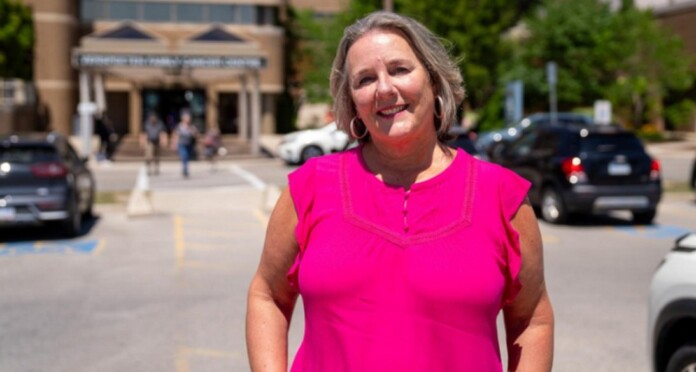
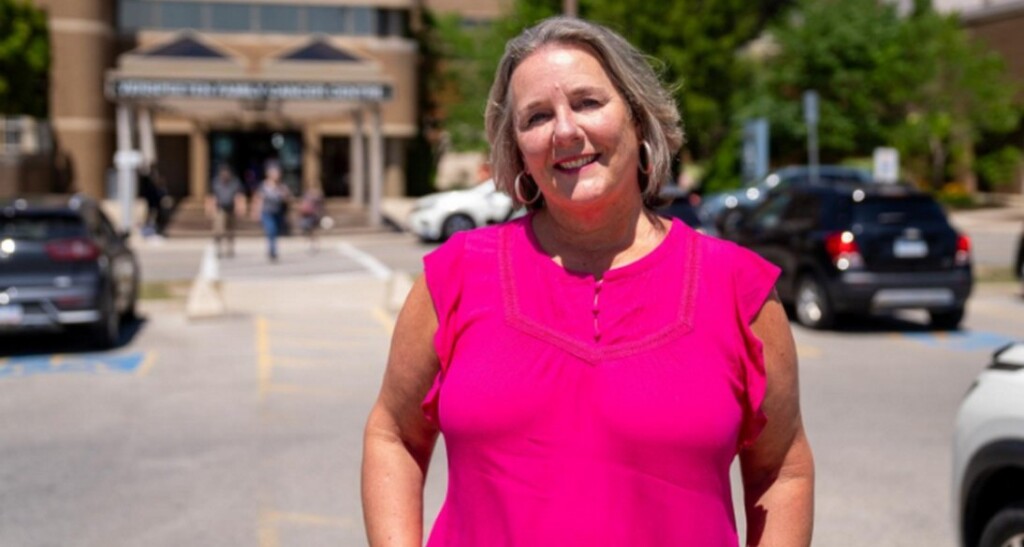
Krystyna Locke at 63 and cancer free - credit, London Health Sciences Center
Krystyna Locke at 63 and cancer free – credit, London Health Sciences Center

Given all the expenses and anxieties that come with battling cancer, one might think that parking fees really shouldn’t be among them.

Yet as wild as that may sound, some hospitals and cancer centers in Canada either charge for parking—as much as CAD$12 a day—or don’t have large enough on-site parking, forcing patients to park in private lots or on the street where the costs can be even higher.

A 6-month battle against cancer means those parking fees can breach the thousands column, but one cancer survivor is fundraising to pay for cancer patients’ parking, ensuring that in at least one sense they have no burden to bare.

That’s the story of Krystyna Locke, who battled lymphoma for 20 years, and is now giving back in the weeks following her birthday to support those walking a similar path.

She’s raising funds to cover parking costs for patients and families visiting the Verspeeten Family Cancer Center (VFCC) at London Health Sciences Center in Ontario, where she received treatment for so long.

“The need is there,” Krystyna said in a statement. “Some people have to come in every day for treatment, and parking can feel like one more thing to deal with. I wanted to spark some joy in their day.”

Diagnosed with non-Hodgkin lymphoma in 2004, Locke visited the cancer clinic every 6 months for over 2 decades. In 2023, her illness transformed into a more aggressive form, but today, she is cancer-free and focused on giving back.

“When I was done my treatments, I just felt like I needed to do something more,” she told CBC News, adding that patients walking in for their first cancer treatment feel like the rug has been pulled out from under them and aren’t even sure how long they have to live: imagine paying—or even remembering to pay— the twenty bucks for parking under those circumstances.

Now, during the two weeks either side of her 63rd birthday, Locke waits at a booth with parking vouchers and a sign that reads “Happy Birthday to me, you’re parking is free.”

“Today, I received hugs. I received kisses on the cheek. I shared tears with people. I shared laughter. There was joking. It just completely lightens the mood,” Locke said.

“We are deeply grateful to Krystyna for her generosity and compassion toward patients at the Verspeeten Family Cancer Center,” said Carey Landry, director of the South West Regional Cancer Program. “Facing a cancer diagnosis is an emotional journey, and helping cover parking costs removes one worry for patients and their families. Krystyna’s kindness is a shining example of the difference one person can make in our community.”

Krystyna has a fund set up through the LHSF where she has raised over $5,000 to date. She plans to return each summer in honor of her birthday to continue giving back.

YOU WILL CERTAINLY LIKE: Chinese Couple Created ‘Cancer Kitchen’ in Their Alley to Let Family Members Cook for Loved Ones in Nearby Hospital

“This is also a part of my own healing process,” she said in the statement. “I want to show my children and grandkids how meaningful it can be to give to others.”

“Her gift lifts a weight off patients and families during one of the most difficult times of their lives. We’re proud to support her mission,” said John H. MacFarlane, president and CEO of LHSF.

MORE STORIES LIKE THIS: Woman Spontaneously Offers Homeless Man a Job on Her Farm Proving the Power of Kindness

When questioned by CBC reporters, an LHSF spokesperson acknowledged the cost of the parking and the burden it imposes, but said that it goes to pay for hospital operations—per a law passed in 2016 in the province of Ontario that requires them to do so. The law also offers patients, their family members and visitors 5-day, 10-day, and 30-day passes for half the normal daily rate.

The real challenge, the spokesperson said, is when there’s either no parking or not enough parking, and patients have to go off-campus to find some. As long as Locke has a say, though, they won’t have to.

SHARE This Woman’s Harrowing Journey To Health And Her Quest To Give Back…

Small Rabbit with a Black Tail Not Seen in 120 Years Found Hopping Around Mexican Mountains

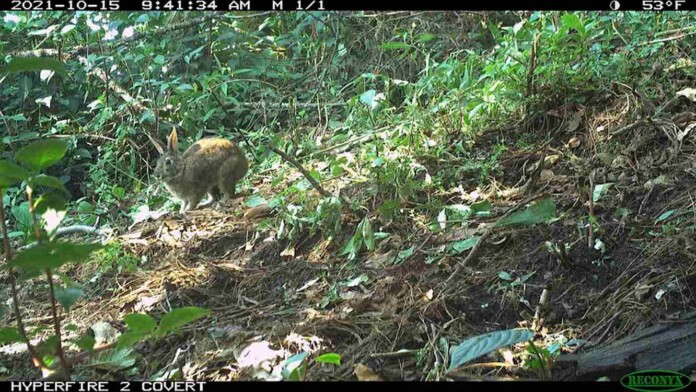
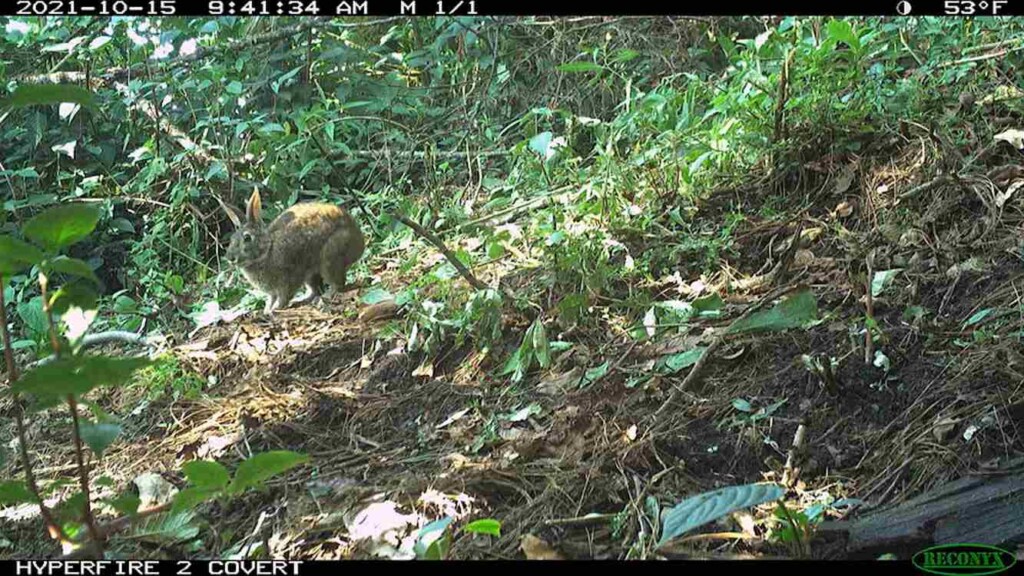
The Omiltemi cottontail rabbit caught in a camera trap - credit, Re:Wild
The Omiltemi cottontail rabbit caught in a camera trap – credit, Re:Wild

A species of cottontail rabbit endemic to Mexico has been seen again for the first time in over 100 years following a committed search by biologists.

For more than 4 years, GNN has paid close attention to a special conservation mission called the “25 Most Wanted” list—a name that invokes bounty hunters and bandits, but which actually focuses on species lost to science.

Over those 4 years, the organization behind the list, called Re:Wild, has located 13 of those species, which range from funghi and insects to larger animals like deer.

This most recent hit was the Omiltemi cottontail rabbit—unmistakable for its small and black puffball of a tail, so counterintuitive to the reference to “cotton” in its name. This enigmatic rabbit was last seen by scientists in 1904 and was feared extinct, but after a five-year search in the Sierra Madre del Sur mountain range of Mexico, it’s clear the little hopper is undoubtedly still among us.

“Just knowing that it had been 100 years, and no other scientist had seen a live [Omiltemi] rabbit is incredible,” said José Alberto Almazán-Catalán, a biologist who led the search. “It’s totally different from the regular cottontail, and I was completely amazed and very happy to have had that opportunity to see one.”

As with any decent search effort, Almazán began at the LKP, the last known position. Back in 1904 that was a very rural area, but it’s now a forest on the edge of Chilpancingo, the capital city of the state of Guerrero with a population of over 200,000 people.

Perhaps unsurprisingly, no trace of the Omiltemi rabbit was found, and so in 2020, the hunters switched their focus to conifer forests at higher elevations.

Once there, the hunters met another kind of hunter—subsistence hunters—who had in fact seen the rabbit very recently on their dinner plates. This is the sort of local knowledge that has been key to finding several of the other 12 lost species discovered by the initiative, not necessarily because they’re all hunted, but because small rural community members in places like Indonesia don’t publish in scientific papers, and may see animals daily that haven’t been seen by scientists in decades.

Fortunately the Omiltemi breeds, well, like a rabbit, and despite not being seen by scientists since 1904 and being an extremely range-restricted critter, the population has been able to replenish itself from late winter to late spring such that locals occasionally caught them for food.

It wasn’t long after the encounter with the hunters that live individuals were recorded—their little black tails giving them away immediately.

“Eighty percent of the objectives of this project have been achieved,” said Almázan. “However, we still need to learn more about the natural history of this species.”

During the interview with the hunters, virtually all locals agreed that if the rabbit species was at risk of disappearing from subsistence hunting, they would alter their hunting patterns according to scientific recommendations to ensure that didn’t happen.

According to a statement from Re:Wild, the Search for Lost Species has rediscovered 13 of its “Most Wanted” species: Jackson’s climbing salamander in Guatemala, Wallace’s giant bee in Indonesia, velvet pitcher plant in Indonesia, silver-backed chevrotain in Vietnam, Somali sengi in Djibouti, Voeltzkow’s chameleon in Madagascar, Sierra Leone Crab in Sierra Leone, Pernambuco holly in Brazil, De Winton’s golden mole in South Africa, Attenborough’s long-beaked echidna in Indonesia, Fagilde’s trapdoor spider in Portugal, big puma fungus in Chile, and the Omiltemi cottontail rabbit in Mexico.

SHARE The News Of This Great Rediscovery Down In Mexico With Your Friends…

Rescuers Form a Human Wall to Dam a River with Their Bodies to Save a Boy Trapped by the Current

Xiao Feng (right) finally pulling the trapped boy free - credit, composite photo retrieved from Douyin
Xiao Feng (right) finally pulling the trapped boy free – credit, composite photo retrieved from Douyin

From southwest China comes the story of a group of strangers who stopped at nothing to rescue a boy from a raging river.

While unable to literally move heaven and earth, their determination was such that they altered the flow of the river—with nothing less than their own bodies.

The story began in Guizhou province near a scenic riverway frequented by visiting nature lovers. A boy was playing in a creek where the water flow was quite strong and lost his footing.

Less than a foot of fast-flowing water is still enough to move a parked car, and the boy was at the mercy of the elements as he tumbled down the waterway before being stuck between two large stones with only his head sticking up above the torrent.

Good Samaritans, mostly tourists, rushed to the scene and plotted a rescue maneuver. They first tried throwing a rope down to the boy but it was not enough.

Shortly after, the largest and strongest of them waded out into the stream and literally created a human wall to break the flow of the river long enough that someone could help get the boy out safely.

One rescuer, Xiao Feng, scaled down one rock, and needed three attempts to dislodge the boy, the water making everything slippery and a solid grip unachievable. All the while the weather was turning, and the rescuers felt they needed to succeed immediately or rains might cause the river to rise even further.

Xiao, his daughter’s voice in his ear from where she watched on the bank above, eventually freed the boy who immediately cascaded down into the arms of another rescuer in the pool below.

MORE RESCUE STORIES:

Going viral on Mainland social media, commenters remarked on how brave and selfless the rescuers were.

“The boy is so lucky to have so many uncles coming to his rescue,” said another, as Chinese etiquette often has the term aunt and uncle used as a way to formally address older acquaintances.

SHARE These Brave Rescuers Forming A Human Wall With Your Friends…

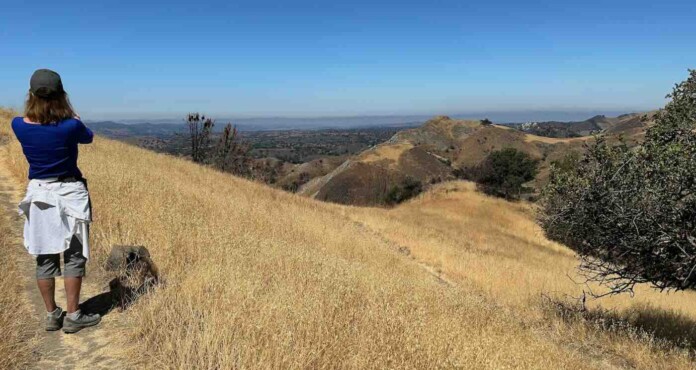
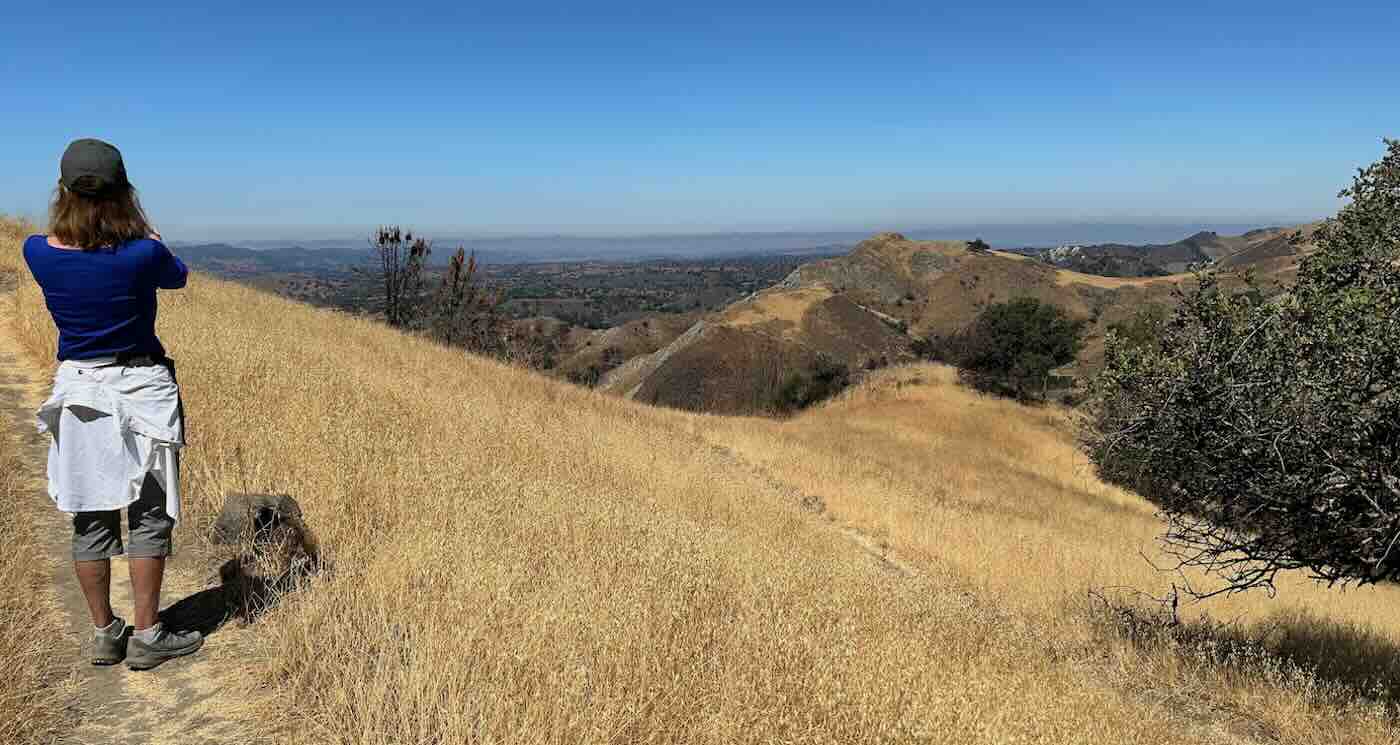
“Any landscape is a condition of the spirit.” – Henri Frederic Amiel

Lovers Loop hike in Los Olivos, California © GWC

Quote of the Day: “Any landscape is a condition of the spirit.” – Henri Frederic Amiel

Photo: Lovers Loop hike in San Ynez, California, © GWC

With a new inspirational quote every day, atop the perfect photo—collected and archived on our Quote of the Day page—why not bookmark GNN.org for a daily uplift?

Good News in History, September 5

The First Continental Congress mural in the Capitol building

251 years ago today, the First Continental Congress was organized in Carpenter’s Hall, Philadelphia, after the British Navy implemented a blockade of Boston Harbor and the Parliament of Great Britain passed the punitive Intolerable Acts in response to the Boston Tea Party. The result of the Congress was the drawing up of the Continental Association, a proposal for an embargo on British trade. They also drew up a Petition to the King pleading for redress of their grievances and repeal of the Intolerable Acts. READ more about this milestone marker in our history… (1774)

Boy Follows Track in His Heart to Dream Job: ‘I’ve Always Loved trains–Now I’m Qualified to Drive One’

Courtesy: Logan Smallwood

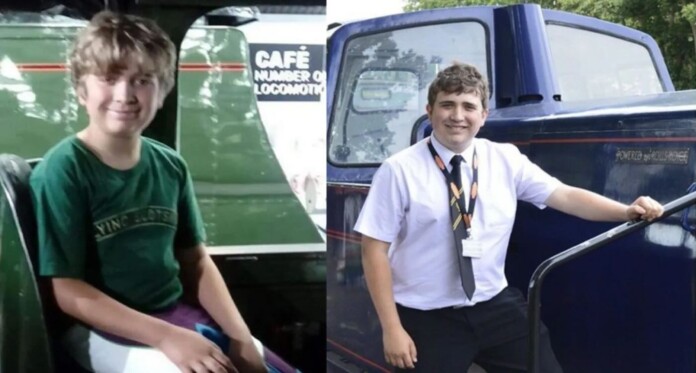
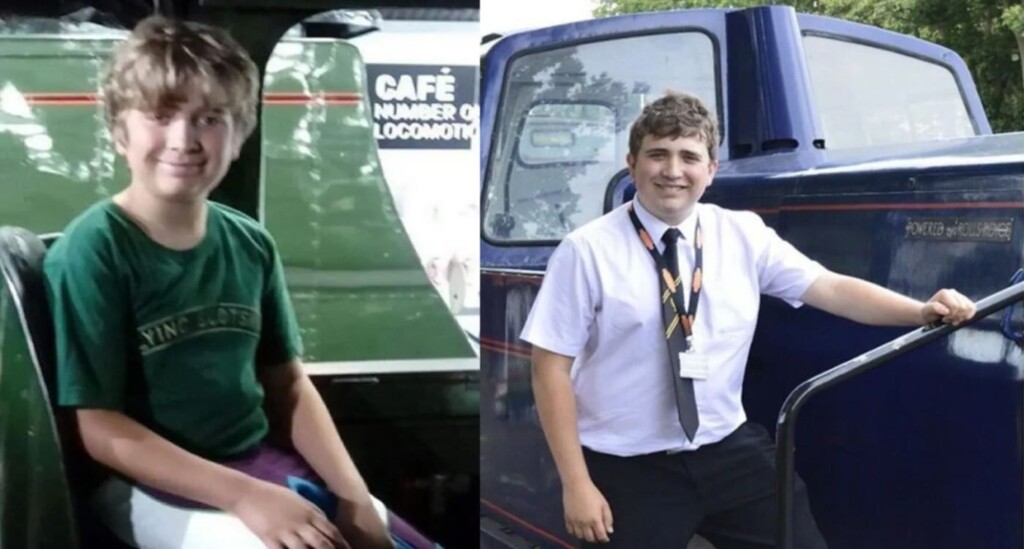
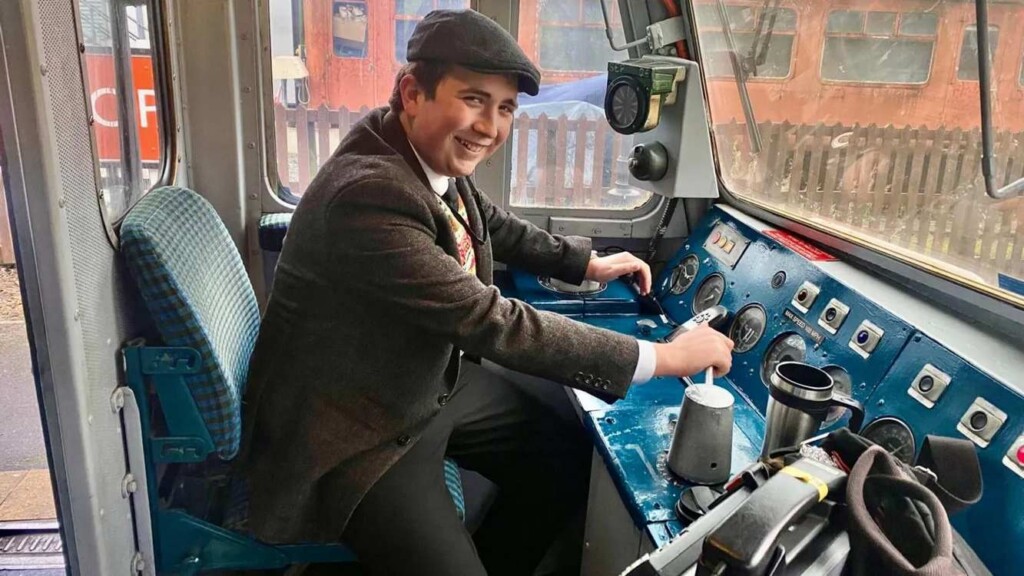
This is Logan. He loves trains, always has. And now, he’s one of the youngest licensed train drivers in the whole of the UK.

For some children, the question “what do you want to be when you grow up” is mulled over in a fit of anxious uncertainty. For others, it’s as easy as responding with their name and age. So it always was for Logan Smallwood.

Reported recently by the BBC, Smallwood’s journey from boyhood model train collector to heritage railway line driver is as straight as the standard-gauge cargo line through the Mojave.

“I’ve always loved trains… I’ve always said when I grow up, I want to be a train driver,” Smallwood told the BBC. “My great-grandad worked in the mines and he was always fascinated by trains. He gave me a coal model of a Silver Link [a kind of train] and I think that might have been what set me off.”

Born in Lanchester, County Durham in England’s far northeast, it’s the most typical thing to say that one’s grandfather worked in “the mines.” It’s somewhat quaint, somewhat depressing—reminiscent of a time when working conditions for the middle and lower classes were dirty and dangerous.

Courtesy: Logan Smallwood

But Smallwood wears that quaintness and heritage well—as well as the tweed knit jacket he sports behind the controls of a Sentinel shunter, a 17-mph locomotive typically used to position cargo cars in train yards, but which also pulls pleasure carriages along the 18-mile Weardale Railway Line, a heritage train service that passes through an Area of Outstanding Natural Beauty, the near equivalent to a US National Monument.

Logan began working at the Weardale line as a volunteer last April, having graduated from Newcastle College Rail Academy with honors and with a diploma in Engineering Technologies. The BBC spoke to the young man after he completed his first solo shift behind the wheel.

“Weardale runs trains that I adore and it has got little steam locomotives for the bigger diesels, which is one of the attractions for me, I love working there,” he said.

BRITISH RAIL SYSTEM: Hitachi Rail Develops Battery Unit Set to Decarbonize Rail Travel on Retrofitted Trains

There’s a shortage of train drivers in the UK, and the transportation secretary recently lowered the required age from 20 to 18, legislation that Smallwood jumped at the opportunity to take advantage of.

His mother cried tears of pride when her son received the driver’s certificate on the Sentinel shunter, and believes he’s close to fulfilling his childhood dreams.

MORE IMPASSIONED YOUTH: Young Craftsman Resurrects ‘Extinct’ Musical Instrument by Consulting Ancient Literature (LISTEN)

When not driving trains, Smallwood, who’s always maintained a mountainous collection of model train sets, spends his free time at the Blackhill model club where he is one of the few members who designs the large wooden and aluminum railway layouts.

SHOW Some Love To The BBC And Logan And Share His Passion On Social Media…
Veterans, Military Spouses Cultivate a New Mission on the Farm: ‘This is the place that relaxes me’

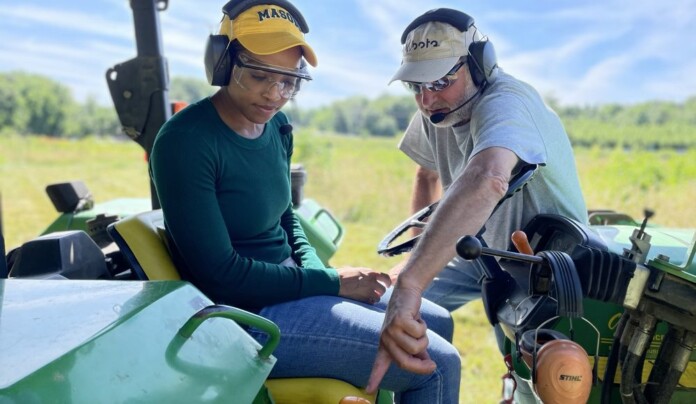
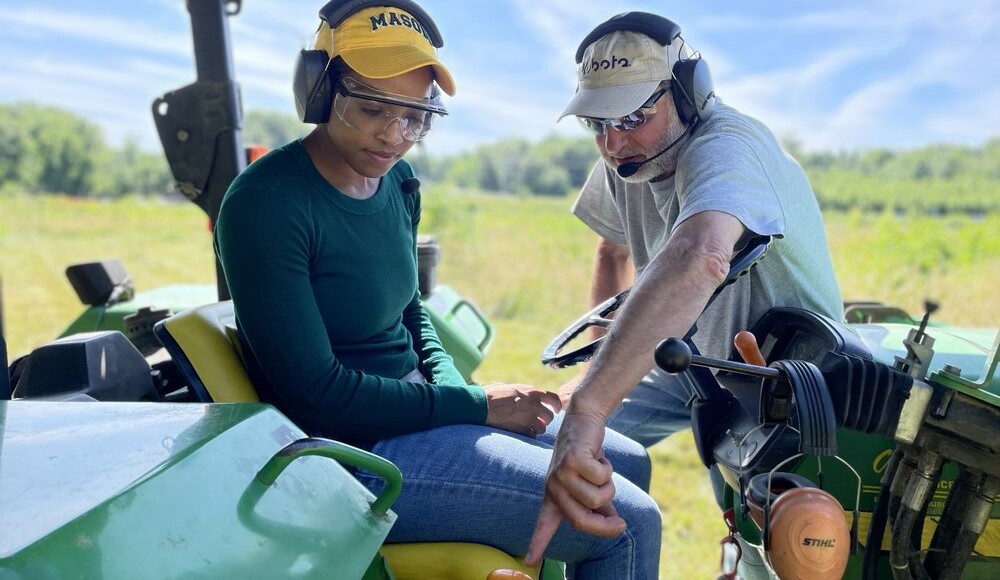
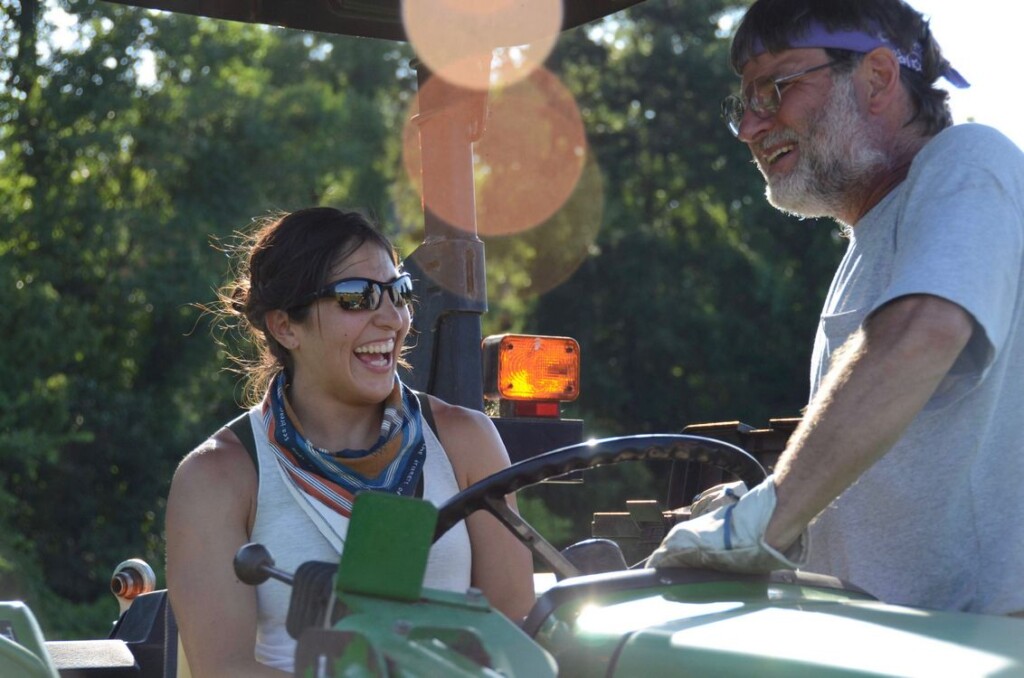
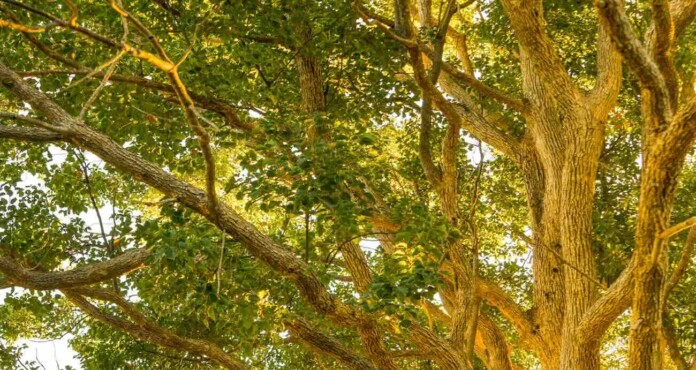
Tractor training at The Veteran Farmer's Program - credit, supplied by Pamela Hess
Tractor training at The Veteran Farmer’s Program – credit, supplied by Pamela Hess,

A Virginia farm is welcoming newly-retired military to come learn how to farm as a way of providing a fulfilling path back into civilian life.

The Arcadia Center for Sustainable Food figured that veterans were perfectly cut out for farming, as the average vet is 45% more likely to start their own business, and aside from being physically fit, are used to enduring discomfort, waking up early, and being both self-reliant and a team player.

Looking to connect their need to perform a service for their communities with the needs of thousands of retiring military who reenter society every year, Arcadia created the Veteran Farmers Training Program.

Just a few miles from the Pentagon in Arlington, Arcadia trains veterans in the fundamentals of agriculture both in the field and in the class room. The veteran-owned center is partly veteran led as well.

Ephesia Sutton was in the US Army for 20 years, and now trains veterans like herself how to grow nutritious produce for their families and communities.

“I left the military with PTSD, depression, and anxiety, and I would rather be anywhere else when dealing with those symptoms. This is the place that relaxes me,” said Sutton told Stars and Stripes from the fields of collard greens, cucumbers, bitter melon, peppers, spinach, kale, and tomatoes.

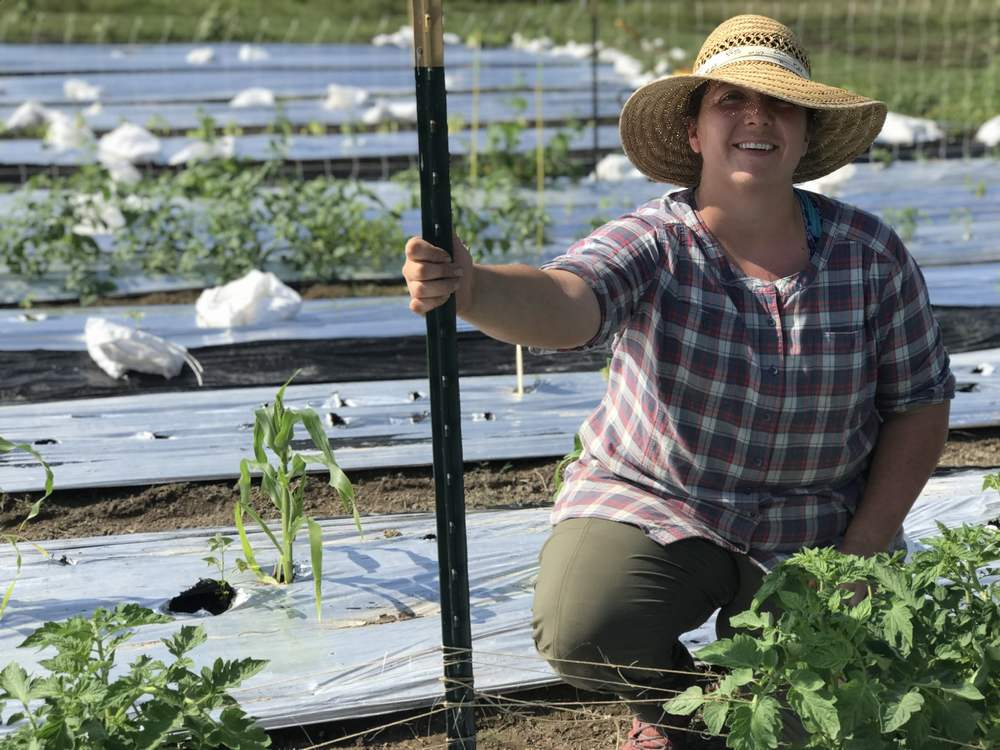
A Veteran Farmers Training Program participant – credit, supplied by Pamela Hess

“Knowing the work that I’m doing every time I put my hands in the soil is going to provide for a family, for somebody in this community, that just gives me the push to be out here every day,” Sutton said.

As military tend see the world and actions within it through the lens of “the mission,” Arcadia is attempting to tackle two massive nationwide problems beyond anything to do with the food supply.

– credit, supplied by Pamela Hess

The average American farmer is 56 years old, and a dearth of 700,000 such agriculturalists is predicted to manifest over the next two decades. Meanwhile, the generation that enlisted to fight in the Global War on Terror is now retiring from the services in larger and larger numbers.

Many of these veterans are returning like Sutton—with PTSD and other emotional trauma from witnessing the tragedy and failures in the occupations of Iraq and Afghanistan.

OTHER VETERAN-LED BUSINESSES: Dream of a Carousel Helped A Marine Survive Vietnam, Then He Built One to Survive PTSD, Delighting Millions

New missions, new opportunities to serve are vital, as Sutton has learned.

The Solution according to Arcadia is to pay veterans to learn how to farm. Help them find affordable land. Provide easy market access for the food they produce to satisfy the robust and growing public demand for organic or local produce, and lastly reinvigorate the farming sector with skilled new growers, eager to begin their next phase of life.

MORE STORIES LIKE THIS: ‘A Blessing’ For Wounded Soldiers Who Help Scientists Save Coral Reefs

Stars and Stripes also spoke with military spouses, who often have to put their own lives on hold whilst their partners deploy. These too are finding new purpose and fulfillment among the rows of fruits and vegetables on Arcadia’s acres.

SHARE This Veteran-Owned, Veteran-Led, For-Veteran Endeavor With Your Friends…

Man Reunited with Class Ring 56 Years After Losing it in the Long Island Sound: ‘It’s a Miracle’

Photo via Alfred DiStefano

A man recently received word through social media that a Long Islander and his metal detector found his missing class ring, lost on a day at the beach 56 years ago.

Then just Alfred DiStefano remembers vaguely standing on a dock or a pier on Cedar Beach, Long Island Sound, when the ring slipped off and fell into the water.

Receiving it through the mail, the now Dr. Alfred DiStefano was able to look at the highly personalized white gold band and ruby for the first time since gasoline cost $0.35 a gallon.

The story begins when hobbyist David Orlowski was on the beach at low tide with his metal detector. Routinely scanning the beaches of Long Island for years, he’s found many rings in his time.

“They go in the water, shrinks your hands, and off your ring goes,” Orlowski told ABC 7.

Digging down more than a foot at the prompt of a loud ‘ping’ from his detector, Orlowski found the ring which not only bore the name of the school, Fordham University, but also an inscription of a name on the inside of the band.

Orlowski did a few minutes of searching given that he had so many clues as to the ring’s owner, and managed to find the Fordham class of 1969 reunion Facebook group. There, moderator Karen Manning was so impressed with Orlowski’s honesty, she was determined to find the person to whom the jewel belonged.

“He could have just sold it, and made some money on it, but, it restored my faith in humanity,” Manning said.

MORE OF THE RINGS: 

For his part, and true to his honest nature that Manning detected, Orlowski admitted it was his wife that urged him to seek out the ring’s owner.

“She says, ‘well, if you lost your ring, wouldn’t you want it returned?’ And so, right. The question, answered,” Orlowski told 7’s Sonia Rincon.

Dr. DiStefano considers it a miracle, and sent a lovely thank-you present to Orlowski via the return address.

WATCH the story below…


SHARE This Story Of A Lost Ring And Restore Others’ Faith In Humanity…

Young Woman Accidentally Booked an Airbnb that Turned Out to Be Her Father’s Childhood Home in Italy

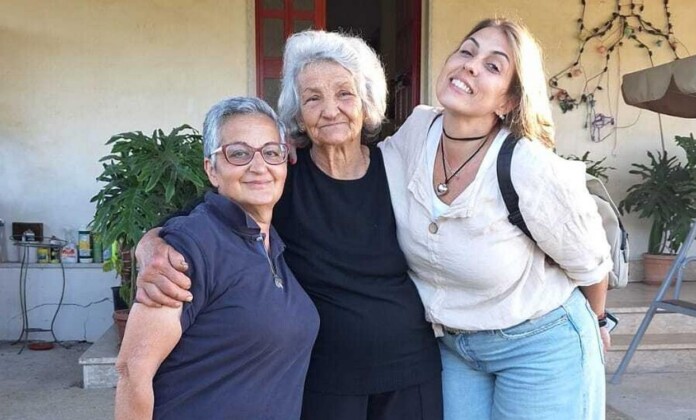
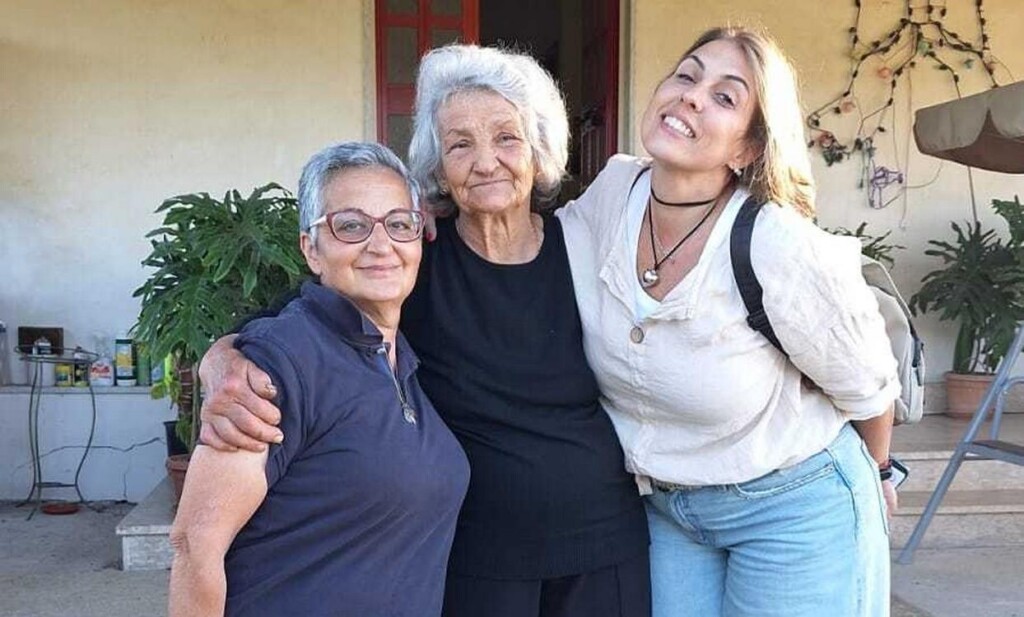
(From left to right) Enza, Margherita, and Flor - credit, handout
(From left to right) Enza, Margherita, and Flor – credit, handout

From Italy comes a remarkable coincidence generations in the making—told with a little help from Airbnb.

Between 1850 and 1950, around 3.5 million Italians immigrated to Argentina, with the 19th century seeing mainly Northerners arriving, and the 20th century seeing mostly Southerners.

It contains the second-largest Italian diaspora on Earth by number, and the largest by concentration—with some states in Argentina today containing a population that’s 30% or more of Italian heritage, and it’s reflected in the culture and surnames seen today.

From that historic berth, Flor, a young Argentine traveler, made a reverse course this summer and arrived in Castel San Lorenzo, in the Italian region of Campania.

Her aim was to explore the place her father grew up—to see the countryside he left behind when he traveled to the New World.

Booking an Airbnb in the medieval village’s historic center, Flor must have arrived with great anticipation, but nothing could have prepared her for the surprise to come.

LOST FAMILY PROPERTY: Young Woman Returns Family Photos Lost in Hurricane Helene Using Social Media to Find Owners

At her booking, she met the owners Margherita and Enza, a mother-daughter pair of “Superhosts” with an almost perfect 5 out of 5 in every category for their property.

Flor arrived with some early family photos, and found to her astonishment that she had booked the very home her father was born in; where he grew up, played, ate, and eventually left. In fact, the hosts even confirmed that their family had purchased the house from Flor’s grandparents.

LOST FAMILY MEMBERS: Woman Looking for Birth Parents Learns That Dad Was a ‘Friend’ on Facebook

Margherita and Enza helped Flor access local records and piece together her family history as best she could before bidding farewell to her history and her hosts to continue what will certainly become an unforgettable trip.

SHARE This Story Of Wild Coincidence With Your Friends On Social Media… 

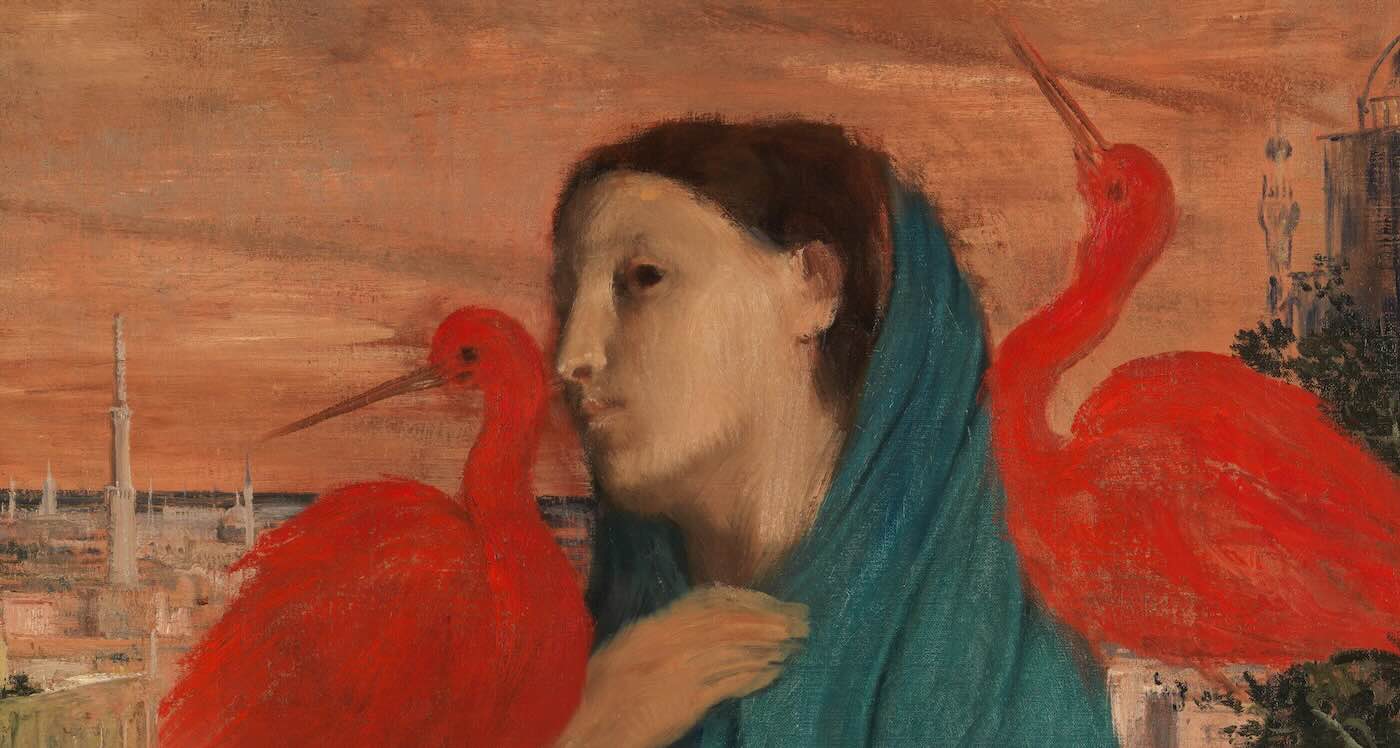
“Art is not what you see, but what you make others see.” – Edgar Degas

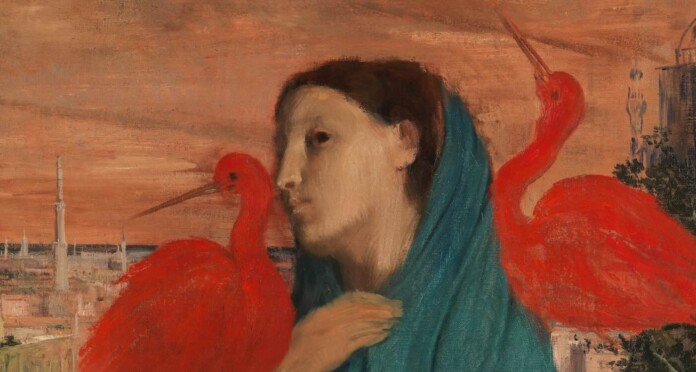
Young Woman with Ibis by Edgar Degas (cropped) – MET Museum http://www.metmuseum.org/art/collection/search/438156

Quote of the Day: “Art is not what you see, but what you make others see.” – Edgar Degas

Photo: 1862 painting by Edgar Degas (cropped) Young Woman with Ibis

With a new inspirational quote every day, atop the perfect photo—collected and archived on our Quote of the Day page—why not bookmark GNN.org for a daily uplift?

Young Woman with Ibis by Edgar Degas (cropped) – MET Museum 

Good News in History, September 4

Shinya Yamanaka in 2010

Happy 63rd birthday to the Japanese Nobel laureate, Sinya Yamanaka, whose pioneering work in the science of stem cells led him to identify the “Yamanaka Factors”— 4 different genetic transcription factors that he used to turn any adult human cell into a stem cell. He shared the prize jointly with Sir John Gordon of England, and his discovery was described as world-changing. READ a bit more about his work… (1962)

She Used Nature to Transform Dry Stream Beds into Lush Oasis During USGS Study

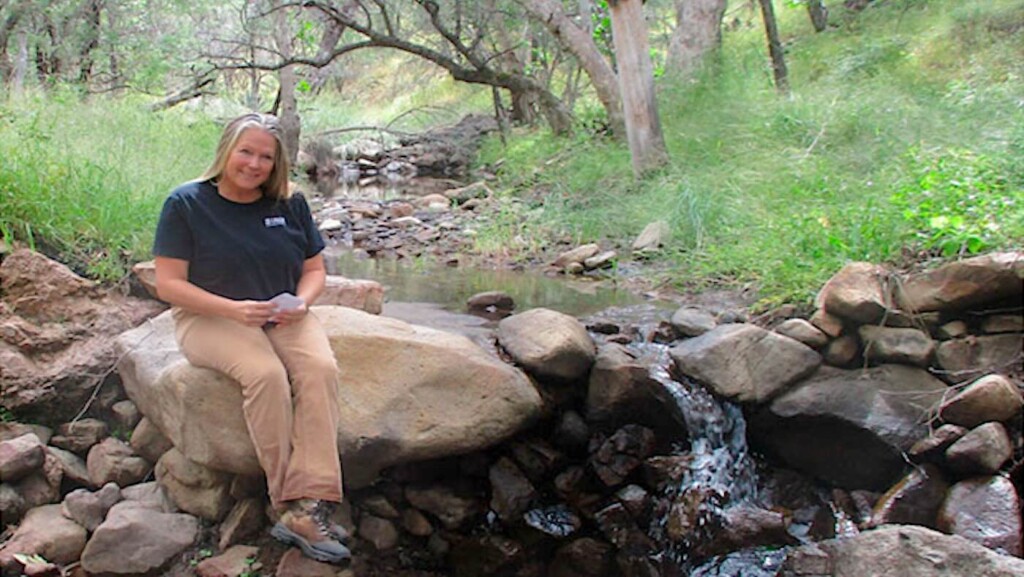
Laura Norman with check dam that transformed dry stream bed in Arizona – Gerry Norman / USGS

In America’s arid southwest, a scientist who’s studied dryland water systems for over 20 years has found the key to transforming barren desert into verdant oases.

That key is so basic, it hardly even merits being called technology, as it’s more or less nature at its natural best.

For the sake of scientists’ obsession with acronyms, it’s called ‘NIDS,’ for Natural Infrastructure in Dryland Streams. In other words, any assemblage of stones, log jams, or other waterway impediments that cause the flow of a stream or creek to slow.

Once upon a time, a mountaintop crumbled away a bit, and a flood of stones raced down the hillside along the paths of least resistance. These stones lost momentum and lodged themselves in narrow sections of those paths, which became streams and tributaries.

Beavers, going about their own business, replicated the stones’ effect in the mountains with trees at lower elevations, once again interrupting waterways.

As man gradually altered these natural systems to furnish water for their livestock and agriculture, their ability to sustain the land with water in such hot and dry environments diminished.

For 20 years, the US Geological Survey’s Laura Norman has been working in areas of Arizona and New Mexico that see some of the highest temperatures anywhere in the country.

GREENING DESERTS: Small Chinese County Reverses Desertification with Arduous Tree-Planting Method Across 240,000 Acres

Nevertheless, by employing NIDS, she’s watched whole landscapes change. Areas where Norman has worked now sustain year-round wetlands, where canopies of green trees shade running water in the middle of scrub desert.

The NIDS structures don’t block the passage of water, but merely slow it down. Slowing the flow decreases erosion and allows the water time to seep into the ground where it can recharge underground reservoirs, or aquifers. In these dark chambers, specialized desert plants reach down to drink. That moisture enters their leaves and evaporates, moistening the air and lowering temperatures below them.

MORE STORIES OF WATER USE: Beavers Saved From Euthanasia Transform and Replenish Rivers in the Utah Desert

NIDS, whether that’s a so-called “check-dam,” a bed of stones, or larger cages of stones wrapped in linked chain, trap sediment, improving downstream water quality and creating substrate in which plants can take root. Once in place, the wetland ecosystems that form around NIDS further decrease erosion and support wildlife, the USGS writes. 

Norman conducted a 27-year monitoring study on the season-on-season effects of these NIDS interventions at a desert wetland in San Bernadino. The results were stupendous, with water levels and greenery substantially higher ever year in the section that had simple cages of stones dropped into creeks on the landscape.

It’s neither new nor complicated. It was just a puzzle piece that ranchers, land managers, and native tribes either forgot or didn’t know they needed.

SPROUT Some Green Growth Of Positivity On Social Media With This Story…

The Wild Quadruple Star System Contains Not One, but Two of the Most Elusive Objects in the Galaxy

Artist's interpretation of the rare-quadruple-star system - credit, Jiaxin Zhong Zenghua Zhang
Artist’s interpretation of the rare-quadruple-star system – credit, Jiaxin Zhong Zenghua Zhang

An international team of astronomers recently found not one, but two of the strangest and rarest of all cosmic objects, and in the same star system no less.

Called brown dwarfs, these peculiar objects are invaluable resources for learning about the formation of stars, planets, and systems.

These would-be stars fail to accumulate enough mass and heat to perform continuous nuclear fusion of hydrogen molecules, and so slowly cool and harden as the years go by until they look and feel more like a planet than a star.

Being thusly cold but also small, they’re really hard to find with even a sophisticated telescope, so imagine the astronomers’ surprise when they found not one, but two—orbiting not one, but two stars.

Called a “double-double” by one member of the team, representing universities and institutes from the US, China, UK, and Spain, the cosmic quartet will provide a “unique cosmic laboratory for studying these mysterious objects.”

The system’s designation is a mouthful: UPM J1040−3551 AabBab. It’s located 1,656 astronomical units away from Earth, and the brown dwarves are estimated to be between 9 and 28-times the mass of Jupiter They’re both orbiting a much more familiar kind of dwarf: red dwarf stars.

One of the most common star types in the universe and also the smallest, the red dwarves are between 300 million and 2 billion years old, Smithsonian wrote, reporting on the discovery. This makes them relatively young, and therefore more interesting to study as the secrets of their origin are more likely to be detectable.

Though the astronomers didn’t present a hypothesis as to why there are two half-star, half-planets in the system, one might guess it’s because there wasn’t enough material for them to fully form—it was being devoured to create the two red dwarves; each of which formed into the smallest star type because material was being absorbed to form the brown dwarves.

In short, there were too many pieces of too small a pie.

An article from NASA in the year 2000 cited by Smithsonian somewhat supports the hypothesis. At the time, the Hubble Space Telescope had just completed the largest inventory of brown dwarves in the Milky Way ever undertaken, and the agency claimed the average size was in fact between 15 and 80-times the size of Jupiter.

MORE STELLAR SURPRISES: LOOK at All the Dark Matter in This New Image from the James Webb Telescope

Those in UPM J1040−3551 AabBab are a fraction of that size, suggesting there wasn’t enough material to go around to make even large brown dwarves, much less larger stars.

The discovery was made using the European Space Agency’s Gaia telescope, and NASA’s Wide-field Infrared Survey Explorer (WISE), with the help of the Southern Astrophysical Research (SOAR) telescope in Chile.

MORE STELLAR SURPRISES: Astronomers Spot Interstellar Visitor: a Comet Blazing Through Our Solar System, Just the Third Ever Seen

“This system offers a dual benefit for brown dwarf science,” Adam Burgasser, an astrophysicist at the University of California San Diego, and a member of the research team, said in a statement.

“It can serve as an age benchmark to calibrate low-temperature atmosphere models and as a mass benchmark to test evolutionary models, if we can resolve the brown dwarf binary and track its orbit.”

SHARE This Rarer-Than-Rare Discovery With Your Friends Who Love Space… 

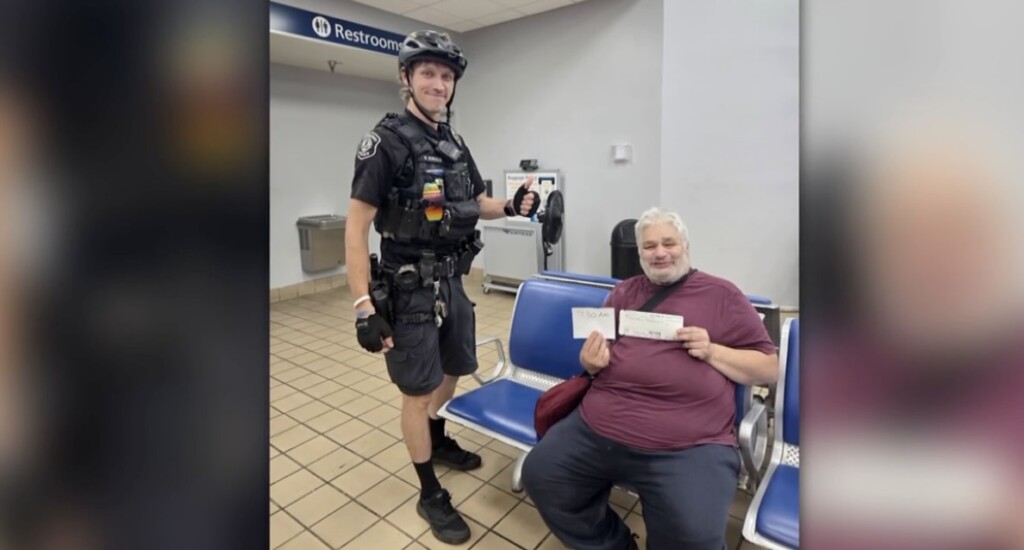
‘We’re supposed to be good men’: Officer Buys Stranded Deaf Man Train Ticket to Get Home

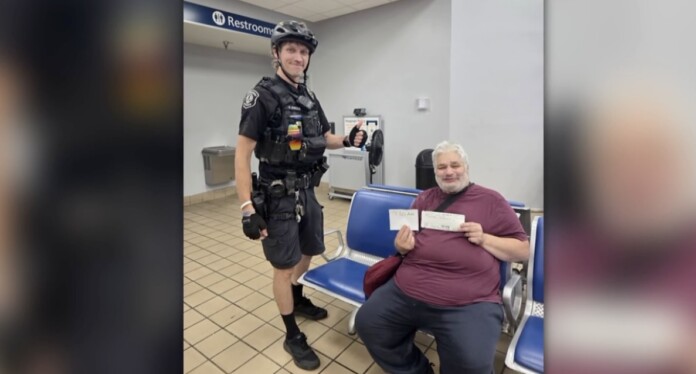
Officer Steven Harris of Pittsburgh Police via KDKA

“We’re supposed to be good men,” said Officer Steven Harris.

Harris was responding to a question from local news in Pittsburgh about why he would spend $113 of his own money to solve a stranger’s problem. It’s a suggestion that all of us, from cops to kids, should hear every now and then.

The story of how Harris got into position to solve the problem comes from the Greyhound bus depot in Pittsburgh where the Police Department received a call about a man behaving “unruly.”

Harris and Officer Keso responded to the call on their bicycles, and arrived to find a much different picture.

“He was just a male who was deaf and didn’t speak English or read English, so it just turned out he needed help to get back on a bus to New York and eventually Montreal,” Officer Harris told reporters.

Keso called a translator line police use in such situations and was able to get a French-speaker to help, though didn’t explain whether sign language was needed or not.

It turned out the man had stepped off the bus to stretch his legs, but obviously didn’t hear the call from the driver that it was time to go, and watched helplessly as the bus took off for New York—his luggage and cash still onboard.

With no options for a bus, Harris “simply” used his bank card to buy an Amtrak ticket to New York.

KINDNESS FROM PITTSBURGH: After Scam Left Elderly Pittsburgh Couple with a Pile of Dirt and Excuses, Local Landscapers Donate to Finish for Free

“We’re supposed to be good men. Good men helping other good men. That’s it,” he said.

Police Commander Tim Novosel said in response to the story that Harris loves to work downtown because “he just thinks differently than most people.”

THE GOOD GUYS OF THE FORCE: When Boy Asks Strangers for Yard Work to Save up for New Game Console, Cops Are Called–And They Buy Him a New PS5 (WATCH)

When asked why he thinks differently, Harris responded that he was raised by his great-grandmother—a different kind of woman, from a different sort of era.

When he reached for his own wallet, she must have been smiling—watching her great grandson the cop helping someone in need, trying, as she urged, to be a good man.

WATCH the story below…

SHARE Officer Harris’ Kind Deed And Wise Words With Your Friends…