With the need for critical battery minerals growing, a company has proved that sustainable ocean mining is possible with a discriminating robot miner.
Below the waves, seafloors are covered in “polymetallic nodules” a fancy word for stones with many different metals in them.
Impossible Metals recently proved that it’s possible to harvest these nodules with precision and smart learning rather than dredging with large destructive plows. Their method is the Eureka 1, the world’s first undersea selective mining robot.
Full of lithium, nickel, and cobalt, the nodules could provide battery manufacturing with a more sustainable supply that doesn’t involve carbon-intensive mining, and avoids the geopolitical difficulties associated with pursuing these minerals in conflict zones or unstable states.
“Our harvesting machines don’t touch the seafloor,” said Renee Grogan, Chief Sustainability Officer and Co-founder. “What we’re designing is a fleet of underwater robotic vehicles. And they are not tethered to the vessel. They don’t make contact with the seabed. They hover above it.”
Once hovering above an area of seabed, an AI-powered computer will pick out nodules from other matter, and command a host of horseshoe crab-like grabber arms on the underside of the robot to pick them up and feed them through a hose into a collection chamber.
In November, the Eureka 1 dove to depths of 25 feet, successfully differentiated nodules from rocks, and utilized a special buoyancy compensation engine to bring them back to the surface.
“This shallow water milestone demonstrates progression of our principles of avoiding serious harm to the seabed by replacing dredging technology with an alternative that prevents biodiversity loss and large sediment plumes” said Oliver Gunasekara, CEO & Co-Founder.
Impossible Metals believes the Eureka 1 could be in large-scale production by 2026.
Quote of the Day: “May I feel all I need to feel in order to heal. May I heal all I need to heal in order to feel.” – Marguerite Rigoglioso
Photo by: Daiga Ellaby
With a new inspirational quote every day, atop the perfect photo—collected and archived on our Quotes page—why not bookmark GNN.org for a daily uplift?
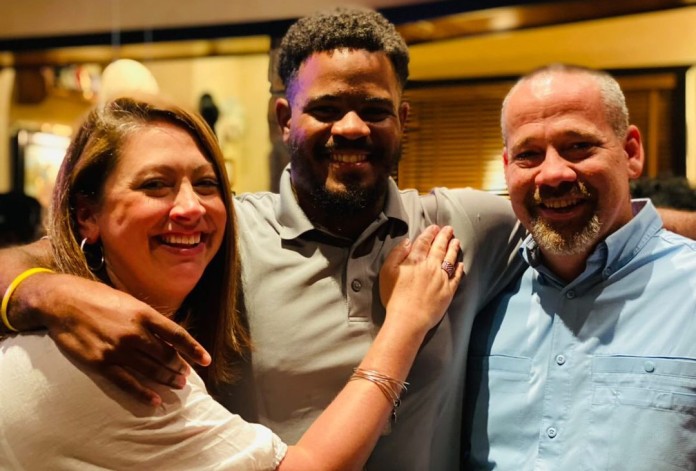
There’s no substituting the need for family, and one young man raised in the foster care system hoped to find one in a pair of perspective car buyers he met last year.
Video shows the Wilkinsons family, who walked off the lot with a car and a new friend in April 2021, reacting tearfully to salesman Davon Woods’ recorded message asking them to become his ‘forever family’ and whether he could take their last name.
Growing up in the foster care system, the 27-year-old Woods said he never had a relationship with any parent ever, and after Sarah Wilkonson heard her story, she kept her and her parents in touch with Woods, attempting to reach out when they could
The Wilkinsons invited Davon for dinner on his birthday in August 2021 and to join them again for Thanksgiving later that year at their Savannah Georgia home. More than a year after their first encounter, Woods asked to become part of the family.
Although no legal adoption process has taken place, the Wilkinsons now treat Davon like family—which is all that really matters—and gave him the green light to become Davon Wilkinson.
“It was weird to be in a loving environment. I’ve never had a relationship with any parents ever, adoptive or biological,” said Woods. “It was something I’d always wanted. I’ve always wanted to say ‘this is my family.'”
Davon has since quit his job and founded Foster Kids Matter, an organization dedicated to serving foster children in Georgia.
“I was inspired to become a foster kids advocate. If I hadn’t had that experience I would never have done it,” he added. “When you go without love for a long time and are presented with it, it’s weird. It feels like you’re starting a new job.”
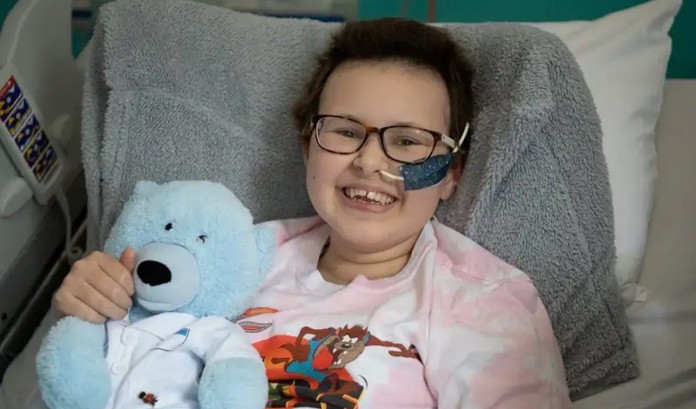
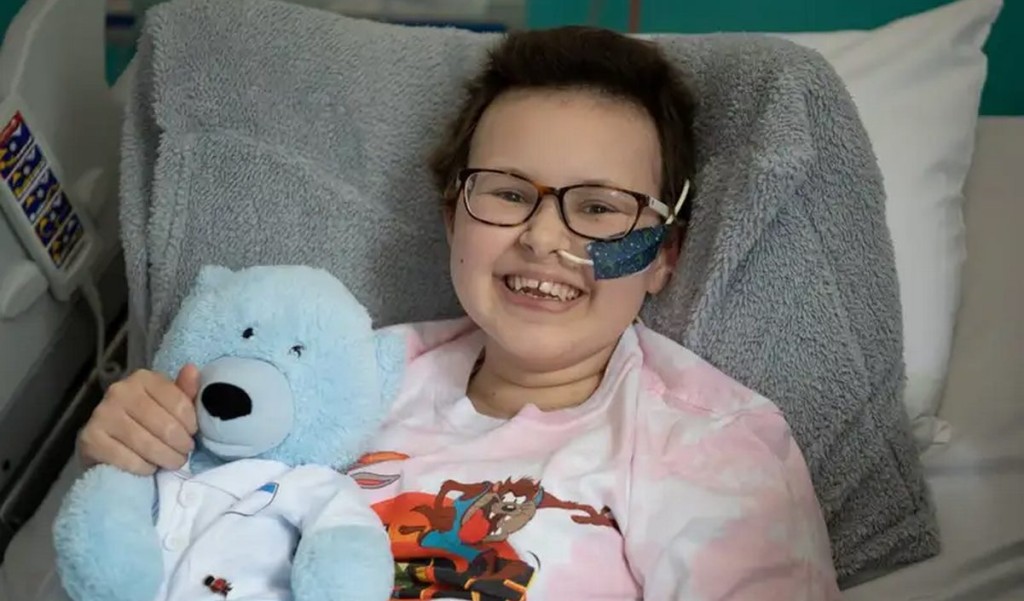
In the latest CRISPR success story, a 13-year-old girl whose leukemia had not responded to other treatments now has no detectable cancer cells.
She received a dose of immune cells that were genetically edited to attack the leukemia, a method that’s been used with other cancers.
A form of cancer in the bone marrow tissue, leukemia is caused by mutated immune cells and is normally treated by killing all bone marrow cells in the patient’s body before receiving a transplant from a donor. If this falls, the Nobel Prize-winning CAR-T cell therapy can be used instead.
This was the case of Alyssa, a 13-year-old girl from the UK, who received a dose of common immune system weapons called T cells that had been modified to attack cancerous cells in her body. To avoid the extreme costs associated with this, the Great Ormond Street Hospital team at University College London further modified the donor T cells.
“This is quite remarkable, although it is still a preliminary result, which needs to be monitored and confirmed over the next few months,” said Robert Chiesa, one of the doctors treating Alyssa, in a statement released by Great Ormond Street Hospital.
While she has no detectable cancer now, it will take several years to determine whether she’s truly cancer-free.
This procedure was used before to save the life of a 1-year-old girl, Layla, also in the UK last year, and is now approved by the NHS as a treatment for people with leukemia arising from mutated B cells, another group of immune cells that can lead to the cancer.
New Scientist explains that lead researcher Waseem Qasim at University College London had applied four edits to the cells’ DNA, which puts them at risk for dangerous mutations. To circumvent this, he used a different method of the CRISPR gene editing protein that ” changes one DNA letter to another,” a technique called base-editing.
Alyssa is the first person ever to be treated with base-editing.
SHARE This Story And The Relief Her Parents Must Have Felt…
FREE WILL ASTROLOGY – Week of December 17, 2022
Copyright by Rob Brezsny, FreeWillAstrology.com
SAGITTARIUS (Nov. 22-Dec. 21):
I applaud your expansive curiosity. I admire your yearning to learn more and more about our mysterious world as you add to your understanding of how the game of life works. Your greed for interesting experiences is good greed! It is one of your most beautiful qualities. But now and then, there come times when you need to scale down your quest for fresh, raw truths and work on integrating what you have already absorbed. The coming weeks will be one of those times.
CAPRICORN (Dec. 22-Jan. 19):
Better than most, you have a rich potential to attune yourself to the cyclical patterns of life. It’s your birthright to become skilled at discerning natural rhythms at work in the human comedy. Even more fortunately, Capricorn, you can be deeply comforted by this awareness. Educated by it. Motivated by it. I hope that in 2023, you will develop your capacity to the next level. The cosmic flow will be on your side as you strive to feel the cosmic flow—and place yourself in closer and closer alignment with it.
AQUARIUS (Jan. 20-Feb. 18):
Anne, a character in a book by L. M. Montgomery, says she prefers the word “dusk” over “twilight” because it sounds so “velvety and shadowy.” She continues, “In daylight, I belong to the world . . . in the night to sleep and eternity. But in the dusk, I’m free from both and belong only to myself.” According to my astrological assessment, you Aquarians will go through a dusk-like phase in the coming weeks: a time when you will belong solely to yourself and any other creature you choose to join you in your velvety, shadowy emancipation.
PISCES (Feb. 19-March 20):
My Piscean friend Venus told me, “We Pisceans feel everything very intensely, but alas, we do not possess the survival skills of a Scorpio or the enough-is-enough, self-protective mechanism of the Cancerians. We are the water sign most susceptible to being engulfed and flooded and overwhelmed.” I think Venus is somewhat correct in her assessment. But I also believe you Fishes have a potent asset that you may not fully appreciate or call on enough. Your ability to tune into the very deepest levels of emotion potentially provides you with access to a divine power source beyond your personality. If you allow it to give you all of its gifts, it will keep you shielded and safe and supported.
ARIES (March 21-April 19):
Aries painter Vincent van Gogh was renowned for translating his sublime and unruly passions into colors and shapes on canvas. It was a demanding task. He careened between torment and ecstasy. “I put my heart and soul into my work,” he said, “and I have lost my mind in the process.” That’s sad! But I have good news for you, Aries. In the coming months, you will have the potential to reach unprecedented new depths of zest as you put your heart and soul into your work and play. And hallelujah, you won’t lose your mind in the process! In fact, I suspect you will become more mentally healthy than you’ve been in a long time.
TAURUS (April 20-May 20):
“The soul is silent,” writes Taurus poet Louise Glück. “If it speaks at all, it speaks in dreams.” I don’t agree with her in general, and I especially don’t agree with her in regard to your life in the coming weeks. I believe your soul will be singing, telling jokes, whispering in the dark, and flinging out unexpected observations. Your soul will be extra alive and alert and awake, tempting you to dance in the grocery store and fling out random praise and fantasize about having your own podcast. Don’t underestimate how vivacious your soul might be, Taurus. Give it permission to be as fun and funny as it yearns to be.
GEMINI (May 21-June 20):
The coming weeks will be an excellent time to expand your understanding about the nature of stress. Here are three study aids: 1. High stress levels are not healthy for your mind and body, but low to moderate stress can be good for you. 2. Low to moderate stress is even better for you if it involves dilemmas that you can ultimately solve. 3. There is a thing called “eustress,” which means beneficial stress. It arises from a challenge that evokes your vigor, resilience, and willpower. As you deal with it, you feel hopeful and hardy. It’s meaningful and interesting. I bring these ideas to your attention, dear Gemini, because you are primed to enjoy a rousing upgrade in your relationship with stress.
CANCER (June 21-July 22):
Long before he launched his illustrious career, Cancerian inventor Buckminster Fuller was accepted to enroll at Harvard University. Studying at such a prestigious educational institution was a high honor and set him up for a bright future. Alas, he was expelled for partying too hard. Soon he was working at odd jobs. His fortunes dwindled, and he grew depressed. But at age 32, he had a pivotal mystical experience. He seemed to be immersed in a globe of white light hovering above the ground. A disembodied voice spoke, telling him he “belonged to the universe” and that he would fulfill his life purpose if he applied himself to serving “the highest advantage of others.” How would you like a Buckminster Fuller-style intervention, Cancerian? It’s available if you want it and ask for it.
LEO (July 23-Aug. 22):
Leo-born Judith Love Cohen was an electrical engineer who worked on NASA’s Apollo Space Program. She was also the mother of the famous actor Jack Black. When she was nine months pregnant with Jack, on the day she went into labor, she performed a heroic service. On their way to the moon, the three astronauts aboard the Apollo 13 spacecraft had encountered a major systems failure. In the midst of her birth process, Judith Love Cohen carried out advanced troubleshooting that helped save their lives and bring their vehicle safely back to Earth. I don’t expect you to achieve such a monumental feat in the coming days, Leo. But I suspect you will be extra intrepid and even epic in your efforts. And your ability to magically multitask will be at a peak.
VIRGO (Aug. 23-Sept. 22):
When you’re at the height of your powers, you provide the people in your life with high-quality help and support. And I believe you could perform this role even stronger in 2023. Here are some of the best benefits you can offer: 1. Assist your allies in extracting bright ideas from confusing mishmashes. 2. Help them cull fertile seeds from decaying dross. 3. As they wander through messy abysses, aid them in finding where the redemption is. 4. Cheer on their successes with wit and charm.
LIBRA (Sept. 23-Oct. 22):
A blogger named Daydreamydyke explains the art of bestowing soulful gifts. Don’t give people you care for generic consumer goods, she tells us. Instead, say to them, “I picked up this cool rock I found on the ground that reminded me of you,” or “I bought you this necklace for 50 cents at a yard sale because I thought you’d like it,” or “I’ve had this odd little treasure since childhood, but I feel like it could be of use to you or give you comfort, so I want you to have it.” That’s the spirit I hope you will adopt during the holiday season, Libra—as well as for all of 2023, which will be the year you could become a virtuoso gift-giver.
SCORPIO (Oct. 23-Nov. 21):
In 1957, engineers Alfred Fielding and Marc Chavannes invented three-dimensional plastic wallpaper. No one bought the stuff, though. A few years later, they rebranded it as Bubble Wrap and marketed it as material to protect packages during shipment. Success! Its new use has been popular ever since. I suspect you are in a phase comparable to the time between when their plastic wallpaper flopped and before they dreamed up Bubble Wrap. Have faith in the possibility of there being a Second Act, Scorpio. Be alert for new applications of possibilities that didn’t quite make a splash the first time around.
WANT MORE? Listen to Rob’s EXPANDED AUDIO HOROSCOPES, 4-5 minute meditations on the current state of your destiny — or subscribe to his unique daily text message service at: RealAstrology.com
Turkey will soon host the world’s largest tidal power station—a 77 megawatt system of large pier-like machines that generate clean energy from the sea’s endless rhythm.
Swedish firm Eco Wave Power (EWP) entered into the agreement for the potential construction in Ordu, Turkey, starting with a small pilot project.
EWP said that if it proves viable, the estimated $150 million power station would be Turkey’s first grid-connected tidal energy station, and upon completion, would be the biggest in the world.
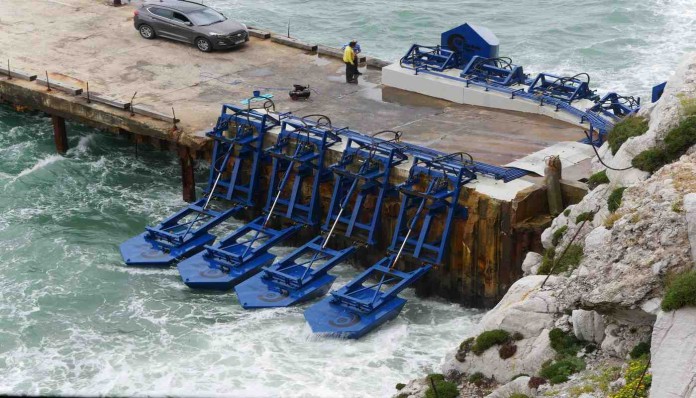
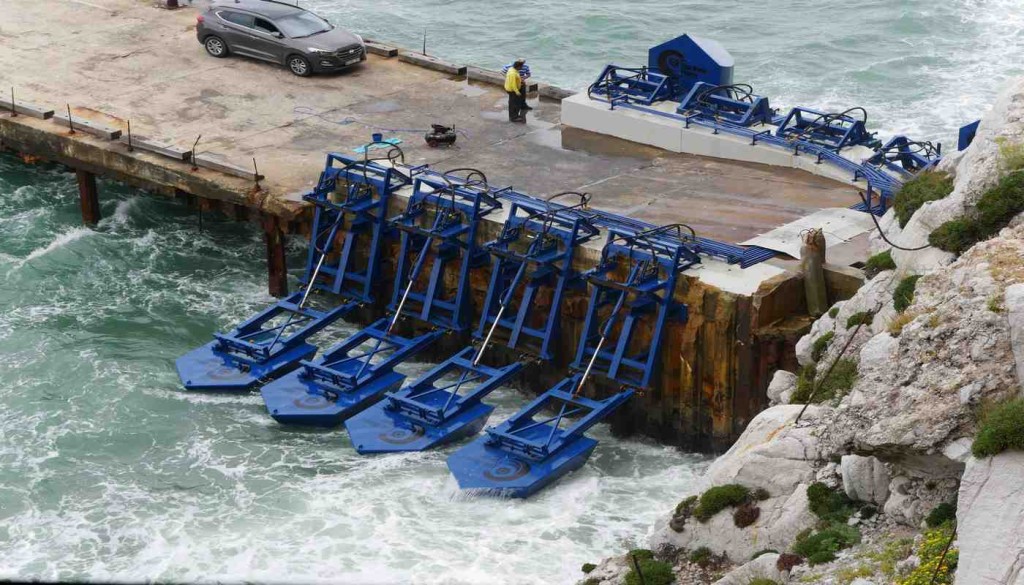
Anchored to structures such as jetties or seawalls, the rising and falling motion of the waves powers hydraulic pistons inside the metal hulls—called “floaters”—which in turn powers a turbine on land which then sends energy to the grid via an inverter.
According to the terms of the agreement, government-owned Ordu Enerji will assign nine potentially suitable breakwaters to EWP for a period of 25 years from activation of the relevant pilot or power station.
“Subject to certain conditions, including, among others, receiving favorable results from feasibility studies and receipt of applicable licenses and permits, the 77 MW power station is planned to be constructed in several stages, starting with an up to 4 MW pilot station, and continuing with the construction, operation, and maintenance of the remaining capacity of the plant of up to 73MW,” said the company.
Eco Wave Power will be responsible for constructing, and commissioning the power plants and selling the electricity to be generated by the power plant in accordance with an approved production quota to be determined for the site.
EWP has a grid-connected power station at Israel’s Port of Jaffa and ran a demonstration plant in Gibraltar for six years.
“With the goal to build a self-sufficient grid, Ordu sees Eco Wave Power as an important asset to fully realising our potential for 100% clean energy,” said Mustafa Kemal Macit, President and CEO of Ordu Enerji.
“The entire municipality of Ordu is excited to fully realize the sea’s potential and use its unlimited source of energy to power our electrical grid. This project demonstrates that Ordu Enerji is committed to investing in innovative clean energy technologies.”
WATCH a short news spot highlighting the technology.
WAVE At Your Friends With This Green Energy Story…
Quote of the Day: “Tomorrow isn’t promised. Am I OK with how I’m living today? It’s the only thing I can help.” – Hayley Williams
Photo by: Prottoy Hassan, public domain
With a new inspirational quote every day, atop the perfect photo—collected and archived on our Quotes page—why not bookmark GNN.org for a daily uplift?
A photographer snapped snow-capped Stirling Castle shrouded in mist as he compared it to something out of Harry Potter. Dad-of-two Brian Smith, 55, was leaving work on Tuesday at 4.30pm when he saw the historic castle covered in snow.See SWNS story SWNAcastle. Fog and clouds parted above the building which is on a steep hill, so Bill took a picture with long exposure. Brian, a college lecturer, said: "It looks very festive."It looks like something out of Harry Potter.
A snow-capped Stirling Castle shrouded in mist –Brian Smith / SWNS
A photographer captured a magical moment when he looked up and snapped the snow-capped Stirling Castle shrouded in mist at sunset.
Brian Smith was leaving work on Tuesday at 4.30pm when he saw the historic Scottish castle frosted with snow.
Fog and clouds parted above the building which is on a steep hill, so the 55 year-old took a picture, using a long exposure.
“It looks like something out of Harry Potter,” said the college lecturer, who said it had been quite foggy all day.
Stirling Castle is one of the largest and most important castles in Scotland. The ancient complex located in Stirling sits atop Castle Hill, a massive volcanic rock surrounded on three sides by steep cliffs. With such a strong defensive position it became strategic for guarding what was, until the 1890s, the farthest downstream crossing of the River Forth, and marks the meeting point between the Lowlands and Highlands.
It became a royal residence and a powerful stronghold during the Wars of Independence—which were civil wars among the Scots—as well as a struggle between Scotland and England, during which the castle changed hands eight times in 50 years.
The new photograph is so mythical-looking that many people have told the father-of-two that his photo looks computer-generated. But Smith is still humble.
Page from an 18th-century copy of the Dhātupāṭha of Pāṇini – SWNS
Page from an 18th-century copy of the Dhātupāṭha of Pāṇini – SWNS
A 27-year-old PhD scholar finally cracked the riddle which has defeated Sanskrit experts since the 5th Century BC—by decoding a rule taught by “the father of linguistics” Pāṇini.
The discovery makes it possible to ‘derive’ any Sanskrit word—to construct millions of grammatically correct words including ‘mantra’ and ‘guru’—using Pāṇini’s revered ‘language machine’ which is widely considered to be one of the great intellectual achievements in history.
Leading Sanskrit scholars have described the discovery as ‘revolutionary’—and it now means that Pāṇini’s grammar can be taught to computers for the first time.
Six months before Indian-born Rishi Rajpopat finally decoded the 2,500 year old algorithm, his supervisor at Cambridge, Sanskrit Professor Vincenzo Vergiani, gave him some prescient advice: “If the solution is complicated, you are probably wrong.”
“I had a eureka moment in Cambridge,” said Dr. Rajpopat. “After nine months trying to crack this problem, I was almost ready to quit, I was getting nowhere.
“So I closed the books for a month and just enjoyed the summer, swimming, cycling, cooking, praying and meditating.
“Then, begrudgingly I went back to work, and, within minutes, as I turned the pages, these patterns starting emerging, and it all started to make sense.”
Pāṇini’s system—4,000 rules detailed in his greatest work, the Aṣṭādhyāyī which is thought to have been written around 500 BC—is meant to work like a machine. Feed in the base and suffix of a word and it should turn them into grammatically correct words and sentences through a step-by-step process.
However, until now, there had been a huge problem. Scientists say that, often, two or more of Pāṇini’s rules are simultaneously applicable at the same step, leaving scholars to agonize over which one to choose.
Solving so-called ‘rule conflicts’, which affect millions of Sanskrit words including certain forms of ‘mantra’ and ‘guru’, requires an algorithm.
Thought to have lived in a region in what is now north-west Pakistan and south-east Afghanistan, Pāṇini taught a ‘metarule’ to help decide which rule should be applied in the event of a conflict.
But for the last 2,500 years, scholars have misinterpreted the metarule meaning that they often ended up with a grammatically incorrect result. Furthermore, in an attempt to fix the issue, many researchers laboriously developed hundreds of other metarules.
But Dr. Rajpopat showed in a paper published this week that those are not just incapable of solving the problem at hand, they all produced too many exceptions—and are completely unnecessary. He explained that Pāṇini’s ‘language machine’ is ‘self-sufficient’.
“Pāṇini had an extraordinary mind and he built a machine unrivaled in human history,” said Rajpopat, who started his PhD work at St John’s College, Cambridge, in 2017. “The more we fiddle with Pāṇini’s grammar, the more it eludes us.”
Dr. Rishi Rajpopat – Cambridge / SWNS
Traditionally, scientists have interpreted Pāṇini’s metarule as meaning: in the event of a conflict between two rules of equal strength, the rule that comes later in the grammar’s serial order wins.
Rajpopat rejects this, arguing instead that Pāṇini meant that between rules applicable to the left and right sides of a word respectively. Pāṇini wanted us to choose the rule applicable to the right side. Employing this interpretation, Rajpopat found Pāṇini’s language machine produced grammatically correct words with almost no exceptions.
“Over the next few weeks I was so excited, I couldn’t sleep and would spend hours in the library including in the middle of the night to check what I’d found and solve related problems. That work took another two-and-a-half years.”
Prof. Vergiani heralded the news, saying, “My student Rishi has cracked it. He has found an extraordinarily elegant solution to a problem which has perplexed scholars for centuries.”
“This discovery will revolutionize the study of Sanskrit at a time when interest in the language is on the rise.”
Sanskrit is an ancient and classical Indo-European language from South Asia. It is the sacred language of Hinduism, but also the medium through which much of India’s greatest science, philosophy, poetry, and other secular literature have been communicated for centuries.
While only spoken in India by an estimated 25,000 people today, Sanskrit has influenced many other languages and cultures around the world.
Rajpopat, who was born in Mumbai and learned Sanskrit in high school, explained, “Some of the most ancient wisdom of India has been produced in Sanskrit and we still don’t fully understand what our ancestors achieved.
“I hope this discovery will infuse students in India with confidence, pride, and hope that they too can achieve great things.”
He said that a major implication of his discovery is that now we have the algorithm that runs Pāṇini’s grammar, we could potentially teach this grammar to computers.
“Computer scientists working on Natural language processing gave up on rule-based approaches over 50 years ago. So teaching computers how to combine the speaker’s intention with Pāṇini’s rule-based grammar to produce human speech would be a major milestone in the history of human interaction with machines, as well as in India’s intellectual history.”
IT’S NO MYSTERY That You Should Share This Breakthrough on Social Media…
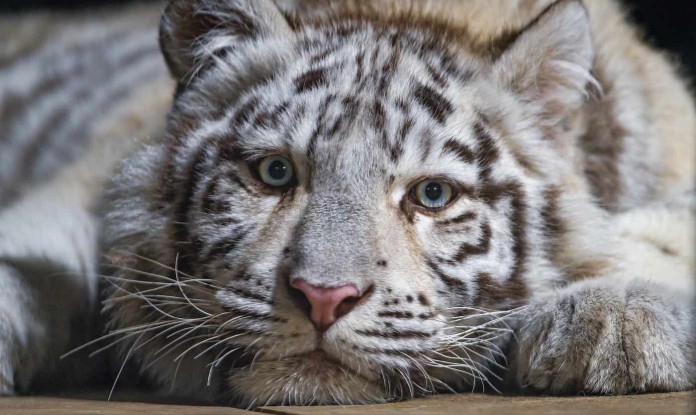
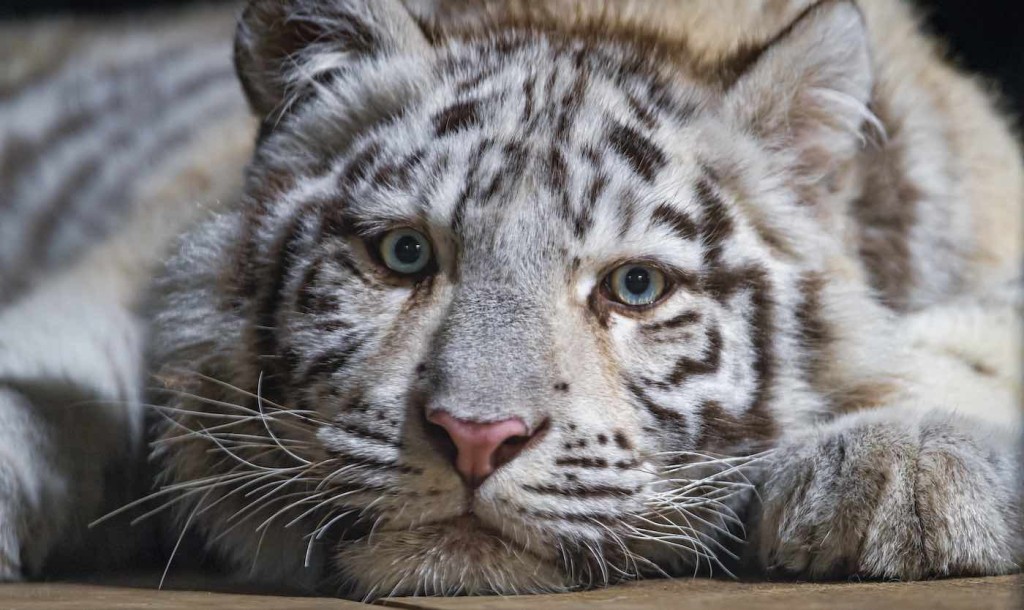
Monumental U.S. legislation sparked by the exploitation depicted in the TV series Tiger King was passed this week by the U.S. Senate to ban public contact with lions, tigers, leopards, cheetahs, jaguars, and cougars.
The Big Cat Public Safety Act, which will prohibit keeping big cat species as pets, along with the practice of ‘cub petting’. It also makes it illegal for members of the public to have close contact with the animals, including bottle-feeding or handing any cubs.
The bipartisan legislation was passed in the Senate by unanimous consent. It was already passed in the U.S. House of Representatives, so now goes to the White House to be signed into law by President Biden, who has expressed support.
The legislation was sponsored and championed by Sen. Richard Blumenthal, D-Conn, Sen. Susan Collins, R-Maine, Rep. Michael Quigley, D-Ill., and Rep. Brian Fitzpatrick, R-Pa.
“We’ve been fighting for this moment for years because so many so-called ‘Tiger Kings’ have been breeding tigers and other big cats to use them for profit,” said Kitty Block, president and CEO of the Humane Society. “It’s the beginning of the end of the big cat crisis in the U.S.”
Keeping big cats as pets is not only inhumane but it’s also a serious public safety issue. In the last 30 years there have been more than 400 incidents involving captive big cats that resulted in hundreds being injured and 24 deaths to adults and children.
“These beautiful but powerful predators deserve to live in the wild, not be kept in captivity for people’s entertainment,” said Sen. Richard Blumenthal, D-Conn. “I’m thrilled that, after a groundswell of public and bipartisan support, this bill I’ve long advocated for will become law.”
The legislation would limit ownership of these animals to zoos, universities, and sanctuaries, such as the Black Beauty Ranch in Texas run by the Humane Society as a home for big cats that were languishing after being used by the cub-petting industry.
CELEBRATE the GRRRRREAT News by Sharing With Cat Lovers on Social Media…
Quote of the Day: “You don’t always need a plan. Sometimes you just need to breathe, trust, let go and see what happens.” – Mandy Hale
Photo by: Ben White
With a new inspirational quote every day, atop the perfect photo—collected and archived on our Quotes page—why not bookmark GNN.org for a daily uplift?
A man who was paralyzed from the neck down has made an incredible recovery and is back in the gym just six months after becoming ill with a potentially deadly immune disorder.
Actor Cody Hively was just 27 when he received a diagnosis for a severe form of the Guillain-Barre syndrome, a lethal condition in around 1 of 20 patients.
Guillain-Barre syndrome is an immune disorders that causes the immune system to attack the patient’s nerves.
Hively spent three months in a hospital receiving intravenous immunoglobulin (IVIG), a treatment for patients with antibody deficiencies.
But he is now back in the gym, just six months after falling ill and after having to learn how to walk again.
It began in mid-January 2022 with numbness and tingling in the feet, and progressed to complete numbness up to the shoulders.
In early February Hively was hospitalized, where he became completely paralyzed two weeks later.
“Every day the doctors said the same thing, this could stop tomorrow, or it could just keep getting worse,” said Hively
The symptoms were so severe that he was only able to nod his head slightly and nurses had to use an alphabet board to talk to him. He had to be intubated because he was unable to breathe or swallow properly.
“It was really disturbing,” he recalled. “I was a prisoner to my own body, minutes turned into days turned into weeks turned into months. My whole body felt like it was on fire.”
Fortunately for a physically active young man with his whole life ahead of him, the treatment was successful, and sensation gradually returned to his body. He was moved to an in-patient rehabilitation clinic on March 17th, where he began recovery.
Hively had to re-learn to use most of his muscles and underwent four hours of physical therapy a day, but by early-July was able to walk short distances with some help.
“I’m a person who enjoys being physical and active, so I’m used to working for things like this,” said Hively. “When I began walking it felt like I was alive again, each week I would make progress even if it was a couple of extra steps.”
By August, he was back in the gym, admitting that he didn’t think he was going to be that 1 in 20; he never lost hope.
SHARE This Man’s Story of Luck And Determination On Social Media…
During the first COVID-19 lockdowns in England the late army captain, 99-year-old Sir Tom Moore, attempted to raise money for NHS Charities Together by walking across his garden 100 times.
Now, believing that people need more positive and hopeful news in their life, his family is following in his footsteps by launching a Christmas campaign that invites anyone to share stories of individual moments of kindness they’ve received throughout their life.
By putting together “A Gift of Kindness” campaign, the family hopes “to celebrate the everyday acts of kindness that so often cost nothing to the giver, but mean so much to the receiver.”
On the front page of their website is a message board that gives the opportunity for people to share a fond memory of a good deed or say thank you to someone who has done something nice for them.
“My late father Captain Sir Tom, lived a long and fulfilled life that was brimming with joy, deep sorrow, love, loss, hope, positivity and kindness,” said Sir Tom’s daughter Hannah Ingram-Moore.
“He truly believed in the fundamental goodness of humanity. With that in mind, A Gift of Kindness is a place to relate your kindness stories, to share joy and hope with others by recalling any small gift of kindness towards you, or someone you know, and how that felt.”
Moore’s humble intra-garden rally in 2020 captured the imagination of the nation, ultimately raising over £38.9 million for Britain’s National Health Service, while earning him a knighthood in the process.
Anyone can give the gift of kindness this Christmas. In the face of adversity and turmoil in the midst of the pandemic, Captain Tom Moore said “above all…be kind”.
One poster shared a story of seeing two YouTube influencers working in a public place, but took a break to help a woman carry a baby carriage up some stairs while everyone else ignored her.
Another story came from a pair of young parents who received an umbrella from a passing stranger during a storm whilst sheltering under an awning. But here’s one story GNN especially liked, particularly because of the narration.
“I was inspired by reading all the lovely stories [on the message board] and so helped a couple of our neighbours this morning by lending them de-icer as their windscreens were frosted over and they were running late. I must have got carried away though as there was nothing left for my husband’s car and he’d just gone out and bought the new bottle of de-icer. Luckily he loves the neighbours so I’m sure I’ll be forgiven!”
SHARE This Inspiring Campaign Of Kindness—Contribute And Share…
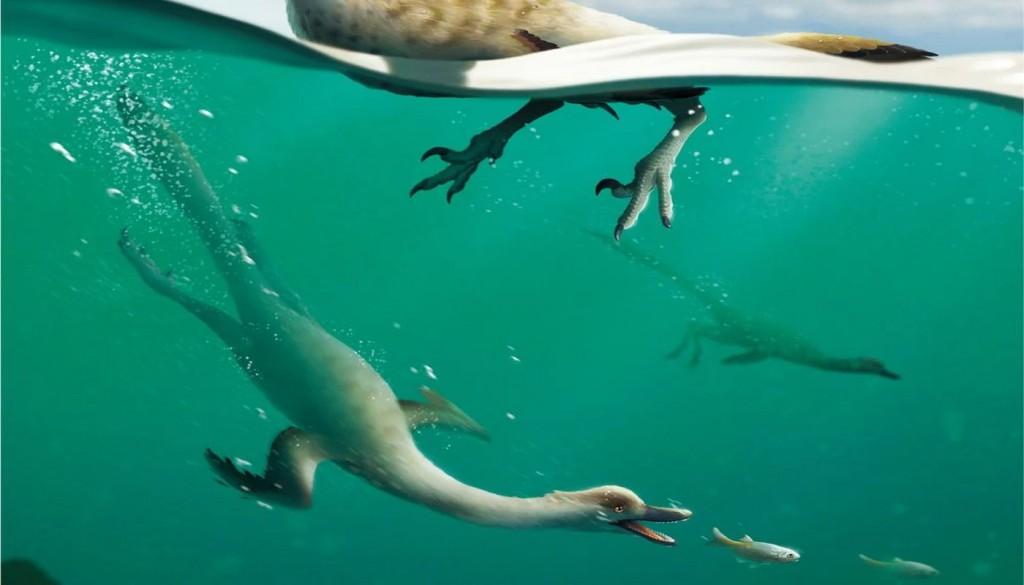
Across the whole history of paleontology, which has identified more than 700 species of dinosaurs, there’s never been one found with aquatic features—until now.
Natovenator or “swimming hunter” was a foot-long, streamlined, distant cousin of Velociraptor with a slender neck and a mouth filled with sharp teeth, leading to one scientist to call it a “Cretaceous cormorant.”
If dinosaurs weren’t real, their biological forms would have certainly shown up in fantasy stories as monsters or aliens.
They were the largest land animals in Earth’s history, and evolution took them on an extraordinary roller coaster ride of long necks, bony shields and protrusions, bone club tails, the invention of feathers and flight, bite forces that could crush a car, and more besides.
Yet for all this staggering diversity, it seemed at one point that dinosaurs had been content never to get their feet wet, as no swimming or diving adaptations had ever been discovered in the fossil record.
Then, in 2017, Halszkaraptor escuilliei, a feathered theropod dinosaur was discovered in Mongolia which appeared to have some adaptations for swimming. That fossil had comparatively similar features to certain waterfowl, or even crocodilians, and a theory emerged that it could have been semi-aquatic.
Then, a team from Seoul National University discovered another fossil at a famous dinosaur hotbed called Hermiin Tsav in the Gobi Desert, Mongolia.
“We realized that this was something special, because it was beautifully preserved with a nice skull and an extremely long neck,” said paleontologist Sung-jin Lee, who along with colleagues gave it the name Natovenator polydontus, or the many-toothed swimming hunter.
Comparisons with Halszkaraptor led to fierce debate over the potential of a swimming dinosaur, which led to a deep scrutiny over the Natovenator find. In the end, the team was convinced, and for the first time in the fossil record, the dinosaurs took the plunge.
Dating to around 71 million years ago, many of the animal’s features would have worked well under water. A long slender neck would have given it a long range bite, and a mouth full of thin sharp teeth would, like modern aquatic predators such as latern fish and sharks, been the perfect weapon for snagging slippery fish.
Larger theropods have been theorized as being capable of wading into shallow water in search of prey, and certain research done on Spinosaurus has shown it may have used the water as a hunting ground, but these were still terrestrial animals and did not show signs of things like swimming or diving.
Writing more complexly, Smithsonian Magazine explains how Natovenator had a streamlined, downward-curving rib cage, similar to modern day penguins and auks, but a feature absent in every currently-identified dinosaur. This would have given it a streamlined profile underwater, allowing it to dive deep or swim fast, in theory.
The close relationship between Natovenator and Halzszkaraptor leads to the tantalizing prospect that, since the feathered theropod dinosaurs evolved into modern birds, there may be a whole lineage of dinos that evolved into modern waterfowl.
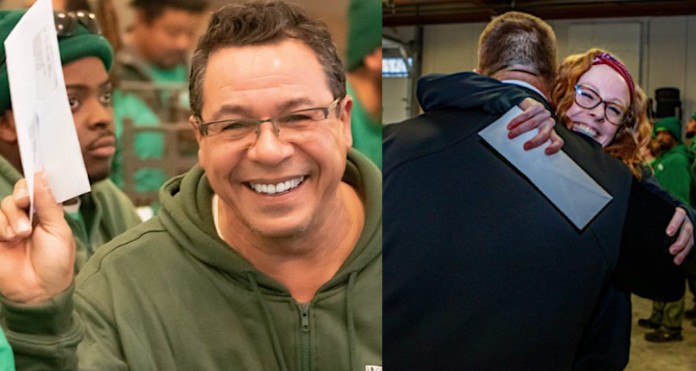
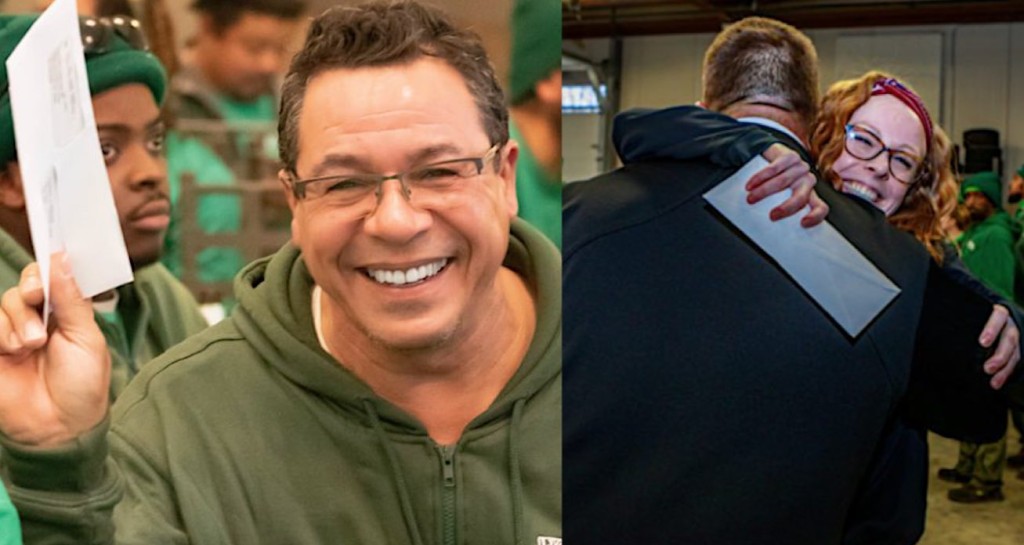
End of year bonuses are always a welcomed sight, but these smiles bear witness to an extraordinary act of corporate generosity.
Ruppert Landscaping gave bonuses of between $7,000 to $200,000 to all employees with a tenure of over one-year, “as a thanks for the role they’ve played in the company’s growth and development.”
A total of 1,200 workers, excluding those in top leadership positions, received the enormous thank you presents which added up to be $28 million.
The company says normal end of year bonuses were not deducted or altered by the gifts, which were announced at staff meetings, nor were any of the other benefits which include 401(K) matching, health insurance, paid time off, and holidays.
“Everyone receiving this bonus was instrumental in helping create the value that we’ve been able to realize,” said CEO Craig Ruppert. “This bonus is money that is well-deserved and a way for us to acknowledge the value of our teams’ contributions and the essential role that they will play in our company’s future.”
The company’s history dates to the 1970s when Craig Ruppert, then a teenager, began cutting his neighbors’ yards to earn money. From those early and humble beginnings, the company has grown dramatically and now includes a talented management team with projects that have grown in scale and complexity.
Residential lawns turned into developments, parks, and corporate campuses, while the focus on hustle and efficiency expanded to include horticultural knowledge and technical specialization. Today, the company serves commercial clients in over nine states from 30 locations, and continues its tradition of charitable giving at the local level.
SHARE This Story About An Awesome Place To Work With Your Friends…
Quote of the Day: “If you’re lucky, you realize you can make up your own mind. Nobody sets the rules but you. You can design your own life.” – Carrie Ann Moss
Photo by: Seb Mooze
With a new inspirational quote every day, atop the perfect photo—collected and archived on our Quotes page—why not bookmark GNN.org for a daily uplift?
As part of a debt-for-nature refinancing program, the island nation of Barbados is set to unlock $50 million in funding for conservation of its entire marine ecosystem.
Barbados committed at last year’s COP to protect 30% of its territorial waters but lacks the funds to do so. The Nature Conservancy announced it will work with partners to buy a piece of Barbados’ national debt and refinance it to facilitate this goal.
It’s a program known in the conservation world as “Blue Bonds.” The Nature Conservancy’s Blue Bonds for Ocean Conservation strategy essentially finds nations which have a lot of debt, low tax revenue, and important territorial waters, and recruits financier partners to buy outstanding debt from the previous holders and re-negotiate terms with more favorable interest rates provided the nation spends the savings on ocean conservation.
Today, the island nation of the Seychelles has established protections over a marine environment in an area equivalent to twice the size of Great Britain, or 158,000 square miles, thanks to a Nature Conservancy Blue Bond finance arrangement in 2016.
“We believe that innovative debt transactions coupled with science and marine planning, like our Blue Bonds for Ocean Conservation strategy, can achieve protection and improved management of more than 4 million square kilometers of the planet’s ocean—a 15% increase in the current amount of global marine protection,” said Jennifer Morris, CEO of The Nature Conservancy in a statement.
A large piece of the territorial waters of the world are controlled by small island nations like the Seychelles, or Barbados whose seascapes are 430-times the size of its landscape.
However these countries often can’t afford to implement conservation at an ecosystem scale, the kind that’s needed to protect ocean biodiversity.
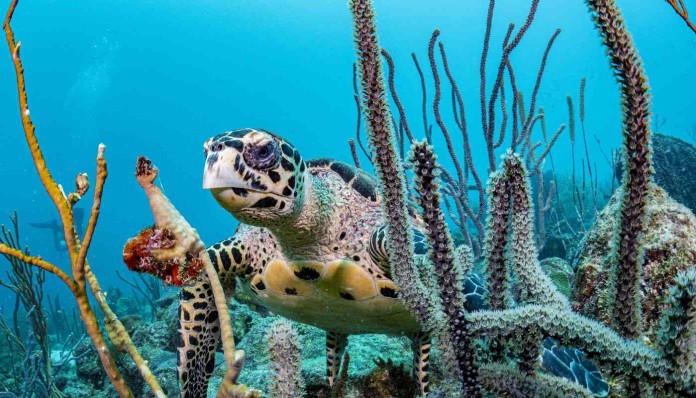
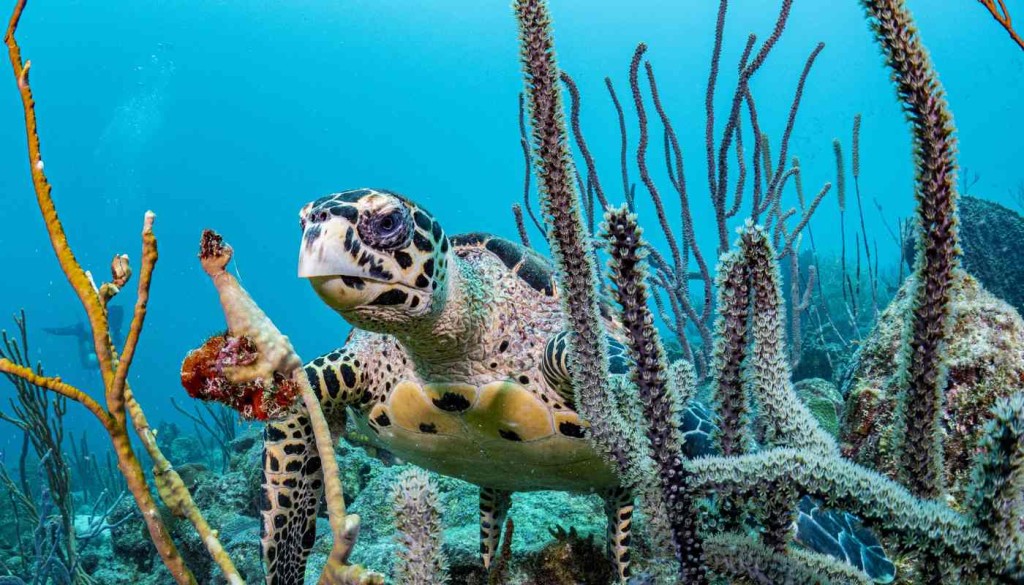
Barbados is home to four species of nesting turtles: green turtles, loggerheads, hawksbill, and leatherbacks, and has the second-largest hawksbill turtle-breeding population in the Caribbean. It also has rich coral reefs that support large tourism and fishing sectors.
In 2021, this Blue Bond program from the Nature Conservancy helped Belize move toward their commitment of protecting 30% of their territorial waters which include the Belize Barrier Reef, one of the largest barrier reefs on Earth.
Take a look at what’s being protected…
SHARE This Bit Of Blue Financing With Your Friends…
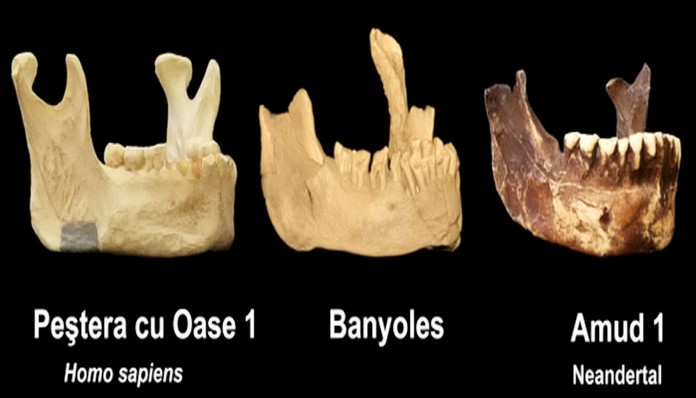
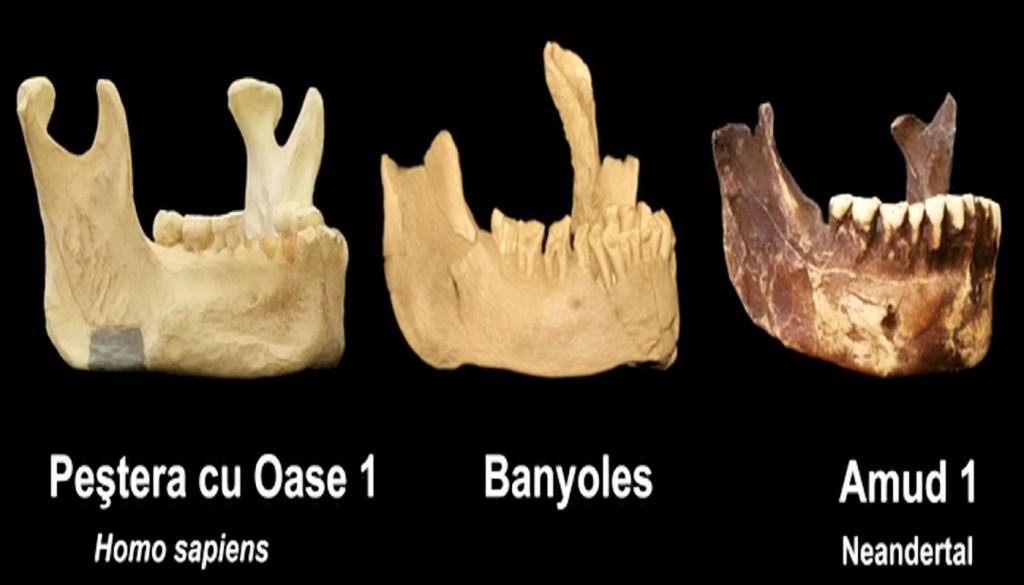
Comparison of a human and Neanderthal mandible, with the mysterious jawbone in the middle – SWNS
A re-examination of a hominid jawbone found over 100 years ago in Spain may have just back-dated the presence of humans in Europe by an additional 25,000 years.
Found in 1887 near a quarry in Banyoles, the bone was thought to belong to a neanderthal, who were known to inhabit the area before Homo sapiens.
The oldest confirmed modern human remains in Europe, identified using DNA, are from 44,000 years ago from a cave in Bulgaria, but recent advances in 3D morphometric computer modeling has given scientists like Brian Keeling new tools to examine previous finds.
“The mandible has been studied throughout the past century and was long considered to be a neanderthal based on its age and location, and the fact that it lacks one of the diagnostic features of Homo sapiens: a chin,” said Keeling, a Binghamton University graduate student.
“Our results found something quite surprising—Banyoles shared no distinct neanderthal traits and did not overlap with neanderthals in its overall shape.”
The Banyoles jawbone appeared to match best with Homo sapiens in the expression of its features, and its overall shape, although identification has been a challenge complicated by some traits that are shared across earlier human species.
“If Banyoles is really a member of our species, this prehistoric human would represent the earliest H. sapiens ever documented in Europe,” said Keeling.
Homo sapien remains from Romania that had Neanderthal ancestors back beyond 4 to 6 generations were too different for Banyoles to be considered one of these hybrid individuals.
Consequently scientists ruled it down to two options for the Banyoles mandible – a member of a previously unknown Homo sapien population that lived alongside neanderthals, or a hybrid between this undiscovered Homo sapiens group and a non-neanderthal unidentified human species.
“We were confronted with results that were telling us Banyoles is not a neanderthal, but the fact that it does not have a chin made us think twice about assigning it to Homo sapiens,” said Rolf Quam, professor of anthropology at Binghamton University. “The presence of a chin has long been considered a hallmark of our own species.”
SHARE This Small Piece Of Our Origin Story With Your Chinned-Friends…
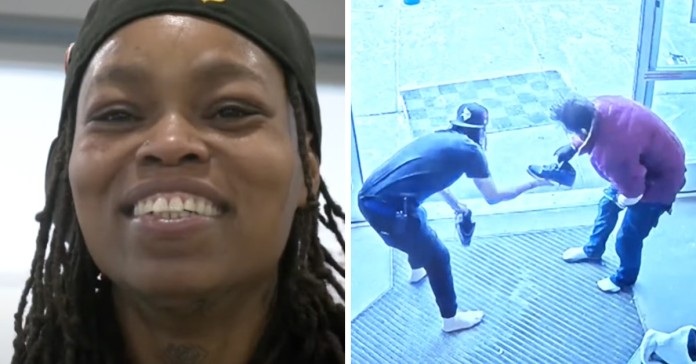
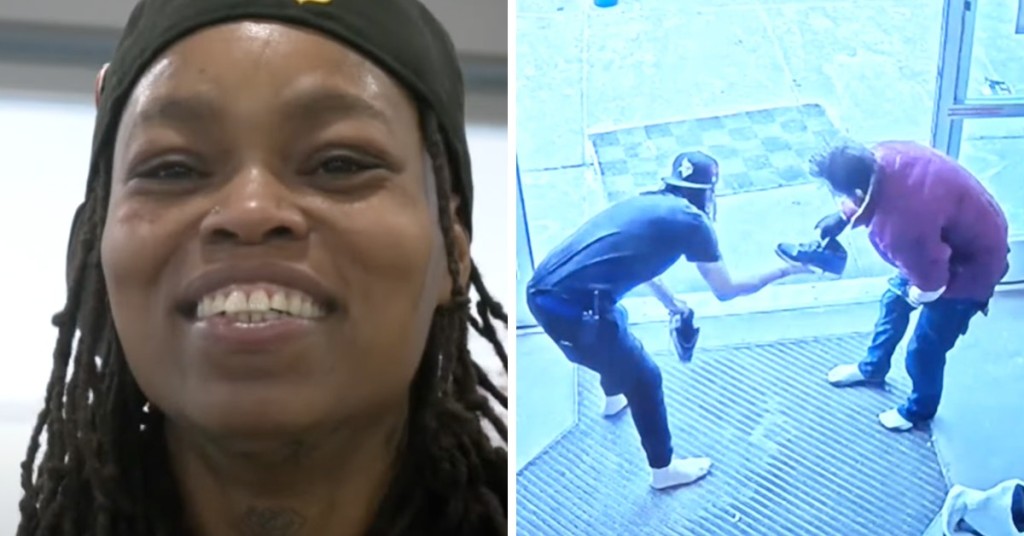
The manager of a Minnesota liquor store was surprised to come back from lunch yesterday to find his counterhelp walking around in her socks.
That’s because security camera footage revealed she had just given her favorite shoes—a pair of purple retro Jordans, to a homeless man she saw strapping boxes to his feet.
Brooklyn Center Liquor employee Ta Leia Thomas, known locally as “Ace” said the split-second act of kindness “was an easy decision.”
“He said nobody would ever give me shoes like that,” Thomas told CBS. “And I said, well, I’m not everybody.”
“I was always taught to help others. You never know what their problem is, or what they are going through.”
Manager Tom Agnes said that even before the generous act, he wished he had 12 Aces on his team, such is her work ethic and joyful connection with customers. Agnes bought her a fresh pair of kicks before her shift was over, after which he shared the security camera footage on social media.
Thomas has been overwhelmed by the comments of love and appreciation, which quickly grew all the more intense after Agnes and a few friends in the industry came together to raise $450 for Thomas to buy another pair of purple Jordans—the color of her favorite Minnesota team, the Vikings.
As it turns out, through becoming a little bit more attentive to Ace’s life, Agnes learned that she is the sole caretaker of her mother, who sleeps in Ace’s bed while Ace sleeps on the floor. In the end he just gave her the cash rather than the shoes to buy a second bed.
WATCH the act of kindness on CBS…
SHARE This Wonderful Woman’s Generosity On Social Media…
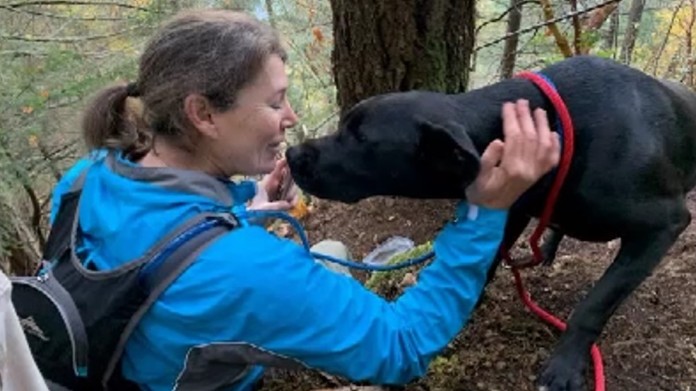
Luna the dog is pictured being rescued from the cliff after seven days. Credit: CTV news, Submitted.
Luna the dog is pictured being rescued from the cliff after seven days. Credit: CTV news, Submitted.
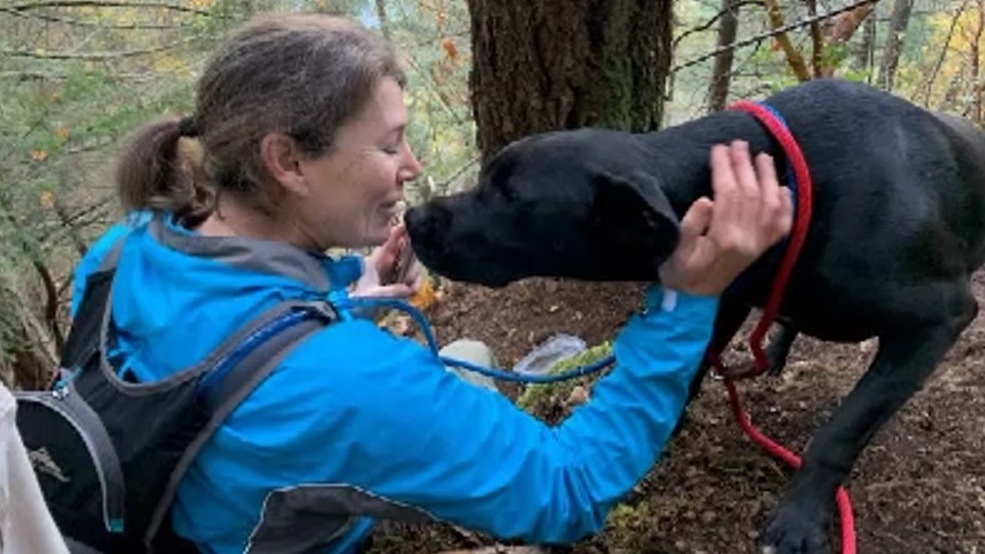
A small army of community volunteers worked over a week to locate and rescue a lost dog on Vancouver Island.
The mastiff-retriever named Luna chased an animal out of the yard of Highlands area resident Saryta Schaerer, before getting lost and falling down a steep slope onto a two foot-wide ledge.
Rescuers and neighbors kept up the search for days, but with no luck.
“It was terrible because it was getting colder and she always sleeps next to me or my daughter,” said Schaerer.
Across a body of water from where Luna had gotten stuck, local resident Ron Cheeke picked up her trail after he heard her cries for help. He notifed ROAM, a local pet rescue organization, before going out on a boat to try and locate the source of the barking.
“I used a pot and pan, and every time I banged on the pot and pan the dog barked back,” Cheeke told CTV News on Monday.
That’s when ROAM arrived and finally got to Luna. They pulled her up with a harness and reunited the dog with her owner.
Local news reports that the rescue team were almost as happy to do the work as Schaerer was to see her dog again.
“Your dog’s out there, it’s just a matter of time until we get her,” said ROAM volunteer Andy Carswell, speaking hypothetically to anyone who loses a pet. “Sometimes they come back in an hour, sometimes it’s a day, sometimes its seven, like Luna,” he said. “Just don’t give up, have faith.”
WATCH CTV coverage of the rescue below…
SHARE This Awesome Effort By Volunteers And Neighbors With Yours…