All News - Page 41 of 1689 - Good News Network
Home Blog Page 41

Meningitis Can Now Be Quickly Spotted in Babies Thanks to New Non-Invasive Test to Replace Spinal Taps

By New Born Solutions

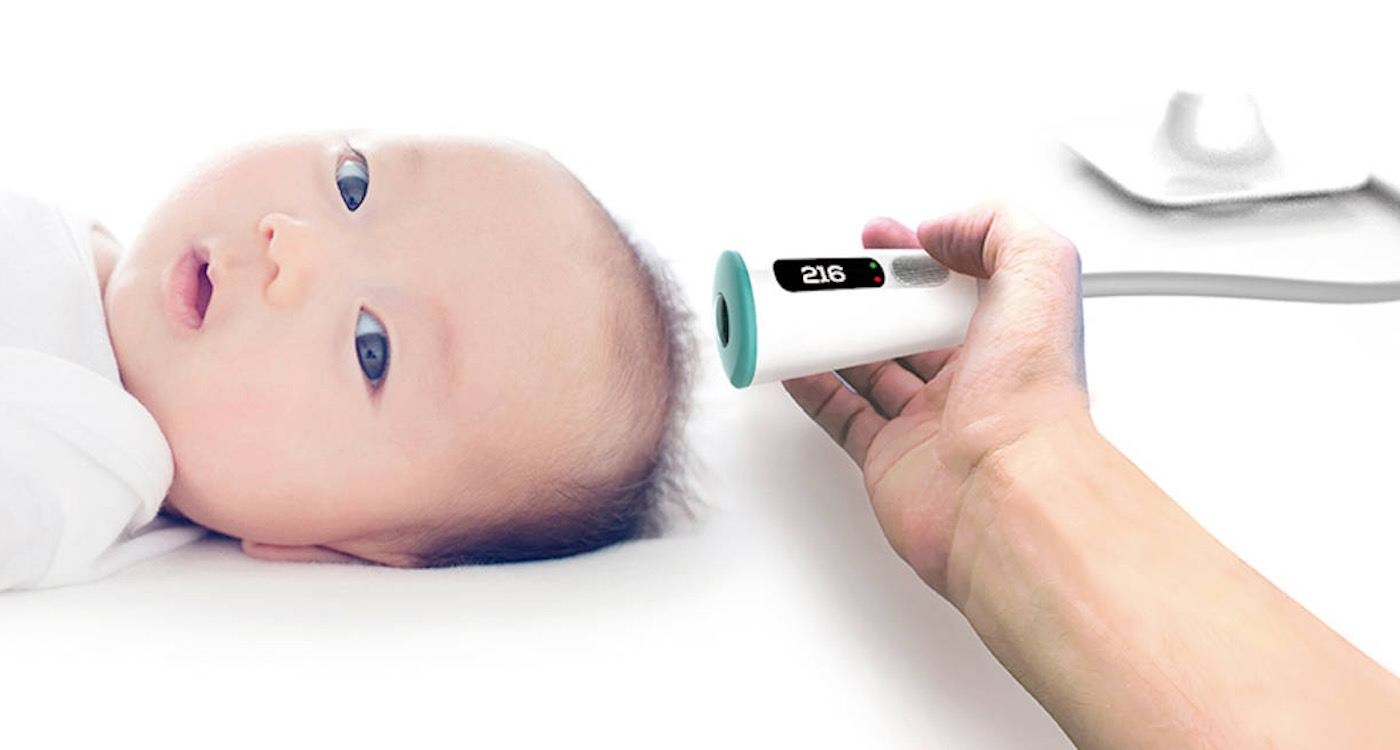
Meningitis can be quickly spotted in babies with “great accuracy” thanks to a new non-invasive device developed to do the testing anywhere it’s needed.

A study showed that it identified the potentially deadly infection in new-borns and infants with 94% accuracy, potentially transforming current screening methods based on traditional lumbar punctures.

Doctors say the high-resolution ultrasound device offers a non-invasive alternative to a lumbar puncture, also known as a spinal tap, where a needle is inserted into the lower back to collect cerebrospinal fluid (CSF) for analysis.

Meningitis is an inflammation of the membranes surrounding the brain and spinal cord. When caused by bacteria or fungi, it can be fatal if not diagnosed and treated early. Even in cases where the disease is overcome, it can leave serious after-effects, including brain damage.

Despite medical advances in recent decades, meningitis remains a major threat to child health, and diagnosing it currently requires a spinal tap to collect the fluid—an invasive technique with associated risks.

The new international study, published in the journal Pediatric Research, was led by scientists at the Barcelona Institute for Global Health (ISGlobal) in Spain, and involved patients at hospitals in Spain, Mozambique, and Morocco.

The aim was to validate the ‘Neosonics’ device, which uses high-frequency ultrasound applied through the baby’s open fontanelle, the membranous gap between the bones of the skull, which has not yet closed- to visualize and analyze CSF.

A deep learning algorithm interprets the images, identifies and counts the cells, and determines whether there are inflammatory signs consistent with meningitis.

“The device was able to correctly classify 17 out of 18 meningitis cases and 55 out of 58 controls without meningitis,” said lead author Dr. Sara Ajanovic, of ISGlobalin, in the team’s media release in English. (Spanish version here.)

“Specifically, it detected high white blood cell levels in cerebrospinal fluid with approximately 94% sensitivity and 95% specificity.”

AMAZING: World’s Smallest Pacemaker is Made for Newborns, Activated by Light, and Requires No Surgery

She says the new device—cost-effective, portable, and easy to use—could not only reduce lumbar punctures, but can also be used in clinically unstable patients where lumbar puncture aren’t possible.

Study senior author Professor Quique Bassat, ISGlobal’s director general, explained: “Introducing a non-invasive tool could reduce unnecessary antibiotic use, prevent complications associated with lumbar puncture, and improve both early diagnosis and non-invasive monitoring of treatment response.”

One of the project’s objectives was to bring health care to all inhabitants of Morocco, where the mortality risk of children living in rural areas is double that of those living in urban areas.

BABY LOVE: Playing Classical Music to Babies in the Womb Can Stimulate Development, Affect Heart Rate and Nervous system

“Neosonics can provide the Moroccan health system with a tool to improve access to health for the entire population, both in cities and in regions furthest from the public health system network,” says Javier Jiménez, CEO of New Born Solutions, the Spanish company that developed and manufactured the device.

The study, funded by the Bill and Melinda Gates Foundation, was conducted between 2020 and 2023 and included more than 200 babies aged up to 24 months. Its validation of Neosonics marks a first step towards incorporating the valuable tool into clinical practice.

SHARE WITH PEDIATRICIANS By Posting on Social Media…

San Francisco’s Trash Company Marks 35 Years of Stunning Art Made of Recycled Garbage With Free Gallery Opening

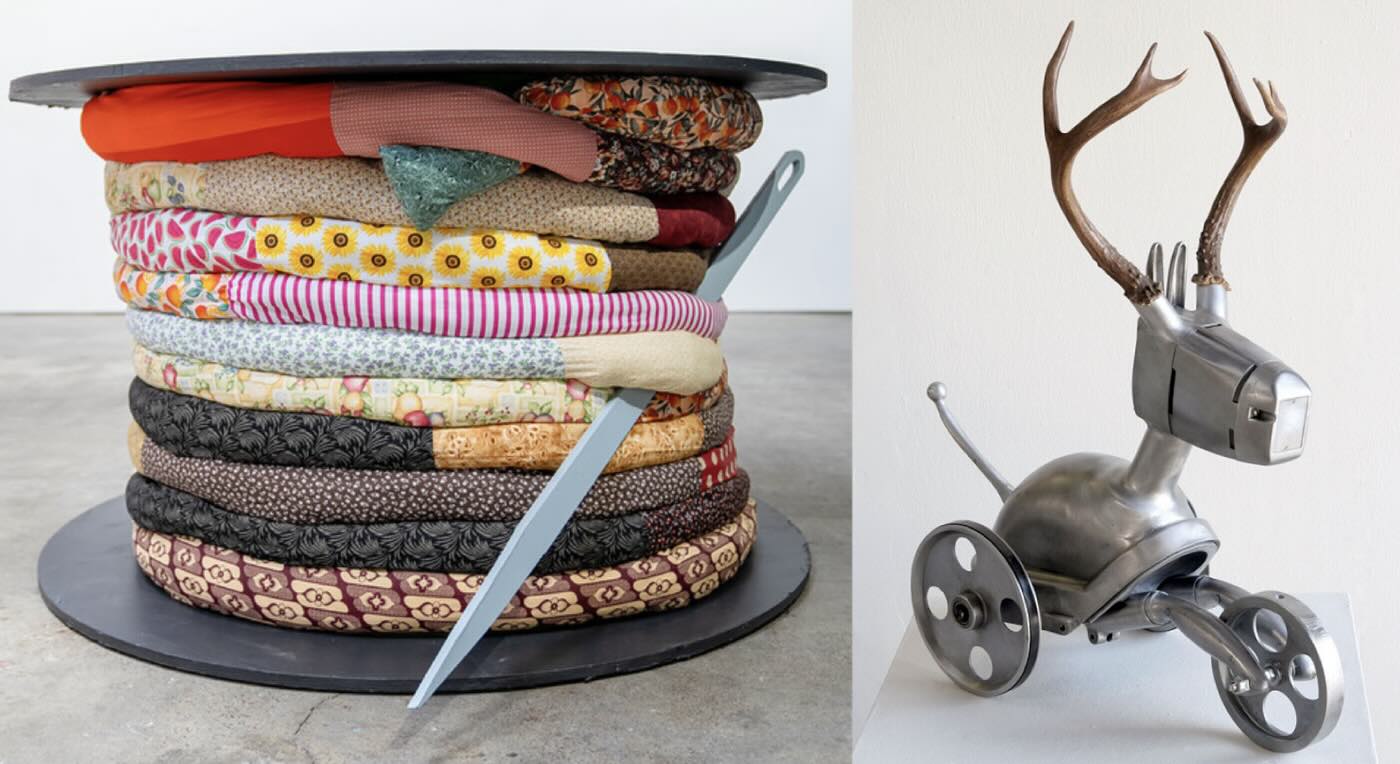
Mother Spool and Impala by Nemo Gould – Photo credit: Minoosh Zomorodinia for Recology
Recology Recycling Center, where ‘junk’ is being dropped off, and Artists-in-Residence may scavenge

Inside San Francisco’s 47-acre recycling and recovery center at the dump, where small businesses and residents can bring truckloads of cast-offs, artists have special access to a churning, ever-changing landscape where detritus from all over the city is sorted and processed.

In fact, more than 100 tons of material enter the building every day.

Besides just being the waste management company, Recology’s mission is to conserve resources and reduce waste, inspiring a more mindful relationship with the things we throw away. To that end, we need artists.

Since 1990, Recology has run an Artist-in-Residence program that supports Bay Area artists, giving them freedom to scavenge materials for use in creating artworks.

The four-month residency also provides artists with access to studio space and a stipend. Armed with safety gear and a shopping cart, artists have scavenging privileges in the Public Reuse and Recycling Area to reimagine the discarded waste as art objects.

“The artists love the access,” Recology spokesperson Robert Reed told GNN. “The materials dropped off are varied and interesting.”

Recology Artist In Residence Neil Mendoza scavenging through trash with shopping cart

The artists, like Neil Mendoza (pictured above), then wheel their carts of reclaimed materials to an art studio/workshop, equipped with tools that Recology maintains at the transfer station.

At the end of each residency, a free-to-the-public exhibition of the artworks created is held in the studio.

On Saturday, the resulting creativity from dozens of Artists In Residence was on full display as 2,000 people attended the opening of a free exhibition featuring 35 years of artwork—a retrospective embodying the phrase ‘trash to treasure’.

‘Mother Spool’ by Nimah Gobir (Photo by Minoosh Zomorodinia for Recology) and ‘Impala’ by Nemo Gould

While the approaches and themes vary widely among the 63 artists featured, a shared thread runs through it all: the possibilities of transformation through reuse.

For instance, in 2007 Nemo Gould created the Impala sculpture (pictured above, right) by scavenging antlers, a power sander, bandsaw blade wheels, projector flywheel, vacuum cleaner handles, a meat grinder, motorcycle clutch, and cheese slicers.

Over the past 35 years, the Residency program has hosted more than 190 professional artists and 60 student artists from local colleges and universities. These artists, emerging, mid-career, and established, have worked across a wide range of disciplines, including painting, sculpture, video, photography, installation, performance, and new media.

The gallery exhibit—a collaboration between Recology and The Minnesota Street Project, at 1275 Minnesota Street in San Francisco—runs through Aug. 30, 2025 and is free to the public, according to the news release here.

“It’s a great, no cost opportunity for families to see art this summer,” says Reed. “We also have a traveling exhibition touring the country.”

BRILLIANT REUSE:
Group Celebrates 20 Years of Steering Surplus Office Furniture Away from Landfill and into Communities
She Turns Old Leather Sofas into Chic $200 Handbags to Cut Down on Waste–And They’re Flying Out the Door
• City of Berlin Runs a Department Store That Sells All Recycled Goods

Adorned Saw by Eleanor Scholz uses embroidery thread, ribbon, jewelry, keys, bubble wrap, mylar, plastic, and DVDs – Photo by Minoosh Zomorodinia for Recology

The traveling exhibit, which includes Impala, is called Reclaimed: The Art of Recology. It presents a selection of works from 33 fascinating artists who were selected to participate in the company’s unique Residency.

This eclectic exhibition of work includes around 50 objects: from paintings produced with recycled house paint to tapestries made from used ties, shirts, and other fabrics.

From sculptural vases crafted from Ethernet and coaxial cables to ever more hybrid concoctions that are often mind-blowing in execution and form.

The traveling show can be found currently in Traverse City, Michigan at the Dennos Museum Center at Northwestern Michigan College until Aug. 31, 2025.

Knots of Reflection by Nasim Moghadam (mirror, archival pigment print, and Iranian female hair) Photo by Minoosh Zomorodinia

GNN FAVORITE: Guy Turns Old Tires Into Beautiful Cozy Beds For 6,000 Stray Dogs And Cats in BraziL–LOOK

On October 4, it opens in Pueblo, Colorado, showing at the On Sangre de Cristo Arts & Conference Center until Dec. 14, 2025.

There are three shows booked for 2026 in the cities Carlsbad, New Mexico in January; Canton, Ohio in April; and Syracuse University Art Museum in September.

SO MANY REASONS TO SHARE THIS: Pick One And Post it On Social Media…

Blowing in a Conch Shell Helps Treat Dangerous Snoring Symptoms for Folks With Sleep Apnea, Says Study

Illustration– Blowing a Conch Shell via Wikihow (CC BY-NC-SA 3.0 license)

Blowing through a conch shell could help treat a potentially deadly snoring condition, according to new research from India.

Patients who took part in the ancient practice regularly for six months experienced a significant reduction in their symptoms of obstructive sleep apnea (OSA), a common sleep disorder where breathing stops repeatedly during the night due to a blocked airway.

It leads to loud snoring, restless sleep, and daytime sleepiness, and can increase the risk of high blood pressure, heart disease, and stroke.

Blowing the conch shell, called shankh blowing, has been part of Indian culture for thousands of years.

The new study, published in the European Respiratory Society’s ERJ Open Research, showed that people with moderate OSA who practiced shankh blowing slept better and felt more alert during the day, but most importantly had fewer breathing interruptions at night.

The research team determined that conch blowing— a traditional yogic breathing exercise where you exhale sharply through a conch shell—could reduce the need for medication or machines.

Currently, the standard treatment for OSA is a ‘continuous positive airway pressure machine’, or CPAP, which keeps the patient’s airway open by blowing air through a face mask throughout the night.

“While effective, many patients find it uncomfortable and struggle to use it consistently,” said study leader Dr. Krishna K. Sharma, of the Eternal Heart Care Centre and Research Institute in Jaipur, India.

In his clinical practice, several patients used the shankh-blowing method and reported feeling more rested and experiencing fewer symptoms.

By Biswarup Ganguly – GNU license / CC BY 3.0

“These observations led us to design a scientific study to rigorously test whether this simple, ancient practice could serve as a meaningful therapy for people with OSA.”

The study involved 30 participants with moderate OSA, aged between 19 and 65, who were assessed at the Research Institute between 2022 and 2024.

They were tested with polysomnography, meaning they were monitored throughout a night’s sleep. They were also asked questions about the quality of their sleep and how sleepy they feel during the day.

They were randomly assigned to either be trained to practice blowing through a conch shell or a deep breathing exercise.

Participants in the first group were provided with a traditional shankh used in yoga, and were trained at the clinic before beginning home-based practice requiring a minimum of 15 minutes, five days per week. The patients were then reassessed after six months.

Compared to the people who practiced deep breathing, the people who practiced shankh blowing were 34% less sleepy during the daytime. They also reported sleeping better.

4-5 Fewer Apneas Per Hour

Polysomnographs revealed that they had on average four to five fewer apneas per hour—where breathing stops during sleep. They also had higher levels of oxygen in their blood during the night.

“The way the shankh is blown is quite distinctive,” explained Dr. Sharma. “It involves a deep inhalation followed by a forceful, sustained exhalation through tightly pursed lips.

“This action creates strong vibrations and airflow resistance, which likely strengthens the muscles of the upper airway, including the throat and soft palate – areas that often collapse during sleep in people with OSA.

“The conch’s unique spiraling structure may also contribute to specific acoustic and mechanical effects that further stimulate and tone these muscles.

For people living with OSA, especially those who find the CPAP face masks uncomfortable, unaffordable, or inaccessible, the study offers a promising alternative that is simple and low-cost.

MORE SLEEP TIPS:
Device from MIT Startup Helps People Fall Asleep–Putting Your Mind on ‘Do Not Disturb’
Top Strategies to Beat Snoring, According to New Poll of Sleepless Adults
Smell of Simple Fragrance While Sleeping Produces Major Memory Boost in Older Adults

The team noted that this is a small study, but they are now “planning a larger trial involving several hospitals”.

“This next phase will allow us to validate and expand on our findings in a broader, more diverse population and assess how shankh blowing performs over longer periods.

“We also want to study how this practice affects airway muscle tone, oxygen levels and sleep in greater detail.

“We’re particularly interested in comparing shankh blowing with standard treatments like CPAP, and in examining its potential help in more severe forms of OSA.”

Professor Sophia Schiza, head of the European Respiratory Society (ERS) group on sleep disordered breathing, who was not involved in the study, welcomed the findings.

“While CPAP and other treatments are available based on careful diagnosis of disease severity, there is still need for new treatments,” said the professor at the University of Crete, in Greece.

RELATED: Groundbreaking Trial of Cannabinol Product Shows Better Than Melatonin For Sleep

“This is an intriguing study that shows the ancient practice of shankh blowing could potentially offer an OSA treatment for selected patients by targeting muscles training. A larger study will help provide more evidence for this intervention which could be of benefit as a treatment option or in combination with other treatments in selected OSA patients.”

SHARE THE NATURAL OPTION on Social Media For Friends Who Have Sleep Apnea…

Tiny Goat Triplet Shunned at Birth is Now Thriving After Two Sheepdogs Adopt Her and Teach Her to Be a Collie

Goat Lil with sheepdogs Luna, 14, and Nya – SWNS

A tiny goat triplet shunned at birth is thriving after she was taken in by two sheepdogs.

It was just one-third the typical weight of a baby goat and only five inches high at birth, compared to healthy newborns that stand roughly a foot high.

While her healthy sisters had normal birthweights, the runt named Lil couldn’t stand up or suckle. Born second, Lil was getting cold while the mother began washing the other two, who were standing and feeding. so the farm staff in Wiltshire, England had to step in.

Farm manager Julia Stewart and the team used Betsy’s milk to tube feed Lil, and they rubbed her with straw and wrapped her up in towels to try and keep her warm.

They left her with mum overnight and checked in to feed her every hour, but it was clear she was getting weaker. In the morning Lil was brought into the caravan which is used as an office and staff room, and the two dogs, border collies, immediately claimed her as their own.

The farm’s working sheepdogs, Luna and Nya, took an instant like to Lil. They stepped in as surrogate parents—washing her, playing with her, and snuggling up next to her to sleep.

Once so cold and shivery that Julia’s friend made a special suit for her to wear out of an old sock, Lil is now five-weeks old, and growing stronger.

Baby goat with 2 adoptive sheepdogs-SWNS

She is even learning to round up the flock like her sheepdog companions.

“She’s utterly adorable, and great fun,” Julia told SWNS news. “And she definitely thinks she’s a dog.”

“When she was born she was so tiny she could sit in one of my hands. She could hardly keep her head up.

“You don’t take them away from their mum unless you really have to.”

Lil and her sisters are among 14 kids born this year at the Studley Grange Farm Park, which has 15 adult goats this year as part of the petting zoo.

AMAZING: Video of Black Labrador Rescuing a Drowning Fawn Goes Viral via Surprising Twitter Account (WATCH)

Baby goat with 2 adoptive sheepdogs-SWNS

Lil gets very vocal if she’s left in with the other goats, preferring to follow Julia and the dogs around.

“Lil will always have that special bond with the dogs,” says Julia. That’s why the team plans to keep up Lil’s sheepdog training, with Nya as her best friend and tutor.

CHECK IT OUT: This Golden Retriever is Nursing 3 African Painted Dog Pups at Indiana Zoo After Mother Abandoned Them

“She’ll always be special and different.”

ROUND UP YOUR HERD OF FRIENDS By Sharing This Cute Story on Social Media…

“Nature provides exceptions to every rule.” – Margaret Fuller

By vijeshwar

Quote of the Day: “Nature provides exceptions to every rule.” – Margaret Fuller

Photo by: vijeshwar

With a new inspirational quote every day, atop the perfect photo—collected and archived on our Quote of the Day page—why not bookmark GNN.org for a daily uplift?

By vijeshwar

Good News in History, August 11

Viola Davis – Gage Skidmore, CC license

Happy 60th Birthday to Viola Davis, the award-winning actress who rose out of abject poverty in South Carolina to attend Juilliard. Her magnificent 2011 performance in The Help, playing a maid in the 1960s, earned her an Oscar nomination.

After she won an Academy Award (for Fences), an Emmy, and a Tony Award (twice), she became the first black actress to achieve the Triple Crown of Acting. WATCH clips of her top ten performances(1965)

Astronomers Uncover Possibly the Largest Black Hole: It ‘Bends Light into a Giant Einstein Ring’

The Cosmic Horseshoe gravitational lens: The newly discovered ultramassive blackhole lies at the centre of the orange galaxy. Far behind it is a blue galaxy that is being warped into the horseshoe shaped ring by distortions in spacetime created by the immense mass of the foreground orange galaxy. Credit: NASA/ESA

It may be the most massive black hole ever found.

36 billion times larger than the mass of our Sun, it was previously hidden from astronomers while existing at the heart of the Cosmic Horseshoe galaxy, previously photographed by space telescopes.

The giant space phenomenon bends light into a perfect Einstein ring and “whips nearby stars” at incredible speeds.

Astronomers from the University of Portsmouth’s Institute of Cosmology and Gravitation in England and collaborators at the Universidade Federal do Rio Grande in Brazil, made the discovery—a giant cosmic phenomenon estimated to be 10,000 times heavier than the black hole at the center of our own Milky Way galaxy.

It is close to the theoretical upper limit of what is possible in the Universe, according to the authors of a new paper published in Monthly Notices of the Royal Astronomical Society.

The Cosmic Horseshoe galaxy is one of the most massive galaxies ever observed—so big, it distorts spacetime and warps the passing light of a background galaxy into a giant horseshoe-shaped ‘Einstein ring’.

“This is amongst the top 10 most massive black holes ever discovered, and quite possibly the most massive,” said researcher Thomas Collett, Professor of Astrophysics at the University of Portsmouth.

Researchers detected the Cosmic Horseshoe black hole using a combination of gravitational lensing and stellar kinematics (the study of the motion of stars within galaxies and the speed and way they move around black holes).

MORE BLACK HOLE NEWS:
Largest Black Hole Merger Ever Observed Detected by LIGO–a Universe-Shaking Event
NASA Visualizes What it Would Be Like to Plunge into a Black Hole – WATCH
Eerie Echo Detected Coming From Milky Way’s Black Hole 200 Years Ago – LISTEN

The latter is seen as the gold standard for measuring black hole masses, but doesn’t really work outside of the very nearby universe because galaxies appear too small on the sky to resolve the region where a supermassive or ultramassive black hole lies.

But thanks to ‘gravitational lensing’, the team pushed much further out into the universe, Professor Collett explained.

“It is altering the path that light takes as it travels past the black hole and it is causing the stars in the inner regions of its host galaxy to move extremely quickly—almost 400 kilometers per second.

“We detected the effect of the black hole,” he said in a media release.

Lead researcher, PhD candidate Carlos Melo, of the Universidade Federal do Rio Grande do Sul (UFRGS) in Brazil, added: “What is particularly exciting is that this method allows us to detect and measure the mass of these hidden ultramassive black holes across the universe, even when they are completely silent.”

The Cosmic Horseshoe black hole is located a long way away from Earth, at a distance of some 5 billion light-years. Our own galaxy, the Milky Way, hosts a 4 million solar mass black hole. Currently it’s not growing fast enough to blast out energy as a quasar but we know it has done in the past, and it may well do again in the future.

“It is likely that all of the supermassive black holes that were originally in the companion galaxies have also now merged to form the ultramassive black hole that we have detected,” said Professor Collett.

The discovery of the Cosmic Horseshoe black hole came as the researchers were studying the galaxy’s dark matter distribution in an attempt to learn more about the “mysterious hypothetical substance”, according to the release.

Now that they’ve proven their new method works for black holes, they hope to use data from the European Space Agency’s Euclid space telescope to detect more supermassive black holes—and their hosts—to uncover more mysteries.

EMIT SOME AWE ON SOCIAL MEDIA –Share This!

Hero Lifeguards Race Toward Cries of Help and Rescue Mother and Son Drowning in a Rushing River Nearby

Screams were coming from the woods, but the three lifeguards who had just started their shift at the Ohio pool didn’t hesitate.

They sprinted away from the Pataskala Municipal Park and raced toward the screams, through the trees to the rushing river that flowed beyond.

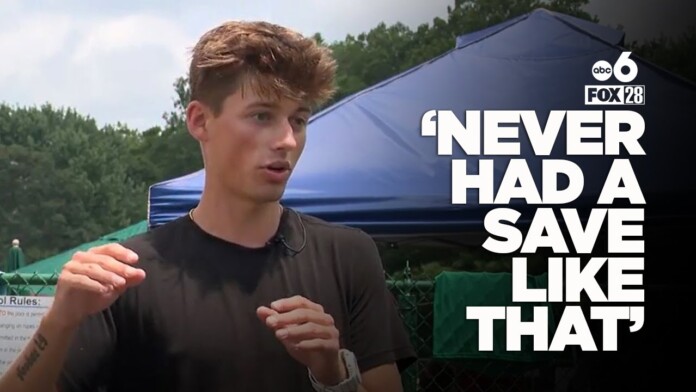
Eighteen-year-old lifeguard Kaden Ross ran the 150 yards to the woods, hopped a fence, and made it to the river first. A woman was drowning in the murky waters of the Licking River, which had been surging after a series of summer storms.

“There’s a water hole down there, probably 12 to 15 feet deep, and I see a woman actively drowning,” Ross told WSYX-TV in Columbus (see their video below). “I saved the mother. I bring her to a log, and then she tells me, ‘My boy’s under there’. So when she tells me this, I look in the water and I don’t see anyone.

“Another guy came and got into the water with me. As I am saving the mom, I give her to one of my guards. He sees the little boy’s feet. The only thing we can see are his little feet above the water.”

While the other lifeguards (Kaden’s sister McKenzie, and Lily Ward) attended to the panicking mother, Kaden and the other impromptu hero worked to retrieve her 7-year-old son, who was almost completely submerged.

When the two men got him out of the water, he was unconscious and not breathing at all. Kaden used his lifeguard training to administer a couple of rescue breaths, then immediately started CPR.

The CPR forced fluid from the boy’s mouth, which is usually a positive sign in water rescues.

LOOK AT THIS CRAZY: Fishermen Pull Off Dramatic Rescue of 38 Dogs Treading Water with No Shore in Sight

Local police and first responders arrived soon afterward to continue the rescue. But it was the lifeguards who made it all possible, providing heroism without hesitation at the most critical moments.

“That creek goes on forever in those woods,” Kaden told WBNS in an interview. “It just happened to be in a spot where it was by a pool, where there were lifeguards that are trained to save people drowning—and we heard the screams.

“I know God put us there in the right place and the right time.”

WATCH HEROIC TRAIN-TRACK RESCUE: Fearless Hero Sprints in Front of Train to Rescue Man Collapsed on Track

The perfect place so a group of heroes could rush to save a mother and her son—and both are expected to make a full recovery.

SHARE THIS GOOD NEWS With Your Own Heroes on Social Media…

Hospital Tailors Kidney Transplant to Protect Teen Baseball Player’s Swing–Putting it on Other Side of his Body

Sam Heintz – Credit: Corewell
Sam Heintz – Credit: Corewell Health

It was a parent’s worst nightmare, but doctors showed extra compassion for the patient who had dreams of being a baseball player when he grows up.

Five-year-old Sam Heintz was in the intensive care unit of Michigan’s Helen DeVos Children’s Hospital with failing kidneys and a grim diagnosis. He had a rare life-threatening disease (atypical hemolytic uremic syndrome) that produces blood clots in the kidney that can eventually lead to organ failure.

The little kid who loved baseball would need a kidney transplant if he ever hoped to play again. Fortunately, the next bounce of life fell in Sam’s favor when, at eight years old, the hospital located an organ donor.

Sam was a getting a new kidney. But the baseball player was a left-handed batter—so the family made a special request.

Typically, kidneys are transplanted into the lower right side of the body, which means every time Sam stepped into the batter’s box, the kidney would be directly exposed and vulnerable if a pitcher he were facing threw an errant fastball.

“When this is all done, can he still play baseball? If that’s gone, then our life is going to drastically change,” Sam’s mom told their provider, Corewell Health.

Could they place his kidney on the left side so it would be safer on the baseball diamond?

“They said that’s never been a request before,” Sam’s mother Alicia told WZZM-13, a TV news crew in Grand Rapids, Mich.

Luckily for the lefty, they were happy to do it. “They were happy to make it happen.”

“It was super cool,” Sam said. “I’m a lefty, and when I’m up to bat it’s pretty vulnerable if I turn and foul one off, or get hit there.”

CHECK OUT THESE BASEBALL TRIUMPHS:
‘Miracles Happen’: Woman Uses CPR Training she Learned 40 Years Ago to Save Teen Baseball Player’s Life
Phillies Team Makes Hype Video That Wins Their Bat Boy Cancer Survivor a Trip to the All-Star Game

“It makes sense, right?” Cristina Brini, a a physician assistant in pediatric nephrology at DeVos Hospital, said in the article. “If you’re left-handed and you have the bat up, you don’t want to be exposed to where all of these balls are coming at you at 100 miles per hour.”

Sam has now returned to the baseball field, and in an interesting twist of fate, the wife of the boy’s coach was his nurse as a child—so the story has come full circle.

Although the early innings of his life didn’t go the way Sam—or his parents—had planned, his medical team and a new kidney have helped him make a valiant comeback.

And you can be sure that baseball will continue to be a big part of it.

WATCH the TV-13 video below…

SHARE THIS ON SOCIAL MEDIA WITH THE BASEBALL FANS IN YOUR LIFE…

Top Secret D-Day Maps Found in Cardboard Box Detail Scary Defenses Faced By Allies at the 5 Landing Beaches

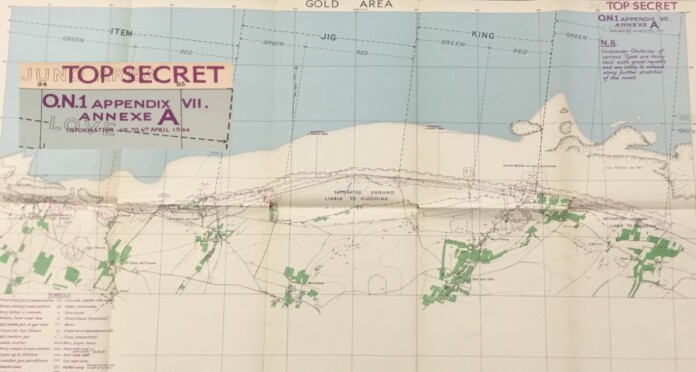
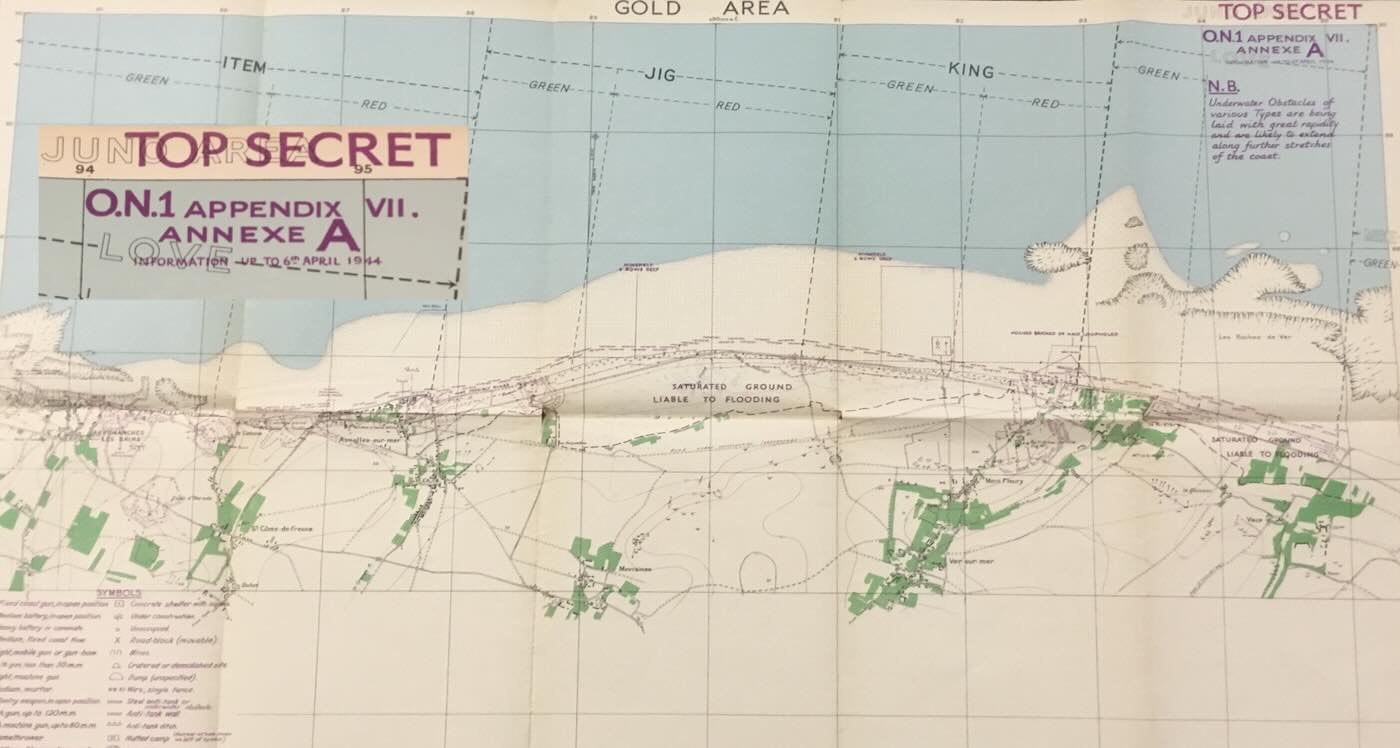
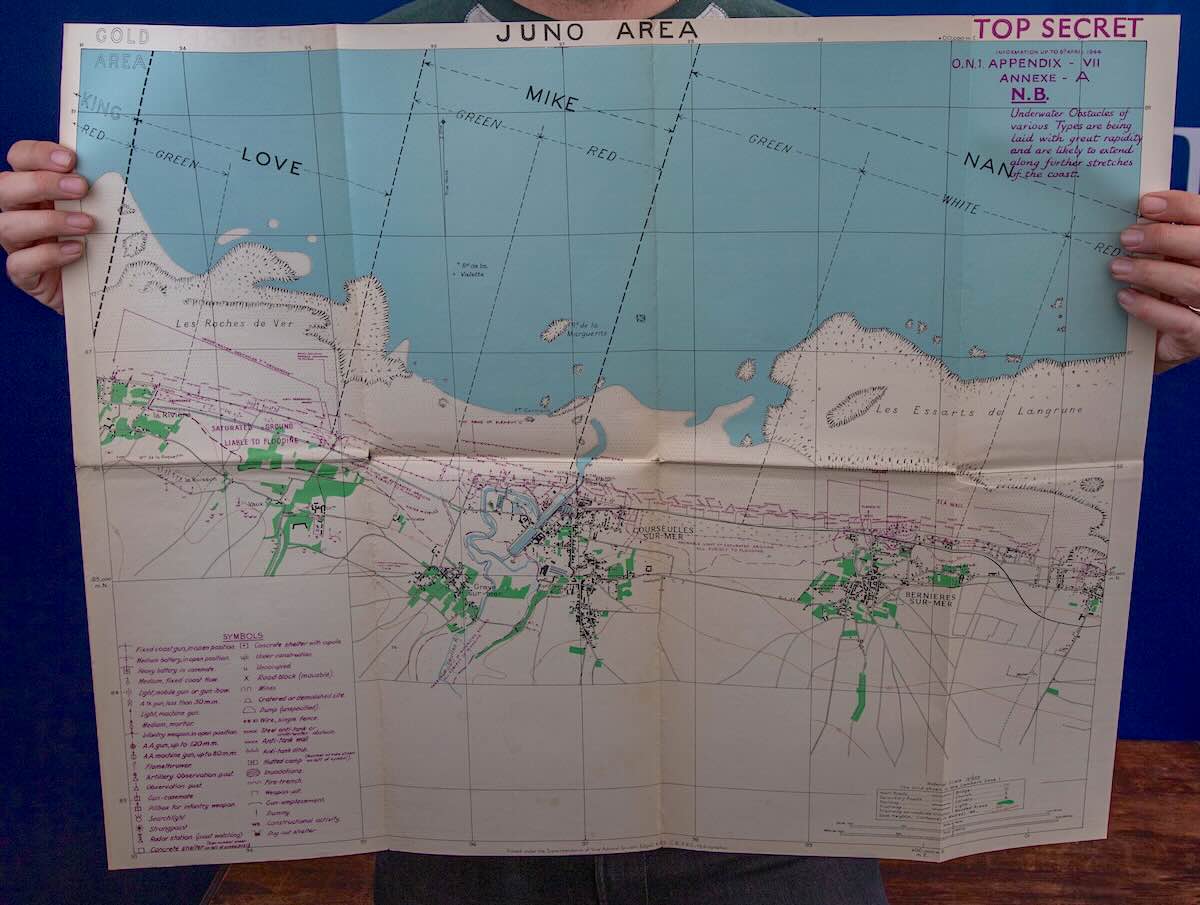
Top Secret D-Day Map shows Gold beach – via SWNS

Top-secret WWII maps used by Allied troops for the famous D-Day landings were found in a cardboard box after being purchased for just $10.

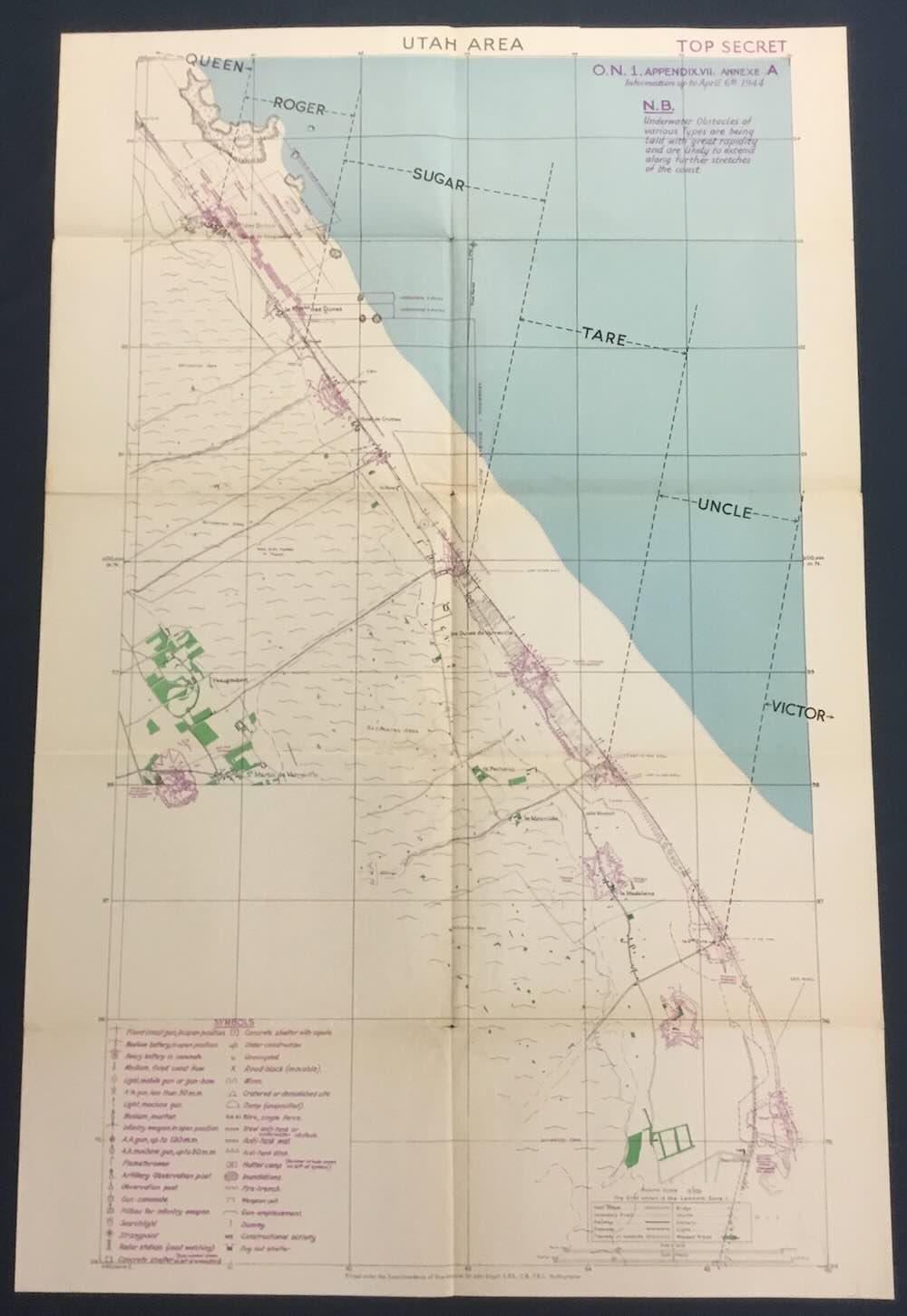
Five of the six maps provide restricted-access detail of the five landing beaches of Utah, Omaha, Gold, Juno and Sword, with the sixth one—for landing craft pilots—showing all the beaches

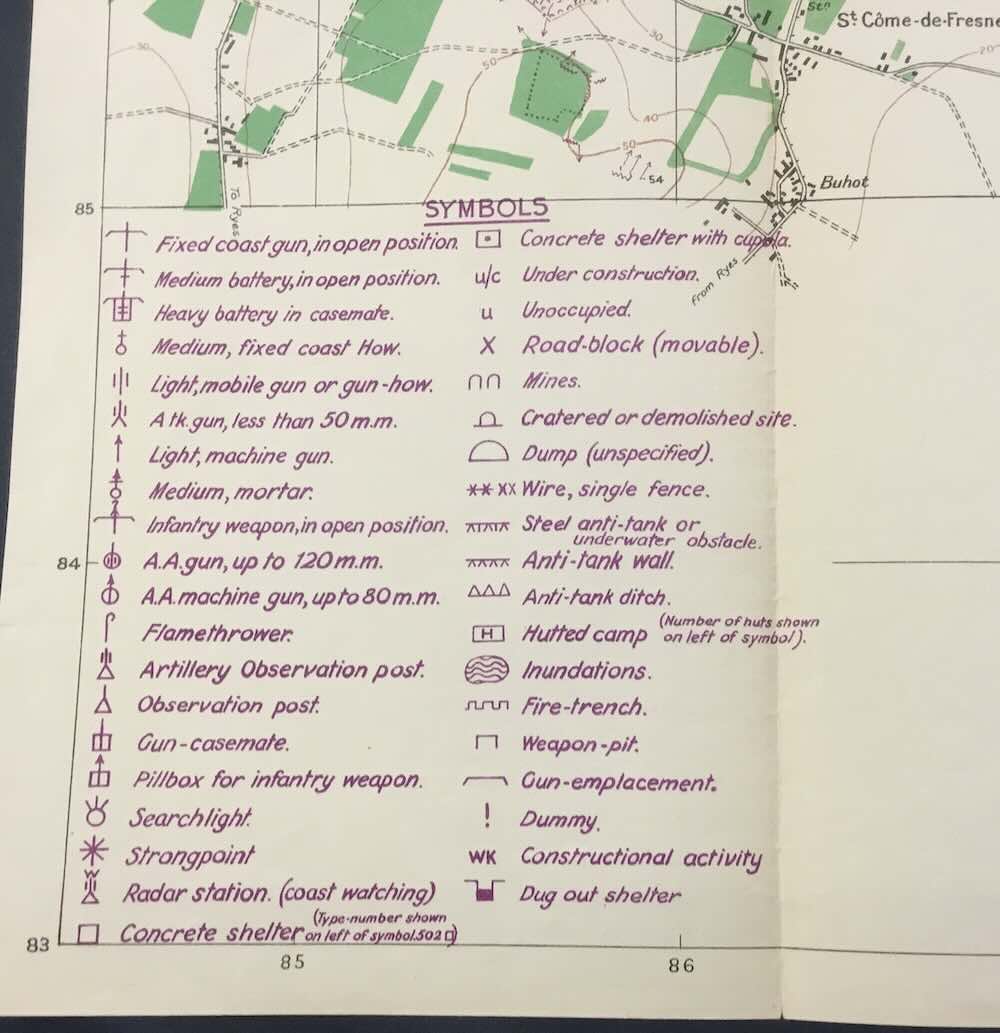
Each map features the French terrain—hills, woods, villages, and roads—but most importantly, they outline in chilling detail the German defenses, including barbed wire, minefields marked in purple ink, and even flamethrowers.

The collection had been in the possession of Royal Naval sub-lieutenant Walter Page who served on Landing Craft Tank 2138. His landing craft was one of 900 which played a vital role in transporting men and supplies across the English Channel on that fateful day.

The maps only came to light when their current owner finally looked through a box of memorabilia purchased at a previous auction—for which he paid just ten bucks.

This week, the documents will be auctioned off by Hansons Auctioneers in Derbyshire, England, beginning August 13. Bids can be placed online at their website.

The six maps will be sold individually, but they’re expected to fetch up to $20,000 in total.

Utah Beach Top Secret D-Day map – SWNS

“Imagine landing on a strange shore under enemy fire and not knowing where you were going or what hazards awaited,” said Hansons’ military expert, Matt Crowson.

“It is amazing to think, had it not been for the eagle-eyed vendor [sorting through his newly purchased box of papers] they would likely never have seen the light of day.”

More than 150,000 Allied troops were involved in the successful effort to push the Nazi defenders back from the Normandy beaches, as they sought to decisively turn the tide of WWII.

While the Americans focused on the western beaches of Utah and Omaha, the British and Canadians landed on the eastern shores of Gold, Juno and Sword.

Creating up-to-date maps of the shorelines was vital for Allied success, so, for months, photo-reconnaissance aircraft had helped create an accurate record of the French coast.

Closeup of symbols on D-Day map – SWNS

ANOTHER LUCKY FIND: War Hero Codebreaker Alan Turing’s Papers Found in Loft And Saved From Shredder to Fetch Record $625,000

And because it wasn’t known exactly where D-Day would take place, maps had to be developed for a wide area of France.

The formidable German fortifications featured 2,500 anti-tank obstacles acting as shoreline defense, while hundreds of submerged mines proved fatal to troops wading ashore.

Minefields behind the beaches coupled with barbed wire and anti-tank ditches also made advancement even more difficult.

The detailed D-Day maps were 1:12,500 scale, meaning that one kilometer on the ground is represented by eight centimeters.

Juno Beach D-Day map showing the size – SWNS

The maps are also divided into different sectors, in the case of Gold Beach, the area is further made up of Item, Jig and King (using the phonetic alphabet of the 1940s). Each sector was then sub-divided into “red” and “green”.

Walter Page and his Landing Craft crew were part of Assault Force ‘U’1, when soldiers stormed Utah Beach in the first wave of landings at 6:30 AM on June 6, 1944.

EVER HEARD OF THIS? Rare WWII Pigeon Parachute Used to Carry Messages to French Resistance Ahead of D-Day Found in Old Shoebox

“The maps are rare and important documents that mark the beginning of the liberation of Western Europe from Nazi Germany,” said the Auctioneer’s website.

Visit the Auctioneer’s website for more information and to place a bid starting on Wednesday (scroll down a little to see the maps).

SHARE THE AMAZING MAPS With WWII Collectors on Social Media…

“Every great inspiration is but an experiment, though every experiment is not a great inspiration.” – Charles Ives

Quote of the Day: “Every great inspiration is but an experiment, though every experiment is not a great inspiration.” – Charles Ives

Photo by: Jakob Owens (cropped)

With a new inspirational quote every day, atop the perfect photo—collected and archived on our Quote of the Day page—why not bookmark GNN.org for a daily uplift?

Good News in History, August 10

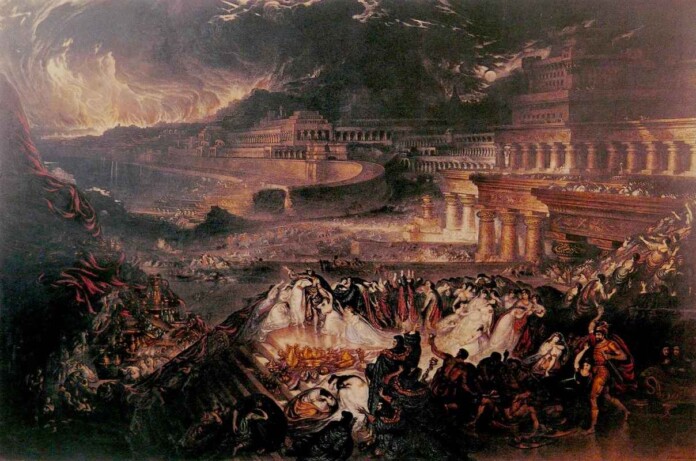
A painting entitled the Fall of Nineveh - public domain

Today is the approximate date for the fall of Nineveh, capital of the Ancient Assyrian Empire, one of the most brutal and despotic of all Near-Eastern states. Though this history column never suggests the conquering of a people or the destruction of a city as a good thing, the fall of Nineveh essentially liberated a half-dozen other states from a tyrannical yoke, and recentered power around Babylon, which seems, as we view it today, to have prepared the table for the arrival of the modern Mediterranean. READ more about this mega-battle from history… (612 BCE)

First 3D-Printed Home Made Primarily From Soil is Built in Japan–Ditching Unsustainable Concrete

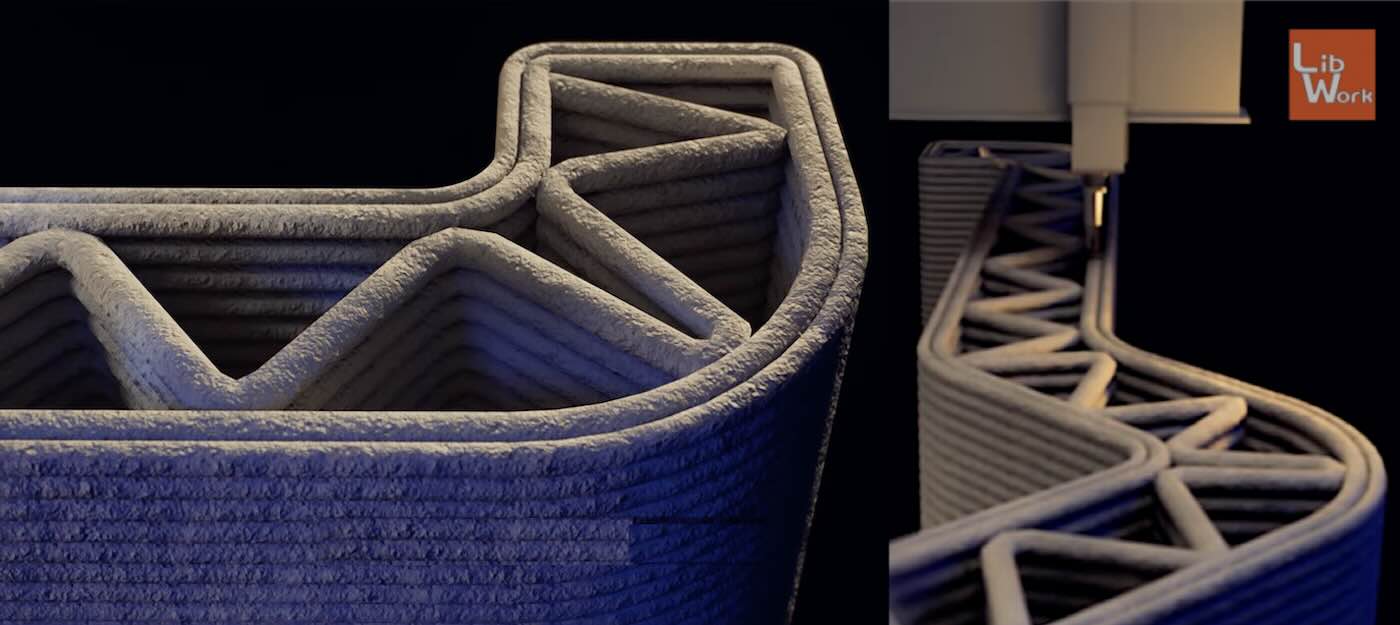
First 3D printed Earth House by Lib Work, Ltd

Collaborating with robotics engineers and Italian 3D printer manufacturers, a Japanese company is building “homes of earth” made primarily from soil.

Utilizing AI technology from design through construction, Lib Work, Ltd. completed their first 3D-printed earth home in Yamaga, Kumamoto on July 22, calling their creative process “uncharted territory where tradition and convention offered no guide”.

While the automotive industry has undergone rapid transformation through technological advances, the housing industry has seen virtually no fundamental innovation in construction methods, materials, or structures for over 50 years.

With an eye toward recycling, sustainability, and reduced carbon emissions, Lib Work focused on combining 3D-printing with natural materials enhanced for strength, constructibility, and design quality.

The walls of the completed Lib Earth House Model B use no cement (which produces industrial waste). Instead, they utilized only naturally derived materials with soil as the primary component to create sustainable earthen walls.

Compared to the previous model (Model A) that used some cement, the building’s strength has improved approximately fivefold while significantly reducing CO2 emissions from the manufacturing process itself.

The inventions from this development are patent pending, but pre-orders are being accepted this summer, according to their media release.

3D printing walls – Lib Work via YouTube

The walls contain cutting-edge sensors as part of a wall condensation monitoring system that monitors in real-time the temperature and humidity inside the walls. This system enables the house to manage its own condition by detecting condensation in advance to maintain a long-lasting, comfortable living environment.

Additionally, the homes include remote operation of air conditioning, lighting, and bath controls via smartphone or dedicated monitor. It also features an off-grid energy system that combines Tesla’s Powerwall battery storage with solar panels to create an electrically independent, self-sufficient home.

Lib Work

A courtyard incorporates natural light and ventilation.

“Together with Lib Work, we hope to continue to provide architectural solutions that contribute to achieving a recycling-centered society,” said 3D Printer collaborators Ove Arup and Partners.

“By using local soil for on-site material production, and by making all components easily removable, separable, and reusable/recyclable, we aim to provide reusable architecture that produces no waste when demolished.”

3D PRINTED HOMES OF WOOD: The World’s Largest 3D Printer Is Building Cozy Homes from Wood

The 3D printer manufacturer, Wasp, which provided the crane printer “heartily” congratulated the Lib Work team who paved the way for Japan to play a leading role in sustainable architecture.

“Their work fuses minimal design with organic inspiration, creating an aesthetic sensibility reminiscent of the Japanese ‘kintsugi’ philosophy that celebrates uniqueness and the beauty of natural materials.”

Lib Work

LOOK: World’s Tallest 3D-Printed Structure Rises 4 Stories into the Air Like a Wedding Cake, Inspired by Local Bakeries

The AI development partner, Maket Technologies, said, “Our envisioned future is not about building the same houses faster but designing and optimizing the most suitable housing for each individual—accessible housing for everyone.

Through these cutting-edge initiatives, Lib Work’s goal is the construction of 10,000 units by 2040—but there was no information yet on their cost.

GREAT NEWS: First 3D Printed Neighborhood is Providing 100 Sturdy Affordable Solar Homes Near Austin For $400K+

BUILD SOME LIKES By Sharing This Cutting-Edge Home on Social Media…

Canadian Mountie Sits Down With a Senior–And The Conversation Saved His Life

Courtesy of British Columbia Royal Canadian Mounted Police - FB
Courtesy of British Columbia Royal Canadian Mounted Police – FB

A family member called the Royal Canadian Mounted Police in British Columbia requesting a visit to the home of their loved one to check on his well-being—and the officer ultimately ended up saving the senior’s life.

In April, the Salt Spring Island Mounties received the request from an out-of-town family to check on their elderly father who they’d not heard from in a couple of months.

Police attended the residence and found the senior appeared to have been living in unhealthy conditions. Initially, he was reluctant to engage and was adamant that he was fine and not needing help.

But the officer, Cst. Lloyd, continued to speak with him for over an hour and built up a rapport with the man, who eventually agreed to be transported to hospital by ambulance where his health was checked.

Just in the nick of time

Then, last month, the man showed up at the Salt Spring Island office of the RCMP to show his appreciation for the officer and share the outcome of the medical diagnosis.

It turns out the man had unknowingly been bleeding internally for some time and, according to doctors, would have succumbed in the next 24 hours had it not been for the intervention of Officer Lloyd who convinced him to go to the hospital.

“What started as a standard call became something far more profound,” said Supt. Bruce Singer, commanding officer for the Island District RCMP.

“Despite being met with hesitation and resistance, Cst. Lloyd stayed present, didn’t rush, didn’t retreat, but instead listened, showed compassion, and built a connection that ultimately saved his life.”

MORE GOOD POLICE:
Philadelphia Police Officer Sets Aside Fear of Heights to Rescue Child from a Roof
Dog Sits Down in Middle of Road Unmoving–Til Officer Follows to Save Her Owner
‘We got him!’ Hero Michigan Police Use Heat Cam to Rescue Missing Toddler Wearing Only Diapers on Frigid Night

“This is what ‘Beyond the Mission’ truly means — acting not just out of obligation, but out of care and commitment to another human being,” Singer said proudly.

SHOWCASE THE COMPASSION Of One Officer By Sharing This on Social Media…

Historic Moment as Red-Billed Bird Takes to the Skies for First Time in 200 Years–A Win for Chough Species in England

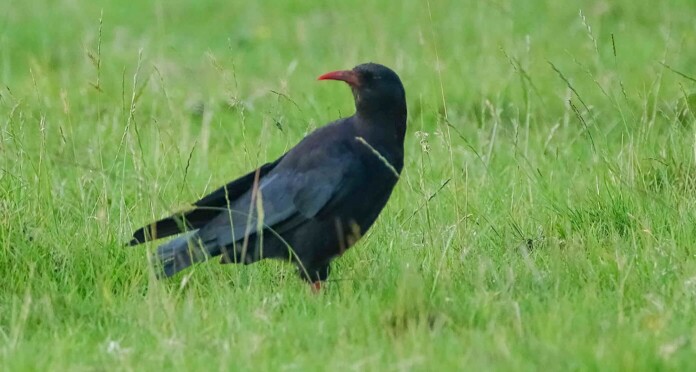
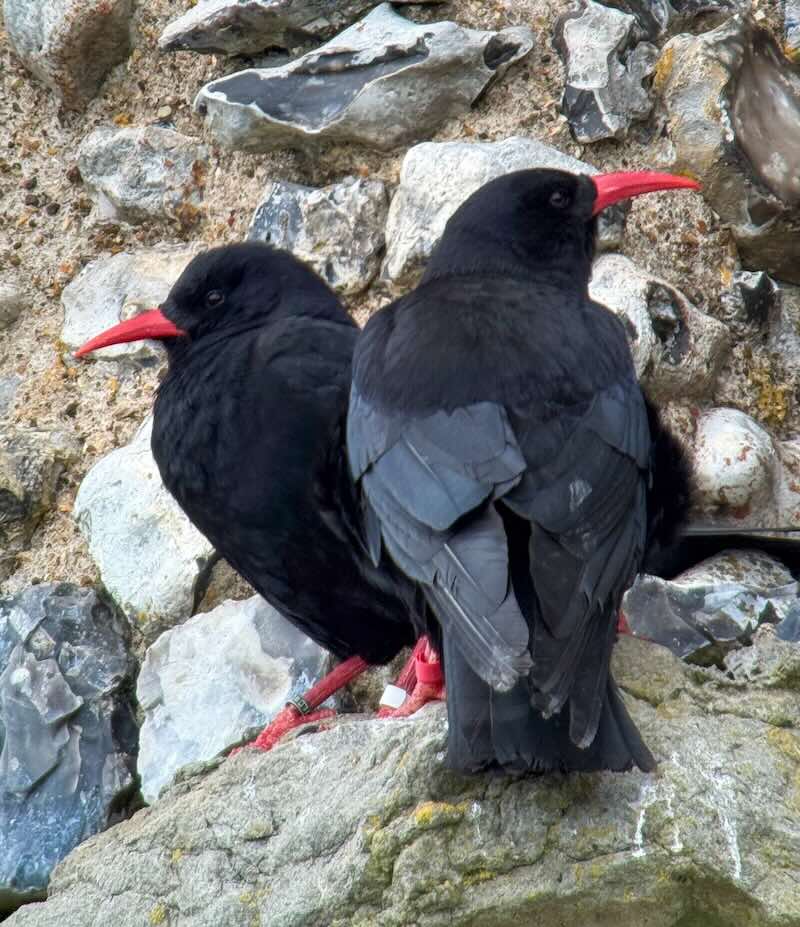
A wild-born red-billed chough - SWNS
A wild-born red-billed chough – SWNS

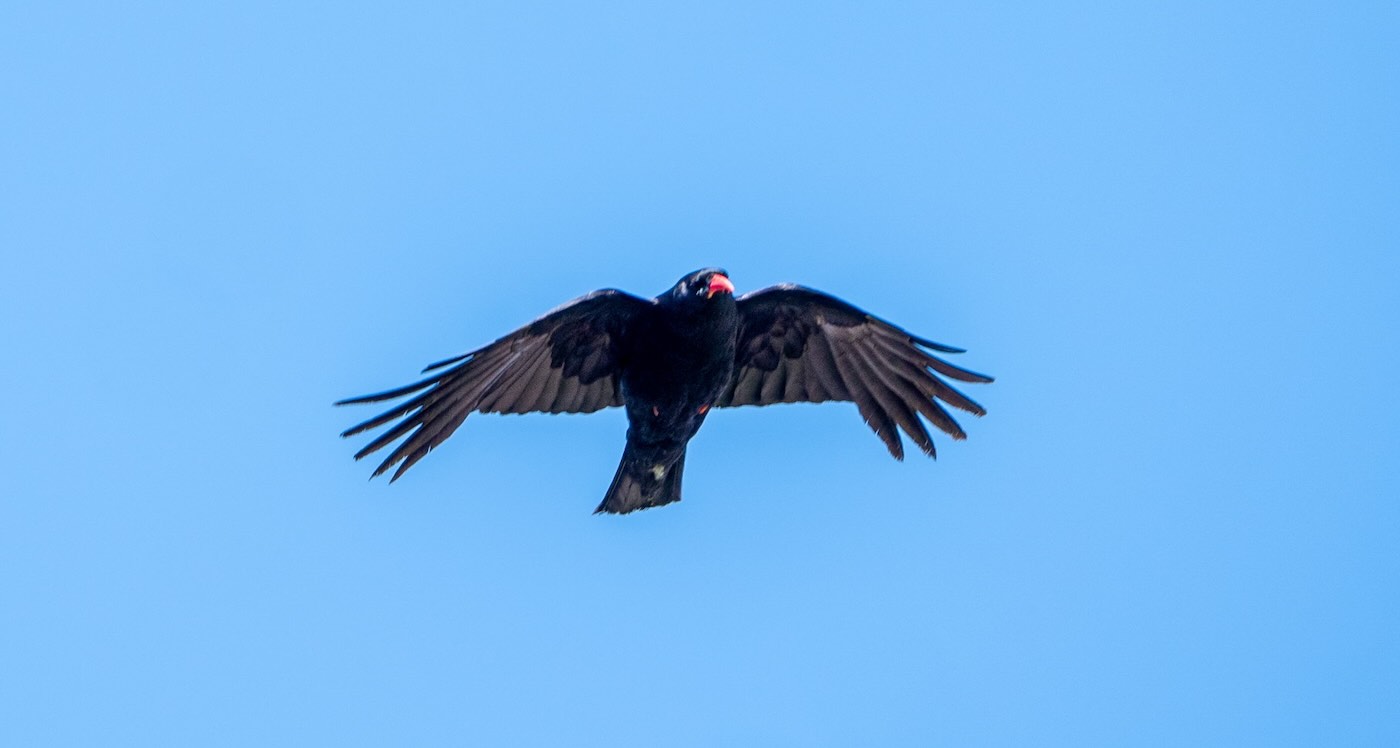
A wild-born red-billed chough (CHUF) has taken to the skies in South East England for the first time in over 200 years.

The young chough took flight from a wild nest in Dover, marking the first time in more than two centuries that the bird has lived independently in the wild in Kent.

Liz Corry, the Chough Release Supervisor at Wildwood Trust, says the fledging is a powerful indicator that the species is starting to re-establish itself naturally in the region.

“This is a moment we’ve all been hoping for. To see a wild chick not only hatch but fledge and take to the skies is a major step forward.

“It confirms that the birds are finding suitable nesting habitat, and pairing up to raise young—exactly what we’ve been working towards.”

Once a familiar sight in Kent, the red-billed chough vanished from the county more than 200 years ago, due mostly to habitat loss.

Its cultural ties to the region endure—most famously on the coat-of-arms of Canterbury, and in the legend of Thomas Becket, where it’s said the bird’s red beak and legs were stained by the martyr’s blood.

Wild-born red-billed chough takes to the skies in Dover England – SWNS

Earlier this spring, a nest was discovered at Dover Castle that produced the chick which successfully fledged last month.

Conservationists say this “remarkable” milestone comes just three years after the launch of an ambitious reintroduction program, led by Wildwood Trust, Kent Wildlife Trust, and Paradise Park.

The project’s five-year plan is to introduce up to 50 birds to the South East region.

The Kent population is also part of a broader strategy to link up chough populations across southern England—being overseen by a collaborative steering group involving Natural England and other conservationists.

They explained how decades of work to restore and manage vital chalk grassland habitat in East Kent have laid the foundation for this species’ return. Kent Wildlife Trust has worked closely with landowners and partners including the National Trust and White Cliffs Countryside Partnership to bring grazing areas back to the region, creating the ideal conditions for the birds—which are in the crow family—to forage and breed.

TWEET THIS GREAT NEWS: UK Zoo Helps Hatch Three of World’s Rarest Birds–Blue-Eyed Doves–with Only 11 Left in Wild

Red-billed chough fledgings – SWNS

“This project shows what’s possible when long-term habitat restoration meets ambitious species recovery,” said Paul Hadaway, Director of Conservation and Engagement at Kent Wildlife Trust.

“A thriving chough population in Kent not only revives a lost species, it also proves the value of restoring rare habitats like chalk grassland, which are vital for a huge range of wildlife.”

Chalk grassland is among the most biodiverse habitats in the UK, supporting rich communities of wildflowers and invertebrates. The insects and larvae found in dung from grazing animals are a crucial food source for choughs during the breeding season.

LOOK: First Egg Laid in the Wild by Guam Kingfishers in 40 Years–Hanging on to Survival Thousands of Miles from Home

The project was funded by the Natural England Species Recovery Capital Grant Programme for 18 months until March this year, alongside conservationists and donors who have contributed to the Chough Appeal launched by Kent Wildlife Trust, which has brought in significant funding to help the project continue.

SHARE THE FINE-FEATHERED GOOD NEWS With Bird Lovers on Social Media…

Your Weekly Horoscope – ‘Free Will Astrology’ by Rob Brezsny

Our partner Rob Brezsny, who has a new book out, Astrology Is Real: Revelations from My Life as an Oracle, provides his weekly wisdom to enlighten our thinking and motivate our mood. Rob’s Free Will Astrology, is a syndicated weekly column appearing in over a hundred publications. He is also the author of Pronoia Is the Antidote for Paranoia: How All of Creation Is Conspiring To Shower You with Blessings. (A free preview of the book is available here.)

Here is your weekly horoscope…
FREE WILL ASTROLOGY – Week of August 9, 2025
Copyright by Rob Brezsny, FreeWillAstrology.com
LEO (July 23-Aug. 22):
In the Arctic, the sun shines for 24 hours a day during midsummer. There is no night, only the surreal glow of prolonged gold. The human body, confused by the unending day, may be confused about when to sleep. For some, this creates disorientation, and for others, a strange euphoria. In my astrological opinion, Leo, you have entered a metaphorical version of this solar dreamscape. Your creative powers are beaming like a relentless sun. There may be little darkness in sight. So how will you rest? How will you replenish under the glow of fervent possibility? Be wisely discerning with your energy. Don’t mistake illumination for invincibility. Bask in the light, yes, but protect your rhythms.
VIRGO (Aug. 23-Sept. 22):
Now is an excellent time for you to swear sacred oaths. I suggest you get less comfortable with transitory arrangements and short-term promises. The near future will also be a ripe phase to make brave commitments that require you to go farther and deeper than you’ve dared to before. I recommend you forgo the cheap thrills of skipping along from one random moment to the next. Embrace a game plan. Finally, I urge you to cast magic spells on yourself that will release your unconscious mind from old fixations that subtly drain your power to fulfill your dreams. Please please please surrender trivial obsessions that distract you from your life’s key goals.
LIBRA (Sept. 23-Oct. 22):
In West African traditions, griots are key figures in their communities. They serve as storytellers, oral historians, poets, genealogists, and advisors. Their presence is often central to events like weddings, funerals, and ceremonies. In the coming weeks, Libra, I hope that you will embrace a role that resembles the griot. Your ability to enhance and nurture your network is at a peak. You have extra power to weave together threads that have become frayed or unraveled. Given your potential potency as a social glue, I advise you to avoid gossip and instead favor wise, kind words that foster connection.
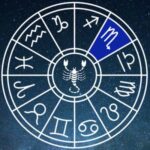
SCORPIO (Oct. 23-Nov. 21):
The phrase “elegant sufficiency” is an old English expression meaning “just enough” or “a sufficient amount in a refined or tasteful way.” I am expanding it to also mean “the simplest solution that solves a problem completely without unnecessary complexity.” It’s your power phrase, Scorpio. What you need is not intricate perfection, but elegant sufficiency: enoughness. I suggest you welcome this gift with enthusiasm—not in a resigned way, but with a quiet triumph. Maybe your plan doesn’t need more bullet points. Maybe the relationship doesn’t require further analysis. Maybe your offering is already thorough. Allow yourself the sweet satisfaction of having just the right amount. What you have created may be more organically whole than you realize.
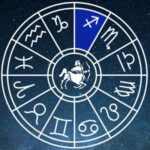
SAGITTARIUS (Nov. 22-Dec. 21):
How do you become a maestro of desire? What must you do to honor your beautiful yearnings and cull your mediocre ones? What’s the magic that will help you fulfill your life’s purpose by trusting your deepest cravings? Here are some tips. First, jettison your inessential desires and cherish the precious yearnings that are crucial. Second, dispose of outmoded goals so you can make expansive space for robust goals that steer you away from the past and guide you toward the future. These are challenging tasks! The very good news is that the coming weeks can be a turning point in your quest to claim this birthright.
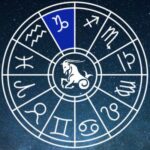
CAPRICORN (Dec. 22-Jan. 19):
I’m writing a fairy tale about an ancient land whose queen regards poetry as essential to the public good. She often invites poets to perform for her and her court. When they finish a stirring passage, they bow—not to the queen or other observers, but to the silence they mined to access their inspiration; to the pregnant chaos from which the poem was born. The pause is a gesture of gratitude and acknowledgment. I invite you to partake in similar acts of appreciation, Capricorn. Bow toward the mysteries from which your blessings flow. Honor the quiet sources that keep you fertile. Praise the treasures in the dark that fuel your intense activities.
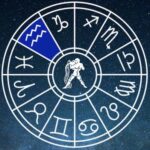
AQUARIUS (Jan. 20-Feb. 18):
When I advise you to get naked, I’m not necessarily suggesting that you doff your clothes. What I primarily mean is the following: Shed the armor around your heart; strip off your defense mechanisms; discard knee pads you wear while kissing butt or paying excessive homage; recycle shoes, jackets, pants, and opinions that don’t fit you; and discard pride-spawned obstacles that impede your communions with those you love.
PISCES (Feb. 19-March 20):
The Finnish word sisu describes a radical, unglamorous persistence. Those who possess sisu can summon extraordinary determination, tenacity, and resilience in the face of confusion or difficulty. It’s not about bravado or flair, but about soulful gutsiness. I suspect it’s time for you to draw on your *sisu*, Pisces. It will empower you to tap into reserves of strength that have previously been unavailable. You will activate potentials that have been half-dormant.
ARIES (March 21-April 19):
The Tagalog word gigil refers to the urge to squeeze or pinch something adorable. It’s an ecstatic tension that verges on overflowing the container of decorum. In the coming weeks, you Aries could feel gigil for the whole world. Everything may seem almost too vivid, too raw, too marvelous, and altogether *too much*. I advise you to welcome these surges and allow them to enhance your perceptions. Laugh hard. Cry freely. Invite goosebumps. (But you may not want to actually squeeze anyone without their permission!)
TAURUS (April 20-May 20):
In Japan’s Snow Country, artisans practice yuki-sarashi. It involves laying woven cloth on snow under sunlight to bleach, brighten, purify, and soften the fibers through the effects of snow, sunlight, cold, and ozone. Because this process doesn’t require harsh chemicals, it helps maintain the fabric’s strength and prevents it from yellowing over time. I propose you make yuki-sarashi a useful metaphor, Taurus. Something fragile and fine is ready to emerge, but it needs your gentle touch and natural methods. You are often grounded in the adept manipulation of raw material—what works, what holds, what can be relied on. But this burgeoning treasure needs maximum nuance and the blessings of sensitive care.
GEMINI (May 21-June 20):
When African American dancer Josephine Baker arrived in Paris in 1925 at age 19, she was seeking refuge from her home country’s racism. Her electrifying performances soon made her a celebrity. Author Ernest Hemingway said she was “the most sensational woman anyone ever saw.” As she grew wealthy, she donated generously to French charities, hospitals, and schools. Her compassionate works evolved further, too. During World War II, she worked as a spy for the French Resistance against the Nazi occupation. Later, she became a civil rights activist in the US. Can you guess the astrological sign of this multi-faceted star? Gemini! I hope you will be inspired by her in the coming weeks. May you, too, use your natural gifts and stylish flair to serve the greater good. Look for opportunities to mentor, encourage, and advocate for those lacking your advantages.
CANCER (June 21-July 22):
When a glacier moves, it doesn’t rush. It presses forward incrementally, reshaping mountains, carving valleys, and transporting boulders. In a metaphorical sense, Cancerian, you are now in glacier time. A slow, relentless, and ultimately magnificent process is afoot in your life. Others may not yet see the forward momentum. Even you may doubt it. But the shift is real and permanent. Trust the deep, inexorable push. Your soul is hauling whole landscapes into new configurations.

WANT MORE? Listen to Rob’s EXPANDED AUDIO HOROSCOPES, 4-5 minute meditations on the current state of your destiny — or subscribe to his unique daily text message service at: RealAstrology.com

(Zodiac images by Numerologysign.com, CC license)

SHARE The Wisdom With Friends Who Are Stars in Your Life on Social Media…

“There is no love that is not an echo.” – Theodor Adorno

Orangutans by Getty Images for Unsplash+

Quote of the Day: “There is no love that is not an echo.” – Theodor Adorno

Photo by: Getty Images for Unsplash+

With a new inspirational quote every day, atop the perfect photo—collected and archived on our Quote of the Day page—why not bookmark GNN.org for a daily uplift?

Orangutans by Getty Images for Unsplash+

Good News in History, August 9

Singapore Merlion at Marina Bay

60 years ago today, Singapore became the first country ever to gain independence unwillingly, after it was expelled from Malaysia. Affirmative action policies that granted privileges to Malays over other ethnic minorities caused significant unrest after a merger with Sabah, Sarawak, Malaysia, and Singapore. Two years later, the Malaysian Prime Minister Tunku Abdul Rahman decided to expel Singapore from the federation. The Parliament of Malaysia voted 126–0, with all Singaporean MPs boycotting the vote, in favor of the expulsion on 9 August 1965. READ the miracle that happened next… (1965)

New Research on Genes Linked to Stuttering Could Be ‘Life-Changing‘ for Those with Speech Disorder

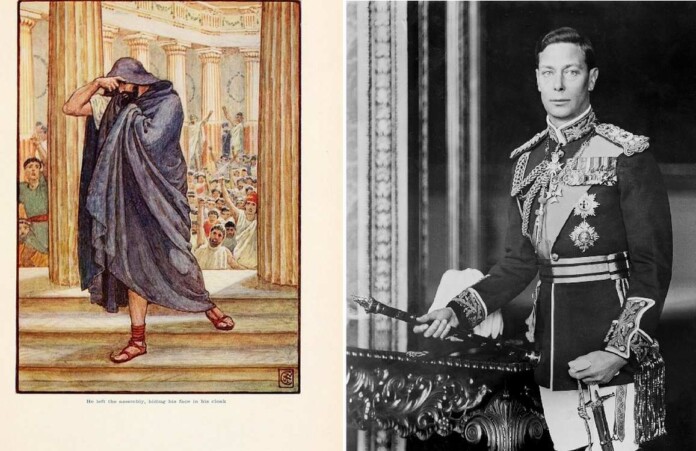
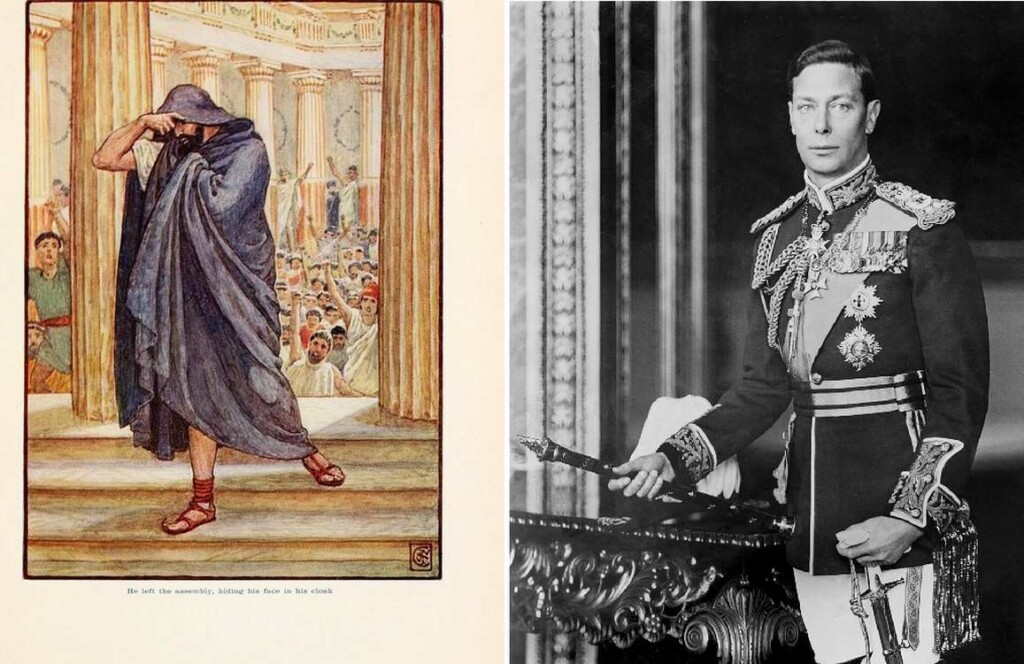
An illustration of Demosthenes of Athens and a photograph of King George VI, both of whom had stutters

A genetic analysis of a million individuals with stutters has clued Australian researchers into a potential genetic component that would revolutionize the diagnosis and treatment of this common disorder.

400 million people worldwide have stutters, and a cross-Pacific partnership between Curtin Stuttering Treatment Clinic in Western Australia a Wayne State University in Detroit, Michigan, identified 48 genes that show a hereditary link.

Scientists will almost always feel that pause will give pride, yet the authors heralded their work as “groundbreaking” and something that will help pave the way towards pre-verbal diagnosis of stuttering.

Stutters tend to emerge shortly after a child becomes verbal, but the longer a stutter is in the child’s speech motor system, one of the study authors said, the more of a habit it becomes.

“[The study finding] means those particular young people will be offered early intervention straight away hopefully, and in doing that we can curtail what can be otherwise a lifelong disability,” said Associate Professor at the Curtin Clinic, Janet Beilby, told ABC News Australia.

“We found consistent DNA results, 48 of them, and in addition to that we found 57 [genomic] hot spots so it’s very exciting because with these hot spots we can dig further,” she added.

MORE STORIES LIKE THIS: CRISPR Used to Remove Extra Chromosomes in Lab Model of Down Syndrome and Restore Cell Function

Stuttering, or stammering as it’s called in British English, has afflicted hundreds of notable people over the years, from public figures like Demosthenes of Classical Athens and King George VI of the UK, to entertainers like Bill Withers and Hugh Grant.

It can be corrected through speech therapy, and the earlier such therapy starts the better are the outcomes it produces. Beilby et al’s research will go along way toward reducing the impact of stuttering on the self-esteems of the next generation.

SHARE This Breakthrough Research With Your Friends… 

Scarlett Johansson and AC/DC Are Being Used to Scare off Wolves by American Farmers

credit (left) Unsplash (right) Brian Johnson, from ACDC - credit Matt Becker, CC 3.0. BY-SA
credit (left) Unsplash (right) Brian Johnson, from ACDC – credit Matt Becker, CC 3.0. BY-SA

From Wyoming and Oregon comes a story most bizarre: Scarlett Johansson’s voice being used to frighten away wolves.

Famed for their emotional intelligence, the gray wolf population around Greater Yellowstone are obviously not adept enough to detect acting when they hear it, as it was a scene from Johansson’s film Marriage Story that has them spooked.

Ever since gray wolves were reintroduced to Yellowstone National Park, farmers have had to deal with attacks on their livestock. Some were seeing double digit losses of cattle in a single month.

They are protected and cannot be fired upon or poisoned, so according to multiple reports farmers are using drones to pass over their land playing AC/DC music and the aforementioned Johansson film.

Most could probably understand how “Hell’s Bells” could scare an animal away, but biologists have noted that wolves, for whatever reason, find the sounds of humans arguing disturbing enough to be deterred by them.

“I need the wolves to respond and know that, hey, humans are bad,” the aptly-named Paul Wolf, a USDA district supervisor in Oregon, told the Wall Street Journal, who first confirmed that Johansson’s voice from that particular film clip was being played by the drones.

OTHER WOLF NEWS: Mexican Wolf Numbers Growing in U.S. for 8th Consecutive Year, Soon to Be Howling at a Reserve Near You

Euronews reports that the drones and their broadcasts have worked dramatically to lesson predation, with one monitoring period seeing wolf attack numbers fall from 11 in 20 days to just 2 in 85 days.

That’s a huge economic relief to ranchers, and probably good for a laugh and a story for dinner guests too.

WATCH the scene that the wolves find frightening… 

SHARE This Bizarre Method Of Protecting Livestock With Your Friends…