Quote of the Day: “Let the disappointments pass. Let the laughter fill your glass.” – Jackson Browne (turns 73 today)
Photo: by Wil Stewart
With a new inspirational quote every day, atop the perfect photo—collected and archived on our Quotes page—why not bookmark GNN.org for a daily uplift?
An enormous amount of the world’s emissions are generated by our food systems, so an agricultural technology firm in Lithuania moved to tackle the largest definitive source by introducing the world’s first totally-green tractor.
Big engines, massive torque, big heavy tires, and hardly ever leaving third gear means fossil fuels from farm machinery are a massive contributor to agricultural emissions, and AUGA Group’s biomethane-electric hybrid tractor will go a long way towards reducing them.
AUGA is Europe’s largest vertically integrated organic food producer, and the AUGA M1 is the first of its kind, designed as a hybrid to ensure that farmers can run from sunup to sundown.
“Three years ago, when we first calculated our emissions, we saw that as much as 30 per cent of them come from the use of fossil fuels on farms,” stated AUGA CEO Kęstutis Juščius.
“There were simply no solutions to change it. That is why we have taken the lead in developing technologies that will allow us to create a new standard for sustainable agriculture and drastically reduce pollution throughout the food value chain. The first result of this work is a biomethane and electric tractor.”
Rather than run only on biomethane as other green tractors, the addition of an electric motor powered by internal combustion from the biomethane and battery storage to save power during low-demand tasks, allows for many hours of additional use.
More clever than it looks
Biomethane was specifically targeted as a desired fuel source as it’s one of the greenest biofuels. The cool part about it is that it’s generated from livestock waste which farmers may need to dispose of. Livestock waste is a large contributor of methane: a more potent, but largely harmless greenhouse gas.
One of the reasons it’s largely harmless is that unlike CO2, if one reduces methane emissions by an amount, say 10,000 tons, the concentrations of methane in the atmosphere immediately shift to reflect that reduction, while a similar reduction in CO2 has no effect whatsoever on its atmospheric greenhouse concentrations.
Therefore by turning the manure into biomethane fuel, it’s having a direct pound for pound reduction in emissions.
In order to maximize the effectiveness of the biomethane fuel, the M1 is designed to accommodate larger, specialized canisters, which the company offers a refueling service for.
The tractor is set to enter production in its native Lithuania next year and will come with a top speed of around eight miles per hour. Running for twelve hours, it produces net zero emissions, while just one M1 on a farm will reduce a farmer’s carbon footprint by 100 tons per year.
“Our invention makes it possible to create a wide range of tractor applications and make it accessible to all farmers who want to work sustainably,” added Juščius. “We are not developing technology just to solve our own emissions and deliver on the promise of becoming a CO2-neutral company by 2030. Our goal is bigger—we will strive to make this tractor and other technologies that are still being developed available to farmers all over the world and help solve the global problem of pollution in the agricultural sector.”
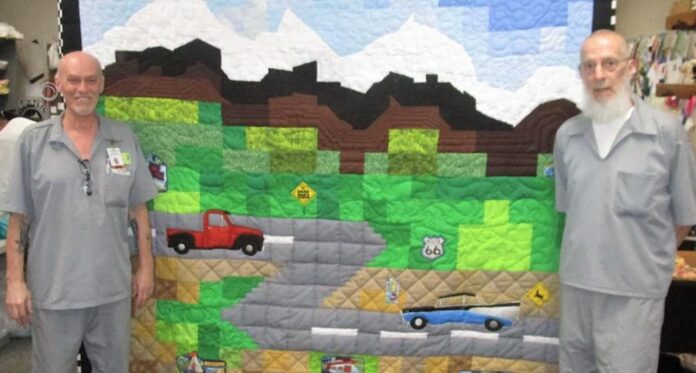
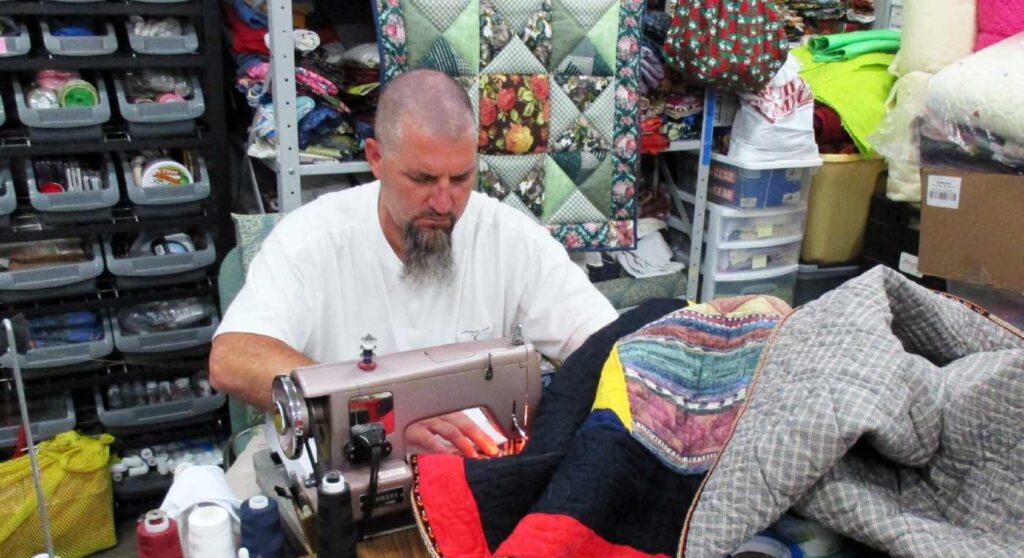
Quilters at South Central Correctional Facility - by Joe Satterfield
Joe Satterfield
While quilting bees generally conjure images of grandmas piecing together scraps of fabric to create family heirlooms for future generations, crafting the colorful, cozy bed covers has become an outlet for incarcerated men not only to express their creativity but to give something positive back to the communities from which they came.
Over the past 10 years, more than 2,000 personalized quilts assembled by the inmates of Missouri’s South Central Correctional Facility have been donated to children in the state’s foster care system or auctioned off to fund local charitable organizations.
“When I learned that I could help bring a smile to a child’s face, I was all in,” Fred Brown said in an interview with The Washington Post. “Right now, I’m working on a puppy quilt that will go to a 13-year-old boy. I don’t know anything about him, but I have a feeling he’s going to love this quilt.”
William White, an upholsterer by trade, felt a special affinity for the project and joined soon after he began serving his sentence in 2015. Along with his other prison chores, White volunteers to spend seven hours a day, five days a week quilting with his peers.
“The guys were making these beautiful quilts to give away to foster kids, and I knew it was something I wanted to be a part of,” he told WaPo. “I have six kids, and sewing had always been my passion. And now, here was a way for me to give back.”
Based on the precept of “restorative justice” which stresses rehabilitation rather than punishment, according to the group’s coordinator, case manager Joe Satterfield, keeping the prisoners’ minds and hearts engaged while letting them feel like they’re making useful contributions to the community has been a game-changer, even for those who may spend the rest of their lives behind bars.
“You can see a change in their attitude, Satterfield told NPR’s St. Louis affiliate. “A light flips on like, Oh, this is a new avenue. I can actually be a part of something.”
Quilters at South Central Correctional Facility – by Joe Satterfield
Knowing firsthand the feeling of being forgotten by society, the inmates who participate in the quilting circle strive to personalize each quilt for foster care kids to let them know someone cares; that they’re not “throwaways.”
“You see the names of these kids in foster care; you see a 1-year-old or 2-year-old, and it kind of breaks your heart,” volunteer Rod Harney, who learned to sew in a seventh-grade Home Economics class told NPR. “But that lets us know we’re human still. You can’t express enough how it feels to do it.”
Care Bear themed quilt- South Central Correctional Facility – by Joe Satterfield
“Even though I’m incarcerated,” William White said, “I can still do something beautiful.”
The South Central Correctional Facility quilting program relies on donated fabric and other sewing items. If you’re interested in learning more or making a donation, reach out to Joe Satterfield at [email protected].
RELEASE the Good News So Others Can Know and Share It Too…
It’s almost time to look up, because the Orionids are coming to the Northern Hemisphere from October 16-24.
You’ll be able to see the shooting stars without the need for a telescope or binoculars. But to see them at their very best, you’ll want to wake up early: from 4:00-5:00 A.M Daylight Savings Time, according to Farmer’s Almanac, you should be able to see anything from 10 to over 30 meteors each hour.
What is it, precisely, that you’re watching in the night sky? That’d be trails of cosmic dust from Halley’s Comet sparking up against Earth’s atmosphere at speeds fasters than forty miles per second.
And the hours before dawn are when, “Earth encounters the densest part of Halley’s debris stream,” NASA explains.
Peak time for shooting stars
Peaking on the 21st, the meteor shower will appear to radiate from the Orion constellation in the southwestern sky.
Near the Orionids’ peak, there’ll be a Full Hunter’s Moon brightening the night up a little too much for eager meteor watchers.
Nevertheless, if you have a Dark Sky Preserve near you, or just have a favorite dark patch in the city—get the blankets and flasks of hot tea ready, and check out one of the astronomy highlights of the year.
A young singer can turn himself into a one-man choir by recording himself performing the roles of up to 20 choristers and looping them over each other at the same time.
20-year-old Luca Wetherall records himself singing various roles in classical songs—from a low bass to a high soprano—in his bedroom at Oxford University.
The countertenor then overlaps them all to create the illusion of a room full of singers performing 19th-century choral compositions.
The music scholar has been uploading the renditions on TikTok in a bid to introduce younger people to choral music—and has racked up more than ten million views.
The second-year student from Aigburth, Liverpool, said, “I was watching people singing pop songs on TikTok and I wanted to put choral music out there too.
“I decided to start recording in my student bedroom from scratch, trying to figure out how to make it sound professional by myself.
“Choral music has this stereotype of being boring, old, and outdated—people often don’t actually listen before they judge.
“This way I think people can look on it with fresh eyes and see it for what it really is.”
Luca starting singing with his elementary school choir, and become a choral scholar at Liverpool Cathedral before securing a music scholarship at Merton College.
When live performances were shelved during the pandemic, Luca began recording himself singing from his university bedroom.
Normally performing alongside dozens of other singers in a choir, Luca experimented with overlapping many different recordings of himself to form a one-man choir.
An unfortunate postscript to what was a brilliant evening for his team, Green Bay Packers’ running back Aaron Jones lost a necklace containing a portion of his father’s ashes in the End Zone grass.
A reporter still at work in the very empty Lambeau Field noticed that at 1:45 AM on Tuesday morning, one of the first team trainers—Bryan “Flea” Engel—was still on the field searching for the necklace.
Jones had a huge game against the Detroit Lions on Monday night when he scored four touchdowns in a 35-17 rout.
He revealed to reporters afterwards that he had lost the necklace which had a football pendant containing some of his father’s ashes. His dad, who was always in the stands when his son played, had died earlier this year at age 56 from complications with COVID-19.
“He’d be happy. He’d be like, ‘If you lose it anywhere, lose it in the end zone,'” Jones quipped while in high spirits during a postgame interview.
The pendant was black, which likely didn’t help in spotting it easily, but nevertheless Mr. Engel ended up finding the football equivalent of a needle in a haystack, bringing the brief ordeal to a heartwarming end.
It’s almost 2 a.m. and someone (I think it’s head trainer Bryan Engel, but my eyes aren’t great right now) just came back out to look for the necklace holding Aaron Jones’ father’s ashes that he lost on his second TD catch in that part of the end zone. pic.twitter.com/zJ7V1m2GsX
Jones expressed his gratitude the next day: “Thank you to him. He was out there until 1:45. It shows how much they care about us,” ESPN reported.
“He’s been helping me a lot since my dad passed, so he’s, like, been there for me,” said Jones. “Our support staff is great here. They really care about the people.”
Found at 1:45am Thank you to our trainer Bryan ”Flea” Engel I’m forever grateful 🙏🏾♥️🕊 pic.twitter.com/ylTlZ5Jpfr
Indeed, they care about their players, as evidenced later in the week when long-time Packers equipment manager Gordon ‘Red’ Batty sewed a small pocket in his jersey—right above where Aaron Jones’ heart will be—to hold the football charm containing the ashes.
Perhaps it’s fitting something like this should happen at Lambeau, home of the only NFL football team in America that is publicly owned by the fans. Green Bay is a tiny city, but even after 13 league championships, including four Super Bowl wins, they’ve never left their home field in favor of the glitz and glamor of a major American metropolis.
Quote of the Day: “You may say I’m, a dreamer, but I’m not the only one. I hope someday you’ll join us, and the world will be as one.” – John Lennon, Imagine (released 50 years ago)
Photo: by Jr Korpa
With a new inspirational quote every day, atop the perfect photo—collected and archived on our Quotes page—why not bookmark GNN.org for a daily uplift?
Mature oak trees will increase their rate of photosynthesis by up to a third in response to the raised CO2 levels expected to be the world average by about 2050, new research shows.
The results are the first to emerge from a giant outdoor experiment, led by the University of Birmingham in which an old oak forest is bathed in elevated levels of CO2. This latest study adds to the field that looks at the use forests as effective carbon sinks, and potentially gives climate researchers a new tool in the fight against climate change.
Increased carbon capture
Over the first three years of a ten-year project, the 175-year-old oaks clearly responded to the CO2 by consistently increasing their rate of photosynthesis.
Researchers are now measuring leaves, wood, roots, and soil to find out where the extra carbon captured ends up and for how long it stays locked up in the forest.
The increase in photosynthesis was greatest in strong sunlight. The overall balance of key nutrient elements carbon and nitrogen did not change in the leaves.
Keeping the carbon to nitrogen ratio constant suggests that the old trees have found ways of redirecting their elements, or found ways of bringing more nitrogen in from the soil to balance the carbon they are gaining from the air.
The research was carried out at the Free-Air CO2 Enrichment (FACE) facility of the Birmingham Institute of Forest Research (BIFoR), in close collaboration with colleagues from Western Sydney University who run a very similar experiment in old eucalyptus forest (EucFACE). BIFoR FACE and EucFACE are the world’s two largest experiments investigating the effect of global change on nature.
Birmingham researcher Anna Gardner, who carried out the measurements, said, “I’m really excited to contribute the first published science results to BIFoR FACE, an experiment of global importance. It was hard work conducting measurements at the top of a 25-meter oak day after day, but it was the only way to be sure how much extra the trees were photosynthesising.”
Professor David Ellsworth, EucFACE lead scientist, said “Previous work at EucFACE measured photosynthesis increased by up to a fifth in increased carbon dioxide. So, we now know how old forest responds in the warm-temperate climate that we have here in Sydney, and the mild temperate climate of the northern middle latitudes where Birmingham sits.”
Professor Rob MacKenzie, founding Director of BIFoR, said of the study, published in Tree Physiology, “It’s a delight to see the first piece of the carbon jigsaw for BIFoR FACE fall into place. We are sure now that the old trees are responding to future carbon dioxide levels. How the entire forest ecosystem responds is a much bigger question requiring many more detailed investigations. We are now pushing ahead with those investigations.”
According to the Independent, he stated that this research could help with the forging of effective climate policy. “Of the [UK] prime minister’s top four climate targets—coal, cars, cash, and trees—trees are, perhaps surprisingly, the least well-understood as a climate control lever.”
“Our work adds to the small body of results from laboratories-in-the-forest that are essential to guide climate policy.”
A dying dog was able to play in the snow for a final time after a Utah ice rink delivered buckets of snow to her home—bringing joy to the winter-loving pup in its final hours.
Marianna Wilson and Elijah Saltzgaber were heartbroken when they made the difficult decision to put down dog 11-year-old Maggie after a battle with cancer.
All her life Maggie loved to be in the snow, and the pair weren’t prepared to let her go without giving her one last weekend of wintery pleasure.
This included lots of her favourite meals, camping, and belly rubs—but they had no idea how they wound get hold of some snow in September.
Until Salt Lake County Ice Center answered their pleas and transported buckets of ice shavings over to their home for Maggie to play in once last time.
A spokesperson said: “It’s not always about skates and hockey pucks at County Ice Center.
An important lesson in the moral education of children could be as close as the book in their hands. Stories matter. And they can play a role in shifting the importance of particular moral values in young audiences, according to the results of a new study.
“Media can distinctly influence separate moral values and get kids to place more or less importance on those values depending on what is uniquely emphasized in that content,” says Lindsay Hahn, PhD, an assistant professor of communication in the University at Buffalo College of Arts and Sciences.
Hahn is first author of the new study, which adds critical nuance to a body of literature that explores how media content affects children. While many previous studies have focused on broad conceptualizations, like prosocial or antisocial effects that might be associated with specific content, Hahn’s study looks at how exposure to content featuring specific moral values (care, fairness, loyalty, and authority) might influence the weight kids place on those values.
Do children reading about particular moral characteristics absorb those traits as a building block for their own morality?
The findings suggest so, and further support how this indirect approach to socializing children’s morality can supplement the direct teaching of moral principles kids might receive through formal instruction.
“Parents, caregivers, and teachers are often wondering how media can be used for good,” says Hahn, an expert in media psychology and media effects. “How can it be used for good things? How can it discourage bad habits? How can it educate?”
Answering those questions begins with a better understanding about how to use media.
“When parents are considering what media they might want to select for their children, they can take into account what particular moral value is being emphasized by the main character, and how the main character is treated because of those actions,” she says.
For the study, Hahn and her colleagues took the main character from a young adult novel and edited the content to reflect in each version the study’s focus on one of four moral values. A fifth version was manipulated in a way that featured an amoral main character. Those narratives were shared with roughly 200 participants between the ages of 10 and 14.
This is a favorable range for media research because it’s more difficult to introduce narrative comprehension in younger kids, while equally challenging to hold the attention of older adolescents, who become bored with rudimentary storylines, according to Hahn.
The team then created a scale designed to measure the importance kids place on moral values to determine how participants might be influenced by specific narratives.
“Measuring these effects can be difficult,” says Hahn of the research, published in the Journal of Media Psychology. “That’s why, in addition to testing our hypothesis, another purpose of this research was to develop a measure of moral values for kids. Nothing like that exists yet, that we know of.”
That measure, notes Hahn, can facilitate future research on media effects in young audiences.
When someone invents a mass desalination plant to turn seawater into normal water without polluting the area, it will be a massive achievement, as only 3% of the water on Earth is fresh.
Solar Water Solutions (SWS), a Finnish water technology company, has come as close as anyone to being able to offer the world essentially unlimited fresh water through its unique, zero-emissions, zero-running cost, and non-polluting desalination technology.
Now it’s being deployed, thanks to backing from the Dutch group Climate Fund Managers, in Kitui County, Kenya as part of a long-term goal to provide water for 400,000 rural Kenyans by 2023.
SWS has packed up their desalination plant into a shipping container, making it easy and efficient to ship 200 units to the shores of Kitui, where the technology will convert between 4,000 and 7,000 liters per hour from seawater, or 10,000 liters per hour from brackish water, powered entire by solar panels.
“Through this partnership with CFM and locally with Kitui County… we can together revolutionize access to safe affordable water in rural Kenya,” said Antti Pohjola, CEO of Solar Water Solutions. “This project marks a breakthrough in solar-powered water infrastructure.”
SWS uses reverse-osmosis a method that while effective, has been shown to be both dangerous to human and natural environments.
One critical review in 2007 detailed that the reverse osmosis membranes are susceptible to fouling and scaling must be cleaned with chemicals that may be toxic to receiving waters. The byproduct is an-often contaminated brine twice as strong as regular seawater that is deadly to plant matter in the area.
SWS have designed their product to require very little maintenance, and a spokesperson from the company said only non-toxic cleaners like citric acid are used on the membranes. Provided the byproduct brine is disposed of properly, no eco-damage should occur through the desalination process.
REMOVE the Salt From Good News and Share This Fresh Story…
Looking to combine their passion for cycling and environmentalism, the always eco-thinking Danes are taking their old wind turbine blades and upcycling them into bike shelters.
90% of the population owns a bike. Furthermore, a third of all Danes ride a bike to work at least one time a week, while a quarter of all trips less than 3.5 miles are by bike. With so many cyclists, bike lockup shelters are a much needed feature of the Danish city and townscape.
Turbine blades must endure serious forces contending with the wind, and the first and second generation turbines featured blades made of advanced composite materials like fiberglass, foams, and resins.
This makes them impossible to recycle, and for some years as early wind turbines are gradually having more and more blades decommissioned, warnings about the impending waste have been growing.
Far from the polluting species we were in the past, methods for recycling the unrecyclable turbine blades are already being hypothesized by scientists and advocates like those at Re-Wind Network—who see the approaching 40 million tons of unrecyclable turbine blades as an opportunity.
This advocacy group has published papers in several journals looking at how the rigid blades can successfully be deployed in a wide variety of construction and infrastructure projects, from the aforementioned bike shelters which they constructed in Aalborg, to structural reinforcement, pedestrian footbridges, and traffic guard rails.
Siemens Gamesa
In one instance, they found a 100-meter wind turbine blade could be used as roofing material for a 40 square-meter home.
In another they found that a C96 wind turbine blade’s resistance to torsion, shear, bend, and other effects from ice, extreme wind, fire, and vehicular collision meet the safety requirements for a powerline support pole.
Siemens Gamesa, a major international supplier of wind turbines, have announced their new blades will be fully recyclable.
“The time to tackle climate emergency is now, and we need to do it in a holistic way. In pioneering wind circularity—where elements contribute to a circular economy of the wind industry—we have reached a major milestone in a society that puts care for the environment at its heart,” states Andreas Nauen, CEO of Siemens Gamesa.
Evidently the need for groups like Re-Wind Network will be limited, but it’s a testament to the growing maturity of society at large that just because something is new and innovative, the impact it has on the environment will surely be measured.
Quote of the Day: “If you want peace, you don’t talk to your friends. You talk to your enemies.” – Desmond Tutu (turns 90 today)
Photo: by Priscilla Du Preez
With a new inspirational quote every day, atop the perfect photo—collected and archived on our Quotes page—why not bookmark GNN.org for a daily uplift?
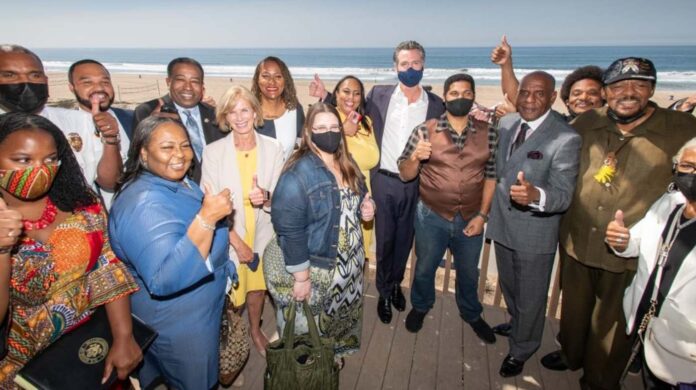
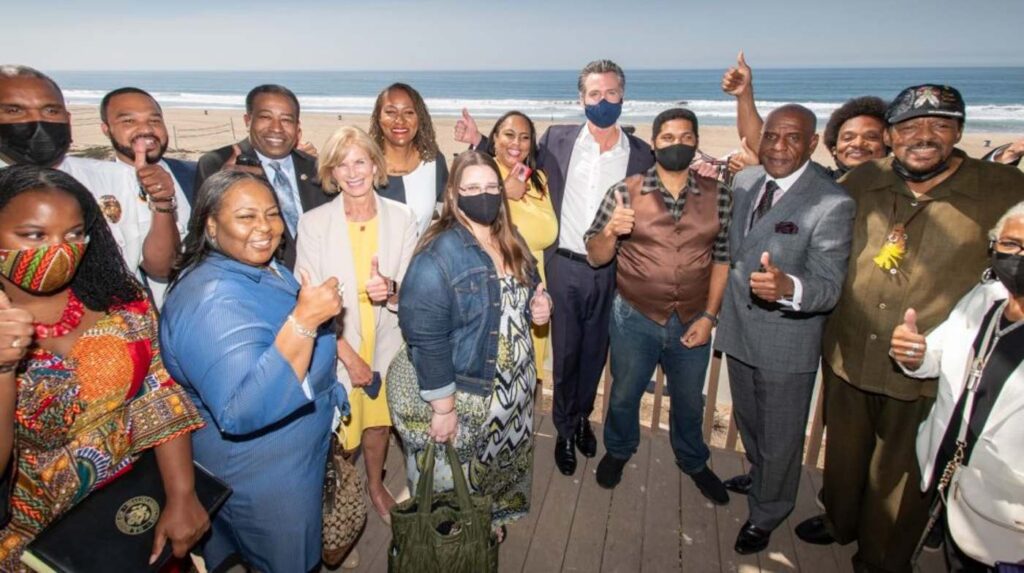
Nearly a century after their beach resort was wrongfully taken from two Black business owners, Willa and Charles Bruce, the California governor signed legislation that will enable Los Angeles County to return the beachfront property to their descendants.
Governor Gavin Newsom visited the Manhattan Beach property on September 30 to sign the law, championed by Senator Steven Bradford of nearby Gardena, with Bruce family members looking on. The measure, sponsored by the Los Angeles County Board of Supervisors, authorizes the county to immediately begin the process of transferring parcels of what was known as Bruce’s Beach, to the family’s descendants.
The Bruces purchased the property in 1912 and established a popular resort serving Black residents that was a fixture in the community. The Bruces endured years of racist harassment, however, and Manhattan Beach city officials ultimately seized their property through eminent domain in 1924, saying they needed it for a park.
Earlier this year, the Los Angeles County Board of Supervisors voted unanimously to right the historical wrong by moving forward with a land transfer to the Bruce family in motions co-authored by Supervisor Janice Hahn and Supervisor Holly Mitchell.
“As we move to remedy this nearly century-old injustice, I thank the Bruce family, Senator Bradford, the Los Angeles County Supervisors and all those who fought to keep the legacy of this place alive and deliver this long overdue justice,” said Gov. Newsom.
“This bill passed the Legislature unanimously and with overwhelming community support. SB 796 shows us that it is never too late to address the injustices of the past,” said Senator Bradford. “The City of Manhattan Beach, County of Los Angeles, and the State of California owe a debt to the Bruce family.”
Office of Gavin Newsom
“This is a milestone for us,” said Supervisor Hahn. “Returning Bruce’s Beach can and should set a precedent for this nation and I know that all eyes will be on Los Angeles County as this work gets underway.”
SHARE This Positive Move From California on Social Media…
A cinema-goer who suffered a heart attack while watching latest Bond movie was saved by fellow films fans who performed CPR on him. The film’s title? No Time to Die.
81-year-old Malcolm Clarke went into cardiac arrest at the Odeon cinema in Sheffield, South Yorkshire, on Saturday during a screening of the new release.
Members of the audience, believed to have included a doctor and a nurse, came to Malcolm’s aid and helped keep him alive as the room was evacuated.
Thankfully, their efforts were successful and paramedics soon arrived and took Malcolm to Northern General Hospital, where he remains in a stable condition.
Malcolm’s son-in-law, Andrew Wileman, said, “Four very helpful people in the audience worked on him for about 15 minutes because he had lost consciousness.
“Those four people just disappeared in the aftermath, it was two ladies and two gentlemen.
“They saved his life in the cinema aisle, no doubt about it.
“The consultant at the hospital said the prompt and quick CPR had saved his life in the cinema before the ambulance got there. He would have died, there’s no doubt.”
Malcolm had been revisiting childhood haunts in and around Chesterfield where he grew up as a belated treat for his 80th birthday.
ABB has launched an innovative all-in-one Electric Vehicle charger which provides the fastest charging experience on the world market.
The new Terra 360 is a modular charger which can simultaneously charge up to four vehicles with dynamic power distribution. This means that drivers will not have to wait if somebody else is already charging ahead of them. They simply pull up to another plug.
The new charger has a maximum output of 360 kW and is capable of fully charging any electric car in 15 minutes or less, meeting the needs of a variety of EV users, whether they need a fast charge or to top their battery up while grocery shopping.
“With governments around the world writing public policy that favors electric vehicles and charging networks to combat climate change, the demand for EV charging infrastructure, especially charging stations that are fast, convenient and easy to operate is higher than ever,” said Frank Muehlon, President of ABB’s E-mobility Division. “The Terra 360, with charging options that fit a variety of needs, is the key to fulfilling that demand and accelerating e-mobility adoption globally.”
“It’s an exciting day for ABB, who as the global leader in electric vehicle fast charging, is playing a key role in enabling a low carbon society,” said Theodor Swedjemark, Chief Communications and Sustainability Officer at ABB in a statement. “With road transport accounting for nearly a fifth of global CO2 emissions, e-mobility is critical to achieving the Paris climate goal. We will also lead by example by switching our entire fleet of more than 10,000 vehicles to non-emitting vehicles.”
Available in Europe from the end of 2021, and in the USA, Latin America, and Asia Pacific regions in 2022, Terra 360 is designed with the daily needs and expectations of EV drivers in mind.
Its innovative lighting system guides the user through the charging process and shows the State of Charge (SoC) of the EV battery and the residual time before the end of an optimal charge session. The world’s fastest EV charger is also wheelchair accessible and features an ergonomic cable management system that helps drivers plug in quickly with minimal effort.
As well as serving the needs of private EV drivers at fueling stations, convenience stores, and retail locations, Terra 360 chargers can also be installed on an organization’s commercial premises to charge electric fleet cars, vans, and trucks.
This gives owners the flexibility to charge up to four vehicles overnight or to give a quick refill to their EVs in the day. Because Terra 360 chargers have a small footprint, they can be installed in small depots or parking lots where space is at a premium.
Terra 360 chargers are fully customizable. To personalize the appearance, customers can ‘brand’ the chargers by using different foiling or changing the color of the LED light strips. There is also the option to include an integrated 27” advertisement screen to play video and pictures.
A UK-French startup just announced a $17 million funding round to make a variety of products that will allow large producers to cut out their share of microplastic pollution.
With biodegradable microplastic capsules for products like laundry detergent and agriculture chemicals, and special lubricants that prevent plastics from breaking down into microplastics, the firm could save companies and consumers tens of millions in work-around costs and higher prices in the face of an upcoming European Union ban on microplastics in 2022.
Calyxia was started in part by the son of a second generation UK coal miner, Jamie Walters. Seeing the coal mine close down, while good for the physical health of the community and the planet, involved Walters seeing a lot of economic suffering.
“So living that experience, I’ve always wanted to rebuild industries because I believe they can rebuild communities that are safe, that are sustainable and could advance society, and that are also economically viable,” Walters told Fast Company.
Some examples of industries Walters hopes to reform are the microplastic capsules used in laundry detergent to deliver the fragrance into your clothes.
These capsules run down through water treatment plants and into aquatic ecosystems.
Agricultural herbicide products sometimes also come in these capsules.
They release the product slowly, necessitating for less overall herbicide use, but the small microplastics fall down and end up contaminating the soil.
Calyxia offers biodegradable microplastic capsules for products such as these that essentially degrade into air.
Another product is a lubricant that can be used to coat the most common form of plastic, polyethylene plastic sheeting used to press-wrap products.
The lubricant stops the plastic breaking apart in the environment, preventing it from releasing toxic microplastics that have contaminated essentially the entire planet.
Currently poised to produce hundreds of tons of their products, they hope to begin work soon with large companies before the microplastic ban in 2022. After which they plan to scale up to thousands of tons of production.
Japan’s National Institute of Information and Communication Technology
Japan’s National Institute of Information and Communication Technology
When 715 million metric tons of carbon dioxide was coughed up into the atmosphere from the massive 2019-20 wildfires in Australia, scientists feared global warming had just been given a steroid shot.
New research, however, reminds us of just how cyclical everything on our Earth is, by demonstrating that algal blooms in the ocean, feasting in floating deposits of iron-rich ash which rained down from the sky as a result of the fires, have absorbed 80% of all the CO2 which was emitted.
Iron promotes the growth of microscopic marine life called phytoplankton, which use photosynthesis to produce energy just like plants. One of these massive colonies, known as “blooms,” appeared off the coast of South Australia, and another, as wide as Australia itself, further out in the Pacific Ocean towards Chile, where they remained for about three months.
The data on their life cycle was gathered through satellites, and allowed Dr. Richard Matear and colleagues to compute how much CO2 they absorbed before disappearing. A large portion of the 80% of the wildfires emissions taken in by the phytoplankton would have been deposited in the ocean floor.
“It shows a very nice connection between the land and the ocean and how the system tries to balance things out,” Matear told New Scientist.
Since they sit on the very bottom of the marine food web, the phytoplankton could have led to increases in the populations of other sea creatures, but that hasn’t been studied yet.
Because the scorched ground provides ideal conditions for future plant regrowth, most scientists will say a wildfire under normal conditions is carbon neutral, as the emissions are recaptured through the regrowing plants.
However when fires are larger than ever, droughts last longer, and temperatures are hotter, it’s not clear anymore that plant regrowth can last long enough, or return densely enough to recapture what was lost in the blaze.
Quote of the Day: “Believe in yourself and there will come a day when others will have no choice but to believe with you.” – Cynthia Kersey
Photo: by Evan Fitzer
With a new inspirational quote every day, atop the perfect photo—collected and archived on our Quotes page—why not bookmark GNN.org for a daily uplift?
Las Vegas, long known as a city of High Rollers, has held the distinction of being home to the world’s largest Ferris Wheel (aptly named—what else?—The High Roller) since 2014.
But with Dubai’s luxury Ain Dubai (translated from Arabic as Dubai Eye) Ferris Wheel set for its grand opening this month, the American Casino Capital’s title has just been eclipsed.
Standing a massive 820 feet high, Ain Dubai can accommodate up to 1,750 passengers in its 48 bespoke air-conditioned cabins. For the ultimate in socially distanced dining, those interested can indulge in a VIP option that includes catered meal service and private bartenders to mix up their designer cocktails of choice for the 38-minute scenic circular sojourn.
The Ferris Wheel has certainly evolved since George Washington Gale Ferris Jr’s original contraption with its gravity-oriented gondolas made its debut at the Chicago World’s Columbian Exhibition in 1893.
Ain Dubai’s ticket prices start at $35 for a basic big-thrills, no-frills ride. However, in addition to the VIP upgrade, the private cabins can also be booked for corporate events, weddings, birthdays, and intimate celebrations.
Ain Dubai Ferris Wheel
So, if declaring your undying love in concert with commanding views of the sunset as you and your honey soar above the hubbub sounds like the perfect venue for a romantic proposal (as long as neither of you is afraid of heights), this eye in the sky might just be the “wheel deal.”
SHARE This Story With Chums You’d Love to Share a Cabin Ride With…