All News - Page 45 of 1689 - Good News Network
Home Blog Page 45

Dream of a Carousel Helped A Marine Survive Vietnam, Then He Built One to Survive PTSD, Delighting Millions

Men of the 9th Marines take cover at Con Thien, public domain

In the trenches of Con Thien, Vietnam, a Marine Corps corporal used to quietly sit and dream about a carousel in a mountain meadow.

His logic was simple: find the complete opposite of his surroundings of death, screaming hot shrapnel, and chaos. Sitting there holding a music box given to him by his sister as a gift, the war—for a sweet, fleeting moment—fell away.

Fast forward almost forty years, and the Carousel of Happiness nonprofit allows thousands of Coloradoans and out-of-state visitors to experience their own little escape on board the ride’s animals that Cpl. Scott Harrison (Ret.) hand-carved in a picturesque valley in Nederland, Colorado.

“I started out just trying to treat myself, but then it just changed into something I could do for others,” Harrison told CBS News’ On the Road with Steve Hartman.

A post at Con Thien, Harrison explains, was as good as a death sentence for a young marine such as himself.

The violence he saw there stayed with him, and despite an alcohol addiction and a houseboat in the middle of the ocean, he couldn’t escape the clinical PTSD that came back with him from Southeast Asian jungles.

There may have been far worse than sleepless nights in store for the former corporal, until he circled back around to those quiet moments with his music box and his mental mountain meadow.

VETERANS’ GREAT IDEAS: ‘A Blessing’ For Wounded Soldiers Who Help Scientists Save Coral Reefs

“I thought that if I could actually start making that vision come true, it would keep me on an even keel and make me happier,” Harrison said.

So in 1986, 18 years after he was deployed, he bought a broken-down Looff carousel manufactured just after the turn of the century and began to hand-carve all-new animals in the course of repairing it. In 2010, the carousel opened in a valley in Nederland, Colorado, where today over one million people have ridden on this simple, essential carnival ride.

MORE STORIES LIKE THIS: Tennessee Veterans Find Healing Working with Horses That are ‘Bio-feedback Machines’

And though Harrison’s may not be simple—hand-carving and painting is skilled, technical work—it’s absolutely essential.

He was featured in an award-winning documentary Carving Joy, and the Carousel of Happiness podcast features guests and nonprofit staff ruminating on joy, happiness, contentment, positivity, and wellbeing in days when such things seem in short supply.

WATCH the story below from On the Road… 

SHARE This Story From The Brilliant Steve Hartman With Your Friends… 

Wheat Grown with This Fungus Increased its Essential Mineral Content–a Breakthrough Preparation


Scientists have discovered that pairing wheat with a special soil fungus can significantly enhance its nutritional value.

This partnership leads to bigger grains that are richer in zinc and phosphorus without increasing anti-nutrients that block absorption.

As a result, the wheat becomes a healthier option for human diets. Researchers believe this fungal strategy could offer a natural, sustainable way to fortify global crops with essential nutrients.

Humans have been fortifying crops for around 100 years, attempting to address deficiencies in key nutrients by putting synthetic versions inside staple foods like flour.

A major criticism of fortification is that nutrients added to foods may not have any bioavailability at all. Skim milk fortified with vitamin A and D doesn’t have the bioavailability of whole milk because vitamin A and D are fat-soluble.

When investigators grew different types of wheat with and without the tree-hugging mycorrhizal fungus Rhizophagus irregularis, they observed that those grown with fungi developed larger grains with greater amounts of the essential minerals phosphorus and zinc.

Concurrently, there was no parallel increase in phytate (a compound that can hinder absorption of zinc and iron), resulting in bread with a higher overall bioavailability of zinc and iron compared with wheat grown in the absence of fungi. There isn’t much iron at all in whole wheat bread to begin with, but this method maximizes what little there is.

“Beneficial soil fungi could be used as a sustainable option to exploit soil-derived plant nutrients. In this case, we found potential to biofortify wheat with important human micronutrients by inoculating the plants with mycorrhizal fungi,” said corresponding author Stephanie J. Watts-Williams, Ph.D., of the University of Adelaide, in Australia.

MAXIMIZING YOUR FOOD: These Superfoods Can Provide Important Nutrients With a Single Bite

Rhizophagus irregularis is a species of arbuscular mycorrhizal fungus that forms beneficial relationships with the roots of many types of plants. It helps plants take in more nutrients—especially phosphorus and micronutrients—by extending its thin, root-like structures deep into the soil.

This fungus is one of the most widely studied and used in agriculture and ecology because of its broad compatibility with crops and its ability to improve plant growth, health, and soil quality. By boosting nutrient uptake naturally, R. irregularis supports more resilient plants and reduces the need for chemical fertilizers, making it a valuable tool in sustainable farming and reforestation efforts.

OTHER FOOD FOCUSED STORIES: Cruelty-free Way of Making Duck Foie Gras Devised by Scientist: ‘It was always a dream’

Perhaps a better way to think of adding R. irregularis to wheat is as a method of preparation rather than fortification, reminiscent to the ages-old methods of preparing grains and legumes for optimal human consumption like sprouting or fermentation.

The study was published in the journal Plants, People, Planet.

SPROUT Some Positivity On Your Friends’ Social Media Feeds With This Story…

Denver Museum Finds Fossil While Drilling Underneath the Parking Lot–an ‘Infinitesimally Small’ Coincidence

Credit, Richard M. Wicker - Denver Museum of Nature and Science
Credit, Richard M. Wicker – Denver Museum of Nature and Science

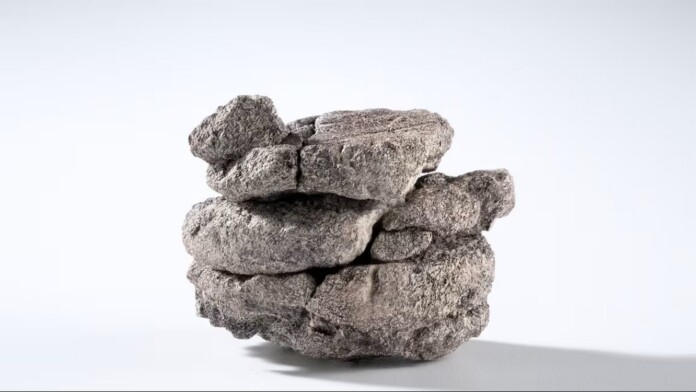
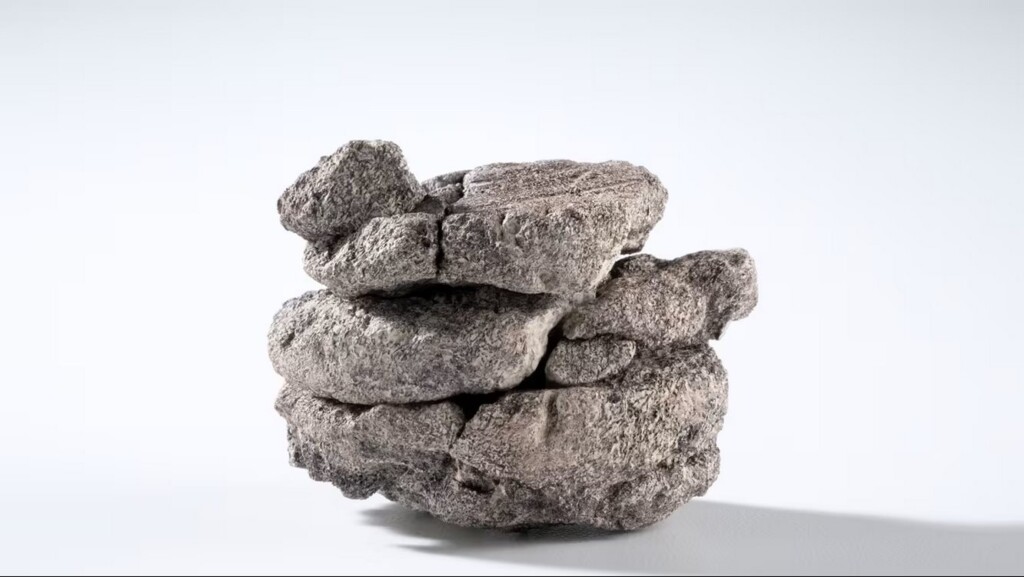
For the staff at the Denver Museum of Nature and Science, examining this newly found vertebrae from a 67-million-year old plant-eating dinosaur was just another day in the office.

The surprise came in the form of its discovery—from right under the museum itself, which seems appropriate.

Months ago, the Denver Museum undertook an exploratory drilling project on-site to determine if it were possible to change some of the building’s utilities over to geothermal energy from fossil fuels.

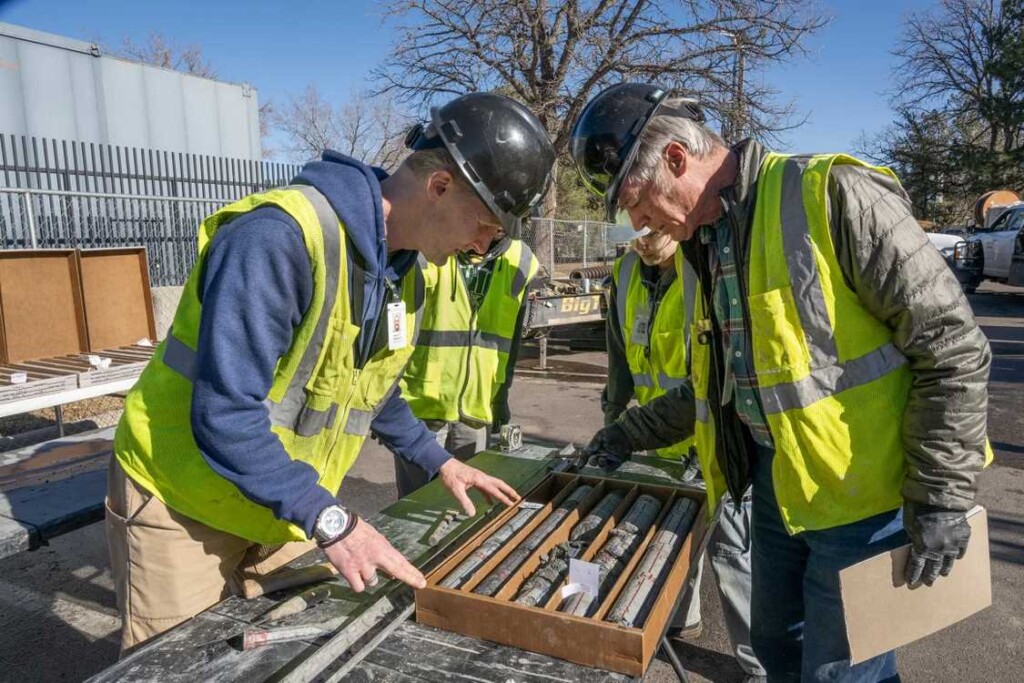
A drill core sample, explains Dr. James Hagadorn, the museum’s curator of geology, is basically like a doctor using a syringe to draw blood from a patient. The drill extracts a long cylinder of rock and sediment straight down some 800 feet.

At just a few inches in diameter, the circular drill happened to pass perfectly over the fossil, drawing it up with the rest of the dirt, a mind-boggling coincidence the chances of which Hagadorn described as “infinitesimally small.”

As a result, it’s not only the deepest fossil ever found in Denver, but also happens to be the oldest. Dating back to the late Cretaceous Period, it likely belonged to something like a Thesculosaurus or Edmontasaurus, two species that roamed Great Plaints at that time.

Dr. James Hagadorn (left) examines the drill core sample – credit, Denver Museum of Nature and Science

“We knew those dinosaurs were (nearby in other parts of) Colorado or Wyoming, but we didn’t know that they were in Denver, too … but we suspected it right at this time period,” Hagadorn told AP.

COOL DINO DISCOVERIES:

“Now, we have another plant eater that’s been cruising around Denver munching on, who knows, gingers and palm leaves and other ferns and plants 67 million years ago.”

Hagadorn said he’d love to drill a hole down 787 feet and excavate the rest of the dinosaur, but, being that it was found beneath the museum parking lot, he doesn’t believe that’s going to happen anytime soon.

“We need parking!”

WATCH the story below from AP… 

SHARE This Unlikely Discovery Under The Ground Where the Paleontologists Leave Their Cars… 

Travelers Will No Longer Have to Remove Their Shoes in U.S. Airport Security Lines

JEshoots via Unsplash

For frequent American flyers and puzzled first-time visitors from Europe, a major security headache is due to finally to fade away into history’s rearview mirror.

Homeland Security Secretary Kristi Noem announced in early July that passengers traveling through domestic airports can keep their shoes on while passing through security screening at TSA checkpoints.

The new policy will increase hospitality for travelers and streamline the TSA security checkpoint process, leading to lower wait times.

In December 2001 onboard a flight from Miami to Paris, Richard Reid, who became known as the “shoe bomber,” tried to ignite hidden explosives in his shoes, which became the impetus for the eventual TSA rule, introduced 5 years later.

“Ending the ‘Shoes-Off’ policy is the latest effort DHS is implementing to modernize and enhance traveler experience across our nation’s airports,” said Secretary Noem.

“We expect this change will drastically decrease passenger wait times at our TSA checkpoints, leading to a more pleasant and efficient passenger experience.”

As well as being a source of traffic in the TSA lines, the last decade and a half has seen the Shoes Off rule become a major source of confusion as well.

In the two decades following the September 11th attacks, countries which had originally adopted the US’ harsh security screening protocols either gradually abandoned them or only parts of them.

MORE STORIES YOU MIGHT LIKE: NIH to Work with Food Companies to Get Harmful Synthetic Food Dyes, Approved for Decades, Out of US Grocery Stores

The result was that flying through the Western world became an exercise in disarray, as passengers taking off their shoes would be told to keep them on, only to arrive in another country for a connecting flight and suddenly be told to take them off again.

Presumably most other countries will abandon Shoes Off now that America has, so here’s to shorter airport security lines.

SHARE This Uplifting Outlook On Future Trips To The Airport…

“All that you touch, you change. All that you change changes you.” – Octavia Butler

Quote of the Day: “All that you touch, you change. All that you change changes you.” – Octavia Butler

Photo by: Getty Images for Unsplash+

With a new inspirational quote every day, atop the perfect photo—collected and archived on our Quote of the Day page—why not bookmark GNN.org for a daily uplift?

Good News in History, July 29

60 years ago today, The Beatles’ film Help! had its world premiere in London with Princess Margaret in attendance at the London Pavilion. The band’s second feature film, it stars The Fab Four engaged in delightful banter while trying to protect Ringo Starr from an Eastern cult and a pair of mad scientists, who all want Ringo’s ring. WATCH the original 3-min trailer… (1965)

Dozens of Disabled Californians Sail for the First Time to Experience the Weightlessness of the Water

Credit photographer Larry Rosa – at Challenged Athletes Foundation event

Physical limitations were off-limits for a blessed and windy day in Sacramento, California.

Dozens of people with various disabilities came down to the Lake Washington Sailing Club to experience the weightlessness of the water.

They used boats that were specifically designed not to tip over, and special rigging for the sails was on hand for those with hands to take control of their surroundings in a unique and new way.

The event was put on by the Challenged Athletes Foundation (CAF), which ensured every participant was accompanied by a sailing pro.

“We have people that sail with no upper arm or leg movement sail with a control, motor control like a wheelchair, that they hook onto their chin,” Jim Tweet, a member of the sailing club who partook in the day’s events.

A polio survivor named Diane Ngo was one of over a dozen who experienced sailing for the first time.

Her attitude was straightforward: bring it on.

“Anything that challenges me to go beyond my comfort zone is why I’m here,” Ngo told CBS News Sacramento. She found that just being on the water and feeling the ability to move around was “exciting.”

YOU MAY ALSO LIKE: 

“CAF is awesome, it changed my life,” said Minh Nguyen, a participant at the sailing clinic.

The event was open to all ages and the youngest participant was just 11.

WATCH a video from the special day below… 

SHARE This Grand Day Out With Your Friends On Social Media… 

Chemical Shield Stops DNA Damage from Triggering Disease–’A Paradigm Shift’

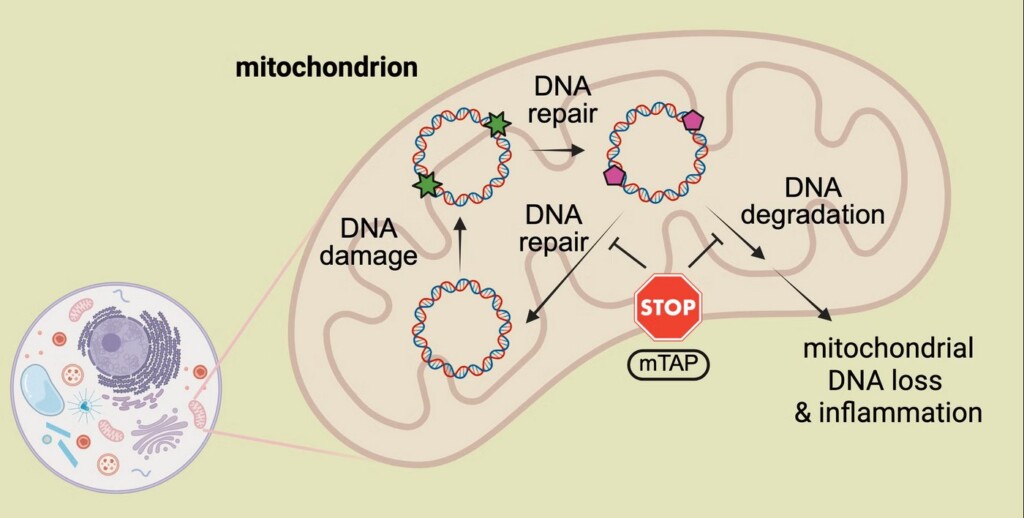
Infographic by Linlin Zhao, University of California Riverside

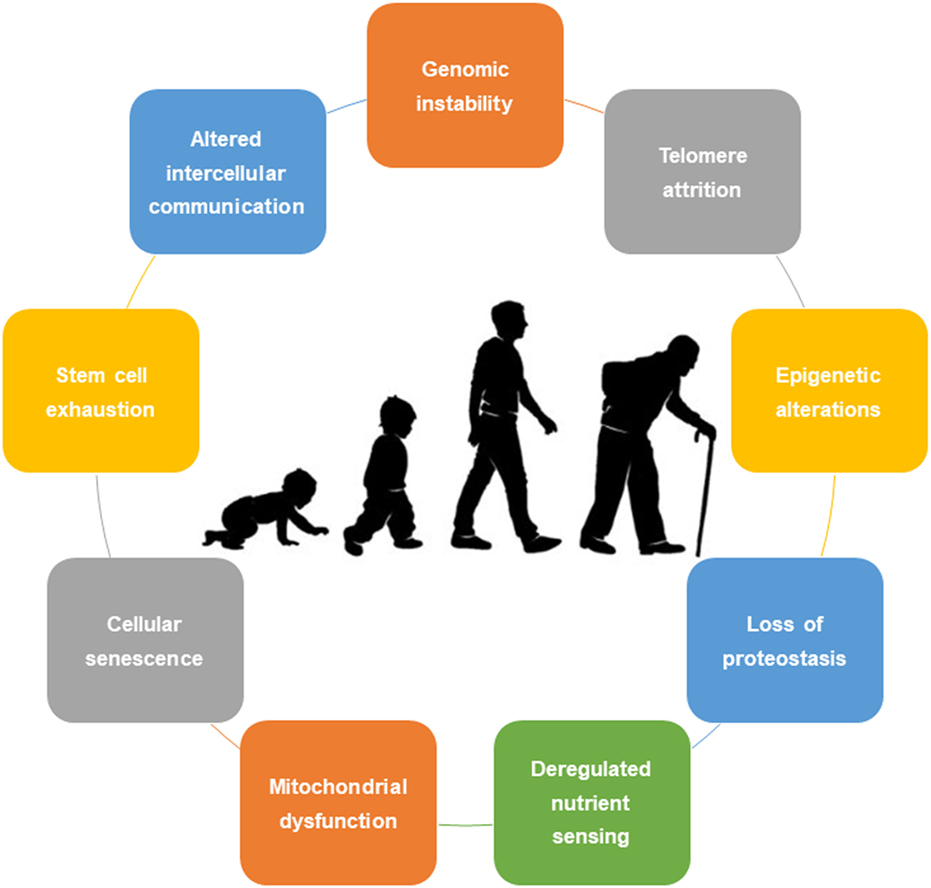
A new chemical probe protects healthy cells from DNA damage, preserving them from one of the 8 hallmarks of aging.

The story of this potentially paradigmatic development begins where so much of human health begins: the mitochondria. These organelles are disrespectfully monikered as “the powerhouses” of the cell, but they do so much more than just provide cellular energy.

It’s so important, it even has its own DNA. Mitochondrial DNA (mtDNA) is separate from the DNA housed in a cell’s nucleus. While nuclear DNA contains the vast majority of the genetic code, mitochondria carry their own smaller genomes that are essential for cellular functions.

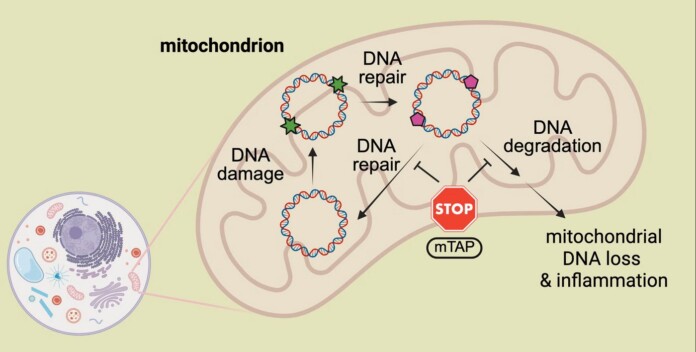
MtDNA exists in multiple copies per cell, but when damage occurs these copies are often degraded rather than repaired. If left unchecked, this degradation can set off a cascade of failures linked to heart conditions, neurodegeneration, and chronic inflammation. 

Published in the German Chemical Society journal Angewandte Chemie International Edition, researchers at UC Riverside developed a chemical probe that binds to damaged sites in mitochondrial DNA and blocks the enzymatic processes that lead to its degradation.

“There are already pathways in cells that attempt repair,” said Linlin Zhao, UCR associate professor of chemistry, who led the project. “But degradation happens more frequently than repair due to the redundancy of mtDNA molecules in mitochondria. Our strategy is to stop the loss before it becomes a problem.”

The new molecule includes two key components: one that recognizes and attaches to damaged DNA, and another that ensures it is delivered specifically to mitochondria, leaving nuclear DNA unaffected.

In lab tests as well as studies using living cells, the probe significantly reduced mtDNA loss after lab-induced damage mimicking exposure to toxic chemicals such as nitrosamines, which are common environmental pollutants found in processed foods, water, and cigarette smoke.

In cells treated with the probe molecule, mtDNA levels remained higher, which could be critical for maintaining energy production in vulnerable tissues such as the heart and brain.

Mitochondrial DNA loss is increasingly linked to a range of diseases, from multi-organ mitochondrial depletion syndromes to chronic inflammatory conditions such as diabetes, Alzheimer’s, arthritis, and inflammatory bowel disease. When mtDNA fragments escape from mitochondria into the rest of the cell, they can act as distress signals that activate immune responses.

“If we can retain the DNA inside the mitochondria, we might be able to prevent those downstream signals that cause inflammation,” Zhao said.

MORE AGING SOLUTIONS: Man’s Biological Clock Set Back 10 Years After 93 Days Living Under the Ocean in a Research Station

Importantly, the researchers found that the protected DNA remained functional, despite being chemically tagged.

“We thought adding a bulky chemical might prevent the DNA from working properly,” Zhao said. “But to our surprise, it was still able to support transcription, the process cells use to turn DNA into RNA, and then into proteins. That opens the door for therapeutic applications.”

The Hallmarks of Aging – credit Rebelo-Marques et al, Frontiers, CC 4.0. BY-SA

The project builds on more than two years of research into the cellular mechanisms that govern mtDNA processing. While additional studies are needed to explore clinical potential, the new molecule represents a paradigm shift.

MORE AGING SOLUTION: Psychedelic Mushrooms Reduced Human Cellular Aging by 57%, Increased Lifespan in Mice 30%

Indeed, DNA damage makes up two of the 8 hallmarks of aging first outlined in a landmark paper in 2013, which also includes mitochondrial dysfunction as an antagonistic hallmark, i.e. a result of DNA damage.

“This is a chemical approach to prevention, not just repair,” Zhao said. “It’s a new way of thinking about how to defend the genome under stress.”

TELL Your Friends About This Potential Paradigm Shift In Anti-Aging Technology…

Wood Scraps Turned into Bulletproof, Fire-Resistant Superwood That’s ‘Stronger Than Steel’

credit - InventWood
credit – InventWood

New ways to molecularly tamper with wood has led to a bulletproof, fire resistant, lightweight material that could replace steel, concrete, and carbon fiber.

Appropriately dubbed “Superwood,” the applications seem to be limited only to imagination, and may hold up a high-rise just as sure as it might make better tennis rackets.

In 2018, the Wall Street Journal reports, a pioneering materials engineer found a way to take wood scraps that were no longer useable and treat them with heat and chemicals to alter their molecular makeup.

The boards could then be compressed to the point where the pressure collapses the channels between the lignan that serve as the tree’s circulatory system. This process could take a standard board and render it one-quarter the thickness whilst retaining the increased strength from the treatment process.

Sold now by InventWood, a firm that amassed $50 million in startup money from a mixture of Dept. of Energy grants and private financing, Chief Executive Alex Lau believes it could replace steel I-beams in houses or even the exterior of a laptop computer—all depending on what machines are available to work the Superwood.

During a fire, the wood doesn’t sag like steel does at comparable temperatures, nor does it truly burn; the outside carbonizes into an airtight layer before the interior layers of wood feel the heat.

credit – InventWood

Christopher Mims, reporting at WSJ, says that in his hands the Superwood felt like an “otherworldly object,” due to its combination of lightness and the incredible strength and resistance to lateral force.

GNN has reported before on alternative preparations of wood before, mostly of cross-laminated timber or CLT, also known as “mass timber.” CLT is made by gluing exceptionally thin boards of wood together before heat-pressing them, resulting in properties similar to Superwood.

CLT has been used to build the hilariously-named “plyscrapers,” of Scandinava, as well as a new $2 billion Portland Oregon airport terminal.

SUPERWOOD STRUCTURES: World’s First All-Timber Wind Turbine Blades are Cheaper, Recyclable, Fire-Resistant and Stronger than Carbon Fiber

The difference maker in Superwood is its light weight and flexibility in addition to tensile strength and fire-resistance similar to CLT.

Today, InventWood is bringing Superwood to market with a 90,000-square-foot manufacturing facility. Its initial offerings will be home sidings, which require minimal certifications, but will hopefully be available in many more products in the not-too-distant future.

It’s A Board, It’s Been Planed, No, It’s Superwood. Let Your Friends Know…

Beached Whale Faced 6 Hours of Lethal Sun and Dryness, Locals Form Bucket Brigade to Save it

- courtesy of Sadi Synn
– courtesy of Sadi Synn

A beached minke whale survived 6 hours on shore to make it back to the water thanks to a helping hand from the locals, according to a report from Alaska.

In the town of Seldovia, on Kachemak Bay, a 15-foot minke whale was beached on the rocks at low tide, believed to be an incidence of poisoning by an algal bloom that could have killed it in just 20 minutes.

Seldovia Village Tribe responded to an Alaska SeaLife Center advisory about the incident, the location of which the center asked to be kept secret. They dispatched their environmental coordinator.

Stephen Payton’s job description includes rescuing beached whales, but this was his first encounter in a 10-year career with a live one.

“I just went out as fast as I could, not really knowing what to expect, and it’s a long ways out there down MacDonald Spit,” he said. “So luckily, one of the locals that was responding was able to pick me up on a four wheeler and drive me.”

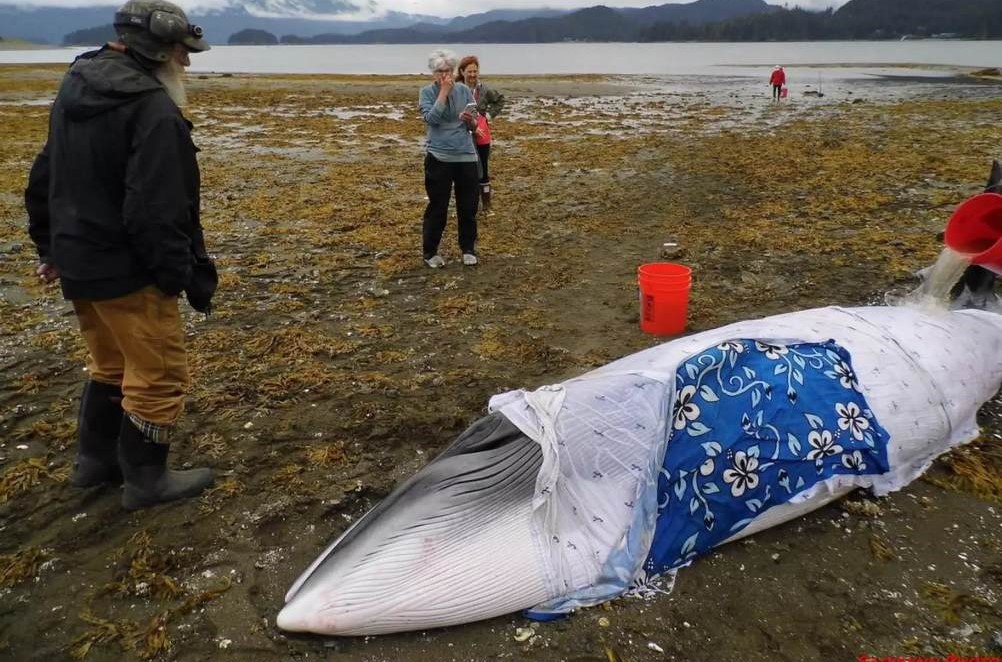
When he arrived, a group of about 15 locals had formed a bucket line, pouring seawater onto the whale’s soft underbelly, which along with being substantially scratched up by the rocks, could have become damaged in the Sun’s rays.

The locals had also wrapped wet beach towels around it while they waited to come up with a plan on how to rescue it. Minke whales are the world’s second smallest baleen wheel, meaning, like humpbacks and blue whales, they eat krill using a special filtering organ in their throat. Even still, at 15 feet long, it would have weighed at least 3 tons.


The beast was thrashing around from time to time, and no one felt comfortable trying to manhandle it. But luckily as the tide came back in, it freed the whale which was reported in the area for days afterwards swimming and spouting.

MORE STORIES LIKE THIS: Dozens of Whales Saved by Locals After Mass Stranding on Icelandic Beach

Typically, a minke whale can drown in between 10 and 20 minutes on shore. The way the animal was oriented on the beach, lying on its side with its blowhole facing the sea, was very dangerous. The selfless work from the locals allowed that 20 minutes to become 6 hours, when the tide’s eventual arrival allowed the whale to right itself.

“We are grateful for the calm presence and respect shown by those nearby during this time,” Seldovia Tribe wrote on Facebook. “Moments like these remind us of the powerful connection between our community and the natural world around us.”

SHARE This Human-To-Sealife Compassion With Your Friends On Social Media…

“Metaphors have a way of holding the most truth in the least space.” – Orson Scott Card

Basillica in San Paolo By Mark Chinnick (CC license)

Quote of the Day: “Metaphors have a way of holding the most truth in the least space.” – Orson Scott Card

Examples of a metaphor: The world is a stage, His words were daggers, Time is money, Life is a journey, Like a fish out of water.

Photo by: Mark Chinnick

With a new inspirational quote every day, atop the perfect photo—collected and archived on our Quote of the Day page—why not bookmark GNN.org for a daily uplift?

Basillica in San Paolo By Mark Chinnick (CC license)

Good News in History, July 28

Kenny Rogers in 2007 - Philpottm - CC BY-SA 3.0.

31 years ago today, Texas Rangers pitcher Kenny Rogers pitched the MLB’s 14th Perfect Game which also registered as the first and only one in the history of the Texas Rangers franchise, and the last No-Hitter pitched for the Rangers at the time of writing. While perhaps missing out on being remembered as one of the true great pitchers, Rogers had an exemplary career that extended long into his 30s, during which he started the 2008 season as the oldest player in the American League. READ some of his other accomplishments… (1994)

Woman Finds Abandoned Pup in Woods And Finds Perfect New Owners – Grieving a Dog Loss of Their Own

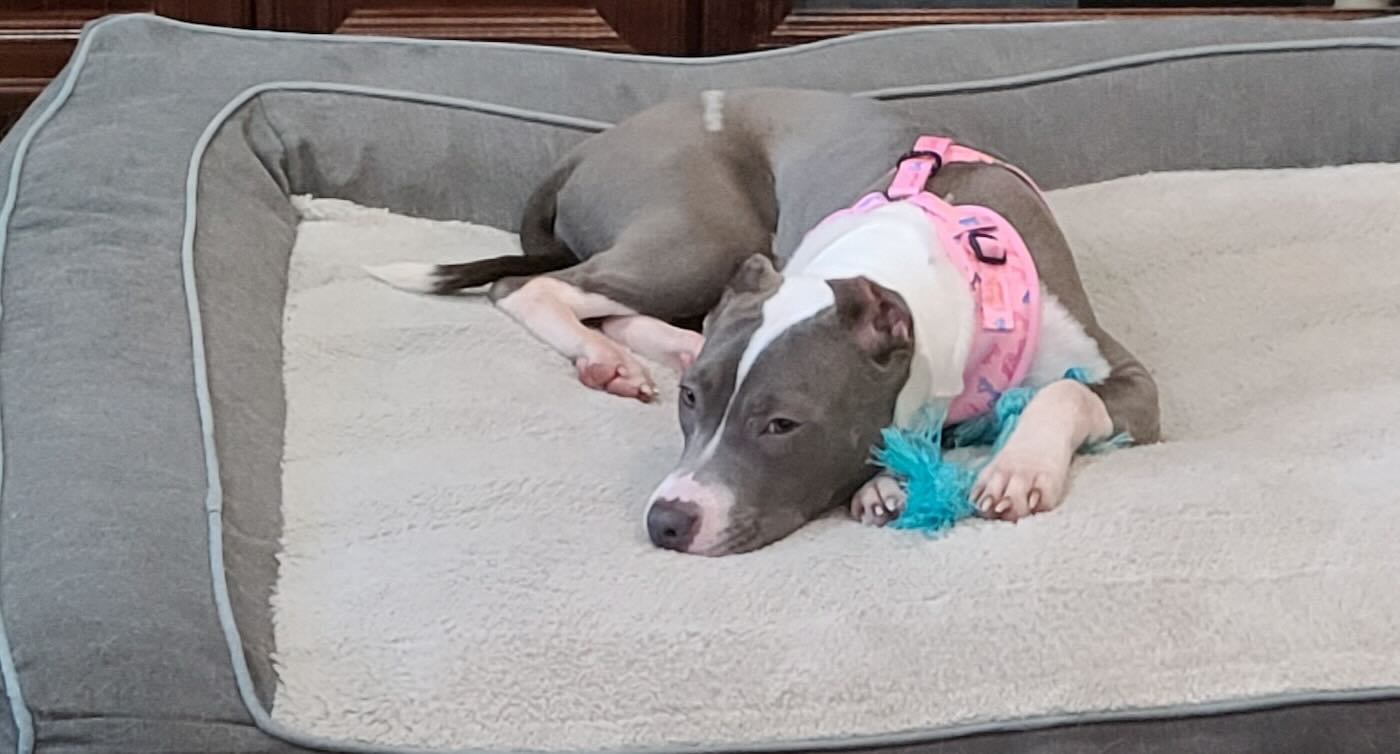
Lola
Lola

(Submitted by Florida woman who wished to remain anonymous.)

Just before last Christmas, I found an abandoned puppy, a pitbull-mix named Lola.

On my way home to turn off a crock pot at noon (the only time in 4 years that I went home at lunch), I saw Lola at the edge of the woods near our neighborhood.

I only had cat food in the house, so on my way back to work, I slowly approached and put some on the ground.

When I brought food, she started to leave when I approached, but decided she was more hungry than scared.

When the dog started eating, she could not stop wagging her tail.

It was difficult to leave her, but I had to trust in the goodness of the universe that she would still be there when I returned.

I went back to work. After work, I went to the grocery store and purchased dry dog food, a collar, a leash, and a rotisserie chicken, hot off the grill. I returned to the woods where I previously saw her. No Lola.

I went to the edge of the woods where I’d seen her and called out “Come here baby, come on.” From quite a distance away, I could hear her crashing through the woods to get to me.

It was easy to put a collar on her once she trusted me—the hot chicken helped. Next, I drove her straight to our vet.

We don’t know how long she was in the woods, but she had skin problems and worms.

She was chipped but not registered. (The lesson here, dog lovers, is the vet just implants the chip – the owner must register the chip).

The vet determined Lola was a female, about 7 months old. She was given medication that would kill fleas and ticks within an hour or so—and, on that condition, hubby allowed Lola to come home for the night.

I tried every avenue to try to find the owners. We posted pictures on a variety of social media venues along with the Gainesville, Florida, Pet Finder on FaceBook.

The really good news is that a couple who retired from working at an animal rescue organization spotted the picture of Lola. They had 2 dogs, and one had recently had transitioned, so they wanted a companion for Buster, the remaining pet.

Lola in her new home – Courtesy photo

We met a couple of weeks later, and Buster and her new parents took Lola to her new home—a 20-acre fenced farm with other farm animals.

Lola’s new mom updates me on her condition, which was very poor initially but she finally has gained weight, has no more worms, etc.

Hubby and I went to the country to visit Lola a couple of weeks ago and are planning our next get together.

Her new mom keeps telling me that I saved Lola’s life, but we had been grieving the loss of our mastiff and Lola helped heal our hearts.

FUR-EVER HEROES: Tiny Chihuahua Helps Rescue Owner Who Fell into Swiss Glacier

I keep reminding her that she is the one who wrote the ending of her story… “and she lived happily ever after.”

AMAZING PUP: Heroic Dog ‘Rocky’ Alerts Indian Village of Oncoming Landslide, Saving Dozens

Telescopes Pop-Up on City Sidewalks to Engage Passersby in Free Astronomy Viewing Worldwide

Courtesy of #Popscope

Imagine walking to the store for ice cream and running into a free opportunity to view Saturn’s rings. That’s what’s happened for thousands of lucky pedestrians, thanks to #PopScope, the urban astronomy movement.

Now in its 11th year, the volunteer-run group just hit a major milestone: Completing 500 pop-ups that have brought 26,000 people closer to the night sky.

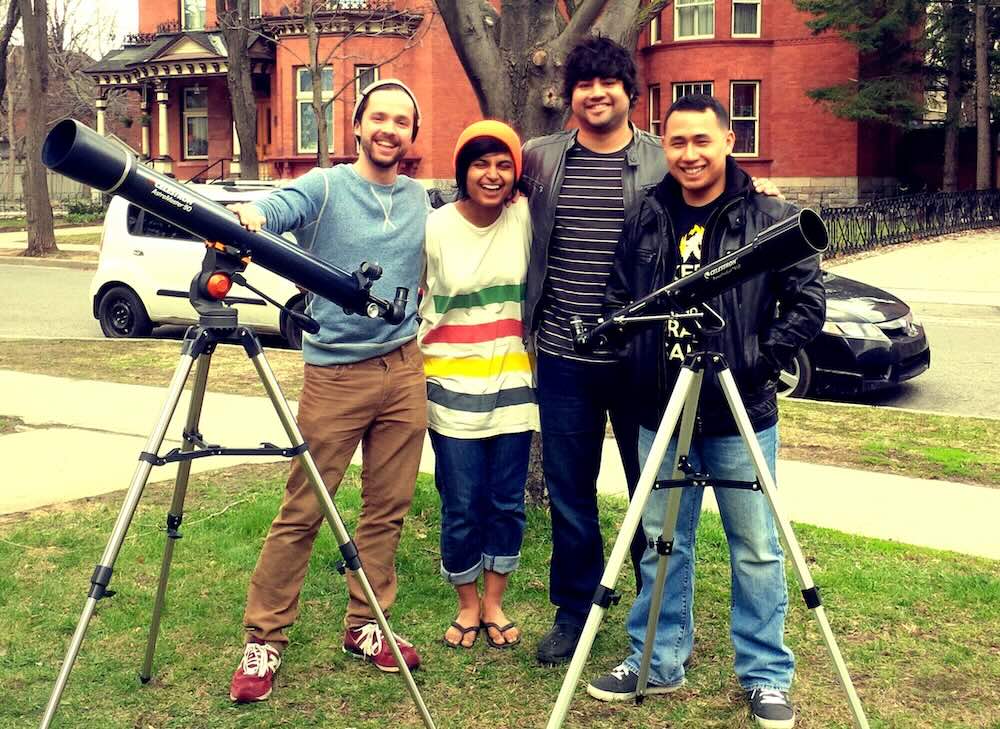
Founded in Ottawa, Ontario in 2014, #popscope (short for pop-up telescope) has expanded to include volunteers in cities across Canada and the U.S. and has hosted pop-ups in Ireland, Malawi, and India.

From the beginning, their urban astronomy model has been simple and powerful: go to a public area, set up an entry-level telescope, point it at an object in the sky, and invite passersby to take a look.

What happens next is magical.

Jaws drop, eyes widen, and whispers are uttered when they encounter our awesome universe.

After initial disbelief that a stranger could be offering something for free, the passerby’s eyes light up when they peer through the eyepiece and see Jupiter’s moons through a light-filled city sky coming into focus.

Founding members and friends at start of the #Popscope journey in Ottawa, Ontario in 2014

“The project has been a labor of love—and deep friendships have formed among the group’s volunteers,” co-founder Michael O’Shea told GNN. “We’re motivated by the look of awe on a stranger’s face when they see Saturn’s rings for the first time, or hear cries of delight when someone views the Moon’s bumpy craters in vivid detail.”

What may start as a conversation about the object in the telescope often turns to other topics, like the phases of the Moon, or how the neighborhood is changing, or maybe just the name of their dog.

Often times guests and volunteers become new friends and offer to stay in touch.

“As we celebrate 500 pop-ups, we remember the many snippets of conversation from guests as we huddled around our telescopes. One person even said his uncle was on Apollo 12…

“Here are some of our favorites that made us smile—and think—as we gazed up into the night sky together.

  • “I am 55 years old and I’ve never seen anything like this before. Thank you for coming!
  • “Saturn rings! They look like an emoji! A Saturn emoji!
  • “You made my night…Best thing that happened to me all day.
  • “The Moon—It’s like cheese!
  • “I might be late for my train, but it was worth it to see the moon!”
Courtesy of #Popscope

CHECK OUTMan Finds Meteorite After Seeing Green Light in the Sky: It was Warm and Burnt and ‘May Be From Halley’s Comet’

Special donors have supplied funding and equipment over the years, including Celestron, the Awesome Foundation, and the Social Innovation Lab—helping to provide science to communities that are often underserved by academics and institutions.

Chapters have been set up in Montreal, Baltimore, New York City, Washington, D.C., Boston, Philadelphia and Jacksonville, Florida.

Who knows whether these encounters will inspire kids to start thinking about becoming astronauts. #Popscope just hopes the kids—and adults—keep looking up.

Visit the group’s website, popscope.org, for updates or to volunteer.

Check out the photos and videos from their 500 events on Flicker—and learn more about the goals and history of the club in this recent article.

SPREAD THE IDEA to Science-Lovers, By Posting on Social Media…

A Tiny Gecko Species Once Thought Extinct Just Made a Comeback in the Galápagos

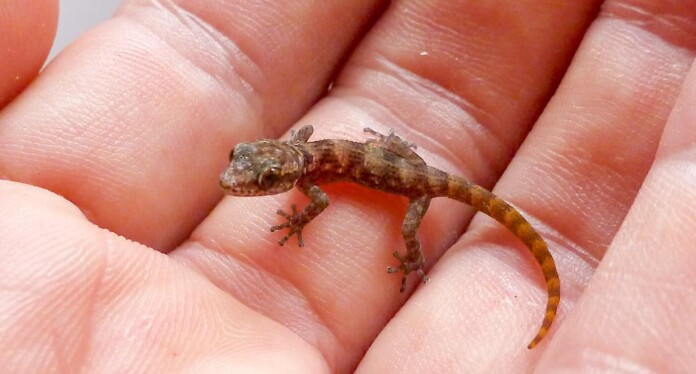
Tiny Leaf-toed gecko (Phyllodactylus maresi) – Photo credit: Island Conservation

In a thrilling twist of ecological fate, scientists have confirmed the rediscovery of a tiny gecko species once thought extinct on Rábida Island in the Galápagos.

Thanks to a successful restoration and rewilding project, the discovery marks a major conservation milestone that shines as a beacon of hope for biodiversity recovery efforts worldwide.

The elusive Leaf-toed gecko (Phyllodactylus maresi) was previously only known to have walked the island from 5,000-year-old fossil records.

Its existence has now been officially documented through live specimens collected during expeditions by the US nonprofit Island Conservation—evidence which has been peer-reviewed and published in the journal PLOS ONE this month.

This rediscovery was made possible by a successful, bold conservation intervention in 2011 led by Island Conservation in partnership with the Galapagos National Park, Charles Darwin Foundation, and The Raptor Center.

The partners removed damaging, non-native invasive rodents from Rábida Island, paving the way for native species to bounce back—and within a year of completing the eradication, they discovered the Leaf-toed Gecko long thought extinct.

“The return of this gecko highlights nature’s incredible power to heal itself when given the chance,” said Paula Castaño, Island Conservation’s Impact Program Manager. “It’s another example of the recovery we’ve seen on islands worldwide: when you rebalance an ecosystem, it can bounce back quickly and dramatically.”

MORE GALAPAGOS GOOD NEWS:
500 Giant Tortoises Reintroduced to Four Galapagos Islands in 2023
100-Year-Old Galápagos Giant Tortoise Found on Fernandina Island is Indeed Member of ‘Extinct’ Species

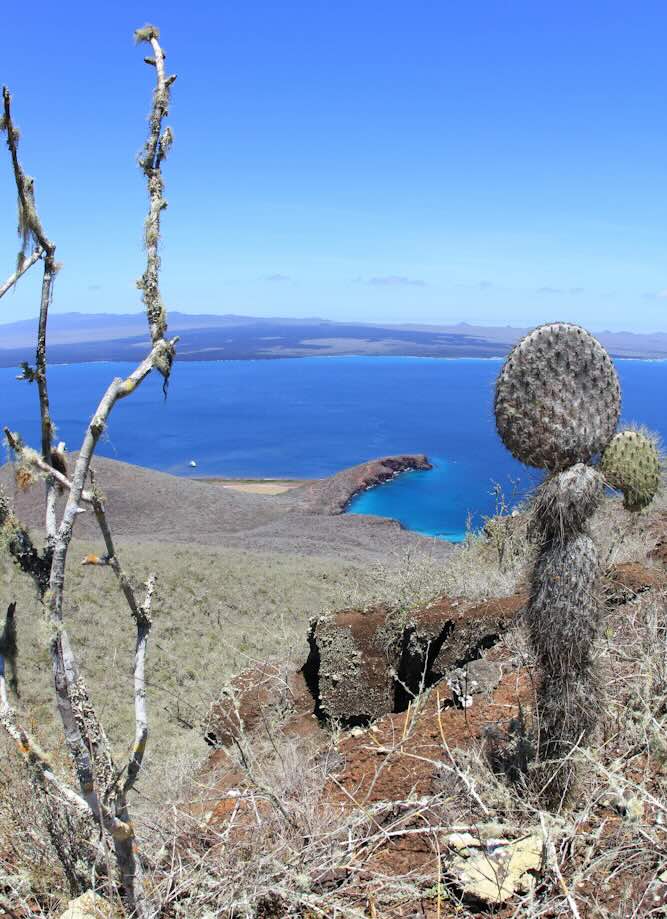
Rábida Island in Galápagos – Credit Island Conservation

Researchers from Island Conservation, the QCAZ Museum of Zoology at the Pontifical Catholic University of Ecuador, Re:wild, and the Galápagos National Park Directorate used DNA sequencing and detailed morphological analysis to trace the gecko’s evolutionary roots.

The Rábida population was found to be genetically distinct, yet closely related, to Phyllodactylus maresi from nearby islands. The team designated the Rábida geckos as a unique Evolutionarily Significant Unit—which is a distinct lineage crucial for conservation.

The rediscovery not only reignites hope for other “lost” species but also deepens our understanding of island evolution and biodiversity. Islands are resilient, and when given the chance, can host surprising recovery beyond what anyone thought possible.

OTHER ERADICATION SUCCESSES:
Island is Wonderland for Penguins Again After Dog Helps Eradicate 300,000 Invasive Rabbits
We Finally Rid An Island of 300,000 Rats – Now Everything is Blooming
To Save Sea Turtle Population Invasive Deer Successfully Eradicated from Island in Australia’s Great Barrier Reef

“This archipelago still holds hidden surprises, waiting to be discovered,” said Omar Torres-Carvajal, Curator of Reptiles at QCAZ Museum of Zoology.

HELP THIS STORY GET OFF THE ISLAND By Sharing The Good News on Social Media…

This Bracelet from Meta Translates Hand Movements into Computer Actions

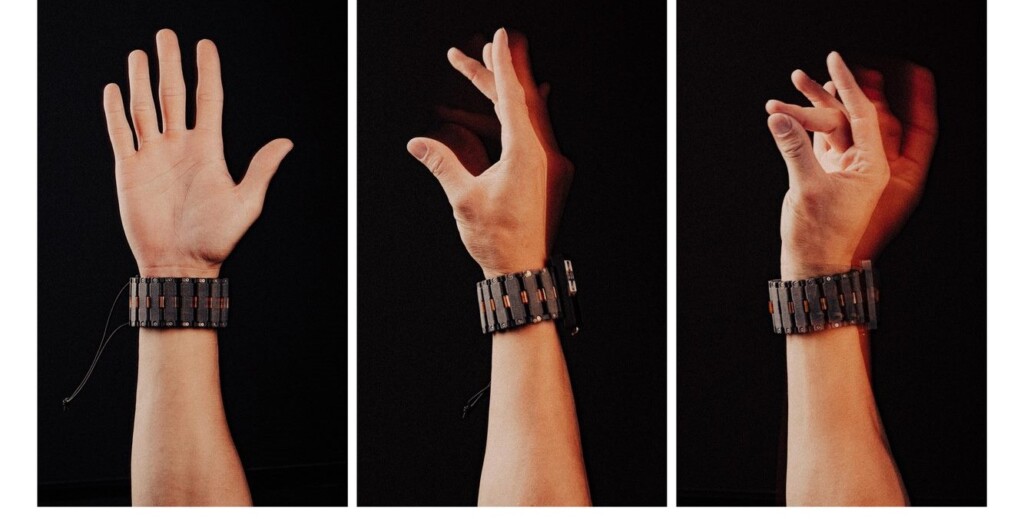
Meta's Neuromotor Interface - credit, Reality Labs, via Springer Press
Meta’s Neuromotor Interface – credit, Reality Labs, via Springer Press

A very sci-fi invention has been introduced by engineers from Facebook’s parent company that translates hand gestures into computer actions.

This includes fine motor movements like dotting a lowercase i, and translating handwriting into computer text is something the interface is particularly good at.

Designed inside Meta’s Reality Labs, it’s one of the first major offerings from the in-house moonshot department since the collapse of the company’s “Metaverse” concept which was once expected to “define the future of social connection” according to CEO Mark Zuckerberg, who renamed his company in its honor.

The Metaverse ended up being less of a future-defining technology and more like a damp squib, with the Reality Labs division of Meta losing $14 billion in 2022 and $15 billion in 2023.

Reality Labs was on the chopping block during Meta’s Year of Efficiency, with perhaps as many as 10,000 layoffs taking place in advance of a direction shift to what almost anyone would admit is a more exciting and marketable business direction: stuff that looks like it’s from Star Trek. 

The device can translate the electrical signals generated by muscle movements at the wrist into computer commands without the need for personalized calibration or invasive procedures. The bracelet slips on and off as easily as, well, a bracelet.

Technical engineers Patrick Kaifosh and Thomas Reardon who oversaw its development then used deep learning to create generic decoding models that accurately interpret the muscle movements across different people without needing individual calibration, and the more participants who used it, the more accurate the deep learning decoding model became.

MORE HUMAN-COMPUTER INTERFACES: 

However, accuracy and performance was then further increased with personalization, offering a recipe for building high performance biosignal decoders for many applications.

The bracelet works on a Bluetooth connection, and among the various tasks it proved capable of carrying out, its translation of human handwriting movements into text could be done at a speed of 20.9 words per minute, around 16 fewer than the average mobile phone user’s speed.

As to exactly who benefits most from the device, a variety of disabilities and paralysis situations immediately come to mind, as well as the obvious benefits for below-the-elbow amputees, or someone using multiple computers and/or monitors at the same time.

WATCH the bracelet in action below… 

SHARE Meta’s Cool New Gismo With Your Friends Who Love Future Tech…

“The hunger for love is much more difficult to remove than the hunger for bread.” – Mother Teresa

Fa Barboza

Quote of the Day: “The hunger for love is much more difficult to remove than the hunger for bread.” – Mother Teresa

Photo by: Ryan Hutton

With a new inspirational quote every day, atop the perfect photo—collected and archived on our Quote of the Day page—why not bookmark GNN.org for a daily uplift?

Fa Barboza

Good News in History, July 27

Warner Bros. Fair use

85 years ago today, Bugs Bunny, the wisecracking Warner Bros cartoon character, first debuted in an animated short entitled A Wild Hare. Supervised by Fred ‘Tex’ Avery, it featured a hunter named Elmer Fudd pursuing a wily rabbit voiced by Mel Blanc. The pair became beloved, and their debut received an Oscar nomination for Best Animated Short. WATCH the opening scene and learn more… (1940)

Walmart Heiress Opens Medical School with a Focus on Preventative Medicine

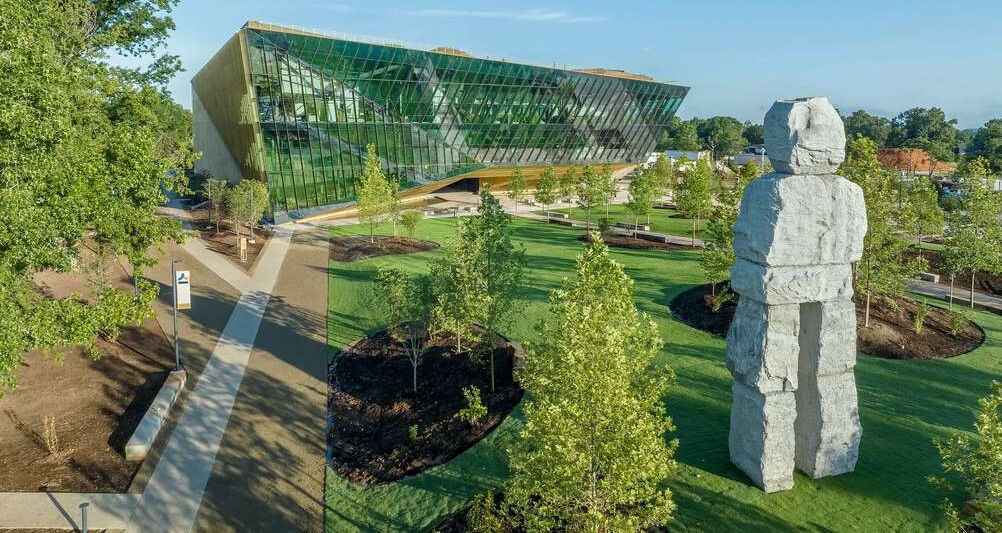
The Alice L. Walton School of Medicine building – credit, Timothy Hursley, Courtesy of Alice L. Walton School of Medicine

In Arkansas, a new medical school has just opened that aims to train a new generation of doctors on preventative medicine and whole-health principles.

It was dreamed of and financed by arguably the world’s wealthiest woman—a Walmart heiress whose personal struggles with illness and the incentive-based system of American ‘sick-care’ kindled a desire for change, especially in her own rural community.

The Alice L. Walton School of Medicine received 2,000 applications from hopeful young future doctors around the country, accepting only 48 to come and study at the Bentonville campus.

Anyone who raises an eyebrow at alternative approaches to medicine can close the article now, because the curriculum includes art and cooking classes, gardening and horticulture—all tailored to engender a perspective of cultivating health, not managing sickness.

And that is the great challenge faced by the American medical system. It has improved the survival and care of life-threatening diseases and pioneered dozens of mind-boggling surgical procedures, yet the system can be given nothing greater than a failing grade for the state of general human health.

For a nation that styles itself as the greatest to ever exist, its citizens suffer from more non-communicable chronic diseases borne of poor diet and lifestyle choices than any other in the developed world, and nearly half of all American adults are obese.

Profiled in TIME Magazine, Alice Walton would like to see what the American health service sector would look like if doctors spent time focusing on preventing sickness from occurring rather than treating it once it arrives.

It’s not a novel idea: the functional medicine movement is working on gestating a similar revolution among healthcare practitioners. It’s so un-novel that it was expounded by none other than Founding Father Benjamin Franklin, who said so famously that an ounce of prevention is worth a pound of cure.

To lead her school in embodying that message, Walton picked Dr. Sharmila Makhija, a gynecologic cancer surgeon from Alabama, who like Walton, has seen the dire shortcomings of rural health in her home state.

“The foundation [of the curriculum] is traditional medicine but enhanced with the humanities and the arts to improve the delivery of care—so we improve on how we [act] with patients and how we partner with patients,” Dr. Makhija told TIME.

The average American medical school includes around 20 hours of coursework on nutrition: the backbone of health and the major spawning pool of so many chronic diseases. Along with being not very much, many of those hours of coursework are elective. At the Alice Walton School of Medicine, acronym “AWSOM,” there are 50 hours, at those include culinary classes.

A rooftop vegetable garden mounted on the dramatic glass facades of the main campus building serves as a different sort of classroom, while a nearby learning farm helps further educate on the nature and origin of the food eaten by the patients of these future doctors.

ALSO CHECK OUT: Anonymous $3.5 Million Gift to Milwaukee Art Museum Provides Free Admission for Children

If you hope to be able to keep a 40-year-old human healthy, you should be able to keep a tomato plant healthy—just one concept in a series that aims to cultivate empathy and the ability to predict where illness will spring from.

As part of their training, students will be able to design a section based on community service and research projects; yet another way that AWSOM methods hope to generate an empathetic eye through the belief that doctors should serve the needs of their community.

ALTERNATIVE MEDICINE STORIES: Priceless Preventative Healthcare Is Now Free in Poland Thanks to New Program

According to TIME, how a prospective student planned to address healthcare shortcomings in their area was a chief determinant of eligibility for attendance.

Both Dr. Makhija and Ms. Walton acknowledge that they can design whatever curriculum they want, but if their graduates just jump into the existing health system, it will be all for naught. For that reason, AWSOM is conducting extensive clinical outreach to build a network of potential establishments willing and eager to test the novel strategies brought forward by the school’s eventual graduates.

PHILANTHROPY IN HEALTH: New York Medical School Surprises Students with Free Tuition in Perpetuity After $1Billion Gift–WATCH

“It’s all about rethinking and re-envisioning what the education of the next generation of health care workers will be like,” says Makhija. “Alice and I are very keen on creating a sustainable model of education, both in how we deliver the curriculum that can be replicated, as well as fiscally, so that other schools can use a similar model.”

The first five years of enrollments will be bankrolled by Ms. Walton’s sizeable fortune.

SHARE This Revolutionary Approach To Medical School With Your Friends…

Your Weekly Horoscope – ‘Free Will Astrology’ by Rob Brezsny

Our partner Rob Brezsny, who has a new book out, Astrology Is Real: Revelations from My Life as an Oracle, provides his weekly wisdom to enlighten our thinking and motivate our mood. Rob’s Free Will Astrology, is a syndicated weekly column appearing in over a hundred publications. He is also the author of Pronoia Is the Antidote for Paranoia: How All of Creation Is Conspiring To Shower You with Blessings. (A free preview of the book is available here.)

Here is your weekly horoscope…

FREE WILL ASTROLOGY – Week of July 26, 2025
Copyright by Rob Brezsny, FreeWillAstrology.com

LEO (July 23-Aug. 22):
I predict that your imminent future will be a ticklish and tricky but ultimately uplifting masterpiece. It will feature guest appearances by members of your private hall of fame, including one future luminary you have not yet fully appreciated. This epic series of adventures may begin when you are nudged to transform your bond with a key resource. Soon, you will be encouraged to explore frontier territory that offers unexpected help. Next, you will demonstrate your understanding that freedom is never permanent but must constantly be reinvented.

VIRGO (Aug. 23-Sept. 22):
Sci-fi author Octavia Butler wrote, “All that you touch, you change. All that you change changes you.” The coming weeks will be prime time for you to honor and celebrate that prayer, Virgo. You won’t be a passive dreamer, gentle traveler, or contemplative wanderer. Rather, I predict you will be a tidal force of metamorphosis. Parts of your world are pliable and ready for reshaping, and you will undertake that reshaping. But it’s important to know that the shift will go both ways. As you sculpt, you will be sculpted. As you bless, you will be blessed. Don’t be shy about riding along on this feedback loop. Do it with reverence and glee. Let the art you make remake you. Let the magic you give become the magic you are.

LIBRA (Sept. 23-Oct. 22):
In certain Hindu traditions, the deity Ardhanarishvara is depicted as half-male, half-female—a divine fusion of opposites. They are not torn, but whole in their duality. I invite you to be inspired by their symbolism in the coming weeks, Libra. For you, balance will not be about making compromises or pushing to find middle ground. It will be about embracing the full range of possibilities. Energies that some people may imagine are contradictory may in fact be complementary and mutual. Benevolence will coordinate well with fierceness and vice versa. Your craving for beauty will not just coexist with but synergize an affinity for messy fertility. This is a time for sacred synthesis. Don’t dilute. Integrate.

SCORPIO (Oct. 23-Nov. 21):
The medieval mystic Meister Eckhart wrote, “God is not found in the soul by adding anything, but by a process of subtraction.” Subtracting what? He wasn’t referring to losing something valuable, but rather to letting go of obstacles that obscure our direct experience of the divine. I invite you to make abundant use of this principle, Scorpio. Slough off layers of illusion, outmoded fantasies, and self-images soaked in others’ longings. As you let go, do so not in bitterness but in a joyous quest for freedom.

SAGITTARIUS (Nov. 22-Dec. 21):
I’m hoping that the Season of a Thousand Feelings hasn’t confused you. I’m praying that you have maintained a measure of composure and aplomb while navigating through the richest emotional flow you’ve experienced in many moons. It’s true that in some ways this barrage has been draining. But I’m certain you will ultimately regard it as being highly educational and entertaining. You will look back at this bustling interlude as a gift that will take a while to harvest completely.

CAPRICORN (Dec. 22-Jan. 19):
Greek myth tells us that Persephone didn’t just return from the underworld each spring; she ruled there half the year. Yes, she was taken there against her will, but she adapted, transformed, and ultimately wielded great power in the depths. In the coming weeks, Capricorn, you will have the chance to navigate realms that other souls may not be brave enough to enter: taboos, unusual yearnings, ancestral memories. My advice is to go gently but with intense resolve. Don’t act like a tourist. Be a sovereign explorer, even a maestro of mystery. Claim your throne in the underworld. Use it to create healing maps for others. When your work is done and the right moment comes, you will rise again into the light.

AQUARIUS (Jan. 20-Feb. 18):
In my astrological opinion, you are ready to graduate from the University of Senseless Suffering. It’s time to get your diploma and treat yourself to a vacation. I’m not saying you will never again experience pain, of course. Rather, I’m telling you the good news that your dilemmas in the coming months will be more fully useful and redemptive. They will feel more like satisfying work than unpleasant ordeals. Congrats on the upgrade, Aquarius! You are forever finished with at least one of your arduous lessons.

PISCES (Feb. 19-March 20):
Ancient Greek philosopher Heraclitus said you can’t step in the same river twice. Like everything else in nature, the river is in constant flux. It may appear to be the same, but the water is always flowing. What Heraclitus didn’t say is that *you* are never the same, either. Eternal change is your destiny. I invite you to ruminate eagerly on this truth, Pisces. Hopefully, it will help you let go of any hyper-perfectionist urges you might have. It will inspire you to see that the plan you made a while ago may need revision—not because you were wrong, but because you have grown. So yes: It’s time to reassess and recalculate. The goal isn’t to stick to the blueprint, but to build something that breathes with your becoming. Let the ever-new version of you draw a fresh map. It will be wiser than the last.

ARIES (March 21-April 19):
In Hindu cosmology, the Sanskrit term “Lila” refers to divine play. It’s the idea that all of creation is a sacred and artful amusement that’s performed by the gods with joy, sorrow, artfulness, and flair. I hereby proclaim Lila to be your theme of power, Aries. You have been so deep lately, so honest, so drenched in feeling. Now, life is giving you a big wink and saying, “It’s playtime!” You can start this fresh phase by making a list of all the experiences that bring you fun, recreation, and entertainment. I hope you emphasize these pursuits in the coming weeks.

TAURUS (April 20-May 20):
In the high desert of Chile, astronomers work at observatories on mountaintops where the air is dry, and the sky is clear. There, away from light pollution, the universe reveals itself with astonishing intimacy. But even the most powerful telescopes can’t function during the day. I suspect you will be like those observatories in the coming weeks, Taurus: capable of seeing vast truths, but only if you pause, quiet the ambient noise, and look during the dark. This approach should embolden you to use your intelligence in new ways. Stillness and silence will be conducive to your deep explorations. Night will be your ally.

GEMINI (May 21-June 20):
Are you courageous enough to let go of sparkly clean but unfruitful fantasies so as to clear space for reality’s disorderly richness? Are you wild enough to relinquish naïve fears and hopes so you can see the raw truths blooming right in front of you? Are you cagey enough to discard the part of your innocence that’s rooted in delusion even as you bolster the part of your innocence that’s fueled by your love of life? Here’s my response to those questions, Gemini: Maybe you weren’t mature or bold or crafty enough to accomplish these heroic feats before, but you are now.

CANCER (June 21-July 22):
Coral polyps are tiny, soft-bodied creatures. Over centuries, they assemble massive reef systems, turning their fragile exoskeletons into monumental architecture. These creatures can be a symbolic reminder that your sensitivity is not a weakness; it’s your building material. Keep that in mind during the coming weeks, when tender care and your nurturing ability can be primal sources of power. I invite you to start creating an enduring sanctuary. Generate a quiet miracle. Construct an elegant masterpiece. For best results, allow your emotional intelligence to guide you. You have the precise blend of aptitudes necessary to coax beauty to grow from vulnerability.

WANT MORE? Listen to Rob’s EXPANDED AUDIO HOROSCOPES, 4-5 minute meditations on the current state of your destiny — or subscribe to his unique daily text message service at: RealAstrology.com

(Zodiac images by Numerologysign.com, CC license)

SHARE The Wisdom With Friends Who Are Stars in Your Life on Social Media…