All News - Page 471 of 1735 - Good News Network
Home Blog Page 471

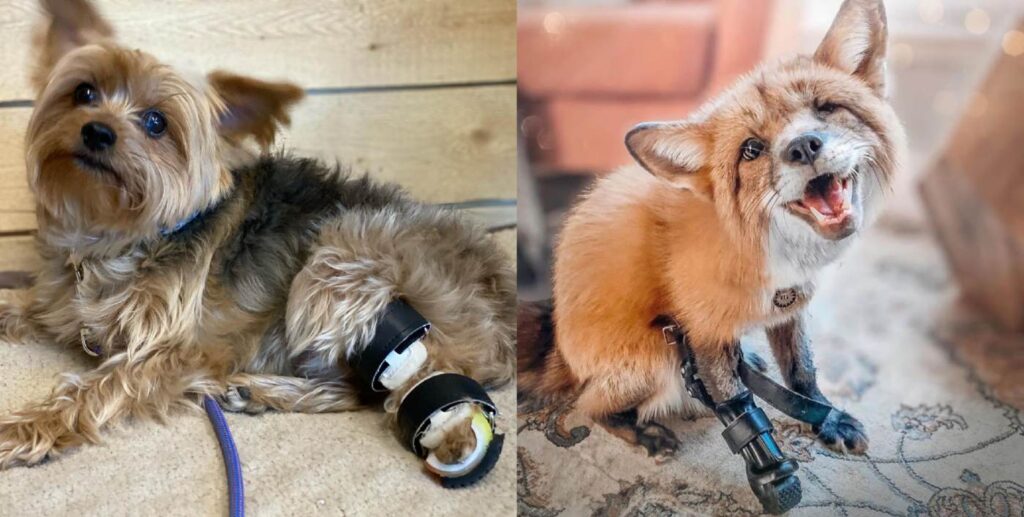
The ‘Wizard of Paws’ Makes Prosthetics to Fit Any Animal – Lending a Human Hand of Compassion

Facebook/Bionic Pets

When an animal faces the loss of mobility—especially when there’s an amputation involved—the impact can be devastating. Until not all that long ago, chances for a normal life were slim. If only someone could come up with a solution, imagine the difference it could make to countless lives?

Well, someone has.

Derrick Campana, star of BYUtv’s Wizard of Paws, a pioneer in the field of prosthetics and orthotics for animals, is kind of like what you’d get if you crossed Dr. Dolittle with the Six Million Dollar Man.

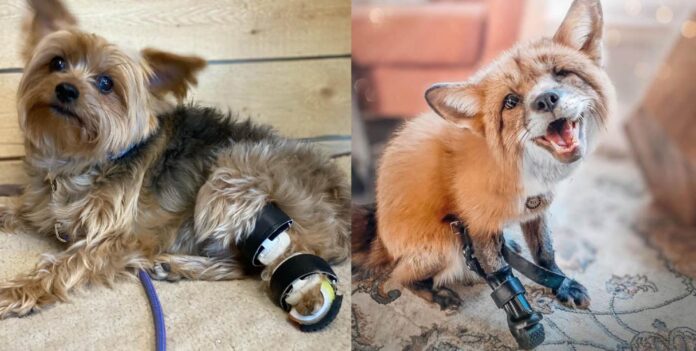
Since 2005, Campana’s “pet fitters” Bionic Pets, along with Animal Ortho Care, have been building custom-made mobility devices for animals of all sizes and descriptions from cats and dogs, to eagles, tortoises, cows, foxes, camels, goats—and even a six-ton African elephant.

In Wizard of Paws, with his wing-dog, Henry riding shotgun, Campana travels the U.S. creating custom-designed devices to help pets with a variety of mobility issues.

“It’s about making families whole again,” Campana told People. “I get to build these prosthetics at their houses. I get to experience the joy on the animals’ faces and [those] families’ faces as they walk again.”

At his home base in Sterling, Virginia, Campana spends much of his time doing fittings and casting molds in order to create the forms he painstakingly hand-sculpts; finishing the devices with vacuum-formed plastic and a variety of other materials.

Animal Ortho Care also currently ships casting kits all over the world. Compana hopes to broaden his outreach with advances in cost-effective 3-D printing technology—and since every animal that comes to him presents its own unique puzzle, expanding horizons and searching for new solutions is what Campana is all about.

“It’s always interesting, never boring and I’m constantly learning,” he told VPM-News. “Being able to combine [my] passion for building with helping animals is just an awesome thing. I’ve created my own industry here, so it’s kinda living the dream.”

MORE: When Prosthetic Makers Said it Couldn’t Be Done, Dentist Gives Orphaned Koala a New Foot

One of the most important parts of Campana’s mission is educating both pet owners and veterinarians about new and emerging options for care. He admits when he first started out, he got push-back from veterinary doctors trained in more traditional methods who didn’t fully grasp the potential benefits of orthotics and prosthetics for animal applications.

However, since then, he’s been steadily been striving to show how such devices can actually offer better outcomes—including less post-surgical downtime, and in some cases, eliminating the need for surgery altogether. These days, the feedback he’s getting is pretty much resoundingly positive.

For Campana, it’s easy to be a cheerleader when you truly love what you’re doing.

RELATED: This Athlete Could Become the First American Amputee to Compete in the Olympics

“Seeing dogs wag their tails; their eyes kind of sparkle again, that moment when they haven’t walked in the last couple of years or maybe they’ve never walked before in their lives… You see them just run and get up and those are the moments that I kind of live for, and that’s why I do what I do,” he told VPM.

“I never thought in my wildest dreams I’d be helping animals all over the world or even helping animals in general. It’s not something you think of as a child because it never existed but if you have that idea, go for it. And if you’re passionate about it, go as hard as you can for as long as you can and you can make a huge difference in your life and in the life of so many [others].”

(WATCH the VPM video for this story below.)

RAISE a Paw For This Great Story by Sharing on Social Media…

The Best Time to Eat Protein and Build Muscle Health? You May Want to Rethink Breakfast

Photo by Kelly Sikkema

Proteins constitute an essential dietary component that help in the growth and repair of the body. Composed of long chains of amino acids, they promote the growth of skeletal muscles—which is the group of muscles that help us move.

Humans have been aware of the benefits of proteins for a long time. However, recent studies have shown that having the right amount of protein at the right time of the day is essential for proper growth.

This is called Chrononutrition—which looks at how when you eat is as important as what and how you eat.

The reason behind this is the body’s internal biological clock.

Called the circadian rhythm, this rhythm is followed by all cells and controls life functions like metabolism and growth.

Interestingly, protein digestion and absorption have been found to fluctuate across day and night according to this clock.

Moreover, earlier studies have reported that intake of protein at breakfast and lunch promotes skeletal muscle growth in adults.

However, details on the effect of the time of protein intake on muscle growth and function have remained elusive until now.

Fortunately, researchers from Waseda University, led by Professor Shigenobu Shibata, recently endeavored to understand the effect of the distribution of protein intake through the day on muscles.

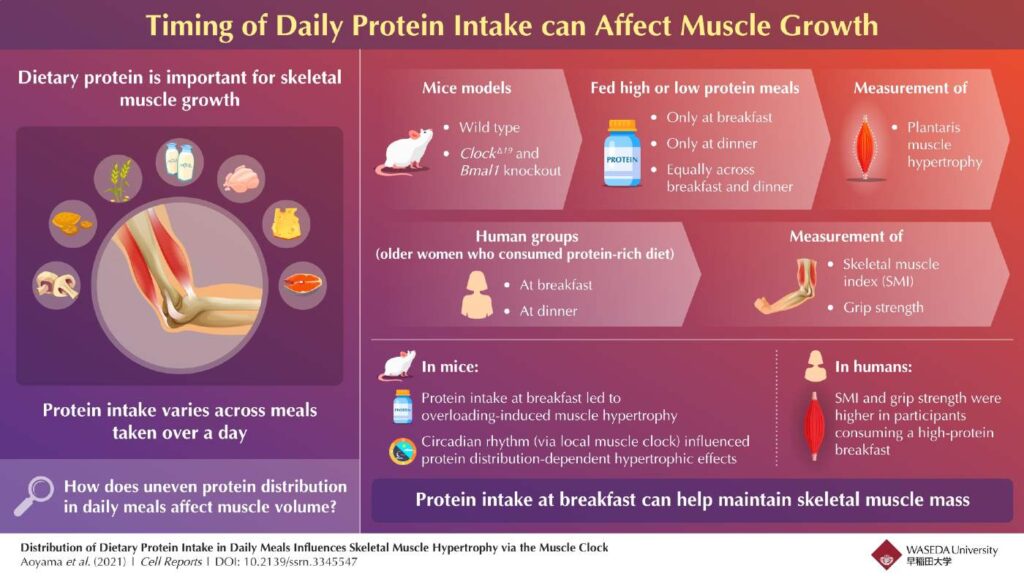
They fed laboratory mice two meals per day containing either high (11.5% by proportion) or low (8.5% by proportion) protein concentrations.

The researchers noted that protein intake at breakfast induced an increase in muscle growth, determined by assessing induced hypertrophy of the plantaris muscle in the leg, when compared with the effects of protein intake at dinner.

Waseda University

Specifically, the ratio of muscle hypertrophy determined against the growth of the control muscle was 17% higher in mice fed 8.5% protein at breakfast, than that in mice fed 11.5% protein at dinner, despite the former group consuming a low proportion of protein overall.

They also found that early-in-the-day intake of a type of protein called the BCCA—short for branched-chain amino acids—increased the size of skeletal muscles specifically.

They repeated diet distribution experiments on these mice but did not observe similar muscle change, which confirmed the involvement of the circadian rhythm in muscle growth in the context of protein intake.

Excited about the findings of their study, published in a recent issue of the Cell Reports, Professor Shibata emphasizes, “Protein-rich diet at an early phase of the daily active period, that is at breakfast, is important to maintain skeletal muscle health and enhance muscle volume and grip strength.”

To check if their findings were applicable to humans, the team recruited women in their study and tested if their muscle function, determined by measuring skeletal muscle index (SMI) and grip strength, varied with the timing of the protein-rich diet consumed.

MORE: Study Says Combining a Daily Protein Shake With Exercise Doesn’t Just Make You Stronger, It Makes You Smarter Too

Sixty women aged 65 years and above who took protein at breakfast rather than at dinner showed better muscle functions, suggesting the possibility of the findings to be true across species. Additionally, the researchers also found a strong association between SMI and the proportion of protein intake at breakfast relative to total protein intake through the day.

Professor Shibata is hopeful that the findings of their study will lead to a widespread modification in the current diet regime of most people across the Western and Asian countries, who traditionally consume low amounts of protein at breakfast.

He therefore stresses, “For humans, in general, the protein intake at breakfast averages about 15 grams, which is less than what we consume at dinner, which is roughly 28 grams.

RELATED: Exercise in the Morning May Stave Off Cancer, As Opposed to Later in the Day, New Study Says

“Our findings strongly support changing this norm and consuming more protein at breakfast or morning snacking time.”

Relatively protein-rich foods that won’t feel too off-putting in the early hours include eggs, tofu, hempseed, oatmeal, chia, and nut butters.

It seems, a simple change in our dietary regime can be our key to ensuring healthy muscles.

Source: Waseda University

POWER UP Friends’ Feeds With This Fascinating Research…

What Color is it? Photographer Captures Varied Luminescence of One of UK’s Rarest Butterflies

SWNS

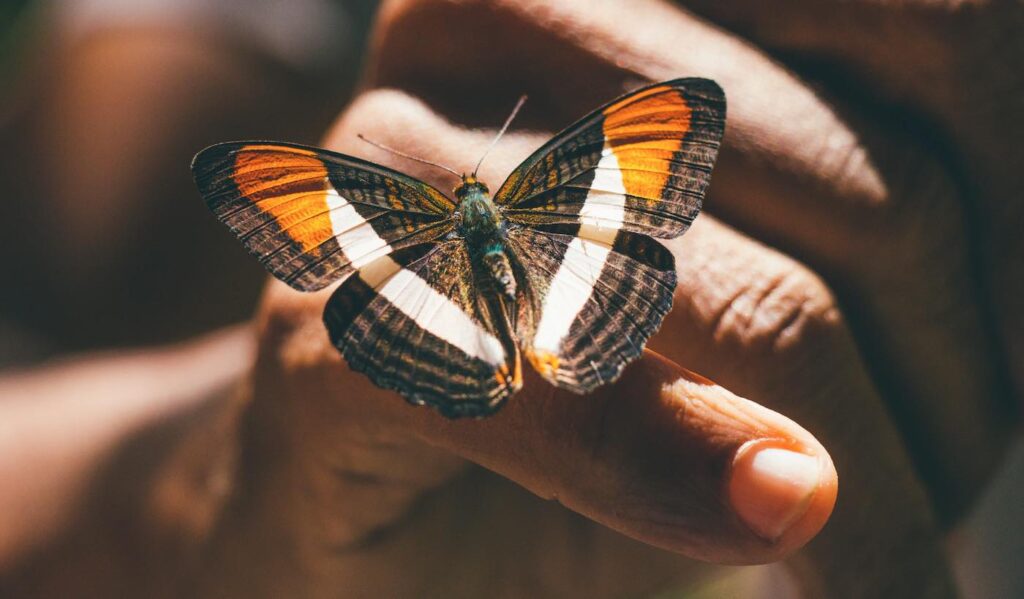
One of Britain’s rarest and largest butterflies will remind readers of that time a few years ago when the internet got all in a flutter over whether ‘The Dress’ was black and blue or white and gold.

SWNS

After decades of decline, the Purple Emperor is making something of a comeback in England’s woodlands.

Despite its magnificent appearance, the species, affectionately dubbed His Imperial
Majesty, is attracted to smelly cheese, human sweat, fish paste, and even dog and fox poo.

But it is the strange colors of the wings of the male—which can appear blue to some people but brown to others—which is most amazing.

SWNS

Wildlife photographer Andrew Fusek Peters has been busy snapping the same butterfly from different angles.

Andrew, who photographed the butterfly in Oversley Woods in Warwickshire, said: “They are ultra-rare, you do see photographs of them but like all British butterflies their numbers have declined catastrophically.

SWNS

“Conservation means their numbers are on the rise but they are still one of the rarest British butterflies.

“They have this unbelievable quality where if you look at them from behind they are a brown butterfly and when you go round to the front of the wing it looks purple or blue.

“This is the effect of the light on the thousands of scales that make up their wings.

RELATED: Farms in UK Saved This Beautiful Duke of Burgundy Butterfly From Extinction

“The scales refract the light in different ways which is why you see the different colors.

“It was amazing to think I was looking at the same butterfly when it looked completely different from either side, it is really, really extraordinary.

“It was really special to be able to get so close—it was so relaxed. I had the lens four foot above the butterfly as it lay on the ground.

MORE: A Monarch Visitation After Girl’s Death Has Dad Now Sending Milkweed Seeds to All Who Want to Help Butterflies

“I had never seen one before in the four years I’ve been photographing butterflies,” he said.

We’re grateful Peters finally got the chance to do so—thanks to local conservation efforts bringing Purple Emperor numbers back to healthier levels.

GET YOUR Friends a Flutter With This Fun Story…

Student Invents Toilet That Converts Poop into Energy – And Pays in Digital Currency if You Help to Fill it!

UNIST
UNIST

One man’s trash is another man’s treasure, they say. Well, in a South Korean school, one man’s poo is another man’s pennies.

The invention of a toilet that composts human excrement and turns it into methane biogas for use in the school’s energy system has the students there re-evaluating waste like never before, as the amount of waste they contribute to the electric bills is returned to them in the form of a digital currency.

The dirty mind behind the brilliant invention was Cho Jae-weon, an urban and environmental engineering professor at the Ulsan National Institute of Science and Technology (UNIST), who insists that humanity can solve all kinds of problems if we think “outside the box.”

Known as the BeeVi toilet, a condensed form of “bee” and “vision,” the compost/currency commode uses a powerful vacuum to pull feces down into a composting tank, thereby eliminating all water usage.

Next, bacteria breakdown the feces and the methane is channeled into a solid-oxide fuel cell which powers several building functions such as the hot water heater.

On average, a human’s daily excrement can generate around 0.5 kilowatt hours of electricity.

MORE: Whale Feces Represents One of the Greatest Allies Against Climate Change—Even More Than Trees

“If we think out of the box, feces has precious value to make energy and manure. I have put this value into ecological circulation,” Cho told Reuters.

Along side the BeeVi, Cho created a digital token, called the “Ggool,” or honey in Korean, which students can earn by using the toilet.

They can then take their feces financing and spend it on coffee and other items in the school cafeteria.

CHECK OUT: Dutch Guy Famous for Cleaning Up Pacific Garbage Patch is Now Clearing the World’s Rivers Too

“I had only ever thought that feces are dirty, but now it is a treasure of great value to me,” postgraduate student Heo Hui-jin told Reuters, in what must have been a fairly uncomfortable conversation.

(WATCH the Reuters video about this story below.)

CONVERT Friends’ Feeds Into Sources of Good News—Share This Story…

‘Future Belongs to Renewable Energy’ Says India’s Largest Oil Baron and Greenland, Which Ended Search for Oil

“The future belongs to renewable energy,” is a big thing for Big Oil’s fourth biggest player, and Asia’s richest energy baron to say, but Mukesh Ambani is letting his money do the talking—all $10.1 billion of it.

In late June the Chairman of Reliance Industries, one of the largest oil companies on the planet, announced a 750 billion rupee investment in a brand new renewable energy supply chain.

While oil majors like Reliance, Shell, or ExxonMobil are often the chief targets of climate activists’ attentions, the resources these energy giants can bring towards stimulating renewable investment and production are sometimes greater even than national governments. Furthermore, their decades of experience in the energy industry lends them certain insights into energy supply and demand trends that few others possess.

“The age of fossil fuels, which powered economic growth globally for nearly three centuries, cannot continue much longer,” Ambani stated. “The huge quantities of carbon it has emitted into the environment have endangered life on Earth.”

600 billion of the rupees will produce four “gigafactories” where solar arrays, hydrogen fuel cells, and battery grids will be produced, and another 150 billion will help reinforce the value chain through strategic partnerships.

MORE: Researchers Use Wastewater to Generate Electricity – While Cleaning It Up

When large firms like Reliance get involved, especially in production, manufacturing costs for renewable energy as a whole go down, not only because of investments in research and development, but also through market competition, as providers undercut each other’s prices to offer the best deal for consumers or government energy agencies.

‘Green’land

The forecast for a renewable future is one shared by Greenland, which has announced that all future oil and mineral exploration will cease, citing climate concerns and desires to invest in green energy.

Tens of billions of barrels of oil and hundreds of trillions square-feet of natural gas are predicted to lie under receding ice sheets, but keeping them in the ground is the new edict from the recently elected Inuit government of the Ataqatigiit.

“The future does not lie in oil. The future belongs to renewable energy, and in that respect we have much more to gain,” the Greenland government said in a statement, before adding it “wants to take co-responsibility for combating the global climate crisis.”

RELATED: Huge Supply of Water is Saved From Evaporation When Solar Panels Are Built Over Canals

Inhabited by 57,000 people, AP’s sense is that the country is dreaming of independence, as it receives two-thirds of its national wealth from Denmark as charity.

In a sign of maturity from the fledgling state, Greenland has decided that a near-future of possible independence is not worth a long-term future of worsening climate change.

SHARE These Crucial Climate Change Realizations With Friends…

“In the end you can’t always choose what to keep. You can only choose how you let it go.” – Ally Condie

Quote of the Day: “In the end you can’t always choose what to keep. You can only choose how you let it go.” – Ally Condie

Photo: by J. Balla Photography

With a new inspirational quote every day, atop the perfect photo—collected and archived on our Quote of the Day page—why not bookmark GNN.org for a daily uplift?

Unsuspecting Pedestrians Trigger a Dance Party By Standing on Decal That Says ‘Stand Here For Dance Party’ (WATCH)

Ari Scott for Improv Everywhere

What do you get when you surprise random people with an unexpected dance party on the streets of New York?

Pure joy, community, and connection.

Ari Scott for Improv Everywhere

The inspiring street performance group Improv Everywhere placed a decal on the pavement in a park that read, “stand here for dance party.”

Designed in the style of the ubiquitous social distancing circles, most passersby ignored it, or took photos, once they read its appealing message.

But whenever anyone followed the instructions and put their feet directly on the decal in Grand Army Plaza in Manhattan, they instantly found themselves surrounded by a 100-person dance party featuring a vintage 1980s boombox.

The group that specializes in large-scale surprise moments in public was eager to get back to their joyful antics, so they kicked off their first post-pandemic project by partnering with a fully-vaxed professional b-boy dance crew, the Dynamic Rockers, and the Museum of the City of New York, which opened a new music-themed exhibit—New York, New Music: 1980-1986.

100 undercover dancers recruited by Improv Everywhere were blending in the area, walking around the sidewalks or sitting on benches, just waiting for someone to stand on the decal, triggering a massive dance party.

Ari Scott for Improv Everywhere

Music immediately began blaring from Kid Glyde’s boombox as he walked from around the corner and up to the unsuspecting person to get the party started.

The people standing on the sticker were shocked, but quickly got on board with the fun.

WATCH the ebullient video…

Watch More Improv Everywhere:
Watch People’s Reactions Suddenly Seeing Their Messages of Love Broadcast on Huge Screen
Four Sets Of Twins Stage Time Travel Prank on NYC Subway
New Yorkers Say Something Nice!

SHARE the Perfect Dance Gag With Your Friends on Social Media…

More Americans Now Consider Themselves to be ‘Thriving’ Than at Any Point in 13 Years: Gallop

Photo credit: Andre Hunter

Despite hardships from Covid, drought, heatwaves, wildfires, and resurgent inflation, three in five Americans say they are pretty happy with their lot, according to the latest Gallup Live Evaluation Index.

Photo credit: Andre Hunter

The percentage of Americans who evaluated their lives to be ‘thriving’ reached 59.2% in June, the highest in over 13 years of ongoing measurement—and exceeding the previous high of 57.3% from September 2017.

During the initial COVID-19 outbreak and economic shutdown, the thriving percentage plunged nearly 10 percentage points to 46.4% by late April 2020, tying the record-low measured during the recession that began in 2008.

The June 2021 results are based on 4,820 U.S. adults surveyed online as a part of the Gallup Panel, a probability-based, non-opt-in group of about 120,000 adults across all 50 states and the District of Columbia.

For its Index, Gallup classifies Americans as “thriving,” “struggling” or “suffering” according to how they rate their current and future lives on a scale from 0 to 10. Those who rate their current life a 7 or higher, and their anticipated life in five years an 8 or higher, are classified as thriving.

RELATED: 7 in 10 Americans Agree That 2020 Made Them a Better Person – Here’s How

The percentage of Americans estimated to be “suffering” has remained steadily low throughout the pandemic and in line with pre-COVID estimates, said Gallop in a news release. In June, just 3.4% of respondents were classified as suffering, according to their own assessments.

The major drop in the thriving percentage last year was characterized by a severe drop in current life satisfaction ratings. By late April, the percentage of U.S. adults who rated their current lives a “7” or higher had plunged about 11 percentage points, even as the anticipated life satisfaction five years forward had improved.

“The rapid recovery of current life satisfaction, coupled with the sustained elevated level of anticipated life satisfaction, has fueled the thriving percentage to its current heights.”

Spikes in Daily Stress and Worry Retreated to Pre-COVID Levels

In addition to the general life ratings, Gallup tracks whether Americans have recently experienced specific emotions, including stress and worry, in their daily lives.

The percentage of people who reported experiencing significant stress and worry “a lot of the day yesterday” showed unprecedented increases at the beginning of the pandemic, with stress rising 14 percentage points to 60% and worry rising 20 points to 58%.

Reports of experiencing these emotions have subsequently fallen to pre-pandemic levels in both cases.

CHECK OUT: With Time to Pursue New Hobbies, 6 in 10 Have ‘Leveled Up’ – And 40% Think They’ll Make Money From it

Significant daily enjoyment has also markedly improved. In 2018-2019, about 80% of U.S. adults reported significant enjoyment the day before, which plunged to 61% at the onset of the pandemic. By June, enjoyment was back up to 73% of the adult population.

More than being a result of the vaccination rollout or improving economic conditions, the authors of the study theorize that the happiness boom was a result of the critical psychological benefit of renewed social interaction.

Reuniting in person with family and friends and joining in large gatherings of people such as at sporting events is a crucial part of social wellbeing. Past research has shown that those who spend six to seven hours a day in social time experience about one-fifth the stress and worry on any given day as those with no social time at all. These effects are likely on display as the levels of these negative emotions have improved to pre-pandemic levels in recent months.

RELATED: People are Making Self-Care a Priority After One of the Most Stressful Years Ever

It just goes to show: life’s ups are more powerful after you’ve been through the downs.

SHARE Your Own Satisfaction By Sharing This on Social Media…

Innkeeper’s Kindness to House People After Storms is Contagious – With Everyone Pitching in and Sharing

This story was chosen as one of the top ten nominations to win the Reader’s Digest annual “Nicest Places in America” contest: a crowd-sourced effort to uncover nooks where people are still kind and compassionate in an era of global pandemic and political divide. You can see all ten Nicest Places for 2021 here, at Reader’s Digest. As a judge in the contest for three consecutive years, GNN chose this story to be one of the best.

Sean Patel, photo by STEPHEN SMITH

When friends try to hold you back from being too generous and kind, you know you’re doing something right.

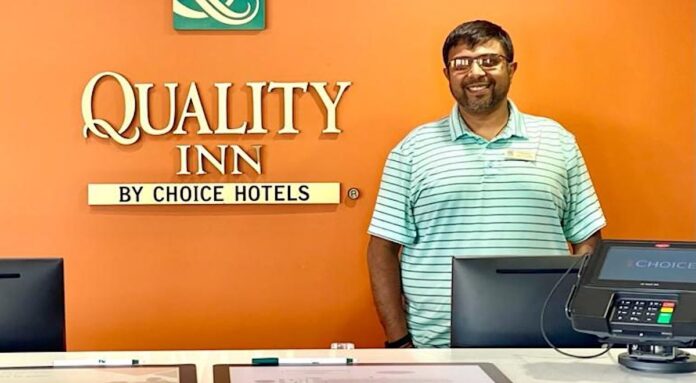
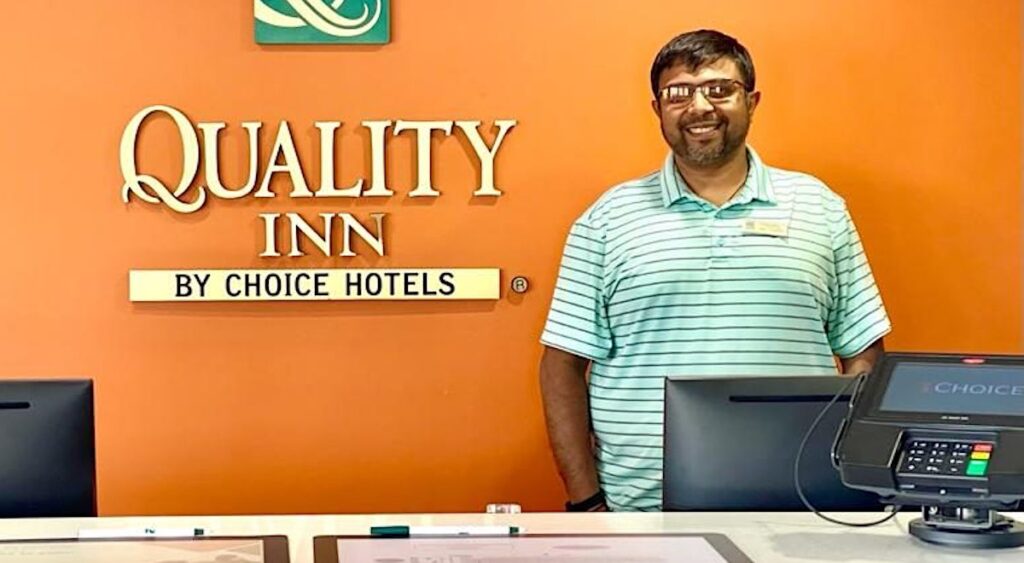
When icy temperatures this past winter froze Kodak, Tennessee, shutting power down and freezing pipes, Sean Patel, owner of the local Quality Inn, wanted to do something to help his neighbors: open his hotel to all comers, even if he ran out of rooms, and provide them food and warmth until the power came back on.

“I frequently ask him to dial it back a bit because I know he’s spending so much of his own money and energy to help others, but he has such a big heart, I know he will only give more,” says his friend Steve Smith, who nominated the Quality Inn for Nicest Places in America.

But Patel wouldn’t listen. The immigrant from India, who came to America in 2004, saw goodness in the people around him when he settled in Tennessee—and wanted to be a part of it.

“I saw how much people helped each other in the South and it got to me,” explains Patel. “It’s not always about money. Sometimes you just need to talk. I always wanted to be that kind of person.”

RELATEDInnovative Renovations of Old Hotels Make Perfect Affordable Housing –Including Great Amenities

So, he did what came naturally: Patel took to social media to say, “If you can get here, we will take care of you.” Even at maximum capacity, Patel would make space for those who needed it whether that be in the lobby or around the pool area, just so they could have someplace warm to be.

Between Christmas and New Years of 2020, all 60 rooms in the hotel were completely booked with some rooms housing as many as eight or nine adults. Some guests even stayed in the lobby or meeting rooms just to have a warm place to be. A couple rooms under maintenance were used so guests in the lobby could take a shower, which Patel’s team sanitized thoroughly after each user.

People came together in ways that Patel has never seen before. Everyone pitched in. Some guests even paid for each other’s rooms. Everyone was sharing food. The hotel staff turned on their breakfast station so people wouldn’t have to worry.

Later in the winter, when a similar freeze hit Texas, Patel did the same with another hotel he owns, the Segovia Lodge. Power lines came down and pipes froze over as the cold engulfed an unprepared Texas. Patel waived all fees so anyone who could get to the hotel could stay and eat for free all week. Guests even walked to the hotel because their cars couldn’t get through.

The hotel eventually lost electricity and stranded truckers took turns staying up all night to keep a fire going. All of the rooms were full, yet Patel opened the lobby floor so more guests could be sheltered.

With over 200 people at the hotel, there wasn’t any fuss. No one argued. Everyone made sure the others were comfortable, warm, and fed as they took turns cooking for each other.

CHECK OUT: Hotel Stays Open During Lockdowns to House Homeless Locals; And They’re Repaying the Favor With Odd Jobs

“It wasn’t about who was Black, White, Democrat, Republican. COVID, or no COVID, everyone was a family,” says hotel manager Shelly Shirley.

All the guests who were at the Segovia Lodge during the freeze have even kept in touch via a Facebook group! They check in on each other and keep up with news from each other’s lives.

“Business is down, but I still have clothes on my back, the kids were safe, we had a shower and food,” says Patel. “We all have to look out for each other.”

That’s why GNN voted for Patel’s hotels to be the Nicest Places in America this year, and why, if you are ever in need of a hotel room in Kodak, Tennessee (30 minutes from Knoxville), or Junction, Texas (1.5 hours outside of San Antonio), you should definitely vote with your wallet and visit Sean.

MORE: Canada Buys Hotels to House Homeless People—And Also Rehire Workers

SHARE One of the Nicest Places in America With Travelers on Social Media…

“It is by going down into the abyss that you recover the treasures of life. Where you stumble, there lies your treasure.” – Joseph Campbell

Quote of the Day: “It is by going down into the abyss that you recover the treasures of life. Where you stumble, there lies your treasure.” – Joseph Campbell

Photo: by Nadjib BR

With a new inspirational quote every day, atop the perfect photo—collected and archived on our Quote of the Day page—why not bookmark GNN.org for a daily uplift?

LEGO Unveils First Brick Prototype Made from Recycled Plastic –Watch Their ‘Clutch Strength’ and Smash Testing

The LEGO Group

LEGO recently announced they now have a prototype brick made from recycled plastic that lives up to company standards for the iconic building toy.

The LEGO Group

The new prototype uses PET plastic from discarded bottles, yet it meets all the company’s strict quality and safety requirements.

A team of more than 150 scientists and engineers are working to find sustainable solutions for LEGO products. Over the past three years, they’ve tested over 250 variations of PET materials and hundreds of other formulations. The result is a brick that meets several play requirements—including clutch power. (See video below showing their testing fun.)

“We are super excited about this breakthrough,” says the Vice President of Environmental Responsibility at LEGO, Tim Brooks. “The biggest challenge on our sustainability journey is rethinking and innovating new materials that are as durable, strong and high quality as our existing bricks—and fit with LEGO elements made over the past 60 years.”

However, it will be some time before bricks made from a recycled material appear in stores. The next phase of testing is expected to take at least a year, but they do have a patent pending on the material formulation which “increases the durability of PET to make it strong enough for LEGO bricks.”

RELATED: LEGO Converts Their Instruction Manuals into Audio and Braille, Inspired by Blind Man

“Even though it will be a while before they will be able to play with bricks made from recycled plastic, we want to let kids know we’re working on it and bring them along on the journey with us.” says Brooks. “Experimentation and failing is an important part of learning and innovation. Just as kids build, unbuild and rebuild with LEGO bricks at home, we’re doing the same in our lab.”

The prototype is made from recycled PET sourced from suppliers in the United States that use US Food & Drug Administration (FDA) and European Food Safety Authority approved processes to ensure quality. On average, a one-liter plastic PET bottle provides enough raw material for ten small LEGO bricks.

LOOK: Zookeepers Capture Penguins’ Amusing Reactions to Meeting Large LEGO Roommate

In 2020, the company announced it will begin removing single-use plastic from its boxes. And, the company said it will invest up to US $400 million over three years to 2022 to accelerate its sustainability ambitions.

WATCH how they’re transforming plastic waste…

SEND This Green LEGO News to Playful Pals on Social Media…

Donated Cars and Cash Flood in to South Carolina Mechanic Who Fixes Them And Gives Them Away to Those in Need

Facebook - Middleton's Village To Village Foundation

A few weeks ago, the CBS Evening News featured a rural South Carolina man who is transforming lives by repairing broken cars and giving them away for free.

Facebook – Middleton’s Village To Village Foundation accepts a donation

Where Eliot Middleton lives, there’s no public transportation, no Ubers or taxi’s. So, if you don’t have a car, there are few options for those with kids or physical conditions.

Middleton, who owns a barbecue restaurant, is also a trained mechanic who rehabs donated cars in his spare time. Before the CBS report, he had gifted 32 cars to rural families since last September.

But, after the report aired on nationwide TV, Eliot received an explosion of donations including more than 800 cars.

A flood of cash also poured in to his Gofundme page—$129,000—and he has thousands of notes from folks offering their help and services to assist his mission. Someone even donated a flatbed truck to help him move all these cars from all over the country.

“My phone started exploding from all over the place,” he told CBS reporter Mark Strassmann from his home in Awendaw.

POPULAR: 35 Circus Elephants Arrive in Amazing Florida Sanctuary to Retire Among Forest, Grassland, and 11 Watering Holes

Middleton’s sister is helping organize the overwhelming response, also pouring in through Eliot’s Facebook page, Middleton’s Village To Village Foundation.

“Whatever glowing feeling is inside me, it just transferred from that TV screen and went inside them,” he said.

“It’s soul-soothing.”

(WATCH the heartwarming video below… *NOTE: If you are outside the U.S. view it at CBS.com…)

DRIVE This Kindness to Your Friends and Family on Social Media…

This Week’s Inspiring Horoscopes From Rob Brezsny’s ‘Free Will Astrology’

Our partner Rob Brezsny provides his weekly wisdom to enlighten our thinking and motivate our mood. Rob’s Free Will Astrology, is a syndicated weekly column appearing in over a hundred publications. He is also the author of Pronoia Is the Antidote for Paranoia: How All of Creation Is Conspiring To Shower You with Blessings. (A free preview of the book is available here.)

Here is your weekly horoscope…
FREE WILL ASTROLOGY – Week beginning July 16, 2021
Copyright by Rob Brezsny, FreeWillAstrology.com

CANCER (June 21-July 22):
Cancerian poet Linda Hogan says she doesn’t like to be parched. She wants to be like “a tree drinking the rain.” I think every Cancerian has similar dreams: to be steadily immersed in engrossing feelings, awash with intimate longings, flowing along in rhythm with the soul’s songs. The coming weeks will be prime time for you to relish these primal pleasures. It’s probably best to avoid an outright flood, but I think it’s wise to invite a cascade.

LEO (July 23-Aug. 22):
Actor Lupita Nyong’o had a starring role in director Steve McQueen’s film 12 Years a Slave. She praised his directorial skills. She loved the fact that he told her, “Fail, and then fail better.” Why? “That kind of environment, where failure is an option, is magical,” she said. It allowed her to experiment freely, push herself beyond her previous limits, and focus on being true to the character she was playing rather than trying to be a “good actor.” I think these are excellent principles for you to keep in mind during the coming weeks.

VIRGO (Aug. 23-Sept. 22):
Virgo-born Wayne Shorter is a legendary jazz composer and saxophonist. He has been making music for over 60 years, often with other legendary creators like Miles Davis and Herbie Hancock. The New York Times described Shorter as “jazz’s greatest living small-group composer and a contender for greatest living improviser.” Bass prodigy Tal Wilkenfeld, who is 53 years younger than Shorter, tells the story of a show she performed with him. Just before going on stage, Shorter came up to her, sensing she was nervous, and whispered some advice: “Play eternity.” Now I’m offering that same counsel to you as you carry out your tasks in the coming days. Be as timeless as you dare to be. Immerse yourself in the most expansive feelings you can imagine. Authorize your immortal soul to be in charge of everything you do.

LIBRA (Sept. 23-Oct. 22):
Libran author Paula McLain says the word “paradise” is derived from the ancient Persian word pairidaeza, meaning “walled garden.” For her, this association suggests that making promises and being faithful to our intentions are keys to creating happiness with those we care for. Paradise requires walls! To scrupulously cultivate freedom, we need discipline. If we hope to thrive in joyous self-expression, we must focus on specific goals. I bring these thoughts to your attention because now is a pivotal time to work on building, refining, and bolstering your own personal version of paradise.

SCORPIO (Oct. 23-Nov. 21):
Thousands of 28-pound bars of 24-carat gold are stored in the Bank of England’s underground vault. To gain entry to the treasure trove, bankers use metal keys that are three feet long. They must also utter a secret password into a microphone. According to my reading of the astrological omens, you Scorpios can now gain access to a more metaphorical but nevertheless substantial source of riches. How? The key is a particular scene in your imagination that has recently begun to coalesce. It is an emblem of a future triumph or breakthrough that you will accomplish. As for the password, which you will also need, it’s *vigorous rigor*.

SAGITTARIUS (Nov. 22-Dec. 21):
Somehow, I have lived all these years without ever coming across the rare English word “selcouth.” Today, as I meditated on the exotic astrological portents coming up for you, that word appeared—arriving on my phone via text message from my Sagittarius friend Lila. She told me, “I have a feeling that life is about to get intensely selcouth for us Sagittarians.” I looked up the unfamiliar word and found these synonyms: unusual, marvelous, strange, magnificent, scarce, wondrous, weird, rare, and exotic. Those terms do indeed coincide with my interpretation of your immediate future. So Happy Selcouth to you, dear Centaur! Celebrate with awed appreciation!

CAPRICORN (Dec. 22-Jan. 19):
Lexicographer Jonathon Green provides us with the following 19th-century slang words for intercourse: horizontal refreshment, strumming, playing at romps, cully-shangie, taking a turn at Mount Pleasant, dancing the blanket hornpipe, honeyfugle, giving a hot poultice for the Irish toothache, and—my favorite—fandango de pokum. In accordance with astrological potentials, experiment with shifting your approach to life by being more playful.

AQUARIUS (Jan. 20-Feb. 18):
If a lover or spouse is perpetually churning out fantasies of you in their imagination, they may be less than totally tuned in to the real you. Instead, they may be focused on the images they have of you—maybe so much so that they lose sight of who you genuinely are and what you are actually doing. The same possibility exists for other allies, not only lovers and spouses. They may be so entranced by their stories about you that they are out of touch with the ever-changing marvel that you are always evolving. That’s the bad news, Aquarius. Here’s the good news: The coming weeks will be a decisive time to correct such distortions—and revel in the raw truth about you.

PISCES (Feb. 19-March 20):
Here’s how art critic Walter Pater characterized the work of Piscean artist Michelangelo: “sweetness and strength, pleasure with surprise, an energy of conception which seems to break through all the conditions of comely form, recovering, touch by touch, a loveliness found usually only in the simplest natural things.” I’ve been waiting for the arrival of astrological aspects that would mean you’d be an embodiment of that description. And now they are here. Congrats! For the next 13 days, I will visualize you as a fount of ever-refreshing grace—as a fluid treasure that emanates refined beauty and wild innocence.

ARIES (March 21-April 19):
In his poem Litany, Aries poet Billy Collins testifies that he is “the sound of rain on the roof.” He also claims to be “the moon in the trees, the paper blowing down an alley, the basket of chestnuts on the kitchen table, and the shooting star.” He does make it clear, however, that he is not “the bread and the knife” on the table, nor the “crystal goblet and the wine.” What about you, Aries? What are all the earthy and fiery phenomena that you are? Are you, as Billy Collins suggests, “the dew on the morning grass and the burning wheel of the sun and the marsh birds suddenly in flight”? Now would be an excellent time to dream up your own version of such colorful biographical details.

TAURUS (April 20-May 20):
“Why else keep a journal, if not to examine your own filth?” wrote poet Anne Sexton. Most of us don’t need to focus obsessively on our unlovely aspects, so keeping a journal can be about identifying our ripening potentials and unused riches. This approach would be especially fun and wise for you Tauruses right now. The coming weeks will be an auspicious time for deep introspection that frees capacities and powers you have only partially activated up until now.

GEMINI (May 21-June 20):
Journalist Sam Anderson marvels at his young daughter’s project: a small plastic dome-like structure that houses a community of ladybugs. All they need to consume, for weeks at a time, are “two water-soaked raisins.” I don’t think you’ll need to be forever as efficient and hardy as those ladybugs, Gemini, but you may have to be like that temporarily. My advice? Don’t regard it as a hardship. Instead, see it as an opportunity to find out how exquisitely resourceful and resilient you can be. The skills you learn and refine now will be priceless in the long run.

WANT MORE? Listen to Rob’s EXPANDED AUDIO HOROSCOPES, 4-5 minute meditations on the current state of your destiny — or subscribe to his unique daily text message service at: RealAstrology.com

(Zodiac images by Numerologysign.com, CC license)

SHARE The Wisdom With Friends Who Are Stars in Your Life on Social Media…

Watch Filipino Inventor Fly His Hoverboard For 2 Miles, Setting World Record For Longest Flight

SWNS

A 40-year-old inventor in the Philippines has apparently set a world record for longest flight by a hoverboard.

SWNS

Kyxz Mendiola launched his personal aircraft, called the Koncepto Milenya, from a beach and flew for seven minutes and 22 seconds—a distance of 1.79 miles / 2.89km.

Footage shot in Zambales province on July 10 shows the Filipino, who is a drone and flying car enthusiast, gliding 30-feet above the ground, over water and fishing boats, while the water rippled below.

The flight reportedly surpassed the Guinness World record set in 2016 by Frenchman Franky Zapata who flew a jet-powered hoverboard across a distance of 2.25km.

“Our flight data indicated that we actually achieved 2.89km. I could not believe it,” said the delighted inventor and professional hip-hop dancer. “It was more than what we were expecting.”

RELATED: Flying Car Completes First-Ever Flight Between Airports –Then Transforms Back into a Sports Car in 3 Minutes

“Our original goal was to fly across 2.5km. It was so overwhelming and I could not believe that it will go that far.”

The feat is yet to be officially recognized by Guinness but it has already been submitted by the inventor’s team for validation.

“My message to the young generation is don’t let other people stop you from achieving your dreams,” said Mendiola.

WATCH the fantastic video below – Note: music plays over the first scenes

SAIL This Wild Video to Your Friends Over on Social Media…

“Write it. Shoot it. Publish it. Crochet it, sauté it, whatever. MAKE.” – Joss Whedon

Quote of the Day: “Write it. Shoot it. Publish it. Crochet it, sauté it, whatever. MAKE.” – Joss Whedon

Photo: by RhondaK Native Florida Folk Artist

With a new inspirational quote every day, atop the perfect photo—collected and archived on our Quote of the Day page—why not bookmark GNN.org for a daily uplift?

Stranger Takes Home 2 Dogs After Helping Car Accident Victims Get Airlifted to Hospital Unable to Tend Pups

Al Eastman
Al Eastman

The universe offers a myriad of opportunities for random acts of kindness. When such a chance falls in our path, some choose to ignore it and keep on walking, while others rise to the occasion with grace and kindness.

Case in point: When Nova Scotia native Matthew Van De Riet unexpectedly found himself at the scene of an auto wreck on a lonely patch of highway, without hesitation, he stepped in to help.

Van De Riet was first alerted to the situation when he noticed a very distressed-looking dog standing by the side of the road. Kipper, a 10-year-old Basset Hound, and her canine companion Merlin, a 2-year-old shepherd, had been thrown from their owners’ vehicle by the impact of the crash.

After quickly securing the dogs, Van De Riet turned his attentions to the human passengers in the badly damaged vehicle. Though the car was flipped on its roof, both the driver and his girlfriend survived the accident.

As Van De Riet tended to them with his first-aid kit, he reached out to another passerby to call for emergency intervention. The medical personnel who arrived soon after determined the female passenger’s injuries, though not life-threatening, warranted her being airlifted to a nearby hospital for care.

Rather than leaving the driver and the dogs stranded, Van De Riet transferred the couple’s belongings and all their dog gear into his truck and drove the young man to the Halifax hospital where his girlfriend was being treated.

But for Van De Riet, the day’s random acts of kindness were far from finished.

With their owners new to the area and having no family close by, Van De Riet was left with the logistical problem of what to do with Kipper and Merlin. Again, without hesitation, he offered to keep the dogs until the couple was able to pick them up.

“I figured the least I could do was take those dogs home with me,” told CBC News. “I knew the pups were shaken up—and I know if somebody was in an accident and their loved one is hurt, the last thing they need to worry about is their dogs.”

MORE: Man Gives His Terminally-Ill Dog One Last Walk Up Their Beloved Mountain in a Wheelbarrow (PHOTOS)

Although both pooches appeared to be mostly okay, just to be on the safe side, Van De Riet brought them to a local animal hospital for evaluation. Following a checkup (donated free of charge due to the circumstances), the doggy duo was cleared to go and given pain medication to deal with any lingering effects of the accident.

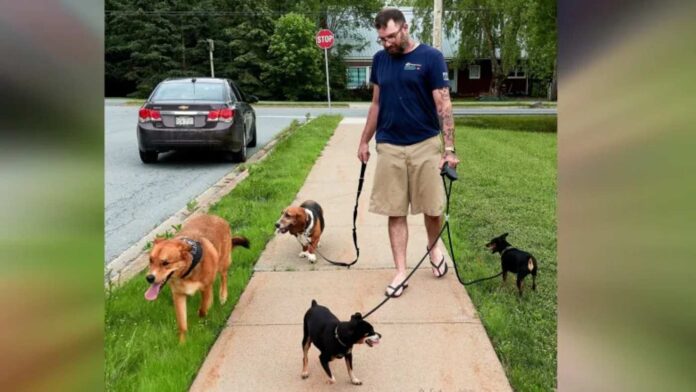
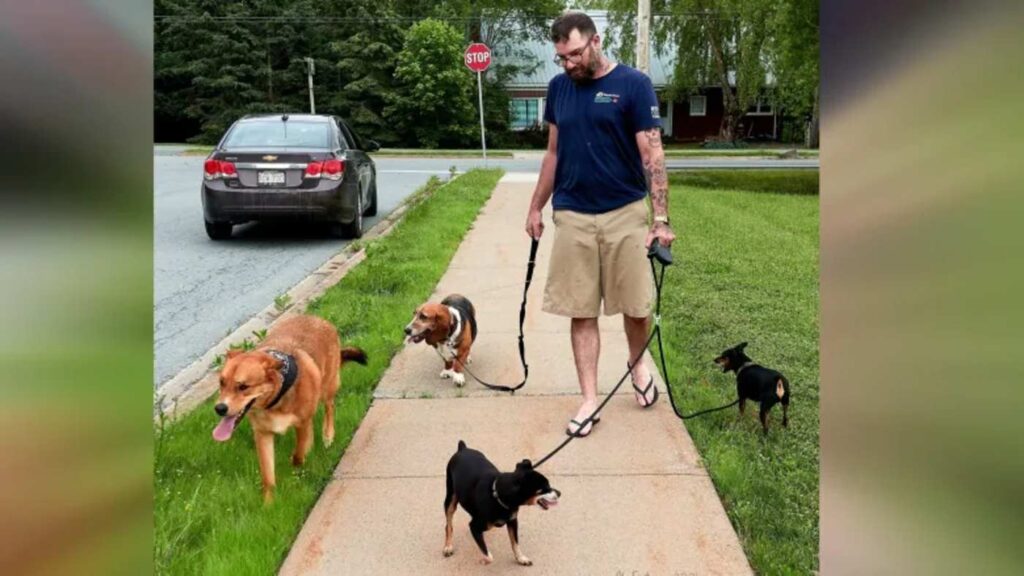
After the vet visit, Van De Riet brought Merlin and Kipper home and let them get acquainted with his two miniature Doberman housemates. A long day filled with unforeseen events and random acts of kindness was followed by a quiet night of trust, safety, and security—and all thanks to the unsolicited help of a truly humble local hero.

Any arguments to the contrary aside, Van De Riet sees nothing particularly out of the ordinary about his willingness not only to aid a pair of total strangers in distress, but to go the extra mile to ensure their furry friends were safe as well.

“It was the least I could do. I would expect anyone in this province to do the same thing if they were in my shoes,” Van De Riet told CBC. “It just happened to be that I was the one that was there first, I guess. [I’m no] Good Samaritan… It’s just the Nova Scotia way.”

RELATED: Comfort Dogs Arrive from Several States to Lend a Paw of Comfort to Miami Condo Rescuers

While we can only hope everyone in Nova Scotia shares this unselfish outlook on life, we’d certainly like to send out a sincere thank you to Mr. Van De Riet’s parents for raising such a truly thoughtful and compassionate son.

Share This PAWsome Story With Pals on Social Media…

Man Gives His Terminally-Ill Dog One Last Walk Up Their Beloved Mountain in a Wheelbarrow (PHOTOS)

SWNS

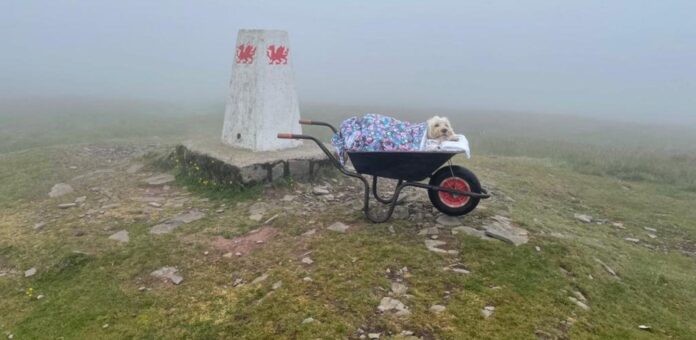
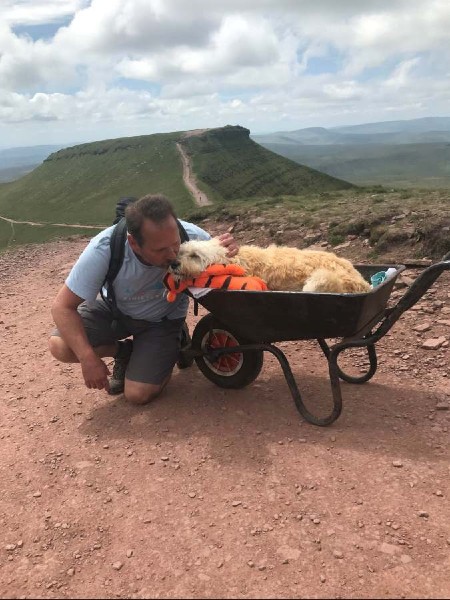
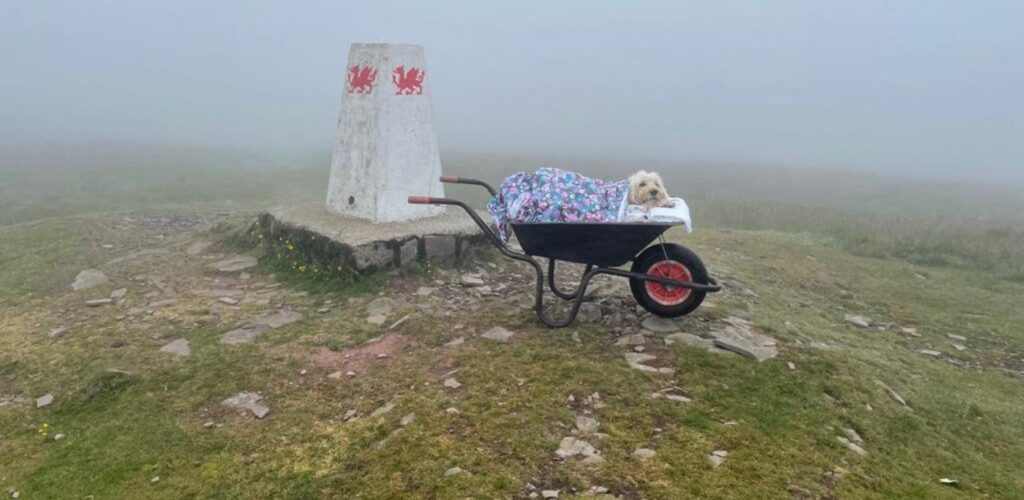
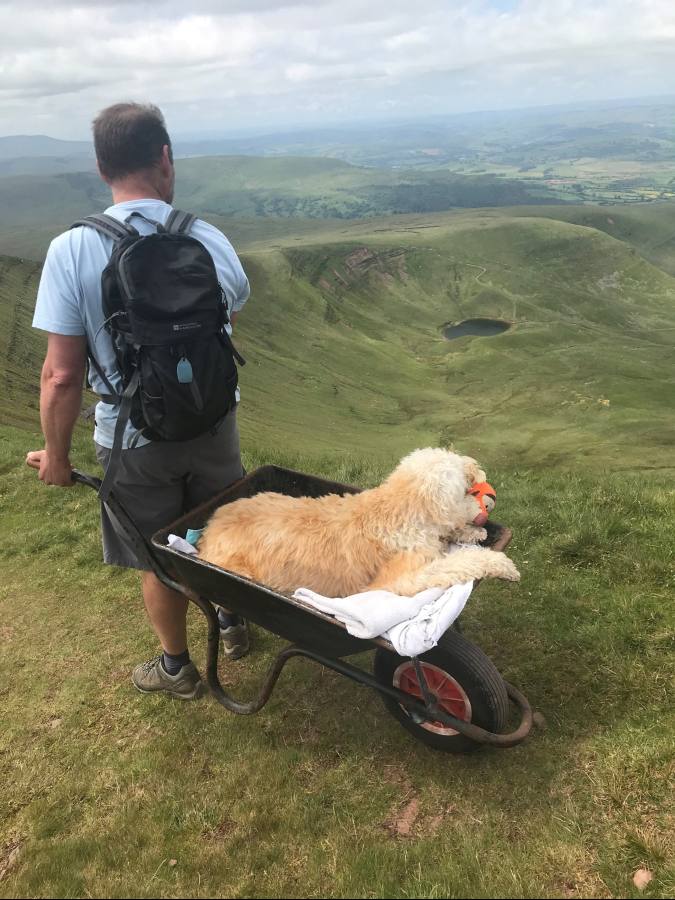
These touching pictures show a man taking his dying pet dog up his favourite mountain on one last walk—in a wheelbarrow.

Ten-year-old Monty enjoyed exploring hills and walks all over Wales with his owner Carlos Fresco.

SWNS

The pair have visited the Brecon Beacons many times over the years, and have even summited the three peaks.

But after becoming aware the labradoodle wasn’t very well, Carlos decided to return to the beacons, staying with friends in Brecon, so they could share one last journey together.

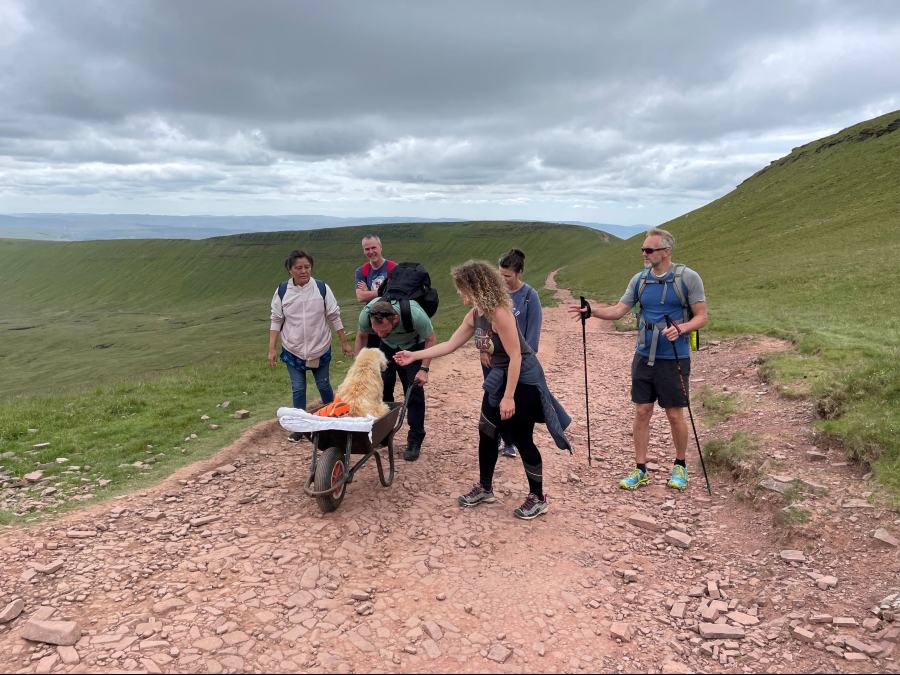
Carlos and Monty travelled up to the peak of Pen y Fan—where many walkers stopped to say hello and meet Monty, who was helped to the top with the aid of a wheelbarrow.

SWNS

Monty passed away on June 21 after an 18-month battle with leukaemia.

Carlos said: “I knew Monty was dying as his cancer had returned. He was diagnosed 18 months ago and responded very well to chemotherapy.

SWNS

“But unfortunately his leukaemia returned eight weeks ago and he declined very rapidly. He loved hill walks and we improvised and took him on trips around your wonderful beacons. Although he was weak he enjoyed all the fuss and attention received by so many well wishers.

MORE: The Hero Who Jumped Into the Bay to Save a Toddler is Honored to Accept Ride With The Thunderbirds (Watch)

“In fact total strangers asked if they could share in pushing Monty on his last journey—and many total strangers shed a tear as we all love dearly our little four-legged friends.

“That little guy touched so many lives. Made everyone he came into contact with smile and just take a moment to reflect how sometimes life’s not that bad.

SWNS

“Our little companions are never judgemental, are always there waiting for you and offer comfort when things haven’t gone well.

CHECK OUT: Scrappy 81-Year-old Woman Completes Her Second Tough Mudder Race Over Huge Obstacles

“He was truly a special boy,” Carlos said. “God bless and goodnight little fella.”

RAISE A PAW For This Sweet Story—Share It on Social Media…

Are You Utilizing Your 8 Forms of Capital? From Social to Spiritual and Intellectual, Capital is More Than Money

The Lesson: Human society is filled with value, and we can place value on almost any object or opportunity. Viewing the financial system through the lens of permaculture, Ethan Rolland identifies Eight Forms of Capital which, when contemplated as a whole, gives us a clearer understanding of our net worth—not just in dollars. We can all learn to utilize our eight forms of capital, our unique currencies: financial, material, living, social, intellectual, experiential, spiritual, and cultural.

Notable Excerpt: Using the analogy of an ecosystem, Ethan says, “Your capital isn’t necessarily a currency. Capital is the root, and currency is the derivative we use to exchange… By exercising capital, you extract a currency that then complexes to a real thing or effect in the world… So with social capital, the currency is connections. It complexes to influence and relationships.”

The Host: A well-known expert in permaculture, homesteading, and general self-reliance, Jack Spirko works to provide every possible resource for those looking to increase their self-reliance, whether that’s building a homemade aquaculture pond in your backyard, learning how to link up with local farmers and artisans, or how to become an expert at foraging for wild plants and mushrooms.

The Podcast: Nearing episode 3,000, The Survival Podcast features guests, essays, and other content regarding the bottomless well of information in the space of homesteading and permaculture. Roundtable discussions with other permaculture experts, and “Miyagi Mornings” can also be found, where Spirko discusses a variety of concepts and ideas with experts.

(LISTEN to the podcast episode below… *Warning: Language includes light cursing – Featured photos: Ethan Rolland and Maksim Romashkin)

RELATED: How to Wake Up From the Trance of Unworthiness
MORE: 3 Ways to Deal With the Anxiety of a New Situation by Brene Brown

SHARE the Good Living Advice With Pals on Social Media… 

Innate Talent Seems to Be Just as Much a Gift Found in Some Dogs as it is in People, Study Says

H

Whether it’s seeing a kid need only a few seconds to learn Mary had a Little Lamb on the piano, experiencing getting wiped out by a much better player in a pickup basketball game, or witnessing someone’s encyclopedic memory while they rattle off statistics about geography, humans exhibit natural talents every day.

Now, a study seeking the origin of “natural talent” in dogs has been published in Nature. It found that just as in humans, some particular pooches display more innate talent than others.

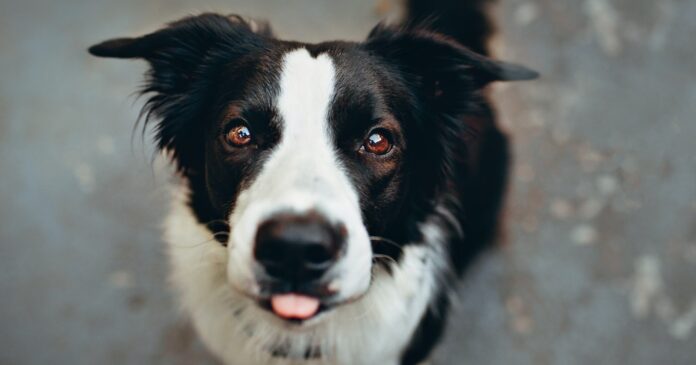
This story has a lot to do with border collies, a dog species which the authors of the study note was bred for herding sheep and therefore had to be extra-cognizant of their owners’ calls, instructions, and whistles.

The American Kennel Club reported last year on a border collie named Chaser, who had 1,022 toys and knew the individual names of every one, while Science reported on one named Rico who knew the names of 200 toys and could very quickly retrieve those for which he had no name by using exclusion learning and inference at about the level of a 3-year-old human.

Locating 34 dog owners across the globe using social media, Claudia Fugazza of Eötvös Loránd University wanted to see if they could attach specific names to all the toys they played with, and be able to recognize and respond to those names immediately.

Of those 34 dogs, only one border collie succeeded, a young female named Olivia, who couldn’t entirely complete the trial due to health complications.

“[W]e decided to set up a study in which both puppies and adult naïve dogs are systematically and intensively trained for learning at least two object names over a 3-month period, and we used a strictly controlled testing method to assess the dogs’ learning outcome every month from the start of the training,” wrote Fugazza in her paper.

Every month a scientist would visit the dog’s house and test to see if they could retrieve an object based on the names they’d been practicing. If they succeeded, another name would be added.

MORE: Chinese Monk Dedicates Life to Rescuing 8,000 Dogs – He Finds Them New Homes Around the World

Perhaps the surprising thing is that of the 34 dogs, 19 were border collies, and 18 of them failed to learn a single name.

The hypothesis was that some dogs with certain neurological plasticity owing to either early-life training or breed-activity would have better abilities.

RELATED: Pet Owners Say Taking Care of Their Furry Friend Encourages Taking Better Care of Themselves

However, the dogs learned the names of toys “irrespectively of the age of the subjects and despite intensive training,” the researchers wrote, concluding by saying that “while a few rare individuals can rapidly master multiple object names, we suggest that the capacity to learn object-names in dogs shows analogies with exceptional performance (talent) in humans.”

It seems that it’s just as hard to find out why Mozart was Mozart as it is to find out why Chaser the border collie was Chaser the border collie.

PAW This Fascinating Research Over to Pals on Social Media…
Korea is Using Artificial Intelligence to Prevent Suicide Attempts on Bridges

Isageum, CC license
Isageum, CC license

Cameras attached to stop lights and other posts on bridges in Seoul aren’t there to tell if you’re speeding; they’re doing a much more important job—a lifesaving job.

Using artificial intelligence, programmers at the Seoul Institute of Technology are building a system of recognizing body movements and other cues to help identify whether someone is contemplating ending their own life. If the system thinks there’s a risk, it will immediately alert local rescue teams.

Suicide is a major problem in South Korea, and the rates there are higher than in other well-developed countries. Furthermore, it can be extremely difficult for even trained surveillance teams to deduce whether a person is simply being pensive while enjoying the view from one of Seoul’s 27 bridges.

“We believe the new CCTV will enable our crews to detect the cases a bit faster and help us head to a call more promptly,” Kim Hyeong-gil, who is in charge of the Yeouido Water Rescue Brigade, told Reuters.

CHECK OUT: In Twist of Fate, Hotline Volunteer Learns She Has Been Working With Man Who Saved Her 7 Years Ago

Critically important is that the system learns by itself from experience, analyzing in every detail what an at-risk person is doing, and then cataloguing the actions depending on whether it was confirmed to be an attempted suicide or not.

The programmers are looking to pilot the system with the Seoul Fire and Rescue this October.

SHARE This Hopeful Innovation With Friends on Social Media…