










All News - Page 497 of 1734 - Good News Network
Home Blog Page 497

MIT Scientists Spin Some Music Out of Spider Webs – And it Sounds Otherworldly (Listen)

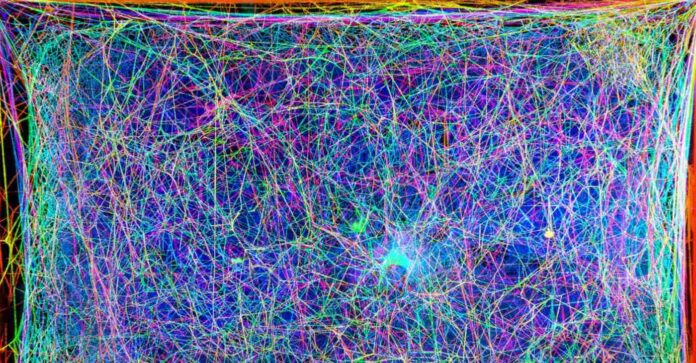
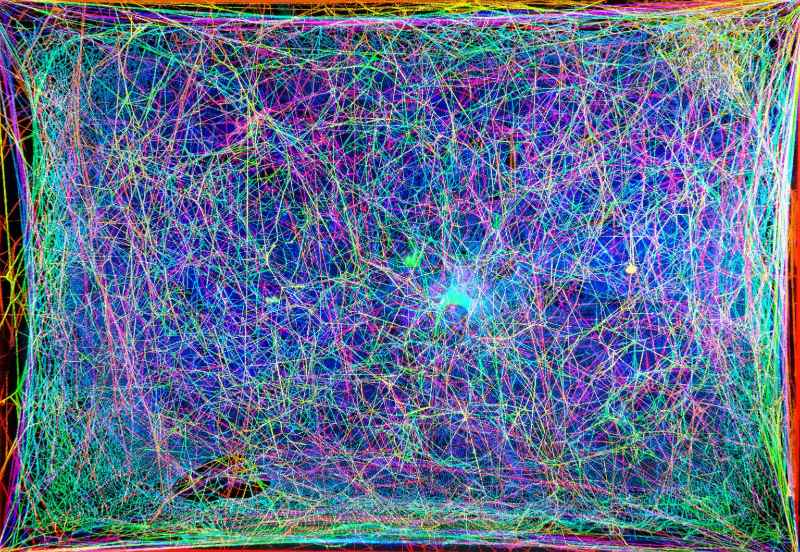
Cross-sectional images shown in different colors of a spider web, combined in a 3D image/Isabelle Su and Markus Buehler

Spiders are master builders, expertly weaving strands of silk into intricate 3D webs that serve as the spider’s home and hunting ground.

If humans could enter the spider’s world, they could learn about web construction, arachnid behavior, and more.

Yesterday, scientists reported that they have translated the structure of a web into music, which could have applications ranging from better 3D printers to cross-species communication and otherworldly musical compositions.

“The spider lives in an environment of vibrating strings,” says Markus Buehler, Ph.D. at MIT, the project’s principal investigator, who is presenting the work. “They don’t see very well, so they sense their world through vibrations, which have different frequencies.” Such vibrations occur, for example, when the spider stretches a silk strand during construction, or when the wind or a trapped fly moves the web.

Buehler, who has long been interested in music, wondered if he could extract rhythms and melodies of non-human origin from natural materials, such as spider webs. “Webs could be a new source for musical inspiration that is very different from the usual human experience,” he says.

In addition, by experiencing a web through hearing as well as vision, Buehler and colleagues at the Massachusetts Institute of Technology (MIT), together with collaborator Tomás Saraceno at Studio Tomás Saraceno, hoped to gain new insights into the 3D architecture and construction of webs.

With these goals in mind, the researchers scanned a natural spider web with a laser to capture 2D cross-sections and then used computer algorithms to reconstruct the web’s 3D network.

MORE: Top 10 Species Discovered in 2020 Include a Harry Potter Snake and Desert-Dwelling Broccoli

The team assigned different frequencies of sound to strands of the web, creating “notes” that they combined in patterns based on the web’s 3D structure to generate melodies. The researchers then created a harp-like instrument and played the spider web music in several live performances around the world.

The team also made a virtual reality setup that allowed people to visually and audibly “enter” the web. “The virtual reality environment is really intriguing because your ears are going to pick up structural features that you might see but not immediately recognize,” Buehler says. “By hearing it and seeing it at the same time, you can really start to understand the environment the spider lives in.”

To gain insights into how spiders build webs, the researchers scanned a web during the construction process, transforming each stage into music with different sounds. “The sounds our harp-like instrument makes change during the process, reflecting the way the spider builds the web,” Buehler says.

“So, we can explore the temporal sequence of how the web is being constructed in audible form.” This step-by-step knowledge of how a spider builds a web could help in devising “spider-mimicking” 3D printers that build complex microelectronics. “The spider’s way of ‘printing’ the web is remarkable because no support material is used, as is often needed in current 3D printing methods,” he says.

In other experiments, the researchers explored how the sound of a web changes as it’s exposed to different mechanical forces, such as stretching. “In the virtual reality environment, we can begin to pull the web apart, and when we do that, the tension of the strings and the sound they produce change. At some point, the strands break, and they make a snapping sound,” Buehler says.

RELATED: Giant Xylophone in a Japanese Forest Uses Gravity to Play the Most Ethereal Bach Music

The team is also interested in learning how to communicate with spiders in their own language. They recorded web vibrations produced when spiders performed different activities, such as building a web, communicating with other spiders or sending courtship signals.

Although the frequencies sounded similar to the human ear, a machine learning algorithm correctly classified the sounds into the different activities. “Now we’re trying to generate synthetic signals to basically speak the language of the spider,” Buehler says. “If we expose them to certain patterns of rhythms or vibrations, can we affect what they do, and can we begin to communicate with them? Those are really exciting ideas.”

(LISTEN to the spider web music below.)

Source: American Chemical Society

SPIN Some Beautiful News for Your Friends—Share This Story…

Man Mailed Himself Home in a Box From Australia—Now He’s Looking for the Pals Who Helped Him

Brian Robson
Brian Robson

Homesickness is a malady with only one known cure. Going home. But sometimes the circumstances are against you. When that happens, people can resort to some pretty bizarre schemes to get themselves back where they long to be.

At age 19, an unhappy Brian Robson was working in Melbourne, Australia but sorely pining for his native Wales. He was so eager to get home, in fact, he had himself loaded into a crate so his friends could use Air Mail to get him home to Cardiff.

Back in 1964, Robson had signed on for an assisted immigration program. His expenses were paid by the Australian government and in return, he was committed to a two-year gig with Victorian Railways.

Robson regretted the deal almost immediately, but if he didn’t live up to the contract, he’d be obligated to pay back close to £800 in travel fees spent getting him there.

Not having that kind of money, Robson and two of his work buddies, Paul and John, hatched a “top secret” plan of simply mailing him home.

Paul typed up the appropriate freight paperwork and the trio secured a 3’x 3’ x 2’ wooden crate and made sure it had air holes in it so Robson could breathe.

He curled up inside the box with only a bottle of water, an empty bottle (“for obvious reasons”), a pillow, hammer, flashlight, and a small bag, and thought he was settling in for a 36-hour journey to the UK—but the trio didn’t consider what would happen if the crate were put on the wrong flight.

After nailing the lid closed, his sidekicks marked the box “FRAGILE” and “THIS SIDE UP”— but, as many of our best-laid plans, the box would soon take a major detour.

Robson soon found himself being handled with anything but care. The three-day trip turned into a marathon five-day odyssey, 24 excruciating hours of which, he spent upside down.

WATCH: Footage Captures the Moment a Skydiver Leaps From Plane Sitting in an Inflatable Water Raft

As the grueling ordeal wore on, Robson considered calling it quits, but in the end, decided to soldier on. “I played with the idea for a few seconds and convinced myself, Look, you’ve done all this. You cannot embarrass yourself now. You’re going ahead with it and that’s it,” Robson told the host CBC’s As It Happens.

When the mostly-numb Robson finally landed, he thought he was in London, but actually had been routed to Los Angeles, where he shined the beam of his flashlight through the hole, alerting a worker.

Although severely dehydrated and pretty banged up, when he was released from the confines of his crate, Robson was delighted to have survived the journey.

CHECK OUT:  Watch the Lifesaving Moment a Man Topples Backwards Off a Balcony—But a Bystander Catches His Foot

Airport workers wondered what to do in the bizarre situation and called in many U.S. officials, but after hearing Robson’s tale of homesick blues, the teen was quickly sent home—only this time, as a first-class passenger courtesy of Pan American Airline.

“The Americans, the FBI, the CIA, and everything else, they were brilliant. I mean, I fell in love with America, because I’ve never been treated so well,” told Off. “Everybody there really looked after me. And they just thought, Oh, it’s this silly kid getting himself into trouble.”

Once home, Robson’s epic story did receive its share of press, but he refused to reveal the names of his accomplices because he didn’t want to get them in trouble. Now, however, with the debut of a book chronicling his adventures—cleverly called The Crate Escape, now on Kindle and hitting shelves soon—Robson believes that statute of limitations has likely expired on anything criminal, and he’d love to get back together with his old mates to swap tales.

The trouble is, he can’t remember his buddies’ last names, or where they come from in Ireland. He had written to his Irish mates, who were the same age as Robson, but never heard back.

Hopeful for a reunion, he told the BBC, “If I met them again, I’d just like to say that I’m sorry I got them into this and that I missed them when I came back—and I’d like to buy them a drink.”

While shipping yourself home in a crate is certainly not a recommended mode of travel, the same year that Robson was laboring in the Land Down Under, an Australian who was stranded in London pulled off the stunt in reverse.

LOOK: ‘Frankie the Adventure Goat’ Has Traveled Over 60,000 Miles Across America in Epic Road Trip

Following an unsuccessful Olympic tryout, Reg Spiers had his wallet stolen, so enlisted the help of a friend to mail him home. In a slightly larger box than Robson’s, with interior straps to keep him secure, he suffered only one brutal layover in Mumbai, before arriving in Perth 36 hours later.

SHIP This Amazing Story To Your Friends Worldwide on Social Media…

(North Carolina-based writer Judy Cole has a new rom-com murder mystery debuting at Amazon: And Jilly Came Tumbling After, from Red Sky Presents).

“Praise will come to those whose kindness leaves you without debt, and bends the shape of things that haven’t happened yet.” – Neil Finn

Quote of the Day: “Praise will come to those whose kindness leaves you without debt—and bends the shape of things that haven’t happened yet.” – Neil Finn, Faster Than Light

Photo by: Hannah Busing

With a new inspirational quote every day, atop the perfect photo—collected and archived on our Quote of the Day page—why not bookmark GNN.org for a daily uplift?


New Brain Cancer Immunotherapy Shows Promise in Human Trial – Most Patients Saw No Tumor Growth For 3 Years

A landmark human trial testing a vaccine that’s designed to help the immune system target brain tumors has shown promising results—and Phase 2 of the trial is now being planned.

According to a Nature article published by the researchers leading the trial, the vaccine was safe for all patients, and showed the hoped-for immune response to cancerous tissue.

Diffuse gliomas are usually incurable brain tumors that spread in the brain and are difficult to remove completely by surgery. Chemotherapy and radiotherapy often only have a limited effect too.

In many cases, diffuse gliomas share a common feature: in more than 70 percent of patients, the tumor cells have the same gene mutation. An identical error in the DNA causes a single, specific protein building block to be exchanged in the IDH1 enzyme. This creates a novel protein structure, known as a neo-epitope, which can be recognized as foreign by the patient’s immune system.

“Our idea was to support patients’ immune system and to use a vaccine as a targeted way of alerting it to the tumor-specific neo-epitope,” explained study director Michael Platten, Medical Director of the Department of Neurology of University Medicine Mannheim and Head of Division at the German Cancer Research Center (DKFZ).

The IDH1 mutation is a particularly suitable candidate here, as it is highly specific to the gliomas and does not occur in healthy tissue. Moreover, the IDH1 mutation is responsible for the development of these gliomas: “That means that a vaccine against the mutated protein allows us to tackle the problem at the root,” Platten added.

Promising preclinical results

Platten’s team had already generated an artificial version of the segment of the IDH1 protein with the characteristic mutation several years ago. This mutation-specific peptide vaccine was able to halt the growth of IDH1-mutated cancer cells in mice. In 2019, Platten was awarded the German Cancer Prize for this discovery.

MORE: Stranger Donates 2 Wigs to Mom With Brain Cancer – and Saved the Quality of Her Life With a Bit of Advice

Encouraged by these results, Platten and a team of physicians decided to test the mutation-specific vaccine for the first time in a phase I study in patients newly diagnosed with a IDH1-mutated glioma.

A total of 33 patients at several different centers in Germany were enrolled in the study. In addition to the standard treatment, they received the peptide vaccine produced by Heidelberg University Hospital and University of Tübingen. The immune response was able to be evaluated in 30 patients, according to the study published in Nature.

The physicians did not observe any serious side effects in any of the patients who were vaccinated. In 93 percent of the patients, the immune system showed a specific response to the vaccine peptide and did so regardless of the patient’s genetic background, which determines the immune system’s important presentation molecules, the HLA proteins.

In a large proportion of the vaccinated patients, the physicians observed “pseudoprogression”, swelling of the tumor caused by a host of invading immune cells.

These patients had a particularly large number of T helper cells in their blood with immune receptors that responded specifically to the vaccine peptide, as single cell sequencing revealed.

CHECK OUT: New Brain Cancer Treatment for Terminal Patients is Shown to Be ‘Remarkably Promising’

“We were also able to demonstrate that the activated mutation-specific immune cells had invaded the brain tumor tissue,” reported Theresa Bunse from DKFZ, who coordinated the immunological analyses for these studies.

The three-year survival rate after treatment was 84 percent in the fully vaccinated patients, and in 63 percent of patients tumor growth had not progressed within this period. Among the patients whose immune system showed a specific response to the vaccines, a total of 82 percent had no tumor progression within the three-year period.

Vaccine concept being pursued

“We cannot draw any further conclusions about the vaccine efficacy from this early study without a control group,” remarked Michael Platten. “The safety and immunogenicity of the vaccine were so convincing that we continued to pursue the vaccine concept in a further phase I study.”

In this follow-on study, the researchers are combining the IDH1 vaccine with checkpoint inhibitor immunotherapy. “Checkpoint inhibitors act as an immune boost. We believe there is a good chance that they can activate the immune cells against the gliomas to an even greater extent.”

READ: Yale Scientists Successfully Repair Injured Spinal Cords Using Patients’ Own Stem Cells

The researchers are also preparing a phase II study to examine for the first time whether the IDH1 vaccine leads to better treatment results than the standard treatment alone. “Gliomas are diagnosed in around 5,000 people in Germany every year, of which about 1,200 are diffuse gliomas with an IDH1 mutation. Up to now, we have usually had only limited success in halting tumor progression in these patients. We believe that the IDH1 vaccine offers the potential for developing a treatment that can suppress these tumors more effectively and on a long-term basis,” commented study co-director Wolfgang Wick, Medical Director of the Neurological Clinic of Heidelberg University Hospital and Head of Division at DKFZ.

That’s promising news indeed, and we’ll be sure to keep you updated about further developments stemming from these trials.

Source: German Cancer Research Center, University Medicine Mannheim, Heidelberg University Hospital, and the National Center for Tumor Diseases (NCT) Heidelberg

SHARE This Promising Research With Friends on Social Media…

They Counted Endangered Rhinos in Nepal And the Population Has Grown By 16%

(c) WWF Nepal

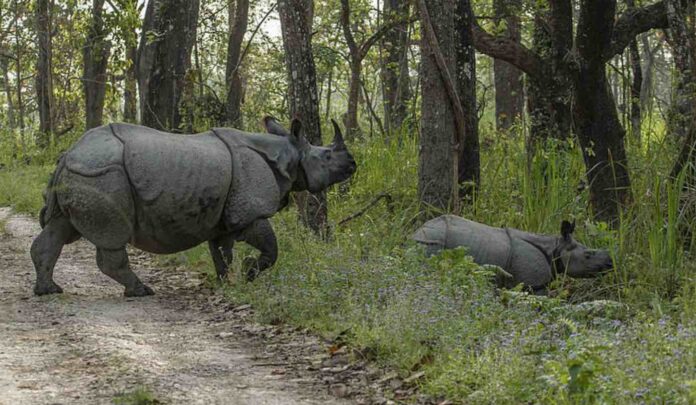
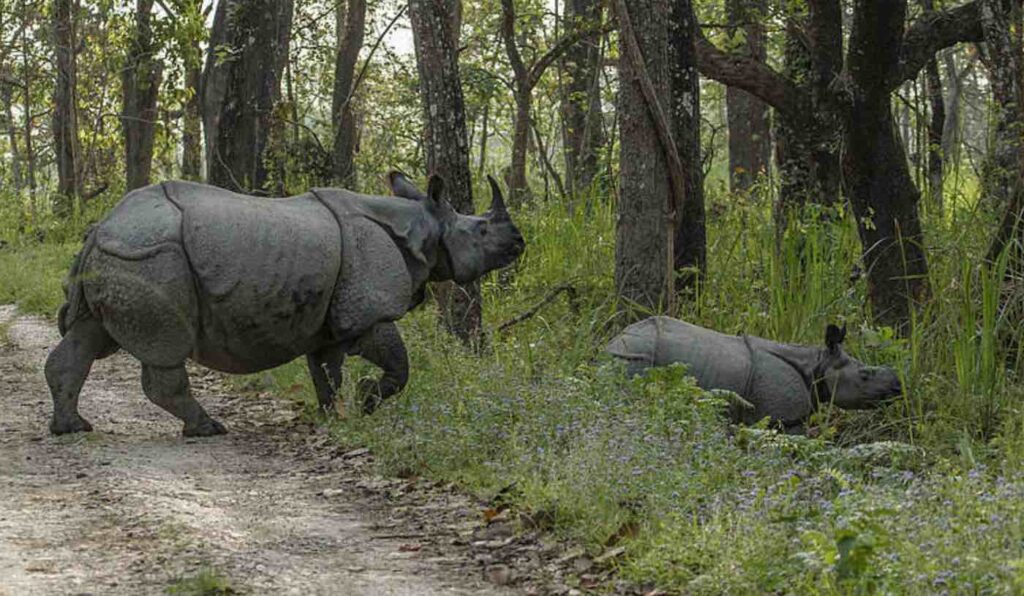
A third country has announced some good news for rhinos this year. Populations of the endangered one-horned rhinoceros in Nepal have increased by 16% over the past six years.

2021 Rhino Count (c) WWF Nepal

The new National Rhino Count 2021 estimates the current number stands at 752 individuals up from 645 in 2015. Rhinos were counted across the country between March 22 and April 10, including within four national parks, including Chitwan.

In the 1960s there were only around 100 left in the country.

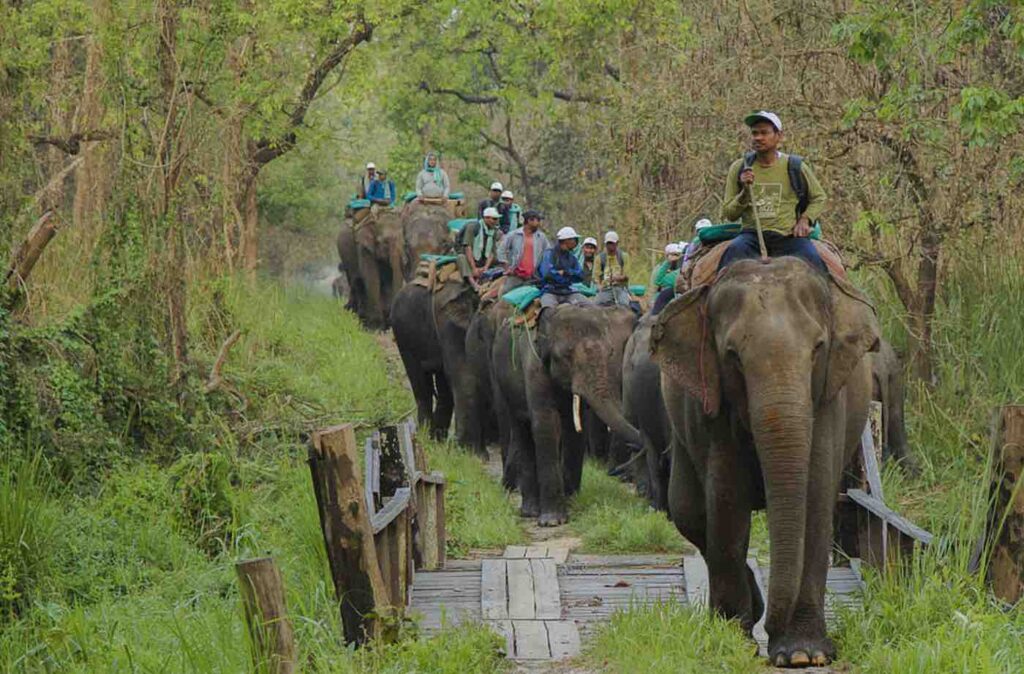
The Department of National Parks and Wildlife Conservation used 57 elephants in their search for rhinos, along with 350 trained personnel who swept the jungle areas to document a species headcount.

During the process, they also collected data on habitat conditions, invasive species in the area, and human activities in the region.

MORE: Rhino Poaching Plummets 53% During Lockdowns, Extending 5-Years of Success in South Africa

“The overall growth in population size is indicative of ongoing protection and habitat management efforts by protected area authorities, despite challenging contexts these past years,” said Ghana Gurung, Country Representative of WWF Nepal.

They couldn’t have done it without the elephants’ help (c) WWF Nepal

“This achievement is yet another milestone in Nepal’s conservation journey.”

Meanwhile, in Africa, 2020 was a remarkable year for rhino protection in Kenya where not one single rhino lost its horn or its life last year—a feat not achieved since 1999.

RELATED:  Orphan Baby Rhinos Heal With Help of Hand-knit Blankets

And in South Africa, which contains 80% of all African rhinos, 2020 was the sixth consecutive year that rhino poaching incidents dropped in the massive Kruger National Park. Since 2017, deaths have plummeted by 60%.

CELEBRATE This Positive Trend by Sharing the Story on Social Media…

Nearly-Retired Couple Adopts 7 Siblings Who Just Lost Their Parents: ‘If not us, then who?’

@second.chance.7/Instagram

While the prospect of an empty nest is bittersweet, most parents look forward to some uninterrupted couple time when their kids finally fly the coop. But for one California husband and wife, rather than a cozy retirement, they found themselves feathering their nest all over again—with seven adopted kids.

The odyssey began back in January 2019, as Pam Willis was scanning Facebook. She says a post titled ‘Seven Siblings in Need of Forever Home’ “hit her like a ton of bricks.”

The story revealed that after the children’s mother and father perished in a car accident a year earlier, the siblings had been placed in foster care. “In that instant, their sweet smiling faces jumped off of the screen and into my heart,” she posted to Instagram.

Pam tagged her husband Gary on the post. By day’s end it was decided—they wanted to adopt them all.

“We knew deep inside that this mission was being placed before us,” Pam wrote. “If not us, then who? Who would keep them all together? Who would have the space for them? Who would have the time, and the love, and the patience for their trauma? The answer was clear…

“We would. Why else did we have a six-bedroom house that was about to have its last child’s bedroom vacated? Why else would our nest that had raised our first five babies be empty just in time? It was only to make room for our new babies.”

MORE: Peter and Newly Adopted Son Have Just Taken in A Foster Teen And Now They’re Sharing Affirmations For All Races

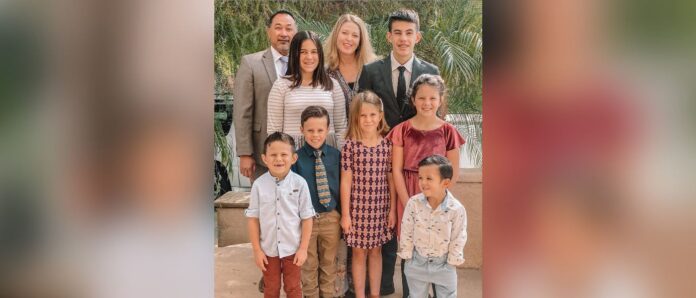
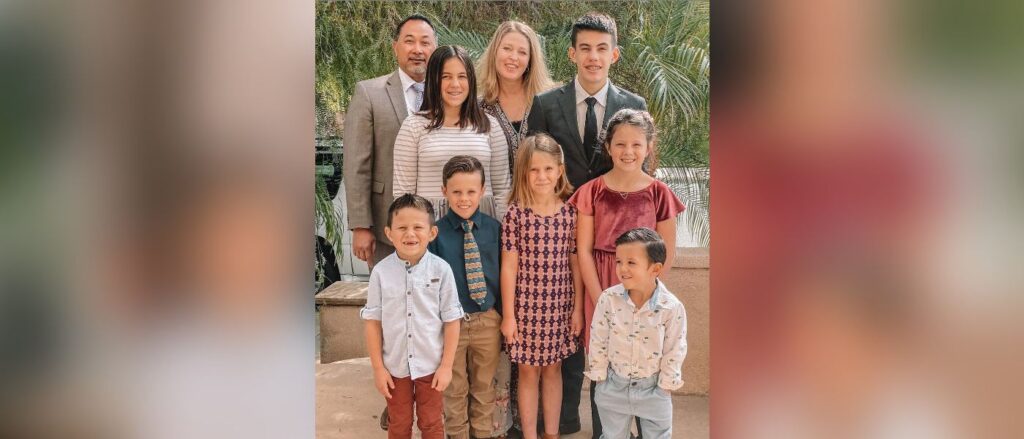
Two months after making initial contact with the foster care agency, Adelino, 15, Ruby, 13, Aleecia, 9, Anthony, 8, Aubriella, 7, Leo, 5, and Xander, 4 were placed with Pam and Gary.

With fears were founded on past experience, feeling truly safe did not come easily to the eldest children. Even prior to losing their parents, their lives had been far from ideal: Their mother and father were sometimes indigent and also struggled with substance abuse. As a result, they were sometimes unable to provide a stable environment for their kids.

“I think it’s so hard to trust when so much has been taken from your life,” Pam Willis told TODAY. “One night, my then-7-year-old came into our room. I asked her, ‘Did you have a bad dream?’ And she replied, ‘No, I just wanted to make sure that you were still here.’”

@second.chance.7/Instagram

The Willises knew it would take time and patience for them to earn the children’s trust but they were willing to do whatever it took. Last August, Pam and Gary made the adoption official.

The virtual ceremony was attended by the couple’s biological children, Matthew, Andrew,  Alexa, Sophia, and Sam—whose ages range from 20 to 32. “It was awesome,” Pam told TODAY. “We brought a big TV screen out to the park so everybody could watch and cheer and be safe during COVID. There was so much love.”

Though a second family hadn’t been in their plans, the outcome of the story came as no surprise to the Willises. “They were ours from the minute we saw their faces on the news story,” Pam posted on Instagram.

RELATED: Single Foster Dad Adopts 5 Siblings So They Won’t Have to Be Apart Like He Was in His Childhood

“If you ask my friends, one moment we were reposting their heart-wrenching news story and calling attention to their plight, the next minute we were meeting them, falling in love, and starting the adoption process… WE are their forever home, and this is our second chance with SEVEN! ❤️”

GET GENEROUS With the Good News—Share This Story…
North Carolina-based writer Judy Cole has a new rom-com murder mystery debuting at Amazon: And Jilly Came Tumbling After (from Red Sky Presents).

Despite Zoom Services, 82-Year-old Dresses Like it’s ‘Easter Sunday’ Every Week for Church – LOOK

La Verne Ford Wimberly

Since the pandemic began, churchgoers have mostly been joining virtual Sunday services via Zoom and Facebook Live. Naturally, many have staying in their pajamas or comfy workout clothes to watch. La Verne Ford Wimberly, however, has not been one of those people.

La Verne Ford Wimberly

82-year-old Wimberly has been joining her fellow parishioners at Tulsa’s Metropolitan Baptist Church in Oklahoma in the most glamorous—and colorful—outfits.

Since last spring, the retired teacher has also been posting delightful selfies of her stylish looks on Facebook after each service.

“She never skips a beat with the hats, the clothes and all that beautiful jewelry,” said Robin Watkins, the church’s executive office assistant, to the Washington Post.

Wimberly explained her desire to dress well to the newspaper: “In the 20 years I’ve been going to church there, I’ve always had my little routine that I learned from my mother as a girl… I’d pick out a nice outfit and hat and lay it out the night before, so that I could be prepared and look presentable.”

MORE: Inspired Mom Spent Half a Decade Turning her Home Into a Shrine to the 1970s

Being prepared, having routines—they can both be a way to root ourselves into small joys.

Here’s some of La Verne’s favorite looks from over the past year.

From pretty in pink…

La Verne Ford Wimberly

To regal in blue…

La Verne Ford Wimberly

La Verne reminds us of the joys of doing our best—

La Verne Ford Wimberly

And giving the world a smile, no matter what.

La Verne Ford Wimberly

DAZZLE Your Friends With This Joyful Story…

Mountains of Garbage in Russia are Being Turned into Fashionable Accessories

A Russian fashion brand is trying to tackle St. Petersburg’s mountains of garbage by creating an entire supply chain out of them.

99Recycle

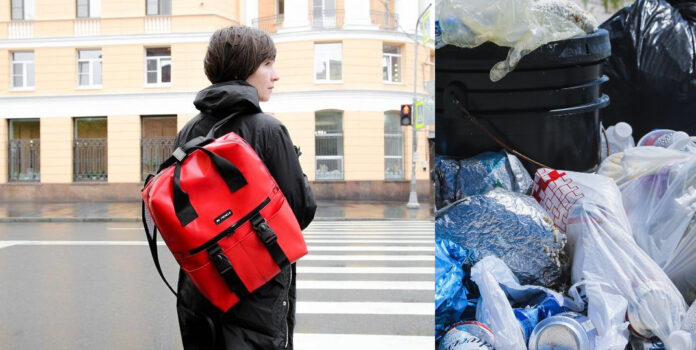
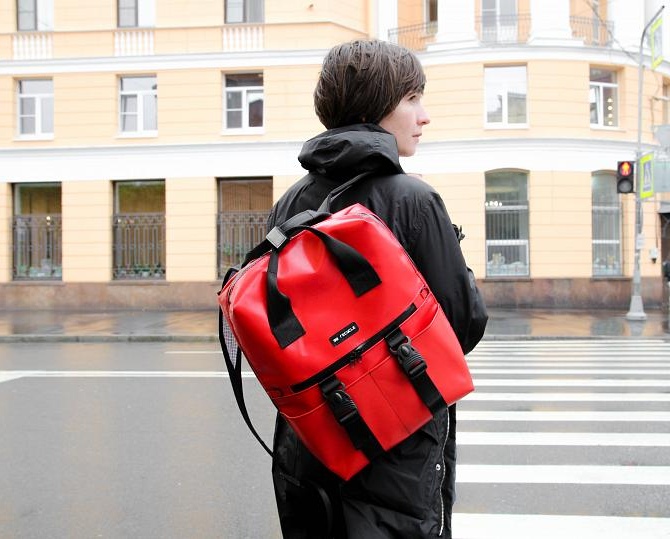
Sifting through the trash mountains, workers collect all kinds of different recyclable materials before turning them into bespoke recycled accessories and school products.

99Recycle won Recycle/Upcycle Project of the Year as part of the 2020 St. Petersburg Awards, and their current roster of goods include pencil and laptop cases, backpacks, bags, and even skateboards and a bicycle.

Sustainability in fashion is becoming a larger and larger concern as the 21st century rolls on, as the industry is one of the single largest and most problematic polluters in our society both by the amount and types of waste produced.

99Recycle utilizes a large 3D printer based on a design used by Hyundai, and which uses recycled plastic as a raw material. They’ve collected over 70 tons of reclaimed plastic so far by working with local recycling non-profits that specialize in collecting certain types of material.

MORE: MIT Scientists Develop the Perfect Breathable Earth-Friendly Fabric Using The Same Material as Single-Use Bags

“The process of preparing the materials is more complicated than for ordinary materials. Most of our time is taken up by the preparation, because we need to clean it, to make it even, to select it, to reject some materials,” Olesya Kulik, designer at 99Recycle told Euronews.

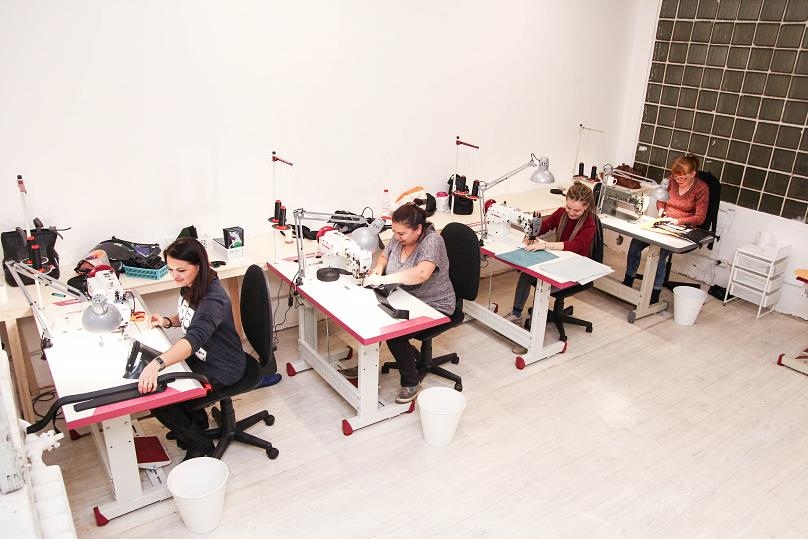
Inside the factory, the 3D printer creates shapes and textiles which are sewn together by hand, meaning that each piece is unique.

99Recycle

Most of the landfills in Russia are substantially larger and more poorly maintained than those elsewhere in Europe, and one in Moscow is 10 stories tall.

RELATED: Scientists Turn Plastic Waste Into Valuable Commodities, to Create a Bigger Market for Waste Materials

Throw-away culture is strong in Russia, and so along with making products for purchase, 99Recycle hosts classes and lectures about sustainability and different ways to recycle, hoping to coach their city out of its bad habits, and like Father Time, grind down the mountains to dust.

UPCYCLE Your Friends’ News Feeds With the Good News—Share This Story…
“You don’t have to be great to start, but you have to start to be great.” – Zig Ziglar

Quote of the Day: “You don’t have to be great to start, but you have to start to be great.” – Zig Ziglar

Photo by: Liam Pozz

With a new inspirational quote every day, atop the perfect photo—collected and archived on our Quote of the Day page—why not bookmark GNN.org for a daily uplift?


Caltech Uses Existing Underwater Cables to Detect Earthquakes and Tsunamis Ahead of Time

Seismologists at Caltech working with optics experts at Google have developed a method to use existing underwater telecommunication cables to detect earthquakes. The technique could lead to improved earthquake and tsunami warning systems around the world.

A vast network of more than a million kilometers of fiber optic cable lies at the bottom of Earth’s oceans. In the 1980s, telecommunication companies and governments began laying these cables, each of which can span thousands of kilometers. Today, the global network is considered the backbone of international telecommunications.

Scientists have long sought a way to use those submerged cables to monitor seismicity. After all, more than 70 percent of the globe is covered by water, and it is extremely difficult and expensive to install, monitor, and run underwater seismometers to keep track of the earth’s movements beneath the seas.

What would be ideal, researchers say, is to monitor seismicity by making use of the infrastructure already in place along the ocean floor.

Now Zhongwen Zhan, PhD, assistant professor of geophysics at Caltech, and his colleagues have come up with a way to analyze the light traveling through “lit” fibers—in other words, existing and functioning submarine cables—to detect earthquakes and ocean waves without the need for any additional equipment. They describe the new method in the February 26 issue of the journal Science.

RELATEDAfter Learning From Deadly Mistakes in the Past, 7.0 Magnitude Earthquake Resulted in Zero Casualties in the City

“This new technique can really convert the majority of submarine cables into geophysical sensors that are thousands of kilometers long to detect earthquakes and possibly tsunamis in the future,” says Zhan. “We believe this is the first solution for monitoring seismicity on the ocean floor that could feasibly be implemented around the world. It could complement the existing network of ground-based seismometers and tsunami-monitoring buoys to make the detection of submarine earthquakes and tsunamis much faster in many cases.”

The cable networks work through the use of lasers that send pulses of information through glass fibers bundled within the cables to deliver data at rates faster than 200,000 kilometers per second to receivers at the other end, where devices check the state of polarization of each signal to see how it has changed along the path of the cable to make sure that the signals are not getting mixed.

RELATED: Japan’s New Bullet Train Designed With Natural Disasters and Earthquakes in Mind

In their work, the researchers focused on the Curie Cable, a submarine fiber optic cable that stretches more than 10,000 kilometers along the eastern edge of the Pacific Ocean from Los Angeles to Valparaiso, Chile.

On land, all sorts of disturbances, such as changes in temperature and even lightning strikes, can change the polarization of light traveling through fiber optic cables. Because the temperature in the deep ocean remains nearly constant and because there are so few disturbances there, the change in polarization from one end of the Curie Cable to the other remains quite stable over time, Zhan and his colleagues found.

However, during earthquakes and when storms produce large ocean waves, the polarization changes suddenly and dramatically, allowing the researchers to easily identify such events in the data.

LOOK: Following Earthquake Damage, Famous Pompeii Museum Finally Reopens After 40 Years

Currently, it takes minutes for the seismic waves from earthquakes occurring miles offshore to reach land-based seismometers—and even longer for any tsunami waves to be verified. Using the new technique, the entire length of a submarine cable acts as a single sensor for hard-to-monitor locations. Polarization can be measured as often as 20 times per second. That means that if an earthquake strikes close to a particular area, a warning could be delivered to the potentially affected areas within a matter of seconds.

During the nine months of testing reported in the new study, the researchers detected about 20 moderate-to-large earthquakes along the Curie Cable, including the magnitude-7.7 earthquake that took place off of Jamaica on January 28, 2020.

Although no tsunamis were detected during the study, the researchers were able to detect changes in polarization produced by ocean swells that originated in the Southern Ocean. They believe the changes in polarization were caused by pressure changes along the seafloor as powerful waves traveled past the cable. “This means we can detect ocean waves, so it is plausible that one day we will be able to detect tsunami waves,” says Zhan.

CHECK OUT: We Might Be Able to Stop Tsunamis in Their Tracks by Firing Sound Waves

Zhan and his colleagues at Caltech are now developing a machine learning algorithm that would be able to determine whether detected changes in polarization are produced by earthquakes or ocean waves rather than some other change to the system, such as a ship or crab moving the cable. They expect that the entire detection and notification process could be automated, adding to the network of land-based seismometers and the buoys in the DART system (Deep-ocean Assessment and Reporting of Tsunamis operated by NOAA).

– Source: Caltech News by Kimm Fesenmaier

SHAKE Up Negativity By Sharing This Fantastic News on Social Media

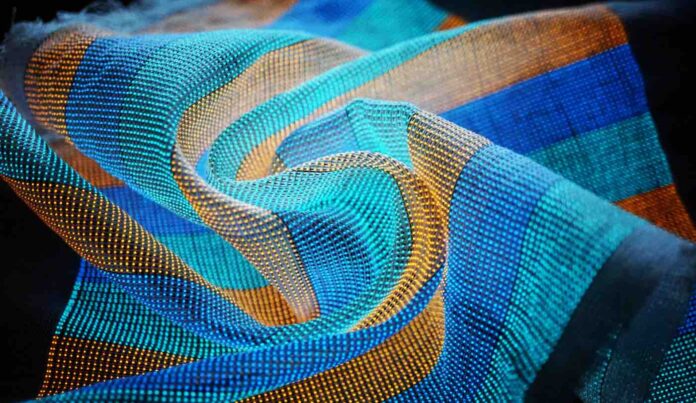
Futuristic ‘Green’ Fabric That Works Like a Smartphone Unveiled by Scientists

SWNS via Fudan University

A new fabric developed by a Chinese team of scientists that works like a smartphone could have applications in communications, navigation, healthcare, and safety.

SWNS

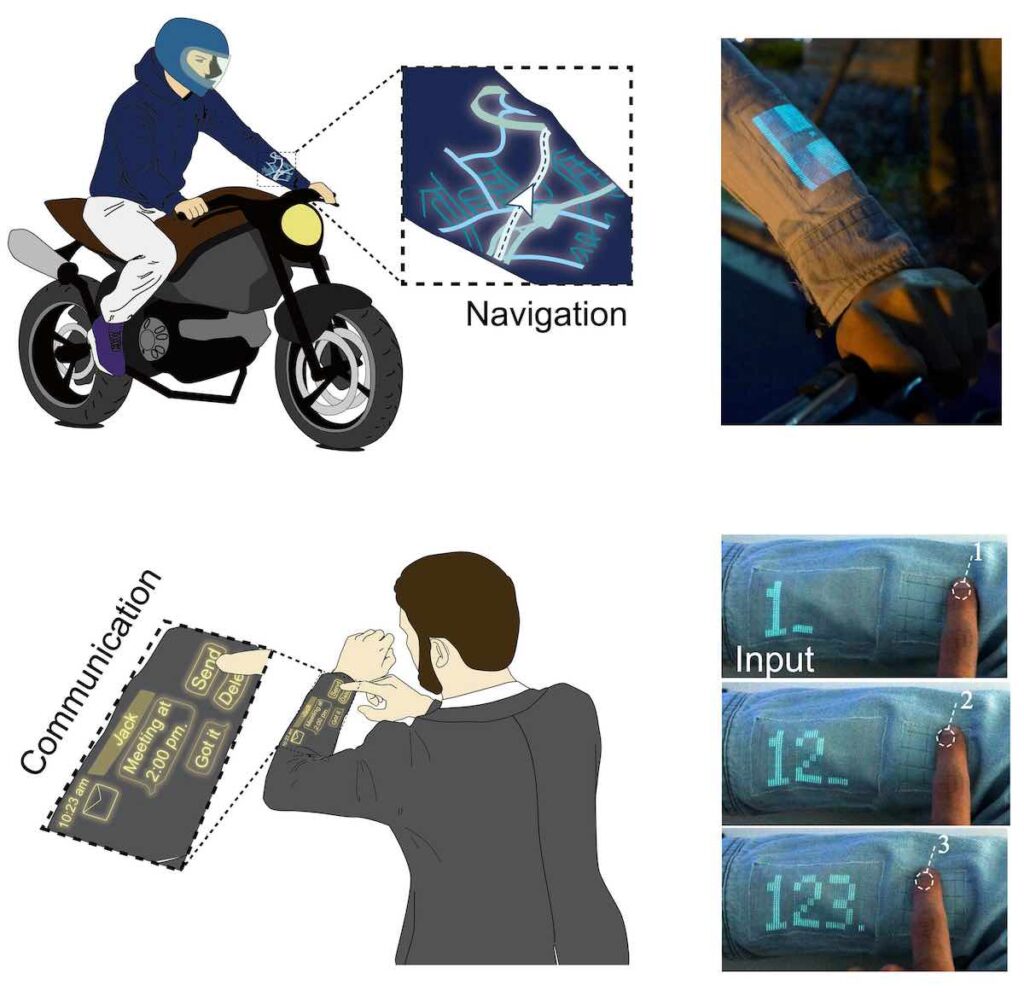
The hi-tech garment could improve safety for cyclists, motorists, and emergency responders. For instance, the brush of a sleeve could display a ‘textile map’ on their arm—in an instant.

The inexpensive material turns a jacket into a touch screen—and could be in the shops by Christmas, according to SWNS news agency.

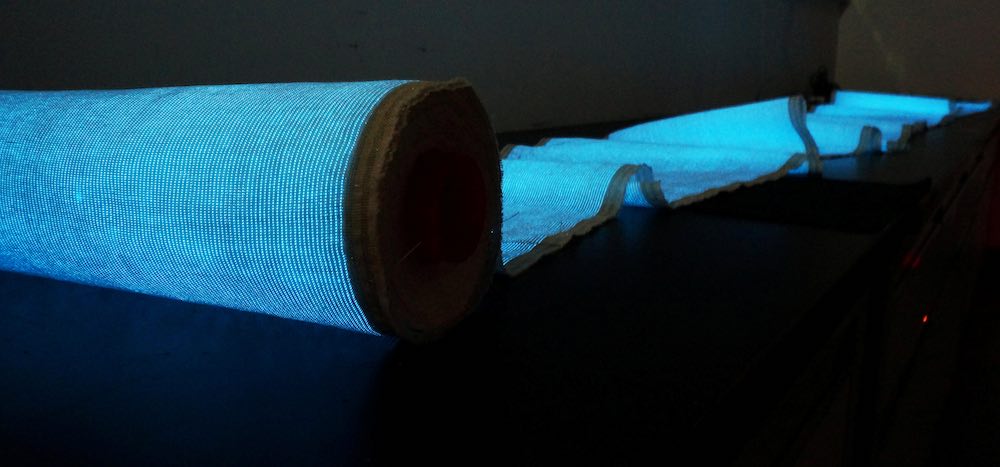
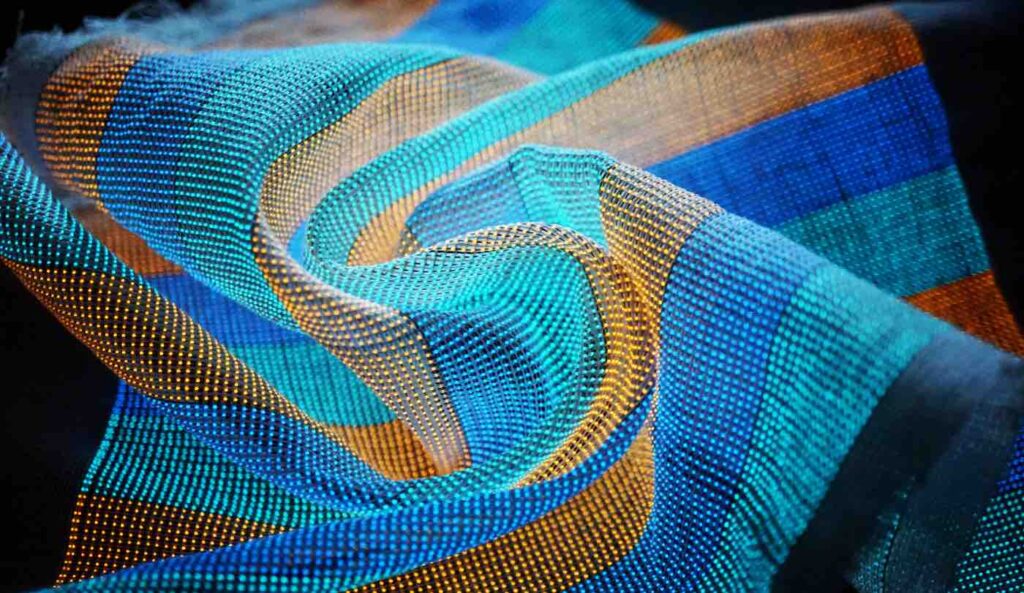
Powered by solar energy, it combines conductive and luminescent fibers with cotton.

Wearable technology has been promised for years, but creating large displays integrated with functional systems has proved challenging.

The researchers at Fudan University in Shanghai overcame this issue spectacularly with a display fabric almost 20 feet long and 10 inches wide.

RELATED: Processors in Tech Wearables like Fitbits Could Be Replaced Using Mushroom Mycelium

SWNS via Fudan University

The corresponding author who described the new electronic textile in the journal Nature last month, Professor Huisheng Peng said, “The cloth is flexible, breathable, and durable—making it ideal for the real world.”

“Conventional solid-state materials are not readily compatible with textiles because they struggle to withstand the natural deformation that occurs when fabrics are worn and washed,” said Peng.

“It’s integrated with a touch-sensitive fabric keyboard and power supply that harvests solar energy,” he added.

In experiments, the electronic textile worked as a navigation tool showing an interactive map. It also performed communications by sending or retrieving messages via a Bluetooth connection with a smartphone.

CHECK OUT: These Simple, Wearable Devices Use a Laser to Prevent ‘Freezing’ Symptoms of Parkinson’s Disease

Prof. Peng said the display is produced by illuminating units that form where the conductive and luminescent fibers meet at contact points in the woven fabric.

SWNS via Fudan University

They survived 1,000 cycles of bending, stretching and pressing. Brightness remained after 100 cycles of washing and drying.

With the addition of more applications it’s expected to shape the next generation of electronic communication tools.

They first prepared two kinds of fiber electrodes—one coated with active material and the other transparent and elastic. Then, they weaved them together as yarns to produce the display textile, which is highly flexible and was demonstrated in three typical applications.

POPULAR: Color-Changing Inks Can Be Printed onto Clothing to Warn the Wearer About Potential Health Issues

“They are not just conceptions. In fact, we can produce such display textiles at large scale with low cost,” said Peng. “We are already providing them to companies. I think they will start to be used this year—at least, no later than next year.”

The potential is vast—both for the public and private sector. Policemen or road workers can wear them at night to be safer.

The team even envisions this being able to convert brain waves into signals on the clothes, which would be useful for people who cannot speak.

PUT Your Hi-Tech Knowledge on Display By Sharing This on Social Media…

People Are Optimistic the End of the Pandemic is Near—And They’ve Laid the Groundwork For a Better Future

By Irudayam, CC license

More than 60% of Americans say they feel optimistic that the pandemic will end before 2022, and they’re preparing themselves for a better future.

By Irudayam, CC license

A study of 2,000 adults found 58 percent of Americans also said that being at home during the lockdowns has motivated them to focus on self-improvement.

60% of respondents have dedicated their time in quarantine to boosting their appearance, and 52% say they worked on their health, according to the survey commissioned by Vagaro and conducted by OnePoll.

Others were motivated to build their self-confidence (48%), and feel happier with themselves (46%).

Data also showed that many sought self-improvement more recently because they had let themselves go during lockdown (46%). Some of the ways people let themselves go were by gaining weight (60%) or losing touch with family and friends (49%).

Despite these setbacks, fully 62% of people said they feel optimistic that the pandemic will end before 2022.

“With 2020 allowing time for introspection, many will face the post-pandemic world with a new mindset and will want to improve themselves physically, mentally and emotionally,” said Fred Helou, CEO of Vagaro.

Silver linings of the pandemic were many

While these uncertain times can be difficult, they have also proven to be a catalyst for positive change. Recent polls show that 52% have volunteered for the first time during the pandemic; 6 in 10 have a new appreciation of nature; two-thirds believe they’ve become a better person; and 64% have experienced a transformative ‘eco wake-up call’, becoming more environmentally-conscious during the COVID crisis.

With time to pursue new hobbies, 6 in 10 people have ‘leveled up’ and 40% saying they’ll make money from it, and nearly 70% of Americans are more appreciative of loved ones than ever before.

WHAT THESE AMERICANS WANT TO IMPROVE ON:
Paying more attention to their personal appearance 60%
Having better physical health 58%
Taking better care of their skin 56%
Taking better care of their hair 53%
Taking care of their mental and emotional health 48%

WHAT MOTIVATES THEM TO TAKE BETTER CARE OF THEMSELVES:
To attain better overall health 52%
To build confidence/self-esteem 48%
Better physical appearance 47%
To be happier 46%
To feel like their best self 39%

SHARE the Silver Linings With Your Friends on Social Media…

“Things work out best for those who make the best of how things work out.” – John Wooden

Quote of the Day: “Things work out best for those who make the best of how things work out.” – John Wooden

Photo by: Jukan Tateisi

With a new inspirational quote every day, atop the perfect photo—collected and archived on our Quote of the Day page—why not bookmark GNN.org for a daily uplift?


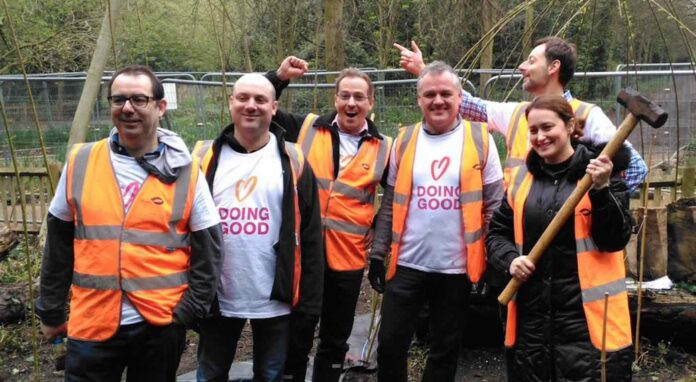
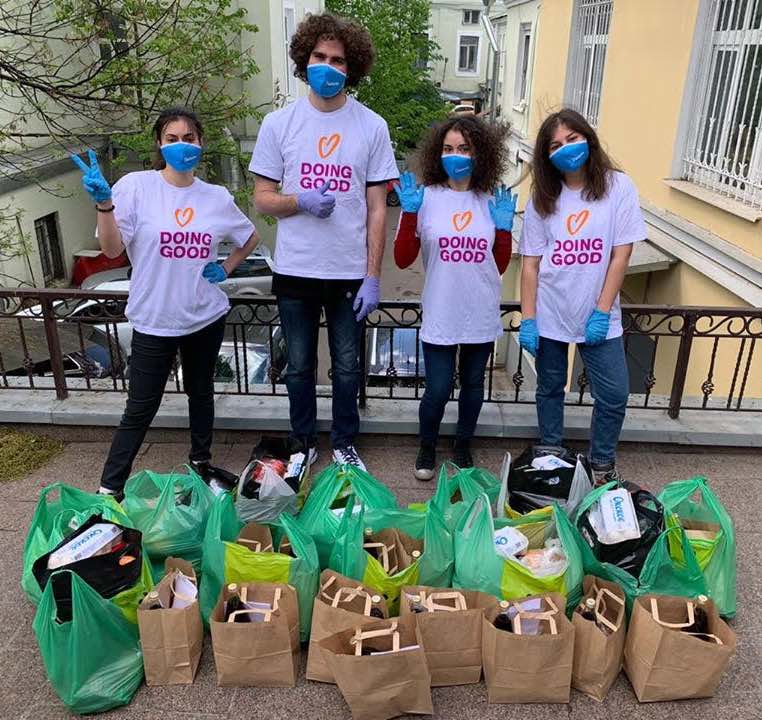
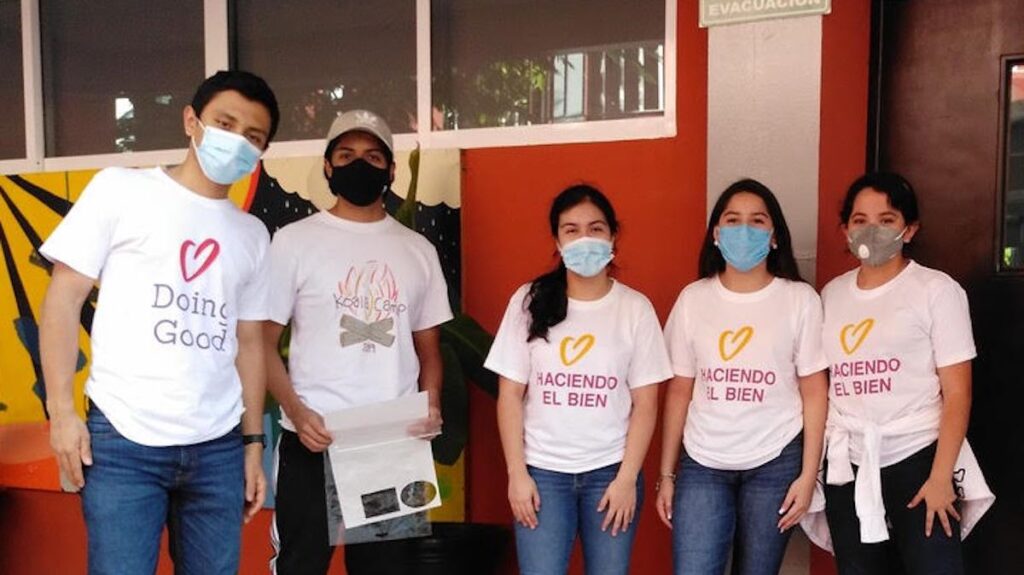
People in 108 Countries Are Joining Forces to do Good on ‘Good Deeds Day’ Today

Over a million people from over 100 countries will take part Sunday in International Good Deeds Day.

Launched 15 years ago in Israel as a small local event, the true spirit of dreaming big and getting things done has helped the project expand to include participants in 108 countries unifying for a day of good.

Every year on April 11 enthusiasm grows, and this year’s events will center around thousands of projects dedicated to bettering society, all under the 2021 theme of reconnecting.

Founder Shari Arison says that, despite the pandemic, “doing good and being good is always possible—at any time and under any circumstance.”

“It’s heartwarming to see the outpour of goodwill and acts of loving kindness that people do, helping others in any way possible at such a time, making food baskets for those in need, entertaining the elderly, and so many other activities filled with creative ideas that benefit others—and spreading the good together.”

POPULAR: Hollywood Legend Dick Van Dyke Hands Out Money to Struggling People Standing in Line For Jobs

The 63-year-old American-born Israeli businesswoman and philanthropist is Israel’s wealthiest woman. She is the owner of Arison Investments, which comprises several companies. She heads up The Ted Arison Family Foundation as the daughter of the charity organization’s namesake that also co-founded Norwegian Cruise Lines.

These are some of the activities that are organized, according to a media release:

In the US: “People in 50 states will participate, partnering with Points of Light, IAVE, Habitat for Humanity, and other organizations. A virtual chess and leadership training will be held for at risk youth.”

In Costa Rica: their eighth year taking part: “A whole month of good deeds (are planned), from donating personal kits to hundreds of hospitalized people, to concerts, blood drives, and an NGO festival that highlighting ways to do good year-round.”

Good Deeds Day

RELATED: Hero Plumber Has Helped 10,000 Vulnerable Families Fix Heating and Plumbing For FREE During Pandemic

In Panama: “24 hours of good deeds are planned, including building community gardens, donating school supplies, and giving haircuts at homeless shelters.”

In the UK: “Hundreds will take part in hands-on projects across London all month, allowing people to choose their way to do good.”

One way you can take part immediately is to use the group’s #FAMING challenge. Shift from ‘shaming’ to ‘faming’ by using social media to post kind words, compliments, and praise. Try highlight the good and letting go of the bad for an entire week.

“I believe that if people will think good, speak good, and do good, the circles of goodness will grow in the world,” says Arison.

ALERT Your Friends to Good Deeds Day By Sharing This on Social Media…

This Week’s Inspiring Horoscopes From Rob Brezsny’s ‘Free Will Astrology’

Our partner Rob Brezsny provides his weekly wisdom to enlighten our thinking and motivate our mood. Rob’s Free Will Astrology, is a syndicated weekly column appearing in over a hundred publications. He is also the author of Pronoia Is the Antidote for Paranoia: How All of Creation Is Conspiring To Shower You with Blessings. (A free preview of the book is available here.)

Here is your weekly horoscope…

FREE WILL ASTROLOGY – Week beginning April 9, 2021
Copyright by Rob Brezsny, FreeWillAstrology.com

ARIES (March 21-April 19):
Author Susan Sontag defined “mad people” as those who “stand alone and burn.” She said she was drawn to them because they inspired her to do the same. What do you think she meant by the descriptor “stand alone and burn”? I suspect she was referring to strong-willed people devoted to cultivating the most passionate version of themselves, always in alignment with their deepest longings. She meant those who are willing to accept the consequences of such devotion, even if it means being misunderstood or alone. The coming weeks will be an interesting and educational time for you to experiment with being such a person.

TAURUS (April 20-May 20):
In the 1930s, Taurus-born Rita Levi-Montalcini was a promising researcher in neurobiology at the University of Turin in Italy. But when fascist dictator Benito Mussolini imposed new laws that forbade Jews from holding university jobs, she was fired. Undaunted, she created a laboratory in her bedroom and continued her work. There she laid the foundations for discoveries that ultimately led to her winning the Nobel Prize in Physiology or Medicine. I foresee you summoning comparable determination and resilience in the coming weeks, Taurus.

GEMINI (May 21-June 20):
Religious scholar Karl Barth (1886–1968) wrote, “There will be no song on our lips if there be no anguish in our hearts.” To that perverse oversimplification, I reply: “Rubbish. Twaddle. Bunk. Hooey.” I’m appalled by his insinuation that pain is the driving force for all of our lyrical self-revelations. Case in point: you in the coming weeks. I trust there will be a steady flow of songs in your heart and on your lips because you will be in such intimate alignment with your life’s master plan.

CANCER (June 21-July 22):
“It is not easy to be crafty and winsome at the same time, and few accomplish it after the age of six,” wrote Cancerian author John W. Gardner. But I would add that more adult Crabs accomplish this feat than any other sign of the zodiac. I’ll furthermore suggest that during the next six weeks, many of you will do it quite well. My prediction: You will blend lovability and strategic shrewdness to generate unprecedented effectiveness. (How could anyone resist you?)

LEO (July 23-Aug. 22):
Staring at flames had benefits for our primitive ancestors. As they sat around campfires and focused on the steady burn, they were essentially practicing a kind of meditation. Doing so enhanced their ability to regulate their attention, thereby strengthening their working memory and developing a greater capacity to make long-range plans. What does this have to do with you? As a fire sign, you have a special talent for harnessing the power of fire to serve you. In the coming weeks, that will be even more profoundly true than usual. If you can do so safely, I encourage you to spend quality time gazing into flames. I also hope you will super-nurture the radiant fire that glows within you.

VIRGO (Aug. 23-Sept. 22):
Physicist Victor Weisskopf told us, “What’s beautiful in science is the same thing that’s beautiful in Beethoven. There’s a fog of events and suddenly you see a connection. It connects things that were always in you that were never put together before.” I’m expecting there to be a wealth of these aha! moments for you in the coming weeks, Virgo. Hidden patterns will become visible. Missing links will appear. Secret agendas will emerge. The real stories beneath the superficial stories will materialize. Be receptive and alert!

LIBRA (Sept. 23-Oct. 22):
Jungian psychoanalyst and folklore expert Clarissa Pinkola Estés celebrates the power of inquiry. She says that “asking the proper question is the central action of transformation,” both in fairy tales and in psychotherapy. To identify what changes will heal you, you must be curious to uncover truths that you don’t know yet. “Questions are the keys that cause the secret doors of the psyche to swing open,” says Estes. I bring this to your attention, Libra, because now is prime time for you to formulate the Fantastically Magically Catalytic Questions.

SCORPIO (Oct. 23-Nov. 21):
In April 1933, Scorpio-born African American singer Ethel Waters was in a “private hell.” Her career was at an impasse and her marriage was falling apart. In the depths of despondency, she was invited to sing the premiere of a new song, Stormy Weather, at New York City’s famous Cotton Club. It was a turning point. She later wrote, “I was singing the story of my misery and confusion, of the misunderstandings in my life I couldn’t straighten out, the story of the wrongs and outrages done to me by people I had loved and trusted.” The audience was thrilled by her performance, and called her back for 12 encores. Soon thereafter, musical opportunities poured in and her career blossomed. I foresee a parallel event in your life, Scorpio. Maybe not quite so dramatic, but still, quite redemptive.

SAGITTARIUS (Nov. 22-Dec. 21):
I love to see you enjoy yourself. I get a vicarious thrill as I observe you pursuing pleasures that other people are too inhibited or timid to dare. It’s healing for me to witness you unleash your unapologetic enthusiasm for being alive in an amazing body that’s blessed with the miracle of consciousness. And now I’m going to be a cheerleader for your efforts to wander even further into the frontiers of bliss and joy and gratification. I will urge you to embark on a quest of novel forms of rapture and exultation. I’ll prod you to at least temporarily set aside habitual sources of excitement so you’ll have room to welcome as-yet unfamiliar sources.

CAPRICORN (Dec. 22-Jan. 19):
Capricorn poet John O’Donahue suggested that a river’s behavior is worthy of our emulation. He said the river’s life is “surrendered to the pilgrimage.” It’s “seldom pushing or straining, keeping itself to itself everywhere all along its flow.” Can you imagine yourself doing that, Capricorn? Now is an excellent time to do so. O’Donahue rhapsodized that the river is “at one with its sinuous mind, an utter rhythm, never awkward,” and that “it continues to swirl through all unlikeness with elegance: a ceaseless traverse of presence soothing on each side, sounding out its journey, raising up a buried music.” Be like that river, dear Capricorn!

AQUARIUS (Jan. 20-Feb. 18):
“Is life not a thousand times too short for us to bore ourselves?” wrote philosopher Friedrich Nietzsche. In response to that sentiment, I say, “Amen!” and “Hallelujah!” Even if you will live till age 99, that’s still too brief a time to indulge in an excess of dull activities that activate just a small part of your intelligence. To be clear, I don’t think it’s possible to be perfect in avoiding boredom. But for most of us, there’s a lot we can do to minimize numbing tedium and energy-draining apathy. I mention this, Aquarius, because the coming weeks will be a time when you will have extra power to make your life as interesting as possible for the long run.

PISCES (Feb. 19-March 20):
I know of four different governmental organizations that have estimated the dollar value of a single human life. The average of their figures is $7.75 million. So let’s say, for argument’s sake, that you are personally worth that much. Does it change the way you think about your destiny? Are you inspired to upgrade your sense of yourself as a precious treasure? Or is the idea of putting a price on your merit uninteresting, even unappealing? Whatever your reaction is, I hope it prods you to take a revised inventory of your worth, however you measure it. It’s a good time to get a clear and precise evaluation of the gift that is your life. (Quote from Julia Cameron: “Treating yourself like a precious object makes you strong.”)

WANT MORE? Listen to Rob’s EXPANDED AUDIO HOROSCOPES, 4-5 minute meditations on the current state of your destiny — or subscribe to his unique daily text message service at: RealAstrology.com

(Zodiac images by Numerologysign.com, CC license)

SHARE The Wisdom With Friends Who Are Stars in Your Life on Social Media…

Six Puppies Are All Determined to Fit Into One Small Bucket – And They Succeed (WATCH)

There’s nothing cuter than a bucket of puppies, right?

It was after dinner and time for a nap in Sebastopol, California—and none of these guys wanted to be left out of the veritable ‘dog pile.’

When five of them succeeded at fitting inside the plastic pail, the sixth one of the litter was not to be outdone.

Maybe being on the top was better anyway—so it leapt atop the furry mound of brothers and sisters.

Watch the adorable video below…

DON’T Leave Your Friends Out — Share The Laugh on Social Media…

Jersey Mike’s Donated 100% of Sales From 1,900 Stores in Their Biggest ‘Day of Giving’ in 11 Years

Jersey Mike’s Founder Peter Cancro (third from right) celebrates 2021 Day of Giving With Employees

With a company goal of raising $8 million, Jersey Mike’s Subs blew past that mark during their Annual Month of Giving to raise an incredible $15 million to help more than 200 charities nationwide.

Jersey Mike’s Founder Peter Cancro (third from right) celebrates 2021 Day of Giving With employees in Naples, Florida

After they accepted donations from customers throughout March, the final day culminated in Jersey Mike’s locations across America donating 100 percent of sales—not just profits—to local charities.

More than 1,900 restaurants that are known for their in-store freshly-baked bread—the same recipe they started with in 1956—donated every penny of their sales on the 31st to hospitals, youth organizations, and food banks.

The fundraising total is double the amount raised in 2019 when the New Jersey-based company gave away $7.3 million to their communities.

POPULAR: Wisconsin Chick-fil-A Worker Who Won a Car in Company Raffle Gives it to Co-worker Who Bikes to Work

The results are even more meaningful this year as the Day of Giving celebrations were cancelled last year due to the pandemic. Jersey Mike’s began the practice in 2011, and over the eleven years has raised more than $47 million for local charities, such as the Make-A-Wish Foundation.

“We really hoped to do well this year after the disappointment of having to cancel last year’s Day of Giving, and the outpouring of support from across the country is truly inspiring,” said Peter Cancro, Jersey Mike’s Founder & CEO.

“We are filled with gratitude and admiration for our customers, franchise owners, and team members who have helped these charities in such a big way, now, when they need it more than ever.”

RELATED: Billionaire Mark Cuban’s New Drug Company is Producing Low-Cost Generic Drugs Cutting 90% of the Markup

Cancro, who bought his first sub shop at age 17, credits two local businessmen in Point Pleasant Beach, New Jersey where he grew up—Jack Baker of Baker’s Lobster Shanty and Bob Hoffman of Hoffman’s Ice Cream—with showing him the importance of giving unconditionally to the community.

Since then, the company’s mission has always been: “Giving…making a difference in someone’s life”.

SHARE This With Jersey Mike’s Fans on Social Media…

“For every reason it’s not possible, there are hundreds of people who have faced the same circumstances and succeeded.” – Jack Canfield

Quote of the Day: “For every reason it’s not possible, there are hundreds of people who have faced the same circumstances and succeeded.” – Jack Canfield

Photo by: Clay Banks

With a new inspirational quote every day, atop the perfect photo—collected and archived on our Quote of the Day page—why not bookmark GNN.org for a daily uplift?

Archaeologists Discover ‘Dazzling’ 3,000-Year-old Egyptian City, Left ‘As if it were yesterday’

Dr. Zahi Hawass/Facebook

Reprinted with permission from World At Large, a news website of nature, politics, science, health, and travel.

It’s the stuff of dreams and is being hailed as the second-most important discovery since the opening of Tutankhamen’s tomb—an ancient lost city has been found near the famous Valley of the Kings.

Excavations began 6 months ago in September about 300 miles south of Cairo, and before long “to the team’s great surprise, formations of mud bricks began to appear in all directions.”

These are the words of famed Egyptologist and former antiquities minister Dr. Zahi Hawass, who posted a statement of the discovery on Facebook.

Identified as “Dazzling Aten,” it’s the largest-ever lost city to be uncovered in Egypt, and dated to the reign of one of the most powerful pharaohs to rule during the kingdom’s golden age, Amenhotep III.

Ruling from 1391 to 1353 BCE alongside his son, the equally famous Akhenaten, Hawass described their city as being in “a good condition of preservation, with almost complete walls, and with rooms filled with tools of daily life.”

RELATED: Egypt Just Discovered 27 Sealed Coffins in An Ancient Cemetery That Were Buried 2,500 Years Ago

“Many foreign missions searched for this city and never found it,” he added. “We began our work searching for the mortuary temple of Tutankhamun because the temples of both Horemheb and Ay (two other significant pharaohs) were found in this area.”

A golden city ‘filled with treasures’

Dr. Zahi Hawass/Facebook

Featuring zigzagging walls, a rarity in ancient Egypt, the haunts of specialty craftsmen, such as brickmakers, glazers, and jewelers, have been discovered, along with evidence of their work, such as the seal of Amenhotep III that would have been used to stamp into mud bricks that likely built several nearby monuments such as the Temple of Ramses II.

MORE: A Team of Maverick Engineers Want to Roll the Geological Clock Back on Sinai and Replace Desert with Lush Greenery

Other districts for large-scale baking and storing of foods were also discovered, and the archaeologists determined that they would have been capable of hosting many workers at one time—likely for festivals and funerary ceremonies.

To the north of the site, a cemetery has been uncovered as well, though the extent and state of preservation have not been determined. They consist of rock-cut tombs that can be “reached by stairs carved into the rock,” similar to the tombs in the nearby Valley of the Kings.

“Work is underway and the mission expects to uncover untouched tombs filled with treasures,” says Hawass, dangling the most fantastical and metaphorical carrots in the face of global archaeology.

Dr. Zahi Hawass/Facebook

Al Jazeera reports that many such treasures have already been found such as scarab pendants, jewelry, and pottery bearing inscriptions that tell a lot about a critical period in Egyptian history that experts still puzzle over.

“The discovery of the Lost City not only will give us a rare glimpse into the life of the Ancient Egyptians at the time where the Empire was at his wealthiest but will help us shed light on one of history’s greatest mystery: why did Akhenaten and Nefertiti decide to move to Amarna,” said Betsy Brian, an archaeologist at Johns Hopkins University.

Dr. Zahi Hawass/Facebook

While the city was presided over by Amenhotep III, his son Akhenaten moved the capital to Amarna following his death, yet historians are unclear why. An inscription on the outside of a pot containing meat for a ceremony dated the activity in Aten to just a year before the it was supposedly abandoned.

CHECK OUT: Archaeologists in Egypt have Unearthed the World’s Oldest Known Beer Factory, Thought to Date Back 5,000 Years

Hawass and the other researchers hope more excavations will reveal why this happened, and then whether the city was repopulated when Tutankhamen decided to move the capital to Thebes.

It’s a discovery and a story that should yield fascinating developments for years to come, and something that could lend a positive jolt to the Egyptian tourist industry after years of political instability.

SHARE This Amazing Find With Friends on Social Media…

Saudi Arabia Plans to Plant 50 BILLION Trees – And Reduce Carbon Emissions by 60%

Riyadh Green
Riyadh Green

Saudi officials have announced a massive initiative aimed at protecting the Middle East from climate change.

Home to some of the world’s largest, driest, and hottest shifting-sand deserts, Saudi Arabia is uniquely placed to suffer from rising global temperatures, as are their Gulf neighbors.

The Green Saudi and Green Middle East initiatives aim to take the crown of the world’s largest tree-planting effort—50 billion across the Arab states, as well as efforts at home to more than double the size of the Kingdom’s protected areas, and create an enormous drive for green energy that would reduce global carbon emissions by 8% and domestic emissions by 60%.

Acutely aware that their wealth is derived from fossil fuels, the initiatives are seeking to create 50% green energy by the end of the decade.

MORE: Saudi Arabia is Building a Zero-Carbon City With No Cars or Pollution: ‘A new era of civilization’

“As a leading global oil producer, we are fully aware of our responsibility in advancing the fight against the climate crisis, and that just as we played a leading role in stabilizing energy markets during the oil and gas era, we will work to lead the coming green era,” said Saudi officials, speaking with Arab News.

Domestically, Saudi Arabia has suffered from desertification and debilitating dust storms mixed with low rainfall. Draping their cities in greenery and using artificial weather creation to increase rainfall will be paired with efforts to revive iconic Arabian wildlife, and to raise existing protected desert and marine ecosystems to 30% of the country’s sovereign territory.

Across the broader Middle East, Saudi Arabia plans to help nations install more modern and efficient hydrocarbon technologies that will cut back on emissions. More details on the specific methods and strategies of the program will be announced next year.

RELATED: Saltwater Toilets May Soon Begin Saving Fresh Water Around the World Thanks to New Red Sea Bacteria

“This is just the beginning,” officials added. “The Kingdom, the region, and the world at large need to move forward at an accelerated pace in the fight against climate change.”

SHARE the Hopeful News of Billions of Trees Coming to the Middle East…