All News - Page 497 of 1735 - Good News Network
Home Blog Page 497

Daimler Trucks is Now Accepting Orders for All-Electric Freight Trucks, Having Tested Them on America’s Highways

Freightliner

Stepping into the future of carbon-neutral freight transportation, Daimler Trucks North America is now accepting orders for its first all-electric freight trucks, which they call the longest-range commercial battery EVs for interstate shipping in North America today.

Freightliner’s eM2

Daimler’s Freightliner manufacturing division has put the eM2 box truck and eCascadia freight tractor into the hands of customers, who have been running real freight in the real world for over two years.

Having demonstrated the concept, they will begin production of the trucks in 2022 and provide a “dedicated network of Freightliner dealers to support the end-to-end process of fleet electrification.”

Currently with 38 trucks in a pilot fleet covering hundreds of thousands of miles in testing, senior vice president Richard Howard said, “The entire team at Daimler Trucks North America is incredibly proud of our progress.”

POPULAR: With EV Battery Prices Dropping 87% in a Decade, Tesla is Now Making a Car That Will Cost $25,000

With its ePowertrain technology developed by Detroit®, the eAxle design offers up to 23,000 lb-ft of torque, giving it ample power to move the eCascadia’s 82,000 lbs. with a maximum range in excess of 230 miles on a full charge for the medium-duty eM2, and 250 miles for the Class 8 eCascadia tractor.

In the lead-up to production, Freightliner’s test fleets have covered a variety of applications, including drayage, regional and local pickup and delivery, and food and beverage delivery—logging 750,000 collective miles, accumulating valuable data and driver perspectives.

MORE: Scientists Develop New Material to Make Lithium Ion Batteries Self-Healing and Easily Recyclable

“These are the largest demonstrator electric fleets ever seen in the industry, and the valuable collaboration and feedback has translated directly into a more versatile, more durable, and more reliable product,” said Howard.

The eCascadia will carry a 475 kWh battery pack which charges to 80 percent in 90 minutes, while the eM2 has a smaller 315 kWh pack which will charge to 80 percent in 60 minutes.

eCascadia by Freightliner

Considering that the average Class 8 tractor trailer is achieving miles-per-gallon in the single-digits on the highway, these trucks could slash not only pollution, but the cost of moving goods from one place to another.

RELATED: Largest Purchase of Electric Vehicles in History: Amazon Orders 100,000 EV Delivery Vans

MOVE This Positive News on the Interstate of Social Media…

Biodegradable Food Wrap Created From Algae and Cinnamon Compound is the Packaging Solution We Needed

Micheile Henderson

Scientists from India and Russia have created edible food wrap for packaging produce, bakery, poultry, meat, and seafood.

File photo of plastic bags by Micheile Henderson

Designed to replace one of the most un-recycled materials on the planet, the wrap consists of natural ingredients that are safe for the environment and humans.

The research, which was published in the Journal of Food Engineering, describes three types of food films based on the well-known naturally occurring seaweed biopolymer sodium alginate—a compound found within the cell walls of brown algae.

“Its molecules have film-forming properties,” said Rammohan Aluru, senior researcher at the organic synthesis laboratory at Ural Federal University, and co-author of the paper. “The greatest advantage of sodium alginate is that it performs as liquid-gel in an aqueous medium.”

Alginate molecules were cross-linked with a natural antioxidant ferulic acid (a derivative of cinnamic acid), and the delicious combination makes the film not only strong, but also homogeneous, more rigid, prolonging the life of the products, say the scientists.

RELATED: To Eliminate Plastic, College Grad Designs Ramen Packaging That Dissolves in Hot Water

“Food stays fresh longer due to the antioxidant components that slow down the oxidation processes,” said Grigory Zyryanov, professor of the Department of Organic and Biomolecular Chemistry at Ural Federal University. “

And, the films are water-soluble and dissolve by almost 90% in 24 hours.

In addition, we can add to the films natural antiviral agents, which will also extend the shelf life of food. Garlic, turmeric, and ginger contain compounds that may prevent the spread of the viruses.”

CHECK OUT: Forget the ‘Best By’ Date; This Compostable Bioplastic Packaging Changes Color When the Food Goes Bad

According to the authors, no special equipment for the production of films is required. On an industrial scale, it can be created by food products and film manufacturers.

Seaweed algae by Peter Castleton

“It can also be produced at a polymer production plant. The only condition is that it must meet the standards that apply to food production. And if an inexhaustible source of algae in the ocean is nearby it will be quite simple to create such films,” said Grigory Zyryanov.

Joined by scientists from the Sri Venkateswara and Sri Padmavati Mahila Viswavidyalayam Universities in India, the research was supported by that country’s University Grants Commission and the Central Institute of Plastics Engineering and Technology, also in India.

POPULAR: Scientists Are Replacing Plastic With Algae, a Revolutionary Idea That Can Suck Carbon Out of the Air

Sodium alginate is a well-known edible biopolymer of natural origin used as a thickener and stabilizer, and ferulic acid (the derivative of cinnamic acid) has a wide range of pharmacological properties, in particular, anti-inflammatory, antitumor, antitoxic, hepato- and cardioprotective, antiviral, and antibacterial ones, which is mainly due to the antioxidant properties of this acid.

FEED This Yummy Good News to Your Friends on Social Media…

“There is no glory in star or blossom till looked upon by a loving eye; There is no fragrance in April breezes till breathed with joy as they wander by.” – William Cullen Bryant

Quote of the Day: “There is no glory in star or blossom till looked upon by a loving eye; There is no fragrance in April breezes till breathed with joy as they wander by.” – William Cullen Bryant

Photo: Bluebells in April, copyright GWC

With a new inspirational quote every day, atop the perfect photo—collected and archived on our Quote of the Day page—why not bookmark GNN.org for a daily uplift?

First Human Trial of HIV Vaccine Produced Immune Response in 97% of Volunteers

Spencer Davis

A phase 1 clinical trial of an experimental vaccine primed the immune system using a unique approach in order to prevent HIV.

The promising results, announced in February by the International AIDS Vaccine Initiative (IAVI) and Scripps Research, the vaccine showed success in stimulating production of rare immune cells needed to generate antibodies against the fast-mutating virus—and the targeted response was detected in 97 percent of participants who received the vaccine.

“We showed that vaccines can be designed to stimulate rare immune cells with specific properties, and this targeted stimulation can be very efficient in humans,” said William Schief, PhD, a professor and immunologist at Scripps Research and executive director of vaccine design at IAVI’s Neutralizing Antibody Center, whose lab developed the vaccine.

“We believe this approach will be key to making an HIV vaccine and possibly important for making vaccines against other pathogens.”

As a next step, IAVI and Scripps are partnering with the biotechnology company Moderna to develop and test an mRNA-based vaccine that harnesses the approach to produce the same beneficial immune cells. Using mRNA technology could significantly accelerate the pace of HIV vaccine development.

HIV, which affects more than 38 million people globally, is known to be among the most difficult viruses to target with a vaccine, in large part because it constantly evolves into different strains to evade the immune system.

RELATED: Same Technology Behind Pfizer COVID-19 Vaccine is Leading Researchers to Possible MS Breakthrough

“These exciting findings emerge from remarkably creative, innovative science and are a testament to the research team’s talent, dedication and collaborative spirit, and to the generosity of the trial participants,” says Mark Feinberg, MD, PhD, president and CEO of IAVI.

One in a million

For decades now, HIV researchers have pursued the holy grail of stimulating the immune system to create rare but powerful antibodies that can neutralize diverse strains of HIV. Known as “broadly neutralizing antibodies,” or bnAbs, these specialized blood proteins could attach to HIV spikes, proteins on the virion surface that allow the virus to enter human cells, and disable them via important yet difficult-to-access regions that don’t vary much from strain to strain.

“We and others postulated many years ago that in order to induce bnAbs, you must start the process by triggering the right B cells—cells that have special properties giving them potential to develop into bnAb-secreting cells,” Schief says.

“In this trial, the targeted cells were only about one in a million of all naïve B cells. To get the right antibody response, we first need to prime the right B cells. The data from this trial affirms the ability of the vaccine immunogen to do this.”

POPULAR: She was Demoted, Doubted and Rejected But Now Her Work is the Basis of the Covid-19 Vaccine

The priming step would be the first stage of a multi-step vaccine regimen aimed at eliciting many different types of bnAbs, he says.

Promise beyond HIV

The strategy of targeting naïve B cells with specific properties is called “germline-targeting,” as these young B cells display antibodies encoded by unmutated, or “germline” genes. Researchers believe the approach could also be applied to vaccines for other challenging pathogens such as influenza, dengue, Zika, hepatitis C viruses and malaria.

“This is a tremendous achievement for vaccine science as a whole,” says Dennis Burton, PhD, professor and chair of the Department of Immunology and Microbiology at Scripps Research, scientific director of the IAVI Neutralizing Antibody Center and director of the NIH Consortium for HIV/AIDS Vaccine Development. “This clinical trial has shown that we can drive immune responses in predictable ways to make new and better vaccines, and not just for HIV. We believe this type of vaccine engineering can be applied more broadly, bringing about a new day in vaccinology.”

ALSO: After Showing 92% Efficiency in Early Trials, We’re One Step Closer to First Ever Herpes Vaccine

The clinical trial, IAVI G001, took place at two sites: George Washington University in Washington, D.C., and the Fred Hutchinson Cancer Research Center in Seattle, enrolling 48 healthy adult volunteers. Participants received either a placebo or two doses of the vaccine compound, eOD-GT8 60mer, along with an adjuvant developed by the pharmaceutical company GSK.

“This is a landmark study in the HIV vaccine field, demonstrating success in the first step of a pathway to induce broad neutralizing antibodies against HIV-1,” McElrath says.

The study sets the stage for additional clinical trials that will seek to refine and extend the approach—with the long-term goal of creating a safe and effective HIV vaccine.

Funding from the Bill & Melinda Gates Foundation, through the Collaboration for AIDS Vaccine Discovery—and grants from the National Institute of Allergy and Infectious Diseases (NIAID)—supported a network of partners conducting analyses and contributing to the vaccine development, including the NIH Vaccine Research Center, the government of the Netherlands, and the US Agency for International Development.

(SOURCE: Scripps.edu)

SHOOT This HIV News to Your Global Audience on Social Media…

This Week’s Inspiring Horoscopes From Rob Brezsny’s ‘Free Will Astrology’

Our partner Rob Brezsny provides his weekly wisdom to enlighten our thinking and motivate our mood. Rob’s Free Will Astrology, is a syndicated weekly column appearing in over a hundred publications. He is also the author of Pronoia Is the Antidote for Paranoia: How All of Creation Is Conspiring To Shower You with Blessings. (A free preview of the book is available here.)

Here is your weekly horoscope…

FREE WILL ASTROLOGY – Week beginning April 16, 2021
Copyright by Rob Brezsny, FreeWillAstrology.com

ARIES (March 21-April 19):
“Today I feel the whole world is a door,” wrote poet Dennis Silk. In a similar spirit, 13th-century Zen master Wumen Huikai observed, “The whole world is a door of liberation, but people are unwilling to enter it.” Now I’m here to tell you, Aries, that there will be times in the coming weeks when the whole world will feel like a door to you. And if you open it, you’ll be led to potential opportunities for interesting changes that offer you liberation. This is a rare blessing. Please be sufficiently loose and alert and brave to take advantage.

TAURUS (April 20-May 20):
Taurus philosopher Ludwig Wittgenstein was called a genius by Nobel Prize-winning author Bertrand Russell. His Philosophical Investigations was once voted the 20th century’s most important philosophy book. Yet one of Wittgenstein’s famous quotes was “How hard it is to see what is right in front of my eyes!” Luckily for all of us, I suspect that won’t be problem for you in the coming weeks, Taurus. In fact, I’m guessing you will see a whole range of things that were previously hidden, even though some of them had been right in front of your eyes. Congrats! Everyone whose life you touch will benefit because of this breakthrough.

GEMINI (May 21-June 20):
Why don’t rivers flow straight? Well, sometimes they do, but only for a relatively short stretch. According to the US Geological Survey, no river moves in a linear trajectory for a distance of more than ten times its width. There are numerous reasons why this is so, including the friction caused by banks and the fact that river water streams faster at the center. The place where a river changes direction is called a “meander.” I’d like to borrow this phenomenon to serve as a metaphor for your life in the coming weeks. I suspect your regular flow is due for a course change—a meander. Any intuitive ideas about which way to go? In which direction will the scenery be best?

CANCER (June 21-July 22):
Cancerian poet Denis Johnson eventually became a celebrated writer who won numerous prizes, including the prestigious National Book Award. But life was rough when he was in his twenties. Because of his addictions to drugs and alcohol, he neglected his writing. Later, in one of his mature poems, he expressed appreciation to people who supported him earlier on. “You saw me when I was invisible,” he wrote, “you spoke to me when I was deaf, you thanked me when I was a secret.” Are there helpers like that in your own story? Now would be a perfect time to honor them and repay the favors.

LEO (July 23-Aug. 22):
What do you believe in, exactly, Leo? The coming weeks will be a fine time to take an inventory of your beliefs—and then divest yourself of any that no longer serve you, no longer excite you, and no longer fit your changing understanding of how life works. For extra credit, I invite you to dream up some fun new beliefs that lighten your heart and stimulate your playfulness. For example, you could borrow poet Charles Wright‘s approach: “I believe what the thunder and lightning have to say.” Or you could try my idea: “I believe in wonders and marvels that inspire me to fulfill my most interesting dreams.”

VIRGO (Aug. 23-Sept. 22):
Virgo poet Charles Wright testifies, “I write poems to untie myself, to do penance and disappear through the upper right-hand corner of things, to say grace.” What about you, Virgo? What do you do in order to untie yourself and do penance and invoke grace? The coming weeks will be an excellent time for you to use all the tricks at your disposal to accomplish such useful transformations. And if you currently have a low supply of the necessary tricks, make it your healthy obsession to get more.

LIBRA (Sept. 23-Oct. 22):
Kublai Khan, ruler of the Mongol Empire and China in the second half of the 13th century, kept a retinue of 5,000 astrologers on retainer. Some were stationed on the roof of his palace, tasked with using sorcery to banish approaching storm clouds. If you asked me to perform a similar assignment, I would not do so. We need storms! They bring refreshing rain, and keep the earth in electrical balance. Lightning from storms creates ozone, a vital part of our atmosphere, and it converts nitrogen in the air into nitrogen in the ground, making the soil more fertile. Metaphorical storms often generate a host of necessary and welcome transformations, as well—as I suspect they will for you during the coming weeks.

SCORPIO (Oct. 23-Nov. 21):
“Unexpressed emotions will never die,” declared trailblazing psychologist Sigmund Freud. “They are buried alive and they will come forth, later, in uglier ways.” I agree, which is why I advise you not to bury your emotions—especially now, when they urgently need to be aired. OK? Please don’t allow a scenario in which they will emerge later in ugly ways. Instead, find the courage to express them soon—in the most loving ways possible, hopefully, and with respect for people who may not be entirely receptive to them. Communicate with compassionate clarity.

SAGITTARIUS (Nov. 22-Dec. 21):
Sagittarian author Cristin O’Keefe Aptowicz wrote a poem entitled “Not Doing Something Wrong Isn’t the Same as Doing Something Right.” I propose that we make that thought one of your guiding themes during the next two weeks. If you choose to accept the assignment, you will make a list of three possible actions that fit the description “not doing something wrong,” and three actions that consist of “doing something right.” Then you will avoid doing the three wrong things named in the first list and give your generous energy to carrying out the three right things in the second list.

CAPRICORN (Dec. 22-Jan. 19):
In the past few weeks, I hope you’ve been treating yourself like a royal child. I hope you’ve been showering yourself with extra special nurturing and therapeutic treatments. I hope you’ve been telling yourself out loud how soulful and intelligent and resilient you are, and I hope you’ve delighted yourself by engaging with a series of educational inspirations. If for some inexplicable reason you have not been attending to these important matters with luxurious intensity, please make up for lost time in the coming days. Your success during the rest of 2021 depends on your devout devotion to self-care right now.

AQUARIUS (Jan. 20-Feb. 18):
Sometimes when a disheartening kind of darkness encroaches, we’re right to be afraid. In fact, it’s often wise to be afraid, because doing so may motivate us to ward off or transmute the darkness. But on other occasions, the disheartening darkness that seems to be encroaching isn’t real, or else is actually less threatening than we imagine. Novelist John Steinbeck described the latter when he wrote, “I know beyond all doubt that the dark things crowding in on me either did not exist or were not dangerous to me, and still I was afraid.” My suspicion is that this is the nature of the darkness you’re currently worried about. Can you therefore find a way to banish or at least diminish your fear?

PISCES (Feb. 19-March 20):
“Some people, if they didn’t make it hard for themselves, might fall asleep,” wrote novelist Saul Bellow. In other words, some of us act as if it’s entertaining, even exciting, to attract difficulties and cause problems for ourselves. If that describes you even a tiny bit, Pisces, I urge you to tone down that bad habit in the coming weeks—maybe even see if you can at least partially eliminate it. The cosmic rhythms will be on your side whenever you take measures to drown out the little voices in your head that try to undermine and sabotage you. At least for now, say “NO!” to making it hard for yourself. Say “YES!” to making it graceful for yourself.

WANT MORE? Listen to Rob’s EXPANDED AUDIO HOROSCOPES, 4-5 minute meditations on the current state of your destiny — or subscribe to his unique daily text message service at: RealAstrology.com

(Zodiac images by Numerologysign.com, CC license)

SHARE The Wisdom With Friends Who Are Stars in Your Life on Social Media…

Walmart Commits to Helping Save Pollinators By Mandating Change For Supply Chains

Dmitry Grigoriev

Without pollinators like bees, butterflies, birds, and beetles, some of our favorite foods would not exist—and Walmart has announced a set of plans in the U.S. to persuade its grocery supply chain to adopt principles that will protect them.

Dmitry Grigoriev

Walmart’s new commitments announced this week, serve as the largest pollinator health effort from a U.S. grocery retailer to date, according to the head of produce sourcing for Walmart U.S., Martin Mundo. The aim is to reduce several pollinator threats through promoting integrated pest management (IPM) practices and improving and expanding pollinator habitats.

Walmart U.S. will source 100% of the fresh produce and floral items it sells in its in-store produce department from suppliers that adopt integrated pest management practices, as verified by a third party, by 2025.

America’s largest retailer will also encourage fresh produce suppliers to report their pesticide application and biodiversity management annually, through Walmart’s annual sustainability surveys.

RELATED: Bee Populations Are Increasing in Many States–With Maine Seeing 70% Rise in 2 Years

“We are also encouraging fresh produce suppliers to phase out use of chlorpyrifos and nitroguanidine neonicotinoids pesticides (where applicable unless mandated otherwise by law)—and avoid replacing them with products having a level I bee precaution rating and assess and report annual progress,” wrote Mundo on the Walmart corporate website.

To help improve and expand pollinator habitats, Walmart U.S. will also encourage fresh produce suppliers to protect, restore, or establish pollinator habitats on at least 3% of land they own, operate, and/or invest in by 2025.

Walmart has already pledged to protect, manage or restore at least 50 million acres of land and one million square miles of ocean by 2030.

POPULAR: Historic Deal to Protect Millions of Monarch Butterfly Habitat Acres is Unprecedented

Starting this month, plants that attract pollinators will feature special tags to help customers grow their own pollinator gardens. In total, more than 1.3 million annual and perennial pollinator-promoting plants will carry tags in Walmart stores this spring.

“We will also continue to avoid selling invasive plant species in our retail stores (based on recognized regional lists)… and work with local organizations to protect, restore or establish pollinator habitats in major pollinator migration corridors,” the senior vice president added.

“In addition, we have partnered with solar developers to establish pollinator habitats around solar panel arrays like the one at our distribution center in Laurens, South Carolina, and through Walmart’s lead participation on community solar farms across Minnesota. We will continue to look for opportunities to establish more pollinator habitats where feasible.”

HELPFUL: Cultivate These Keystone Plants in Your Yard to Help Bees and Butterflies Thrive and Pollinate

The nonprofit arm of the retailer, the Walmart Foundation, recently granted funding to the Cornell Lab of Ornithology to continue collecting citizen science data that monitor pollinators in local areas to improve conservation planning.

SHARE the BEE-autiful News With Your Hive on Social Media…

“I am neither an optimist nor pessimist—I am a ‘possibilist’.” – Max Lerner

The Great Ridge in Peak District, England – Michael Cummins

Quote of the Day: “I am neither an optimist nor pessimist—I am a ‘possibilist’.” – Max Lerner

Photo by: Michael Cummins

With a new inspirational quote every day, atop the perfect photo—collected and archived on our Quote of the Day page—why not bookmark GNN.org for a daily uplift?

The Great Ridge in Peak District, England – Michael Cummins


Guy Fieri’s Restaurant Employee Relief Fund Has Raised Almost $25 Million for Struggling Workers

Celebrity chef Guy Fieri is known for his spiky bleached hair, a love of barbecue, and doing nice things. When California wildfires hit communities last fall, he went to affected areas to feed thousands of firefighters. And now? He’s helped raise nearly $25 million for restaurant staff facing financial struggles because of the pandemic.

Partnering with the National Restaurant Association, Fieri helped launch the Restaurant Employee Relief Fund last spring.

“You know, so many people work in the restaurant industry in multiple jobs, second jobs, single moms, single parents, students, retirees. And the restaurant industry is massively important to our communities,” Fieri told CBS News of the initiative. “And so, when I saw this coming, I said, ‘We got to do something to get some money to these folks.”

There are have 15,000 individual donations made to the fund. And so far, more than 43,000 restaurant employees have received $500 grants in all 50 states as well as in Puerto Rico, Guam, the U.S. Virgin Islands, and D.C.

90% of the grant recipients have said they’ll be using their funds to help pay their rent or mortgage, utility bills, transportation expenses, or childcare.

MORE: Hollywood Legend Dick Van Dyke Hands Out Money to Struggling People Standing in Line For Jobs

“There was a story that was said to me about someone saying, ‘I live in a building with a bunch of people who work in the service industry, and none of us have any money—I don’t even have anyone I can borrow money from because nobody I know has any money,'” the Diners Drive-ins and Dives star told CBS. “When you start hearing those kinds of things… there’s nothing more important.”

COOK UP Some Good News For Your Friends—Share This Story…

Shaq Helps Pay For Stranger’s Engagement Ring: ‘I’m just trying to make people smile’

Instagram/@Shaqfu_radio

NBA legend Shaquille O’Neal played in 15 All-Star games and has more awards than we can list. After retiring from play, Shaq suited up as a high-profile sports commentator, but for a long while, he’s been earning a reputation as an MVP in another arena—random acts of kindness.

As quick with a spontaneous, spur of the moment gesture as he was with a slam-dunk on the court—from stopping to help a motorist in distress after an accident on the freeway, to purchasing a wheelchair-accessible home for the family of a little boy who’d been paralyzed by a stray bullet—Shaq’s been steadily building a new winning reputation using a strategy whose only goal is to make other people happy.

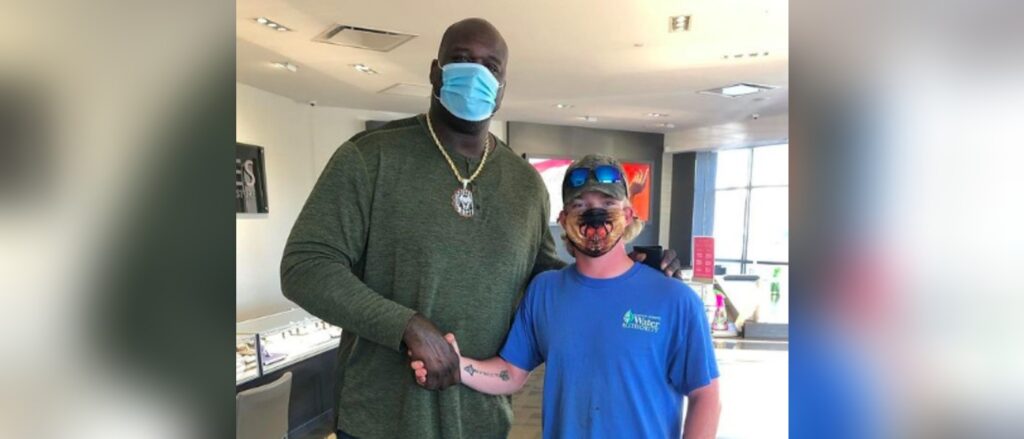
This past week, the 7’1” giant of nice scored once again—this time by crushing the layaway balance on an engagement ring for a young man who just happened to cross paths with him while he was jewelry shopping.

When Shaq overheard the groom-to-be asking how much money he still owed, he stole the ball and in a quick turnover, put the ring on his credit card.

“The guy just came in; he was a young kid, hardworking guy,” O’Neal said during a taping NBA on TNT. [“I told him], ‘You know what? Tell your girlfriend I got it. Take care of her.’”

At first hesitant to accept the generous gesture, the young man almost turned the offer down, but Shaq convinced him with the reassurance, “Don’t worry about it. I do it all the time. I’m just trying to make people smile, that’s all.”

MORE: Shaquille O’Neal Gives Teen 10 Pairs of New Size 18 Shoes to Pay Forward Childhood Good Deed

It’s almost impossible for someone as recognizable as Shaq to perform his good deeds incognito, but as those who know him will tell you, he’s not doing it to gain recognition. “I’m into making people happy,” he explained on TNT. “Whenever I leave the house, I just try to do a good deed.”

As a player, O’Neal once said, “Excellence is not a singular act, but a habit. You are what you repeatedly do.” That’s certainly a philosophy he’s carried over into his post-game career.

RELATED: Watch Insanely Talented Girl Performing Mind-Blowing Basketball Stunts at Just 12 Years Old

He’s also famously quoted as saying, “Me shooting 40% at the foul line is just God’s way to say nobody’s perfect.” While that might have been true on a basketball court, whoever sets out to break O’Neal’s awe-inspiring record as a good Samaritan is going to have some pretty big (as in size-23) shoes to fill.

(WATCH NBA on TNT‘s segment about the sweet moment below.)

SHARE This Story of Celebrity Kindness With Your Pals…

North Carolina-based writer Judy Cole has a new rom-com murder mystery debuting at Amazon: And Jilly Came Tumbling After (from Red Sky Presents).

Endangered Trout May Soon Return to Los Angeles

Los Angeles District USACE, CC license

An ambitious restoration of the concrete drag strip that is the Los Angeles River could welcome back endangered southern California steelhead trout to one of the country’s biggest cities.

After dramatic flooding in the 1930s saw flood control measures turn a once-major migration route for the fish into a 49-mile paved waterway hemmed in with concrete walls, there was an immediate exodus of the entire riparian ecosystem, and the last trout to be caught in the river was back in 1948.

Los Angeles River at Griffith Park, around 1898–1910

Decades of criticism over the condition of the river has brought several state and federal agencies together to come up with a way to make the habitat wild once more.

These efforts have seen the creation of the LA River Fish Passage & Habitat Structures Program, which is focusing on improving the waterflow and quality of the Arroyo Seco, a tributary of the LA River that has a strong influence on the water current downstream where the concrete banks and bed of the river make the water speed too quickly for steelhead.

MORE: Pollution in the Mississippi River Has Plummeted Since The 1980s, New Study Says

The trout, like salmon, leave the sea and swim upstream to spawn in the small tributaries of the river, and the goal is for them to be able to return—bizarrely if one imagines the famous car chase sequences of Hollywood that have taken place there—up the concrete river.

The idea is to create a comprehensive passageway that would allow the trout to swim to their spawning grounds by removing obstacles, creating still side pools and other habitats, and deepening the central channel before lining it with natural materials like pebbles, sand, and riverine plants.

Los Angeles District USACE, CC license

RELATED: Nothing Restores a River or Local Economy Like Removing a Dam

Ideally, as new controls over the tributaries of the river are established that would allow control over the velocity of the water, trout that have become isolated in the mountains would return downstream to the sea, and those in the sea would return back up the river.

Steelhead trout/Oregon State University, CC license

It feels wild to think of trout runs happening in a concrete river running through a concrete jungle, but that’s what the planners are gunning for.

SWIM This Hopeful LA Story Over to Friends on Social Media…

This Guy Missed Traveling and Has Recreated Airplane Meals to Get Through Lockdown

The limitations on travel during the pandemic has given many cabin fever, ad one aviation enthusiast in Scotland is relieving his frustrations in some extra curious ways.

Pulling out an authentic airplane trolley, going back over Instagram airplane photos of past  trips, and rolling up his sleeves, Nik Sennhauser has been recreating his favorite airplane meals at home.

While most of us would never imagine being nostalgic for airplane food, as a boy growing up in a half-Thai, half-Austrian family, travel for him has always made him feel at home.

Now his air map is even more distributed, with his home in Scotland, his sisters in the U.S, and a brother in Spain. It all adds up to a lot of bonus miles, and has turned Sennhauser into a bit of an aviation nerd which saw him get a job in project and social media management that allowed him to travel every 3-4 weeks.

After a year of government-enforced lockdowns and travel restrictions, during which he realized that make-believing one was on an airplane was a common Instagram phenomenon, he started going back over his old photos on the weekends, picking out a meal he enjoyed, and attempting to cook it with authentic airline crockery purchased online.

“The amazing thing about it is that I’ve actually become a better cook, because I had to go and research the recipes,” he told CNN, adding that he’d never been much of a cook before

MORE: Top 20 Things We Want to Do on a Post-Covid Vacation – And Airline Change Fees Are Crucial

“The meals aren’t just for Instagram to look nice; they have to taste good, as well, because they’re actually our Sunday meals, and I have to feed my husband. So it needs to be edible.”

Beef Stroganoff, beef goulash, Thai curries, bread dumplings and smoked salmon, spätzle, wiener schnitzel, chocolate mousse, he’s done them all, taking cues from ANA, Austrian Airlines, Thai Airways, Swiss Airlines, and more.

RELATED: Stunning Aerial Video of Iceland’s Green Volcano Can Soothe Your Lockdown Stress

He notes he’s become particularly good at desserts, and that the breakfasts are mostly made from improvisation, but that the meals need generally 3-4 hours prep and cooking time even when making the measly-sized portions typical of the airlines.
“You have to take into account that you’re in a metal tube at 40,000 feet being catapulted through the air, and the flight attendant is heating up a meal in an oven—there’s only so much they can do,” he said, adding that he doesn’t believe people like having just two options.

CHECK OUT: JetBlue Going Carbon-Neutral in 2020 On All Domestic Flights —The First Major US Airline to Do So

Fortunately, as the UK’s vaccination drive steams onward, it won’t be too much longer until this galley chef can likely fly again, at least in the UK, and soon maybe elsewhere too.

Let’s take a look at some of Nik’s recent lockdown meals.

Will sir be having the Red Thai curry for dinner?

And the fritatta for breakfast?

Homemade corn muffins have become a lockdown favorite for Nik.

Schnitzel and Bavarian cream on original Lauda Air plates, yes please.

SHARE This Story With the Travelers in Your Life…

“Put happiness within reach. Happiness, like everything else is a compromise—and compromises can be highly successful if done properly.” – Peter Ustinov (born 100 years ago)

Quote of the Day: “Put happiness within reach. Happiness, like everything else is a compromise—and compromises can be highly successful if done properly.” – Peter Ustinov (born 100 years ago today)

Photo by: DocuSign

With a new inspirational quote every day, atop the perfect photo—collected and archived on our Quote of the Day page—why not bookmark GNN.org for a daily uplift?


Returning the Love, Frat Brothers Pay Off Mortgage For Their House Cook 30 Years Later

The Advocate/YouTube

A house is where people live but a home is where people are loved. Sometimes, the bonds of family have no relation to biology. That’s why when a group of fraternity brothers learned their “second mom” needed help to retire, she didn’t even need to ask.

Jessie Hamilton worked as a cook at the Phi Gamma Delta fraternity house (affectionately known as Fiji) on the campus of Louisiana State University from 1982 to 1996. Though the single mom had three kids of her own, she treated the young men in her care like surrogate sons—listening to their worries, offering counsel, and even driving them to doctor’s appointments or ferrying them to the grocery store on occasion.

“I enjoyed doing it. They loved my cooking,” Hamilton told The Washington Post. “I was always there to talk things through with them. They’d come in the kitchen and sit on top of the counter and tell me their problems.”

Andrew Fusaiotti, who’s now 52 years old, was a Fiji brother in the late 1980s. “She was truly like a mother to us,” he told the Post. “She treated us like we were her own kids. She was always looking out for us.”

MORE: Grad Student Defends Her Dissertation in a Skirt Made From Rejection Letters To Help ‘Normalize Failure’

After leaving LSU, Hamilton found herself juggling several jobs to keep afloat financially. It was nothing new. She’d been caught in that cycle since the age of 14.

But yearning for a home of her own, in 2006 at age 60, Hamilton took out a 30-year mortgage for the house she hoped to someday retire in.

Over the years, Hamilton stayed in touch with several of the fraternity brothers, among them Fusaiotti, who now owns a car dealership in Mobile, Alabama.

At the onset of the pandemic, Fusaiotti gave Hamilton a check-in call to see how she was faring. During the conversation, he was dismayed to learn she was still working multiple jobs and that retirement wasn’t an option in her foreseeable future.

Not doing something to rectify the situation wasn’t an option for him.

Fusaiotti reached out to Hamilton’s family to find out how high he’d have to set a monetary goal, then started tag-teaming his frat brothers for financial donations to pay off her mortgage and give her a nice little cushion as well. With contributions averaging between $600 to $1,000 from about 91 alumnae, all told, Fusaiotti’s drive raised $51,765.

CHECK OUT: After Years of Waking at 4am to Haul Trash, Student is Accepted into Harvard—And His Reaction is Pure Joy

Just a few days prior to her 74th birthday, the boys of Fiji officially declared April 3 “Jessie Hamilton Day”, celebrating the event with a catered party that included the presentation of two giant checks, one for $45,000 to pay off the mortgage and another $6,675 check just for Hamilton, topped off with commemorative T-shirts and koozies—plus a whole lot of love and warm memories.

Now Hamilton is finally able to hand in her notice(s) once and for all.

READ: Students ‘Overwhelmed’ After Landlord Gives Them ‘Good Tenant Bonuses’ On Top of Returning Security Deposits

As Fusaiotti and the other young men whose lives Hamilton touched can tell you, sometimes guardian angels turn up in unlikely places—including the fraternity kitchen—where you’ll find them doling out generous helpings of fried chicken, red beans, and comfort that goes way beyond comfort food.

“She is the type of person that inspires me, people that don’t have a lot but give a lot,” Fusaiotti told The Advocate. “She’s the most giving person you’ve ever met.”

(WATCH ‘Jessie Hamilton Day’ in The Advocate video below.)

BE GENEROUS With the Good News—Share This Story…

North Carolina-based writer Judy Cole has a new rom-com murder mystery debuting at Amazon: And Jilly Came Tumbling After (from Red Sky Presents).

Drop Off Your Old Socks and This Company Will Recycle Them Into Cozy Dog Beds

Smartwool
Smartwool

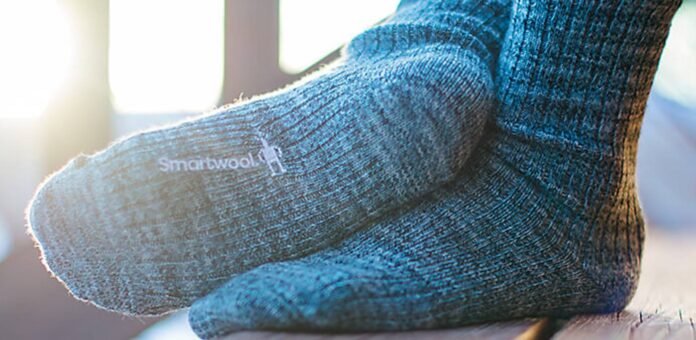
Smartwool designs base layers, baseball caps, leggings—basically every apparel item you could want for an active day out in nature. But what the Colorado brand is really known for is its socks. Super cozy, super quality, Merino wool socks.

As of Earth Day on April 22, Smartwool will be recycling your old socks—no matter what the brand.

Socks are the most thrown-away clothing items there is. After all, who would want them? To help close the recycling gap and provide a home for those past-their-best socks, Smartwool has come up with a plan.

Until May 2, just look for the collection bins at these retailers in 42 states to drop your socks into. If you want to mail them to the company, you’ll need buy something from the website first. Then you can opt for a free mailer bag at check-out.

MORE: Mountains of Garbage in Russia are Being Turned into Fashionable Accessories

What will happen to all those socks that have been saved from landfills? They’ll go into filling dog beds—that will be available for sale around Christmas time—of course.

Why socks?

A recent Smartwool survey found that while over 80% of respondents recycle their used clothing, 91% of respondents are throwing away more than 1 pair of socks per year—contributing to about 11.3 tons of textile waste to landfills annually.

Alicia Chin, senior manager sustainability and social impact at Smartwool said in a statement: “There is obviously an urgent need for a recycling solution in the sock category, which is where we’re focusing our initial efforts.”

Smartwool’s ultimate plan? To begin building systems and experiments that lead the company toward a goal of 100% circularity by 2030.

RELATED: Futuristic ‘Green’ Fabric That Works Like a Smartphone Unveiled by Scientists

“Circularity. What an idea,” says the brand. “To make a product and also build a system to keep it out of the landfill after its first use is no small feat. But it’s the right thing to do.”

(WATCH the video about this initiative below.)

CIRCLE the Good News Round to Others—Share This Story…

Movement Video Game Increased Cognitive Skills in 80-Year-olds With Severe Dementia

Training with Dividat Senso/Dividar

Cognitive motor training helps in the fight against Alzheimer’s and dementia, as demonstrated for the first time in a study by an international team of researchers.

A dementia diagnosis turns the world upside down, not only for the person affected but also for their relatives, as brain function gradually declines. Those affected lose their ability to plan, remember things or behave appropriately.

At the same time, their motor skills also deteriorate. Ultimately, dementia patients are no longer able to handle daily life alone and need comprehensive care. In Switzerland alone, more than 150,000 people share this fate, and each year a further 30,000 new cases are diagnosed.

To date, all attempts to find a drug to cure this disease have failed. Dementia, including Alzheimer’s—the most common of several forms of dementia—remains incurable. However, a clinical study carried out in Belgium has now shown for the first time that cognitive motor training improves both the cognitive and physical skills of significantly impaired dementia patients. A fitness game, known as “Exergame,” developed by the ETH Zurich spin-​off Dividat was used in the study.

Better cognitive ability thanks to training

In 2015, a team of scientists led by ETH Zurich researcher Patrick Eggenberger showed that older people who train both body and mind simultaneously demonstrate better cognitive performance and can thereby also prevent cognitive impairment. However, this study was carried out on healthy subjects only.

“It has been suspected for some time that physical and cognitive training also have a positive effect on dementia,” explains de Bruin, who worked with Eggenberger at the Institute of Human Movement Sciences and Sport at ETH Zurich. “However, in the past it has been difficult to motivate dementia patients to undertake physical activity over extended periods.”

ETH spin-​off combines exercise and fun

With a view to changing this, Eva van het Reve, a former ETH Zurich doctoral student, founded the spin-​off Dividat in 2013 together with her PhD supervisor Eling de Bruin and another doctoral student. “We wanted to devise a customized training programme that would improve the lives of older people,” says van het Reve. Fun exercises were developed in order to encourage people who were already experiencing physical and cognitive impairments to participate in training, and the Senso training platform was born.

RELATED: Nigerian-Irish Teens Develop a Dementia App for Sufferers Coping With Lockdown–and It’s Won Awards

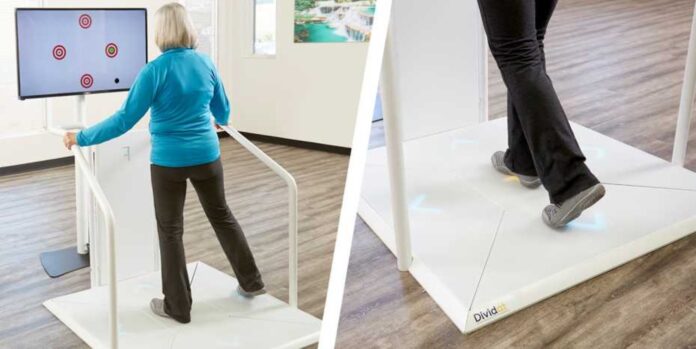
The platform consists of a screen with the game software and a floor panel with four fields that measure steps, weight displacement and balance. The users attempt to complete a sequence of movements with their feet as indicated on the screen, enabling them to train both physical movement and cognitive function simultaneously. The fact that the fitness game is also fun makes it easier to motivate the subjects to practice regularly.

Training with Dividat Senso/Dividar

Eight weeks’ training for dementia patients

An international team recruited 45 subjects for the study. The subjects were residents of two Belgian care homes, aged 85 years on average at the time of the study and all with severe dementia symptoms.

MORE: Even Moderate Socializing With Friends Could Ward Off Dementia in Older People, Study Finds

“The participants were divided into two groups on a random basis,” explains de Bruin. “The first group trained for 15 minutes with the Dividat Senso three times a week for eight weeks, while the second group listened to and watched music videos of their choice.”

Following the eight-​week training programme, the physical, cognitive, and mental capacity of all subjects was measured in comparison with the start of the study.

Regular play has an effect

The results offer hope to dementia patients and their relatives: training with this machine indeed enhanced cognitive skills, such as attention, concentration, memory, and orientation. “For the first time, there’s hope that through targeted play we will be able not only to delay but also weaken the symptoms of dementia,” emphasizes de Bruin.

CHECK OUT: Breakthrough For Spinal Cord Injuries and Dementia as Protein Builds ‘Striking’ Repairs

It is particularly striking that the control group deteriorated further over the eight-​week period, while significant improvements were recorded in the training group. “These highly encouraging results are in line with the expectation that dementia patients are more likely to deteriorate without training,” adds de Bruin.

But playful training not only has a positive impact on cognitive ability. Researchers were also able to measure positive effects on physical capability, such as reaction time. After just eight weeks, the subjects in the training group reacted significantly more quickly, while the control group deteriorated. This is encouraging in that the speed with which older people respond to impulses is critical in determining whether they can to avoid a fall.

A better understanding of brain processes

The research group led by de Bruin is currently working on replicating the results of this pilot study with people with mild cognitive impairment—a precursor of dementia. The aim is to use MRI scans to investigate more closely the neural processes in the brain responsible for the cognitive and physical improvement.

(WATCH the YouTube video about the research below.)

Source: ETH Zurich

SHARE the Hopeful News of This Research With Friends…

Woman Collecting Shellfish Discovers Dinosaur Footprint of ‘Jurassic Giant’

SWNS

A woman collecting shellfish was astonished to discover the largest dinosaur footprint ever found on the Yorkshire coast—likely belonging to a ‘Jurassic giant’ megalosaurus.

29-year-old Marie Woods was foraging for her dinner on Saturday when she stumbled upon an enormous footprint, believed to be around 165 million years old.

SWNS

Experts have now documented the find, and say it’s the most significant discovery in the area since 2006.

Marie, who’s an archaeologist, said: “All I wanted to do was grab some shellfish for my dinner and I ended up stumbling across this. I showed some palaeontologist friends what I had found and none of them had seen it. It’s really exciting.”

MORE: 4-Year-old Girl Finds Dinosaur Footprint on a Beach From 215 Million Years Ago

University of Manchester palaeontologist Dr Dean Lomax believes the print was probably left by a ‘megalosaurus’. Such an animal would have had hips over two meters high and a body length of up to nine meters. “In short,” he said, “This is the largest theropod footprint ever found in Yorkshire, made by a large meat-eating dinosaur.”

SWNS

“We know this because the shape and three-toed track, along with the impression of the claws, are absolutely spot-on for having been made by a large theropod… a real Jurassic giant.”

After Marie contacted local experts, it was found that the fossil had actually been photographed by local Rob Taylor last year. The image had even been posted to Facebook. However, its significance was not recognized until now.

Marie and Rob both have finders’ rights to the footprint, and it’s hoped it will now go on public display at the Rotunda Museum in Scarborough.

RELATED: 2nd Grader Wins $30,000 Scholarship for Her Dinosaur Doodle Inspired by Dreams of Paleontology

It will no doubt make for a wonderful study, and be an amazing sight for the public to enjoy.

ROAR the Exciting Find For All to Hear—Share This Story With Friends…

New York City Begins Electrifying Its Garbage Truck Fleet

Kevin.B, CC license

Operating at the fuel-guzzling range of 0-35 miles per hour, making continuous stops, and weighing many tons, diesel garbage trucks are prime candidates for an electrified makeover.

New York City Department of Sanitation have retrofitted 12 of their garbage trucks with hybrid-electric motors and batteries from a Canadian company called Effenco, whose technology can also be found in the cities of Paris and Los Angeles, in  vehicles such as dumper trucks, port terminal tractors, and more.

Instead of lithium-ion batteries like those found in most EVs and hybrids, Effenco uses ultracapacitors. These propulsion systems operate not only the engines but the onboard equipment such as the garbage compressor.

Their immense electrical delivery reduces their capacity to store energy, meaning the trucks will have shorter range, but ultracapacitors have much longer lifespans than lithium-ion batteries and can discharge millions of times without wearing down.

The hybrid-electric technology actually shows reduced energy consumption by 30% compared to if the vehicles were fully electric and had to sit on the mains all night.

MORE: New Electric Car Batteries Can Fully-Charge in 5 Minutes, Like Filling Your Car With Gas, If Better Chargers Are in Place

Mayor Bill de Blasio signed an executive order that mandated the creation of a fully electric municipal fleet by 2040, and deputy commissioner of the sanitation department, Rocco DiRicco, has already ordered 14 brand-new trucks outfitted with Effenco’s ultracapacitors to join the 12 already retrofitted ones.

There are over 2,000 general collection trucks in the sanitation fleet, and Arsenault feels his technology can help with another few problems the department has.

The noise of the diesel engine makes trucks dangerous creatures to passing motorists, as the driver can’t hear if a car is approaching from behind. Furthermore, the constant stops and starts inherent in the job means that the truck is constantly belching out noxious fumes which are hazardous to pedestrians and to the workers themselves.

RELATED: With EV Battery Prices Dropping 87% in a Decade, Tesla is Now Making a Car That Will Cost $25,000

The company recently raised $10 million CAD in financing for expansion of operations across Europe and North America, which follows on an exceptional fiscal year that saw sales soar in four different countries as more and more governments work towards making their targets for emissions reductions.

Source: Kevin.B, CC license

DRIVE This Positive Friend Over to Your Friends…

“My interest is in the future because I am going to spend the rest of life there.” – Charles F. Kettering

Credit: Luke Porter

Quote of the Day: “My interest is in the future because I am going to spend the rest of life there.” – Charles F. Kettering

Photo by: Luke Porter

With a new inspirational quote every day, atop the perfect photo—collected and archived on our Quote of the Day page—why not bookmark GNN.org for a daily uplift?


Deaf Sheepdog Returns to Herding Her Flock After Learning ‘Sign Language’

RSPCA
RSPCA

Whoever said, “You can’t teach an old dog new tricks” has obviously never met a 10-year-old Norfolk collie named Peggy.

A working dog, Peggy was unable to continue the job she excelled at—herding sheep—when at age 8 she lost her hearing.

No longer able to communicate with her, Peggy’s owner subsequently relinquished her to the care of a local RSPCA animal shelter.

But as it was near Christmas, the shelter was at capacity. That’s when animal welfare manager Chloe Shorten stepped in. Shorten and her husband, Jason, who had two other working sheepdogs, decided to take Peggy home.

While Peggy had lost her hearing, it was obvious her enthusiasm for sheepherding hadn’t waned.

The Shortens could see Peggy wasn’t happy woolgathering, so they came up with another solution for her.

“We knew Peggy wanted to be working, so we started the long process of teaching her how to herd and work with a shepherd without relying on voice commands,” Chloe Shorten told the BBC. “We started by teaching her to look at us for hand signals.”

RSPCA

Using repetition and “positive reinforcement,” with the help of a sheepdog trainer, Peggy eventually learned to respond to hand signals and body language rather than traditional verbal commands.

MORE: Six Puppies Are All Determined to Fit Into One Small Bucket – And They Succeed (WATCH)

But Chloe says the most important lesson Peggy learned had nothing to do with sheep. It had to do with trust: “[It took time to] learn that we love her, and understand our praise.”

These days, while Peggy is semi-retired, with her GPS tracker in place, she still heads out with the flock from time to time, happy in the knowledge that a “thumbs up” means she’s a good girl.

RSPCA

Suffice to say, the Shortens couldn’t be more pleased with Peggy’s new leash… er, lease on life.

RELATED: This Teen Makes Tiny Bow Ties for Shelter Dogs to Help Them Look Spiffy and Get Adopted

We think it’s pretty “pawsome” ourselves.

PUT Your Paws Up For the Good News—Share This Story…

North Carolina-based writer Judy Cole has a new rom-com murder mystery debuting at Amazon: And Jilly Came Tumbling After (from Red Sky Presents).

Colorado Proposes Giving Free Therapy to Young People Struggling in Pandemic

Colorado is working hard to ensure mental health support is there for young people struggling in the pandemic.

Bill 21-1258 was introduced to the House last week—and would provide people under 19 with free therapy sessions if needed.

With kids facing increased isolation and instability because of COVID-19, a program to help youth get through this difficult time is necessary—says the bipartisan bill, noting that the Colorado crisis service hotline has experienced a 30% increase in calls and texts since last spring.

According to The Colorado Sun, the bill “represents one of the most aggressive behavioral health initiatives in Colorado history” and is on a “fast-track to passage.”

MORE: Yale is Offering Its Popular Happiness Course to Some High School Students for Free — Including College Credit

This matters. Before the pandemic, Colorado ranked in the bottom 10 half of states for prevalence of mental illness and access to care.

“If we can get that [mental health support] to every kid in Colorado?” state Rep. Dafna Michaelson Jenet told The Colorado Sun, it will be a “game-changer.” Of that we have no doubt.

SHARE This Hopeful Bill From Colorado With Friends…