Philadelphia Phillies service dog Tugger –Courtesy: Team Foster / Warrior Canine Connection @Phillies
The Philadelphia Phillies just expanded their roster—adding a four-legged friend that’s arguably the cutest teammate in franchise history.
Last week, the baseball team formally announced their sponsorship of Tugger, a 10-week old pup that will soon begin his training to become an accredited service dog destined to support a disabled veteran.
The yellow Labrador’s name is a nod to Phillies legend and fan favorite Tug McGraw, who served in the Marine Corps before becoming a major-league relief pitcher and a 1980 World Series Champion with the Phillies.
He was also the father of country music superstar Tim McGraw, who cheered Tugger’s entrance to the majors in a team press release, saying, “Ya gotta believe young Tugger’s going to be a hero.”
“My father loved the Phillies and took immense pride in his service with the U.S. Marine Corps. The thought that this little pup will one day contribute to enhancing the quality of life for a veteran is truly remarkable. I am certain my father would have felt deeply honored to have Tugger named in his memory.”
Two nonprofit organizations will help prepare the retriever over the next two years. The Warrior Canine Connection, will train the service dog and Team Foster, a Philadelphia-based charity that has helped connect over 500 veterans with service dogs, will find Tugger’s next owner.
Philadelphia Phillies service dog Tugger –Courtesy: Team Foster / Warrior Canine Connection @Phillies
Tugger is the second service pup sponsored by the Phillies. The first one, Major, was just recently placed in a fur-ever home, bringing some much-needed assistance to a local veteran.
Earlier this week, the pup was introduced to hometown fans at Philadelphia’s ballpark. Not surprisingly, he quickly won over the entire crowd, even while sleeping for an inning in a player’s arms.
Eventually, Tugger’s training will ‘round third’ and be headed toward home with a veteran in need—a guaranteed home run by the Phillies, delivered by the newest—and cutest— member of the team… (See more Good News Sports stories here.)
SHARE THIS PAWESOME PUP With Dog-Lovers on Social Media..
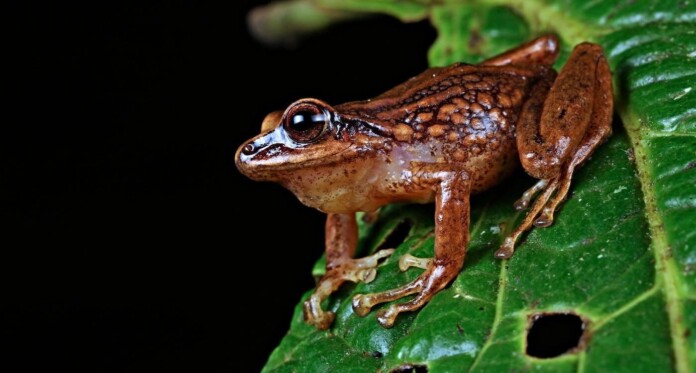
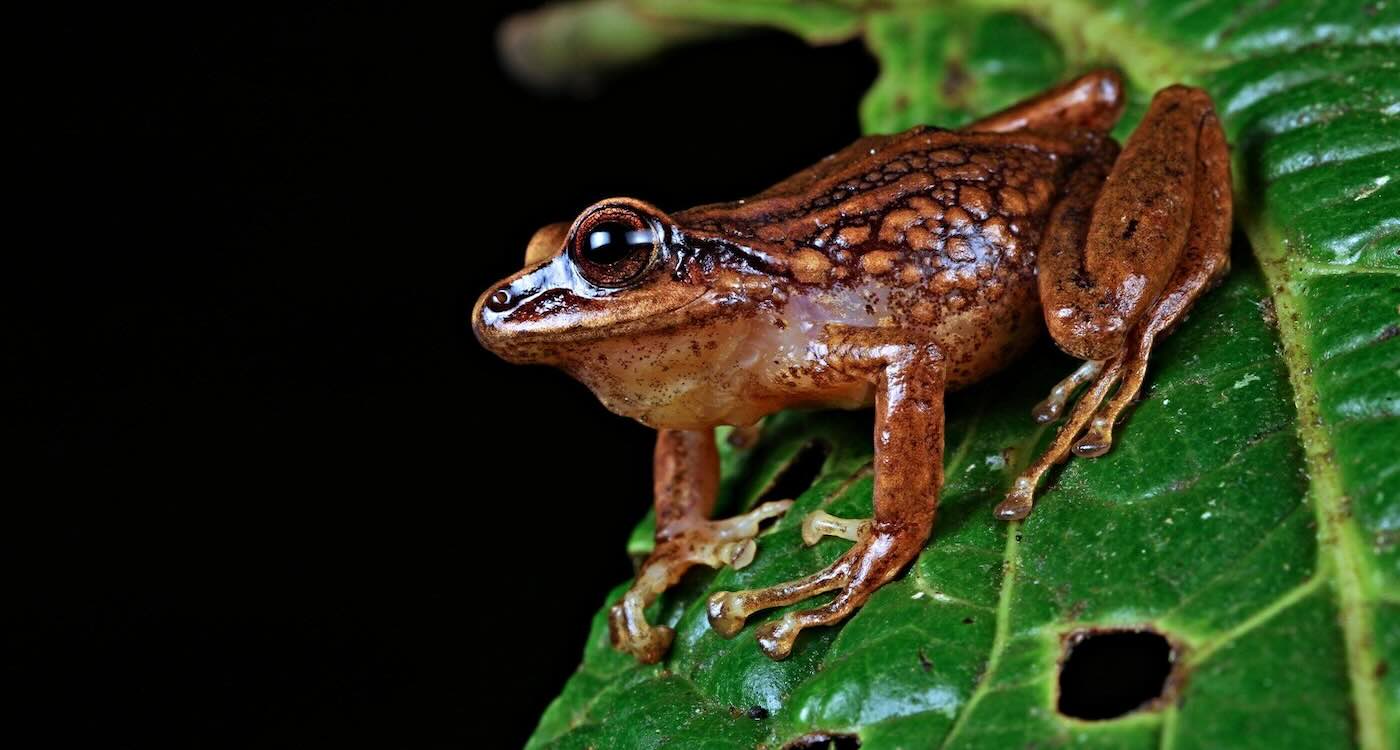
New frog species Pristimantis chinguelas found in Peru – Ivan Wong / SWNS
New frog species Pristimantis chinguelas found in Peru – Ivan Wong / SWNS
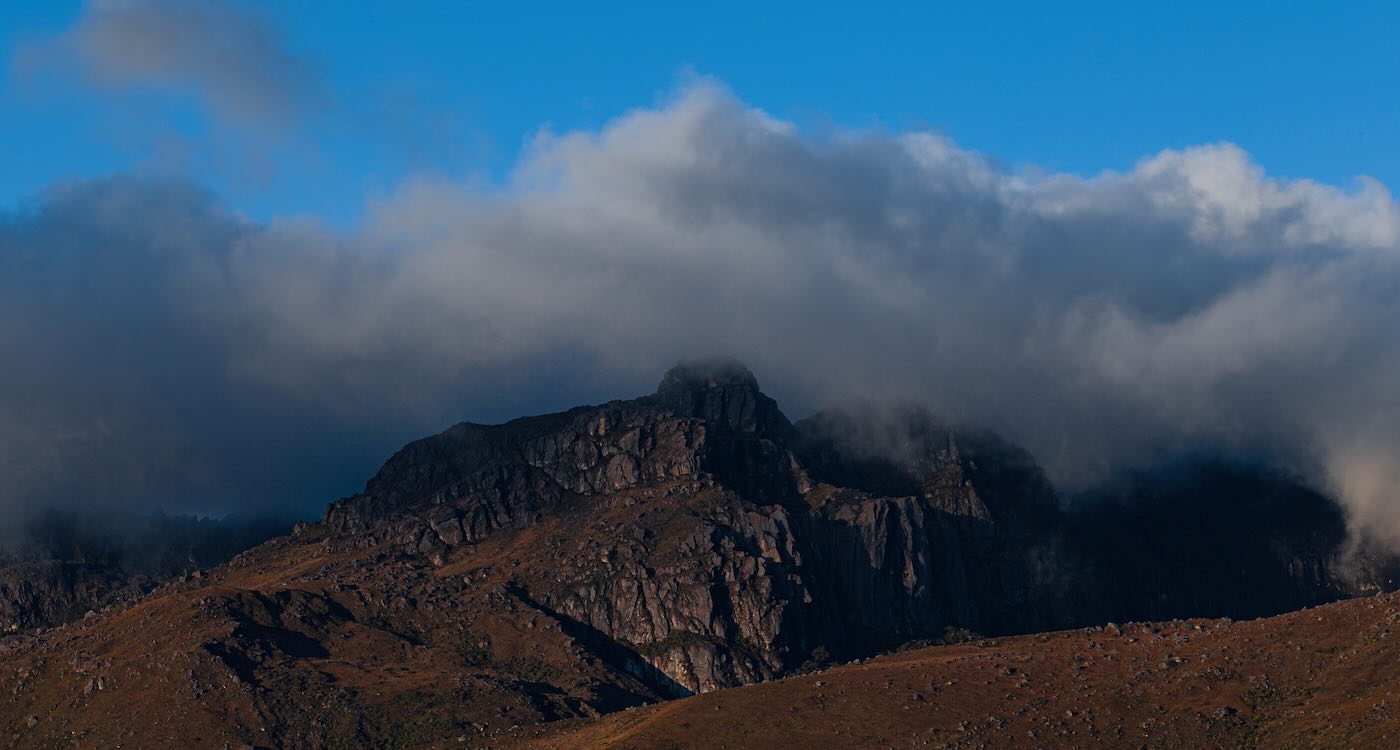
Three new types of frogs were discovered during off-road scientific expeditions in the remote cloud-shrouded peaks of the Andes.
The secretive amphibians were found between 2021 and 2024 in the Cordillera de Huancabamba mountains of northern Peru—in forests and mountain trails with no road access.
The species were recently confirmed and named, and each one tells a different story, according to the team’s findings published in the journal Evolutionary Systematics.
“They’re small and unassuming, but these frogs are powerful reminders of how much we still don’t know about the Andes,” said Peruvian herpetologist Germán Chávez, who led the research.
Pristimantis chinguelas, discovered on a cliffside, has a body dotted with prominent large tubercles on both sides.
Its high-pitched “peep” can be heard on humid nights, reported the researchers.
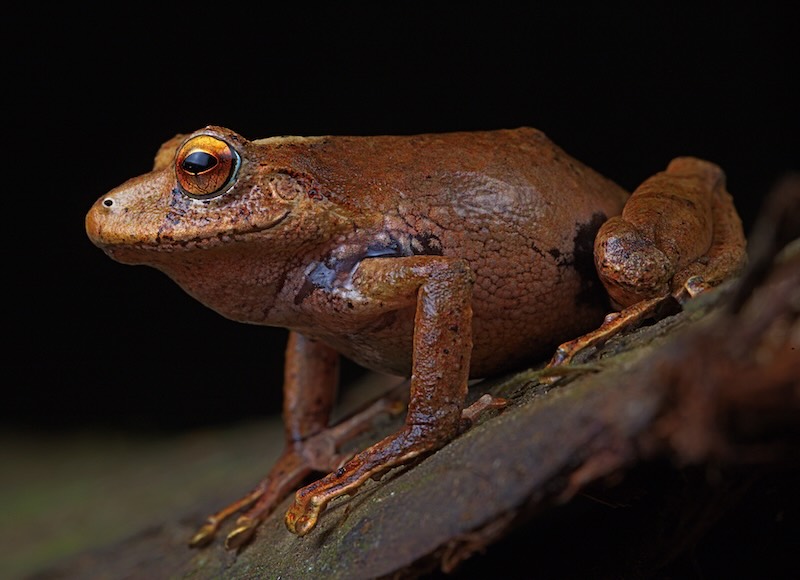
P. nunezcortezi lives near a cool mountain stream in a regenerating forest.
New frog species in Peru – Pristimantis nunezcortezi (via SWNS)
With large black blotches on axillae and groins, it was named in honor of ornithologist Elio Nuñez-Cortez, a conservation trailblazer in the region.
P. yonke, the smallest of the three, was found nestled in bromeliads at a chilly altitude of nearly 3,000 meters (9,800 feet).
Its name was a nod to ‘yonque,’ a sugarcane spirit consumed by locals to brave the highland cold.
The Cordillera de Huancabamba mountains in the Andes of northern Peru-SWNS science study
Study co-author Karen Victoriano-Cigüeñas said, “Exploring this area is more than fieldwork – it’s an immersion into wilderness, culture, and resilience.”
“Many of these mountain ridges are isolated, with no roads and extreme terrain,” said co-author Ivan Wong.
“The weather shifts within minutes, and the steep cliffs make every step a challenge.
“It’s no wonder so few scientists have worked here before—but that’s exactly why there’s still so much to find.”
The number of individuals in the species is unknown, but co-author Wilmar Aznaran points out that the Cordillera de Huancabamba is not just a remote range.
“It’s a living archive of biodiversity and cultural legacy. And we’ve barely scratched the surface.”
JUMP FOR JOY By Sharing The Good News With Frog Lovers on Social Media…
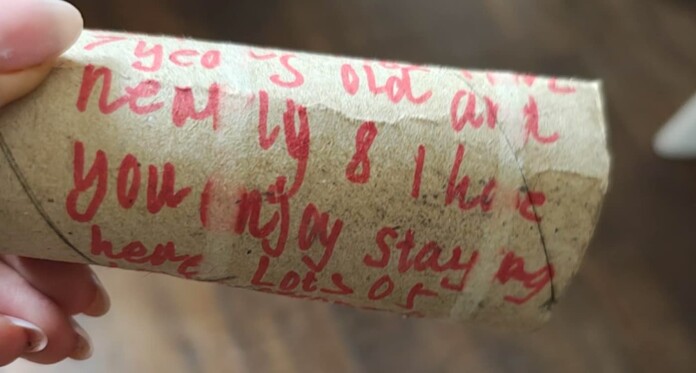
Message on 35-year-old toilet paper roll –Charlotte England-Black / SWNS
Message on 35-year-old toilet paper roll –Charlotte England-Black / SWNS
A couple renovating their new home discovered hidden inside their loft a heartwarming message written by a little girl 35 years ago—on the side of an empty toilet paper roll.
Charlotte England-Black found the touching note, which was concealed in the attic of their property in Nottingham, England, in 1989 when the little girl was moving out.
The 30-year-old moved into the house with her husband five months ago, but only found the hidden time capsule last Friday.
The note was penned by Emma—who was seven years old at the time—as a secret message for the home’s future owners.
Written in red marker, it reads: “I hope you enjoy staying here. Lots of love, from a friend.’
It began, “My name is Emma Waddingham. My birthday is February the 4th. I was born in 1982. I’m seven years old and nearly eight.
Charlotte immediately wondered where Emma was now—so she reached out on a Facebook community page in a bid to track her down. Amazingly, she was found within the hour.
“It’d been up there years,” Charlotte told SWNS news agency. “It was discovered along with an old sink, a vintage cap and some used overalls.
“It was really cute. She’d obviously written it hoping someone would find it one day. It really is quite touching.
Message on toilet paper roll left by girl 35 years ago –Charlotte England-Black / SWNS
“We posted it on a community page on Facebook. Within ten minutes someone had tagged her in it and others had commented saying they’d remembered her from the street, which was great.
“I thought, I bet she could easily be found and it’d be nice for her. It’s just a connection with the past.”
Today, Emma’s last name is Smith, and she still lives in Nottingham. Now 43-years-old, Emma doesn’t remember penning the note, but says she had fond memories of living there.
“I don’t remember doing it and why I chose the toilet roll,” she said. “We’ll forever be wondering.
“It was a lovely place to spend those years. I had amazing wallpaper in my bedroom of Tom and Jerry.”
In the future, when Charlotte moves out, she plans to leave the cardboard tube in the attic for the next homeowners, so they can also discover the time capsule.
Quote of the Day: “To activate your mind to manifest anything you must first stop identifying with your past.” – Neville Goddard
Photo by: Jason Blackeye
With a new inspirational quote every day, atop the perfect photo—collected and archived on our Quote of the Day page—why not bookmark GNN.org for a daily uplift?
106 years ago today, the R34 airship made the first transatlantic crossing going from west to east, arriving in Norfolk, UK on July 13th after 75 hours of flying time. Built for World War I but failing to see any action until after it had ended at Versailles, R34, and her sister dirigible R33, served as semi-reliable passenger aircraft. READ the wonky, makeshift lifespan of R34… (1919)
Englishman John Massey in his garden in Kingswinford, West Midlands – SWNS
Englishman John Massey in his garden in Kingswinford, West Midlands – SWNS
A self-taught gardener has spent 27 years transforming the land outside his bungalow into a spectacular four-season oasis considered one of the finest private gardens in Britain.
Stunning pictures show John Massey’s backyard bursting with glorious summer color, 36 miles west of Birmingham, England.
The 76-year-old has spent almost three decades devoted to his labor of love, planting 20,000 flowers, trees, and shrubs across his ten-acre property.
Despite no formal education, he became a four-time gold medalist at the iconic Chelsea Flower Show.
Not only that, he’s opened up the garden to the public for the last 22 years to raise money for charity—and has recently reached the incredible milestone of half a million pounds ($675,000).
Since it began as a patch of grass in 1998, the garden in Kingswinford, West Midlands, has evolved to feature UK plantings alongside rarer and more exotic species from Japan, South Africa, and Turkey.
John Massey’s backyard decades ago – SWNS
“The garden hasn’t really been planned, it’s just evolved over 27 years,” said the retired green-thumb. “I started by the house and just moved out—and just kept going and going. I absolutely love it all.
“We’re all plant nutters and it’s a full-time job looking after it. I usually get up at 7am and take the dogs out and I go around the garden until the last walk at night to check for snails and slugs—usually 10pm until 11pm.”
Nestled against the backdrop of the scenic Staffordshire and Worcestershire canal, John’s gardens have become so vast it now requires four people to help him maintain it.
SWNS
Each corner is brimming with vibrant flowers and an abundance of greenery, with a range of conifers and shrubs surrounded by ornate pots.
His inspiration came from the late Princess Greta Sturdza, a Norwegian who established one of France’s finest gardens—Le Vasterival, in Normandy. He told SWNS news agency that they became friends.
“She invited me over and had, in my mind, the greatest garden that I’ve ever seen. She taught me how to garden. Her big thing was transparency pruning, you prune every tree, shrub and conifer so it was its own sculpture in its own right.”
John Massey patio garden with tropical plants – SWNS
John, who was previously awarded the Royal Horticultural Society’s highest honor ‘the Victoria Medal of Honour’, inherited his love of gardening from his grandfather who owned a plant nursery next door. John was asked to take control of it when he was just 18.
He stepped away from day-to-day duties at Ashwood Nurseries in 2000 to focus on his own garden. Since then, John and his team have won over 50 gold medals at royal flower shows.
“We work on three layers. The big trees we raise the canopies and lift the branches; we lift the canopy of the shrubs so that we can work under that.
“Some beds are replanted twice a year. If we want to keep people coming back we need change.”
John Massey’s succulent garden – vertical shot – SWNS
Summer in the garden is dominated by blue, pink and white hydrangeas, while Autumn has the grass bed and the asters which look their best in September and October. Winter sees various cornus and spindle trees, with Spring bursting full of hellebores, bulbs, and different narcissus, anemones, and viburnums—all ensuring that the garden is always well-stocked and blooming.
“There are certain plants we don’t grow as we’re in a real frost pocket,” he explained in an interview with SWNS news. ‘We try and grow plants that are hardy in this area.
“We’ve got a wonderful selection of conifers, both dwarf and large varieties. Witch hazels are often considered to be most abundant, with over 40 different varieties.
“I do love the whole garden—I love it all. It is constantly changing, with something majoring on different groups of plants right the way through the season.
“We had the Danish horticulture society here the other day and they said each corner there’s something different to look at.”
The site is open to the public between February and December every Saturday, for an admission price of £8 a ticket.
“I’ve been in horticulture for 57 years and I’m still learning, it’s one of those subjects where the more you learn, the more you realize you don’t know.
“A friend of mine described horticulture as the slowest form of art as it takes 20 years to reach its maturity.
“I wouldn’t like to think how much I’ve spent on it. It’s a passion, but it would be frightening to know. The main thing is we’ve raised a lot of money for good causes in the process.”
FERTILIZE YOUR FRIENDS’ FEEDS – By Sharing on Social Media…
Chihuahua helps rescue owner on Swiss glacier – Released by Air Zermatt
Chihuahua helps rescue owner on Swiss glacier – Released by Air Zermatt
Like a miniature St. Bernard, a Chihuahua is being called a “four-legged hero” after helping to save his owner who had fallen down an icy crevasse in the Swiss Alps.
The Air Zermatt helicopter company credited the long-haired pup with leading them to the location of the man who was hiking the Fee Glacier in Valais.
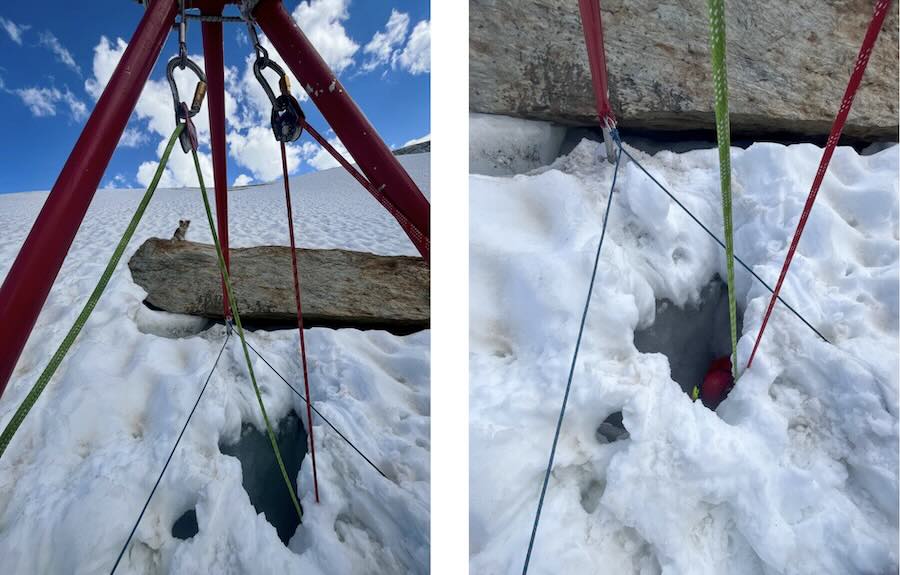
The company said the fall happened in early afternoon when he suddenly broke through a snow bridge and plunged 26 feet into the crevasse.
“While the man was stuck in the glacier ice, his faithful companion, a small Chihuahua, was left at the edge of the crevasse.
Luckily, the accident victim was carrying an amateur walkie-talkie with which he was able to call for help—but the person who received the call was unable to learn the exact location of the accident.
Searching for the collapse-site proved difficult for the 3-person helicopter crew because the glacier surface was wide and the hole barely visible.
Then, one of the rescue specialists spotted a small movement on a rock: the Chihuahua. And right next to it was the collapsed hole.
Lifesaving rig rescues hiker – Credit: Air Zermatt media release
The rescuers then abseiled down to the casualty and were able to pull him out and fly the pair to a hospital in Visp.
“The little dog did not move during the entire operation and closely followed every movement of the rescue,” said Air Zermatt in a media release.
“It is fair to say that his behavior contributed significantly to the successful rescue.
“The dog is a four-legged hero who may have saved his master’s life in a life-threatening situation.
Malala Yousafzai in 2024 (by Adam Chitayat) and Billie Jean King in 2019 (Selfie by Sam Rapoport @Samrap10)
– Both under CC BY-SA 4.0 / Wikimedia
Consider it the latest use of girl power.
International activist Malala Yousafzai recently announced a new venture called Recess that will deploy a partnership with tennis legend Billie Jean King to promote women’s sports across the world, including some planned investment in basketball’s WNBA and the NWSL (National Women’s Soccer League).
Yousafzai, who survived a gunshot wound from the Taliban at 15 and won the Nobel Peace Prize just a few years later, is a huge sports fan who recognizes the power of athletics to pull people together.
“We are capable of dialogue, we are capable of coming together, and sports—in history and in the current times—have proven to be that powerful way of bringing communities together,” she said in an article on CNN.
Following her previous work in promoting equal educational opportunities across the world, Recess will strive to expand athletic opportunities to empower girls, and invest in women’s sports.
Malala Yousafzai in 2024 (by Adam Chitayat) and Billie Jean King in 2019 (Selfie by Sam Rapoport @Samrap10) – Both under CC BY-SA 4.0 / Wikimedia
Yousafzai will work alongside her husband, Asser Malik, who has experience in Pakistan’s cricket scene, and Billie Jean King, who will serve as an advisor. Some of the early targets for investment include the WNBA and the NWSL, which could provide enough growth potential to sustain the venture far into the future.
Women’s basketball has experienced a surge of popularity in recent years. According to the NCAA, the women’s basketball tournament drew 351,777 fans in attendance (the third highest total in its history), with the 2025 Championship Game peaking at 9.9 million television viewers on ABC.
Meanwhile, soccer’s NWSL averaged almost a million viewers of its 2024 championship game, an 18% increase over the previous year. Attendance has also jumped by more than 40%, exceeding more than 2 million total fans last season.
Sporting starts at home
Those leagues, however, aren’t the only targets for Yousafzai’s Recess initiative. She is thinking much broader, with her own experiences always present in her mind.
Yousafzai remembers growing up in Pakistan and having to stay behind with the other girls while the boys at school headed off to the cricket fields during recess.
She is hoping to change those experiences for future generations, granting better access to playing fields and athletic opportunities for girls all over the world.
“It’s empowering girls,” Yousafzai told CNN about her goals for Recess. “It’s sending a powerful message to women, to all of us, that the sky’s the limit, and women’s sports will thrive.
“We will have more equal opportunities for women and girls, and we can imagine a world where girls are empowered.”
SHARE THIS GOOD NEWS With Your Gal Pals in Sports…
FREE WILL ASTROLOGY – Week of July 12, 2025
Copyright by Rob Brezsny, FreeWillAstrology.com
CANCER (June 21-July 22):
In Yoruba cosmology, ase is the sacred life force that animates the universe. It’s divine energy that can be harnessed by humans to make things happen, to speak and act with ardent intention so that words and deeds shape reality. I am pleased to report that you Cancerians are extra aligned with ase these days. Your words are not casual. Your actions are not mild or minor. You have the power to speak what you mean so robustly that it has an enhanced possibility to come into being. What you command with love and clarity will carry enduring potency.
LEO (July 23-Aug. 22):
In medieval bestiaries, unicorns were said to be fierce, wild creatures. They were very real but also hidden. Only people with pure hearts could see or commune with them. I suspect you now have the chance to glide into a potent “pure heart” phase, Leo. My fervent hope is that you will take this opportunity to cleanse yourself of irrelevancies and rededicate yourself to your deepest yearnings and most authentic self-expressions. If you do, you just may encounter the equivalent of a unicorn.
VIRGO (Aug. 23-Sept. 22):
Some Buddhist monks create mandalas on floors from colored sand. They work meticulously for days or weeks to build intricate, symmetrical masterpieces. Once their beautiful work is done, however, it typically doesn’t last long. The creators sweep it away either immediately or soon. The sand may be disposed of, perhaps poured into a river or stream. What’s the purpose of this strange practice? Most importantly, it displays a reverence for the impermanence of all things—an appreciation for beauty but not an attachment to it. I recommend you consider taking a cue from the sand mandalas in the coming weeks. Is there anything you love that you should let go of? A creation you can allow to transform into a new shape? An act of sacred relinquishing?
LIBRA (Sept. 23-Oct. 22):
Glassblowers shape molten sand with breath and fire, knowing the material can only be formed while it’s hot and glowing. If they wait too long, the stuff stiffens, turns brittle, and resists change. But if they push too soon, it collapses into a misshapen blob. In this spirit, Libra, I urge you to recognize which parts of your life are now just the right temperature to be reshaped. Your timing must be impeccable. Where and when will you direct the flame of your willpower? Don’t wait until the opportunity cools. Art and magic will happen with just the right amount of heat applied at just the right moment.
SCORPIO (Oct. 23-Nov. 21):
“I have often been racked by obsessive urges that plague me until I act them out.” So says my Scorpio friend Fatima, a conceptual artist. “Fortunately,” she continues, “I have finally retrained myself to focus on creative obsessions that fuel my art rather than on anxious, trivial obsessions that disorder my life. I’d be an offensive maniac if I couldn’t use my work as an outlet for my vehement fantasy life.” I recommend Fatima’s strategy to Scorpios most of the time, but especially so in the coming days. Your imagination is even more cornucopian than usual. To harness its beautiful but unruly power, you must channel it into noble goals.
SAGITTARIUS (Nov. 22-Dec. 21):
The Igbo people of Nigeria have a term: ogwugwu na-adị n’ulo. It means “the medicine is in the house.” It’s the belief that healing doesn’t necessarily come from afar. It may already be here, hidden among the familiar, waiting to be acknowledged or discovered. Dear Sagittarius, your natural instinct is to look outward and afar for answers and help. But in the coming weeks, you should look close to home. What unnoticed or underestimated thing might be a cure or inspiration you’ve been overlooking? How can you find new uses for what you already have?
CAPRICORN (Dec. 22-Jan. 19):
I invite you to celebrate the holiday known as Be Your Own Best Helper. How should you observe this potentially pivotal transformation in your relationship with yourself? Divest yourself of yearnings to have someone clean up after you and service your baseline necessities. Renounce any wishes you harbor for some special person to telepathically guess and attend to your every need. Vow that from now on, you will be an expert at taking excellent care of yourself. Do you dare to imagine what it might feel like to be your own best helper?
AQUARIUS (Jan. 20-Feb. 18):
In the ancient practice of astronomy, the stars were considered “incorruptible.” Unlike the planets, their movements were unchanging, their lights stationary, their destinies steady and stable. We human beings are the opposite of all those descriptors, of course. There’s no use in hoping otherwise, because constancy just isn’t an option for us. The good news, Aquarius, is that you are now poised to thrive on these truths. The inevitability of change can and should be a treasured gift for you. You’re being offered chances to revise plans that do indeed need to be revised. You are being invited to let go of roles that don’t serve you. But what initially feels like a loss or sacrifice may actually be permission. Evolution is a tremendous privilege!
PISCES (Feb. 19-March 20):
The axolotl is an amphibian that never outgrows its larval form. Unlike most creatures, it retains its youthful traits into adulthood. Amazingly, it can regenerate it limbs, its spinal cord, and parts of its brain. Let’s make the axolotl your inspirational animal, Pisces. What part of your “youth” is worth keeping—not as immaturity, but as righteous design? Where are you being asked not to evolve past a stage, but to deepen within it? And what might be regenerated in you that seemed to have been lost? Your magic will come from being like an axolotl. Be strange. Be playful. Be ageless and original and irrepressible.
ARIES (March 21-April 19):
In the days before lighthouses, some coastal communities used “fire beacons”—elevated structures where people tended open flames to guide sailors. In the coming weeks, Aries, I invite you to be like both the keeper and the flame. People will be drawn to your brightness, warmth, and persistence as they navigate through their haze and fog. And surprise! You may find your own way more clearly as you tend to others’ wayfinding. Don’t underestimate the value of your steady, luminous signal. For some travelers, your presence could be the difference between drifting and docking. So burn with purpose, please. Keep your gleam strong and visible.
TAURUS (April 20-May 20):
The ancestors of my American friend Arisa lived in Ukraine, Indonesia, the Choctaw nation, and the Great Lakes region. Her new husband Anselme is of Japanese, Italian, and French descent. Their wedding was a celebration of multi-cultural influences. Guests delivered toasts in five languages. Their marriage vows borrowed texts from three religious traditions. The music included a gamelan ensemble, a band that played Ukrainian folk music, and a DJ spinning Choctaw and Navajo prayers set to Indian ragas. I bring this to your attention in the hope you will seek comparable cross-fertilization in the coming weeks. It’s an excellent time to weave richly diverse textures into your life.
GEMINI (May 21-June 20):
I predict a future when women will hold half of the leadership roles, and their income will match men’s. Until the bloom of that wonderful era, I invite Geminis of all genders to invoke your tender ingenuity as you strengthen female opportunities and power. In my view, this work is always crucial to your maximum spiritual and psychological health—but even more so than usual in the coming weeks. Boost the feminine in every way you can imagine.
WANT MORE? Listen to Rob’s EXPANDED AUDIO HOROSCOPES, 4-5 minute meditations on the current state of your destiny — or subscribe to his unique daily text message service at: RealAstrology.com
With a new inspirational quote every day, atop the perfect photo—collected and archived on our Quote of the Day page—why not bookmark GNN.org for a daily uplift?
The Montreal Biosphere - credit Eberhard von Nellenburg - CC 3.0. BY-SA
130 years ago, the architect, visionary, and writer Buckminster Fuller was born. Fuller developed numerous inventions, mainly architectural designs, and popularized the widely known geodesic dome structural shape, which he most famously used to design the Montreal Biosphere. Soaking with honors, awards, and appointments, Fuller published 30 books in his life, invented numerous words, and held 28 US patents. READ some details about the great inventor and watch a video… (1895)
Lights were out in the mountain village of Siyathi, northern India, but one resident clearly wasn’t interested in going to sleep.
Well past midnight on June 26th, Rocky the dog sat on the ground floor of a home in Himachal Pradesh state barking and howling loudly.
June being Monsoon season in India, rain was teeming down, but Rocky’s owner Lalit Kumar could hear the dog through his sleep and the weather.
“I was woken by my dog’s strange barking, as if he was trying to warn me,” Lalit said. “When I reached him, I saw a huge crack in the wall and water pouring in.”
An awful thing to find so late at night, but when Lalit went downstairs to wake the rest of his family, that’s when he saw it: a wall of onrushing water and earth coming down the mountain towards the town.
Grabbing the dog and his family, he ran along the streets waking neighbors until 22 families had assembled and fled to high ground. Moments later, the landslide arrived and wrecked 12 out of 17 homes in the village in a wave of mud and debris.
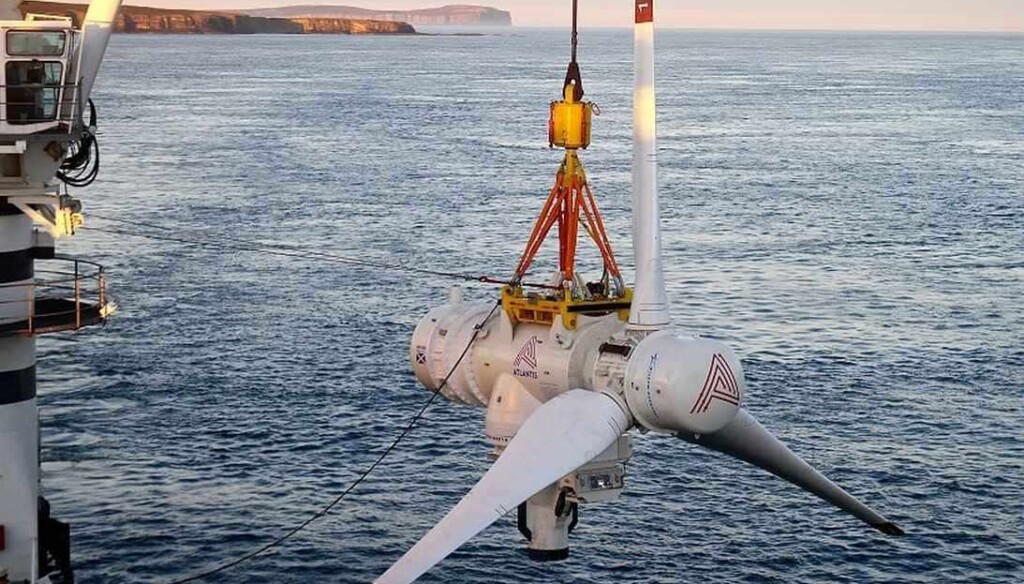
An AR1500 Tidal Turbine deployed at the MayGen site in Scotland - credit SIMEC Atlantis
An AR1500 Tidal Turbine deployed at the MayGen site in Scotland – credit SAE Renewables
Wind turbines altered to function underwater have set industry records after generating non-stop power for over 6 years without maintenance.
Located in the Pentland Firth off the coast of Scotland, the MayGen marine energy project is one of the largest of its kind in the world, and its continued operation in a harsh environment is encouraging investors to bet on tidal energy.
Considered the largest untapped renewable energy market in the world, “marine energy,” that is, energy that harnesses the power of the tides, waves, or currents, has a key advantage over other renewable sources in that the resource being harvested is constant and guaranteed.
However, also like other renewable sources, it has disadvantages, and so far that has been a lack of investment over durability concerns. The sea is a harsh mistress, and her force is a harrowing thing to endure for man or machine.
That’s why the 6 megawatt-hour MayGen project, owned by BAE Renewables and built in concert with Swedish firm SKF, is winning plaudits. Their turbines have lasted a long time without ever having to be removed for repairs.
Rémi Gruet, CEO of a trade association Ocean Energy Europe called it a “very significant milestone” that bodes well for the future of tidal energy and the 7,000 homes which MayGen powers annually.
Many tidal energy projects that GNN has reported on have been quite small. These include generators deployed autonomously in the ocean like this very small seaweed-inspired device to the Minesto “Sea Dragons“—large, undersea, kite-shaped objects that could generate 1.2 megawatts from undersea currents.
Landbound stations seem more promising. In 2022, GNN reported that Turkey was to be the stage for Swedish firm Eco Wave Power’s prototype tidal power plant that uses the tides to power large, pier-mounted hydraulic pistons. A full-size operation would generate 77 megawatts—a mammoth amount of renewable energy for a single facility of any kind, anywhere.
Even this would pale in comparison to Mersey Tidal Power: a public-private partnership to build a tidal power station that harnesses the 30-foot-tall tide in the Bay of Liverpool to power practically the entire city.
GNN reported on the Mersey Tidal project in 2024, when precious little had been released about it.
A large dam would be a barrier between the Irish Sea and a tidal basin. Underneath the dam would be large turbines and sluice gates which would open as the tide comes in, pulling water onto the turbines to generate energy.
The gates would close as the 10-meter-high tide finishes, and as the gravity of the moon begins to pull on the water four hours later, the gates would open, causing it to rush past the turbines a second time, generating more clean energy.
The city estimates this would be enough to power 1 million homes.
If one or more of these methods can match MayGen’s track record then these projects will suddenly seem far more attractive to an investor who is expecting to see functional ROIs for the next 30 years.
Back in Scotland, Maygen plans to add another 20 submarine turbines by 2030. The Pentland Firth site could hold around 130 such turbines, which in addition could be larger and more powerful than the currently-utilized set.
The future of marine energy, it may finally be safe to say, is waxing.
SHARE This Great Project’s Monumental Achievement On Social Media…
The team in action on their 30,000 year old canoe - credit University of Tokyo
The team in action on their 30,000 year old canoe – credit University of Tokyo
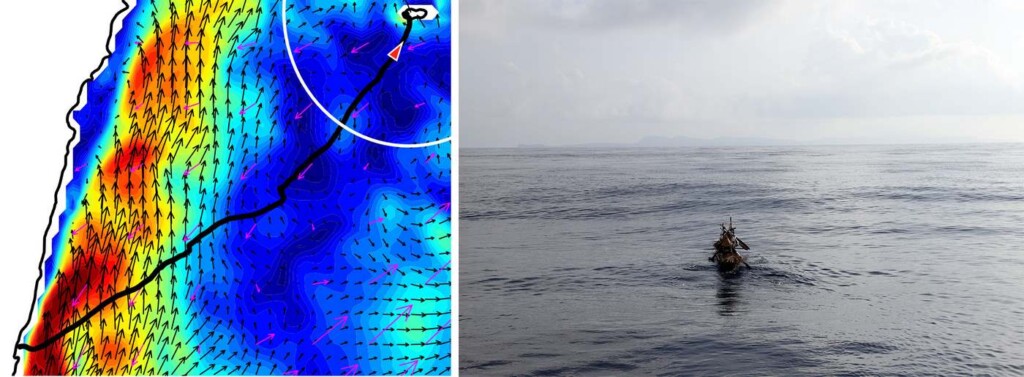
A team of scientists who could only be described as ‘intrepid’ sailed several hundred miles across the East China Sea in an ancient replica canoe.
The peopling of the Pacific islands has long been one of the great mysteries of anthropology, and the Japanese researchers wanted to do their own small part in unraveling it by answering a question: how did Paleolithic people get from Taiwan to Japan’s southernmost island of Yonaguni.
A map of the team’s canoe voyage from Taiwan to the Japanese island of Yonaguni credit – University of Tokyo
While the distance of 140 miles isn’t mighty when compared to some of the voyages the Polynesians are known to have made, it crosses an area plied by one of the strongest currents in the world called the Kuroshio.
In two new papers, researchers from Japan and Taiwan led by Professor Yousuke Kaifu from the University of Tokyo simulated methods ancient peoples would have needed to accomplish this journey, and they used period-accurate tools to create the canoes to make the journey themselves.
Of the two newly published papers, one used numerical simulations. The simulation showed that a boat made using tools of the time, and the right know-how, could have navigated the Kuroshio. The other paper detailed the construction and testing of a real boat which the team successfully used to paddle between islands.
“We initiated this project with simple questions: How did Paleolithic people arrive at such remote islands as Okinawa? How difficult was their journey? And what tools and strategies did they use?” said Kaifu in a press release from the University of Tokyo.
“Archaeological evidence such as remains and artifacts can’t paint a full picture as the nature of the sea is that it washes such things away. So, we turned to the idea of experimental archaeology, in a similar vein to the Kon-Tiki expedition of 1947 by Norwegian explorer Thor Heyerdahl.”
The Kon-Tiki expedition was a fantastic exercise in getting out of the library, as Indiana Jones said. Seeking to confirm his theory that prehistoric humans may have sailed across the Pacific, Heyerdahl recruited an international team of sailors, craftsmen, explorers, and scientists, and built a raft of primitive materials called Kon-Tiki, which they used to sail from South America to the Tuamotus, across more than 3,000 miles of open ocean.
In 2019, the Taiwanese-Japanese team constructed a 23-foot-long dugout canoe called Sugime, built from a single Japanese cedar trunk, using replicas of 30,000-year-old stone tools. They paddled it 140 miles from eastern Taiwan to Yonaguni Island in the Ryukyu group, which includes Okinawa, navigating only by the sun, stars, swells and their instincts.
They paddled for over 45 hours across the open sea, mostly without any visibility of the island they were targeting. Several years later, the team is still unpicking some of the data they created during the experiment, and using what they find to inform or test models about various aspects of sea crossings in that region so long ago.
A single Japanese ceder tree was used to make the canoe – credit University of Tokyo
Kaifu monologued about the team’s findings and revelations, a full 6 years after their expedition.
“A dugout canoe was our last candidate among the possible Paleolithic seagoing crafts for the region. We first hypothesized that Paleolithic people used rafts, but after a series of experiments, we learned that these rafts are too slow to cross the Kuroshio and are not durable enough.”
“We now know that these canoes are fast and durable enough to make the crossing, but that’s only half the story. Those male and female pioneers must have all been experienced paddlers with effective strategies and a strong will to explore the unknown.”
“Like us today, they had to undertake strategic challenges to advance. For example, the ancient Polynesian people had no maps, but they could travel almost the entire Pacific. There are a variety of signs on the ocean to know the right direction, such as visible land masses, heavenly bodies, swells, and winds. We learned parts of such techniques ourselves along the way.”
GPS tracking and modeling of ocean currents toward the end of the experimental voyage – credit, Kaifu et al. CC ND-BY
One interesting note was that the team felt any return journey would have been much more difficult, if not altogether impossible, in part because the Kurushio current is varied, and facing it in reverse would have been even tougher.
According to the teams’ data, on a vessel launched off the eastern coast of Taiwan as theirs’ was, the Kuroshio runs hard northward along the coastline. Throughout their paddling, they had to compensate for a headwind, and the current seeking to pull them back north.
Their GPS trail shows that they missed several zones of deep water where the Kuroshio changes and begins to tug eastward, as well as an area where the current forms something like an ocean gyrate that could have sent them in multiple directions.
They navigated the hazardous current brilliantly, but to do so in reverse would have been extremely difficult. They would have been moving against the current in all periods, and from the start it would be trying to pull them out to open ocean.
“Scientists try to reconstruct the processes of past human migrations, but it is often difficult to examine how challenging they really were. One important message from the whole project was that our Paleolithic ancestors were real challengers.”
SHARE This Inspiring Science At Work With Your Friends On Social Media…
While traveling on an Alaska railroad, familiar noises assailed Portia Duke’s ear: the squeaking, stressed brakes, the whistle sounding off, and the doors opening and closing.
But having stopped in Willow on the way from Denali to Whittier, a totally unexpected tune perked the passenger up—a cat, mewling outside the window.
Looking down, Duke saw there was a miniscule kitten scrambling around the rocks between the tracks, seemingly too small to climb over the concrete and onto the platform.
She tried to get off the train to help the animal, but realized if she did she would miss the train.
As the soundtrack of the train resumed, it drowned out the lost kitten’s cries, but not the voice in Duke’s heart telling her she simply must return to look for it.
Speaking with KTUU/Gray News, Duke said she dreamed about the kitten all night and returned the next day, just as she promised, with her boyfriend in tow to look for it.
“‘We have to go and either find her or we don’t,'” Duke said in an interview, explaining her reasoning. “Then we can tell ourselves that maybe her mom came back, but at least we’ll have an answer.”
“There was really just no thought in our heads that she would actually still be there. But there she was, still meowing.”
The kitten was taken to the veterinarian, who said she was one-month old and dehydrated, but otherwise healthy.
Duke reckons that 5 trains would have passed over those tracks in the time she was trapped within, a harrowing image.
Though the couple haven’t decided whether to keep her or not, they named her Willow after the station, and added that some of the train staff offered to help find a home for her.
WATCH the story below from KTUU…
MEOW About This Responsible Commuter’s Rescue Of Willow At Willow…
Quote of the Day: “When you die, if you’ve got five real friends, then you’ve had a great life.” – Lee Iacocca
Photo by: Helena Lopes
With a new inspirational quote every day, atop the perfect photo—collected and archived on our Quote of the Day page—why not bookmark GNN.org for a daily uplift?
50 years ago today Fleetwood Mac released their ‘White Album’, a hugely successful LP featuring a new couple who had just joined the band—the singer-songwriting duo Lindsey Buckingham (on guitar) and Stevie Nicks. The album reached No.1 on the Billboard chart and spent 37 weeks within the top 10, thanks to its three hit singles, Over My Head, Rhiannon, and Say That You Love Me. The cover image features two of the band’s co-founders Mick Fleetwood and John (Mac) McVie. READ more about this classic rock staple… (1975)
Rowhouses on the 1100 block of N. Fulton Avenue in Sandtown-Winchester, Baltimore - credit Balitmore Heritage, via Flickr, CC 2.0. Eli Pousson
Rowhouses on the 1100 block of N. Fulton Avenue in Sandtown-Winchester, Baltimore – credit Balitmore Heritage, via Flickr, CC 2.0. Eli Pousson
The beleaguered city of Baltimore, once a posterchild for crime infested American cities, has seen substantial year on year reductions in homicides, with the current 2025 rate on track for a historic low.
Through June, Baltimore has had 68 recorded homicides, which is the fewest in 50 years, said city mayor Brandon Scott.
Through June of last year by contrast, 88 had been recorded, making this year not only a drop in the short term, but a drop in the long term when looking at statistics from 2023, or even a decade before.
“Our continued progress is the direct result of the comprehensive, evidence-based public safety strategy that we have implemented in partnership with residents,” said Mayor Scott, via a press release.
There’s also been a 20% reduction in non-fatal shootings, suggesting the numbers are more than anomalies or data-driven mirages that might occur when, for example, citizens begin to change their behavior in response to crime.
“But our work is far from over. 68 lives lost to violence is 68 too many. While we acknowledge the historic lows we are experiencing, we must simultaneously acknowledge that there is much more work to do and our success makes me commit even further to doing it.”
In 2022, when a sustained downtrend in population bottomed out around 570,000, the homicide rate was 57.9 per 100,000 people, amounting to 330 by year’s end.
The most recent census reports a city-wide population of about the same as in 2022, meaning if the homicide rate continues at current trajectory, 2025 would end with 24.2 homicides per 100,000 inhabitants.
The last year lower than that was 1977, but 2025 would still mark a safer Baltimore than the decade before ’77 as well.
SHARE This Sustained Progress Towards A Safer Baltimore With Your Friends…
As green as the Chardonnay grapes they grow, a winery along the base of California’s coastal Santa Lucia Mountains run entirely on wind power.
The mountains’ unique geography keeps the area windy, which powers not only a large private wind turbine, but a delayed and elongated growing season that complicates and matures the flavor in the grapes to award-winning levels.
Owned by Scheid Family Wines, Isabelle’s is one of several that benefit from this mixture of perfect soil, cooling fog, warm sun, and constant wind—as well as the Scheid family’s focus on sustainability.
Hi-tech sensors distribute water to each individual vine as needed, and not a drop more. Insulating jackets on the wine-processing equipment reduces energy consumption for temperature regulation. Large skylights and adaptive facility lighting mean that the winery’s interior is maximally lit by natural light.
Dozens of owl boxes welcome natural rodent control teams to populate the vineyards. Even the glass bottles are specifically made thinner in certain spots to reduce the energy consumption during thermal glass recycling.
Yet the crown jewel in all this focus of sustainability is the 400-foot-tall wind turbine that generates all—yes, all—of the electricity for the winemaking operations. The abundance of wind is such that the winery actually only uses half of the electricity it generates. The rest is fed back into the grid.
“Sustainability has been one of our core values since our family founded this business in 1972,” Heidi Scheid, executive vice president of Scheid Family Wines, and the second-generation owner, told CBS News in the Bay Area. “The winds are very dependable. They can sometimes blow 24 hours a day.”
The windy vineyards span 2,500 acres, and bear 36 different grape varietals, which it turns into several award-winning wines, sold as dozens of private labels in grocery stores across 10 global brands—all totaling 900,000 cases a year.
Yet not one of which generates an ounce of carbon emissions.
“Scheid is believed to be the largest winery in the world that’s powered by renewable energy,” said Ms. Scheid.
We’ll drink to that.
WATCH the story below from CBS News…
SHARE A TOAST Of Good News With Your Friends On Social Media…
Quote of the Day: “You are not the product of your past. You are the product of your assumptions.” – Neville Goddard
Photo by: Olia Nayda
With a new inspirational quote every day, atop the perfect photo—collected and archived on our Quote of the Day page—why not bookmark GNN.org for a daily uplift?