











All News - Page 51 of 1689 - Good News Network
Home Blog Page 51

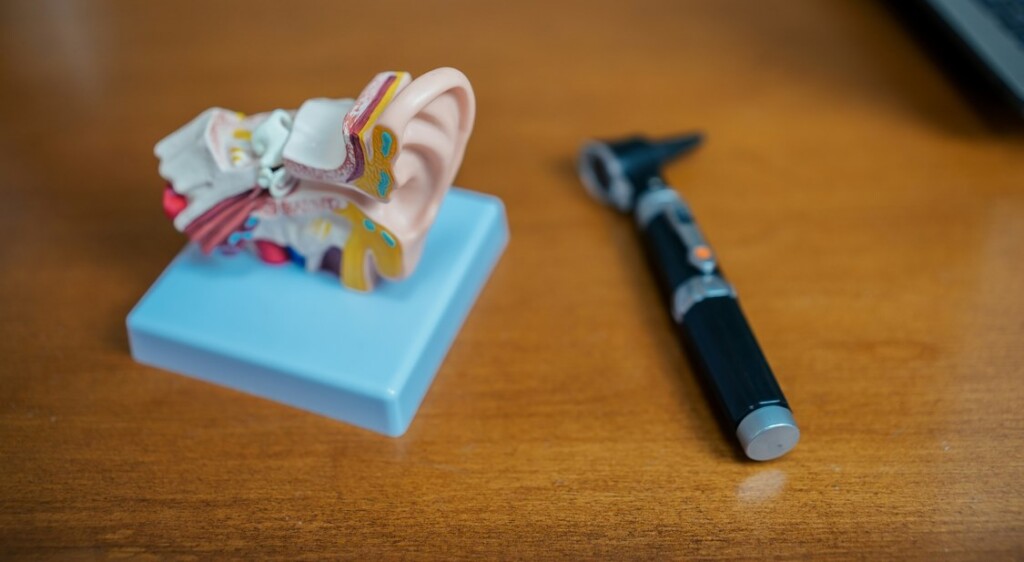
10 out of 10 Patients with Congenital Deafness Have Hearing Restored in Children’s Gene Therapy Trial

Yunus Tug for Unsplash+

A trial investigating the potential for a gene therapy to correct congenital deafness in children and young adults saw all 10 participants gain auditory ability, and allowed them to hear the sound of falling rain or their mother’s voice for the first time ever.

The younger patients, especially those between the ages of five and eight, responded best to the treatment. One of the participants, a seven-year-old girl, quickly recovered almost all her hearing and was able to hold daily conversations with her mother four months afterwards.

Roughly 200,000 people worldwide are deaf due to a mutation in a gene called OTOF, which was the target of the therapy. These mutations cause a deficiency of the protein otoferlin, which plays a critical part in transmitting auditory signals from the ear to the brain.

The gene therapy involved using a synthetic adeno-associated virus to deliver a functional version of the OTOF gene to the inner ear via a single injection through a membrane at the base of the cochlea called the round window.

Hearing improved in all 10 patients, aged between 1 and 24, and the treatment was well-tolerated. The study was conducted in collaboration with hospitals and universities in China and is published in the journal Nature Medicine.

“This is a huge step forward in the genetic treatment of deafness, one that can be life-changing for children and adults,” says Maoli Duan, consultant and docent at the Department of Clinical Science, Intervention and Technology, Karolinska Institutet, Sweden, and one of the study’s corresponding authors.

The effect of the gene therapy was rapid and the majority of the patients recovered some hearing after just one month. A six-month follow-up showed considerable hearing improvement in all participants, the average volume of perceptible sound improving from 106 decibels to 52.

“Smaller studies in China have previously shown positive results in children, but this is the first time that the method has been tested in teenagers and adults, too,” says Dr. Duan. “Hearing was greatly improved in many of the participants, which can have a profound effect on their life quality. We will now be following these patients to see how lasting the effect is.”

MORE SUCCESSFUL GENE THERAPIES: 100 Times Improvement in Sight Seen After Gene Therapy Trial for Disease That Deteriorates Vision in Childhood

One 7-year-old girl who received a traditional cochlear implant in one ear and the gene therapy in another, went from being functionally deaf to having near-perfect hearing.

Speaking with Gizmodo, Dr. Duan recounts a day when the girl departed his office with her mother after a storm had rolled over the city during their appointment. Walking outside, the girl heard the sound of falling rain for the first time.

MORE TRIALS LIKE THIS: Deaf Children Are First Humans to Have Hearing Pathway Restored in Dramatic Demonstration of New Gene Therapy

The next part of the trial will be a 5-10 year follow-up to see how long the OTOF gene therapy lasts.

“OTOF is just the beginning,” Dr. Duan said in a statement. “We and other researchers are expanding our work to other, more common genes that cause deafness, such as GJB2 and TMC1. These are more complicated to treat, but animal studies have so far returned promising results. We are confident that patients with different kinds of genetic deafness will one day be able to receive treatment.”

SHARE This Fantastic News For Deaf Youth With Your Friends… 

Astronomers Spot Interstellar Visitor: a Comet Blazing Through Our Solar System, Just the Third Ever Seen

A screengrab of a GIF showing the object 3I/ATLAS passing across a field of stars - credit, ATLAS University of Hawaii NASA
A screengrab of a GIF showing the object 3I/ATLAS passing across a field of stars – credit, ATLAS University of Hawaii NASA

Astronomers have confirmed for just the third time ever that the solar system has been visited by an interstellar comet.

Dubbed 3I/ATLAS, it is blazing through our cosmic cul-de-sac at truly awe-inspiring speeds between the main asteroid belt and Jupiter, and will soon be gone forever.

Only twice before have astronomers seen interstellar objects in our solar system, the first being the “cigar-shaped” (or pancake-shaped) Oumuamua in 2017, and the second was a comet called Borisov in 2019.

3I was discovered on July 1st by the ATLAS Project (Asteroid Terrestrial-impact Last Alert System), a coordination effort between four NASA-funded telescopes in Chile, Hawaii, and South Africa which automatically scan the whole sky several times every night looking for moving objects.

It’s one of the flagship programs of the yet-young Planetary Defense Coordination Office at NASA which aims at equipping humanity with the tools it needs to defend our home from potentially cataclysmic asteroid impacts.

3I is over 150 million miles away, and on an almost entirely straight trajectory out of our solar system. In other words, the interstellar visitor comes in peace.

“If you trace its orbit backward, it seems to be coming from the center of the galaxy, more or less,” Paul Chodas, director of NASA’s Center for Near-Earth Object Studies, told the New York Times. “It definitely came from another solar system. We don’t know which one.”

It’s moving at 137,000 miles per hour, which would allow it to travel from the Earth to Mars in just over 58 days rather than the 2 years that most NASA spacecraft need.

3I seems to be surrounded by a cloud of ejected dust and gas typical of icy comets, which makes it hard to estimate the object’s size. A rough estimate, reports Smithsonian Magazine, puts it about 12 miles across.

CHECK OUT THESE COMETS: Two Meteor Showers Will Peak on the Same Night in July and Be Visible in the Southern US

The appearance of an interstellar comet is a timely reminder of the value which the Vera C. Rubin Observatory, a brand-new, state-of-the-art, earthbound telescope, will bring to watching our solar system.

The Vera Rubin, which recently debuted its amazing imaging capabilities, will be conducting a mammoth undertaking known as the Legacy Survey of Space and Time, which will see it image the entire night sky from its perch over 8,000 feet atop Cerro Pachón every three to four nights for the next 10 years.

EXPANDING OUR SIGHT: James Webb Telescope Debuts New Trick: Blocking Out Stars and Photographing Their Planets

This will create a colossal dataset of the current positions of galaxies and stars, and will allow researchers to detect minute changes in locales as close as our own solar system, or our nearest galactic neighbors. Any detected changes—a new transient object, a fast radio burst, a new supernova, and an astronomer could be alerted, and new research be conducted in as real time as can be garnered in the discipline that studies in light years.

Professor Catherine Heymans, Astronomer Royal for Scotland, described to the BBC that this transience is going to be a “transformative” resource for the field.

The fact that 3I/ATLAS is just the third interstellar object ever identified may not be related to the rarity of such an event but merely the limited ability humanity has had to detect them until now, given the ridiculous speeds they travel at.

SEND This Story Our Into Your Friends’ Social Media Orbits…

Good News in History, July 10

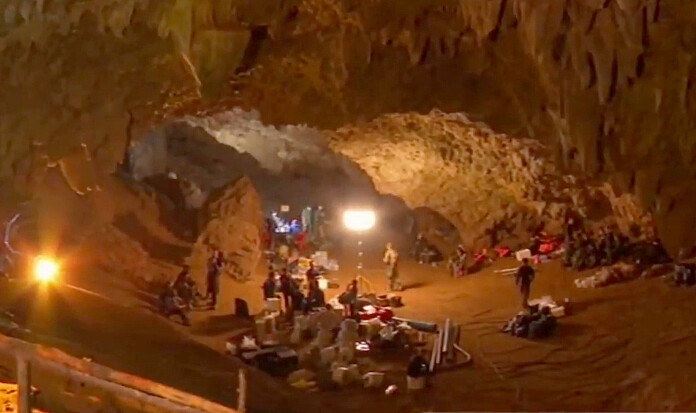
Rescue teams at the entrance to Tham Luang Cave.

7 years ago today, a group of teenage association football players and their teacher were successfully rescued after being stuck for over two weeks in Tham Luang Cave, Thailand. Entering the cave after a practice session, heavy rains later trapped the team inside. Efforts to locate the group were hampered by rising water levels and strong currents, and the team was out of contact with the outside world for more than a week, during which their plight grew into a worldwide media frenzy. READ how they were saved… (2018)

Years After She Saved a Magpie it Returns the Favor Saving Her Life After She Fell from Window

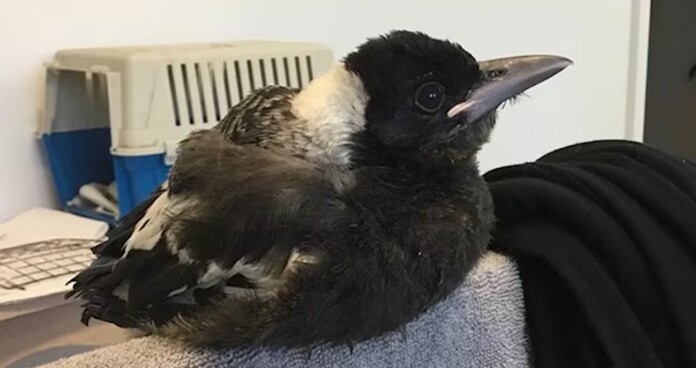
Jellybean the magpie – Courtesy of Sandie Gillard

When Sandie Gillard fell from a two-story window, the impact knocked the senior citizen unconscious, a state that may have become permanent if not for the intervention of a very small, very unlikely hero.

Lightly tapping on her head, a bird named Jellybean roused its former caregiver enough that she could call her husband, who arrived in time to telephone emergency services and save her life.

The story makes it clear why the English culture honors magpies.

The fall happened in 2020 in the town of Esperance, in Western Australia’s remote southeastern corner where Gillard, then 68 years old, had cared for sick, wounded, or abandoned animals all her life.

3 years before her accident, a miniscule magpie was brought to her home by someone who found it on the ground unable to fly after it had fallen out of a tree.

Already possessing a rich experience in nursing birds back to health, Gillard took in the nestling and named her Jellybean. For months, she grew up alongside Gillard and her family, a single flock of nest mates.

“She played with my grandson,” Gillard told ABC News AU, explaining that the magpie remained in the neighborhood after learning to fly and find food for herself. “She would sit on the verandah or whatever and knock on the door until I would come out and say hello.”

Gillard said she has no memory of the 2020 fall. Landing on a cement driveway, she cracked her skull and dislocated her right arm violently.

“I woke up to this little sound of purring… and something tapping me on the forehead,” Gillard said.

NOT A MAGPIE, BUT A CROW: Rescued Crow Is Boy’s Best Friend, Waiting for Him to Get Home from School Every Day: ‘We’re his flock’

Having been saved from a fall by Sandie Gillard, it was time for Jellybean to return the favor.

Paramedics arrived and brought her to a heliport where she was flown to the hospital and stabilized. The doctors later told her that if she had lain in that state much longer, she wouldn’t be here today.

MORE BIRD-BRAINED STORIES: These Cockatoos Learned to Operate Drinking Fountains with Their Feet to Quench Their Thirst – (WATCH)

With the limits on her recovery and the dangers of falling fresh in her mind, Gillard recently made the decision to move from Esperance to a town hundreds of miles away so she could be nearer to her family.

Though it was the most difficult decision she’s ever had to make, she rests easy knowing that Jellybean, and many other birds besides, are all on the wing because of her.

It’s something she will never forget—nor, we can imagine, will they.

SHARE This Touching Story Of Two Ladies Saving The Other From A Fall… 

By Turning Themselves to Stone, These Remarkable Fig Trees Sequester CO2 Far Longer Than Normal

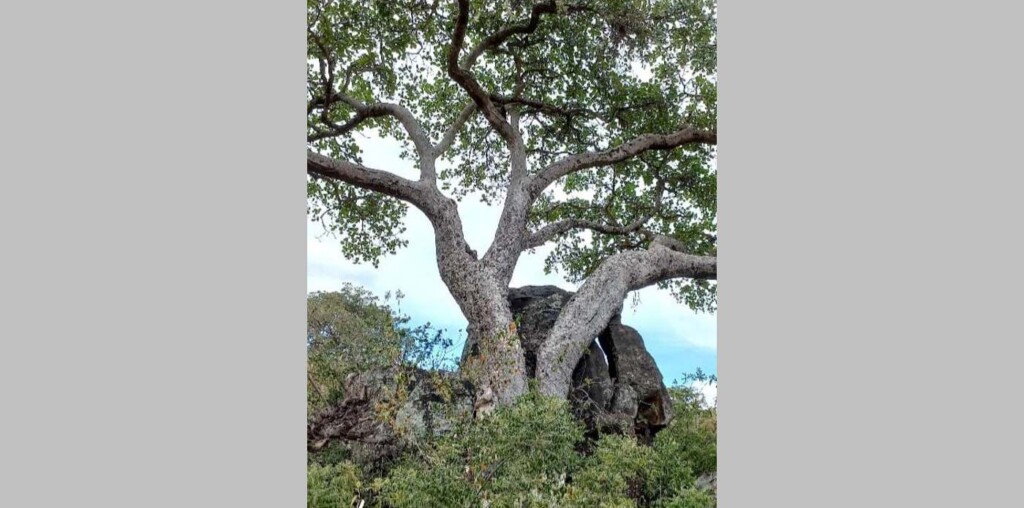
A Ficus wakefieldii, - credit Mike Rowley CC license
A Ficus wakefieldii, – credit Mike Rowley CC license

Some species of fig trees store calcium carbonate in their trunks—essentially turning themselves (partially) into stone.

This ‘auto-petrification’ may offer a strange new way to reduce human carbon emissions, as the mineral created by the trees has a much longer lifespan than organic carbon absorbed and deposited in its root system.

An international team of scientists found that three species of Ficus that grow in Kenya were able to draw carbon dioxide (CO2) from the atmosphere and store it as calcium carbonate ‘rocks’ in the surrounding soil.

The figs are one of the first fruiting trees shown to have this ability, known as the oxalate carbonate pathway. One species in particular, Ficus wakefieldii, was especially prolific.

All trees use photosynthesis to turn CO2 into organic carbon, which forms their trunk, branches, roots and leaves, but certain trees also use CO2 to create calcium oxalate crystals.

When parts of the tree decay, these calcium oxalate crystals are converted by specialized bacteria or fungi into calcium carbonate—the same mineral as limestone or chalk. This increases the soil pH around the tree, while also increasing the availability of certain nutrients.

The inorganic carbon in calcium carbonate typically has a much longer lifetime in the soil than organic carbon, making it a more effective method of CO2 sequestration.

“We’ve known about the oxalate carbonate pathway for some time, but its potential for sequestering carbon hasn’t been fully considered. If we’re planting trees for agroforestry and their ability to store CO2 as organic carbon while producing food, we could choose trees that provide an additional benefit by sequestering inorganic carbon also, in the form of calcium carbonate,” said Dr. Mike Rowley, a senior lecturer at the University of Zurich (UZH) who presented his study on the subject at the Goldschmidt Conference in Prague.

Rowley and his team identified how far from the tree the calcium carbonate was being formed and identified the microbial communities involved in the process.

“As the calcium carbonate is formed, the soil around the tree becomes more alkaline,” Dr. Rowley said. “The calcium carbonate is formed both on the surface of the tree and within the wood structures, likely as microorganisms decompose crystals on the surface and also, penetrate deeper into the tree. It shows that inorganic carbon is being sequestered more deeply within the wood than we previously realized.”

They are now planning to assess F. wakefieldii’s suitability for agroforestry by quantifying its water requirements and fruit yields and by doing a more detailed analysis of how much CO2 can be sequestered under different conditions.

TREES AND THEIR SUPER POWERS: Ash Trees in Britain Are Evolving a Resistance to Fungal Disease That was Devastating Woodlands

Most of the research into the oxalate-carbonate pathway has been in tropical habitats and focused on trees that do not produce food. The first tree to be identified as having an active oxalate-carbonate pathway was the Iroko (Milicia excelsa). It can sequester one ton of calcium carbonate in the soil over its lifetime.

Calcium oxalate is one of the most abundant biominerals and the crystals are produced by many plants. The microorganisms that convert calcium oxalate to calcium carbonate are also widespread.

AMAZING ARBOREALS: Man Cultivates a Giant Mango Tree with Each Branch Growing a Different Variety of Fruit–and There Are 300

“It’s easier to identify calcium carbonate in drier environments,” explained Dr. Rowley.

“However, even in wetter environments, the carbon can still be sequestered. So far, numerous species of tree have been identified which can form calcium carbonate. But we believe there are many more. This means that the oxalate-carbonate pathway could be a significant, underexplored opportunity to help mitigate CO2 emissions as we plant trees for forestry or fruit.”

SHARE This Tree That Turns Itself To Stone With Your Eco-Conscious Friends…

Flint Finishes Replacing 11,000 Lead Pipes, Concluding Activists’ Decade-Long Effort to Secure Clean Water

Water pipes from Flint Michigan - credit Capital News Service, via Flickr, CC 2.0.
Water pipes from Flint Michigan – credit Capital News Service, via Flickr, CC 2.0.

If there were one place in America where you’d decline a glass of tap water it would be Flint, right? Wrong.

A decade after lead-contaminated water was found in the Michigan city’s water system, the legal battle to replace lead water pipes is nearly finished.

Homes serviced by lead water lines which have not been replaced are either vacant, abandoned, or owned by citizens who opted-out of the free change to copper lines mandated in a 2017 court settlement.

The Flint water crisis began in 2014, after lead-contaminated drinking water was found to be leaching out from aging pipes into homes citywide.

The American Civil Liberties Union and the Natural Resources Defense Council, with help from other activists and nonprofits, have released statements on the recent progress, celebrating the milestone.

Among the causes of the crises, the statements mention “cost-cutting measures and improper water treatment,” and that the state “didn’t require treatment to prevent corrosion,” after “a state-appointed emergency manager” switched the water supply to the Flint River.

There is no safe level of lead exposure; each nanogram causes harm. In addition to long-known risks, such as damage to children’s brains and certain cancers, there is also significant evidence that exposure to lead is linked to numerous cardiovascular diseases, including stroke and heart attack.

The coalition mobilized the citizenry and filed a lawsuit against Flint and Michigan state officials to secure safe water. The result was a settlement in March 2017, under which a federal court in Detroit ordered Flint to give every resident the opportunity to have their lead pipe replaced at no cost, as well as conduct comprehensive tap water testing, implement a faucet filter distribution and education program, and maintain funding for health programs to help residents deal with the effects of Flint’s tainted water, according to the NRDC.

The coalition then returned to court six times in six years to ensure the city and state kept to the timeline, which was delayed by COVID-19, and other reasons which The Detroit News described as “spotty record-keeping” and “ineffective management.”

MORE CLEAN WATER NEWS: New Tool to Mitigate Algae Blooms Shows Breakthrough Results in Utah, Scientists Say

On July 1st, the State of Michigan submitted a progress report to a federal court confirming that, more than eight years after the settlement, nearly 11,000 lead pipes were replaced and more than 28,000 properties were restored where the maintenance had taken place.

Of the 4,200 buildings where lead pipes are known to still be in service, their owners have either left the properties vacant, abandoned, or have declined the free replacement under the Safe Water Drinking Act. The coalition has said it will continue to monitor city and state progress on these remaining lines.

ALSO CHECK OUT: From Sewage-Filled Waters to Crystal Blue: Switzerland Rivers and Lakes Offer Hope for Cleaning Up Other Countries

“Thanks to the persistence of the people of Flint and our partners, we are finally at the end of the lead pipe replacement project,” said Pastor Allen C. Overton of the Concerned Pastors for Social Action, one of the organizations that sued the city. “While this milestone is not all the justice our community deserves, it is a huge achievement.”

SHARE This Long Legal Battle Finally Concluded For The People Of Flint… 

Lost for 300 Years, Pirate-Plundered Treasure Ship Discovered off Madagascar Coast

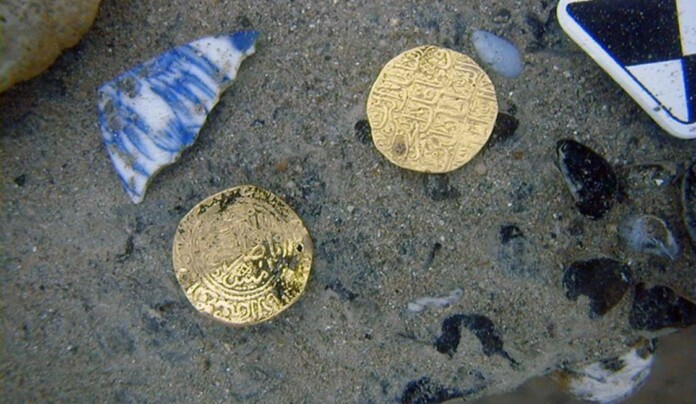
credit - Center for Historic Shipwreck Preservation © supplied to GNN
credit – Center for Historic Shipwreck Preservation © supplied to GNN

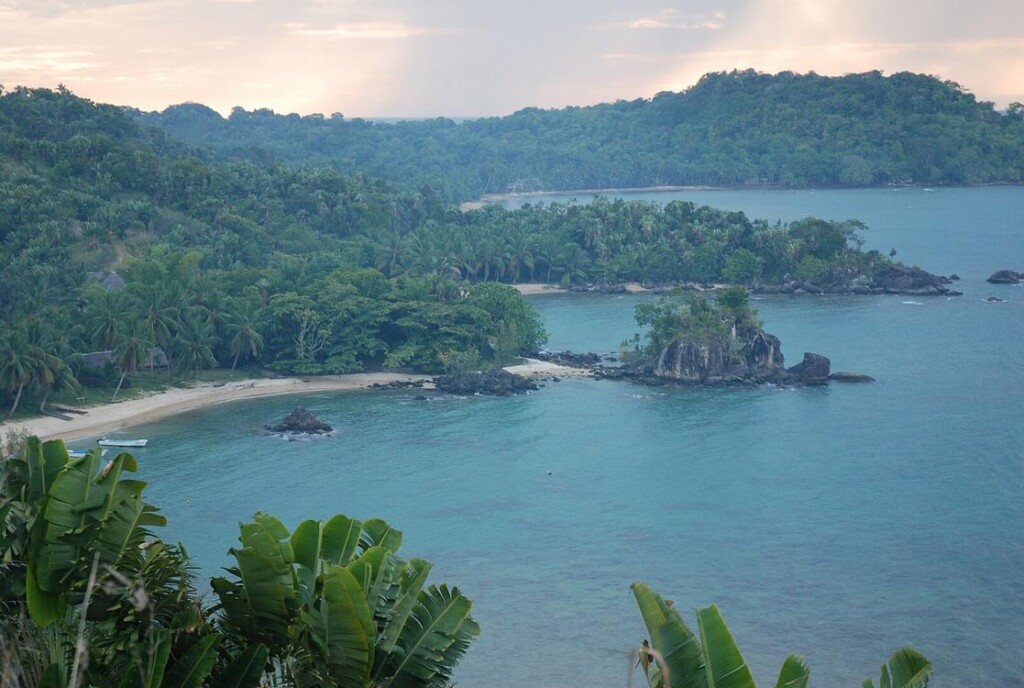
From the coast of Madagascar springs a story of pirates and sunken treasure, as an American research team believe they have identified a famous shipwreck.

Nossa Senhora do Cabo (Our Lady of the Cape) was a 700-ton Portuguese warship captured by an infamous French pirate while returning to Lisbon in 1721.

In the hold, a massive pile of treasure, destined for the crowns and courts of Portugal, was taken along with 200 slaves from Madagascar, where the shipwreck was found.

Little of the treasure remains, but when cross-referenced with historical documents, the artifacts that were recovered seem to point only to Nossa Senhora, which was one of the largest pirate prizes ever taken and seismic in its notoriety; not least because multiple literate witnesses survived.

Marine archaeological surveys with sonar and dive teams were conducted by the Center for Historic Shipwreck Preservation in Massachusetts. Their target was a cluster of shipwrecks around an island to the North of Madagascar called Nosy Boraha, known at the time period as Sainte-Marie.

The island was a notorious pirate stronghold during the Golden Age of Piracy, and it appears that the Portuguese ship was taken here after being attacked near the Reunion Islands, a French colonized possession in the Indian Ocean.

It would have been returning from Goa, a Portuguese imperial possession in India, where it had filled the cargo hold with Chinese porcelain, nutmeg, gold coins, silver bars, silks, religious figurines and other carvings in wood and ivory, and a $100 million fortune in today’s money of precious stones. An Goan viceroy, a Portuguese nobleman, the Archbishop of Goa, and 200 slaves were also on board.

Nosy Boraha – credit, M worm retrieved from Wikimedia Commons

Historical documents record the pirates Olivier “The Buzzard” Levasseur and John Taylor were behind the attack on 72-gun Nossa Senhora, which was damaged in a storm and had laid up near the Reunions to repair.

Born in Calais during the Nine Year’s War to a wealthy family, Levasseur was the quintessential pirate. Participating in two of the biggest pirate raids of the time, he buried a massive treasure, left an encrypted message as to its location, and was eventually hanged around the age of 40 while living large along the Equator.

RECENT STUNNING SHIPWRECKS:

Between the treasure value and the ransom money, the haul would have been an “eye-watering treasure, even by pirate standards,” according to two authors on a scientific paper describing the surveys of the wreck.

The Center for Historic Shipwreck Preservation had conducted studies in the area around Nosy Boraha for 16 years, and describe it as a place where prize ships were commonly taken to be scuttled following their capture. Many other wrecks—all likely dating to the same time period—were identified in the area, and the authors highlight it as a bountiful place for future research.

Interviews and photographs detailing the surveys, excavations, and research on Nossa Senhora were also published in the brilliant Wreckwatch Magazine, the premier source for news about sunken treasure worldwide.

SHARE This Simply Awesome Story Of Riches And Pirates… 

“The summer night is like a perfection of thought.” – Wallace Stevens

Photo by benjamin lehman

Quote of the Day: “The summer night is like a perfection of thought.” – Wallace Stevens

Photo by: benjamin lehman

With a new inspirational quote every day, atop the perfect photo—collected and archived on our Quote of the Day page—why not bookmark GNN.org for a daily uplift?

Photo by benjamin lehman

Good News in History, July 9

Jack White - CC 2.0 Teresa Sedó

Happy 50th Birthday to the “coolest, weirdest, and savviest rock stars of our time,” Jack White. Born in Detroit, his run of work with the White Stripes, Raconteurs, Dead Weather, and through to his solo work catapulted him to superstardom in the hearts of angsty teens and aging rockers alike. Much the way his fan base spanned generations, White created much of his brilliant music by connecting aspects and flavors of many great American genres from blues and Americana to punk rock. He did it with soul, and without irony; without a hint of throwback Thursday to any of it, and with complete authenticity. READ a bit more… (1975)

Baby Hedgehog Sibling is Rescued from Drain by Clever Firefighters Using a Vacuum and Tube

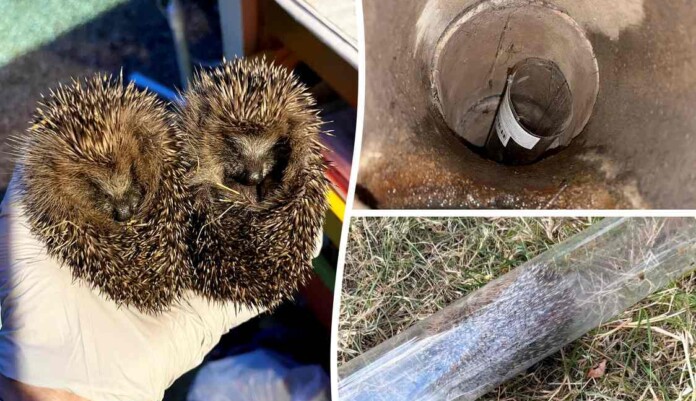
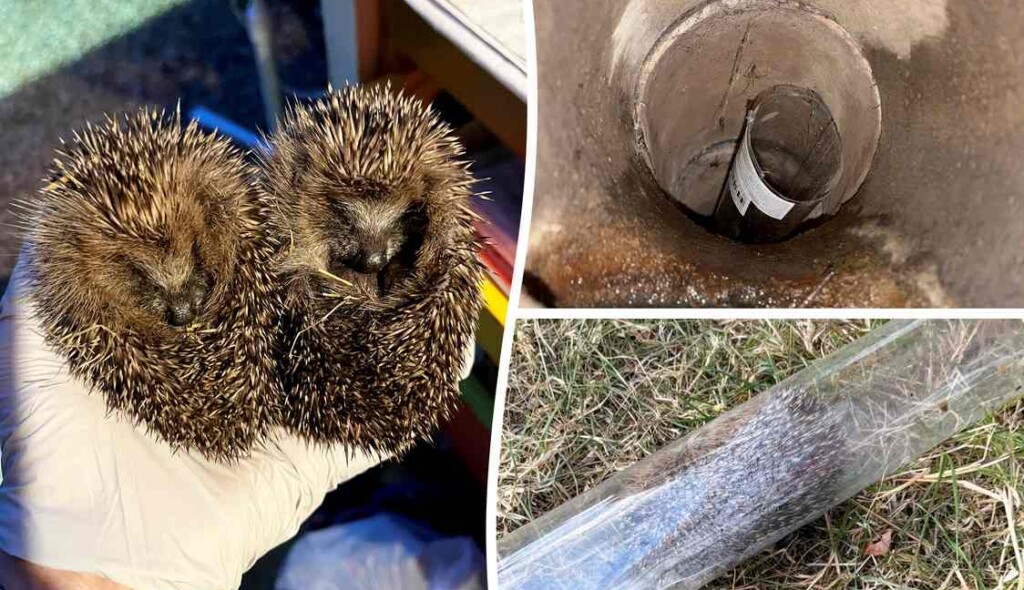
The hedgehogs and the tube that rescued them - credit SWNS
The hedgehogs and the tube that rescued them – credit SWNS

Using a vacuum and some plastic tubing, rescuers MacGyvered a device to rescue two baby hedgehogs who had tumbled down a storm drain.

While the vacuum didn’t work, the tube did, and can perhaps become a standard-issue rescue device for these little critters who “love enclosed spaces.”

The story comes from the English county of Warwickshire, where a homeowner called the local hedgehog rescue charity after hearing cries of distress coming from a drain in her garden.

Arriving, rescuers discovered a baby hedgehog had tumbled 4 feet down into the drain and was trapped in a narrow underground pipe.

Firefighters were also called and tried to use a vacuum cleaner to try and suck the critter out of the drain. When that failed, the charity workers pushed an old plastic tube which had once contained a curtain into the drain.

After several minutes the stranded hedgehog crawled into the tube and rescuers were able to pull it up from the drain.

“The storm drain had been covered with chicken wire but the gaps were bigger than the hedgehog which had fallen down inside,” said Sally Ellis, a spokesperson for the charity Warwickshire Hedgehog Rescue.

“We alerted the fire service who tried to suck the hedgehog up with a hoover but that didn’t work. Eventually the woman’s son pushed a plastic curtain blind tube into the drain and the hedgehog was curious enough to get inside.”

ANIMAL RESCUES TO MAKE YOU SMILE: Speedy Desert Tortoise is Finally Safe After Covering 3 Miles and Entering a Highway Following Ranch Jailbreak

“Hedgehogs love enclosed spaces, they feel safe there. Thankfully, the hedgehog was unharmed along with its sibling found nearby.”

The sibling was also rescued, and both were taken in by the animal charity.

“Both hedgehogs are doing well and we look forward to releasing them back into the wild.”

LOOKING OUT FOR THE LITTLE GUY: Lacking Ninja Training, Trapped Turtle is Rescued from City Sewer by Police and Firefighters

It’s reminiscent of a recent story from Kansas, where a varmint-sized boy fell down a large PVC drain pipe buried in the earth, and had to be rescued by first responders who improvised a varmint-catching pole to haul him out of there.

The lesson: don’t leave drain pipes unattended or open, whether varmint-sized, or varmint-sized-boy-sized.

SHARE These Baby Hedgehogs Living To See Another Day On Social Media… 

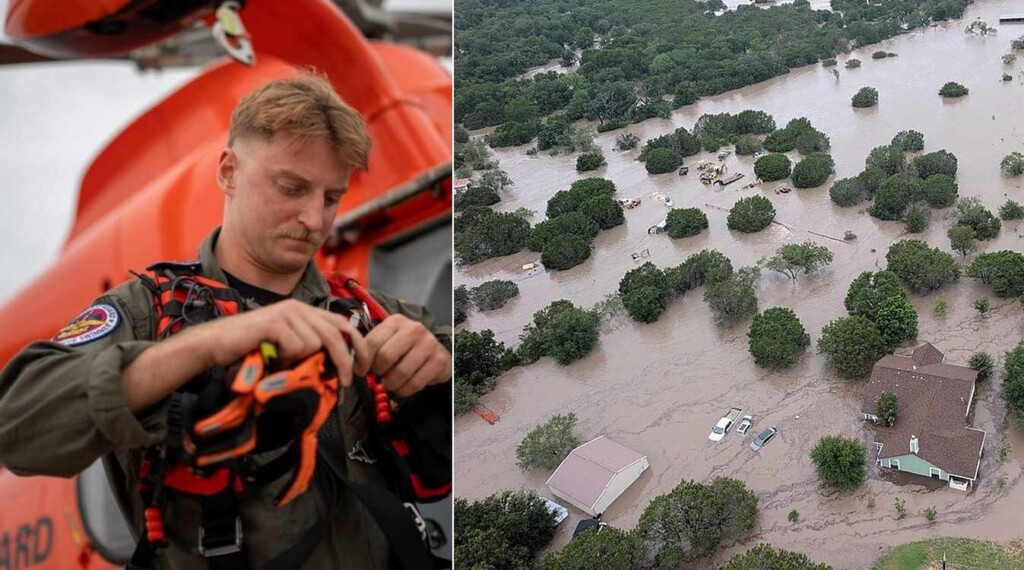
Solitary Rescuer Leads 165 Children to Safety During Recent Texas Flooding–Hailed as a Hero

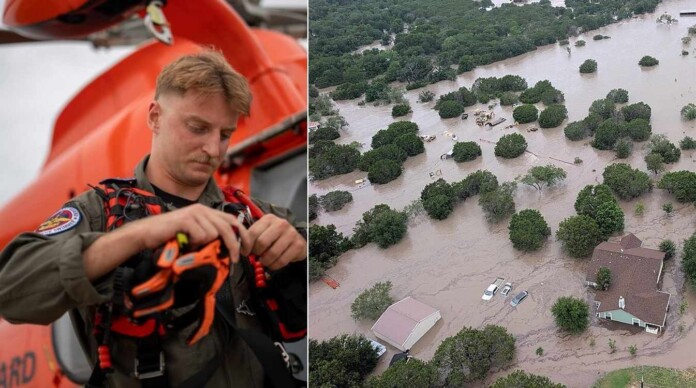
(left) an undated photo of Scott Ruskan (right) flooding in central Texas - credit, US Coast Guard
(left) an undated photo of Scott Ruskan (right) flooding in central Texas – credit, US Coast Guard

A little-known Coast Guard officer has been hailed as a hero after rescuing 165 people from the Texas hill country floods.

Petty Officer and rescue swimmer Scott Ruskan, a native of New Jersey, was on the scene when the Guadalupe River rose dramatically, causing flooding after 5–11 inches of rain fell in a short amount of time.

It was his first rescue mission, but he must have remained calm and reactive as he responded to search and rescue calls at Camp Mystic, a girl’s summer camp right in the path of the flooding.

Flying to the camp in a helicopter, Ruskan said he “saw a huge crowd of about 200 kids at a campsite.”

“We were like, ‘Cool, that’s where we’re going to go and get out as many people out as we can,'” Ruskan told Fox. 

Later interviewed by CNN, Ruskan said the conditions for flying produced by Tropical Storm Barry were some of the worst he’s ever seen, and the pilot needed four attempts before he could land the helicopter.

COAST GUARD TO THE RESCUE: Coast Guard Rescues 200 Beached Sea Turtles Stunned by Cold

“There was no other way to get them out,” said Ruskan. “Bridges were gone, roadways were gone, and the water was coming up too high for boat rescue.”

“Cell service was bad. Radio reception was bad on my comms, so I really didn’t have any communication with the outside for about three hours.”

HEROES IN TIMES OF NEED: Local Hero Broke into School to Save 24 People During a New York Blizzard

Despite not knowing what was going on around him. He remained focused and led 165 people, mostly children, in groups of 10 to 15 to army helicopters which could airlift them to high ground.

Department of Homeland Security Secretary Kristi Noem called him “an American hero” in a post on X, though like all good heroes, Ruskan said he was just doing his job, one that “anyone” could have done.

CELEBRATE This Man’s On-Scene Heroics In An Otherwise Deadly Situation… 

Wedding Ring Lost on Virginia Christmas Tree Farm Returned After 15 Years

credit - Wayne Corprew
credit – Wayne Corprew

There are so many other ways it could have happened: they could have thrown away the sticky note containing Wayne Corprew’s phone number; they could have tilled the ground three inches to the left, they could have taken the ring they found to a pawnshop.

But because they didn’t, a story comes now from Virginia about a man’s wedding ring returned after he lost it chopping a Christmas tree down 15 years ago.

This remarkable “needle in a haystack” event was made possible by a bizarre level of neighborly diligence by Darren Gilreath and his wife Samantha.

The pair purchased Joe’s Trees Christmas tree farm from Darren’s aunt in 2018, and while taking over management, kept hold of every note the establishment ever received about someone losing something on the farm.

“She kept notes of anything that was lost, and we always put them on the bulletin board for a couple of years. As the years went on, we’d gather them and put them in a stack, just hoping one day that we’d find a needle in a haystack,” said Gilreath.

This random act of dedication set the stage for a remarkable reunion 15 years in the making.

In 2010, Wayne Corprew from Roanoke arrived at Joe’s Trees to pick out a tree for himself and his family. After cutting one down he removed his gloves and realized he lost his wedding band—a beautiful piece of golden waves bound by two smaller mill-marked, ringlets.

Corprew came back the next day with a metal detector, but after searching all day, the ring was still missing. He decided, after a return trip during the summer turned up nothing, to leave a note with management.

“Lost Ring Band
2010-2013
Don’t Throw Out
Expensive”

As it happened, Sue, the previous owner, didn’t throw out the note, and when Samantha and Darren were hand-planting corn around their pumpkin patch, they found the ring just a few inches from the edge of where they were tilling.

DOING DUE DILIGENCE: Stranger’s Diligence Leads to Emotional Reunion With Lost Ring of Woman’s Mother

They got back to the shop and saw a chance to comb through their stacks of notes.

“I called my aunt and told her about finding the wedding band,” said WDBJ 7. “She was just so tickled to know that we had found the ring after 15 years because she had told us when we bought the farm that that ring had been lost 15 years ago. She said, ‘Don’t get rid of this note, because if you ever find the ring, this guy came back looking for it, and he would love to have it back.’ So we just wanted to make sure it got back into the right hands.”

MORE LOST RINGS FOUND: ‘Miracle in the Persian Gulf’– Good Samaritans Help Find Lost Wedding Ring That Man Hasn’t Taken off in 51 Years

Darren called Corprew, who didn’t suspect anything after hearing it was Joe’s Trees on the line. Then he told him about the ring and he confirmed it was there that he had lost it.

“This is a great bunch of people up here. We love coming up here and getting a tree. I’m just thankful for them that they kept that note for 15 years and that they thought to call me,” said Corprew. “It goes to show that there are good people out there, and this is a great place. If anybody needs a Christmas tree or a family outing, this is the place to come. These are great people.”

WATCH the story below from WDBJ… 

SHARE This Needle In A Haystack Story With Your Friends On Social Media… 

Mercury Emissions Fall 70% Over the Last Four Decades Thanks to UN Treaty, Coal Phase-Out

A coal power plant in India - credit Rawpixel
A coal power plant in India – credit Rawpixel

A study examining mercury concentrations in the leaves of alpine plants has revealed that humanity has reduced worldwide exposure to this most toxic of heavy metals substantially.

Controlled via a UN treaty called the Minamata Convention on Mercury Emissions, mercury (Hg) enters the atmosphere through a variety of natural and anthropogenic avenues.

Artisanal and small-scale gold mining, coal burning, and cement and nonferrous metals production all release several thousands tons of mercury into the atmosphere every year.

Much like carbon dioxide, the oceans also emit mercury—between 400-1,300 metric tons per year. Terrestrial sources include volcanic eruptions and other geothermal features, the weathering of mercury-containing rocks, soil erosion, and wildfires, and contribute around the same amount as the oceans.

Anthropogenic sources, however, contribute as much as the land and oceans together; or at least they once did.

A team of Chinese scientists from schools in Tianjin, Beijing, Tibet, and Nanjing has found that Hg concentrations in the atmosphere reduced by 70% since a peak in the year 2000. For the next 20 years, the levels continually dropped, corresponding with a reduced reliance on coal for power and the implementation of the Minamata Convention in 2013.

The scientists were able to calculate the past atmospheric Hg concentrations using the leaves of the flowering plant Androsace tapete on the slopes Mt. Everest atop the Tibetan Plateau. Here, exposure to atmospheric deposition is far greater than at sea level, and the plateau is a popular place for making such measurements.

Their study shows that today, there is less mercury emitted into the atmosphere by humans than by the Earth itself.

MORE NEWS LIKE THIS: ‘Green’ Spaceship Propellant Set to Crater Fuel Costs and Replace Ultra-Toxic Hydrazine with Peroxide

There is no safe level of mercury exposure in humans, and children are at particularly high risks.

While living around coal-burning power plants is a large risk factor for mercury exposure, small-scale or artisanal gold mining operations contribue by the most mercury into the atmosphere.

SHARE This Brilliant Down Trend With Your Friends… 

“They do not love that do not show their love.” – William Shakespeare

Painting by Gustav Klimt - The Kiss (zoomed in and cropped)

Quote of the Day: “They do not love that do not show their love.” – William Shakespeare 

Image: The Kiss by Gustav Klimt – (zoomed in and cropped)

With a new inspirational quote every day, atop the perfect photo—collected and archived on our Quote of the Day page—why not bookmark GNN.org for a daily uplift?

Painting by Gustav Klimt – The Kiss (zoomed in and cropped)

Good News in History, July 8

Our Lady of Kazan, Fatima image

446 years ago today, the holy icon Our Lady of Kazan was found miraculously by a child under a burned house in Kazan. This palladium, this holiest of Orthodox artifacts, depicts the Virgin Mary with her son in glittering gold, and was originally acquired from Constantinople in the 13th century. But records report it being lost in 1438 after the establishment of the Khanate of Kazan. 140 years later, the icon’s location was revealed to a ten-year-old girl named Matrona by Mother Mary herself in a dream. READ more about the provenance of this holy artifact… (1579)

Portugal Announces New 38,000 Sq. Mile Protected Area Around ‘Stunning’ Underwater Mountains

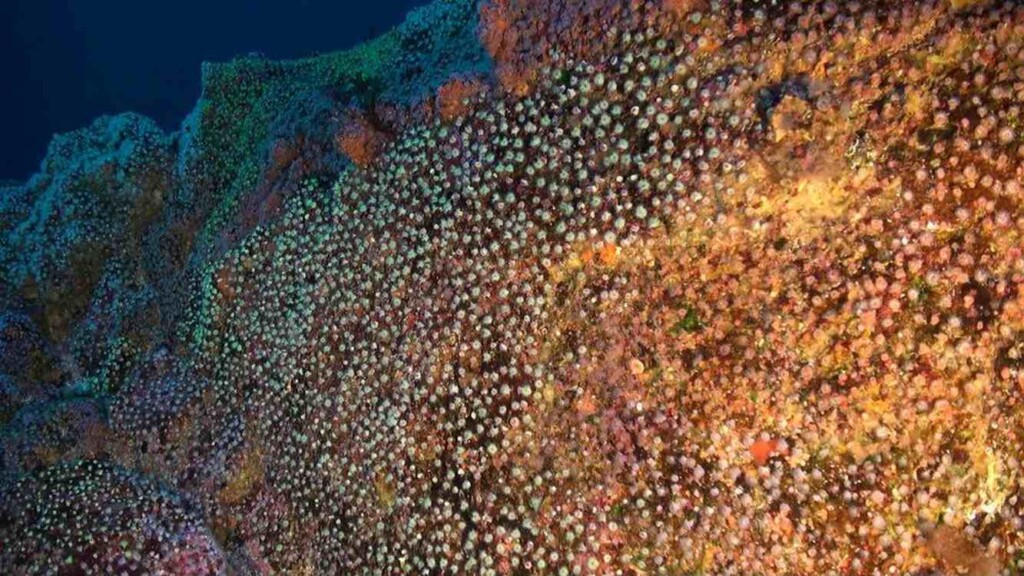
A wall along the Gorringe Ridge carpeted with jewel anemones (Corynactis viridis) - credit press handout / Oceana / Carlos Suarez ©
A wall along the Gorringe Ridge carpeted with jewel anemones (Corynactis viridis) – credit press handout / Oceana / Carlos Suarez ©

Out of a recent UN conference on the protection of the sea comes the news that Portugal has announced the creation of a new 38,000 square-mile marine protected area.

Established around the Gorringe seamount, technically Portugal’s tallest mountain, the decision will take the nation’s total protected territorial waters to 27%, making the small Iberian country the continent leader in protected ocean waters.

The announcement was made by the nation’s environment minister Maria da Graca Carvalho at the 3rd UN Oceans Conference in Nice. The conference focuses on implementing strategies and methods to achieve the goals set out in the 2023 High Seas Treaty, which has so far been ratified by 51 nations—9 short of entering legal force.

“In terms of marine protection we are the most advanced country in the world with our characteristics combining continental and insular territory. Certainly the leader in Europe,” Carvalho said.

The Gorringe Ridge is located about 130 miles (210 km) west of Portugal, between the Azores and the Strait of Gibraltar. It is notable for an enormous diversity of sea life, particularly “soft corals,” or gorgonians, and deep-sea sponges, which inhabit some 1,100 reefs along the ridge.

850 species have been recorded living a there by the charity Oceana, which has been lobbying for the site’s protection for years.

In a statement following a 2012 dive mission to the seamount, Oceana called the undersea ecosystem “stunning.”

“The seamounts are visited by great pelagic species, such as whales, dolphins, and swordfish,” the statement read.

EUROPEAN SEA PROTECTION: 1 Million New Seagrass Seedlings Will Protect Sardinia’s Beaches While Storing 35-Times More Carbon Than Trees

“The peaks are covered by algae forests, particularly kelp. Large schools of amberjack, horse mackerel, and barracuda concentrate above the highest peaks, and detritic bottoms, covered in the remains of coral, bryozoans, and mollusks, abound in deeper areas, are inhabited by dragon fish, fan corals, pink frogmouths, and bird’s nest sponges.”

Emanuel Gonçalves, chief scientist at Oceano Azul Foundation, a separate nonprofit that mapped the area with the Portuguese navy, told Reuters that the total protected area would be around 100,000 square kilometers, enough to “connect seamounts, abyssal plains, and open ocean, and create a safe haven to highly mobile and migratory species, and deep sea habitats”.

MORE MPAs: ‘Huge Environmental Win’: Australia to Protect 52% of its Oceans, More Than Any Other Country

“It will provide a fertile nursery and feeding ground for turtles, sharks, marine mammals, sea birds and tunas, expand or restore kelp and coral forests and create a sanctuary for the unique breeding aggregation of torpedo rays,” he said.

The decision also follows on from an announcement last year that Portugal intended to protect an area of water around the Azores archipelago the size of Virginia and Georgia combined.

SHARE This Great News From The High Seas With Your Friends… 

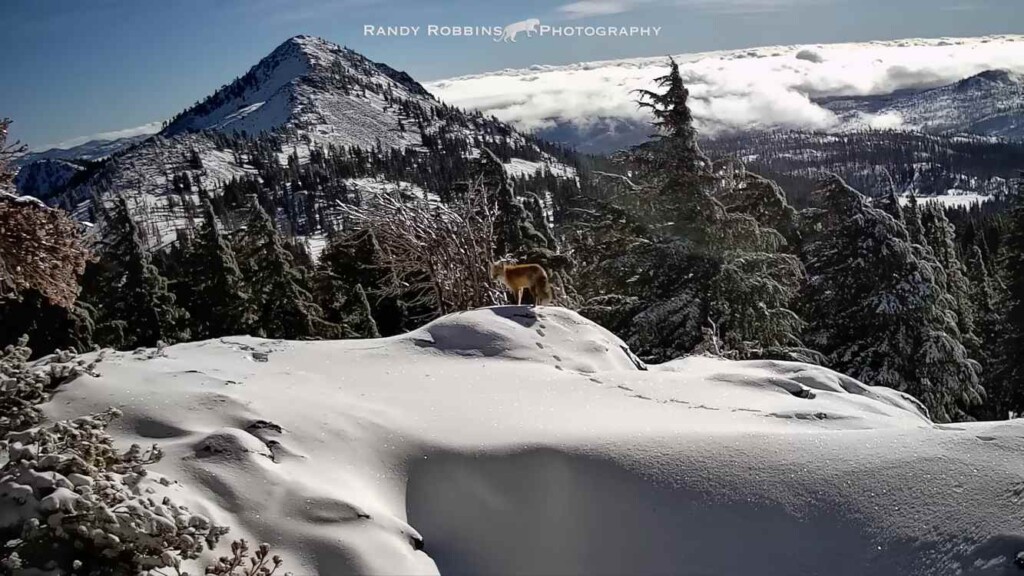
Near-Extinct Red Fox Caught on Trail Cam in National Park After Years of Hoping to Glimpse Elusive Creatures

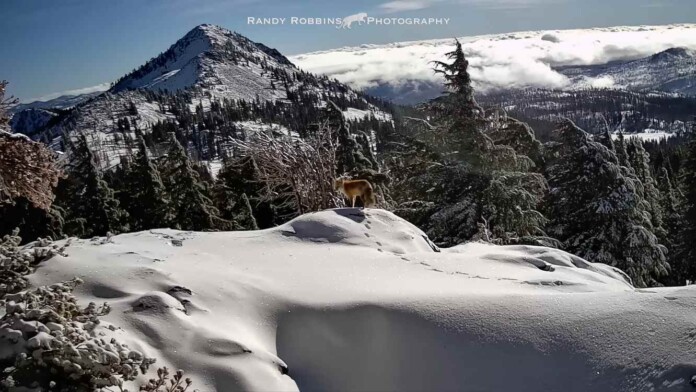
credit - Randy Robbins Photography, via YouTube
credit – Randy Robbins Photography, via YouTube

A California photographer recently captured three minutes of high quality camera trap footage of the state’s rarest mammal.

Randy Robbins, whom this reporter chose to feature in GNN’s roundup of the 2024 Wildlife Photography Awards, has been on a three-year-long quest to photograph the Sierra Nevada red fox.

Unlike its mainland cousin, this subspecies may number less than 100, and is at serious risk of being inbred out of existence. It lives high in the mountains and developed adaptations that have allowed it to do so—separating it ever-so-slightly with the lowland population.

Because it is a reclusive and small animal that lives above 6,000 feet above sea level, camera traps would be a key tool for Robbins to spot it. Where to put them, however, would be the challenge, and it required him to delve into whatever literature exists on the animal’s behavior.

“We’re a couple generations away from these foxes dying out due to inbreeding and that kind of thing, because their populations are so small,” Robbins told Fox Weather. “So I think telling their story and getting the word out is important just to sort of motivate people because people care—people want them to be saved.”

Last winter, he set one of his cameras out on a ledge in Lassen Volcano National Park—one of the animal’s last strongholds. A line of rocks jutted up on the other side of a ravine which Robbins knew the animals preferred to walk on when there is snow on the ground.

MORE RARE MOMENTS FILMED: Colossal Squid Filmed in Deep-Sea Natural Habitat for the First Time

Knowing his camera would be buried by snow over the long winter at an altitude of 8,500 feet, he picked a high point, pressed record, walked back down the mountain, and waited until June when the snows melted enough for him to find his camera.

AMERICAN MOUNTAINS: Family-Owned Vermont Ski Resort Offers the Common Man 1,200 Acres of Powder for $100

In the footage, his quarry walks into frame, sniffs the ground, walks to the edge of the ravine and looks out across a vast snow-covered landscape, sniffs the air, sits in the sun, and eventually disappears.

“It was really amazing,” Robbins said. “Normally, what you get is a quick glimpse, like you see a fox running across the screen. This was three minutes of just behavior—it was lounging in the sun and just, you know, being a fox.”

WATCH the video from Randy Robbins’ YouTube below… 

SHARE Randy’s Incredible Footage And Achievement With Your Friends… 

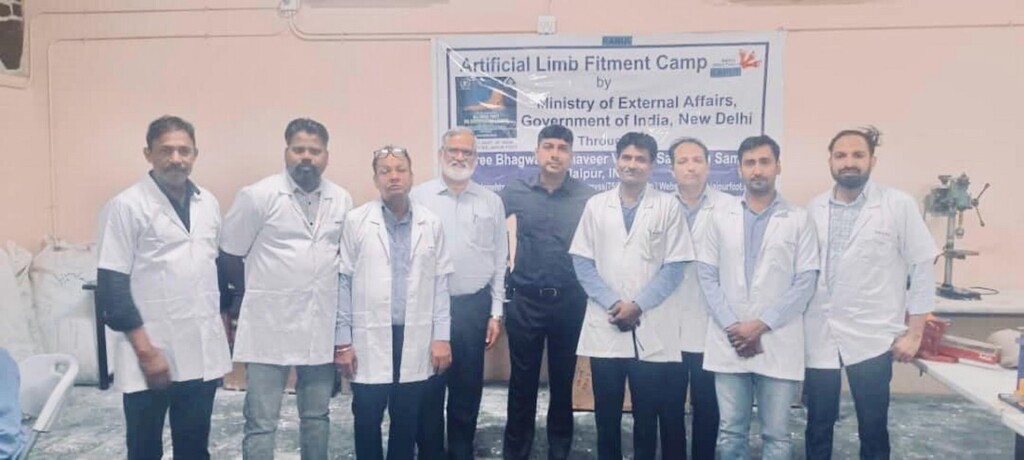
Indian Charity Organizes Limb Giveaway for 75 Afghan Amputees, Fitting Them with Free Prosthetic Feet

credit - Bhagwan Mahaveer Viklang Sahayata Samiti, supplied.
credit – Bhagwan Mahaveer Viklang Sahayata Samiti, supplied.

Though Afghanistan is rarely in the headlines anymore, that doesn’t mean the country has stopped making news.

From Kabul comes the story of an Indian charity that gave out prosthetic feet and lower limbs to 75 amputees free of charge thanks to help from generous Indian donors and support from the national government.

Held between June 19th and 24th at a government hospital in central Kabul, the Jaipur Foot Camp was organized by the charity called Bhagwan Mahaveer Viklang Sahayata Samiti (BMVSS) in collaboration with the Indian consulate in Kabul.

This is the 155th time the charity has organized one of these prosthesis drives in a far away country, the organization’s founder and chief patron, D. R. Mehta, told GNN.

“Irrespective of where the amputee is from, if the amputees visit us at our Jaipur Foot Center, they would be provided with an artificial limb totally free of charge and without any discrimination on the ground of religion,” said Mr. Mehta.

Jaipur Foot centers have been established across the Global South, in countries like Mauritius, Congo, Philippines, and Tanzania.

They not only offer the prosthetic free of charge, but a raft of support measures like physical training and rehabilitation to get the patients used to walking with it, as well as emotional support for wounds that can’t be bandaged.

credit – Bhagwan Mahaveer Viklang Sahayata Samiti, supplied.

In Kabul, BMVSS also organized training for local hospital staff in the procedure for measuring, creating, and fitting a prosthetic, while the Indian volunteers provided the hospital with the machines and materials needed to create the simple, effective prosthetics.

MORE INDIAN CHARITIES: One Man in Southwest India Taught 10,000 People to Swim for Free in a River to End Drownings

The initiative is part of a larger framework of humanitarian aid to Afghanistan, which includes food, medicines, scholarships, and capacity-building programs, Times of India reports.

SHARE This Heartwarming Effort To Help The War’s Forgotten Victims… 

‘World’s Largest’ Time Capsule Opens 50 Years Later –The Vision of One Man in Nebraska

Harold Davisson created ‘world's largest’ time capsule in Seward, Nebraska -1975 photo courtesy of Nebraska State Historical Society
Harold Davisson created ‘world’s largest’ time capsule in Seward, Nebraska -1975 photo courtesy of Nebraska State Historical Society

50 years ago, a man invited the nation to deposit whatever they liked into a large concrete tomb for what he called the creation of the “World’s largest time capsule.”

50 years later, as heirs, descendants, and children all grown up watched the large concrete vault crack open last week, they realized what a brilliant idea it was.

The items went on display last Friday in Seward, Nebraska, where Harold Davisson lived and created the time capsule. His daughter, Trish Davisson Johnson, was there as the master of ceremonies, carrying out her father’s vision for the grand opening.

Inside was a bewildering, yet understandable collection of objects. Stacks of letters and boxes, casette tapes made with personal recordings, pet rocks (which were all the rage back then), a groovy, teal, patterned suit, and even an entire yellow Chevy Vega wrapped in a plastic tarp.

People came from all around the country to collect or search for personal items left to them by themselves or their parents, from Virginia to Colorado.

“This is the culmination of 50 years of planning on the part of my father,” Johnson said. “There were packages from, I’m going to say, 3,000 people, letters and packages, letters to themselves, letters to the grandchildren, letters to their heirs.”

NBC News’ Maya Eaglin was there reporting on the opening, when a large concrete pyramid, sealing over the capsule as if it were the sarcophagus of a pharaoh, was removed with a crane. The pyramid was added later when the world record agency informed Davisson the Seward time capsule was no longer the world’s largest.

“My parents didn’t think that they would be here 50 years later to retrieve it with us,” said Stephanie Fisher, who travelled from Colorado to retrieve a casette tape with a message from her mother.

YOU MAY ALSO LIKE: Teen Girl’s Secret Message Left in a Wall 48 Years Ago is Found: ‘I was Absolutely Shocked!’

“So it’s pretty special to know that their voices [are] in there that I haven’t heard in a long time.”

Davisson executed the project well; building a ventilation system to prevent mold growth which went a long way towards preserving some items. His daughter suggests that probably 80% of everything put inside was retrievable and intact.

OTHER PROJECTS LIKE THIS: Say Cheese… for a Thousand Years: Camera Set up to Capture a Millennium-long Exposure of Tucson

Chris Galen, arriving from Virginia in a Johnny Quest t-shirt, recognized his mother’s handwriting, and opened a letter that wished him a happy education, career, and life.

“It’s not about what’s inside of it. It’s about what’s inside of us and who we were back in ’75 and who we are today,” he said

WATCH the story from NBC News…

OPEN Up Your Day By Sharing This Incredible Story On Social Media…

“I feel… the negative part of you is like a battery: you’ve got to have the negative and the positive in order to be a complete person.” – Dolly Parton

Quote of the Day: “I feel… the negative part of you is like a battery: you’ve got to have the negative and the positive in order to be a complete person.” – Dolly Parton 

Photo by: Dimmis Vart

With a new inspirational quote every day, atop the perfect photo—collected and archived on our Quote of the Day page—why not bookmark GNN.org for a daily uplift?