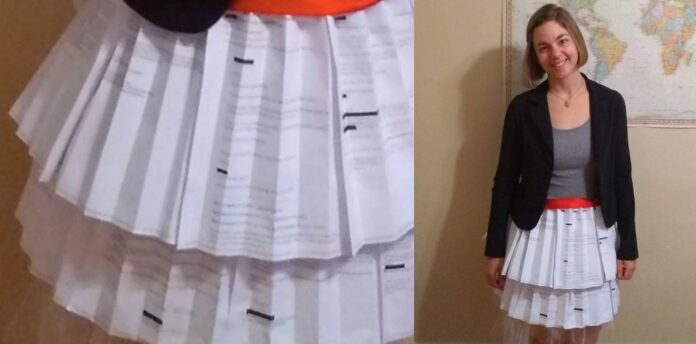
A PhD student in Michigan defended her dissertation while wearing a skirt made of rejection letters received while studying.
Caitlin Kirby
To make the tiered black and white number, 29-year-old Caitlin Kirby printed out 17 of her rejection letters—from scholarships, academic journals, and conferences—then folded each one into a fan. She connected them in row, and by the end she had an item resembling a skirt.
She toldLansing State Journal that the idea behind her unique clothing item came out of a desire to normalize rejection and take pride in overcoming it. “The whole process of revisiting those old letters and making that skirt sort of reminded me that you have to apply to a lot of things to succeed,” she said. “A natural part of the process is to get rejected along the way.”
Caitlin’s adviser, Julie Libarkin, a professor of earth and environmental science at Michigan State University, also encourages the acceptance of failure in her students.
Libarkin believes it’s important for students to get into habit of applying for things, and to get used to the feeling of rejection, so she encourages them to chase after any opportunity that comes their way. If a student doesn’t get the grant or the spot in the academic journal? That’s okay. They’ll still have learned something in the process.
As for Caitlin? Her rejections over the years have led to great things: Since her doctorate, she’s won a prestigious Fulbright grant to do further research on urban agriculture in Germany.
Currently, she’s a post-doctoral researcher at the University of Nebraska-Lincoln. As for what the future holds? “I’m gearing up to receive a few more rejection letters along the way,” she joked Lansing State Journal. “Maybe I’ll make a longer skirt.”
SHARE the Positive Attitude and Send This Message to Friends on Social Media…
With the Christmas season just around the corner, kids around the globe have been worried that Santa might have to cancel his plans due to Coronavirus concerns—but according to the big man in the red suit himself, everyone can rest easy.
Chris Benson
“It has come to my attention,” Santa posted on Elf on a Shelf’s Facebook page, “that children around the world are being told by their older siblings, parents, and other adults, and even friends, that Christmas is not coming this year due to the [COVID-19] pandemic. This is simply not true.”
Not only has St. Nick been practicing social distancing like everyone else, he has been named an essential worker (a “key” worker, as it’s known across the pond) by the Scottish First Minister, Nicola Sturgeon. Even though many holiday festivities will be observed by people who are six-feet apart, Santa has been given the ‘all-clear’ to carry out his Christmas Eve delivery duties as scheduled.
“Santa will not be prevented from delivering your presents on Christmas Eve,” Sturgeon declared in a speech reported by The Scottish Sun. “Santa is a key worker and he has got lots of magic powers that make him safe to do that. Santa will be delivering presents across the world as normal.”
Now, perhaps more than ever, the world needs comfort and joy, and for kids, that means a visit from Santa. One Scottish mom who shared her plan for encouraging the jolly old soul on a night that might seem darker than in years past has since seen her idea go viral.
“On Christmas Eve at 6 p.m. we are asking everyone to come outside and ring a bell for 2 [minutes] to spread Christmas spirit and to help Santa fly that sleigh,” Kathyrn Stubbs penned in a Facebook post. “After a tough year, it would be an amazing memory for the kids and communities. End 2020 with a bit of magic, hope, and togetherness!”
If you like the sound of this grand new holiday tradition as much as we do, feel free to ring along.
Don’t have a bell? No worries. Singing works just as well, so if you want to help keep Santa’s sleigh soaring, just step outside on the dot of six and lift your voice up high:
You better watch out, You better not cry, You better not pout, I’m telling you why, Santa Claus is coming to town!
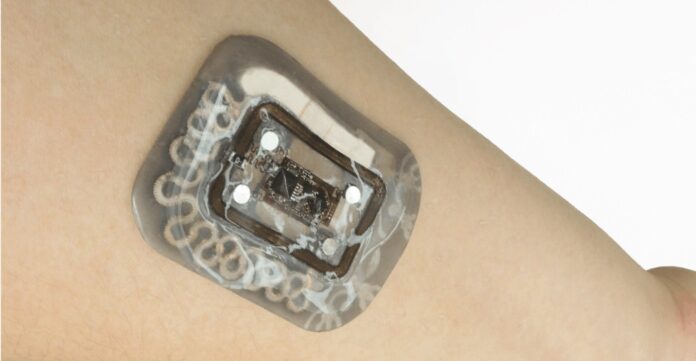
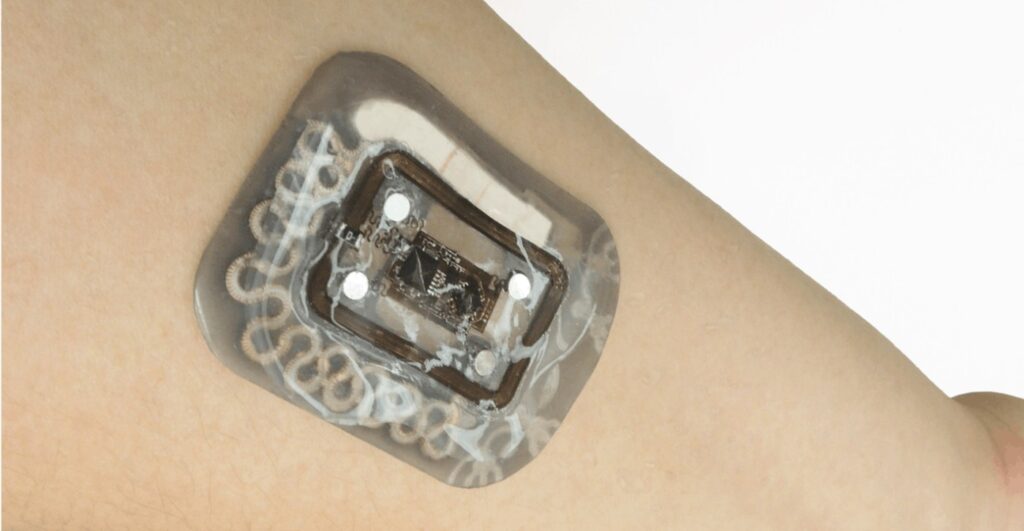
A team from Northwestern University has developed a soft, silicon, skin-interfaced sensor that can analyze the molecular composition of sweat for things like cortisol, blood sugar, and vitamin C, sending the data to the wearer’s smartphone.
Sungbong Kim, Roozbeh Ghaffari, John A. Rogers
This data, the researchers hope, will allow people to better control their stress levels throughout the day.
Cortisol, sometimes called the stress hormone, can be measured in a person’s sweat. Released from the adrenal glands under periods of physical and mental stress, it can be a powerful performance enhancer—increasing energy production and glucose availability for the muscles during a “fight or flight” situation, for instance being attacked by a lion.
However, cortisol can also be released because of modern stressors such as money problems, issues at work, and other day-to-day worries that if built up over time, create the profile of chronic anxiety and can lead to an increased risk for diabetes, hypertension, depression, and obesity.
A chip on your shoulder
When someone wearing the chip sweats, the liquid runs through small channels into a series of chemical test sensors that look for different biological signals which could suggest a rise in cortisol.
Previous attempts in years past at creating devices like this were limited by the need to take sweat samples to laboratories for analysis, removing any ability for the individual to act on the data in a way that might prevent buildup of stressful feelings, or even an anxiety attack.
“Field tests illustrate capabilities in measurement of cortisol, glucose, and ascorbic acid (vitamin C) along with digital tracking of sweat rate and GSR across four healthy volunteers engaged in physical exercise on a stationary bike in a gym environment,” write the authors of the study, published in Proceedings of the National Academy of Sciences.
This was done in a laboratory-gymnasium for a week, and involved disrupting the sleep patterns of the participants in a way that was designed to mimic stressful long nights of studying.
Each day the trialists rode a stationary bike and the researchers used their chip to monitor cortisol levels, which normally move through the day in accordance with our circadian rhythms. At the end of the trial, which consisted of 14 recovery days of normal sleep supplementing with vitamin C—a vitamin used to decrease hormone levels—it was shown that the period of stress had dysregulated their cortisol secretion and led to increased levels of the stress hormone in their bodies.
“The subjects experience physiological stress, fatigue, and irregular life patterns during intensive work and with inadequate sleep. These conditions disrupt the cortisol–melatonin circadian rhythm [and] as a result, the hypothalamus region of the brain produces corticotropin-releasing hormone, which in turn… increases cortisol production and disrupting of cortisol circadian rhythm,” write the authors.
They point out that saliva concentrations of cortisol were very similar to those registered by the small chips, suggesting that the data collected is quite reliable, as saliva samples are normally very accurate.
Such a device could be paramount in helping people relieve depressive or stressful feelings (not least because exercising hard enough to induce sweating helps with anxiety on its own).
Furthermore, the percent of the population of American adults with regular feelings of worry, nervousness, or anxiety is around 11.2%, while there are nearly 60 million doctors’ visits where mental or behavioral health is the chief concern.
Putting power into patients’ hands—in the form of a detailed diagnosis of cortisol levels, could help significantly to lower those numbers.
SHARE This News With Someone Who Might Need it On Social Media…
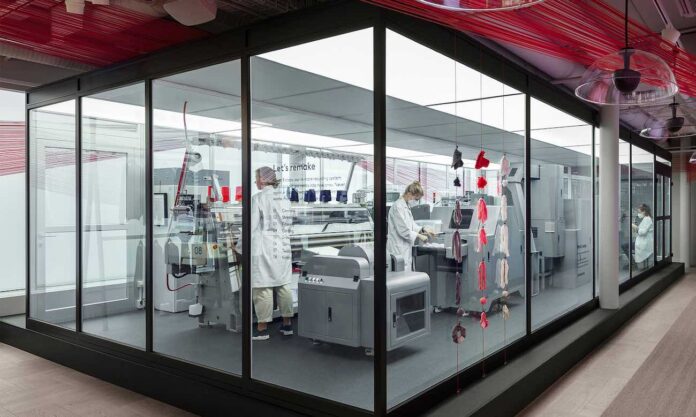
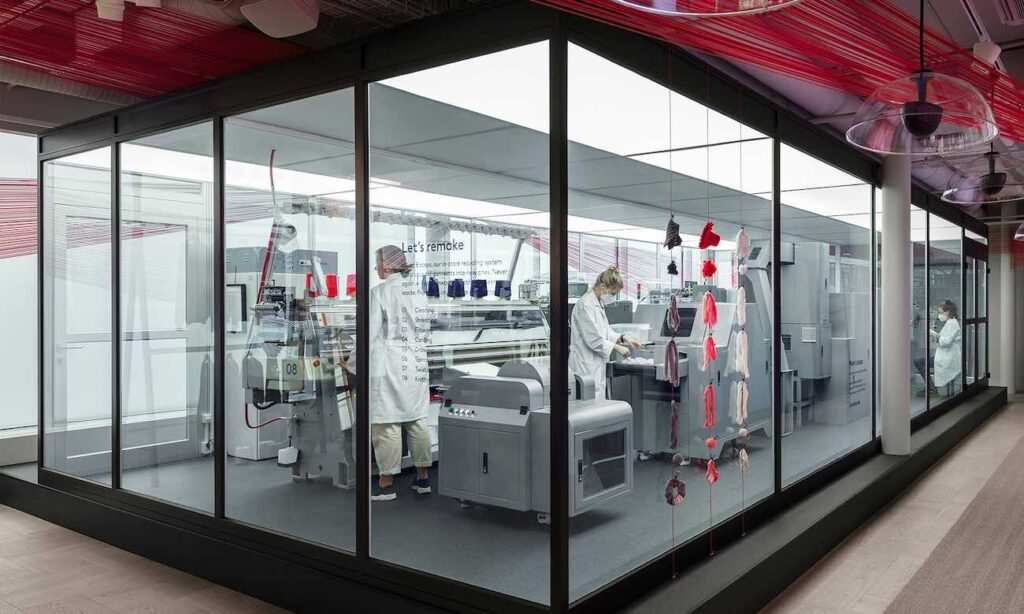
Fashion recycling, beyond simply reselling clothes, is a little behind other material recycling processes in terms of technology. But one of Europe’s largest and most popular labels, H&M, is establishing the world’s first in-store combination shredder and knitter of old clothes to tackle the problem head on.
H&M
Looop, the machine that shreds old clothes into component fibers, cleans and presses them into longer fibers, and weaves them into yarn before creating brand new garments, was developed by the Hong Kong Research Institute of Textiles and Apparel (HKRITA) in collaboration with the non-profit H&M Foundation.
“To fight climate change, we need to change fashion,” reads a statement on the fashion retailer’s website.
Indeed, analysis from the U.S. Environmental Protection Agency suggests that fashion waste may make up as much as 5% of landfill capacity, while also producing 10% of the nation’s total methane emissions.
Looop uses no additional dyes or water, relying instead solely on the color of the scrapped clothes. The process is completed on an assembly line of eight machines that are sold like a 40-foot long piece of furniture that can be easily shipped around the world in a standard shipping container.
Quote of the Day: “At the end of the day, it isn’t where I came from. Maybe home is somewhere I’m going and never have been before.” – Warsan Shire
Photo by: Valentina Locatelli
With a new inspirational quote every day, atop the perfect photo—collected and archived on our Quote of the Day page—why not bookmark GNN.org for a daily uplift?
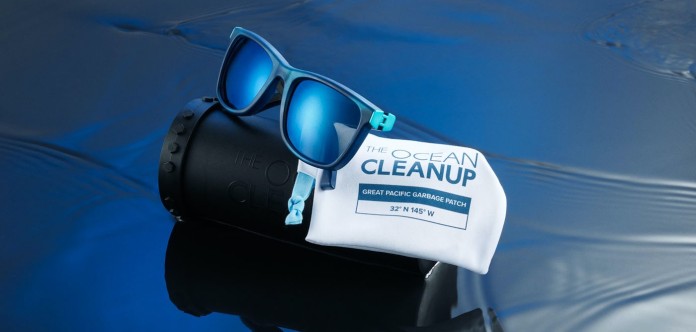
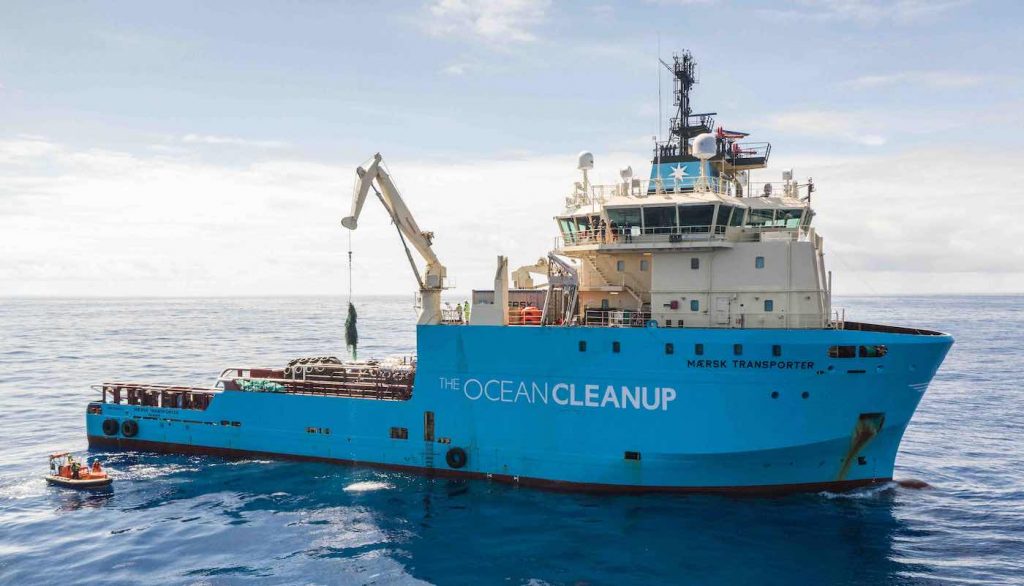
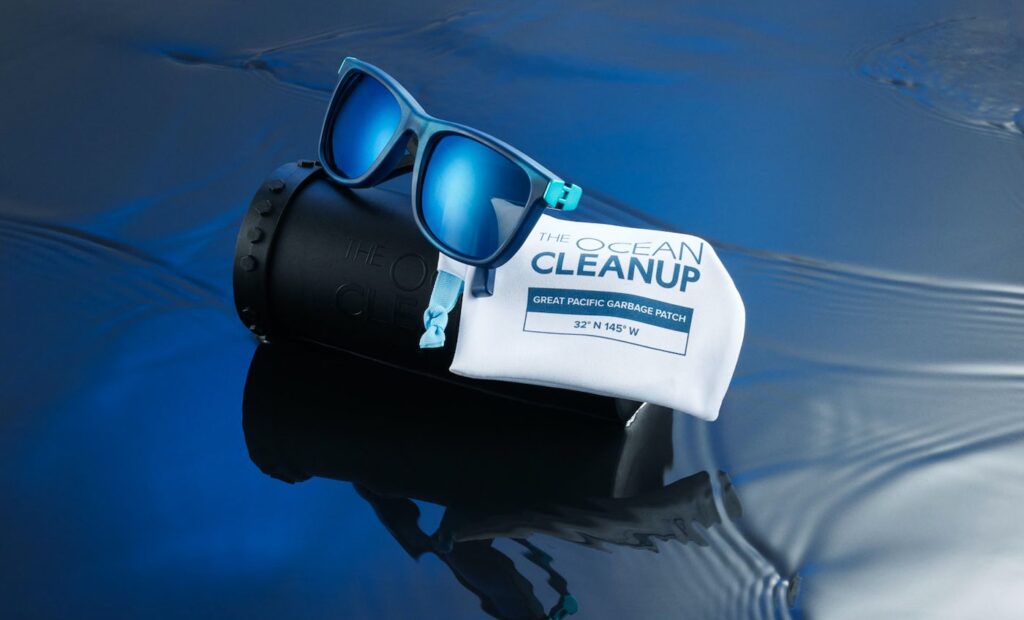
It has now been one year since The Ocean Cleanup made history by cleaning up the first of the plastic from the infamous Great Pacific Garbage Patch—and now, its researchers are turning the trash into designer sunglasses.
Photo by The Ocean Cleanup
Not only are the stylish shades made from the plastic collected, but the earnings go toward helping support the nonprofit so they can continue cleaning up the ocean.
The new glasses are the first product to be created from the recovered ocean debris—but The Ocean Cleanup website says it will not be the last.
Back in October 2019, after years of research, The Ocean Cleanup project which was launched out of San Francisco announced that the System 001/B vessel had successfully captured and collected plastic debris from the patch.
The self-contained system uses the natural forces of the ocean to passively corral plastic in the Garbage Patch, a process that was first envisioned by Boyan Slat back in October 2012.
Photo by The Ocean Cleanup
After discovering the patch in the 90s, scientists said it would take thousands of years to clean it up—but Slat quickly made a name for himself after he presented a TEDx talk in which he claimed that—if he could get funding for his machinery designs—he could do it in less than ten.
The young Dutchman dropped out of college so he could bring his plans to life—and he not only crowdfunded $2.2 million to start up, he garnered millions more dollars from interested investors.
The new sunglass lenses are polarized with full UV protection, while the frames are made from the recovered ocean pollution. Because the hinges have also been specially designed for easy disassembly, they can very quickly be taken apart for recycling, should the need ever arise.
“Together with renowned designer Yves Béhar, and Safilo, one of the leading companies in the eyewear industry, we worked to create sunglasses that you will want to use for the rest of your life (or a very long time),” reads the nonprofit’s website. “We wanted the look and feel of the sunglasses to be evocative of the ocean—reminding us where they came from and what they are protecting.”
Although the shades cost $199 a pop, all of the proceeds generated by the sunglasses go to funding the nonprofit’s operations.
For every pair sold, the organization will be able to clean 24 football-fields-worth of ocean garbage—and since the glasses went on sale earlier this last week, supporters have already funded more than 133,100 football fields of trash.
“When every pair is claimed from this first batch of sunglasses, we can then clean 500,000 football fields worth of plastic,” continues the website. “That means we can use this trash to clean more trash: going full circle, over and over, until we have achieved our mission of clean oceans.”
(WATCH the explanatory video below…)
Clean Up Negativity By Sharing This Exciting Story With Your Friends On Social Media…
The images show the now-healthy, happy kids holding pictures of themselves when they were tiny babies hooked to monitors and weighing only a few pounds.
Henry Olmstead, age 4
It’s clear in these photos the kids are proud to have overcome major setbacks as infants with the help of their families and medical team.
Mark and Colt Mitchell, age 1
The wall was created by the NICU Parent Advisory Board for both patients and staff—to help keep their spirits up during difficult times.
Kane Van Nortwick, age 3 – All photos by Madison Leigh Photography
SUGGEST This Inspiring Idea to Hospitals in Your Area –SHARE On Social Media…
With concerns about viruses and bacteria at an all-time high, scientists have begun looking for new ways to deter their spread—and they are looking to the natural world with an eye towards copying nature’s designs.
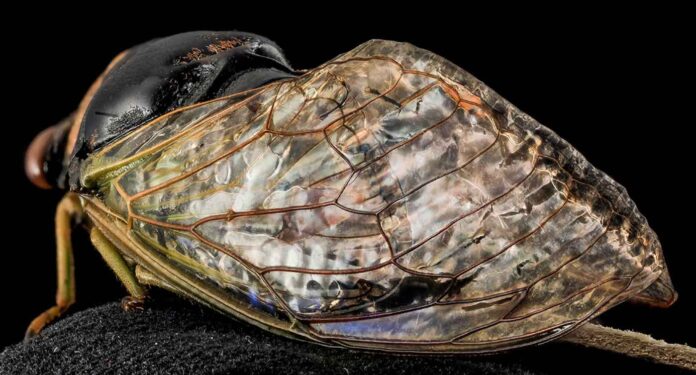
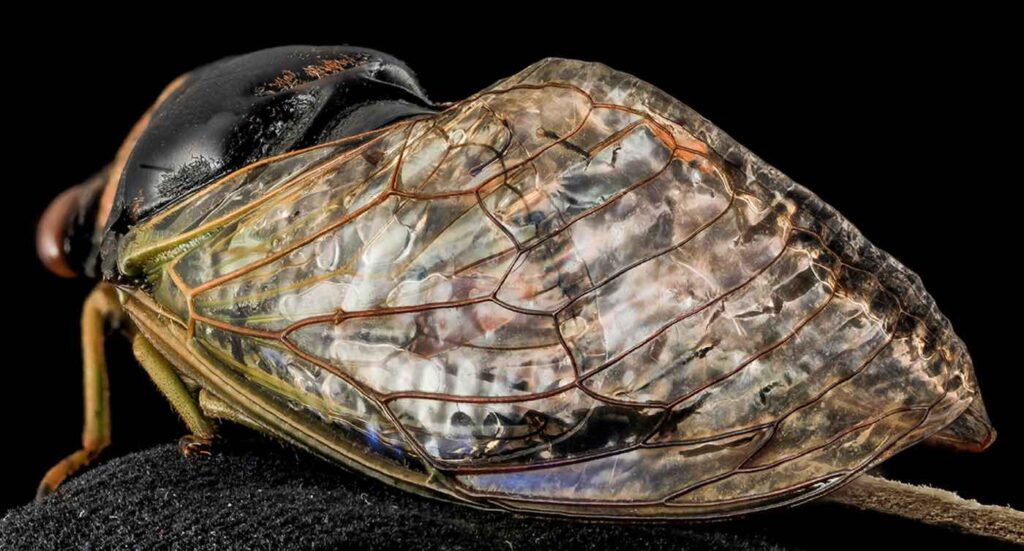
Cicada photo by Wayne Boo, U.S. Geological Survey
One strategy has been to create surfaces so repellent to moisture that these microbes find nothing they can cling to. These surfaces are called hydrophobic (“water hating”), and researchers are looking to mimic naturally-occurring materials produced by animals that can repel water very effectively—and bacteria, too.
A team of researchers at the University of Illinois at Urbana-Champaign and the U.S. Army Corps of Engineers’ Construction Engineering Research Laboratory has identified a cheaper, faster way of producing these surfaces.
The lotus leaf is a particularly famous example of a hydrophobic material, but scientists have also found that cicada wings are naturally water repellent. Marianne Alleyne, an entomology professor at the University, has co-led a new study on how we may fabricate the same surface structure cheaply and quickly.
In the study published in Nano Letters, Alleyne and her colleagues presented a simplified version of a fabrication process called nanoimprinting lithography. With this process, the team designed a template for copying the wing structure of Neotibicen pruinosus, an annual cicada found in the central region of the United States.
“We chose to work with wings of this species of cicada because our past work demonstrates how the complex nanostructures on their wings provide an outstanding ability to repel water. That is a highly desirable property that will be useful in many materials engineering applications, from aircraft wings to medical equipment,” Alleyne said.
The team’s new process involves using cheaper materials—commercial nail polish, for example—rather than more expensive materials. The technique also avoids the higher temperatures that would harm the natural samples used by teams in the past.
To make the template, which can be copied and printed, the team applies a quick-drying nail polish directly to a cicada wing, which is then left to cure at room temperature. Once completed, the template can be coated with a polymer or metal, with the inside dissolved away, leaving only the replica metal or polymer.
This newer, simpler method is the first step toward inventing new ultra-hydrophobic surfaces with a variety of applications, the most important of which may be preventing bacteria and viruses from establishing themselves and spreading.
A Spanish biotech company is looking to generate renewable energy from the very soil upon which our homes are built.
Bioo
Described as the world’s most disruptive startup in 2016 by Google, Bioo (pronounced Bee-oh) creates batteries that utilize soil microbes to generate electricity in a simple yet ingenious way.
When the ground in which the battery is set is irrigated or receives rain, nutrients and microbes in the soil that feed on decaying plant matter leach into the battery where their feeding activity creates protons and electrons. When combined with oxygen flowing in through holes in the battery, the process generates enough electricity to power lights, screens, or small appliances.
The goal of Bioo is to scale up their technology until their soil-powered units could generate power for an entire house, which might not be so difficult since the manufacturing doesn’t require any toxic or rare earth minerals like some PV solar panels do.
Bioo is using potted plants in much of their research because plants expel the excess energy from their photosynthesis through the roots, which can be captured to power small devices.
Currently a house is a bit beyond the reach of founder Pablo Vidarte. However, he has created several innovative ways to showcase his ideas and hopefully generate the data and capital needed to scale up.
One of these showcases is the Living Installation, for which plants are used like biological on/off switches. After receiving a certain radio frequency, Vidarte has discovered that certain potted plants can produce energy through his systems and be used like living electrical switches, powering on lights, screens, music, and even extending wifi, for use in a home or retail environment.
12Working on the Spanish island of Ibiza, Vidarte’s larger Bioo panels are powering the outdoor lighting installed throughout the company’s property, which turn on at night.
Unlike solar panels which require batteries to store energy for use when the sun isn’t shining, or wind turbines that stop moving without a breeze, soil microbes never sleep—and never stop generating energy. The flow of power is consistent, even in the middle of a night, or on a windless day. The Bioo panel will also save water beneath a garden or lawn because it is generating extra H20 that is expelled in the soil.
And the 100% renewable energy panels, which currently can generate 3W per square meter, do not interrupt the natural landscape above the ground. Many city planners are eager to use them for powering lights, especially in parks.
“The technology itself has the potential to be very, very cheap,” Vidarte says. “After all, it just requires graphite and carbon-based substances that are really easy to obtain, are very abundant, and very cheap, as well.”
SHARE This Amazing Green Technology With Your Friends on Social Media…
Quote of the Day: “Be like a duck, paddling and working very hard inside the water, but what everyone sees is a smiling and calm face.” – Manoj Arora
Photoby: Joe Cox
With a new inspirational quote every day, atop the perfect photo—collected and archived on our Quote of the Day page—why not bookmark GNN.org for a daily uplift?
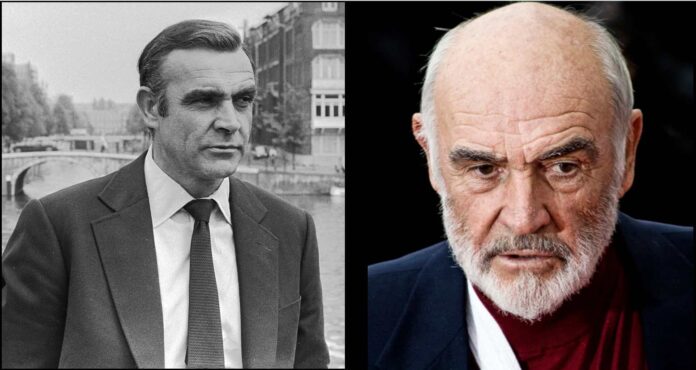
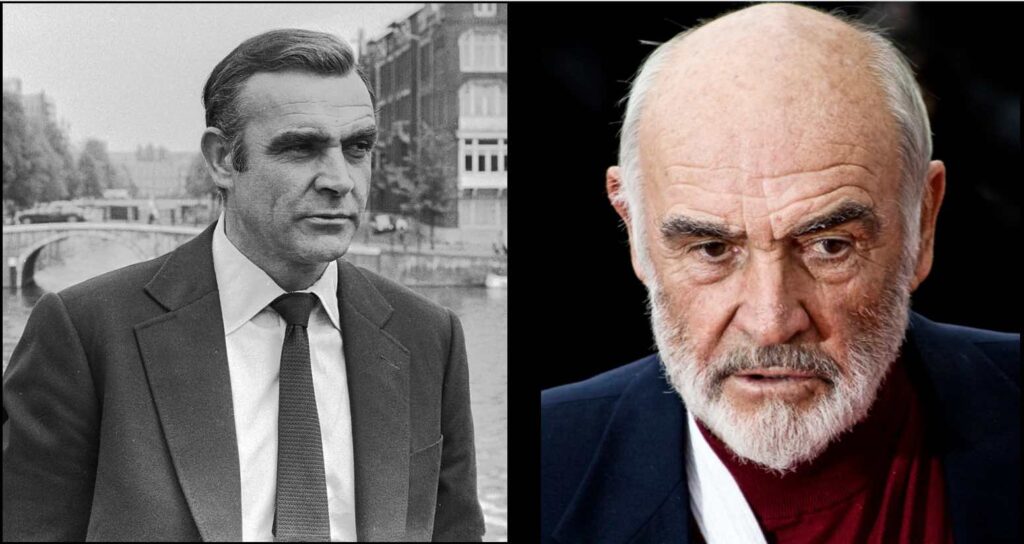
1971 photo by Rob-Mieremet, 2008 photo by Stuart Crawford – CC licenses
1971 photo by Rob Mieremet, 2008 photo by Stuart Crawford – CC licenses
We’re paying tribute to actor Sean Connery today, who has died peacefully in his sleep in the Bahamas, according to his family.
The Scottish superstar just turned 90 in August, but has been “unwell for some time,” said his son.
Sir Sean played the ultimate smooth and savvy spy in seven James Bond films, and earned an Academy Award for Best Supporting Actor for his role in the 1987 gangster film The Untouchables.
The 3-time Golden Globe winner also played prominent roles in the filmsThe Hunt for Red October, The Name of the Rose, Highlander, The Rock (about the Alcatraz island prison, co-starring Nic Cage) and Indiana Jones and the Last Crusade.
His distinctive silky voice with its Edinburgh accent has been a favorite of impressionists worldwide.
With his Bond films in the 60s—Dr No, From Russia with Love, Goldfinger, Thunderball, and You Only Live Twice, along with Diamonds are Forever (in 1971), and Never Say Never Again (in 1983)—he was largely regarded as being the best James Bond ever to play the role, named the preferred ‘007’ actor in many polls.
Daniel Craig, the current James Bond, said, “He defined an era and a style. The wit and charm he portrayed on screen could be measured in megawatts; he helped create the modern blockbuster.”
This blog was submitted to GNN by one of our readers for publishing. If you have an interesting story of kindness or positivity, be sure and send it to us for review.
By Anya
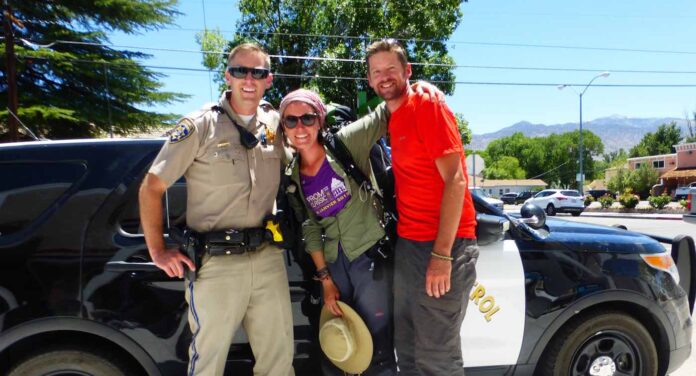
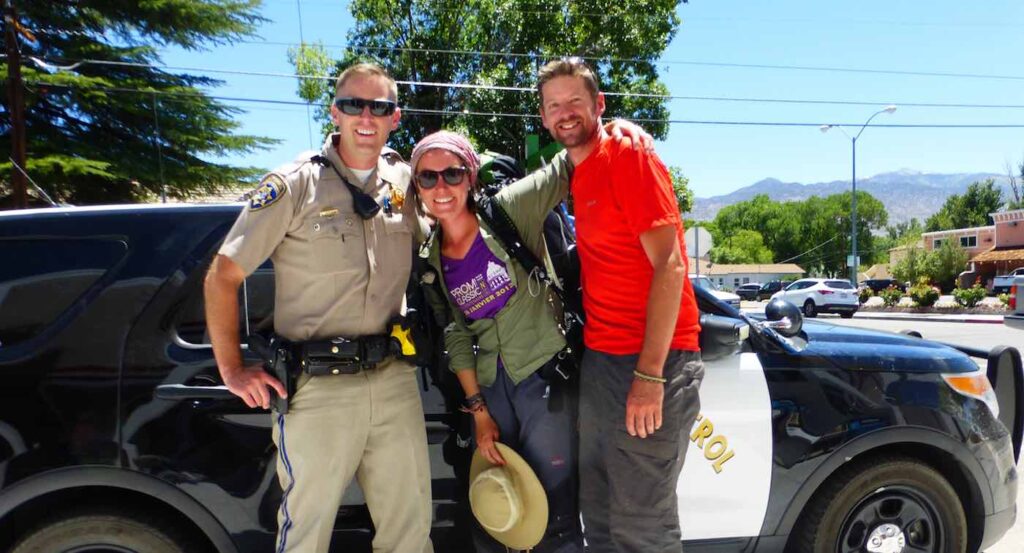
Dave Jones and his girlfriend, from Umbria, Italy, were hiking in the California mountains of the John Muir Trail, when they ran out of food and needed to re-supply.
They were near Independence and wanted to try to hitch a ride to the larger town of Bishop, 42 miles away.
Unsure of the laws, they walked to the edge of town and their hearts immediately sank, believing they were in trouble for thumbing a ride, when immediately “along came a police cruiser.”
Out stepped Adam Otten, of the highway patrol in Bishop, but instead of writing them a ticket, he offered them, “and one other smelly hiker”, a ride.
“Not only did I get to ride up front, with the girls prisoner in the back, Adam offered to stop at his dad’s BBQ place for lunch,” Jones told GNN.
They were starving after having eating nothing but dried vegan hiking food and chia-breakfasts for a week. Once at the Copper Top grill, Dave feasted on a pulled pork sandwich, while his girlfriend enjoyed a mound of potato salad.
Adam then proceeded to drive the trio the rest of the way, dropping the hikers safely in Bishop.
“He was a true gent and explained that his job was to ‘Protect and Serve’: “When I’m not protecting, I’m serving’.”
Across the Philippines, during the 200-day community quarantine period, crime has plummeted, though no one is sure why.
Cases of robbery and theft decreased by 60 percent, the Philippine National Police said in early October.
It also revealed that serious crimes, including murder, homicide, physical injury, rape, robbery, and theft, were reduced by 46 percent nationwide during the same period—from March 17 to October 2.
“Translated to a daily crime average, the Philippines has recorded an average of 93 criminal incidents per day during the 200-day implementation of the community quarantine compared to 174 per day incidents of the 200-day period before the community quarantine implementation,” said Police Lt. Gen. Guillermo Lorenzo Eleazar, according to the Manila Bulletin.
Eleazar said the data continues to defy expectations and perceptions of a sudden increase in crime, particularly robbery and theft, as the coronavirus pandemic brought loss of livelihood and other economic difficulties.
Four years into its mission more than 200-million miles from Earth, NASA’s OSIRIS-Rex spacecraft landed on an asteroid to retrieve a sample of primordial dust and pebbles from the celestial body that “could have helped seed life on Earth”.
NASA animation
This well-preserved, ancient asteroid known as Bennu offers scientists a window into the early solar system as it was first taking shape billions of years ago.
The historic grab was a first for NASA, which, after a decade of planning, launched the OSIRIS-REx (Origins, Spectral Interpretation, Resource Identification, Security, Regolith Explorer) in September, 2016.
With pre-programmed instructions, it unfurled its robotic arm, and briefly touched down to collect a 60-gram (2-oz) sample from the surface for delivery to Earth in 2023.
“Our industry, academic, and international partners have made it possible to hold a piece of the most ancient solar system in our hands,” said NASA Administrator Jim Bridenstine.
On October 20, it fired its thrusters to nudge itself out of its orbit around Bennu. It extended the shoulder, then elbow, then wrist of its 11-foot (3.35-meter) sampling arm, and transited across Bennu while descending about a half-mile (805 meters) toward the surface. After a four-hour descent, at an altitude of approximately 410 feet (125 meters), the spacecraft executed the “Checkpoint” burn, the first of two maneuvers to allow it to precisely target the sample collection site.
Ten minutes later, the spacecraft fired its thrusters for the second burn to slow its descent and match the asteroid’s rotation at the time of contact. It then continued a treacherous, 11-minute coast past a boulder the size of a two-story building, nicknamed “Mount Doom,” to touch down in a clear spot in a crater on Bennu’s northern hemisphere. The size of a small parking lot, the site is one of the few relatively clear spots on this unexpectedly boulder-covered space rock.
After collecting a sample, it fired its thrusters and safely backed away from Bennu.
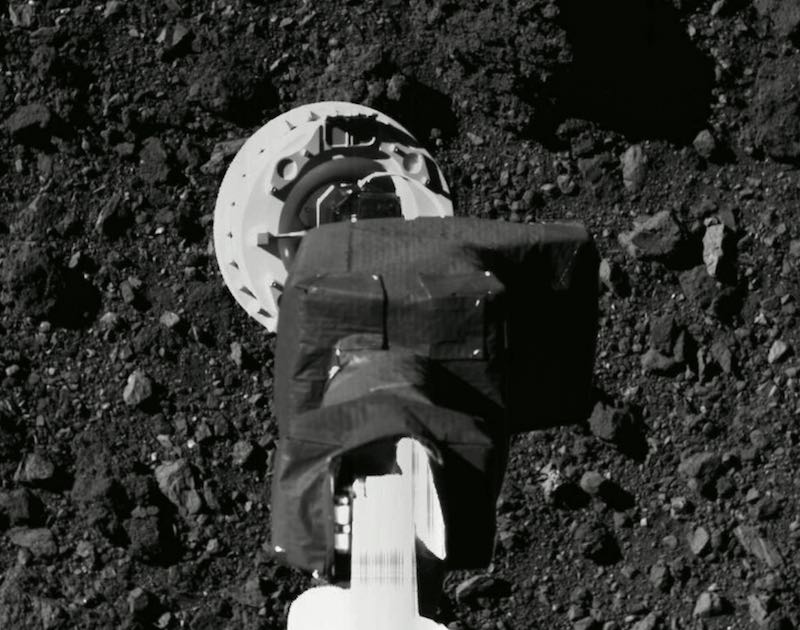
Actual footage of OSIRIS-Rex collection arm on Bennu – NASA
“This was an incredible feat – and today we’ve advanced both science and engineering and our prospects for future missions to study these mysterious ancient storytellers of the solar system,” said Thomas Zurbuchen, associate administrator for NASA’s Science Mission Directorate. “And we can’t wait to see what comes next.”
Two days after touching down on the asteroid, NASA’s OSIRIS-REx mission team received images that confirmed the spacecraft had collected more than enough material to meet one of its main mission requirements, then it spent two days working around the clock to carry out the stowage procedure. Given the distance from Earth, the team needed to work with a greater than 18.5-minute time delay for signals traveling in each direction. (Watch a cool animation below…)
The sample arm was then retracted to the side of the spacecraft for the final time, in preparation for its departure from Bennu in March 2021—the next time Bennu will be properly aligned with Earth for the most fuel-efficient return flight.
“Today’s TAG maneuver was historic,” said Lori Glaze, Planetary Science Division director at NASA Headquarters in Washington. “The fact that we safely and successfully touched the surface of Bennu, in addition to all the other milestones this mission has already achieved, is a testament to the living spirit of exploration that continues to uncover the secrets of the solar system.”
The Japanese space probe Hayabusa collected a tiny amount of dust particles from the surface of the Itokawa asteroid in 2005 and returned with them to Earth in 2010 for analyzing.
OSIRIS-REx arrived at Bennu in December, 2018, and began orbiting. The spacecraft is scheduled to return to Earth Sept. 24, 2023, when it will parachute into Utah’s west desert where scientists will be waiting to collect it.
According to NASA, its NEAR spacecraft in 2001 was the first human-made object to orbit an asteroid. It also survived touchdown and returned valuable measurements from the surface for about two weeks.
WATCH a cool video showing the collection procedure—and follow the progress of Osiris-Rex on the NASA website or at the mission page: AsteroidMission.org.
LAND This Historic News On Your Social Media Page to Inspire Awe in Your Friends…
45 years since one of the most charismatic and persecuted carnivores on Earth was listed under the Endangered Species Act (ESA), management of the gray wolf in the lower 48 states will now be passed to state and tribal governments, in what has been one of the ESA’s great successes.
The U.S. Fish and Wildlife Service based its final determination on the best scientific and commercial data available, a thorough analysis of threats and how they have been alleviated, and the ongoing commitment and proven track record of states and tribes to continue managing healthy wolf populations once delisted.
“After more than 45 years as a listed species, the gray wolf has exceeded all conservation goals for recovery. Today’s announcement simply reflects the determination that this species is neither a threatened nor endangered species based on the specific factors Congress has laid out in the law,” said Sec. of the Interior David Bernhardt in a statement.
Indeed, numbers of gray wolves have soared over the last four decades—from under a hundred refugees hiding out in northeastern Minnesota and Michigan’s upper peninsula to around 6,000 individuals.
Those populations would expand after receiving protection under the ESA, and now represent the forefathers of one of the genetically unique lineages of wolves.
Yellowstone NPS
Another lineage started to thrive in the 80s after wolves were released in Glacier and Yellowstone National Parks. Those wolves are now found in Colorado, as well as Wyoming, Montana, Idaho, Oregan, Washington, and Northern California.
Representative Rob Bishop (R) of Utah’s 1st District called the gray wolf program “one of the most successful species recoveries in history,” while California Congressman Ken Calvert (R) called the delisting “an important milestone that illustrates the positive gains made in recovering this treasured species.”
Management of wolf herds will pass to state and tribal wildlife management agencies, who will be able to better assuage the concerns of both conservation activists and ranchers, who do still lose cattle every year to wolf predation.
The ESA legislation is an unprecedented success. A peer-reviewed analysis from the Center for Biological Diversity found that not only has there never been a species that, once deemed recovered under the ESA, has fallen back into vulnerability, but out of 291 plant and animal listings, 99% have been saved from extinction.
Gray wolves were shot, poisoned, and run down across the lower 48 mostly due to predation of cattle during the 20th century until there were only a few dozen hiding out on Isle Royale and in rural Minnesota.
Wolves lived on in Alaska, the only state where for many years it was possible to see them in large packs. Today there are between 7,000 and 11,000 wolves in Alaska, along with the 6,000 in the lower 48 states.
The Mexican wolf, as GNN has reported, is still critically endangered, and was not included in yesterday’s delisting even though the two are nearly the same species.
SHARE This Good News With Animal Lovers on Social Media…
Quote of the Day: “It takes courage to grow up and become who you really are.” – E.E. Cummings
Photo: by Adli Wahid
With a new inspirational quote every day, atop the perfect photo—collected and archived on our Quote of the Day page—why not bookmark GNN.org for a daily uplift?
Maybe you think you’re living in a horror movie in 2020, but ‘tis the season to get into the spirit.
A study of 2,000 Americans who celebrate Halloween revealed 66% think watching a horror movie actually serves as a fun escape from the year 2020.
This year has served up enough scares and surprises that 58% of those polled want to celebrate Halloween nostalgia over genuine scares.
Nearly three-quarters of respondents (72%) with kids under 16 said they plan on watching Halloween movies with the family and 63% will introduce their children to Halloween classics this year.
The survey, conducted by OnePoll on behalf of Tubi, found plenty of movies to get viewers in the Halloween spirit.
Results found the most iconic Halloween movie of all time to be the titular “Halloween” with “The Nightmare on Elm Street” and “Scream” rounding out the top three.
Freddy Krueger from “The Nightmare on Elm Street” and Michael Meyers from “Halloween” were also cited as the number one and two scariest horror movie villains of all time, followed closely by Norman Bates from “Psycho.”
Respondents also confessed that there are some famous lines from horror movies that will immediately send a shiver down their spines.
“I see dead people” from “The Sixth Sense” was found to be the most iconic scary movie quote.
“Heeeere’s Johnny!” (The Shining) and “They’re here” (Poltergeist) came in at two and three on the list.
Sometimes words aren’t even needed to inspire fear. Results found the creepiest horror movie themes songs are from “Halloween,” “Friday the 13th,” and “The Exorcist.”
It doesn’t take long after pressing play for horror movie viewers to feel that building tension with the average person feeling stressed 13 minutes into the film.
Over half admitted they sit in dread from start to finish of a scary movie.
It’s no surprise then two in five have watched a horror movie that they refuse to re-watch to this day. Common movies viewers will never repeat were “Annabelle,” “Texas Chainsaw Massacre,” and “The Exorcist.”
Of those who were scarred by a specific flick, the average person was 19 when they saw it, and one in five would need to be paid over $500 to sit through that same scary movie ever again.
A spokesperson for Tubi said, “Revisiting a scary movie classic, especially around Halloween time, can be a fun form of escapism and way to celebrate the season.”
After the credits roll on a horror movie, respondents have routines in place to make sure they fall asleep‒eventually.
Over a third (36%) will sleep with the lights on that night while 33% have to double-check all the locks at home.
Three in ten will leave the TV or music playing and a quarter (24%) will make sure all the closet doors are closed.
Twenty-four percent will even run and jump into bed to avoid any monsters under the bed.
The spokesperson for Tubi added, “There’s a reason that these classic Halloween movies have stood the test of time, and why horror fans continue to revisit them each year.
Whether you want to get truly spooked, or are looking for something more lighthearted to celebrate the holiday, there are plenty of options to keep your movie marathon going throughout the month of October.”
MOST ICONIC HALLOWEEN MOVIES OF ALL TIME
Halloween 46%
The Nightmare on Elm Street 24%
Scream 22%
The Exorcist 21%
Beetlejuice 21%
Friday the 13th 15%
Carrie 13%
Rocky Horror Picture Show 10%
Child’s Play 9%
The Shining 7%
The Conjuring 6%
The Texas Chainsaw Massacre 5%
Psycho 5%
A Quiet Place 5%
Night of the Living Dead 5%
It 4%
The Blair Witch Project 4%
The Witch 4%
Saw 4%
Poltergeist 3%
Insidious 3%
Get Out 3%
Paranormal Activity 3%
Candyman 3%
The Sixth Sense 2%
Last House on the Left 2%
The Babadook 2%
The Ring 2%
It Follows 1%
Midsommer 1%
ICONIC SCARY MOVIE QUOTES
“I see dead people” (The Sixth Sense) 37%
“Heeere’s Johnny!” (The Shining) 34%
“They’re here” (Poltergeist) 27%
“You’re gonna need a bigger boat” (Jaws) 23%
“Whatever you do, don’t fall asleep” (Nightmare on Elm Street) 21%
“It’s alive!” (Frankenstein) 20%
“Do you like scary movies?” (Scream) 20%
“A boy’s friend is his mother” (Psycho) 19%
“Do you want to play a game?” (Saw) 17%
“The power of Christ compels you” (The Exorcist) 13%
HAUNT Your Friends With This Ghoulish Poll on Social Media…
Like hundreds of others, 9-year-old Reese Osterberg and her family were devastated to lose their home last month in California’s Fresno County Creek Fire.
A huge baseball fan, Reese’s precious baseball card collection was also lost to flames. She’d been collecting since she was 6-years-old, and over three years she’d amassed an impressive 100 cards she was proud of.
When the Fresno County Fire crew heard about Reese’s collection, they decided to do their bit. Spreading the word on Facebook, they asked if anyone could help a little girl by donating some of their own cards.
Luckily, San Jose’s Kevin Ashford saw the post on social media. He told NBC Bay Area, “I got to thinking about what I had in the garage… I thought, you know, what of instead of selling them on eBay, I’m going to donate them. I’m gonna donate them all and put a smile on a little girl’s face.”
In the World Health Organization’s annual global tuberculosis report, the UN agency responsible for international public health forecasts hundreds of thousands of people recovering from, or avoiding the disease of TB altogether.
Since 2000, TB treatment has averted the deaths of 60 million people, the disease itself being treatable with the right medicine.
“In 2014 and 2015, all Member States of WHO and the UN committed to ending the TB epidemic, through their adoption of WHO’s End TB Strategy and the UN Sustainable Development Goals,” read the executive summary of the report. With five years gone and 10 to go before the 2030 Sustainable Development Goals are examined, how is the End TB Strategy looking?
In the last five years, global incidence of TB fell by 9%. Furthermore, this was not restricted to wealthy countries in places like Europe—which managed a 19% drop over the same period. This fall in TB cases also took place among several poorer regions of the globe, like sub-Saharan and East Africa, with the nations of Zimbabwe, Tanzania, Ethiopia, Kenya, Namibia, South Africa, and Lesotho contributing the most to a 16% reduced total continental case rate.
The cumulative total of TB deaths in the world also went down, falling 14% over the last five years. Europe, with its strong economies and widespread access to quality medical care, dropped the rate of TB death by 31% during this period, while Africa has made “good progress,” dropping theirs by a fifth with far fewer resources.
“At the end of 2019, global indicators for reductions in TB disease burden, improved access to TB prevention and care and increased financing were all moving in the right direction,” reads the 2020 report, after describing that annual financing for the End TB Strategy programs in 121 low and middle-income member states was about $500 million more than expenditures.
Even in the midst of a global pandemic, it’s important not to forget other infectious diseases, like malaria and tuberculosis, which still require diligent efforts to combat in regions like Southeast and Central Asia, Africa, and Oceania.
SHARE the Hopeful Public Health News With Friends On Social Media…
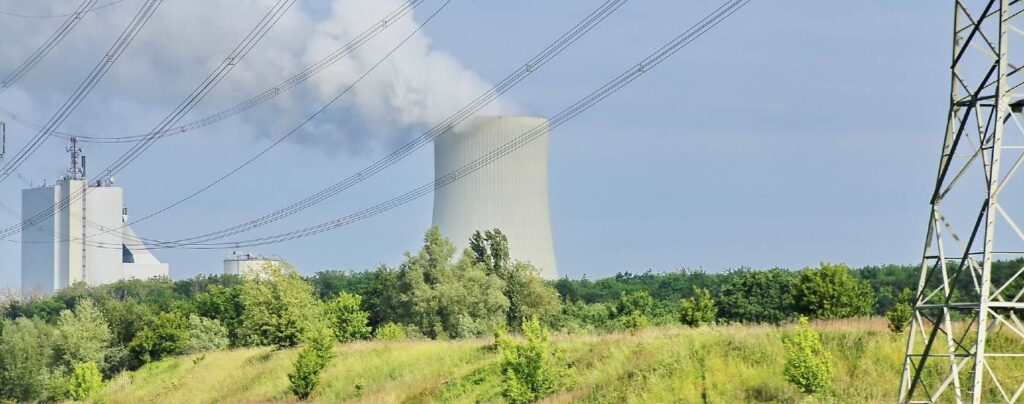
Containing a large chunk of the total world population, the people of China, India, Russia, and the United States have all helped and worked dramatically to slash the levels of the toxic air pollutant sulfur dioxide (SO2).
ETA+
In 2019, the levels of anthropogenic SO2 emissions fell worldwide by 6%. In only the second time ever, SO2 emissions fell in all three of the countries most responsible for emitting it: China, India, and Russia.
This was based on NASA satellite data that measured levels of the colorless, mildly toxic gas that is generated from activities like burning coal without scrubbers, or other lab processes that remove the sulfur before the coal is used, but also from certain highway vehicles, chemical manufacturing, metal smelting for industry, and some recycling procedures like metal recycling.
In the United States, the trend has been one of almost continuous fall: from the 1970s, when 31 million U.S. tons of SO2 was created by human-made activities, to now, when the number stands at 2.17 million. A loss of 300,000 U.S. tons from 2018-2019 numbers means that the country also joins these other three powerful nations in dropping SO2 emissions of late.
India was the state that saw the greatest fall. As some coal plants have shut down and the country sees a greater utilization of renewables, 414,000 fewer U.S. tons of produced SO2 has been the result.
Over the same period, China experienced a 5% fall, which while being the lowest drop this decade, is still impressive, and the country has decreased SO2 emissions by 87% since 2011. This was primarily down to the increase in use of fuel scrubbers and refineries in the country.
Russia lay claim to the largest percentile drop—8%, translating to roughly 340,000 U.S. tons of toxic gas. The amounts of SO2 created by their oil, coal, and gas burning is actually less than the amount produced by the volcanoes which happen to be confined in its borders, much of which comes from the extremely volcanic Kamchatka Peninsula across the straits from Alaska.
SHARE This Breath of Fresh Air With Friends on Social Media…