Researchers suggest employees should take a cue from Jimmy Fallon’s Thank You Notes segment on “The Tonight Show” to improve workplace behavior.
QuoteCatalog.com
A recent University of Central Florida study suggests employees who keep a gratitude journal exhibit less rude behavior and mistreatment of others in the workplace.
“Gratitude interventions are exercises designed to increase your focus on the positive things in your life. One intervention involves writing down a list of things you are thankful for each day,” says management Professor Shannon Taylor, who teamed up with fellow management Professor Maureen Ambrose and doctoral student Lauren Locklear for the study, published in the leading peer-reviewed journal Applied Psychology.
“That simple action can change your outlook, your approach to work, and the way your co-workers see you.”
Workplace mistreatment can cost organizations millions of dollars each year—because gossip, exclusion or ostracism results in productivity loss, employee turnover, and even can lead to litigation.
“While organizations spend quite a bit of time and money to improve employee behavior, there are not a lot of known tools available to actually make the needed changes,” Locklear said.
“We found the gratitude journal is a simple, inexpensive intervention that can have a significant impact on changing employee behavior for the better.”
For two weeks, study participants spent a few minutes a day jotting down the things, people and events they were grateful for—and as a result, their coworkers reported that they engaged in fewer rude, gossiping, and ostracizing behaviors.
“Gratitude exercises are becoming increasingly popular products to improve employee attitudes and well-being, and our study shows managers can also use them to foster more respectful behavior in their teams,” Taylor says.
PASS On The Positivity And Share The Story With Friends–And Your Boss.
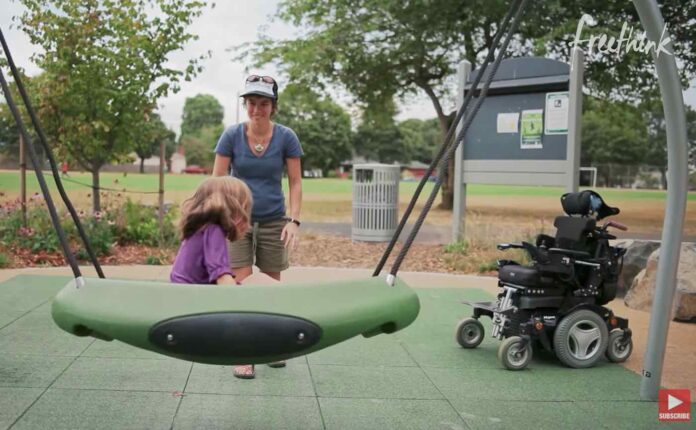
When this devoted Oregon dad set out to revolutionize his local playground in Portland, he had only planned on making it more disability-friendly for his daughter Harper, who has been using a wheelchair for her entire life.
Eleven years later, his ideas are making playgrounds more fun and accessible for everyone—regardless of their disability.
G Cody QJ Goldberg was inspired to redesign the modern playground after he took Harper to a playground for the first time in 2009. To his dismay, he found that the wood chips surrounding the play equipment made it inaccessible for his 4-year-old daughter’s wheelchair.
Upon hearing the Goldberg’s frustrations, the city’s parks and recreation department said that they didn’t have the money for any new projects—but they would support the playground’s reconstruction if it was privately funded.
The Goldbergs then launched Harper’s Playground, a nonprofit devoted to opening more handicap-accessible US playgrounds—and after three years of tireless fundraising, they opened their first park to the public in November 2010.
The playground features everything from musical instruments and handicap-accessible play equipment to green social spaces and paved ramps—which are used by skateboarders and wheelchair users alike.
Goldberg told Freethink that Harper’s Playground in Portland is designed with three levels of enrichment for children.
“The space has to be physically inviting, so if you use wheels you can get absolutely everywhere,” says Goldberg. “Then we say it should be socially inviting, with circular seating areas, communal gathering spaces and the use of nature. And then the third level is what we call emotionally inviting, and that’s by using art, good design lines, music, and things that put us in an even better emotional state.”
Since launching their park in Portland, the nonprofit has inspired the construction of several other similarly-designed playgrounds across the US.
(WATCH the Freethink video below) – Photo by Freethink
Be Sure And Share This Inspiring Story Of Inclusivity With Your Friends On Social Media…
This is the GNN story that ran 10 years ago today, when the world was glued to their televisions to witness a historic rescue of epic proportions. Nations of the world worked together to engineer a solutions that would save dozens of miners entombed for over two months. In 2020, when nations are faced with many more historic challenges, this is a keen reminder of what determination and spirit can accomplish….
[October 13, 2010] One by one, rescuers in Chile are freeing 33 miners who have been trapped underground since early August. Never before had anyone been rescued from such a depth—more than a third of a mile (622-meters) underground.
So far, 16 miners have been raised to freedom in the unprecedented and complex rescue operation in northern Chile.
The men are emerging from the rescue capsule to the cheers of the rescuers, officials and family members. Some quietly knelt in prayer before being taken away on gurneys for immediate medical examinations. They were trapped underground for 69 days—more than anyone on record.
The escape shaft is so deep that it takes about an hour for each rescue.
The miners are being brought to the surface in a metal rescue chamber called “Phoenix”, designed by NASA. The men are wearing dark glasses to protect their eyes from bright light after more than two months in the dark mine.
The first person rescued, 31-year-old Florencio Avalos, embraced his son and wife before being greeted by President Pinera. One miner brought up rocks to the surface, handing them out to a group of rescuers as he shook their hands.
Chile’s health minister, Jaime Manalich, said the workers already rescued are in good health.
More than 1,000 journalists have convened at the site in the Chilean desert, and the event is being broadcast live by Chilean television and on stations around the world.
The miners were trapped in hot, humid conditions since an August 5 cave-in that sealed them deep in the recesses of the San Jose copper and gold mine.
U.S. President Barack Obama Tuesday offered his thoughts and prayers to the miners. He said Americans pray the miners will emerge safely. State Department spokesman P.J. Crowley sent a message by Twitter congratulating Chile for the successful rescue of the first miner, calling it a “remarkable display of hope and skill.”
President Pinera said the mine, which has had a history of accidents, will be closed until the safety of those working there can be guaranteed.
Companies from the around the world have helped in the rescue, like UPS which shipped the container to the desert where the mine is located. A Texas company provided the health monitors worn by the miners as they rose to the surface through the shaft. Another company donated sunglasses.
WATCH video below, of the first miner rescued, from CNN…
Quote of the Day: “Never, ever underestimate the importance of having fun.” – Randy Pausch
Photo: by Scott Webb
With a new inspirational quote every day, atop the perfect photo—collected and archived on our Quote of the Day page—why not bookmark GNN.org for a daily uplift?
Reprinted with permission from World At Large, a news website of nature, politics, science, health, and travel.
Comprising 30% of the body’s total protein mass, collagens are characterized by sturdy, flexible chains of around 1,400 amino acids that play a key role in bone, skin, and muscle health.
Aging decreases our body’s capacity for synthesizing new proteins, and as a result collagen levels can fall by as much as 75% by the time a human being reaches 80 years of age.
Experts in several biological fields such as longevity or dermatology have suggested that supplementing with hydrolyzed collagen (HC) can delay some of the hallmark traits we associate with aging such as hair loss, wrinkling of the skin, joint and muscle pain, and skeletal brittleness.
Here’s a look at the literature on how hydrolyzed collagen supplements can be good for not just bones, joints, and skin, but also for attenuating the effects of certain diseases like osteoarthritis, diabetes, and inflammation.
Hydrolyzed collagen for bones
As one of the sturdiest protein structures owing to its triple-helical shape, HC can benefit bone health in a number of ways, both as an attenuator of bone diseases like osteoarthritis, and as a fortification for bone cells.
“The benefits of hydrolyzed collagen for osteoporosis prevention go beyond the effect of a simple protein supplementation,” write the authors of an in vitro study which found that bovine-derived HC stimulated the growth of bone cells like osteoclasts and osteoblasts, while increasing mineralized bone-matrix formation–findings which corresponded with an in vivo analysis of post-menopausal woman with osteoarthritis.
Rhonda Patrick Ph.D. highlights on her blog that the importance for collagen in bone health can be summarized by the fact that certain genetic mutations in collagen-producing genes can lead to misshapen and more easily fractured bone structures.
Bone mineral densities were increased in post-menopausal woman with reduced bone density, notably around the neck and spine, after a period of supplementing with a hefty 5 grams of HC accompanied by 500 to 800 milligrams of calcium and 400 – 800 IUs of vitamin D.
Contradictory research done on a similar group of women with osteopenia, a condition characterized by bone-density loss, found no gains in bone metabolism. However some of the woman were deficient in calcium, and others were overweight, both conditions that are proven to negatively affect bone health.
While this muddies the waters in the discussion on bone health when supplementing with HC, it may have revealed that simply accompanying it with a calcium supplement is enough to see the similar benefits experienced by the individuals in the other studies.
Hydrolyzed collagen for skin health
Pedrosimoes7
The ultimate reason to describe HC as an anti-aging supplement would be its effects on skin.
Type I and III collagen are most common in skin and have been shown in multiple studies to increase hydration levels, and reduce the appearance of wrinkles, crow’s feet, and numerous other decreases in facial elasticity.
“Knowledge of the role of collagen in the aging process over 30 years ago helped to establish the use of bovine collagen as a filling agent to temporarily replace collagen lost with age in soft tissue” write the authors of a broad review on dermal aging, noting another study that found collagen production decreases on average by about 1% per year.
Skin dryness, crow’s feet, wrinkles, and overall skin elasticity improved by 7% after 4-8 weeks of supplementing with between 2.5 and 5 grams of HC, with a notably more significant result coming from the oldest women in the randomized controlled trial (RCT).
It should be noted that collagen is the highest correlating factor with skin thickness, or a lack thereof, and if anti-aging is to be considered function over form, then skin less easily penetrated by UV rays, bacteria, and dust is perhaps more desirable for some individuals than younger looking skin.
Another RCT of women from 40-60 years of age who took 1 gram of HC along with vitamin C for 12 weeks showed that the HC-supplemented group had a 7.23-fold greater improvement in skin hydration at six weeks.
Hydrolyzed collagen for joint health
Geri Weis-Corbley
Joints are another group of tissues that experience improved health outcomes with HC.
Collagen II contributes 60% of dry weight to joint cartilage, and diseases like arthritis and osteoarthritis often begin, and can be accelerated by, the wear down and loss of joint cartilage.
In an RCT involving 80 men and women with osteoarthritis, scientists found when 600 milligram of HC was taken along with 200 milligrams of chondroitin, another supplement commonly taken for joint health, and 100 of hyaluronic acid, the participants’ self-reported pain related to their osteoarthritis decreased by 35% after 70 days.
They also reported decreases in stiffness, and functional limitations with their affected joints.
Other studies looking at the effects of HC and undenatured HC supplements with rheumatoid arthritis found statistically significant effects even with very small doses.
Arthritis of all kinds, as well as dermal aging, bone density loss, and joint deterioration, all share their #1 correlative factors, which would be age. HC, being capable of attenuating these conditions, could therefore be considered an anti-aging compound.
SHARE The Good Health News On Social Media With Pals…
Is there a more joyful, innocent, exuberant feeling in the world than puppy love? It’s an emotion that has no strings or reservations, and since a dog’s love is most often unconditional, it’s aptly named as well.
Priscilla Du Perez
When a dog licks your face, jumps into your lap, or barks like a banshee when you come through the front door, it simply means they’re crazy about you.
But did you know that your dog’s heartbeat actually soars when you tell them, “I love you?”
Well, according to a recent study conducted by the folks at Canine Cottages, that well may be the case.
After equipping a quartet of test pups with heart rate monitors, the dogs were guided through a series of scenarios over the course of seven days to see how they’d react to a variety of stimuli.
The tracking data revealed the four dogs averaged a resting heart rate of 67 beats per minute.
When owners said, “I love you” to their pets, the doggos’ heart rates shot to 98 beats per minute—a 46.2% increase.
While your dog perks up to the tune of a 10.4% heart-rate jump just for setting eyes on you, some activities actually had a calming effect on the pooches.
Quality couch time cuddling resulted in a 22.7% decrease in canine heart rates.
While it’s certainly not the most scientifically exhaustive study ever conducted and the conclusions drawn are possibly a bit shaggy, who are we to argue about the bond between “hoomans” and their hounds? Love is, after all, a four-legged word, isn’t it?
SHARE The Good News With Your Pup-Loving Friends on Social Media…
Over the next few years, three million local trees–from fig to mahogany–will be planted in Uganda, benefitting people, the planet, and our closest wildlife relatives, chimpanzees.
Julie Ricard
Earlier this year, the reforestation non-profit One Tree Planted and the Jane Goodall Institute announced they’re working together on a “Wildlife Habitat & Corridor Restoration Project” in Uganda.
As part of the effort, from 2020-2023 millions of native trees will be planted in western Uganda, supporting long-term and large-scale restoration of the Albertine Rift.
The Albertine Rift landscape is a diverse, globally recognized ecosystem which is crucial to many species and is a prominent habitat for endangered chimpanzees.
It also houses over 50% of birds, 39% of mammals, 19% of amphibians, and 14% of reptiles and plants of mainland Africa.
The aim is restore and manage these vital wildlife communities, ultimately providing significant ecological, socio-economic, and cultural benefits to the people of the area, too.
According to a release, Uganda’s forests have face a multitude of threats, including large and small-scale agriculture, logging, and fire.
“We need to protect the existing forests,” Dr. Jane Goodall. “We need to try and restore the forest and the land around the forest that has not been degraded for too long, where the seeds and roots in the ground can sprout up and once again reclaim that land and make it an amazing forest ecosystem.”
That’s why, over the next few years, a total of three million seedlings will be planted (with an at least 60% estimate survival rate), 700 households will be trained and supported to apply sustainable agroforestry practices on their land, and each village in the project area will have at least one trained individual on forest monitoring.
Both non-profits recognize that critical in achieving lasting conservation outcomes is the need to balance conservation objectives and socio-economic needs.
Accordingly, this project will continue to support over 3,500 households in sustainable livelihoods through smoke-free and more efficient wood-burning stoves, improved agricultural practices, establishing community-managed enterprises and microcredit programs, and sustainable production techniques that increase incomes while protecting forests.
Collaborative Forest Management (CFM) groups will also be established in order to monitor forests and will protect watersheds to improve groundwater recharge that feed wells and streams for wildlife and people alike.
Plastic is polluting our rivers, lakes, and oceans, harming wildlife, and generating microplastics in the water we use and drink. That’s why the Canadian government is promising to ban single-use plastics in 2021.
Brian Yurasits
Every year, Canadians throw away 3 million tonnes of plastic waste, only 9% of which is recycled, meaning the vast majority of plastics end up in landfills and about 29,000 tonnes finds its way into our natural environment.
On October 7, Canada’s Minister of Environment and Climate Change, Jonathan Wilkinson, announced the next steps in the government’s plan to achieve zero plastic waste by 2030. The plan, he says, will protect wildlife and waters, reduce greenhouse gas emissions, and create jobs.
A key part of the announcement is a ban on harmful single-use plastic items where there is evidence that they are found in the environment, are often not recycled, and have readily available alternatives.
Based on those criteria, the six items the government proposes to ban are plastic checkout bags, straws, stir sticks, six-pack rings, cutlery, and food ware made from hard-to-recycle plastics.
This list of items was published last week in the discussion paper Proposed Integrated Management Approach to Plastic Products to Prevent Waste and Pollution.
This plan also proposes improvements to recover and recycle plastic, so it stays in the economy and out of the environment.
The Canadian government is also proposing to establish recycled content requirements in products and packaging.
This, they say, will drive investment in recycling infrastructure and spur innovation in technology and product design to extend the life of plastic materials.
Together, all federal, provincial, and territorial governments have agreed to the Canada-wide Strategy on Zero Plastic Waste that lays out a vision for a circular economy for plastics, as well as a two-phase action plan that is being jointly implemented. That sounds like good news for the environment, and all our futures.
SHARE The Good News With Your Friends On Social Media…
It’s not your typical proposal, but in a year that’s been anything but normal, one English gent found the perfect way to ask his girlfriend to marry him… with a pizza.
SWNS
Loved up 27-year-old Walter Marano had planned to pop the question to his partner of five years, Sophia Florio in Italy.
But their holiday was canceled due to the coronavirus pandemic, so he decided to bring a taste of Italy to them instead.
He arranged a romantic meal at a restaurant in Fitzrovia, London, where waiters brought out heart-shaped pizzas.
They had the words “will you marry me?” written across them in crust and were presented to his girlfriend.
Walter pulled out the ring from his pocket and Sophia said yes before standing up to give him a kiss.
The other diners of course burst into cheers for the couple before they tucked into their meal.
“I love pizza–so it was the perfect proposal,” Sophia said. “It was a complete surprise. I had no idea it was coming… I can’t wait to spend the rest of my life with Walter.”
Sophia says she had not suspected a thing a thing when Walter promised a weekend getaway to London.
At the restaurant “it was beautiful and felt like we were actually in Italy,” Sophia said. “It was the best feeling ever,” she added.
SWNS
“Even with an audience it was very intimate and romantic.”
The love-up pair are planning to tie the knot in Italy in 2022, and are excited for the process of checking out venues.
The couple have been together for five years and Sophia is known for being fussy.
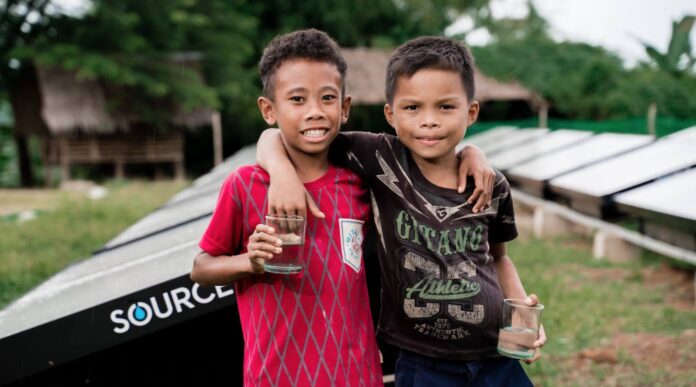
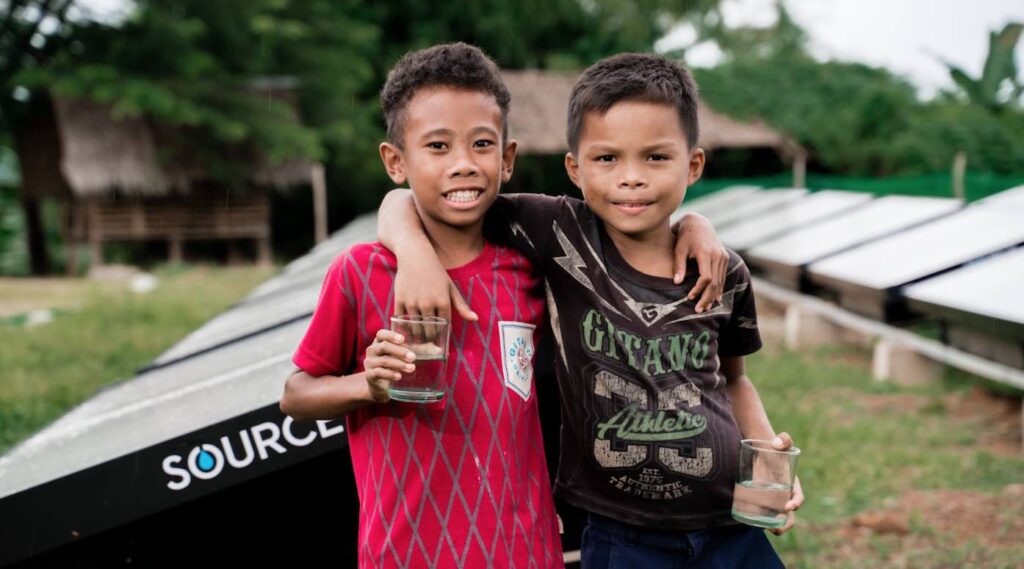
Last week SOURCE Global announced their third successful collaboration with Conservation International, which is delivering sustainable, clean drinking water to the Indigenous peoples of Palawan in the Philippines.
SOURCE Global
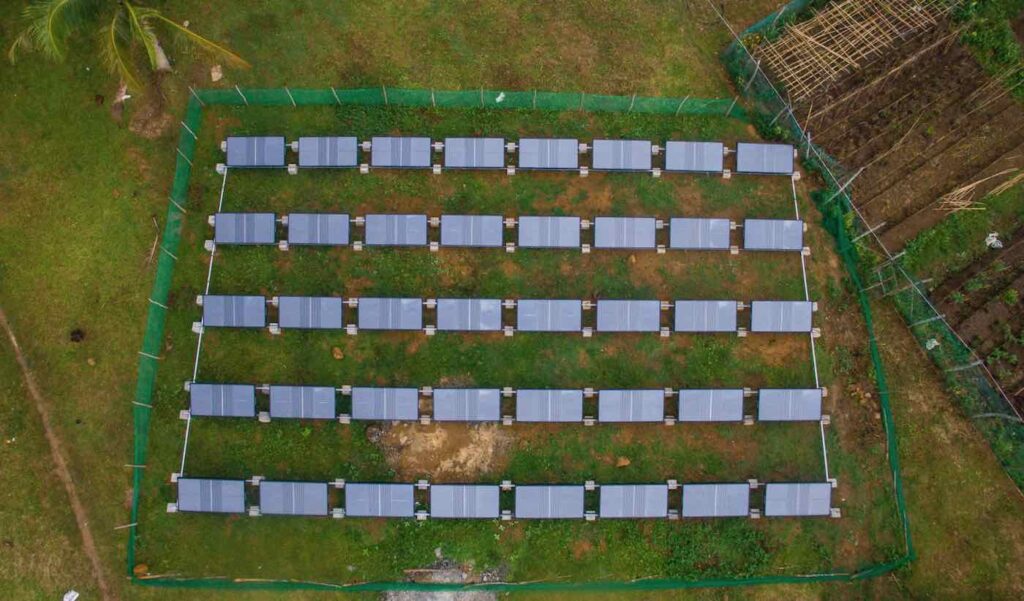
The array of SOURCE Hydropanels will create more than 40,000 liters of renewable drinking water each year, powered only by sunshine, while offseting more than two million plastic water bottles.
“Remote locations—otherwise nearly impossible to serve—are where SOURCE Hydropanels shine; and this Palawan indigenous community now has renewable, cost-efficient, and clean drinking water that will improve their lives,” said Cody Friesen, Founder and CEO of SOURCE.
Headquartered in Scottsdale, Arizona, the company’s partnership with Conservation International has delivering water in two other hard-to-reach locales—in Bahia Hondita, Colombia and Atauro Island in Timor Leste.
The global nonprofit climate-tech accelerator Elemental Excelerator funded the grant supporting the global partnership’s efforts, and both the US Embassy, Manila, and the Philippines government were instrumental in expediting the installation.
(Find out more about how the panels work in a recent GNN story from Arizona about Navajo households getting the same technology from Zero Mass Water that produces 4-10 liters of water each day.)
The Iraan, Rizal, community of Binta’t Karis is approximately a five hour drive from the nearest major city, and located in the protected area of Mount Mantalingahan, the highest point on the Philippines’ fifth largest island. The area has limited water infrastructure, most of which is powered by gravity to reach communities at the base of the mountains.
This does not serve the Binta’t Karis, who live at a higher elevation. Now, 100 families and students at Binta’t Karis Elementary School will have access to safe, potable water for drinking, cooking and sanitation.
“The lack of a reliable and clean water source, and the sicknesses this caused, has troubled this school and their community greatly over the years. Now, there won’t be worry about where they can get drinking water as there is an accessible and consistently available source of clean water,” said Ma. Pearl Lagrada, community administrator.
The project complements Conservation International’s long standing partnership with the Philippines government to implement sustainable solutions with the highest potential for positive impacts on Palawan’s highland communities, their rich biodiversity, and for our global climate. In 2016, the group helped create the integrated management plan of Palawan’s Mount Mantalingahan Protected Landscape (MMPL) and supported the establishment of the nation’s first conservation trust fund to ensure long-term financing for the sustainable landscape.
The actor and producer Tyler Perry is being recognized next month for his trailblazing work in entertainment, unwavering commitment to supporting charities, and for “inspiring empathy and progress for humankind.”
NBC Universal
The renown philanthropist will be honored with “The People’s Champion of 2020” award at the E! People’s Choice Awards, which will be broadcast on Sunday evening, November 15.
“In a year of unrest and uncertainty, Tyler Perry proved a natural leader,” reads an E! News statement. “From his pioneering efforts in successfully, and safely, restarting production and creating jobs at Tyler Perry Studios, to personally supporting charities and families in need, he continuously inspires hope in people.”
Tyler Perry has made history on multiple accounts, from opening the largest privately owned motion-picture studio in the U.S. to receiving a slew of prestigious accolades for his work. In 2020, Tyler once again made history by becoming one of the first filmmakers to safely resume filmmaking amid the COVID-19 pandemic by creating “Camp Quarantine” on the Tyler Perry Studios lot in Atlanta, GA, and was named one of TIME’s 100 Most Influential People of 2020.
After making history becoming the first African-American to own a major film studio outright, opening Tyler Perry Studios last year, he announced plans to build a shelter for disadvantaged youth and homeless women to be located on the new 330-acre film studio property in Atlanta, Georgia.
With box office successes like his long-running Madea film series, Perry became the richest man in Hollywood, and has produced 22 feature films and over 1,275 episodes of television.
Perry’s generosity has also reached blockbuster status, stemming from his Christian faith. He has been intimately involved and donated generously to civil rights and human rights causes. Perry also strongly supports charities serving the homeless, including Feeding America, Global Medical Relief Fund, and Covenant House, among others.
During the Christmas season of 2018, he paid off $430,000 of layaway items at Walmart, and tried to do the good deed anonymously, but later was outed as the ‘Secret Santa’.
This year, amidst the coronavirus pandemic, he supported his local community by picking up the tab for all groceries purchased during senior shopping hour at 73 supermarkets. He also purchased grocery store gift cards for police to hand out to Atlanta communities in-need.
Quote of the Day: “Nothing is so much to be feared as fear.” – Henry David Thoreau
Photo: by JOHN TOWNER
With a new inspirational quote every day, atop the perfect photo—collected and archived on our Quote of the Day page—why not bookmark GNN.org for a daily uplift?
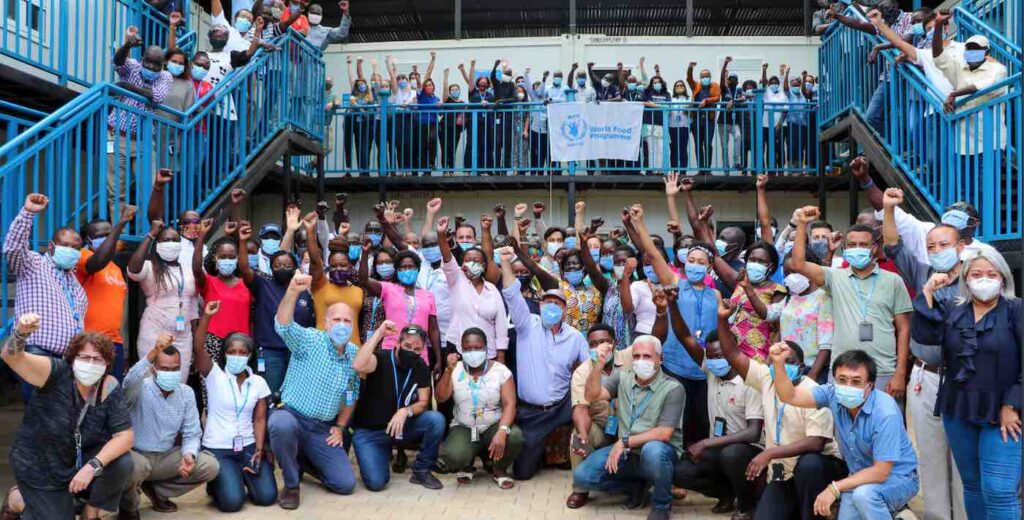
The 2020 Nobel Peace Prize has been awarded to the world’s largest humanitarian organization that feeds the hungry.
The World Food Program (WFP) won the award “for its efforts to combat hunger and bettering conditions for peace in conflict-affected areas by seeking to prevent the use of hunger as a weapon.”
In 2019, the United Nations’ WFP provided assistance to close to 100 million people in 88 countries who are victims of acute food insecurity and hunger—most of whom suffered because of war and armed conflict.
In the face of the coronavirus pandemic, the World Food Program has demonstrated an impressive ability to intensify its efforts. As the organization itself has stated, “Until the day we have a medical vaccine, food is the best vaccine against chaos.”
The Norwegian Nobel Committee wishes to emphasize that providing assistance to increase food security not only prevents hunger, but can also help to improve prospects for stability and peace. The WFP has taken the lead in combining humanitarian work with peace efforts through pioneering projects in South America, Africa, and Asia.
WFP Africa, South Sudan
The nonprofit was an active participant in the diplomatic process that culminated in May 2018 in the UN Security Council’s unanimous adoption of Resolution 2417, which for the first time explicitly addressed the link between conflict and hunger and urged Member States to help ensure that food assistance reaches those in need, and condemned the use of starvation as a method of warfare.
With this year’s award, the Norwegian Nobel Committee wishes to “turn the eyes of the world towards… advancing the fraternity of nations referred to in Alfred Nobel’s will. As the UN’s largest specialized agency, the WFP is a modern version of the peace congresses that the Nobel Peace Prize is intended to promote.”
“The work of the World Food Program to the benefit of humankind is an endeavor that all the nations of the world should be able to endorse and support.”
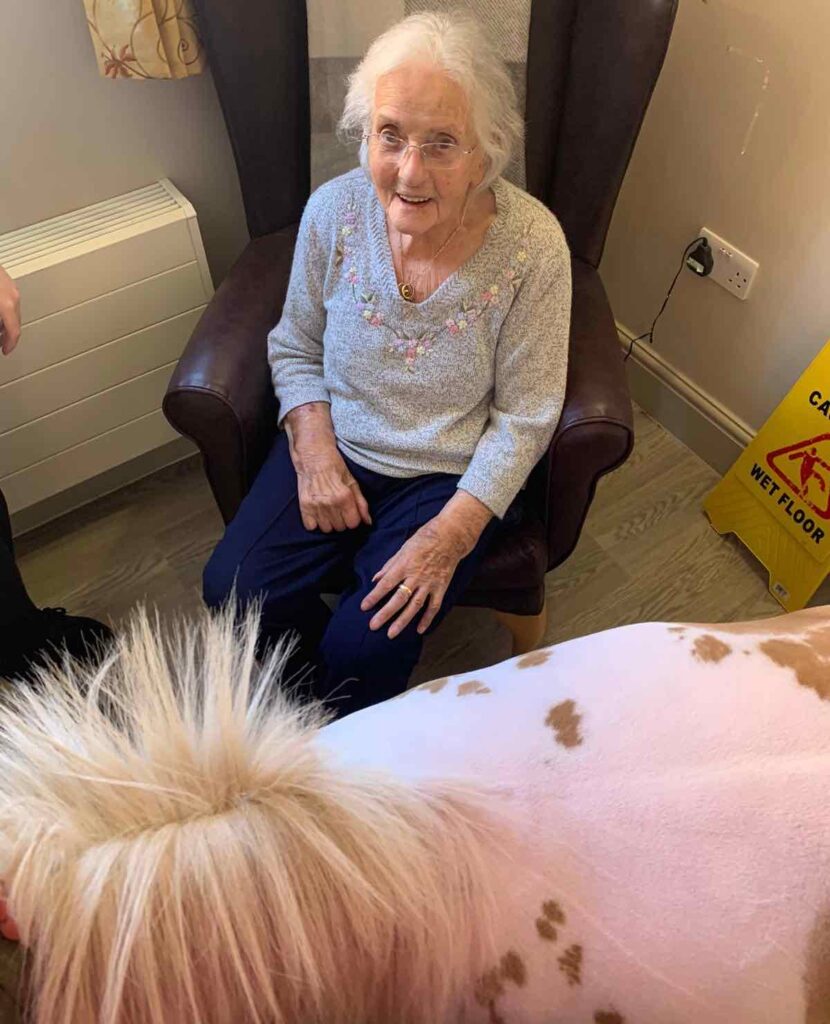
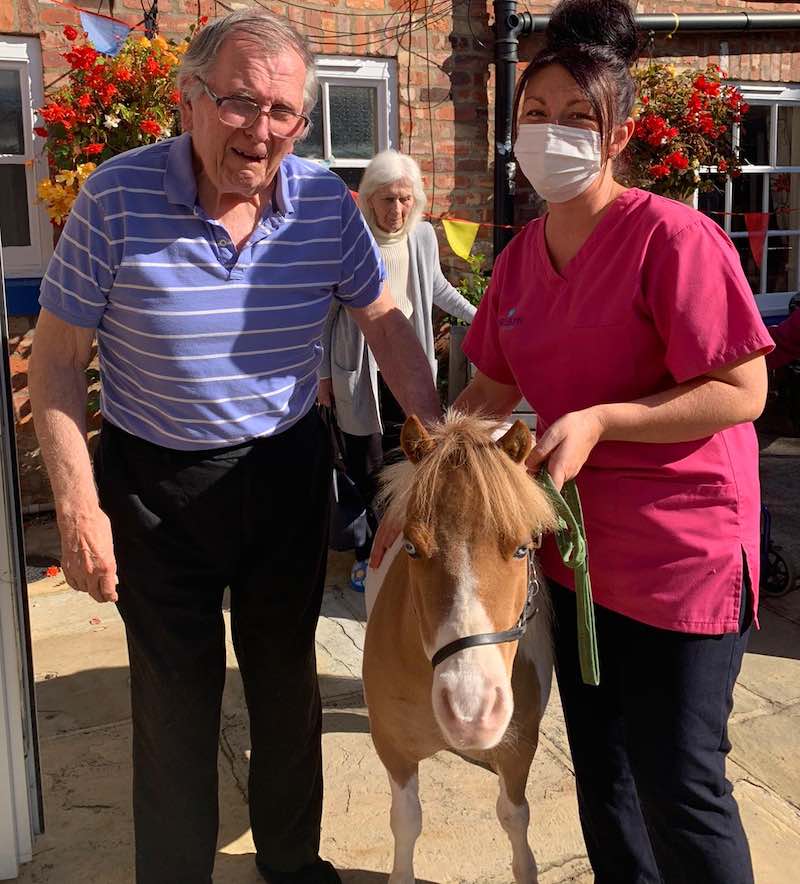
Dementia sufferers at a nursing home who cannot see relatives were “overjoyed” by a morale-boosting visit from a miniature horse.
SWNS
Residents at Rosevale Care Home in York, England, always “benefit greatly” from pet therapy, which allows them to interact with animals.
Sarah Fearn, lifestyle and activities co-ordinator at the home, said many residents who normally spend most of the day in their rooms were eagerly interacting with others when they got the chance to stroke a pony.
SWNS
“Different pets come every month into the care home,” said Sarah. It brings back memories and allows the residents—90 percent of whom suffer from dementia—”to express themselves in ways they probably wouldn’t otherwise.”
SWNS
“We had a lady who was really upset ten minutes before, she was crying, we took the horse to her and within minutes she was so happy. Even the residents who are quiet and don’t mingle, they talked to the other people. It was really lovely.
The miniature horse, a ten-year-old male named Monet, spent around an hour on the grounds.
SWNS
The home has not had a single COVID-19 case throughout the pandemic, but that is due to residents only being able to see families through a glass screen in the garden and visits have been restricted.
A twice-a-week routine of high-intensity interval training shows a marked effect on fitness and overall wellbeing in people over 70, according to a new study.
Regular cardio sessions centered around short bursts of intense workouts, broken up by brief rest periods, can help us stay healthier for longer, according to researchers at the Norwegian University of Science and Technology.
When the 5 year study began in 2012, researchers called it Generation 100, and randomly divided healthy participants into three different training groups.
One group was assigned to high-intensity interval training (HIIT) using the 4X4 method twice a week—doing 4 minutes of 85-95% maximum heart rate aerobic exercise and 4 minutes of 60% maximum heart rate for 4 rounds. Group two was instructed to train at a steady, moderate intensity for 50 minutes. The participants could choose whether they wanted to train on their own or participate in group training with instructors.
The third group, the control group, was advised to exercise according to the Norwegian health authorities’ recommendations. This group was not offered organized training under the auspices of Generation 100, but was called in for regular health checks and fitness assessments.
“First of all, I have to say that exercise in general seems to be good for the health of the elderly. And our study results show that on top of that, training regularly at high intensity has an extra positive effect,” says Dorthe Stensvold, a professor in the university’s Cardiac Exercise Research Group.
“Both physical and mental quality of life were better in the high-intensity group after five years than in the other two groups. High-intensity interval training also had the greatest positive effect on fitness,” according to Stensvold.
But does this kind of exercise prolong life to a greater extent than moderate exercise?
It would seem so. “In the interval training group, 3% of the participants had died after five years. The percentage was 6% in the moderate group. The difference is not statistically significant, but the trend is so clear that we believe the results give good reason to recommend high-intensity training for the elderly,” Stensvold explains.
The study also found that age has the least effect on fitness level for people who exercise regularly at high intensity. This group had a drop in fitness of 5% over ten years. By comparison, fitness levels dropped by 9% individuals who exercised regularly but not at high intensity. Those who were physically inactive lost as much as 16% of their physical conditioning over ten years.
Quote of the Day: “The talent for being happy is appreciating and liking what you have, instead of what you don’t have.” – Woody Allen
Photo: by Andy Li
With a new inspirational quote every day, atop the perfect photo—collected and archived on our Quote of the Day page—why not bookmark GNN.org for a daily uplift?
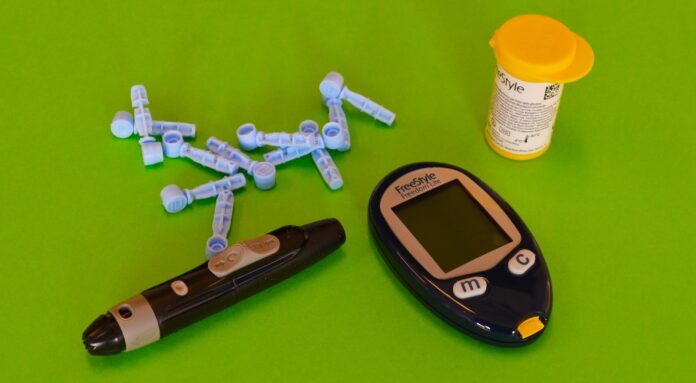
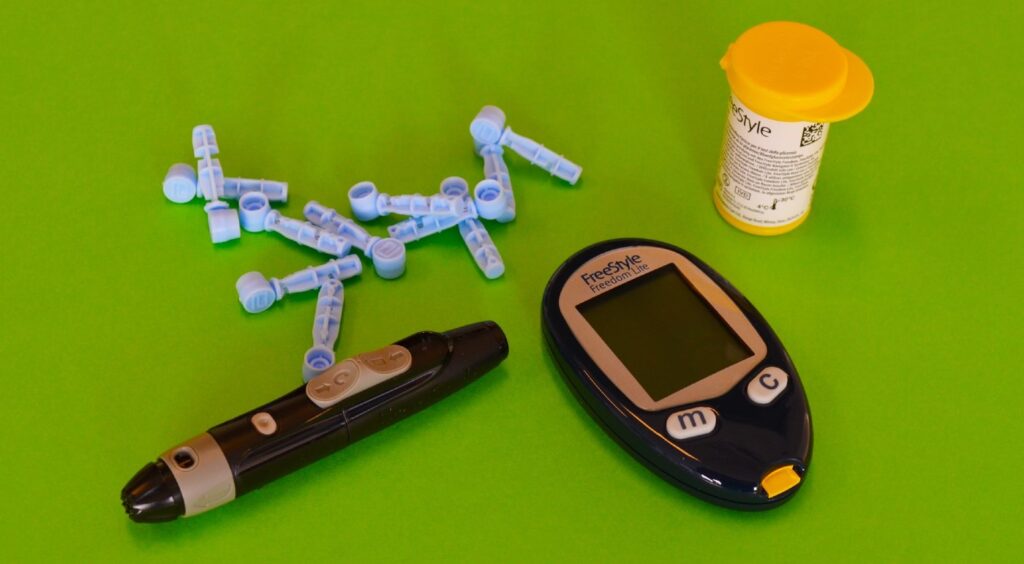
Researchers may have discovered a safe new way to manage blood sugar non-invasively.
Exposing diabetic mice to a combination of static electric and magnetic fields for a few hours per day normalizes blood sugar and insulin resistance, researchers at the University of Iowa have found.
Diabetesmagazijn.nl
The unexpected and surprising discovery raises the possibility of using electromagnetic fields (EMFs) as a remote control to manage type 2 diabetes.
According to a statement from the university, the effects of exposure to electromagnetic fields (EMFs) in diabetic mice have been “long-lasting, opening the possibility of an EMF therapy that can be applied during sleep to manage diabetes all day.”
EMFs, it’s been indicated by the new study, alter the balance of oxidants and antioxidants in the liver, improving the body’s response to insulin. This effect is mediated by small reactive molecules that seem to function as “magnetic antennae.”
The initial finding–published in Cell Metabolism on October 6–was pure serendipity. Sunny Huang, Calvin Carter’s co-lead author and an MD/PhD student interested in metabolism and diabetes, needed to practice taking blood from mice and measuring blood sugar levels.
Carter offered to let her borrow some of the mice he was using to study the effect of EMFs on brain and behavior in the animals.
“It was really odd because normally these animals have high blood sugar and type 2 diabetes, but all of the animals exposed to EMFs showed normal blood sugar levels,” Huang says. “I told Calvin, ‘There’s something weird going on here.'”
The finding that these mice had normal blood sugar levels after EMF exposure was doubly strange because the mice had a genetic modification which made them diabetic.
“That’s what sparked this project,” Carter confirms. “Early on, we recognized that if the findings held up, they could have a major impact on diabetes care.”
The findings held up. Carter and Huang, working with senior author Val Sheffield and diabetes expert Dale Abel, found that the combined wireless application of static magnetic and electric fields modulates blood sugar in three different mouse models of type 2 diabetes. The team also showed that exposure to such fields, approximately 100 times that of the Earth’s, during sleep, reversed insulin resistance within three days of treatment.
EMFs and Redox Biology
EMFs are everywhere; telecommunications, navigation, and mobile devices all use them to function. EMFs are also used in medicine, in MRIs and EEGs, for example.
However, very little is known about how they affect biology. On their hunt for clues to understand the mechanisms underlying the biological effects of EMFs on blood sugar and insulin sensitivity, Carter and Huang reviewed literature from the 1970s investigating bird migration.
They found that many animals sense the Earth’s electromagnetic field and use it to orient themselves as well as for navigation.
“This literature pointed to a quantum biological phenomenon whereby EMFs may interact with specific molecules. There are molecules in our bodies that are thought to act like tiny magnetic antenna, enabling a biological response to EMFs,” Carter says. “Some of these molecules are oxidants, which are studied in redox biology, an area of research that deals with the behavior of electrons and reactive molecules that govern cellular metabolism.”
In addition to the mouse studies, the researchers also treated human liver cells with EMFs for six hours and showed that a surrogate marker for insulin sensitivity improved significantly, suggesting that the EMFs may also produce the same anti-diabetic effect in humans.
Carter and Huang are energized by the possibility of translating the findings to human patients with type 2 diabetes.
In terms of safety, the World Health Organization considers low energy EMFs safe for human health. The UI study also found no evidence of any adverse side effects in mice.
The team’s ultimate goal is to move into clinical trials with patients to translate the technology into a new class of therapies.
Heart-warming footage shows the incredible bond between a pair of dogs and their family’s horse—with the doggies always clamoring to take the pony for walks.
SWNS
Nine-year-old miniature horse Bon Jovi, nicknamed Bonnie, was rescued from an abusive home and adopted by Jessica Chemin four years ago.
Bonnie now lives with Jessica and her two French bulldogs, Lola and Nacho, at their home in Cape Town, South Africa.
The animals have become the closest of friends and spend their days playing together and enjoying each other’s company.
Jessica filmed the first time the sweet pooches took hold of Bonnie’s reigns and began leading him outside for a walk.
21-year-old Jessica, who is in her final year of studying organizational psychology at the University of Cape Town said, “He was named after Bon Jovi because of his wild nature, but after living with us he has calmed down so much and become such a ‘homebody’.
“We often find him sneaking into the house because he knows where the snack drawer in the kitchen is.”
“I couldn’t believe it when I saw Lola and Nacho taking Bonnie for a walk. It really has taken their relationship to the next level as now whenever they see the lead rein being clipped onto Bonnie’s halter, they both want to lead him up to the stables.
Of her menagerie of animals, she noted, “They all get on so well. I will often find Lola and Nacho down in the garden, lying on the grass while Bonnie grazes nearby. The three of them really seem to have the sweetest kinship and seeing their friendship makes my heart so full.”
(WATCH the awesome trio in the SWNS video below.)
SHARE The Fun And Pass The Story On To Friends Via Social Media…
“Eat your spinach,” is a common refrain in childhood, but the green vegetable, chock full of nutrients, doesn’t just provide energy in humans. It also has the potential to help power fuel cells, according to a new study.
Louis Hansel
In a statement, researchers at the American University’s (AU) Department of Chemistry explained that spinach, when converted from its leafy, edible form into carbon nanosheets, acts as a catalyst for an oxygen reduction reaction in fuel cells and metal-air batteries.
An oxygen reduction reaction is one of two reactions in fuel cells and metal-air batteries and is usually the slower one that limits the energy output of these devices.
Researchers have long known that certain carbon materials can catalyze the reaction. But those carbon-based catalysts don’t always perform as good or better than the traditional platinum-based catalysts.
The AU researchers wanted to find an inexpensive and less toxic preparation method for an efficient catalyst by using readily available natural resources. They tackled this challenge by using spinach.
“This work suggests that sustainable catalysts can be made for an oxygen reduction reaction from natural resources,” said Prof. Shouzhong Zou, chemistry professor at AU and the paper’s lead author.
“The method we tested can produce highly active, carbon-based catalysts from spinach, which is a renewable biomass. In fact, we believe it outperforms commercial platinum catalysts in both activity and stability.”
Catalysts accelerate an oxygen reduction reaction to produce sufficient current and create energy.
Among the practical applications for the research are fuel cells and metal-air batteries, which power electric vehicles and types of military gear.
Researchers are making progress in the lab and in prototypes with catalysts derived from plants or plant products such as cattail grass or rice.
Zou’s work is the first demonstration using spinach as a material for preparing oxygen reduction reaction-catalysts.
Spinach is a good candidate for this work because it survives in low temperatures, is abundant and easy to grow, and is rich in iron and nitrogen that are essential for this type of catalyst.
To create the nanosheets, the researchers put the spinach through a multi-step process that included both low- and high-tech methods, including washing, juicing and freeze-drying the spinach, manually grinding it into a fine powder with a mortar and pestle, and “doping” the resulting carbon nanosheet with extra nitrogen to improve its performance.
The next step for the researchers is to put the catalysts from the lab simulation into prototype devices, such as hydrogen fuel cells, to see how they perform and to develop catalysts from other plants.
Who knew Popeye could have the potential answer to our battery needs? We’re excited to see what happens next as part of this groundbreaking research.
Pass This Fascinating Story On To Friends Via Social Media…
Quote of the Day: “To all mankind, May we never find heart and mind so empty that we cannot fill them with love and warmth.” – Star Trek, Dr. Adams
Photo: by Helena Lopes
With a new inspirational quote every day, atop the perfect photo—collected and archived on our Quote of the Day page—why not bookmark GNN.org for a daily uplift?

















 [October 13, 2010] One by one, rescuers in Chile are freeing 33 miners who have been trapped underground since early August. Never before had anyone been rescued from such a depth—more than a third of a mile (622-meters) underground.