A farmer in Kansas had an idea for an anniversary gift, but it was going to take eight months, one mile of land, and 65 million wheat seeds.
Jesse Blasi and his wife Sarah were set to celebrate their 20th wedding anniversary this year. And he was inspired by another Kansas farmer who had planted a field of sunflowers for his wife—a story and video that GNN shared in 2023.
What if Blasi created a message in a wheat field?
He began plotting his surprise back in October. He used some modern farming methods, a John Deere Air Seeder, and two varieties of wheat to outline the message “Jesse + Sarah, 20 Years”.
He nurtured the two colors of wheat and waited for it to grow. It was a labor of love, but just like the old ‘Hall and Oates’ song, he knew it would make Sarah Smile.
“I knew it would make her smile,” Jesse told KAKE in Kansas. “That was kind-of the whole goal, to get the little grin out of her that I like.”
Jesse and Sarah met at a bar while attending Kansas State, and fate led them to the same stoplight on the way home. Their love has been going strong ever since, with a farm that’s been running for two decades and a family that includes two daughters, Reagan and Avery.
Jesse was determined to deliver his ‘golden wheat anniversary’ surprise, but had to work hard to keep it a secret when other farmers saw the message early.
Then, in early June, the couple went up over the fields in an airplane—and when she looked out the window, she saw it.
Jesse + Sarah. 20 Years.
The words were laid out in a red chaff wheat, with a lighter variety serving as the background. In all, the message is about one mile long and a half-mile wide. (Watch the video below…)
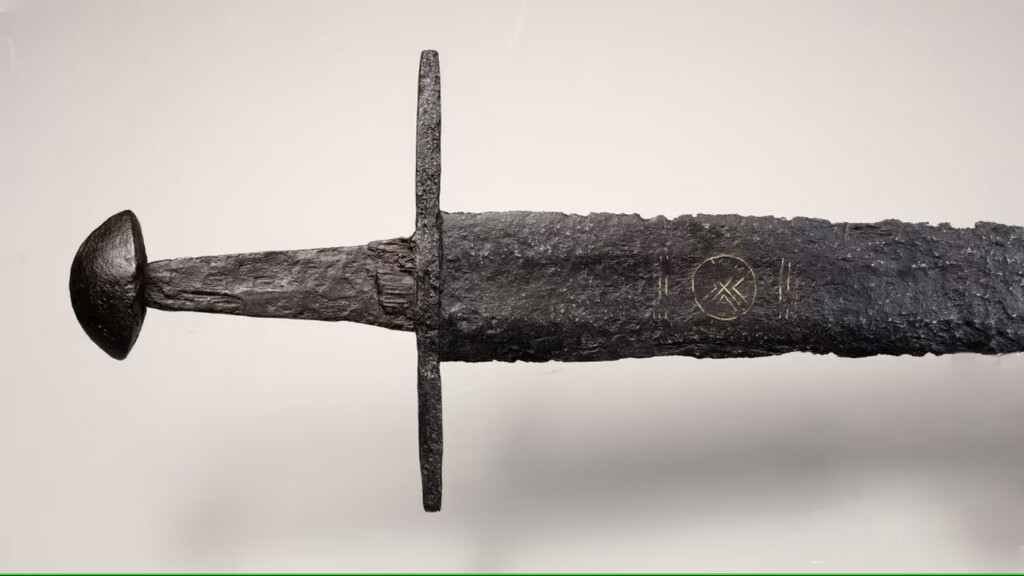
- credit, Ruben de Heer / Rijksmuseum van Oudheden
– credit, Ruben de Heer / Rijksmuseum van Oudheden
Looking as intact as the day it was forged, a 1,000-year-old sword has gone on display in the Netherlands.
Capturing a transition in medieval military technology with its expert degree of preservation as well as a dramatic culture of weapon embellishment with its series of religious symbols inlaid in copper, the sword is no doubt a national treasure.
It was found in a river on the grounds of the Linschoten Estate in the central region of the country during a routine dredging. Dating to between 1050 and 1150 CE, the sword has been donated to the Rijksmuseum van Oudheden (National Museum of Antiquities) in Leiden.
The weapon remains remarkably well-preserved after a thousand years. Only the organic components—such as the wooden grip and any leather wrappings—have succumbed to time.
It measures just over 3 feet in length and sports a cross guard and semi-circular pommel—as archetypal an image of a medieval sword as one could hope to see; the spitting image of what a sword would look like if you asked a 9-year-old boy to draw one.
Traces of the wooden hilt are still visible, however, on the preserved sword. The iron is barely corroded due to the oxygen-poor environment of the wet soil it was buried in, but it was probably forged with very high-quality iron regardless, judging by the completeness of the weapon’s silhouette. The iron was later confirmed to be Dutch in origin as well.
“Medieval swords were deeply personal possessions: they were either buried with their owner or—alternatively—ritually deposited into water,” said the museum in a statement. “In the latter case, they are often exceptionally well preserved.”
This era also saw a shift in military tactics and weaponry: vertical slashing from horseback gave way to horizontal thrusting between pieces of gradually growing pieces of armor.
This sword, which could be wielded with one hand, embodies that transitional phase—suited to both techniques.
A cross was inlaid on one side of the blade near the cross guard, and another one composed of diamonds—an icon known as the eternal knot—on the other, as well as a series of vertical lines like counting lines on both sides.
SHARE This Impressive Piece Of Dutch Metallurgy With Your Friends…
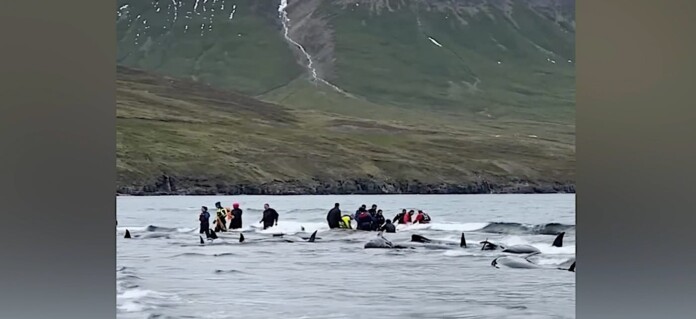
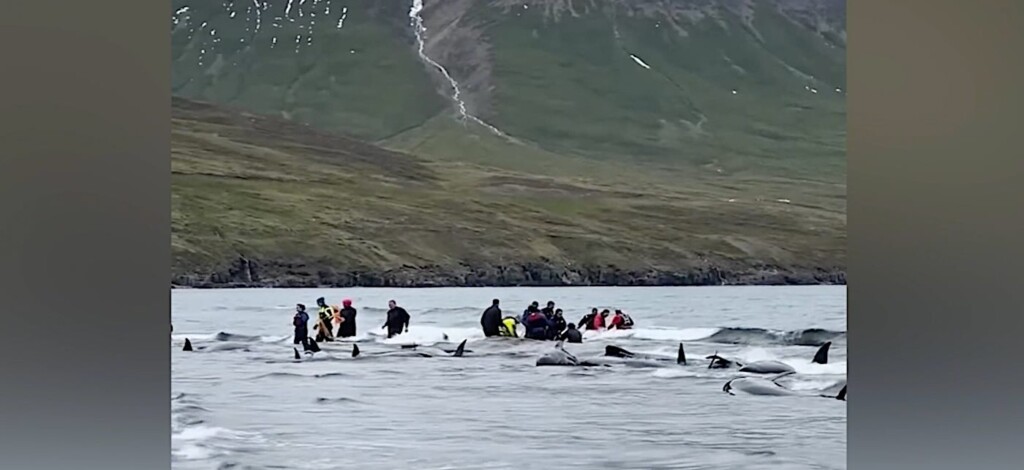
Locals and emergency crews rescue 60 pilot whales off Icelandic beach – SWNS
Locals and emergency crews rescue 60 pilot whales off Icelandic beach – SWNS
From a country that’s typically in the news for hurting whales comes the story of a mass-stranding event with a happy ending.
Around 60 pilot whales, known locally as grindhvalur, were found stranded on Ólafsfjörður beach last Sunday.
Locals and emergency crews rushed to the remote area in a desperate effort to save the mammals, and by approximately 7:00 p.m. local time, rescue teams had successfully moved the whales from the shoreline back into open water.
According to local media, the whales were likely chasing mackerel, fish that have migrated north due to warming seas, when the pod became disoriented and trapped in the shallow waters.
“I couldn’t believe what I was seeing,” said Marc Sánchez, a Catalan who was visiting Ólafsfjörður at the time and working at a local hotel. “It was the first time in my life witnessing whales from so close and even being able to touch them.”
He ran to the beach after getting a call from his friend and filmed the dramatic scene.
“I felt a mix of emotions,” he told Britain’s Southwest News Service, “amazement, sadness and frustration—I wanted to help them, but it was impossible.”
Apparently, the rescue effort contained dozens of villagers who rushed to aid the emergency crews.
Locals and emergency crews rescue 60 pilot whales off Icelandic beach – SWNS
“The water was freezing, so I couldn’t stay in for long but I tried my best to assist however I could,” said Sánchez.
One of the last countries to cease whaling, Iceland and whales rarely make headlines together for good reasons. While tourists used to be told, and whalers used to explain, that whale was a traditional part of the Icelandic diet, this isn’t the case, and as protests grew in number and intensity, the whaling ceased by 2023.
SHARE This Wonderful Rescue Effort With Your Friends On Social Media…
It takes guts, experience, and community connections to be a ‘beat cop’—not the sort of environment where you’d expect to see a senior club.
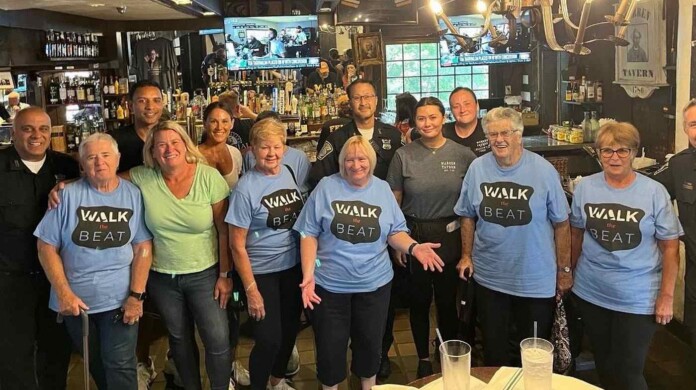
“Walk the Beat” was the brilliant, and likely life-saving idea cooked up by the Boston Police Department during COVID-19 to keep seniors active, engaged, and safe.
Police officers escort groups from the Charlestown police station on a walk around the city. Other times they organize yoga classes or exercise programs.
“Coming out of COVID, we wanted to come up with an idea to get our seniors out in a safe environment,” Boston Police Sgt. Geno Provenzano told CBS Boston.
The program now includes dozens of women and some men all over the age of 55. They meet Wednesday at 10:00 a.m., and whether it’s Boston Police Commissioner Michael Cox or Provenzano on the beat with them, the consensus is clear: they make for a lively bunch.
The police officers make conversation, guarantee expedient road crossings, and drive any stragglers back home in their squad cars if they can’t carry on.
“It’s been fabulous. It’s been the best thing I’ve ever did for myself, because I was one that would stick in the house and not move,” said 89-year-old Barbara. “It gets me out because all my friends have passed, gets me with a new group.”
The program is free to join and runs in multiple neighborhoods. Anyone interested need only call the most local district community service officer.
WATCH the seniors walk the beat below…
SHARE This Great Service From The Boston PD With Your Friends From The City…
Quote of the Day: “The man who has no imagination has no wings.” – Muhammad Ali
Photo by: Getty Images for Unsplash+ (cropped)
With a new inspirational quote every day, atop the perfect photo—collected and archived on our Quote of the Day page—why not bookmark GNN.org for a daily uplift?
Faris El-Khouri, Prime Minister; Deputy for Damascus; Chairman of the Delegation from Syria, signing the UN Charter - United Nations Photo
81 years ago today, the inspirational United Nations Charter was signed by 50 countries in San Francisco, a document that began with the following: “We the peoples of the United Nations, determined to save succeeding generations from the scourge of war, which twice in our lifetime has brought untold sorrow to mankind, and to reaffirm faith in fundamental human rights, in the dignity and worth of the human person, in the equal rights of men and women and of nations large and small…” READ the preamble in its whole… (1945)
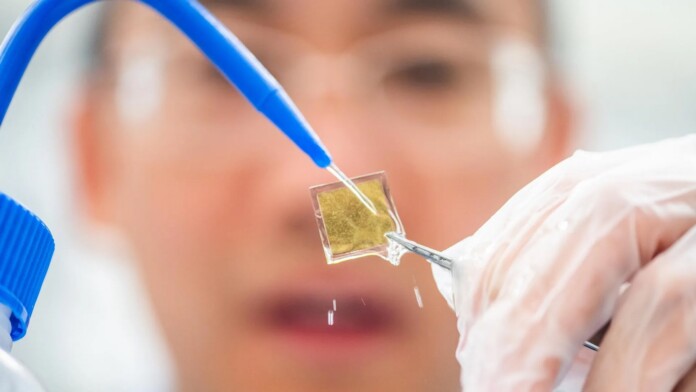
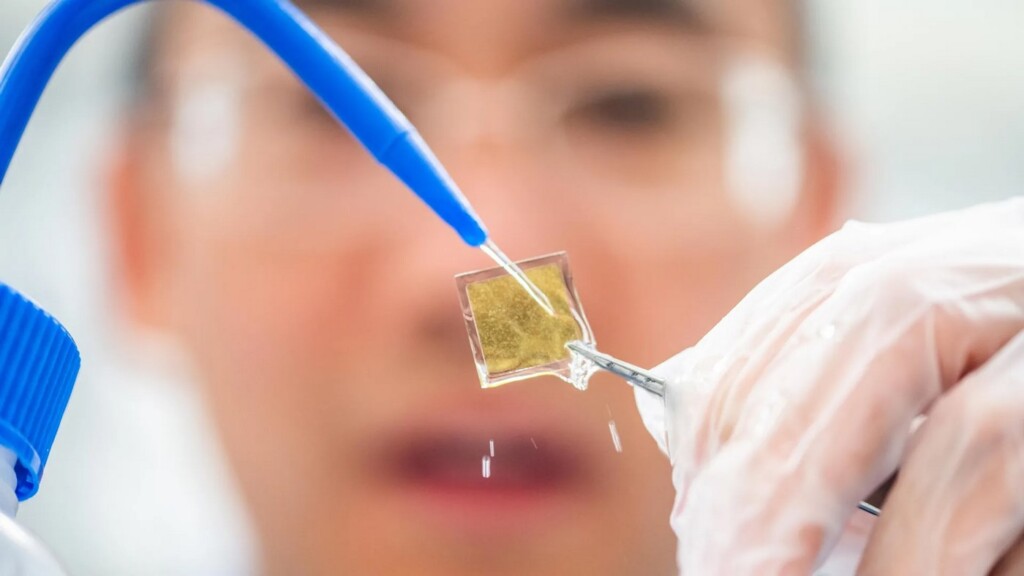
The solar catalyst - credit, Olov Planthaber, via Linkoping University
The solar catalyst – credit, Olov Planthaber, via Linkoping University
Swedish engineers have improved the process through which hydrogen fuel is produced from solar electricity by 800%.
Hydrogen fuel is considered one of the best renewable alternatives to fossil fuels in heavy machinery like planes and ships, but its creation requires electricity.
That electricity can be from renewable sources like solar or wind, but the efficiency is limited. Now, according to researchers at Linköping University, a combination of materials has greatly improved the ability to generate hydrogen with solar energy.
The research team has previously shown that a material called cubic silicon carbide (3C-SiC) has beneficial properties for facilitating the reaction where water is split into hydrogen and oxygen. The material can effectively capture the sunlight so that the energy therein can be used for hydrogen production through the photochemical water splitting reaction.
In their current study, the researchers have further developed a new combined material consisting of three layers: a layer of cubic silicon carbide, a layer of cobalt oxide and a catalyst material that helps to split water.
“Passenger cars can have a battery, but heavy trucks, ships or aircraft cannot use a battery to store the energy. For these means of transport, we need to find clean and renewable energy sources, and hydrogen is a good candidate,” says Jianwu Sun, associate professor at Linköping University, who has led the study published in the Journal of the American Chemical Society.
“It’s a very complicated structure, so our focus in this study has been to understand the function of each layer and how it helps improve the properties of the material. The new material has eight times better performance than pure cubic silicon carbide for splitting water into hydrogen,” says Sun.
When sunlight hits the material, electric charges are generated, which are then used to split water. A challenge in the development of materials for this application is to prevent the positive and negative charges from merging again and neutralizing each other.
In their study, the researchers show that by combining a layer of cubic silicon carbide with the other two layers, the material becomes more able to separate the charges, thereby making the splitting of water more effective.
Almost all hydrogen present on the market is “grey” hydrogen produced from a fossil fuel. The production of one ton of “grey” hydrogen gas causes emission of up to ten tons of carbon dioxide. “Green” hydrogen is produced using renewable electricity as a source of energy.
The long-term goal of the Linköping University researchers is to be able to use only energy from the sun to drive the photochemical reaction to produce “green” hydrogen.
Most materials under development today have an efficiency of between 1% and 3%, but for commercialization of this green hydrogen technology the target is 10% efficiency. Being able to fully drive the reaction using solar energy would lower the cost of producing green hydrogen, compared to producing it using supplementary renewable electricity as is done with the technology used today.
Jianwu Sun speculates that it may take around five to ten years for the research team to develop materials that reach the coveted 10% limit, but they’re off to a flying start.
SHARE This Big Potential Breakthrough With Your Friends Concerned About The Climate…
The badger bridge at Marazanvose under construction - credit, SWNS
The badger bridge at Marazanvose under construction – credit, SWNS
Nationally protected badgers have just been given the right of way by Cornwall council, with a new wildlife crossing that will allow them to pass over a busy road unharmed.
To reach across the four-lane divided highway, the crossing, nicknamed the “badger bridge,” is nearly 150 feet long and 40 feet wide.
It’s designed to provide safe passage across the road for various wildlife species, including badgers, voles and other small animals, insects, and birds.
The bridge is part of National Highways’ major A30 Chiverton to Carland Cross project at Marazanvose. The dual-deck bridge has been constructed by contractor Costain over the road as part of the $375 million project (£330 million).
The bridge will not only provide better connectivity for wildlife but also a footpath and trail for horse riders.
“We’re really proud of the environmental work being carried out as part of this project, and the creation of the green bridge is a leading part of that,” said Andrew Alcorn, National Highways’ Program Manager for the A30 Chiverton to Carland Cross plan.
“Our green bridge will be the third for the company, one of only a handful across the country, and once completed, it will provide a safe crossing for various species of wildlife, as well as for walkers and horse riders.”
“Along with other environmental measures, we’ve built a total of 33 multi-species crossing points as part of the project, and we look forward to seeing the bridge bloom for many years to come, providing a real legacy for the scheme and for Cornwall.”
Top soiling work is now under way which is turning the bridge from grey to brown and this will be followed by green planting in the autumn. Above, two hedgerows built of hawthorn, elder, and other native plants will run across the bridge.
Green bridges, which were first built in France in the 1950s and pioneered in the Netherlands in 1990, are now becoming an important part of the sustainability of infrastructure projects.
Not only do they create a safe crossing point for wildlife movement, but they assist in joining up habitats and connecting populations, and making wildlife more resilient. There are only a handful of green bridges across England, however.
In Cornwall, the Chiverton to Carland Cross plan will see a total of 87,000 trees planted across the landscape, in addition to the green bridge planting. With over 40,000 already in the ground, the remainder will be installed in suitable conditions later this year.
Hopefully otters, badgers, bats, hedgehogs, and reptiles will have access to a wider area of habitat.
BRIDGE Over To Social Media And SHARE This Story With Your Friends…
12-yo Romir Parker saves family from burning home – Credit: Petersburg, VA Fire Rescue & Emergency Services
12-yo Romir Parker saves family from burning home – Credit: Petersburg, VA Fire Rescue & Emergency Services
After a young Virginian saved his family from a house fire, the local fire chief admitted that if he ever needed a job in his hometown, it’s enough to come by the fire department.
Romir Parker, a seventh grader from the city of Petersburg, near Richmond, was presented by the municipality with a special proclamation for demonstrating bravery and protective instincts of someone far older.
It started in early June when a fast-moving fire quickly took hold of Parker’s house while his younger siblings, aged 1 and 2, were asleep on the couch. Hearing a strange sound, Parker came down from the bedroom only to find a wall of black smoke.
Those instincts kicked in, and he rushed to scoop up his brother and sister—one in each arm—before carrying them out of the house. But there was someone else: his grandmother.
Going back in, he helped walk his grandmother out shortly before the fire department arrived four minutes after they got the call.
Petersburg Fire Chief Wayne Hoover didn’t mince words about Parker’s actions, even if his team arrived so quickly. The young man saved his family’s life.
The City of Petersburg presented him with a proclamation that recognized Parker for “demonstrating a level of bravery and presence of mind, well beyond his years,” while Chief Hoover made the lad an honorary firefighter.
“I go downstairs, it’s just black smoke all throughout the house,” Parker told the local CBS affiliate reporting on the story. “I grabbed my 2-year-old brother, then I grabbed the 1-year-old, cause the 1-year-old is smaller and I fitted them inside my arms and we ran outside the house.”
Hoover said that when Parker turns 18, he’s got a job with the fire brigade if he needs one.
Addison McArthur was just a few weeks old when she received the gift that saved her life.
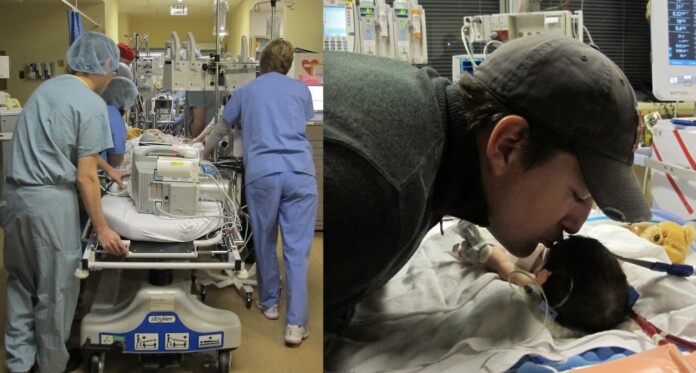
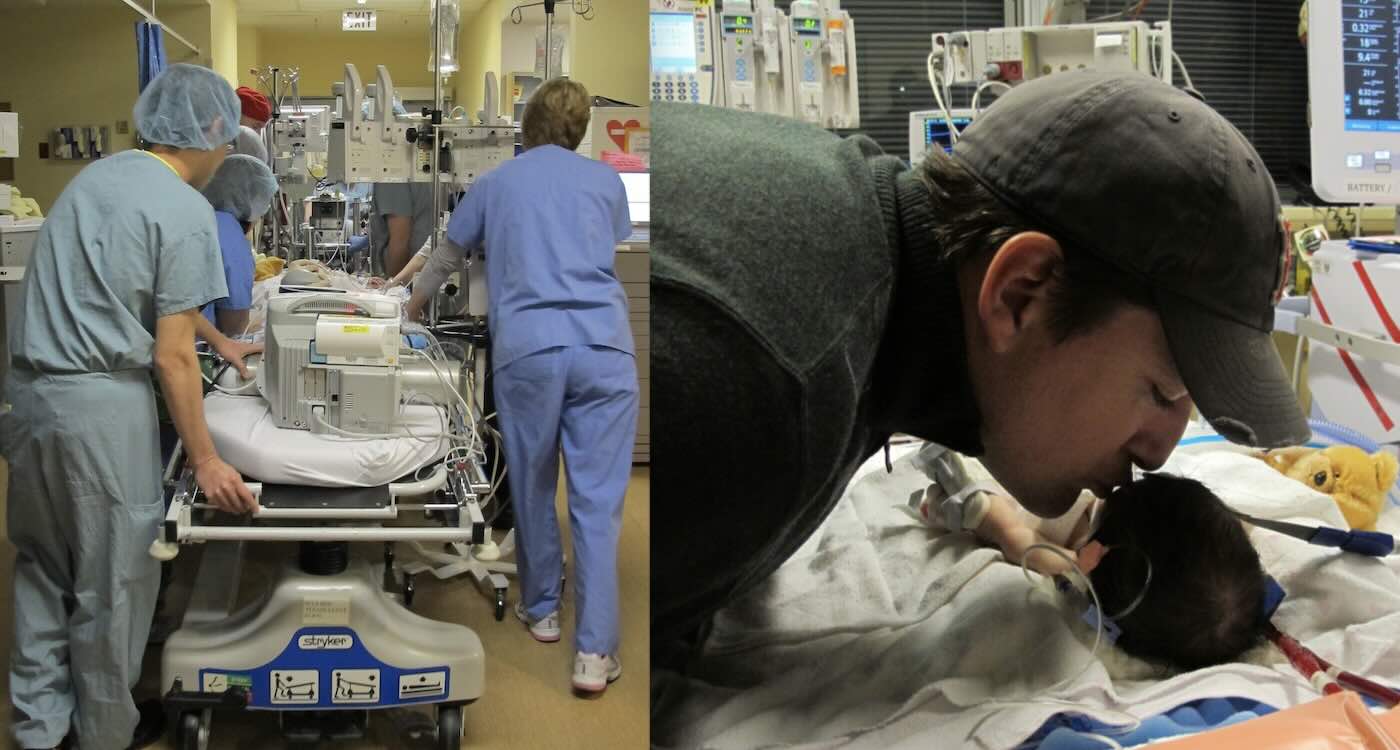
Not long after her birth, the left side of Addison’s heart stopped working. The official diagnosis was left ventricular non-compaction cardiomyopathy—a rare disorder that can lead to heart failure and a whole host of other problems. The Vancouver native was soon placed at the top of the heart transplant list, because she wouldn’t survive without one.
Several hundred miles away, fate was conspiring to keep Addison alive. Felicia Hill had just lost her daughter during her first week of life, as tiny Audrey Sullenger died unexpectedly in Nevada just six days after being born.
Thankfully, her mother, Felicia Hill, made the decision to donate her organs. Statistics show that a single donor can save up to eight lives. In Audrey’s case, her heart was headed north to help Addison in Canada.
On her first Mother’s Day, Elaine Yong – Addison’s mother – got the news that she so desperately needed. There was a donor for her daughter.
Audrey’s heart would soon be transplanted into Addison, one daughter’s gift providing a future for another. Audrey became the youngest donor in the state of Nevada that year. And her heart would deliver an abundance of the quality that was celebrated in one of her middle names – Hope.
The gratitude Elaine Yong felt was immeasurable. All she ever wanted was to say thank you.
“It was something I always knew – that if I could meet the donor family, I would want to,” Yong said in a story on CNN.
Unfortunately, that process can often be complicated. Organizations typically keep donor information private, but many will forward letters or other communication.
About a year after the transplant, Yong sent a thank-you note to the donor family through the transplant organization.
Audrey’s mom, Felicia Hill, eventually responded, commenting on a blog post Yong had written about the transplant. Yong exchanged a few messages to confirm everything and soon the pair of moms had plans to meet.
The families first met at a Donate Life Walk in California. Hill brought a T-shirt for Addison that celebrated Audrey’s gift. Yong brought a stethoscope. When Hill held it up to Addison, she could hear her daughter’s heart inside.
“I just wanted to hug Elaine,” Hill told CNN. “I felt connected immediately, knowing that another mother got to raise their child. And that’s what gave me so much happiness.”
Both moms have been actively working to promote organ donation following their transplant experience. In fact, Yong now works as a communications and community relations manager at BC Transplant, the British Columbia donor organization. Both women helped commemorate Donate Life Month (held every April) with a number of social media posts sharing the importance of organ donation.
“Every time I hear that they are working on a donor case or that they’re going to this place for recovery, I always think, somebody is going to – somebody is getting a gift of life,” Yong said in a heartfelt video shared by BC Transplant on Facebook. “This person is saving lives. It’s never lost on me, no matter how busy it is, no matter how many cases there are, how many donors are on the board, every single one is making a huge difference.”
In April, Elaine published a Facebook post celebrating Addison’s 14th birthday. It describes how she’d had the opportunity this past year to swim with manatees, see the Northern Lights, and attend Imagine Dragons concerts. She got braces. And she kept growing up—the heart of Audrey keeping her steady through it all.
Who knows what excitement and what adventures Addison’s 15th year will bring?
But the biggest gift of them all is the year itself – and she has Audrey to thank for that.
SPREAD THE LOVE By Sharing The Sacrifice on Social Media…
Quote of the Day: “The sky is the part of creation in which nature has done for the sake of pleasing man.” – John Ruskin
Photo by: Yianni Mathioudakis for Unsplash+
With a new inspirational quote every day, atop the perfect photo—collected and archived on our Quote of the Day page—why not bookmark GNN.org for a daily uplift?
69 years ago today, the renegade travel host and chef Anthony Bourdain, was born. With his food and culture show, No Reservations, and the groundbreaking book, Kitchen Confidential: Adventures in the Culinary Underbelly, he became known as “the culinary bad boy”. The pair catapulted him to stardom, resulting Parts Unknown, the definitive American travel program on basic cable. It ran for over 60 episodes before being interrupted tragically by Bourdain’s death by suicide. READ more… (1956)
The Tifrid and Lagoon nebulae - credit NSF-DOE Vera C. Rubin Observatory
The Tifrid and Lagoon nebulae – credit NSF-DOE Vera C. Rubin Observatory
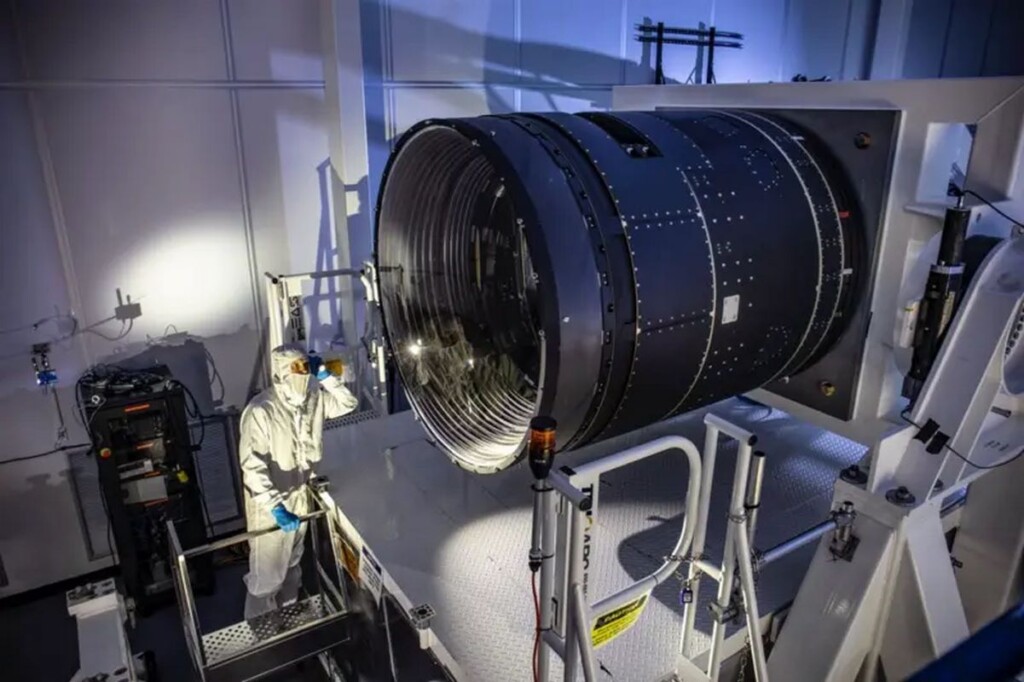
Your iPhone 16 camera has 48 megapixels. Astronomy’s latest toy has 3,200.
That’s because the Vera C. Rubin Observatory in Chile has to be able to image a framing of the night sky as large as seven full moons side to side. It has to be able to do this because of its unique mission set, one which will compliment other observatories while adding in unprecedented capabilities.
The observatory’s 3.2 gigapixel camera – credit NSF-DOE Vera C. Rubin Observatory
A perfect example of this is a statistic from a press statement on Monday, when the observatory debuted its first night of photos. It had detected 2,100 new asteroids, including seven which are considered to have near-Earth orbits.
That’s 10% of what all ground and space telescopes do in a whole year of observing the night sky. Vera Rubin was built to see these asteroids for planetary defense. NASA already proved with the DART spacecraft that it can divert potentially harmful asteroids, but it can’t divert what it doesn’t know is there, and Rubin will illuminate that blind spot.
When not working to keep the planet safe, it will be conducting a mammoth undertaking known as the Legacy Survey of Space and Time, which will see it image the entire night sky from its perch over 8,000 feet atop Cerro Pachón every three to four nights for the next 10 years.
This will create a colossal dataset of the current positions of galaxies and stars, which can then be examined for changes that reflect the impact of dark energy and dark matter—mysterious forces which are believed to have greatly influenced the dispersion of galaxies across the universe.
Dark energy and dark matter are believed to make up 90% or so of the universe’s total matter content. They were the study of the astronomer Vera C. Rubin, whose contributions to the field are reflected in the choice of name for the important observatory.
Along with a section of the universe, the dataset will allow researchers to detect minute changes in locales as close as our own solar system, or our nearest galactic neighbors. Any detected changes—a new transient object, a fast radio burst, a new supernova, and an astronomer could be alerted, and new research be conducted in as real time as can be garnered in the discipline that studies in light years.
Professor Catherine Heymans, Astronomer Royal for Scotland, described to the BBC that this transience is going to be a “transformative” resource for the field.
An image of a large galaxy cluster – credit NSF-DOE Vera C. Rubin Observatory
At $473 million, it was a steal compared to the James Webb Space Telescope which ran well into the billions. But the bargain basement observatory wasn’t a fast build; rather an intergenerational project.
“When we got the first photo up here, it was a special moment,” optics technician Guillem Megias told the BBC.
The observatory’s perch high in the Chilean altiplano – credit NSF-DOE Vera C. Rubin Observatory
“When I first started working with this project, I met someone who had been working on it since 1996. I was born in 1997. It makes you realize this is an endeavor of a generation of astronomers.”
Yet another question the Vera Rubin Observatory should answer is the speculative existence of a ninth planet in our solar system. A long-held theory lacking compelling evidence, the incredible scope of imaging that the observatory’s 3,200 megapixel camera offers, with its 24-foot-long primary mirror, should resolve the debate within a year in the affirmative or negative.
While the James Webb Space Telescope has dazzled Earthlings with its zoomed-in pictures taken in infrared of faraway galaxies and glittering nebulae, it has the observation potential of a person holding a grain of rice up to the sky and closing one eye to ensure it blocks their sight of the rice grain-sized piece of outer space behind it.
By contrast, the Vera Rubin will uncover anomalies and fascinations that can clue in future James Webb users on a great topic to study. If James Webb is a scalpel, Vera Rubin is an MRI machine.
The first image it produced for the public was the Trifid and Lagoon nebulae in stunning detail, followed up by a survey of a huge galaxy cluster.
WATCH a video walkthrough of its early work…
SHARE These Incredible Images And The Incredible Machine that Produced Them…
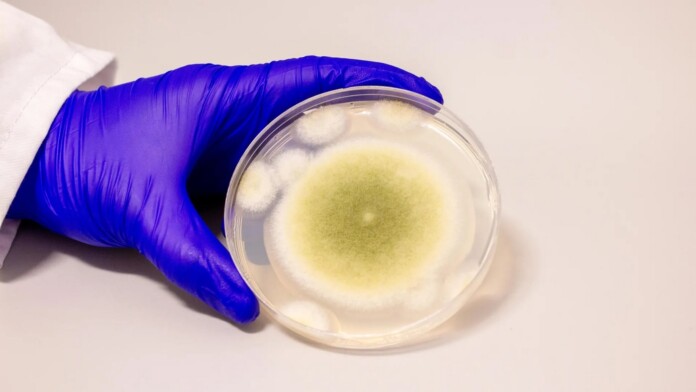
A sample of Aspergillus flavus cultured in the Gao Lab. Credit: Bella Ciervo, via Univ. of Penn State
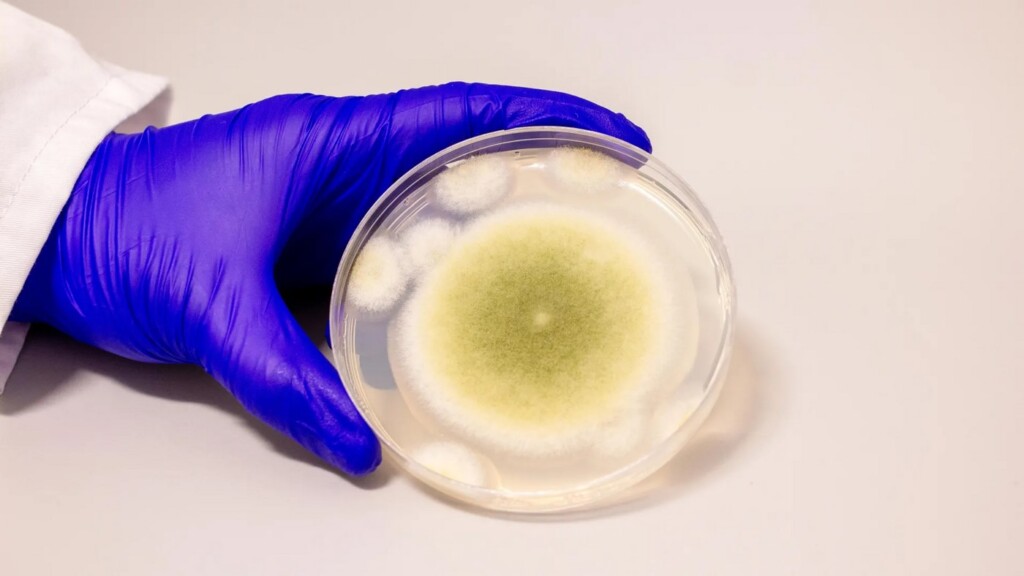
A sample of Aspergillus flavus cultured in the Gao Lab. Credit: Bella Ciervo, via Univ. of Penn State
A deadly fungus has been turned into a potent cancer-fighting compound after researchers isolated a new class of molecules from it.
Aspergillus flavus, a toxic crop fungus linked to deaths in the excavations of ancient tombs—such as that of the boy pharaoh Tutankhamon—was recently used in a test against leukemia cells.
The result? A promising cancer-killing compound that rivals FDA-approved drugs and opens up new frontiers in the discovery of more fungal medicines.
“Fungi gave us penicillin,” says Sherry Gao, Presidential Compact Associate Professor at the University of Pennsylvania and senior author of a new paper in Nature Chemical Biologyon. “These results show that many more medicines derived from natural products remain to be found.”
After archaeologists opened King Tutankhamun’s tomb in the 1920s, a series of untimely deaths among the excavation team fueled rumors of a pharaoh’s curse. Decades later, doctors theorized that fungal spores, dormant for millennia, could have played a role.
In the 1970s, a dozen scientists entered the tomb of Casimir IV in Poland. Within weeks, 10 of them died. Later investigations revealed the tomb contained Aspergillus flavus, named for its yellow spores, whose toxins can lead to lung infections, especially in people with compromised immune systems.
Now, that same fungus is the unlikely source of a promising new cancer therapy.
The therapy in question is a class of ribosomally synthesized and post-translationally modified peptides, or RiPPs, pronounced like the “rip” in a piece of fabric. The name refers the ribosome, a tiny cellular structure that makes proteins, including RiPP.
“Purifying these chemicals is difficult,” says Qiuyue Nie, a postdoctoral fellow and the paper’s first author. While thousands of RiPPs have been identified in bacteria, only a handful have been found in fungi. In part, this is because past researchers misidentified fungal RiPPs as non-ribosomal peptides and had little understanding of how fungi created the molecules.
“The synthesis of these compounds is complicated,” adds Nie. “But that’s also what gives them this remarkable bioactivity.”
To find more fungal RiPPs, the researchers first scanned a dozen strains of Aspergillus, which previous research suggested might contain more of the chemicals. By comparing chemicals produced by these strains with known RiPP building blocks, the researchers identified A. flavus as a promising candidate for further study.
Genetic analysis pointed to a particular protein in A. flavus as a source of fungal RiPPs. When the researchers turned the genes that create that protein off, the chemical markers indicating the presence of RiPPs also disappeared.
This novel approach of combining metabolic and genetic information not only pinpointed the source of fungal RiPPs in A. flavus but could be used to find more fungal RiPPs in the future.
After purifying four different RiPPs, the researchers found the molecules shared a unique structure of interlocking rings. The researchers named these molecules, which have never been previously described, after the fungus in which they were found: asperigimycins.
Even with no modification, when mixed with human cancer cells, asperigimycins demonstrated medical potential: two of the four variants had potent effects against leukemia cells.
Another variant, to which the researchers added a lipid, or fatty molecule, that is also found in the royal jelly that nourishes developing bees, performed as well as cytarabine and daunorubicin, two FDA-approved drugs that have been used for decades to treat leukemia.
Inside the leukemia cells, a gene called SLC46A3, proved critical in allowing asperigimycins to enter leukemia cells in sufficient numbers, which has given the team the idea that it might be a pathway for other, already developed remedies called cyclic peptides, to enter and kill a leukemia cell.
“Knowing that lipids can affect how this gene transports chemicals into cells gives us another tool for drug development,” says Nie.
Through further experimentation, the researchers found that asperigimycins likely disrupt the process of cell division. Notably, the compounds had little to no effect on breast, liver or lung cancer cells, or a range of bacteria and fungi, suggesting that asperigimycins’ disruptive effects are specific to certain types of cells, a critical feature for any future medication.
In addition to demonstrating the medical potential of asperigimycins, the researchers identified similar clusters of genes in other fungi, suggesting that more fungal RiPPs remain to be discovered.
“Even though only a few have been found, almost all of them have strong bioactivity,” says Nie. “This is an unexplored region with tremendous potential.”
“Nature has given us this incredible pharmacy,” says Gao. “It’s up to us to uncover its secrets. As engineers, we’re excited to keep exploring, learning from nature and using that knowledge to design better solutions.”
SHARE This Wild And Expected Place To Find A Potential Cancer Cure…
Excavations were led by MOLA (Museum of London Archaeology).
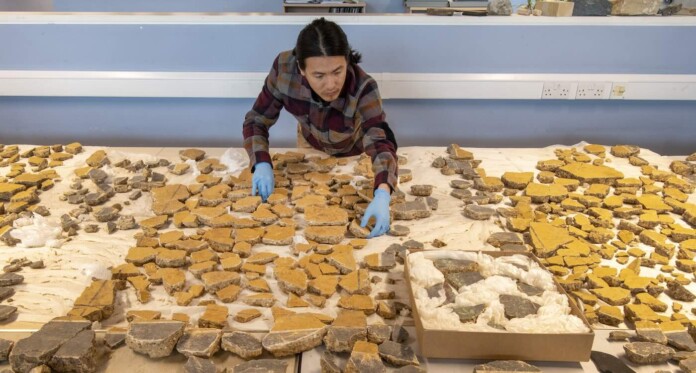
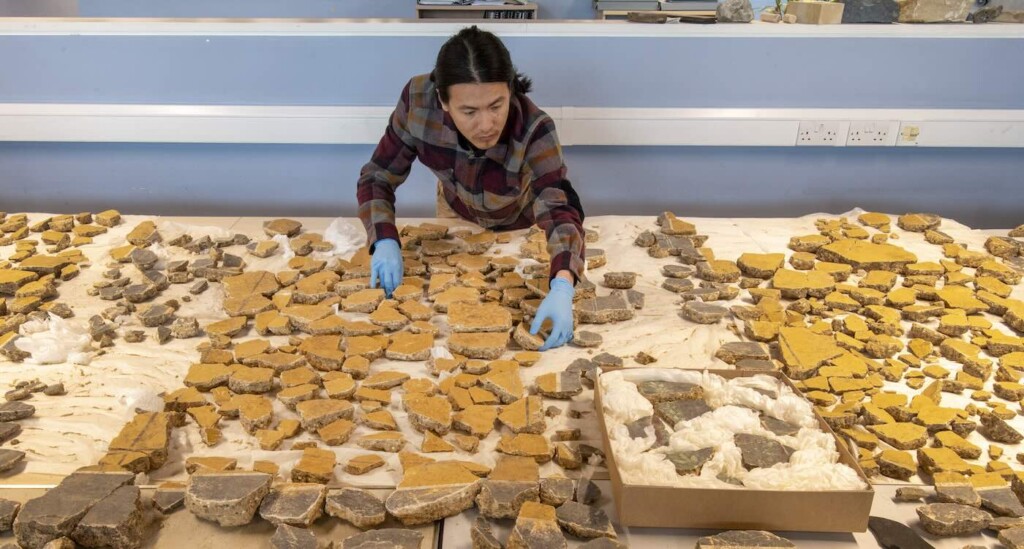
The enormity of plaster hoard was, however, not immediately apparent. The decorated plaster was found dumped in a large pit, shattered in thousands of fragments—the result not of modern development, but of Roman demolition works which took place at some point before 200 CE.
It took three months for MOLA Senior Building Material Specialist Han Li to lay out all the fragments and painstakingly piece the designs back together. Now, for the first time in over 1,800 years, these vibrant artworks can be reconstructed to reveal their full glory.
“This has been a once in a lifetime moment, so I felt a mix of excitement and nervousness when I started to lay the plaster out,” said Han Li. “Many of the fragments were very delicate and pieces from different walls had been jumbled together when the building was demolished, so it was like assembling the world’s most difficult jigsaw puzzle.”
These paintings were designed to show off both the wealth and excellent taste of the building’s owner or owners. They include bright yellow panel designs with black intervals beautifully decorated with images of birds, fruit, flowers, and lyres (stringed instruments similar to harps).
While panel designs were common during the Roman period, yellow panels weren’t. They have been identified at only a few sites across the country, which include Fishbourne Roman Palace, one of Britain’s most luxurious Roman residences. Finding repeating yellow panels like these is even rarer.
The group or groups of painters responsible also took inspiration from wall decorations in other parts of the Roman world, such as Xanten and Cologne in Germany, and Lyon in France. Some fragments imitate high status wall tiles, such as red Egyptian porphyry (a crystal speckled volcanic stone) framing the elaborate veins of African giallo antico (a yellow marble). Styles like these have been found previously in England in Colchester, but also Germany and Pompeii.
Excitingly, the remains of their signature were found among the plasters—the first known example in Britain. This is framed by a tabula ansata, a carving of a decorative tablet used to sign artwork in the Roman world. It contains the Latin word ‘FECIT’ which translates to “has made this”. Tragically, the fragment is broken where the painter’s name would have appeared, meaning their identity will likely never be known.
The plaster also reveals traces left behind by the building’s owners and visitors in the form of ancient graffiti. This includes an etching of a near complete Greek alphabet, the only known example of this inscription from Roman Britain. Other examples in Italy suggests that the alphabet served a practical use, such as a checklist, tally or reference.
The skillfully scored letters suggest that it was done by a proficient writer and not someone undertaking writing practice.
Work to further explore each piece of plaster continues. Han Li, with the help from his MOLA colleagues, will continue to analyze the work by this group or groups of painters, comparing the Liberty wall paintings to others from Britain and the wider Roman world. The results will be published and fragments archived for future study, as well as made available for temporary or permanent display.
“I was lucky to have been helped by my colleagues in other specialist teams for helping me arrange this titanic puzzle as well as interpret ornaments and inscriptions—including Ian Betts and the British School at Rome—who gave me their invaluable opinions and resources,” said Han Li in a statement from MOLA. “The result was seeing wall paintings that even individuals of the late Roman period in London would not have seen.”
SHARE This Wildly Antique Discovery Right From The Heart Of London…
The Moneypoint power station - credit, Charles W Glynn, Wikimedia Commons, CC BY-SA 4.0
The Moneypoint power station – credit, Charles W Glynn, Wikimedia Commons, CC BY-SA 4.0
Ireland will become the fifteenth European nation without coal in its energy mix following a recent announcement.
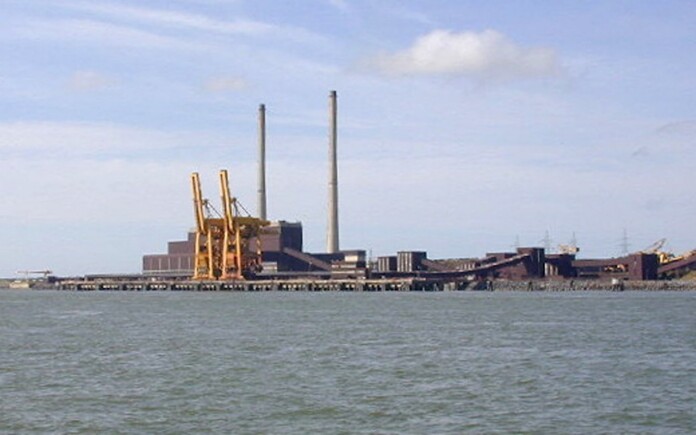
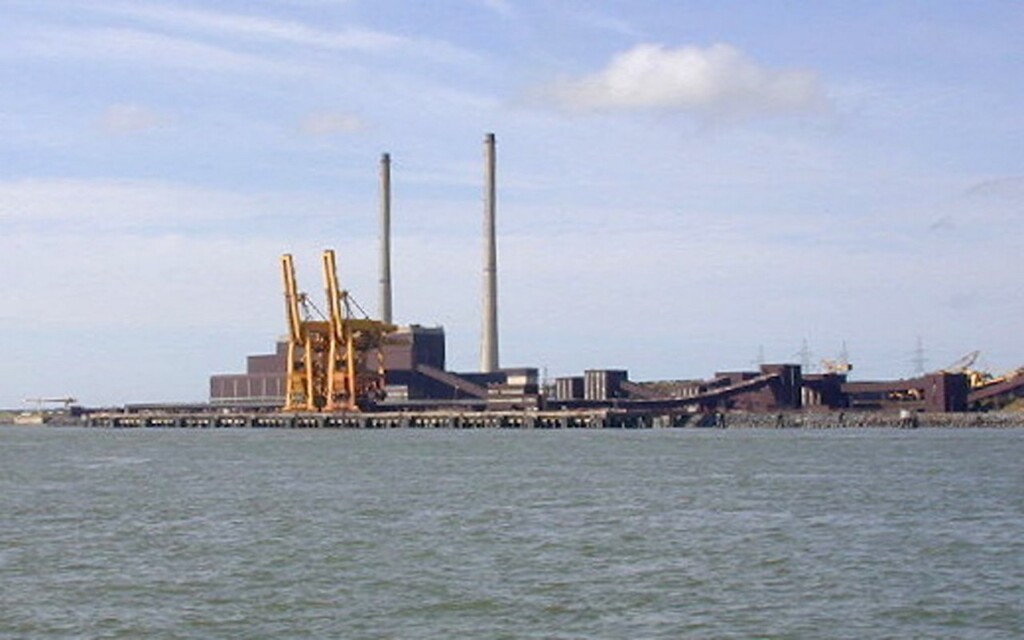
The ESB Moneypoint power station was built in the 1980s to help alleviate the effects of the oil shock, and remains today in County Claire as the last coal-capable asset in the country.
It will be converted to burn emergency oil reserves following a surge in renewable energy production.
Even that is planned to cease in 2029, but starting from June this year, Moneypoint will no longer be present in the wholesale electricity market.
11 terawatt-hours of electricity was generated by wind turbines last year, and made up 37% of Ireland’s total energy generation, reports Ember, a renewables-focused think tank.
“Ireland has quietly rewritten its energy story, replacing toxic coal with homegrown renewable power,” said Alexandru Mustață, campaigner on coal and gas at Europe’s Beyond Fossil Fuels.
“But this isn’t ‘job done’. The government’s priority now must be building a power system for a renewable future; one with the storage, flexibility, and grid infrastructure needed to run fully on clean, domestic renewable electricity,” Mustață warned.
According to Beyond Fossil Fuels, Ireland joins Belgium, Sweden, Austria, Portugal, and the UK, who have already stopped using coal, accompanied by Spain and Slovakia who are also completing their coal phase-outs this year.
Cyprus, Lithuania, Latvia, Switzerland, Estonia, Norway, Malta, Albania, and Luxembourg never burned coal at the grid level. This leaves Serbia, Montenegro, Poland, Germany, France, Italy, Slovenia, Bosnia Herzegovina, North Macedonia, Finland, Hungary, Bulgaria, Czechia, Romania, Croatia, Greece, Denmark and the Netherlands who rely on coal to some degree.
Some of these have existing commitments to abandon coal like Germany and Romania, and others, like Poland and Serbia, who don’t. Italy, France, Greece, Finland, Denmark, Hungary and the Netherlands will reach their commitments in the next 5 years.
SHARE This Incredible Progress Report With Your Friends…
With a new inspirational quote every day, atop the perfect photo—collected and archived on our Quote of the Day page—why not bookmark GNN.org for a daily uplift?
30 years ago today, South Africa defeated New Zealand in the Final of the 1995 Rugby World Cup. Nelson Mandela presented the trophy to captain Francois Pienaar in a famous post-apartheid moment that was turned into a big-budget Hollywood film Invictus, starring Matt Damon as Pienaar and Morgan Freeman as Mandela. READ more about this famous sporting event… (1995)
Majesty with her new friend Taylor Swift - credit Shaneka Holloman, via GoFundMe
Majesty with her new friend Taylor Swift – credit Shaneka Holloman, via GoFundMe
GNN loves seeing celebrities channel their influence for good, and there are few better at it than America’s undisputed sweetheart of sweethearts.
Taylor Swift, having recently concluded the record-breaking Eras tour, visited Joe DiMaggio Children’s Hospital in Florida.
Passing between rooms in a lithe sage-green dress, she touched the hearts of the children undergoing treatment for life-threatening illnesses including cancer and cardiomyopathy.
It was on June 12th that Shaneka Holloman, the mother of a 7-year-old transplant recipient and hypertrophic cardiomyopathy survivor, Majesty, received a phone call asking if her daughter would like to come to a “function.”
One can only imagine her surprise.
“ She touched her hair to make sure Taylor was real,” Holloman told the USA TODAY Network. “I didn’t know what to say. I didn’t know what to do. This is Taylor Swift, America’s sweetheart.”
The two talked for around 15 minutes, after which Majesty asked if she could have Swift’s phone number. The event swept across “swifty” socials, and soon, a GoFundMe set up by Holloman to fund Majesty’s treatment had received thousands in donations. At publishing time it has surpassed $16K.
Two other GoFundMe efforts received the Swift bump: two-year-old Aaliyah and 10-year-old Zoe, both of whom are currently enduring treatment for brain cancer, with Zoe being the victim of neuroblastoma for seven years.
Zoe and Swift at Joe DiMaggio Children’s Hospital – credit, Monica Franco De Villa, via GoFundMeSwift visiting Aaliyah at Joe DiMaggio Children’s Hospital – credit, Crystal Mortensen, via GoFundMe
For the former, Swift autographed an Eras tour concert booklet—a gift which her Aaliyah’s mother Crystal Mortensen put up on an online store for sale at $500. A swifty, or Taylor Swift fan, bought it, recognized who was selling it, and told the family to keep it.
Donations in increments of 13, which is Swift’s favorite number allegedly, raised almost $60,000 of the $100,000 goal, which would cover the entire treatment panoply for Aaliyah.
Zoe, who is still undergoing treatment, has received $23,000 in donations to her GoFundMe, many of which arrived after “one of the kindest human beings” visited her.
“Undeniably one of the kindest human beings I have ever had the privilege of meeting,” said Dr. Jill Whitehouse, the chief of surgery who posted a photo with Swift after her visit in a note on the GoFundMe.
“Thank you #taylorswift for making dreams come true for all of our patients, families, and staff today!”
SHARE Swift’s Incredible Impact On These Girls And Their Families…
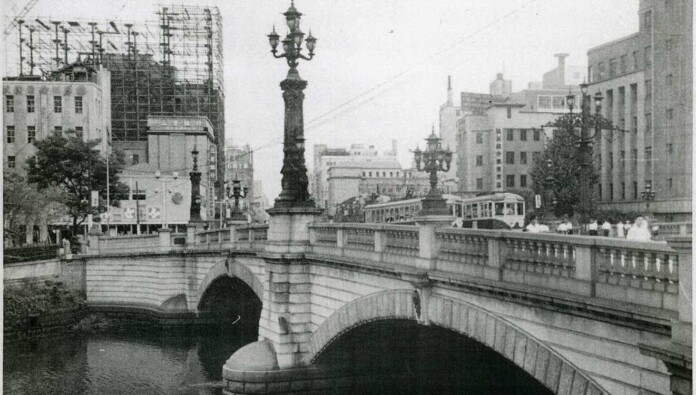
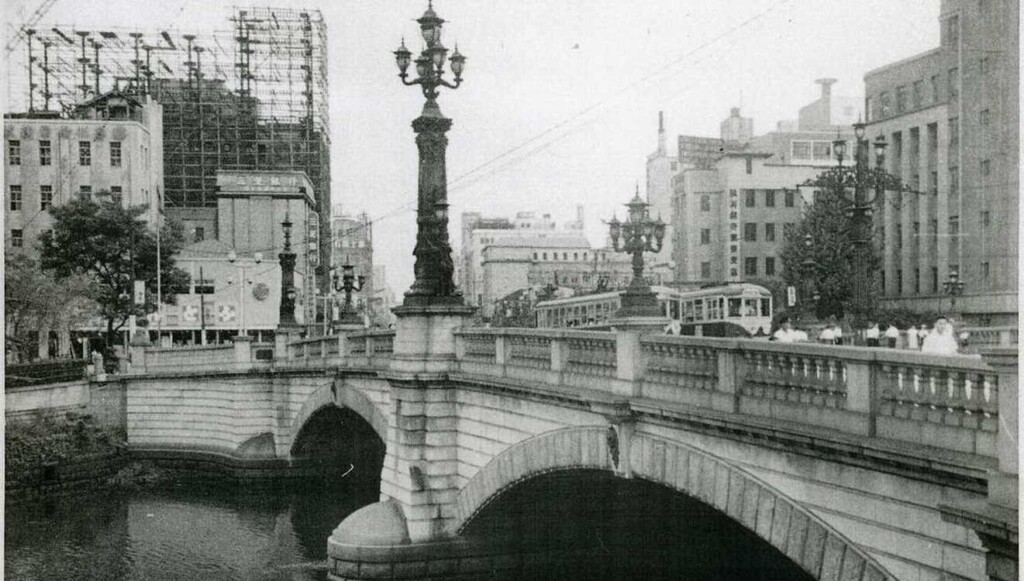
Nihonbashi Bridge before WWII - credit Urbz CC 2.0. via Flickr
Nihonbashi Bridge before WWII – credit Urbz CC 2.0. via Flickr
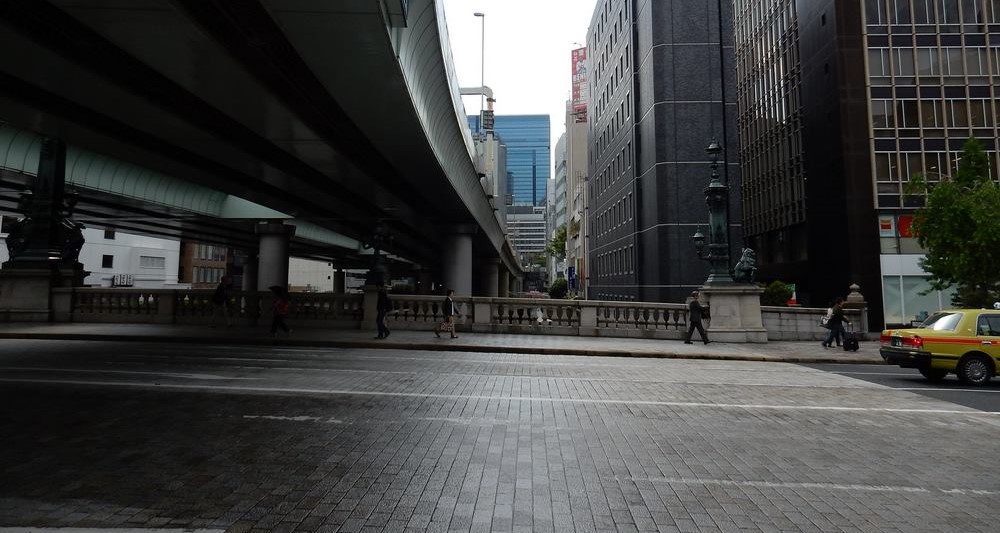
Imagine the outrage if construction of a highway interchange was approved directly overhead of the Brooklyn Bridge—that’s what one Tokyo neighborhood has had to deal with for more than 60 years.
The most historic bridge in the city has long been bathed in the shadow and tumult of a concrete overpass, but things are looking up for the Nihonbashi Bridge—literally.
The bridge under the overpass – credit Charles, CC 2.0. via Flickr
A coalition of the metropolitan governments is preparing to remove the overpass as part of an urban rejuvenation project. The result will take the area back to the days of the Meiji Restoration, when the bridge was a center of community activity, and a symbol of both progress and order.
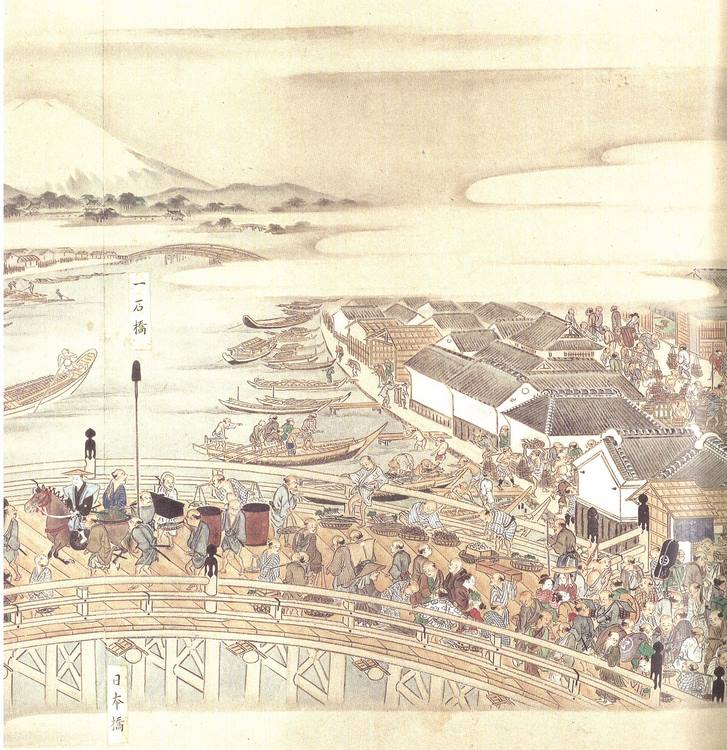
Construction of Nihonbashi was ordered in 1603 by the shogun Tokugawa Ieyasu, and it was to serve a huge purpose in the future organization of the state. It was considered the first reference node of the entire Japanese national road network at the time.
The network consisted of five postal routes which reached from Tokyo—then the prosperous merchant-artist-fishing town called Edo—to the Imperial capital at Kyoto, and four other major provincial capitals. Road signs to and from the locations grew or shrank in distance according to the sign’s distance from Nihonbashi Bridge.
It was the point from which all distances in the country were measured, and this collection of digitized postcards and other drawings shows how it and the neighborhood named after it changed over the years.
A depiction of the Nihonbashi Bridge during the Edo period – credit, Urbz, CC 2.0. via Flickr
Rebuilt in a European style in 1911, it survived all the ravages of World War II, only to be crowded over by the elevated expressway during the hasty modernization of the city in the lead up to the ’64 Summer Olympics.
“Historically, Nihonbashi used to be a place where people could look up and see Mount Fuji,” Taneo Nakamura, chairman a local preservation group pushing to remove the overpass, told Japan Times. “Now, you look up and just see concrete.”
Nakamura was an executive of a department store chain that had a location near the bridge, and he was there day in and day out while it was being built.
“At the time, the river was dirty and the area run-down, so there was excitement about modernization,” he said. “But when it was completed, the structure was lower and darker than anyone had expected. The entire atmosphere of the bridge was lost.”
On the current bridge’s centennial year, the Tohoku earthquake struck the city, and the government began reassessing infrastructure on a nationwide scale. Nakamura and other community leaders seized the opportunity to collect signatures on a petition calling for the overpass to be removed, and to bring “light to the river” again.
Half a million John Hancocks later, the Tokyo Metropolitan Government, Chuo Ward municipal government, national government, and Metropolitan Expressway, formally submitted a plan for a $2.2 billion rejuvenation project that would see the overpass move underground, and the bridge returned to its place at the center of the community.
A hugely sensitive project that will involve tunneling under the river and between subway lines all while redirecting a major traffic artery, it will be coupled with the building of a riverside pedestrian walkway about 0.8 miles long lined with recreation areas. Tunneling is slated for completion by the next decade, and the whole area should be finished by 2040.
SHARE This Fascinating Local Tokyo History With Your Friends Who Love Japan…