Credit: Sawyer County Sheriff's Department/Facebook
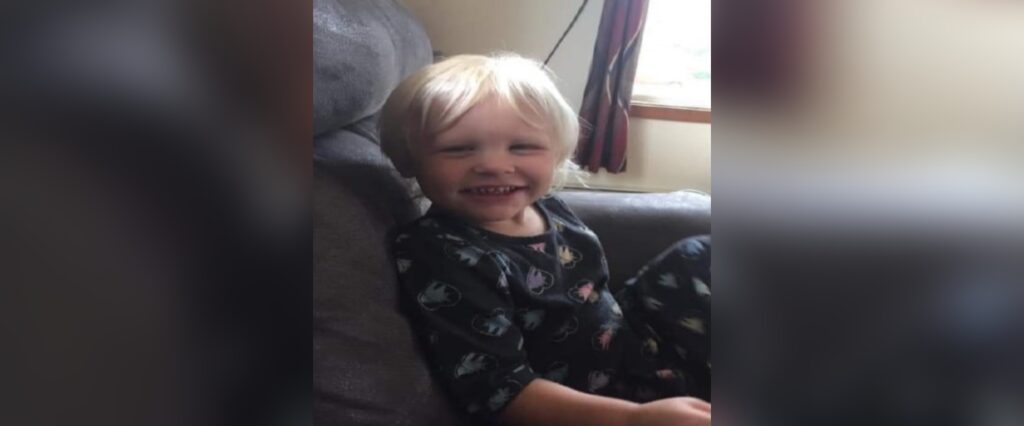
This sweet toddler has a lot to smile about: after 24 hours lost in the Wisconsin woods near her home, she’s been found safe and sound with her trusty dog Peanut—thanks to one big community effort to find her.
Credit: Sawyer County Sheriff’s Department/Facebook
Sawyer County Sheriff’s Department reported that little Abigail Ladwig went missing in the Winter, Wisconsin area at 6:45 p.m. on Sunday evening, August 9. She was known to be with her pet cocker spaniel.
Before long, hundreds of local residents, led by the Department of Natural Resources, went out looking for a brown dog and a little girl known to be barefoot with a flowery shirt on. Others brought food, water, and supplies to help those out searching.
Just over a day later, at 7:20 p.m. the three-year old was found, having wandered through the woods into a nearby yard a little ways from her home.
Abigail had ”minor scratches, insect bites and dehydration during her 24 hours of being lost in the woods,” and was sent to a local hospital for a check-up before being released.
Pat Sanchez, a coordinator of Sawyer County Search and Rescue, said, ”Thank you to all responders, volunteers who came out to search for Abby and the donations of food and water. It’s amazing how in times of need, we all come together for such an amazing outcome.”
The restaurant industry is one of the hardest-hit by COVID-19 and no one’s felt the financial pinch more than the servers who earn their livelihoods when people dine out.
Credit: Instagram/@therealdjmurph
Unsurprisingly, waiter Peter Murray was eager to get back at work at Lucille’s Smokehouse—a longtime local favorite in Concord, California—hoping to make up for lost time and wages.
Unbeknownst to him, fate was about to hand him a once-in-a-lifetime gratuity.
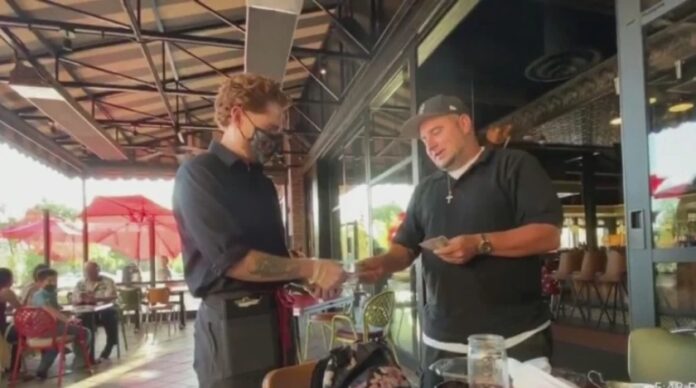
Enter Brian Murphy—a.k.a. DJ Murph—a restaurant fan participating in a viral “Venmo Challenge.” The objective was to collect micro-donations via social media—as little as 50 cents—to reach a preset goal. Once the goal is reached, the patron passes the money along to a worthy server in the form of a tip.
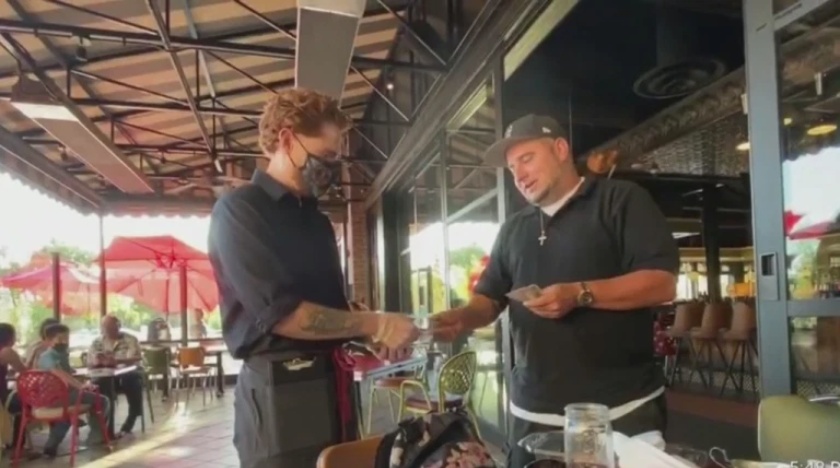
When Murphy hit his $1,000 benchmark he chose Lucille’s, recently re-opened after a three-month pandemic-related hiatus, as the place to pay his goodwill forward.
Peter, randomly assigned to wait on Murphy’s table, was stunned by the generous gesture, and was practically speechless as Murphy counted out the tip to the cheers of restaurant-goers and thrilled members of Lucille’s staff.
Later, after he’d had time to digest his amazing luck, an extremely thankful Peter was able to reflect on his good fortune. In an interview with KPIX 5, he said the unexpected windfall was something of a godsend.
“Now I don’t have to worry about paying rent next month,” Peter said, “and I can put some money aside… Words can’t describe how grateful I am for what Brian, DJ Murph did for me… I’m just so grateful.”
But Murphy’s generosity didn’t stop there. Having managed to raise $400 more than his original goal, the big-hearted DJ gifted the balance of his challenge earnings to the restaurant host.
Thrilled by the outcome, Murphy has already begun another challenge and plans to surprise other unsuspecting servers with over-the-top tips each time he reaches his $1,000 goal.
That said, while very few of us have the means to tip $1,000 after a meal, when and if you do decide to dine out one of these days, we hope you’ll remember to tip your server generously. It just might make their day.
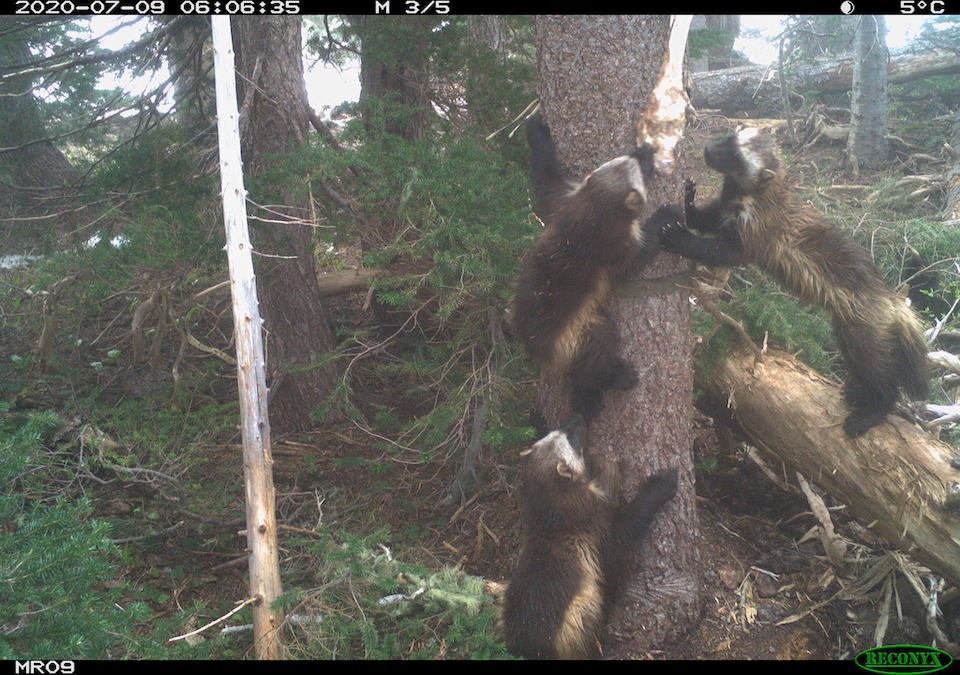
The picturesque Mount Rainier National Park is once again home to wolverines, as a nursing mother and two kits were recently spotted by camera stations within the park.
Credit: NPS
They are the first wolverines to establish residence in Mount Rainier in over 100 years, and their discovery is purported as good news for wildlife management within the park, and for the ecosystem surrounding it.
“It’s really, really exciting,” said Mount Rainier National Park Superintendent Chip Jenkins. “It tells us something about the condition of the park—that when we have such large-ranging carnivores present on the landscape that we’re doing a good job of managing our wilderness.”
The nursing mother, called Joni, and her kits were discovered by scientists from the Cascades Carnivore Project, (CCP) who were responsible in 2018 for setting up the camera stations which led to the sighting of the three fur balls scampering across a meadow into a forest in a video posted on the NPS Twitter account.
With confirmed sightings in the adjacent area and suitable wilderness habitat in Mount Rainier National Park, the CCP believed wolverines may start returning to the Washington state park.
The CCP works to raise awareness about less understood carnivores of North America’s forests, such as fishers, lynx, and wolverines.
“Many species that live at high elevation in the Pacific Northwest, such as the wolverine, are of particular conservation concern due to their unique evolutionary histories and their sensitivity to climate change,” Dr. Jocelyn Akins of the CCP said. “They serve as indicators of future changes that will eventually affect more tolerant species and, as such, make good models for conservation in a changing world.”
A fierce, hungry, yet skittish predator
Credit: Vincent van Zalinge/Unsplash
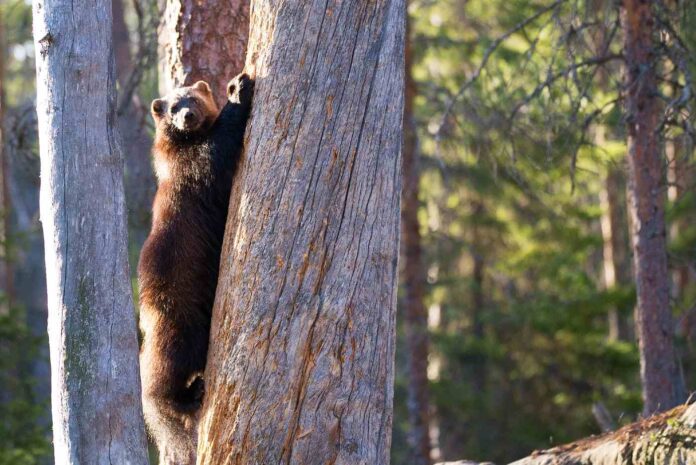
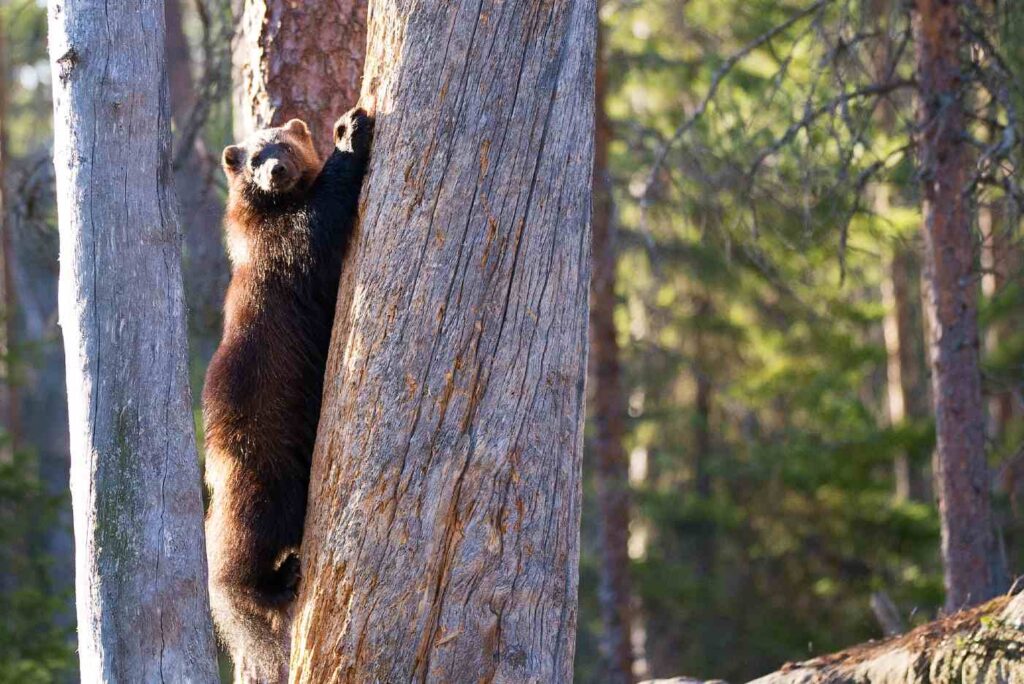
The wolverine is the largest member of the mustelidae, or weasel family. A cold weather expert, they possess small ears, a short snout, and large paws that allow them to run in the snow without sinking down into the drifts. Their scientific name is gulo gulo, Latin for ‘the Glutton’, as they will eat just about anything dead and actively hunt animals much larger than them like deer, and even predators like lynx.
They have a ferocious reputation as an animal that will try and defend their kills even from bears or wolves.
However wolverines are extremely rare in the United States, and even in regions of prime habitat, the National Parks Service estimates their density to be about one individual per 100 square miles, leading to a total of between 300 and 1,000 in the lower 48 states.
The locations of the Mount Rainier wolverine den and camera stations have not been released in order to protect the wolverines from potential harm or accidental disturbance, but there are still ways for visitors to help monitor wolverine recovery.
“Backcountry enthusiasts, skiers, snowshoers and snowmobilers can help us monitor wolverines and contribute to studying their natural return to the Cascade ecosystem,” said Dr. Tara Chestnut, a park ecologist.
SHARE News Of This Fab Wolverine Family With Your Friends On Social Media…
Quote of the Day: “The difference between greatness and mediocrity is often how an individual views a mistake.” – Nelson Boswell
Photo: by Abigail Keenan
With a new inspirational quote every day, atop the perfect photo—collected and archived on our Quote of the Day page—why not bookmark GNN.org for a daily uplift?
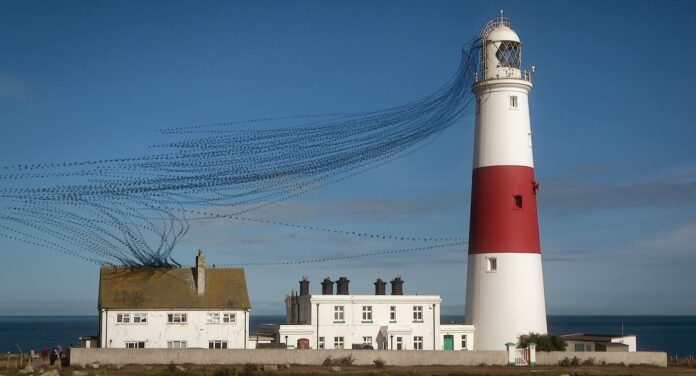
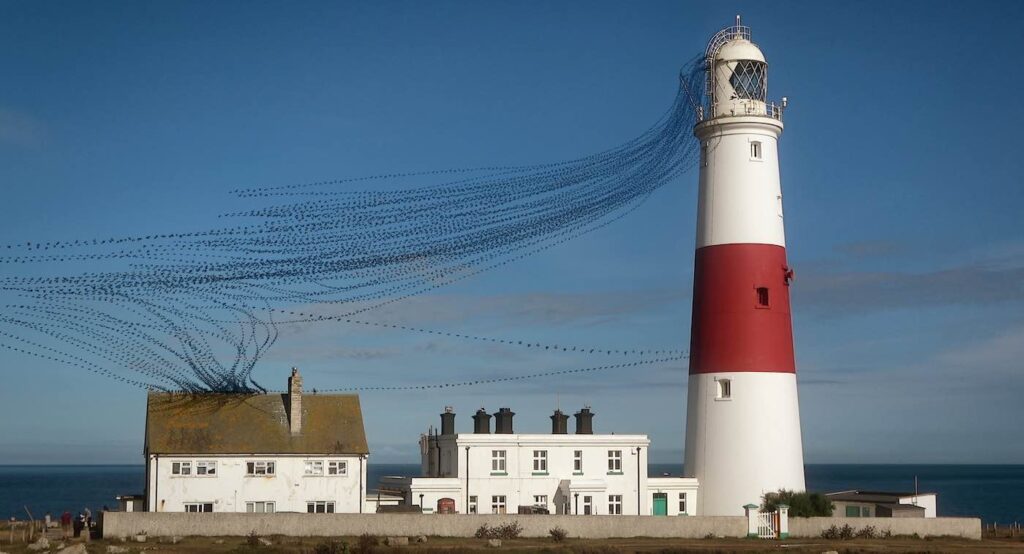
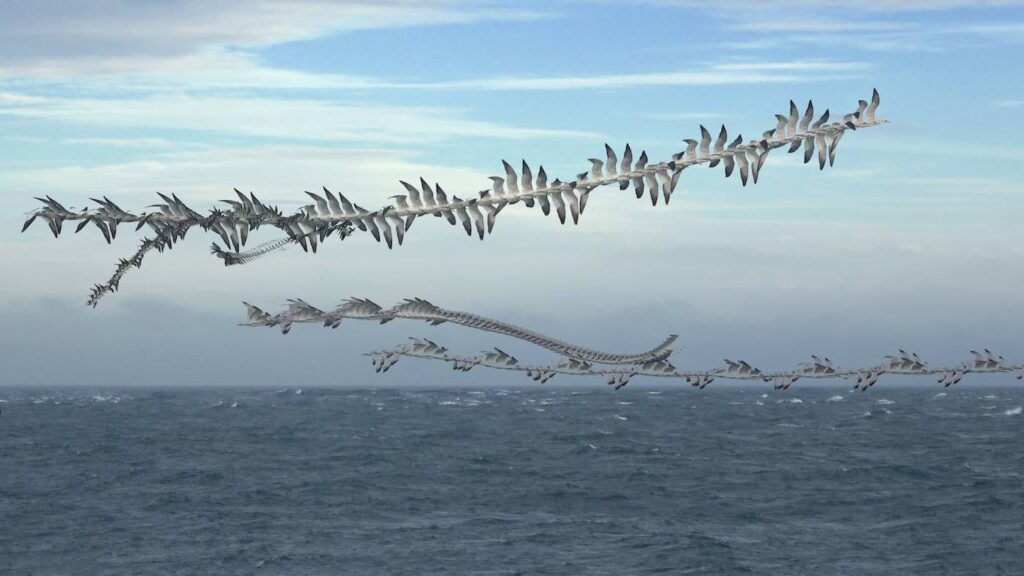
Sean Hepburn has been photographing birds, like gannets and ravens, flocking on the Isle of Portland, Dorset for the past six years. But there is nothing like mumuration of starlings to inspire awe in any who watch them.
Sean Hepburn – SWNS
The amateur landscape photographer from nearby Weymouth took an interest in starlings after being amazed by the birds flocking habits.
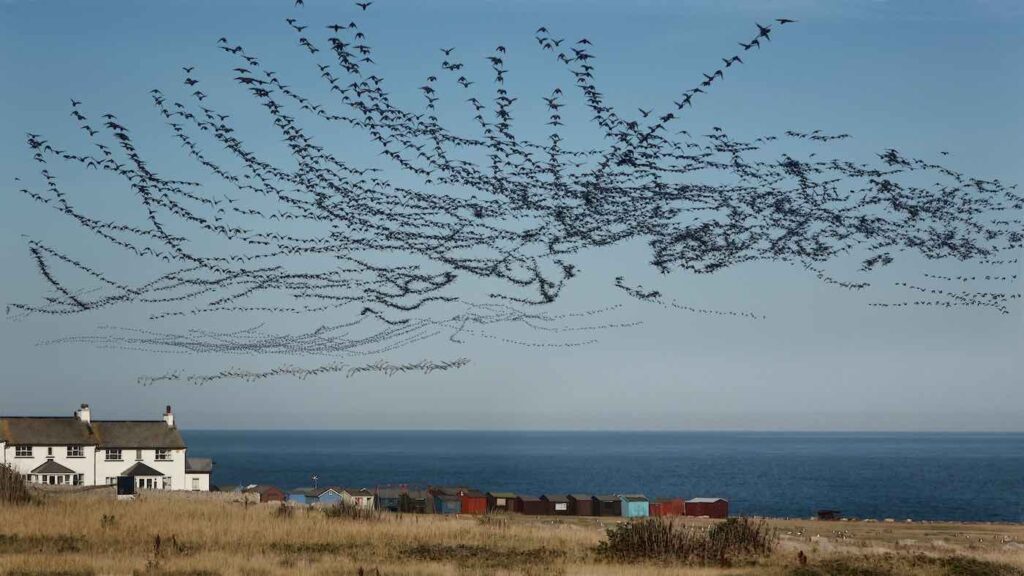
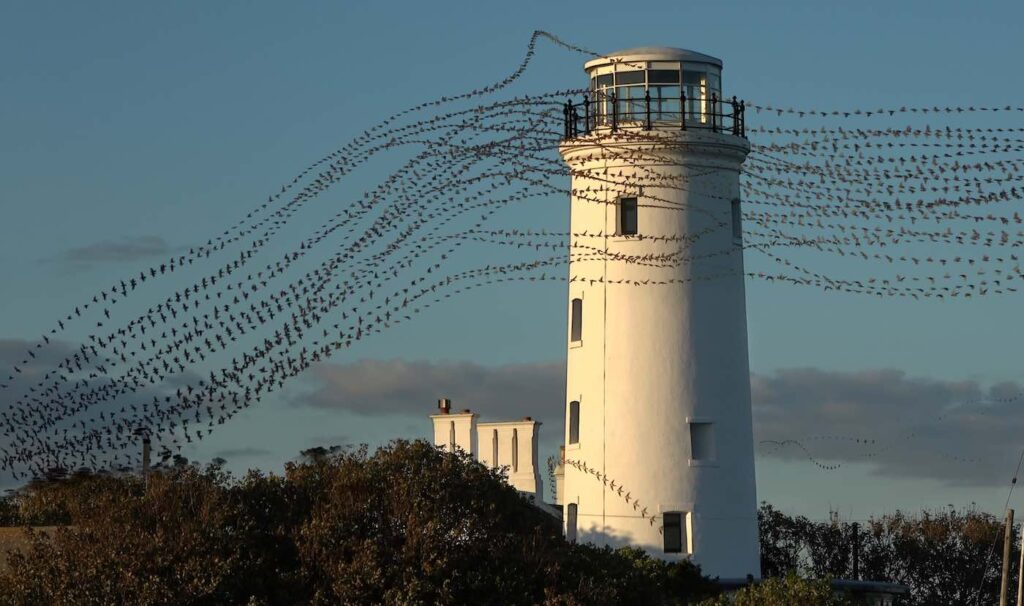
Murmurations are the flocking movements of starlings, which can involve thousands of birds flying in complex aerial formations, seemingly in sync.
To create his interesting photos, the 55-year-old uses multiple exposures, taking around 200 pictures in just five seconds.
His pictures, which include the Portland Bill Lighthouse and the scenic the Jurassic Coast, show eye catching spiral shapes as the birds’ flight path is captured.
“I focus on starlings because they make quite spectacular pictures,” said the grandfather-of-three.
Sean Hepburn – SWNS
However he claimed it takes coordination and can be quite tricky to get his shots right.“I’ve been a landscape photographer for 20 years and wanted to get these images with landmarks in the background.
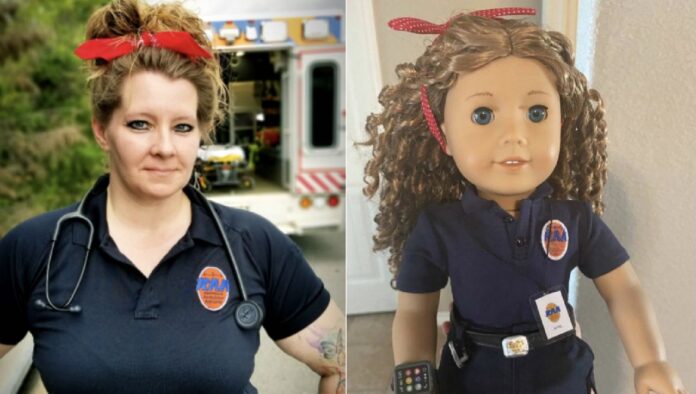
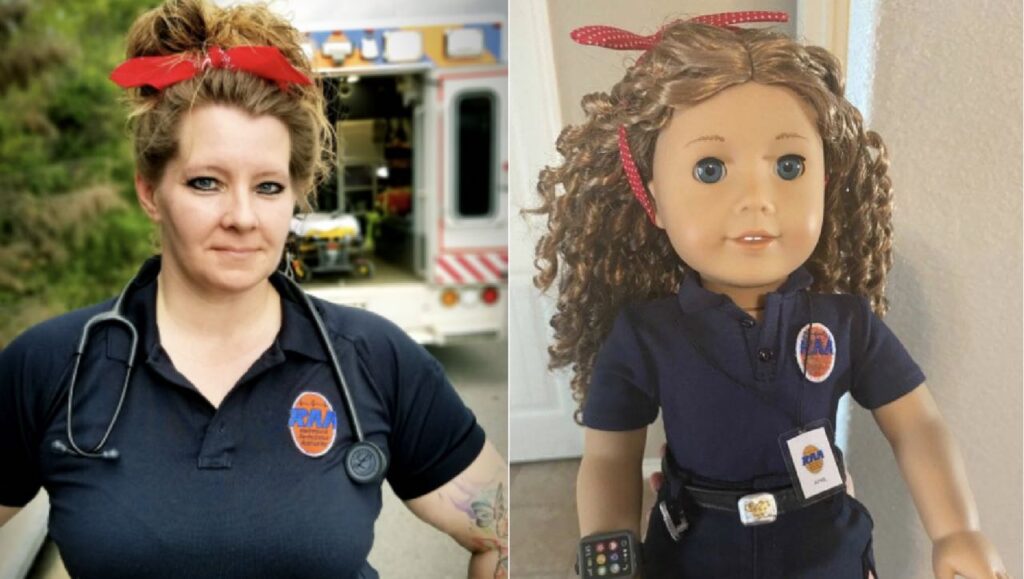
EMT paramedics have always been frontline heroes every day—well before the pandemic hit neighborhoods across the world. And now this Virginia ambulance worker has an American Doll made in her image to prove it.
RAA
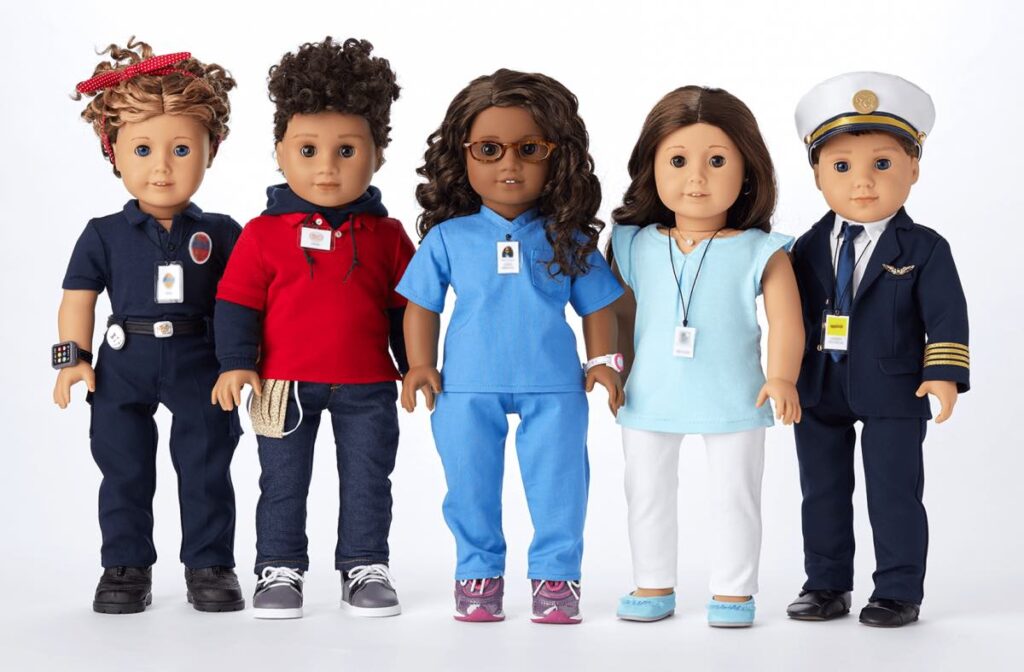
April O’Quinn was one of five national winners in the “Heroes with Heart” contest run by American Girl Dolls, following a nationwide call for nominations.
Of the thousands of nominations the Mattel company received, the one sent in by April’s niece was chosen to represent the best of the COVID-19 frontline heroes who have been risking their lives to help others.
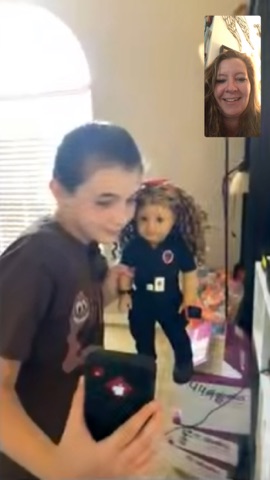
Young Lacey lives in Texas, and she is always telling people about her Aunt April, who works for the Richmond Ambulance Authority (RAA).
Lacey told American Girl that her Aunt contracted the coronavirus—but even after her long recovery, she chose to return to RAA.
“She didn’t hesitate for a moment,” Lacey wrote on her contest submission, which was published by American Girl.
April got a phone call last month from Lacey with the exciting news.
“Lacey was on the other side screaming that we had won! I was in shock,” April told WTVR news. “I had no words. I ended up crying because I couldn’t say anything.”
She got to watch via video chat as the girl opened her new doll after it came in the mail—and the likeness was pretty remarkable.
RAA
“The stars and brightness in her face and eyes were amazing,” said April.
The winners received a one-of-a-kind custom doll and outfit in their hero’s likeness and a $250 gift card.
“It’ll be something that neither one of us will ever forget. It’s a bond that I’ll hold with her forever,” April said of her niece Lacey.
In June, American Girl started selling an outfit for their dolls that inspires admiration for all the medical workers. Called the ‘Scrubs Outfit’, it includes pink scrub pants, a colorful nurses top, slip-on shoes and a matching fabric face mask.
WATCH the WTVR video below…
SHARE This Child’s Hero Tribute With Frontline Workers on Social Media…
Quote of the Day: “When you shoot an arrow of truth, dip its point in honey.” (Arab proverb)
Photo: by Matthew T Rader
With a new inspirational quote every day, atop the perfect photo—collected and archived on our Quote of the Day page—why not bookmark GNN.org for a daily uplift?
The streets of Santiago, Chile may be a long way from Gotham City, but among its citizens dwells a true superhero. Far from being a fictional crime-solver, he’s a real-life hunger fighter who distributes food to the city’s homeless population on a regular basis.
With his Batmobile—or in this case, white SUV—fully stocked with a cargo of hot meals, he dons a shiny black costume complete with a cape and two masks (one with pointy comic book ears and eye slots; the other, for COVID-19 protection).
The self-proclaimed “Solidarity Batman” is doing his part to make life during Chile’s months’ long lockdown more bearable for some of those hardest hit by the current pandemic.
But this Batman’s do-good mission is about more than simply delivering food. Knowing that sometimes all it takes to nourish the soul is a little humor or a few kind words, he aims to feed people’s hearts as well as fill their stomachs.
He chose the Batman outfit to cheer people up, and it fosters a feeling of togetherness.
“Look around you, see if you can dedicate a little time, a little food, a little shelter, a word sometimes of encouragement to those who need it,” he told Reuters.
And, like Bruce Wayne, this modest caped-crusader prefers to keep his identity anonymous.
Yet, no matter who the man beneath the mask is by day, the message he delivers along with his meals is clear. As Simon Salvador, one thankful beneficiary of Batman’s compassionate outreach told Reuters, “It is appreciated…from one human to another.”
I stood at the sink washing out my paint brush. The self-critic in my head was giving me a stern lecture about taking in yet another homeless cat.
My Aunt had passed away a few months earlier and we were in the process of cleaning out her house. Between that and my other responsibilities, I felt like the weight of the world was on my shoulders.
The cat had been living in a friend’s garage. She couldn’t afford to take him to the vet, so I offered, thinking it would be a checkup, some shots, and we would find him a home.
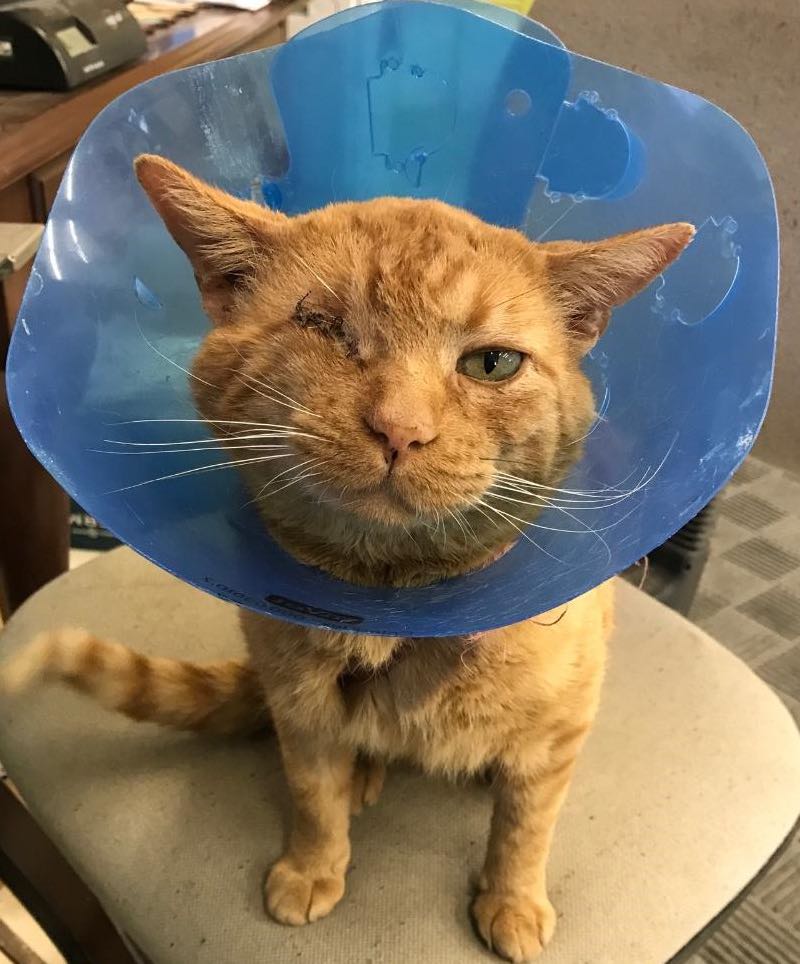
But after meeting with the vet I realized what I had gotten into. He had numerous issues, the worst of which, his eye had been injured and was now infected and would need to be surgically removed.
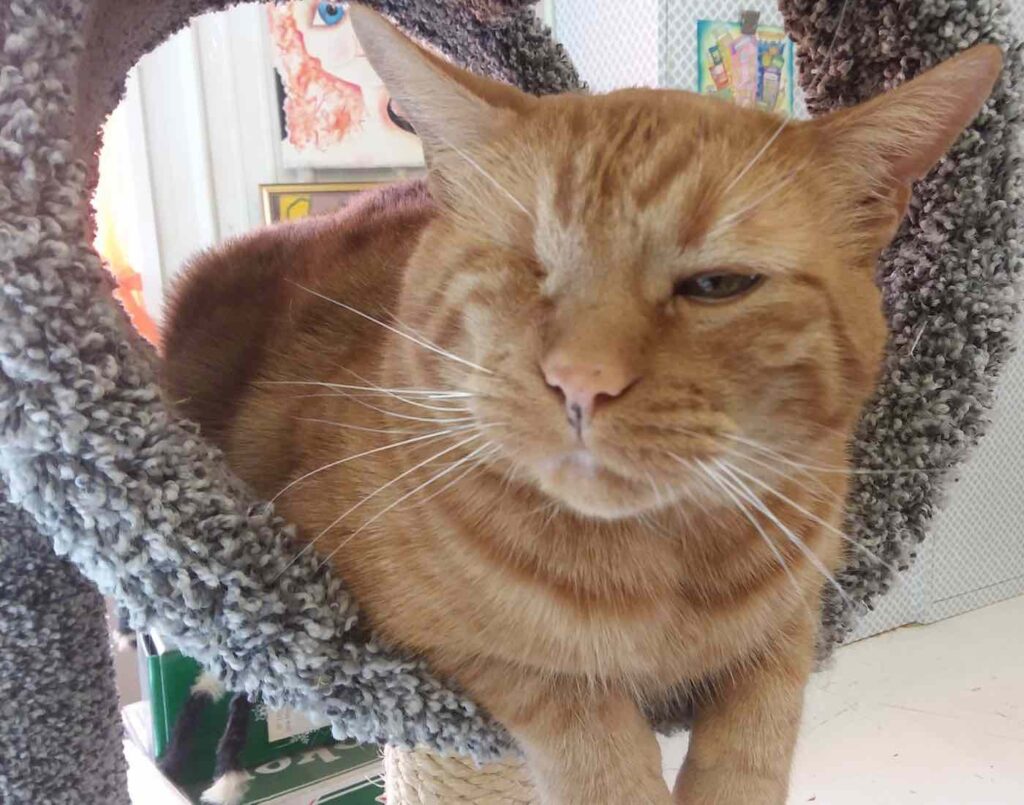
Hence, the reason the critical voice was giving me a lecture: On top of everything else I was now responsible for this pitiful looking, malnutrition, one eyed cat wearing a blue plastic collar, now named Willy.
Willy
And Willy wasn’t too happy about it all either. He was mad and liked to bite me when I tried to do anything to help him.
‘I’ll never be able to find him a home,’ I thought.
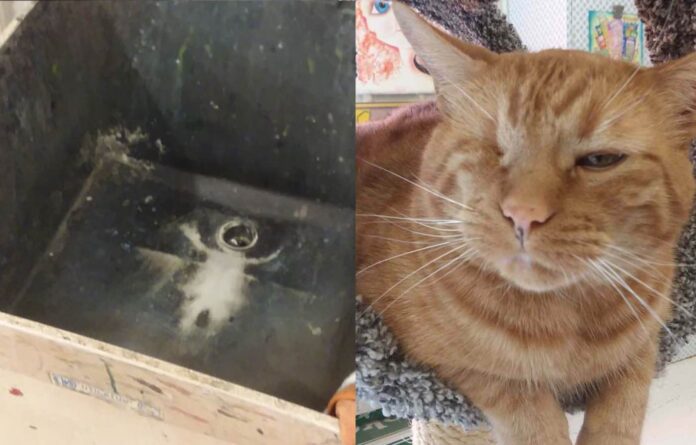
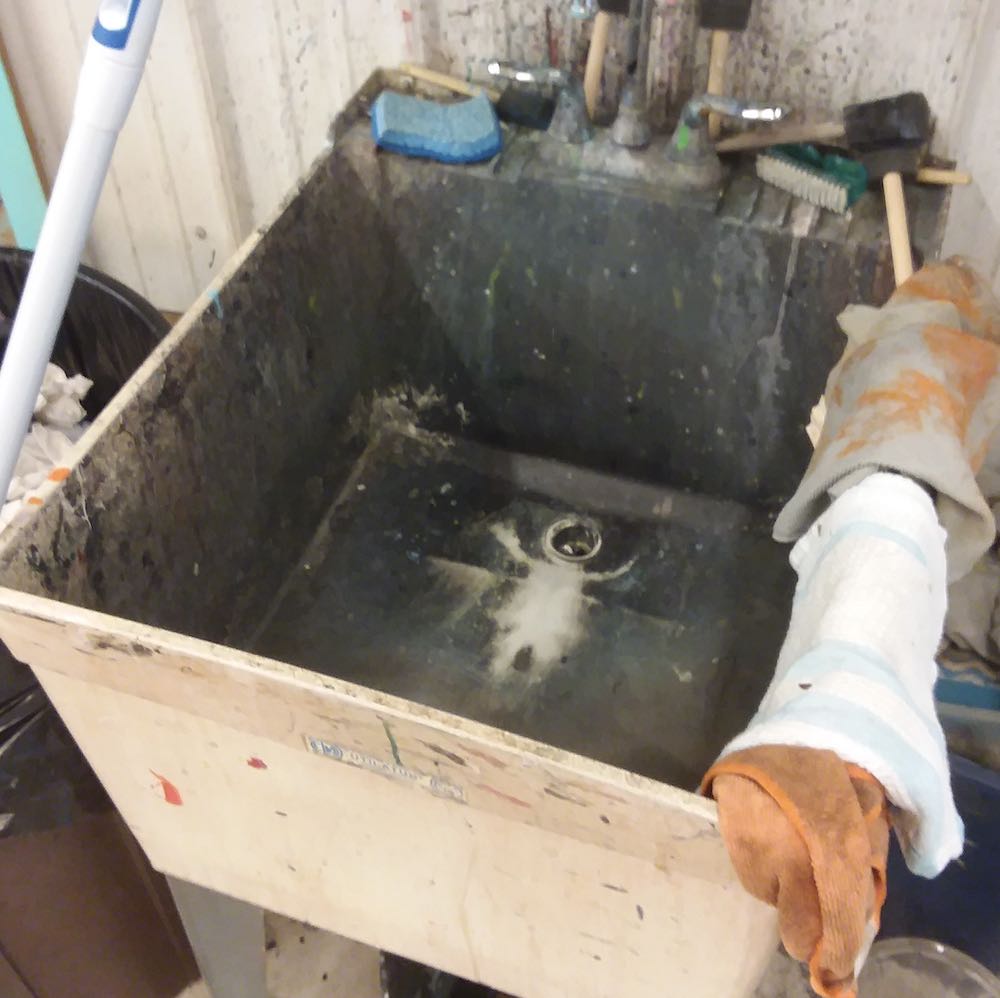
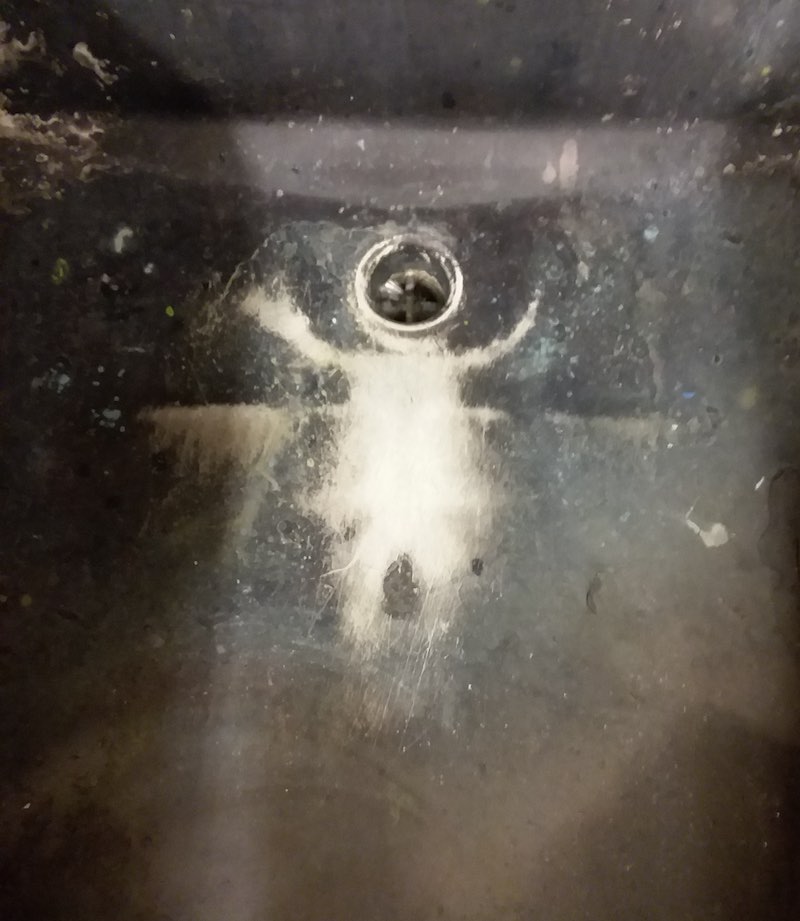
Then, I looked down at the dirty old paint covered utility sink and there she was. An angel looking back at me.
She was just a weird arrangement of paint and drain, but that didn’t diminish her message. She spoke loud and clear.
It’s been years since Willy showed up here at my work. We never found him a home because we all fell in love with him and his quirky personality.
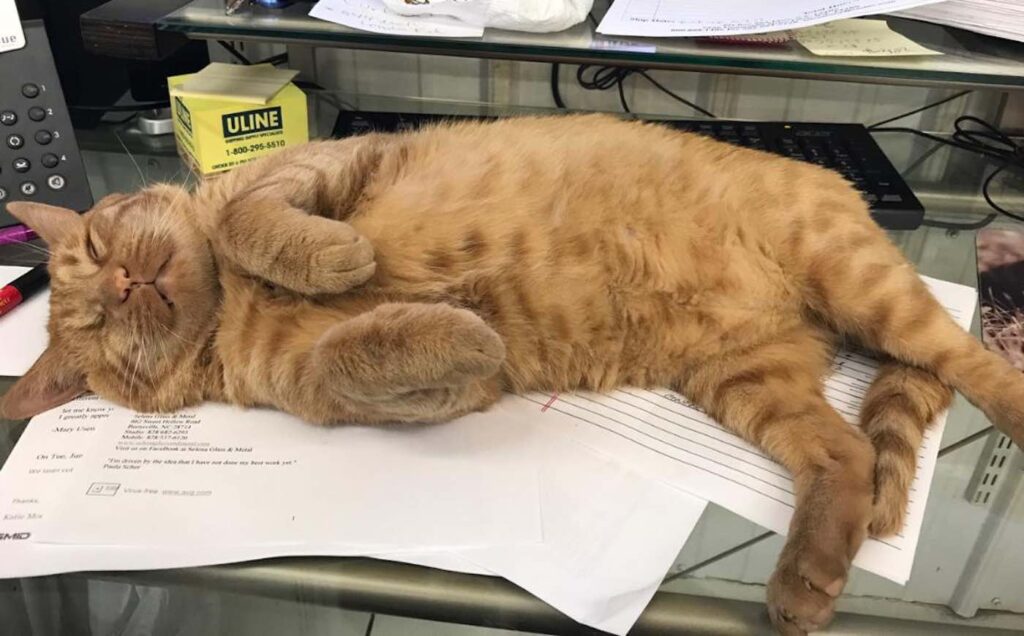
He’s fat and happy and has adjusted very well to being an adorable spoiled one-eyed cat.
And, the angel is still in the sink.
Even though years of paint and water have washed over her, she’s just sitting there to remind me that we are all angels sent here to look after one another.
Auroral beads seen from the International Space Station - SWNS
They never had the computing power to figure it out before. But now, a NASA mission has unlocked some answers around the phenomenon of space auroras and how they form across the galaxy.
Auroral beads as seen from the International Space Station – SWNS
A special type of aurora, draped east to west across the night sky, like a glowing pearl necklace, is helping researchers better understand the science of auroras and their powerful drivers out in space.
Known as auroral beads, these lights often show up just before large auroral displays, which are caused by electrical storms in space called substorms.
They are atmospheric phenomenons made up of bands of light caused by charged solar particles following the Earth’s magnetic lines of force.
If a planet has an atmosphere and magnetic field there is usually an aurora.
Previously, scientists were not sure if auroral beads are somehow connected to other auroral displays as a phenomenon in space that precedes substorms, or if they are caused by disturbances closer to Earth’s atmosphere.
But powerful new computer models combined with observations from NASA’s THEMIS mission (Time History of Events and Macroscale Interactions during Substorms) have provided the first strong evidence of the events in space that lead to the appearance of these beads and demonstrated the important role they play in the space environment around Earth.
By providing a broader picture than can be seen with the three THEMIS spacecraft or ground observations alone, the new models have shown that auroral beads are caused by turbulence in the plasma—a fourth state of matter, made up of gaseous and highly conductive charged particles—surrounding Earth.
The results will ultimately help scientists better understand the full range of swirling structures seen in the auroras—and learn how to better protect satellites orbiting our planet. (WATCH a NASA video about the beads below…)
“Now we know for certain that the formation of these beads is part of a process that precedes the triggering of a substorm in space…an important new piece of the puzzle,” said Professor Vassilis Angelopoulos, principal investigator of THEMIS at the University of California, Los Angeles.
Auroras are created when charged particles from the Sun are trapped in Earth’s magnetic environment—the magnetosphere—and are funneled into Earth’s upper atmosphere, where collisions produce the glow in hydrogen, oxygen, and nitrogen atoms and molecules.
By modeling the near-Earth environment on scales from tens of miles to 1.2 million miles, the THEMIS scientists were able to determine the details of how auroral beads form.
Dr Evgeny Panov, lead author on one of the new papers and THEMIS scientist at the Space Research Institute of the Austrian Academy of Sciences, said, “THEMIS observations have now revealed turbulences in space that cause flows seen lighting up the sky as of single pearls in the glowing auroral necklace.
“These turbulences in space are initially caused by lighter and more agile electrons, moving with the weight of particles 2000 times heavier, and which theoretically may develop to full-scale auroral substorms.”
As streaming clouds of plasma belched by the Sun pass Earth, their interaction with the Earth’s magnetic field creates buoyant bubbles of plasma behind Earth.
Like a lava lamp, imbalances in the buoyancy between the bubbles and heavier plasma in the magnetosphere creates fingers of plasma 2,500 miles wide that stretch down towards Earth, scientists said.
Signatures of these fingers create the distinct bead-shaped structure in the aurora, experts say.
“We have only recently gotten to the point where computing power is good enough to capture the basic physics in these systems,” said Dr David Sibeck, THEMIS project scientist at NASA’s Goddard Space Flight Center in Maryland.
It requires very sophisticated algorithms and very big supercomputers.
Now that scientists understand the auroral beads precede substorms, they want to figure out how, why and when the beads might trigger full-blown substorm, the researchers said.
At least in theory, the fingers may tangle magnetic field lines and cause an explosive event known as magnetic reconnection, which is well known to create full-scale substorms and auroras that fill the nightside sky, experts said.
Since its launch in 2007, THEMIS has been taking detailed measurements as it passes through the magnetosphere in order to understand the causes of the substorms that lead to auroras.
In its prime mission, THEMIS was able to show that magnetic reconnection is a primary driver of substorms. The new results highlight the importance of structures and phenomenon on smaller scales – those hundreds and thousands of miles across as compared to ones spanning millions of miles.
After the initial success of the new computer models, THEMIS scientists are eager to apply them to other unexplained auroral phenomena, they added.
(The findings were published in the journals Geophysical Research Letters and Journal of Geophysical Research: Space Physics.)
SHINE a Light on Our Awe-Inspiring Earth By Sharing on Social Media
72% of Americans in a new poll said that they are more likely to find “little joys” during the summertime—and that’s especially true this year.
83% of respondents agreed: it’s the little things in their day that bring the most joy—and just as many say these little things have become even more important to them in the past few months.
Luckily, the average respondent experiences four of these small things every day.
Conducted by OnePoll on behalf of Bubbies Ice Cream, the survey found many of the little things respondents look forward to relate to nature and the great outdoors. The third most-popular ”little joy” was ‘feeling the sun on my face’
Listening to rainfall or a thunderstorm while inside, the arrival of a blue-sky sunny day, and the smell of the ocean, all made it into the top 30.
But it was family and friends that were a key factor in a third of the top ten “little joys”. Not surprisingly in 2020, seeing a loved one after being apart was #1.
Sleeping in a freshly made bed, having time to myself, and getting something for free rounded out the top five answers. Who doesn’t love finding money? That was also mentioned.
For many, who look forward to something in the kitchen, the smell of freshly-made baked goods and the first sip of coffee in the morning was a favorite answer.
“We’ve seen the joy that comes from these indulgences and know that celebrating the small moments in life is critical when it comes to navigating stressful times,” noted Katie Cline, Vice President of Marketing at Bubbies Ice Cream.
AMERICANS’ TOP 10 “LITTLEJOYS” 1. Seeing a loved one after being apart for a while 40%
2. Sleeping in a freshly made bed 39%
3. Feeling the sun on my face 39%
4. Getting something for free 39%
5. Having time to myself 35%
6. Hugging a loved one 33%
7. Finding money I didn’t know I had 32%
8. The first sip of coffee in the morning 30%
9. The clean feeling after a shower 30%
10. Receiving an “I’ve been thinking about you” type text 28%
What are your favorite little joys? Would sunshine and a freshly made bed make your top five?
GIVE A Little Joy To Others And Share This Story Today...
Quote of the Day: “Mostly it is loss which teaches us about the worth of things.” – Arthur Schopenhauer
Photo: by Sebastien Gabriel
With a new inspirational quote every day, atop the perfect photo—collected and archived on our Quote of the Day page—why not bookmark GNN.org for a daily uplift?
One English vicar just overcame his fear of heights—by climbing 165-feet to the top of his church spire.
Credit: SWNS
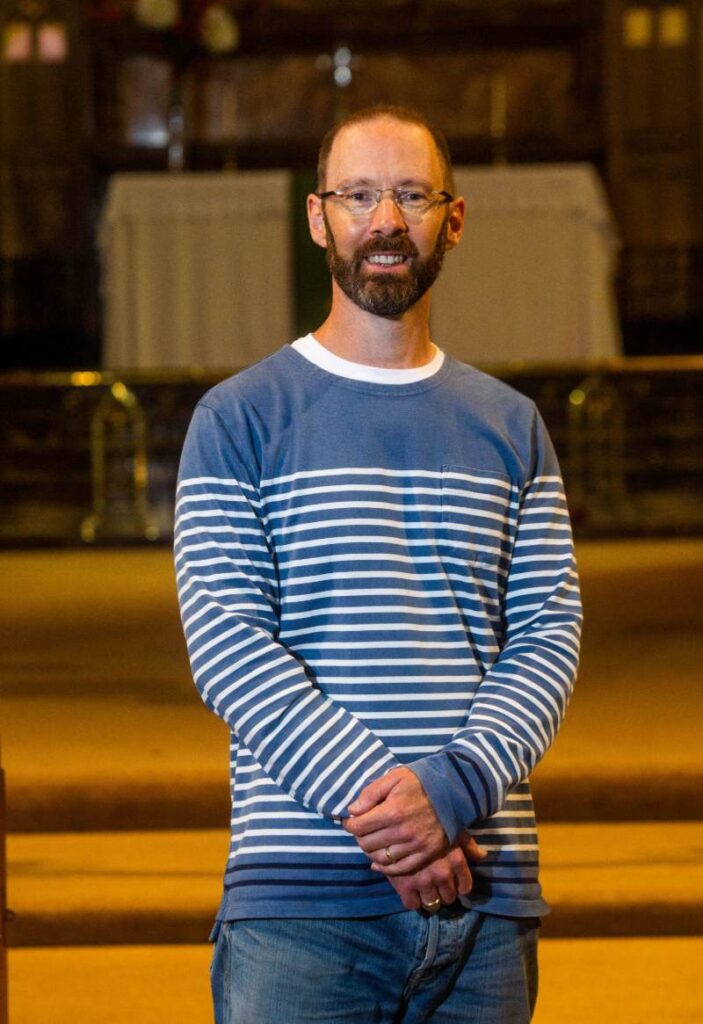
Reverend Sam Leach says he’s always had a fear of heights, but he wanted to set himself free by undertaking the ultimate vertigo challenge, while raising money for urgently needed repairs at his church in Devon.
He attached himself to a rope on Thursday and successfully scaled the church spire all the way to the top, despite feeling violently sick at the prospect.
Sam joined three others in climbing up and down in just under an hour. The feeling he had at the top? It was “exhilarating.”
“Actually,” says Sam, “I would do it again. The view was so amazing looking out over the town center.
“The fear this morning when I first got up there left my knees trembling. It was unnerving seeing a 25m (82ft) ladder on top of ten flights of scaffolding.
In the past, even going up an escalator was too much without hanging onto the rail.
“I was not worried about my safety as I was attached to a rope, I was worried about whether I would freeze on the rungs and not be able to go up or down.”
“I was really nervous but, strangely, not quite as terrified as I thought I would be. Maybe it was people praying or something, but when I got to it, I just looked straight ahead. I was not looking up as that’s what makes me go giddy.”
Credit: SWNS
Sam’s tip for others with a fear of heights? Just focus “on one step at a time.”
Hospitality Is The Key
Sam’s church, St Mary Magdalene in Torquay, is covered in scaffolding at present for external repairs which were funded by a grant from the UK’s National Lottery Heritage Fund.
Credit: SWNS
But while the work has been ongoing, $9,000 (£7,000) in new repairs became necessary in the kitchen—a vital part of the church’s outreach to the community.
Hospitality is a key value of the church, Sam says. ”It’s not about the building, it’s what we can offer the community—and the kitchen is vital to that.”
If you’d like to donate to Sam’s church, visit here.
Build Up Some Positivity By Sharing This Inspiring Story With Your Friends On Social Media…
One very fun uncle made his young nephew’s dream come true by building a rollercoaster in the backyard that was based on the 11-year-old’s design.
Credit: SWNS
Leigh Downing used the sketches made by his nephew Calden Ashley to bring to life a 230-foot-long ‘Big Dipper’.
Leigh, alongside his 20-year-old son Charlie, used plastic pipes for the rails. They then put together old bits of scrap metal and wood to make the frame of the coaster.
The inventive duo even used an old wooden cutting board as the seat of the ride which circles Leigh’s green space in Llandyrnog, Wales.
They built it as a surprise for little Calden who was fed-up after being unable to see his friends during summer vacation with its bummer lockdown restrictions.
Former engineer Leigh said, “Calden has been rollercoaster mad for as long as I can remember.
“Even before he was tall enough to ride, he was designing them on a computer. It all started a couple of years ago when I had an operation and was off work for a couple of months. I gave Calden a wooden marble rollercoaster kit I had when I was a child. He was so thrilled with it.
“My son Charlie built him a small wooden rollercoaster that he could ride.
“He was absolutely ecstatic with the end result, but a couple of years on had got a little bored with it. We hatched this latest idea during lockdown… We did it all in eight days.”
Charlie, who passed his maths GCSE when he was 11-years-old and skipped his A Levels to go straight to university to study maths and science, is a hobby mechanic.
Leigh, who has a background in engineering, added: “We said to Calden, you do the design. He designed it from start to finish including every twist, turn and bunny hop.
Leigh said the build has brought Charlie, Calden, and himself together. He added: “I feel we did something absolutely amazing.”
“Our next plan is a full steel rollercoaster with a corkscrew and a loop which, of course, will rely on Charlie’s maths degree coupled with Calden’s rollercoaster designs.”
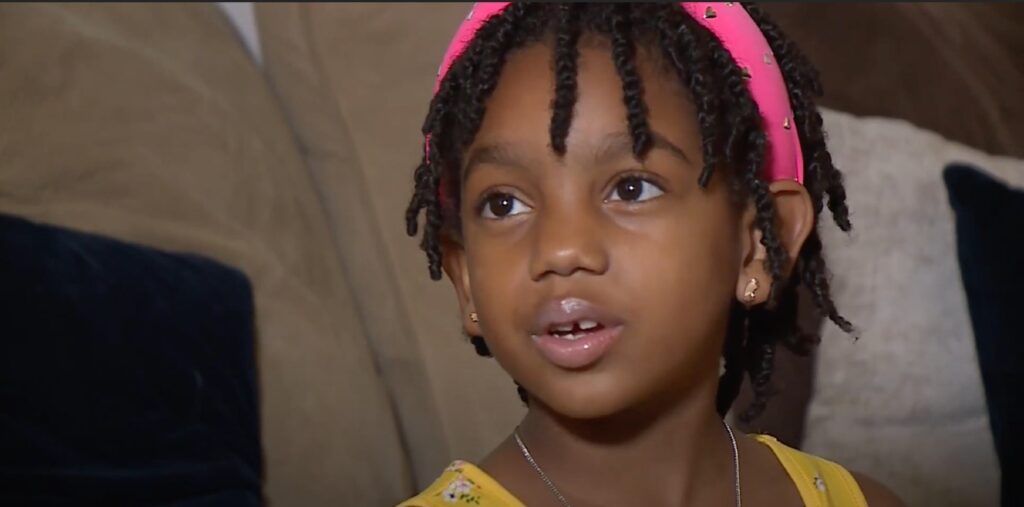
Paris Williams is six years old. Like many of her first-grade peers, she’s adorable, but this little girl is also driven by a mission to help others who are less fortunate. So driven in fact, that she’s launched her own nonprofit foundation, Paris Cares, to feed the homeless in her area.
Credit: FOX/YouTube
Paris’s mom, Alicia Marshall, says her daughter’s inspiration to become a hands-on good Samaritan was the title character of Cari Chadwick Deal’s children’s book, “One Boy’s Magic,” who also uses his powers to feed the homeless.
“She was reading books at school about giving and she came home one day, and she was like, ‘I want to give back to the homeless. What can we do to help the homeless?’ Marshall told KTVI FOX 2 News. “We kind of brainstormed some ideas and we came up making care packages.”
“I wanted to give something to the homeless,” Paris explained, “like the boy in the book.”
Paris might not have had a magic wand, but she didn’t let that stop her.
Turning instead to more practical magic and the help of her parents, Paris assembled and delivered (via non-contact drop off) more than 500 care packages containing food and other essentials to downtown St. Louis’s homeless, as well as handing out approximately 250 meals to essential workers.
But Paris wasn’t satisfied to simply donate goods. It was important to her to forge a bond with the people she was trying to help. After filling each package herself, Paris drew a picture or wrote a personal message on each one to create the kind of human connection so many of the homeless sorely lack.
“It makes me really proud because with everything that’s going on in the world this small child who is entering first grade has such a big heart,” Marshall said. “She wants to give. She wants to help others.”
Paris has already accomplished a lot by anyone’s standards, but if she has her way, she’s only just getting started. She’s looking toward holding a Thanksgiving hot-food drive for the homeless and also hopes to start a Christmas toy fund for kids in need.
“I want to inspire people to do good things,” Paris said.
Out of the mouths of babes, it seems, comes not only wisdom and truth, but kindness and generosity as well.
If you’d like to pitch in to help Paris feed the homeless, donations can be made directly to Paris Cares Foundation, or you can purchase Paris Cares masks and T-shirts via her Bonfire Account.
(WATCH Paris’ adorable story below.)
Be Sure And Share This Inspiring Story With Your Friends On Social Media…
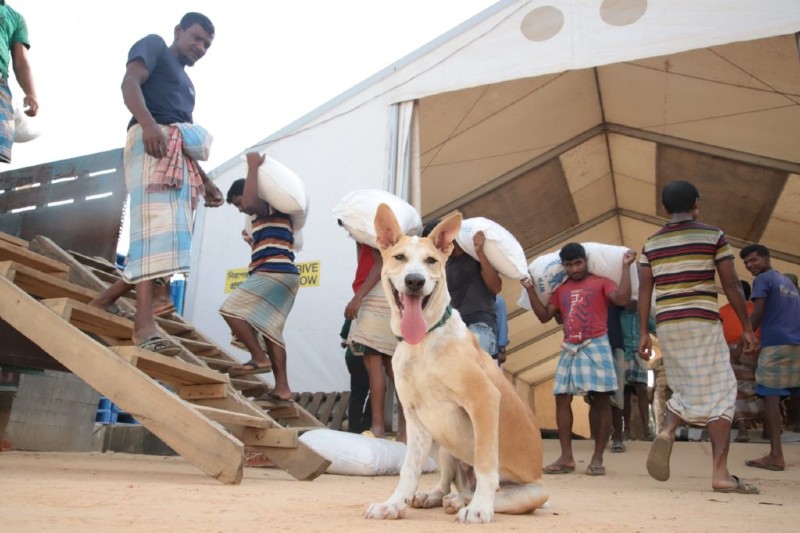
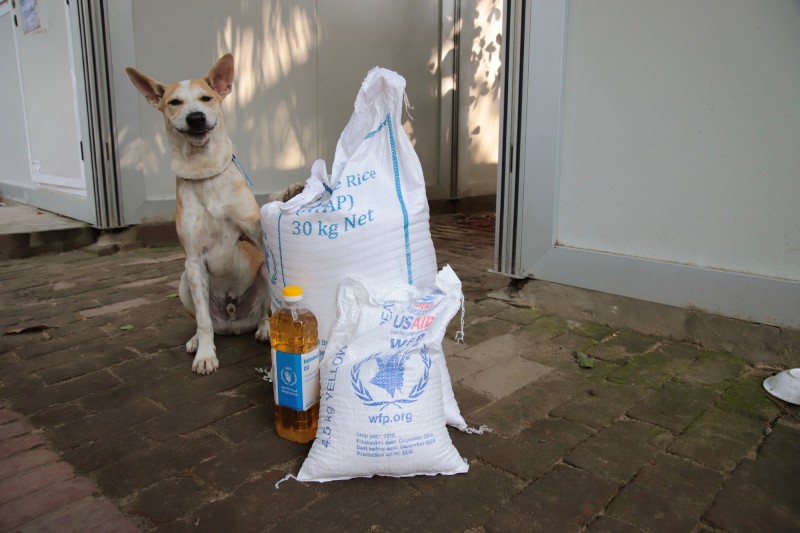
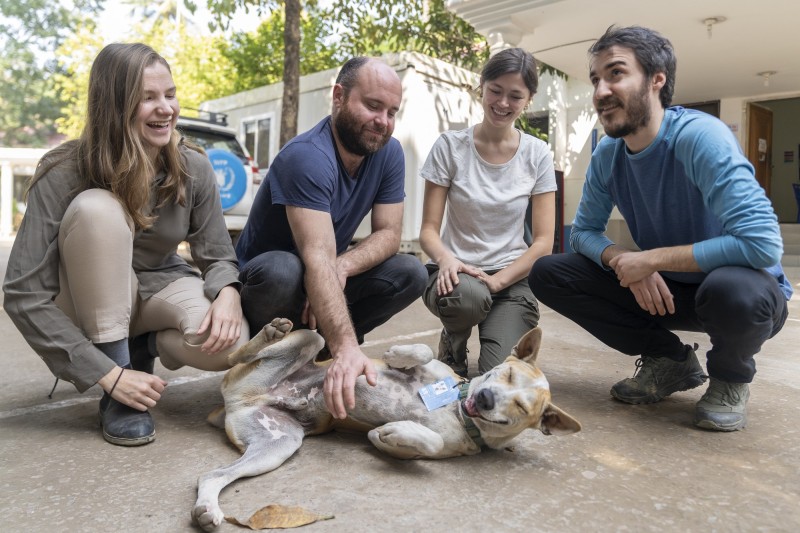
Separated from his mother as a puppy, one lucky pooch by the name of Foxtrot has become a UN refugee camp mascot in a ‘bare bones to milk bones’ story that could bring a smile to any face.
Credit: UN World Food Program
When the Myanmar military began a brutal crackdown on the country’s Rohingya Muslim ethnic minority in 2017, hundreds of thousands fled over the border. A million displaced people are now sheltering in refugee camps in the Cox’s Bazar area of Bangladesh.
The UN’s World Food Program (WFP), along with a number of other charities, has been there from the beginning, working to ensure every refugee is fed.
”Foxtrot was found when a variety of charity organizations were participating in a beach clean-up,” Colleen Callahan at WFP USA told GNN. “A four-month old puppy followed them until finally Gemma [one of the volunteers], decided to take him under her wing. After that he almost died—there was no vet in Cox’s Bazar, so a nurse brought him back to life.”
“Since then he has been given the official title of ‘chief mascot and mood manager’ at WFP,” explains Callahan.
Regularly led about the camp to visit temporary schools and canteens, as well as different WFP events, the chief mascot is usually “wearing a WFP cape, or special capes for big days like International Women’s Day.”
Credit: WFP
The photograph above features Foxtrot entertaining the kids at one of the camps’ learning centers, and perfectly captures his importance in the relief efforts.
Humanitarian Pup
“One of the jobs I like the most is making sure no one gets too stressed out,” writes one of Foxtrot’s human team members on his adorable biography at the WFP website. “If I see someone looking like they need some stress relief, I run up to them with a toy in my mouth and push my head against their leg.”
WFP
“Humans are simple creatures and it’s amazing how well this works in relieving any tension,” ruminates Foxtrot.
Through his Instagram, Foxtrot helps to raise money and awareness of the crisis the Rohingya people are facing while reaching people the WFP wouldn’t normally be able to reach.
Even though he’s just a small dog, he has a big job. An inspired and happy volunteer worker is an effective one, and for the Rohingya in Cox’s Bazar, a reason to smile is a very valuable thing.
Credit: WFP
If you’d like to donate to Foxtrot and the team of World Food Program heroes in Bangladesh, just head here.
Howl Your Praise For Foxtrot By Sharing This Story On Social Media…
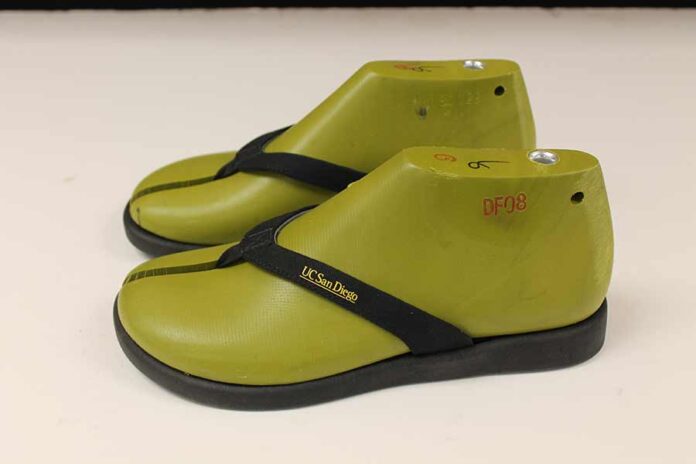
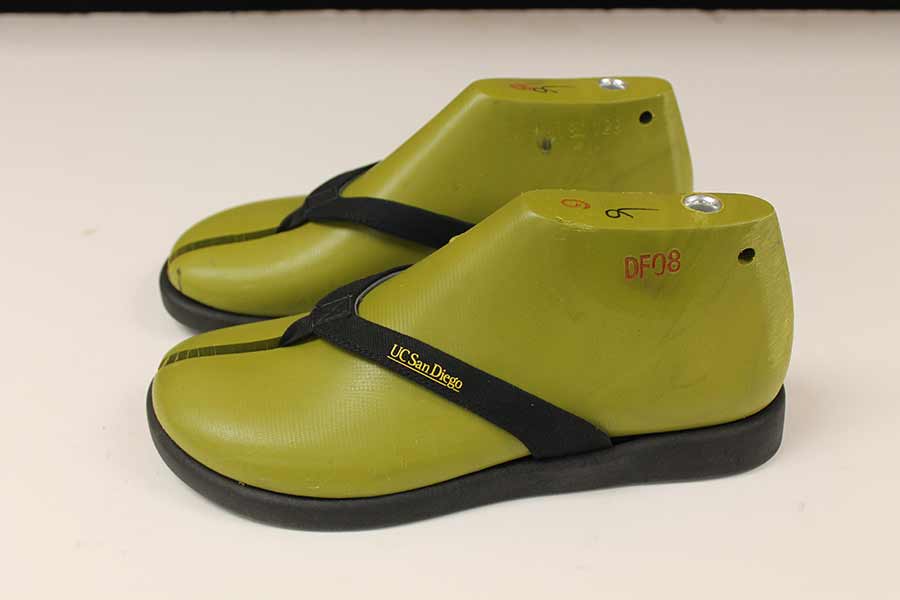
A lot of entrepreneurial energy has been thrown into using algae as a replacement for petroleum-based plastics in the creation of consumer goods, and now some California researchers have applied this technology to one of the ocean’s greatest polluting burdens—flip flops.
Credit: Stephen Mayfield, UC San Diego
The world’s most popular shoe, the flip flop accounts for a huge amount of plastic waste that ends up in the ocean: Some models have suggested they account for a quarter of all plastic in our seas.
UC San Diego partnered with the startup company Algenesis Materials to produce a commercial grade polyurethane foam from algae oil to create a sturdy flip flop that will biodegrade in around 16 weeks.
With a biomass content of around 52%, the flip flops are still entirely biodegradable, but that hasn’t stopped the collaboration from looking to create a 100% biomass shoe.
“People are coming around on plastic ocean pollution and starting to demand products that can address what has become an environmental disaster,” said Tom Cooke, president of Algenesis, to UCSD news. “We happen to be at the right place at the right time.”
A biological loop
In testing to see whether or not the polyurethane algae flip flops would degrade, Steven Mayfield, professor of biology at UC San Diego, and his team buried them in compost and normal soil.
Having discovered the 16-week decomposition time frame, Mayfield et al. also discovered that the varieties of bacteria and other microorganisms that were working to break down the shoe left parts of it intact in a way that would allow them to be reused.
“We took the enzymes from the organisms degrading the foams and showed that we could use them to depolymerize these polyurethane products,” said Mayfield. “We then showed that we could isolate the depolymerized products and use those to synthesize new polyurethane monomers, completing a ‘bioloop.’”
Monomers and polymers refer to the molecular structures that make up plastic.
“Our polyurethane can be used for foam cushions in chair seats or car seats, padding in luggage straps, yoga mats, foam insulation, and even car tires,” Mayfield told Digital Trends.
The hard work of the scientists like Mayfield, and the manufacturers at Algensis, led to the establishment of the Center for Renewable Materials at UC San Diego, which focuses on the development of sustainable solutions to consumer plastic pollution using algae.
Pass The Positivity On By Sharing This Fascinating Story With Your Friends On Social Media…
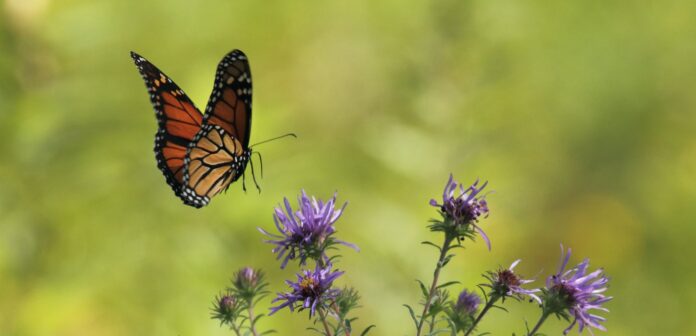
Quote of the Day: “The butterfly counts not months but moments, and has time enough.” Rabindranath Tagore
Photo: by Gary Bendig
With a new inspirational quote every day, atop the perfect photo—collected and archived on our Quote of the Day page—why not bookmark GNN.org for a daily uplift?



















 He’s fat and happy and has adjusted very well to being an adorable spoiled one-eyed cat.