










All News - Page 568 of 1736 - Good News Network
Home Blog Page 568

When Hunger Intensifies in Pennsylvania, the Soup Brigade Mobilizes

COURTESY JULIE SNARSKI

This is one of 50 finalists in the Reader’s Digest “50 Nicest Places in America” contest for 2020. A crowd-sourced effort to uncover places in all 50 states where kindness and generosity are reigning supreme amidst a climate of coronavirus and cultural upheaval, you can now vote for your favorite ‘Nicest Place’ by visiting the Reader’s Digest website

COURTESY JULIE SNARSKI

When New Yorker Julie Snarski first moved to the picturesque community on the Delaware River, she felt like she had wandered onto a television set. From Yardley’s charming downtown, with buildings dating back to the 18th century, to St. Andrew’s Parish, the beautiful Episcopal church next to a tree-lined pond and historic graveyard, it’s easy to see why Snarski had trouble believing the town near Trenton, New Jersey was real.

Not only is Yardley, Pennsylvania real—it’s really kind, too, and its been named one of America’s 50 Nicest Places by Reader’s Digest.

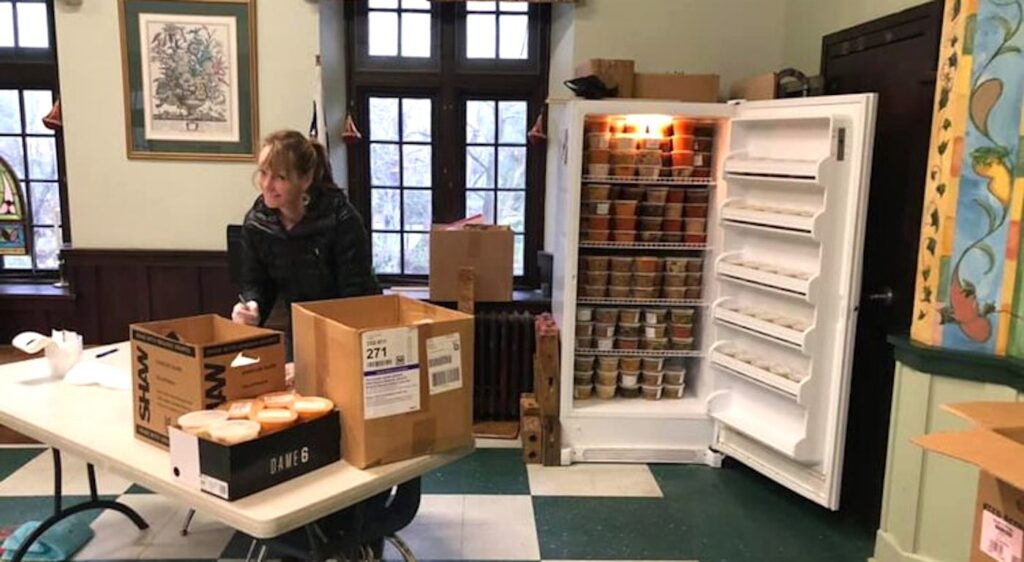
For nearly four decades, on the third Sunday of every month, St. Andrew’s parishioners have been meeting in the church parish house and assembling meals for elderly and shut-in residents of the five-county Philadelphia area.

The coronavirus ended their proud 37-year streak. But church members figured out a way to continue their essential service, just as the need skyrocketed.

RELATED: Washington Man Rescues 2.4 Million Pounds of Farmers’ Crops Going to Waste, Gets Them to Food Banks Across State

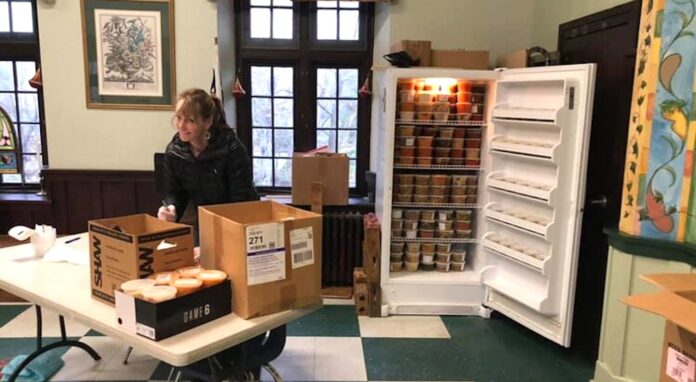
Caring for Friends, the organization that distributes the meals, came up with the idea for the parishioners to make meals in their homes. They enlisted neighbors to help, and pretty soon the volunteers were cranking out 1,000 meals and 400 containers of soup each week—almost ten times more food than before.

“I’ve been impressed how this seed of an idea has taken root,” says Snarski, who nominated Yardley as the Nicest Place in America.

“There was all of this passion and energy around feeding people and food justice, so we thought, What else could we do?,” says the Reverend Hilary Greer. “We got inspired after learning that 40 percent of America’s produce in World War II came from victory gardens in backyards and at churches. I thought, What if we did that here?”

MORE: Chef Andrés’ Charity is Injecting $50 Million into Restaurants By Paying Them to Feed the Hungry

They couldn’t come together to plant a community garden in one place, so they created a community garden throughout the community. Anybody who wanted to join in came to
St. Andrew’s to pick up seedlings to plant at home. As the tomatoes, cucumbers, beans, and basil came in, the home gardeners brought the bounty to the church to be distributed to area food banks including the Bucks County Housing Group and the Interfaith Food Alliance, also located in Bucks County.

St. Andrew’s is also educating its largely White parish and community about racism, with training and discussion sessions every Sunday after church via Zoom. (The training and discussion sessions will occur every Sunday via Zoom in July.)

“We’re a White, wealthy suburb,” Rev. Greer says. “We need to learn all of the ways that racial injustice fuels criminal injustice, and injustice in the educational system. Until people get how all this is interconnected, they’re never going to understand why all of this is happening.

ALSO: School’s Food Drive to Help Those Affected By Looting in Minneapolis Turns Into Tsunami of Grocery Bags Deliveries

“We’re going to have conversations that go places that are uncomfortable, it’s how we grow. We will show up to listen, and bring our whole selves to the conversation. We will be in it for the long haul,” says Rev. Greer, “not just while the protests are happening.”

Need more positive stories and updates coming out of the COVID-19 challenge? For more uplifting coverage, click here.

GIVE Your Friends ‘Some More’ Good News Porridge on Social Media…

“When the unthinkable happens, the lighthouse is hope. Once we choose hope, everything is possible.” – Christopher Reeve

Quote of the Day: “When the unthinkable happens, the lighthouse is hope. Once we choose hope, everything is possible.” – Christopher Reeve

Photo: Cape Elizabeth, Maine, by Keith Luke

With a new inspirational quote every day, atop the perfect photo—collected and archived on our Quote of the Day page—why not bookmark GNN.org for a daily uplift?


The Homeless In Oxford Won’t Need to Go Back to Sleeping Outside, Even if Pandemic Ends This Year

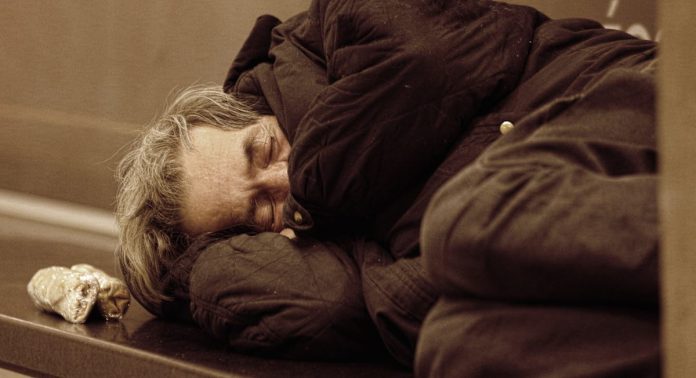
The Oxford City Council has secured 124 rooms of interim housing for the next year, ensuring there will be no need to return to the streets for former homeless folks that are currently housed in hotels and student blocks.

The council announced last week it had reached an agreement with A2Dominion, which provides student housing, to lease its Canterbury House until July 2021. It has also extended its current lease on the youth hostel run by the nonprofit YHA until the end of March.

In March, the government issued an ‘everyone inside’ direction for local English councils to provide emergency housing for rough sleepers and vulnerable homeless people to prevent the spread of coronavirus—and to date, there have been no confirmed cases of the virus among homeless people in Oxford.

The council has been working closely with the Ministry of Housing, Communities and Local Government to deliver interim accommodation and has applied for funding from the £105 million pot unveiled last month.

RELATED: City in Alaska is Housing its Homeless – Which Makes It Possibly The ‘Nicest Place’ in America

“The lockdown period gave us a unique opportunity to engage with people in emergency accommodation. For many of them, the certainty of a safe bed gave the bit of stability they needed to start having conversations about leaving the streets behind for good. We’ve already helped 76 people to move on into more sustainable housing, and this is something we want to keep doing,” said Councillor Mike Rowley in a statement on July 30.

Canterbury House and the YHA provide 76 and 42 rooms of self-contained accommodation respectively. A further six rooms are available in a block already leased from University College for people displaying symptoms of coronavirus, which so far, has not been needed.

Interim housing is a bridge between emergency lockdown arrangements and more sustainable housing. The acquisition of Canterbury House and extension of the YHA lease mean the council will be able to maintain accommodation for people housed during lockdown as existing agreements with hotels and colleges come to an end this month.

POPULAR: Hotel Stays Open During Lockdowns to House Homeless Locals; And They’re Repaying the Favor With Odd Jobs

It will also allow the council to provide accommodation and support for people who become homeless over the coming months. This will include winter beds that were provided in shared spaces before the pandemic.

A total of 203 people have been housed in hotel and student rooms in Oxford over the past four months. Of these, 76 have been supported into more permanent housing and this includes a number of people who had been sleeping rough on a long term basis. Consolidating the current patchwork of hotel and student rooms into two main locations will make it easier to provide intensive personal support that helps more people off the streets for good.

St Mungo’s will continue to manage this interim housing from these two locations in addition to the outreach, assessment and support services it currently provides for the council.

MORE: People Are Installing Portable Hand-Washing Sinks for the Homeless in Cities Across the US

Converting Canterbury House from student accommodation to interim housing will require planning permission for a temporary change of use. The council is arranging the consultation necessary to facilitate a planning application. It is also working with Thames Valley Police and other partners on plans to inform local residents about the change of use and give them an opportunity to express their views.

“We believe that nobody should have to sleep rough in Oxford and I’d like to thank Oxford Brookes University, A2Dominion, the YHA, University College and St Mungo’s for helping us to provide the interim accommodation that could make our ambition a reality,” added Rowley.

Luke Hall MP, Minister for Rough Sleeping and Housing, said: “We now have a real opportunity to ensure that as many people as possible do not return to a life on the streets. Nationally, we are delivering 6,000 longer-term, safe homes for former rough sleepers. Together with our Rough Sleeping Initiative this amounts to over £500m funding to help break the cycle of homelessness and end rough sleeping for good.”

ALSO: Canadian Government Buys Hotels to House Homeless People—And Also Rehire Workers

Need more positive stories and updates coming out of the COVID-19 challenge? For more uplifting coverage, click here.

GIVE This Good News A Home — Share With Friends on Social Media… (File photo by Karim Corban, CC license)

Antique Store Owner Gives Student Free $3,000 Piano After He Delighted Customers With ‘Don’t Stop Believin’

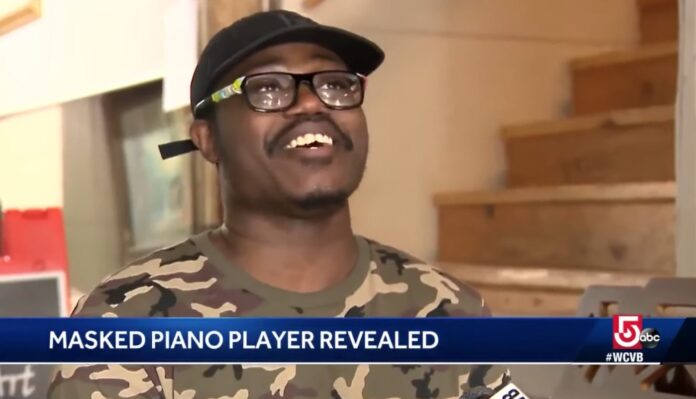
This Boston college student was shocked to learn that his spontaneous performance on an antique store piano had won the hearts of music lovers across the country—and he was even more surprised to be gifted with a piano in return.

23-year-old John Capron had been browsing the ReMARKable Cleanouts antique store in Norwood, Massachusetts with his girlfriend last month when he found an old $200 Whitney piano for sale.

After asking the sales associate for permission, the self-taught piano player sat down to play a heartfelt rendition of “Don’t Stop Believin’” by Journey.

As delighted customers gathered together to listen, the sales associate filmed a video of the improptu singalong and posted it to the store’s Facebook page.

RELATED: No One Came to Student’s Graduation—So His Teacher Took Him Out to Dinner and Bought Him a Car

The video quickly racked up thousands of views. Since Capron was wearing a face mask for the performance, national news outlets began searching for the identity of the masked piano player.

After Capron identified himself to ReMARKable Cleanouts, store owner Mark Waters offered to give him the Whitney for free—but then Waters changed his mind. Instead, he decided to surprise Capron with the $3,000 Steinway and Sons piano that had been sitting in the back of the store.

When Waters finally unveiled the gift to Capron, the college student promptly burst into tears.

LISTEN: Watch Opera Singer Unexpectedly Join Student Recording National Anthem in the Park for Her Commencement

“To see him cry made me cry,” Waters told WCVB. “It’s just going to sit here, so if you can bring it into somebody else’s life and bring it back to life, then God bless America, you know what I mean? That’s what life’s about! I wish I could do this every day!”

Capron says that the Steinway will be the first piano that he has ever owned for himself—although he is now searching for helpers to get the piano into his fourth-floor apartment in Mattapan.

(WATCH the news coverage below) – Feature photo by WCVB

Multiply The Positivity By Sharing This Sweet Story With Your Friends On Social Media…

This Inexpensive New Smart Mask Can Amplify the Speaker’s Voice and Translate Speech into 8 Languages

Photo by Donut Robotics

A Japanese robotics company has developed a smart mask that can amplify voices, transcribe dictation, and translate speech into eight different languages—and they will be available to the public as soon as September.

The C-Mask was designed by Japanese tech startup Donut Robotics to improve communication between airline workers and supermarket employees during the COVID-19 pandemic.

The mask, which is Bluetooth-connected to the user’s phone, is capable of translating Japanese into Chinese, Korean, Vietnamese, Indonesian, English, Spanish, and French.

The company originally developed their AI-based translation technology for their “Cinnamon” robot to assist international travelers at the airport. Since most of the nation’s airports were forced to close after the coronavirus outbreaks, the company applied their software to masks so that industry workers and healthcare providers could speak more clearly from behind protective glass barriers and face coverings.

LOOK: 9-Year-Old Kenyan Boy is Honored for Inventing Handwashing Machine That Prevents COVID-19 Spread

To fund the production of their invention, Donut Robotics launched a crowdsourcing campaign on Japanese fundraising website Fundinno back in June. According to CNN, the company managed to raise 28 million yen ($265,000) in just 37 minutes.

After concluding another successful round of crowdfunding in July, Donut Robotics says their first 5,000 to 10,000 masks will be distributed across Japan in December. Each of the masks is expected to cost between $40 to $50.

That being said, the company also hopes to expand their distribution overseas to the UK and US by April 2021.

(WATCH the Reuters interview below)

Protect Your Friends From Negativity By Sharing This Cool Story To Social Media…

Super Bowl-Winning Athlete Opts Out of 2020 NFL Season So He Can Continue Working on COVID-19 Frontlines

It has not even been one year since Laurent Duvernay-Tardif, the offensive lineman for the Kansas City Chiefs, was celebrating the team’s Super Bowl victory over the San Francisco 49ers—but now, the football star is opting out of the upcoming NFL season.

Since Duvernay-Tardif is a medical school graduate from McGill University in Montréal, he has been working on the frontlines of the COVID-19 outbreaks at a long-term care facility in Canada.

Rather than returning to “play the sport he loves,” Duvernay-Tardif says he will continue assisting as an orderly until the novel coronavirus is controlled.

The 29-year-old athlete published an open letter to his social media followers last week announcing his absence from the 2020 football season.

RELATED: Chiefs Player Celebrates Super Bowl Win By Covering the Adoption Fees for 109 Shelter Animals

“Given the worldwide sanitary crisis we are currently experiencing, the NFL and NFLPA have agreed to significant health and safety protocols to protect the players,” wrote Duvernay-Tardif. “There is no doubt in my mind the Chiefs’ medical staff have put together a strong plan to minimize the health risks associated with COVID-19, but some risks will remain.

“This is one of the most difficult decisions I have had to make in my life, but I must follow my convictions and do what I believe is right for me personally,” he continued. “That is why I have decided to take the Opt Out Option negotiated by the League and the NFLPA and officially opt out of the 2020 NFL season.”


According to ESPN, the “Opt Out Option” for the 2020 NFL season will offer $350,000 and an accrued NFL season to players who are considered high risk for COVID-19 while players who are not considered high risk can earn $150,000 for opting out. The sports news website goes on to say that Duvernay-Tardif was scheduled to make $2.75 million this season.

“Being at the frontline during this offseason has given me a different perspective on this pandemic and the stress it puts on individuals and our healthcare system,” he wrote. “I cannot allow myself to potentially transmit the virus in our communities simply to play the sport that I love. If I am to take risks, I will do it caring for patients.

“I want to thank everyone in the Kansas City Chiefs organization for their support and understanding,” concluded Tardif.

Score Big Amongst Your Friends By Sharing This Inspiring Story To Social Media…

“When you have exhausted all possibilities, remember this: you haven’t.” – Thomas Edison

Quote of the Day: “When you have exhausted all possibilities, remember this: you haven’t.” – Thomas Edison

Photo: by Zoltan Tasi

With a new inspirational quote every day, atop the perfect photo—collected and archived on our Quote of the Day page—why not bookmark GNN.org for a daily uplift?


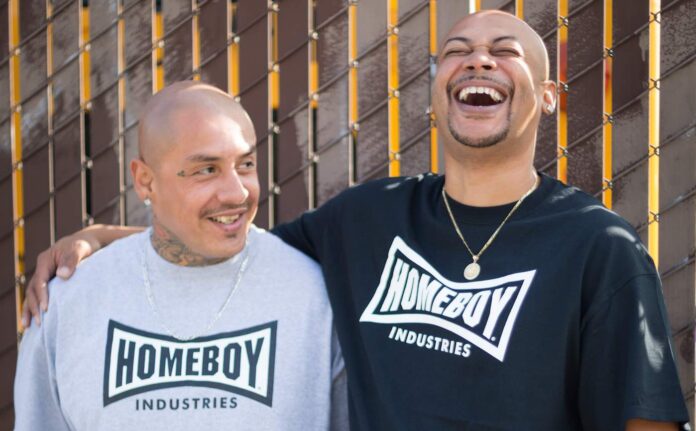
Homeboy Wins $2.5 Million Dollar Hilton Humanitarian Prize on the 25th Anniversary of Annual Award

The gang-intervention heroes at Homeboy Industries have just been chosen as winners of the 2020 Humanitarian Prize from the Hilton Foundation, and will receive $2.5 million in unrestricted funding.

As the world’s largest annual humanitarian award, the Prize is presented to a nonprofit organization judged to have made extraordinary contributions toward alleviating human suffering.

Homeboy Industries is a unique place where former gang members are able to experience healing from their violent pasts within the context of kinship. It is a place of hope where work therapy, mentorship, education, tattoo removal and many other vital re-entry services are offered so people can have a second chance at life.

“We used to be worst enemies on the streets and now we’re family at Homeboys,” said one Homeboy trainee.

Founded in 1988 by Father Gregory Boyle, Homeboy was formed with the goal of improving the lives of former gang members in East Los Angeles. At that time, Fr. Boyle was a pastor of the Dolores Mission Church, the most impoverished Catholic parish in the city, alongside, two of the largest public housing projects in the country. They also had the highest concentration of gang activity in the country.

While law enforcement tactics of suppression and criminal justice policies of mass incarceration were the prevailing means to deal with gang violence, Fr. Boyle saw young people who deserved a chance and worked to change the way the world views them.

RELATED: Rival Gangs in Cape Town Agreed to An Unprecedented Truce—and Together Bring Food to the Poor

Today, Homeboy Industries has evolved into the world’s largest gang intervention, rehab and re-entry program, and is dedicated to providing hope, training and support to individuals, which in turn makes a positive impact in those individuals’ families and communities. Their re-entry program focuses on helping participants heal from complex trauma through the delivery of wraparound social services rooted in a culture of kinship and tenderness.

Importantly, the program builds work readiness skills for participants through employment opportunities in nine social enterprises which it owns and operates, including a bakery, tailor services, and print shop.

POPULAR: Kentucky Tattoo Parlor is Creatively Covering Up Hate Tattoos For Free

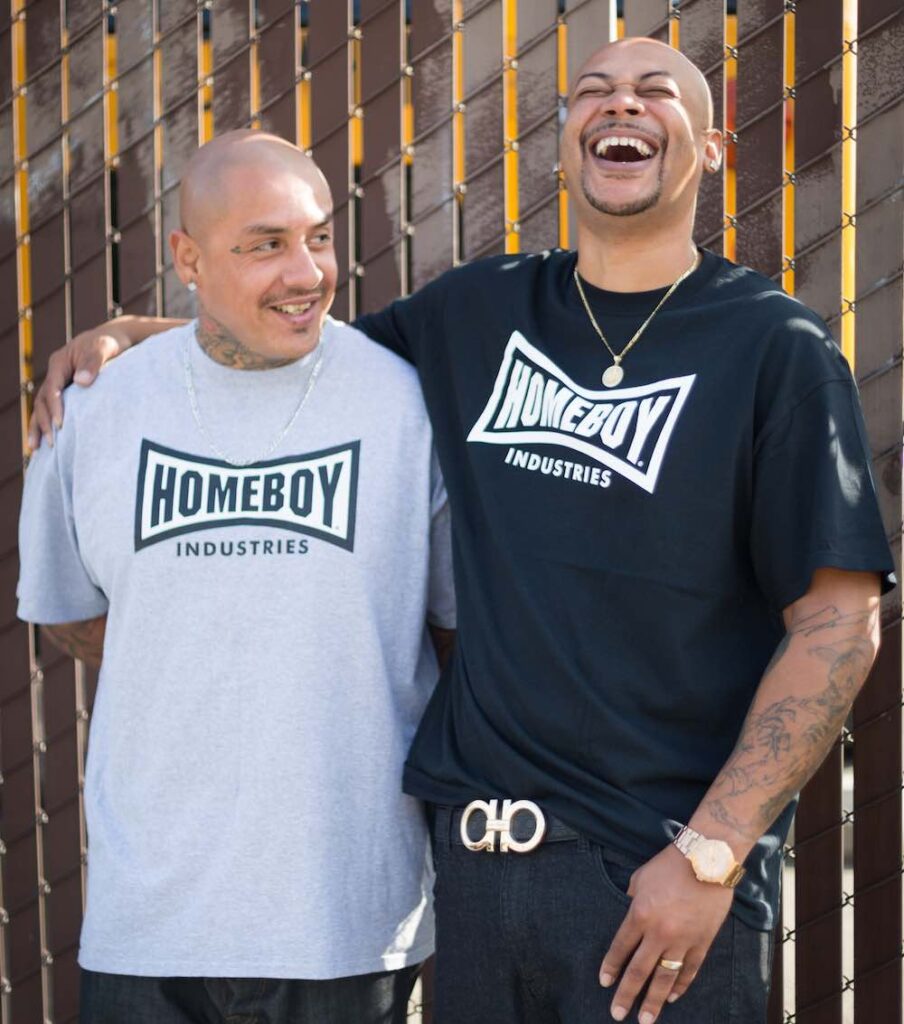
Edwin Ramos, Homeboy Trainee (left) and Jermaine Smith, Homeboy Navigator (right)

“All of us at Homeboy Industries are profoundly humbled by the Hilton Foundation’s recognition,” Homeboy Industries Founder Fr. Gregory Boyle, S.J. said. “Their validation of our work of 32 years strengthens our resolve… (and) helps us all to move past ‘survival of the fittest’ and allow the thriving of the nurtured.”

The invaluable support that Homeboy Industries has received from both Los Angeles and California State government officials has been instrumental to the success and survival of Homeboy Industries and its community.

CHECK OUT: Hundreds of Volunteers Have Prevented Violence By Helping 350,000 People in Sudan and Congo Make Personal Peace

“Homeboy Industries is in the business of second chances, helping thousands of Angelenos—including survivors of mass incarceration and systemic racism—find meaningful healing, job training, and community,” said Mayor Eric Garcetti.

The president and CEO of the Hilton Foundation, Peter Laugharn, says, “With the intention of ending the socio-economic inequities that impact communities, (this is) a tremendous example of ground-breaking humanitarian work right here in Los Angeles. Its community-led approach has spawned and supported a global network of over 300 organizations.”

To date, the Hilton Foundation has awarded $36.5 million to recipients of the Prize. Homeboy Industries joins the roster of 24 Prize Laureates, including METAdrasi, SHOFCO, icddr,b and The Task Force for Global Health.

ALSO: Charitable Donors in U.S. Give Record Amount, As Support Surges in First 6 Months of 2020

SHARE the Good News With Global Homeboy Fans On Social Media…

New Study Says Infrared Lasers Destroy Harmful Plaques in Alzheimer’s Brains

A notable characteristic of several well-known neurodegenerative diseases—such as Alzheimer’s and Parkinson’s—is the formation of harmful plaques that contain aggregates of amyloid proteins, also known as fibrils. Unfortunately, even after decades of research, getting rid of these plaques has remained a herculean challenge, so treatments for these patients have not been very effective.

Now, scientists are revealing the results from experiments that show how resonance with an infrared laser, when it is tuned to a specific frequency, actually causes amyloid fibrils to disintegrate from the inside out.

Their findings open doors to new therapeutic possibilities for amyloid plaque-related brain diseases that have thus far been incurable.

In recent years, instead of going down the chemical route using drugs, some scientists have turned to alternative approaches, such as ultrasound, to destroy amyloid fibrils and halt the progression of Alzheimer’s disease.

RELATED: Possible Breakthrough in Alzheimer’s Research: ‘Love Drug’ Oxytocin Found to Reverse Damage in Mice Brains

Now, a research team led by Dr Takayasu Kawasaki (IR-FEL Research Center, Tokyo University of Science, Japan) and Dr Phuong H. Nguyen (Centre National de la Recherche Scientifique, France), including other researchers from the Aichi Synchrotron Radiation Center and the Synchrotron Radiation Research Center, Nagoya University, Japan, has used novel methods to show how infrared-laser irradiation can destroy amyloid fibrils.

In their study, published in Journal of Physical Chemistry B, the scientists present the results of laser experiments and molecular dynamics simulations. This two-pronged attack on the problem was necessary because of the inherent limitations of each approach, as Dr Kawasaki explains:

MORE: New Alzheimer’s Nasal Spray Shown to Reduce Proteins Which Cause the Disease in Mice

“While laser experiments coupled with various microscopy methods can provide information about the morphology and structural evolution of amyloid fibrils after laser irradiation, these experiments have limited spatial and temporal resolutions, thus preventing a full understanding of the underlying molecular mechanisms. On the other hand, though this information can be obtained from molecular simulations, the laser intensity and irradiation time used in simulations are very different from those used in actual experiments. It is therefore important to determine whether the process of laser-induced fibril dissociation obtained through experiments and simulations is similar.”

The scientists used a portion of a yeast protein that is known to form amyloid fibrils on its own. In their laser experiments, they tuned the frequency of an infrared laser beam to that of the “amide I band” of the fibril, creating resonance. Scanning electron microscopy images confirmed that the amyloid fibrils disassembled upon laser irradiation at the resonance frequency, and a combination of spectroscopy techniques revealed details about the final structure after fibril dissociation.

RELATED: Plant Compounds Used to Successfully Treat Alzheimer’s in Mice Now Shown to Prevent Other Effects of Aging

For the simulations, the researchers employed a technique that a few members of the current team had previously developed, called “nonequilibrium molecular dynamics (NEMD) simulations.” Its results corroborated those of the experiment and additionally clarified the entire amyloid dissociation process down to very specific details. Through the simulations, the scientists observed that the process begins at the core of the fibril where the resonance breaks intermolecular hydrogen bonds and thus separates the proteins in the aggregate. The disruption to this structure then spreads outward to the extremities of the fibril.

Together, the experiment and simulation make a good case for a novel treatment possibility for neurodegenerative disorders. Dr Kawasaki remarks, “In view of the inability of existing drugs to slow or reverse the cognitive impairment in Alzheimer’s disease, developing non-pharmaceutical approaches is very desirable. The ability to use infrared lasers to dissociate amyloid fibrils opens up a promising approach.”

The team’s long-term goal is to establish a framework combining laser experiments with NEMD simulations to study the process of fibril dissociation in even more detail, and new works are already underway.

ALSO: For the First Time, Scientists Have Reversed Dementia in Mice With Drug That Reduces Brain Inflammation

All these efforts will hopefully light a beacon of hope for those dealing with Alzheimer’s or other neurodegenerative diseases.

Source: Tokyo University of Science (File photo by ThisisEngineering)

FOCUS Your Friends Like a Laser On Hope – Share On Social Media…

Couple Restores 100-Year-Old Sewing Machine–And Learns To Sew–So They Can Donate Face Masks to the Needy

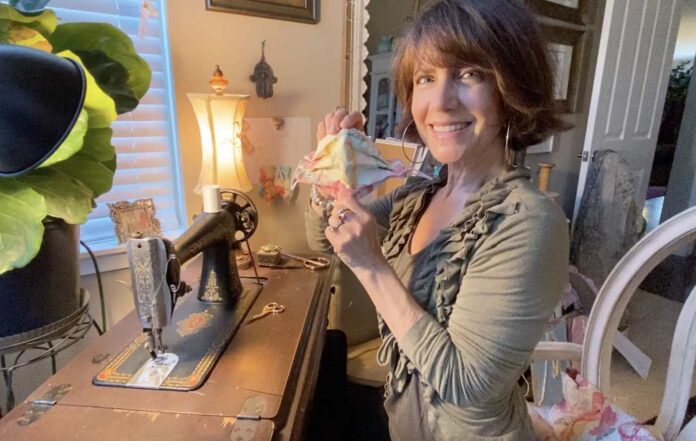
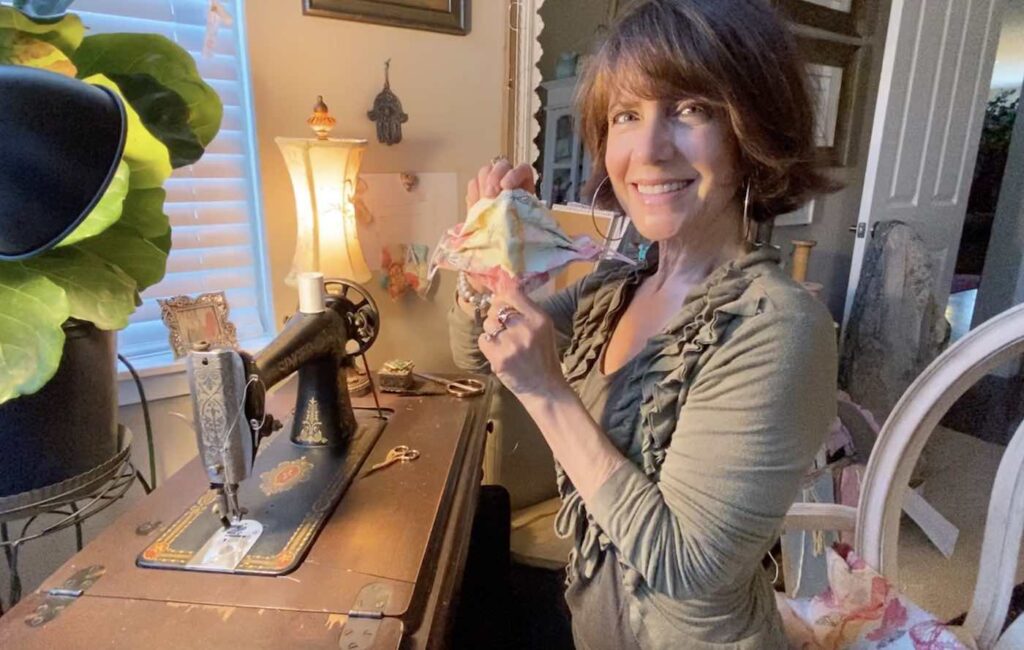
Giselle Williams didn’t know how to sew. But she did have a family heirloom sitting around the house—her great-great-grandmother’s Singer sewing machine—and wondered if it could be put to use to help others during the pandemic.
It all began when the COVID-19 pandemic brought Giselle’s Colorado hairstyling business to a halt in Arvada. She noticed the growing army of sequestered mask-makers and decided to put her free time to good use—but she never learned how to sew and thought she didn’t have a sewing machine.

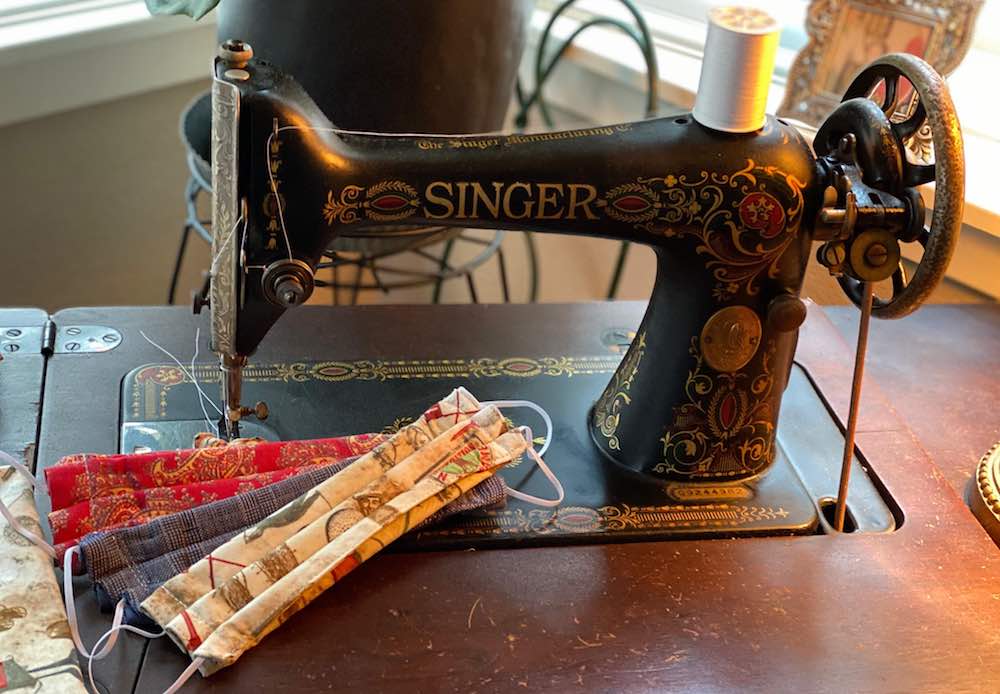
That’s when she remembered the 100-year-old treadle machine. It is so old that it doesn’t even use electricity. Instead, the 1922 Singer Model 66 “Red Eye” is powered mechanically by a foot pedal pushed up and down by the operator’s foot. It was being used as a piece of decorative furniture in her guest room.

After decades spent idle, it definitely needed some work, so Giselle’s husband Darin set his mind to restoring it. After many YouTube videos, a good cleaning, fresh lubrication, and a new leather drive belt, the couple had a functioning sewing machine. Then Darin got to work teaching Giselle to sew.

As young boy, Darin spent summers with his grandmother who was a seamstress and learned to sew by sewing hand puppets with her fabric scraps. He used his skills and taught Giselle how to thread the machine, wind the bobbin, and sew a straight stitch.

RELATED: This Nurse Didn’t Just Create a Replacement N95 Mask – Hers Filters More

“I haven’t used a sewing machine since my grandmother taught me back in the 1970s,” Darin said. “I looked at this old thing and thought, ‘Well, it’s fundamentally probably the same.’”

Indeed it was. (See the video below…)

Together, the couple found a face mask pattern and purchased fabric to begin prototyping. They also received donated fabric from friends, family and neighbors to support the effort. After a few days practicing, the team officially began their mask-making operation. Their first requests came from local healthcare providers and a distillery that was producing hand sanitizer for first responders.

Since those first weeks, the team has ramped up production and has provided more than 450 masks to churches, restaurants and businesses across Colorado. They have received requests from frontline workers as far away as Japan and Thailand. Currently, the team is at work producing another 50-75 masks to be sold at-cost at the Fetch Markets at Stanley Marketplace in Aurora, Colorado.

RELATED: Shoemaker Invents Solar-Powered Hand-washing Basin During Lockdown to Encourage Sanitary Habits

Since hearing about the couple, the Veterans of Foreign Wars (VFW) has recognized the service of Darin Williams, a U.S. Air Force veteran, and chose him to serve as a spokesperson for the VFW’s #StillServing campaign, which is asking America’s veterans and their friends to share ways in which the vets are still serving their communities even after leaving active duty.

We know Giselle’s great-great-grandmother would be proud—and an active-duty member of their team devoted making masks for frontline medical workers and essential employees around the world.

Need more positive stories and updates coming out of the COVID-19 challenge? For more uplifting coverage, click here.

SHARE The Oldest Story in the Book—Being Kind—With Friends On Social Medai…

Man ‘Repays His Debt’ to English Family Who Saved Him From a Life of Poverty Selling Peanuts for $1 a Day

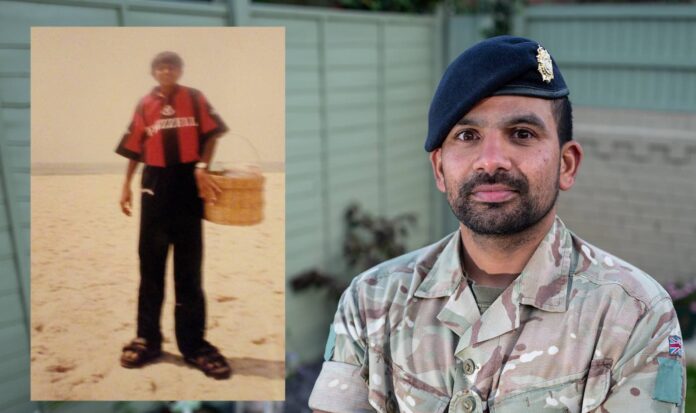
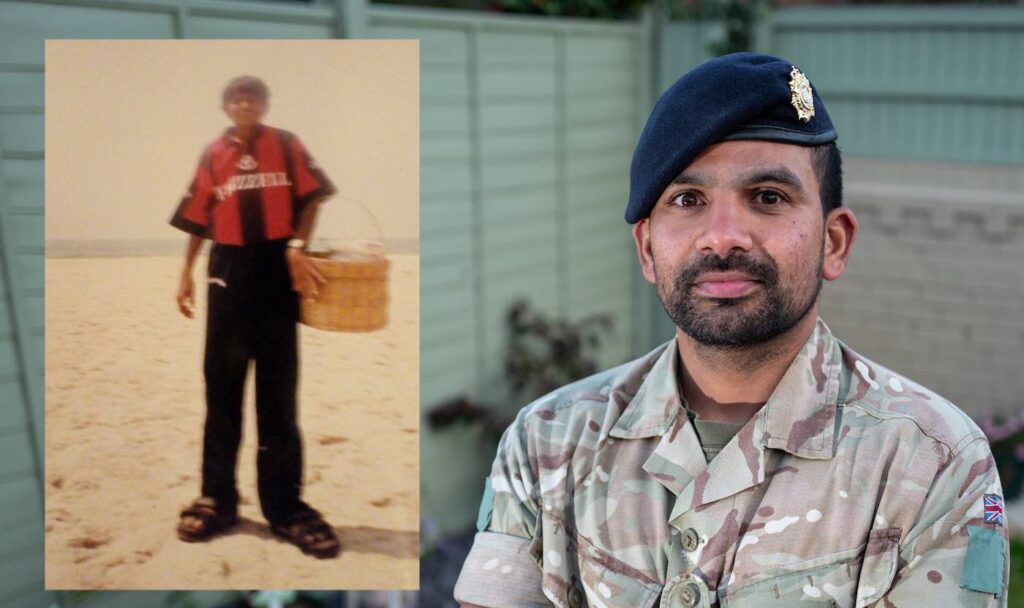
Gopal selling peanuts, and as Lance Corporal - SWNS
Gopal selling peanuts, and as Lance Corporal – SWNS

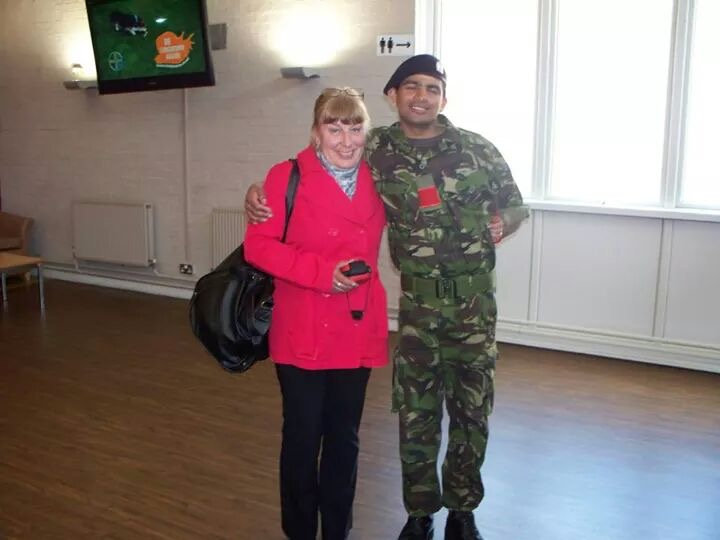
A man joined the British Army to “repay his debt” to the English family who saved him from a life of selling peanuts for £1 a day.

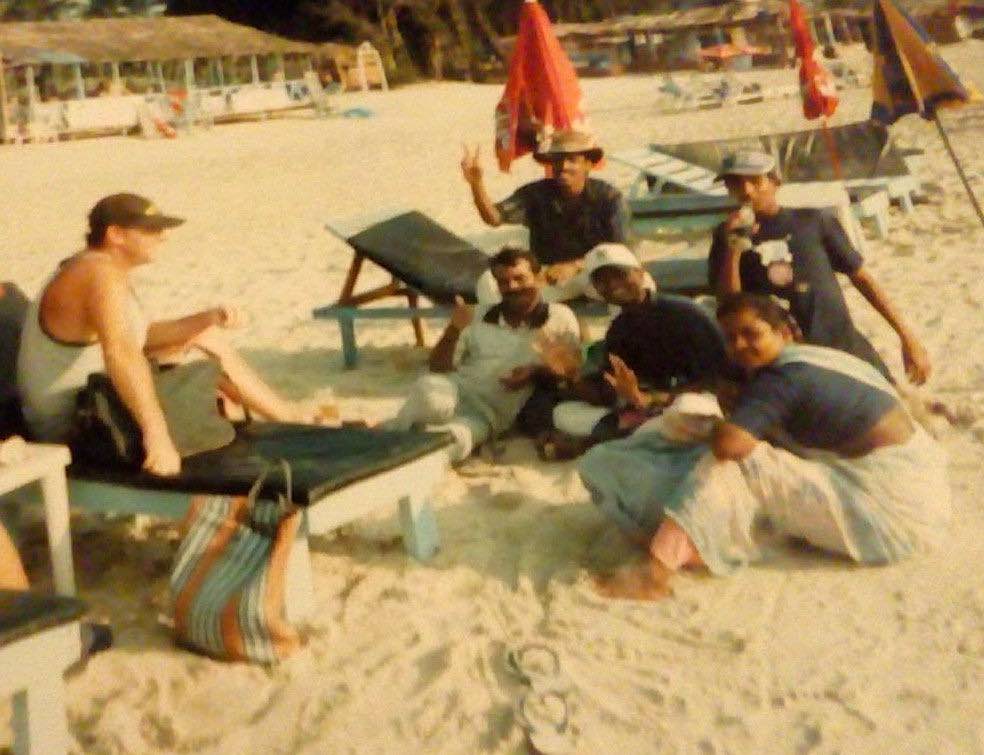
Gopal Vaakode was 12 when he met the Hanson family who were holidaying in Goa, where he was walking 10 miles a day selling peanuts to tourists on the southwest coast of India.

Sometimes he’d sleep on the beach, and other nights in a tent on the side of the road, providing for his three younger siblings and mother.

He asked the tourist couple, Carol Thomas and Colin Hanson, and the sister-in-law Linda Hanson, if they’d like to buy some peanuts. They did much more than that, taking him shopping for clothes and food for his family of five.

They promised the teen they’d see him when they returned next year—and by pure chance the couple in their 50s bumped into him on the beach, 12 months later.

It ignited a lifelong bond, and within days the family persuaded Gopal and his mother Peckrrva, to let them help further.

SWNS

They sent money from the UK for food and supplies and paid for the family to live in a rented home in Goa every monsoon season, coming to visit them for months at a time.

It was a stark improvement for his mother who would scavenge for plastic bags to sell for rupees—and it allowed the kids to go back to school.

SWNS

Then, at age 19, Gopal began visiting his ‘foster family’ in the UK for months at a time, and on one trip he joined with the local cricket team for a match at the Allscott army barracks.

It was there that a brigadier asked him if he’d consider joining the British Army—and Gopal leapt at the chance to repay the people and country who had saved him.

RELATED: Malnutrition Across India Has Plummeted By 60 Million–And Most of Asia Has a Similar Success Story

Ten years on, now 35, he lives in Mansfield, Nottinghamshire, with his wife Jasmine, and their seven year old daughter—and feels like the “luckiest kid in the world”.

Gopal with his new family – SWNS

“The main reason I wanted to join was to make my family proud and say thanks to Linda, Colin, and Carol for everything they did for me,” he said.

“I will forever be in debt to them, but joining the army was my way of repaying them by doing something important in this world.

“There was a day when I had no food, nowhere to sleep and nothing to look forward to in life. Now I have a loving family with an incredible wife and an amazing daughter. I really could not ask for more.”

ALSO in India: Teachers Visit Bridge Everyday to Create Classroom for Children of Migrant Workers Stuck in Lockdown

The Hansons could not be more happy. “He has made us all extremely proud with what he is achieving in the army, and now he has a wonderful family too,” said Colin, a businessman. “It was an amazing journey, and we’re overjoyed to have met him.”

SWNS

Gopal said, “Our life never seemed like it was going to get any better.” On a “good day” they’d earn 70–100 rupees, only about a dollar, enough to buy food. But, every Saturday a new flight would arrive from the UK, which is how he met the English family.

“Instead of buying peanuts they bought me lunch. They took me shopping, bought me some new clothes and supplies to take back to my family.

“I couldn’t express the feelings of happiness I experienced that day. I was so sad to see them go but they promised me they’d come back next year, and they did.

“One year on, I saw them walking across the beach whilst I was working my usual day. I couldn’t believe my eyes! I ran over to them and gave them a massive hug.”

He learned they wanted to help him long term, and added: “I was 13 at the time and felt like the luckiest kid in the world.”

Six years later he came to stay with the family in Teleford. Gopal continued to visit England for holidays, and in 2009 met the army brigadier, who asked if he would want to sign up. As a commonwealth citizen, he was allowed to join, and got a permanent visa after basic training—and after six years of service, a British passport making him a British citizen.

CHECK Out: 15-Year-old Girl Hailed as ‘Lionhearted‘ Hero for Cycling 750 Miles With Injured Father on the Bike

Gopal’s mom died in 2016, but his three sisters Jaya, Knencha and Renuka still live in India, helped financially by their devoted brother.

Colin recalls with fondness the year they met, saying, “He was the most charming little boy.

“We felt a connection with him, despite him virtually speaking no English at the time, he said. “It felt natural, and the more time we spent with him the closer we became.”

SHARE This Great Story of Cross-Culture Kindness With Friends on Social Media…

“Oh yes, the past can hurt. But you can either run from it, or learn from it.” – The Lion King

by léa b

Quote of the Day: “Oh yes, the past can hurt. But you can either run from it, or learn from it.” – Rafiki, The Lion King

Photo: by Zac Ong

With a new inspirational quote every day, atop the perfect photo—collected and archived on our Quote of the Day page—why not bookmark GNN.org for a daily uplift?


Student Turned Her Ruined Summer Plans Into a Way to Help Isolating Seniors Connect With Doctors

This is one of 50 finalists in the Reader’s Digest “50 Nicest Places in America” contest for 2020. A crowd-sourced effort to uncover places in all 50 states where kindness and generosity are reigning supreme amidst a climate of coronavirus and cultural upheaval, you can now vote for your favorite ‘Nicest Place’ by visiting the Reader’s Digest website

A cancelled internship turned into a big opportunity for one young woman to help her whole state.

Just a few months ago, the Emory University student, like the rest of us, was gearing up for the summer when COVID-19 ruined her plans.

“After receiving countless emails about canceled internships, I had just about concluded that I would be spending my summer twiddling my thumbs,” said Lia Rubel from her home in Barre, Vermont, a blue-collar town of about 10,000.

That’s when she got a call from a friend about a new initiative organized by some Yale University students who saw a great need—a need that escalated to urgent in the era of coronavirus. People were still in need of medical care but couldn’t leave their homes for fear of spreading or contracting the virus, especially seniors, who are more vulnerable.

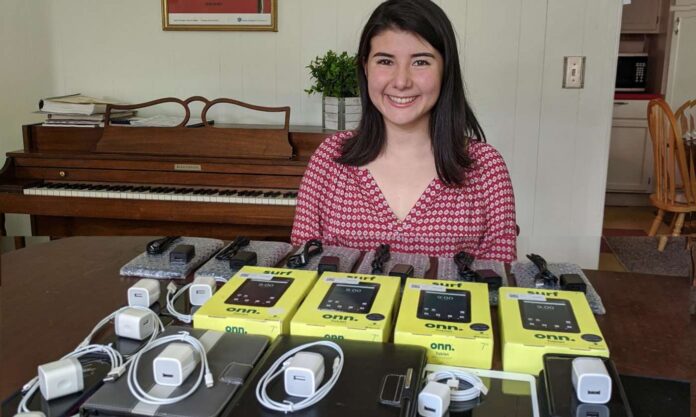
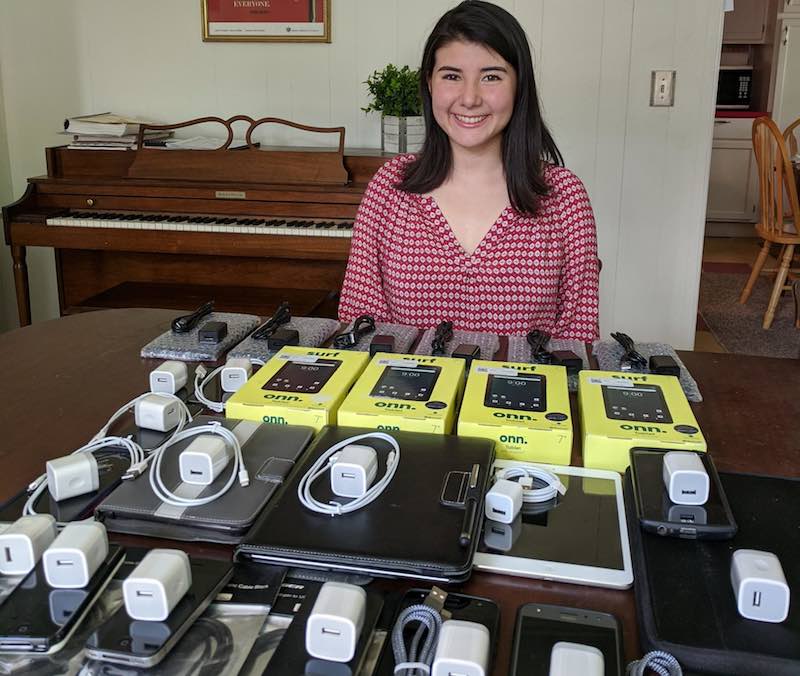
That’s why, in March, Telehealth Access for Seniors was born: to get communications technology, such as a smartphone or tablet computer, to elderly patients who lack and very much need it.

“It’s more than just a device. It’s a vital connectivity tool and it could save someone’s life,” says Rubel, 18, who joined the initiative in March as the lead for Vermont. “It just hurt my heart that they don’t have that privilege and they can’t connect to friends and families. They can’t even connect to their doctors.”

RELATED: City in Alaska is Housing its Homeless – Which Makes It Possibly The ‘Nicest Place’ in America

Born in the 1960s as part of NASA’s mission to put men on the moon (they might need medical care up there too), telehealth options have experienced a renaissance in the era of high-speed connectivity and ubiquitous devices with screens. In 2002, a former NASA surgeon and engineer founded Teledoc, which became the first nationwide telehealth company in 2005; in 2015, the first medical facility totally dedicated to telehealth opened in Chesterfield, Missouri, Mercy Virtual.

But many people don’t have access to these services for lack of technology, and the problem is worse in Vermont, where about 19 percent of the population is over 65 (versus 15 percent for the rest of the US) and where 10 percent of residents don’t have access to broadband but they do have access to cellular service.

LIA RUBEL

Since March, Telehealth Access for Seniors has expanded to over 50 volunteers in 26 states and they’ve raised an estimated $38,000 and donated 825 devices, Rubel says. In Vermont alone, Rubel has helped collect about 50 devices and $800.

RELATED: Google Maps Now Features COVID-19 Travel Alerts With Social Distancing Mandates And Crowd Levels

“If they’re still self-quarantining, it’s really important for mental health,” says Rubel. “We include with the devices some suggestions to download wellness apps. And they [patients] use the devices to FaceTime family to stay connected.”

Just providing a way for an elderly person to have a “face-to-face” conversation with a loved one in an era of social distancing can be lifesaving. Feeling lonely leads to a 26 percent increase in mortality rate, according to a recent meta-study of 3.4 million people.

Telehealth Access for Seniors offers a free remote phone and email tech support team so that help is always available. The organization also provides instructions on how to set up devices.

CHECK OUT: Sean Penn’s Nonprofit Relieves Burden of Firefighters By Administering COVID Testing in 10 U.S. Cities For Free

“The pandemic has opened our eyes to how important it is to have digital tools and the importance of equipping our seniors with these devices,” says Rubel.

SHARE the Program On Social Media So Others Can Benefit…

10-Year-old Mini-Monet Fetches Tens Of Thousands For Her Paintings – And Donates All The Money

A ten-year-old ‘mini Monet’ in England paints stunning floral landscape paintings that can sell for up to £10,000.



Daisy Watt only started painting four years ago when two of her grandparents were diagnosed with cancer and she painted a picture to cheer them up.

Her mom, Karen, spotted the youngster’s talent, and asked if she’d like to paint a canvas to be displayed at a local gallery and auctioned for cancer charities.

Bidders from all over the world fought to buy the work featuring forget-me-nots for those who had died and bright flowers for those who survived. The large painting varied in color tone, going from dark to light, to represent the battle with cancer.

It sold for £9,500 and was so popular 100 special edition prints were commissioned and snapped up by buyers from the likes of Canada and Hong Kong.

Beginning with that moment in 2017, she has earned £50,000 through her artwork—and donated it all to charity.

All photos – SWNS

Daisy’s paintings always feature flowers and she loves nothing more than heading out of her studio and into the garden with her paints, which in the beginning were tester pots from the local DIY shop.

“I’m just so proud of her,” said Karen, the mother-of-three from Misson, South Yorkshire. “Although she’s always been really creative, ever since she could hold a paintbrush, it wasn’t until she created that painting for her grandparents that we realized she had something special.”

SWNS

“I’ve always let her paint and be messy ever since she was small.

Karen is a primary school teacher with a degree in art but says, “She is better than me.”

SWNS

“One time we were sitting down painting tulips and I turned to her and said ‘right how are we going to figure out the shape here?’ I was trying to work it out and in that time she was dipping her paintbrush in different paints.

“Then with three different colors on the brush she started to paint. It was just the perfect tulip!”

SWNS

“She doesn’t have to draw an outline and will splat the paint in just the right place. It just comes so naturally to her.”

LOOK: Russian Boy Paints Stunning Pet Portraits in Exchange for Donations to Local Animal Shelters

Daisy now spends most days painting. She’s auctioned dozens of works—around 25—for charity, and has sold one-off originals, and prints which go for £100 a piece.

Cancer Research feature one of her works on their ‘thank you’ cards to families whose loves ones make legacy donations.

SWNS

Last November Daisy won the Yorkshire Young Achiever for Arts award and has won The Don Valley Festival for the past four years.

During lockdown she painted a rainbow of miniature daisies, as a tribute to frontline workers, and raised £1,700 for the NHS with magnets and cards of the design.

SWNS

Karen, 50, and Daisy’s project-manager dad Charlie, said their humble daughter gets embarrassed by praise, and doesn’t realize her own talent.

“The thing is she is really shy and humble about her work. She cringes at the attention and doesn’t see what all the fuss is about.”

RELATED: Giant Lizard Raises Money for Bushfire Relief by Painting Massive Artworks With His Claws

“I hope when she’s older she realizes just what a special thing she has been doing.

SHARE The Extraordinary Paintings and Heart – With Art Lovers On Social Media…

In The Wake Of Lockdowns Coal and Natural Gas May Look Like the Biggest Covid-19 Casualties

Germany, cmophoto.net

In several articles this year, Good News Network has reported on the precipitous decline of coal production—and rise in renewables, as market forces along with the decisions of individuals and investors create a pandemic of pressure.

Now in the twilight of the European COVID-19 wave, early signs suggest there is not going to be much in the way of a recovery for coal—or natural gas—which are becoming COVID-casualties, as they lose ground to renewable energy as each fiscal quarter passes.

“What’s front and center has been the extreme volatility and carnage that’s occurred in the energy sector. These companies are now in survivor mode,” said Jennifer Rowland, Senior Analyst, at Edward Jones, according to Future Crunch.

Natural gas gains might be wiped out

With a summer that was one of the warmest on record in many parts of the world, an oversupply of natural gas has caused the sharpest ever fall in demand for the commodity. The fall is expected to reach double that of the 2008 financial crisis, around a 5% drop.

“Natural gas has so far experienced a less severe impact than oil and coal, but it is far from immune from the current crisis,” said executive director of the International Energy Agency, Dr. Fatih Birol. “The record decline this year represents a dramatic change of circumstances for an industry that had become used to strong increases in demand.”

The energy watchdog speculates that demand will continue to contract until 2025, eliminating the last few years of growth in the gas sector. Furthermore, those last few years have seen $65 billion of investments in liquified natural gas assets, which are now coming online in this unstable economy. The result is a serious risk of global oversupply, compromising the structure of the gas market, and reducing the chance that any investors will find sense in backing this expansion any further.

Coal abandonment

The strong increases in demand which Dr. Birol is referring to is often a result of gas as a natural replacement to coal. Without perfect solutions for the storage of energy generated by renewables, gas has often taken the place of coal, which has fallen significantly even as governments continue to invest hundreds of billions in coal projects, many of which are now at risk of being so expensive to operate they may become stranded assets—projects incapable of providing a return on investment.

The United Kingdom didn’t even power up a coal-fired plant for a period of two months. From April 10th to June 17th, with wind energy alone supplying almost as much electricity as natural gas did in the first quarter.

University of Sussex

After 52-days of zero coal-generated power in Portugal, the utilities company EDP announced the closure of the last plant two years ahead of schedule. They are the fourth European country to completely phase-out coal behind Austria, Sweden, and Belgium.

Renewables surge in the U.S.

In the USA, renewables will account for over a fifth of electricity generation this year, having at one point surpassed coal usage every day for a month, which hasn’t happened for 150 years (since the Statue of Liberty first arrived in New York and Karl Benz patented the world’s first automobile).

Larry Fink, CEO of BlackRock, the world’s largest asset management company, wrote a letter earlier this year to the executives that rely on Fink for money management services, in which he stated that his number-one prerogative for investing would be how companies are planning to combat climate change.

“We will be increasingly disposed to vote against management and board directors when companies are not making sufficient progress on sustainability-related disclosures and the business practices and plans underlying them,” wrote Fink.

Many other brokerage firms rely on BlackRock for advice and guidance, and Fink’s decision could move mountains in the financial sectors.

With all these triumphs, it’s important to point out that many governments are reluctant to put down coal. It’s still easier to store than renewables, in many cases because the infrastructure is already there. Furthermore, existing plants and companies that rely on coal spend a lot of money lobbying governments to keep their industry alive.

Germany, cmophoto.net

But despite countries still clinging to coal, like Germany—which just opened a new coal plant—and others nations across Asia, market forces are far more powerful than the actions of government. Energy firms require billions in investment capital from people like Larry Fink in order to fund coal projects, and people like Larry Fink aren’t interested in coal and natural gas any longer.

SHARE The Green Trend With Friends On Social Media…

5 Cent Tax Successfully Reduced Plastic Bag Use in England By As Much As 95% Over 5 Years–Great Alternative Emerges

Brian Yurasits

Single-use plastic bag sales in England have fallen dramatically since a 5 pence charge on each bag was instituted in October of 2015 in supermarkets and department stores.

Overall, plastic shopping bag use has fallen by 95% in England’s main supermarkets.

Statistics from the Department of Environment, Food, and Rural Affairs (DEFRA) determined that plastic bag use shot up in 2014, as consumers used an average of 140 per year, accounting for 61,000 thousand metric tons of plastic. After taking action to curb the rise by charging 5 cents, widespread use has plummeted—just 4 bags per consumer in the recent fiscal year.

Marks and Spencer, Tesco, Asda, Morrisons, Sainsbury’s, the Co-operative Group, and Waitrose, who together distributed 40% of all plastic bags in the country, have collectively sold 325 million fewer bags than over a period of 2018-19, and remarkably, 1.17 billion fewer than the same period of 2016-17.

RELATED: America’s Largest Grocery Store Chain is Saying Goodbye to Single-Use Plastic Bags

“It is encouraging to see in such a short space of time the huge difference our plastic carrier bag charge has had in reducing the amount of plastic we use in our everyday lives,” said the DEFRA secretary, MP George Eustice.

“We have all seen first hand the devastating impact that plastic bags have on the environment, littering our beautiful countryside and threatening the world’s marine life. I am committed to driving this progress further and I hope this continues to inspire similar action across the globe.”

Consumers throwing bags away isn’t the only part of the plastic-bag problem that requires addressing to stop them ending up in landfills or the oceans. Manufacturing, i.e. supply-side forces, play just as large a role as consumers, i.e. demand-side forces.

POPULAR: Revolutionary New Recycling Method for Plastic and Waste is Solving Two Problems With One Stream

The 5 pence tax applies to unused and unsold plastic bags as well, making retailers pay closer attention to how many they order, which in turn leads to less manufacturing and less waste in the supply side in addition to the demand side.

Meanwhile, an innovative project to offer consumers a ‘bag for life’ (pictured below) promises to be the last one you ever purchase—and sales have skyrocketed to 1.5 billion in 2018.

Bag For Life offers dozens of choices

Produced by smartbag.uk, the Bag for Life is not only a durable bag made from recycled plastic that’s perfect for bulky groceries, it can also be mailed back to receive a replacement if it tears or becomes too damaged, where it will be recycled again and made into a new bag.

INSPIRE More Action By Sharing These Positive Results on Social Media…

“Vitality shows not only in the ability to persist, but in the ability to start over.” – F. Scott Fitzgerald

Quote of the Day: “Vitality shows not only in the ability to persist, but in the ability to start over.” – F. Scott Fitzgerald

Photo: by Steven Lelham

With a new inspirational quote every day, atop the perfect photo—collected and archived on our Quote of the Day page—why not bookmark GNN.org for a daily uplift?


Americans Polled On The Best Dance Songs of All Time – Essential For Socially-Distant Zoom Dance Parties

Photo credit: Andre Hunter

Three in five Americans are boosting their moods after so much time at home with indoor dance parties and karaoke sessions, according to a new poll.

The study of 2,000 Americans examined the important role music has played in light of current events, and found that 38% have thrown a dance party with friends via video chat.

When asked what songs respondents have put on their social-distancing dance playlist, current hits fared well, but were often mixed in with classics like “September” from Earth Wind and Fire and “Uptown Funk” by Bruno Mars.

And when asked to name the best dance songs of all time, Whitney Houston’s “I Wanna Dance with Somebody” came out on top.

“Billie Jean” by Michael Jackson and “Stayin’ Alive” from The Bee Gees also made it into the top three.

Four in five (79%) cited music as a way to help them stay connected with others while social distancing.

The survey conducted by OnePoll on behalf of Ultimate Ears found that when it comes to their taste in music, many think of themselves as tastemakers.

Three in five Americans think “good taste” in music is a talent they’re born with. Music preferences can even have an impact on the dating game with two-thirds saying bad taste in music is a romantic buzzkill.

Photo credit: Andre Hunter

One in two have even been embarrassed by their own music taste. With some respondents even hiding their guilty pleasure preferences from a date: Three in ten confessed to lying to a partner about their love for a song or artist.

CHECK OUT: The Top 30 Destinations Americans Want to Visit on a Road Trip, And What They Most Want to Bring

Half of the respondents like “everything” when it comes to music while 15% classify their tastes as “eclectic.”

Of those who create their own playlists, seven in ten have separate playlists for private listening versus parties, with 50% overall admitting they would feel embarrassed if a song from their personal collection found its way onto a party mix by mistake.

A third of respondents have had that exact cringe-worthy scenario happen to them. One hilariously recalled a time in which the “Batman” theme song, leftover from a child’s party, played during a get-together of adults.

Music definitely plays a vital role in the success of a party since four in five think it can “make or break” the event. Music came only second to drinks on a list of elements for a successful event, with food rounding out the top three.

POPULAR: It’s Amusing the Ways Each Generation Defines ‘Adulting’ – Top 20 Things That Make You an Adult

78% of respondents said there are certain songs guaranteed to make people move and groove during a party—and here are their top 40 favorites:

  1. I Wanna Dance with Somebody – Whitney Houston
  2. Bille Jean – Michael Jackson
  3. Stayin’ Alive – The Bee Gees
  4. Uptown Funk – Bruno Mars
  5. Dancing Queen – ABBA
  6. Just Dance – Lady Gaga
  7. Hey Ya! – Outkast
  8. Get Lucky – Daft Punk
  9. Work – Rihanna ft. Drake
  10. Shake it Off – Taylor Swift
  11. Yeah! – Usher
  12. Crazy in Love – Beyonce
  13. I Gotta Feeling – The Black Eyed Peas
  14. SexyBack – Justin Timberlake
  15. One Dance – Drake
  16. Girls Just Want to Have Fun – Cyndi Lauper
  17. Jump Around – House of Pain
  18. Everybody – Backstreet Boys
  19. Old Town Road – Lil Nas ft. Billy Ray Cyrus
  20. Wannabe – Spice Girls
  21. Sorry – Justin Bieber
  22. TiK ToK – Ke$ha
  23. Bad guy – Billie Eilish
  24. Twist & Shout – The Beatles
  25. Party Rock Anthem – LMFAO
  26. Toxic – Britney Spears
  27. Get Busy – Sean Paul
  28. Pump up the Jam – Technotronic
  29. Thank you, next – Ariana Grande
  30. I Will Survive – Gloria Gaynor
  31. September – Earth, Wind, & Fire
  32. Senorita – Shawn Mendes and Camilla Cabello
  33. Footloose – Kenny Loggins
  34. Sweet Caroline – Neil Diamond
  35. I Love It – Icona Pop ft. Charlie XCX
  36. Dance Monkey – Tones and I
  37. Truth Hurts – Lizzo
  38. The Twist – Chubby Checker
  39. Vogue – Madonna
  40. Don’t Start Now – Dua Lipa

WATCH: Toddler’s Adorably Infectious Laughter Over His Dad’s Goofy Dancing

ASK Your Friends What Their Favorite Dance Tunes Are By SHARING This on Social Media…

Rhino Poaching Plummets 53% During Lockdowns, Extending 5-Years of Success in South Africa

Rhino poaching in South Africa has decreased by almost 53% in the first six months of 2020, which continued a dramatic downward trend over the last five years.

“After a decade of implementing various strategies… efforts are paying off,” said the Minister of Environment, Forestry and Fisheries, Ms Barbara Creecy this week. “We have been able to arrest the escalation of rhino losses.”

The Minister said the nationwide Covid-19 associated law enforcement measures to restrict movement has powered the ongoing decline in rhino poaching compared to the same period last year, calling it ‘striking’.

An astonishing reprieve was celebrated in the Kruger National Park where, during April, no rhinos were killed in the Intensive Protection Zone for the first time in almost ten years.

RELATED: Specially-Trained Dogs Have Saved 45 Rhinos From Poachers in South Africa—And Counting

Between January and June, 38 suspected rhino poachers have been arrested in the KNP and 23 firearms confiscated, while 57 suspects have been arrested during joint SANParks ECI /SAPS operations outside of the KNP.

The Ministry also reported that, from January to June 2020, the National Prosecuting Authority managed to not only obtain convictions in 15 cases but maintain a remarkable conviction rate of 100%. In addition to these high conviction rates, lengthy sentences were also imposed by the courts.

LOOK: Orphan Baby Rhinos Heal With Help of Hand-knit Blankets

In February, the Ministry reported a 23% decline in the number of rhinos lost to poaching in 2019, as well as a 43% decline in elephant poaching.

Rhino family in South Africa – by redcharlie

“A decline in poaching for five consecutive years is a reflection of the diligent work of the men and women who put their lives on the line daily to combat rhino poaching, often coming into direct contact with ruthless poachers,” said the Minister last year.

In celebration of World Ranger Day today, the Minister paid tribute to the men and women whose commitment to protecting the country’s natural heritage, sometimes at the expense of their own safety.

“Our rangers have remained at the forefront of the battle against poaching, despite the National Lockdown, contributing to the decrease in poaching. In this time, rangers have had to face not only the threats posed by poachers, but they, and their families, have also had to deal with the danger of contracting Covid-19,” said the Minister.

ALSO: Tiger Populations Surging in India and Discovered in Thailand – On World Tiger Day 2020

Their work further strengthens the essential collaboration with the South African Police Service, the Directorate for Priority Crime Investigation (HAWKS), the Department of Justice, and other sectors of the security forces to gather, analyze and share intelligence on wildlife trafficking so that the international syndicate-related crimes can be effectively dealt with.

GNN has been featuring many success stories about rhinos that you browse here.

SHARE The COVID Silver Lining And Celebrate This Positive Trend On Social Media…

That’s a Relief: Scientists Now Say Future Yellowstone Eruptions Are Likely to be Much Weaker Than in Ages Past

Yellowstone, copyright GNN

Visitors to the treasured American National Park that features the geyser ‘Old Faithful’ may never see the kind of extinction-level volcanic eruptions that were depicted in the disaster film 2012.

A recent geological analysis conducted surrounding the super-volcano’s past eruptions demonstrate a slowing down and a weakening of the volcanic force that draws millions of tourists to Yellowstone National Park every year.

The analysis was described as “exhaustive,” by Dr. Trevor Nace who holds a Ph.D. in geology and climate from Duke University, who traveled thousands of miles conducting isotope dating and collecting magnetic data and chemical sampling on the states surrounding this Yellowstone hotspot.

The data showed that the two most significant eruption events occurred around 9 million and 8.7 million years ago—a short amount of time between each other geologically-speaking. The earliest is considered one of the 5 largest volcanic eruptions in earth’s history, and “sterilized” much of Idaho, Nevada, Wyoming, Colorado, and Montana with white-hot volcanic glass before spreading to affect more than 9,000 square miles (23,000 square kilometers) of the United States.

300,000 years later, another eruption — albeit smaller, battered the midwest once again, after which the giant boiler room of the North American continent began to fall to a simmer, erupting only twice in the last 3 million years, and increasing by three-fold, the time span between regular eruption events.

RELATED: Student Treks to Yellowstone and Finds Bacteria That Eats Pollution and ‘Breathes’ Electricity

Thomas Knott, lead author of the paper described it as “a very significant decline,” in the volcano’s ability to produce volcanic events.

Old Faithful, copyright GNN

Learning from the past

Since Yellowstone’s events were first recorded by science, volcanologists have been keen on studying it, reasoning that it might pay to be aware ahead of time, should the giant volcano begin to stir again.

Past eruptions have been 100-times more dramatic than the 1883 eruption of Krakatoa in Indonesia, which was so loud it could be heard from 3,000 miles away.

It spewed so much ash into the atmosphere that it took years for the sky to return to normal, and everywhere on earth was treated with brilliant red and orange sunsets of such luminescence that fire departments were called to extinguish apparently-raging but non-existent fires.

RELATED: U.S. Bans New Mining Claims on Public Land Near Yellowstone Park With Bipartisan Support

Yellowstone, copyright GNN

With effects like these from an explosion 100-times smaller than what has been feared from a Yellowstone blast, it’s enough to make someone’s day to know that we are unlikely to see an eruption as powerful as those blasts which scientists have an opportunity to study today.

SHARE The Awe-Inspiring News on Social Media…