












87 years ago today, the soul singer-songwriter and musician Marvin Gaye was born in Washington, DC. ‘The Prince of Motown’ helped to shape the sound of the 1960s with a string of hits, like I Heard It Through the Grapevine (the best-selling Motown hit ever). The pianist’s 1970 composition What’s Going On, written about an act of police brutality at an anti-war rally, was called “too political” for radio by Motown founder Berry Gordy who refused to release it. Gaye responded by going on strike from recording until the label released the song. READ what happened next… (1939)
The Sunniest, Windiest Country Announces Renewables Project to Power 6 Million Homes
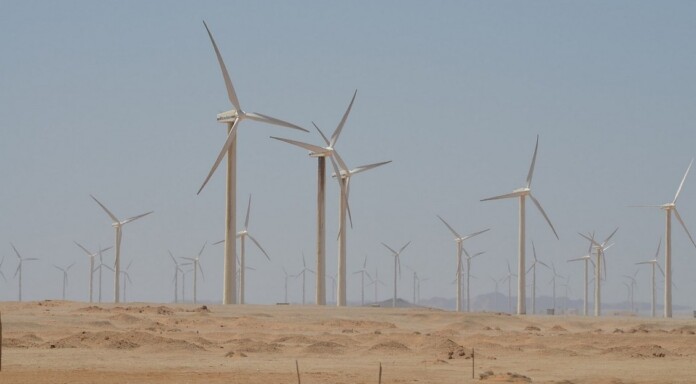
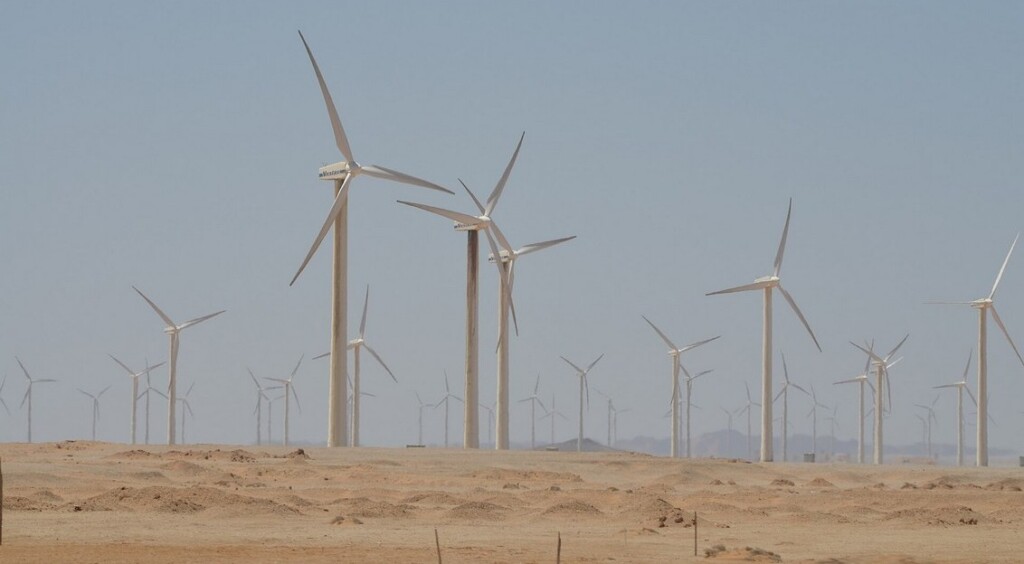
The Land of the Nile has quickly joined the number of countries responding to the current oil shock by announcing new wind and solar projects.
For a country that’s over 90% sand desert, where the Sun was deified in ancient times as a scarab beetle and its dung ball, and where the Sahara wind is so desiccating it’s known as samoom, or “poison,” installing gigawatts of solar and wind energy seems a no-brainer.
On March 18, the Egyptian electricity and renewables ministry announced than agreement for nearly 6 gigawatts of solar, wind, and battery storage facilities along the Red Sea coastline to be developed in a partnership between the Egyptian firm Orascom Construction, French utility Engie, and Japanese conglomerate Toyota Tsusho.
The photovoltaic panel is currently, and by a substantial margin, the cheapest form of scalable renewable energy technology, and so while 900 megawatts will come from wind energy, 5-times that amount will be generated from solar and battery storage.
Egyptian electricity minister Mahmoud Essmat said that expanding renewable energy projects and adopting battery storage will help to “reduce the country’s reliance on fossil fuels, cut carbon emissions, enhance grid stability and security, and ensure uninterrupted electricity supply.”
Home to 107 million people, Egypt is the most-populous state in the Arab world, and enjoys one of the highest GDP per capita therein.
EGYPTIAN NEWS:
- Egypt Becomes 26th Country to Eliminate Leading Cause of Infectious Blindness with Triumph Over Trachoma
- Undersea Cable to Funnel 3 Gigawatts of Solar Energy From Egypt to Power Millions of European Households
- Wind Farms in Africa Aim To Power New Era of Clean Reliable Energy While Saving a Billion Tons of CO2
Egypt’s electricity demand has more than doubled over the past two decades, driven by rapid population growth and industrial expansion. This surge has primarily been met by natural gas, which made up 84% of Egypt’s electricity mix in 2023. To reduce its dependence on fossil fuels, Egypt has set a target of 42% renewable electricity by 2030.
If it wasn’t ironic enough that the country blessed with more wind and sunshine than almost any other country on Earth has almost no outstanding renewable capacity for sun and wind power, most of the renewable power it does have comes from water—a resource absent from roughly 98% of the whole country’s land area. The River Nile is a heck of a thing.
In 2019, Egypt completed one of the biggest solar installations in the world, Benban Solar Park, which generates 1.8 GW to power 1 million homes. In April 2025, Africa’s largest wind farm began operating in the town of Ras Ghareb, with 500 MW, and plans for a 650-MW expansion.
SHARE Egypt’s Big Step Towards Energy Independence On Social Media…
Once Dried up and Full of Plastic, Canal in India Is Now Clear and Lined with Mangroves
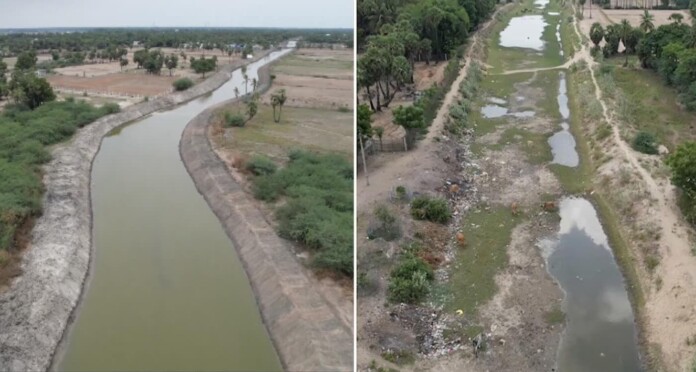
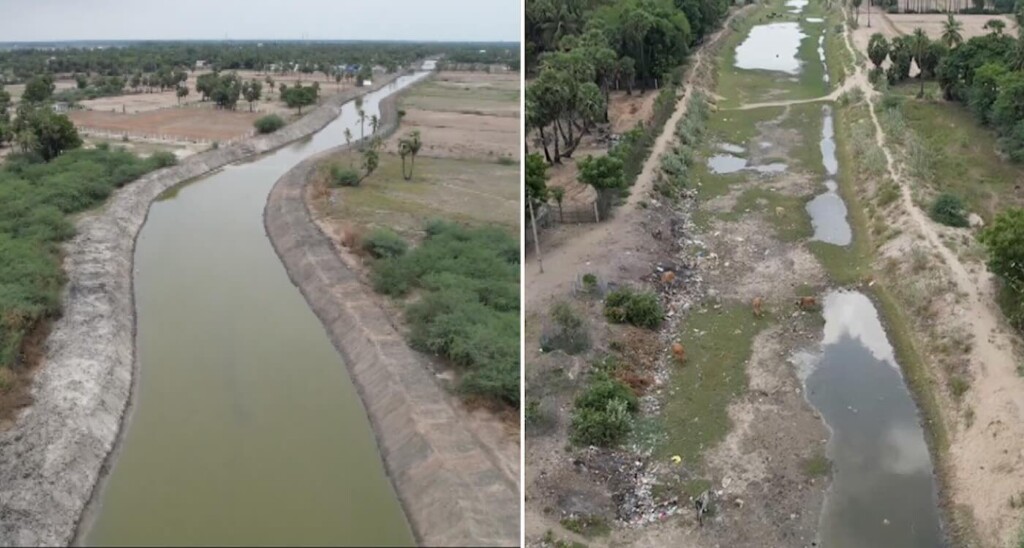
A canal in India has been transformed from a plastic-choked fetid mess into a growing mangrove forest.
The clean-up has restored the waterflow, and the 20,000 mangrove seedlings will help clean the water and reestablish fish stocks.
Along a 1.8-mile stretch of Buckingham Canal in India’s Tamil Nadu state, manual clean-up efforts began in Cuddalore district by some 600 paid volunteers.
This 494-mile-long fresh water canal was constructed during British rule, and ran from Andhra Pradesh to Tamil Nadu bringing water and navigation to millions.
Fewer countries are as thirsty as India can be during the dry season, but waterways in the country suffer heavily from pollution and buildup of plastic waste and invasive weeds, Buckingham Canal being a chief example of this trend.
Near the town of Pichavaram, Tamil Nadu’s Climate Resilient Village initiative organized the restoration of several stretches of the canal where pollution and waterflow were the worst. Local government agencies led the clean-up program.
Bravo Team Cuddalore !
— Supriya Sahu IAS (@supriyasahuias) March 14, 2026
What was once a plastic-choked and garbage-filled canal has bounced back in full force. An inspiring transformation in the village of Pichavaram under Tamil Nadu’s Climate Resilient Village initiative. We have rejuvenated 3 kms of the clogged village canal… pic.twitter.com/86l6QvXBmB
750 kilograms—almost 2,000 pounds—of trash were pulled from the canal along with heaps of invasive prosopis plants. The embankments were strengthened to prevent erosion, before 3,000 mangrove trees were planted to improve the ability of the canal to keep the water clean and biodiverse, as well as slow storm waters that might flood the town and canal.
CLEANING INDIA’S WATER:
- India’s Beautiful and Historic Stepwells Restored to Working Order for the Thirsty Nation
- Joy and Relief as Lotus Flowers Bloom Again in Kashmiri Lake After Three Decades
- Man Revives Iconic Indian Lake by Converting Lake Weed Infestation into Organic Fertilizer Business
Other stretches further down the canal have seen similar rejuvenation. Near Chennai, the state capital, the Tamil Nadu Forest Department led the planting of another 20,000 mangrove seedlings along the canal banks, as well as in an island amid its flow.
This effort was supported with a grant from ICICI Bank’s sustainability initiatives, and involved carving a herring-bone pattern into the island. This allows for maximum mangrove anchorages across the small amount of available space, and for rising water levels to irrigate all equally.
Hello Chennai here comes your third Mangrove Magic !
— Supriya Sahu IAS (@supriyasahuias) March 9, 2026
Along the Buckingham Canal, the Chennai Forest Division has planted 20,000 mangrove seedlings across 20 hectares during 2025–26. What you see here is the fishbone structure to support healthy tidal flow. 8 main fishbone… pic.twitter.com/e01fhd0X5e
Red, Indian, and tall-stilt mangroves were planted, and additional feeder canals and flow channels—over 180—were created to help keep the water circulating and the mangroves healthy.
“Step by step, TN Forest Department is building Chennai’s living coastal bioshield restoring mangroves that protect the city, nurture biodiversity and strengthen climate resilience,” said Tamil Nadu’s Chief Minister for Environment Supriya Sahu.
Water has been a chief focus of Indian environmentalism this century. One of the sub-continent’s holiest places is a river, which makes it easy, said one NGO founder, to convince locals to help clean up water sources.
SHARE This Indian Endeavor To Clean Up Its Canals With Your Friends…
New Views of Saturn Produced by Space Telescopes Help Researchers Understand the Planet’s Clouds

Storms, ribbons, and its iconic rings in screaming electric blue, Saturn appears like you’ve never seen it before in a new set of images released by our flagship space telescopes James Webb and Hubble.
Whether you want to call it peeling an onion or cutting through a 7 layer cake, the combination of these two observatories, the former imaging in infrared light and the latter in visible light, help deepen the story of Saturn’s atmosphere and weather.
The Hubble image seen here was captured as part of a more than a decade long monitoring program called OPAL (Outer Planet Atmospheres Legacy) in August 2024, while the Webb image was captured a few months later using Director’s Discretionary Time.
Hubble helps see more subtle variations in color across the world, while Webb’s infrared view allows operators to image the deep clouds below the stormy atmosphere.
In the Webb image, a long-lived jet stream known as the ‘ribbon wave’ meanders across the northern mid-latitudes, influenced by otherwise undetectable atmospheric waves. Just below that, a small spot represents a lingering remnant from the ‘Great Springtime Storm’ of 2011 to 2012.
Several other storms dotting the southern hemisphere of Saturn are visible in Webb’s image, as well.
All these features are shaped by powerful winds and waves beneath the visible cloud deck, making Saturn a natural laboratory for studying fluid dynamics under extreme conditions.
Several of the pointed edges of Saturn’s iconic hexagon-shaped jet stream at its north pole, discovered by the Voyager spacecraft in 1981, are also faintly visible in both images. It remains one of the Solar System’s most intriguing weather patterns.
Its persistence over decades highlights the stability of certain large-scale atmospheric processes on giant planets. These are likely the last high-resolution looks we’ll see of the famous hexagon until the 2040’s, as the northern pole enters winter and will shift into darkness for 15 years.
In Webb’s infrared observations, Saturn’s poles appear distinctly grey-green, indicating light emitting at wavelengths around 4.3 microns. This distinct feature could come from a layer of high-altitude aerosols in Saturn’s atmosphere that scatters light differently at those latitudes. Another possible explanation is auroral activity, as charged molecules interacting with the planet’s magnetic field can produce glowing emissions near the poles.
Also in Webb’s infrared image, the rings are extremely bright because they are made of highly reflective water ice. In both images, we’re seeing the sunlit face of the rings, a little less so in the Hubble image, hence the shadows visible underneath on the planet.
RINGS AND AURORAE: New Webb Image Captures Clearest View of Neptune’s Rings, Revealing the Ice Giant in Whole New Light
Saturn’s orbit around the Sun, combined with the position of Earth in its annual orbit, determines our changing viewing angle of Saturn’s face and ring. The planet is tilted on its axis to a greater degree than Earth, which allows for occasionally exceptional views of the rings, and occasionally poor views.
The images also contain subtle ring features such as spokes and structure in the B ring (the thick central region of the rings) that appear differently between the two observatories. The F ring, the outermost ring, looks thin and crisp in the Webb image, while it only slightly glows in the Hubble image.
MORE PLANETARY SCIENCE: Citizen Scientist Spots Earth-like Planet: Now Astrophysicists Will Focus Most Powerful Telescopes on it
These 2024 observations, taken 14 weeks apart, show the planet moving from northern summer toward the 2025 equinox. As Saturn transitions into southern spring, and later southern summer in the 2030’s, Hubble and Webb will have progressively better views of that hemisphere.
Hubble’s observations of Saturn for decades have built a record of its evolving atmosphere. Programs like OPAL, with its annual monitoring, have allowed scientists to track storms, banding patterns, and seasonal shifts over time. Webb now adds powerful infrared capabilities to this ongoing record, extending what researchers can measure about Saturn’s atmospheric structure and dynamic processes.
SHARE These Beautiful Images Of Our Ringed Neighbor With Your Friends…
Vancouver’s ‘Teddy Bear Doctor’ Stitches Together More Than Just Plushies, but Memories Too


Ruth Hasman has repaired hundreds of stuffed animals over the years since she retired.
Whether it was an overzealous child, a close encounter with a dog, or just too much loving, there’s no damage she can’t fix.
From a mass-produced Spongebob Squarepants to a 115-year-old, hand-sewn bear cuddled through 5 generations, Hasman says her favorite part of her work is the stories behind each toy.
She’s made every kind of repair on a stuffed animal you can think of, from reattaching eyes, limbs, and heads, to ‘fur grafts,’ to stitch-ups, stuffing transplants, and even voice box repair.
If she doesn’t have the material on hand—because it’s the wrong texture or color, she will scour local thrift shops until she finds a “donor.”
“I learn something new almost every time I fix one,” she told CBC News’ Michelle Gomez. “It’s a pleasure talking to the people, finding out the history of the bears. There’s a lot of poignant stories.”
TEDDIES ARE PEOPLE TOO:
- Town Leaders Help Dig Beloved Stuffed Animal out of Trash Compactor Using More Than Just Their Hands
- ‘Teddy Clinic’ Treats Stuffed Animals to Ease Kids’ Fear of Hospitals
It’s not uncommon for Hasman to repair a bear and receive a thank-you card from its owner, a gesture that makes all the needlework worth it.
CBC says she’s currently training an orderly to take over the work when her fingers have lost their dexterity, but for now she’s going to keep the operating theater open, since the stories behind each and every bear, dog, monkey, and elephant just “pulls her heart.”
WATCH the story below from CBC…
“A wise girl knows her limits. A smart girl know that she has none.” – attributed to Marilyn Monroe

Quote of the Day: “A wise girl knows her limits. A smart girl know that she has none.” – attributed to Marilyn Monroe
Photo by: Nicodemus Roger
With a new inspirational quote every day, atop the perfect photo—collected and archived on our Quote of the Day page—why not bookmark GNN.org for a daily uplift?

Good News in History, April 1

50 years ago today, the Apple Computer Company was founded by Steve Jobs, Steve Wozniak, and Ronald Wayne to sell their ground-breaking Apple I personal computer kits. Their startup is now the most valuable company in the world, becoming the first publicly-traded company to be valued at $1 trillion in 2018—a figure that has nearly quadrupled since then. READ some interesting historical bites of Apple… (1976)
Roofers Repair 78-year-old Widower’s Roof for Free After Scammers Left Him with a Big Hole


Roofers repaired a 78-year-old widower’s roof for free after he was scammed out of thousands by another tradesman.
Mike Watkinson needed a few of his roof tiles replaced just weeks after his wife of 57 years died following a long battle with liver cancer.
When the first set of roofers arrived, they aggressively quoted him £250, or about $310 for the work.
He said he felt “pressured” into accepting, and before he knew it, the bill rose to 8-times that amount.
Watkinson paid the workers who pocketed the cash and left his home in Oldham unfinished and with a huge hole in the roof.
When Denny Melia, another tradesman, found out last week he rushed over with his team and offered to do the work for free, not too dissimilar to a story that GNN reported on last spring in Pittsburgh, where deceitful contractors left a retired couple with a collapsing pile of dirt instead of a new garden wall.
“I was outraged hearing Mike’s story,” said Melia, the owner of Jigsaw Roofing in Merseyside.
“I couldn’t believe people would take advantage of a man in that stage of life.”
“The job was only about 25% done when we got to his house,” he told the Southwest News Service.
“And the other workers had said they’d finish it for another £1,200, but I told Mike that if they showed up again, he should call the police.”
MORE HONESTY IN THE TRADES: Contractor’s ‘Roof Goof’ Becomes Unexpected Blessing for Oklahoma Couple

£250 would have been a fair price for what the first roofer was asking, Melia said, but they just kept raising the quote and pressuring him, saying there were other issues.
Making up for his dismal industry colleagues, Melia took care of the project for free.
SHARE The Story Of Mr. Melia’s Generosity With Your Friends On Social Media…
UN Summit Sees Giant Otter and 39 Other Migratory Species Gain Cross-Border Protections
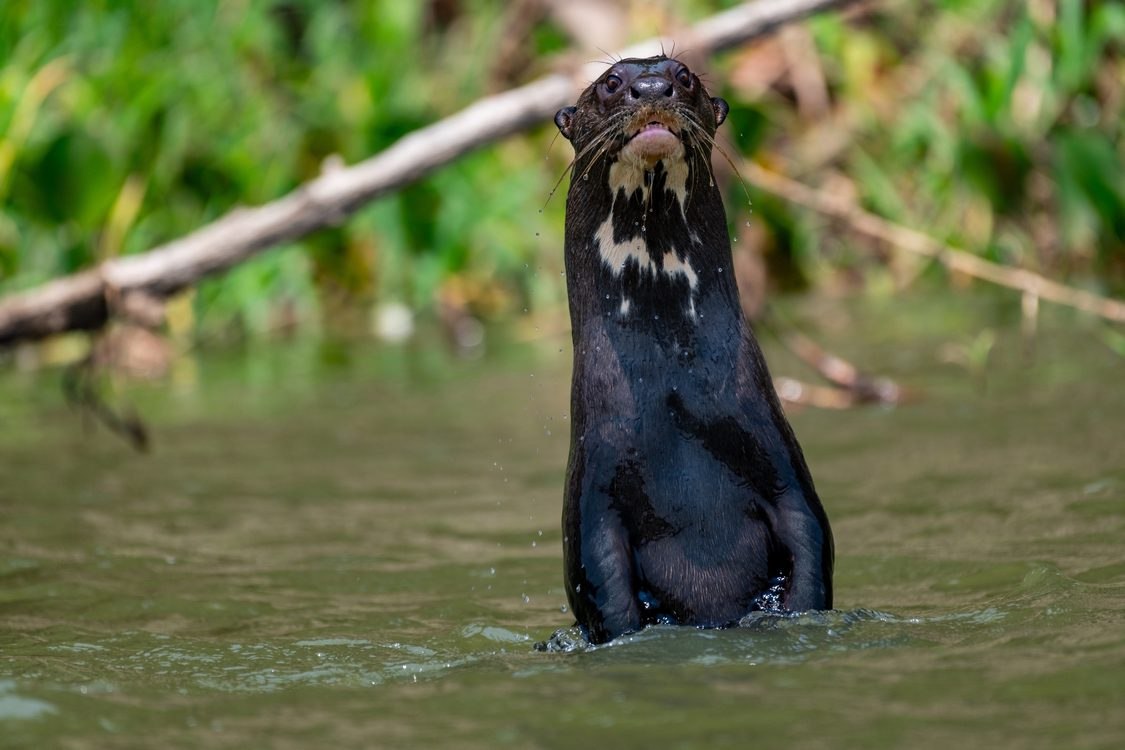
132 representatives from world governments recently adopted a sweeping set of conservation measures aimed at protecting migratory species and their habitats worldwide.
The 15th Conference of the Parties to the Convention on the Conservation of Migratory Species (CMS) took place in Brazil this March, where 40 animals were granted special protections under one of the UN’s premier wildlife conservation treaties.
Protections were provided for animals of the seas, skies, and lands, from as small as a godwit bird to as large as the hammerhead shark.
Among the animals that were listed in the treaty’s appendices include two species of hammerheads, the thresher shark, two species of migratory Amazonian fish, the jaguar, striped hyena, giant river otter, snowy owl, manta rays, and Hudsonian godwit.
“These listings send a clear signal that the global community recognizes the urgent need to act for species that depend on connected landscapes and waters that span borders,” said Susan Lieberman, Vice President for International Policy at the Wildlife Conservation Society (WCS), who gave a speech at the event’s Plenary session.
The CMS lists animals under Appendix I for migratory species threatened with extinction that require protections wherever they roam. Appendix II are those species that quality for protections under Appendix I, but which require specialized international collaboration to help facilitate or guarantee their movement across borders.
Beyond simply listing the animals, multiple courses of action were agreed on, including the need to develop plans to help better ensure cross-border movement of freshwater fish, jaguars, and protections for migratory sharks from bycatch.

“Expanded protections for striped hyena, snowy owls, giant otters, great hammerhead sharks, and many more, demonstrate that nations can act when the science is clear,” said CMS Executive Secretary Amy Fraenkel. “Our duty now is to close the distance between what we’ve agreed and what happens on the ground for these animals.”
GLOBAL CONSERVATION: Kazakhstan Plants 37,000 Seedlings to Prepare for Imminent Return of Tigers
These plans, known under CMS jargon as “Concerted Actions,” have worked well in the past. At the conference, 5-year results on the Concerted Action for 4 species of giraffe showed that the animals had grown in number over that period to 140,000, up from 113,000 before the action was taken.
A variety of sharks, dolphins, and rays, along with the Eurasian lynx and chimpanzee had new Concerted Actions approved on their behalf.
UN TREATIES SEEING SUCCESS: 30,000 Animals Rescued from Illegal Captivity in the Largest Wildlife Trafficking Raid in History
The conference was hosted by Brazil in the city of Campo Grande, where the Executive Secretary of the country’s Ministry of the Environment, João Paulo Capobianco, spoke on the responsibility to protect species wherever they’re found
“We protect species that may never remain within our borders. We invest in a natural heritage we do not own, but are all responsible for. In doing so, we give concrete meaning to global solidarity, recognizing that migratory species transcend nations, jurisdictions, and generations.”
SHARE This Great Outcome For Species Conservation Around The World…
Aging Delivery Driver Gets Huge Tip After Conscientious Effort Goes Viral With Ring Video


GNN recently reported on a crowdfunding campaign gone viral on behalf of an elderly DoorDash driver working far beyond his retirement to afford his wife’s expensive medication.
Now along a similar vein, an Idaho man was left “blown away” when he learned that a nearly 70-year-old Dominoes driver had gone to the grocery store to pick up his soda after the restaurant had run out.
Brian Wilson had ordered a Diet Coke to go with his family’s meal, but later got a voicemail saying the Dominos he ordered from had none left, and the delivery driver had already left.
A little while later, when the driver arrived Wilson’s door, he was surprised to see two liters of Diet Coke along with the pizza. In the viral video you can hear Dan the driver say he stopped at the store on his own to pick up the soda.
“We were honestly blown away. That level of care and kindness is rare these days,” Wilson wrote on GoFundMe.
“That’s when Dan shared something that made this moment even more meaningful: He’s been working at Domino’s as a second job for 14 years… and he’s retiring in just a few weeks.”
MORE STORIES LIKE THIS:
- Woman’s Viral Video of Elderly DoorDash Driver Channels $1 Million to Help Him Retire
- TikToker Crowdfunds $1.5 Million for 88-yo Army Veteran After Viral Supermarket Moment
- Heroic Divemaster Rescues Cozumel Divers–and Public Raises $50k to Treat His Injuries
Wilson wanted to tip more at the time, but had no cash on him. So as GNN has so often seen, he started a GoFundMe, and the whole nation responded.
@katey_93 When Domino’s is out of Diet Coke, but your delivery driver stops at the store to get it for you. Dan, you went above and beyond tonight, thank you!The world needs more Dans. Happy almost retirement! #dominos #fyp ♬ original sound - Katey Ann
Wilson shared the Ring Camera video interaction on TikTok to see if anyone else would like to give Dan a tip, and just a few days later that GoFundMe has received more than 1,600 donations totaling over $23,000.
“Let’s show Dan that his kindness didn’t go unnoticed,” said Dan. “Let’s help him step into retirement feeling appreciated, supported, and celebrated.”
SHARE This Fantastic Story Of Service, Just Rewards, And Generosity…
Small S. Korea Town Welcomes First Newborn in 17 Years as Nation’s Fertility Rate Continues to Rise


A small, rural town in South Korea is celebrating the first child birth in 17 years as the country continues to enjoy a rise in its fertility rate.
In addition, 4 students enrolled at the town’s only the school, taking its attendance to 17, another demographic milestone the residents had reason to celebrate.
Earlier, GNN reported that 2025 saw a sharp rise in the fertility rate in South Korea, the world’s least-fertile country.
Rising 6.2% year-over-year, and paired with a 9.8% fall in the divorce rate, it signaled that demographic collapse may not be the country’s ultimate destiny.
On March 19th, Sreydani, an immigrant from Cambodia, and her husband Jeong Hae-deok, welcomed their son Yong-jun into the world. The town of Eunha-myeon in Hongseong County hung a banner down main street in his honor.
“A special gift that came to Eunha-myeon in 2026. We celebrate the birth of baby boy Jeong Yong-jun,” it read.
The population of Eunha-myeon has fallen from 2,600 to below 2,000 over the last 6 years. It’s one of the smallest in the country, and a typical example of the effects of demographic collapse threatening countries of all cultures all over the world.
KOREA NEWS: Over 600 North Korean Refugees Can Tell Their Stories After Public Speaking Classes from US Charity
The town mayor, Shim Seon-ja heartily welcomed the new birth.
“We will make every effort in administrative support so that Eunha-myeon can become a place good for raising children and where everyone wants to live,” Shim told an affiliate of the Korea Times, Hankook Ilbo.
CELEBRATE The Birth Of Young Yong-jun With Your Friends…
“Logic will get you from A to B. Imagination will take you everywhere.” – Albert Einstein

Quote of the Day: “Logic will get you from A to B. Imagination will take you everywhere.” – Albert Einstein
Photo by: Jr Korpa
With a new inspirational quote every day, atop the perfect photo—collected and archived on our Quote of the Day page—why not bookmark GNN.org for a daily uplift?

Good News in History, March 31

43 years ago today, Monty Python’s The Meaning of Life was released in the United States to modest box office success and enormous cult acclaim. Less of a continuous film like the comedy troupe’s previous Life of Brain, and Monty Python and the Holy Grail and more of a collection of sketches, The Meaning of Life is divided into various chapters of a human life, but begins when six fish in a restaurant fish tank watch one of their friends get taken for dinner and start wondering “what’s it all for?” READ more about this hilarious film from the comedy masters… (1983)
Hero Black Lab Was Trained as a Seeing-Eye Dog, but Detected Owner’s Blood Clot Too


Luis Perez is no stranger to pain.
At 45-years-old, he has been battling MS most of his life, lost his vision at age 23 due to complications with his condition, and now receives regular plasma infusions to combat symptoms of his autoimmune disease.
All of this has been extremely difficult and has led to him experiencing depression, anxiety, self-isolation.
In a heartwarming page turn, the story was shared with GNN about how Luis decided a guide dog may benefit his life.
He turned to the 501(c)3 nonprofit Dogs Inc., where he was matched with a black lab named Jerry in September, 2024. Jerry does more than lead Luis, he has improved his confidence and socialization, is a trusted friend and loving companion, and helps Luis live his life to the fullest.
Then, he become something further still—a hero.
Recently, Luis was experiencing pain and discomfort that he attributed to MS, but this time it felt slightly different. He had a lot of pain when moving his left leg in certain positions, so he was remaining in his recliner chair.
Jerry kept persistently coming over to Luis and pressing his chin down on Luis’s leg. Jerry had never acted like this before, and eventually, Luis and his wife decided to go to the hospital.
After hours of waiting and testing at the hospital, Luis was diagnosed with a blood clot in his left leg called deep vein thrombosis (DVT). It was exactly where Jerry had laid his head.
DVT is a very serious condition that can progress quickly, and it was crucial for Luis to receive treatment that very night. If his dog had not alerted him, Luis says he would have accredited the pain to his usual symptoms and would not have taken it seriously.
The dog is now not only his guide and dear companion, but also his hero.
SHARE This Incredibly Intuitive Dog And His Story With Your Friends…
Spectacular New Species Found in Cambodia’s Limestone Caves–Asia’s ‘Little Laboratories’
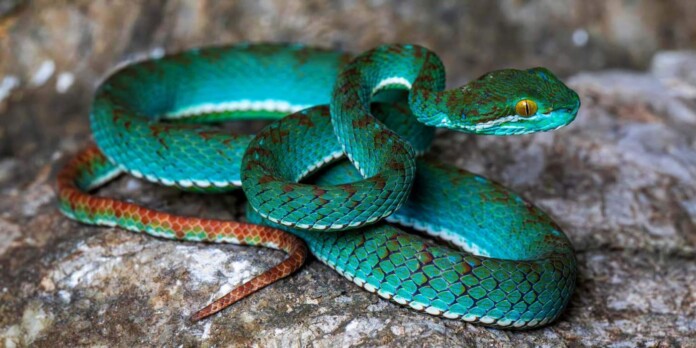
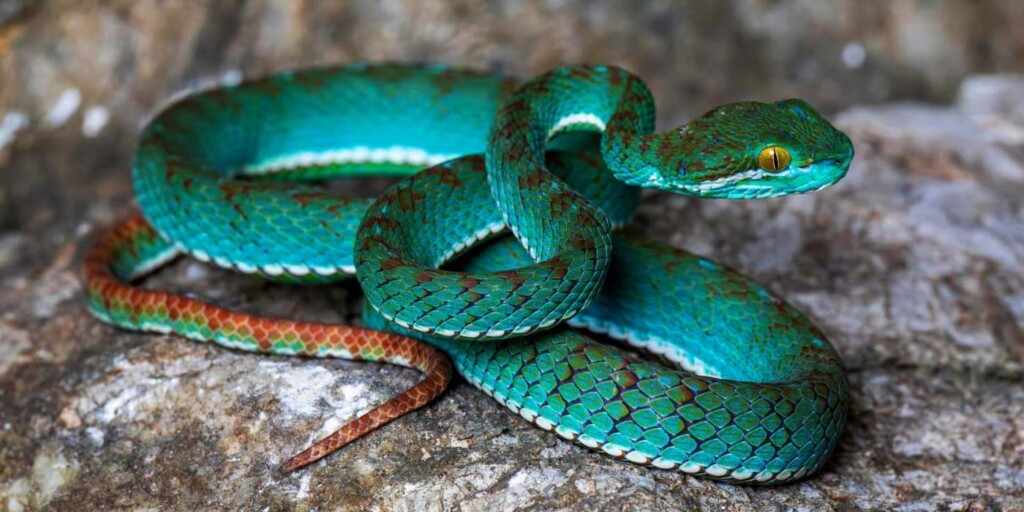
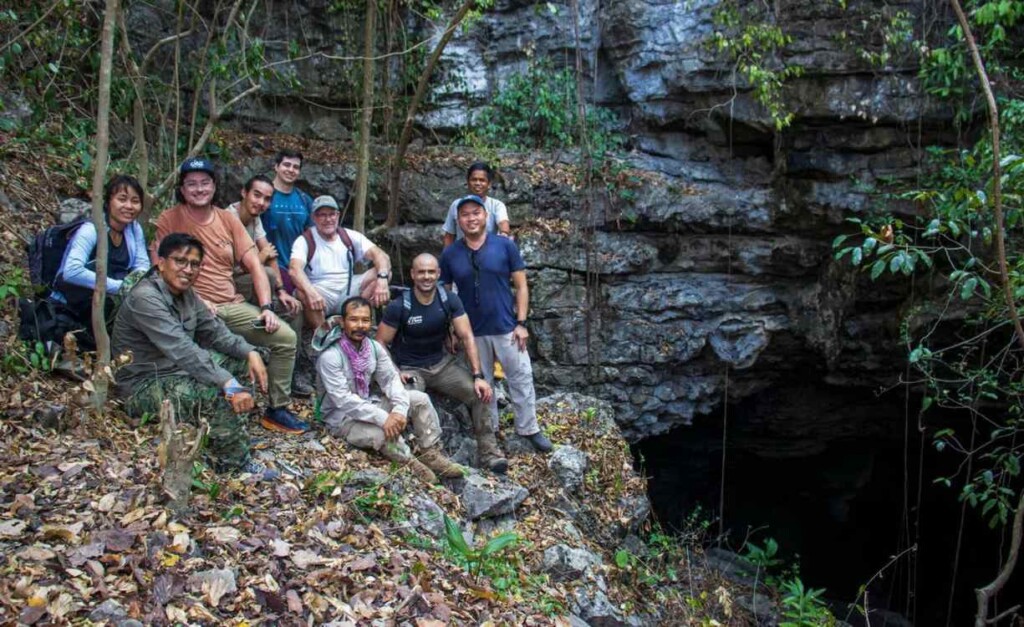
A breathtaking expedition high among limestone escarpments and deep in the cave systems they contain has revealed several new reptile species, including a dazzling pit viper you have to see to believe.
Exploring over 60 caves across 10 hills in the Battambang province, western Cambodia, the survey uncovered a treasure trove of extraordinary creatures besides, many found nowhere else on Earth.
The survey was led by Fauna & Flora International in collaboration with Cambodia’s Ministry of Environment and field experts. The team identified 6 new geckos, 2 micro-snails, and 2 millipedes in addition to the viper.
They also confirmed the presence of many threatened species in the landscape surrounding the caves—such as the Sunda pangolin, Indochinese silvered langur, long-tailed macaque, and green peafowl, further highlighting the critical need to protect this habitat.
Karst covers 20% of the Earth’s landscape. This soluble bedrock made of limestone has created some of the most spectacular rocky landscapes on Earth—including the upturned egg cartons shapes along the great South China Karst, Ha Long Bay in Vietnam, Tsingy de Bemaraha in Madagascar, The Burren in western Ireland, the world’s largest wellspring in Vrelo Bune, Bosnia, the Cenotes of the Yucatan, in Mexico, and Mammoth Cave in the US.
The susceptibility of karst to erode from rainfall has seen it carved into a million beautiful and dramatic shapes that often play host to microclimates where threatened animals can thrive.
Dr. Lee Grismer, a professor of biology at La Sierra University in the US, was part of the expeditionary team, and spoke to F&F about the importance and uniqueness of the landscape.
“Each one of these isolated karst areas act as their own little laboratory where nature is performing the same experiment over and over and over independently. The results are species that exist nowhere else—not just nowhere else in the world, or that country—but in no other cave.”
Indeed, caves from easily in karst landscapes, and many of the world’s longest and largest—and least-explored—cave systems are found in East and Southeast Asia.
This is certainly the case in Battambang, where the survey team had first to ascend the steep forested slopes of the karst outcrops before scrambling and squeezing through crevices and crawlspaces to reach the cave systems.
Inside, they documented a rich array of life, both endemic to the caves and others—like a big reticulated python—who were just visiting. While the chatter of the Endangered silvered langur troupe, faded behind them, the team began encountering animal after animal that had never been described by science.
A spectacular new species of pit viper (from the Trimeresurus genus) was collected during the survey and is currently being described. Recognized by their triangular heads, these highly venomous snakes track down their warm-blooded prey using the heat-sensitive pits behind their nostrils.
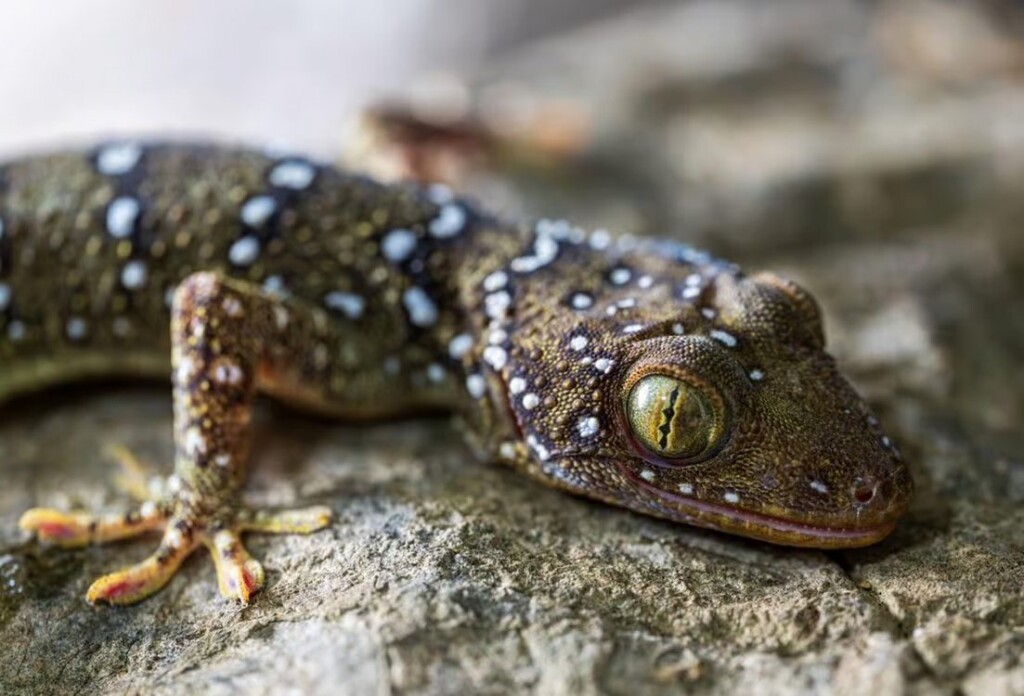
4 populations of the striped Kamping Poi bent-toed gecko were found and identified as a new species: Cyrtodactylus kampingpoiensis. Despite being described as just one species, it is thought that, due to the geographic isolation of the karst formations, these 4 populations are on separate evolutionary trajectories, and further genetic analyses may reveal whether they are in fact 4 different species instead of 1.
Another new species of gecko was named after the Hindu god of destruction: Shiva.
ALSO CHECK OUT: Trail Cams Leave Park Officials Elated as Rare Gaur Seen Thriving in Forest–World’s Largest Bovine
In a statement, Fauna & Flora International said it is working with local partners to help conserve Cambodia’s karst landscapes, epitomized through the recent release of guidelines for sustainable development and management of cave ecosystems.
The guidelines integrate international best practices with Cambodian context, providing practical measures to safeguard bat colonies, preserve rare and endemic cave biodiversity, promote sustainable guano harvesting and ensure responsible tourism development.
NEWS FROM BELOW OUR FEET: Cave of Wonders: Where Prehistoric Bees Made Nests in the Bones of Animals Eaten by Colossal Owls
“Cambodia’s karst areas are a treasure trove of scientific secrets waiting to be uncovered,” said Sothearen Thi, Karst Biodiversity Coordinator at Fauna & Flora in the statement.
“But, without sustainable management, we may never find out what these areas truly hold. Karst landscapes are facing many human-driven challenges, and biologically significant species could go extinct before they have even been discovered. We are working with the Cambodian government and local partners to increase protection of the landscapes, with sustainable management being the number one priority.”
SHARE These Beautiful New Creatures And An Organization’s Campaign To Protect The Landscape That Houses Them…
Endangered Cahow, One of the Rarest Seabirds in the World, Hatched on Nonsuch Island in Bermuda
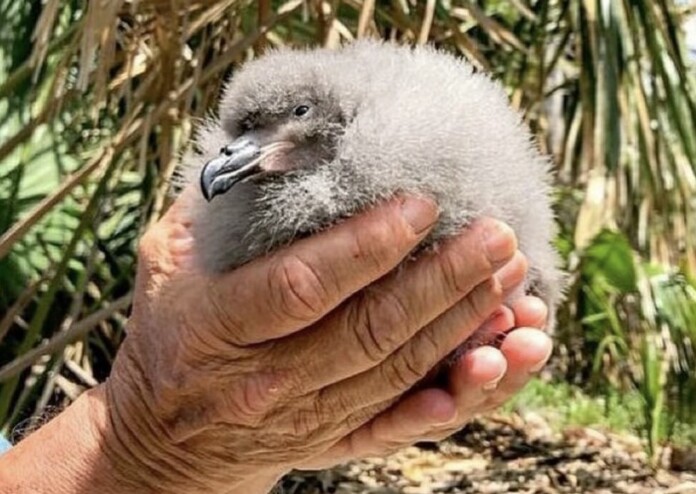
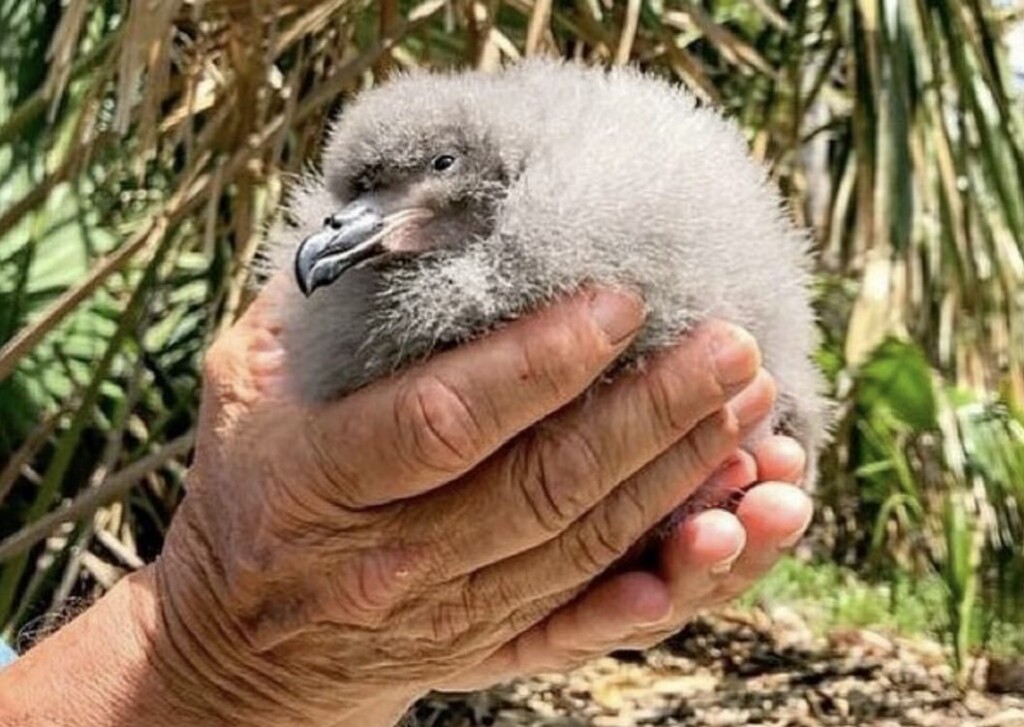
Though an event neither singular nor inaugural, the hatching of an endangered seabird and national icon of Bermuda is still being celebrated wildly by a special group of conservationists who’ve created a “living museum” on Nonsuch Island.
Measuring just 14 acres and found in the northeast corner of the Bermuda island chain, Nonsuch Island is the only place the world’s 3rd-rarest seabird, known locally as the cahow, comes to breed.
The fact that it is breeding at all is nearly a miracle, as the cahow was believed to be extinct for a period of 300 years that started in the early days of British colonial governance and extended all the way to the second-half of the 20th century.
The animal, also known as a Bermuda, or gadfly petrel, bears all the quirks of an animal doomed to follow the dodo into history. It takes 3-6 years for adults to return to Nonsuch Island to breed, and if they do, the female may produce one egg.
That one egg may hatch, although it might not; some 50% of the eggs don’t hatch. Adults abandon that single chick one-week before it fledges, when instinct drives it to seek food out at sea while still learning how to fly. Between 28 and 35% of fledglings don’t survive their first year.
Nesting on the ground, they’re extremely vulnerable to predation from invasive animals, and in 1960, British ornithologist and Bermuda’s first conservation officer, David Wingate, identified just 18 breeding pairs on Nonsuch Island.
Wingate would go on to pioneer the Cahow Recovery Program, which today is recognized as one of the most successful restoration projects anywhere in the world for a Critically-Endangered species.
By the time Wingate’s successor as chief of the program, Jeremy Madeiros, took over, their numbers had grown to 55. Today, there are 450 birds of all ages on the island, a remarkable turnaround.
RESTORING PRISTINE ISLANDS: Marshall Islands Experience Explosion of Wildlife One Year After Invasive Rats Were Removed
Part of that turnaround was making sure these birds had good nesting habitat. Cahows nest in underground burrows or deep rock crevices; only nests deep enough to be completely dark are chosen.
Today, 85% of all cahows nest in artificial concrete nest burrows constructed for them as part of the Recovery Program.
The recovery program gestated a transformation of Nonsuch Island into a complete wildlife sanctuary, wooded, and with a small freshwater marsh where access to the public is strictly limited to prevent invasive species introduction. The restoration of the once barren island into a ‘Living Museum of pre-colonial Bermuda’ was Wingate’s life’s work.
LOST ISLAND BIRDS: Missing for 200 Years, the Galapagos Rail Reappears Following Floreana Island Restoration
65 years into this rewilding experiment, key endemics have repopulated the island, including the yellow-crowned night heron, West Indian top shell, land hermit crabs, and the beautiful Bermuda skink.
Expeditions there are organized by the environment ministry for educational and research purposes, while several live camera feeds allow those interested to observe the cahow in its natural habitat.
SHARE The Story Of This Feathered Fuzzball Coming Back To Bermuda…
Mining in Oklahoma Left a Toxic Wasteland Until Indigenous Tribe Brought it Back to Life
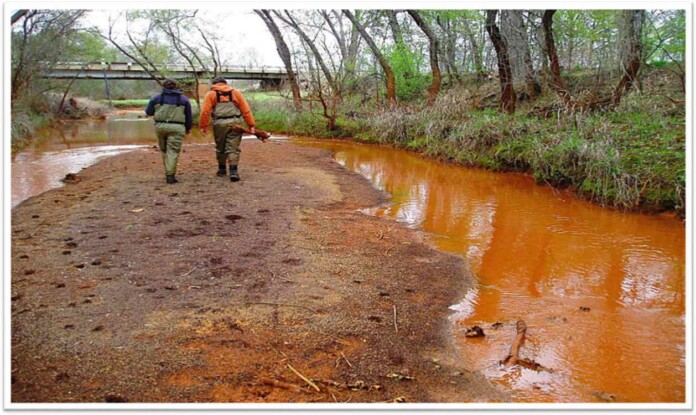
The Quapaw Nation of Oklahoma has brought one of the most contaminated areas in America back into agricultural production, and is now ranching cattle and growing wheat and corn.
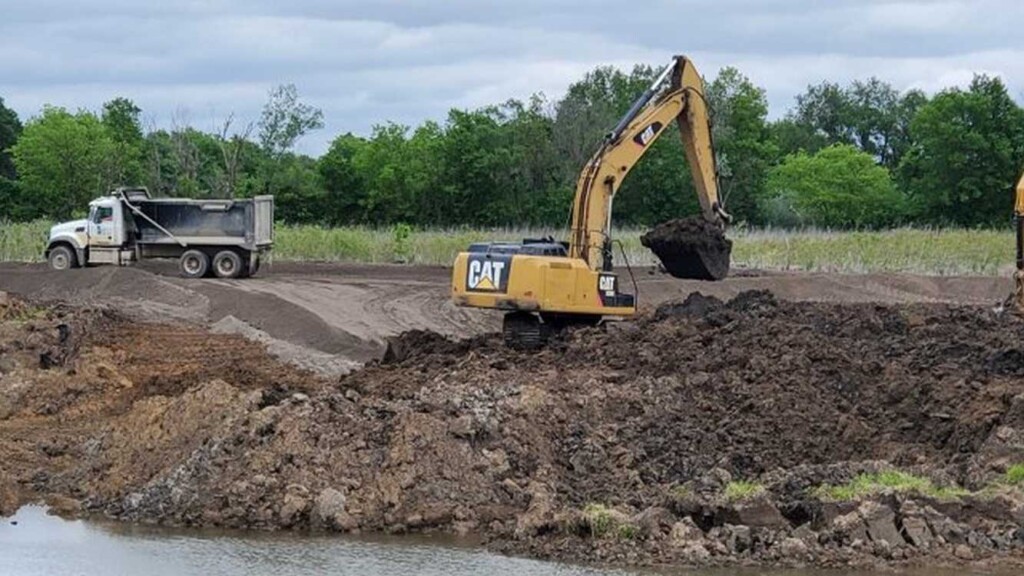
Taking over the remediation efforts in 2013 which began 20 years earlier, the Quapaw have done most of the work to clean up the old mining site, starting with bulldozers and ending with cultivators.
Mining isn’t what it used to be. North American mining companies are held and indeed hold themselves to rigorous industry standards for pollution control and reclamation responsibility.
Environmental stewardship is all over mining today. One example is the South African company DRD Gold, which produced over 4,0000 pounds of gold last fiscal year entirely from re-processing old mine tailings: the giant mounds of ground-up stone that can contain toxic heavy metals left over from stone and ore milling. They power the re-treatment process with a 40 megawatt solar farm.
Junior developer Free Gold Ventures hired specialized metallurgists for its Golden Summit project, who pioneered a mineral recovery method that extracts the gold from the ore body while simultaneously turning the dangerous arsenic it contains into harmless, sci-fi looking sheets of glass.
In the 20th century, this proactive stewardship was rarely observed, and was certainly never observed at the zinc and lead mines in northeast Oklahoma which came to be called the Tar Creek Superfund site.
Mining in the area boomed after a major ore discovery near what became Picher, Oklahoma.
“Picher Field,” covering areas of Oklahoma and Kansas, was mined for over 70 years. Excavations from the area were primarily used to make ammunition. Over 75% of American bullets and shells used in both World Wars could be traced back to this area. In fact, at one time, nearly 55% of the world’s heavy metals came from Pitcher.
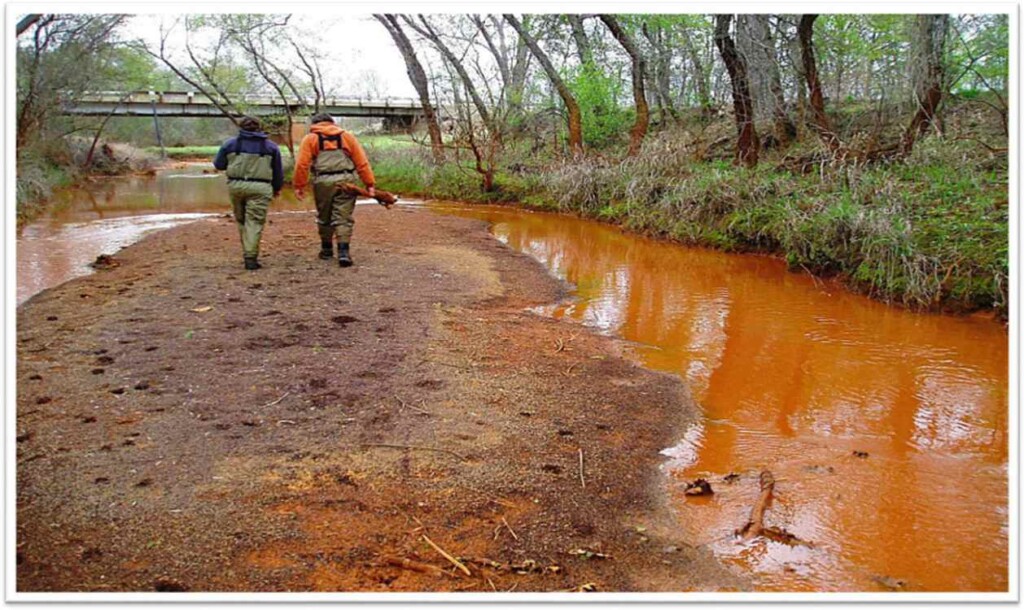
However, profits declined with the depletion of ores in the 1960s and the mines were completely abandoned by 1974. In 1979, the nearby Tar Creek turned bright orange. What had once been a water source and gathering place for the community quickly became the first sign of serious environmental issues.
Acidic water flowing from the mineshafts dumped toxic elements like lead, zinc, arsenic, and cadmium into the creek, killing plant and animal life downriver and sickening the community.
Sinkholes became a common hazard, dragging infrastructure, cars, and even a house or two, down into abandoned mineshafts. Above ground, man-made mountains of mine tailings, contaminated with similar heavy metals, glowered over the landscape.
The Quapaw Nation has lived in the area since 1834, long before lead was first discovered and mining operations began. Between 1997 and 2013, the nation worked in close partnership with the EPA to receive the training needed to clean up the whole area, for which they would be compensated by the agency.
In 2013 they embarked on their first remediation effort alone: a sensitive, 40-acre area named “Catholic 40” after the Catholic indoctrination school set up to “civilize” the Quapaw. In this way, the nation looked to dress two wounds with one bandage.
“We started cleaning up the land, we found topsoil to dress the land back up, we seeded, we mulched it, we tallied our expenses and sent a bill to the EPA,” Chris Roper, who during the time learning from the EPA, worked as the tribe’s director of construction and agriculture. He told the Guardian about the experience.
MORE STORIES LIKE THIS: First of its Kind Medical School in Cherokee Nation Graduates First Class of Doctors
In less than a year of cleanup efforts (and ahead of schedule), the Quapaw Nation excavated, hauled, and disposed of over 107,000 tons of mine tailings within the Catholic 40.
A decade later and the tribe had become a remediating machine, says Summer King, an environmental scientist with the Quapaw.
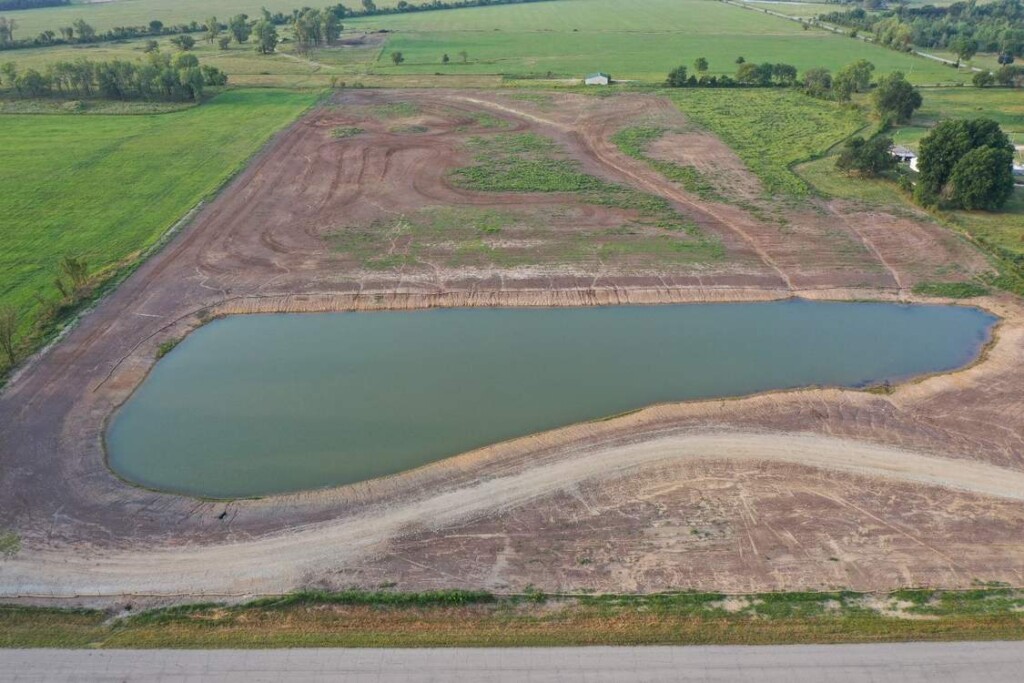
“The Quapaw Nation Environmental Office (QNEO) has overseen the removal of more than 7 million tons of mine waste from Tar Creek and remediated more than 600 acres of land,” she said in a statement 3 years ago.
CRITICAL CLEAN-UPS: Toronto River Once So Polluted it Caught on Fire Now Is Flush with Fish
“Our construction department has doubled in size, and the Nation has invested in new and upgraded equipment. On the technical side, QNEO environmental scientists have learned about soil amendments that bind metals in-situ and reduce the amount of waste that needs to be removed from a site. They have designed and overseen construction of wetlands and planted thousands of native plants and seeds.”
One of those soil amendments has been mushroom compost, the Guardian reported, which various scientists have investigated for its potential to clean up toxic waste, from lead to nuclear radiation.
NATIVE TRIUMPHS: Yurok Tribe Celebrates Again as Ancestral Homelands are Returned–in Wake of Historic Dam Removal
There is now enough good grassland in the Quapaw Nation to run a herd of 400 cattle on a rotational basis, as well as bison. It’s expected the budding agriculture division will turn a profit this year for the first time since clean-up efforts began.
“Working in the Superfund field can be backbreaking and heart-wrenching. But seeing a site change from actively hazardous to a beautiful green pasture is all the reward needed. I won’t live to see this site completely clean, but I can train the next generation who may be lucky enough to see that day,” King said.
SHARE This Story Of A Tribe Reclaiming Land And Heritage With Your Friends…
“I would always rather be happy than dignified.” – Charlotte Brontë

Quote of the Day: “I would always rather be happy than dignified.” – Charlotte Brontë
Photo by: Faruk Tokluoğlu for Unsplash+
With a new inspirational quote every day, atop the perfect photo—collected and archived on our Quote of the Day page—why not bookmark GNN.org for a daily uplift?

Good News in History, March 30

Happy 81st Birthday to Eric Clapton, the blues-rock musician, singer, and songwriter that Rolling Stone magazine named the second greatest guitar player of all time. The British rocker was a founding member of the Yardbirds, Derek and the Dominos, and Cream, and produced huge hits like Layla, Crossroads, and Let It Rain. He survived heroin addiction to launch a successful solo career and open his own recovery center for addicts in Antigua, called the Crossroads Centre. READ more about the great guitarist… (1945)
How Beijing Restored its Aquifer and Reversed its Groundwater Depletion

Aquifers are like bank accounts for groundwater, and they’re replenished with each deposit of rain, snowmelt, or surface infiltration.
Currently, many aquifers around the world have low balances, but there have been some success stories.
“Groundwater depletion is not inevitable,” said Environmental Science Professor Scott Jasechko at the University of California-Santa Barbara. “Humans have solved this problem in different places around the globe.”
He dove into the details of multiple cases of aquifer recovery in a study published this month in Science.
Jasechko’s findings highlighted successes in finding alternative water sources and replenishing aquifers—and showed that sometimes recovery can happen over just a few years.
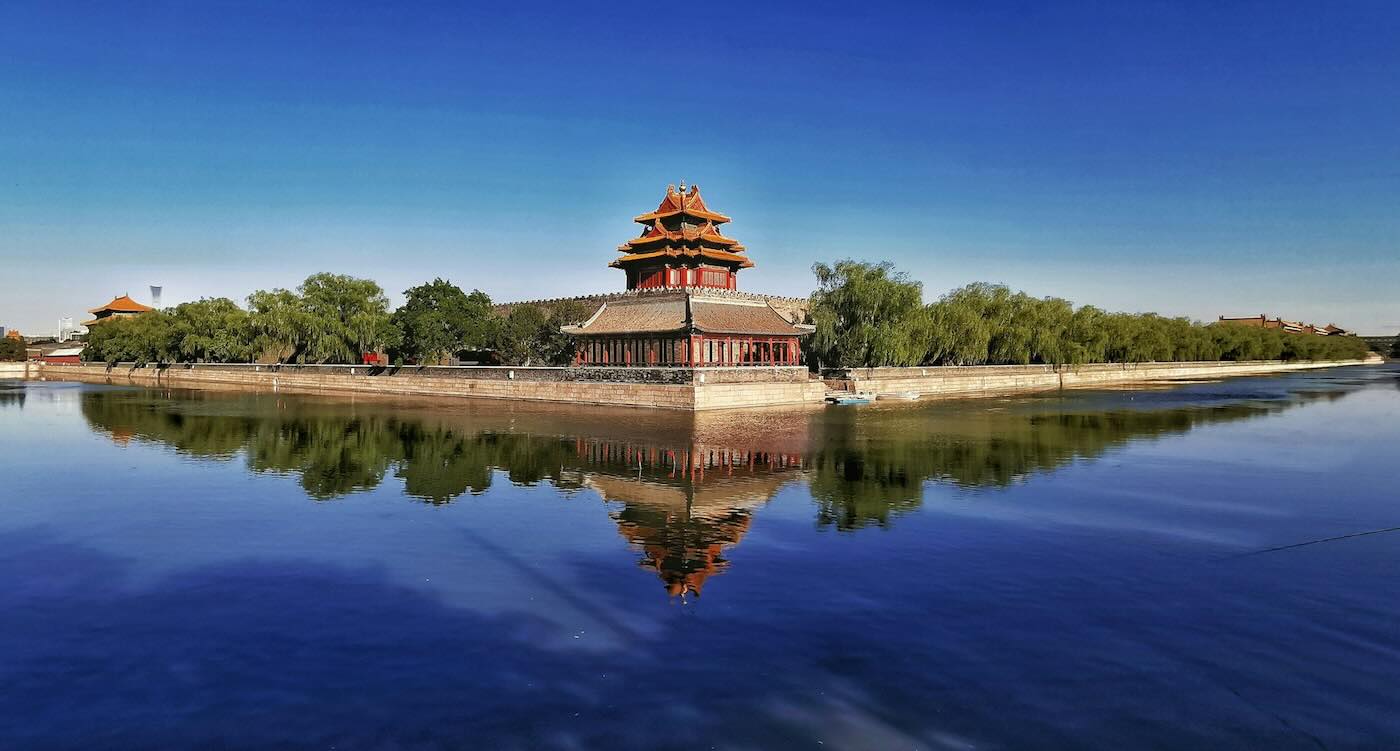
Beijing provides a great illustration of how combining different strategies can tackle even a megacity’s water woes.
Between 1950 and 2000, groundwater pumping around Beijing had caused the water table to plummet by more than 20 meters in some places.
In 2003, the government started construction of canals and pumping stations, and by 2015 it was delivering water to the city and surrounding areas from wetter regions farther to the south.
At the same time, the city began using more reclaimed water in the 21st century, with much of this allocated to environmental uses like watering trees and grasslands as well as replenishing lakes and rivers. Furthermore, the authorities banned pumping from the region’s deep confined aquifers for industrial uses after the water deliveries began.
Both the area’s shallow aquifers and deep ones have started recovering. Springs that had previously dried-up began flowing once again. Meanwhile, the region’s irrigated agriculture remains highly productive—and its sustainability is no longer jeopardized by falling groundwater levels.
We can’t always succeed within a decade, cautioned Jasechko.
In 1957, Green Bay, Wisconsin constructed a 43-kilometer pipeline to augment their groundwater supply with water from Lake Michigan. This helped restore their stressed aquifer for a while, before additional demand sent it falling again for decades. In 2006, the city built another, 100 km-long pipeline to bring in more water from the Great Lakes, which has brought their aquifer back on the path to recovery.
At the moment, Jasechko is investigating why recovery speed and distribution can vary so widely across different basins. These case studies will help develop better predictions of how quickly groundwater levels may recover under different interventions—but every place is different, and solutions will need to be adapted to local conditions.
“These cases highlight that there are ways to turn things around,” Jasechko said. “I am somewhat encouraged by the clever ways that stakeholders have addressed the problem of groundwater depletion, because they show that the menu of strategies is longer than I anticipated.”
RESTORE SOME HOPE: Share The Good News on Social Media…