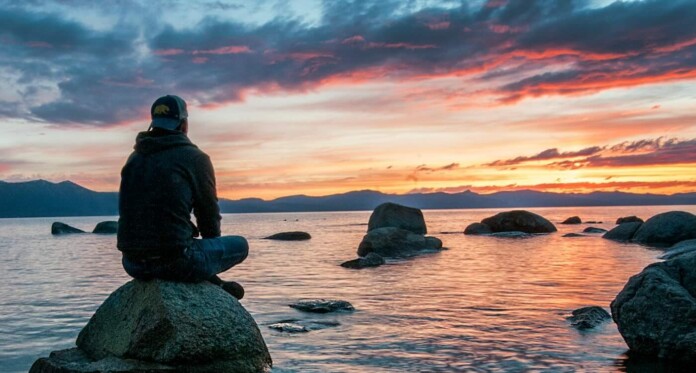














Quote of the Day: “I would hope you support who we are, not who we are not. This is your team.” – Coach Norman Dale, Hoosiers film (Happy NFL Draft Day!)
With a new inspirational quote every day, atop the perfect photo—collected and archived on our Quote of the Day page—why not bookmark GNN.org for a daily uplift?
71 years ago today, Bell Labs finished the first functional solar cell, allowing for a panel of metal and glass to refract light and heat from the sun into it and generate a current of electricity. The inventors were Calvin Souther Fuller, Daryl Chapin, and Gerald Pearson, and their intention was to power a satellite in space where it could not have its batteries changed. Today, the photovoltaic cell is revolutionizing energy provision for humanity, with a large chunk of scientists and industrialists believing they are a key part of trying to maintain the Earth’s climate as we experience it today. READ more… (1954)
O'Brien being rescued from the sand - credit Breanne Sika, released
O’Brien being rescued from the sand – credit Breanne Sika, released
Everyone in a relationship will know how love often works in mysterious ways, but quicksand isn’t typically involved, right?
Typically, no; but never? Also no. Just ask Mitchell O’Brien and Breanne Sika, a new couple, for whom falling in love first meant falling in quicksand.
Mitchell O’Brien and Breanne Sika – credit Breanne Sika, released
O’Brien, 37, and Sika, 36, were both single and interested in the other, but under impressions the feeling wasn’t reciprocal. This carried on until a mutual friend asked them why they didn’t go out on a date together?
Deciding to visit Van’s Beach, located in Leelanau County north of Traverse City, the perspective couple were hoping to find Leland blue stones—a bizarre and seemingly natural beach treasure and relic of Michigan’s industrial past made up of blue glass and various chemicals.
“At one point, Bre points to a spot on the beach which was right next to the water, and she goes, ‘That looks really dangerous,'” O’Brien told The Detroit News. “I didn’t realize she was referring to a singular spot; I thought she meant the whole area. I ended up turning around and walking straight to that spot to see if there were any stones in the water.”
Sinking immediately up to his waist, it was the second time O’Brien had been caught in quicksand in his life. He was fortunately able to remain calm enough to think of a plan.
After trying to dig the sand out from under his waist only for it to be replenished with every cold wave that splashed onto his back, Sika tried to help pull the man out. This also failed, and the two were left trying to call 911 with spotty cell service.
At one point, Detroit News reports that the operator thought they were telemarketers and hung up on them, but eventually they received connection enough to explain the situation.
“At the end of me telling them what’s going on and where we are, I said ‘I think my girlfriend is calling as well,'” O’Brien said. “She’s like 20 feet away, and she was saying ‘My boyfriend is here, stuck in the sand.’ It was the first time we had called each other that.”
With rope, pushing, digging, and pulling, three rescuers eventually got O’Brien free from the soup that appeared to be a mixture of sand and Jello.
Quicksand or quickmud occurs in sandy or muddy areas where the understory—whether of rock, seabed, leaflitter, or something else—has eroded away, usually due to water running beneath it. The hole creates a vacuum that quickly fills with material, and any disturbance, for example from a footfall, creates further vacuums that suck the material and the disturbing object down into it.
This is why the number 1 rule if stuck in mud or quicksand is not to fight it or try to struggle free, since every jerking movement will pull you down further, faster.
To survive this ordeal, always seek to escape in the same direction you entered from. You won’t be able to take a step, jump, or generate any forward motion, so the best option is usually to simply allow yourself to fall flat onto your stomach. If you have a backpack or a walking stick, hold it in your hands and reach them towards the ground where you want to move to, then began to wriggle your waist and torso until you can free your legs.
When O’Brien got trapped, the weather had been in the 40s, and in mid-April, the water temperature was below 40 degrees Fahrenheit. Though shivering in the cold, O’Brien retained his sense of humor, and asked Sika to take a picture of him since “nobody’s gonna believe us.”
SHARE This Incredible Love Story With Your Friends On Social Media…
A 700-year-old olive tree being relocated to crown the tree-planting efforts - credit, City of Athens
A 700-year-old olive tree being relocated to crown the tree-planting efforts – credit, City of Athens
Throughout 2024, the city of Athens focused on expanding urban greenery in key areas in response to several sweltering summers in a row.
Featuring the planting of the city’s first micro-forest, greening has occurred in six neighborhoods as well as on the famous Acropolis.
The goal was to plant 5,000 trees and shrubs in the city by the end of 2024, and was launched by the recently-elected mayor Haris Doukas. Summer temperatures and overcrowding causes the city to bake under one of the most extreme urban heat island effects in Europe.
To wit, Athens was for many years the holder of the World Meteorological Organization record for the highest temperature ever recorded in Europe with 48.0°C (118.4°F). It was the first city in Europe to appoint a “chief heat officer” to deal with severe heat waves.
Athens is home to double the population of the next 9 largest Greek cities combined, and greenery, as well as space to put it, are severely lacking.
But things are looking up in the old city these days now that the first greening project has been completed, the results of which can be found in Athens Trees mobile app.
The efforts, which included the planting of a micro-forest on Alepotrypa Hill and the creation of the new Kalvos and Degleri Park, culminated in the relocation of a 700-year-old olive tree from the Aigio region to grace the Old Parliament building on Stadiou Street.
Moving forward, Mr. Doukas’ efforts will continue with the hopes that 5,000 trees can become 25,000 trees by the time he leaves office. Work has already begun on future additions—targeting the Western Hills of the Acropolis.
€2 million from the country’s Green Fund was secured to support the restoration and enhancement of the iconic Filopappos Hill and elsewhere.
“This funding will enable critical studies, infrastructure improvements, and the revitalization of Filopappos Hill, while enhancing its urban amenities,” Mayor Doukas announced. “We’re addressing a long-standing issue, creating a greener, safer space for Athenians and visitors alike.”
The project is spearheaded by GREEN ATHENS, a municipal company collaborating with the Municipality’s Green Department. Work has already been completed on the Acropolis, including the clearing of slopes and unclogging of storm drains, as well as the planting of 100 new shrubs and trees at the Acropolis-side entrance and the removal of 400 dead ones.
Doukas believes that by the time the work is finished, the birthplace of democracy will have shed 3 degrees off of annual temperatures, as well as providing shade to thousands of people, streets, and homes.
SHARE The News Of How This Ancient City Is Rising To Meet Modern Challenges…
A variety of sugary cereals that contain or once contained one or more food colorings - credit, unsplash
A variety of sugary cereals that contain or once contained one or more food colorings – credit, unsplash
The US National Institute of Health has announced it will work with food industry giants to eliminate 6 synthetic food dyes from their products as fast as possible.
To be led by the FDA, the work will target Red 40, Yellow 5, Blue 1, Blue 2, Citrus Red 2, and Orange B, which have been linked in children to hyperactivity and mood disruption, diabetes and obesity, and even cancer.
Under a new White House mandate to address the root causes of America’s obesity and chronic disease epidemic, the NIH is starting with synthetic food dyes, which for years have been targeted by consumer safety organizations and advocates as one of the best and simplest things the US could do to improve the health of the nation’s children.
In Europe, natural dyes like turmeric (yellow) spirulina (blue/green) and carotenoids (orange/red) are used to provide the color for food products. Turmeric is a veritable superfood, while spirulina is rich in iron and one of the most-studied dietary chelators.
By contrast, synthetic dyes add no nutritional value and are simply there to make ultra-processed food products like Kellogg’s Froot Loops (which contains 4 of the 6 synthetic dyes) more visually bright and appealing.
The FDA said it would be quick to authorize the use of these natural dyes, including a strong blue and purple coloring from butterfly pea flower—contained in herbal teas in China for millennia.
Though commonly called synthetic ‘food’ dyes, these compounds are also found in certain children’s medicine, such as multi-vitamins, toothpaste, and cough syrup.
SHARE This Great Step Toward Protecting Our Children From Harmful Chemicals…
The Working Bikes workshop in action during the pandemic - credit, Working Bikes
The Working Bikes workshop in action during the pandemic – credit, Working Bikes
For 25 years, a local nonprofit has been refurbishing bikes for resale or donation to communities in need in Chicago and the world.
Over the years, its horizons have continued to expand beyond the Windy City and out to the farthest corners of the world.
Working Bikes, located at 2434 S. Western Ave in Chicago’s Little Village neighborhood, has seen an awful lot of bikes pass through its doors; pulling them from landfills, picking them up off the curbside, or accepting them from community members. Over 150,000 have been repaired since the registered 501(c)3 got its wheels turning in 1999.
12% of all the bikes they restored are sold in the Working Bikes storefront. 15% meanwhile are donated right back to the people of Chicago through local program partners that will ensure they arrive in the hands of people in need of transportation.
The whole operation is volunteer-supported: anyone can come in and fix a bike or learn how. A few dedicated employees ensure that salable models are in excellent condition, or boast unique designs and features.
“I think there’s, there’s always a need in Chicago,” said Trevor Clarke, current director of Working Bikes, in an interview with CBS Chicago.
“There are disinvested communities here who really lack access to transportation, and we saw that spike in with the new arrival population, so we had an acute need for people who were just coming to Chicago.”
Thousands more bikes—the majority, in fact—await delivery to Working Bikes’ overseas partners, in Mexico, Venezuela, Albania, Uganda, Angola, Egypt, Cuba, and many, many more countries besides.
Working Bikes provides not only the bicycles and spare parts, but also the training, to the Bwindi Bicycle Program in rural Uganda that trains women to repair and maintain bikes, just one of many local organizations supported by Working Bikes.
“The focus is really on employment for the ladies,” Clarke said. “They set up the shops, we help provide the training, we continue to provide the bikes—and the ladies who were trained eight years ago train this new group for a new shop.”
100,000 of the 150,000 bikes refurbished by the Working Bikes team have gone to these overseas difference-makers. They arrive unridable, but with the training and tools to repair them. Each bike is then sold for prices relevant to the local economy, and many of these partners provide microloans to perspective buyers.
WATCH the story from CBS below… or for viewers outside the US, WATCH HERE…
SHARE These Wheels Of Philanthropy With Your Friends…

Quote of the Day: “One way to get the most out of life is to look upon it as an adventure.” – William Feather
Photo by: Justin Jensen, CC License
With a new inspirational quote every day, atop the perfect photo—collected and archived on our Quote of the Day page—why not bookmark GNN.org for a daily uplift?
On this day 35 years ago, the famed Hubble Space Telescope was launched into low Earth orbit by the Space Shuttle Discovery. Built by NASA with help from the European Space Agency, Hubble is still in operation today, as one of the largest and most versatile of its kind. WATCH a 30th anniversary video… (1990)
For the millions of American women and girls who will get a UTI at some point in the next few years, they may be able to treat it with the first new medication approved for the purpose in 3 decades.
The new class of targeted, oral antibiotic for urinary tract infections is designed to bypass developing antibiotic resistance in UTIs and eliminate recurrence of UTIs in women who experience them frequently.
According to CNN, the drug, gepotidacin, will be sold under the brand name Blujepa and is expected to be available in the second half of 2025.
Blujepa is the first new oral antibiotic to treat UTIs to gain approval in more than 20 years, but it’s been almost 30 since the critical bacteria-fighting function of such a treatment has been redesigned.
“We are proud to have developed Blujepa, the first in a new class of oral antibiotics for [uncomplicated UTIs] in nearly three decades, and to bring another option to patients given recurrent infections and rising rates of resistance to existing treatments,” read a statement from GSK, which developed the drug.
Gepotidacin works by targeting two enzymes that bacteria need to copy themselves.
Women contract these infections at a much higher rate than men. About half of all women will experience a UTI at some point in their lives. One third of these women will have a UTI that returns multiple times.
UTIs are the cause of roughly 8 million emergency room visits and 100,000 hospitalizations in the US each year, GSK said.
It was funded in part by grants from the US government’s Biomedical Advanced Research and Development Authority.
3,000 women and girls took part in the clinical trials which led to the drug’s approval, with the results demonstrating increased efficacy compared to nitrofurantoin, the most commonly-prescribed antibiotic for UTIs.
Side effects including diarrhea and nausea were reported in 16% and 9% of the females respectively, much of which was described as “mild.”
While many Americans prefer to treat such infections homeopathically, there are times when infections are more aggressive, or when homeopathic options are not available—for example, if one is traveling. In these cases, a more effective backup is a welcomed option.
SHARE This Positive Drug Development Story With Your Friends…
Weed clearence on Dal Lake - photo provided to The Better India by Maninder Singh
Weed clearance on Dal Lake – photo provided to The Better India by Maninder Singh
From Northern India comes the story of an entrepreneur’s efforts to clean up a historically-beautiful lakefront by turning an infestation of weeds into rich natural fertilizer.
Being something along the lines of the Lake Como of India, Dal Lake in the nation’s northerly city of Srinagar is surrounded by palaces, temples, fog-cloaked forested hills, and is iconic in the country for its houseboat culture.
View of an island in Dal Lake, Srinagar – credit, Prateek – Own work, CC BY-SA 4.0,
Yet for all its natural and historic beauty, Dal Lake was sick—sick with lake weeds.
“These aquatic plants had accumulated near Dal Lake over the years, creating an unsightly mess and posing a threat to the local ecosystem,” Maninder Singh tells The Better India.
Singh is the founder of Clean ‘Effen’ Tech (CET), a local-government partner company that harvests thousands of tons of those lake weeds every year, dries and enriches them, then grinds them into fertilizer to sell to local farmers.
Maninder was first inspired to find a solution for clearing the lake weed when visiting Indian-administered Kashmir for his first wedding anniversary. Having already launched an IT startup in his native Uttar Pradesh, Singh would eventually change his focus to creating a social enterprise to tackle the challenges of our age.
The sight of the lake weed marring Dal Lake’s beauty immediately came into his head, and he began an 8-year process to construct a value chain that would see the lake, the local ecology, the global ecology, the local economy, and his own economy, all flourish together.
“Our project is designed to process up to 70,000 [metric] tonnes of lake weed each year, which yields between 20,000 to 22,000 tonnes of organic manure. This large-scale effort is expected to lead to an annual reduction of around 50,000 tonnes of CO2 emissions,” Singh tells The Better India.
“We have made an impact by enriching over 4,400 acres of land, improving soil health, and supporting sustainable agriculture practices.”
Local workers harvest the lake weed using large machines and transport it to CET’s production plant. There the lake water is drained and treated for heavy metals and other pollutants before it’s released.
The lake weed is dried, shredded, enriched, and pulverized before being sold for 25% less than chemical fertilizers imported from other states like UP and Haryana, saving more emissions from transportation.
Local farmers have benefited from the cost savings and from the lack of soil amending. Harvests are up, as are soil nutrient concentrations. Also in an economic sense, the local tourism industry will no doubt benefit from the 14,800 metric tons of lake weed pulled in by Singh’s partners last year, not least because during the hotter summer months the mounds of weeds decay and putrefy the air.
Looking to the future, Singh aims to replicate this success in other Indian lakes—starting in the states of Odisha and Rajasthan. Anywhere there’s a beautiful fresh water body overrun with aquatic plants, Singh hopes to see some Clean ‘Effen’ Tech brought in to clean it the eff up.
SHARE This Great Social Enterprise With Your Friends On Social Media…
An experiment in human photoreceptors allowed scientists to recently define a new color, imperceptible by the human eye, that lies along the blue-green spectrum but is different from the two.
The team, who experimented on themselves and others, hope their findings could one day help improve tools for studying color blindness or lead to new technologies for creating colors in digital imagery.
“Theoretically, novel colors are possible through bypassing the constraints set by the cone spectral sensitivities…” the authors write in their abstract. “In practice, we confirm a partial expansion of colorspace toward that theoretical ideal.”
The team from University of California, Berkeley and the University of Washington used pioneering laser technology which they called “Oz” to “directly control the human eye’s photoreceptor activity via cell-by-cell light delivery.”
Color is generated in our vision through the transmission of light in cells called photoreceptors. Eye tissue contain a series of cones for this task, and the cones are labeled as L, S, or M cones.
In normal color vision, the authors explain, any light that stimulates an M cone cell must also stimulate its neighboring L and/or S cones because the M cone spectral response function lies between that of the L and S cones.
“However, Oz stimulation can by definition target light to only M cones and not L or S, which in principle would send a color signal to the brain that never occurs in natural vision,” they add.
Described as a kind of blue-green with “unprecedented saturation” the new color, which the researchers named “olo” was confirmed as being beyond the normal blue-green spectrum by each participant who saw it, as they needed to add substantial amounts of white for olo to fit somewhere within that spectrum.
“The Oz system represents a new experimental platform in vision science, aiming to control photo receptor activation with great precision,” the study says.
Although the authors are confidant that olo has never been seen before by humans, the spectrum of blue-green has received international attention before as a field of vision discovery.
A groundbreaking study of the Himba people in Namibia conducted in 2005 and published in journal of the American Psychological Association demonstrated that these traditional landowners seemed to perceive various colors as the same because they used the same word for them. A grouping of colors we in the West would separate into pink, red, and orange, is all serandu to them.
That was only half of the cause for fascination with the study. The other half came from the Himba people’s unbelievable sensitivity to the blue-green spectrum, such that they could reliably pick out the fainest differences in green that Western viewers by comparison missed.
This also corresponded with more words for shades of green which Westerners would never bother specifying, and in fact, the Himba had a harder time pointing out that a blue square was different from green squares when shown a chart, but could reliably select the square of a slightly different shade of green to the rest.
But then it got even stranger. Further studies in the following years included genetic testing on the Himba, and it showed they possess an increased number of cone cells in their eyes. This higher density of cones enables them to perceive more shades and nuances of color than the average person, according to the lead author of the genetic research.
SHARE This Fascinating Conjunction Of Ophthalmology And Anthropology…
Pope Francis visiting England - credit, Catholic Church of England and Wales CC 2.0.
Pope Francis visiting England – credit, Catholic Church of England and Wales CC 2.0.
Passing away Monday at the age of 88 to the shock of Easter revelers, Pope Francis left behind a simple last will in testament that outlined how the pontiff hoped his earthly remains would be interred.
The news of the Pope’s death broke first around Europe given the time difference with the US. It happened while citizens in many countries were preparing the spreads for the Easter Monday BBQ that’s become tradition around the continent.
Francis hoped, in a will dating to June of 2022, that he would be interred in the Papal Basilica of Santa Maria Maggiore, rather than in the Papal Tombs, the interior of Saint Peter’s, or Vatican City in general.
Instead, the fifth-century church Francis selected is located in Rome, and is one of four Papal Basilicas of the city. It is dedicated to the Virgin Mary, and a place where the Pope often came for quiet prayer upon his return to Rome from any of the more than 100 trips he made beyond the Eternal City’s confines.
The Pope wrote:
I have always entrusted my life and my priestly and episcopal ministry to the Mother of Our Lord, Mary Most Holy. Therefore, I ask that my mortal remains rest awaiting the day of resurrection in the Papal Basilica of Santa Maria Maggiore.
I wish that my last earthly journey conclude precisely in this ancient Marian sanctuary where I went for prayer at the beginning and end of each Apostolic Journey to confidently entrust my intentions to the Immaculate Mother and thank Her for her docile and maternal care.
I ask that my tomb be prepared in the niche of the side nave between the Pauline Chapel (Chapel of the Salus Populi Romani) and the Sforza Chapel of the aforementioned Papal Basilica.
The tomb must be in the earth; simple, without particular decoration and with the only inscription: Franciscus.
The suffering that has become present in the last part of my life I have offered to the Lord for peace in the world and brotherhood among peoples.
Having grown up in poverty in South America, is there much of a surprise then that Francis desired as simple a burial as the leader of the Catholic Church could possibly be expected to afford himself?
For those to whom Francis was a positive force in the world, and a beloved and inspirational figure, the last will presents as a final parting gift of his benevolence and unique papal character—to be celebrated for having witnessed, and to be remembered warmly.
SHARE The Last Will Of Franciscus With Your Friends On Social Media…
Quote of the Day: “Progress lies not in enhancing what is, but in advancing toward what will be.” – Khalil Gibran
Photo by: Alim
With a new inspirational quote every day, atop the perfect photo—collected and archived on our Quote of the Day page—why not bookmark GNN.org for a daily uplift?
111 years ago today, the first-ever baseball game was played at Wrigley Field in Chicago. Then known as Weeghman Park, its original occupants were the Chicago Whales, then known as the “Chi-Feds.” Wrigley Field is known for its ivy-covered brick outfield wall, the unusual wind patterns off Lake Michigan, the iconic red marquee over the main entrance, the hand-turned scoreboard, its location in a primarily residential neighborhood with no parking lots and views from the rooftops behind the outfield, and for being the last Major League park to have lights installed for night games. READ a bit more… (1914)
Famous Pearl Jam frontman Eddie Vedder has decided to lend his star power to efforts to cure a rare skin disease.
Inspired to take action after a family friend’s child was born with the malady, Vedder’s work leveraging the fame and draw of his shows for curing epidermolysis bullosa (EB) has been turned into a “powerful” upcoming documentary set to debut at Tribeca Film Festival in June.
Called Matter of Time, a string of 2023 benefit gigs in Seattle are the backdrop to the film which focuses on EB Research Partnership (EBRP) and its work in finding a cure for this disease that affects just 10 children out of 1 million.
Children with EB are often called “butterfly children” or are said to have the “butterfly skin disease,” referring to the delicateness of their skin membrane. Living with EB leads to large skin blistering, erosions, and ulceration, leading to increased risk of infection, rampant scarring, and skin cancer, and is a strong cause of infant and child mortality.
According to the NIH, 16 genes have been implicated in underpinning at least 30 observed epidermolysis bullosa subtypes. Each subtype features varying phenotypic severity and risk of morbitity and death, but Vedder believes a cure can be found.
“We are so grateful to the music community, and the entire team who made these concerts and this film possible,” said Eddie Vedder in a statement, first provided to CNN. “This is a story of hope, resilience, and the power of community.”
According to that news release, Matter of Time “blends powerful music with the poignant, real-life stories of patients, families, researchers, and thought leaders, revealing how determination and innovation are paving the way toward a cure.”
“It’s amazing to witness how far we’ve come,” said Jill Vedder, Eddie’s wife. “Epidermolysis bullosa may be rare, but through the tireless work of our community, our message is reaching more people than ever. This is more than awareness; it’s an urgent push to cure EB by 2030, and together, I know we can make it happen.”
Debuting at Tribeca in June, the proceeds of the concerts were donated to EBRP, the CEO of which is confident that with the help of people like Vedder and other “venture philanthropists,” cultural forces like film and music can be the engine that drives forward the search for a cure.
“We are showing the world how rare diseases like EB can be cured, and we hope to take our model to thousands of other rare diseases,” CEO Michael Hund told CNN.
The so-called venture philanthropy model has allowed EBRP to increase the number of clinical trials in progress from 2 to 50, as the organization looks for ways to create an effective treatment or cure: potentially through gene therapy.
WATCH the story of EB’s mission… (NOTE: Video May be Too Sad for Sensitive Souls.)
SHARE This Story With Your Friends Who Love Pearl Jam…
Lorton Prison transformation into Liberty Apartments – Photo from The Alexander Company
From Virginia and CBS News comes the story of an old prison complex turned into gorgeous apartments that sold out within a month of opening.
The Lorton Reformatory was opened at the dawn of the 20th century during the presidency of Theodore Roosevelt. Built with the intention that prisoners wouldn’t feel they were incarcerated, it suffered from a checkered operating history.
Prison transformation into Liberty Apartments – Photo from The Alexander Company
Fairfax County spent $4 million to buy the 2,343-acre prison site back in 2002, just a year after it was closed down. Real-estate developer The Alexander Company came on the county project in 2008 with the goal of turning it into apartments.
Now known as ‘Liberty’ Crest Apartments, they opened in 2017 after $64 million in breathtaking renovations worthy of a prime-time HGC television show.
“Everyone’s very proud of what we did here, and we are very pleased with the results,” said David Vos, development project manager with The Alexander Company of Wisconsin which specializes in adaptive reuse projects like old schools and factories.
Totaling 165 units, 44 are set aside for those making less than 50% of the median household income for the county. 84 are one-bedroom units, and 81 are two-bedroom, with rent ranging from $1,370 to $2,700 a month.
Rather than a giant square or series of squares filled with squares containing prisoners shut up into tiny squares arranged in square blocks—in other words, instead of a normal correctional facility that’s dark and thick with minimal lighting, the Lorton Reformatory was built of handsome Virginia clay bricks with plenty of light (hence the ‘reform’ part of reformatory.’)
Pool in Liberty Apartments – Photo from The Alexander Company
In fact, in the average two-bedroom unit, every room has a window, though some are located rather high up the walls for obvious reasons.
That being the case, it provided a better atmospheric backdrop for a place to build a home. Even still, and even considering the quantity of amenities, such as shopping, a pool, and green space, it seems difficult to imagine any realtor in the country being 100% sure that renters would rush to sign a lease on what was a prison cell that had historically seen mistreatment and overcrowding of prisoners.
But that’s exactly what happened, and they’ve remained at capacity ever since. The campus also includes a dentist’s office, restaurants, gym, yoga studio, community center, and a preschool.
TAKE A TOUR of the prison apartments below…
SHARE This Reuse Of A Historic Building With Your Friends Who Love A Good Renovation…
Here’s a lovely way to celebrate Earth Day, especially if you’re surrounded by concrete buildings or stuck in traffic. Consider tuning into KALW–91.7 FM, where the public radio station is playing the sounds of nature all day and all night—and you can listen live.
Whether that’s welcoming the Sun with the 7:00 a.m. hour “Dawn at Trout Lake” or having a non-working lunch with “Katmai Wilderness” running in the background, it’s a pretty cool way of making the 55th anniversary of Earth Day.
All the nature sounds were recorded by Bernie Krause and the team at Wild Sanctuary, and all introduced by members of KALW’s team at the top of the hours.
According to the organization, since 1968, the Wild Sanctuary team has traveled the globe to record, archive, research, and express “biophony”™—the voice of the natural world.
These extremely rare wild soundscapes, some of which are no longer as pristine as they once were, inform and enrich our specialized efforts from the field to public performance.
Each of the one-hour-long soundscapes would cost $9.99 on the Wild Sanctuary store, and they aren’t available anywhere else on the internet, so consider listening live during Earth Day, on the station’s website. (Look for the pink arrow at the top).
Even though KALW’s Earth Week runs until April 26th, this special all-day all-night broadcast is finished at 11:59:59 p.m. tonight, so listen while you can.
Perseverance rover coring drill collects the Main River rock sample on March 10 –Courtesy NASA/JPL-Caltech
Perseverance rover coring drill collects the Main River rock sample on March 10 – Courtesy NASA/JPL-Caltech
The state-of-the-art Perseverance Mars rover has been sampling and studying the Martian geology at the fastest rate since the mission began after NASA scientists found a special area containing “all they hoped for.”
Since its landing in the summer of 2021, Perseverance has been exploring the bottom of a large depression called Jezero Crater, at the bottom of which there was once a lake billions of years ago.
Having gathered samples of rocks and minerals along the crater floor, the delta of a river that fed the lake, and in various places on the crater slopes, the robotic geologist has been exploring the crater rim, where the diversity of the rocks has increased considerably.
It has conducted almost 100 sampling efforts since summiting, and there is still more to be done.
Looking back over a “whirlwind last four months” the team at NASA’s Jet Propulsion Laboratory (JPL) that drive and direct the rover are buzzing with excitement.
“During previous science campaigns in Jezero, it could take several months to find a rock that was significantly different from the last rock we sampled and scientifically unique enough for sampling,” Katie Morgan, who is the Perseverance’s project scientist at NASA’s JPL in Southern California, said in a statement. “But up here on the crater rim, there are new and intriguing rocks everywhere the rover turns. It has been all we had hoped for and more.”
Most of the work has been done on a roughly 445-foot-tall (135-meter-tall) slope the science team calls “Witch Hazel Hill.” Located on the western rim of the crater, it contains tons of fragmented once-molten rocks that were knocked out of their subterranean homes billions of years ago by one or more meteor impacts, including possibly the one that produced Jezero Crater.
The Martian surface outside of Jezero Crater appears strikingly different compared to the sandy red bed of the crater floor – Credit NASAJPL-CaltechASUMSSS
Perseverance is also finding these formerly underground boulders juxtaposed with well-preserved layered rocks, and other masses that seem to have been sculpted by running water; a veritable rock bonanza that may have also included the oldest sample yet.
The sample code-named “Shallow Bay,” came from a piece that chipped off a solid rock that most likely formed at least 3.9 billion years ago during Mars’ earliest geologic period, the Noachian, and it may have been broken up and recrystallized during an ancient meteor impact.
Perseverance has collected samples of five rocks, performed detailed analysis on seven others, and zapped an additional 83 with its laser for remote study. The laser is part of a spectrograph, which will analyze the colors of the rocks thus zapped, and each color can be seen in the spectrograph as a different element.
“The last four months have been a whirlwind for the science team, and we still feel that Witch Hazel Hill has more to tell us,” said Morgan. “We’ll use all the rover data gathered recently to decide if and where to collect the next sample from the crater rim. Crater rims — you gotta love ’em.”
The only downside is that, at the moment, there is no concrete plan for how to get Perseverance’s samples back from Mars. The sample return mission seen as feasible when the rover launched has recently seen its costs rise to $11 billion, prompting NASA to begin a complete overhaul of the plan and solicite new proposals from industry and academia to find a more affordable and faster way to return the samples to Earth.
SHARE This Worthwhile Update On The Perseverance Mars Mission With Your Friends…
A digital mockup of a Thermavault - credit, Dhruv Chaudhary, Mithran Ladhania, and Mridul Jain, supplied
A digital mockup of a Thermavault – credit, Dhruv Chaudhary, Mithran Ladhania, and Mridul Jain, supplied
From India comes the story of three teen inventors who were looking to improve rural healthcare by creating a portable fridge that needed no electricity or coolant fluids.
The result of their inspiration is a small, salt-cooled fridge that needs neither a power outlet nor a battery, but rather cools down passively as the salts dissolve in water.
(left to right) Dhruv Chaudhary, Mithran Ladhania, and Mridul Jain, supplied
Calling it “a fridge to bridge the world,” the Thermavault can use different combinations of salts to keep the contents at temperatures just above freezing or below it. Some vaccines require regular kitchen fridge temps, while others, or even transplant organs, need to be kept below freezing, meaning this versatility is a big advantage for the product’s overall market demand.
Dhruv Chaudhary, Mithran Ladhania, and Mridul Jain are all children of physicians or medical field workers in the state of Indore. Seeing how difficult it was to keep COVID-19 vaccines viable en route to countryside villages hours outside city centers in tropical heat, they wanted to create a better, portable solution to keeping medical supplies cool.
Because salt molecules dissolve in water, the charged ions that make up the salt molecules break apart. However, this separation requires energy, which is taken in the form of heat from the water, cooling it down.
Though the teen team knew this, it remained a challenge to find which kind of salt would have the optimal set of characteristics. Though sodium chloride—our refined table salt—is what we think of when we hear the word “salt,” there are well over one-hundred different chemical compounds that classify as salt.
“While we did scour through the entire internet to find the best salt possible, we kind of just ended up back to our ninth-grade science textbook,” Chaudhary told Business Insider.
Indeed, the professors at the lab in the Indian Institutes of Technology where they were testing Thermavault’s prototype were experimenting with two different salts which ended up being the best available options, a discovery made after the three teens tested another 20, none of which proved viable.
These were barium hydroxide octahydrate and ammonium chloride. The ammonium chloride alone, when dissolved, cooled the water to between 2 and 6 degrees Celsius (about 35 to 43 degrees Fahrenheit) perfect for many vaccines, while a dash of barium hydroxide octahydrate dropped that temperature to below freezing.
“We have been able to keep the vaccines inside the Thermavault for almost 10 to 12 hours,” Dr. Pritesh Vyas, an orthopedic surgeon who tested the device at V One hospital in Indore, said in a video on the Thermavault website.
Designing a prototype, the teens have already tested it in local hospitals, and are in the process of assembling another 200 for the purpose of testing them in 120 hospitals around Indore to produce the best possible scope of use and utility data for a product launch.
Their ingenuity and imagination won them the 2025 Earth Prize, which came with a $12,500 reward needed for this mass testing phase.
SHARE This Brilliant Invention And The Even More Brilliant Minds Behind It…
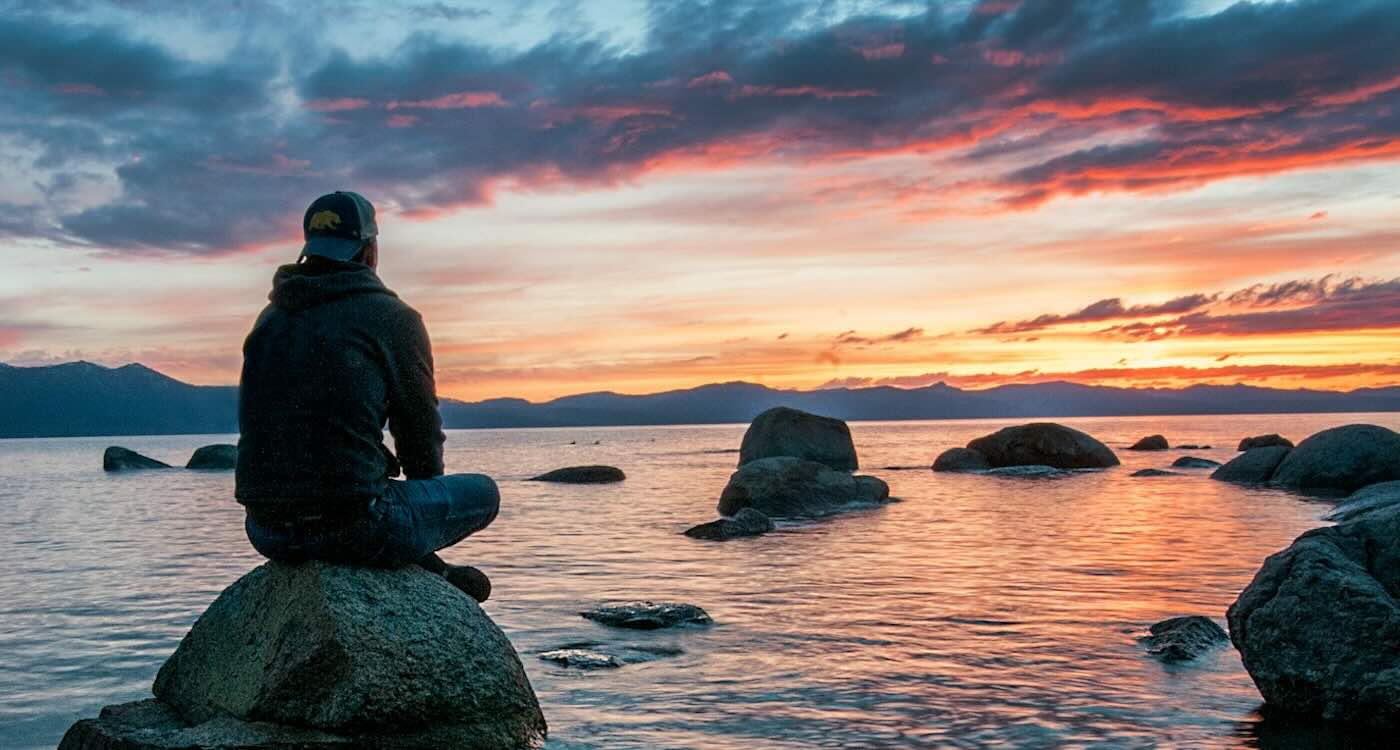
Quote of the Day: “Preserve and cherish the pale blue dot, the only home we’ve ever known.” – Carl Sagan (Do it today on Earth Day)
Photo by: Elena Mozhvilo, cropped
With a new inspirational quote every day, atop the perfect photo—collected and archived on our Quote of the Day page—why not bookmark GNN.org for a daily uplift?