












All News - Page 8 of 1688 - Good News Network
Home Blog Page 8

Good News in History, November 26

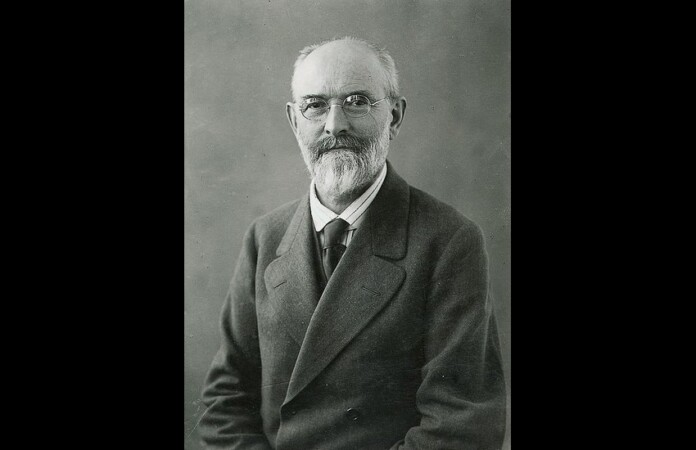
Rued Langgaard

104 years ago today, Rued Langgaard’s “Music of the Spheres” (Sfærernes Musik) premiered at Konzerthaus in Karlsruhe, Germany. Replicating a variety of outer spatial senses through the careful and considered multi-movement work, it includes several methods of orchestral composition well ahead of its time. Several of the movements project the sense of vast space and distance, particularly through the positioning of a small, secondary orchestra off stage. READ more about the work, and listen to it… (1921)

Egypt Becomes 26th Country to Eliminate Leading Cause of Infectious Blindness with Triumph Over Trachoma

Dr. Khaled Abdel Ghaffar, Deputy Prime Minister and Minister of Health and Population of Egypt, receiving a commendation from Dr. Hanan Balkhy, Regional Director for WHO's Eastern Mediterranean Region - credit WHO
Dr. Khaled Abdel Ghaffar, Deputy Prime Minister and Minister of Health and Population of Egypt, receiving a commendation from Dr. Hanan Balkhy, Regional Director for WHO’s Eastern Mediterranean Region – credit WHO

Egypt has become the 26th country to eliminate trachoma as a public health concern, building on a steady string of triumphs over tropical diseases.

Having eliminated lymphatic filariasis, malaria, and now trachoma in the last 30 years, Egypt has emerged as a continental leader in the control and eradication of neglected tropical diseases.

Trachoma, caused by the bacteria Chlamydia trachomatis, is the world’s leading cause of infectious blindness, and has been documented in Egypt for over 3,000 years.

Public health efforts to address its burden began in the early 20th century, when pioneering ophthalmologist Arthur Ferguson MacCallan established Egypt’s first mobile and permanent eye hospitals and laid the groundwork for organized trachoma control globally. Yet by the 1980s, it still blinded many adults and affected over half of all children in some Nile Delta communities.

Since 2002, the Ministry of Health and Population of Egypt, in partnership with the World Health Organization and other national and international stakeholders, has pursued trachoma elimination through the WHO-endorsed SAFE strategy, which represents Surgery for trichiasis, Antibiotics to clear the causative organism, Facial cleanliness and Environmental improvement.

Between 2015 and 2025, extensive mapping and surveillance across all 27 of Egypt’s governorates showed steady reductions in the proportion of children aged 1–9 years affected by active (inflammatory) trachoma, and no significant burden of the blinding complications of trachoma in adults.

Both indicators are now below WHO elimination prevalence thresholds nationwide. In 2024, Egypt integrated trachoma surveillance into its national electronic disease reporting system, which should facilitate rapid response to any future cases.

“Egypt’s elimination of trachoma as a public health problem underscores the nation’s sustained commitment to equitable healthcare delivery and the transformative impact of initiatives such as Haya Karima, which have expanded access to safe water, sanitation, and primary care services in rural communities,” said Professor Dr. Khaled Abdel Ghaffar, Deputy Prime Minister and Minister of Health and Population.

“This achievement is a collective triumph for Egypt’s health workers, communities, and partners who collaborated to eradicate this ancient disease.”

EGYPT NEWS: Grand Egyptian Museum Finally Opens in Sight of the Pyramids After Decades of Setbacks

The country became the seventh in the WHO’s Eastern Mediterranean region to eliminate trachoma as a public health concern, defined as 1 in 1,000 adults with trichiasis. The region includes the Near and Middle East as far as Pakistan, the Arabian Peninsula, and North Africa, including Morocco and and Somalia.

“This milestone adds to Egypt’s strong track record in eliminating communicable diseases, including polio, measles, rubella, and most recently malaria. It demonstrates what can be achieved when political commitment, strong partnerships and years of sustained public health efforts, led by the Ministry of Health and Population, come together towards a shared vision,” said Dr. Nima Abid, WHO Representative to Egypt.

“Egypt’s achievement serves as an inspiring example for other countries in the Region and beyond.”

MORE DISEASE CONTROL VICTORIES: First African Nation to Eliminate River Blindness Treated Millions with Ivermectin to Achieve Great Success

Following Egypt’s success, trachoma remains a public health problem in 30 countries and is responsible for the blindness or visual impairment of about 1.9 million people. Blindness from trachoma is difficult to reverse. Based on April 2025 data, 103 million people live in trachoma endemic areas and are at risk of trachoma blindness.

Yet even devastatingly poor countries—such as Togo, Papua New Guinea, and Mauritania, can, and in fact already have, achieved what Egypt has.

SHARE This Latest Milestone On The March To Eliminating Disease Everywhere…

Lost Bach Pieces Performed for First Time in 320 Years: ‘Great moment for the world of music’

Two musical pieces written by Johann Sebastian Bach were recently performed for the first time ever, more than 300 years after they were composed.

Both written for the organ, they are believed to date from the great composer’s very early career, when he worked as a organ tutor in Thuringia.

Germany’s Culture Minister Wolfram Weimer called the discovery of the two pieces a “great moment for the world of music.”

Both pieces were unsigned and undated when they were found in the 1990s by Mr. Peter Wollny, a Belgian Bach researcher working at the Royal Library in Brussels. Entitled Chaconne in D minor and Chaconne in G minor, Wollny wasn’t sure who had written them, but suspected they might have been Bach’s.

That hunch needed 30 years to be realized, as the archivist, now director of the Bach Archive in Leipzig, wanted to absolutely sure of it.

“Stylistically, the works also contain features that can be found in Bach’s works from this period, but not in those of any other composer,” Wollny told the BBC, adding he was “99.99% sure that Bach had written the two pieces.”

Given the Bach catalogue identification tags BWV 1178 and BWV 1179, they were played for the first time in 320 years by Dutch organist Ton Koopman at the St. Thomas Church in Leipzig where Bach worked for 27 years as a cantor. Koopman, as one might imagine, said he was proud to be the first person to play them, and described them as being of “of a very high quality” and ideal for both large church organs and small ones.

A Mount Rushmore composer without a shadow of a doubt, Bach is generally considered to have stood at the pinnacle of his art, with the senior classical critic at the New York Times calling him the greatest. By 1802, there were already biographies of Bach made, and manuscripts of his works being bought at huge expense. In 1850, the first of several Bach societies was organized in Leipzig.

LOST MUSICAL PIECES REVEALED: Lost Chopin Music Unearthed 200 Years After Composer’s Death Is His Most Intriguing Waltz

Claude Debussy described Bach as “a benevolent God” to whom musicians should pray before setting to work. Not one, nor two, but three Bach pieces were included on the NASA Voyager’s Golden Record.

A recent concert in Austria saw a 200-year-old Mozart piece performed for the first time when it too was discovered by an archivist under similar circumstances.

LISTEN to the piece below…

SHARE This Wonderful Discovery And How Bach Continues To Make Headlines Today…

‘Special Needs’ Can’t Stop These Kids from Being a Cowboy at Rodeo Day Camp

credit - Little Pardners Rodeo
credit – Little Pardners Rodeo

In the Bay Area, California, a day at the rodeo for children with developmental challenges leaves everyone in tears at some point, either from joy or compassion.

Hosted by a cowboy whose son was born with Down Syndrome, Little ‘Pardners’ Rodeo treats 40 children aged 4 to 17 to an all-day event of cowboy/cowgirl activities.

Organized by the Exceptional Needs Network in Livermore, the children can ride ponies, practice their lassoing skills, and test their balance on the mechanical bull.

“It’s hard to find things that they can do and can do safely and have fun,” says Donnie Perry, the 10-gallon hat (and brain) behind Little Pardners. “Everybody wants to be a cowboy/cowgirl at some point in their lives, this is a way we can make that dream come true.”

Recently features on CBS News Bay Area having received the network’s Icon Award, Perry considers the 40 special needs kids that visit him each June his own children for the day.

Perry was putting on the Little Pardners Rodeo even before his son, Joshua, was born. The proud father, whose heart is almost as big as his moustache, told the CBS affiliate that God looked down and saw the love and compassion he had in his heart for challenged children, and decided to give him one of his own.

SIMILAR STORIES TO THIS: Dozens of Disabled Californians Sail for the First Time to Experience the Weightlessness of the Water

There’s a lot of trying new things for the attendants. It’s difficult at the best of times to learn how to lasso a calf, but at the rodeo, it’s one of several things the kids are encouraged to try and get the hang of.

“They just feel like they belong and aren’t being judged, looked at differently; they’re just being themselves and that’s all we ever want,” said Laura Peters of the Exceptional Needs Network.

WATCH the story below from CBS Bay Area… 

SHARE This Heartwarming Day At The Rodeo With Your Friends… 

Birds Start to Show Signs of Recovery After Bee-Harming Pesticide Ban in the EU

A chaffinch, one of the birds that recovered in the study - credit, 4028mdk09 CC 3.0.
A chaffinch, one of the birds that recovered in the study – credit, 4028mdk09 CC 3.0.

The first large-scale study to investigate the impact on bird populations from the 2018 European Union ban on a universal insecticide has determined that birds have recovered as much as 3% since 2018.

Given that 57 species of birds were included in the survey, the 3% rise suddenly seems a lot more meaningful, and the scientists behind the study are confidant that the ban is positively affecting their populations.

The insecticide in question is a class of chemical called neonicotinoids, which are sprayed on crops and absorbed into the plants’ leaves where they render them effectively toxic to insects that like to munch on them.

Introduced to the EU the 1990s, mass die-offs of bees were reported in France in the early 2000s, and by the following decade, there was major pressure to implement a control on the use of neonicotinoids.

In 2018, that ban was finally instated despite opposition from agricultural producers, and various interests then remained keen to see whether it made a meaningful effect.

“Our results clearly point to neonicotinoid bans as an effective conservation measure for insectivorous birds,” said Thomas Perrot, from the Foundation for Biodiversity Research in France.

The scientists published their study in the journal Environmental Pollution. Their strategy involved measuring 1.25 mile by 1.25 mile plots of cropland or meadows in 1,900 places across France. The plot surveys were conducted by ornithologists on the lookout for 57 species of birds, and the study ran from 2013-2018 and then again from 2019-2022.

GOOD ENVIRONMENT NEWS: New Safer RNA Insecticide Can Target Only the Devastating Potato Beetles and No Other Bugs

The results identified a 12% increase in the presence of insectivorous birds like chaffinches, blackbirds, and black caps. The authors themselves entitled their paper “weak recovery of insectivorous bird populations after ban of neonicotinoids in France,” an acknowledgement that a 2-3% standardized increase in bird populations could be down to other factors, and that perhaps their original declines seen during the pre-ban period weren’t a result of eating poisoned insects.

After all, if the general messaging on the changing climate in Europe is to be consulted, then other major mortality factors like heatwaves, habitat loss, and wildfires could have reduced bird populations.

“It’s a study that shows there may be early signs of weak population recovery but the results are uncertain and could be down to other correlated factors,” James Pearce-Higgins, director of science at the British Trust for Ornithology, told the Guardian in the wake of the study’s release.

BIRDS COMING BACK: Record-Breaking Night of Bird Migration Caught on Radar During a ‘Perfect Storm’ for Feathered Flight

Perrot addressed the concern, also speaking with the English paper.

“But we think that’s normal, because studies on other pesticides like DDT show that most bird populations take 10 to 25 years to fully recover.”

In the words of every scientist ever published in the history of humanity, then: more research is needed. In the interest of uniting interests, it would make an interesting study to see whether the bird population recovery, should the following years find that it sustains and increases, reduces the burden of crop-eating insects in farmers’ fields. Then maybe insecticide use could be halted voluntarily.

SHARE In The Return Of French Finches With Your Friends On Social Media…

“Well-ordered self-love is right and natural.” – Thomas Aquinas

By Giulia Bertelli (cropped)

Quote of the Day: “Well-ordered self-love is right and natural.” – Thomas Aquinas

Photo by: Giulia Bertelli (cropped)

With a new inspirational quote every day, atop the perfect photo—collected and archived on our Quote of the Day page—why not bookmark GNN.org for a daily uplift?

By Giulia Bertelli (cropped)

Good News in History, November 25

The Little Galleries at 291 - credit Alfred Stieglitz, public domain

120 years ago today, American photographer Alfred Stieglitz opened the Little Galleries of the Photo-Secession at 291 Fifth Avenue in NYC. This small gallery helped bring art photography to the same stature in America as painting and sculpture, exhibiting famous early photographers like Edward Steichen, Alvin Langdon Coburn, Gertrude Käsebier, and Clarence H. White. But, it also being an avantgarde gallery space, 291 also hosted the first solo US exhibitions of painters and sculptors like Pablo Picasso, Henri Matisse, and Paul Cezanne. READ more about this little known American art landmark… (1905)

Colombia Bans All New Oil and Mining Projects in its Amazon–an Area the Size of Sweden

Deforestation in Colombia's Amazonas Department - credit: Lowfill Tarmak, via Flickr.
Deforestation in Colombia’s Amazonas Department – credit: Lowfill Tarmak, via Flickr.

It’s 42% of Colombia’s territory. It’s 7% of the total Amazon Rainforest. It’s the same size as Sweden, and it’s now free from future oil and mineral extraction.

The news that half a million square kilometers of territory in the Amazon biome of Colombia was now limited only to renewable and regenerative economic activities only came out of Brazil, where the 30th annual meeting of the parties to the UN convention on climate change is taking place.

Acting Environment Minister Irene Vélez Torres made the announcement, and invited all South American countries to make similar commitments, and coordinate to protect the Amazon’s integrity when massive swaths of it are threatened by extractive activities.

“This declaration is an ethical and scientific commitment. It seeks to prevent forest degradation, river contamination and biodiversity loss that threatens the continent’s climate balance,” Vélez said.

“We do this not only as an act of environmental sovereignty, but as a fraternal call to the other countries that share the Amazon biome, because the Amazon does not know borders and its care requires us to move forward together.”

In Colombia, Vélez noted, some 43 oil blocks and 286 mining requests had currently not yet broken ground in various parts of the Amazon. The measure restricts the expansion of these and new extractive activities in Amazonas, Caquetá, Guaviare, Guainía, Putumayo and Vaupés, departments.

At the Meeting of Ministers, the Special Commission on Environment and Climate (Cemac) was launched, a regional cooperation platform to coordinate actions and mobilize resources in sustainable development, biodiversity, forests and water; confront deforestation and environmental crimes; and promote inclusion with effective participation of indigenous peoples and local communities.

MORE BIG AMAZON NEWS: A Nation That’s 90% Rainforest Announces New Protections for Over 25 Million Acres

A statement from Vélez’s ministry detailed that Colombia expressed its full support for the roadmap proposed by the Special Commission on Environment and Climate and reaffirmed its commitment to its implementation.

The Colombian Amazon biome is home to 10% of the planet’s known plant species and supplies the Andean moors that guarantee water supply for millions of people.

SHARE This Bold Commitment To Our Planet’s Biggest Rainforest With Your Friends… 

These Rare Whales Had Never Been Seen Alive, Then Scientists Saw Two Near California

The gingko-toothed beaked whale seen in 2024 - credit Craig Hayslip, CC 4.0. Int.
The gingko-toothed beaked whale seen in 2024 – credit Craig Hayslip, CC 4.0. Int.

A lifelong whale researcher recently encountered a living pair of gingko-toothed beaked whales for the first time ever in the wild.

The encounter advances the science of beaked whales enormously, for in addition to confirming the whole genome of the animal, it also linked this elusive species to a well-recorded whale song that can now be used to map their territory and protect them, potentially, from hazards like military sonar.

In 2024, an expedition was conducted off northwestern Baja California, Mexico, to find and identify the beaked whale species that produced a unique echolocation pulse codenamed BW43, which had previously been recorded in the area and elsewhere in the North Pacific.

At the time, the crew, led by Oregon State University researcher Robert Pitman, believed they were searching for Perrin’s beaked whale, but they were in for a surprise. For hours the vessel, owned and operated by OSU, bobbed around on the surface of the water until a set of high-powered binoculars saw several whales surface off the starboard side.

The pair looked like juveniles surfacing and diving, and without being able to get a clear visual ID, Pitman pulled out a modified crossbow, and shot a corded bolt that extracted a piece of skin and blubber from the whale no bigger than a pencil-top eraser.

Aside from the fear that some naughty albatrosses would rob the precious cargo as it was reeled in, it was a moment of pure exhilaration. The BW43 call had been recorded, and they knew that it was almost certainly the case that whichever whales those had seen were responsible for making it.

It turned out not to be Perrin’s beaked whale, but the gingko-toothed beaked whale, which like the former, had never been seen alive in the wild before.

“I can’t even describe the feeling because it was something that we had worked towards for so long,” says Elizabeth Henderson, a researcher at the US military’s Naval Information Warfare Center and lead author of the resulting paper published in Marine Mammal Science, who was also there that day. “Everybody on the boat was cheering because we had it, we finally had it.”

Beaked whales are the most poorly understood mammals on Earth. 24 species are known to exist, and almost all of them are only known through brief surface sightings and dead specimens that have washed up on beaches.

RARE MARINE LIFE: Rare ‘Doomsday’ Fish Surfaces in California–Just the 20th Discovered in the State Since 1901

Little is known about any of them, other than that they are the deepest-diving of all marine mammals, and that their tusks grow out like a deer’s antlers and are used for combat. They feed on squid and can suffer from decompression sickness akin to a human diver if surfacing from their deep water dives too quickly. They don’t surface near the shore, and they don’t like boats.

Henderson had been tracking the culprit behind BW43 since 2020. The spot where they eventually made the confirmation of the gingko-toothed whale had been visited thrice before, previously with chartered fishing boats. It was only in 2024 when she partnered with OSU and Pitman that the team finally found what they were looking for. It meant Pitman had seen 90 of the 94 whale species on our planet.

MORE ABOUT OF THESE CREATURES: Scientists Had Never Seen This Elusive Whale Alive—Until Now

Interestingly, the gingko-toothed whales almost exclusively strand themselves or wash up dead on the other side of the Pacific—in Japan or Australia.

“There were two strandings on the west coast of North America previously, but they had always been assumed to have been anomalous—animals that washed ashore, or were sick,” Henderson told the Guardian. “But now we know that that’s not true and that they actually occupy these waters year-round.”

SPLASH The News Of This Successful Hunt For A Rare Whale With Your Friends… 

Exoskeleton Walker Allows Children to Take Their First Steps After Doctors Said They Couldn’t

credit - Trexo Robotics
– credit, courtesy of Trexo Robotics.

At a Canadian wellness center, a unique robotic exoskeleton is allowing children with developmental disorders to walk—often for the first time.

The nonprofit’s Regina location is eager to get families to come by and try it out. It can be used to correct a child’s gait or help them take their first steps, and is suitable for a variety of conditions including spinal cord injuries and cerebral palsy.

First Steps Wellness Center received the Trexo exoskeleton out of the goodness of someone’s heart. The $100,000 machine was donated to help children like Leo, a boy born with a rare genetic disease which left him a prognosis that walking would be forever out of reach.

But latched into the Trexo walker at First Steps, his mother Anna Begelfer has watched her son learn to walk and develop a musculature that has him able to take steps on his own, something she was told would be impossible.

“He can walk. He can be part of [sic] like everybody else; walk like other kids,” she told CBC News. “I have butterflies, I’m like, I can’t believe.”

Strapped into the walking machine, sensors at the hip and knees detect how the child is moving its lower trunk and legs, then send commands to motors that move the exoskeleton in order to assist their steps or complete them entirely. Unlike other walking devices, Trexo allows the child’s feet to touch the ground, which First Step’s Andy Schmidt says makes a big difference.

“It’s better for the bones, it’s better for feedback for the child. I mean Imagine if you or I were wandering around on clouds of air, what would that feel like? It wouldn’t give much feedback,” he said.

Like many of the world’s best inventions, Trexo Robotics was born out of personal experience. Manmeet Maggu and Rahul Udasi, two friends who were attending the University of Waterloo were distraught when they learned Maggu’s nephew in India was diagnosed with cerebral palsy, a disease that affects some 500,000 American children.

Trexo co-founders Manmeet Maggu and Rahul Udasi – credit, courtesy of Trexo Robotics.

Looking into what that would mean for the child, the pair learned that he would have to spend most of his life in a wheelchair, and suffer the health complications resulting from so much sitting. Imagining that an exoskeleton could help, they quickly learned there was no such device available on the market.

CHILDREN’S THERAPIES: UPDATE Long-Term Follow-up in Babies Born with ‘Bubble Boy Disease’ Still Seem Cured

It was years of prototyping designs, 3D printing components, and asking Udasi for help before Maggu flew to India to try it out on his nephew.

“The first time we tried it it didn’t work,” Maggu told Tech Crunch. “But my brother has a factory in India in Delhi, so we made some more modifications and tried it out again and I watched my nephew try to walk with the device for the first time.”

MORE EXOSKELETON STORIES: Mountain Goat-Inspired Robot Offers a New World of Mobility to the Wheelchair-Bound–WATCH

There are currently 6 Trexo exoskeletons sold and in use today, which was possible by marketing it as an exercise and therapy device. It allowed Maggu to circumvent some major delays in jumping through FDA regulatory hoops but also meant that it couldn’t be covered by any insurance policies, so it’s currently available for lease or rent to help families absorb its cost.

The bottom line is that even though it comes at a price similar to a new car, young Leo wasn’t ever supposed to be able to walk, but with the help of Trexo, he can—a miracle—and you can’t put a price on a miracle.

WATCH Leo go in the video below…

SHARE This Heartwarming Video Of Leo And Great News For Children…

Play These Mobile Games Designed to Help Save Dying Aboriginal Language and Culture

Screenshots from the Nyiyaparli living language project app - credit, supplied by Nyiyaparli Widi
Screenshots from the Nyiyaparli living language project app – credit, supplied by Nyiyaparli Widi

An Australian Aboriginal community with only 8 fluent speakers left has launched a mobile phone game to help reconnect their youth with the tongue of their ancestors.

The game allows you to help preserve a wetland nature reserve where the community lives, with almost 100 words and phrases in the Nyiyaparli language.

Numbering around 400 community members, the Nyiyaparli hail from a remote region of northwest Australia in an area called the Pilbara. There, as happened in so many other lands across the Commonwealth, indigenous children were placed in English-language institutions and the connection with their lingual heritage was severed.

Once widely spoken across the Pilbara, the pressure of assimilation into European culture and the spread of larger neighboring Aboriginal languages has proven almost fatal to Nyiyaparli.

The Karlka Nyiyaparli Aboriginal Corporation (KNAC) which manages the common welfare of the community launched the Nyiyaparli Living Language Project in 2022 in an attempt to save their dying language. But the KNAC didn’t look to the past for inspiration, rather, they leveraged the present.

“The cultural working group decided that you’re never going to take phones away from kids,” said the project’s executive producer Simon Te Brinke. “Why not give them something that can help them learn?”

Despite their remote location and rich indigenous heritage, Nyiyaparli children seem to be as immersed in games like Minecraft and Fortnite as anyone else. Te Brinke decided to try and utilize that existing interest: to go with the flow, rather than try to convince them to put their phones down.

The game puts you into the role of a junior ranger in the Fortescue Marsh Nature Reserve which the community manages. The game contains 90 Nyiyaparli words, spoken aloud by community elders who know how.

“Players have to collect cultural objects as they navigate their way through each of the locations,” Mr. Te Brinke told ABC News. “As they collect, they hear sounds and words actually spoken in Nyiyaparli. So it’s reinforcing the language.”

MORE FROM THE BUSH: Aboriginal Elders Lead Prescribed Burn–and Rare Orchids Appear by Thousands

The game has won several awards that included large cash prices which will undoubtedly help the project expand its efforts. A digital language center is in the works, with the aim being to build on the foundations established by the phone game.

Apps and games are being used to help revive other Aboriginal languages too. A storybook app that teaches science concepts was designed by a man from the Goldfields region of northern Australia, who’s one of only 3 people who speak Ngalia, a dialect of a more widely spoken Mantjiltjintjarra, that’s featured in the application.

RACING TO SAVE YOUR LANGUAGE: A Waiter in Canada is Learning Cree to Better Serve Customers: ‘Immediately People Would Light Up’

Kabo Muir worked with his brother Talbot, another speaker, to compile a dictionary of Ngalia words, which benefits from the fact that it’s similar to the surrounding tongues in the region. The next step to preserving it, he says, is innovation.

The Mamutjitji Story app centers around a native insect species called an antlion, and how it adapts to a changing world.

SHARE This Innovative Way Of Using Modern Tech To Save An Ancient Language…

“Perfectionism is self-abuse of the highest order.” – Anne Wilson Schaef 

Leonardo Iheme

Quote of the Day: “Perfectionism is self-abuse of the highest order.” – Anne Wilson Schaef 

Photo by: Leonardo Iheme

With a new inspirational quote every day, atop the perfect photo—collected and archived on our Quote of the Day page—why not bookmark GNN.org for a daily uplift?

Leonardo Iheme

Good News in History, November 24

166 years ago today, the British naturalist and geologist Charles Darwin published On the Origin of Species explaining his theory of evolution. The first edition—which has been voted by publishers and librarians as the most influential academic book ever written—introduced the scientific theory that populations evolve over the course of generations through a process of natural selection. It presented a body of evidence that the diversity of life arose by common descent through a tree-like branching pattern of evolution. WATCH an animation about how little finches were crucial to his discovery, and how pepper moths evolved due to pollution… (1859)

Root Canal Treatment Reduces Heart Disease and Diabetes Risk

Credit: Getty Images for Unsplash+

Successful root canal treatment can reduce inflammation linked to heart disease, according to new research.

The much dreaded dental surgery can also improve levels of blood sugar and cholesterol, say scientists.

In the first of its kind clinical study, King’s College London researchers tracked changes in blood chemistry following root canal treatment for a common dental infection, called apical periodontitis.

The infection can cause bacteria to enter the bloodstream and increase inflammation, associated with risks to cardiac health and reduced ability to control blood sugar levels.

Despite the link between the infection and wider health impacts, no one has investigated the association between successful root canal treatment and the benefits to heart and metabolic health until now.

The findings, published in the Journal of Translational Medicine, showed that successful root canal treatment was associated with improved glucose metabolism.

Blood sugar levels dropped “significantly” over two years after treatment, a key factor in preventing diabetes.

The treatment also resulted in better lipid profiles, short-term improvements in blood cholesterol and fatty acid levels, which are closely linked to heart health.

The findings also showed that the treatment saw key markers of inflammation, often linked to cardiovascular risk and other chronic conditions—decreased over time.

GREAT TIP: Be Sure and Floss! Researchers Say Good Dental Health ‘Substantially’ Decreases Risk of Alzheimer’s

Chart via SWNS news

Bacteria from infected teeth were associated with changes in the body’s overall metabolism, according to the findings. The research team explained that root canal infections can cause bacteria to enter the blood, leading to inflammation, heart disease and diabetes risk.

But successful treatment reduced those risks.

The study followed the health of 65 patients in England over two years after root canal treatment.

Scientists analyzed molecules in the blood of patients to reveal how the body processes sugar, fat, other key substances, and responds to disease and treatment. They used a technique known as nuclear magnetic resonance (NMR) spectroscopy, used to analyze proteins in the body.

DYNAMITE DENTAL NEWS:
New Gel Regrows Dental Enamel–Which Humans Cannot Do–and Could Revolutionize Tooth Care
Wisdom Teeth Contain Unique Stem Cell That Can Form Cartilage, Neurons, and Heart Tissue

The findings suggest that monitoring blood metabolic markers—such as glucose, fats known as triglycerides, and the protein tryptophan—could help assess recovery and risk after dental treatment.

“Our findings show that root canal treatment doesn’t just improve oral health – it may also help reduce the risk of serious health conditions like diabetes and heart disease,” said lead Author Dr. Sadia Niazi

“It’s a powerful reminder that oral (tooth) health is deeply connected to overall health.

“Long-standing root canal infections can allow bacteria to enter the bloodstream, trigger inflammation, and increase blood glucose and fats levels – raising the risk of serious health issues like heart disease and diabetes.”

While more research is needed to confirm the effects in larger populations, she says the study opens “exciting new doors” for understanding how oral care can support general health and well-being.

“It is vital that dental professionals recognise the wider impact of these root canal infections and advocate for early diagnosis and treatment,” added Dr. Niazi, a senior clinical lecturer in endodontics at King’s College London.

WILD, BUT TRUE: Tooth Is Implanted in 34-year-old’s Eye to Restore His Vision After Two Decades

“We also need to move towards integrated care, where dentists and general practitioners work together to monitor the risks through these blood markers and protect overall health.

“It’s time to move beyond the tooth and embrace a truly holistic approach to dental care.”

SHARE THIS ON SOCIAL MEDIA With Those Who’ve Been Delaying Dental Work…

Stray Pooch Just Won 2025 Hero Dog Award for Soothing Families After School Shooting

Sgt. Bo wins 2025 American Humane Society Hero Dog – Credit: Faye Okert

A stray mutt that turned into a service dog soothing kids after a school shooting has just been crowned the 2025 Hero Dog Award by the American Humane Society—and now he’s winning hearts nationwide as a symbol of comfort and courage.

Sgt. Bo, the mixed breed from Nashville, Tennessee, may have started as a stray, but after being rescued off the streets of Florida in 2022, the four-year-old became a certified therapy dog with the Nashville Police Department, working alongside a former officer, Faye Okert, to help students feel safe and supported.

Just three months into his service, tragedy struck when a shooting at the city’s Covenant School claimed six lives.

Sgt. Bo was called to help comfort children and families at the reunification site—climbing onto buses, letting shaken students rest against him, and staying until the last family left.

Since then, this southern gentleman has continued visiting schools across the community, helping kids open up, easing anxiety, and reminding everyone that healing can come from the most unexpected places.

Sgt. Bo’s journey turned extraordinary when Ms. Okert, who became a Nashville School Resource Officer, advocated for a program that trains homeless pets as therapy dogs.

Looks can be deceiving

Though Faye initially worried about his scruffy appearance and skin allergies, their bond formed quickly during training and Sgt. Bo became her trusted partner and a living lesson to students that appearances can be deceiving.

Three months later, after the school shooting, Sgt. Bo and Faye provided steady comfort for students in crisis during the community’s darkest hours.

Sgt. Bo with Covenant student – Credit: Hero Dog Award / Faye Okert

“We are thrilled to name Sgt. Bo as American Humane’s latest Hero Dog, a distinction that is so well-deserved for both him and his handler, Faye,” said Dr. Robin Ganzert, President and CEO of American Humane Society.

“During profoundly difficult times, their presence served as a powerful beacon of hope and safety, exactly the qualities this award seeks to recognize.

Earlier this year, Sgt. Bo tore his ACL, prompting the police department to retire him. Faye retired soon after, not wanting to work without the loving pooch by her side. Now enjoying retirement with Faye and her husband, Sgt. Bo continues to soothe people of all ages.

He still visits Covenant weekly and other local schools monthly, helping shy children open up and bringing smiles.

CHECK OUT:
First Memorial for ‘Hero Dogs’ Honoring Their Military Service With New Monument
Courageous Canine Who Lost His Legs–But Not His Hope–is Named 2021 Hero Dog of the Year

Sgt. Bo and the four other finalists will be honored at the 15th Annual American Humane Hero Dog Awards Gala in Palm Beach, Florida on January 9.

SHARE THE PAWESOME STORY With Dog-Lovers On Social Media…

Fisherman Creates First Program that Lets Doctors Give Angling Prescriptions for Anxiety – Now Wins King’s Award

Tackling Minds uses fishing to tackle mental health – via SWNS

After fishing turned out to be the saving grace during his recovery from a decade of mental health struggles and alcohol addiction, an Englishman wanted to hook others on the soothing sport—and now his program is a medicine being prescribed by doctors.

Founded five years ago, the service staffed by fishing volunteers, has partnered with the UK’s National Health Service, to prescribe angling for anxiety and depression.

“If it wasn’t for fishing I don’t think I’d be here,” he admitted in an interview with SWNS news agency.

His program gained national recognition last month when it was honored by King Charles—winning the King’s Award for Voluntary Service, the business equivalent of an MBE.

“I’m just ecstatic!” said Dave Lyons, the founder of Tackling Minds.

“I feel very, very proud of the group and all our volunteers.”

He initially worked with Greater Manchester Mental Health NHS Foundation Trust, but in April 2021, he teamed up with the NHS so doctors, nurses, and other health care professionals could prescribe angling instead of, or alongside, antidepressants and anxiety medications.

2,300 people have been prescribed a stint of fishing, so far—and all the equipment and coaching is provided by Tackling Minds, which always releases every fish that has been caught.

Tackling Minds uses fishing to tackle mental health – via SWNS

Organizers hope the program will soon be rolled out nationwide as part of the NHS’ “social prescribing” initiative.

Social prescribing, known also as community referrals, includes a range of activities that could help with mental health. Such programs include visits to museums, poetry reading, and excursions into nature—especially the latter because so many studies show that time spent in nature, particularly around tree cover, improves both mental and physical health, and can reduce pain.

(In fact, in 2022, PaRx Canada consisted of over 1,000 physicians, nurses, and other medical professionals in B.C., Manitoba, Saskatchewan, and Ontario who can prescribe a free annual pass from the Canadian parks authority.)

Tackling Minds provides each participant with a qualified angling coach trained to work with people in vulnerable situations, and each group has support workers, paid for in part with $13,000 (£10,000) in National Lottery funding and financial support from the Angling Trust.

“People we’ve worked with have said it’s saved their lives. That’s huge for me, it’s what keeps me going,” said the father of two from Stockport, Cheshire.

Volunteers with Tackling Minds with founder Dave (middle, center) – via SWNS

A royal thank you

Dave got an email from Buckingham Palace officials on October 7 revealing that Tackling Minds had won the King’s Award.

“This feels like the highest accolade we could have hoped for,” said the 41-year-old.

“My family are very proud of the group—and of me—for everything I have overcome, and that’s very touching.”

SWEET ANXIETY BUSTERS:
She’s an Ex-Addict Turned Forager, Her Anxiety is Gone: ‘Mushrooms Saved My Life’
After Losing My Dog, Neighbors on Nextdoor Loaned Me Their Own Pups to Grieve

He is looking forward to collecting the crystal award at a ceremony in Manchester in December, and to attending a garden party at Buckingham Palace in the spring.

Dave—who received congratulations from TV hosts Bob Mortimer and Paul Whitehouse, who star in the BBC show Gone Fishing—is dedicating the award to Tackling Minds’ late ambassador, the former world boxing champion Ricky Hatton, who lost his life to suicide on September 14.

“Ricky helped me in my worst times in 2020. He gave me so much encouragement and we became friends.

“He worked so hard helping people with their mental health, and I just know how proud he would have been of me, the family, and the group.”

Tackling Minds now has over 50 volunteers and plans to expand its services to bring the peace of fishing to others in Lancashire and beyond.

RELATED: Researchers Have Found That Listening to Natural Sounds Like Flowing Water Benefits Human Health

“There are lots of fishing groups working with the NHS now, so it’s reaching thousands.

“I’m so glad we’ve been able to make such a difference to others, and it’s lovely to have our hard work recognized like this.”

SEND THIS CATCH-OF-THE-DAY to Interested Fishermen By Sharing on Social Media…


Gen Z is Turning Out to be More Financially Strategic Than Their Stereotype Portends

Credit: Igal Ness
Credit: Igal Ness

Is Gen Z the strategic generation? A new poll shows they are shunning impulse spending in favor of long-term goals.

The new nationwide survey of 2,000 Gen Z American adults (defined as those born between 1997 and 2012) revealed that one in three (33%) identified themselves as planners who budget, track spending, and plan ahead.

That’s compared to just one in eight (12%) who rated themselves primarily as spontaneous purchasers, buying what they want when they want.

Contrary to stereotypes that paint Gen Z as frivolous spenders, the data revealed a generation that’s thoughtful, intentional, and grounded in practicality. Conducted by Talker Research on behalf of Affirm, the survey found that today’s young adults are focused on building financial stability.

For instance, one in four (25%) call themselves value-seekers who research and compare before making purchases, with about two in five seeking out rewards or deals

Nearly two-thirds (64%) said they regularly think about their financial future, and seven in 10 (70%) described their approach to money as financially realistic (with 27% of those reporting that they’re a mix of idealistic and realistic).

RELATED: Millennials and Gen Z Redefine ‘Asking for Help’ – Especially With Money

That realism also shows up in how Gen Z manages their money. In the past year, 45% have contributed to savings, 37% have created a budget and 35% have found ways to earn extra income through side gigs or freelance opportunities.

The fact that 45% currently live with family or guardians, though, make many of these traits possible, as they try to save money

When it comes to food, nearly half mostly cook at home, versus 9% who often order takeout.

For vacations, 26% stick to strict budgets, and 43% say they strike a balance between splurging and saving.

For fitness, 45% rely on free or low-cost workouts such as outdoor activities or YouTube videos.

Shopping at thrift stores for clothing is also common: 58% do that, with 40% mixing new and secondhand.

HOW ABOUT OTHER GENERATIONS? Almost a Third of Americans Think They’ve Financially ‘Made it’ in Life, Says New Poll

Interestingly, more than half prefer working fully in-person, defying assumptions about Gen Z’s desire for remote jobs.

When it comes to how they pay, 45% of Gen Z respondents said they feel most confident using debit cards, as opposed to credit cards, but 14% use ‘buy now, pay later’ options (14%) to spread out the cost of larger purchases — another sign of careful planning rather than impulsivity.

“It’s time to retire the Gen Z caricature,” said Vishal Kapoor, SVP of Product at Affirm.

GOOD QUESTION: How Confident Are Parents in Giving Good Financial Advice to Their Kids?

“Gen Z isn’t reckless or disengaged with their finances—they’re intentional about how, when, and why they spend. They value flexibility and transparency, using products that help them stay in control. Pragmatic and deliberate, they’re redefining what financial confidence looks like.”

TAKE YOUR OWN SURVEY By Posting This on Social Media…

“You can do anything, but not everything.” – David Allen

Credit: Katelyn Perry

Quote of the Day: “You can do anything, but not everything.” – David Allen

Photo by: Katelyn Perry

With a new inspirational quote every day, atop the perfect photo—collected and archived on our Quote of the Day page—why not bookmark GNN.org for a daily uplift?

Credit: Katelyn Perry

Good News in History, November 23

Doctor Who in An Unearthly Child, Fair Use.

62 years ago today, the very first episode of Doctor Who was broadcast on the BBC. An Unearthly Child, starring William Hartnell, is set amid a power struggle between warring Stone Age factions who have lost the secret of making fire after the original “companions” Ian and Barbara, find the Doctor’s time-traveling spaceship in a London junkyard. READ about the runup to the debut… (1963)

Husband’s Bouquet Arrived After His Death, Now His Wife has Lined an Entire Street with Daffodils as a Memorial

Credit: Kavita Joshi Rai

The bouquet arrived unexpectedly, six months after her husband passed away.

Before he died, Stephen Cudmore had arranged a delivery of daffodils for his wife Marilyn’s next birthday, knowing full well he probably wouldn’t be there.

Hello beautiful! Happy birthday, Steve

The surprise gift gave Marilyn an idea. She thought back to her final day with Steve and remembered how peaceful he was. He sat in their sunroom for hours, staring outside through a window—and smiling at the daffodils.

Marilyn wanted to plant some in his memory. She bought a few hundred bulbs from local sources and started planting them along her street in East Sooke, British Columbia, a town about 26 miles west of Victoria.

Before long, Marilyn’s memorial drew the attention of some friends from her book club.

They didn’t want her to work alone. Over time, the daffodil planting grew into an annual event, with the bulbs going into the ground farther and farther away from Steve and Marilyn’s home.

Marilyn Cudmore photo of the ‘Spade Maids’ — Deb Wainwright (left), Elianne Bellerive, Dawna Harden, Ruby Brown, Neena Din, Joan Traversy, Ruth Ann Ga — planting daffodils bulbs

The group jokingly calls themselves the Spade Maids, a playful reference to their gardening skills. They recently gathered together on Steve’s birthday, October 26th, to plant this year’s daffodil crop.

MORE FLOWER OF DELIGHT:
Millions of Wildflowers Delight the Town After Vermont Couple Got Tired of Mowing the Lawn All Day
Husband Plants Field of Flowers for Blind Wife to Smell, So Spectacular it Gets Visitors
Kansas Farmer Plants 1.2 Million Sunflowers for His Wife–A ‘Perfect’ 50th Anniversary Gift
Village Tackles Speeding by Planting Thousands of Flowers Because Drivers Slow Down as They Pass By

Next year, they are hoping to expand their planting even farther, eventually lining the entire stretch of the tree-lined neighborhood road with daffodils.

“I’d love for people to be able to drive down East Sooke Road in March and April and just see the blooms,” Marilyn told Saanich News. “It’s turned from a memorial into something that brings joy to everyone.”

Marilyn still receives her prearranged birthday bouquet from Steve every year, an annual blessing that pops up like spring bulbs from the beyond.

His wife’s memorial keeps growing every time the Spade Maids lovingly bury another couple hundred bulbs beneath the Canadian soil.

And the joy Steve found looking out the window keeps growing every time a motorist drives down the road, delighted by the rows of daffodils that spread further every year.

KEEP SPREADING THE FLOWER POWER by Sharing This On Social Media…