














A 1,600-year-old Egyptian mummy was discovered buried with a fragment of papyrus that contained a short passage from Homer’s Iliad, marking the first time that literature—instead of a ‘magical or ritual text’—has been found incorporated directly into a burial.
This unique discovery, made by a University of Barcelona team, suggests new insights into the spread of Greek literature and its unexpected inclusion in funerary rituals.
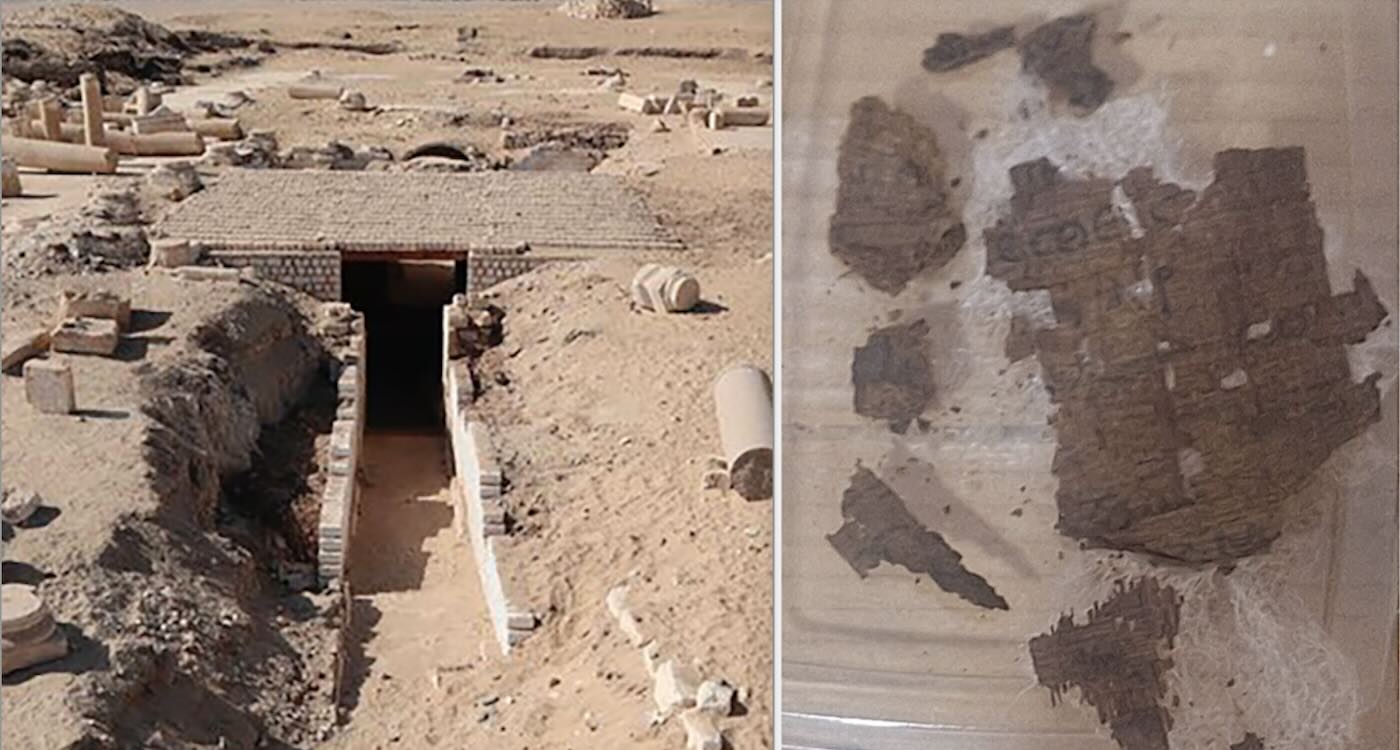
The papyrus containing the Iliad fragment was atop the abdomen of a mummy inside a Roman-era tomb, in ancient Oxyrhynchus, now known as the Egyptian town of Al Bahnasa.
The discovery is exceptional, according to The Oxyrhynchus Archaeological Mission, run by the University’s Institute of Ancient Near East Studies, led by Maite Mascort and Esther Pons.
“It is the first time in the history of archaeology that a Greek literary text has been found deliberately incorporated into the mummification process.”
Several months ago, the team discovered the mummy in Tomb 65 of Sector 22 which featured an unusual element: a papyrus placed on the abdomen as part of the embalming ritual.
The Oxyrhynchus Mission had already documented papyri written in Greek in similar positions, but all contained magical or ritualistic content. A literary text such as the Iliad had never before been found in this context.
ALSO CHECK OUT: Myth Collides With History in Greece Where Tiles Found Marked ‘Odysseus’ Confirm Hero Worship of Homer’s Trojan War King
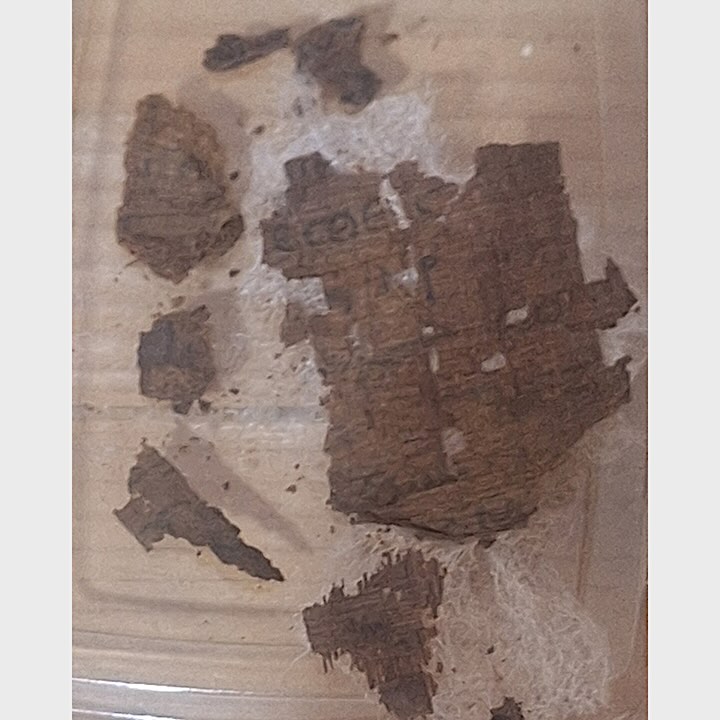
Early this year, the fragment was analyzed by papyrologist Leah Mascia, and Professor Adiego, in the Department of Classical, Romance and Semitic Languages. Based on Mascia’s reading, it was identified as text from the Catalogue of Ships in Book II of Homer’s Iliad—the famous passage listing the Greek forces before Troy—one of the most iconic texts in Western literature.
“This is not the first time we have found Greek papyri, bundled, sealed, and incorporated into the mummification process, but until now, their content was mainly magical,” explained Prof. Adiego.
“Furthermore, it is worth noting that, since the late 19th century, a huge number of papyri have been discovered at Oxyrhynchus, including Greek literary texts of great importance, but the real novelty is finding a literary papyrus in a funerary context.”
The discovery was made at the Al Bahnasa necropolis, the Egyptian site identified with ancient Oxyrhynchus, one of the most important cities of Greco-Roman Egypt, located approximately 190 kilometers south of Cairo, next to the branch of the Nile known as Bahr Yussef. There, the important necropolis was in use for over a thousand years.
AMAZING HISTORY: Remains of ‘Three Musketeers’ Hero May Have Been Found Under Church Altar – DNA Testing Underway
The excavation has revealed a funerary complex comprising three limestone chambers in which Roman-era mummies and decorated wooden sarcophagi were found, many of them in a state of disrepair due to past looting.
Based on its findings, the University’s Oxyrhynchus Archaeological Mission, launched in 1992, will be conducting a number of lectures in Barcelona through May 11 to share the new discovery—the first time a Greek literary text has been found inside a mummy.
SHARE THE WORLD-FIRST With History Buffs on Social Media…