














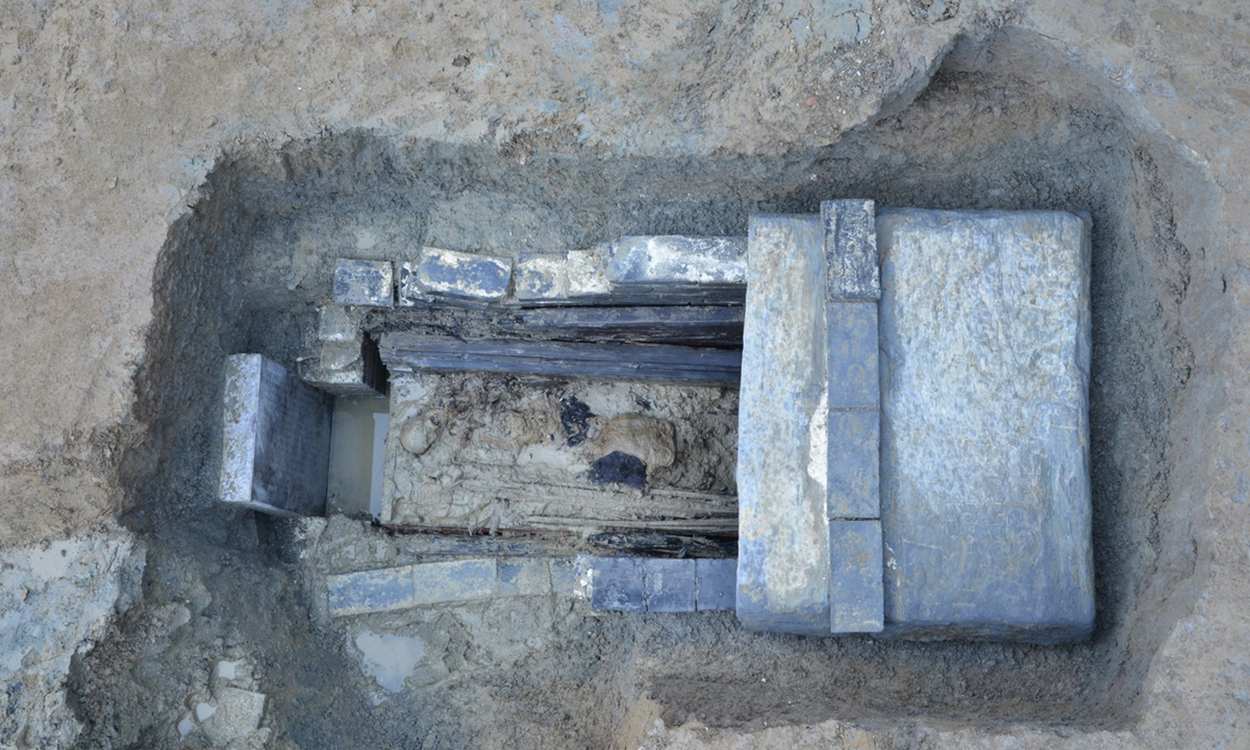
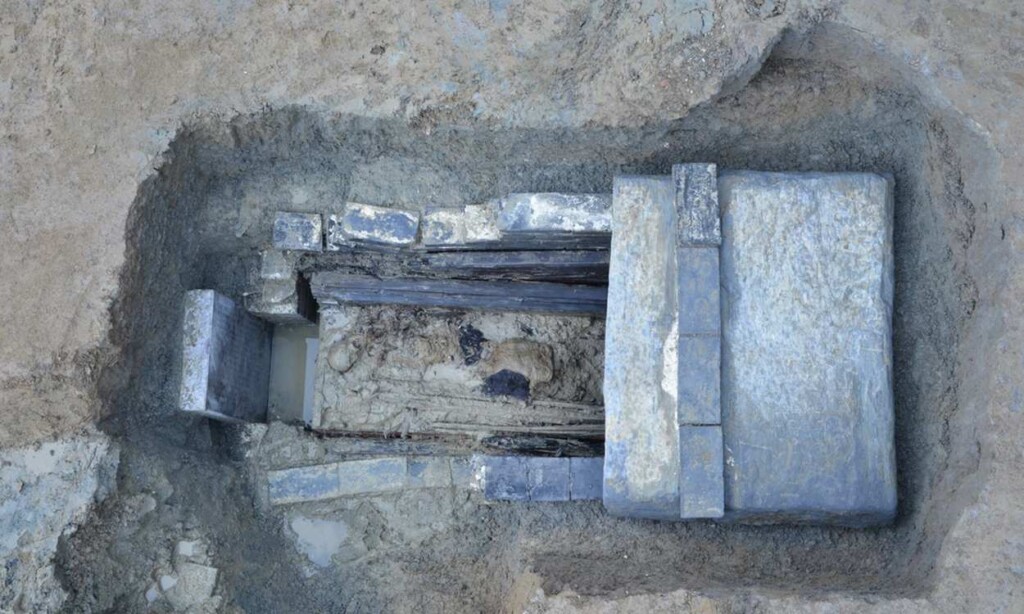
A team of Chinese scientists recently conducted a DNA analysis and autopsy of a 13th century Song Dynasty nobleman who was embalmed not unlike an ancient Egyptian.
The quality of the preservation was such that, if the reader can bear the thought, his mortal remains emitted a pleasant fragrance 800 years after his entombment.
But getting up close and personal with the BO of a medieval Chinese nobleman was hardly the aim of the research team from Fudan University’s Human Phenome Institute. Rather the “paleo-radiological, paleo-pathological, paleo-genetic, and paleo-nutritional analysis” was done to get a clear picture of this man’s genetic profile, as well as his diet, cause of death, and more.
The other, anthropological work, was examining the mummification methods used to preserve the man, as he is known as the Changzhou Mummy, and is one of the most famous ever found in the country.
Whether in neolithic Peru, ancient Egypt, classical Greece, medieval Europe, or China at any point in history, those whose wealth afforded them the opportunity were often embalmed or mummified at passing.
From the bitumen-soaked linen wraps and canopic jars of Egyptian pharaohs, to Alexander of Macedon’s supposed suspension in honey, methods have varied over the years.
Born in the Song Dynasty, a shorter, yet ostensibly prosperous period in Chinese history, the Changzhou Mummy’s organs were left in situ, but were filled with mercury and cinnabar, as well as fragrant oils derived from frankincense, ambergris, and agarwood.
Even 800 years after his death, these were still the defining scents of his remains.
“We have found that mercury and cinnabar were directly introduced into the intestinal cavity of the corpse through an enema,” said Wang Bangyan, a postdoctoral researcher at the Human Phenome Institute.
This was, according to Wang, a distinctly Asian take on embalming methods. By the time of the Song Dynasty (CE 960 to 1279) the overland trade routes known as the Silk Roads had become the lesser of the two major Old World trade arteries. The Maritime Silk Road, which attached the Indo-Pacific and Australasia to the Arab-dominated west, allowed for much larger cargoes, faster transit, and greater profits.
MUMMIES MAKING HEADLINES: Mummified Cheetahs Discovered in Saudi Arabia Show How the Country Could Bring The Cats Back
It also introduced much of the world to the spices native to countries like Sri Lanka and Indonesia, including those which were used in the embalming of the Changzhou Mummy.
Further analysis into the man found that he carried much of the dietary and hereditary risk factors for modern-day atherosclerosis, and in the paper published in the aftermath of the mummy’s examination, the authors explained that this runs contrary to the idea of atherosclerosis as an Industrial-era disease.
CHINESE BURIAL PRACTICES: New ‘General’ Statue Unearthed at the Terracotta Army Hints at More Discoveries to Be Found
“Uncovering unrecognized genetic polymorphisms of [atherosclerosis] among ancient individuals, improves our understanding of the role of genetic factors in the development and evolution of atherosclerosis,” the authors write.
Along with this, the examination provided some of the best information about how mummification was done in China. Many previous mummies have been found, but mostly in the soil of the North China Plain, the humidity within which has a disagreeable affect on the medieval Chinese embalmer’s’ good work.
SHARE The Wealth Of Information From This Once-Of-A-Kind Discovery…