














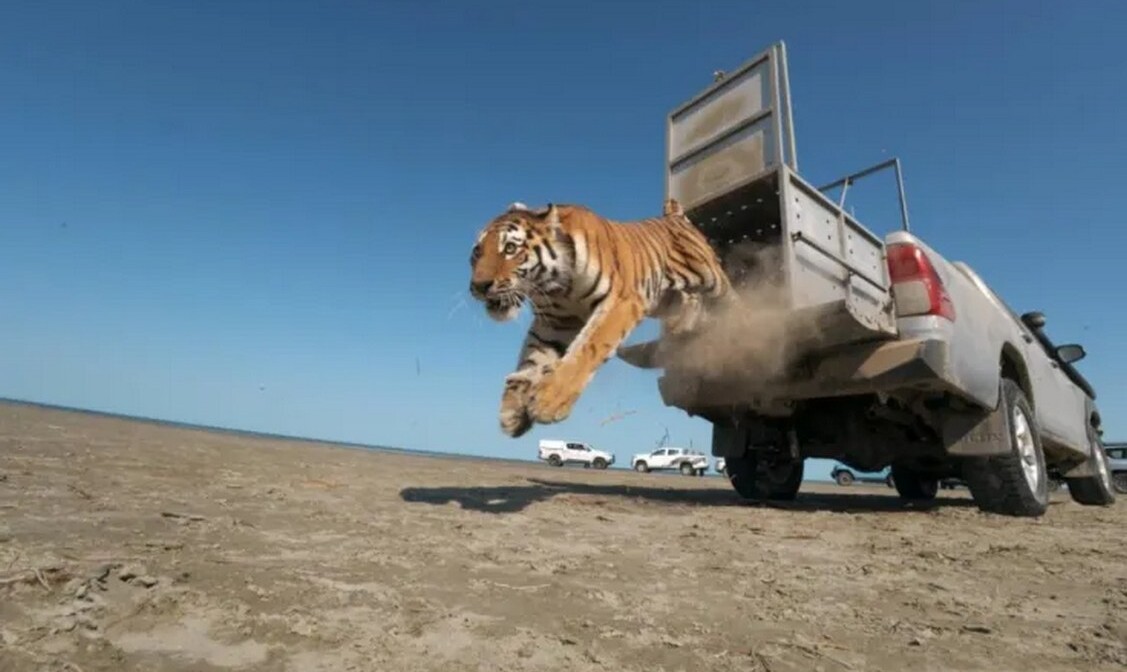
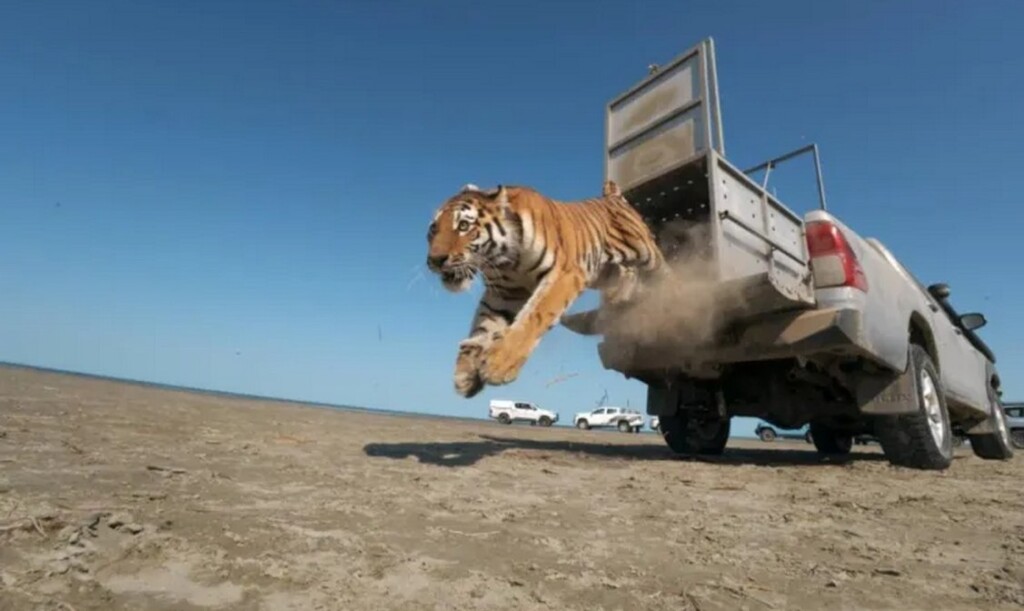
Kazakhstan has taken a massive step towards its long-held goal of re-establishing the tiger in the country by releasing a female Amur tiger into the Ile-Balkhash Nature Reserve.
Established in 2018 for this exact purpose, what followed was a truly generational effort of reforestation and replenishing prey species of deer and antelope that the Caspian tiger, now extinct, once relied on.
“Today, we witnessed a truly historic event,” Minister of Ecology and Natural Resources Yerlan Nyssanbayev said at the ceremony which saw the female tiger named “hope” in the Kazakh language, leap from the container on the back of a truck into the reserve.
“For the first time since the tiger disappeared from Kazakhstan more than 70 years ago, the first tiger has been released into its historical range. This is the result of many years of work by the state, our Russian colleagues, scientists, and international partners,” he said.
The extinct Caspian tiger, also called the Turanian tiger, was most closely related to the Siberian, or Amur, tiger, and so Russian collaboration was essential to the project.
In 2020, Bukhara deer were re-established in the reserve, before the saiga antelope, and the Asiatic wild ass, or kulan, followed.
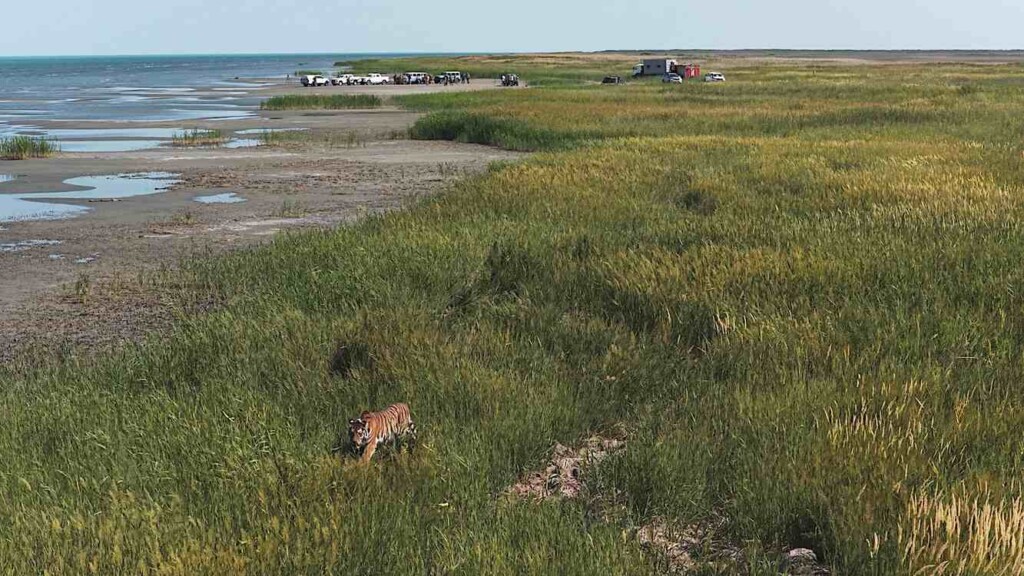
Before they could roam as their extinct cousins did, hope and 3 other tigers: a male named Amur and two cubs brought from Russia’s Khabarovsk Reserve were released into large enclosures to adapt to the sights, smells, sounds, and weather.
Hope was examined by veterinarians and determined to be in sterling condition, She was fitted with a GPS tracking collar and, driven out into the reserve, allowed to go her own way.
The male, Amur, remains in captivity as experts monitor his behavior to determine whether he will be capable of hunting in this new environment.
The cubs will grow up semi-wild in the reserve, with the intent to release them when they’re fully mature, or around 18 months of age, provided they pass behavioral assessments for hunting and survival instincts. This slow, gradual approach, Astana Times wrote, reflects the complexity of introducing large predators to new landscapes.
Part of that complexity involves the safety and security of the communities surrounding Ile-Balkhash. Though large, the reserve is not fenced, allowing tigers to spill out back into their ancestral environment as their populations grow.
KAZAKH COLUMN INCHES: Kazakhstan Efforts to Restore Last Wild Equine Species Receive Huge Boost of 150 Horses
“The safety of people living near the reserve is our top priority,” officials from Kazakhstan’s Ministry of Ecology said. “We’ve put measures in place to prevent conflicts between people and tigers, including a dedicated team that will respond if an animal approaches a populated area.”
If the program succeeds, Kazakhstan will become the world’s first country to re-establish the tiger into an ecosystem it had disappeared from.
WATCH the dramatic moment below…
CELEBRATE Kazakhstan’s Incredible Accomplishment With Your Friends…