

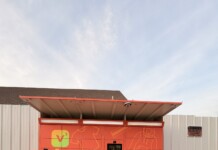









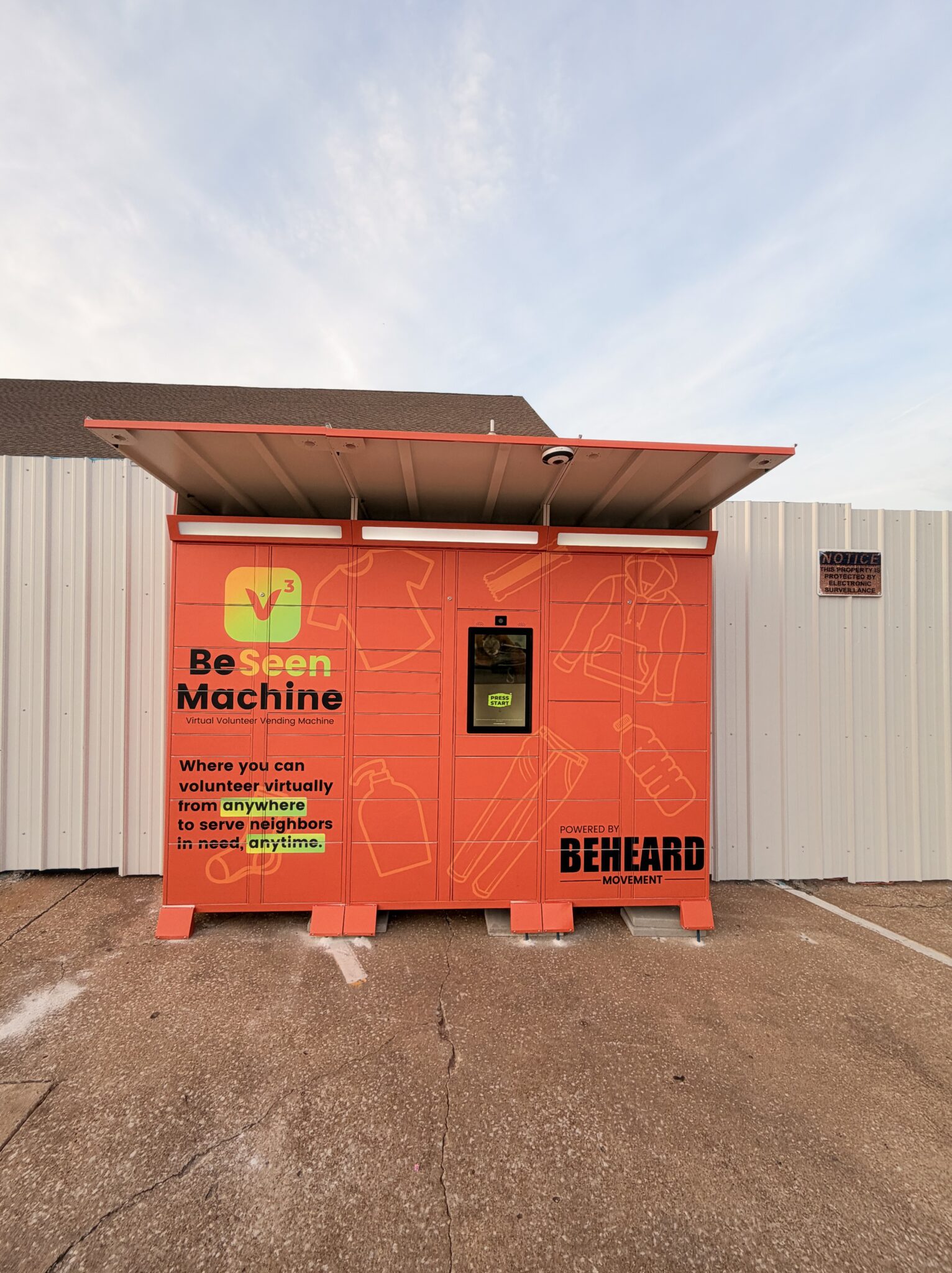
In Tulsa, Oklahoma, a bright orange smart-locker system is quietly rewriting the rules of after-hours help for people living with homelessness.
The BeSeen Machine is like a hybrid of an Amazon delivery box and a vending machine, but is filled with clean socks, underwear, hygiene kits, snacks, water, blankets, first-aid supplies, Narcan, dog food, or even simple note of encouragements — completely free of charge.
The person in need simply walks up, taps the screen and immediately is connected with a real person via a video call. After a quick two to three minute conversation with no interrogation or paperwork, the virtual volunteer unlocks the box with the requested supplies.
The project started when a plan to film documentaries about the unhoused developed into a grassroots organization called the BeHeard Movement, built on the belief that those in need deserve dignity, not just services. “We weren’t sure where it would lead; we only knew these were stories that deserved to be heard,” the organization wrote on its website.
For five years the team kept showing up—mobile showers, laundry trailers, clothing, haircuts, and case management that met people where they are. Messages continued to arrive from people across the country that wanted to help, but volunteering traditionally relies on being in the right place at the right time.
“So we started asking a different question: what if volunteers could serve from anywhere in the world, and neighbors could get help any time they needed it? the organization wrote. ”The answer became the BeSeen Machine.”
In 2025, BeHeard founder Evan Dougoud sat down with Justin Daniels of Serve.Love, and what Dougoud later called “a crazy idea” became a partnership. Mockups turned into hardware. In November 2025 the project won first place in the audience-choice vote at the Tulsa Area United Way Innovation Awards, bringing $15,000 to move from concept to build. Local reporting also noted another award of $40,000 earlier in the process.
Early testing has drawn volunteers from more than 17 states and four countries, with two machines operating every Friday from 10 a.m. to 10 p.m. Partner Serve.Love reported that in the early two-month window, volunteers answered 162 calls and handed out 383 items.
Calls typically last about three minutes, and volunteers control the electronic locks remotely from their phones via a custom system that also supports real-time transcription and translation. The machines are restocked by local partners; remote volunteers never handle inventory.
Anyone with a phone and a good connection can take a short shift. Communities that want a machine where help is hardest to find after 5 p.m. can fill out a form on the BeSeen site, with a full launch projected for March 1, 2027.
In the organization’s own words, the mission is simple: Support should not depend on the time of day, and impact should not depend on where you live.
Related Stories: