Quote of the Day: “In three words I can sum up everything I’ve learned about life: it goes on.” – Robert Frost
Photo by: Meiying Ng
With a new inspirational quote every day, atop the perfect photo—collected and archived on our Quotes page—why not bookmark GNN.org for a daily uplift?
51 years ago today, the European Space Agency was founded by ten member states: Belgium, Denmark, France, West Germany, Italy, the Netherlands, Spain, Sweden, Switzerland, and the United Kingdom, that united two disparate space agencies into the one entity which today has been instrumental in several giant leaps for mankind. READ more… (1975)
The gas giant WASP-94A b - credit, artistic interpretation by Hannah Robbins, released by Johns Hopkins University
The gas giant WASP-94A b – credit, artistic interpretation by Hannah Robbins, released by Johns Hopkins University
Welcome to WASP 94A b, where clouds made of rock melt every morning like the June gloom in Southern California.
Powered by the James Webb Space Telescope, humanity’s study of exoplanets marches on as a team from Johns Hopkins University explored the atmospheres of several “Hot Jupiters” out in the Microscopium constellation.
Inside is WASP-94A, a star located 700 lightyears from Earth that hosts a gas giant planet which orbits it at a closer proximity than Mercury does to our Sun.
This has created a unique set of planetary conditions that David Sing, a distinguished professor of earth and planetary sciences at Johns Hopkins, was eager to study.
By isolating the planet’s clouds, Sing and his team were able to more accurately measure the atmosphere and provide one of the clearest pictures to date of the planet’s composition—a significant advance in planetary science that will provide important context and correlations in future research.
“I’ve been looking at exoplanets for 20 years, and general cloudiness has been a thorn in our side. We’ve known for quite a while that clouds are pervasive on Hot Jupiter planets, which is annoying because it’s like trying to look at the planet through a foggy window,” said Sing.
“Not only have we been able to clear the view, but we can finally pin down what the clouds are made out of and how they’re condensing and evaporating as they move around the planet.”
Though long theorized to exist, the first exoplanet was detected in 1991. Since then, their known diversity has increased exponentially.
To study WASP-94A b, Sing and his team leveraged the James Webb Space Telescope to capture several transits which the planet made in front of its host star.
They took separate measurements of WASP-94A b’s leading edge as it started to cross in front of the star and the trailing edge as the planet completed its transit. At the leading edge, the air flows from the night side of the planet to the day side, effectively making it the morning. Air flows from day to night at the trailing edge, making it the evening.
Observations revealed that mornings and evenings on WASP-94A b have extremely different weather patterns, with mornings that are riddled with clouds made of magnesium silicate, a common mineral found in rocks, while the evening has clear skies.
The phenomenon may be akin to morning fog burning off on Earth, but on an extreme scale. Clouds would form in the darkness of the planet’s nightside. As they drift into the scorching heat of more than 1,000 degrees on the day side, the chemicals that make up the clouds boil away, and the clouds simply vaporize.
Alternatively, powerful winds might lift clouds high into the sky on the cooler side of the planet and then plunge downward on the hotter dayside, dragging the clouds deep into the planet’s interior.
Because the evenings are clear of clouds, the researchers could look to the trailing edge specifically to see what the atmosphere of the planet looked like—something the Hubble telescope could not provide, said first-author Sagnick Mukherjee.
When the researchers looked at the clear evening sky, they found that WASP-94A b was much more like Jupiter than they thought. Previously, when the clouds were averaged in, the data suggested the planet was made of hundreds of times more oxygen and carbon than Jupiter—a finding that baffled researchers given it couldn’t be explained by planet formation theory. Instead, the team found just a comparatively small amount of extra oxygen and carbon.
Using WASP-94A b as a benchmark, the team looked at eight other hot gas giants and discovered the same distinctive cloud cycle on two other worlds: WASP-39 b and WASP-17 b.
The research was able to establish two early hypotheses, that Jupiter-like compositions (even in Hot Gas Giants) and WASP-94A b’s cloud cycling are both not uncommon in the galaxy. Next, Sing plans to compare his study of hot gas giants to other gas giants that are known to orbit the Habitable Zone of their host stars.
SHARE This Bizarre Gas Giant With Your Friends Who Love Space Stories…
Far from just being a venue, the Center will a place of learning and sharing, for exploring major moments in American music history through the Archive’s collection of rare interviews and footage, and an academic gold mine for enhancing Monmouth University’s liberal arts programs.
Why Monmouth University? The campus is located not far from where Springsteen wrote his landmark single “Born to Run,” and was the site of many of his earliest shows from 1969 to 1974.
“Our institution will offer exciting research opportunities for students, journalists, and historians, and give Springsteen fans the chance to explore his music and the role it plays in American history like never before,” stated Robert Santelli, the center’s executive director.
“Teachers will also find the Archives and Center for American Music a valuable educational resource. Lesson plans, teaching strategies, and online programs will be available to teachers and enable them to bring American music into the classroom.”
The 30,000 square-foot building houses exhibits on the music of Bruce Springsteen and of American music at large; the Springsteen archives; a 240-seat auditorium for concerts, academic lectures and video screenings; and gallery space for changing exhibitions.
Additionally, the museum will partner with E-Street Band guitarist Stevie Van Zandt’s non-profit TeachRock to organize activities with local schools.
According to the university, the Archives house nearly 48,000 items from 47 countries ranging from articles and oral histories to concert memorabilia and promotional materials.
“At 19… I played on these very steps out here, and so to stand here today is quite humbling knowing that I’m going to be a presence here on this campus, which I really look forward to being,” Bruce Springsteen said in 2023 at the announcement ceremony.
“It’s deeply satisfying, and I look forward to working with everyone to make the building and this endeavor a great success.”
Built by the acclaimed New York architecture firm CookFox, the building embodies themes from New Jersey’s industrial heritage and Springsteen’s music from the weathering steel of the factories to boardwalk and Jersey Shore designs. Unstained wood is everywhere, with the panels of the exterior made just so to embrace the impact of time on the material.
End-grain wood block flooring, CookFox explains, often used in factories a century ago, reveals the growth rings of the trees it’s made from while inviting visitors into the auditorium.
The auditorium will mostly be a place of presentations and lectures, since the show that Springsteen has put together to celebrate the Center’s opening, along with America’s 250th Birthday, will need a few more seats.
Called Music America: The Songs that Shaped Us, the concerts will take place on June 4th and 5th at the OceanFirst Bank Center on the Monmouth campus, just prior to the grand opening of the Bruce Springsteen Center on the 7th.
Among the artists scheduled to perform over the two nights are Jon Bon Jovi, Jackson Browne, Rosanne Cash, Kenny Chesney, Gary Clark Jr., Dion, Dropkick Murphys, Shemekia Copeland, Valerie June, Jimmie Vaughan, Keb’ Mo’, Nils Lofgren, and more, all delivering their uniquely American music of blues, bluegrass, rock, hip-hop, Americana, jazz, country, and gospel.
SHARE The Fantastic New Center From Springsteen And His Don’t-Miss Debut Show…
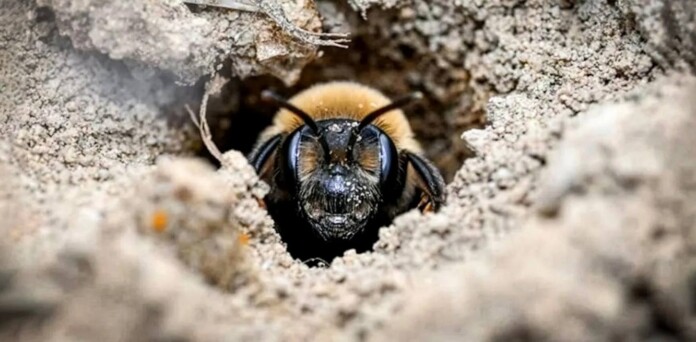
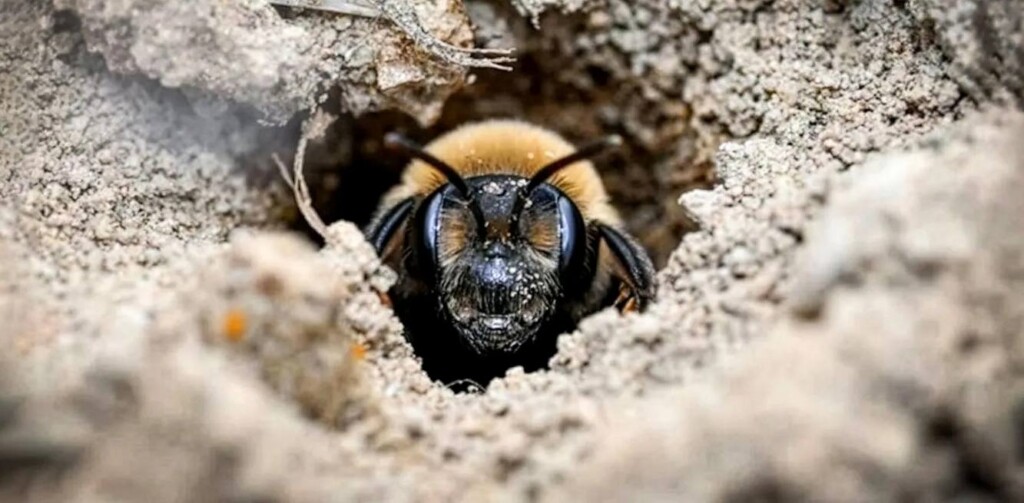
Andrena regularis bee nesting near the east lawn cemetery entrance - credit, Bryan Danforth
Andrena regularis bee nesting near the east lawn cemetery entrance – credit, Bryan Danforth
At roughly 5.5 million, a colony of ground-nesting bees that scientists discovered under a New York cemetery may be one of the largest bee aggregations ever documented.
Subsequent research showed that the bees have likely lived there for more than 100 years, thriving in the cemetery’s undisturbed sandy soil—an incredible discovery.
Rachel Fordyce used to save money by parking at Ithaca’s East Hill Plaza and walking through East Lawn Cemetery on her way to work at a Cornell University entomology lab. During one walk in the spring of 2022, she noticed something unusual. Bees were everywhere.
She collected some in a jar and brought them to her supervisor, Bryan Danforth, professor of entomology in Cornell’s College of Agriculture and Life Sciences.
“These are all over the cemetery,” she told him. The insects were identified as Andrena regularis, commonly called the “regular mining bee,” a solitary wild bee species that nests underground and helps pollinate crops and wild plants.
That simple observation led to the extraordinary discovery: a 100-year-old colony of 5.5 million solitary bees across 1.5 acres. According to the researchers, that is comparable to more than 200 honeybee hives, and exceeds Manhattan’s human population by more than threefold.
“I’m sure there are other large bee aggregations that exist around the world that we just haven’t identified, but in terms of what is in the literature, this is one of the largest,” said Steve Hoge, lead author of the resulting study on the colony published April 13th in the journal Apidologie.
To estimate the bee population and study emergence patterns, researchers used a new monitoring method involving emergence traps. These small mesh tents cover less than a square meter of ground and funnel emerging insects into glass jars.
“You capture a whole community of animals coming out of the ground with this approach,” Danforth said.
Between March 30th and May 16th, 2023, the research team placed 10 traps throughout the cemetery. They collected 3,251 insects representing 16 species of bees, beetles, and flies. A. regularis overwhelmingly dominated the samples.
Researchers used the number of bees captured in each trap to calculate average bee density across the cemetery’s total land area. Based on those calculations, the estimated total population ranged from about 3 million to 8 million bees.
The study also explored the biology of these poorly understood wild bees while also highlighting their importance as pollinators for valuable agricultural crops such as apples, one of New York’s signature commodities.
“The research elevates the value of solitary ground-nesting bees and shows just how abundant these bees are, how important they are as crop pollinators, and that we need to be aware of these nest sites and preserve them,” Danforth said.
Historical records showed that A. regularis has been present at East Lawn Cemetery since at least the early 1900s. The cemetery itself dates back to 1878.
Scientists say the discovery strengthens the idea that cemeteries can act as important refuges for biodiversity. Older cemeteries, especially in cities, are already known to shelter uncommon plants, insects, birds, and mammals.
Keven Morse, superintendent of East Lawn Cemetery, said he has seen deer, geese, hawks, foxes, coyotes, and countless bees during his family’s 46 years helping manage the nonprofit cemetery.
“I just felt bad having to mow in certain areas,” Morse told a Cornell University news team. “There’s probably three or four sections where they really migrate heavy, there’s a lot of them.”
Researchers explained that cemeteries provide especially good habitat because the land is peaceful, rarely disturbed, and largely free of pesticides.
Cornell Orchards, located about one third of a mile from the cemetery, may help support the massive bee population by providing abundant spring flowers. Danforth also noted that the bees prefer sandy soil, which the cemetery contains in large amounts.
“These populations are huge, and they need protection,” Danforth said. “If we don’t preserve nest sites, and someone paves over them, we could lose in an instant 5.5 million bees that are important pollinators.”
SHARE This Incredible Discovery In Eastern Ithaca With Your Friends…
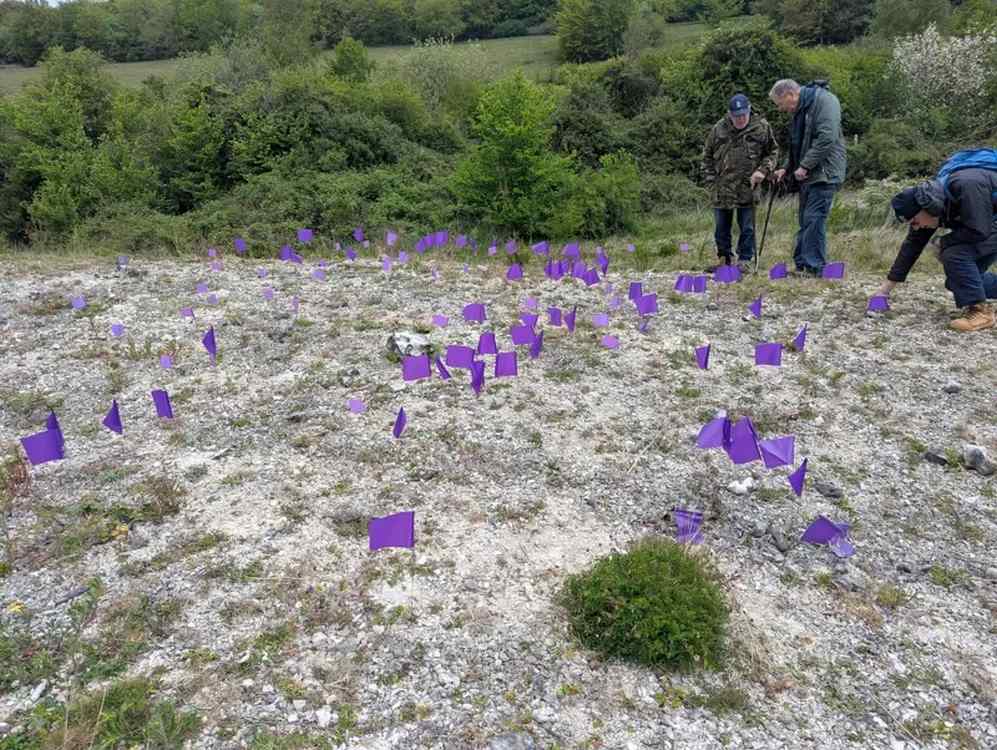
Conservationists are celebrating the remarkable recovery of an important and unique British flower known as Kentish milkwort after recording a seven-fold population increase during the recent growing season.
1,245 self-sown plants were recorded this year at a crucial growing site, now the largest population of the species in the UK.
Teetering on the verge of extinction, Kentish milkwort (Polygala amarella) became the focus of urgent conservation action more than a decade ago. The recovery project began in 2013 when what was then known as dwarf milkwort existed as two separated populations in northern England and Kent. By 2010, the plant was only found at three Kent sites.
Subsequent taxonomic work recognized the Kent population as a distinct subspecies, increasing the urgency of conservation action. Experts carefully collected seeds from the strongest surviving individuals, which were then taken to be cultivated by the recovery program partners at the Kew Royal Botanical Gardens, thereby establishing a secure seed stock for future restoration without further pressure on wild plants.
Between 2018 and 2019, further seed collections enabled the production of plants for reintroduction. In 2021, trial introductions were carried out at Fackenden Down and Queendown Warren—both grasslands with chalk bedrock, where the species had been absent for over 50 years.
While Fackenden Down did not succeed, Queendown Warren has gone from strength to strength. Numbers rose from 17 plants in 2022, to 47 in 2023, 86 in 2024, and 177 in 2025.
Then came the sharp turnaround, with 1,245 self-sown plants recorded—seven-fold increase on last year—establishing the strongest population of Kentish milkwort in the UK.
Volunteers at Queendown Warren counting Kentish milkwort – credit, Kent Wildlife Trust, released
“The scale of this year’s increase has been incredible to see,” said Rob Pennington, an officer at Kent Wildlife Trust. “The plants are clearly thriving at the site and last year’s population must have produced a huge amount of seed that has now successfully germinated.”
“We hope the population will continue to spread in the coming years and eventually become a donor site, allowing us to collect seed for future restoration work at other suitable locations.”
This recovery is the result of diligent work by the Kent Wildlife Trust in partnership with The Species Recovery Trust, Royal Botanic Gardens Kew, and local volunteers.
The work has also revealed key insights into the species’ ecology, showing it thrives in open, disturbed ground created by grazing and natural soil disturbance from animals such as rabbits and badgers.
There’s something about an endangered plant: rooted, exposed, and unable to run from what threatens it, that unnerves one even more than an endangered animal. Did any conservationists lose sleep picturing the less than 17 small plants shivering in the cold, liable to disappear on the chance placement of a deer’s hoof?
How must they be able rest easier now having seen the flower proliferate again; its niche in the chalky ecosystem maintained for the foreseeable future.
SHARE These Diligent Plant Conservationists Hard At Work Saving Species…
Quote of the Day: “Give me six hours to chop down a tree and I will spend the first four sharpening the axe.” – Abraham Lincoln
Photo by: Annie Spratt
With a new inspirational quote every day, atop the perfect photo—collected and archived on our Quotes page—why not bookmark GNN.org for a daily uplift?
261 years ago today, former Virginia governor and revolutionary Patrick Henry was not only born, but used his 29th Birthday as an occasion to deliver a rousing speech is response to the British Parliament passing the Stamp Act. In response, Henry introduced the Stamp Act Resolves to the House of Burgesses in Virgina. Though his speech is only quoted today from recollections decades later by men not present, the general conensus is that at a certain point, Henry suggested that King George III be killed, to which a cry rang out “Treason!” Henry is supposed to have said “If this be treason, make the most of it!” READ about the Stamp Act and Henry’s life in general… (1739, 1765)
A stunning manuscript containing the full extent of the King Arthur legend, embossed with sumptuous illustrations, is going up for auction at Christie’s.
One of three such copies known—all of which remain in private collections—the Lebaudy Manuscript contains 126 illustrations, a unique story of the wizard Merlin disguising himself as a stag, and enjoys an exquisite degree of preservation considering it’s 750 years old.
– credit Christie’s Auctions
Inside, readers can find the tale of King Arthur—stories of Gawain, Lancelot, Galahad and the knights of the round table, of Merlin and his antics, and of course, the Holy Grail myth.
Scholars see the auction as a fantastic opportunity to acquire the manuscript, which hasn’t been entirely documented, for public display and study, where more about this most-famous of Western fables can be revealed.
Others see in the 126 miniature illustrations—many embossed with gold leaf which shines as bright as ever—a fantastic way to draw visitors to historic libraries where such a book might be exhibited.
Any such library would have to dig into its endowments, however, as the emerald-green bound book is expected to reach at least $2 million and likely much more.
“It’s a beautifully illuminated manuscript, which contains wonderful Arthurian stories depicted in exquisite miniatures,” said Dr. Irene Fabry-Tehranchi, who specializes in French texts at Cambridge University Library, who spoke to the Guardian about the Lebaudy Manuscript. “Originally, it was made for aristocratic patrons, possibly women who were very fond of Arthurian stories.”
Indeed, aristocratic patrons included knights, real and hereditary, and the French war hero and industrialist Jean Lebaudy.
Of special interest to scholars is the illustrations’ creator: believed to be an anonymous Low Country artist known as “Master of the Liege Apocalypse” after an illustration of the end times for which he is famous. According to scholars, his work is often attributed wherever the male figures have little red dots on the centers of their cheeks.
SHARE This Beautiful Manuscript And The Opportunity To Learn Its Secrets…
The New Energy Transport electric truck - credit, released by NET
The New Energy Transport electric truck – credit, released by NET
A green-geared milestone was just set in Australia as a company saw its all-electric haul truck go from the capital of Canberra to Sydney on a single charge.
Carrying tons of toilet paper, the final mile deliveries were made with electric vehicles too, keeping emissions down, and suppliers and demanders clear of the suffocating prices of diesel.
Built by New Energy Transport (NET) the Windrose semi-trailer truck has a range of 416 miles at 49 combined tons, and boasts 1,400 horsepower.
Reporting on the maiden voyage, Australian Truck Radio wrote that the Windrose delivered an 84% reduction in fuel costs while proving that intercity routes can be greened up with a little forward planning thanks to a fast charging time of just 1 hour.
It also made the 186-mile trip 25 minutes faster because of the vehicle’s speedy acceleration during the inclined sections of the route.
It’s the second demonstration of the Windrose’s capabilities, as back in November it set a world record for the longest single-charge long haul delivery—a trip to your grocery store short of 300 miles.
“This delivery ushers in a new era for Australian road freight where electric heavy trucks are not just cheaper and faster, they unshackle Australia from volatile global oil markets, dramatically strengthening our supply chain resilience,” said Daniel Bleakley, Co-CEO, New Energy Transport.
Collecting the thoughts and comments on the achievement, Australian Truck Radio quoted John Grimes, CEO at Smart Energy Council, as saying that every liter of diesel the nation saves on highways by electrifying trucks “is one we keep for farmers.”
“Australia runs on road freight so if diesel stops, we stop and starve. Electrifying trucking strengthens our energy security, and we’re ready—we already build electric trucks and charging infrastructure, and can power it all with sun and wind.”
NET envisions completing its pilot haul fleet of Windroses by mid-2026.
HONK YOUR HORN About This Big Milestone In Australian Trucking On Social Media…
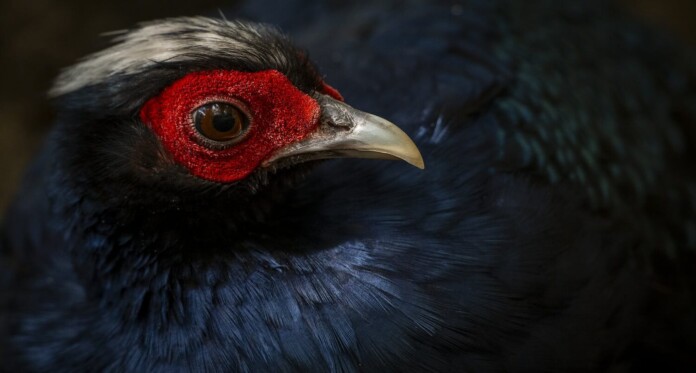
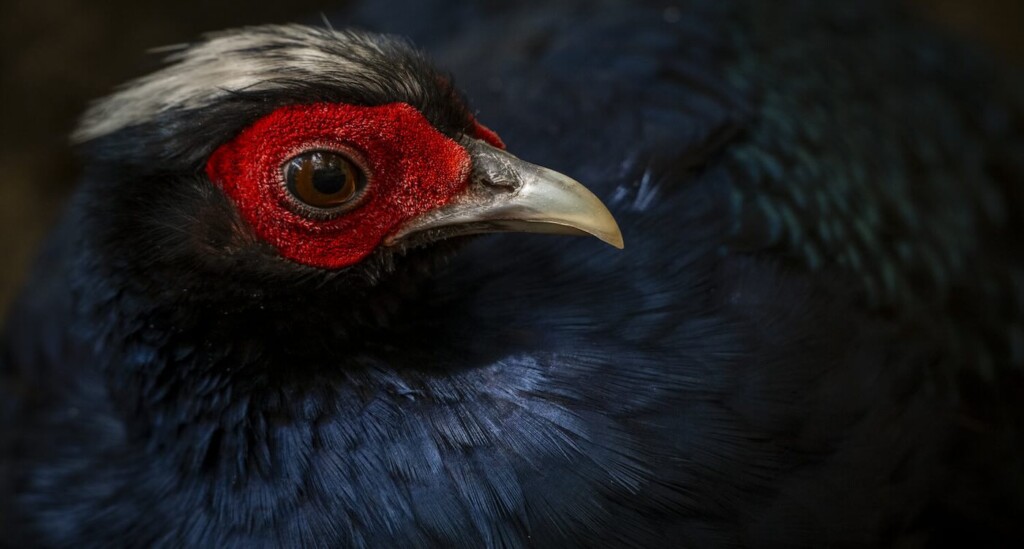
For over 20 years, the forests of central Vietnam have been missing one of their most remarkable inhabitants.
Now, an international alliance of conservation organizations, zoological institutions, and Vietnamese partners has come together with a shared goal: to return the Vietnam pheasant to the forests where it once lived.
The project represents one of the few global efforts to reintroduce a species that is likely extinct in the wild, making it both an ambitious and deeply symbolic undertaking.
The Vietnam pheasant, once native to the dense, humid forests of the region, has not been reliably recorded in the wild for decades. Among its most striking characteristics is the male’s deep dark blue plumage with a subtle metallic sheen, which, together with its vivid red facial skin, gives the species a particularly elegant appearance.
Its decline is the result of multiple pressures over time, including extensive habitat loss, agricultural expansion, illegal hunting, and the lasting ecological impacts of the Vietnam War, during which large areas of forest in its distribution range were severely degraded.
In the early 20th century, a small number of birds were brought from Vietnam to Europe. This tiny founder population became the basis of a carefully managed conservation effort across zoological institutions and private breeders. Over decades, through coordinated breeding program and international collaboration, the population grew and was maintained as a genetically viable assurance population.
Now, for the first time, that population is being used to support a return to the wild. In mid-May, a group of pheasants selected from European breeding programs will be transported from Berlin to Vietnam. Each individual has been carefully chosen based on genetic diversity, health, and behavioral characteristics, ensuring that the foundation of the future population is as strong as possible.
The selected 20 pheasants will be transported from Germany to Vietnam by cargo aircraft in specially designed transport crates that ensure safety, ventilation, and minimal stress throughout the journey. The transfer will be accompanied by experienced experts, who will monitor the birds continuously and ensure their well-being at every stage of the transport process.
Following their arrival, the birds will undergo a period of acclimatization and observation under professional care. The immediate goal is not release, but stability: to allow the pheasants to adjust to local climatic conditions, to form breeding pairs, and to establish new, locally born, parent-reared generations. Only once this foundation is secure will further steps towards release be considered.
This approach reflects the complexity of the challenge. Reintroducing a species that may no longer exist in the wild requires more than simply returning animals to their former habitat. It requires functioning ecosystems, long-term protection, and the support of local communities.
In central Vietnam, these conditions are being developed in parallel. Within the historical range of the species, protected forest areas are being prepared as potential future release sites. Conservation teams are working on the ground to safeguard these habitats, monitor biodiversity, and reduce ongoing threats such as illegal hunting.
“For Vietnam, the recovery of the Vietnam Pheasant is more than the return of a single species,” said Pham Tuan Anh, director of Viet Nature Conservation Center, which operates the Rare Pheasants Breeding Centre.
“It represents our pride and responsibility in protecting our natural heritage. This project shows how conservation practitioners, scientists, local communities, and authorities can come together to rebuild what has been lost.”
The initiative is supported by a wide network of partners, chief among which is the European Ex-situ Program (EEP) which plays a key role in ensuring the genetic health and long-term viability of 500 different wild animals which may be, or are, extinct in the wild.
“The coordinated management of the European population has been essential in preparing for this moment,” said Veronika Zahradníčková, the EEP Coordinator at Prague Zoo.
“Through careful breeding and long-term genetic planning, we have been able to maintain a healthy and viable population. Contributing individuals to this reintroduction is a significant milestone and an important step towards restoring the species in its natural habitat.”
Building on this foundation of international cooperation, partner zoos have worked closely over many years to secure the survival of the species under human care and to enable its future return to the wild.
“This project is very close to our hearts here at Zoo Berlin. It is the result of decades of international cooperation,” said Dr. Andreas Knieriem, Director of Zoo and Tierpark Berlin, which released a statement to mark the occasion. “The Vietnam Pheasant has survived because of coordinated conservation breeding, and now we have the opportunity to take the next step: returning it to the wild where it belongs.”
The return of the Vietnam pheasant represents a rare opportunity to reverse a loss that once seemed final. It highlights the role that long-term conservation breeding can play in safeguarding species, and it demonstrates the importance of international collaboration in addressing global biodiversity challenges.
SQUAK About This Fantastic Bird Returning To Its Wild Home…
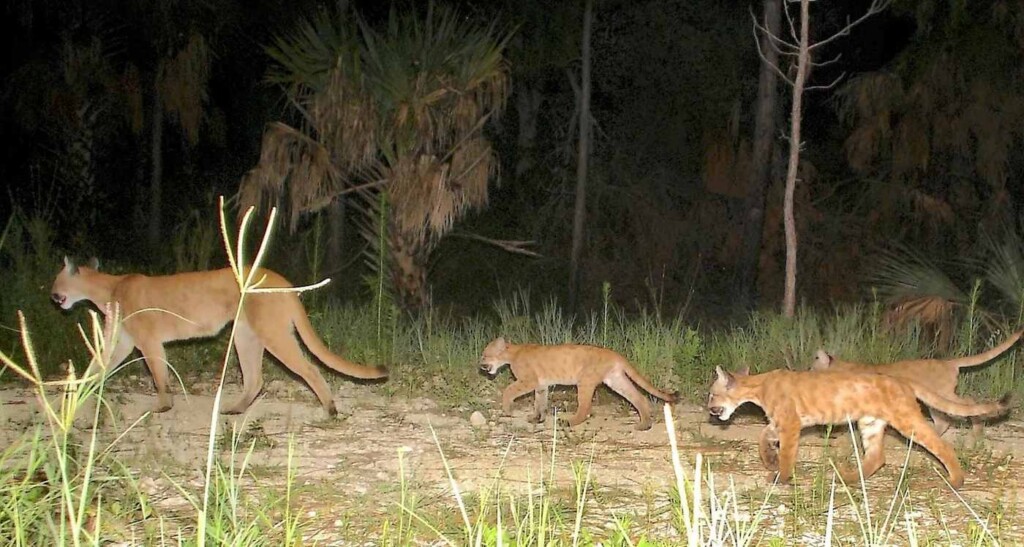
A huge area of the Everglades that was drained in an attempt to convert it to suburbia has been restored to a somewhat native ecosystem after 2 decades of reverse-landscape engineering.
Picayune Strand is a big, almost perfect rectangle of south Florida wetland located northwest of Everglades National Park, northeast of Thousand Islands Nat. Wildlife Refuge, and west of Florida Panther Nat. Wildlife Refuge.
It was part of an enormous land package bought by the real estate company Gulf American in the 1950s in the attempt to create America’s largest suburban housing development, called Golden Gate Estates.
But their effort to tame the swamp failed, even though substantial landscape alterations were made to try and dry out the area. Picayune Strand is 2 feet average lower elevation than the Golden Gate Estate land to the north, and this little difference made it virtually impossible to prevent flooding. The company went bankrupt.
One of the first projects identified and pursued by conservationists working under the Everglades Restoration Plan of 2000, Picayune Strand has changed a lot over the years. Since 1985, conservationists have been buying up all the private, often unbuilt-on land that Gulf American had managed to sell. It was tedious lawyer’s work, but by 2004, it was all consolidated into a conservation package.
Gulf American built 4 large canals to channel water off the land they wanted to develop, while the earth and stone they churned up was used to crisscross the area with causeways atop which ran roads. These were the first targets for groups like the Everglades Foundation, the Conservancy of Southwest Florida, and the US Army Corps. of Engineers.
The hydrology of the Everglades is defined by water flowing across the once-7 million square miles all in the same direction at roughly the same snail’s pace, a phenomenon described as “sheet flow” through a “river of grass.” Huge areas remained flooded all year, and plugging the canals was the first step towards restoring the natural hydrology.
To restore this, the roads were torn up and the materials were chucked back into the canals from whence they came.
One of the 3 pump stations – credit, Brigida Sanchez US Army Corps of Engineers
From macro to micro
“Picayune is as good a place in South Florida that there is, in terms of getting it back to what it was before,” Michael Duever, an ecologist who has been monitoring the Picayune project, told Yale News. “We’re feeling that we’re in the range of 90 plus-or-minus percent of restoration.”
There had to be some compromises, as people still live in Picayune Strand. Part of that 10% Duever refers to being missing includes 3 pumping stations that pull rainwater out of the closed canals on the northern boundary of the Picayune project, and dump it into large basins that will leak it out in many directions. The water level at times is higher than natural, however, and at other times dryer.
Vegetation is coming back in a big way—not always ideally, but upland plants cannot now spread further south because of the continual water bodies. More native species that have missed the continual wetness are also returning—like a native, wild sunflower.
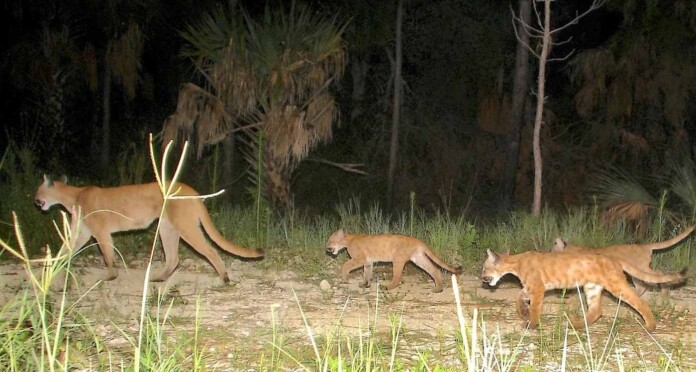
The restored Picayune is expected to help several endangered species, including the red-cockaded woodpecker and the Florida panther, while studies have already shown that the increased insect abundance is benefitting the bonneted bat, the largest of its kind in Florida with a greater-than-footlong wingspan.
“I kind of view Picayune Strand as a microcosm of the entire [Everglades] plan,” Stephen Davis, chief science officer at the Everglades Foundation, told Richard Mertens at Yale.
SHARE This Great Restoration Success In The Great American Swamp…
Quote of the Day: “My boy, one small breeze doesn’t make a wind storm.” – John McGraw
Photo by: Kurt Cotoaga
With a new inspirational quote every day, atop the perfect photo—collected and archived on our Quotes page—why not bookmark GNN.org for a daily uplift?
94 years ago today, one of Europe’s greatest landscape engineering projects, the Afsuiltdijk, was completed in the Netherlands, proving that newly-mechanized Man could tame not only the land, but also the seas. The Afsuiltdijk closed off Zuiderzee (South Sea) Bay and converted it into a freshwater lake called IJsselmeer. In the previous 100 years, the Dutch had become experts at turning wetlands into polderland for farming, and armed with hydraulic machinery, they saw no reason why they couldn’t turn a sea into farmland either. READ how it happened… (1932)
With Europe more choked with tourists than ever amid year after year of record-setting summer heat, Italy is looking to change course: off the beaten path of luxury hotels and museums.
Antichi Cammini d’Italia, or the Antique Trails of Italy, responds to the growing demand for slow, authentic and sustainable tourist experiences, by uniting and modernizing one of the peninsula’s great unknown treasures: its long-distance hiking routes.
Everyone knows about the Camino de Santiago in Spain, but Italy’s 5 famous pilgrimage trails are far less famous. As noted by Panorama, only the Via Francigena carries some international recognition.
But Italy is crisscrossed with such routes—now united for the first time ever as an EU-funded initiative under the Cultural Routes of the Council of Europe—to make them and the cultural and historical treasures they carry, more accessible than ever.
The Cammini include the Via Francigena, the Via St. Francis, the Cammino St. Benedict, the Via Romea Germanica, and the Romea Strata, with details below.
The itineraries promoted by the project offer alternatives to traditional destinations, helping to ease pressure on the most crowded tourist circuits and to extend visitor flows across a broader calendar and into lesser-known areas.
One of the project’s most distinctive features is an integrated smart signage system deployed along the five itineraries. Sixty devices provide travelers with free Wi-Fi and Bluetooth Low Energy beacon technology connected to the Italia.it app.
When visitors enter the range of a beacon, they receive a push notification inviting them to discover the stage they are on and the surrounding tourism offerings: technical information on the route, geolocated maps, Point of Interest sheets, and multimedia content dedicated to places of historical, artistic, religious, and scenic value.
It’s a model that brings together the physical experience of walking and the digital dimension, offering travelers accessible tools for orientation and deeper interpretation in real time in a variety of languages.
Alongside this, an extensive mapping process of Points of Interest has led to the creation of more than 1,000 information sheets dedicated to churches, monuments, natural areas, squares, fountains, and other identity-defining places in the territories crossed by the routes.
More than 40% of the sites highlighted are outstanding assets that are still little represented in international tourism circuits: a heritage the project helps bring to light, promoting a more authentic and sustainable way of experiencing the territory. Italia.it is the system’s central digital hub, where all content comes together and becomes accessible to travelers.
A collection of Italian signposts for the Via Francigena – credit, Bjørn Christian Tørrissen CC 3.0. BY-SA
I Cammini
The Via St. Francis follows sites linked with the life of this famous monk and founder of the Franciscan Order, and is composed of two sections totaling 304 miles (490 km) while the similarly themed Cammino St. Benedict goes from Umbria to Rome along 16 different stops across 186 miles (304 km) following the life of St. Benedict.
This tourism offer appeals to an increasingly diverse audience: pilgrims, walkers, cultural travelers, outdoor and wellness enthusiasts, families and people seeking a more direct relationship with local territories and their communities.
The Papal Palace at Viterbo, one of the stops on the antichi cammini – credit, Claudio Caravano CC 4.0 -BY-SA
But for those made of sterner stuff there’s the Romea Strata: 2,900 miles, (4,700 km) 7 countries, 245 points of interest, and 50 UNESCO World Heritage Sites. The trail was reconstructed based on antique pilgrimage routes known from the Baltic down central-eastern Europe to Rome. The Italian portion is 620 miles (1,000 km) and passes through 47 stops.
The Via Romea Germanica passes Germany and Austria on its way to Rome, moving 1,367 miles (2,200 km).
As all of these routes go through Lazio on the way to Rome, they will inevitably bring the traveler in contact with the historic wealth of the Italian capital region, including the Holy Valley of Rieti, the medieval center of Viterbo, the first Benedictine monastery at Montecassino, the beautiful town of Vetralla, and St. Benedict’s Cave of Sacro Speco.
SHARE This Spectacular Way Of Seeing And Enjoying Italy With Your Friends…
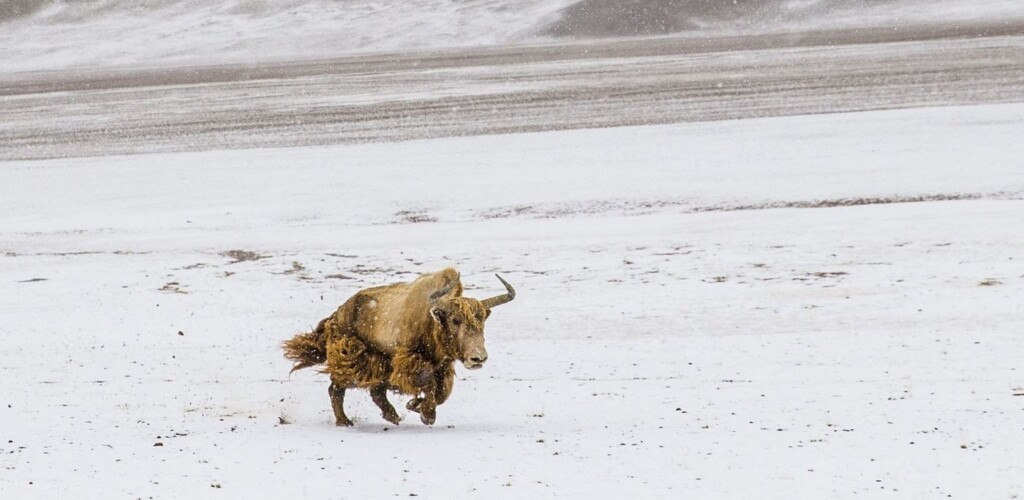
Footage from the 2019 film Golden Wild Yak - credit, supplied to CGTV as a courtesy by director Ka Bu
Footage from the 2019 film Golden Wild Yak – credit, supplied to CGTV as a courtesy by director Ka Bu
China has performed the first single and multiple cloning of wild yaks in a bid to reinforce this keystone herbivore, and save one of the rarest and most beautiful animals in China.
Legend has it that when Mount Buye on the Tibetan Plateau was married to Mount Zhaxiangqian, 7 golden wild yaks were given as a dowry. This is why, locals have it, the golden yak can only be found high in these mountains.
Conservationists and geneticists studying this enigmatic and stunning creature might say that the reason they’re only found high in these mountains is because they have been hunted, outcompeted, and outbred such that today they’re considered Critically-Endangered.
Now though, a comprehensive cloning program has seen biologists produce wild yak embryos that were then delivered organically, without assistance, by wild yak females, indicating that the first step towards potentially saving this legendary creature—with the small side benefit of increasing the “Vulnerable” wild yak population—is now possible.
Native to the Qinghai-Tibet Plateau (QTP), the wild yak (Bos mutus) evolved for thousands of years to thrive in the high altitude and frigid environment. It is the ancestor of the domestic yak (Bos grunniens) and most closely related to bison.
As humans domesticated the yaks, they quickly became the difference between life and death in the Himalayas. Their wool provided clothing to keep out the cold; their milk provided food and even oil for lighting; their dung provided fuel for the fire.
A genetically-distinct subspecies of the wild yak exists in the highest reaches of the QTP whose coats flush a brilliant burnished gold, and which seem to be even more well-equipped genetically speaking for their mountain home.
Ka Bu, a documentarian who filmed the golden population for a 2016 documentary called Golden Wild Yak, explains that protections for this animal are as stringent as can be provided under Chinese law, and that over 700 local herders and farmers are employed in keeping domesticated yaks away from their strongholds in Changtang National Park, and performing poaching patrols over the vast landscape.
Nevertheless, the population may number as few as 170 to 300, and genomic studies that have ruled out the golden yaks as being merely wild yaks with a case of leucism, have found that the population suffers from inbreeding.
In 2023, a partnership between Zhejiang University in China’s southeast, and the Institute of Plateau Biology of Xizang saw biologists sequence whole genomes of almost 9,000 wild yaks to create a total genetic inventory in advance of a cloning program. Cloning often gets misrepresented as duplicating a living animal, when really the infant thusly birthed carries entirely different genetics to its parents.
Cloning was successfully used in America in 2008 to keep the black-footed ferret from falling back into extinction due to limited genetics. The offspring of that animal have subsequently reproduced naturally in captivity.
Last July, the Zhejiang-Xizang team succeeded in the first yak cloning in history, a feat they then surpassed by cloning 10 at a time just recently. Their aim is to establish a new wild herd with genes taken from across the wild yak gene pool, and then turn their attention to the golden yak.
The golden wild yak subspecies has already had its whole genome sequenced, and the traits that give it its robustness and golden color are well known. The scientists that performed that work, independent of the cloning program, cited the animal as a “an Evolutionarily Significant Unit (ESU) of high conservation value.”
“Special attention should be paid to preventing genetic deterioration caused by elevated inbreeding, as well as mitigating the risk of genetic swamping through hybridization with large sympatric and neighboring populations of common wild yak,” the authors wrote, who found the golden wild yak to carry additional unique traits associated with hypoxia tolerance, reproductive function, and immune response typical of a high-elevation living.
With time and hope, this beautiful mountain ‘dowry’ just may, with the help of the most advanced biological sciences, maintain its place among the legends of its beloved mountain home.
SHARE This Cloning Success In Preparation To Save A Living Legend…
Samsung Electronics Executive Vice President Yeo Myung-gu, left, and Samsung Electronics labor unions leader Choi Seung-ho sign a wage agreement - credit, Samsung, released
Samsung Electronics Executive Vice President Yeo Myung-gu, left, and Samsung Electronics labor unions leader Choi Seung-ho sign a wage agreement – credit, Samsung, released
Following eye-watering Q1 performance, some 48,000 of Samsung’s semiconductor division workers are set to receive a new profit-sharing-style bonus structure that will give a bigger slice of the AI pie to those making baking it.
Samsung’s compensation package was among the country’s most generous, as the tech giant accounts for a staggering 16% of national GDP. But after last month’s Q1 revenues rose over 800%, exceeding the entirety of fiscal year 2025, 40% of Samsung’s South Korea-based staff were poised to go on strike for better terms.
The issue was resolved quickly and a preliminary agreement was reached between Samsung’s largest labor union and the company which saw the staff return to work Monday morning, and the company’s shares surge 7%.
Roughly 75% of the 62,000 unionized workers backed the preliminary deal that would see an end to the cap on bonuses of 50% of annual pay, and in its place the commitment to allocate 10.5% of operating profits from its semiconductor division to worker bonuses.
Well, the semiconductor division accounted for 94% of total operating profit in the quarter, amounting to $35.8 billion, 10.5% of which divided 48,000 striking workers would equate to around $78,000 for just this quarter alone. Multiplied by 4, a worker’s slice of the AI boom would amount to $312,000.
Samsung is the country’s largest company at over $1 trillion in market cap, and it’s also the largest semiconductor manufacturer. The standoff came 8 months after the second-largest semiconductor producer, SK Hynix, improved its own bonus terms to its employees.
“The semiconductor industry is now facing a war to secure global talent,” Samsung’s union said in a statement last month. “SK Hynix has already revised its compensation structure to retain talent, while foreign companies are luring our engineers with exceptional offers.”
Samsung and SK Hynix are direct beneficiaries of the global AI boom (or bubble, as some might say), as the wafer-thin processors are needed to supply the computing power to run the AI tools which can be found all throughout our society from E-commerce to hospitals to the front lines of the war in Ukraine.
The strike threatened to so thoroughly derail global semiconductor production that the Korean Prime Minister Kim Min-seok made mention of it on Sunday.
“Any disruption to Samsung’s semiconductor production would go far beyond losses for a single corporate group, leaving deep scars across the national economy,” said the Prime Minister, whose government actually helped step in and mediate the deal.
“The agreement came later than expected,” Samsung said in a Wednesday statement. “We will work to build a more mature and constructive labor management relationship so that such a situation does not happen again.”
SHARE This Wonderful News For The Tens Of Thousands Of Samsung Staff…
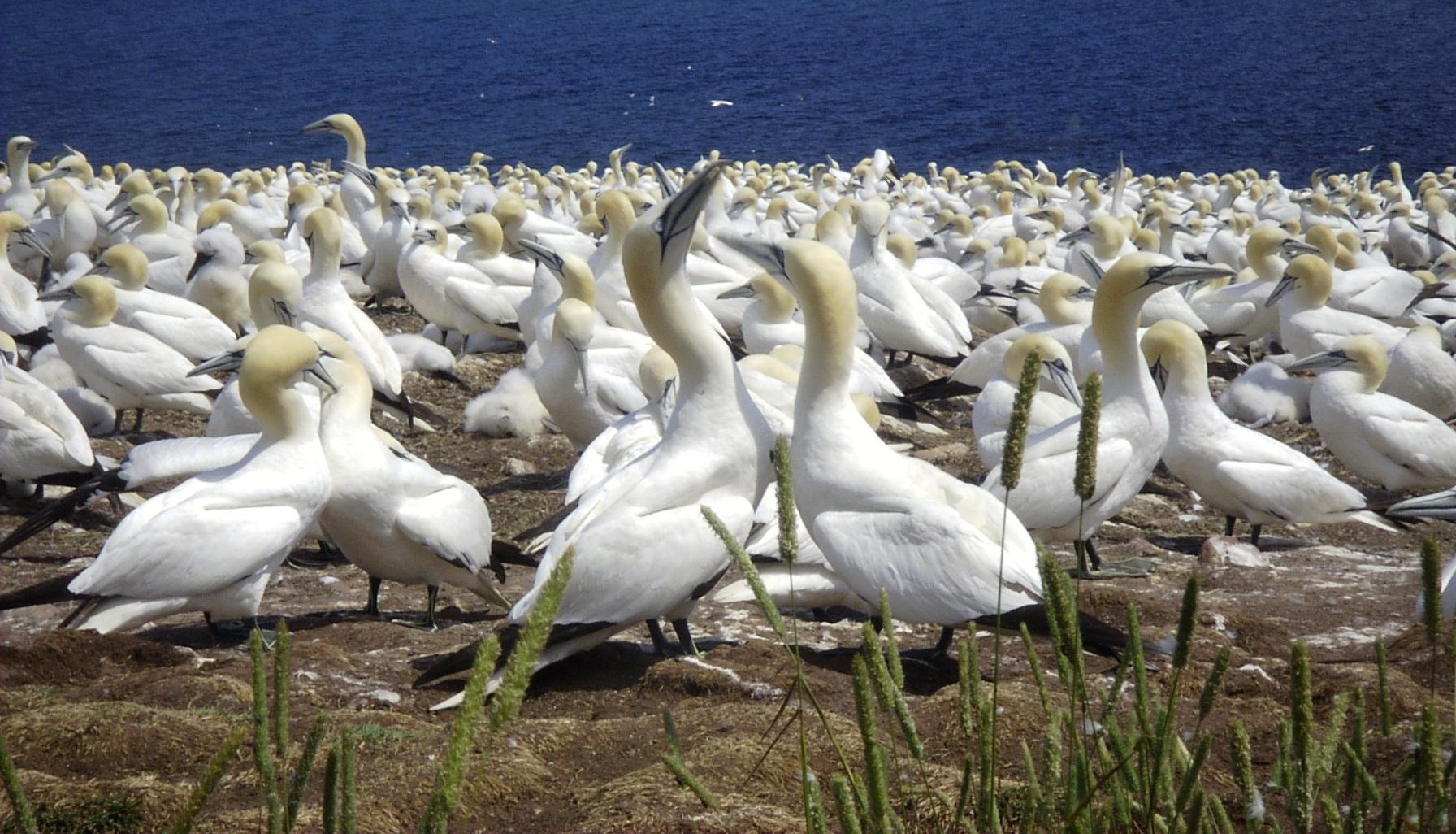
Northern gannets on Bonaventure Island - credit, CC 3.0. BY-SA Bodoklecksel
Northern gannets on Bonaventure Island – credit, CC 3.0. BY-SA Bodoklecksel
Content of several “forever chemicals” in seabird eggs were found to have sharply decreased over the last 55 years by a team of scientists.
While first rising exponentially from during the 1960s, the chemicals, classed as PFAS, peaked in the 1990s before decreasing in line with regulatory oversight by North American governments.
PFAS are a class of chemicals that form water, stain, and heat-resistant coatings in multiple products which substantially contaminate environments around the world, and are linked to multiple detrimental health outcomes.
A study published in the journal Applied Toxicology that looked at PFAS concentrations in the eggs of northern gannets on Bonaventure Island found that the content of some of the most commonly used PFAS has fallen 70% and sometimes more.
These include perfluorooctanesulfonic acid (PFOS) and perfluorooctanoic acid (PFOA), which fell 74% and 40% respectively. Concentrations of perfluorohexanesulfonic acid, (PFHxS) another of these chemicals, was also 70% lower from baseline.
“We see this incredible rise to a peak where concentrations seem to be higher than toxicological threshold for those birds, then it really decreases in a nice way,” Raphael Lavoie, a co-author and ecotoxicologist with Environment and Climate Change Canada, told the Guardian. “The regulations are having a good effect.”
The seabird subjects and the long study period were notable strengths. The 55 years of data spans the rise in PFAS production, and the eventual decline as the environmental groups and regulators caught on to the toxicity in the late 90s and early 2000s.
Bonaventure Island is the world’s largest northern gannet breeding colony. These pescatarian birds are directly exposed to PFAS contamination due to the island’s position near the St. Lawrence Seaway, which, being connected to the Great Lakes manufacturing centers north and south of the border, was exposed to substantial amounts of PFAS during the 20th century.
The PFAS got into the fish which got into the gannets and then into their eggs. Tom Perkins for the Guardian wrote that in the late 90s, the chemical corporation M3 dramatically scaled back its production of commercial PFAS in the face of regulatory scrutiny. In 2015, the chemical sector struck an agreement with the EPA to phase out production of PFOA and PFOS, while 6 years earlier at the United Nations’ Stockholm Convention, several of the chemicals tested for in the study were subjected to elimination.
This included PFOA and PFHxS, while PFOS was restricted in everything but firefighting foam.
The study is a comprehensive demonstration of how these regulations are working to reduce the toxic load presented by PFAS in the environment. PFAS are referred to shorthanded as “forever chemicals,” however, and so the authors stress the need for continual environmental and regulatory vigilance, since any similar chemicals entering the environment today will remain, presumably forever.
SHARE This Great Environmental News With Your Friends…
Quote of the Day: “To a father growing old nothing is dearer than a daughter.” – Euripides
Photo by: Getty Images for Unsplash+
With a new inspirational quote every day, atop the perfect photo—collected and archived on our Quotes page—why not bookmark GNN.org for a daily uplift?
96 years ago today, the Chrysler Building opened to the public in New York City. Constructed by Walter Chrysler, founder of the automotive company, the Art Deco skyscraper served as the corporation’s headquarters and lifted up the languishing East Side of Manhattan from 1930 until the 1950s. WATCH a video about the building narrated by Chrysler’s grandson… (1930)