It turns out that cats keep a mental map of their territory inside their heads which they can use to abstract out information. A recent study showed however that on the legend of that map, the largest icon is us: their owners.
Cats track where their owners are at all times, a study from the University of Kyoto demonstrated, and become deeply confused when we turn up where we shouldn’t be according to the cats’ mental maps.
Abstraction is a higher-order brain function that is the basis for trial and error and other kinds of learning, but also tool use, complex problem solving, hunting, and more.
One thing which abstraction allows is to be able to place objects and forces in and around the environment, even if they can’t be immediately perceived, for example the cat food in the cupboard, the mouse among the tall grass, or the owner in the next room over.
Dr. Saho Takagi conducted a study that placed 50 cats inside individual rooms, where their owner’s voice was periodically calling from outside.
Then either a stranger or the owner’s voice would be played from a speaker in a corner of the room. Observing individuals who didn’t know which voice was being played, ranked the appearance of shock on the cat’s face and body posture at the time the voice came from inside the room.
As per the authors’ predictions, the cats appeared the most surprised when, hearing and abstracting their owner as outside of the room, they suddenly appeared inside, coming through the speakers.
“A lot of what a cat has to interpret in its territory is an awareness of where other cats are. It is also important for hunting: how could a cat catch a field vole moving around beneath the grass if it couldn’t use clues, such as the occasional rustle, to see in its mind’s eye, where they are?” Roger Tabor, a biologist and BBC host of the TV show Cats, told the Guardian.
“A cat’s owner is extremely significant in its life as a source of food and security, so where we are is very important.”
Interestingly, the cats didn’t exhibit the same surprised response if the owner’s voice was replaced with a cat’s meow, or electronic sounds, reinforcing just how important our voices are to the day-to-day mental state of our cats.
It’s sometimes said that cats don’t care about their owners as much as dogs, but knowing they have an invisible map of the house, with the owner always highlighted, soundly scuppers that theory.
Having been inspired by an introductory coding and computer science class at Berkeley, a young man from Zimbabwe is replicating his experience for talented students in his home country—launching their academic journeys into schools like Northwestern and Stanford.
Like many young Zimbabweans, Eric Khumalo didn’t have a lot of options, even for a curious mind like his. He found a breakthrough moment, however, in a U.S.-sponsored school near his home town of Bulawayo.
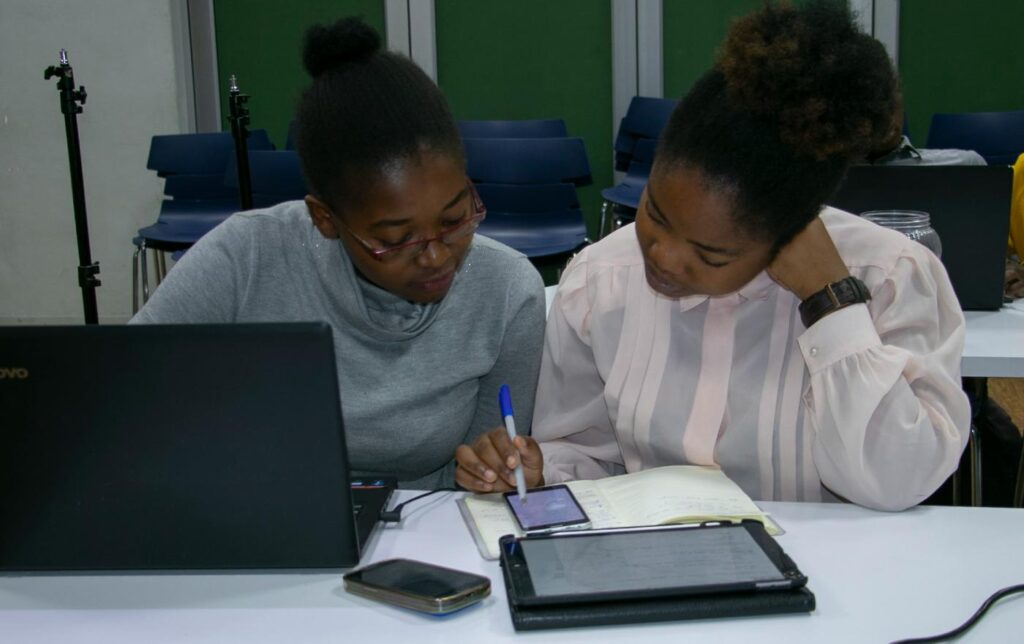
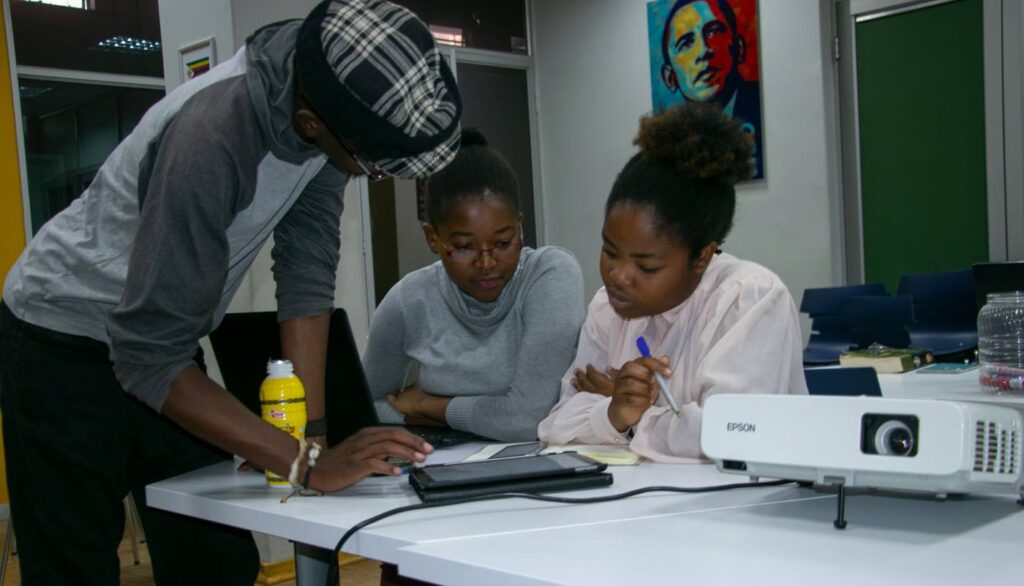
A fascination with coding merged with a desire for sharing knowledge, and a background in teaching that would end with Khumalo starting Emzini WeCode, an education program that has grown from teaching locals in Zimbabwe classrooms at the American embassy to hosting online classes for more than 1,000 students.
“I graduated high school in 2018, and within the government there was a shortage of STEM teachers, so I applied for a year and a half,” Eric told GNN. “I taught at three high schools and got accepted into UC Berkeley on a scholarship from the Mastercard Foundation.”
“I wanted to study so many things! I was going to go with chemistry, I was just like ‘okay, I really need to understand how these molecules behave.’”
Like so many successful students, it was the chance encounter with the fabled “good professor” that launched Eric’s computer science journey.
“I was just like asking questions, and then he told me just about his journey, about how when he was a kid he learned to code; he would make games, and for me I just admired the wonderful things he could accomplish with just code,” says Khumalo. “I found it interesting—this power to create, and this power to solve problems, or if you have a solution—scaling it is possible with computer science.”
Afro-tech
Emzini weCode
Interest in computer science and technology is squarely in the focus of young Africans, not least in those who have taken Eric’s classes at Emzini WeCode, like Nandi Siluma, a teaching assistant at Emzini, who is also a junior at Northwestern University.
“The end goal is to have every child in Zimbabwe, and Africa, knowing how to write, interpret, and manipulate code,” says Siluma.
“I do feel like I am part of a movement to reduce the knowledge gap between the Northern and Southern Hemispheres; that is why I joined Emzini WeCode because I am passionate about sharing learning opportunities with others,” says Proud Npala, another teaching assistant, who took his own experience with Emzini and landed a scholarship at Stanford.
According to Adama Sanneh of the Moleskin Foundation ,who helps run the WikiAfrica Education Program, there’s more information on the city of Paris on Wikipedia, for example, than the entire African continent. Khumalo sees Emizini as a way to close that gap in tech-know-how.
“The main problem I wanted to tackle was job creation,” explains Khumalo, whose January classes are now open for enrolment online for 1,000 students.
“I’ve seen, mostly when I was teaching, that my students’ parents or relatives, mostly they all go to South Africa to work, and how they go there is usually… illegal,” he said. “Through Emzini WeCode at least my number one goal is to change the mindset, to tell more young people that they can create things, that they can have ideas that can scale, and to get jobs.”
“I have a vision that local universities here, having young people who are skilled with world-class knowledge, and they get hired to solve some of the problems that we have.”
Despite the growing popularity of his classes, he has kept his them free, or as cheap as possible, covering only the costs of buying the data necessary to stream in the other teachers from their quarters at whichever U.S. university.
“Usually, like two U.S. dollars a month,” says Khumalo. “The group that I usually target most is people who I know are facing challenges in the community. Because I know if I don’t do that… exposing them to this kind of content, how to code, if a young person doesn’t get some of these opportunities, the next thing they think of is ‘okay, I’ll just go to South Africa and work there.”
Owning the house
Emzini weCode
Emzini means the “house,” in Khumalo’s native language, making Emzini WeCode, “The House of Code.” The name reflects the teaching style, which Eric has modeled to emulate his first experience in computer science at Berkeley, mixed with culturally-relevant aspects.
His focus is broad in scope, avoiding a strict focus on any particular coding language, and opting instead to inspire students to see computer science and coding as a way to solve problems, in whichever career they focus on.
“’This information is good; if I could just take it and find a way of giving it to my people,'” said Eric. “It’s this knowledge I know they really want, but that they don’t have.”
Taking a semester off to return home in 2019, Eric was interested in teaching an introductory coding course at the Education USA program he took before Berkeley. However it wasn’t long before he realized this was not going to be possible.
“I thought people had some foundational knowledge on computer science, but after some time I realized ‘Oh they don’t, they need that course that I took when I was a freshman!’”
So he designed a course that was going to appeal to a wide group of people, with a focus on the foundational problem solving/solution-generating abilities of computer science. Banele Ndlovu took Eric’s coding class when he first set it up in Zimbabwe.
“Back home, at that time, coding wasn’t really a thing; especially for females,” Ndlovu told GNN.
“It has actually led me to the interest of tech as a whole, because now I found myself in a great place where I really love the intersection of business and tech,” she said. “I want to pursue product management, and that started from understanding the knowledge of tech which I learned at Eric’s class, so it really does have an impact.”
“He is very good with breaking down complex concepts into simpler, understandable statements,” Nandi adds. “He would use everyday examples that were relatable, sometimes even teach code in IsiNdebele! (our native language) I remember the first time he explained recursion, he used an example of how people pay their bus fares in Zimbabwe starting from the backseat.”
Proud agreed, saying, “I liked the introductory course CS7. It is an amazing course for anyone who wants to get into computer science,” he said. “It’s not too deep nor too shallow… which is why I found it well-structured for an intro course.”
“What Eric is doing is really cool and really humbling as well because being able to create a program like this especially at first directly to students from Zimbabwe… I really love that, I really love how it’s going,” said Banele.
Eric Khumalo feels a great deal of pride seeing the students taking his course moving on to other schools and other careers. He wants to expand the opportunities he gave to them to more people, and he’s currently designing a computer science curriculum for high schools.
“If one of my students can get into Stanford, then ten of my students should get into Stanford,” he said smiling.
SHARE This Brilliant Initiative From Zimbabwe With Others…
Quote of the Day: “Love is the only thing that we can carry with us when we go, and it makes the end so easy.” – Louisa May Alcott
Photo: by Patty Brito
With a new inspirational quote every day, atop the perfect photo—collected and archived on our Quotes page—why not bookmark GNN.org for a daily uplift?
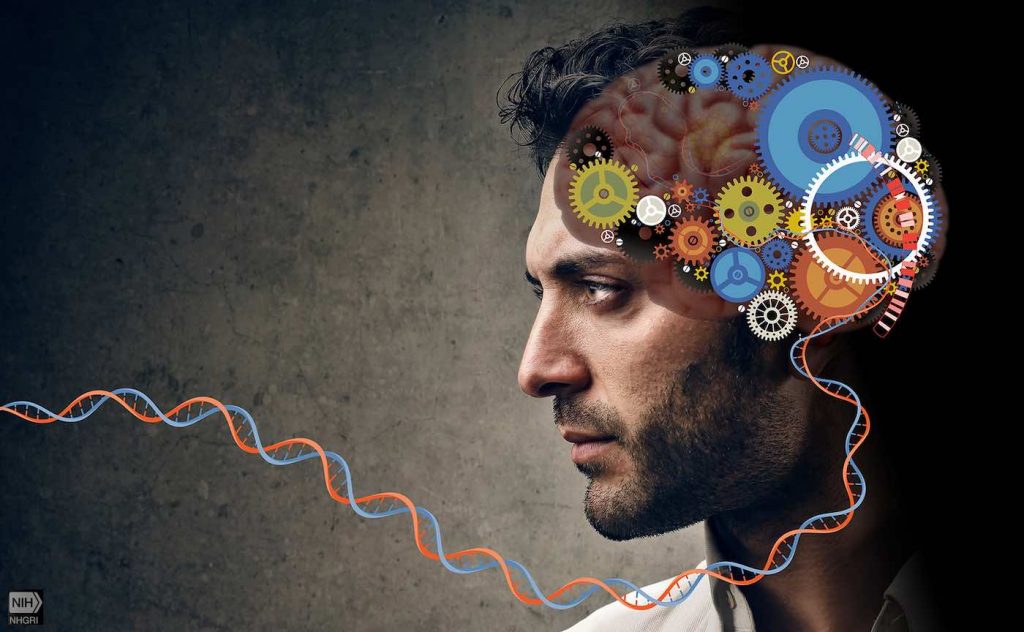
More than 2.5 million Americans have a chronic condition arising in early childhood that can negatively impact their education, job performance, and employability well into adulthood.
There is no known cure, and existing treatments are often minimally effective. Yet for those with persistent, developmental stuttering, there is new hope, thanks to groundbreaking research led by scientists at Vanderbilt University Medical Center in Nashville, Tennessee, and Wayne State University in Detroit, Michigan.
In two papers published this week, Jennifer “Piper” Below, PhD, and Shelly Jo Kraft, PhD, describe a “genetic architecture” for developmental stuttering and report the discovery of new genetic variations associated with the condition.
The researchers said that these findings and studies like them have the potential to identify therapeutic directions that could improve outcomes for people who stutter.
“It’s clear that in populations, stuttering is polygenic, meaning that there are multiple different genetic factors contributing to and protecting people from risk,” said Below, associate professor of Medicine at VUMC. “That was something that had not been clearly shown before these studies.”
The new revelations will have a huge impact on people who stutter and on the parents of children affected by the condition, predicted Kraft, associate professor of Communication Sciences and Disorders and director of the Behavior, Speech & Genetics Lab at Wayne State University.
“It’s a piece of themselves that they can then understand,” she said, “instead of living a lifetime of experiencing this difference in their speech and never knowing why.”
With the help of colleagues in Ireland, England, Israel, Sweden, Australia, and throughout the United States, Kraft has collected blood and saliva samples for genetic studies from more than 1,800 people who stutter, including more than 250 families with three generations of stuttering.
But while that effort, called the International Stuttering Project, identified new genetic variations, or variants, associated with developmental stuttering, it was not sufficiently “powered” to reveal the complexity of the condition. There simply were not enough people in the studies.
That’s where Below comes in. She utilized a key VUMC resource, BioVU, one of the world’s largest repositories of human DNA linked to searchable, electronic health information. BioVU has enabled researchers to conduct GWAS, or genome-wide association studies to probe the genetic underpinnings of a wide range of diseases.
Stuttering, however, is a condition that is rarely mentioned or given a diagnostic code in the medical record. People aren’t hospitalized for stuttering. “We had to come up with some clever new ways to try to capture that missing code,” Below said.
From confirmed cases of developmental stuttering, the researchers constructed a “constellation” of diagnostic codes for other conditions such as attention-deficit hyperactivity disorder (ADHD) and autoimmune reactions to infections that co-occur with stuttering more frequently than would be expected by chance.
Then, using machine learning techniques, they created an artificial intelligence tool that used the presence of these “phenotypes” recorded in the electronic health record to predict those who were likely to stutter, “even in the absence of having a direct note about their stuttering in their medical record,” Below said.
Supported by $3.5 million, five-year grant awarded in 2018 by the National Institute on Deafness and Other Communication Disorders, part of the National Institutes of Health, the researchers demonstrated that their stuttering prediction model positively predicted the presence of stuttering more than 80% of the time.
The research, published in The American Journal of Human Genetics, also turned up a stuttering-related gene implicated in autism-spectrum disorder, as well as genetic variants that affect the regulation of sex hormones. The latter finding may help explain why boys are more likely to stutter, and why women who stutter are more likely to recover.
Some correlations between traits may be spurious, Below noted. But if the researchers establish genetic connections between stuttering and other traits such as ADHD, those findings could open up avenues for treating both conditions at the same time, Kraft said.
Île Ronde island in Quebec by Claude Duchaîne:Nature Conservancy of Canada
Île Ronde island in Quebec by Claude Duchaîne/Nature Conservancy of Canada
Near to where the Ottawa and St. Lawrence Rivers meet, a small island teeming with birds and turtles sits surprisingly untouched amid a suburban sprawl that has turned the surrounding waterline into concrete walls.
The island, called Île Ronde, was spared from this development by the dollars of one man back in the 1960s, who after decades of refusing to sell to real estate and property men, has just donated it to the Nature Conservancy Canada to be protected forever.
Thor Wikström immigrated to Canada from Sweden and built a house for himself, his newish wife, and their first son Hans, in a town called Laval on the shore of Rivière-des-Prairies.
Out of their window, the seven-acre Île Ronde sat offshore by a mighty stone’s throw. Wikström convinced the previous owner to sell it, and it was there that many childhood memories were made among migratory birds and turtles.
Now at 93 years of age, he’s at peace knowing the forests and marshlands, the little cabin and birdhouses he built, will all be protected forever.
“It’s just a good feeling in my heart. I know this will be there forever,” he told CBC News.
“Nature was more important than some stupid money in my pocket,” he added. “I said, ‘This is something [that’s] got to be preserved,’ and I kept my word.”
He turned down dozens of offers to sell the property over the years, good news for the northern map turtle, a species the Canadian government designates as “special concern,” and one which no longer has access to much of its previous habitat due to development along the river.
Île Ronde also hosts a unique tree species called the shagbark hickory, and many migratory bird and game bird species like widgeon, gadwall, and wood ducks.
“The Vikström family has taken great care of it, and with this very meaningful act we are protecting the natural diversity of this unique habitat for the benefit of the animal and plant species that live there, but also for future generations,” said Annie Ferland, project manager for the Montreal Greenbelt at the Nature Conservancy of Canada.
The Lesson: What we believe about the world decides the fate of our thoughts and actions. Two conditions to that belief: That one is good, and has the power to shape the life they want, and that the universe is good, and will help make that life contribute profoundly to providing a space of ‘un’conditional happiness, rather than happiness as determined by outside conditions. It’s not that some people are lucky in life, it’s that some people are looking, or in other words, people don’t believe things when they see them, they will see them when they believe them.
Notable Excerpt: “Most people have to be somewhere, with someone, or do something, to really feel good about themselves and their life and to be happy. And that’s a problem. That makes happiness totally ‘conditional,’ but there is another way. There’s a lens you can look at the world with, where you see yourself, and the world you live in, as good and powerful. And it’s that lens that starts making your joy and your peace free of any conditions.”
The Speaker: Moshe Gersht is a spiritual teacher, Rabbi, Wall Street Journal bestselling author and emerging thought leader. Before spending 15 years studying the Torah, mediating, and researching philosophy, psychology, and theology, he actually dropped out of high school and was the singer songwriter for a pop punk band in Los Angeles.
The Book: Gersht is the author of two books, Succos Inspired and his most recent It’s All The Same To Me, which Deepak Chopra called “a contribution to the world’s enlightenment.”
(WATCH Moshe Gersht speak at TEDxDupreePark below.)
Monarch butterflies are famous for their annual long-distance migration, which takes them over several thousand kilometres from the north of the USA to their overwintering habitat in central Mexico. On their migration, the conspicuously orange-black-white colored butterflies use sun information as main orientation reference.
But how is sun information processed in the butterfly’s brain? Previous studies have already described cells that process the solar azimuth. “However, we didn’t know these cells encode the sun during flight,” says Jerome Beetz from the Biocentre at Julius-Maximilians-Universität Würzburg (JMU) in Bavaria, Germany.
Until now, it was assumed that the sun compass always works—irrespective of whether the insects sit, walk or fly.
A team led by JMU researchers Jerome Beetz and Basil el Jundi shows that this is not the case and that the compass is established at the onset of flight: “Surprisingly, the nerve cells change their coding strategy during flight, so that the neural network represents the heading direction of the butterflies relative to the sun in a similar way to a compass. This only happens when the animals can control their own direction of flight.”
Butterflies in a flight simulator
How was this gap in knowledge closed? The team led by Beetz and el Jundi measured for the first time the neural activity in actively flying monarch butterflies and examined the influence of the animal’s orientation behaviour on the processing of sun information. Such measurements had previously only been carried out in restrained butterflies.
The JMU researchers took advantage of a technical trick: “We tethered the butterflies to a freely rotatable rod in the centre of a flight simulator, which enables the butterflies to actively choose a flight direction. The sun was mimicked with a green light spot. While the tethered butterfly was flying, we monitored the brain activity with ultra-fine microelectrodes.”
The experiments, published in in the scientific journal Current Biology, prove: Active movement of the butterflies is necessary to process sun information as compass information in the butterfly brain during migration.
“Our results emphasize the importance of performing neuronal recordings in actively moving animals in order to understand how the brain solves complex orientation tasks,” says Beetz, who is first author of the publication in Current Biology. Other researchers from the Biocentre as well as from the universities of Lund (Sweden), Bielefeld and Texas were involved in the project. The work was funded by the German Research Foundation (DFG).
Brain the size of a grain of rice with amazing abilities
Beetz admires his research subjects: “Our publication uniquely demonstrates that even a brain with the size of a grain of rice is a highly complex organ that enables insects to perform such amazing behaviors. With their brain, monarch butterflies manage the enormous migration by using an efficient internal compass. Such a long-distance migration without using modern navigation devices is hard to imagine for us, humans and this is one major reason that drives my fascination for these enigmatic butterflies.”
Next, Jerome Beetz and Basil el Jundi plan to investigate how the butterflies’ sun compass operates when the butterflies have access to the natural sky than when simply using a light spot as reference for orientation. To do this, the neural recordings must be carried out in open air flight simulators.
Quote of the Day: “Wine, love, art, beauty. Without them life is safe, but not worth bothering with.” – Stephen Fry
Photo: by Bill Williams
With a new inspirational quote every day, atop the perfect photo—collected and archived on our Quotes page—why not bookmark GNN.org for a daily uplift?
utland mosaic released Steven Baker_Historic England Archive
University of Leicester Archaeological Services
Archaeologists have unearthed the first Roman mosaic of its kind in the UK.
The initial discovery of the mosaic was made during the 2020 lockdown by Jim Irvine, son of landowner Brian Naylor, who contacted the local council archaeological team.
The remains of the mosaic measure 11 meters by almost 7 meters (36×23 feet) and depict part of the story of the Greek hero Achilles—to form the floor of what’s thought to be a large dining or entertaining area.
Mosaics were used in a variety of private and public buildings across the Roman Empire, and often featured famous figures from history and mythology.
However, the Rutland mosaic is unique in the UK in that it features Achilles and his battle with Hector at the conclusion of the Trojan War and is one of only a handful of examples from across Europe.
The room is part of a large villa building occupied in the late Roman period, between the third and fourth century AD.
The villa is also surrounded by a range of other buildings and features revealed by a geophysical survey and archaeological evaluation, including what appear to be aisled barns, circular structures, and a possible bath house—all within a series of boundary ditches.
The complex is likely to have been occupied by a wealthy individual with a knowledge of classical literature.
Fire damage and breaks in the mosaic suggest that the site was later re-used and re-purposed.
Other evidence uncovered includes the discovery of human remains within the rubble covering the mosaic.
These burials are thought to have been interred after the building was no longer occupied, and while their precise age is currently unknown, they are later than the mosaic but placed in a relationship to the villa building, suggesting a very late Roman or Early-Medieval date for the repurposing of this structure.
Their discovery gives an insight into how the site may have been used during this relatively poorly understood early post-Roman period of history.
A remarkable find
Evidence recovered from the site will be analyzed by ULAS at their University of Leicester base, and by specialists from Historic England and across the UK, including David Neal, the foremost expert on mosaic research in the country.
Steven Baker/Historic England Archive
The villa complex was found within an arable field where the shallow archaeological remains had been disturbed by ploughing and other activities.
Duncan Wilson, Chief Executive of Historic England, said, “To have uncovered such a rare mosaic of this size, as well as a surrounding villa, is remarkable.”
“Discoveries like this are so important in helping us piece together our shared history. By protecting this site we are able to continue learning from it, and look forward to what future excavations may teach us about the people who lived there over 1,500 years ago.”
Jim Irvine, who first spotted signs of something fascinating beneath the earth on a ramble last year, said, “This archaeological discovery has filled most of my spare time over the last year. Between my normal job and this, it’s kept me very busy, and has been a fascinating journey. The last year has been a total thrill to have been involved with, and to work with the archaeologists and students at the site, and I can only imagine what will be unearthed next!”
National Human Genome Research Institute - CC license
National Human Genome Research Institute – CC license
You are playing such an intense video game and are focused so intently on getting to the next level that you don’t know what is going on around you. You have no sense of time passing. You feel great. You are “in the zone.” You are experiencing flow.
You are running a marathon, and you are so focused on the finish line that you barely experience any pain or tiredness until you are done. You are experiencing flow.
“Flow is a state of peak enjoyment that occurs when you are doing something that is difficult and you are highly skilled at,” explained Richard Huskey, a University of California, Davis, assistant professor of communication and cognitive science and author of a new paper on flow.
Flow is said to be good for our well-being—and there is evidence that it can ward off depression, prevent burnout and make us more resilient. We seek it out, but we don’t understand how the brain enables flow very well, Huskey said.
Looking at flow in media use
In an effort to see what the brain does during flow, Huskey led research looking at how people experience flow while playing a video game. In a paper, which was published in the Journal of Communication this month, more than 140 participants played a video game. Some took part in an experiment while playing a game and self-reported their experiences. Others also subjected themselves to brain imaging so that researchers could look at how their brain functioned during flow.
Flow happens, Huskey said, when activities are engaging enough to fully involve someone to the point of barely being distracted, but not so difficult that the activity becomes frustrating.
Similarly, a video game designed for a child will probably not keep an adult in flow. There must be a balance, he explained. When there’s a balance, the person experiences an intrinsic reward. Things like getting to the next level or earning points matter, but they become secondary. Simply playing the game and experiencing flow is rewarding in and of itself.
Flow requires a high level of attention. To measure this, researchers distracted the players at various points in the game with a probe—a red circle accompanied by a tone — which appeared on the screen in one of the game’s four corners. Participants were asked to respond to the probe as quickly as possible.
Previous research has shown that when people focus their attention on one task, they become slower to respond to these probes. Therefore, if flow requires a high level of focused attention, then people should be slowest to respond when the game’s difficulty and the player’s ability are in balance. This is exactly what the researchers found, and it may explain why people are able to focus on tasks during flow while ignoring distractions.
How the brain processes flow
Very few regions in the brain are responsible for just one cognitive process. So, there is no “flow” region in the brain. Instead, flow results from networked interactions between multiple brain regions. When several brain regions are densely connected with each other but sparsely connected with other regions, this is called a “modular” network configuration.
Importantly, modular network organization is energetically efficient. Research shows that during complex tasks, this modular configuration often reconfigures by connecting different brain regions into a new modular organization. This reconfiguration is called “flexibility,” and it is thought to help people adaptively respond to difficult tasks.
“In our study, we showed that flow is associated with a flexible and modular brain-network topology, which may offer an explanation for why flow is simultaneously perceived as high-control and effortless, even when the task difficulty is high,” Huskey said.
In other words, the brain in flow is pretty darn efficient.
“Imagine looking for your keys in the morning,” Huskey added. “If you don’t know where your keys are, you’ll need to visit every room in your home and turn on every light. This will require a lot of energy. But if you remember where your keys are, even if you leave them in a different room each day, you can efficiently travel to the right room and turn on only the necessary lights. In many ways, this is similar to the brain during flow — only the necessary brain structures are networked together in an energy efficient way.”
In the experiments, researchers showed that a balance between game difficulty and individual ability results in high self-reported flow, high levels of motivated attention, and a flexible and modular brain network topology.
People’s flow observed
Of the 140 people studied at two universities, 35 were observed in a functional MRI where they held the game controls, a button box and track ball close to their body while the MRI machine functioned. The others were at a desk, operating the computerized game with a standard desktop computer.
In flow, people recognize the task’s demands and proceed without requiring excess amounts of energy, Huskey said. Flow could, then, relieve the stress of competing demands in our lives, such as pandemic stresses, an overwhelming task at work, a family problem, or all of the above.
More research is needed outside the lab setting. But this work, published in Journal of Communication, is a good start toward looking at how the body can be resilient, Huskey said. Researchers should examine linking measures of well-being with neural responses.
That could inform researchers on developing certain treatments, or even media interventions, to improve people’s flow for their own well-being, Huskey said.
Hermitage_cat cc license wikimedia commons http-__fotki.yandex.ru_users_ewwl_view_325997
Fotki Yanders, CC license
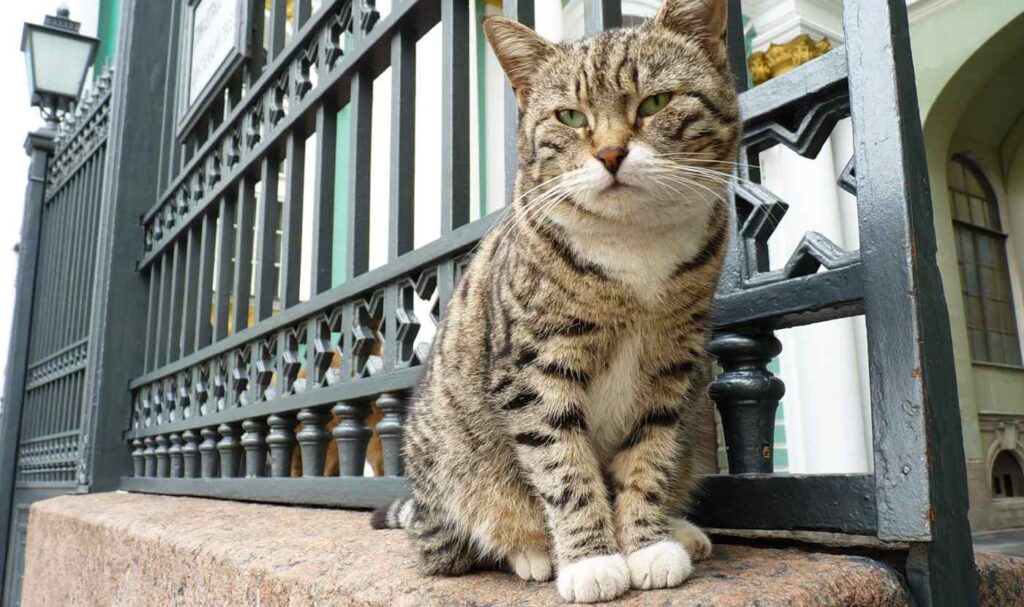
Like the building itself, the cats which roam freely around the basement of the Hermitage in St. Petersburg have endured through changing fortunes.
Originally brought into the massive Baroque building by Empress Elizabeth I to catch mice, the 65 felines have outlived and even replaced the Tsars which adopted them.
Treated like royalty down in the “Cat’s Quarters,” they enjoy 24-hour veterinary care, feeding, and freedom from the adoring public thanks to their own press secretary.
Catherine the Great reportedly called them the “Guardians of the Galleries.” Though they aren’t allowed into the galleries of what was once the Winter Palace and what has become the largest museum in the world, and most people don’t know they exist.
However it’s not rare for a visitor outside the building to come across a feline lounging in the sun.
After the Soviet Union collapsed in 1991, many in St. Petersburg could no longer afford to feed and care for their cats, and so the Hermitage, which had been open to the public for more than 100 years, decided to adopt some of the strays to add to the descendants of the original cats brought from the city of Kazan 100 years before that.
Now as then, the Hermitage will take in stray cats that find their way into the museum’s underbelly, perhaps by befriending one of the furry staff members. These are given a new life and kept fed and healthy, mostly through staff and visitor contributions.
“If mice would pass close to our cats—they will catch,” Maria Haltunen, the official spokeswoman for the cats, told CNN. “They do their job very well.” Haltunen told ABC News that most of the time the cats need not kill anything, as their smell serves to keep most mice away.
Many of the cats’ ancestors have been immortalized for their service to the state in paintings on the very walls of the museum they defended.
It’s all part of the rich tapestry of history the building, with its art, architecture, history, and its feline guardians, has woven through some of the most devastating and destabilizing events in human history.
(WATCH the CBC video for this story below…)
PAW This Fascinating Feline History Over to Chums…
Researchers in California recently captured footage of one of the most striking sea creatures you’ll ever see: Stygiomedusa gigantea, aka the giant phantom jellyfish.
Seen only nine times by the researchers over the span of thousands of dive trips to the lightless depths of the ocean, the Monterrey Bay Aquarium Research Institute (MBARI) unmanned submersible encountered what scientists described as a “billowing crimson curtain,” and a “ghostly giant.”
Never has a creature been so accurately depicted, and rarely has there been a name so befitting its owner, as the giant phantom jelly, with a three-foot-long head, or bell, and four thirty foot-long tentacles, could substitute a stage curtain in an abstract photo and no-one could tell the difference.
The first specimen ever collected was in 1899, and it’s been seen about a hundred times since. As rare and special as the giant phantom jelly is, it’s widely distributed, capable of living in all oceans bar the Arctic, and at all depths, though it’s typically found between 3,200 and 12,000 feet, in a zone known as the bathypelagic where light can’t reach and the underwater pressure is immense.
Scientists know very little about this amazing animal, but they assume it feeds on plankton or small shrimps. During this particular dive the MBARI’s submersible, called Doc Rickets, spotted a small fish called a brotula hover above the bell of its host and swim in and out of the jelly’s voluminous arms.
Monterrey Bay Aquarium Research Institute (MBARI)
“The wide-open waters of the midnight zone offer little shelter, so many creatures find refuge in the gelatinous animals that are abundant in this environment,” the researchers write.
Previously, deep sea specimens could only be studied via trawl net, which has its uses for sturdier creatures like the colossal squid, one of the method’s most famous entanglements, but jellies turn to an unidentifiable mush in a net.
“High-definition—and now 4K—video of the giant phantom jelly captures stunning details about the animal’s appearance and behaviors that scientists would not have been able to see with a trawl-caught specimen.”
Someone had the bright idea to put ominous piano music over the footage, setting Stygiomedusa gigantea in an audio landscape befitting its name and beauty.
Other animals of stunning make and model were captured on the dive, and MBARI put the photos together in a slideshow and shared the video below that will make your jaw drop.
SHOW Your Friends Some Awe –Share The Mesmerizing Images on Social Media…
Quote of the Day: “It’s not that some people are lucky, it’s that some people are looking.” – Moshe Gersht
Photo: by Dim Hou
With a new inspirational quote every day, atop the perfect photo—collected and archived on our Quotes page—why not bookmark GNN.org for a daily uplift?
Brits have revealed their best-loved Christmas traditions, including watching festive films, wearing Christmas jumpers—and tucking into turkey sandwiches on Boxing Day.
A survey of 2,000 adults found Christmas dinner to be the top tradition over the festive period, while listening to Christmas songs and putting a mince pie out for Santa on Christmas Eve also featured in the top 20.
The poll also found 53 percent believe the impact of the COVID-19 pandemic has made them value Christmas traditions more than they’d realized.
But going to a pantomime, shopping in-store, and going out for drinks on Christmas Eve were among the loved traditions that Brits now feel uncomfortable doing following lockdowns
The survey further revealed that 41 percent believe the traditions they follow have changed over the years—with 35 percent having adapted their traditions in a bid to be less materialistic, while 32 percent have altered their traditions for their children.
Francesca Savage, Head of Christmas at Save The Children, which commissioned the poll to celebrate its tenth Christmas Jumper Day this Friday (December 10), said, “For many of us, the traditions we take part in at Christmas are what make the festive period something we look forward to.
“However, COVID-19 has meant that we’ve had to adapt, and in doing so, people have swapped materialistic traditions for ones that bring joy to their children.
The poll, commissioned via OnePoll, found that one in five have bought a second-hand Christmas sweater before, while one in eight (13 percent) have made their own.
The survey also found almost seven in ten agreed people should make more of an effort to be more sustainable this Christmas, such as not using glitter wrapping paper or buying plastic toys.
And surprisingly, this year over half (53 percent) plan to buy second-hand gifts in a bid to be more sustainable than ever before.
However, almost three-quarters (73 percent) agreed that there was still a stigma about buying second-hand presents—while three-fifths admitted that if they did buy a second-hand present, they would conceal this from the recipient in fear of their reaction.
British high-street retail expert and founder of ‘Mary’s Living and Giving for Save the Children’ shops, Mary Portas, said, “With £42m worth of unwanted Christmas presents sent to the landfill each year, there’s no better time for the nation to opt for a thoughtful, less consumerist Christmas by buying pre-loved gifts.
“Charity shopping offers savings and the chance to buy personalized presents for loved ones, but most importantly, it gives back to those who need vital support.
“Whether you buy sustainably for this year’s tenth Christmas Jumper Day, or want to find a hidden gem to gift, please remember that by buying second-hand from a Save the Children shop, you can help protect the magic for children everywhere.”
The money raised goes toward helping disadvantaged children get the food, healthcare, and education they need.
BRITS’ FAVORITE CHRISTMAS TRADITIONS:
1. Christmas dinner
2. Giving and receiving presents
3. Putting the Christmas tree up
4. Eating with all the family on Christmas Day
5. Putting up Christmas decorations
6. Watching traditional Christmas films
7. Eating Turkey on Christmas Day
8. Listening to Christmas songs on the radio
9. Sending Christmas cards
10. Getting an advent calendar
11. Eating Turkey sandwiches on Boxing Day
12. Wearing Christmas jumpers
13. Going out for a Christmas meal with friends
14. Watching the Queen’s speech
15. Getting dressed up on Christmas Day
16. Hanging a wreath
17. Putting a mince pie and glass out for Santa, and carrots for Santa’s reindeer
18. Drinking Bucks Fizz on Christmas morning
19. Lounging around in your Christmas pyjamas on Christmas Day
20. Going to a pantomime
SHARE This Poll With Your Christmas-Loving Buddies…
Ten thousand fungal samples will be taken from hotspots around the globe, and cataloged as part of a project to map out the vast bulk of the most-valuable fungal biomass of the planet.
Consisting of trillions of miles of filaments that transmit nutrients, water, and information throughout earth’s soils and the plant life therein, fungi is as vital to the world ecosystem as the plants they sustain.
SPUN, or the Society for the Protection of Underground Networks, is aiming to expand our understanding of mycorrhizal networks to put them more in focus of climate science and modern environmental policy.
As fungus collect nutrients, particularly carbon, they build networks of very tiny filaments called mycelium, that make up their vast presence on our planet. The more recognizable mushrooms that mark their comings and goings are a tiny percentage of the organism’s total size.
Research from biologists, mycologists, and forestry experts has shown that these filaments form vast networks that when seen under a microscope, look just like information or electricity moving through cabling, and when viewed together look as active as the neuronal networks in our brain.
The networks interconnect trees and other plants, exchanging information about parasites, nutrient dearth or density in the environment, and even facilitate trading whereby a fungus, which cannot make its own sugars, will take some from a tree in exchange for a metal like phosphorous.
Comprising of scientists from Canada, Holland, the U.K., the U.S., France, and Germany, SPUN aims to take mycorrhizal samples from 10,000 hotspots of fungal diversity, from which they hope to get a better understanding of where the largest threats are to biodiversity.
Ecologies with thriving mycorrhizal networks have been shown to store eight-times as much carbon as depleted ones.
“An understanding of underground fungal networks is essential to our efforts to protect the soil, on which life depends, before it is too late,” said renowned conservationist Jane Goodall, a member of the project.
So far, ten hotspots have been identified, with the first samples to take place in Patagonia 18 months from now. Other sites include the tundra in Canada, high altitudes in South America, the Negev and Sahara deserts in Israel and Morocco, the Mexican highlands, the Russian taiga forest, the steppes of Kazakhstan, and the lowlands of Tibet. Which should make for an excellent road trip.
“Just below our feet lies an invaluable ally in mitigating climate change: vast hidden fungal network,” said Jeremy Grantham, a billionaire-backer of SPUN. “Billions of tons of carbon dioxide flow annually from plants to fungal networks.
“Yet these carbon sinks are poorly understood. In working to map and harness this threatened but vital resource for life on earth, SPUN is pioneering a new chapter in global conservation.”
SHARE This Fascinating Research With Your Network…
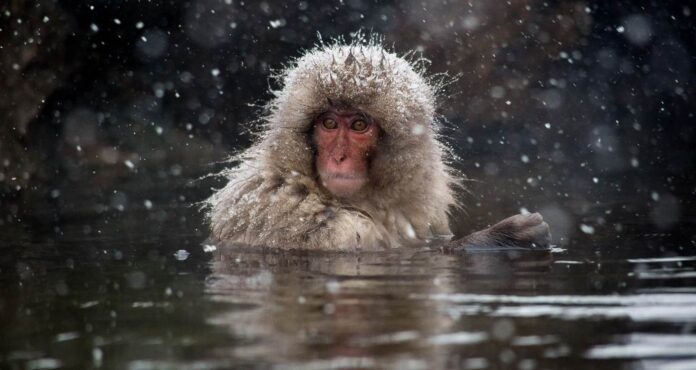
Humans love spas, sauna bathing, hot baths; after a cold day what could be better? Japan has a famous troupe of wild monkeys that also love a relaxing soak in the country’s hot springs, and after delighting tourists for decades, scientists have decided to finally sort out the behavioral particulars of this fascinating trait.
What they found was that monkeys not only use the hot springs for warmth in their frigid winter environment, but that they serve to bring down the levels of stress hormones in the monkeys’ brains.
Near the site of the last Winter Olympics lies the town of Nagano. Here ,Japanese macaques exhibit a strange behavior.
Bathing monkeys is a more common sight in India and China, but only in Nagano have monkeys been recording bathing in hot water.
Other macaques live further north than Nagano, so it’s clear the species is adapted to cold weather, however despite the fact that the local environment is filled with natural hot springs, the 140° F water temperature is too hot.
Nearby hotels use cool water to bring that scalding temperature down to one that guests find enjoyable, and in 1963, a female monkey was found relaxing in one such pool.
Eventually it caught on, and the monkeys became a nuisance and a health hazard; so a park was built nearby where the monkeys had exclusive access to several 104° pools.
Having obvious use as a therapy for the cold, recent tests have aimed to determine whether there was any other driver of this novel behavior.
Perhaps unsurprisingly, considering primates’ strong social bonds, a stress hormone called glucocorticoids, which is known to be elevated by cold weather, were considerably lower in the animals’ fecal matter after periods of bathing.
Rafaela S.C. Takeshita from the University of Kyoto admitted that spending so much time watching the macaques relax in the hot springs rubbed off on her.
“I confess that during my research, many times after, I jumped into one of the hot springs pools,” she told the New York Times, adding that it was the humans-only pool.
(WATCH the New York Times video featuring those snow monkeys.)
HELP Friends Warm Up With Great Stories; Share This Piece…
hedgerow wikimedia commons cc license Andrew Smith _ Hedgerow above Rake Bottom _ CC BY-SA 2.0
Andrew Smith/Hedgerow above Rake Bottom; CC license
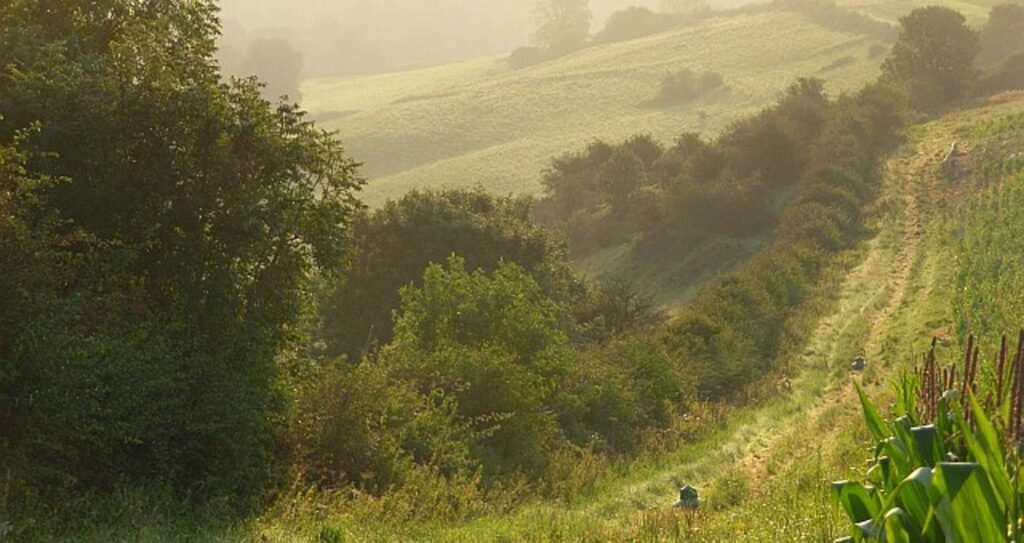
The humble hedgerow is a staple sight in any countryscape in Europe and parts of North America. A British mainstay, some scientists suspect they act as ecosystem anchors that can play host to more than 2,000 different species of plants and animals in a single year.
Indeed, one journal published an English ecologist’s report on an old hedgerow near his house that throughout the year contained 2,070 species, from badgers to many hundreds of insects.
“Hedgerows define our countryside and provide many environmental services, but are also vitally important for wildlife as a refuge, a source of food, and as corridors along which they can move through the landscape,” write the National Hedgelaying Society, the only charity dedicated to maintaining the traditional skills of hedgelaying and encouraging the use of hedgerows for wildlife and landscape.
There are 435,000 miles of hedgerows in Britain, stretching and winding farther than the entire British road network. Sometimes built to keep people out, other times to keep animals in, there are 30 recognized traditional styles of hedgerows, some of which date back an astonishing 800 years.
Home, hotel, and highway all in one
While appearing like a manicured wood wall, or a tangled mess, the species richness of hedgerows in Belgium was actually found to be higher than in the nation’s forests; 30% higher. This can partly be explained by hedgerows being a microcosm of the forest ecosystem. A high reaching canopy shades and keeps moist an understory that attracts a variety of fungi and animals. This in turn stimulates competition and diversity among plants battling for light, pollinators, and other resources.
This diverse environment attracts pollinators to spring and summer blossoms, which can lead to bees making it their home and increasing adjacent crop yields. The sheltered habitat attracts insect-devouring birds, which in California was found to save $4,000 a year in insecticide costs for a 1,000 foot hedgerow. They also attract insects like wasps and hornets which eat aphids and other unwelcome diners in a vegetable garden.
Dave S, CC license
Hedgerows are essentially highways of countryscapes. Badgers, hazel dormice, and hedgehogs use them as cover to move around stealthily. In agricultural areas, one study found that hedgerows are the single best way to connect fragmented stretches of forest or unmanaged fields, and as such can be critical for keeping populations of animals healthy.
Nocturnal animals like moths and bats use hedgerows as flight paths to safely navigate built up rural areas. Two-thirds of observed moths were sitting on or traveling parallel to a hedgerow during their movements at night.
Like all plants, the growth that makes up a hedgerow stores carbon, and the British government suspects that the since hedgerows can live so long, they could be a good way to absorb greenhouse gas emissions rather than simply planting trees. But that’s not the only protective effect they have. Hedgerows act as a strong defense against soil erosion by preventing rains or winds from dispersing the soil in a paddock out into streams or streets. One study even found they can help reduce the spread of disease between livestock.
For all these reasons, many countries are acting to increase their hedgerow coverage. In January, French President Emmanuel Macron committed €50 million to planting 4,300 miles of hedgerows. In Britain, a non-profit action group representing the government’s official conservation watchdog has a petition going to expand Britain’s hedgerow network by 40%, approximately 120,000 miles, based on recommendations from the country’s Climate Change Committee.
Most of the ways humans artificially engineer the land tends to be seen as negative, but back in the dawn of the modern period, the obsessive habit of farmers separating their paddocks from the neighbor’s created an almost magical feature of the environment that all living things congregate in.
Quote of the Day: “Courage and perseverance have a magical talisman, before which difficulties disappear and obstacles vanish into air.” – John Quincy Adams
Photo: by Ariel Pilotto
With a new inspirational quote every day, atop the perfect photo—collected and archived on our Quotes page—why not bookmark GNN.org for a daily uplift?
The Rowlands neighborhood tree in the village of Inkberrow, Worcs – SWNS
This tree-mendous pine is becoming known as The Little Tree That Could.
Planted by an elderly couple long ago when it was shorter than them, it has grown to more than 50-feet and provides a majestic light to a town with little illumination on any horizon.
Avril and Christopher Rowlands bought the fir costing £6 at a garden center shortly after moving into their home, using it as their first Christmas tree.
They planted the 6-foot tree in the front garden and took a photograph to commemorate the occasion.
The tree took root and thrived.
Today it towers, 43 years later, over the village of Inkberrow, Worcs.
The village—with its 17th century pub that inspired The Bull in Radio 4’s The Archers—is one of the darkest places in the UK as one of the only towns without any street lights.
The Little Tree That Could, 1979 – SWNS
But last week its 2,000 residents turned out to see the switching-on ceremony, which lit up the huge tree that can be seen from miles around.
SWNS
“The switching on of the lights has become quite a village tradition,” said Avril. “A lot of people in the village say that it’s the start of their Christmas.”
This year was quite special because last year the Rowlands had to do the switch-on by themselves due to Covid restrictions.
“We had fireworks, too, this year, plus a friend who brought down a trailer that had Christmas music on.”
The tree has grown so big that a cherry picker is needed to help the couple decorate it with 3,000 lights ahead of the big unveiling.
“It’s been wonderful to see so many people enjoy the lights this year,” said the 75-year-old retired TV writer.
The Rolands – SWNS
And, since the tree is getting more and more attention, they decided to ask people to donate to a Cancer Research charity online, in memory of a close friend who died this year.
The couple say they are still stunned by the size of the tree which grows more than a foot each year: “We had no idea just how big it would grow. It’s absolutely huge now and towers over our house.”
Drone aerial view of the giant Christmas tree in 2019 –SWNS
Avril swooned, “We even get cards addressed to the tree, which is quite sweet.”
SHARE The Charlie Brown Tree With Friends and Family You Love on Social Media…
Researchers at a lab owned by the U.S. government have passed a crucial milestone on the way to their ultimate goal of achieving self-sustaining nuclear fusion.
On Aug. 8, 2021, an experiment at Lawrence Livermore National Laboratory (LLNL) made a significant step toward ignition, achieving a yield of more than 1.3 megajoules. Researchers said this advancement puts them at the threshold of fusion ignition, which is defined as a sustainable and never-ending powerful energy source.
The experiment was enabled by focusing laser light—the size of three football fields—onto a target which is the size of a BB that produces a hot-spot the diameter of a human hair, generating more than 10 quadrillion watts of fusion power for 100 trillionths of a second.
“These extraordinary results advance the science,” said Jill Hruby, DOE under secretary for Nuclear Security and administrator of the National Nuclear Security Administration.
Experiments in pursuit of fusion ignition are important for providing data in an experimental regime that is extremely difficult, and is an important gateway to enable access to high fusion yields in the future.
While a full scientific interpretation of these results will occur through the peer-reviewed journal/conference process, initial analysis shows an 8X improvement over experiments conducted in spring 2021 and a 25X increase over NIF’s 2018 record yield. It also marked the first time the output exceeded the energy absorbed by the fuel used to trigger it, according to Science Alert.
“This result is a testament to the innovation, ingenuity, commitment and grit of this team and the many researchers in this field over the decades who have steadfastly pursued this goal,” said LLNL Director Kim Budil. “For me it demonstrates one of the most important roles of the national labs – our relentless commitment to tackling the biggest and most important scientific grand challenges and finding solutions where others might be dissuaded by the obstacles.”
The experiment built on several advances gained from insights developed over the last several years by the LLNL’s National Ignition Facility team, including new diagnostics; target fabrication improvements in the hohlraum, capsule shell and fill tube; improved laser precision; and design changes to increase the energy coupled to the implosion and the compression of the implosion.
“Gaining experimental access to thermonuclear burn in the laboratory is the culmination of decades of scientific and technological work stretching across nearly 50 years,” said Los Alamos National Laboratory Director Thomas Mason. “This enables experiments that will check theory and simulation in the high energy density regime more rigorously than ever possible before and will enable fundamental achievements in applied science and engineering.”
Looking ahead, access to this new experimental model will inspire new avenues for research and provide the opportunity to create further benchmarks. Plans for repeat experiments are well underway, although it will take several months for them to be executed.