Quote of the Day: “I can’t give you a sure-fire formula for success, but I can give you a formula for failure: try to please everybody all the time.” – Herbert Bayard Swope
Photo: by Илья Мельниченко
With a new inspirational quote every day, atop the perfect photo—collected and archived on our Quote of the Day page—why not bookmark GNN.org for a daily uplift?
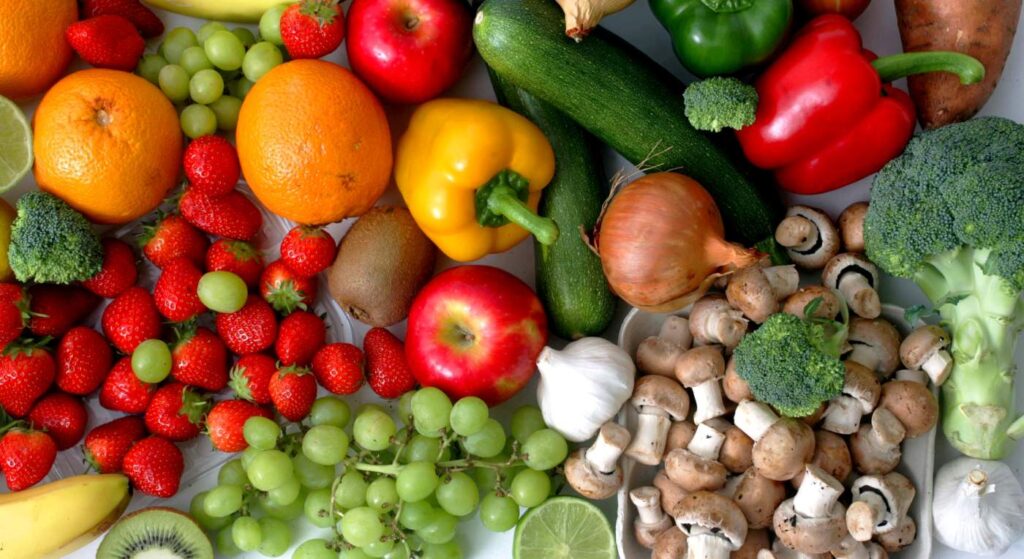
After a year in lockdown, growing fruits and vegetables at home has officially taken root—with more than half of adults cultivating their own produce during the past 12 months.
SWNS
The trend is particularly popular among younger adults, with six in ten 18-to-34 year-olds growing their own—and now a former Beatle and his family are spearheading an effort to increase the number even more, on behalf of the late Linda McCartney.
Saving money (32 percent), helping the environment (23 percent), being more sustainable (28 percent), and eating more fruit and veg (15 percent) are some of the reasons people are picking up trowels.
The poll, by Linda McCartney Foods, found 70 percent of adults want to grow even more produce at home but are unable to do so.
The biggest barrier is lack of space said 27 percent of those surveyed, with half of adults—including 66 percent of 18-to-34 year-olds—wishing they had a bigger garden area.
Another 13 percent simply wish they had a garden.
In order to help people like these, the vegetarian food company has announced its ‘Grow Your Own with Linda’s’ initiative.
The initiative is building ‘growing spaces’ in urban areas throughout Britain, the company told SWNS news, while a Grow Your Own Guide will soon be available on their website.
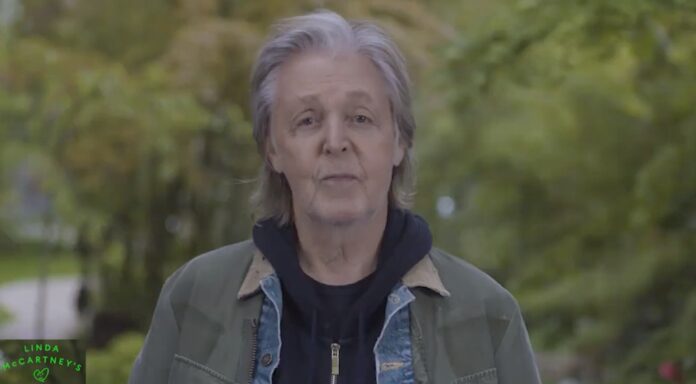
The wife of Beatle Paul McCartney for 29 years, until her death from cancer, Linda was a vegetarian and started Linda McCartney Foods almost three decades ago.
Paul said, “We’re so pleased to bring this initiative to people across the UK and continue the legacy of kindness that Linda set out with for her veggie food company 30 years ago.
“Linda aimed to show that being kind didn’t mean having to compromise on eating delicious food.
“Through this project, we hope we can empower more people across the UK to try growing, and eating their own. Dig in and have fun.”
Two thirds of survey participants enjoy growing so much that they would happily live off their own home-grown foods if they could.
Home growers already enjoy an average of three meals a week containing produce they’ve cultivated themselves.
It also emerged 72 percent believe growing your own food produce is good for mental health, and 68 percent agree it also encourages you to have a better diet.
Other benefits to home-grown food include giving you a reason to get outside (52 percent) and being more ethical than some mass-produced foods (29 percent).
And notably, 48 percent think home-grown tastes better than items purchased from shops.
However, the survey, carried out through OnePoll, found two thirds (66 percent) would like to have greater knowledge about growing the crops—with those aged 18 to 34 especially keen (77 percent).
Grower and gardener, Diarmuid Gavin, who is offering his expertise on the project, said, “This has been such a great initiative to be involved with especially at a moment when the outdoors and nature has become even more precious in lockdown.
“I hope the Grow Your Own Guide can be an inspiration for people in flats, tower blocks, and without much outdoor space to see just how much they can grow with their own hands and a few recycled containers.”
If you rose early this morning to see the first lunar eclipse in more than two years, yet all you have to show for your experience is an image of a tiny, glowing red smudge in a dark sky—that’s not necessarily a sign of poor photography skills, just a lack of a telephoto lens.
Long-focus lenses can be used to make the moon appear much closer than it is—creating some truly spectacular photos.
A few hours ago, in many parts of the globe, the eclipsing of the sun’s light by Earth shadowed our lunar neighbor, turning it a deep, impressive red—hence the name Blood Moon. Or even Super Flower Blood Moon.
Check out the images these photographers captured and shared on Instagram, and do let us know if you got a great shot too.
Many have daydreamed of winning the lottery—but how about unwittingly having a $1 million win in your hands, then accidentally tossing it out?
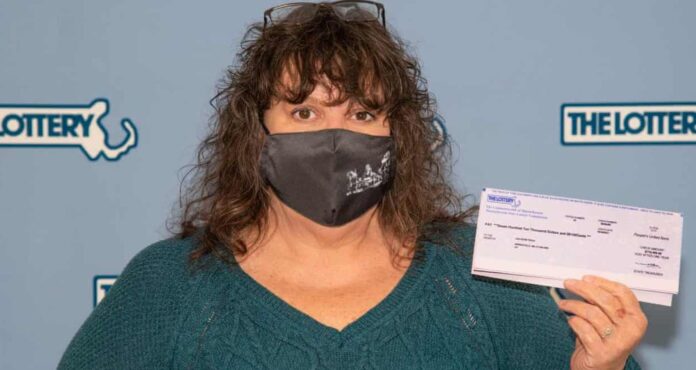
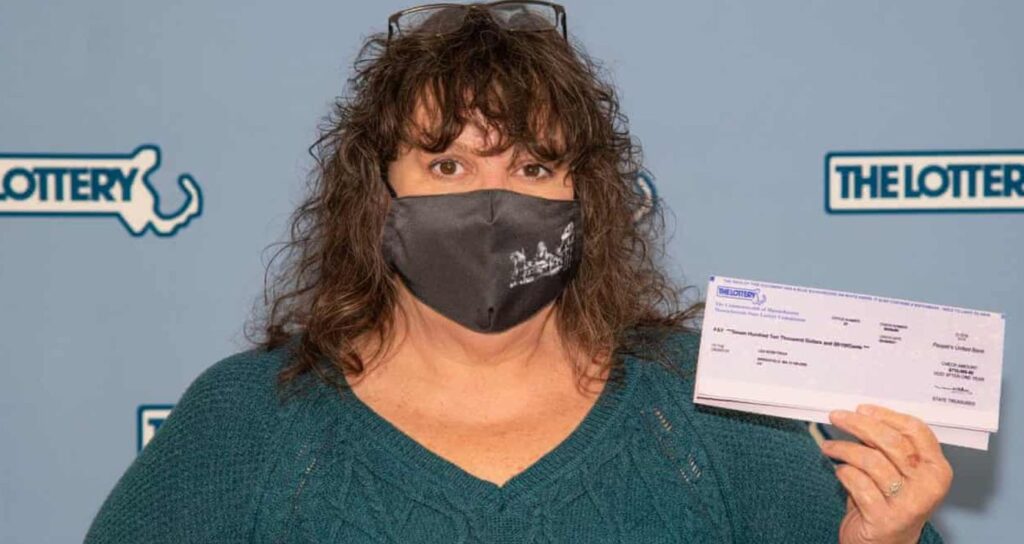
That waking nightmare happened to Massachusetts’ Lea Rose Fiega. Luckily, the kind store owners where she bought the ticket let her know her mistake.
It was back in March that Fiega spent $30 on a scratch-off Diamond Millions ticket from Lucky Stop in Southwick.
“I was in a hurry, on lunch break, and just scratched it real quick, and looked at it, and it didn’t look like a winner, so I handed it over to them to throw away,” she told Associated Press.
For 10 days, the ticket simply lay there behind the counter.
“One evening, I was going through the tickets from the trash and found out that she didn’t scratch the number,” Abhi Shah, the son of the store’s owners told WWLP-TV. “I scratched the number and it was $1 million underneath the ticket.”
“We had mixed emotions,” Shah told the Washington Post. “We didn’t sleep for two nights, but I don’t know what happened. My inner soul told me: ‘That’s not right. You know who that person is. You should give that ticket back to them.’ And that’s exactly what I did.”
Fiega works near the convenience store where she got her ticket—so Shah went over there. He told her his mom and dad would like to see her, so she went over to the store. When she got the news she couldn’t believe what she was hearing. She cried. And then she hugged the entire family.
For Fiega, who nearly died of COVID-19 in January, winning the lottery has truly been the (very rich) icing on the cake of what’s been a difficult year.
The Diamond Millions store will get $10,000 from the Massachusetts State Lottery commission for selling the winning ticket—and Fiega happily gave the family an additional reward. The rest, she says she’ll save for her retirement.
SHARE the Good Fortune With Friends on Social Media…
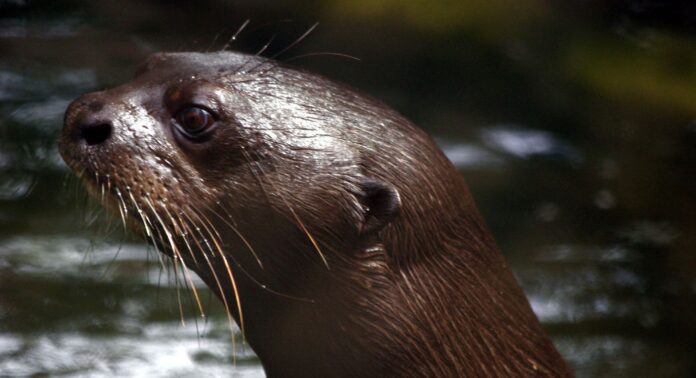
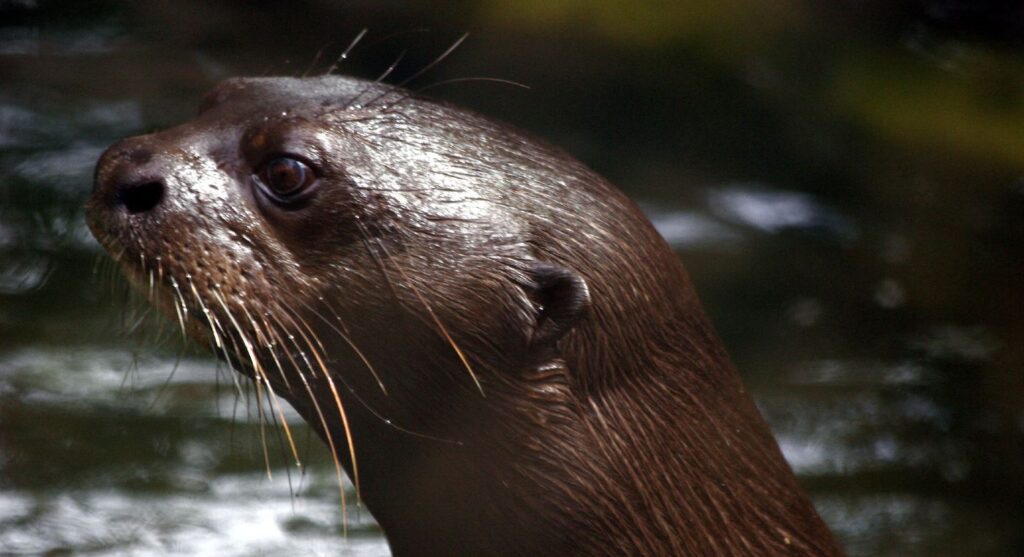
Recently in Argentina, a giant river otter popped out of the water right next to the canoe containing, of all people, the director of conservation at Rewilding Argentina.
A good omen, one would think, as not only had the charismatic Pteronura brasiliensis not been seen in Argentina since the 1980s, but the river upon which Sebastián Di Martino was floating sat within a park his organization helped create.
“It reared up, so its white chest was visible, which I recognized as the giant river otter,” Di Martino told the Guardian. “At this point, your legs go weak and your heart starts beating faster.”
Di Martino was kayaking on the Bermejo River in Impenetrable National Park—the legacy of one of the world’s great conservationists, Douglas Tompkins, founder of The North Face and Esprit outdoor suppliers, who transferred one of the largest land fortunes on Earth to the governments of Chile and Argentina upon his death.
The otters hadn’t been seen on the Bermejo River in over a century, but the waterway is connected to the Paraguayan Pantanal so the simplest explanation is that it swam there, even though it would be a journey of over 1,000 kilometers (600 miles).
Di Martino thinks that since otters live in family groups, the one he saw was simply part of a remnant population that has since gone undetected. It’s not a crazy hypothesis, since Impenetrable National Park is 128,000 hectares, or 500 square miles of rivers and woods within Gran Choco Forest, an extremely biodiverse region.
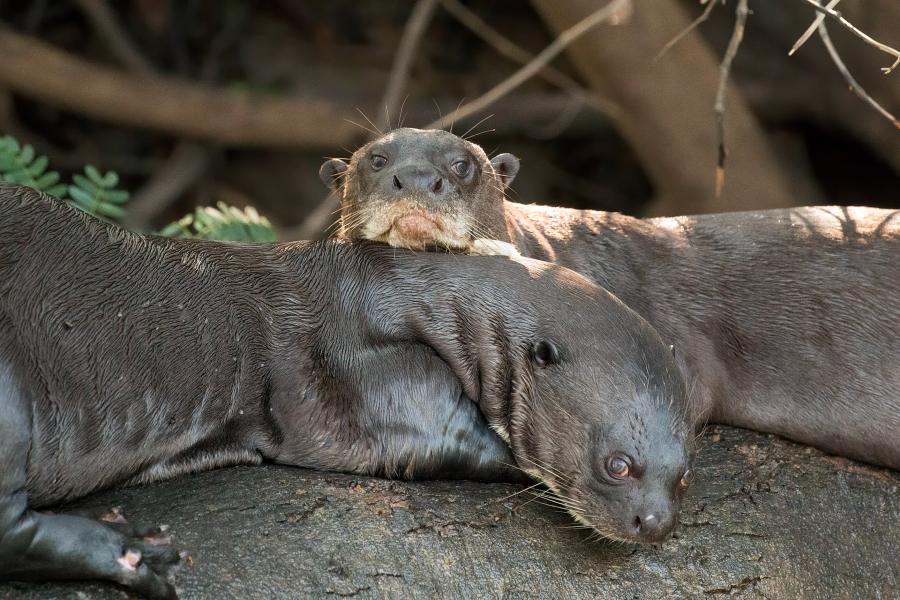
Giant river otters are known as “Wolves of the River,” and like the wolf, they are top predators. Their hunting exerts a regulatory influence on the rest of the ecosystem, keeping the links in the riverine world in order. They’re also extremely charismatic, trusting, and curious, and can grow 4.5-feet long and weigh more than 60 lbs.
Giant river otter in Brazil, Sharp-Photography.co.uk
The coincidence of the magical meeting between the riverine mammal and Di Martino is that his organization, Rewilding Argentina, is currently working on a conservation plan to reintroduce giant river otters to the country; to the very park in which he spotted one. The plan also includes reintroductions for the collared peccary, Pampas deer, red and green macaws, and even jaguars.
It’s all part of the late Doug Tompkins and his widow Kris’s incredible dedication to the wilds of South America, who through the money from their companies created 13 national parks containing over 5.9 million hectares of pristine land in Chile and Argentina.
The sighting of the otter on a river known for illegal fishing activities is a smashing sign that there is plenty still worth saving in the world right now.
(WATCH the Guardian video of the exciting ‘pop up’ moment below.)
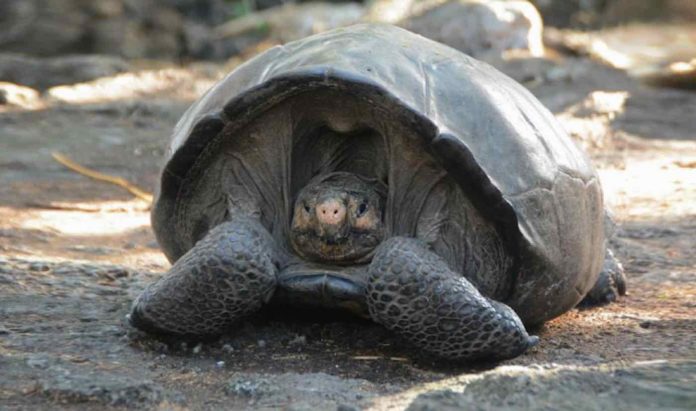
The high hopes of scientists who found a 100-year old female giant tortoise on Fernandina Island in the Galápagos have been confirmed: genetic tests have proven it is a member of the species thought to have gone extinct more than a century ago.
Courtesy of Galapagos National Park Directorate
Presumed to be lost for 112 years, the Galápagos Conservancy and the Galápagos National Park Directorate will urgently launch expeditions to find a mate for the female Chelonoidis phantasticus and save the species.
GNN reported on the discovery of the tortoise, called “Fern” in 2019, while Yale University began conducting genetic analysis to determine the creature’s exact species. Researchers had strong suspicions that it was a Fernandina, so launched expeditions on the island to look for more members of her species.
Soon afterward, park rangers reported sighting scat and tracks on the volcanic slopes, suggesting there could be more turtles around. If found, any remaining individuals will immediately be transported to the breeding center on Santa Cruz Island, where several species of the giant tortoises have been successfully bred back to stable population levels.
“One of the greatest mysteries in Galápagos has been the Fernandina Island Giant Tortoise. Rediscovering this lost species may have occurred just in the nick of time to save it. We now urgently need to complete the search of the island to find other tortoises,” said Dr. James Gibbs, Vice President of Science and Conservation for the Galápagos Conservancy and a tortoise expert at the State University of New York.
“We desperately want to avoid the fate of Lonesome George,” said Danny Rueda Córdova, Director of the Galápagos National Park Directorate in a press release. “My team from the Park and Galápagos Conservancy are planning a series of major expeditions to return to Fernandina Island to search for additional tortoises beginning this September.”
While one might think “what are you waiting until September for?” the landscape of Fernandina is dominated by an active volcano and a hard volcanic landscape, making long-term exploration difficult.
In fact, a January 2020 eruption delayed the first planned expedition to the island in the aftermath of Fern’s discovery.
Meanwhile, the Galápagos Conservancy have set up a fundraiser for three separate expeditions to the island, equipped with tortoise veterinarians and helicopters to scout from the air, and transport any tortoises they find back to the breeding center.
The previous president of the Galápagos Conservancy, Johannah Barry, last year admitted to GNN that the old female was thought to be a Fernandina tortoise just because she was found there, but doubts remained because sailors in the 19th and 20th centuries often moved tortoises around.
“I can understand why people are excited. It’s either going to be, ‘wow, it’s a Fernandina tortoise,’ or ‘wow, it’s not,’” she sighed.
Wow. It is.
Spread The Word And SHARE This Breaking News With a Friend…
Quote of the Day: “It’s the possibility of having a dream come true that makes life interesting.” – Paulo Coelho, The Alchemist
Photo: by Jr Korpa
With a new inspirational quote every day, atop the perfect photo—collected and archived on our Quote of the Day page—why not bookmark GNN.org for a daily uplift?
Everyone has a COVID story now, and for those aged 16-18, the story likely has something to do with school and extra-curricular disruptions during a critical period of their lives.
We often like to say they were the best years of our lives, and noticing this—despite the fact that he didn’t even have a child on the podium—Graham Williams wanted to make sure that Denver Public Schools graduates from the ‘Class of COVID’ had something special to make them feel celebrated, as well as something to turn to if they ever needed advice.
As the CEO and founder of Impart, a unique gift-giving company, Williams put together a graduation book brimming with life lessons and advice from Colorado’s celebrities big and small.
After all, what could be more inspiring for a high school football player who hasn’t been able to play because of the lockdowns than a heartfelt message from Payton Manning?
“We’re big believers in the power of sharing life lessons, and we thought ‘Boy, we see a need in the community where these high schoolers have really had a tough time and shown their mettle, and we’ve got a platform where we can use the tools we have to put a gift in front of all of them,'” Williams told GNN.
Graham Williams, Impart
“We wanted to say: ‘one, that the entire community is behind you and you’re not alone in this, and two, what a great job you’ve done in difficult times.'”
Featuring everyone from local news anchors to philanthropists, athletes, artists, and civil servants, the 21-page book—which you can download for free at home—poses a simple question to each person featured: If you could go back and tell your high school graduate self one thing, what would it be?
“Passion and love will take you further and fulfill you more than anything else will,” says Missy Franklin, a five-time Olympic gold medalist swimmer.
“Question everything and never turn down an adventure,” says Colorado House Representative Jennifer Bacon.
“Live your life, not the life you think your parents, friends, or society want you to live,” says KBCO, 97.3 FM radio host DJ Keefer.
“What we wanted to do was gather a diverse and inspiring set of responses based on different experiences, and we wanted those responses to resonate with the students of Denver schools,” explains William.
“We didn’t know what was going to come back when we made the request, but we were really gratified at how the community really rallied around the students, wanted to show their support… and how genuine the respondents were.”
Hopefully with 21 pieces of wisdom, the students of Denver schools will feel a little more prepared for life beyond high school classrooms—and that their graduation was a special day after all.
SHARE This Inspiring Story With Your Pals on Social Media…
A gamer bullied as a youngster because they were born without a hand finally feels their disability isn’t a hindrance, now they’ve been fitted with a bionic arm inspired by a hugely popular video game.
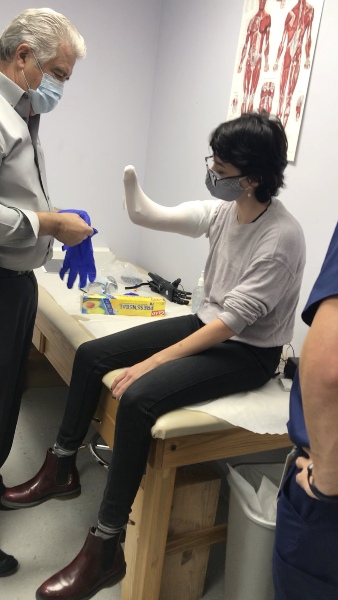
21-year-old Laiken Olive, who identifies as nonbinary, was born with a congenital limb difference and said they used to hide their disability before receiving the $11,000 bionic arm.
The young gamer has become the first recipient in the U.S. of the ‘Venom Snake’ arm developed by British robotics company Open Bionics. The inspiration for its look and design? Metal Gear Solid, which is soon to become a blockbuster film starring Oscar Isaac.
In the video game, the character Venom Snake loses his arm in an explosion and wears an iconic red and black bionic limb complete with detachable missile functionality and gadgets to stun enemies.
Although the Hero Arm isn’t equipped with weapons, it is custom built and uses myoelectric sensors to read electric outputs of the muscles to be converted into bionic hand movements.
Laiken said they felt empowered by the arm and finally saw their potential after years of being harassed in school. The South Louisianan explained, “I got bullied because of my arm, which led me to have a lack of confidence in myself. I doubted myself and just wanted to fit in with able-bodied people.
SWNS
“I would wear this cosmetic prosthetic which looked like a hand and I would wear a jacket over that because of the bullying I experienced.
“I wanted to hide the fact I was different. It was a barrier or a shield so that people wouldn’t know… but with the Hero Arm I saw all the potential of what I could do with it and it wasn’t about hiding myself… This entire experience has been so beautiful for me.”
Laiken started their TikTok account around December 2020, and began cosplaying while proudly showing their prosthetic arm in different costumes.
Before Dwight David Eisenhower became America’s 34th President, he commanded the country’s military. And at the Minnesota elementary school that bears Ike’s name, a mama duck who takes her marching orders seriously is doing him proud—continuing a 20-year tradition.
Two decades ago, a female mallard decided nesting in the school’s enclosed courtyard was a good idea—only she’d made one strategic error: there was no direct access to the pond nearby.
As it turned out, the only way to get her fledgeling offspring—old enough to float but not yet able to fly—where they needed to be was to go through the school.
Someone inside figured that out too and opened the door.
To everyone’s delight, Mama Duck quickly marshaled her feathered brigade and paraded the brood directly through the school corridors to an exit on the pond side of the building. And so an annual rite of passage was born.
With an office overlooking the courtyard, library media specialist Jeff Shepherd enthusiastically volunteers for guard duty as each new batch of baby ducks arrives.
“And as soon as they’re born, ‘I’m like, okay, everyone stay away; everyone be careful; everyone look out,’” the aptly-named Shepherd told KARE 11 News.
This year, as awed students and teachers looked on from a respectful distance, Mama Duck led her 10 little troopers from the safety of the nest to the freedom of the big, wide world.
“It’s kind of bittersweet because we love watching them grow up, but this is where they belong,” Kindergarten teacher Betty Johnson told KARE.
The passage of the ducks has become such a beloved ritual at Eisenhower, parents Brad and Laurie Gilmore created a children’s book to commemorate the annual event. Proceeds from their Ducks in a Row… Here We Go! will be used to keep the school courtyard in top shape for future generations of nestlings.
An eggcellent idea, don’t you think?
(Click below to watch the sweet video on the Youtube channel of KARE 11 …)
SHARE This Adorable Video With Pals on Social Media…
At 23, Manchester United soccer star Marcus Rashford has already scored a lot of goals, but becoming the youngest person to top The Sunday Times Giving List—a metric of philanthropy among rich Brits—is an achievement that has the whole country cheering.
Donations he made, and those by people inspired in response to his efforts to combat food poverty, generated a total of $28 million (£20 million), giving him a “Giving Index” ranking of 125% of his personal net worth of $23m (£16m).
Over the past year, Rashford has become something of a hero to many Brits: Last year, as second waves of COVID-19 abounded, he faced down the UK government’s proposal to cut spending towards free school lunches.
Here’s how he managed it.
The striker, who has often been a shining light in difficult recent seasons at Manchester United, and a fixture on England’s national team, managed to shine some of the spotlight he receives on an issue close to his heart: having experienced hunger as a child himself, he knew that disadvantaged kids rely on school lunches for daily calorie requirements.
His insistent lobbying got Boris Johnson to U-turn on the Conservative government’s position—coaxing £170m ($240m) for the free food voucher program from last November through to the summer.
In response, Rashford won the Professional Footballers Merit Award, and was recommended by Johnson to receive an MBE (Member of the British Empire).
“As a young Black man from Wythenshawe, never did I think I would be accepting an MBE, never mind an MBE at the age of 22,” he said to Sky Sports in response.
A friendly rivalry
“What Marcus has done over the last 12 months is incredible,” said Liverpool team captain Jordan Henderson before a recent game between the two clubs. “He has battled against food poverty, given a voice to kids who otherwise wouldn’t have one, and used his own reputation for the benefit of others.”
Henderson, who has captained the second-most decorated English club for 7 years, came in sixth place on the Times’ Giving List, by raising £4 million ($6 million) from his fellow footballers to join his own contributions towards the UK National Health Service to help support its response to the pandemic.
Again, we come to a point in the story where non-football fans will be at a loss for understanding the gravity of Henderson’s words, as Liverpool and Manchester United are the bitterest of rivals. As the two most successful clubs in English football, their matches are among the most watched of any on Earth.
Rashford has continued his giving work, establishing the Child Food Poverty Task Force, linking up with many of the nation’s biggest supermarkets to help end childhood hunger.
“His own experience of relying on free school meals to eat brings authenticity and compassion to his campaigning, and his status as a Premier League footballer means people and politicians sit up and take notice,” said Lindsay Boswell in a statement. CEO of FareShare, a non-profit dedicated to fighting hunger and food waste in the UK, Boswell named Rashford as an ambassador.
SHARE Rashford’s Amazing Story With Friends on Social Media…
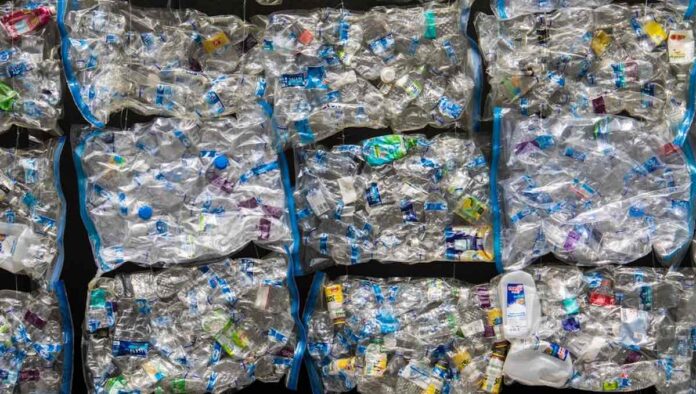
Major affiliates supplying supermarkets in Australia and New Zealand have come together and pledged to tackle Oceania’s plastic waste crisis.
Of the more than 60 companies signing on, major names include Woolworths, Coca-Cola, and Nestle, as well as several government departments.
The ANZPAC Plastics Pact (ANZPAC) is a collaborative solution that brings together key players behind a shared vision of a circular economy for plastic, where plastic never becomes waste or pollution. But far from lofty UN goals of 2030, 2045, or 2050, ANZPAC wants to achieve all its goals in just four years.
Their four goals, to be rapidly pursued over a four-year period, involve eliminating unnecessary plastic waste, making all of what remains recyclable, reusable, or compostable, increasing self-policed plastic packaging by 25%, and increasing use of recycled plastic in manufacturing by 25%.
Only around 18% of plastics are recycled in the ANZPAC region, meaning that hundreds of thousands of tons either end up in landfills or in the ecosystem.
The ANZPAC Plastics Pact joins the Ellen MacArthur Foundation’s global Plastics Pact Network, a strategically aligned response to plastic waste and pollution that enables vital knowledge sharing and coordinated action—and unites 550+ organizations across 11 Plastics Pacts around the world.
“What I’m hoping for is that this will also be a way of Australia and New Zealand being able to support the Pacific region, which has different but just as challenging issues with plastic,” said Jenni Downes, a research fellow at Monash University’s Sustainable Development Institute while talking to ABC Australia.
The Australian Packaging Covenant Organization (APCO) will lead the on the ground efforts of the ANZPAC members by offering reporting, governance, and admin frameworks, and efficacy research.
“What we’re really trying to address here is a systemic problem that says the plastics system is actually broken,” said Brooke Donnelly of APCO. “Our take, make and dispose approach means too much plastics waste is actually ending up in landfill.”
Treasured for their beaches and natural beauty, New Zealand, Australia, and the Pacific Island nations are some of the most unfortunate casualties of the plastic pollution problem, and hopefully through their combined efforts, they can turn back the plastic tide.
SHARE This Positive Trend in Reducing Plastics With Friends…
Quote of the Day: “May you never be the reason someone gave up on a part of themselves because you were demotivating, non-appreciative, hypercritical, or even worse, sarcastic about it.” – Mostafa Ibrahim, Unschoolers Collective
Photo: by Aaron Burden
With a new inspirational quote every day, atop the perfect photo—collected and archived on our Quote of the Day page—why not bookmark GNN.org for a daily uplift?
If your lawn is anything like the one tended by this author, it’s the time of year when weed killing on a wide-scale is warranted. Yet there are many common household items that are non-toxic and that work well for killing weeds and keeping them killed.
I don’t like to kill many weeds in the springtime, as they are often an early season food source for bees and other nectar feeders. Now though, most of the yellow, white, and purple flowers once dotting my lawn and garden are gone, leaving only unwanted leaves and the roots beneath them.
Looking onto the first chore of tomorrow morning, here are our options for a plan of attack, whether the weeds are poking up through the concrete, or peppering the garden.
Totally non-toxic weed killers
Matteo Badini
Chemical herbicides and fungicides can contaminate the soil and water for miles around through runoff, and that many commercial weed killers contain probable carcinogens.
Some compounds we’ll look at later come with side effects, that while being harmless for the water supply, can disrupt the garden ecology. First, we’ll take a look at some elements that are simply safe.
Boiling water
Especially good for sidewalks, driveways, or patios, dihydrogen monoxide heated to 220 degrees or more is a perfect way to kill every part of the unwanted plant. If you can use a kettle, all the better, as it makes it easier and safer to pour, as well as gives your weed-killing a bit more precision.
Fire
Using a kitchen blowtorch or flame-weeder tool to apply heat directly to the leaves and stem of the weed is a fine way for getting rid of them, taking precautions not to burn the entire neighborhood down. Anywhere there is dried material should be flame-weeded with extra caution.
If there are areas of the yard you know for a fact harbor weeds, in early spring try spreading cornmeal around the area to stop weed seed germination. Note that this method isn’t possible for de-weeding, only pre-weeding.
Mildly-toxic weed killers
Non-toxic in the sense they wont cause fish die-off or cancer, many household chemicals that are designed to clean things have to be made safe for human hands and skin. They are toxic in the sense that they can kill your favorite flowers, and thus demand a bit of respect. Nevertheless, these are much better than using popular herbicides using toxic chemicals like Glyphosate.
Vinegar
White vinegar of 5% acetic acid is perfectly fine for weed killing, especially when a pump or two of dish soap is added into the spray bottle. Some garden supply stores sell 20% acetic acid, or industrial strength vinegar, which is harmful to skin and eyes, but that’s likely overdoing it.
Spray it directly on the leaves of the offending plant and be careful not to overspray. Consider waiting until any strong breeze has wound down, as a bit of wind can carry the chemicals onto other plants you’d like to keep. Also try to avoid soaking the soil, as it will make it harder for anything to grow there.
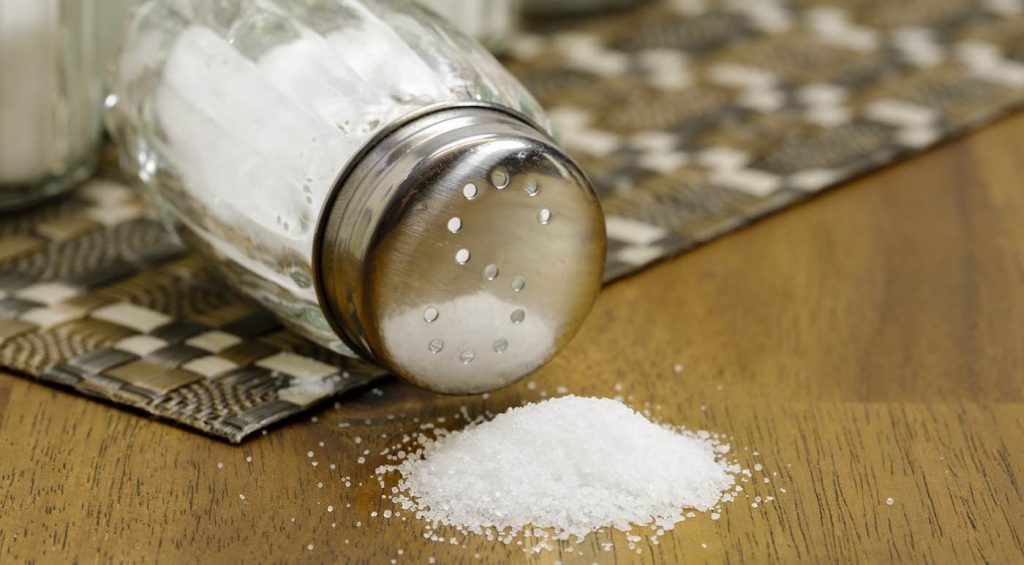
Salt is a great weed-killer and can be added to vinegar or hot water sprays, but when it goes into the earth nothing can grow.
Add a dash of dish soap to help the salt stick to the leaves, and be careful where you aim. Spraying the soil will pretty much condemn it to barrenness, while hitting other plants you like may kill them too.
Concrete sidewalks and patios can become discolored, making the salt mixture not ideal for them. One website suggests covering the plants around the weeds in question with plastic sheeting to protect them.
GROW the Good News In Your Friends’ Feeds—Share This Story… (Featured photo by Briget Murphy, CC license)
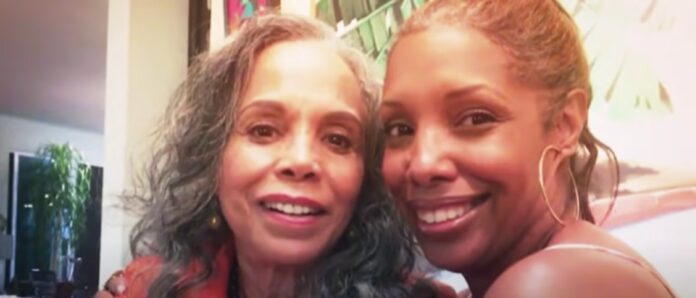
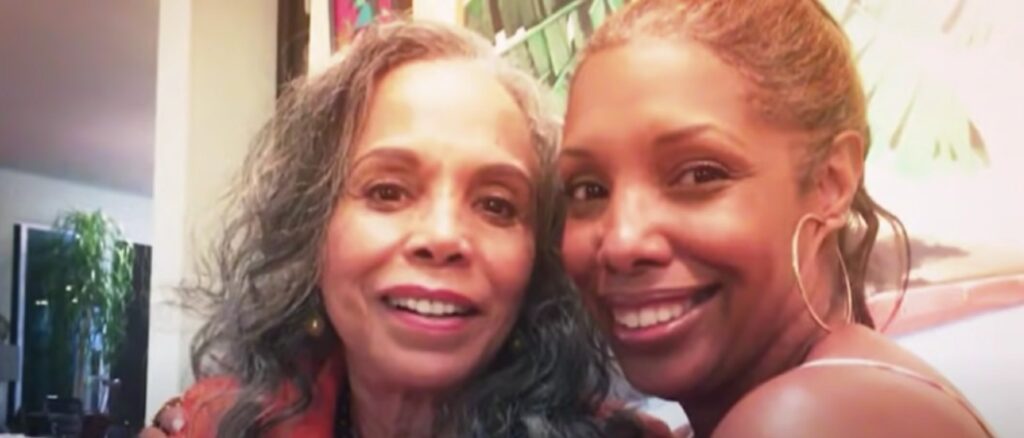
Can you imagine as a kid tuning in to see your favorite TV show, never realizing that the actress playing one of the leading roles was your mother? It sounds like something from a sitcom script, but that’s what happened to Lisa Wright.
The show Wright was watching? That’s My Mama. (We doubt even Hollywood could make that one up!)
As with many adoptions at the time, Wright’s birth records were sealed. Having been well-loved by her adoptive parents, she didn’t have a burning desire to search out her biological mother.
All that changed when, at age 54, Wright’s son suggested she get a DNA test to learn more about her family’s genetics. The DNA results revealed Wright had a match—an uncle.
In their initial conversation, Wright’s uncle asked her to fill him in on any details she knew about her birth. She was able to tell him her date of birth and that her mom, who’d gotten pregnant when she was very young, wanted a career in Hollywood.
Her uncle knew a lot more—and he was thrilled to tell her.
Wright’s mom turned out to be Lynne Moody, whose impressive résumé includes stints on Chicago Hope, Beverly Hills 90210, Knots Landing, General Hospital, and a host of other TV and film credits.
Not only did her uncle reveal who Wright’s birth mother was, he also let her know her mom had never forgotten the daughter she’d given up. The family had actually been looking for her, hoping someday to reconnect.
When Wright Googled her mom’s name, the realization was stunning. She was finally seeing a face that looked like her own. She knew she belonged.
Not long after that epiphany, Wright’s phone rang again. It was an ecstatic Moody.
“A voice on the other end says, ‘Is this my daughter?’ And then I just went, ‘Oh, my God, is this my mother?’” Wright told TODAY. “And then she goes, ‘Yes, sweetie, this is your mom.’ It was just the most indescribable feeling.”
The irony of growing up watching her mom on TV and not knowing it was nothing compared to the joy the two felt when they were reunited the very next day. Moody, likened finding her daughter to giving birth a second time, at least on an emotional level.
Of course, not everyone searching out their heritage is going turn up a TV star in the family tree, but this mother-daughter team hopes their story inspires other adoptive kids and their birth parents to welcome the connection if and when it does come their way.
“Life is full of surprises sometimes, so hang in there no matter what your circumstances are,” Moody told TODAY. “Be open to miracles, be open to surprises, and keep the faith.”
Good news was unveiled in the surging industry of wind power: The world’s largest turbine manufacturer is ensuring that wind power will create as little waste as possible, by pushing to create 100% recyclable wind turbine blades.
With 18% of the world’s wind power market share, Vestas is the first company of its kind to commit to producing fully recyclable products.
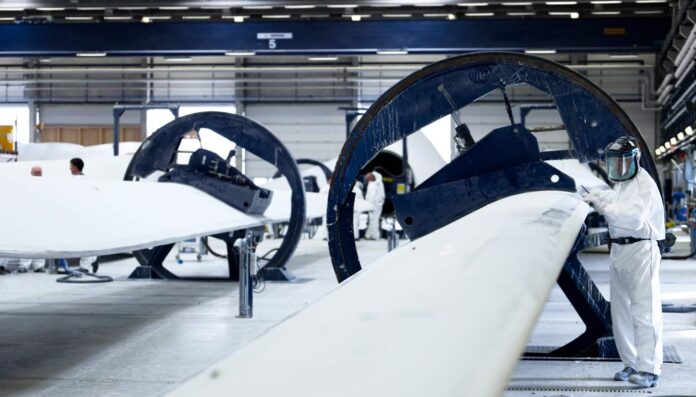
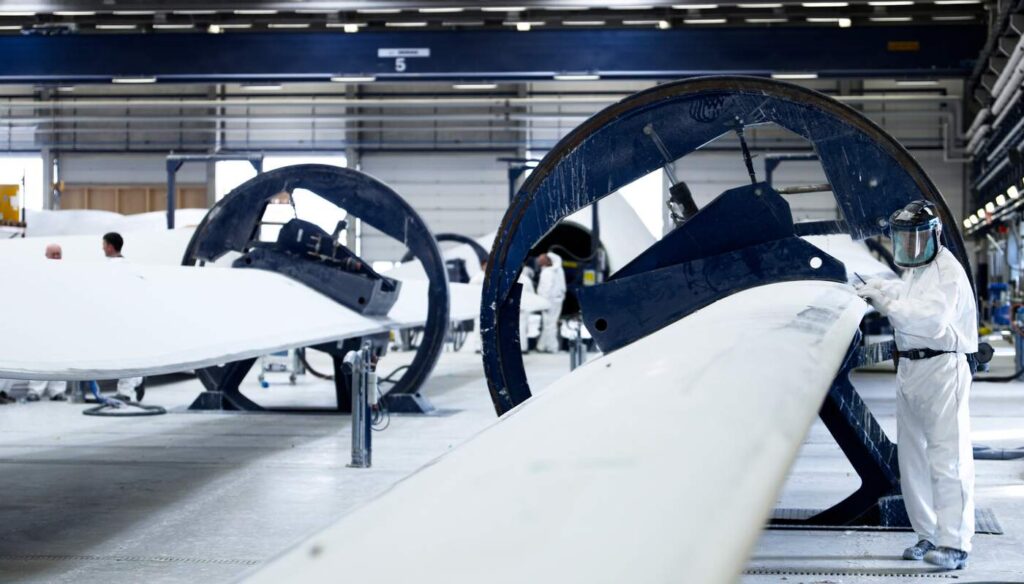
Giant wind turbine blades are made from a mixture of glass and carbon fiber heated together with sticky epoxy resin, and these materials can’t normally be separated once combined, which means they go into landfills when they become too battered to safely operate.
Conscious that the global market for wind energy is growing by about 3% per year, Vestas explains that they knew about the problem in the making—and they’re looking to get out in front of it. The company plans to tackle the recyclability problem for the next 20 years, until they’re operating at zero waste by 2040.
Reuters reports that Vestas has unveiled a new chemical technology which breaks the epoxy resin away from the glass and carbon fiber, allowing the hard material to be removed, and the epoxy to be turned into its constituent elements as well. All of these components, the company says, will be able to be re-used to make new turbine blades.
Typically a wind turbine lasts about 20 to 25 years, at which point the owner can either order it decommissioned or get it refitted with new parts. Typically 75% of all waste generated through decommissioning comes from the blades. Vestas wants to be able to recycle 50% of the blade material in just a few years through investing in new recycling technology and in new blade materials that are easier to recycle—and to do more and more in terms of recycling each year.
“We have spent quite some time on the approach to create zero-waste turbines because we know that this new strategic approach could potentially be the new standard for future turbines,” says Peter Garrett at Vestas.
That investment in the future is good news for all of us.
[CORRECTION: A previous version of our headline read, “…Can Now br Fully Recycled”.]
POWER UP the Good News in Your Friends’ News Feeds—Share This Story…
Fresh off their success of the Mustang Mach-E, Ford has revealed that their most popular car, and for that matter, America’s most popular car, is going electric.
The F-150 Lighting is Ford’s contribution to the extremely limited electric truck market, and they’ve managed to include a truckload of features for a price tag of $36,650, that—when reduced by the $7,500 federal EV tax credit—puts its price point right in line with most other electric trucks.
FORD
The base model has 230 miles of range, 3.5 tons of towing capacity, an enormous front trunk, a 14-inch command touchscreen console, highway self-drive and automatic trailer hitching, and 11 power outlets for everything from your iPad to power tools all encased within the four-door “SuperCrew” cabin that F-150 buyers normally have to pay extra for.
The double-electric motor means all versions are all-wheel drive, and the technological integration is seriously impressive. This includes detailed onboard scales that measure load and towing weight, and that calculate that extra tonnage into the battery life to ensure you’re never left on the side of the road.
Public EV fast-charging stations can add 54 miles of range in 10 minutes, charging the battery from 15% to 80% in 41 minutes. This is pretty standard for modern EVs.
It’s an interesting attempt to pair a workman’s vehicle with a market share that tends to be dominated by young, affluent buyers that live in cities. One auto writer at the Verge suggested that if you’re going to take a gamble on whether an EV version of a well-known internal combustion car was going to work, you might as well try it with the most popular car in America, which at its most popular recent period put an American behind an F-150 wheel every 30 seconds.
But they aren’t throwing darts in the dark, they have some data to base their strategy off of: the recent EV conversion of the Mustang. 70% of the buyers of the Mach-E had never owned a Ford before.
FORD
One of the mantras of the F-150 Lighting design was self-reliance. As well as acting like a sort of mobile power station for light to medium work intensity sustained by the battery, owners of the extended range battery model, costing about $40,000 and capable of going 130 miles more on a full charge, will get an 80amp home-charging station that as well as filling up the battery in eight hours, will act as a backup generator for your home in the event of a power outage for about three days.
Having created the first mass produced automobile, if the F-150 Lighting is even a quarter as popular as the F-150, Ford will go a long way towards creating the next vehicular revolution.
RUN This Good News Over to Friends on Social Media…
May 26, a Wednesday—or ‘Woden’s Day’ for you two or three pagans in the audience—will feature both a total lunar eclipse and a full super moon.
This year, in many parts of the world, the eclipsing of the sun’s light by Earth will shadow our lunar neighbor, turning it an impressive red—hence the name Blood Moon.
Science@NASA and NASA’s Goddard Space
This total lunar eclipse is the first in over two years. It will be visible in the western U.S. and Canada, all of Mexico, eastern Asia, Oceania, the Pacific Islands, and western South America before dawn on May 26.
For those on the east coast of the States, the sun will be too low on the horizon when the eclipse occurs—though if you can find a tall enough point (not easy to do in, say, Appalachia), and have a clear view of the horizon—given clear weather you may be able to see the phenomenon.
Unlike with solar eclipses, you’ll need no special glasses for viewing this event.
A full Super Flower Moon
According to The Old Farmer’s Almanac, the peak full moon illumination will occur at around 7:14am EST on Wednesday morning—but by this point it will be very close or even below the horizon, so you’ll want to head out the night before—or, to be honest, all week is fine: NASA reports that the Moon will appear full from Tuesday night all the way through Friday morning.
May’s Flower Moon—which is also known as the Milk Moon and Corn Planting Moon—will be the biggest and brightest full super moon of 2021.
Farmer’s Almanac reports that this time held a special place in some Native American calendars—as increasing warmth made it safe to bear young, an ideal period for planting crops, and a time that marked the end of late season frosts.
GET Your Friends’ Ready for the Lunar Eclipse—Share This Story…
Quote of the Day: “Beauty walks a razor’s edge, someday I’ll make it mine.” – Bob Dylan, (turns 80 today) lyrics from Shelter From the Storm
Photo: by Weston MacKinnon, mural in Minneapolis, Minnesota
With a new inspirational quote every day, atop the perfect photo—collected and archived on our Quote of the Day page—why not bookmark GNN.org for a daily uplift?
In early April, Girl Scouts were experiencing a 50% shortfall in cookie sales, with reduced foot traffic and the pandemic limiting their ability to sell their iconic cookies in person—and eating into their annual activity budgets.
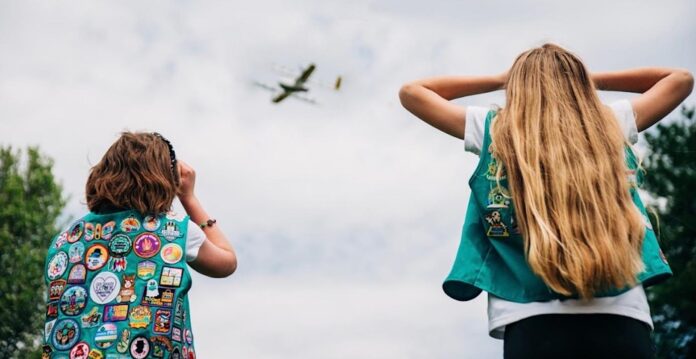
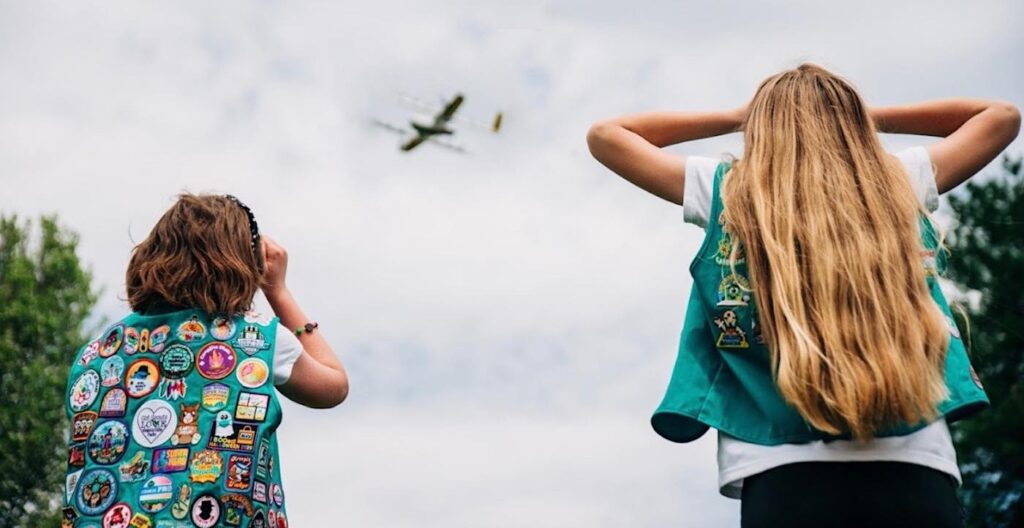
Google’s delivery service Wing began talking to a local Girl Scout troop in Christiansburg, Virginia, where they run America’s first and only residential drone delivery service. Now, enthusiasm and sales are soaring, with the local scouts selling cookies in an entirely new way: via drone.
Wing
Residents in Christiansburg can now get Samoas, Thin Mints, Peanut Butter Patties, and more favorites flown through the sky and dropped directly at their front door.
And, through it all, Wing has also been working with the local scouts showing them the technology of how drones work, and hopefully inspiring the girls to pursue STEM careers.
“In return, they’re teaching us a lot about how to sell cookies,” one spokesperson told GNN.
During 2020, Wing was able to support a number of local Christiansburg businesses with their contactless delivery capabilities. For example, the owner of Mockingbird Cafe bakery, reported that drone delivery accounted for about 25% of sales during the early days of the COVID-19 pandemic.
Shoppers with a sweet tooth can order through the Wing app in Christiansburg until the end of May, but the company has committed to help the girls sell 3,000 boxes, regardless. So far, the most popular cookie order is—not surprising—Thin Mints.
A recent Virginia Tech survey of consumers in the nearby southern Virginia town found 87% of residents liked the idea of drone delivery following the first year of service in the community.
Drones can deliver goods to a consumer in minutes, without adding to traffic congestion and, energy-wise, they about 10x as efficient as electric vehicles, and more than 50x more efficient than gasoline-powered vehicles.
“It makes a lot more sense to deliver a 1lb box of cookies with a 10lb drone than it does to do it with a 3,000lb car,” says Wing.
If it means getting our Thin Mints dropped into our front yard, it’s a badge that’s worthy of a Girl Scout sash.
WATCH the Scouts’ spirits soar with Wing…
FLY This Story to Your Local Troop of Friends on Social Media…