











All News - Page 499 of 1724 - Good News Network
Home Blog Page 499

Puppy Gets Tooth Pulled at the Dentist, And Adorably Smiles for the Camera

Usually, when dogs are actually “smiling,” meaning expressing happiness, it is when they have their ears in the relaxed state for the breed, and a big wide open mouth—tongues a-flailing.

So, although we are giving our thumbs-up for the best pooch smiles today, we are really reflecting our humanness onto the animals—and enjoying it immensely.

Dogs normally are signaling that they accept being the lowly beta in the pack by pulling the corners of their mouths upwards—the same signal we call a smile.

Even so, not all dogs have the talent for making a ‘smile’, but these pups are pros—especially when asked the right question.

Loni had a visit at the doggy dentist where she had to get one of her teeth pulled.

Watch how she shows off her dental work for the camera. Priceless!

“Did you get a tooth pulled? Let me see…”

This Golden Retriever puppy shows off his baby teeth, and the added music makes this is a cuteness overload.

When mom asks Bill the Labrador to smile, he is all too happy to oblige.

This smile might be the most adorable, of all…


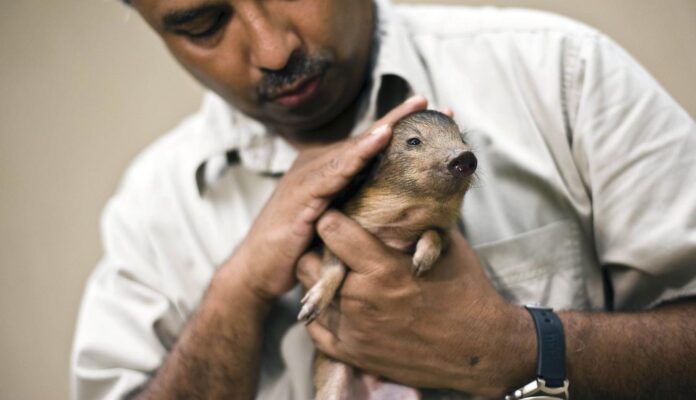
But dogs aren’t the only animals that can produce a giddy-faced ‘smile’ on cue. Check out this sea lion. A zookeeper from Dubai in the United Arab Emirates plays a game with one of the animals in his care.

“When I smile at the camera she imitates me and makes the same face.”

Be Sure to Produce a Smile on Your Friends’ Faces—SHARE This on Social Media…

Scientists Use Novel Ink With Calcium to 3D-Print ‘Bone’ With Living Cells

3D printers may one day become a permanent fixture of operating rooms, now that Australian scientists showed they could print bone-like structures containing living cells.

Scientists have worked out how to print bone-like structures using a 3D-printer and a gelatinous ‘bath’ containing living cells. Photo: UNSW

Scientists from UNSW Sydney have developed a ceramic-based ink that may allow surgeons in the future to 3D-print bone parts complete with living cells that could be used to repair damaged bone tissue.

Using a 3D-printer that deploys a special ink made up of calcium phosphate, the scientists developed a new technique, known as ceramic omnidirectional bioprinting in cell-suspensions (COBICS), enabling them to print bone-like structures that harden in a matter of minutes when placed in water.

While the idea of 3D-printing bone-mimicking structures is not new, this is the first time such material can be created at room temperature – complete with living cells – and without harsh chemicals or radiation, says Dr Iman Roohani from UNSW’s School of Chemistry.

“This is a unique technology that can produce structures that closely mimic bone tissue,” he said, pointing to repairs of bone defects caused by accidents or cancer.

RELATED: ‘Game-Changing’ Skin Printer Works Like a Paint Roller, Speeding Up Healing on Even Bigger Wounds

Associate Professor Kristopher Kilian who co-developed the breakthrough technology with Dr Roohani says the fact that living cells can be part of the 3D-printed structure, together with its portability, make it a big advance on current state-of-the-art technology.

Up until now, he says, making a piece of bone-like material to repair bone tissue of a patient involves first going into a laboratory to fabricate the structures using high-temperature furnaces and toxic chemicals.

“This produces a dry material that is then brought into a clinical setting or in a laboratory, where they wash it profusely and then add living cells to it,” Professor Kilian says.

“The cool thing about our technique is you can just extrude it directly into a place where there are cells, like a cavity in a patient’s bone. We can go directly into the bone where there are cells, blood vessels and fat, and print a bone-like structure that already contains living cells, right in that area.”

“There are currently no technologies that can do that directly.”

LOOK: Stylish Tiny Homes Are Now Being 3D-Printed In 24 Hours And Shipped to Your Site

In a research paper published recently in Advanced Functional Materials, the authors describe how they developed the special ink in a microgel matrix with living cells.

“The ink takes advantage of a setting mechanism through the local nanocrystallization of its components in aqueous environments, converting the inorganic ink to mechanically interlocked bone apatite nanocrystals,” Dr Roohani says.

“In other words, it forms a structure that is chemically similar to bone-building blocks. The ink is formulated in such a way that the conversion is quick, non-toxic in a biological environment and it only initiates when ink is exposed to the body fluids, providing an ample working time for the end-user, for example, surgeons.”

LOOK: Homeschooled 12-Year-old Boy Designs COVID-19 Protection Device – The Safe Touch Pro

He says when the ink is combined with a collagenous substance containing living cells, it enables in-situ fabrication of bone-like tissues which may be suitable for bone tissue engineering applications, disease modeling, drug screening, and in-situ reconstruction of bone and osteochondral defects.

Already there has been keen interest from surgeons and medical technology manufacturers. A/Prof. Kilian thinks while it’s early days, this new bone-printing process could open up a whole new way of treating and repairing bone tissue.

“This advance really paves the way for numerous opportunities that we believe could prove transformational – from using the ink to create bone in the lab for disease modelling, as a bioactive material for dental restoration, to direct bone reconstruction in a patient,” says A/Prof. Kilian.

MORE: Scientists Unveil World’s First 3D-Printed Heart With Human Tissue

“I imagine a day where a patient needing a bone graft can walk into a clinic where the anatomical structure of their bone is imaged, translated to a 3D printer, and directly printed into the cavity with their own cells.

“This has the potential to radically change current practice, reducing patient suffering and ultimately saving lives.”

Next up the duo will be performing in vivo tests in animal models to see if the living cells in the bone-like constructs continue to grow after being implanted in existing bone tissue.

WATCH the video from the full article on UNSW

SHARE This With All the 3D Printing Fans on Social Media…

Scientists Achieve Breakthrough, Talking With Lucid Dreamers in Their Sleep—And There’s Now An App For That

Dreams take us to an alternative reality while we’re fast asleep. So, you might not expect that a person in the midst of a vivid dream would be able to perceive incoming questions and provide answers to them. But a new study led by Northwestern University researchers shows that, in fact, they can—and they developed an app for those who’d like to try it at home.

Konkoly watches monitor – Northwestern University

With partners at three universities around the world, they confirmed that real-time dialogue with a dreaming person is possible—and that dreamers were able to solve simple math problems and answer yes-or-no questions.

The researchers studied 36 volunteers who aimed to have a lucid dream, wherein a person is aware that they’re dreaming.

Using polysomnographic data, they could confirm that study participants had reached the REM stage of sleep—the rapid eye movement phase in which lucid dreaming can occur.

“We found that individuals in REM sleep can interact with an experimenter and engage in real-time communication,” said senior author Ken Paller, professor of psychology and director of the Cognitive Neuroscience Program at Northwestern. “We also showed that dreamers are capable of comprehending questions, engaging in working-memory operations, and producing answers.

“Most people might predict that this would not be possible — that people would either wake up when asked a question or fail to answer, and certainly not comprehend a question without misconstruing it.”

RELATED: Taxi Driver Saves His Marriage By Inventing Anti-Snore Pillow That He Dreamt Up in His Sleep

While dreams are a common experience, scientists still haven’t adequately explained them. Relying on a person’s recounting of dreams is also fraught with distortions and forgotten details. So Paller and colleagues decided to attempt communication with people during lucid dreams.

The researchers realized that finding a means to communicate could open the door in future investigations to learn more about dreams, memory, and how memory storage depends on sleep, the researchers say.

They also used a rotten egg smell to associate with cigarette smoking, which caused the dreamer less inclined to smoke the following week.

CHECK OUT: Inspired Sleep—How to Put Your Dreams to Work

The paper is unique in that it includes four independently conducted experiments using different approaches to achieve a similar goal. Studies were conducted at Sorbonne University in France; Osnabrück University in Germany; and Radboud University Medical Center in the Netherlands.

“We put the results together because we felt that the combination of results from four different labs using different approaches most convincingly attests to the reality of this phenomenon of two-way communication,” said Karen Konkoly, a Ph.D. student in psychology at Northwestern and main author of the paper published this month in the journal Current Biology.

“In this way, we see that different means can be used to communicate.”

RELATED: Dogs Dream About How Much They Love Their Humans, Says Harvard Psychologist

How this can be helpful to people

One of the individuals who readily succeeded with two-way communication had narcolepsy and frequent lucid dreams. Among the others, some had lots of experience in lucid dreaming and others did not. Overall, the researchers found that it was possible for people, while dreaming, to follow instructions, do simple math, answer yes-or-no questions, or tell the difference between different sensory stimuli.

They could respond using eye movements or by contracting facial muscles. The researchers refer to these successful conversations as “interactive dreaming,” and they chose questions with known answers so that they could assess whether participants’ answers were correct.

Konkoly says that future studies of dreaming could use these same methods to assess cognitive abilities during dreams versus while awake. They also could help verify the accuracy of post-awakening dream reports. Outside of the laboratory, the methods could be used to help people in various ways, such as solving problems during sleep or offering nightmare sufferers novel ways to cope. Follow-up experiments run by members of the four research teams aim to learn more about connections between sleep and memory processing, and about how dreams may shed light on this memory processing.

LOOK: Study Shows That Sleeping With a Weighted Blanket Can Reduce Insomnia

There’s an App for that…

Students in Paller’s lab group have developed a smartphone app for Android devices that aims to make it easier for people to achieve lucidity during their dreams. Information on the lucid app, and the link to download it, is available on Paller’s cognitive neuroscience lab site, here.

SHARE Your Thoughts About Lucid Dreaming While Posting the Suggestion on Social Media…

Surfer Reunited With His Board By Good Samaritans 400 Miles Away – A Month After it Floated Out to Sea

Stephanie Riise and Jake Anderson on Shetland Islands - SWNS

After a couple stumbled across a strange sight while walking the beach, the blue and yellow surfboard became like a message in a bottle—and they had to know its origins.

Stephanie Riise and Jake Anderson on Shetland Islands – SWNS

It all started when Lee Brogan had been “wiped out” by a massive wave while surfing off the Yorkshire coast in England last year and watched in agony as his surfboard disappeared into the ocean.

He had given up hope of ever being reunited with his 10-year-old board but luckily a young couple found it—some 400 miles away.

Stephanie Riise, 22, and Jake Anderson, 23, were hiking on the Shetland Islands off the coast of Scotland when they spotted the nine-foot board and decided to investigate further.

The Walden board, which costs between £800 and £1,200, was marooned off shore on some gravel but was completely intact.

“Our interest was piqued at that point and we were just wondering where it had come from, how far it had travelled, who lost it, what story was behind it,” said Stephanie, from Shetland.

RELATED: Struggling Fisherman Finds Rare Melo Pearl Worth $320,000 While Walking on Beach

SWNS

The inquisitive pair took to Facebook on the day of the discovery to see if anyone could trace the owner as they wanted to know the story behind the board. She posted about her find on the Shetland Seashore Discoveries Facebook page and the community quickly put on their detective hats.

Just a day later, they were put in touch with Lee who couldn’t believe they had found his beloved board which had been lost in the waves in Runswick Bay in Scarborough, England.

LOOK: Geologist Finds Rare Formation Inside Rock That Looks Exactly Like Cookie Monster on Sesame Street 

“We were so surprised by how quickly it all came about, we didn’t think we’d ever find the owner in all honesty. We were so pleased he had gotten in touch.”

She said they quizzed Lee to make sure he was indeed the owner, but after he provided photo evidence and explained how he’d fallen off the board, they were convinced.

Lee Brogan reunited – SWNS

The kind couple not only solved the mystery, they got a friend to deliver the board to his home in a van and said they were just tickled to have been able to help. And, they signed the board with a message—not needing any bottle to preserve the 400-mile synchronicity of fellowship.

SWNS

“Knowing (now) where it had come from, it’s even more impressive that it was completely intact.”

CHECK OUT: Man Becomes Rich When Meteorite From Heaven Crashes Through His Roof

“It’s just been fun to have been able to do something nice for someone during lockdown as everything’s been quite doom and gloom.”

SHARE The Story of Luck With Beach-Walkers on Social Media!

“A person must break with the illusion that her life has already been written and her path already determined.” – Marc-Alain Ouaknin

Quote of the Day: “A person must break with the illusion that her life has already been written and her path already determined.” – Marc-Alain Ouaknin

Photo by: Jonas Denil

With a new inspirational quote every day, atop the perfect photo—collected and archived on our Quote of the Day page—why not bookmark GNN.org for a daily uplift?


First Cloned Endangered Species in U.S. From Genes Frozen 30 Years Ago Gives Hope For Black-footed Ferret

Elizabeth Ann, at the USFWS National Black-footed Ferret Conservation Center

Black-footed ferret recovery efforts aimed at increased genetic diversity and disease resistance took a bold step forward on Dec. 10, 2020, with the birth of “Elizabeth Ann,” created from the frozen cells of a black-footed ferret that lived more than 30 years ago.

Elizabeth Ann, at the USFWS National Black-footed Ferret Conservation Center

The groundbreaking effort to explore solutions to help recover this endangered species results from an innovative partnership among the U.S. Fish and Wildlife Service and scientists at Revive & Restore, ViaGen Pets & Equine, San Diego Zoo Global, and the Association of Zoos and Aquariums.

“The Service sought the expertise of valued recovery partners to help us explore how we might overcome genetic limitations hampering recovery of the black-footed ferret, and we’re proud to make this announcement today,” said Noreen Walsh, Director of the Service’s Mountain- Prairie Region, where the Service’s National Black-footed Ferret Conservation Center is located.

“Although this research is preliminary, it is the first cloning of a native endangered species in North America, and it provides a promising tool for continued efforts to conserve the black-footed ferret.”

RELATED: Embryos Created at Christmas Are Viable—Raising Hopes For the 2 Remaining Northern White Rhinos

“Successful genetic cloning does not diminish the importance of addressing habitat-based threats to the species or the Service’s focus on addressing habitat conservation and management to recover black-footed ferrets,” Walsh continued.

Today, all black-footed ferrets are descended from seven individuals, resulting in unique genetic challenges to recovering this species. Cloning may help address the issues of genetic diversity and disease resilience in wild populations. Without an appropriate amount of genetic diversity, a species often becomes more susceptible to diseases and genetic abnormalities, as well as limited adaptability to conditions in the wild and a decreased fertility rate.

Once thought to be extinct and currently listed as an endangered species, black-footed ferrets were brought back from nearly vanishing forever by the Service and its partners after a Wyoming rancher discovered a small population on his land in 1981. Ferrets from this population were captured by the Wyoming Game & Fish Department and others to begin a captive breeding program to recover the species.

WATCH: ‘It’s working!’ From Bobcats to Bears, Utah’s First Wildlife Bridge is a Hit–And There’s Video to Prove it

‘Willa’, a black-footed ferret captured among the last wild individuals, has no living descendants and is therefore not one of the seven founders. The Wyoming Game & Fish Department had the foresight to preserve her genes and sent tissue samples from Willa to San Diego Zoo Global’s Frozen Zoo in 1988. The Frozen Zoo established a cell culture and stewarded these precious frozen cells ever since, making today’s achievement possible.

A win for biodiversity

“San Diego Zoo Global’s Frozen Zoo was created more than 40 years ago with the hope that it would provide solutions to future conservation challenges,” said Oliver Ryder, their Director of Conservation Genetics. “We are delighted that we have been able to cryobank and, years later, provide viable cell cultures for this groundbreaking project.”

LOOK: Rescued Dog Helps Save Endangered Whales By Sniffing Out Their Poop as a Conservation Canine

A genomic study revealed Willa’s genome possessed three times more unique variations than the living population. Therefore, if Elizabeth Ann successfully mates and reproduces, she could provide unique genetic diversity to the species.

“We’ve come a long way since 2013 when we began the funding, permitting, design and development of this project with the U.S. Fish and Wildlife Service,” said Ryan Phelan, Revive & Restore Executive Director. “But it was a commitment to seeing this species survive that has led to the successful birth of Elizabeth Ann. To see her now thriving ushers in a new era for her species and for conservation-dependent species everywhere. She is a win for biodiversity and for genetic rescue.”

POPULAR: New Technology for Saving Endangered Sea Turtles Uses Decoy GPS Eggs to Catch Poachers – And it Works

In 2018, the Service issued the first-ever recovery permit for cloning research of an endangered species, allowing Revive & Restore to initiate genetic analyses and proof of concept trials. This work builds upon recent advancements in cloning processes developed by ViaGen Pets & Equine, which successfully created embryos from the frozen cell line and implanted them into a domestic ferret surrogate.

Mid-gestation, the surrogate mother was transferred from ViaGen Pets & Equine to the Service’s National Black-Footed Ferret Conservation Center to give birth to the cloned kit under the Service’s authority. The NBFFCC staff’s extensive experience breeding and caring for black-footed ferrets ensured the safe arrival of the first U.S. endangered species clone.

Researchers continue to closely monitor the young kit and Elizabeth Ann and her surrogate mother are kept separate from other breeding black-footed ferrets. She will live her life at the Center as additional research is completed. The team is working to produce more black-footed ferret clones in the coming months as part of continuing research efforts.

(Source: U.S. Fish and Wildlife Service)

SHARE the Breakthrough For Adorable Faces Like This on Your Social Media…

Gary Sinise Launches Mental Health Network For Veterans and First Responders

After years of charity work on behalf of veterans, the Oscar-nominated actor who played Lt. Dan in Forrest Gump, has launched a mental health wellness network to provide ‘transformative care, treatment, and training’ to veterans and first responders who are experiencing post-traumatic stress or substance abuse.

The Gary Sinise Foundation Avalon Network aims to establish 20 treatment sites nationwide to serve thousands of veterans, first responders, and their families.

“When I formed the Gary Sinise Foundation in 2011, it was rooted in a personal mission to provide support, raise spirits, and improve the mental wellness of our nation’s heroes and their families,” said Sinise, the Foundation’s Chairman.

“Always wanting to do more, as the foundation approaches its 10th anniversary this June, I am proud to announce the launch of the Avalon Network to help heal the invisible wounds afflicting too many of our veterans and first responders—transforming struggle into strength…”

An estimated 30% of first responders in the U.S. are dealing with depression and post-traumatic stress, and 1 in 3 veterans have suffered with mental health and brain issues since 2001.

Building on the work of the Marcus Institute for Brain Health and the Boulder Crest Foundation’s Warrior PATHH program, Sinise is partnering with the Co-founders of The Home Depot, philanthropists Bernie Marcus and Arthur M. Blank, who each invested $20 million from their personal foundations to lay the groundwork.

WATCH: ‘Lieutenant Dan’s’ Emotional Reaction to Heartfelt Thank-You Video From Veterans

According to The Gary Sinise Foundation, the Network marks the first time that Marcus and Blank have partnered together since co-founding The Home Depot in 1978.

“We’ve lost more veterans to suicide than we have on the battlefields of the Global War on Terror,” said Bernie Marcus. “Our veterans and their families put their lives on the line for us and they deserve the highest level of care available.”

CHECK OUT: Another Study Shows Psychedelic Psilocybin Mushrooms Offering Long-Term Relief From Depressive Symptoms

Those who are suffering can apply for assistance here.

“We’ve found the perfect partner in the Gary Sinise Foundation to scale this idea into a national network that will provide cutting-edge care and improve the quality of life for our nation’s heroes in one of the most critical times in our history,” said Blank.

RELATED: His Son Designed a Smartwatch App to Stop Dad’s PTSD Nightmares—And It Was ‘Life-changing’

Since 2003, Gary Sinise, along with his “Lt. Dan Band,” has contributed hundreds of personal appearances and concerts on military bases in Iraq and around the world. He has helped to raise millions of dollars, as well as donating his own money to help give back to military personnel and their families.

SHARE the Latest Good News From ‘Lt. Dan’ on Social Media…

This Week’s Inspiring Horoscopes From Rob Brezsny’s ‘Free Will Astrology’

Our friend Rob Brezsny provides his weekly wisdom to enlighten our thinking and motivate our mood. Rob’s Free Will Astrology, is a syndicated weekly column appearing in over a hundred publications. He is also the author of Pronoia Is the Antidote for Paranoia: How All of Creation Is Conspiring To Shower You with Blessings. (A free preview of the book is available here.)

Here is your weekly horoscope…

FREE WILL ASTROLOGY – Week beginning February 27, 2021
Copyright by Rob Brezsny, FreeWillAstrology.com

PISCES (Feb. 19-March 20):
Piscean author Anais Nin was a maestro of metamorphosis, a virtuoso of variation, an adept at alteration. She regarded her ceaseless evolution as a privilege and luxury, not an oppressive inconvenience. “I take pleasure in my transformations,” she wrote. “I look quiet and consistent, but few know how many women there are in me.” Her approach is a healthy model for most of you Pisceans—and will be especially worth adopting in the coming weeks. I invite you to be a Change Specialist whose nickname is Flux Mojo.

ARIES (March 21-April 19):
I invite you to think about one or two types of physical discomforts and symptoms that your body seems most susceptible to. Next I encourage you to meditate on the possibility that there are specific moods or feelings associated with those discomforts and symptoms—perhaps either caused by them or the cause of them. The next step is to formulate an intention to monitor any interactions that might transpire between the bodily states and emotional states. Then make a plan for how you will address them both with your own healing power whenever they visit you in the future.

TAURUS (April 20-May 20):
Poet Billy Collins describes “standing on the edge of a lake on a moonlit night and the light of the moon is always pointing straight at you.” I have high hopes that your entire life will be like that in the coming weeks: that you’ll feel as if the world is alive with special messages just for you; that every situation you’re in will feel like you belong there; that every intuition welling up from your subconscious mind into your conscious awareness will be specifically what you need at the moment it arrives.

GEMINI (May 21-June 20):
You’re entering a potentially heroic phase of your astrological cycle. The coming weeks will be a time when you’ll hopefully be motivated to raise your integrity and impeccability to record levels. To inspire you, I’ve grabbed a few affirmations from a moral code reputed to be written by a 14th-century Samurai warrior. Try saying them, and see if they rouse you to make your good character even better. 1. “I have no divine power; I make honesty my divine power.” 2. “I have no miracles; I make right action my miracle.” 3. “I have no enemy; I make carelessness my enemy.” 4. “I have no designs; I make ‘seizing opportunity’ my design.” 5. “I have no magic secrets; I make character my magic secret.” 6. “I have no armor; I make benevolence and righteousness my armor.”

CANCER (June 21-July 22):
“The only way to live is by accepting each minute as an unrepeatable miracle,” writes Cancerian author and Buddhist teacher Jack Kornfield. I disagree with him. There are many other modes of awareness that can be useful as we navigate our labyrinthine path through this crazy world. Regarding each minute as an opportunity to learn something new, for instance: That’s an excellent way to live. Or, for another example, treating each minute as another chance to creatively express our love. But I do acknowledge that Kornfield’s approach is sublime and appealing. And I think it will be especially apropos for you during the coming weeks.

LEO (July 23-Aug. 22):
The coming weeks will be a poignant and healing time for you to remember the people in your life who have died—as well as ancestors whom you never met or didn’t know well. They have clues to offer you, rich feelings to nourish you with, course corrections to suggest. Get in touch with them through your dreams, meditations, and reminiscences. Now read this inspiration from poet Rainer Maria Rilke: “They, who passed away long ago, still exist in us, as predisposition, as burden upon our fate, as murmuring blood, and as gesture that rises up from the depths of time.” (Translation from the German by Stephen Mitchell.)

VIRGO (Aug. 23-Sept. 22):
I’m fond of 18th-century Virgo painter Quentin de La Tour. Why? 1. He specialized in creating portraits that brought out his subjects’ charm and intelligence. 2. As he grew wealthier, he became a philanthropist who specialized in helping poor women and artists with disabilities. 3. While most painters of his era did self-portraits that were solemn, even ponderous, de La Tour’s self-portraits showed him smiling and good-humored. 4. Later in his life, when being entirely reasonable was no longer a top priority, de La Tour enjoyed conversing with trees. In accordance with the astrological omens, I propose that we make him your patron saint for now. I hope you’ll be inspired to tap into your inner Quentin de la Tour.

LIBRA (Sept. 23-Oct. 22):
I’m not saying there’s anything wrong with your overall health, Libra—in fact, I expect it’s probably quite adequate—but from an astrological point of view, now is the right time to schedule an appointment for a consultation with your favorite healer, even if just by Zoom. In addition, I urge you to consult a soul doctor for a complete metaphysical check-up. Chances are that your mental health is in fair shape, too. But right now it’s not enough for your body and soul to be merely adequate; they need to receive intense doses of well-wrought love and nurturing. So I urge you to ask for omens and signs and dreams about what precisely you can do to treat yourself with exquisite care.

SCORPIO (Oct. 23-Nov. 21):
“Love commands a vast army of moods,” writes author Diane Ackerman. “Frantic and serene, vigilant and calm, wrung-out and fortified, explosive and sedate.” This fact of life will be prominently featured in your life during the coming weeks. Now is a fertile time to expand your understanding of how eros and romance work when they’re at their best—and to expand your repertoire of responses to love’s rich challenges. Don’t think of it as a tough test; imagine it as an interesting research project.

SAGITTARIUS (Nov. 22-Dec. 21):
Sagittarian poet and visual artist William Blake (1757–1827) cultivated a close relationship with lofty thoughts and mystical visions. He lived with his wife Catherine for the last 45 years of his life, but there were times when he was so preoccupied with his amazing creations that he neglected his bond with her. Catherine once said, “I have very little of Mr. Blake’s company. He is always in Paradise.” I hope that you won’t be like that in the coming weeks. Practical matters and intimate alliances need more of your attention than usual. Consider the possibility, at least for now, of spending less time in paradise and more on earth.

CAPRICORN (Dec. 22-Jan. 19):
Poet Robert Graves regarded the ambiguity of poetry as a virtue, not a problem. In his view, poetry’s inscrutability reflects life’s true nature. As we read its enigmatic ideas and feelings, we may be inspired to understand that experience is too complex to be reduced to simplistic descriptions and overgeneralized beliefs. In fact, it’s quite possible that if we invite poetry to retrain our perceptions, we will develop a more tolerant and inclusive perspective toward everything. I’m telling you this, Capricorn, because whether or not you read a lot of poetry in the coming weeks, it will be wise and healthy for you to celebrate, not just tolerate, how paradoxical and mysterious the world is.

AQUARIUS (Jan. 20-Feb. 18):
The coming weeks will be a favorable time to shed old habits that waste your energy, and create new habits that will serve you well for months to come. To inspire and guide your efforts, I offer these thoughts from author and naturalist Henry David Thoreau: “As a single footstep will not make a path on the earth, so a single thought will not make a pathway in the mind. To make a deep physical path, we walk again and again. To make a deep mental path, we must think over and over the kind of thoughts we wish to dominate our lives.”

WANT MORE? Listen to Rob’s EXPANDED AUDIO HOROSCOPES, 4-5 minute meditations on the current state of your destiny — or subscribe to his unique daily text message service at: RealAstrology.com

(Zodiac images by Numerologysign.com, CC license)

SHARE The Wisdom With Friends Who Are Stars in Your Life on Social Media…

Tired of Streaming Old Sitcoms? Check Out This TV Comedian Visiting Tiny Towns Across Canada –An Absolute Gem

There are a lot of great shows streaming on HBO, Netflix, and Disney+. But if you want to lighten your stress load at the end of a long day, maybe watching a dark drama isn’t your best option.

I was out of TV options. After ten months of lockdown, living alone, and searching every night for entertainment to keep me company while I do routine tasks for GNN on my laptop, this editor was OUT OF OPTIONS.

Earlier this month, while clicking through the depths of Amazon Prime, I found a series from the CBC (Canadian Broadcasting) which has brought me so much joy—and hope for the future.

The first thing you might appreciate is the beautiful Canadian scenery—from the mountains to the remote harbors and inland to a unique saltwater lake… But, never mind that.

Every episode, you get to follow around the engaging Canadian comedian Jonny Harris as he visits the fun-loving inhabitants in far-flung small towns. His journeys are both hilarious and heart-warming.

These towns were all struggling after factories or mines closed, or when the railroads and highways were diverted. But Jonny always ferrets out the good news.

Courtesy of CBC

Best of all, after immersing himself in the lives of local characters and unearthing the tall tales in these tiny towns, Jonny writes and delivers a rousing comedy stand-up routine about his experiences.

Courtesy of CBC

It’s called Still Standing—but, some of the towns are not just standing, they are thriving in always colorful ways.

Season 6, featuring Jonny’s latest cross-country road trip was shot in 2019 and premiered in October 2020 on CBC and CBC Gem. It featured the town of Pelee Island, Ontario.

LOOK: The Public Gave Names to Over 50 Snowplows in Scotland And They are Hilarious!


I just finished a fascinating episode about Cobalt, Ontario, which in the 1900s was the third biggest producer of silver in the entire world.

The silver mines were abandoned, most of the miners moved on, but what was left behind as waste may soon be a boon to the old mining town. The silver industry dumped their byproducts on the nearby property—rock dust that was heavily laced with cobalt, the element used in making lithium batteries needed for everything from our phones to computers and electric cars. The hilarious stand-up comedy he wrote about this place did not disappoint.

CHECK OUTThis Austin Restaurant is Making the Wittiest Pandemic Signs Anywhere

One of the best episodes I’ve seen so far features Wilberforce, Ontario, the “geo-caching capital of Canada”.

If you’re not in the Great White North, you can stream the first four seasons on Amazon Prime right now. When you get near the end of season four—if you’re like me—you will be longing for more.

You’re welcome.

The Still Standing host Jonny Harris—also the show’s producer and co-writer—is best known for his role in the detective series Murdoch Mysteries, now in its 14th season on CBC.

WATCH a scene where he meets some seniors for drinks, then turns it into humor…

SHARE the Always-Optimistic Show on Social Media to Give Your Friends Some Laughter…

“Don’t worry about losing. If it is right, it happens – The Main thing is not to hurry. Nothing good gets away.” – John Steinbeck (born 119 years ago)

Quote of the Day: “Don’t worry about losing. If it is right, it happens. The Main thing is not to hurry. Nothing good gets away.” – John Steinbeck (born 119 years ago today)

Photo by: chester wade

With a new inspirational quote every day, atop the perfect photo—collected and archived on our Quote of the Day page—why not bookmark GNN.org for a daily uplift?


Teen Collects 30,000 Pairs of Shoes to Donate ‘Dignity’ to LA Homeless

Sierrra Canyon Athletics

For children raised in the Jewish faith, a bar or bat mitzvah is the celebration of the symbolic passage into adulthood. While at age 13, we’re not truly grown up, we can begin to see our place in the larger world.

What Lindsay Sobel saw in the months leading up to her own bat mitzvah was that a life of privilege wasn’t a blessing that everyone shared—and she was determined to do something about it.

As she became increasingly aware of the day-to-day hurdles homeless people living on the streets of Los Angeles faced, one thing Sobel saw time and again was how many lacked proper footwear.

Sierrra Canyon Athletics

“I noticed a lot of them were in really awful living conditions, no way any person should have to live. On top of that, I noticed a lot of them did not even have shoes on,” she said in an interview with A Mighty Girl. “At 12 years old, I was like, ‘Wow, people don’t have shoes?’ It kind of put things into perspective for me.”

For her Tikkun Olam—an “act of repairing the world” central to the bat mitzvah ceremony—Sobel came up with the idea to launch Shoes for Soles, a charitable outreach program that collects and distributes shoes for Southern Californians in need.

“Part of the requirement for having a bar or bat mitzvah is that in some way you give back to your community, give back to the world,” Sobel told KNX-1070 News Radio. “I decided I wanted to give back as big as I could.”

Sierra Canyon Athletics

Since its inception, Shoes for Soles has “re-homed” 30,000-plus pairs of gently used shoes collected during school shoe drives and from shout-outs to her fellow volleyball players and their families.

When the coronavirus pandemic caused many of her usual sources to dry up, Sobel took to the Internet to solicit donations via the Next Door app. The trickle became a steady flow once more.

Sobel only accepts shoes in good condition. “I want to try to give the best experience to all the people,” she told A Mighty Girl. “…A fresh, new pair of shoes can really brighten someone’s day, brighten their attitude, and their outlook on life.”

MORE: Teen from Wildfire-Hit Town Wins $250k Scholarship for Awesome Explanation of Quantum Tunneling

Shoes are such a simple thing, but the repercussions of not having them can impact everything from health to mobility to the possibility of looking for work. “That one pair of shoes could change someone’s life,” Sobel told KNX-1070.

Sobel’s mission to help people who are down at heel put their best foot forward is obviously something she believes in heart and “sole.” While she’s received numerous accolades for her efforts, seeing the impact her act of repairing the world has had on her community has been its own reward.

RELATED: Hawaii Teen Who Makes Christmas Special For Everyone Wins the ‘Spirit of Community’ Award

A recent visit to the Beach Mission gave Sobel an opportunity to see how her all hard work is paying off. “There are [so] many homeless people right now and the challenge for me is how can I help as many of them as possible,” she told the Los Angeles Daily News. “It was a chance to see who I’m giving the shoes to in person. I felt pretty good about myself and great about the community.”

SHARE This Inspiring Story With Your Pals on Social Media…

Meghan Markle and Prince Harry Come to the Rescue of Texas Women’s Shelter After Winter Storm

Mark Jones, CC license

When a women’s shelter was badly damaged during the brutal winter storms that recently hit Texas, a famous couple came to the rescue—with Prince Harry and Meghan Markle donating to get the vital facility back on its feet.

Mark Jones, CC license

Every year, Genesis Women’s Shelter & Support gives around 3,700 women and kids in abusive situations a route towards a safe and stable life. But during storm Uri, its buildings—which includes transitional housing, a school, and offices—were badly damaged. Pipes burst, a roof caved in, furniture was destroyed. For the first time in nearly 40 years of operation, the Dallas-based facilities had to close.

Luckily, word of the damage got out to generous people around the world—including the Duke and Duchess of Sussex.

Making a donation through their nonprofit the Archewell Foundation, Meghan and Harry have been helping replace a damaged roof and make repairs at the women’s shelter.

“Not only will this gift provide for our critical needs,” stated Jan Langbein, CEO of Genesis Women’s Shelter & Support, “it shines an international spotlight on violence against women and children, letting survivors know that they are not alone.”

Further donations have come in from people across the States and abroad. Because of people’s generosity, the shelter is open for women and children in need once again.

The Duke and Duchess of Sussex, who announced on February 14 that they are expecting a second child, reconfirmed their commitment to philanthropy this month.

RELATED: This Moving Company Now Helps Victims of Domestic Violence Leave Abusive Homes Nationwide At No Cost

“We can all live a life of service,” they stated earlier this month. “Service is universal.”

PASS on the Service—Share This Story With Friends…

When Prosthetic Makers Said it Couldn’t Be Done, Dentist Gives Orphaned Koala a New Foot

Brad Mustow

When a koala was found next to its dying mother, becoming an orphan wasn’t its only misfortune. The rescuer also noticed the marsupial was missing a foot.

Luckily, of all people, a local dental prosthetist has been able to help this little one out.

Brad Mustow

The story of how the prosthetist managed to save the day is an amazing one.

The koala’s helper, Marley Christian from Friends of the Koala, was doing her best for Triumph the koala. She’d been using dolls’ socks to cover his stump—a birth defect. The socks seemed to help clear the discomfort Triumph appeared to feel whenever he tried to put weight on the limb, but Christian felt she couldn’t stop there.

Brad Mustow

According to ABC Australia, she began searching the internet for pet prosthetists that might be able to craft an artificial limb. But for a koala, there was nothing to be found.

“We were told it had not been done and it could not be done,” Ms Christian told ABC. 

Christian did manage to find an American company that specialized in animal prosthetics, but after a year of trail and error, they could not come up with a design that stayed comfortably attached.

In passing, Christian mentioned Triumph’s predicament to a dental prosthetist in her local area of Lismore, New South Wales. He suggested that since he made casts of all kinds of different dentures, he could try his own hand.

“People do manufacture prosthetics for animals,” said dental prosthetist Jon Doulman to ABC. “I’ve seen them done for ducks, dogs, and cats… but no-one seemed to want to have a go with this little fella.”

MORE: Australian Soldiers Are Using Their Time Off to Care for Koalas Displaced by the Fires

After taking casts of Triumph’s stump, he essentially created a rubber boot, secured with Velcro, that immediately returned Triumph’s freedom of movement back.

“His entire demeanor has changed,” said Christian, adding that he crawls, runs, climbs, and plays, and that the boot has even corrected a dangerous curvature that was developing in his spine.

Brad Mustow

RELATED: In World First, Tiger Will Be Given Prosthetic Limb to Live Out His Life Pain-Free

Despite his success with the koala, Doulman has decided to stick working with humans over getting involved with animal prosthetics, but he’s happy he was able to help Triumph, as the “little fella” was in trouble.

Multiply The Good By Sharing This Sweet Story of Humanity With Your Friends On Social Media…

New Plant-Based Plastic Can Be Broken Down and Recycled With Near-Perfect Efficiency

Hoping to solve the plastic pollution problem, with recycling technology being too often inefficient, there seems to be a new biodegradable, bio-based substitute being invented every month.

In 2020 alone, GNN reported on plastic item bags made from minerals that dissolve in boiling water, biodegradable flip-flops made from algae, additives that turn regular plastics into harmless bio-wax in nature in less than a year, newly discovered bacterial enzymes that breakdown plastic like dead leaves, and thermoplastic recycling which combines normal, mechanically chopped-up polymer with household waste to imprison the carbon it would otherwise produce.

Now a recent paper published in Nature shows us that hard plastic polymer can be manufactured with “break points” in the molecular carbon chains which allow them to be chemically recycled with 10x as much efficiency.

The polymers presented in the study could be manufactured with plant oils instead of fossil fuels, and when heated to 248°F (120° Celsius) in either ethanol or methanol, they breakdown from their complex polymers at a salvage rate of 96%.

While most people probably think recycling is just recycling, 96% is a revolutionary improvement to current methods. As opposed to mechanical recycling, melting plastics isn’t cost, or energy, effective for normal polymers like polyethylene or polyester.

The temperatures required to pull apart the durable hydrocarbon chains that make plastic so wondrously useful and versatile are very high (600° Celsius), and even after the molecules return to single units, a scant 10% of the resulting material is useable.

MORE: Kenyan Woman’s Startup Recycles Plastic Waste into Bricks That Are 5x Stronger Than Concrete

With polyethylene being one of the cheapest building blocks of chemistry, the study authors admitted in an interview with The Academic Timesthat it would be difficult to compete in the current market without a new regulatory framework, and are therefore looking to other avenues like injection molding and 3D printing, which their new hydrocarbon is also perfect for.

RELATED: These Sunglasses Are Made From the First Ever Batch of Plastic Waste Recovered by the Ocean Cleanup Project

The introduced break points in the carbon chains could also create a far more biodegradable plastic, which is something the German chemists who developed them are committed to exploring further.

Featured image: University of Konstanz, Mecking Research Group

SHARE the Positivity—Send This Story to Pals…
She Survived Cancer at 10, Now She Will Be the Youngest Person to Be Launched Into Space

Hayley Arceneaux, St Jude's Children's Hospital

The stars seem continually aligned for Hayley Arceneaux, who following a battle with bone cancer when she was 10 years old, grew up to become a physician assistant in child oncology at St. Jude’s Children’s Hospital—the same facility where she was treated.

Hayley Arceneaux, St Jude’s Children’s Hospital

As if that wasn’t enough reason to thank her lucky stars, Arceneaux, who’s now 29, was selected by the St. Jude’s staff from hundreds of other employees to represent the famous hospital on the first-ever all civilian spaceflight, arranged by SpaceX, to take place at the closing of 2021.

Inspiration4 is a private, multi-day, sightseeing and research trip into low-Earth orbit that was purchased by Jared Isaacman—CEO of the payment processing company Shift4Payments—as a massive fundraiser for St. Jude’s.

Four seats will be available in the Dragon Capsule, symbolically representing four pillars, of which Arceneaux’s will be the pillar of hope, for obvious reasons. The other two seats haven’t been assigned yet, but one will go to a sweepstakes contestant who’s donated a certain amount to St. Jude’s, and the other to a random business owner who uses Isaacman’s payment service.

“My battle with cancer really prepared me for space travel,” Arceneaux said in an interview with The Associated Press. “It made me tough, and then also I think it really taught me to expect the unexpected and go along for the ride.”

Arceneaux hopes to show the kids at St. Jude’s that “the sky is not even the limit anymore,” telling AP that “it’s going to mean so much to these kids to see a survivor in space.”

The team, when finally assembled, will receive rigorous training in everything necessary to operate in the unique conditions of space, as well as the aspects of the SpaceX Dragon capsule.

A series of firsts

Like with most spaceflights, Arceneaux will be setting a series of firsts; becoming both the youngest American woman, and the youngest American to exit Earth—surpassing Sally Ride who was 32 when she embarked on a spaceflight in 1983.

She will also be the first American astronaut with a prosthesis. During the battle with bone cancer, she required surgery on her knee. Now her thigh bone contains a titanium rod, and she still has bouts of pain there occasionally.

Inspiration4 is also the first entirely civilian spaceflight, as well as the very first privately chartered spaceflight. Isaacman announced the mission on February 1, saying that he hoped to raise $200 million for St. Jude’s—$100 million of that from his own fortune.

MORE: Scientist’s Dream Was to Visit the Moon – After His Death, He Finally Made It There

“As I’ve spent time with Hayley in the earliest days of mission prep, she’s everything we want our team to represent—she’s interested in the world around her, devoted to caring for others, and hopeful for a better future for all of us,” said Isaacman in a statement. “She already inspires me, and I’m certain she’ll inspire many others as they get to know her in the course of our mission.”

Multiple reports state that Arceneaux—Memphis, Tennessee native and huge space exploration enthusiast—was at home when she got the call “out of the blue” from St. Jude’s.

NPR details that she ran the idea past her mother first, as well as her brother and sister-in-law, who are both aerospace engineers. They assured her how safe spaceflight was.

RELATED: Iconic Astronauts Neil Armstrong and Buzz Aldrin Have Been Joined in the History Books… By a Chicken Nugget 

“It’s an incredible honor to join the Inspiration4 crew,” said Arceneaux. “This seat represents the hope that St. Jude gave me—and continues to give families from around the world, who, like me, find hope when they walk through the doors of St. Jude.”

SHOOT for the Stars—Share This Inspiring Story With Your Pals…

“We have to learn to be our own best friends because we fall too easily into the trap of being our own worst enemies.” – Roderick Thorp

Quote of the Day: “We have to learn to be our own best friends because we fall too easily into the trap of being our own worst enemies.” – Roderick Thorp

Photo by: Artem Maltsev

With a new inspirational quote every day, atop the perfect photo—collected and archived on our Quote of the Day page—why not bookmark GNN.org for a daily uplift?

Cuddling in Freezing Temperatures, Newborn Calf and Collie Become Adorable Best Friends

Bonnie Potoroka

No matter how you measure it—minus 50° Celcius or minus 58° Fahrenheit—it’s a temperature frigid enough to give someone frostbite just thinking about it.

While it wasn’t a fit night out for man nor beast, that’s what the thermometer read on a Saskatchewan farm when a calf that couldn’t wait ’til the weather warmed up recently decided to make its natal debut.

Bonnie Potoroka

Bonnie Potoroka had gone out to check up on her pregnant heifer (ironically named Summer), only to find the cow’s newborn progeny had arrived ahead of schedule and was already in danger from the elements.

“It just wasn’t warm enough,” Potoroka told CBC News. “A baby is wet when it’s born, and she was already getting cold and her ears were starting to freeze, so I took her to the heated shop and that’s where she stayed.”

Along with the heater, the as-yet-to-be-named girl calf has been getting an extremely warm reception from Potoroka’s Collie, Mickey. In fact, when the baby isn’t in the barn with her mom, the pair are pretty much inseparable.

MORE: Hikers Brave Miles of Icy Mountain Trails After Rescuing Dog That Was Stranded For 2 Weeks

Baby cows, like baby humans, spend a lot of time sleeping. “She’ll lay down on the rug and he’ll come next to her and lay down beside her. They usually just sleep together,” Potoroka told CBC.

Bonnie Potoroka

If the bond will continue as the calf grows older is anyone’s guess, but since it’s the first time Mickey has made such friendly overtures to his farm-mates, Potoroka thinks the relationship might just turn out to be a long-lasting one.

RELATED: Loyal Dog Follows Ambulance and Waits Nearly a Week to be Reunited With Her Human at the Hospital

For now, the adorable pair seem over the moooon just sharing each other’s company. If you’d like to see more photos of the fast friends? Just head to Bonnie’s Instagram.

SHARE This Sweet Story With Your Friends…

This Man Makes Amazing Origami Art – Folding Single Sheets of Paper For Months at a Time

Meet the Finnish origami artist who turns brilliant ideas into reality, simply by folding paper.

23-year-old Juho Könkkölä began folding origami models when he was just eight years old. More than a decade of practice has made him super skilled in his chosen endeavor.

Juho Könkkölä

Making paper characters inspired from history, folk tales, books, movies, mythologies, and more, every piece of art Könkkölä makes is folded from a single square sheet of paper—and there’s never any cutting involved.

Juho Könkkölä

Origami is not always an easy pursuit for this Lapland University art graduate, with the creation of just one character often taking many months of work‚and sometimes thousands of folds. Luckily, Könkkölä finds the creative process theraputic.

CHECK OUT: Giant Xylophone in a Japanese Forest Uses Gravity to Play the Most Ethereal Bach Music

As for the results of his designs? They’re stunning. Follow the artist’s work on Instagram, check out the fascinating video below the gallery, and enjoy.

Samurai

Juho Könkkölä

The Lord of the Dragon

Juho Könkkölä

Dance Pair

Juho Könkkölä

Louhi

Juho Könkkölä

Spear Warrior

Juho Könkkölä

Herne the Hunter

Juho Könkkölä

Assassin

Juho Könkkölä

Finnish Maiden

Juho Könkkölä

Angelic Knight

Juho Könkkölä

(SEE how an origami Samurai gets made in the video below.)

SHARE These Amazing Designs With Your Friends…

Boosting Natural Nitric Oxide Levels in the Lungs is a Possible Treatment for COVID-19, Study Finds

Researchers have found that an effective way of treating the coronavirus behind the 2003 SARS epidemic also works on the virus at the heart of the ongoing COVID-19 pandemic.

The substance concerned is nitric oxide, a compound with antiviral properties that is naturally produced by the body itself.

“To our knowledge, nitric oxide is the only substance shown so far to have a direct effect on SARS-CoV-2 [the virus behind the current pandemic],” says Åke Lundkvist, a professor at Uppsala University, who led the study, published in Redox Biology.

While the vaccines are there to help prevent people getting sick in the first place, there is still no effective cure for people who do contract COVID-19.

The main emphasis in the treatments tested has been on relieving symptoms. This can shorten hospital stays and reduce mortality. To date, however, it has not been possible to prove that any of these treatments has affected the actual virus behind the infection.

Nitric oxide is a compound produced in the body. Its functions include acting like a hormone in controlling various organs. It regulates, for example, tension in the blood vessels and blood flow between and within organs. In acute lung failure, nitric oxide can be administered as inhaled gas, in low concentrations, to boost the blood-oxygen saturation level.

During the SARS (severe acute respiratory syndrome) coronavirus epidemic of 2003, this therapy was tried out with success. One key reason for the successful results was that inflammation in the patients’ lungs decreased. This property of nitric oxide—the protection it affords against infections, by being both antibacterial and antiviral—is the very one that now interests the researchers.

MORE: The Simple Habit of Flossing Reduces Your Risk Of COVID-19 Complications, Says New Study

Their study builds further on a discovery about the coronavirus that caused the first SARS epidemic. In 2003, nitric oxide released from S-Nitroso-N-acetylpenicillamine (SNAP) proved to have a distinct antiviral effect.

The researchers from Uppsala University and Karolinska Institute have now investigated how the novel coronavirus involved in the current pandemic, SARS CoV-2, reacts to the compound. And SNAP was shown to a clear antiviral effect on this virus, too—and an effect that grew stronger as the dose was raised.

“The dosage and timing of starting treatment probably play an important part in the outcome, and now need to be explored as soon as possible,” Åke Lundkvist says.

RELATED: 2 New Nasal Sprays That Kill COVID-19 Virus Are Looking Remarkably Effective

The research group is now planning to proceed by investigating the antiviral effects of nitric oxide emitted in gas form. To do so, they will construct a model in the laboratory in order to safely simulate a conceivable form of therapy for patients.

Source: Uppsala University

SHARE the Hopeful News of This Study With Your Pals…

If Anyone Needs to Stay Positive, Just Validate Their Feelings—Study Says

Joel Muniz

Telling a distressed friend or family member something as simple as “I understand why you feel that way” can go a long way toward helping loved ones feel better, new research suggests.

In an Ohio State University study, participants described to the researchers a real-life incident that made them angry.

When researchers didn’t show support or understanding for the anger participants were describing, the story-tellers showed declines in positive emotions. But when the researchers validated what the participants were saying, their positive emotions were protected and stayed the same.

Similarly, study participants reported dips in their overall mood as they recalled the anger-provoking event, and only those who were validated reported a recovery of mood back to their starting point.

There was no significant difference found in participants’ negative emotions—a result that speaks to the value of focusing on protecting positivity, said Jennifer Cheavens, senior author of the study and a professor of psychology at Ohio State University.

“We have underestimated the power of positive emotions. We spend so much time thinking about how to remedy negative emotions, but we don’t spend much time thinking about helping people harness and nurture positive emotions,” Cheavens said.

“It’s really important to help people with their depression, anxiety, and fear, but it’s also important to help people tap into curiosity, love, flexibility and optimism. People can feel sad and overwhelmed, and also hopeful and curious, in the same general time frame.”

In three experiments, the researchers assessed the effects of validation and invalidation on what are known clinically as positive and negative affect. Positive affect refers to positive emotions and expression that Cheavens said allow us to be curious, connected and flexible in our thinking. Negative affect, on the other hand, refers to negative emotions and expression ranging from disgust to fear to sadness.

How the experiments worked

A total of 307 undergraduate students participated in the experiments. The students completed questionnaires measuring positive and negative affect at the beginning and end of the study and overall mood at several time points during the experiments.

Researchers asked participants to think and write for five minutes about a time when they felt intense anger, and then verbally describe those experiences to a researcher. Based on randomized assignments, the experimenter either validated or invalidated their angry feelings.

The participants’ experiences with anger covered a wide range: roommate troubles, unfaithful romantic partners, being the victim of a theft or getting mad at their parents.

Experimenters listening to their stories used flexible scripts to respond. Validating comments included such phrases as “Of course you’d be angry about that” or “I hear what you’re saying and I understand you feel angry.”

MORE: Just Go Walk: Studies Show Normal Walking Can Add Years to Your Life and Reduce Disease Symptoms

Invalidating responses ranged from “That doesn’t sound like anger” to “Why would that make you so angry?”

Results showed that all participants had a decrease in positive affect while they were thinking and writing about being angry. However, when they started describing the situation to experimenters, the validated participants’ positive affect matched or even exceeded their baseline measures. The positive affect scores for those who were invalidated did not recover while talking with the experimenters.

Based on five measures of mood in two of the three studies, participants’ mood consistently darkened as they considered what made them angry. Validated participants’ moods were restored to normal, but the invalidated students’ moods generally continued to get worse.

The research team conducted the studies with plans to apply the results in a therapy setting. But the findings are relevant for relationships as well, Cheavens said.

“When you process negative emotions, that negative affect gets turned on. But if someone validates you, it keeps your positive affect buffered. Validation protects people’s affect so they can stay curious in interpersonal interactions and in therapy,” she said.

RELATED: New Study Shows Spending a Long Time on Your Phone Isn’t Bad for Your Mental Health

“Adding validation into therapy helps people feel understood, and when we feel understood we can receive feedback on how we also might change. But it’s not a uniquely clinical thing —often the same ways you make therapy better are ways you make parenting, friendships and romantic relationships better.”

Source: Ohio State University

VALIDATE Your Friends—Share This Story With Them on Social Media…