Steph Curry may be the greatest shooter in NBA history and treated as basketball royalty, but he’s also a generous supporter of charities lifting up folks in need.
Last summer, as the COVID-19 pandemic stalled the economy leaving many out of work, he and his wife Ayesha launched Eat. Learn. Play., a foundation that helps families struggling to put food on the table, through donations to the Alameda County Community Food Bank and the Oakland, California school system.
“We know the world is changing before our eyes in terms of dealing with the spread of coronavirus and we just found out that the Oakland Unified School District is closing the doors for the foreseeable future, so we want to intercede on behalf of the kids that rely on the daily services and try to help any way we can,” Steph Curry explained in a video tweet.
Oakland is closing schools bc of COVID-19. We support this decision but are concerned a/b the 18,000+ kids that rely on school for 2+ meals daily. @eatlearnplay is donating to @ACCFB to ensure every child has access to the food they need. Join us & donate https://t.co/nDqF7OoO0Zpic.twitter.com/nFp0w1eFqH
Since then, the initiative has expanded exponentially. After joining forces with the world-renowned, Chef José Andrés, founder of the nonprofit disaster-relief group World Central Kitchen, Steph and Ayesha’s foundation has gone from serving 4,000 meals a week to 300,000.
In total, more than 15 million meals—and counting—have found their way to those in need.
But more than just serving up meals, Eat. Learn. Play. is also giving the local economy a much-needed financial shot in the arm—about $20 million that has “led to the rehiring of more than 900 Oakland restaurant workers.”
“It’s like we’re feeding the restaurants to make sure they can feed the community,” World Central Kitchen’s restaurant operations lead Anna Shova told Sf-ist.
“Restaurant culture has changed. Popular Michelin star restaurants have now asked ‘What else can I do for the community?’”
“Everything happens for a reason,” Ayesha Curry told The SF Chronicle. “For us to start in July and then just a few months later have this crisis thrust at our community and be able to keep up with the demand has really been a blessing.”
“It’s all about impact,” Steph Curry added. “The things my wife and I try to do, separately and together, are to raise awareness, to find impactful partnerships, to be human and understand the urgency of the moment.”
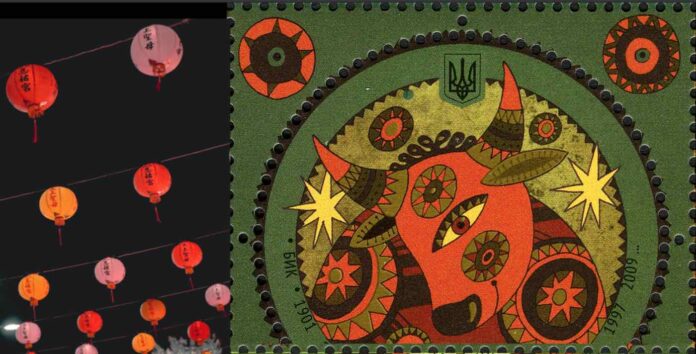
The Lunar New Year is upon us, horoscopes are flying through the digital ether like fireworks above Beijing, and this time around—according to the Chinese Zodiac—it’s the year of the Ox.
If you were born in the following years, you’re an Ox: 1925, 1937, 1949, 1961, 1973, 1985, 1997, 2009, and 2021.
Honest and earnest, the Ox, or Chou (丑), is the ultimate rock around which one builds a family or a business. A rational mind and a strong belief that everyone should fulfill their responsibilities makes it difficult for Oxen to be reasoned with sometimes, but their values always shine through their actions.
Look for those with horoscopes most compatible with Oxen: Rats, Roosters, and Snakes. Pay attention to your lucky numbers 1 and 4, and the colors yellow, blue, and green. Travel east and southeast for auspiciousness, and south for love.
This year’s birth Oxen were born in the Metal phase or (辛 xīn), and while this means their upbringing was, is, or will be tough, no financial worries will befall them. Their retirement will also be enjoyable.
Chinese astrology states that the year in which the stars on your birth date come around again to sit opposite Jupiter is “Ben Ming Nian”, or the unlucky year, as Jupiter opposes the mythical Tai Sui—heavenly generals, or star gods, of your birth year.
In this year of Xīn Chou, one horoscope states “you may encounter unexpected challenges, especially in your career and studies, which can leave you feeling stressed out, distracted, and emotional.”
Another states that “In Ben Ming Nian, the overall horoscope of Ox people will become precarious.”
However, all acknowledge that the Metal phase which is generating with Earth, will benefit Oxen to some extent.
Furthermore, there is perhaps no sign more equipped to deal with Ben Ming Nian than Oxen, and none of these things should prevent an Ox from doing what they do best: working, speaking the truth, and developing oneself.
If you find that Tai Sui starts playing hardball, be yourself, trust your own strengths, and you will find your way out again as the wheel of fortune spins ’round your way.
In many ways the Xin Chou year, and the path forward through it, is demonstrative of the state of humankind in this difficult period. If we all borrow a little bit of Ox’s strength, the celestial wheel will turn all of our fortunes in time.
Nearly six in 10 Americans are planning to make ‘carpe diem’—Latin for seize the day—their new mantra after the COVID-19 pandemic, according to a new poll.
The survey asked 2,000 Americans about the impact COVID-19 had on their lives and what lessons they’ve learned. It found 68% are planning to emerge from quarantine as new people. In fact, seven in 10 polled are planning to live each and every day to the fullest post-pandemic.
Conducted by OnePoll on behalf of Life Happens, a nonprofit educating consumers about the importance of life insurance, the survey found that 71% of respondents value the little things in life more than ever because of the past year.
Some of the ‘small wins’ Americans are pursuing at this time included speaking to their families more (45%), speaking their minds more truthfully (43%), and taking more vacation time when it’s safe to do so (42%).
Four in 10 respondents also shared they plan to be more confident and express themselves creatively as a part of this small-win revolution.
This isn’t to say respondents aren’t focusing on big life decisions during this time, however, as three quarters of those polled said it’s important for them to get their finances in order in 2021.
In fact, achieving financial security is the most important milestone for Americans to achieve for the second year in a row (38% in 2021 compared to 36% in 2020).
Faisa Stafford, President and CEO of Life Happens said: “Traditional milestones and outlooks on life have been upended, leading many to reevaluate what’s important in life and their relationships. For many, the past year has emphasized that there is no better financial security for your loved ones than life insurance, with our survey showing that more than a quarter (29%) consider getting life insurance a ‘small act of love.’”
Another important milestone for Americans includes becoming debt free—up 8% compared to last year’s survey (26% in 2021 compared to 18% in 2020).
The year-to-year results also showed that two milestones in particular are less of a focus in 2021—the first being marriage (down 11%) and achieving a successful career (down 5%).
When it comes to reasons for avoiding talking about finances during the pandemic, men (31%) and women (37%) both agreed that arguing with their significant other/spouse over money was the leading cause for choosing to eschew the topic.
TOP ‘SMALL WINS’ PEOPLE ARE PURSUING DURING THE PANDEMIC
See/speak to their families more – 45%
Speak their minds more truthfully – 43%
Take more vacation time when it’s safe – 42%
Be more confident – 41%
Express themselves creatively – 41%
Take better care of their mental health – 31%
Don’t cancel plans in the future – 26%
SHARE the WINS—Send The Results of This Positive Poll with Friends…
Quote of the Day: “No winter lasts forever; no spring skips its turn.” – Hal Borland
Photo by: Ravi Patel
With a new inspirational quote every day, atop the perfect photo—collected and archived on our Quote of the Day page—why not bookmark GNN.org for a daily uplift?
Non-profits need profits, and one Portland interior designer has found a subtle, effective way to fund projects looking to alleviate the Oregon homelessness epidemic.
A short-hand equivalent of when grocery stores ask shoppers to round up and give the surplus to charity, she’s adding a 1% line item on every client invoice as a way of generating money for non-profits: and other interior designers in the state have been joining her.
Despite having one of the highest state tax burdens in the nation, Oregon struggles with homelessness rates.
Seeking to utilize the real estate and home furnishing industry’s familiarity with the problem, Jessica Helgerson started the One Percent Project and found that among her interior design business’ 25 clients, only one opted out of the voluntary 1% charge.
“When you’re working with people who can afford an interior designer, that might not be a lot of money to them,” explains Helgerson to Fast Company. “That has really fostered a lot of enthusiasm; people are excited they can be part of it.”
Launched in 2019, the One Percent Project is now generating revenue for nine Portland and Oregon state organizations that work ro alleviate homelessness, including Community Warehouse—a sort of Salvation Army that allows people transitioning out of homelessness to shop for free.
The grant they’ve received through the One Percent Project has so far come to a whopping $150,000, which Community Warehouse used to buy a new van to make deliveries.
How did such a big fundraising number happen? In 2019, more than a dozen interior-related businesses in the Pacific Northwest got onboard with the project—and that number is only rising.
“It was important that it not just be interior design,” Helgerson said. “But that it be all aspects of the home world. Real estate agents, architects, plumbing, contractors, supply places. It’s a very broad world.”
Another grant recipient benefitting from the increased participation was Portland Homeless Family Solutions, a shelter and support center that helps homeless folks stay safe and positive while seeking long-term housing.
The One Percent Project provided a $40,000 grant to fund the project and over 800 pro-bono hours of interior design work. Using concepts from trauma-informed design, the remodeled space is grounded in safety, accessibility, flexibility, connectivity, inclusion, health, and healing.
The One Percent Project finds that the 1% line item makes it easy for businesses to add it into their operations without expanding software or personnel, while the association between the housing industry and the homelessness epidemic makes sense to clients—similarly, perhaps, to the no-brainer of an airline buying carbon offsets, or a paper company planting trees.
SHARE the Generosity and Send This Story to Friends…
Neurologists looking to understand how perfect pitch affects the brain found an altogether different and inspiring conclusion about music and brain function.
They found that both perfect pitch—the ability to identify a note simply by the sound—and musical training in general led to greater functional connectivity between the regions of the brain.
Perfect pitch is something associated with musical genius, and is a talent possessed by such titans as Mozart, Pavarotti, Tchaikovsky, Jimi Hendrix, and Mariah Carey.
Using state-of-the-art methods of assessing the synchronized activity between brain hemispheres and regions, Simon Leipold and the other researchers found “robust effects of musicianship in inter-and intrahemispheric connectivity in both structural and functional networks.”
The trial consisted of 153 female and male participants; 52 perfect pitch musicians, 51 non-perfect pitch musicians, and 50 non-musicians.
“Crucially, most of the effects were replicable in both musicians with and without absolute pitch when compared to non-musicians,” write the authors of the corresponding paper, who are neurologists at the University of Zurich and at Stanford. “However, we did not find evidence for an effect of [perfect] pitch on intrinsic functional or structural connectivity in our data: The two musician groups showed strikingly similar networks across all analyses.”
They also found that musical training at a young age produces stronger structural connections—as in, connections that help distinct areas of the brain work together to perform complex cognitive tasks—which has important implications outside of musical education.
Leipold and the team have unknowingly produced a very strong case for musical education in schools, as their finding of structural connections is nothing trivial. Rather, it’s one of the most important metrics of brain health and development.
The paper is a great case of unexpected discoveries in science: how setting up studies to examine one hypothesized effect can sometimes lead to the discovery of a totally different one, with widely different implications.
PLAY Out the Good News to Your Friends—Share the Findings of This Study…
Taking a moment away from your work to stretch out your mind can be a great way to manage stress, and these NASA videos of our Sun, Moon, and Earth are perfect ways to do so.
Buried in our screens, buried under a curtain of artificial light, humans can lose connection with an intangible part of our heritage—looking at a sky filled with planets and stars.
Imagining that a nighttime picture from a cosmic observatory is the kind of thing every one of our ancient ancestors saw every time they looked at the night sky is a wild thought.
Yet now we have methods of seeing space that our ancestors didn’t, and it’s thanks to things like Hubble or NASA’s Solar Dynamics Observatory, but also the world’s astronauts and astro-engineers who have been bringing 4K ultra-HD video cameras up to the International Space Station with them.
In NASA’s video gallery, one can take a vacation from Earth for a few minutes, as well as a broader perspective about one’s place in the world, and the place of one’s planet in the galaxy—all through the advent of positively stunning ultra-HD video quality.
You’ll learn a lot, since the video captions are well-written and, without using too much jargon, don’t spare any details.
Views of the Sun
As a species, sungazing is not recommended. The ultraviolet light emitted from the Sun can quickly damage our eyesight, but the cameras aboard NASA’s suite of solar observatories have no problem spending all year staring right at it.
The videos in the NASA video gallery show our star in 10 different light spectrums, allowing us to see colors of the Sun which our eyes cannot perceive.
They include videos of Mercury—as small as a marble, passing in front of the Sun, of solar flares and coronal mass ejections, and even a one-hour video featuring a solid decade of solar activity measured at one day per second, all in 4K-UHD.
Views of Earth
For those who like to get a satellite’s-eye view of our home planet, the video gallery is filled with pass-overs of continents, as well as different atmospheric effects.
Jack Fischer, Jeff Williams, and other astronauts aboard the ISS sometimes record videos for us unfortunates stuck down below, and they include dizzying and varied views of the blue marble, including a slow fly-over of Europe, including helpful designations of cities, and the glint of the moon off the surface of the ocean.
Other observations include several space walks, and a five-minute montage of the Aurora Borealis and Aurora Australis taken at different points in orbit that are mind-bogglingly gorgeous.
Views of the Moon
As our nearest cosmic neighbor, enormous bodies of imaging data exist of the Moon, including a spectacular 4K recording of its permanently-shadowed far side, where the viewer can see exactly what the Apollo 13 astronauts saw all those years ago.
Another slow, sweeping, 4K journey across the pockmarked surface is set to Claude Debussy’s Clair de Lune, performed by the National Symphony Orchestra on NASA’s 60th anniversary, which all together is enough to bring a tear to your eye.
Controlled avalanches are generally set off in order to prevent larger ones from happening, but that doesn’t mean they’re not without danger.
Jesse Dahlberg was watching as railroad crews using explosives set off a series of small avalanches near the town of Field in southeastern British Columbia when he noticed a lone elk directly in the path of the next manmade snow tsunami.
Although he hoped the elk might be able to outrun the oncoming peril, the animal was engulfed in a wave of white as the avalanche coursed around it on its way down the mountainside.
“I didn’t know how big the avalanche was going to be so I was hoping for the best… When I saw it, I thought there’s no way that elk is going to survive,” Dahlberg told CBC News. “That wall of snow caught up to that elk so fast and just blasted it.”
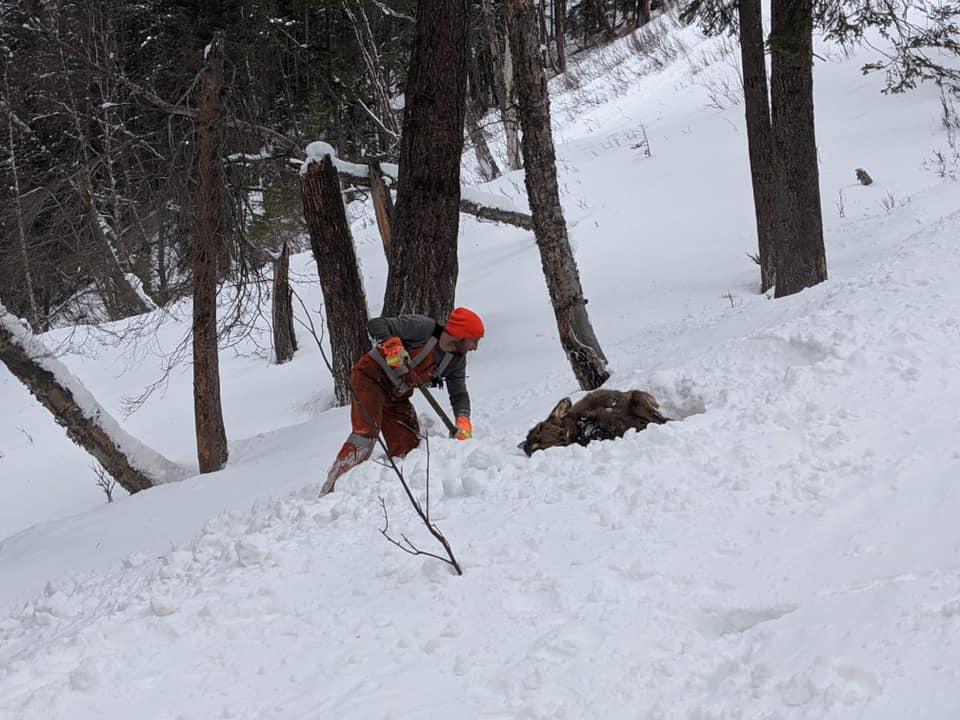
Enlisting the aid of a friend, Dahlberg decided to drive over to see if there was any chance the elk might have survived. After parking at a spot close to where the elk was felled, they followed a trail of debris uphill.
Miraculously, Dahlberg saw a portion of the animal’s face peering out from its snowy prison. The elk was also totally immobilized by the weight of the snow in which it was buried.
Once Dahlberg realized the elk was alive, he knew they’d have to act quickly to extricate it. He could only hope that none of its limbs had been fractured by the impact of the avalanche.
Dahlberg began digging with his hands, sending his friend back to their vehicle for a shovel.
Working steadily, it took them only 15 minutes to dig the elk’s hind legs free. Then, with a little prompting, the hapless critter was able to shake its way clear and walk out of the snowdrift.
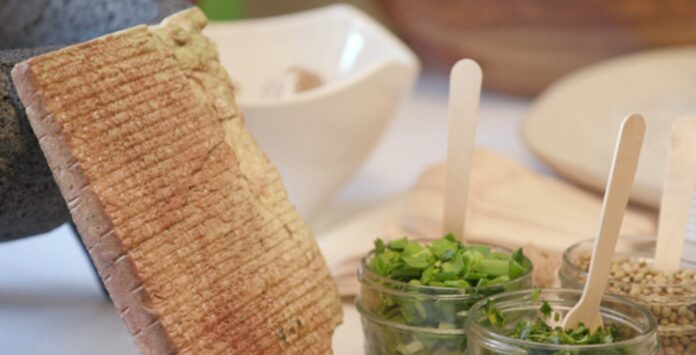
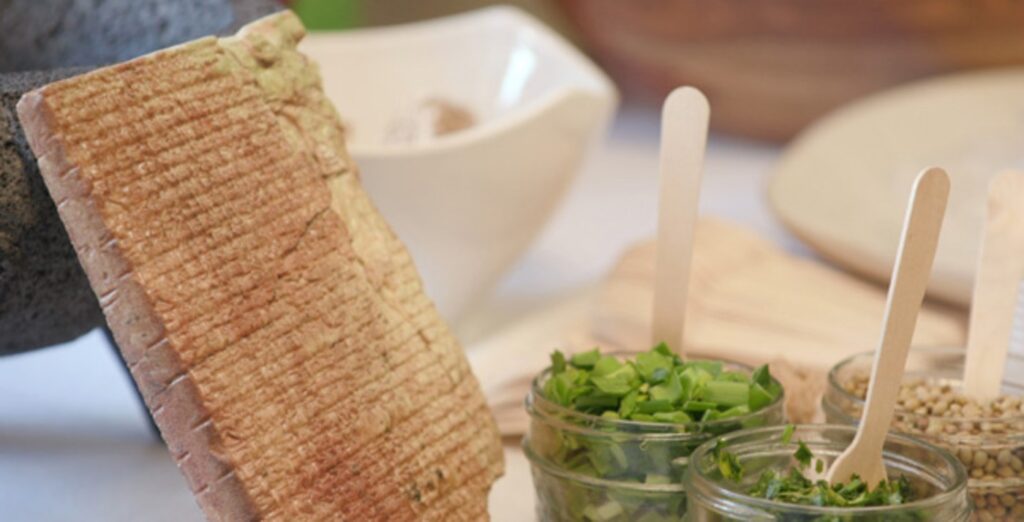
The world’s oldest recipes, eating habits, and even culinary culture have been decoded by Babylonian scholars at Yale.
The four dishes, recreated by measuring ingredient portions in a scientifically averaged way, turned out to be different types of lamb stew, and connects culinary traditions in modern Iraq, Iran, and Syria to their Mesopotamian ancestors.
Yale Babylonian Collection
Aromatic Persian shallot, leek, onion, and garlic join fine-grained salt and meat which—when mixed with water, milk, and barley cakes—gives the cook a tasty stew.
How much garlic, how much milk? It’s impossible to ask, because whoever created this staple, reminiscent of pacha, a modern-day soup eaten in Iraq, has been dead for thousands of years.
When Assyriologists realized that—lying among the thousands of clay tablets carved with cuneiform letters that make up Yale’s Babylonian Collection—there were the intimate details of not only recipes, but food preparation and dialogue on world cuisine, they must have seen an incredible opportunity to gain insight on the everyday world of this ancient civilization.
Culinary historians and food scientists joined the cuneiform readers in forming a team to decode these ancient eats, and after some trial and error, assembled four recipes for different stews, giving a fascinating insight into the culture of Babylonian and Sumerian kitchens.
A tasty puzzle
Three tablets contained the working recipes, with the largest hosting 25 ingredient lists. Their simplicity paralleled someone explaining how to make a hamburger today—the current cultural setting would make it so obvious, but 4,000 years from now the method may be a mystery.
The first dish, called me-e puhadi, is seasoned with garlic, onion, and a lot of coriander, but the principle component is the melting of sheep’s tail fat in the pot. This base is used to sauté (sort of) the lamb meat.
Known as alya in Arabic, rendered sheep’s tail was an “indispensable ingredient in Iraq, until around the 1960s,” culinary historian and Medieval Iraqi cuisine expert Nawal Nasrallah said in a BBC Travel piece on the recipes.
“I was really surprised to find that what is a staple in Iraq today, which is a stew, is also a staple from ancient times, because in Iraq today, that is our daily meal: stew and rice with a bread,” said Nasrallah. “It is really fascinating to see how such a simple dish, with all its infinite variety, has survived from ancient times to present.”
Another dish, which the BBC has written down completely in our own language, is called Tuh’u, and contains red beetroots, lamb, coriander, and beer. It’s reminiscent, Nasrallah argues, of Ashkenazi-Russian borscht, or a stew made by Iraqi Jewish communities called Kofta Shawandar Hamudh, which means beetroots and meatballs.
The last deciphered recipe was like a chicken pot pie, with layers of dough filled with chunks of bird cooked in something like a béchamel sauce.
The tablets demonstrated another fascinating cultural development in our history: the recognition of cuisine.
Foreign food
“Elamite stew” titles one recipe. Bearing the name of another very early civilization from the time of Babylon and Sumer, and one which would be an almost perennial pain in the backside for conquering kings of Babylon and later Assyria, this stew is based with animal blood, and the texts recognize it in the way which we would recognize something like tacos, or Pad Thai, something which once was foreign but has become a ubiquitous menu item known by all.
“There is a notion of ‘cuisine’ in these 4,000-year-old texts. There is food which is ‘ours’ and food that is ‘foreign,’” Gojko Barjamovic, chief translator on the team, told BBC. “Foreign is not bad—only different, and sometimes apparently worth cooking, since they give us the recipe.”
“Mu elamutum” as it’s called, includes dill, an ingredient demonstrative of its foreignness, since dill isn’t used in Iraqi cooking, and isn’t mentioned in any of the Babylonian recipes—which Yale have put online for others to try making.
Iranian cuisine on the other hand does use dill, and it is modern-day Iran where the Elamites lived. So trade between the two nations created an understanding of food culture, and an appreciation of different flavors.
Archaeologists and scholars have decoded a lot of ancient texts that give us insight into how people lived in the so-called, “black and white era” of history.
In his book Babylon, Paul Kriwaczek details translations of Babylonian and Sumerian receipts, athletic competitions, and even humor, while ancient Greek scholars decoded the musical notation for the world’s oldest song, the Epitaph of Seikilos.
Food though, is maybe a little bit more universal than music, sports, or commerce, and in the writings of the Babylonian chefs we find an incredible human connection to the past, enshrined in lamb and coriander.
(WATCH the dishes being made in the Yale video below.)
COOK UP Some Good News for Pals—Share This Story on Social Media…
Quote of the Day: “If we had no winter, the spring would not be so pleasant: if we did not sometimes taste of adversity, prosperity would not be so welcome.” – Anne Bradstreet
Photo by: freestocks
With a new inspirational quote every day, atop the perfect photo—collected and archived on our Quote of the Day page—why not bookmark GNN.org for a daily uplift?
Virtual courtrooms of course have their drawbacks, but who could know one of them would see a serious lawyer explaining to a judge, “I’m not a cat?”
When Rod Ponton was unable to turn off a cute kitty Zoom filter in a Texas court hearing, it’s safe to say he got into a bit of a flap.
He promised the judge his legal assistant was working to rectify the issue. With his fluffy kitten’s eyes growing ever wider, more confused, and more expressive, Ponton then felt the need to let Judge Roy Ferguson know he wasn’t actually a feline. Ferguson replied kindly, “I can see that.”
Watch the video and let us know if you think the most amazing part of this Zoom call is: a) That no-one on the call laughed at the mishap b) That this pandemic-era video is seemingly impossible to watch just once.
With 20 million views online, if you do keep pressing play—know you’re likely not the only one.
RELATED: Gospel Singer’s Hilarious Song About Quarantine Snacking Goes Viral: ‘The Fridge Again!’
Ponton is in on the laughs. He doesn’t seem to mind the attention at all, telling the New York Times, “If I can make the country chuckle for a moment in these difficult times they’re going through, I’m happy to let them do that at my expense.”
(WATCH the video below.)
LET This Cat Out the Bag – Share This Story With Pals…
Four Nigerian famers have won a 13-year legal battle against Shell Oil after a spill allegedly contaminated their lands.
The David vs Goliath story went all the way from the rural Niger Delta to The Hague Court of Appeal, resulting in the farmers being compensated, with further mandates for both safety and cleanup being pressed upon parent company Royal Dutch Shell.
It was on Friday that the Netherlands ruled in favor of farmers from the Goi and Oruma communities, rejecting Shell Nigeria’s claim that oil spills in the area were the result of sabotage.
Nigerian law requires claims of sabotage to be proved with evidence beyond any reasonable doubt, something which the defenders could not do.
“Finally, there is some justice for the Nigerian people suffering the consequences of Shell’s oil,” said Eric Dooh, one of the complainants in a statement from Friends of Earth Netherlands, a grassroots organization that took on the case as a major rallying call.
“It is a long time victory that we have been dreaming of. It is not only a victory for me, it is a victory for the entire Niger Delta region, the Ogoni people, the civil society organizations. It is a victory for me and my family. It is a victory for humanity,” he added.
A decade had passed before the case began to make real headway after The Hague Court of Appeal ruled that it had jurisdiction over the case in 2015 (Shell’s headquarters are based in the Netherlands).
“This is fantastic news for the environment and people living in developing countries,” said Friends of the Earth’s Netherlands head, Donald Pols. “It means people in developing countries can take on the multinationals who do them harm.”
Along with arbitrating a settlement, the court found that Shell Nigeria lacked any kind of leak detection system in the pipelines and wells in and around the Goi and Oruma communities, and that state-of-the-art systems must be installed, or risk a €100,000 per day ($121,000 per day) fine.
Furthermore, a local cleanup operation was found to be insufficient, and it was ruled that Shell must conduct a much more thorough cleaning of the oil from the waters and farmland.
This wasn’t the only court case won by locals in developing countries over the last 12 months. A succession of legal victories for Indigenous groups, both in Panama and Brazil, transferred approximately 250,000 hectares—more than half a million acres of rainforest from state ownership, under which illegal logging thrived, to tribal communities.
Featured image: Quino Al
SHARE the Groundbreaking Legal Win on Social Media…
Every winter, awesome photos and videos show up on social feeds as people try to make the most of the cold weather—by turning boiling water into amazing ice crystals.
How does hot water turn into frozen clouds when it’s cold?
According to National Geographic, this phenomenon occurs because boiling water is already so close to evaporating: “Because they’re so hot, those tiny water droplets start to vaporize. But since cold air can’t hold as much water vapor as warmer air, the water condenses. Extremely cold temperatures quickly freeze the water droplets, which fall as ice crystals.”
Perfect weather 2 have some cold weather fun. The #mpemba effect is pretty cool science experiment where the cold weather will actually freeze Boiling water instantly when thrown in the air. Try this with cold water and well you just get soaked. #weather#science#polarvortexpic.twitter.com/NwlJ3VzcWX
Want to take such a video or image yourself? With the polar vortex bringing frigid temperatures to much of the Northern Hemisphere this week, now is as good a chance as any to try.
Saying that, it must be properly cold where you are: as in 14°F/-26°C or below. Really, don’t attempt this if the wind is blowing towards you. And try throwing the water away from you before throwing boiling water above your head.
If the wind and weather is happily in your favor? Head out with a large flask of boiling water into a place with few visual distractions—such as a low field. If it’s Golden Hour, which happens around sunset or sunrise, the light should be glowy and perfect.
Now find a spot that looks towards the sun and have your model throw the hot water towards its rays.
If you have a wide angle lens, do use it. If you just have a smartphone: that’s good too. Just standing a little far back so you can get the full ice-crystal effect in the frame. Have your model do a few takes, and voila. Hopefully you got your dream shot.
There’s a lot happening in the sky on February 11. Not only will it be especially dark thanks to the new moon, but on Thursday morning, a little before sunrise, look up and you’ll see Venus closely approach Jupiter.
You should just be able to see this planetary conjunction happen with the naked eye, but binoculars or a basic telescope are always handy when looking up at celestial events.
How to spot this rare conjunction? According to Farmer’s Almanac, about 30 minutes before sunrise look low on the southeast horizon. At that point, the planets should have risen just highly enough above the horizon to be seen. The sun won’t yet have begun to brighten the sky, and you should be able to see Jupiter and Saturn shining very closely together—just 0.4 degrees apart.
If you’re in for a cloudy Thursday, trying looking on Friday morning—the planets will appear close together then, too.
And if you don’t have a paper sky chart or map to orient yourself with? Not to worry. You can use a handy app like Star Walk 2 to easily find these two gas giants, right where you are.
SHARE The Bright Celestial News With Pals on Social Media…
How many times has this happened to you? You’re a soon-to-be-booted British monarch running away from the 1645 Battle of Naseby clutching a priceless gold diadem in your sweaty fist, but due to the slavering Roundhead horde nipping at your heels you don’t have time to stop and retrieve the not-so-lucky totem when it inadvertently slips from your grip as you beat a hasty retreat.
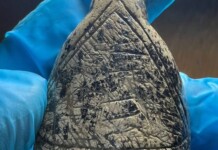
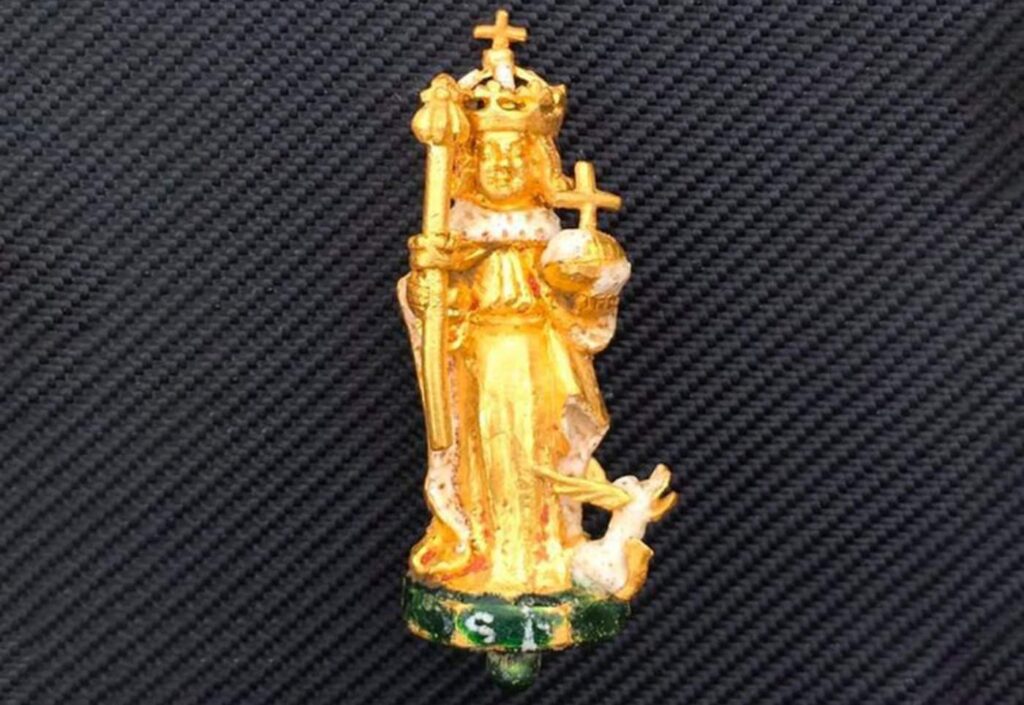
Some archeological historians speculate that might just be how an enameled gold figurine with an estimated value of $2.7 million dollars found its way into the Northhamptonshire field where amateur treasure hunter Kevin “Kev” Duckett found it in 2017.
“There may be a thousand reasons why the gold figure of Henry VI ended up in a Northamptonshire field,” writes British historian Leanda de Lisle. “But it is striking that the find site is exactly on the route Charles fled from the battle of Naseby in 1645, and in a place that saw extreme violence.
In order to escape the conflict, Charles was forced to charge Oliver Cromwell’s cavalry. He’s said to have dropped his pistols after firing them in the process of jumping a stream. “Perhaps it wasn’t all he dropped,” de Lisle postulated.
Although Duckett’s been hunting buried booty for three decades, it was during his maiden metal-sweeping foray searching a previously undisturbed site that the stunning icon turned up just inches beneath the topsoil.
Duckett knew what he’d found was a Tudor relic, but he had no idea what the 1.4-inch hunk of history really was until he’d immersed himself in research. After three years of sifting through royal inventories dating back centuries, he ironically pinned down its provenance after viewing its doppelganger in a Historic Royal Palaces YouTube video featuring a reproduction of a crown once belonging to Henry VIII.
Portrait of Henry VIII by Henry VIII, Wikimedia Commons, Public Domain
Duckett made a pilgrimage to Hampton Court Palace to view the duplicate crown in person. What he saw was enough to convince him that the figurine of King Henry VI depicted as a saint he’d unearthed had once been its centerpiece.
“The very thought that Henry VIII used to wear this figure in his crown on his head over 500 years ago when he was the most powerful man in the land is just mind-blowing,” Duckett told the Harborough Mail. “I can still hardly believe that I have found this magnificent royal piece in a humble farmer’s field near Market Harborough.”
By law, Duckett turned his find over to the authorities who sent it on to the British Museum in London for further study. If it does turn out to be a true piece of the Tudor crown, Duckett and the owner of the site where the royal trinket turned up will receive a handsome bounty from its sale to a museum.
Duckett isn’t alone in his enthusiasm for treasure hunting, and during the pandemic, the number of “detectorists” as they’re called in the UK, has been steadily on the rise. Metal detecting is a pastime that’s well suited to both social distancing and indulging our sense of adventure.
“There are many more people using metal detectors than there are archeologists, so they find much more stuff, and it’s transforming our view of the past,” academic archeologist Professor Carenza Lewis told ITV.
For Kev Duckett the journey from finding a priceless piece of history to authenticating it has been a long and arduous one. While at the moment, the final outcome is still in limbo, Duckett’s not in the least discouraged. “Treasure hunting is in my blood, it’s deep in my DNA,” he said on his Facebook page, “and finding treasure doesn’t come any better than this.”
SHARE This Stunning Find With Your Pals on Social Media…
Quote of the Day: “If you don’t like something, change it. If you can’t change it, change your attitude.” – Maya Angelou
Photo by: prottoy hassan
With a new inspirational quote every day, atop the perfect photo—collected and archived on our Quote of the Day page—why not bookmark GNN.org for a daily uplift?
In 2018, Yale Professor Laurie Santos introduced a new course, “Psychology and the Good Life,” to address the growing mental health needs of students on campus. It was an immediate success, attracting more than 1,200 undergraduate enrollees that first semester before it was transformed into the most popular online course in Yale’s history.
Now the course is being offered for free to more than 550 low-income high school students across the United States. The students will receive free college cdits upon completion.
“Our goal is to equip students with scientifically validated strategies for living a more satisfying life, while also creating opportunities for high-striving low-income students and students of color to demonstrate college-readiness,” explained Santos, professor of psychology and head of Silliman College at Yale.
According to a statement from Yale, the new program—which was developed in partnership with the University of Connecticut and the National Education Equity Lab with support from the Arthur M. Blank Foundation—will be offered in more than 40 Title I schools from 17 cities, including Atlanta, New York City, Los Angeles, and New Haven. In addition to receiving access to Santos’ lectures, students will be supported by both a local teacher at their high school and a Yale Teaching Fellow.
“It is an honor to be involved in this widespread effort to broaden educational opportunities for the diverse student population enrolled in this course,” said Zach Silver, a graduate student in psychology at Yale who is one of the teaching fellows for the new course. “I am thrilled to share my passion for this material with students across the country.”
The class, which will be slightly modified from the original, will present students with scientifically validated strategies for living a more satisfying life and examine what psychological science shows about how to be happier, how to feel less stressed, and how to flourish more. Students will also have a chance to put these scientific findings into practice.
The original “Psychology and the Good Life” course attracted such a large enrollment of students that it was moved to Woolsey Hall, the largest concert hall on campus. The class has since spawned both a massively successful online course, “The Science of Well-Being,” available for free on Coursera with over three million enrollments to date, and the hit podcast “The Happiness Lab,” a top 5 Apple podcast with over 30 million downloads.
“This is a really challenging time, and that means that students need to learn new strategies to protect their mental health,” said Santos. “Our goal is to give students the tools they need to flourish and feel better. But in addition, we can give students a rigorous Yale educational experience and an opportunity to see that they have what it takes to succeed in college and beyond.”
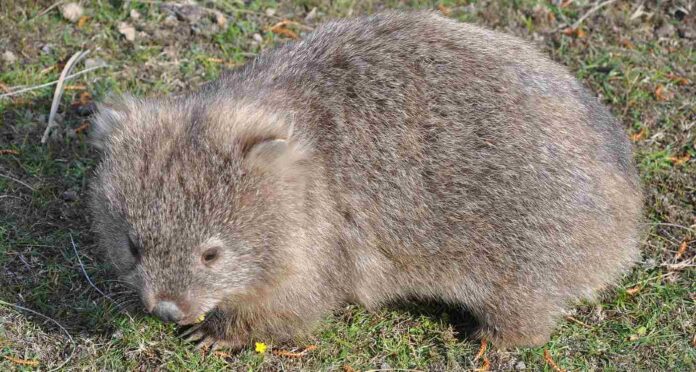
In New South Wales, local wombats are helping dozens of other species find water as the country sizzles under severe drought.
The cuddly-looking animals invaded Ted Finnie’s beef farm and began tunneling underground to a hidden water source, local news reports.
According to ABC Australia, the farm sits 19 miles (30 kilometers) down the Hunter Valley—which has only seen a pinch of rain over the past three years.
After such a long period, the wombats’ relentless tunneling had created a crater 20 meters (65.6 feet) in diameter and four meters (13 feet) deep.
“As the crater has dried out due to the drought the wombats have burrowed to get closer to the water and so they’ve gone underground a little bit,” said Finnie to local reporters, who also reported regularly seeing wallabies, wallaroos, and kangaroos.
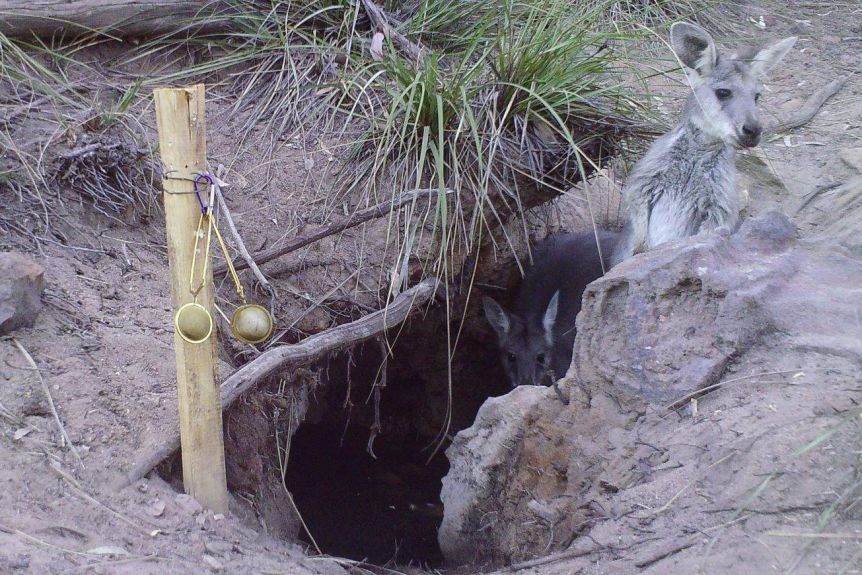
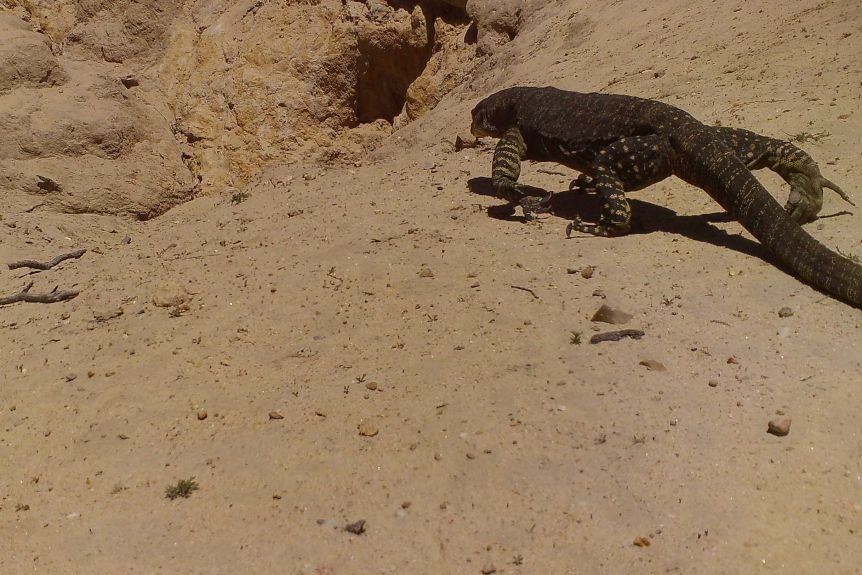
After Hunter Region Landcare Network set up a camera trap at the “Wombat Soak” as he called it, Finnie found it was also attracting a myriad of other animals too, including birds, goannas, possums, echidnas, and emus.
Amazingly, there has never been a recorded instance of wombats digging for water, says biologist Julie Old, who began studying the site. Wombats dig their burrows in the side of creeks or small ditches under trees, where the roots will add to the stability of the burrow. The Wombat Soak has none of these properties.
“We often call wombats ecological engineers because they’re digging burrows and they make habitat for other animals,” Old told ABC Australia. Some animals have even been seen sharing burrows, albeit not very amicably, with the normally solitary wombat.
This was the case during the fire season when many wombat burrows were found to contain other species sheltering from the flames.
Thomas Hobbes, who famously described nature as red in tooth and claw, clearly never met a wombat, a species now being hailed as heroes for their life-saving assistance in these difficult conditions.
FILL UP Your Friends’ Well of Hope—Share This Story With Them…
How about a move to a charming place that will pay you $6,000 to relocate and move there for a year?
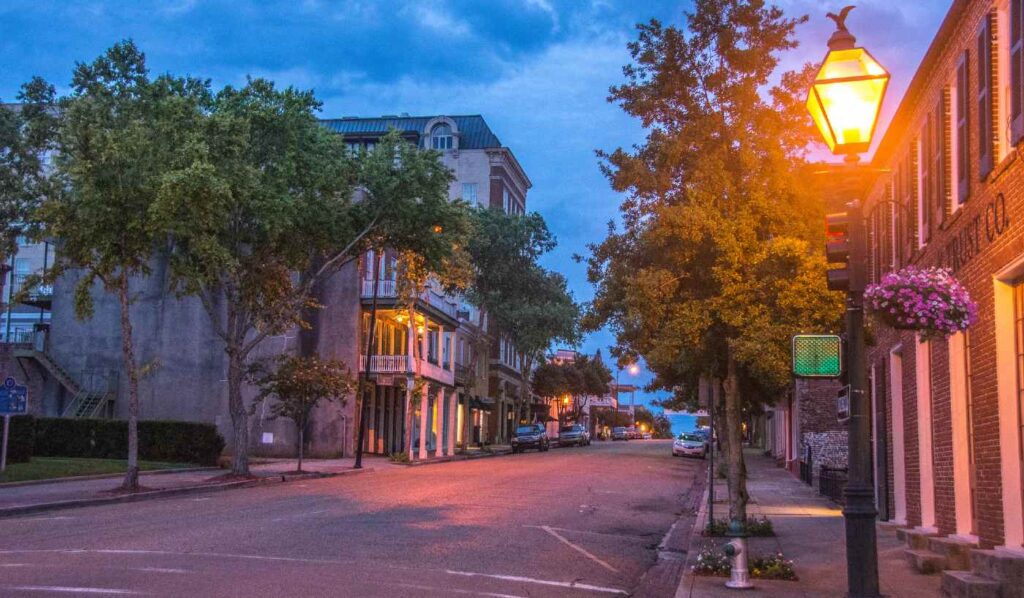
The historic city of Natchez—known for its rich sunsets, vibrant festivals, meandering bike paths, and antebellum homes—is offering remote workers $2,500 in moving expenses and $300 a month for a year to help people up sticks and move to town.
When we say it’s a historic place, we mean it. According to Lonely Planet, this is “one of the oldest continuous settlements on the Mississippi River, besting New Orleans, its bigger, flashier neighbor, by two years.”
The first and only city in the Deep South to offer such a program, the initiative is called Shift South and there are 30 slots available. Those who want to apply will need to be employed remotely in the US. They’ll need to establish primary residency in Natchez, buy a home there worth $150,000 or more, and own and live in it for one year.
In good news: The cost of living in the city, home to 15,000, is lower than the national average, and the median home is $96,056 according to Zillow.
“The pandemic has really been a wake-up call to what people have been feeling for a long time,” local mayor Dan Gibson told CNN. “They’re tired of the big cities, the high cost of living and the long commutes. With this offer, you can live in a beautiful, historic small town where everything is convenient and affordable.”
Once routinely in the news for all the wrong reasons, Pakistan is now a much safer place than it used to be.
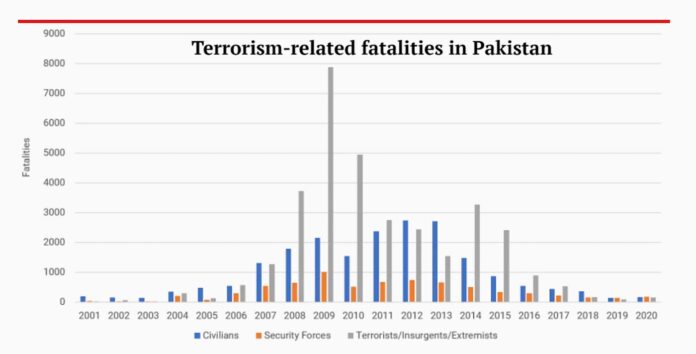
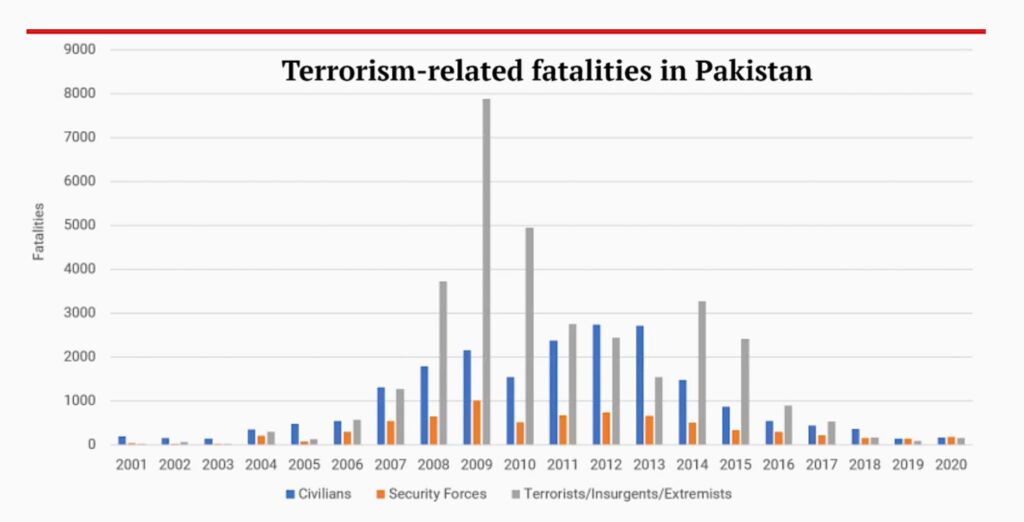
The South Asian nation has seen a reduction in terrorist attacks on home soil by 86% since 2013, and between 2019 and 2020 alone there was a 45% fall.
The promising stats continue for one of the few countries to have met the UN Sustainable Development Goal for protected marine and terrestrial ecosystems, as law enforcement averted more than 50% of all terror threats last year, and suicide bombings have become practically non-existent since 2009—falling 97%.
Pakistan’s armed forces spokesperson, Major General Babar Iftikhar, highlighted border security along Afghanistan, and major improvements in the security infrastructure in Karachi.
In fact, terror incidents, including targeted killings and kidnappings in Pakistan’s biggest city of Karachi, had reduced by more than 98%. This has led to a staggering improvement of the city’s ranking on the World Crime Index: from sixth highest back in 2014, to now being 108th, just next to Spokane, Washington.
The crime index is a highly curated scoring system based on resident or visitor submissions, which has benefits over government data in some ways.
Bordering two frequently dangerous Afghan provinces, Helmand and Kandahar, the province of Balochistan was a frequent haunt of militants before the Pakistan military took steps to clear terrorist infrastructure and organizations in the southwest.
“The challenges that we overcame have now paved the way for great opportunities,” Maj. General Iftikhar said, according to Gulf News. “At least 199 development projects worth [$3.75 billion] have been launched in Balochistan covering health, education, agriculture, and infrastructure sectors.”
SHARE the Hope—Send This Story From Pakistan to Friends…