Enzymes produced in the stomachs of certain bacteria found during several high-profile discoveries have been combined by English scientists to create a super enzyme, reducing the time it takes for these chemicals to depolymerize, or breakdown plastic from weeks into mere hours.
The new discovery would further triple this speed at which the plastic polymers are undone, providing a serious opportunity to win the fight against plastic pollution in the next few decades, as well as opening the door for scientists to create more synthetic enzymes targeted for specific kinds of plastics.
The field of organic enzymatic plastic recycling blew up during the second half of the 2010s, with Japanese scientists in 2016 discovering a bug that lived on plastic trash mounds which actually ate the material and disconnected the polymers of polyethylene terapthalate (PET), one of the most common plastics used in making water bottles and clothing.
Professor John McGeehan from the Center for Enzyme Innovation at the University of Portsmouth would, in 2018, create a superior version of it in his lab completely by accident, that sped up the depolymerization time significantly.
Another breakthrough would come in April of this year from the University of Toulouse, where an enzyme extracted from composting leaves depolymerized PET in about 10 hours when heated to 70°C (158°F).
A French company Carbios would take this technology and lay the groundwork for a market application by 2024-2025.
Pushing the boundaries
Now McGeehan is responsible for another breakthrough in a crowded field. By combining PETase, the original enzyme based on the Japanese discovery, with MHETase, another one that converts the disconnected polymers to plastic monomers—a base material ready to be used for recycling—the resulting enzyme “cocktail” broke down plastics three times as fast, while simultaneously putting the plastic on the next step to being reused.
In order to understand how to conjoin them, McGeehan used the Diamond Light Source, a device that bombards molecules with intense beams of X-rays 10 billion times brighter than the sun, allowing the user to see individual atoms in a 3D structure.
This allowed the team to produce a detailed map of the MHETase enzyme, giving them the molecular blueprints to begin engineering a faster enzyme system.
“Our first experiments showed that they did indeed work better together, so we decided to try to physically link them, like two Pac-men joined by a piece of string,” said McGeenhan in a statement.
“It took a great deal of work on both sides of the Atlantic, but it was worth the effort—we were delighted to see that our new chimeric enzyme is up to three times faster than the naturally evolved separate enzymes, opening new avenues for further improvements.”
Improvements might include adding further enzymes to breakdown natural material as well as plastics, such as natural/artificial blended fabrics, or take-away drink cups—the plastic lining inside of which often prevents the rest of the cup from being recycled.
RECYCLE The Good News And Share It With Your Friends On Social Media…
Quote of the Day: “Fashion is what you’re offered four times a year by designers. Style is what you choose.” – Lauren Hutton
Photo: by Jesús García Soto, CC license (cropped, enhanced)
With a new inspirational quote every day, atop the perfect photo—collected and archived on our Quote of the Day page—why not bookmark GNN.org for a daily uplift?
With so much misery being felt in communities surrounding the West Coast wildfires, we were looking for any silver linings and wondering if these blazes might actually be beneficial to the environment. Our friends at the nonprofit EarthTalk had some answers…
Adam Wilson
On the plus side, forest fire does clear away the tinder-like overgrown understory that has resulted from years of forest management that avoided fire at all cost. Hundreds of years ago, many of the forests now on fire in California, Oregon and Washington had fewer yet larger and healthier trees. But these days, partly thanks to fire suppression regimes as well as other factors, forests are more crowded today with smaller, less healthy trees.
It’s also harder for those remaining mature, established trees to compete for nutrients and space with all the undergrowth that’s built up in recent decades. In these situations, small manageable fires (or even better, prescribed burns) cannot only be beneficial, but can help prevent larger fires down the road by clearing the weaker, smaller trees.
Another benefit of wildfire is the clearing of overgrown underbrush to make room for new grasses, herbs and regenerated shrubs that provide food and habitat for many wildlife species. Also, the removal of thick stands of shrubs increases the water supply for the remaining larger plants and trees—and also allows streams and rivers to swell, further benefiting ever-thirsty native flora and fauna.
Yet another benefit of fire is that it kills off fungi, bacteria, viruses and insects that can decimate tree and plant communities and entire forest ecosystems. According to CalFire, California’s statewide wildfire management agency, more trees die from insect infestation and disease than from wildfire; some fire actually helps keep forests devoid of such pests and healthier overall than without fire. CalFire points out that vegetation burned by wildfire provides a rich source of nutrients that nourish surviving trees and soil.
And periodic fire can be an important way to keep certain ecosystems in balance. Many trees have evolved with fire and some even require it for seed germination; a few species even sport leaves covered with flammable resins (manzanita, scrub oak, chamise) to encourage fires that help seed the next generation.
National Geographic reports that, surprisingly, wildlife casualties tend to be low during wildfire events, as animals—especially those native to the areas on-fire and evolved to respond to the threat—either burrow in the ground or flee to safer areas instinctively. But invasive plants and animals may not fare as well given lack of genetic imprinting to be on alert for the threat.
EarthTalk® is produced by Roddy Scheer & Doug Moss for the 501(c)3 nonprofit EarthTalk. To donate, visit their website – or send questions to: [email protected].
SHARE the Silver Lining With Friends on Social Media…
Over the last decade ‘Grandpa Ron’, as the students call him, has volunteered thousands of hours every year to be with local school children—but it wasn’t until classes moved online due to COVID-19, that Ron Jacobson realized his legacy.
That legacy reached far deeper than being a school volunteer. He had become a treasured friend. And those students were now missing the hugs he given them every morning.
Back in March 2020, Jacobson had already logged 900 volunteer hours during the 2019-20 school year by the time Cle Elum-Roslyn Elementary in Ronald, Washington, closed its doors, and transition to virtual instruction.
“These kids who relied on me being there for them had suddenly lost me.” Jacobson told GNN. “When they started doing their schoolwork online, several complained to the faculty that they missed ‘Grandpa Ron.'”
The school received so many requests for Grandpa Ron that administrators added Jacobson’s contact information to the school’s online directory, allowing students to keep in touch with Jacobson. Students immediately began sending Jacobson emails and letters and even coming to his home to check up on him and offer to walk his dog.
Jacobson now responds to each of his many ‘pen-pals,’ adding a bright spot to the students’ days—and his own.
“Of course, I am happy to listen to the kids’ problems as well,” Jacobson says. “I have heard from faculty members and parents how much this regular communication has changed the kids’ attitudes.”
Because of his service to the community, the Veterans of Foreign Wars (VFW) has honored Jacobson—a Vietnam veteran—by naming him a spokesman for their campaign, #StillServing, which highlights the many ways America’s veterans continue serving even after leaving active military.
“The Marine Corps taught me, the two things that are most important are: complete the mission and take care of your troops. I’m still taking care of the troops.”
The third annual Healthiest Communities rankings came out last month which rated all the major factors contributing to the physical and mental health of locations across America.
Los Alamos by Stan Y
Los Alamos County, New Mexico turned out to be the healthiest community in the U.S., according to the extensive research underwritten by the Aetna Foundation, with research by U.S. News and World Report that examined nearly 3,000 locations across the country on dozens of factors that shape community health and well-being,
Los Alamos received a perfect score for measurements including drinking water quality, affordable housing availability, park access, and number of college educated citizens.
Perhaps most notably, Colorado grabbed 6 of the top 10 spots. Three counties in Colorado ranked in the top five, including Douglas County (2nd), Broomfield County (fourth), and Routt County (5th). Falls Church, Virginia was ranked third most healthy.
They all scored above the national average in at least eight of the 10 categories—Education, Equity, Economy, Population Health, Housing, Food & Nutrition, Public Safety Infrastructure, Environment, and Community Vitality.
The project serves as a tool to inform residents, community health leaders and elected officials about policies and best practices for better health outcomes by assessing which communities offer their citizens the greatest opportunity to live a productive, healthy life.
The analysis of 84 metrics of well-being seemed to parallel how well a county was doing during the COVID-19 pandemic, as well. The No.1 ranked community, Los Alamos County, had seen just 124 cases per 100,000 residents by late August, compared with a national average more than 10 times that rate.
Based on information from sources such as the U.S. Centers for Disease Control and Prevention, the Institute for Health Metrics and Evaluation, the U.S. Census Bureau, and the U.S. Environmental Protection Agency, the data come from a period predating the pandemic.
This year, new measures explored medical debt, census self-response rates, and eviction rates within communities.
Top 10 Healthiest Communities Overall
Los Alamos County, New Mexico
Douglas County, Colorado
Falls Church, Virginia
Broomfield County, Colorado
Routt County, Colorado
Loudoun County, Virginia
Pitkin County, Colorado
Carver County, Minnesota
Summit County, Colorado
San Miguel County Colorado
Top 5 Communities for Good Health Outcomes
San Juan County, Washington
Marin County, California
Carver County, Minnesota
Cedar County, Nebraska
Winneshiek County, Iowa
Top 5 Communities for Access to Health Care
Olmstead County, Minnesota
Suffolk County, Massachusetts
Johnson County, Iowa
Perry County, Kentucky
District of Columbia
Honolulu County, Hawaii, ranked No. 1 for the mental health category, which assessed deaths from suicide, alcohol or drugs, the rate of depression among Medicare beneficiaries and the number of poor mental health days per month
Quote of the Day: “Time you enjoy wasting is not wasted time.” – Marthe Troly-Curtin
Photo: by Daiga Ellaby
With a new inspirational quote every day, atop the perfect photo—collected and archived on our Quote of the Day page—why not bookmark GNN.org for a daily uplift?
Millions of Americans are being impacted by the economic downturn this year, with many even facing eviction.
Linh Do – CC license
To ease the strain, the Trump Administration issued an executive order on Sept. 4 that bans evictions due to non-payment through the end of the year.
The order applies to individuals who have personal income less than $99,000, or those who did not need to pay income tax in 2019, or those who received a stimulus check and are unable to pay rent due to income loss or extraordinary out-of-pocket medical expenses.
To be eligible for the eviction protection, you would be required to submit to the landlord or property manager this declaration attesting under oath to your inability to pay, but there may be other hurdles that renters are faced with if they cannot pay their rent this year.
If you need help or advice, there are groups and lawyers who will assist you.
Tenants who need help understanding the new moratorium, filling out their declaration form, or who have questions about eligibility, can contact the The COVID-19 Eviction Defense Project, which provides free legal aid to tenants by pairing volunteer attorneys with tenants facing eviction and other housing issues related to COVID-19 hardship.
“The national moratorium on evictions, when implemented, is a first step that protects millions of Americans from becoming homeless through the December holidays,” said Zach Neumann, co-founder and Executive Director of the non-profit based in Colorado.
Wells Fargo, as part of its $175 million commitment to COVID relief, is donating $5.4 million in grants to 15 legal assistance organizations that are working to keep people housed through pro bono services and advocacy efforts for renters.
A first-of-its-kind initiative from the Wells Fargo Foundation, the grants will enable the following organizations to provide more free or low-cost legal counseling and attorney representation to people at risk of eviction.
The National Housing Law Project
Alabama – Volunteer Lawyers Birmingham
California – Bay Area Legal Aid
Colorado Legal Services
Florida – Greater Miami Legal Services
Georgia – Atlanta Legal Aid Society
Illinois – Lawyers Committee for Better Housing, in Chicago
Louisiana – Southeast Louisiana Legal Services
Maryland – Pro Bono Resource Center of Maryland
Minnesota – Mid-Minnesota Legal Aid
Missouri – Legal Services of Eastern Missouri
North Carolina – Legal Aid of North Carolina
Pennsylvania – Community Legal Services, in Philadelphia
Texas – Texas Rio Grande Legal Services
Virginia – Housing Opportunities Made Equal, in Richmond
You can also visit legalfaq.org to find a community-based organization in your area that may provide legal assistance, food, healthcare, and other services.
GIVE This Story A Home On Your Social Media Feed to Help Others Who Need it…
Rooftop microalgae panels soak up sunlight, remove CO2, and produce plant proteins. – Arborea
The mainstream media is covering the climate crisis infinitely more than they used to. However, they often report dramatically more on the negative—focusing on the new extremes in our regional temperatures, the dramatic new rainfall patterns, forest fires, and floods.
While it is crucial to relay the scope of the challenge we now face, we should not ignore the businesses and scientists who have devoted themselves to solving key aspects of the clean energy and carbon capture challenges. A rapid new influx of researchers—some funded by governments—have sped up the flow of progress more and more quickly.
Take solar energy, for example. Many casual news readers may not know that scientists and engineers have improved solar energy technology so much that new cells are now cheaper than analysts could ever have anticipated in the early years. In fact, they are now more affordable for developing communities than building new fossil fuel plants, even—while simultaneously being more efficient, more powerful, and longer-lasting.
New solar cells can also now be transparent, with functional integration for home windows, windows in skyscrapers, greenhouse rooftops, or even solar canopies lining highway roads. Advanced new solar tech can even accomplish additional things for homeowners—like one new line of panels that gather moisture from the air to generate clean drinking water while also providing off-the-grid energy, produced by Arizona-based Zero Mass Water’s SOURCE technology.
SOURCE technology from Zero Mass Water
New indoor solar cells can harvest low levels of ambient light, providing a power source for many electronics. Buoyant, floating solar pads (so-called “floatovoltaics”) can be placed on lakes and along shorelines in regions with little land to spare. Solar “thermal” cells bank the heat provided by sun and either use it as storable heat for one’s home—or turn it into electricity with a thermoelectric generator. Advanced new rooftop panels can even generate power overnight, harvesting energy from the heat dissipating from one’s rooftop back into space after a long day of sun.
In terms of wind energy, the blade length of for an advanced new turbine can reasonably be measured in units of football fields, with larger units providing more energy than ever before. Today’s models, for example, can generate roughly 100 times more power than models from the 1970s while requiring only a fraction of the cost per megawatt-hour.
Even our means of storing renewable energy have improved over time—supposedly the Achilles Heel of renewables like solar and wind. Clever engineers from around the world have crafted new systems of channeling excess energy (from when the sun or wind do happen to be around) into storable forms for use later, when the sun goes down. New battery backup systems like flow batteries and battery-like designs for stored potential energy have moved to fill niche roles in this regard. In terms of the latter, fascinating new backup power systems use excess energy produced on sunny or windy days to compress air or water into confined spaces, or raise weights, as seen below from Energy Vault—all forms of potential energy which can then be released to move turbines and generate electricity in times of need.
Concrete blocks are hoisted for potential energy storage for later use. – Energy Vault
This is all entirely aside from the new developments in safer, sustainable forms of 24/7 clean energy like nuclear. Often mistaken to be more dangerous than it is, scientists around the world have worked to make nuclear energy even safer with new innovations in heat storage and reactor coolants, fuel substitutes for dangerous uranium—and rapid new progress in nuclear fusion, a potential civilizational game-changer that some engineers are projecting for completion as early as 2025. To say nothing of other new advancements in 24/7 clean energy rarely mentioned in these conversations—like rapidly-deployed geothermal energy units, so-called “microhydro” river-based energy systems, tidal energy systems that take advantage of the Earth’s never-ending tidal movements—and more.
Every aspect of how we currently conduct our lives in the postindustrial West is being examined for energy savings and carbon-light alternatives. And the good news is that scientists from around the world have again produced significant new developments in both, creating new ways of manufacturing plastics, refining metals, making clothes and other products. Thanks to new advancements in biotechnology, engineered yeast strains and algae colonies can produce anything from more sustainable phone casings to greener winter skis.
Our global food system is also under scrutiny, given the immense carbon costs for how we currently source and consume our food. But brilliant scientists have again stepped up to the challenge, developing advanced fertilizers that are now saving croplands, fortified crops to withstand the ravages of our changing climate—and modern engineering marvels like indoor, vertical farms micromanaged by AI stand to revolutionize just how local and sustainable our food can be.
This is just a small sample of the many new developments out there inching us further toward solving our climate woes. We even have labs working on mitigating what life will be like on a warming planet in the meantime. Engineers are now developing “smart clothes” that direct heat away from the body to keep cooler on hot days. New cooling technology exists in nanoscale coatings for building surfaces to redirect more sunlight away and slightly reduce our dependency on AC. Radiative cooling panels exist to recycle and cool a building’s air and water, reducing AC needs further.
Beyond all the negative news we’re used to, in this dialogue, our cities are proactively being “greened” with more plant life to lower local temperatures, absorb more local CO2 and absorb more floodwaters.
Energy harvesting systems are popping up everywhere—within our sidewalks with compression-based energy tech, in solar energy-lined windows for skyscrapers, and in the smarter grids connecting them all together. In this dialogue, we have Roomba-like aquatic drones scavenging oceans and rivers for all the garbage our species has left behind (no joke, we really do have aquatic Roomba-like machines patrolling our waterways for trash).
In this solution-based dialogue, we have new biodegradable clothes manufactured by algae strains. We have distributed wireless energy pads in parking lots and loading zones for electric vehicles to charge on the spot, just like we use wireless charging for our phones now—but allowing drivers to charge without cords and potentially even while driving on highways. And so much more.
In short, the dialogue of human progress toward climate solutions and sustainable technology is crucial for a complete picture of where humanity is right now in the climate crisis challenge.
Marc Schaus is a Canadian author and research specialist. His new book, Our Livable World: Creating the Clean Earth of Tomorrow, explores the crucial new innovations in science and technology that will finally help us slow global warming and reverse climate change—due out October 13th.
SHARE The Green Ideas With Friends on Social Media…

New organ donation records were set in 2019 for the tenth consecutive year in the United States.
Health care teams across the country performed nearly 40,000 transplants from both deceased and living organ donors. This marks an 8.7% increase over 2018.
One of the big drivers remains the Department of Motor Vehicles. The DMV is the primary source for state donor registration by providing people the opportunity to easily register to be a donor and have their intentions indicated on their driver’s license.
The unprecedented growth in organ donation is “growth that has made the U.S. donation system the world’s leader in lifesaving organ transplant rate,” said Tom Mone, chief executive officer of OneLegacy, the not-for-profit organ procurement organization serving seven Southern California counties.
He called California the nation’s largest registry, which has grown to 16.8 million registered donors and has helped grow US registered-donors to 156 million.
Mone calls the growth in people registering to be a donor is a “wonderful demonstration of the generosity of all of those who help to make the gift of life possible.”
The 10 years of growth in organ donation has, for the first time ever, reduced the national transplant waitlist from more than 120,000 to under 109,000.
During pandemic transplants are still saving lives
This year, according to The United Network for Organ Sharing, donations plummeted at the outset of the pandemic, but by May transplants nationwide began to increase again and numbers reached close to pre-pandemic levels, they said in June.
Their data which records every organ transplant in the US shows the rate is steady and in line with 2019.
“Our thanks go out as well to donor hospitals and their staff who despite the current pandemic have been incredible in continuing to recognize the importance of enabling donation and in fulfilling the wishes of the donor patient.”
Mone said that it reflects an increased understanding that “donation is really about life, not death, as the act of donation leaves a legacy of life” by saving and healing the lives of strangers and friends.
You can help save a life by registering to be an organ donor at the National Donate Life Registry, which ensures your donor registration travels with you, no matter where you live or move across the U.S.
HAVE a Heart and SHARE the Good News on Social Media… (File photo by Olga Guryanova)
Quote of the Day: “I have never known any trouble that an hour’s reading would not dissipate.” – Charles de Montesquieu
Photo: by Dan Dumitriu
With a new inspirational quote every day, atop the perfect photo—collected and archived on our Quote of the Day page—why not bookmark GNN.org for a daily uplift?
As hard as it sometimes is to say, “I’m sorry,” it can be harder still to say, “I forgive you.” If a coalition of Finnish peacemakers has its way, however, the process may get a whole lot easier because the quality of forgiveness might just be getting its very own emoji.
Spaynton, CC license
The #forgivemoji campaign was the brainchild of the Evangelical Lutheran Church of Finland. “In our modern digital communication culture, emojis are an essential way of expressing human feelings beyond words,” church spokesman Tuomo Pesonen told The Guardian.
The internet cartoon symbols known as emojis made their debut back in 1999. Before that, we had simple emoticons, a series of keyboard characters typed in sequence to signify a variety of emotional responses.
The very first emoticons, the smiley face :- ) and its evil twin “frowny” face :- ( were the idea of Carnegie Mellon professor Dr. Scott Fahlman. Smiley and Frowny celebrated their 38th birthdays on September 19.
While some might consider emojis frivolous, Harvard linguist Steven Pinker thinks otherwise. Emojis convey a person’s emotion and tone in a way simple text cannot, making them vital to ensuring communication is understood as intended.
“[As with] a question mark or an exclamation point, they are there to convey some communicative force that would not be obvious just from the arrangement of words on the page,” he explained in an interview with Business Insider.
While there are literally thousands of emojis these days, only a handful are recognized by the Unicode Consortium, the group responsible for overseeing the collection of preset symbols programmed into smart devices worldwide. Out of the current crop, not having a forgiveness emoji seemed a glaring omission. The #forgivemoji campaign was envisioned as a way to fix that oversight.
“We urgently need to learn better how to reconcile,” Antti Pentikäinen of the non-profit Deaconess Foundation, a founding #forgivemoji campaign member, explained. “These skills are needed everywhere. Different ways to encourage apologizing and forgiveness are an essential part of it, and this includes the social media environment.”
Former Finnish president Tarja Halonen selected the winning emoji in February—two hands giving a thumbs-up sign beneath a big red heart—from a field of competitors that had been winnowed down to six finalists via an online vote.
“The current climate of discussion can often be very polarized. I would like for online conversations to have more empathy, moderation, and a willingness to acknowledge one’s mistakes. As emojis are nowadays an inseparable element of communication between people, so that is why the world needs an emoji that says ‘I forgive you,’” Halonen said in a statement to The Evangelical Lutheran Church of Finland.
We’ll be sure to put up a smiley face or two if the new forgiveness symbol joins Unicom’s approved emoji pantheon in the coming years, but until then, here are a few inspiring quotes on the subject to keep the positive mojo flowing.
“The weak can never forgive. Forgiveness is the attribute of the strong.—Mahatma Gandhi
“Let us forgive each other. Only then will we live in peace.”—Leo Nikolaevich Tolstoy
“Forgiveness is the key to action and freedom.”—Hannah Arendt
“Forgiveness is not an occasional act, it is a constant attitude.”—Martin Luther King Jr.
“To be wronged is nothing unless you continue to remember it.”—Confucius
“Before we can forgive one another, we have to understand one another.”—Emma Goldman
“Forgiveness is the fragrance that the violet sheds on the heel that has crushed it.”—Mark Twain
“To err is human; to forgive, divine.”— Alexander Pope
SHARE The Forgiveness Emoji With Those You Love On Social Media…
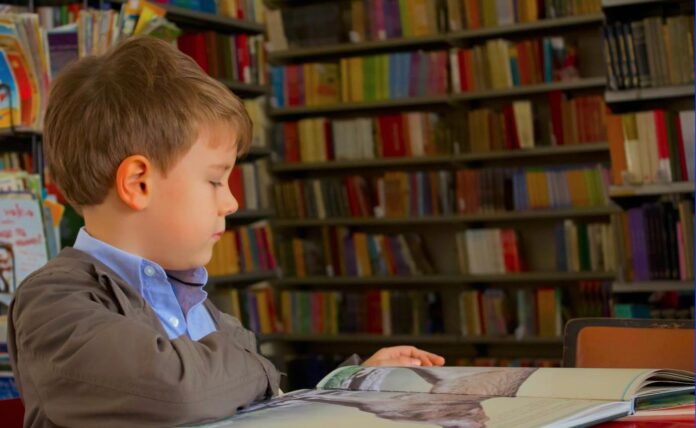
At an ancient burial ground south of Cairo, archaeologists have just uncovered 27 Egyptian coffins.
Ministry of Tourism and Antiquities
The wooden sarcophagi are exquisitely painted and still bear their original hieroglyphs.
The most exciting part for Egyptologists, though, is that an initial analysis shows these caskets—thought to be more than 2,500 years old—have not been opened since they were buried.
For more than 3,000 years, this vast necropolis was where Egyptians living in the ancient capital of Memphis buried their dead.
Archaeologists are currently working to determine the origins of these caskets.
More details are expected to be announced by the Ministry this month.
Further excavations are currently taking place at this vast burial ground and UNESCO World Heritage Site, so you can also expect more unveilings to be announced soon.
Watch the Ministry’s video of the unearthing in the tweet below.
شعور لا يقارن كلما تشهد كشف اثري جديد، انتظروا الاعلان عن كشف اثري جديد بسقارة، شكرا لزملائي بالوزارة. An indescribable feeling when you witness a new archeological discovery. Stay tuned for the announcement of a new discovery in Saqqara Thank you to my colleagues in the ministry pic.twitter.com/RpgK6TmREo
A determined dad has cycled a staggering 200 miles while riding his eight-year-old daughter’s tiny pink bike.
Over six days, Wesley Hamnett pedaled from Glasgow, Scotland to Manchester, England on a £20 ($26) bike with 12-inch wheels.
SWNS
The dad-of-two had wanted to raise funds for various charities and hospitals which were close to his heart after he lost his granddad to cancer last year.
He’d originally planned to cycle 1,250 miles from Russia to his home in Lancashire. But due to the pandemic, he was forced to backpedal and turn to the drawing board.
He decided he would cycle from Glasgow to Manchester while riding a comically small bike his two young daughters learned to ride on “as a laugh.”
After a grueling cycle which included a six-hour long stretch and eight busted tyres, the cargo handler managed to drag the 12-inch wheels to his home near Manchester on September 21.
SWNS
Wesley said, “I wasn’t sure if I was going to make it. Hell, I wasn’t sure if the bike was going to make it all the way. I felt like I was going to die during certain stretches, but it was all worth it.
He endured gruelling pain and reached peaks as high as 1,350 feet at the Shap Summit in Cumbria, England which he says—with some understatement—the bike “wasn’t built for”.
“I kept pushing because any time there’s an uphill climb, there must be a downhill climb… I felt like a little kid going down. I couldn’t stop if I tried. It was scary, but amazingly fun.”
“We’ve gotten so much incredible support on this journey and none of it would have been possible without the bike.”
Wesley is fundraising for Macmillan Cancer Support, Christie Charitable Fund, British Heart Foundation and Wythenshawe Hospitals MFT Charity.
He has raised just over £8,300 ($10,730) so far and still hopes to make the trek from Russia to Manchester next spring.
37-year-old Wesley says, “I want to thank everyone who has donated—they’ve been absolutely amazing. I feel so overwhelmed but it’s been a real blessing.” If you’d like to give to his fundraiser, you can head to the GoFundMe page here.
(WATCH Wesley’s footage from his pink bicycle in the SWNS video below.)
PEDAL The Good News To Your Friends By Sharing It To Social Media…
Last year, Tim Gjoraas, a veteran teacher of 22 years, was forced to face one of life’s hardest lessons when he was diagnosed with colon cancer.
This July, despite chemotherapy treatments, doctors told the 45-year-old father he had only a few months to live.
Tim Gjoraas
Gjoraas decided to spend what precious time he has left at home with his wife and three kids. After revealing the circumstances of his retirement from Washington High School on social media, the Sioux Falls, South Dakota community immediately rallied to his support.
One thing Gjoraas was determined to take care of before time ran out was to make sure the family home got painted blue—a color his wife loves—even if he wasn’t there to do it himself.
Gjoraas turned to his friend Doug Rinken, a retired chemistry teacher, for help. “I just asked him if next summer, which I probably won’t be here for, if he can paint it for my wife,” Gjoraas told CNN.
Rinken did better than that.
The following Saturday, a painting crew comprised of Gjoraas’ former coworkers arrived armed with donated brushes, sprayers, drop cloths, and paint.
Tim Gjoraas
“[Doug] told me he got quite a bit of help, but I didn’t know it was going to represent my whole career, people from all my years at Washington High,” Gjoraas told the Argus Leader.
Five hours later, after the facade of the once brown house was light blue, everyone celebrated with an impromptu get-together in the family driveway.
As thrilled as Gjoraas was at having his wish fulfilled, he was equally happy for a chance to spend time with the colleagues he so missed and reminisce over a few well-earned beers.
Tim Gjoraas
“If you spend your life being a good person and hanging around good people, trying to make a positive impact on your community, if you need something, people show up,” Gjoraas reflected humbly. “It’s pretty amazing the outpouring of love my family’s had.”
Quote of the Day: “You call it procrastinating. I call it thinking.” – Aaron Sorkin
Photo: by Karl JK Hedin
With a new inspirational quote every day, atop the perfect photo—collected and archived on our Quote of the Day page—why not bookmark GNN.org for a daily uplift?
There may be a good reason for why we love to watch little piglets and fluffy ducks online.
Seeing adorable animals actually helps to reduce stress levels in humans, researchers at England’s University of Leeds have found.
Forest Simon
And we don’t need to see adorable critters in real life for them to have an impact on our sense of wellbeing.
Partnering with Tourism Western Australia, the University of Leeds explored the physiological and psychological impact of ‘cute’ animals on students and staff at the college.
According to a statement, 19 participants were asked to watch a 30-minute slide show that included images and short video clips of a range of animals, including Australia’s iconic marsupial the quokka.
15 of the 19 participants were due to take an exam 90 minutes after watching the slide show. The remaining four participants were academic support staff who had declared they were feeling stressed at work.
Infomastern, CC license
Heart rates for every single participant dropped after viewing images and videos of cute animals for just 30 minutes.
The average blood pressure (BP) across all participants also dropped: from 136/88 to 115/71—moving the group average to within the ideal blood pressure range.
Participants who watched the half-hour slideshow also had to answer 20 questions so researchers could assess stress levels under the State-Trait Anxiety Inventory.
In individual cases, anxiety levels dropped by almost 50%: proving viewing cute animals can be a powerful stress reliever and a mood enhancer.
In fact, across all measures there was a drop in anxiety and stress as a result of watching the short slide show.
So what’s best: images of cute animals, videos, or the real thing?
Dr. Andrea Utley, who led the study, commented, “It would appear that images appeal but video clips are more meaningful, and I would therefore expect that physical closeness [with animals] would be even better.”
There were meant to be eight sessions total, but because of the pandemic the remainder have been postponed. According to CNN, Utley is nevertheless looking at online options so the study can continue.
Microplastics emitted from vehicle tires as they wear down is a growing pollution problem. In fact, tire particles are the second-largest microplastic pollutant in our oceans.
Luckily, four students have come up with a solution to the issue—and it’s just been recognized as a national winner in the prestigious James Dyson Awards.
The Tyre Collective
Every time a vehicle brakes, accelerates, or turns a corner, the tires wear down and tiny particles become airborne—producing half a million tonnes of tire particles annually in Europe alone.
According to a statement from Imperial College London—where the students who founded the Tyre Collective study Innovation Design Engineering in a course offered jointly with Royal College of Art—the team’s winning device is fitted to the wheel of the vehicle and uses electrostatics to collect charged particles as they fly off the tire.
Based on results from their test rig, the group believes their prototype can collect 60% of all airborne particles from tires.
Once collected, the fragments can be reused in new tires, or even in other materials such as ink.
The team is made up of four students from around the world: They are Siobhan Anderson, Hanson Cheng, M Deepak Mallya, and Hugo Richardson.
“As a team, our strength lies in our diversity,” Hugo Richardson explained to the Guardian. “We come from all four corners of the globe and bring with us a wealth of knowledge in mechanical engineering, product design, architecture and biomechanics.”
While greater adoption of electric vehicles will help reduce exhaust emissions, tire dust will continue to contribute to air pollution. With wide-scale adoption of the Tyre Collective’s patent-pending technology, however, this problem can be much reduced.
The overall international winner of the James Dyson Award will be announced on October 17. We’ll be sure to share good news from the ceremony with you then.
(WATCH the video from the Tyre Collective below to see how their invention works.)
PASS The Innovation On And Share This Story With Your Pals…
The hills are alive with the sound of ‘Happy birthday’—and we hope Dame Julie Andrews has a Supercalifragilisticexpialidocious day!
2015 Photo by Eva Rinaldi, CC license
Andrews has appeared in 44 films and countless broadway shows, but it was her movie debut at age 21 in Mary Poppins that won her the Academy Award for Best Actress—and her role as Maria von Trapp in The Sound of Musicthat won our hearts.
She turns 85 years old today, and this year was set to be pretty special.
She was due to be honored this year with the prestigious AFI Life Achievement Award, but the April gala was postponed due to the pandemic.
It’s no wonder she was chosen for the honor. Her stellar singing, dancing, and acting have earned her awards in three of the big contests—Grammys, Emmys, and Oscars—and The Sound of Music, after remaining in theaters for over a year in 1965, is still the 6th highest-grossing movie of all time (when adjusted for inflation).
Here are eight more things you may not know about Julie Andrews…
1. She never finished high school—too busy performing vaudeville—and regrets never having gone to college.
2. She launch a new podcast calledJulie’s Library in which she and her daughter, Emma Walton Hamilton, host story times—reading their favorite children’s books during 18 episodes, so far.
3. She wasn’t exactly “G-rated” on the set of The Sound of Music—the wind in the Alps made her cuss like a sailor. A lot.
4. She once played a woman pretending to be a man pretending to be a woman in the movie Victor Victoria.
5. Her singing voice has never recovered since a 1997 surgery damaged her vocal cords. While she has performed a few musical numbers since then, she says it has all been “speech singing,” effectively talking with the music because she can only reach a few bass notes. (At the 2015 Academy Awards she joined Lady Gaga on stage and gave her a hug after the 50th anniversary tribute to The Sound of Music.)
7. She almost didn’t get the part of Maria in The Sound of Music, until Walt Disney stepped in. Director Robert Wise had heard of her, but not seen her on film, and while Andrews had just completed “Mary Poppins,” it hadn’t been released yet. Walt Disney generously sent Wise a clip of his movie — and it cinched the role for Andrews.
8. One of her biggest lifelong fans is Jon Stewart, who told her on the Daily Show he considers himself an “honorary Von Trapp.”
Walk with Julie down memory lane in this ABC interview from 2019.
SHARE The Birthday Wishes on Social Media… (Featured image by Eva Rinaldi, CC license)
When a stressed-out mom rolled up to a McDonald’s drive-thru to purchase a meal for her children, she realized with dismay on making her order that she’d left her purse at home. But the teenage server at the window didn’t send her away.
Wyatt Jones said he’d happily pay for the meal.
Brittany Reed was more than grateful. It had already been a long day at soccer practice with her 4- and 7-year-old.
Later that night, purse in tow, Brittany drove back to the McDonald’s to give Wyatt his money back. But the Waynesville, Ohio local insisted the meal was on him.
Brittany wrote in a Facebook post, “I just want his parents to know how KIND & COMPASSIONATE your son was tonight! He made this stressed out momma pause for a moment and realize this is exactly what we parents are trying to do, raise great humans,” she explained. “Wyatt, do not let this world change your kind heart young man for its people like YOU that will change this world for the better!”
Wyatt had shown Brittany such kindness. How to thank him even more?
On hearing that he was saving up to buy a car, Brittany began a GoFundMe campaign on his behalf. As of October 1, she’s raised nearly $32,000 for him. How’s that for a gratuity?
This adorable calf has been able to take her first steps, thanks to a custom-made wheelchair that was donated to her.
SWNS
Ruby Sue was born with her back legs fused together and would have been euthanized if it wasn’t for animal lovers at the ‘Safe in Austin Rescue’ ranch in Texas.
Vets discovered that despite her disability Ruby Sue was happy, healthy, and pain-free. She just needed something to help her walk.
That’s when experts at the pet mobility company Walkin’ Pets stepped in to save the day.
“With only her front legs to support her, Ruby was unable to stand or walk on her own” said Jennifer Pratt, Marketing Manager for the New Hampshire-based company.
The team at Walkin’ Pets decided to donate a custom-made chair to the two-week old calf, so she can run on the grass with her furry friends at the Safe in Austin Rescue.
“Because of these wheels, Ruby Sue is able to stand on her own, allowing her to get the exercise she needs to strengthen her front legs and learn how to walk for the very first time,” added Jennifer.
SWNS
For the last 20 years, Walkin’ Pets has been helping animals to walk, run, and play with their nifty inventions.
Each wheelchair is equipped with sturdy wheels and soft bands that support the pet—no matter what their size.
As the years have progressed, the company has expanded the capabilities of their wheelchairs to accommodate ducks, chickens, and even tortoises around the world.
Rear wheelchairs, which are built similarly to training-wheels, can range anywhere from $150 to $400 depending on the size of the animal.
Reps at the company say they’ve made a commitment to design wheelchairs that provide a high quality of life for every animal, regardless of whether it quacks, barks, or—in this case—moos.
MOO Your Approval Of This Good News And Share The Story With Your Friends…