









A new ‘Smell-by’ label has been invented to help people know whether their food has actually gone bad, or if it’s still good to consume.
Too Good To Go
Best Before dates. Despite what many people think, these labels don’t actually tell you whether your food is safe to eat.
Surprised? Well, you wouldn’t be alone.
According to a statement from the mobile app Too Good To Go, a third of Brits rely solely on Best Before labels when deciding whether their food has gone bad. The problem? These dates are indicators of quality, not safety.
They’re only there to tell you when your bread will be at its softest and your lettuce leaves will be at their crunchiest.
In other words, that means that we’re throwing away thousands of tonnes of perfectly edible, delicious food–all because of a little label that’s just trying to say that your food isn’t quite as fresh as it once was.
So Too Good To Go came up with an idea. ‘Smell-by’ labels.
How Smell By labels work
Covering off four commonly wasted products (oats, orange juice, eggs, and beer), these scratch ‘n’ sniff sticker labels will train your nose to know exactly what your food would smell like if it was really no longer okay to eat.
The aim? To help us all get back in touch with our common sense; trusting our senses to do their job and alert us if we’re hovering near something we shouldn’t be eating.
For the project, Too Good To Go teamed up with the world’s first professional S’mellier, Dariush Alavi, whose nostril superpowers were deployed to help prove when these foods are still good to go.
Too Good To Go is planning to work with retailers in the future to help the stickers reach labeling on your packages. For now though, they can be ordered free from this website. So what are you waiting for?
(WATCH the ‘scratch ‘n’ sniff’ stickers in action in the video below.)
>
HELP Your Pals Sniff Out The Good News And Share The Story on Social Media…
The iconic Tasmanian devil has just been returned to mainland Australia for the first time in 3,000 years.
David Clode
This first historic release is only step one in the mission to rewild Australia and bring balance to the bush, according to nonprofit Aussie Ark and its partners Global Wildlife Conservation and Wild Ark.
In a statement, Aussie Ark explained they are committed to returning Australia’s ecosystems to that of pre-European settlement, free from introduced feral predators–an island oasis.
To date, more than 390 devils have been born and raised at Aussie Ark in a way that fosters natural behavior in the animals, preparing them for release into the wild.
This year, 26 Tasmanian devils were released into a 400-hectare wild sanctuary. In the next two years, Aussie Ark plans two additional releases of 20 devils each. If all goes as planned, the animals will breed and produce joeys, eventually resulting in a self-sustaining wild population.
Not only does the reintroduction bode well for the recovery of the Tasmanian devil, but as native apex predators and the world’s largest carnivorous marsupials, they help control feral cats and foxes that threaten other endangered and endemic species.
As scavengers, they help keep their home clean and free of disease.
Their return to the wild therefore establishes the foundation for an ambitious vision to rewild Australia.
Tasmanian devils vanished entirely from mainland Australia in large part because they were outcompeted by introduced dingoes, which hunt in packs.
The devils survived only on the island of Tasmania, where the dingoes never reached.
Across the island state, a transmissible, painful and fatal disease called Devil Facial Tumour Disease (DFTD)—the only known contagious cancer—decimated up to 90 percent of the wild population of Tasmanian devils. Just 25,000 devils are left in the wild of Tasmania today.
The animals Aussie Ark has released will be monitored through regular surveys, radio collars fit with transmitters, and camera traps.
This will give the researchers the opportunity to learn about how the devils are faring, where they are claiming territory, what challenges they are facing, what they are eating, and whether they’re reproducing.
All of this information will help to inform future releases, including in Tasmania and elsewhere on the mainland, to continually refine the process.
Environmentally-minded DIY enthusiasts can now enjoy the first ever ‘green shopping aisle’–complete with a real grass walkway and a canopy infused with foliage and butterflies.
SWNS
The green aisle is, quite literally, festooned with evergreen climbers and vegetation to help eco-conscious shoppers find the section of the hardware store that will make their home more sustainable.
‘The Green Aisle’ launches today at one of Britain’s major hardware chains, Homebase. The first stores to get the foliage-festooned aisle are: Haringey in London, Edinburgh, Bridgend, Birmingham, and Leeds–with more stores to follow.
In partnership with Smart Energy GB, the aisle showcases eco-friendly and energy-efficient home improvement products, as well as information on how to get a smart meter installed, all in one place.
All of these efforts will help make homes greener and ready for winter.
‘The Green Aisle’ was created after research found 74 per cent of Brits are keen to make their home greener, but half have no idea where to start.
Craig Phillips, DIY expert and one of the first to visit the ‘Green Aisle’ in Haringey, said, “I’ve helped hundreds of people improve their homes over the years by making small changes which have a big impact–the same is true for taking small energy efficiency measures in the home.
“It can be hard to know where to start when it comes to making greener choices.
“The Green Aisle helps make this process even easier for people by identifying which products are more environmentally friendly, and likewise understand the positive impact they can have.”
Data from Energy Saving Trust also shows a household can save up to £581 ($751) on energy bills each year if they implement a full range of efficiency measures.
These include the purchase of efficient appliances and exercising best practice energy-saving behaviour, which can be encouraged with a smart meter.
On top of the financial savings, a household could also save 2,141 kg of CO2 emissions, which is the equivalent of driving 7,500 miles or enough energy to power the lights in 27 homes in the UK for a year.
So whether you’re looking for a water-saving shower faucets, eco-friendly paint, a smart meter, or just a draught excluder for your door, if you’re in Britain you now know the green aisle to go to.
SHARE The Good Green News With Your Pals On Social Media…
Quote of the Day: “You may not be responsible for being down, but you must be responsible for getting up.” – Jesse Jackson
Photo: by Matheus Ferrero
With a new inspirational quote every day, atop the perfect photo—collected and archived on our Quote of the Day page—why not bookmark GNN.org for a daily uplift?
By placing decoy eggs into nests on the beach, it could be possible to gather key evidence needed to stop the illegal trade of baby sea turtles.
This is the finding of a new study published in the journal Current Biology that explains how the researchers specifically tested how well the decoy eggs work and their safety for the turtles.
“Our research showed that placing a decoy into a turtle nest did not damage the incubating embryos and that the decoys work,” says lead author Helen Pheasey of the University of Kent. “We showed that it was possible to track illegally removed eggs from beach to end consumer as shown by our longest track, which identified the entire trade chain covering 137 kilometers.”
The GPS-enabled egg decoys, dubbed InvestEggator, were developed by the conservation organization Paso Pacifico to address the illegal trade of turtles in Central America, where they are smuggled from beaches and sold to restaurants and bars as a delicacy.
Paso Pacifico-affiliated scientist Kim Williams-Guillen conceived and designed the decoys in response to a call for proposals from the United States Agency for International Development (USAID) Wildlife Crime Tech Challenge.
They were looking for projects using technological advances to fight wildlife poaching.
“The idea was kind of an ‘Aha’ moment,” Williams-Guillen says.
It immediately brought to mind two of her favorite TV shows, “Breaking Bad” and “The Wire,” which both happened to deal with illegal drug trafficking.
“In ‘Breaking Bad’, the DEA places a GPS tracking device on a tank of chemicals to see who receives the chemicals,” she said. “In one episode of ‘The Wire’, two police officers plant an audio device in a tennis ball to surreptitiously record a suspected drug dealer.
“Turtle eggs basically look like ping pong balls, and we wanted to know where they were going.” Put those two ideas together and you have the InvestEGGator.
To see how well they’d work in practice, Pheasey and her colleagues put the 3D-printed decoys in 101 turtle nests on four beaches in Costa Rica.
A quarter of the fake eggs were taken illegally from the nests, allowing the researchers to track eggs from five clutches, including two green turtle nests and three olive ridley nests.
One of the decoys made it close to a residential property before going silent. Another went two kilometers to a bar. The one that went farthest ended up 137 kilometers inland, spending two days in transit from the beach to a supermarket loading-bay and then on to a residential property.
The researchers assume the egg wasn’t sold at the market but was rather handed off, from a trafficker to a salesperson.
They also got some anecdotal reports of cases where someone discovered the decoy. “One decoy went off-line in a residential area near Cariari, a town 43 km from the deployment beach,” they wrote. “After 11 days, we received photographs, sent from Cariari, of the dissected egg.”
Max Gotta
Along with the photos, they got information about where the egg was purchased and how many eggs had been exchanged, yielding intelligence information in addition to tracking data.
Pheasey says that the early evidence shows that the majority of stolen eggs don’t leave the local area. The finding reaffirmed their suspicions, as well as some local reports that most of the trade takes place close to the nesting beach. “Knowing that a high proportion of eggs remain in the local area helps us target our conservation efforts,” Pheasey says.
“We can now focus our efforts on raising awareness in the local communities and direct law enforcement to this local issue. It also means we know where the consumers are, which assists us in focusing demand reduction campaigns.”
Pheasey says that the key thing isn’t to find the people who take the eggs from the beach. To a large extent, that’s already known. From a law enforcement perspective, the critical thing is to identify those who are trafficking and selling the eggs, often door to door.
Just the beginning
“As trafficking is a more serious crime, those handover points are far more valuable from a law enforcement perspective than catching someone taking a nest,” Pheasey says.
That’s what makes the InvestEGGator such an important tool, according to Williams-Guillen. “But,” she adds, “it really must be used in the context of a multi-pronged conservation approach that uses education, building better economic opportunities, and enforcement to help fight sea turtle egg poaching.”
In addition to continuing to improve the technology and its deployment, they’re also interested in expanding the technology to other species. For example, Paso Pacifico plans to work with Costa Rican scientists to adapt the transmitter for use in tracking shipments of shark fins, and possibly the theft of eggs from parrot nests.
HATCH The Good News By Sharing It With Your Friends On Social Media…
Meet the mom who has transformed her home into a spectacular tribute to the 1970s.
SWNS
England’s Estelle Bilson has loved all things vintage since her student days and spends hours tracking down original pieces in auctions, on eBay, and in thrift stores.
The retro-obsessed mom-of-one decided to take her obsession to the next level when her family moved into their new three-bedroom home five year ago.
She has painted her house in Stretford, Greater Manchester, with hues of orange and greens and hasn’t bought anything modern–apart from a hoover and a mattress.
Everything else in the home–from the disco balls in the loo to the original magazines near the space-inspired TV set–are straight from the 70s.
Upholstery designer Estelle even matches the house with her clothing tastes, drawing inspiration from fashion label of the decade, Biba.
SWNS
She estimates the revamp cost just £1,500 ($2,000), because all of it is second hand.
Estelle, who lives with her partner Stephen De Sarasola, a sound engineer, and their four-year-old son, said, “I started collecting in 1990 when I was about 13 and it went from there.
“When I was at university you could pick up 1970s bits and bobs on the street when people were having a clear-out.
“A lot of my artwork at school and university was inspired by abstract impressionists like Jackson Pollock, Warhol, and Rothko. I guess it’s something I’ve always been interested in.
“I absolutely love kitsch. I’m a bit like a kitsch magpie; anything really random, gold, shiny, multi colored, and the weirder the better. That’s why I’ve got the tiger and Flamingo sculptures.
“Things were built to last back then and to be repaired, not discarded.”
The family home is now a funky pad, complete with vinyl records and psychedelic prints (see the video at the bottom).
SWNS
It is kitted out with floral wallpaper and classic 1970s pieces, Austin Powers-style Keracolour TV, KEF speakers, and orange-tinted lights.
“Mostly I stumble upon things when I’m not even looking for them, like my dining table and chairs and my space-age bed,” says Estelle.
This doesn’t mean she’s averse to contemporary technology, though. “We have a modern TV – it’s a necessity really with a child. We have smartphones and laptops too. We don’t live in the 70s, we just like the styling.
After receiving compliments from friends and family, Estelle set up the Instagram account @70shousemanchester, which has nearly 30,000 followers.
“Some have compared it to a shrine or a museum–it’s neither. It’s simply our home which we chose to furnish with things that make us happy.”
(SEE inside the fun home in the SWNS video below.)
SHARE These Retro Vibes With Your Pals On Social Media…
As the old African proverb says, “It takes a village to raise a child,” but it seems that same wisdom may also hold true when it comes to caring for elderly Alzheimer’s patients.
Village Landais Alzheimer
Rather than placing them in traditional memory care units, some groups charged with the care of these special seniors are taking a more innovative approach.
In southwestern France near the city of Dax, a community has been created with the specific needs of its 105 residents—all of whom suffer from Alzheimer’s in varying stages.
Built in the same spirit as De Hogeweyk, a purpose-built village for dementia patients in the Netherlands, it’s the first such facility in France.
In addition to nursing facilities, the Landais campus includes a grocery store, hair salon, cafeteria, library, and music room.
Residents are given as much freedom as their conditions allow, and treated to numerous entertainments.
They’re also encouraged to participate in daily activities that can include shopping, cooking, and regular hairstyling appointments, as it’s believed sticking to a familiar routine may actually hinder the advance of the disease’s worst symptoms.
“It’s like being at home,” 82-year-old Madeleine Elissalde, one of the village’s first residents, told Reuters. “We’re well looked after.”
The program costs in the neighborhood of 6.7 million euros to run each year. Residents and their families kick in about 24,000 euros in annual fees, but more than half the total expense is subsidized by government authorities.
Expensive? Perhaps, but researchers at France’s National Institute of Health and Medical Research Shows closely studying how such model conditions impact the progression of dementia may ultimately conclude the insights they gain for future treatment standards will be well worth the cost.
In the meantime, residents of villages in France, the Netherlands, and another prototype community in Canada are able to live out the remainder of their years with not only a measure of self-esteem, dignity, and sense of purpose but some true “liberté, égalité, et fraternité” as well.
(WATCH the video tour of this French village below.)
Build Up Some Positivity By Sharing The Good News To Social Media…
In southern England, a struggling farming estate with a 19th-century castle that had been in the Burrell family for over 200 years was low on cash, but a drastic change from farming to biodiversity conservation has given the old manor house a new lease on life.
Copyright Knepp Wildland
The 3,500-acre estate in West Sussex, about 41 miles south of London, was seemingly cursed with low farming yields when Charlie Burrell finished agriculture school in the 1990s.
Burrell, who inherited the estate aged 21, had several years of unsuccessful farming before he knew he needed a radical change as unpaid expenses began piling up.
After he came to the realization that his fields would not produce anymore through conventional agriculture, he considered applying alternative methods to managing his property.
His change was indeed radical, but also successful, with Knepp Estate becoming one of the largest and most prosperous rewilding projects in the history of Britain.
“Instead of conserving with specific species in mind where you’re focusing on keeping a habitat, locking it down as it is, so that that preserves the numbers of certain species, what we’ve done here is just taken our hands off the steering wheel and just stood back and let nature take over,” explains the aptly named Isabella Tree, Charlie Burrell’s wife, and co-director of the rewilding project on the estate.
The first step for Knepp
Copyright Knepp Wildland
An extreme method of conservation, rewilding involves returning an area of land to its natural state—completely natural. This is usually done by, as Isabella said, “taking our hands off the steering wheel,” but can also require more hands-on approaches.
A wild landscape has wild animals, and so the first step for Knepp was returning large mammals to the Knepp Estate fields and thickets, including fallow, roe, and red deer, Tamworth hogs, Exmoor ponies, and longhorn cattle, as the actions of these animals on the environment creates a very unique reaction from the land.
“Disturbance from grazing, browsing, rootling, rubbing and trampling, provides a check on [overgrowing] scrub; and the battle between these two processes–animal disturbance vs vegetation succession–creates all sorts of vegetation structures which contribute to a dynamic, ever-shifting mosaic of valuable habitats,” explains the Knepp Rewilding Project website.
The movement of large herbivores is key to ecosystem health, as their dispersion of seeds and nutrient-rich dung ensures that trace elements of key nutrients are moved hither and yon in a randomness that leads to the creation of dynamic ecosystems.
While setting all the normal wild pieces on the wilderness board and letting them do their thing may sound like complete anarchy, in nature there tends to be an order inside of her chaos, one which is difficult to create with human hands.
A resurrection
The rewilding project at Knepp has created one of the most biodiverse areas in all of Britain. The estate grounds act as home to nearly all English megafauna, as well as the rarest mammal in Europe, the barbastelle bat.
Rare birds such as turtle doves, nightingales, peregrine falcons, white storks, and all five species of owls found in Great Britain inhabit the grounds, while one summer the Butterfly Conservatory counted 87 male purple emperor butterflies, an exceptional number for anywhere in England.
At the heart of the Knepp Estate is the River Adur, which was restored to a natural state in 2011 with help from the British government by removing four separate weirs and filing in agricultural drainage canals.
The restored wetlands surrounding the river’s natural meandering path play host to wading birds, amphibians, water insects, sea trout, and other fish, and important endangered wetland plants like the black poplar.
For Charlie and Isabella, their monetary problems disappeared like their once-fallow fields, and along with controlling the herbivore population with free-range organic wild meat, the estate offers camping and “glamping” in a shepherd’s hut, nomad’s yurt, and tree houses. They also offer safari tours of the grounds, fishing, photography workshops, and rewilding courses.
They hope their success can act as incentive to other farmers who may own sub-standard fields and are looking for othservationer ways to utilize their land.
(WATCH the farm in action in the video below.)
Multiply The Good News By Sharing It With Your Friends On Social Media…
At the beginning of the pandemic in Europe and North America, experts feared that if cases weren’t under control or if a vaccine wasn’t available by the time winter arrived in the Northern Hemisphere, we would see case numbers rise in parallel with seasonal wintertime flu.
Conor SheridanNaure
While this might make winter seem like a season to dread, perhaps even more so than usual, with the arrival of cool nights, psychologists have been looking to the curious people of Norway, only a small proportion of whom suffer from the Seasonal Affective Disorder that typically befalls people during winter months of reduced sunshine, increased time indoors, and fewer daylight hours.
Is there something to take away from the Norwegians’ unique cultural mindset as the air temp falls and COVID-19 case numbers carry on mounting? Let’s see ways the Norwegians stay positive.
The phenomenon of “framing”
Framing in a psychological sense is as simple as the narrative of present, past, or future circumstances that plays in your head. Numerous papers have been published indicating that framing can have a direct influence on overall mental health.
Framing has already been proven to be present in our societies during the short time COVID-19 has been with us, as shown by German psychologists Hannes Zacher, and Cort W. Rudolph, when they demonstrated that positive attitudes during March-May of 2020 were correlated with “controllability appraisals,” while negative attitudes were correlated with “centrality appraisals.”
Kari Leibowitz is an American psychologist studying Norwegians’ attitudes towards their long sunless winter above the Arctic Circle. Residing in the Norwegian town of Tromsø, she observed how the people there tended to view the winter as a challenge, or even more often like an opportunity: an act of reframing that resulted in the residents scoring higher on Leibowitz’s wintertime mindset scale than even their southern neighbors in the capital of Oslo.
There are many things to enjoy about the winter
I love the cosiness of the winter months
Winter brings many wonderful seasonal changes
And
Winter is boring
Winter is a limiting time of year
There are many things to dislike about winter
The answers to these questions were found to predict the mental well-being of the answerer over the following months, with many of Tromsø’s residents struggling to imagine why a person might not be excited for winter, while listing things like hiking, skiing, and curling up in front of a fire with a hot drink as things they were looking forward to.
Second lockdown, second chance
Gaelle Marcel
Leibowitz and her research was the subject of an article in the Guardian regarding how people might react to news of future second lockdowns.
According to the New Jersey-born health psychologist, a person’s reaction to winter is similar to a person’s reaction to waking up early—it’s something they’re just not born to do (“I’m not a morning person”).
“Most people don’t realize that their beliefs about winter are subjective,” Leibowitz tells the Guardian. “They feel like they’re just someone who hates the winter and there’s nothing they can do about it… But once you put it in people’s heads that mindsets exist, and that you have control over your mindset–I think that that’s tremendously powerful.”
She reckons this proactive framing towards a second set of lockdowns could start with positive things similar to how the wintertime mindset scale looks, i.e. “I’ve already done a lockdown, I can do a second one,” or “This is the perfect time for a bracing hike through the snow as a socially-distanced social activity.”
Another of Norway’s unique cultural mindsets, that of friluftsliv or “free air life,” could be useful for another set of lockdowns, especially if they arrive during the winter, which many Norwegians recognize acts as a lockdown on its own.
As detailed in another article from the Guardian, “typical friluftsliv activities include relaxing, fishing, hiking, sleeping in “camping hammocks” (not tents) and picking cloudberries. Its symbol is the campfire and its mantra is ‘man’s right to roam’.”
Lasse Heimdal is the general secretary of the Norwegian Association for Outdoor Organizations, who says that one in three Norwegians have increased their outdoor time in friluftsliv during “corona season,” which is quite the thing, since on average Norwegians visit the great outdoors three times a week.
Hannes Zacher, whose work on the psycho-framing of the first lockdowns was mentioned earlier, also noted that the most resilient participants were the ones that took on the lockdowns like a new challenge—even an opportunity, the ones that were “learning something from the experience, or trying to grow as a person as a result from the experience.”
Perhaps we Americans can learn something from people like Heimdal, Leibowitz, and Zacher, and sprinkle a little Scandinavian/pioneering positivity into our 2020 winter months.
PASS On The Positivity And Share The Wintery News With Your Friends On Social Media…
Quote of the Day: “All experience is an arch, to build upon.” – Henry Adams
Photo: by Adam Thomas
With a new inspirational quote every day, atop the perfect photo—collected and archived on our Quote of the Day page—why not bookmark GNN.org for a daily uplift?
Greek mythology is filled with tales of heroic strength—perhaps the most famous being that of Atlas, who singlehandedly held the heavens aloft.
In a singularly uplifting modern-day version of Atlas come to life, one courageous athlete recently climbed Mount Olympus—home to the ancient gods–carrying a disabled comrade to the summit with him piggy-back style.
Long-distance runner Marios Giannakou has a long track record of taking on challenges: He’s trekked 168 miles across the Al Marmoum Desert and he also took first place in a frigid 93-mile cross-country race in Antarctica.
Prior to his latest endeavor, he’d already successfully taken in the view from atop Mount Olympus’ highest peak 50 times.
When Giannakou met and befriended 22-year-old biology student Eleftheria Tosiou and learned of her dream to experience the summit herself, it seemed only natural that he was more than ready to rise to the occasion.
“For me, all international races, the medals and the distinctions so far, mean little compared to that goal,” he told the Greek Reporter.
With Tosiou securely harnessed in a specially modified backpack, Giannakos, along with an eight-member support team, started to the grueling ascent of Olympus’s tallest peak, Mount Mytikas.
When they reached 2,400 meters, the party stopped to rest. After making camp for the night, they resumed their climb at 6 a.m. the following morning.
Three hours later, at 9:02 local time—having put in more than 10 hours climbing all told—the triumphant pair reached the 2,918-meter summit.
“There is nothing more real than the dream,” an ecstatic Giannakou posted to his Instagram.
It’s heartening to know that while we generally think of heroes as the stuff of myth and legend, there are actually some shining examples—like Marios Giannakou—who exist in real life as well.
SHARE the Adventures With Daring Friends on Social Media…
They say laughter is the best medicine, but eight in 10 people reckon that dancing is also great at making them happier and less stressed.
A survey of 2,000 British adults found that three quarters feel ‘happy’ after shimmying around their home.
And almost half went as far as to say they feel their mental health is better as a result of the activity.
The poll, commissioned by Zumba, found 67 per cent wished they could dance more often, although 41 per cent admitted they were ‘quite bad’ or ‘appalling’ at it. Not that that matters so much.
Psychologist Dr. Peter Lovatt said, “The positive effects of dance have been shown in the scientific literature to help our stress and anxiety in lots of ways, particularly in difficult times like these.
“Dancing helps the mind break away from set patterns of thinking–and that’s why dancing reduces stress.
Dr Lovatt explains a little of how the science works: “When we move our body, it releases different neurochemicals. The opioid receptors become more active and that means our pain threshold increases. We feel less pain when we dance.
The OnePoll survey showed that more than a quarter (28 per cent) said dancing has provided them with great memories, and 23 per cent said it helps connect them with friends.
Nearly four in 10 (37 per cent) even said moving to music helps them forget all their troubles, with 42 per cent believing dancing allows them to ‘lose themselves’.
Dr Lovatt, speaking on behalf of Zumba, added, “Doing something more physical can be a great way of reducing stress and anxiety–particularly in uncertain times such as these.
“However, few… physical exertions can be as fun as dancing–there are so many benefits to doing something you enjoy, without necessarily thinking about the positive impact it will have on your body.”
Kelley Stobie runs an amazing thoroughbred racehorse rehabilitation and rehoming facility on her farm in Puerto Rico, but as you can imagine, funding is a constant struggle. This is even more so during a global pandemic.
Caribbean Thoroughbred Aftercare
Luckily, a couple of organizations came together recently in a huge show of support for the work Kelley does at Caribbean Thoroughbred Aftercare, and it’s made a huge difference at just the right time.
Now, CTA has a five-month supply of hay and Kelley won’t have to scramble week after week to get food together for the horses she’s rehabilitating.
Kelley is known for being super resourceful—in truth she’s had to be. She was working at an equine facility in St. Maarten in 1995 when Hurricane Luis hit, and after Maria struck Puerto Rico she won awards for her bravery and dedication to saving horses at the demolished Camarero racetrack.
Over 800 thoroughbreds were left trapped in the wreckage and for weeks she got them out, arranged medical care, and coordinated emergency supplies and help from mainland USA.
Finding hay in Puerto Rico is a constant struggle. There just aren’t the rich pastures like you see in Kentucky, so Kelley is always on the lookout for five bales here and 10 bales there.
The rehabilitation facility is on her family’s farm, with an additional plot next door that her husband fenced in for them. They can only take in 20 horses at a time, so it’s always a race against the clock to get them rehabbed and rehomed.
Each time she gets a new horse, Kelley gets to work contacting other rehab organizations in Canada and the US and applying for funding to help support its care.
Recently, Kelley was awarded a $3,000 grant from After the Finish Line, a non-profit funding source for thoroughbred racehorses.
This enabled her to buy a load of hay, but she needed to find a way to get it from mainland USA to Puerto Rico. Kelley reached out to Trailer Bridge, one of the shipping and logistics companies that services the Jacksonville to Puerto Rico route, to inquire about a discount.
Ann Jones took the request right to the top of the company, to Trailer Bridge CEO Mitch Luciano, who decided that not only would they get the load there but they would provide the container and transport free of charge.
The hay funded by After the Finish Line and delivered by Trailer Bridge made it to the Caribbean Thoroughbred Aftercare farm last week, and it’s just such a great example of “it takes a village.”
Without the ongoing support of others in a position to make it happen, Kelley says she just wouldn’t be able to afford what it takes to keep this facility going.
NEIGH Your Approval Of This Great Initiative And Share The Story On Social Media…
World Animal Day just passed, and to celebrate we’re sharing the good news that two elephants who spentdecades having to perform in miserable zoo conditions have finally found a new home together in a beautiful 250-acre jungle sanctuary.
Paul Heaney, Elephant Nature Park
The pandemic has been hard on lots of businesses around the world, but animal fans say it’s no bad thing that Phuket Zoo faces closure because of a lack of visitors during COVID-19.
Many groups and individuals have been celebrating, with Thailand non-profit Save Elephant Foundationtaking the charge to find a new home for the zoo’s sweet elephant pair.
Initially, it looked like they wouldn’t have the money to save both Tang Mo–the older of the elephants, she’s been at the zoo since she was two years old–and teenager San Mueang, who was taken from his mother when he was only three.
After news of their potential rescue traveled on social media, though, enough funds were raised by strangers around the globe to rescue both of these close friends.
Ry Emmerson of Elephant Nature Park says, “We believe in the healing, beautiful bond these two share and we can’t wait to see them enjoy the rest of their lives together as they remember what it feels like to be an elephant.”
The news of this relocation is a real bright spot in a difficult year.
If you’d like to donate to Elephant Nature Park, which is currently supporting almost 2,000 elephants with their daily needs as so many of Thailand’s zoos struggle without tourists during the pandemic, just head here.
TRUMPET This Good News For All To Hear On Social Media…
During normal election years, it’s typically retired people who step in to act as poll workers every fourth November. But many of America’s elderly are staying home to protect themselves from COVID-19, and now the country’s youth have stepped up to take the reins of civic responsibility.
Arnaud Jaegers
In a funny turn of events, a web developer in San Francisco that had originally created a website to see if people would help buy pizza for those waiting in line to vote at polling stations—the aptly named Pizza to the Polls—pivoted towards a model of recruiting poll station workers which people informed him were going to be dangerously low in number this year.
This required a change of name as well, to Power the Polls, which has so far recruited 450,000 of the “next generation of poll workers,” 200,000 above their original target of a quarter million.
The majority of people signing up are between 18-35 years of age, the opposite end of the spectrum to the normal battalion of America’s volunteer poll workers, more than 70% of whom are between 60-70 years of age.
Along with age comes an increased susceptibility to the coronavirus, and in states like Alaska, 95% of Anchorage’s previous volunteers declined to participate this year.
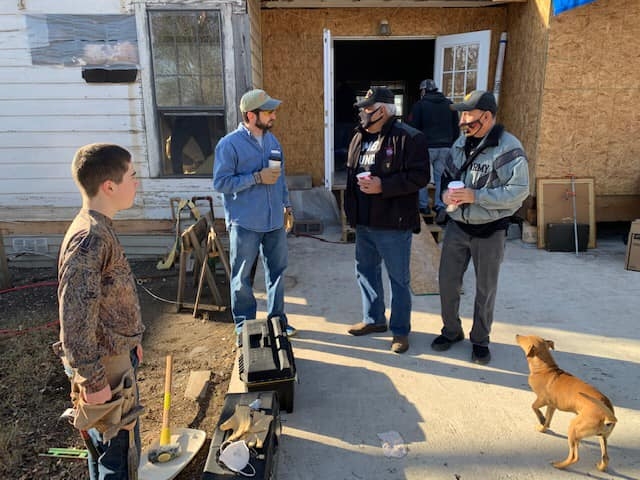
Power the Polls is uniting youth volunteers, associations, and corporations to ensure the poll workers have access to personal protective equipment, training, and pay in some cases.
They’ve also relied on their corporate partners for recruitment, and their willingness to give their workers paid time off, or try and recruit poll workers from among their staff.
Civil associations like the AARP and the Association of Young Americans have also been involved, and have helped educate voters about the need for poll workers and in helping ensure that once they sign up they show up.
“There is a need for us to sound the alarm,” says John Hishta, AARP’s senior vice president of campaigns to Fast Company, “and that’s why we’re working intergenerationally with these other folks.”
Fast Company details all the things a volunteer poll station worker is responsible for, such as tidying up and helping people who have trouble, as well as keeping the machines functional and reporting polling data.
This year they will also be working with PPE the whole time, constantly sanitizing the operating space, and helping people maintain safe social distancing practices.
Share The Hopeful Polling News With Your Friends On Social Media…
Quote of the Day: “Make up your minds that happiness depends on being free, and freedom depends on being courageous.” – Pericles
Photo: by Luke Stackpoole
With a new inspirational quote every day, atop the perfect photo—collected and archived on our Quote of the Day page—why not bookmark GNN.org for a daily uplift?
In a future where most things in our everyday life are connected through the internet, devices and sensors will need to run without wires or batteries to be practical.
Uppsala University
Towards this goal, Swedish researchers have created a new type of dye-sensitized solar cell that could charge our electronics by harvesting light from indoor lamps.
The research—published in Chemical Science—promises to revolutionize indoor digital sensing for smart greenhouses, offices, shelves, packages, and many other ‘smart’ everyday objects that connect to the internet.
According to a statement from Uppsala University, it is estimated that by 2025, many facets of our lives will be mediated through 75 billion devices that connect to the internet—a majority of which will be located indoors.
Broad installation of internet-enabled devices requires them to become autonomous, meaning that they should no longer need batteries or a grid connection to operate. To achieve this, it is crucial to identify a local low-maintenance energy source that can provide power them, especially in ambient conditions.
An Uppsala research team led by Marina Freitag, assistant professor at the Department of Chemistry, has developed new indoor photovoltaic cells that can convert up to 34 per cent of visible light into electricity to power a wide range of Internet of Things (IoT) sensors.
The team has designed novel dye-sensitised photovoltaic cells based on a copper-complex electrolyte, which makes them ideal for harvesting indoor light from fluorescent lamps and LEDs.
The latest promising results establish dye-sensitised solar cells as leaders in power conversion efficiency for ambient lighting conditions, outperforming conventional silicon and solar cells made from exotic materials.
“Knowing the spectra of these light sources makes it possible to tune special dyes to absorb indoor light.
While generating large amounts of energy, these indoor photovoltaics also maintain a high voltage under low light, which is important to power IoT devices,” says Freitag.
Reducing battery waste and energy consumption
In cooperation with the Technical University of Munich, the researchers have further designed an adaptive ‘power management’ system for solar-powered IoT sensors.
In contrast to their battery-limited counterparts, the light-driven devices intelligently feed from the amount of light available.
Computational workloads are executed according to the level of illumination, minimizing energy losses during storage and thus using all light energy to the maximum of its availability.
Combining artificial intelligence and automated learning, the solar cell system can thus reduce energy consumption, battery waste, and help to improve general living conditions.
In the future, scientists expect that billions of IoT devices self-powered by indoor solar cells will provide everything from environmental information to human-machine and machine-machine communications.
When 72-year-old Randy Long was cleaning out his garage not long ago, he came across some practice baseballs he used to toss around with his son and grandson.
Thinking a new generation of kids might get some use out of them, the Montgomery, Alabama senior took them to a local batting cage, where he left them along with a sentimental note that might just bring even the manliest of men to tears:
“Hope someone can use some of these baseballs in the batting cages. I found them cleaning my garage. I pitched them to my son and grandson for countless rounds. My son is now 46 y/o and my grandson is 23 y/o. I am 72 and what I won’t give to pitch a couple of buckets to them. They have both moved away. If you are a father cherish these times. You won’t believe how quickly they will be gone.
God bless
P.S. Give them a hug and tell them you love them every chance you get.”
Touched, Long’s grandson, Ethan Anderson, tweeted about his grandpa’s generous gesture. He never expected the post to go viral.
The impact of the story finally hit home when the family was contacted by the news outlets, but Anderson says while his grandfather is amazed by all the attention he’s getting, he really doesn’t have much use for social media.
“He is still not completely sure what Twitter is,” Anderson joked to ESPN. “[He] even calls hashtags ‘hashbrowns.’”
My grandad left an old bucket of balls at the batting cages we used to go to with this note on them.... I’m not crying, you’re crying pic.twitter.com/zlQFwNq1R2
Anderson may be grown up, but he fondly remembers his grandpa as a thoughtful coach who helped him achieve his true athletic potential. “When I was a kid, we would usually go a few times a week to hit in the cages,” he recalled. “Many times, I didn’t even want to go, but he always wanted me to be the best player I could be.”
After the ESPN story broke, Anderson was nearly swept away by the wave of positive feedback. “I’ve had a lot of kids younger than me telling me they’ll cherish the times they have in the cages with their dads or grand-dads,” he told CNN. “How they won’t take it for granted anymore.”
Seems Anderson didn’t want to take things for granted anymore, either. “I get to go back and visit every now and then,” he said. “[I] just didn’t realize that he missed hitting in the cages.”
Although he’s since moved to Birmingham, about a two-hour drive from Long, Anderson has decided it’s time to team back up with his grandpa for a long-overdue batting-cage come back on a more regular basis.
“Love is the most important thing in the world,” legendary New York Yankees catcher Yogi Berra once said, “but baseball is pretty good, too.”
This World Teachers’ Day, Qatar Airways is giving away 21,000 complimentary tickets to teachers to thank them for their vital work in educating young people worldwide during the challenges brought by the ongoing COVID-19 pandemic.
Qatar Airways
The giveaway opened this morning and runs for the next three days. Teaching professionals can register for this exclusive offer here by submitting a form to receive a unique promotion code that’s offered on a first-come, first-served basis.
Teaching professionals from over 75 countries in which Qatar Airways currently operates are eligible for tickets.
Each country will receive a daily allocation of tickets staggered over the three-day campaign period—they’ll be released at 4 am Doha time (9 pm EST, -1) each day.
Teachers that successfully register will receive one Economy Class round-trip ticket to anywhere on Qatar Airways’ current network of more than 90 destinations worldwide.
Additionally, they will receive a voucher for 50 per cent off one future round-trip ticket that they can use for themselves, a family member, or a friend.
Both tickets are valid for travel up to 30 September 2021, and teachers who receive tickets will benefit from the airline’s leading flexible booking policies.
They can also rest assured that the carrier has implemented the most advanced safety and hygiene measures on board its aircraft: including full PPE suits for cabin crew and complimentary protective kits and face shields for passengers.
Let a teacher know you appreciate their efforts by sharing the giveaway details them. Just make sure to get in touch with them before the October 8 deadline!
FLY The Good News Over To The Teachers In Your Life Via Social Media…
A fisherman has formed the unlikeliest of decade-long friendships—with a blind seal who follows every day.
Nicholas Lewis first met Shauna the seal in 2010 when she was just a pup. She poked her head out of the water looking for some food.
Ever since, the sociable seal has greeted Nicholas at the steps at Peel Bay on the Isle of Man to “say hello.”
The 41-year-old crab and lobster fisherman says he now feels like Shauna is like his own child as he sees her every day and “loves her very much.”
Shauna will spend her afternoons following one of Nicholas’ three boats around the bay before enjoying two or three mackerel a day.
The dad-of-four said, “When she was just a little pup she’d appear and we’d always feed her and she became so confident and comfortable around us. I don’t think we’d go a single morning without her coming to say hello.
“She used to come up the steps to wait for us knowing that we’d be there in the morning. It was a bit startling at first seeing a seal waiting for you like you had an appointment. I love seeing her by my boat—she’s fascinating.
Sadly, in the last year Shauna has become blind in one eye and has progressively lost sight in both eyes.
Nicholas noticed Shauna’s left eye was suddenly turning white in late 2019, and then six months later both turned fully white.
He said he has had to take extra care for his best pal in recent times, as she has become more prone to injuries.
Still, ten years on and this pair continue to be inseparable—something Nicholas says he won’t ever take for granted. For him, Shauna will always be like “family.”
(WATCH the fun friendship in the SWNS video below.)
CLAP Your Flippers For This Story–And Share it With Pals on Social Media…